
Montelukast Sodium Market Size and Share
Market Overview
| Study Period | 2020 - 2031 |
|---|---|
| Market Size (2026) | USD 0.66 Billion |
| Market Size (2031) | USD 1.23 Billion |
| Growth Rate (2026 - 2031) | 13.31 % |
| Fastest Growing Market | Asia Pacific |
| Largest Market | North America |
| Market Concentration | Medium |
Major Players *Disclaimer: Major Players sorted in no particular order Image © Mordor Intelligence. Reuse requires attribution under CC BY 4.0. | |
Montelukast Sodium Market Analysis by Mordor Intelligence
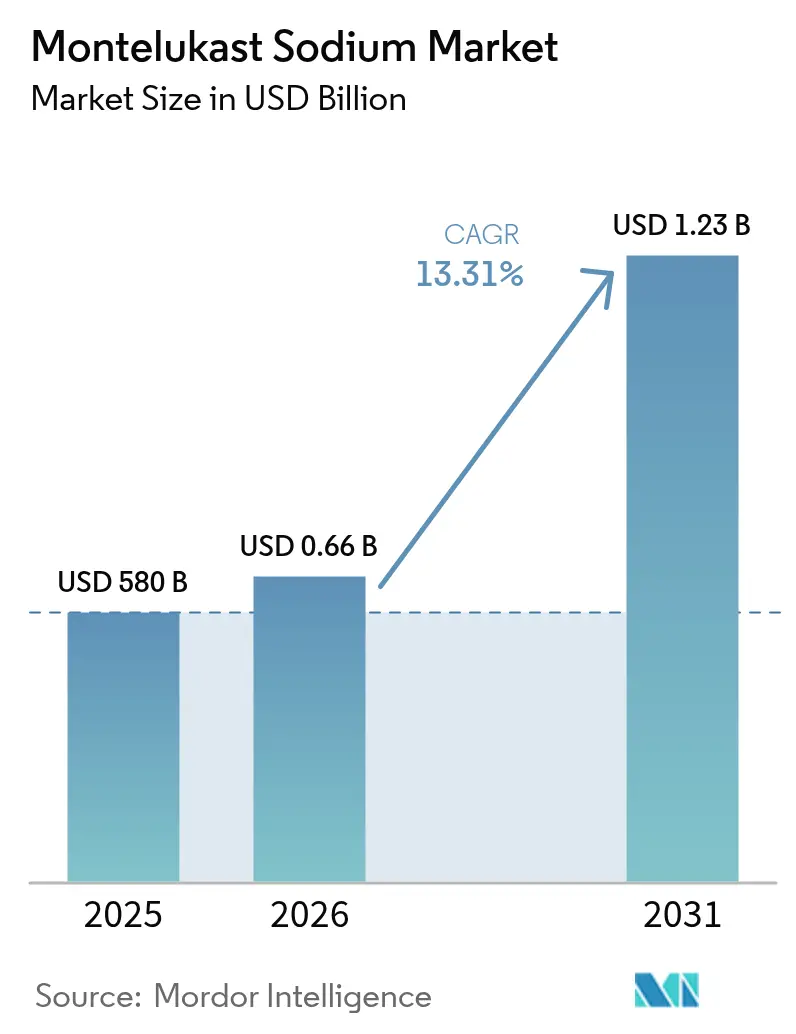
The Montelukast Sodium Market size was valued at USD 580 million in 2025 and estimated to grow from USD 657.2 million in 2026 to reach USD 1.23 billion by 2031, at a CAGR of 13.31% during the forecast period (2026-2031).
Rapid generic penetration following patent expiries, the widening asthma and allergic-rhinitis burden, and a steady flow of drug-repurposing trials sustain double-digit growth momentum despite the boxed warning on neuropsychiatric events. Pediatric-friendly fast-dissolve formulations and expanding geriatric patient pools accelerate prescription volumes, while AI-enabled target-screening platforms continue to surface new inflammatory indications. Although biologic inhalables are gaining visibility in severe asthma, Montelukast’s once-daily oral convenience and low out-of-pocket cost preserve its relevance in mild-to-moderate disease management across mature and emerging health systems. Supply-chain concentration in China remains a structural risk but has yet to derail overall volume expansion.
Key Report Takeaways
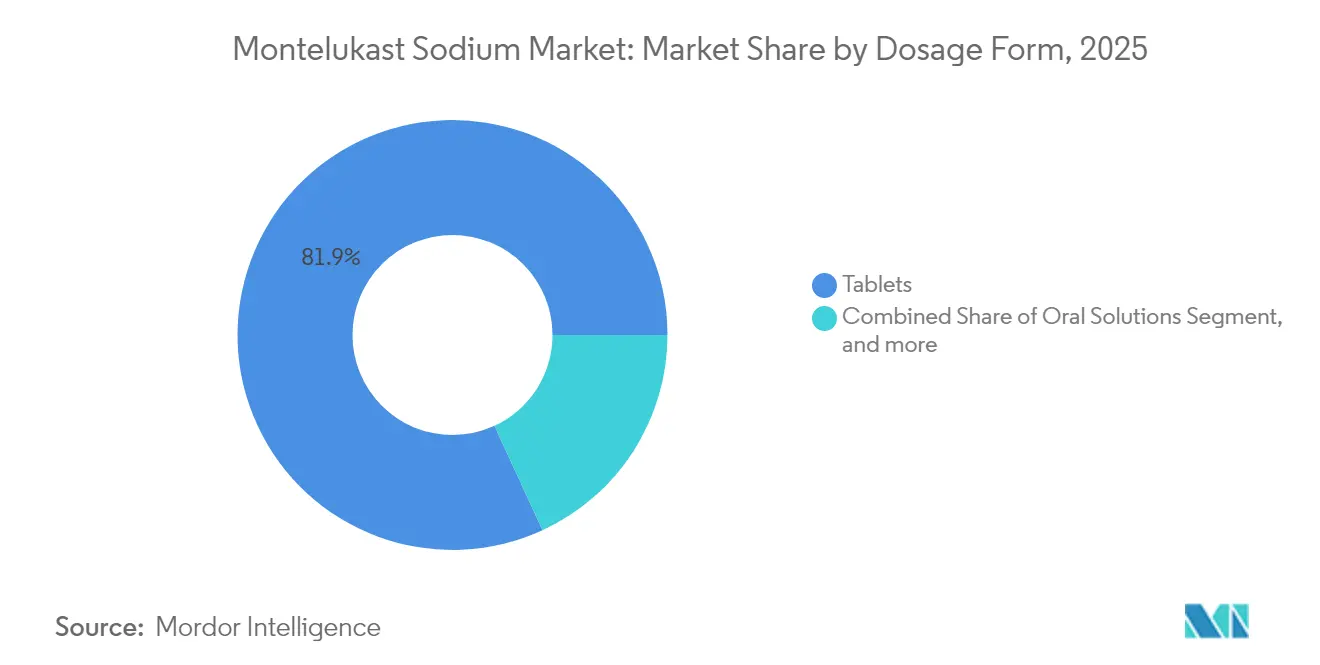
- By dosage form, tablets held 81.88% of montelukast sodium market share in 2025 and dispersible/fast-dissolving tablets are projected to expand at a 14.82% CAGR through 2031.
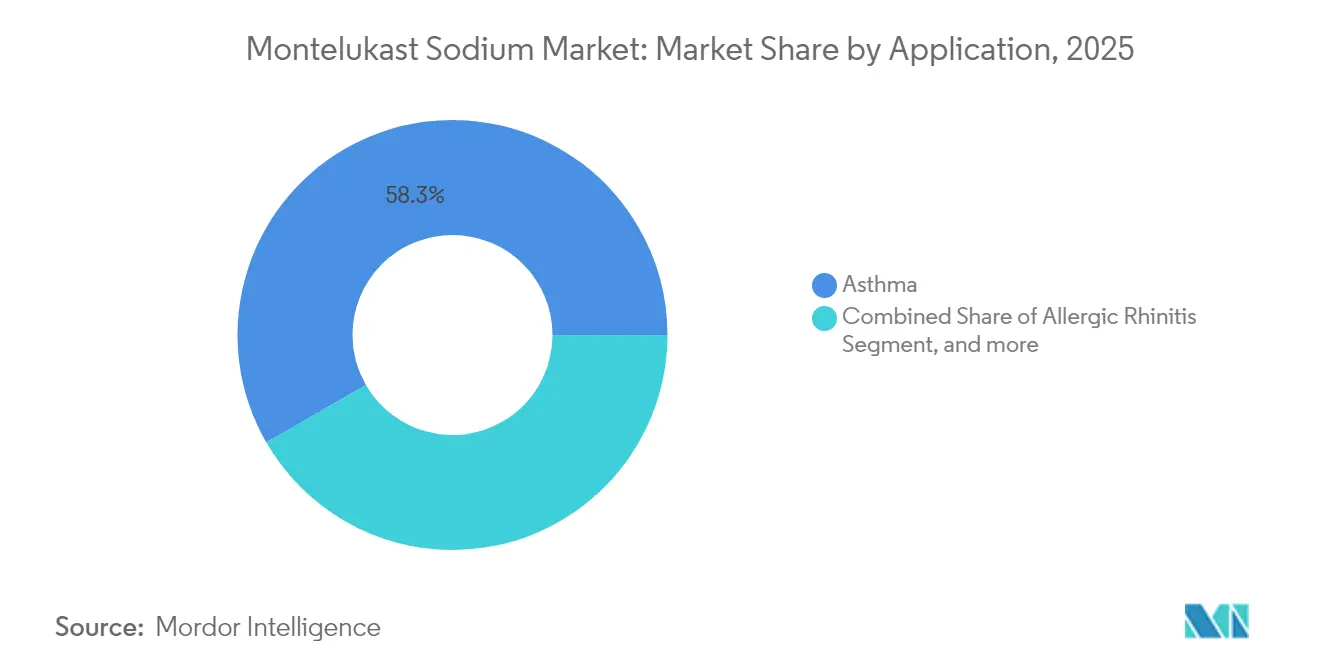
- By application, asthma accounted for 58.34% of the montelukast Sodium market size in 2025, while NSAID-exacerbated respiratory disease is forecast to advance at a 16.49% CAGR to 2031.
- By geography, Asia-Pacific is set to post a 15.63% CAGR between 2026-2031, whereas North America retained 38.34% revenue share in 2025.
Note: Market size and forecast figures in this report are generated using Mordor Intelligence’s proprietary estimation framework, updated with the latest available data and insights as of 2026.
Market Trends and Insights
Drivers Impact Analysis of Montelukast Sodium Market*
| Driver | (~) % Impact on CAGR Forecast | Geographic Relevance | Impact Timeline |
|---|---|---|---|
| Escalating global asthma & allergic-rhinitis prevalence | +3.2% | Global; strongest in APAC, North America | Long term (≥ 4 years) |
| Patent expiries driving generic penetration | +2.8% | North America, Europe | Short term (≤ 2 years) |
| Ageing population with chronic respiratory comorbidities | +2.1% | North America, Europe, developed APAC | Long term (≥ 4 years) |
| Rapid uptake of pediatric-friendly fast-dissolve formats | +1.9% | Global; early adoption in North America | Medium term (2-4 years) |
| Drug-repurposing trials for neuro- inflammatory & long-COVID uses | +1.7% | North America, Europe | Medium term (2-4 years) |
| AI-enabled screening revealing antiviral potential | +1.2% | Large research hubs | Long term (≥ 4 years) |
| Source: Mordor Intelligence | |||
Escalating Global Asthma & Allergic-Rhinitis Prevalence
Exercise-induced bronchoconstriction affects up to 70% of competitive athletes and as high as 35% of children who engage in regular sports activity.[1]Elisabetta Bonvini et al., “Exercise-Induced Bronchoconstriction in Athletes,” Journal of Functional Morphology and Kinesiology, journalfuncmorphkin.com Urban air pollution, sedentary living, and better diagnostics have pushed asthma case identification sharply upward, especially in rapidly industrializing Asian cities. Clinical guidelines increasingly endorse leukotriene-receptor antagonists as adjunct or first-line prevention in pediatric sports asthma, bolstering Montelukast Sodium market demand. Indian prescribing studies show 84.83% of otorhinolaryngologists favor montelukast-based combinations for allergic-rhinitis relief, confirming strong frontline acceptance in high-growth economies.[2]Saikat Senapati et al., “Otorhinolaryngology Prescription Patterns in India,” IP Journal of Otorhinolaryngology and Allied Science, ippjournal.net Together, these epidemiological and practice-pattern shifts keep patient inflow on a steady upward slope.
Patent Expiries Driving Generic Penetration
The elimination of brand exclusivity has triggered a cascade of FDA approvals for cost-efficient generics from Aurobindo Pharma, Dr. Reddy’s, Ajanta Pharma USA, and others. List-price erosion widened access in price-sensitive markets while also pushing producers toward process economies of scale. More than 98 API suppliers now compete globally, with 33 holding US Drug Master Files and 21 owning European certificates, underlining both opportunity and oversupply pressure. The net effect is a larger treated population, albeit at thinner per-unit margins, which nevertheless supports overall revenue expansion thanks to sheer volume growth.
Ageing Population with Chronic Respiratory Comorbidities
Between 2025 and 2030, the share of citizens aged ≥ 65 will rise by 40 million across OECD economies, many living with asthma, COPD, or cardiovascular disease. Geriatric adherence benefits from montelukast’s once-daily oral regimen, while emerging studies highlight renal protective and neuro-inflammatory benefits attributes attractive to clinicians managing poly-morbid seniors.[3]P. Chakraborty et al., “Montelukast’s Renoprotective Role,” Indian Journal of Endocrinology and Metabolism, ijme.in As dementia research signals 94% patient improvement in pilot montelukast repurposing trials, cross-specialty prescriptions are poised to climb, locking in a durable long-run demand tail.
Rapid Uptake of Pediatric-Friendly Fast-Dissolve Formats
Child-specific dosage innovations address swallowing difficulty and taste aversion, leading to demonstrably higher adherence and better symptom control. Fast-dissolve tablets achieve bioequivalence with conventional tablets yet disintegrate in less than 30 seconds, a property welcomed by caregivers. The availability of 4 mg oral granules suitable for infants as young as 12 months further widens the pediatric funnel. Producers are layering taste-masking micro-coatings and cartoon-themed packaging to differentiate amidst intense generic rivalry, sustaining Montelukast Sodium market growth.
Restraints Impact Analysis of Montelukast Sodium Market*
| Restraint | (~) % Impact on CAGR Forecast | Geographic Relevance | Impact Timeline |
|---|---|---|---|
| Neuro-psychiatric boxed warning dampening prescriptions | -2.4% | North America, Europe | Short term (≤ 2 years) |
| Biologic inhalables replacing LTRA in severe asthma | -1.8% | Developed markets | Medium term (2-4 years) |
| Waste-water discharge limits raising EHS compliance cost | -1.2% | China, India | Medium term (2-4 years) |
| Tight Chinese supply of montelukast intermediate | -0.9% | Global supply chain | Short term (≤ 2 years) |
| Source: Mordor Intelligence | |||
Neuro-Psychiatric Boxed Warning Dampening Prescriptions
The FDA and MHRA ordered conspicuous boxed warnings in 2024 after pharmacovigilance data linked montelukast to depression, insomnia, and suicidality in select patients. Post-warning pharmacy claims reveal a temporary 12% volume dip as pediatricians switched to intranasal steroids or antihistamines. Although most adverse events resolve on discontinuation, heightened media attention has elevated medico-legal risk awareness. As clinicians recalibrate benefit-risk, new prescriptions are increasingly confined to cases unresponsive to alternative therapies, shaving near-term growth off the montelukast sodium market.
Biologic Inhalables Replacing LTRA in Severe Asthma
Combination inhalables such as AIRSUPRA achieved a 50% reduction in severe asthma attacks during a 2,421-patient Phase III trial, meeting Global Initiative for Asthma 2024 guideline criteria for maintenance-and-reliever therapy. Affluent health systems quickly adopted these precision biologics, siphoning share from oral leukotriene antagonists in patients with high eosinophil counts. Despite high acquisition costs, payer rebates and improved quality-adjusted life-years tilt formularies toward biologics, limiting montelukast sodium market expansion in the severe-disease sub-cohort.
*Our forecasts treat driver/restraint impacts as directional, not additive. The impact forecasts reflect baseline growth, mix effects, and variable interactions.
Montelukast Sodium Market Segment Analysis
By Dosage Form:
Tablets Retain Dominance as Specialty Formats RiseTablets delivered 81.88% of montelukast sodium market share in 2025, buoyed by cost-efficient high-volume manufacture, durable shelf stability, and clinician familiarity. Conventional film-coated tablets meet adult maintenance needs, while 5 mg chewables and 4 mg mini-chews satisfy school-age pediatric dosing. Oral solutions and syrups serve combination-therapy niches, particularly in levocetirizine co-formulations that have demonstrated superior symptom relief in pediatric allergic-rhinitis cohorts. Oral-granule sachets extend clinical reach to infants as young as 12 months, thereby maximizing early-life customer capture.
Dispersible and fast-dissolve tablets are set to expand at a 14.82% CAGR through 2031, the fastest among dosage forms. Rapid-disintegration technology improves adherence in both children and elderly populations who confront dysphagia. Bioequivalence studies show dissolution profiles on par with leading brand reference standards, confirming therapeutic interchangeability. Taste-masking micro-encapsulation, proprietary sweeteners, and moisture-resistant blister packs add value for caregivers and pharmacies. These features help producers defend modest price premiums even as generic list prices slide, reinforcing revenue resilience within the Montelukast Sodium market.



By Application:
Asthma Leads, NSAID-Exacerbated Disease AcceleratesAsthma controlled 58.34% of the montelukast sodium market size in 2025, anchored by guidelines endorsing leukotriene antagonists for exercise-trigger prevention and nocturnal symptoms. Pediatric athletes remain a core sub-segment because prophylactic montelukast reduces bronchospasm risk during competition by up to 60%. Allergic-rhinitis indications run second, strengthened by high physician comfort with once-daily oral dosing versus multi-spray intranasal regimens. Urticaria prescriptions show steady single-digit growth where antihistamine monotherapy proves inadequate, while exercise-induced bronchoconstriction continues as a specialized add-on market addressed primarily by sports-medicine clinics.
NSAID-exacerbated respiratory disease is forecast to clock a 16.49% CAGR, the fastest among applications. Roughly 1.4 million U.S. patients experience aspirin-triggered asthma attacks linked to cysteinyl-leukotriene overproduction. Montelukast mitigates bronchoconstriction during aspirin-challenge desensitization, carving a clinically indispensable role. Improved diagnostics and growing physician awareness of the N-ERD phenotype are lifting prescription volumes, and continuing education modules sponsored by respiratory societies are scaling this knowledge across community practice. Parallel investigations into long-COVID airway inflammation may further expand the labeling scope, adding incremental tailwinds to the montelukast sodium market.
Geography Analysis
North America Montelukast Sodium Market
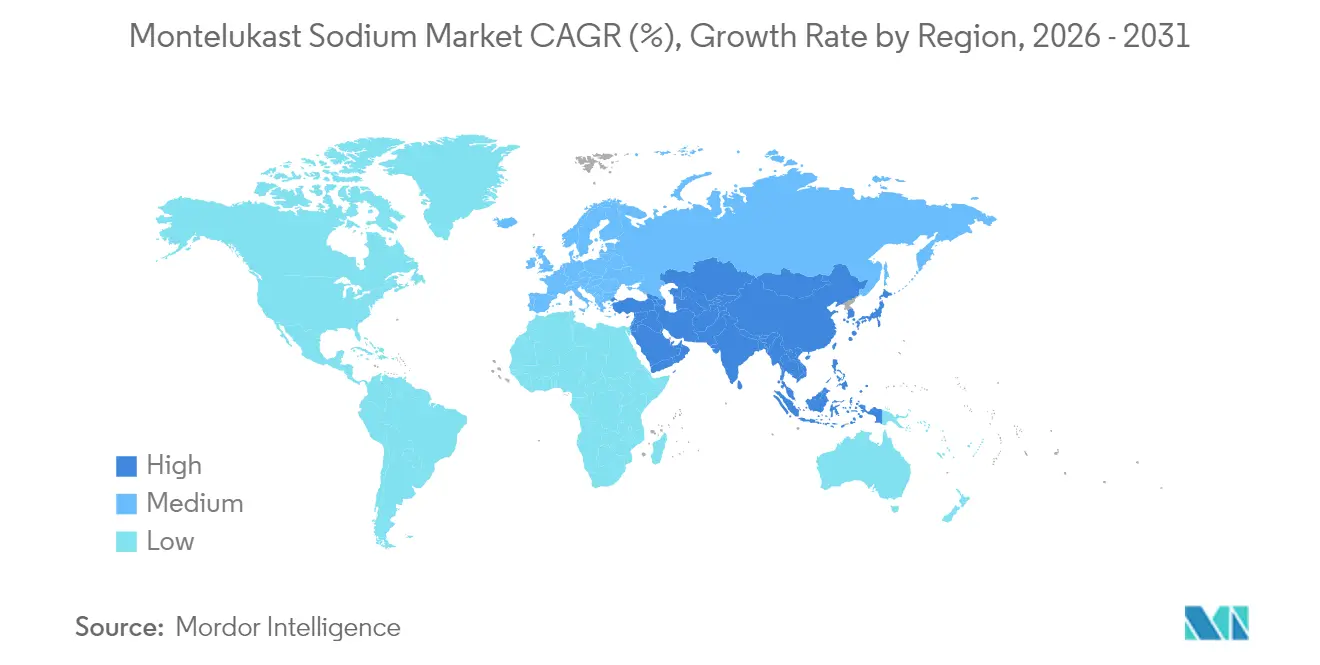
North America preserved 38.34% revenue share in 2025, underpinned by broad insurance coverage, established clinical protocols, and high disease prevalence. The United States accounts for more than four-fifths of regional demand, with Canada and Mexico supplying supplemental volume growth via favorable trade and parallel-import frameworks. Boxed-warning implementation shaved low-double-digit prescription counts in 2024, yet payer formularies continue to reimburse generics as first-line add-ons, anchoring the region’s revenue base. Intensifying generic rivalry is pressuring average selling prices, but unit demand remains resilient as asthma incidence climbs among obese adolescents and smoke-exposed seniors.
APAC Montelukast Sodium Market
Asia-Pacific is poised to deliver the fastest CAGR, 15.63%, between 2026-2031. China’s pharmaceutical expenditure is rising 8.5% annually, aided by volume-based procurement that widens suburban and rural access. India’s ENT specialists already deploy montelukast combinations in 84.83% of allergic-rhinitis cases, showcasing entrenched prescriber preference and large untapped rural patient pools. Japan’s accelerated-approval pathway incentivizes child-friendly fixed-dose combos, while Australia and South Korea extend high per-capita spending and robust reimbursement. Lingering reliance on Chinese API, however, makes regional manufacturers vulnerable to supply-chain shocks, prompting dual-sourcing strategies.
EMEA and South America Montelukast Sodium Market
Europe maintains stable, mature demand across the five largest markets, supported by coordinated procurement that balances affordability and quality. Aging demographics guarantee chronic-disease medication demand durability, while pediatric indications benefit from school-based asthma-awareness programs. Regulatory harmonization through EMA mutual-recognition simplifies multi-country launches for generic producers, though price caps limit upside. Middle East & Africa and South America furnish long-run optionality as private insurance penetration inches up and urban air-pollution trends accelerate respiratory diagnoses.

Regulatory Landscape
Montelukast sodium remains under heightened pharmacovigilance scrutiny across major regulators due to neuropsychiatric risk communications. The UK Medicines and Healthcare products Regulatory Agency (MHRA) reinforced risk messaging in April 2024, and EU pharmacovigilance processes continued through EMA safety-assessment workflows for montelukast (including a PSUSA single-assessment publication in 2025 and PRAC discussions in mid-2024), keeping labeling and patient-information updates central to lifecycle management and prescribing behavior.
Alongside safety surveillance, mature markets have continued to process incremental generic product authorizations that widen supply options under established quality and documentation requirements. UK MA grants for montelukast products were recorded across 2024 and 2025 (including chewable and 10 mg film-coated tablets), supporting ongoing generic entry while reinforcing the need for consistent risk communication and compliant labeling for pediatric and adult formulations.
Competitive Landscape
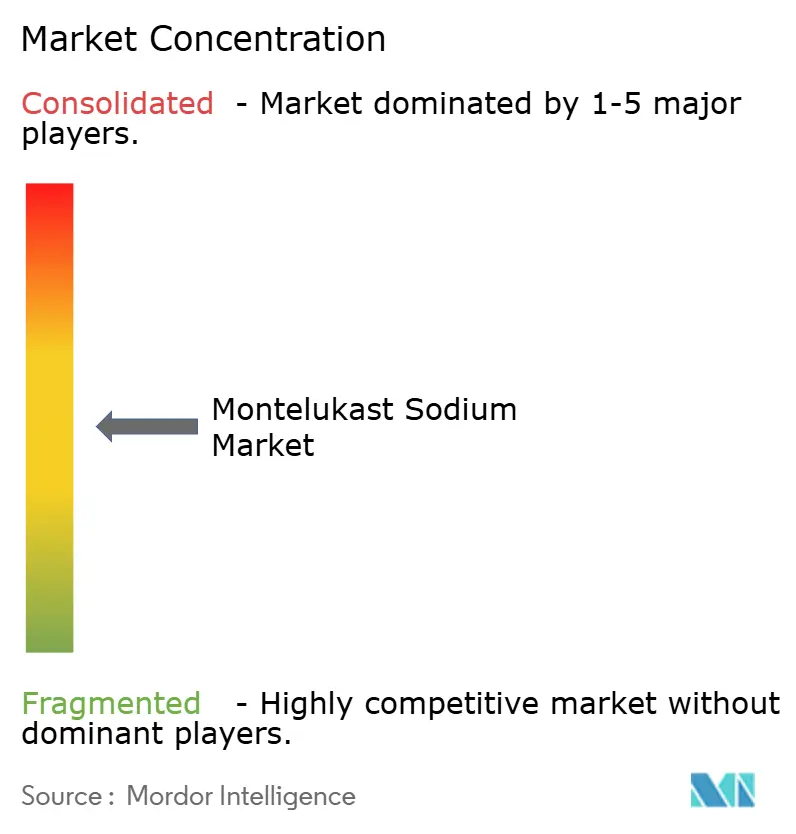
Montelukast Sodium market competition is moderately concentrated, with the top five generics suppliers controlling significant share in the global market. Merck’s legacy brand history still drives physician recall, but Teva, Dr. Reddy’s, Sun Pharma, and Cipla dominate post-patent script fills through extensive wholesaler contracts and low-cost manufacturing. Manufacturing complexity and stringent impurity controls create entry barriers, even as margins compress under tender-driven pricing. Firms differentiate via pediatric formulations, flavor options, and combination-tablet SKUs bundled with antihistamines to gain retail shelf share.
Supply-chain dependence on Chinese intermediates remains the prime strategic vulnerability; 46% of U.S. daily generic doses source precursors from a handful of Zhejiang and Jiangsu plants. Companies with secondary synthesis lines in Spain, Israel, or India reduce disruption risk and win hospital tenders demanding dual-source security. Incremental technology investment focuses on continuous-flow synthesis, reducing solvent waste and cutting batch cycle times, thereby partially offsetting effluent compliance costs.
Potential market erosion stems from biologic inhalables entering mild-asthma protocols. AstraZeneca’s AIRSUPRA success in reducing exacerbations by half has already shifted high-risk adolescent pathways toward inhaled maintenance-and-reliever therapy. Montelukast producers counter by highlighting oral convenience, cost advantage, and utility in multimorbid elderly patients. Additionally, ongoing neuro-inflammatory trials could rejuvenate the molecule’s lifecycle by opening neurology and gerontology revenue streams, insulating long-term demand.
Montelukast Sodium Industry Leaders
Merck & Co., Inc.
Morepen Laboratories
Teva Pharmaceutical Industries
Cipla
Sanofi
- *Disclaimer: Major Players sorted in no particular order
Montelukast Sodium Market Companies Covered in this Report
- Merck
- Teva Pharmaceutical Industries
- Dr. Reddy’s Laboratories
- Cipla
- Sun Pharmaceuticals Industries
- Aurobindo Pharma
- Viatris (Mylan)
- Morepen
- Intas Pharmaceuticals
- Apotex (SK Capital)
- Glenmark Pharma
- Amneal Pharmaceuticals
- Sanofi
- Hikma
- Lonza Group
- Delmar Chemicals
- Sanyo Chemical Industries
- EuroAPI
- Metrochem API
- Faran Shimi Pharmaceutical

Market Opportunities and Future Outlook
Opportunities are concentrated in differentiated, adherence-oriented dosage formats and in expanding access via additional country approvals for established strengths (4 mg, 5 mg, 10 mg). Multiple 2024 decentralised and national authorizations in Europe (including HPRA Ireland approvals for Montelukast Pinewood strengths and OPKO Health Spain S.L.U. completing a decentralised procedure for 10 mg tablets in the Netherlands and Spain) indicate continued whitespace for new registrants, private-label supply, and tender participation across EU/EEA markets where multi-country filings can scale volume.
On the supply side, buyers are placing higher value on reliable regulatory documentation and GMP track record, creating room for API and finished-dose suppliers with strong compliance credentials and traceability. The market also shows whitespace in dual-sourcing and supply-chain resilience programs given concentration in China for intermediates and global sensitivity to oxidation, light, and moisture during manufacturing and storage. This supports investment in qualified alternate API sources and robust packaging systems for dispersible/fast-dissolving and pediatric presentations. In China, the issuance of a drug registration certificate for montelukast sodium tablets to Zhejiang Norde Pharmaceutical (Zhejiang Tianyu Pharmaceutical subsidiary) in June 2025 provides a concrete example of new domestic registrations that can broaden local and export-ready supply bases.
Recent Industry Developments in Montelukast Sodium Market
- May 2026: Morepen Laboratories reported the start of commercial supplies under its multi-year CDMO mandate, including completion of an initial dispatch in Q1 FY2026-27. The move from mandate award to shipments indicates regulated manufacturing ramp-up that can support higher-volume respiratory and allied product supply chains.
- February 2026: Morepen Laboratories announced a multi-year CDMO mandate from a leading global multinational, with commercial production slated to commence in Q4 FY26. The agreement highlights demand for established compliance and scale, which can shape capacity allocation across the API and finished-dose portfolio.
- March 2024: The UK MHRA initiated a comprehensive review of montelast's neuropsychiatric effects, assessing new safety data and whether additional regulatory measures were required beyond existing warnings. The action raised risk-communication requirements for brands and generics and reinforced prescriber caution, particularly in pediatric use where benefit-risk messaging is closely scrutinized.


Montelukast Sodium Market Report Scope and Research Methodology
Market Definition and Coverage
For this study, the market is defined as the revenue generated from montelukast sodium products sold for approved and commonly used respiratory and allergy indications, counted at the point where the product is commercially supplied into healthcare channels.
Scope exclusions: We exclude diagnosis testing, physician services, and non-montelukast alternative therapies that may be used for similar symptoms.
Segments Covered in This Report
- By Dosage Form
- Tablets
- Film-coated Tablets
- Chewable Tablets
- Dispersible / Fast-dissolving Tablets
- Oral Solutions/Syrups
- Oral Granules
- Other Forms
- Tablets
- By Application
- Asthma
- Allergic Rhinitis
- Urticaria
- Exercise-Induced Bronchoconstriction
- NSAID-Exacerbated Respiratory Disease
- Other Applications
- By Geography
- North America
- United States
- Canada
- Mexico
- Europe
- Germany
- United Kingdom
- France
- Italy
- Spain
- Rest of Europe
- Asia-Pacific
- China
- Japan
- India
- Australia
- South Korea
- Rest of Asia-Pacific
- Middle East & Africa
- GCC
- South Africa
- Rest of Middle East & Africa
- South America
- Brazil
- Argentina
- Rest of South America
- North America
Data Sources, Market Sizing, and Validation
Desk Research
Desk work started with building a clean fact base for disease burden, treatment pathways, and medicine access patterns that influence montelukast sodium demand. We referenced public sources such as the US FDA, the European Medicines Agency, the WHO, the US CDC, and the World Bank for macro indicators, along with peer reviewed clinical literature to confirm where montelukast is typically prescribed.
To anchor the commercial side, we reviewed company annual reports, investor presentations, reputable press coverage, and association websites that discuss respiratory care and generics supply. Where helpful, we also used paid subscriptions for company financials and intelligence, patent databases, and shipment level import and export checks to sense supply availability and trade flows in key hubs. This list is illustrative only, and many other sources were used for data collection, validation, and clarification during the research process.
Primary Interviews and Surveys
Primary interviews and structured surveys were used to validate the desk assumptions that most often shift the final value, especially pricing behavior, channel margins, and how prescription volume is trending by indication. We spoke with a mix of manufacturers, distributors, pharmacists, and clinicians across major regions, so gaps in one geography could be cross checked with another, and our input ranges could be tightened before finalizing the model.
Distribution of primary research fieldwork respondents
| Company type | Respondent position | Region |
|---|---|---|
| Top tier: 34% | CXOs: 13% | APAC: 45% |
| Mid tier: 49% | Functional/Unit leaders: 27% | EMEA: 32% |
| Smaller Players: 17% | Managers: 60% | Americas: 23% |
Market-Sizing & Forecasting
Sizing was built using a top-down, demand pool approach, where prevalence and treated patient counts were translated into therapy volumes and then converted into revenue using average selling prices by dosage form and geography. When the build-up was completed, selective bottom-up approximations were used as a sanity check, such as sampled price points from procurement and pharmacy channels multiplied by plausible volume bands for major countries.
A few inputs that matter a lot in this market were treated carefully, including asthma and allergic rhinitis prevalence, prescribing share versus alternative controllers, generic penetration, typical dose and pack mix (tablets versus oral solutions or granules), and price erosion patterns after tender wins or additional generic entries. For forecasting, scenario analysis was used around the near term price and mix outlook, and then the path was smoothed using simple time series logic so the curve does not overreact to a single year shock. Where bottom-up signals were missing for smaller markets, we filled gaps using proxy indicators like population, diagnosis rate, and observed pricing bands from comparable markets, and then re-checked the totals with experts.
Data Validation & Update Cycle
Outputs were checked against independent signals, including therapy volume direction, tender and reimbursement changes, and trade and supply commentary that can explain sudden price moves. If the model produced unusual jumps in a country, the assumptions were revisited, and follow-up calls were triggered to confirm whether the change was real or driven by timing and currency effects.
Each dataset and calculation step was reviewed in layers, first by the analyst building the model and then by a separate reviewer to catch unit errors and double counting. The report is refreshed annually, and interim updates are made when material events occur, such as regulatory actions, major supply shifts, or large pricing resets. Before delivery, a final pass is done so clients receive the most current view that can be supported by traceable inputs.
Mordor Intelligence's Montelukast Sodium Market Size Compared Against Other Published Estimates
Published market numbers for montelukast sodium can look far apart, even when they use the same currency, because the scope boundary and the pricing math are not always aligned. Differences usually come from what is counted as product revenue versus broader therapy spend, and from whether the estimate is anchored to prescription driven demand or to a wider supply narrative.
In our work, the biggest swing factors were the average selling price progression by dosage form, the exchange rate timing used for multi-country totals, and how channel margins are treated when moving from ex-factory values to end-market revenue. By running the pricing refresh on a consistent annual cadence and re-checking country level outliers before locking the year, Mordor Intelligence reduces the risk of overstating totals in years when generics pricing resets quickly.
Benchmark comparison
| Source | Market Size | Gaps in Research Methodology |
|---|---|---|
| Mordor Intelligence | USD 0.58 B (2025) | |
| Global Consultancy A | USD 1.07 B (2025) | This estimate appears to use a broader value boundary, likely blending in downstream channel markups and a wider therapy spend interpretation, which can push the total above a product-revenue view. |
| Data Publisher B | USD 0.46 B (2025) | This figure is lower and consistent with narrower pricing assumptions, where stronger generic price erosion or tighter country coverage can pull down the weighted average selling price and the global roll-up. |
The spread is mainly explained by pricing treatment and what level of the value chain is being counted, and the table makes that pattern clear. When a single year is priced with different currency dates or when pack mix is simplified, the global total can move materially even if volume assumptions are similar. Our approach keeps the result traceable to treated demand, dosage form mix, and a repeatable price refresh process.


Key Questions Answered in the Report
How large will the montelukast sodium market be by 2031?
Forecasts peg the montelukast sodium market size at USD 1.23 billion by 2031, reflecting a 13.31% CAGR from 2026 levels.
Which dosage form is growing the fastest?
Dispersible and fast-dissolving tablets are projected to rise at a 14.82% CAGR through 2031 thanks to improved pediatric and geriatric adherence.
Why is Asia-Pacific considered the most attractive growth region?
APAC combines rising asthma prevalence, expanding healthcare access, and supportive generic-approval frameworks, driving a 15.63% CAGR during 2026-2031.
What is the main safety concern limiting prescriptions?
Regulators imposed boxed warnings over neuro-psychiatric events, prompting short-term caution among prescribers, especially for children and adolescents.
Which emerging application presents the highest growth potential?
NSAID-exacerbated respiratory disease leads with a 16.49% CAGR, supported by growing diagnostic clarity and montelukast’s efficacy in aspirin-sensitive asthma.
How are companies mitigating supply-chain risk?
Leading API producers are dual-sourcing intermediates outside China and investing in continuous-flow synthesis to curb single-point failure exposure.
Page last updated on:


 Your data is secure and never sold or shared.


