
Mineral Sunscreen Market Size and Share
Market Overview
| Study Period | 2022 - 2032 |
|---|---|
| Market Size (2027) | USD 6.15 Billion |
| Market Size (2032) | USD 8.04 Billion |
| Growth Rate (2027 - 2032) | 5.53 % |
| Fastest Growing Market | Asia-Pacific |
| Largest Market | Asia-Pacific |
| Market Concentration | Medium |
Major Players *Disclaimer: Major Players sorted in no particular order Image © Mordor Intelligence. Reuse requires attribution under CC BY 4.0. | |
Mineral Sunscreen Market Analysis by Mordor Intelligence
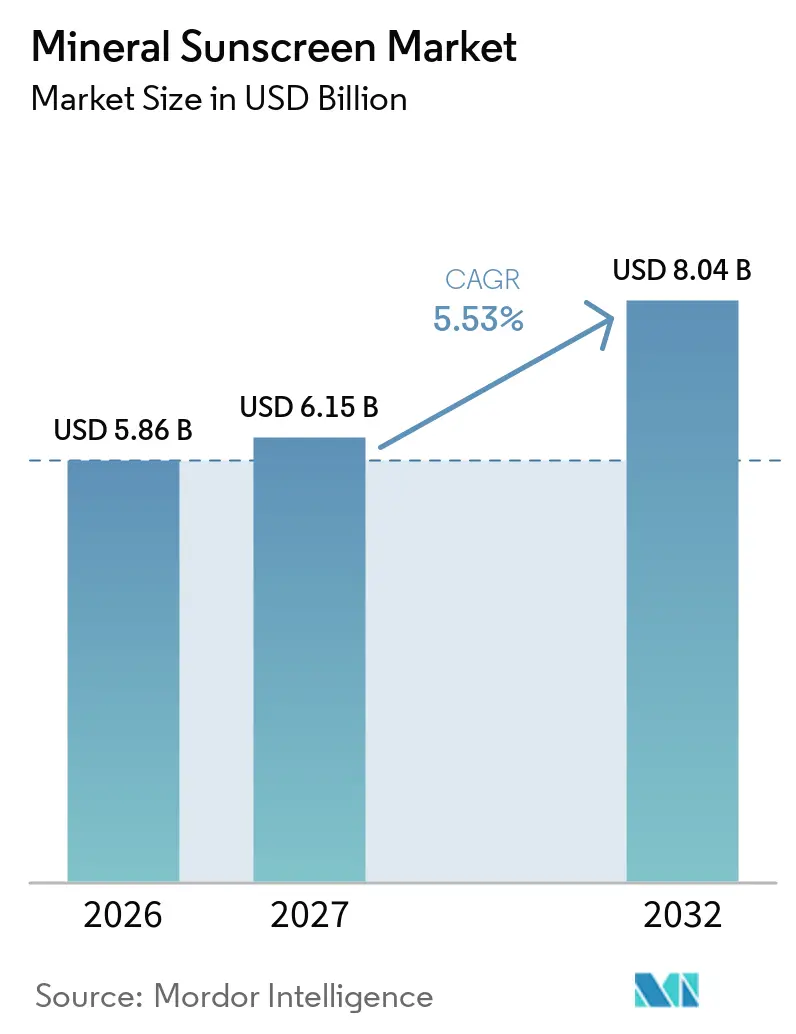
The mineral sunscreen market size is expected to grow from USD 5.86 billion in 2026 to USD 6.15 billion in 2027 and is forecast to reach USD 8.04 billion by 2032 at a 5.53% CAGR over 2027-2032. The mineral sunscreen market is benefiting from the shift in sun protection from a seasonal purchase to a routine component of facial skin care. Demand is increasingly driven by daily facial application, particularly among consumers seeking products that combine UV protection with skin care benefits. Mineral filters also serve consumers with sensitive, reactive, post-procedure, and pediatric skin needs. The market has significant growth potential through improved textures, transparent finishes, tinted formulations, and products that perform well under makeup. Competition remains fragmented across regions, price points, and product formats. Therefore, companies are leveraging clinical positioning, disciplined distribution strategies, and formulation innovation to strengthen their position in the category.
Key Report Takeaways
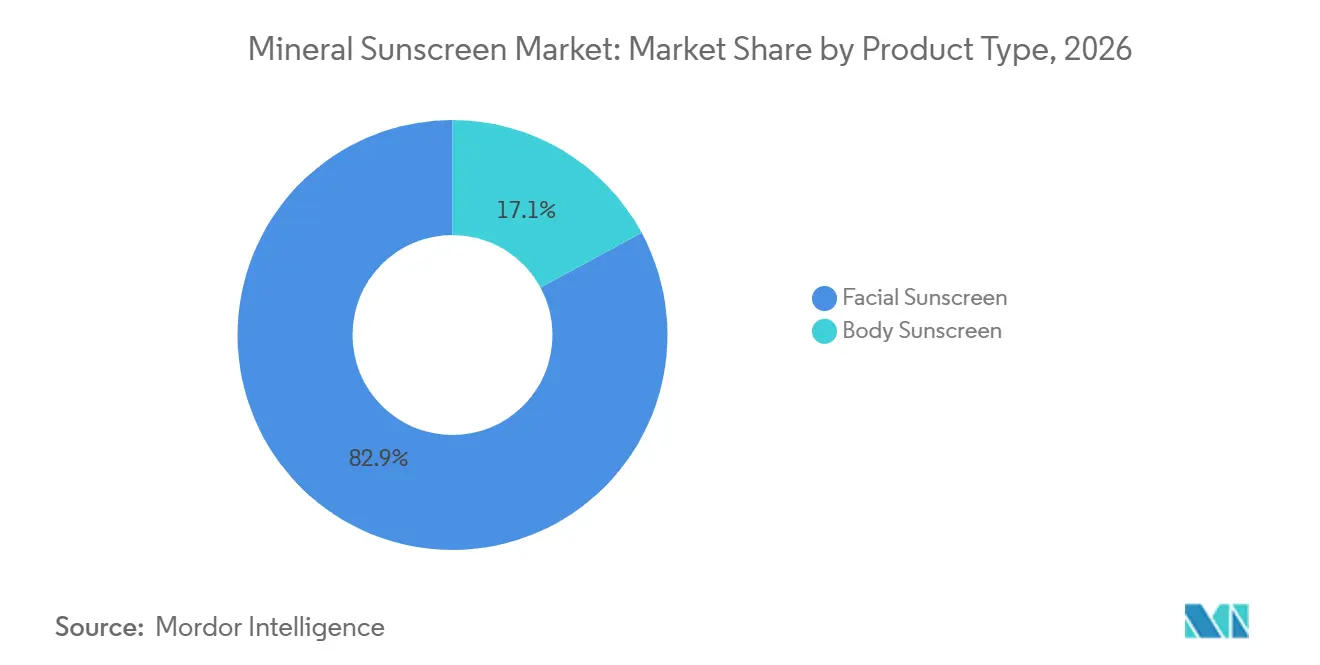
- By product type, facial sunscreen led the mineral sunscreen market with an 82.88% share in 2026 and is expected to grow at the fastest CAGR of 6.23% during 2027-2032.
- By form, lotion/cream retained a 42.25% share in 2026, while spray is anticipated to expand at a 6.45% CAGR through 2032.
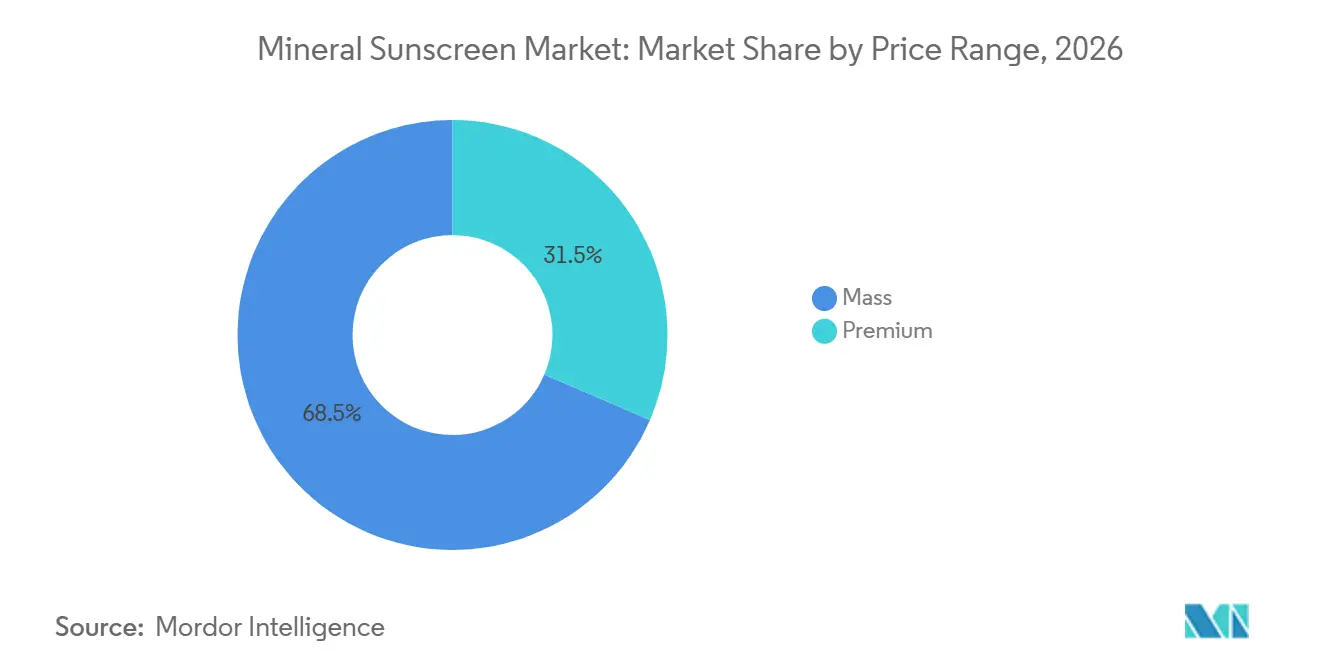
- By price range, mass led the market with a 68.53% share in 2026, while premium is anticipated to register the fastest CAGR of 7.32% during 2027-2032.
- By end user, adults led the market with an 83.71% share in 2026, while children/babies are anticipated to register the fastest CAGR of 6.81% during 2027-2032.
- By distribution channel, pharmacies and drugstores led the market with a share of 34.89% in 2026, while online retail channels are anticipated to register the fastest CAGR of 7.03% during 2027-2032.
- By geography, Asia-Pacific led the mineral sunscreen market in 2026 with a 37.82% share, and projected to advance at a 6.35% CAGR through 2032.
Note: Market numbers in this report are based on Mordor Intelligence's proprietary estimation framework, which combines nine months of actuals with Q4 projections for base year 2026.
Market Trends and Insights
Drivers Impact Analysis of Mineral Sunscreen Market*
| Driver | (~) % Impact on CAGR Forecast | Geographic Relevance | Impact Timeline |
|---|---|---|---|
| UV radiation and skin cancer prevention awareness | +1.5% | Global, strongest in North America, Europe, and Oceania | Medium term (2-4 years) |
| Preference for mineral filters for sensitive skin | +1.0% | North America and Europe, with growth in Asia-Pacific | Short term (≤ 2 years) |
| Integration of sun protection into daily skin care routines | +1.0% | Global, strongest in Asia-Pacific and Western Europe | Medium term (2-4 years) |
| Lightweight and transparent formulation technology | +0.8% | Global, led by Asia-Pacific and North America | Medium term (2-4 years) |
| Demand for high-spf mineral products | +0.7% | North America and Europe, with growth in Asia-Pacific | Short term (≤ 2 years) |
| Children's and baby-specific products | +0.5% | North America, Europe, and Asia-Pacific | Long term (≥ 4 years) |
| Source: Mordor Intelligence | |||
UV Radiation and Skin Cancer Prevention Awareness
UV exposure sustains demand for products that consumers can use regularly, including mineral sunscreen products. The International Agency for Research on Cancer reported in 2025 that UV radiation caused 83% of new melanoma cases worldwide in 2022, representing nearly 267,000 of the 332,000 cases[1]. The World Health Organization states that UV radiation causes more than 1.5 million skin cancer cases and over 120,000 deaths annually. These findings reinforce the need for public education on daily sun protection and provide a stable foundation for the mineral sunscreen market. They also support clinical recommendations for post-procedure care, immunocompromised patients, and photoaging prevention. Consequently, greater awareness of UV-related health risks encourages consumers to prioritize broad-spectrum protection and consider mineral sunscreens as part of their regular skincare routines.
Preference for Mineral Filters for Sensitive Skin
Sensitive-skin requirements give mineral filters a distinct role in the mineral sunscreen market. In September 2026, the United States Food and Drug Administration proposed that zinc oxide and titanium dioxide are generally recognized as safe and effective at concentrations of up to 25%, while many organic filters remain under review[2]. This regulatory environment supports the clinical rationale for mineral formulations intended for reactive, post-procedure, and sensitive skin. Pharmacies and drugstores hold largest share of distribution value in 2026, reflecting their role as channels where consumers can receive professional guidance for health-driven purchases. Products supported by dermatologists and backed by clear product substantiation can therefore compete based on suitability rather than discounting alone. This dynamic favors investment in pharmacist education and clinical support over short-term price promotions.
Integration of Sun Protection into Daily Skin Care Routines
Daily facial use is reshaping how companies position products in the mineral sunscreen market. Mineral SPF products now compete with moisturizers, primers, and serums, as they must integrate seamlessly into established daily skin care routines. Consequently, multi-benefit products are becoming more important than single-purpose formats. Tinted formulations, anti-aging primers, and serum-like products can reduce the number of products consumers use in their routines. This trend is shifting product development toward formulation compatibility, cosmetic appeal, and suitability for daily use. Products that layer effectively with moisturizers, makeup, and other skin care products are more likely to become part of daily routines. In contrast, products that feel heavy or leave a visible cast may be skipped, even when consumers recognize the importance of UV protection.
Lightweight and Transparent Formulation Technology
Formulation advances are addressing the cosmetic barriers that have constrained the mineral sunscreen market. In April 2025, Shiseido disclosed a technology that re-disperses UV-scattering particles after application to form a more uniform protective layer. The company reported that this technology provides up to 2.2 times the UV protection of conventional mineral formulations while maintaining a transparent finish. These approaches address white cast, which can hinder everyday use and is often more noticeable on darker skin tones. Although advanced systems may initially increase formulation costs, they can narrow the appearance gap between mineral and chemical sunscreens. Such innovations can strengthen consumer acceptance, encourage repeat purchases, and create opportunities for premium mineral sunscreen products in the facial skincare segment.
Restraints Impact Analysis of Mineral Sunscreen Market*
| Restraint | (~) % Impact on CAGR Forecast | Geographic Relevance | Impact Timeline |
|---|---|---|---|
| Higher prices than conventional sunscreens | -0.7% | Global, most acute in South America, Southeast Asia, and the Middle East and Africa | Short term (≤ 2 years) |
| High protection and cosmetic appeal challenges | -0.5% | Global, strongest in markets with diverse skin tones | Medium term (2-4 years) |
| Cross-country regulatory complexity | -0.3% | Europe, Asia-Pacific, and North America | Medium term (2-4 years) |
| Mineral nanoparticle environmental concerns | -0.2% | Europe and North America, particularly spray products | Long term (≥ 4 years) |
| Source: Mordor Intelligence | |||
Higher Prices Than Conventional Sunscreens
Price remains a key constraint on the broader adoption of mineral sunscreen, particularly in mass-market channels. High active ingredient levels and the need to maintain an acceptable texture can limit formulation budgets for value-oriented products. Brands also face retailer-imposed price ceilings, which restrict their ability to pass higher input costs on to consumers. This challenge is particularly significant in Southeast Asia, Latin America, and sub-Saharan Africa, where chemical sunscreen alternatives remain more affordable and accessible for many consumers. Consequently, price management remains an ongoing operational challenge for the mineral sunscreen market. Manufacturers must maintain product offerings for consumers who prioritize value while also serving those seeking higher-performing formulations.
High Protection and Cosmetic Appeal Challenges
Cosmetic appearance remains a major barrier to mineral sunscreen adoption across diverse skin tones. To avoid a white cast, consumers may apply insufficient amounts of product, resulting in lower protection than indicated on the label. Manufacturers must balance high concentrations of mineral filters with advanced dispersion technologies, lightweight textures, and uniform coverage to provide effective protection without compromising cosmetic appeal. Although high-performance formulations may incorporate co-active technologies, commercial-scale production can affect costs, water resistance, and broad-spectrum protection claims. This challenge is particularly significant for Fitzpatrick skin types IV to VI, for which visible residue can discourage product trials and repeat purchases. The mineral sunscreen market depends on the broader commercialization of transparent mineral technologies that maintain protection and wear performance.
*Our forecasts treat driver/restraint impacts as directional, not additive. The impact forecasts reflect baseline growth, mix effects, and variable interactions.
Mineral Sunscreen Market Segment Analysis
By Product Type:
Facial Formats Anchor Category EconomicsFacial sunscreen holds an 82.88% share of the mineral sunscreen market in 2026 and registers the fastest growth, at a CAGR of 6.23% through 2032. This trend reflects the category’s close association with daily facial skincare routines. Face-specific products align with routines for acne management, post-procedure recovery, and photoaging prevention, giving facial formats a more durable role in everyday care than seasonal body products. Dermatologist recommendations also carry greater influence in facial applications, where product suitability and finish are highly visible. Therefore, routine usage, rather than outdoor exposure alone, supports the mineral sunscreen market size for facial formats.
Body sunscreen remains important for outdoor activities and family purchases but faces greater private-label competition in mass retail. Its use also remains more seasonal than facial SPF use, which can make replenishment less predictable and increase exposure to promotions during peak outdoor periods. Brands can reduce their dependence on a limited summer sales window by improving everyday comfort. Hybrid body products that combine sunscreen with moisturization or anti-pollution benefits can expand relevance beyond beach and sports occasions. These distinct consumer needs shape the innovation priorities for brands and make it challenging for a single product proposition to serve all use occasions equally effectively.

By Form:
Spray Momentum Tests Regulatory ToleranceLotions and creams account for a 42.25% share in 2026, supported by their ability to carry high concentrations of active ingredients and align with familiar daily routines. Sprays represent the fastest-growing format, with a projected CAGR of 6.45% through 2032. Their convenience for reapplication drives demand across outdoor, sports, and family-use applications. Quick application is particularly valuable when consumers need to reapply sunscreen during travel, recreation, or family activities. However, ease of application alone is insufficient, as formulations must also provide even coverage and a finish that consumers find acceptable.
Gels are gaining traction in Asia, as water-gel textures support lightweight daily wear and application under makeup. This format reduces concerns that sunscreen may interfere with other facial products, making gel formulations particularly relevant where compatibility with daily routines is as important as outdoor protection. Spray products face a more complex product development process because titanium dioxide nanoparticles may create respirable droplets. Meanwhile, gel manufacturers must maintain the format’s lightweight appeal while delivering the coverage consumers expect. Each format involves a distinct balance between product performance and consumer experience.
By Price Range:
Masstige Emerges as the Growth EngineThe mass tier accounts for a 68.53% share in 2026, as pharmacy and hypermarket channels distribute established, high-volume products. The premium tier is forecast to register the fastest growth, at a CAGR of 7.32% through 2032. This pattern indicates that mass products continue to drive broad consumer access, while differentiated products with higher price points generate faster value growth. Consumers are more likely to accept higher prices when products address clear concerns, such as visible residue, uncomfortable texture, or poor makeup compatibility. The mineral sunscreen market therefore shows a clear divide between scale in mass channels and differentiation in higher-priced channels.
The masstige range occupies a position between these tiers, combining accessible pricing with claims that appear clinically credible. This segment can help brands avoid the margin pressure associated with true mass-market products while allowing them to justify prices above those of basic sunscreens through selected active ingredients, texture systems, or product testing. However, brands must communicate the value proposition clearly, as consumers can easily compare alternatives across retail channels. Masstige products also provide consumers with access to texture, tint, and skin care features that simpler products may not offer. At the same time, brands operating exclusively in the mass tier must manage rising zinc oxide costs and retailer-imposed price constraints. Consumer willingness to pay varies across the category; therefore, brands need a clearly defined offering for the target audience and channel they intend to serve.
By End User:
Children's Segment Outpaces the MarketAdults hold an 83.71% share in 2026, as adult facial care continues to represent the largest demand base. The children and babies segment is forecast to grow at a CAGR of 6.81% through 2032. This faster growth reflects a shift from occasional summer purchases toward regular sun protection for younger users. More frequent use increases the importance of pack size, ease of application, and product finishes that children will accept. It can also support repeat household purchases when parents identify products they trust.
Pediatric products require simple claims, suitable textures, and formats that parents can apply reliably. Parents may place greater value on mineral active ingredients when selecting products for children with sensitive skin. Blue Lizard Australian Sunscreen is named the top-selling mineral sunscreen brand in the United States based on 52-week data ending April 17, 2025. This segment favors clear product communication and a credible focus on safety and daily family use. Packaging and instructions should also help parents understand when and how to reapply products. These practical features can build consumer confidence while maintaining the core focus on mineral active ingredients. They also create a long-term opportunity for brands that establish trust early in household purchasing decisions.
By Distribution Channel:
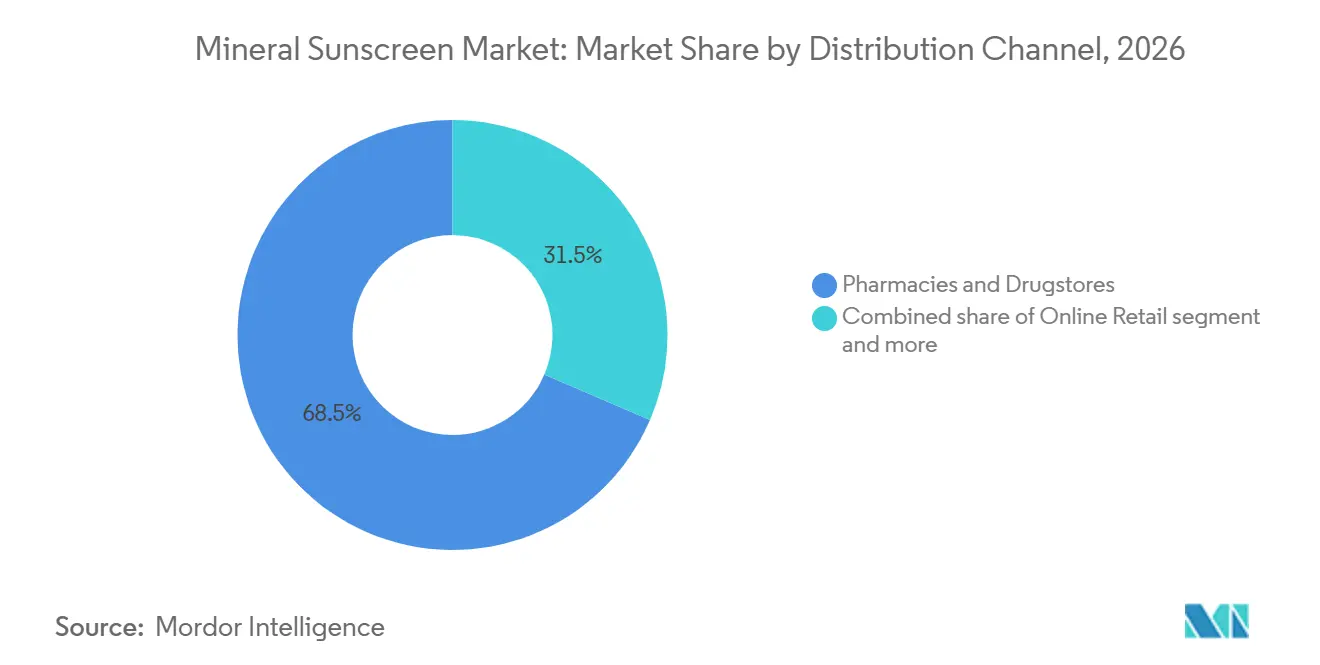
Online Commerce Reshapes Channel EconomicsPharmacies and drugstores accounted for a 34.89% share in 2026. Their role extends beyond product access, as pharmacists can guide health-focused purchases among consumers with sensitive-skin needs. This channel supports the trial of clinically positioned, higher-priced products and helps consumers compare formats when choosing between basic sunscreens and specialized sensitive-skin products. As a result, pharmacies and drugstores provide a suitable setting for products that require explanation beyond front-of-pack claims.
Online retail is projected to grow at a CAGR of 7.03% through 2032. Direct-to-consumer models and expanding digital access across Southeast Asia support the online retail value base. Hypermarkets and supermarkets remain important for mass-priced products, particularly in markets where routine household purchases drive volume. Beauty specialty retailers provide an appropriate environment for premium products and consumers seeking to try unfamiliar brands. While online channels expand brand reach, pricing transparency can reduce the margin protection previously supported by offline exclusivity. In response, companies can reserve professional-only products for selected channels and offer bundles through their direct-to-consumer websites.
Geography Analysis
APAC Mineral Sunscreen Market
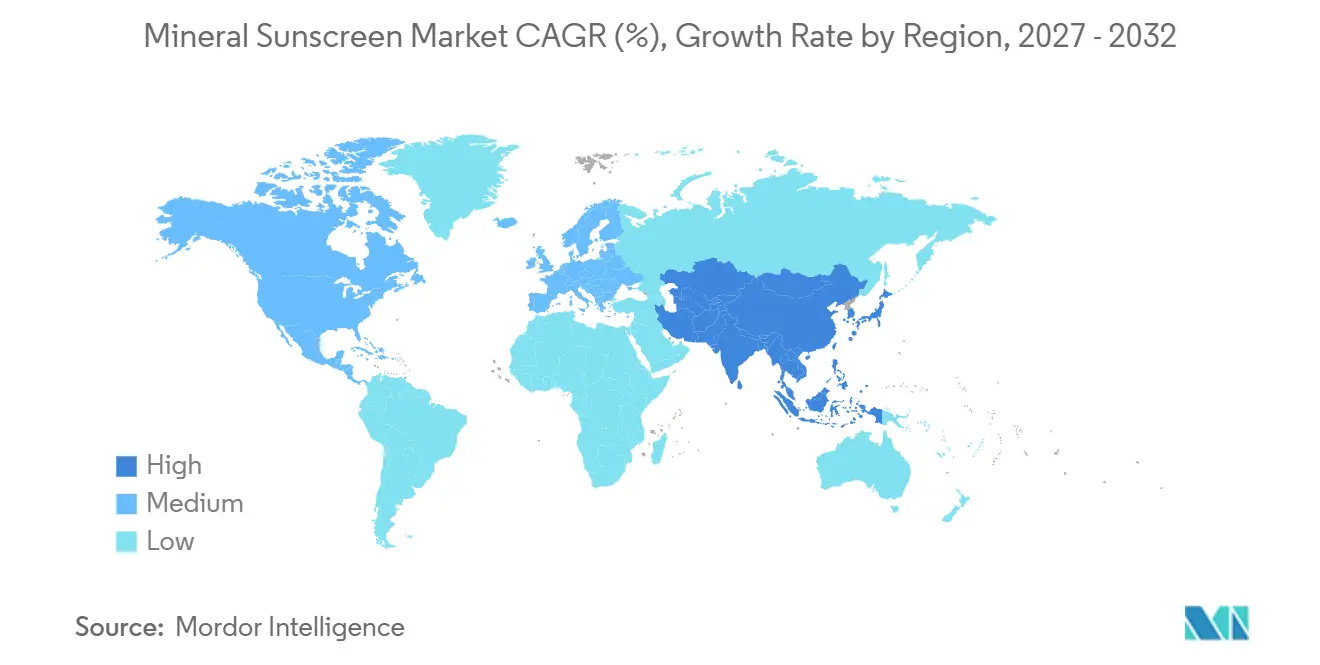
Asia-Pacific accounts for 37.82% of the mineral sunscreen market share in 2026 and is forecast to grow at a CAGR of 6.35% through 2032. This position reflects the region’s established demand for daily facial sun protection products and its growth potential across large developing consumer markets. Consequently, Asia-Pacific holds significance in terms of both current market value and future product development. However, companies cannot approach the region as a uniform opportunity, as consumer routines, retail structures, and skin-tone requirements vary considerably by country. Japan and South Korea demonstrate high per-capita usage of mineral products, with hybrid formats, such as SPF serums and tinted primers, gaining particular relevance. Meanwhile, e-commerce is expanding access to mineral sunscreen products in China, India, and Southeast Asia.
India and ASEAN Mineral Sunscreen Market
India and Southeast Asia present opportunities for mineral sunscreen adoption as brands develop formulations tailored to local climates, consumer preferences, and diverse skin tones. Regulatory developments further emphasize the importance of product quality and credible sun-protection claims. In October 2025, Singapore’s Ministry of Health clarified that sunscreen products are regulated as cosmetics under the Health Products Act, with the Health Sciences Authority responsible for oversight[3]. For manufacturers targeting the Asia-Pacific region, these developments reinforce the need for reliable SPF testing and product localization. Tinted mineral sunscreens and formulations designed to minimize visible white cast can address cosmetic preferences across diverse skin tones, while online retail channels can improve product accessibility in markets such as India and Southeast Asia.
The Americas, EMEA and Oceania Mineral Sunscreen Market
North America and Europe remain important markets for prestige pricing, clinical validation, and formulation investment. Australia also has a strong need for sun protection products due to its high melanoma incidence. This environment reinforces the importance of consumer education, reliable application, and products that consumers are willing to use repeatedly. It also keeps protection performance central to brand credibility in mature sun-care markets. South America and the Middle East and Africa offer smaller but targeted growth opportunities. Online channels can efficiently serve Brazil and Chile, where markets increasingly support premium products associated with high UV exposure and dermatology awareness. Nigeria, Egypt, and South Africa remain underserved, particularly when mineral formulations leave a visible white cast on darker skin tones. Therefore, the mineral sunscreen market is likely to evolve differently across countries, even when products use the same core mineral active ingredients.
Competitive Landscape
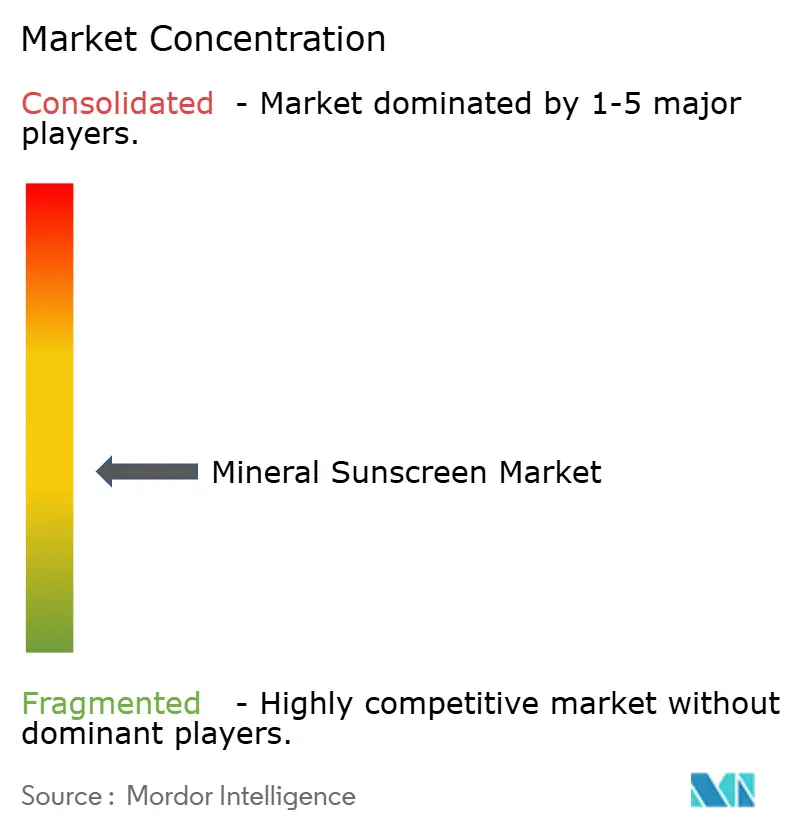
The mineral sunscreen market is fragmented. L'Oréal, through La Roche-Posay; Kenvue, through Neutrogena; and Beiersdorf, through Coppertone, benefit from broad distribution networks, clinical visibility, and established brand reach. Specialist companies, including EltaMD, Supergoop!, and Babo Botanicals, compete through dermatologist support and positioning targeted to specific consumer needs. As a result, scale alone does not determine competitive outcomes across product formats, regions, and price tiers. The market favors brands that combine credible product claims with an acceptable daily-use experience. While strong protection credentials are essential, products must also offer a texture and finish that encourage consistent application. Consequently, formulation capabilities are as important as distribution and brand communication in shaping competitive positioning.
Shiseido demonstrates one approach to differentiation through technical development. Protected formulation technologies can create a competitive advantage when ingredient lists appear similar across products. These technologies also address a key barrier to repeat use. For example, a transparent finish can expand the potential user base by allowing consumers to avoid visible residue during daily use. Therefore, technical improvements directly influence both the consumer experience and commercial differentiation. Blue Lizard provides another example of a brand leveraging mineral-only credentials and child-focused positioning. Its 2025 recognition as the leading mineral sunscreen brand in the United States followed a repositioning initiative that included reformulated products with 100% mineral active ingredients and updated packaging.
Hybrid sunscreen systems can intensify competitive pressure on pure-mineral products, particularly in facial formats, where texture and daily wear characteristics are critical. Pure-mineral brands must demonstrate how their formulations address specific sensitive-skin, pediatric, or cosmetic requirements. They cannot rely solely on mineral positioning when competing alternatives also offer a lighter feel or higher SPF. This trend increases the importance of consumer experience and claim credibility. It also creates opportunities for specialist brands that maintain a clear focus within the crowded facial-care category.
Mineral Sunscreen Industry Leaders
-
L’Oréal S.A.
-
Kenvue Inc.
-
Beiersdorf AG
-
Shiseido Company, Limited
-
Sun Bum LLC
- *Disclaimer: Major Players sorted in no particular order
Mineral Sunscreen Market Companies Covered in this Report
- L’Oréal S.A.
- Kenvue Inc.
- Beiersdorf AG
- Edgewell Personal Care Company
- Shiseido Company, Limited
- Crown Laboratories, Inc.
- Colgate-Palmolive Company
- Coola LLC
- Sun Bum LLC
- Australian Gold LLC
- Goddess Garden LLC
- W. S. Badger Company
- EltaMD, Inc.
- Supergoop! LLC
- ISDIN SA
- The Estée Lauder Companies Inc.
- Unilever PLC
- Babo Botanicals Inc.
- Think Operations LLC
- Raw Elements USA LLC
Recent Industry Developments in Mineral Sunscreen Market
- September 2026: Kenvue’s Neutrogena brand launched Cloud-Tech™, featuring bemotrizinol (BEMT), the first new Food and Drug Administration-approved UV filter in more than 25 years. Available in SPF 60 and SPF 70 facial formulations, the technology debuted on Amazon and is scheduled for a nationwide retail rollout in October 2026.
- August 2026: Beverly Hills MD launched Sheer Radiance SPF Drops, a mineral sunscreen serum. The product provides broad-spectrum SPF 50 protection and includes iron oxides to promote a more even-looking complexion while addressing concerns such as white cast and uneven skin tone.
- April 2026: ILIA Beauty launched its first standalone sunscreen, combining mineral SPF 50 protection with hyaluronic acid and other hydration-focused skincare ingredients. The product was available in two adaptable shades- Light-Medium and Medium-Deep- priced at USD 40.
Global Mineral Sunscreen Market Report Scope
Mineral sunscreen is a sun protection product that uses mineral-based UV filters, primarily zinc oxide and titanium dioxide, to protect the skin against harmful radiation.
The mineral sunscreen market is segmented by product type, form, price range, end user, distribution channel, and geography. By product type, the market is segmented into body sunscreen and facial sunscreen. By form, the market is segmented into lotion/cream, gel, spray, and others. By price range, the market is segmented into mass and premium. By distribution channel, the market is segmented into hypermarkets and supermarkets, pharmacies and drugstores, online retail, and other distribution channels. Based on geography, the market is classified into North America, Europe, South America, Asia-Pacific, and the Middle East and Africa. The market forecasts are provided in terms of value (USD).
Segmentation Overview
| Body Sunscreen |
| Facial Sunscreen |
| Lotion/Cream |
| Spray |
| Gels |
| Others |
| Mass |
| Premium |
| Adults |
| Children/Babies |
| Hypermarkets and Supermarkets |
| Pharmacies and Drugstores |
| Online Retail |
| Other Distribution Channels |
| North America | United States |
| Canada | |
| Mexico | |
| Rest of North America | |
| Europe | Germany |
| United Kingdom | |
| Italy | |
| France | |
| Spain | |
| Netherlands | |
| Poland | |
| Belgium | |
| Sweden | |
| Rest of Europe | |
| Asia-Pacific | China |
| India | |
| Japan | |
| Australia | |
| Indonesia | |
| South Korea | |
| Thailand | |
| Singapore | |
| Rest of Asia-Pacific | |
| South America | Brazil |
| Argentina | |
| Colombia | |
| Chile | |
| Peru | |
| Rest of South America | |
| Middle East and Africa | South Africa |
| Saudi Arabia | |
| United Arab Emirates | |
| Nigeria | |
| Egypt | |
| Morocco | |
| Turkey | |
| Rest of Middle East and Africa |
| By Product Type | Body Sunscreen | |
| Facial Sunscreen | ||
| By Form | Lotion/Cream | |
| Spray | ||
| Gels | ||
| Others | ||
| By Price Range | Mass | |
| Premium | ||
| By End User | Adults | |
| Children/Babies | ||
| By Distribution Channel | Hypermarkets and Supermarkets | |
| Pharmacies and Drugstores | ||
| Online Retail | ||
| Other Distribution Channels | ||
| By Geography | North America | United States |
| Canada | ||
| Mexico | ||
| Rest of North America | ||
| Europe | Germany | |
| United Kingdom | ||
| Italy | ||
| France | ||
| Spain | ||
| Netherlands | ||
| Poland | ||
| Belgium | ||
| Sweden | ||
| Rest of Europe | ||
| Asia-Pacific | China | |
| India | ||
| Japan | ||
| Australia | ||
| Indonesia | ||
| South Korea | ||
| Thailand | ||
| Singapore | ||
| Rest of Asia-Pacific | ||
| South America | Brazil | |
| Argentina | ||
| Colombia | ||
| Chile | ||
| Peru | ||
| Rest of South America | ||
| Middle East and Africa | South Africa | |
| Saudi Arabia | ||
| United Arab Emirates | ||
| Nigeria | ||
| Egypt | ||
| Morocco | ||
| Turkey | ||
| Rest of Middle East and Africa | ||
Key Questions Answered in the Report
What is the projected size of mineral sunscreen market by 2032?
The mineral sunscreen market is expected to grow from USD 5.86 billion in 2026 to USD 8.04 billion by 2032, registering a CAGR of 5.53% during 2027-2032.
Which product type held the largest share in the mineral sunscreen market in 2026?
Facial sunscreen was the leading product type, accounting for 82.88% of the market in 2026.
Which form segment dominated the mineral sunscreen market in 2026?
The lotion/cream segment held the largest market share, representing 42.25% of the market in 2026.
Which price range segment accounted for the largest market share in 2026?
The mass-market segment dominated the market with a 68.53% share in 2026.
Which end-user segment led the mineral sunscreen market in 2026?
The adult segment was the largest end-user category, accounting for 83.71% of the market in 2026.
Which distribution channel held the largest market share in 2026?
Pharmacies and drugstores led the market, capturing 34.89% of total revenue in 2026.