
Mental Disorder Treatment Market Size and Share
Market Overview
| Study Period | 2020 - 2031 |
|---|---|
| Market Size (2026) | USD 76.92 Billion |
| Market Size (2031) | USD 111.26 Billion |
| Growth Rate (2026 - 2031) | 7.66 % |
| Fastest Growing Market | Asia-Pacific |
| Largest Market | North America |
| Market Concentration | Medium |
Major Players *Disclaimer: Major Players sorted in no particular order Image © Mordor Intelligence. Reuse requires attribution under CC BY 4.0. | |
Mental Disorder Treatment Market Analysis by Mordor Intelligence
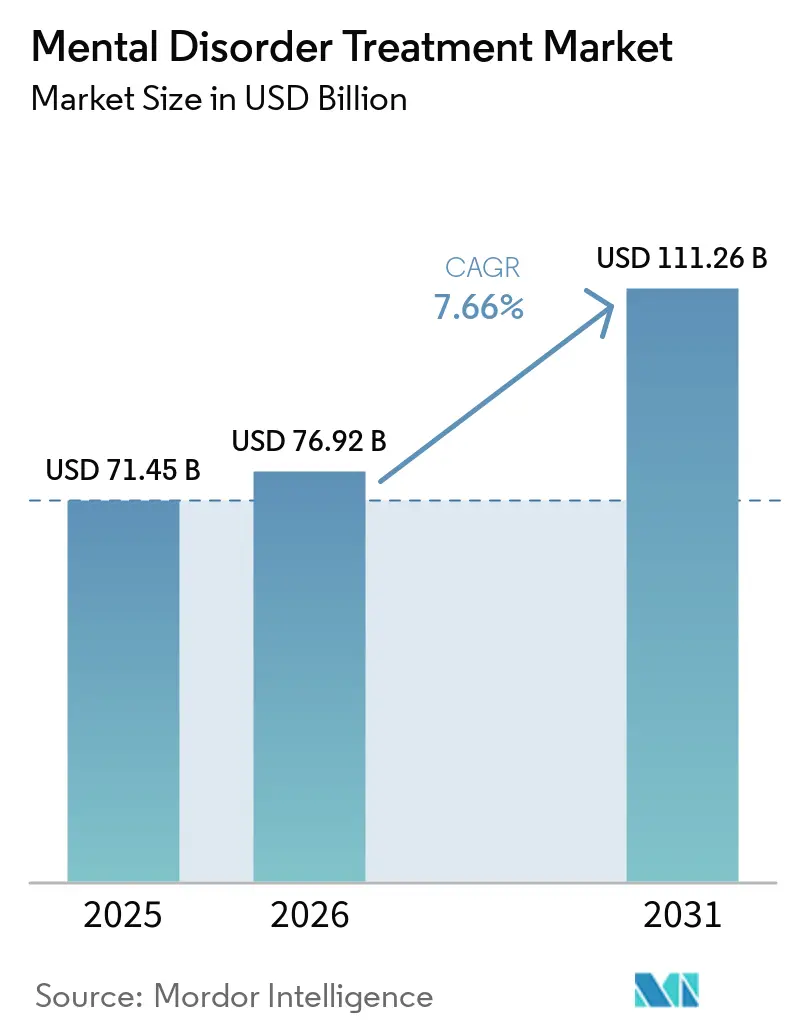
The Mental Disorder Treatment Market size was valued at USD 71.45 billion in 2025 and is estimated to grow from USD 76.92 billion in 2026 to reach USD 111.26 billion by 2031, at a CAGR of 7.66% during the forecast period (2026-2031).
The mental disorder treatment market is supported by the large population living with mental disorders, with the World Health Organization estimating that 1 in 8 people globally, or 970 million individuals, live with a mental disorder. Broader diagnosis, new treatment options, and improved reimbursement are increasing access to formal care. Digital screening and primary care services are reducing the time between symptom onset and diagnosis. The market is evolving as providers deliver medications, neuromodulation, and psychotherapy across hospitals, clinics, and home settings. Companies are strengthening neuroscience portfolios through acquisitions and developing treatments for patients who do not respond to conventional medications.
Key Report Takeaways
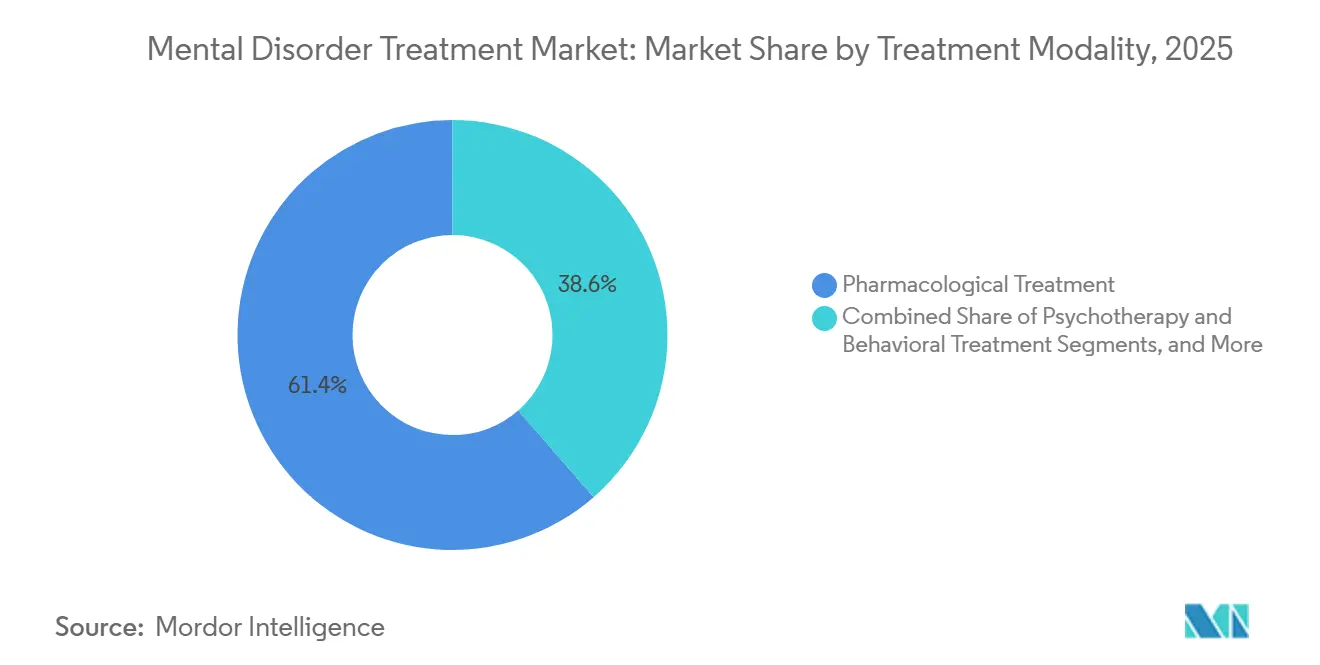
- By treatment modality, pharmacological treatment held 61.40% of the Mental disorder treatment market share in 2025, while psychotherapy and behavioral treatment are projected to expand at a CAGR of 10.55% through 2031.
- By disorder type, depressive disorders held 42.04% of the Mental disorder treatment market share in 2025, while attention deficit hyperactivity disorder is projected to expand at a CAGR of 9.71% through 2031.
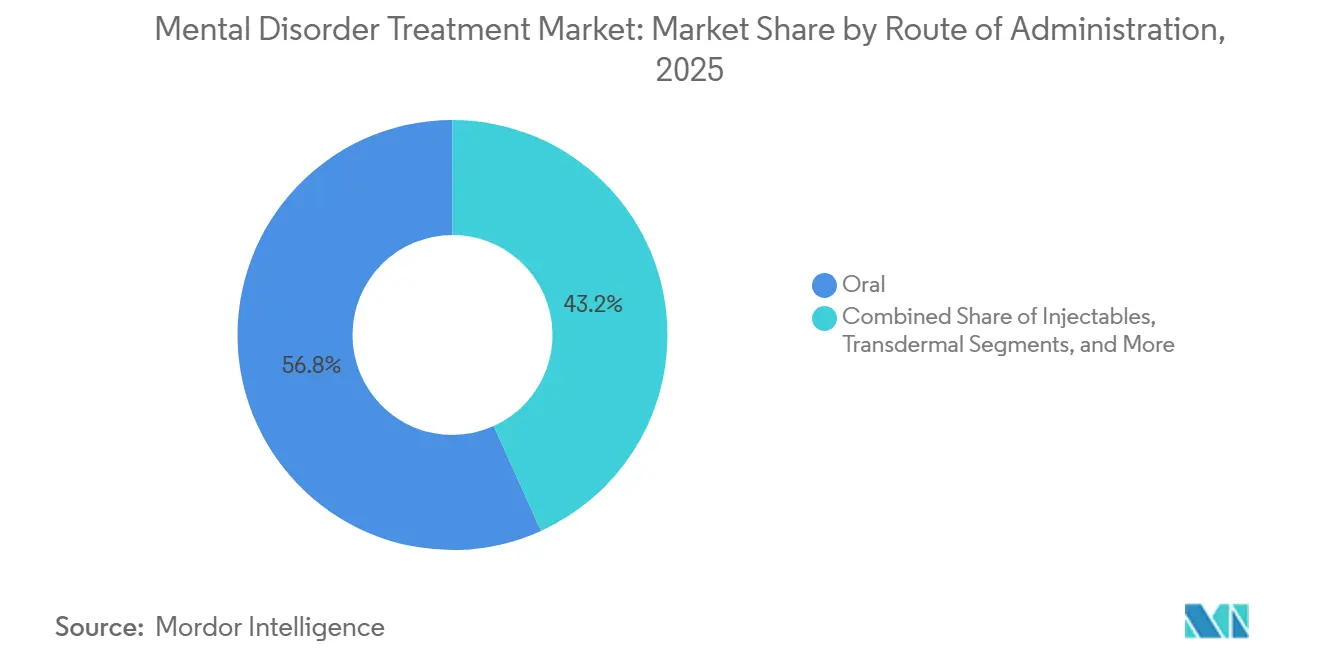
- By route of administration, oral formulations held 56.76% revenue share in 2025, while injectables are projected to expand at a CAGR of 8.25% through 2031.
- By end user, hospitals held 53.24% revenue share in 2025, while psychiatry facilities are projected to expand at a CAGR of 9.55% through 2031.
- By geography, North America held 42.45% revenue share in 2025, while Asia-Pacific is projected to expand at a CAGR of 10.73% through 2031.
Note: Market size and forecast figures in this report are generated using Mordor Intelligence’s proprietary estimation framework, updated with the latest available data and insights as of January 2026.
Global Mental Disorder Treatment Market Trends and Insights
Drivers Impact Analysis*
| DRIVER | (~) % IMPACT ON CAGR FORECAST | GEOGRAPHIC RELEVANCE | IMPACT TIMELINE |
|---|---|---|---|
| Rising diagnosis and treatment uptake | +2.0% | Global, with peak impact in North America, Europe, and urban Asia-Pacific | Short term (≤ 2 years) |
| Expansion of mental health coverage and reimbursement | +1.6% | North America and Western Europe, with spillover to Asia-Pacific and the Middle East and Africa | Medium term (2-4 years) |
| Novel mechanisms for treatment-resistant disorders | +1.5% | North America, followed by Europe | Medium term (2-4 years) |
| Integration of mental health into primary care | +1.0% | Global, with early gains in United States collaborative care models and United Kingdom digital pathways | Medium term (2-4 years) |
| Measurement-based care and digital screening expansion | +0.8% | North America, Europe, India, South Korea, and Japan | Medium term (2-4 years) |
| Limited psychiatric capacity supporting long-acting and home treatments | +0.7% | Global, with particular relevance in Asia-Pacific and South America | Long term (≥ 4 years) |
| Source: Mordor Intelligence | |||
Novel Mechanisms for Treatment-Resistant Disorders
The mental disorder treatment market is expected to broaden treatment options for patients who do not respond to conventional antidepressants. In January 2025, the FDA approved SPRAVATO nasal spray as a monotherapy for adults with treatment-resistant depression, supported by Phase IV data showing Week 4 remission in 22.5% of patients versus 7.6% receiving placebo. At the time of approval, more than 140,000 patients across 77 countries are expected to have used the therapy. In January 2026, Neurolief received FDA Premarket Approval for ProlivRx, an at-home brain neuromodulation therapy for adults with major depressive disorder who have failed at least one prior antidepressant. These developments are expected to strengthen outpatient and home-based treatment options.
Rising Diagnosis and Treatment Uptake
Improved disease recognition is expected to expand the patient base in the mental disorder treatment market. Digital screening across primary care settings and employer-supported services can accelerate diagnosis and treatment initiation. The attention-deficit/hyperactivity disorder segment is forecast to grow at a CAGR of 9.71% from 2026 to 2031, driven by increased diagnosis among historically underidentified adults. The United States is estimated to have an estimated 21 million adults living with major depressive disorder in 2025.[1]World Health Organization, “World Mental Health Report Transforming Mental Health for All,” World Health Organization, who.int In January 2025, Neurocrine Biosciences initiated Phase 3 registrational studies for osavampator as an adjunctive treatment for adults with major depressive disorder. Treatment uptake will depend on both diagnostic infrastructure and medicine availability.
Expansion of Mental Health Coverage and Reimbursement
Reimbursement changes in 2025 and 2026 can support sustained treatment volumes in the mental disorder treatment market. The CMS 2026 Physician Fee Schedule added three Collaborative Care Model add-on G-codes and expanded behavioral health telehealth eligibility from January 1, 2026. The policy also extended direct Medicare billing privileges to marriage and family therapists and mental health counselors.[2]Centers for Medicare & Medicaid Services, “Medicare Physician Fee Schedule Final Rule,” Centers for Medicare & Medicaid Services, cms.gov France raised psychotherapy session reimbursement from EUR 30 (USD 32) to EUR 50 (USD 54) in May 2025, while Health Insurance continued to cover 60% of the cost. Predictable reimbursement can expand provider capacity, reduce patient access barriers, and support integrated coverage for medications and behavioral care.
Integration of Mental Health Into Primary Care
Primary care integration expands access for patients who do not routinely consult psychiatrists or psychologists. Collaborative care arrangements embed behavioral health expertise within routine medical services. The CMS ACCESS Model began in 2026 to advance value-based behavioral health care. This approach can increase the use of treatments that primary care clinicians can prescribe and monitor without complex titration.[3]Centers for Medicare & Medicaid Services, “ACCESS Model,” Centers for Medicare & Medicaid Services, cms.gov The mental disorder treatment market can benefit from expanded primary care capacity and stronger connections among screening, referral, and treatment.
Restraints Impact Analysis*
| RESTRAINT | (~) % IMPACT ON CAGR FORECAST | GEOGRAPHIC RELEVANCE | IMPACT TIMELINE |
|---|---|---|---|
| Generic erosion and loss of exclusivity | -1.2% | Global, most acute in North America and Western Europe where generic use is high | Short term (≤ 2 years) |
| Safety, tolerability, and monitoring requirements | -0.7% | Global, with REMS requirements most restrictive in North America | Medium term (2-4 years) |
| Fragmented reimbursement for psychotherapy and digital treatments | -0.6% | North America and Western Europe, with significant gaps in Asia-Pacific and South America | Medium term (2-4 years) |
| Low provider capacity and uneven treatment access | -0.5% | Asia-Pacific, South America, and the Middle East and Africa, with secondary effects in rural North America and Eastern Europe | Long term (≥ 4 years) |
| Source: Mordor Intelligence | |||
Generic Erosion and Loss of Exclusivity
Generic competition reduces branded medicine revenue and constrains research funding in the mental disorder treatment market. The impact is highest for established antidepressants and antipsychotics facing loss of exclusivity. Companies increasingly prioritize differentiated products that address unmet clinical needs. Larger pharmaceutical groups can manage development risks more effectively than smaller specialty companies, while acquisitions gain importance when internal programs fail or generic competition intensifies.
Fragmented Reimbursement for Psychotherapy and Digital Treatments
Reimbursement for psychotherapy and digital treatment tools remains fragmented despite improved medical coverage. CMS introduced 3 HCPCS Level II codes in 2025 for physician-billed digital cognitive behavioral therapy, creating a Medicare payment pathway for digital mental health treatment devices. Private insurer coverage continues to vary by state and product, limiting access after regulatory clearance. FDA approval for Flow Neuroscience’s FL-100 device in December 2025 did not resolve its reimbursement position in 2026. The mental disorder treatment market will remain uneven until payment structures consistently support psychotherapy and digital treatment delivery.
*Our forecasts treat driver/restraint impacts as directional, not additive. The impact forecasts reflect baseline growth, mix effects, and variable interactions.
Segment Analysis
By Treatment Modality: Pharmacological Treatment Holds the Largest Position While Psychotherapy Grows Fastest
Pharmacological treatment accounted for 61.40% of the mental disorder treatment market size by treatment modality in 2025. Its leading position reflects the broad use of antidepressants, antipsychotics, mood stabilizers, anxiolytics, and stimulants, supported by established formularies and prescriber familiarity. CAPLYTA received FDA approval as an adjunctive therapy with antidepressants for adults with major depressive disorder in November 2025. The therapy also received approval in April 2026 for schizophrenia relapse prevention, demonstrating a 63% reduction in relapse risk versus placebo and 84% of patients remaining relapse-free over six months.
Psychotherapy and behavioral treatment is forecast to grow at a CAGR of 10.55% between 2026 and 2031. Digital delivery expands therapist-supported care beyond traditional clinic capacity, while integrated and community-based models support coordinated behavioral care. In September 2025, BrainsWay received FDA clearance for an accelerated Deep TMS protocol for major depressive disorder. The protocol may shorten the standard four-week course and improve throughput at outpatient treatment centers. The late-2025 approval of Flow FL-100 and the January 2026 approval of ProlivRx support home-based neuromodulation beyond conventional hospital settings.



By Disorder Type: Depressive Disorders Anchor Revenue While Attention Deficit Hyperactivity Disorder Leads Growth
Depressive disorders represented 42.04% of the mental disorder treatment market size by disorder type in 2025. The segment has substantial treatment demand and a broad portfolio of branded and generic medicines, with an estimated 21 million adults in the United States living with major depressive disorder in 2025. The 2025 SPRAVATO monotherapy approval created a treatment option for adults with treatment-resistant depression. Anxiety disorders, schizophrenia spectrum disorders, and bipolar disorders also represent significant treatment needs, while post-traumatic stress disorder, obsessive-compulsive disorder, eating disorders, and substance use disorders have fewer established pharmaceutical options.
Attention deficit hyperactivity disorder is forecast to expand at a CAGR of 9.71% between 2026 and 2031. Growth reflects increased adult diagnosis, including among women and girls who have historically been underdiagnosed. Stimulant supply constraints have increased prescriber interest in non-stimulant options. Takeda expanded the availability of its attention deficit hyperactivity disorder portfolio in several international markets following regulatory approvals in 2025. This development reflects growing commercial focus on pediatric and adult demand outside North America within the mental disorder treatment market.
By Route of Administration: Oral Formulations Lead While Injectables Advance Adherence Management
Oral formulations held 56.76% of the mental disorder treatment market size by route of administration in 2025. Daily oral antidepressants, mood stabilizers, and stimulants are widely used as first-line treatments because they allow dose adjustment and patient self-administration. Their established use and lower cost of goods support their leading position. Transdermal delivery remains a smaller option for selegiline in major depression and certain attention deficit hyperactivity disorder medicines. Sublingual and nasal systems, including esketamine, address clinical needs beyond standard oral therapy.
Injectables are forecast to expand at a CAGR of 8.25% between 2026 and 2031. Long-acting injectable antipsychotics reduce daily dosing requirements in schizophrenia and bipolar disorder, with schedules ranging from monthly to three- and six-month intervals. Longer dosing intervals can support adherence management when missed medication increases relapse risk. REMS programs for medicines such as esketamine require supervised administration in the United States. These requirements may constrain access while concentrating treatment delivery in certified outpatient and psychiatry facilities.
By End User: Hospitals Retain the Largest Demand While Psychiatry Facilities Grow Fastest
Hospitals accounted for 53.24% of end-user demand in the mental disorder treatment market in 2025. Acute psychiatric inpatient care, emergency assessments, complex multidrug regimens, and high-acuity cases remain concentrated in hospital systems. General hospitals often provide psychiatric services because dedicated inpatient psychiatric beds are limited. Home-based care gained support from the 2025 and 2026 approvals for at-home neuromodulation devices. However, hospitals remain essential for patients requiring intensive supervision.
Psychiatry facilities are forecast to grow at a CAGR of 9.55% between 2026 and 2031. These facilities can provide supervised treatment for medicines subject to REMS requirements, including esketamine, and support collaborative care arrangements with primary care networks. The CMS ACCESS model supports measurement-based reporting for behavioral health value-based care. Dedicated facilities can expand specialist capacity through structured outpatient therapies and device-based treatments without relying solely on hospital expansion.
Geography Analysis
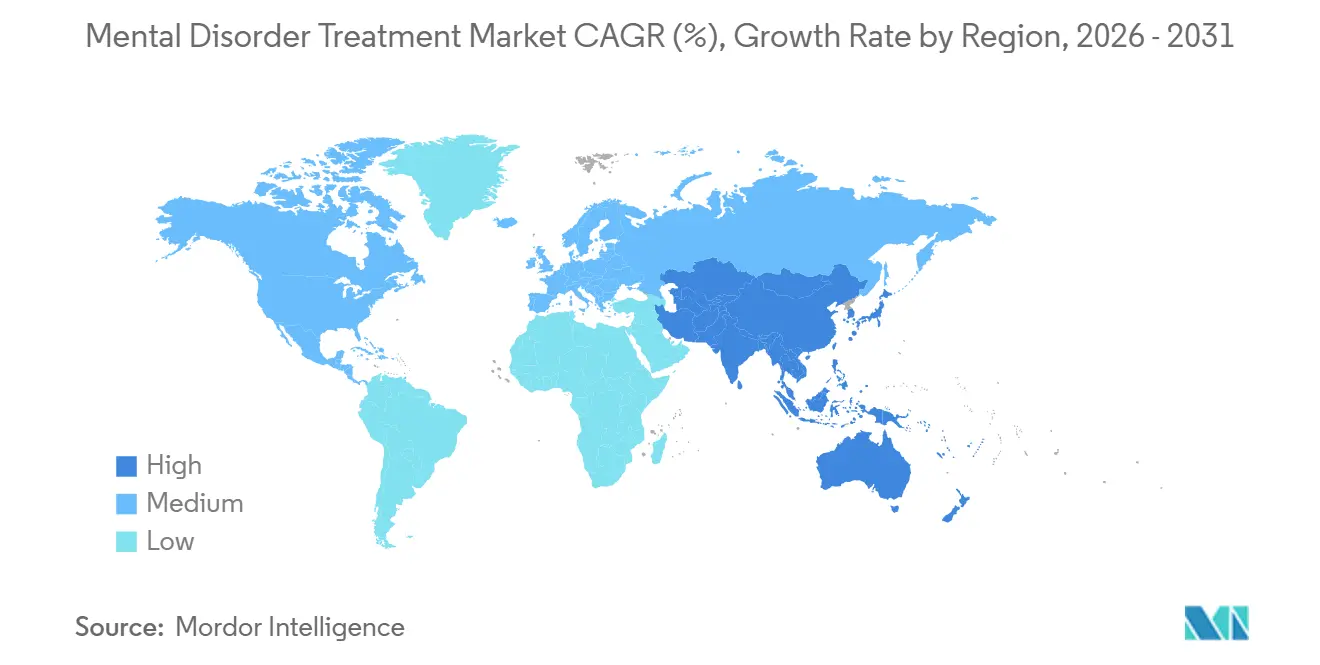
North America held a 42.45% regional revenue share in 2025, supported by established reimbursement channels, widespread use of branded psychiatric medicines, and formulary access through employer-sponsored insurance and Medicare. The CMS 2026 Physician Fee Schedule broadened behavioral health telehealth coverage, introduced collaborative care billing codes, and expanded billing privileges for mental health professionals. These measures support pharmacological treatment and psychotherapy delivery. Canada authorized ZURZUVAE for postpartum depression in December 2025, while Mexico remains less penetrated despite expanding urban private insurance coverage.
Europe was the second-largest region in the mental disorder treatment market. Germany provides statutory outpatient psychotherapy coverage, while the United Kingdom operates an NHS-integrated mental health delivery system. The MHRA approved zuranolone for postnatal depression in August 2025, and the European Commission approved ZURZUVAE for postpartum depression in September 2025. France increased psychotherapy session reimbursement from EUR 30 (USD 32) to EUR 50 (USD 54) in May 2025, with Health Insurance covering 60% of costs. Germany supports long-acting injectable antipsychotics, while Italy, Spain, and other markets are expanding capacity at varying rates.
Asia-Pacific is forecast to grow at a CAGR of 10.73% from 2026 to 2031, the fastest regional rate in the mental disorder treatment market. Government-backed digital health infrastructure, broader insurance coverage, and a large untreated mental health burden support access in China, India, and South Korea. Japan’s aging population supports demand for treatments for late-onset depression and Alzheimer’s disease-related psychosis. South Korea and Australia contribute through digital health regulation and platform reimbursement, while the Middle East and Africa remain smaller markets driven by Gulf Cooperation Council investment and South African policy commitments. Brazil and Argentina lead private psychiatric service development in South America.

Competitive Landscape
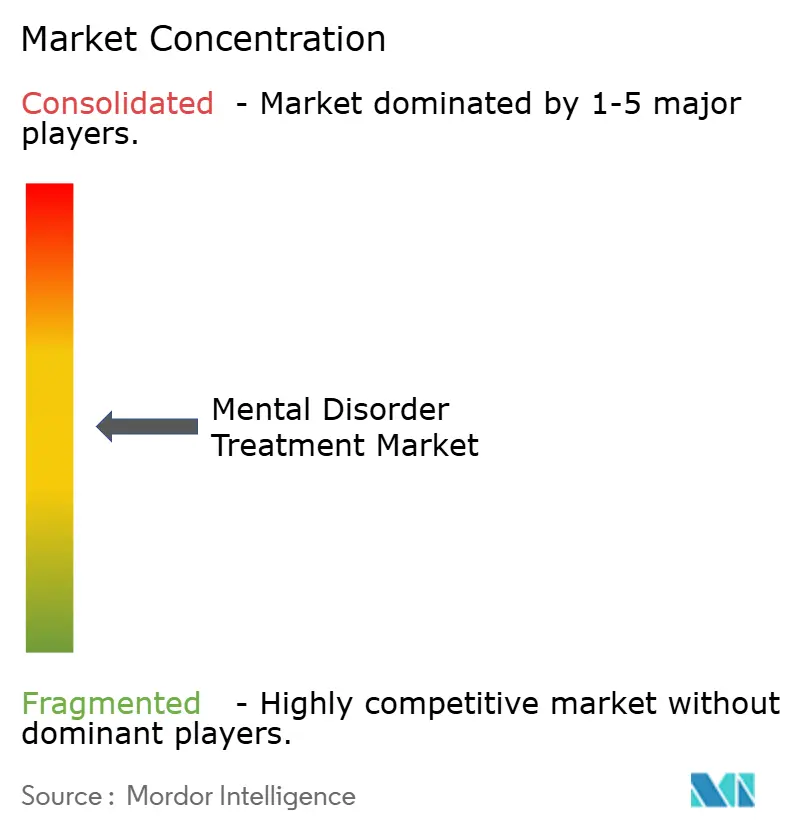
The Mental disorder treatment market has a moderately consolidated upper tier and a broad base of smaller competitors. Johnson & Johnson, AbbVie, Otsuka, Bristol-Myers Squibb, Lundbeck, Pfizer, and Teva compete across branded and generic psychiatric therapies. Axsome Therapeutics, Neurocrine Biosciences, Acadia Pharmaceuticals, and Alkermes operate in specialty therapies, while Cipla, Lupin, Sun Pharma, Amneal, and Hikma serve regional generics markets. BrainsWay, Flow Neuroscience, and Neurolief represent an expanding neurotechnology segment. Competition remains concentrated in newer branded treatments and fragmented across mature generic categories.
Acquisition is a key competitive strategy in the Mental disorder treatment market. Johnson & Johnson acquired Intra-Cellular Therapies in January 2025, adding CAPLYTA to its neuroscience portfolio, including SPRAVATO and the Invega long-acting injectable family. AbbVie agreed to acquire Gilgamesh Pharmaceuticals’ bretisilocin, a Phase 2 serotonergic psychedelic-derived treatment for major depressive disorder, for USD 1.2 billion in July 2026. The deal followed AbbVie’s USD 3.5 billion charge related to the January 2025 emraclidine Phase 2 failure. These transactions demonstrate the use of external programs to strengthen neuroscience pipelines.
Key opportunities include treatment-resistant depression, suicidal depression, post-traumatic stress disorder, eating disorders, and substance use disorders. NRx Pharmaceuticals confirmed a path toward an NDA for NRX-100 following an FDA Type-C meeting in March 2026. Otsuka’s Abilify MyCite combines medicine with a digital adherence sensor, while Axsome received FDA approval in April 2026 for AUVELITY to treat agitation associated with dementia due to Alzheimer’s disease. AUVELITY was positioned as the first non-antipsychotic treatment for this indication. Competition will depend on clinical differentiation, regulatory progress, reimbursement, and appropriate treatment settings.
Mental Disorder Treatment Industry Leaders
Eli Lilly and Company
H. Lundbeck A/S
Otsuka Holdings Co., Ltd.
Johnson & Johnson
Pfizer Inc.
- *Disclaimer: Major Players sorted in no particular order

Recent Industry Developments
- July 2026: AbbVie agreed to acquire Gilgamesh Pharmaceuticals’ Phase 2 psychedelic-derived depression candidate, bretisilocin, for USD 1.2 billion, strengthening its psychiatry pipeline following the January 2025 emraclidine Phase 2 setback.
- June 2026: NRx Pharmaceuticals confirmed an NDA submission pathway for NRX-100, preservative-free intravenous ketamine for suicidal depression, supported by real-world data from over 70,000 patients and existing FDA designations.
- April 2026: The FDA approved Johnson & Johnson’s supplemental NDA for CAPLYTA to prevent schizophrenia relapse, supported by trial data showing a 63% lower relapse risk versus placebo and an 84% relapse-free rate over six months.
- April 2026: Axsome Therapeutics received FDA approval for AUVELITY as the first non-antipsychotic oral treatment for Alzheimer ’s-related dementia agitation, with a launch price of USD 1,248 per 30-day supply.
- January 2026: Neurolief received FDA Class III Premarket Approval for ProlivRx, an at-home, physician-directed brain neuromodulation therapy for major depressive disorder, based on the MOOD Study conducted across 13 sites in the United States and Israel.


Global Mental Disorder Treatment Market Report Scope
As per the scope of the report, mental disorders involve patterns of behavior or thought that affect a person's quality of life and ability to perform routine activities. They are diagnosed by trained professionals using criteria from guides like the DSM or ICD.
The mental disorder treatment market is segmented by treatment modality, disorder type, route of administration, end user, and geography. By treatment modality, the market is segmented into pharmacological treatment, psychotherapy and behavioral treatment, integrated and community-based treatment, and neuromodulation and other treatments. Pharmacological treatment includes antidepressants, antipsychotics, anxiolytics and hypnotics, mood stabilizers, stimulants, non-stimulant ADHD medications, and other psychotropic medications. By disorder type, the market is categorized into depressive disorders, anxiety disorders, schizophrenia spectrum disorders, bipolar disorders, attention-deficit/hyperactivity disorder, post-traumatic stress disorder, obsessive-compulsive disorder, eating disorders, substance use and addictive disorders, and others. By route of administration, the market is segmented into oral, injectable, transdermal, and others. By end user, the market is segmented into hospitals, psychiatric facilities, outpatient clinics, specialty mental health centers, rehabilitation centers, home-based care, and others. By geography, the market is analyzed across North America, Europe, Asia-Pacific, the Middle East and Africa, and South America. The report also covers the estimated market sizes and trends for 17 countries across major regions globally. The report offers market sizes and forecasts in terms of value (USD) for the above segments.
| Pharmacological Treatment | Antidepressants |
| Antipsychotics | |
| Anxiolytics and Hypnotics | |
| Mood Stabilizers | |
| Stimulants | |
| Non-Stimulant ADHD Medicines | |
| Other Psychotropic Medicines | |
| Psychotherapy and Behavioral Treatment | |
| Integrated and Community-Based Treatment | |
| Neuromodulation and Other Treatment |
| Depressive Disorders |
| Anxiety Disorders |
| Schizophrenia Spectrum Disorders |
| Bipolar Disorders |
| Attention Deficit Hyperactivity Disorder |
| Post-Traumatic Stress Disorder |
| Obsessive-Compulsive Disorder |
| Eating Disorders |
| Substance Use and Addictive Disorders |
| Others |
| Oral |
| Injectables |
| Transdermal |
| Others |
| Hospitals |
| Psychiatry Facilities |
| Outpatient Clinics |
| Specialty Mental Health Centers |
| Rehabilitation Centers |
| Home-Based Care |
| Others |
| North America | United States |
| Canada | |
| Mexico | |
| Europe | Germany |
| United Kingdom | |
| France | |
| Italy | |
| Spain | |
| Rest of Europe | |
| Asia-Pacific | China |
| India | |
| Japan | |
| Australia | |
| South Korea | |
| Rest of Asia-Pacific | |
| Middle East and Africa | GCC |
| South Africa | |
| Rest of Middle East and Africa | |
| South America | Brazil |
| Argentina | |
| Rest of South America |
| By Treatment Modality | Pharmacological Treatment | Antidepressants |
| Antipsychotics | ||
| Anxiolytics and Hypnotics | ||
| Mood Stabilizers | ||
| Stimulants | ||
| Non-Stimulant ADHD Medicines | ||
| Other Psychotropic Medicines | ||
| Psychotherapy and Behavioral Treatment | ||
| Integrated and Community-Based Treatment | ||
| Neuromodulation and Other Treatment | ||
| By Disorder Type | Depressive Disorders | |
| Anxiety Disorders | ||
| Schizophrenia Spectrum Disorders | ||
| Bipolar Disorders | ||
| Attention Deficit Hyperactivity Disorder | ||
| Post-Traumatic Stress Disorder | ||
| Obsessive-Compulsive Disorder | ||
| Eating Disorders | ||
| Substance Use and Addictive Disorders | ||
| Others | ||
| By Route of Administration | Oral | |
| Injectables | ||
| Transdermal | ||
| Others | ||
| By End User | Hospitals | |
| Psychiatry Facilities | ||
| Outpatient Clinics | ||
| Specialty Mental Health Centers | ||
| Rehabilitation Centers | ||
| Home-Based Care | ||
| Others | ||
| By Geography | North America | United States |
| Canada | ||
| Mexico | ||
| Europe | Germany | |
| United Kingdom | ||
| France | ||
| Italy | ||
| Spain | ||
| Rest of Europe | ||
| Asia-Pacific | China | |
| India | ||
| Japan | ||
| Australia | ||
| South Korea | ||
| Rest of Asia-Pacific | ||
| Middle East and Africa | GCC | |
| South Africa | ||
| Rest of Middle East and Africa | ||
| South America | Brazil | |
| Argentina | ||
| Rest of South America | ||


Key Questions Answered in the Report
What is the projected value of mental disorder treatment by 2031?
The Mental disorder treatment market is projected to reach USD 111.26 billion by 2031, growing at a CAGR of 7.66% from 2026.
Which treatment modality has the largest revenue position?
Pharmacological treatment led with 61.40% revenue share in 2025, supported by broad use of established psychiatric medicine classes.
Which disorder category generates the most revenue?
Depressive disorders held 42.04% share in 2025, supported by high treatment demand and a broad range of available therapies.
Which route of administration is growing fastest?
Injectables are forecast to grow at a CAGR of 8.25% through 2031, as long-acting antipsychotics support adherence management.
Which end-user setting is expected to grow fastest?
Psychiatry facilities are forecast to grow at a CAGR of 9.55% through 2031, supported by supervised therapies and collaborative care.
Which region is forecast to grow fastest?
Asia-Pacific is forecast to grow at a CAGR of 10.73% through 2031, supported by digital health infrastructure and expanding access.
Page last updated on:





