
Meningococcal Disease Treatment Market Size and Share
Market Overview
| Study Period | 2020 - 2031 |
|---|---|
| Market Size (2026) | USD 6.81 Billion |
| Market Size (2031) | USD 9.76 Billion |
| Growth Rate (2026 - 2031) | 7.45 % |
| Fastest Growing Market | Asia-Pacific |
| Largest Market | North America |
| Market Concentration | Medium |
Major Players *Disclaimer: Major Players sorted in no particular order Image © Mordor Intelligence. Reuse requires attribution under CC BY 4.0. | |
Meningococcal Disease Treatment Market Analysis by Mordor Intelligence
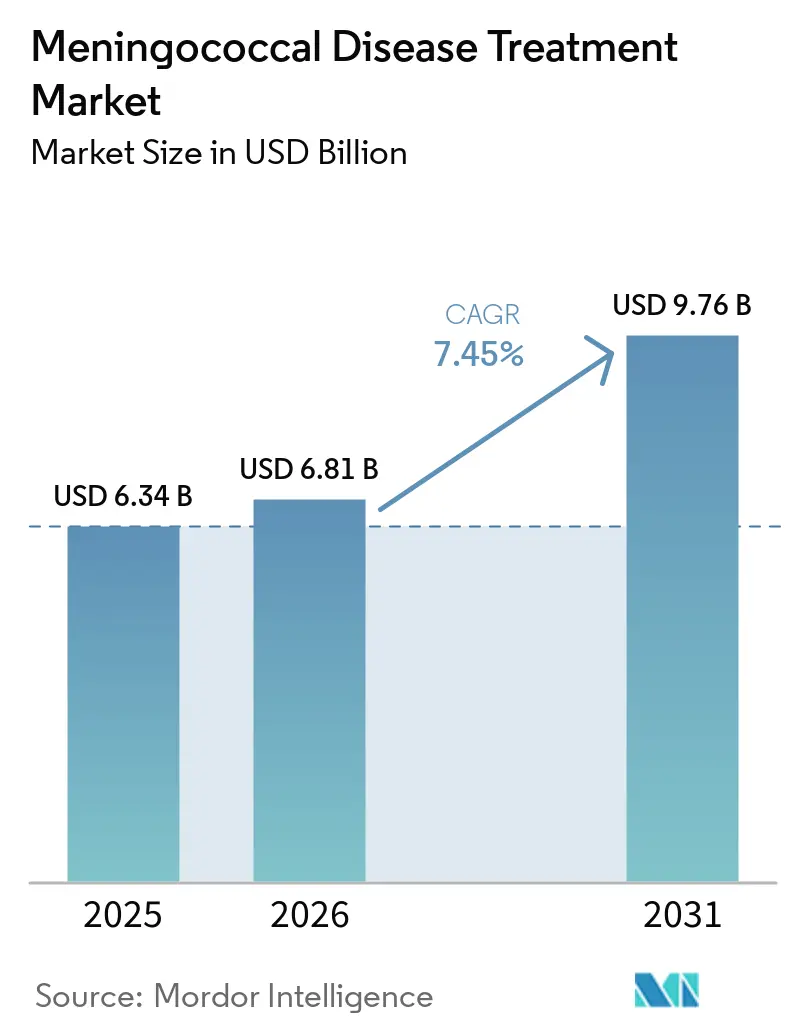
The Meningococcal Disease Treatment Market size was valued at USD 6.34 billion in 2025 and is estimated to grow from USD 6.81 billion in 2026 to reach USD 9.76 billion by 2031, at a CAGR of 7.45% during the forecast period (2026-2031).
The meningococcal disease treatment market is supported by expanded vaccine coverage and renewed focus on invasive meningococcal disease following the pandemic. New pentavalent vaccines can reduce immunization visits while broadening protection across serogroups. WHO guidance has strengthened the role of empiric intravenous treatment across healthcare settings. These factors support vaccine demand, antibiotic procurement, and public health distribution networks; however, high vaccine coverage, generic competition, and antimicrobial stewardship can limit revenue growth in established care settings.
Key Report Takeaways
- By therapy type, meningococcal vaccines held 48.79% of the Meningococcal disease treatment market share in 2025, while antibiotic therapy is projected to grow at 7.98% CAGR through 2031.
- By route of administration, intravenous administration accounted for 51.34% of the Meningococcal disease treatment market size in 2025, while oral administration is projected to expand at 9.44% CAGR through 2031.
- By disease manifestation, meningococcal meningitis held 58.54% of revenue in 2025, while meningococcemia and meningococcal sepsis are projected to grow at 10.55% CAGR through 2031.
- By patient age group, adolescents and young adults accounted for 31.67% of revenue in 2025, while neonates and infants are projected to expand at 8.25% CAGR through 2031.
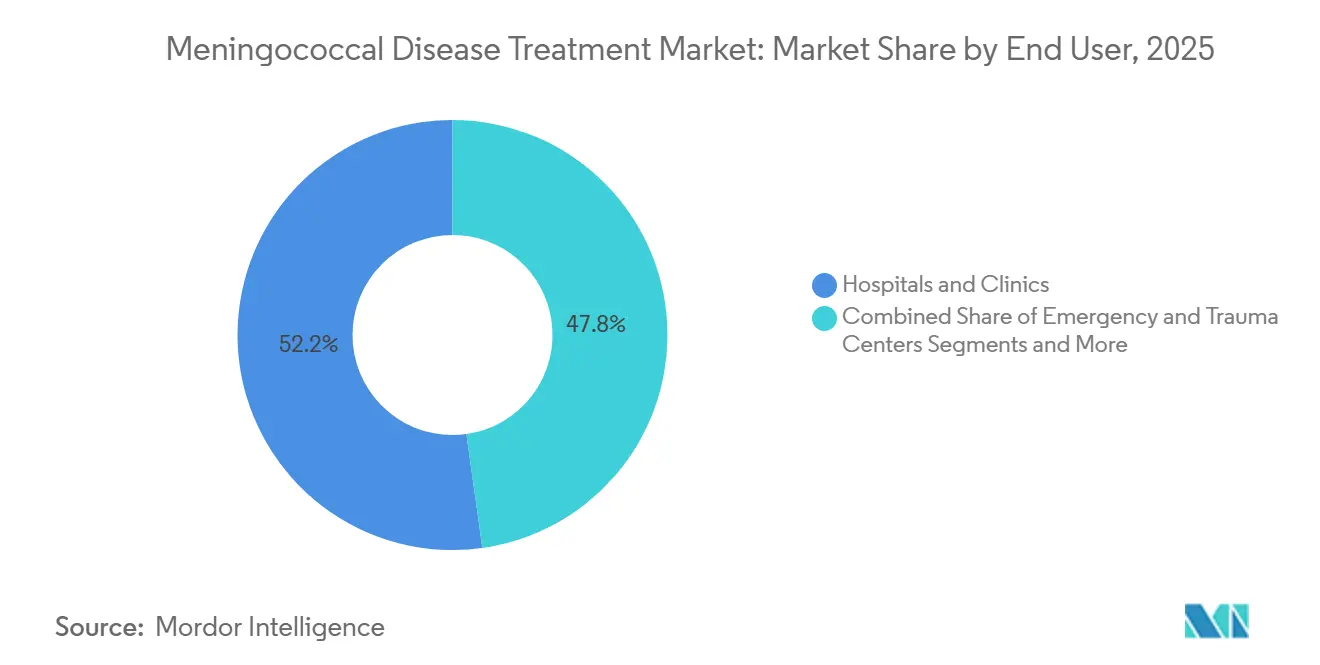
- By end user, hospitals and clinics held 52.22% of revenue in 2025, while public health and vaccination centers are projected to grow at 8.65% CAGR through 2031.
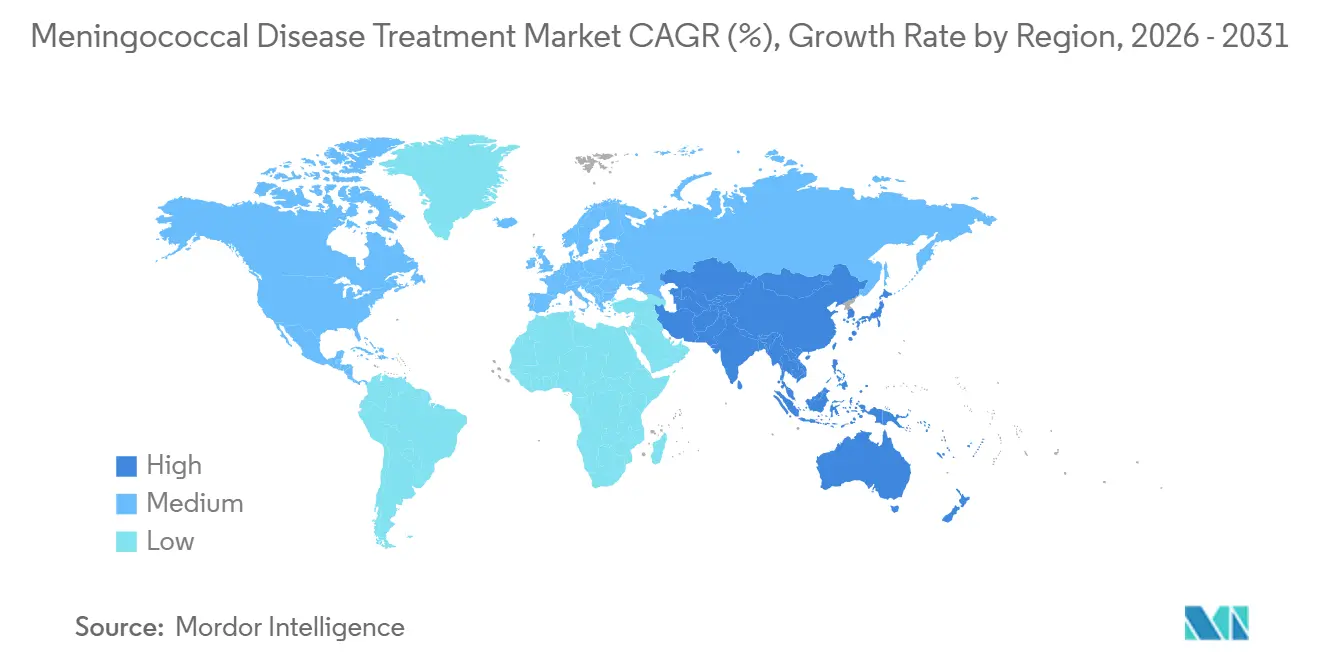
- By geography, North America held 39.72% of global revenue in 2025, while Asia-Pacific is projected to expand at 9.94% CAGR through 2031.
Note: Market size and forecast figures in this report are generated using Mordor Intelligence’s proprietary estimation framework, updated with the latest available data and insights as of January 2026.
Global Meningococcal Disease Treatment Market Trends and Insights
Drivers Impact Analysis*
| DRIVER | (~) % IMPACT ON CAGR FORECAST | GEOGRAPHIC RELEVANCE | IMPACT TIMELINE |
|---|---|---|---|
| Rising demand for rapid empiric antimicrobial treatment | +1.2% | Global, with acute relevance in Sub-Saharan Africa, South Asia, and Southeast Asia | Short term (≤ 2 years) |
| Expansion of meningococcal immunization programs | +1.8% | Global, strongest in Asia-Pacific and African meningitis belt countries | Medium term (2-4 years) |
| Broader multivalent vaccine coverage | +1.5% | North America and Europe, extending to Asia-Pacific and Middle East and Africa | Medium term (2-4 years) |
| Growing outbreak preparedness and contact prophylaxis | +0.8% | Middle East and Africa, Europe, and North America | Short term (≤ 2 years) |
| WHO defeating meningitis by 2030 implementation | +1.0% | Global, prioritized in 26 high-burden nations | Long term (≥ 4 years) |
| Resistance-driven switching in chemoprophylaxis | +0.7% | North America, Europe, and China | Medium term (2-4 years) |
| Source: Mordor Intelligence | |||
Rising Demand for Rapid Empiric Antimicrobial Treatment
Immediate antimicrobial treatment is reshaping purchasing patterns beyond high-income hospitals. In April 2025, the WHO issued its first global guidelines for meningitis diagnosis, treatment, and care, strongly recommending empiric intravenous ceftriaxone or cefotaxime for suspected bacterial meningitis across first-level and second-level health facilities.[1]World Health Organization, “WHO Launches First-Ever Guidelines on Meningitis Diagnosis, Treatment and Care,” WHO News Release, who.int. These guidelines establish a consistent treatment standard for systems that previously relied on less suitable empiric regimens. The meningococcal disease treatment market benefits from formal antibiotic stocking requirements and emergency preparedness budgets linked to intravenous antibiotic procurement. In Sub-Saharan Africa, district facilities increasingly maintain advanced antibiotic stocks to reduce treatment delays, supporting planned contracts and more predictable demand despite variations in local case counts.
Expansion of Meningococcal Immunization Programs
National immunization programs in low-income and middle-income countries remain a key source of vaccine demand. In April 2025, Gavi sent more than 1 million Men5CV doses to Nigeria in response to an outbreak involving meningococcal serogroups C and W, which caused more than 70 deaths across 23 states; the Interagency Coordinating Group approved an additional 1.5 million doses in March 2025.[2]Gavi, the Vaccine Alliance, “Gavi-Funded Meningococcal Vaccines Arrive in Nigeria to Aid Outbreak Response,” Gavi Media Room, gavi.org. These actions highlight the scale of centrally coordinated procurement during outbreaks and support the shift from reactive purchasing to planned coverage. Niger completed its first nationwide preventive mass campaign using Men5CV in 2025, expanding population protection in the African meningitis belt. A 2025 Asia-Pacific consensus found that many countries had not included meningococcal vaccines in national programs, creating opportunities for sustained public procurement through the late 2020s, subject to affordability and procurement requirements.
Broader Multivalent Vaccine Coverage
Multivalent vaccines are expanding routine protection against meningococcal serogroups. The FDA approved GSK’s Penmenvy in February 2025 for individuals aged 10 to 25 years; the vaccine combines the components of Bexsero and Menveo into one pentavalent vaccine. ACIP recommended its use in April 2025 when MenACWY and MenB are both indicated during the same visit, enabling combined protection in a single clinical encounter. Sanofi received U.S. approval for MenQuadfi in infants aged 6 weeks and older in May 2025, while the European Commission approved the same infant indication in August 2026. Its use alongside routine hexavalent vaccines at 2-month, 3-month, and 4-month visits expands access to earlier patient cohorts and increases the importance of schedule compatibility in national tenders.
WHO Defeating Meningitis by 2030 Implementation
WHO’s Defeating Meningitis by 2030 roadmap provides a policy framework for strengthening prevention, diagnosis, and care. In February 2025, WHO reported progress but noted that midterm milestones remained incomplete; the roadmap aims to reduce meningitis cases by 50% and deaths by 70% by 2030.[3]World Health Organization, “Defeating Meningitis by 2030, Global Road Map,” WHO Executive Board Document, who.int. The meningococcal disease treatment market benefits when national plans translate into funded procurement and service delivery programs. WHO convened regional workshops in Copenhagen and Cairo in July 2026 to accelerate national plan development, while WHO and PAHO reported that fewer than 10% of member states had met the national-plan commitment. Full roadmap implementation could avert 2.75 million cases and 920,000 deaths by 2030 and generate healthcare savings of USD 3.8 billion to USD 10.0 billion.
Restraints Impact Analysis*
| RESTRAINT | (~) % IMPACT ON CAGR FORECAST | GEOGRAPHIC RELEVANCE | IMPACT TIMELINE |
|---|---|---|---|
| Declining disease incidence in highly vaccinated markets | -1.2% | North America, Western Europe, and Australia | Long term (≥ 4 years) |
| Short treatment duration and generic substitution | -0.9% | Global, with stronger relevance in Asia-Pacific and South America | Medium term (2-4 years) |
| Antimicrobial stewardship reducing broad-spectrum use | -0.7% | North America, Europe, and Australia | Medium term (2-4 years) |
| Improved diagnostic confirmation reducing empiric treatment duration | -0.5% | North America, Europe, and East Asia | Medium term (2-4 years) |
| Source: Mordor Intelligence | |||
Declining Disease Incidence in Highly Vaccinated Markets
Sustained vaccination programs can reduce demand for acute disease treatment in North America and Western Europe. By 2024 to 2025, England’s MenACWY program had substantially reduced disease caused by serogroups C, W, and Y through direct and herd protection. MenB remained the country’s primary residual disease burden. U.S. surveillance recorded 438 invasive meningococcal disease cases in 2023 and 477 cases in 2024. Lower case volumes constrain demand for antibiotics and supportive care, particularly in treatment categories directly linked to disease incidence. Broader vaccine coverage increases vaccine sales but can reduce subsequent treatment revenue. This impact is lower for vaccination products than for acute care products administered after infection. Antimicrobial stewardship programs and faster diagnostic confirmation further limit unnecessary broad-spectrum and empiric treatment.
Short Treatment Duration and Generic Substitution
WHO’s 2025 guidance recommends a 7-day course of intravenous ceftriaxone for meningococcal disease treatment. This short treatment duration limits antibiotic revenue per episode. Ceftriaxone, rifampin, ciprofloxacin, and azithromycin are off patent, enabling institutional buyers to procure these products through competitive tenders. Aurobindo, Cipla, Hikma, Sandoz, and Lupin compete for these supply contracts. The meningococcal disease treatment market has limited pricing flexibility for generic treatment and prophylaxis products. Affordability constraints are particularly significant in public procurement systems. A Chinese cost-effectiveness analysis found that quadrivalent conjugate vaccine prices would need to decline to USD 12 per dose to meet national cost-effectiveness thresholds. Program expansion can increase volumes while constraining manufacturer margins.[4]Michael Bröker et al., “Joint Consensus on Reducing the Burden of Invasive Meningococcal Disease in the Asia-Pacific Region,” Human Vaccines & Immunotherapeutics, pubmed.ncbi.nlm.nih.gov.
*Our forecasts treat driver/restraint impacts as directional, not additive. The impact forecasts reflect baseline growth, mix effects, and variable interactions.
Segment Analysis
By Therapy Type: Vaccines Lead While Antibiotic Demand Responds to Resistance
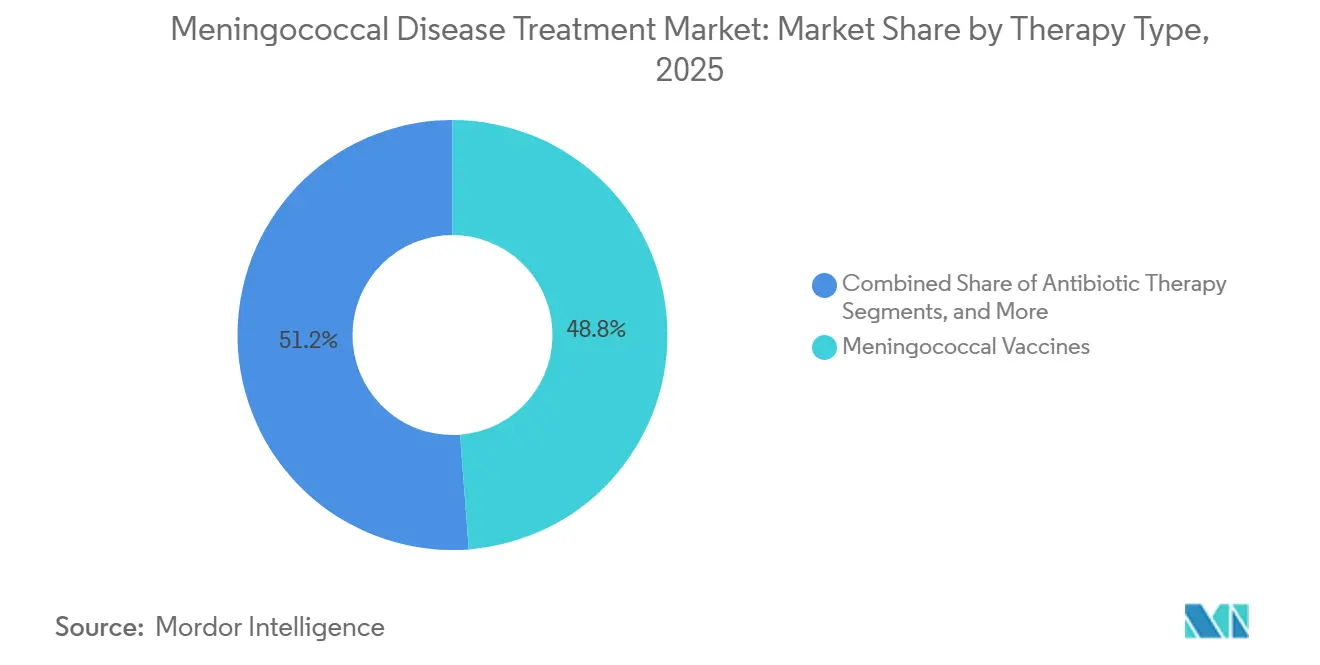
Meningococcal vaccines held 48.79% of the Meningococcal disease treatment market share in 2025, supported by established conjugate and protein-subunit vaccine portfolios. The category includes MenACWY conjugates, MenB protein-based formulations, and pentavalent MenABCWY platforms such as GSK’s Penmenvy. Combined coverage simplifies vaccination schedules for eligible adolescents and young adults while increasing value per immunization visit by replacing separate products. Serum Institute, Walvax, and Sanofi support supply through commercial and public procurement channels, extending coverage across lower-income countries and Gavi-supported deployments. The Meningococcal disease treatment industry depends on branded adoption and an accessible public supply.
Antibiotic therapy is forecast to grow at 7.98% CAGR from 2026 to 2031. Resistance patterns are directing clinical protocols toward alternative and more closely monitored treatment options. CDC guidance issued in 2024 advised alternatives to ciprofloxacin for close contacts in areas with documented resistance, including rifampin, ceftriaxone, and azithromycin. This shift can increase clinical oversight and alter the mix of agents purchased. Chemoprophylaxis and supportive care remain important for outbreak response, contact management, and hospital demand under WHO guidance on dexamethasone use.



By Route of Administration: Intravenous Care Leads While Oral Prophylaxis Expands
Intravenous administration held 51.34% of the Meningococcal disease treatment market size in 2025. WHO strongly recommends empiric intravenous ceftriaxone or cefotaxime when bacterial meningitis is suspected in epidemic and non-epidemic settings. Intravenous delivery also supports dexamethasone, fluid resuscitation, and vasoactive agents, which are essential in intensive care management. Intramuscular delivery remains relevant for vaccines and single-dose ceftriaxone prophylaxis, particularly in field settings. The Meningococcal disease treatment market retains a strong acute-care base in intravenous delivery.
Oral administration is forecast to expand at 9.44% CAGR from 2026 to 2031. Growth reflects changes in contact-prophylaxis practices in areas with ciprofloxacin resistance. CDC guidance identified oral rifampin and azithromycin as alternatives where resistance exceeded 20% of local cases. This can shift prophylaxis toward ambulatory public health channels and simplify rapid contact management during outbreaks. Spain reported dual resistance to penicillin and ciprofloxacin in ST-3587 in 2026, reinforcing the relevance of resistance beyond the United States.
By Disease Manifestation: Meningitis Leads While Sepsis Gains Recognition
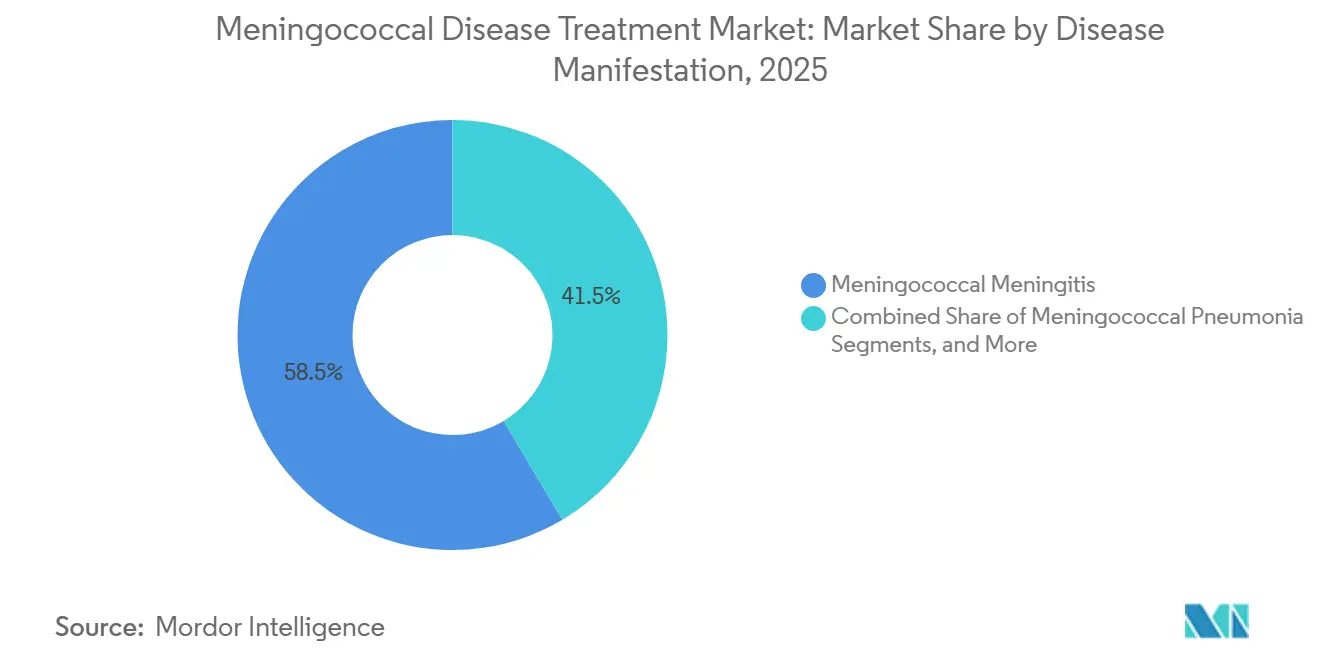
Meningococcal meningitis accounted for 58.54% of the Meningococcal disease treatment market size in 2025. It remains the most recognized presentation of invasive meningococcal disease, with fever, neck stiffness, and photophobia guiding clinical assessment. Diagnostic and treatment protocols are often structured around this presentation. Meningococcal Pneumonia, Arthritis, and Epiglottitis contribute smaller revenue pools because of their relative clinical rarity. The Meningococcal disease treatment market remains anchored by the established meningitis care pathway.
Meningococcemia and meningococcal sepsis are forecast to grow at 10.55% CAGR from 2026 to 2031. Improved diagnostic capture is bringing cases previously coded as generic sepsis into meningococcal reporting. WHO’s 2025 management framework covers meningitis and septicemic invasive disease, supporting more consistent clinical identification and documentation. A 2025 report described fulminant disease in China caused by cefotaxime-resistant sequence type 4821. Septicemic disease can escalate rapidly and require intensive care, multiple supportive therapies, and close monitoring.
By Patient Age Group: Adolescents Lead While Infant Coverage Broadens
Adolescents and young Adults held 31.67% of revenue in 2025, representing the largest patient age-group share. This position aligns with routine MenACWY vaccination at ages 11 to 12 and a booster at age 16 in the United States. MenB vaccination is also considered for individuals aged 16 to 23 through shared clinical decision-making. College students have documented disease rates 1.6 to 3.1 times higher than their same-age peers who do not attend college. In England, people aged 15 to 24 represented 30% of MenB disease in 2024 to 2025, while accounting for 12% of the population.
Neonates and infants are forecast to grow at 8.25% CAGR from 2026 to 2031. Sanofi’s MenQuadfi received FDA approval for infants aged 6 weeks to 23 months in May 2025. The European Commission approved the indication for EU infants from 6 weeks in August 2026. These decisions align the vaccine with routine pediatric visits at 2 months, 3 months, and 4 months. The product can be administered alongside DTaP-IPV-HepB-Hib vaccines, making schedule compatibility central to tender competition.
By End User: Hospitals Lead While Public Health Centers Gain Ground
Hospitals and clinics held 52.22% of end-user spending in 2025. Invasive meningococcal disease requires resource-intensive acute care when illness is severe. The case-fatality rate is 10% to 15% even with appropriate treatment, and up to 20% of survivors can experience permanent sequelae. Emergency and Trauma Centers and Intensive Care Units manage severe septicemic cases using empiric intravenous antibiotics, corticosteroids, vasopressors, and fluid resuscitation. The Meningococcal disease treatment market remains hospital-centered for acute episodes.
Public health and vaccination centers are forecast to grow at 8.65% CAGR from 2026 to 2031. National programs in Asia-Pacific, Africa, and Latin America are expanding community distribution capacity. Gavi’s 2025 Nigeria deployment sent more than 1 million Men5CV doses through the Ministry of Health. WHO identifies primary and secondary health centers as delivery points for vaccine campaigns and contact prophylaxis. This model shifts spending toward community infrastructure, supporting broader prevention coverage and faster outbreak response.
Geography Analysis
North America held 39.72% of the meningococcal disease treatment market share in 2025, driven by high vaccine prices and established adolescent immunization systems. ACIP’s 2025 recommendation for pentavalent MenABCWY use when both components are indicated supports combined vaccination visits and may increase spending on higher-value branded vaccines for individuals aged 16 to 23 years. Ciprofloxacin-resistant serogroup Y strains exceeded 50% of cases in certain U.S. catchment areas. CDC guidance recommends alternative prophylaxis when resistance is detected, increasing demand for rifampin, azithromycin, and intramuscular ceftriaxone. The regional market reflects high-value vaccine utilization and targeted antibiotic procurement.
Europe has a mature immunization environment and effective outbreak management capabilities. In March 2026, a cluster of 21 confirmed MenB cases occurred in South East England, resulting in the administration of more than 13,000 chemoprophylaxis doses and 11,000 MenB vaccinations. Sanofi’s August 2026 infant approval also increases competition for European national immunization tenders. Asia-Pacific is forecast to grow at a CAGR of 9.94% from 2026 to 2031, as many countries continue to have gaps in meningococcal program inclusion. In China, the 2026 serogroup Y outbreak in Hubei was linked to adolescent immunization gaps, supporting market expansion as vaccination schedules broaden beyond limited serogroup coverage.
China’s NMPA approved the expansion of Menhycia’s eligible age range from 3 months to 6 years in February 2026, addressing a domestic gap in multivalent conjugate coverage for preschool children. India uses Serum Institute’s MenFive and imported quadrivalent conjugates for high-risk groups rather than universal routine immunization, while the 2025 Asia-Pacific consensus identified such program gaps as barriers to regional disease control. Middle East and Africa and South America remain highly sensitive to policy decisions. Gavi’s MenFive deployment supports the transition from monovalent MenA protection to coverage for serogroups C, W, and X in the African meningitis belt, while Niger’s preventive campaign provides a model for other countries. GCC countries sustain MenACWY demand through Hajj and Umrah vaccination requirements, while a 2025 report linked rising serogroup W disease in England to pilgrimage travel.

Competitive Landscape
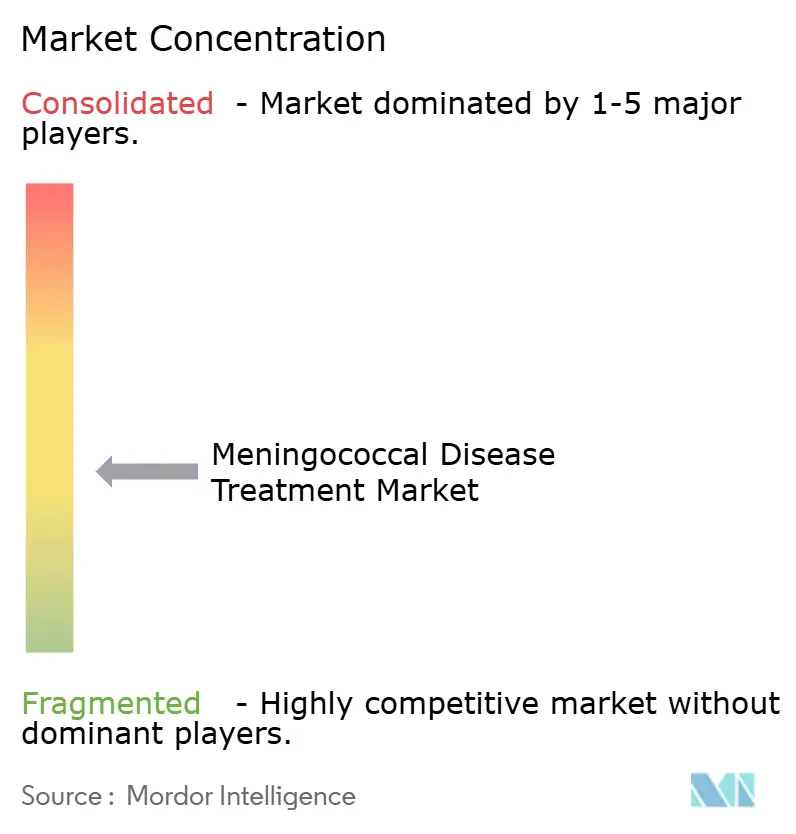
The meningococcal disease treatment market is moderately concentrated in the branded vaccine segment, led by GSK, Pfizer, and Sanofi. The antibiotic and chemoprophylaxis segment is more fragmented, with Aurobindo, Cipla, Hikma, Lupin, Sandoz, and Zydus competing through price-led institutional tenders. GSK expanded its position with the February 2025 approval of Penmenvy for people aged 10 to 25 years. Penmenvy combines MenB and MenACWY components in a single pentavalent product, supporting combined adolescent immunization visits and alignment with routine schedules.
Pfizer retains its pentavalent product position through Penbraya, with competition against GSK centered on combined protection for eligible adolescent patients. Sanofi is pursuing a differentiated strategy through MenQuadfi’s expanded infant indication. The FDA approved use from 6 weeks in May 2025, and the European Commission approved EU use from 6 weeks in August 2026. These approvals position MenQuadfi for national infant-schedule tenders, where age indications, serogroup coverage, supply reliability, and regulatory alignment are critical.
Serum Institute’s MenFive supports Gavi-backed procurement and African meningitis belt programs through affordable multivalent protection. CanSino Biologics and Walvax are expanding domestic quadrivalent coverage through age-indication extensions, while Zhifei Lvzhu supports downstream distribution of domestic and imported products in China. Resistance signals in China and Spain create a need for effective alternative injectable antibiotics. Eugia Pharma Specialities and Fresenius Kabi have sterile injectable manufacturing capabilities relevant to this requirement.
Meningococcal Disease Treatment Industry Leaders
Walvax Biotechnology Co., Ltd.
Pfizer Inc.
Serum Institute of India Private Limited
GSK plc
Sanofi
- *Disclaimer: Major Players sorted in no particular order

Recent Industry Developments
- August 2026: The European Commission approved Sanofi’s MenQuadfi for EU infants aged 6 weeks and older, enabling a 2+1 schedule with hexavalent vaccines and strengthening competition for national infant vaccine tenders.
- March 2026: A MenB cluster in South East England resulted in 21 confirmed invasive meningococcal disease cases and two fatalities; the response included over 13,000 chemoprophylaxis doses and 11,000 MenB vaccinations.
- February 2026: China’s NMPA expanded Menhycia’s age indication from 3–47 months to 3 months–6 years, supporting multivalent conjugate coverage for older children amid rising invasive meningococcal disease incidence.
- May 2025: The FDA approved MenQuadfi for infants aged 6 weeks to 23 months, enabling co-administration with routine well-child vaccines during standard pediatric visits.


Global Meningococcal Disease Treatment Market Report Scope
As per the scope of the report, meningococcal disease is a severe, life-threatening bacterial infection caused by Neisseria meningitidis that leads to inflammation of the protective membranes covering the brain and spinal cord (meningitis) or dangerous bloodstream infections (septicemia/meningococcemia).
The meningococcal disease treatment market is segmented by therapy type, route of administration, disease manifestation, patient age group, end user, and geography. By therapy type, the market includes antibiotic therapy, chemoprophylaxis, adjunctive and supportive care, and meningococcal vaccines. The meningococcal vaccines segment includes MenACWY vaccines, MenB vaccines, MenABCWY vaccines, MenA vaccines, and MenAC vaccines. By route of administration, the market is segmented into intravenous administration, intramuscular administration, oral administration, and subcutaneous administration. By disease manifestation, the market is categorized into meningococcal meningitis, meningococcemia and meningococcal sepsis, meningococcal pneumonia, meningococcal arthritis, meningococcal epiglottitis, and other invasive meningococcal disease manifestations. By patient age group, the market is segmented into neonates and infants, children, adolescents and young adults, adults, and older adults. By end user, the market is segmented into hospitals and clinics, emergency and trauma centers, intensive care units, public health and vaccination centers, and others. By geography, the market is analyzed across North America, Europe, Asia-Pacific, the Middle East and Africa, and South America. The report also covers the estimated market sizes and trends for 17 countries across major regions globally. The report offers market sizes and forecasts in terms of value (USD) for the above segments.
| Antibiotic Therapy | |
| Chemoprophylaxis | |
| Adjunctive and Supportive Care | |
| Meningococcal Vaccines | MenACWY Vaccines |
| MenB Vaccines | |
| MenABCWY Vaccines | |
| MenA Vaccines | |
| MenAC Vaccines |
| Intravenous Administration |
| Intramuscular Administration |
| Oral Administration |
| Subcutaneous Administration |
| Meningococcal Meningitis |
| Meningococcemia and Meningococcal Sepsis |
| Meningococcal Pneumonia |
| Meningococcal Arthritis |
| Meningococcal Epiglottitis |
| Other Invasive Meningococcal Disease Manifestations |
| Neonates and Infants |
| Children |
| Adolescents and Young Adults |
| Adults |
| Older Adults |
| Hospitals and Clinics |
| Emergency and Trauma Centers |
| Intensive Care Units |
| Public Health and Vaccination Centers |
| Others |
| North America | United States |
| Canada | |
| Mexico | |
| Europe | Germany |
| United Kingdom | |
| France | |
| Italy | |
| Spain | |
| Rest of Europe | |
| Asia-Pacific | China |
| India | |
| Japan | |
| Australia | |
| South Korea | |
| Rest of Asia-Pacific | |
| Middle East and Africa | GCC |
| South Africa | |
| Rest of Middle East and Africa | |
| South America | Brazil |
| Argentina | |
| Rest of South America |
| By Therapy Type | Antibiotic Therapy | |
| Chemoprophylaxis | ||
| Adjunctive and Supportive Care | ||
| Meningococcal Vaccines | MenACWY Vaccines | |
| MenB Vaccines | ||
| MenABCWY Vaccines | ||
| MenA Vaccines | ||
| MenAC Vaccines | ||
| By Route of Administration | Intravenous Administration | |
| Intramuscular Administration | ||
| Oral Administration | ||
| Subcutaneous Administration | ||
| By Disease Manifestation | Meningococcal Meningitis | |
| Meningococcemia and Meningococcal Sepsis | ||
| Meningococcal Pneumonia | ||
| Meningococcal Arthritis | ||
| Meningococcal Epiglottitis | ||
| Other Invasive Meningococcal Disease Manifestations | ||
| By Patient Age Group | Neonates and Infants | |
| Children | ||
| Adolescents and Young Adults | ||
| Adults | ||
| Older Adults | ||
| By End User | Hospitals and Clinics | |
| Emergency and Trauma Centers | ||
| Intensive Care Units | ||
| Public Health and Vaccination Centers | ||
| Others | ||
| By Geography | North America | United States |
| Canada | ||
| Mexico | ||
| Europe | Germany | |
| United Kingdom | ||
| France | ||
| Italy | ||
| Spain | ||
| Rest of Europe | ||
| Asia-Pacific | China | |
| India | ||
| Japan | ||
| Australia | ||
| South Korea | ||
| Rest of Asia-Pacific | ||
| Middle East and Africa | GCC | |
| South Africa | ||
| Rest of Middle East and Africa | ||
| South America | Brazil | |
| Argentina | ||
| Rest of South America | ||


Key Questions Answered in the Report
What is the 2026 value of the meningococcal disease treatment market?
The 2026 value is USD 6.81 billion, and it is projected to reach USD 9.76 billion by 2031 at a 7.45% CAGR.
Which therapy type leads to meningococcal disease treatment revenue?
Meningococcal Vaccines led therapy type revenue with a 48.79% share in 2025.
Which route of administration is growing fastest for meningococcal treatment?
Oral Administration is forecast to grow at 9.44% CAGR from 2026 to 2031, supported by changes in contact-prophylaxis protocols.
Why are pentavalent meningococcal vaccines important?
They combine coverage for multiple serogroups in 1 product and can reduce separate vaccination visits for eligible patients.
Which region is forecast to grow fastest through 2031?
Asia-Pacific is forecast to grow at 9.94% CAGR from 2026 to 2031, supported by unmet immunization program needs.
Which end-user setting is expanding fastest?
Public Health and Vaccination Centers is forecast to expand at 8.65% CAGR through 2031 as national immunization programs scale.
Page last updated on:





