
Lyophilized Product Market Size and Share
Market Overview
| Study Period | 2021 - 2032 |
|---|---|
| Market Size (2027) | USD 425.89 Billion |
| Market Size (2032) | USD 629.29 Billion |
| Growth Rate (2027 - 2032) | 8.12 % |
| Fastest Growing Market | Asia-Pacific |
| Largest Market | North America |
| Market Concentration | Medium |
Major Players *Disclaimer: Major Players sorted in no particular order Image © Mordor Intelligence. Reuse requires attribution under CC BY 4.0. | |
Lyophilized Product Market Analysis by Mordor Intelligence
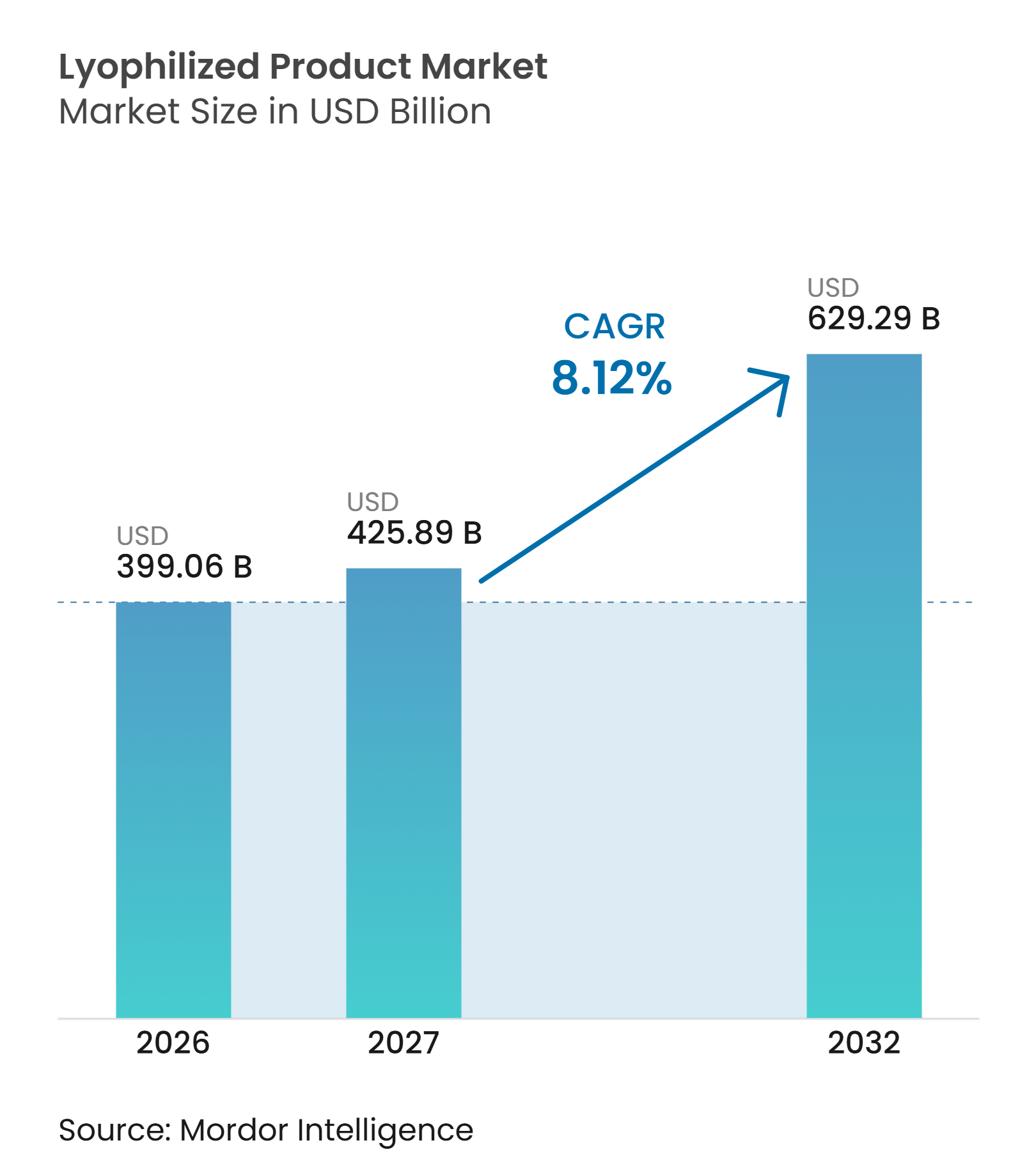
The Lyophilized Product Market size is projected to be USD 399.06 billion in 2026, USD 425.89 billion in 2027, and reach USD 629.29 billion by 2032, growing at a CAGR of 8.12% from 2027 to 2032.
The growth outlook reflects a drug pipeline with more biologics, biosimilars, and complex injectables that need stable commercial formulations throughout manufacturing, distribution, pharmacy preparation, and clinical use. Freeze-drying supports longer storage life for sterile injectable medicines and reduces dependence on demanding cold-chain conditions, making it useful when products need to travel through varied distribution environments and remain available across different care settings. Investments in aseptic processing and mRNA lipid-nanoparticle formulation are also shaping competition in the lyophilized product market, while high capital requirements and lengthy processing cycles preserve the importance of existing qualified capacity.
Key Report Takeaways
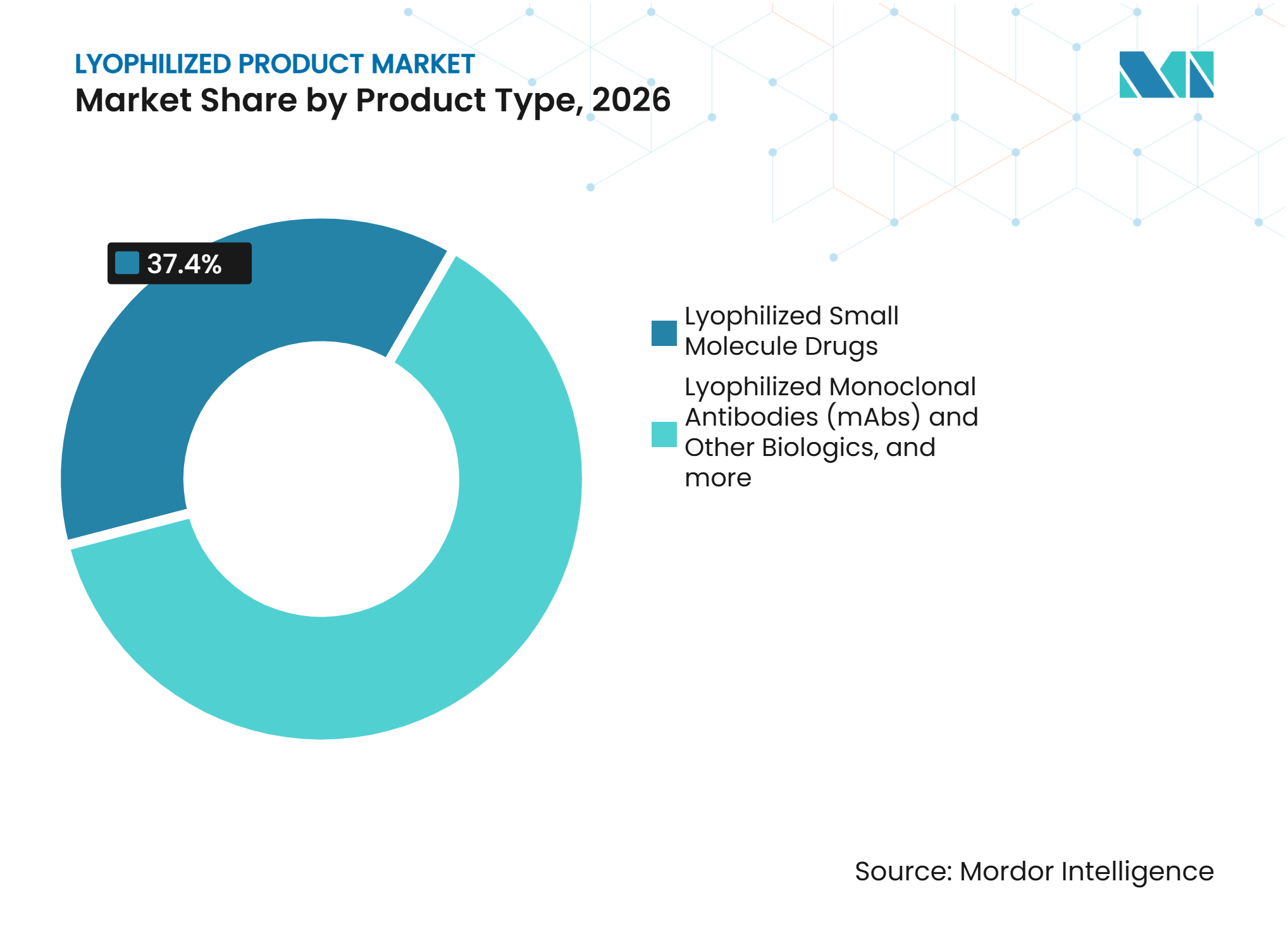
- By product type, lyophilized small molecule drugs held a 37.42% revenue share in 2026, while anti-neoplastics are forecast to grow at an 8.72% CAGR through 2032.
- By packaging type, vials held a 43.26% revenue share in 2026, while prefilled devices are expected to grow at a 9.13% CAGR through 2032.
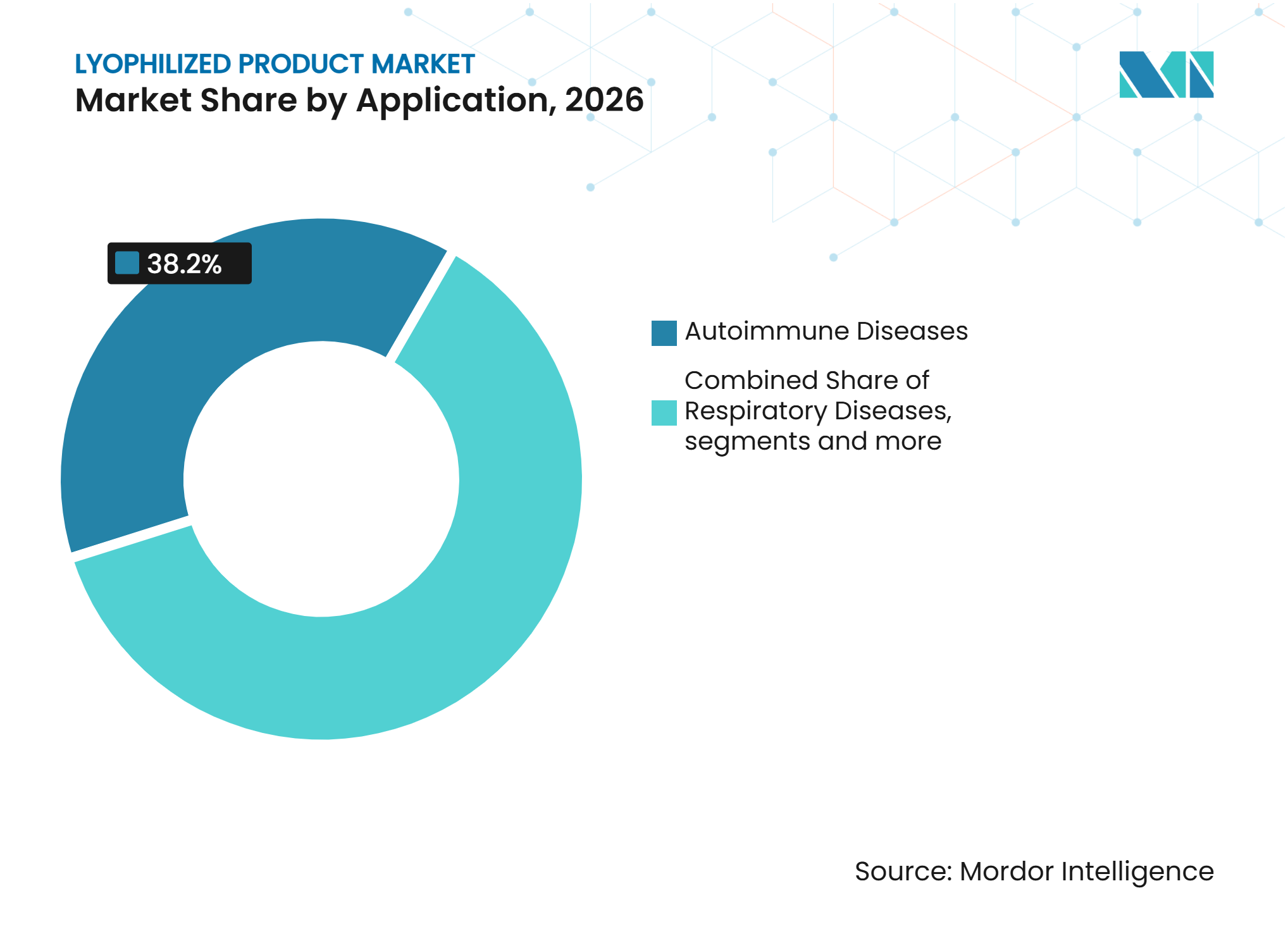
- By application, autoimmune diseases held 38.23% revenue share in 2026, while oncology is forecast to grow at a 10.36% CAGR through 2032.
- By end-user, hospitals & clinics held 43.15% revenue share in 2026, while ambulatory surgical centers are forecast to grow at a 9.86% CAGR through 2032.
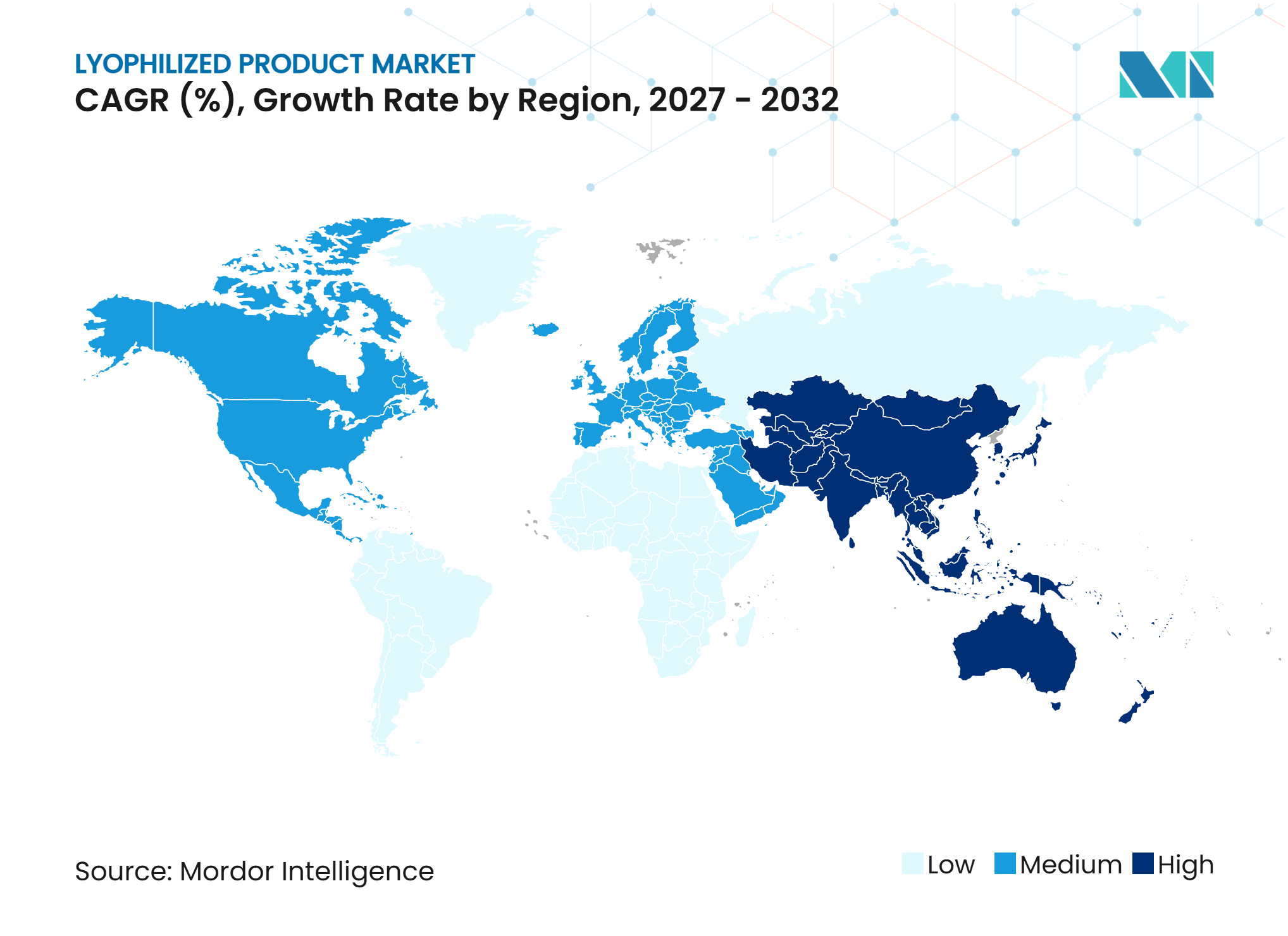
- By geography, North America held a share of 46.32% of revenue in 2026, while Asia-Pacific is projected to grow at an 11.42% CAGR through 2032.
Note: Market numbers in this report are based on Mordor Intelligence's proprietary estimation framework, which combines nine months of actuals with Q4 projections for base year 2026.
Market Trends and Insights
Drivers Impact Analysis of Lyophilized Product Market*
| Driver | (~) % Impact on CAGR Forecast | Geographic Relevance | Impact Timeline |
|---|---|---|---|
| Biologics, Vaccines, and Complex Injectable Expansion | +2.8% | Global | Long term (≥ 4 years) |
| Need to Reduce Cold-Chain Dependence | +1.4% | Global, strongest in APAC and MEA | Medium term (2-4 years) |
| Outsourcing of Lyophilization to CDMOs | +1.2% | Global, concentrated in North America and Europe | Medium term (2-4 years) |
| Annex 1 and Automated Aseptic Fill-Finish Upgrades | +0.9% | Europe, North America, and EU-export markets | Short term (≤ 2 years) |
| Field-Stable mRNA and Lipid-Nanoparticle Formulations | +1% | Global | Long term (≥ 4 years) |
| Personalized and Low-Volume Specialty Therapies | +0.6% | North America and EU | Medium term (2-4 years) |
| Source: Mordor Intelligence | |||
Biologics, Vaccines, and Complex Injectable Expansion
Biologics are increasing the demand for lyophilized products because many complex injectable therapies need dependable stability during storage, transport, pharmacy preparation, and use in different clinical settings. FDA approvals of lyophilized drugs and biologics increased by more than 300% between the early 2000s and 2025, indicating that the format has remained relevant as development programs have moved toward more complex molecules.[1]The FDA approved 44 novel drugs in 2025, including 9 monoclonal antibodies and 2 antibody-drug conjugates, which highlights the continuing importance of biologic modalities. These products increase the value contribution of specialized sterile formulations in the lyophilized product market because formulation performance can affect shelf life, handling, and commercial distribution. Older lyophilization assets are difficult to update because changes to an established process can require new regulatory work, additional comparability studies, and careful assessment of product quality.
Need to Reduce Cold-Chain Dependence
Cold-chain risk is encouraging sponsors to consider freeze-drying earlier in product development, rather than treating formulation choice as a late manufacturing decision. Lyophilization removes water through sublimation and can move certain storage requirements from ultra-cold conditions toward refrigerated or ambient conditions, depending on the product and its validated formulation. Products that need fewer specialized storage conditions can be distributed with lower infrastructure demands and fewer points where temperature control can fail. This benefit matters in regions with variable power availability, uneven distribution controls, long transit routes, and less consistent access to specialized logistics equipment. It also gives supply teams more predictable logistics costs when products move between manufacturing sites, wholesalers, hospitals, pharmacies, and patients. The lyophilized product market therefore benefits where manufacturers need stability without adding cold-chain complexity, particularly when dependable delivery is as important as reducing operating risk.
Outsourcing of Lyophilization to CDMOs
Lyophilization is frequently outsourced because it requires expensive equipment, sterile facilities, trained personnel, and specialist process knowledge that smaller sponsors may not maintain internally. A 2024 LyoHUB survey found that average member lyophilization capacity had doubled since 2010, reflecting sustained capital investment in technology. Five of 8 surveyed firms were still expanding or planning further expansion, which shows that the need for qualified capacity continued after earlier additions. This investment indicates that available capacity must meet more than volume needs, since customers also require development support, validation expertise, and reliable sterile operations. Sponsors increasingly select partners for cycle-development skills rather than simple geographic proximity, especially when their products have sensitive biologic or nanoparticle characteristics. Specialized providers with experience in mRNA lipid nanoparticles can retain pricing leverage when alternative commercial capabilities remain limited and clinical timelines depend on access to the right equipment.
Field-Stable mRNA and Lipid-Nanoparticle Formulations
Liquid mRNA lipid-nanoparticle products have required demanding storage conditions, which creates a clear case for more stable dried formulations that can move through existing health care distribution networks. Comirnaty required storage at minus 60°C to minus 80°C, while liquid Spikevax required storage at minus 15°C to minus 50°C, illustrating the operational challenge of distributing sensitive products at scale.[2]Research published in 2026 found that optimized cycles using trehalose and PVP maintained mRNA lipid-nanoparticle encapsulation efficiency above 90%, a result that links formulation design directly to functional preservation. Some formulations retained transfection activity for 12 weeks or more at 37°C, supporting the potential for distribution under less demanding conditions. These findings support wider distribution of vaccines and RNA therapies where ultra-cold infrastructure is limited and where supply disruptions can restrict patient access. They also raise the value of controlled nucleation, low-temperature primary drying, and excipient selection capabilities within the lyophilized product market, because each part of the process can affect product performance.
Restraints Impact Analysis of Lyophilized Product Market*
| Restraint | (~) % Impact on CAGR Forecast | Geographic Relevance | Impact Timeline |
|---|---|---|---|
| High Capital and Operating Costs | -0.8% | Global, more acute in emerging markets | Long term (≥ 4 years) |
| Long Cycle Times and Throughput Constraints | -0.5% | Global | Medium term (2-4 years) |
| Packaging, Reconstitution, and Container-Closure Failure Risk | -0.3% | Global | Medium term (2-4 years) |
| Product-Specific Cycle Transfer and Skilled-Workforce Scarcity | -0.3% | Global, acute in APAC and emerging markets | Long term (≥ 4 years) |
| Source: Mordor Intelligence | |||
High Capital and Operating Costs
Lyophilization remains a capital-intensive operation within sterile pharmaceutical manufacturing because a commercial sterile suite requires equipment, cleanrooms, qualified utilities, process monitoring, and trained operators before it can release product. The investment is not limited to the lyophilizer itself, since manufacturers must also establish supporting systems that protect product quality throughout loading, drying, stoppering, and release. Complex biologic cycles can run from 24 to 72 hours per batch, which raises energy use and ties up controlled manufacturing space for long periods. Spray freeze-drying can reduce energy use by more than 70% and produce twice as much product per square meter in the cited assessment, but the approach has not achieved broad commercial cGMP adoption at full scale. These costs remain particularly difficult for manufacturers building capacity for export markets in South Asia and Southeast Asia, where investment decisions must also account for qualification needs and the time required to reach commercial operations.
Long Cycle Times and Throughput Constraints
Conventional lyophilization cycles restrict output because primary drying alone often takes 12 to 48 hours, and the complete cycle must protect product structure as well as remove water. A lyophilizer can produce fewer annual batch-equivalent units than a comparable liquid fill-finish line when a liquid formulation is feasible, which limits the cost advantage of the dried format for some products. mRNA lipid-nanoparticle formulations are especially sensitive to cooling and drying conditions, since small differences can affect the product's physical characteristics. Process mismatches can reduce encapsulation efficiency and increase particle size, which extends development work and can delay a product's move toward commercial production. The pandemic showed that qualified lyophilization capacity could not expand quickly enough to meet sudden vaccine demand, even where manufacturing networks had significant resources. Spin freeze-drying and microwave vacuum drying have shown faster laboratory cycles, but they have not reached broad commercial regulatory acceptance, leaving throughput as a continuing constraint for the lyophilized product market.
*Our forecasts treat driver/restraint impacts as directional, not additive. The impact forecasts reflect baseline growth, mix effects, and variable interactions.
Lyophilized Product Market Segment Analysis
By Product Type:
Lyophilized Small Molecule Drugs Anchor Volume While Lyophilized Vaccines Drive GrowthLyophilized small molecule drugs accounted for 37.42% of the lyophilized product market share in 2026, making them the largest product-type segment and the primary volume contributor. Their leadership is supported by widespread use across therapeutic areas such as infectious diseases, oncology, cardiovascular disorders, and gastrointestinal conditions. The stability benefits offered by lyophilization help extend shelf life, simplify storage and transportation, and maintain product efficacy, supporting continued adoption in hospital and specialty care settings.
Lyophilized vaccines are projected to grow at a CAGR of 8.72% from 2027 to 2032, the fastest among product types. Growth is driven by increasing demand for temperature-sensitive vaccine formulations, expanding immunization programs, and the need for enhanced product stability in global distribution networks. Lyophilization enables improved shelf life and reduced cold-chain dependence, making it particularly valuable for vaccine manufacturers targeting large-scale and geographically diverse vaccination initiatives. Lyophilized monoclonal antibodies, biologics, and peptide & protein therapeutics continue to represent important segments of the market, supported by growing adoption of advanced biologic therapies and the need to preserve molecular stability throughout storage and transportation.



By Packaging Type:
Vials Retain Scale Advantages and Prefilled Devices Gain MomentumVials held 43.26% of the lyophilized product market share in 2026 because they fit established loading systems, standard sterile workflows, and high-volume commercial production. Hospital pharmacy processes also remain built around vial reconstitution, admixture preparation, and intravenous administration, which makes the container familiar to pharmacists and clinical staff. Glass vials remain suitable for products that need a familiar container format across manufacturing, transport, storage, and pharmacy handling.
Prefilled devices are expected to expand at a 9.13% CAGR from 2027 to 2032. They support subcutaneous self-administration for immunology and oncology biologics that patients can use outside institutional settings, reducing the number of handling steps before dosing. SCHOTT Pharma developed its EVERIC lyo amber vial for light-sensitive antibody-drug conjugate formulations, showing how packaging is adapting to molecule-specific protection requirements.[3] The lyophilized product market size for this packaging transition is shaped by usability, stability, and the ability of the container system to protect high-value drug products through their intended use.
By Application:
Autoimmune Diseases Lead Revenue, and Oncology Expands FasterAutoimmune diseases represented 38.23% of application revenue in 2026, supported by an established base of biologic treatments used over extended periods. Rheumatoid arthritis, inflammatory bowel disease, and related conditions use a broad range of monoclonal antibody therapies that depend on reliable preparation and administration. Biosimilars of trastuzumab, rituximab, and vedolizumab contribute to demand for lyophilized injectable presentations, particularly where providers seek established treatment options with dependable supply.
Oncology is forecasted to grow at a 10.36% CAGR from 2027 to 2032, the fastest rate among applications in the lyophilized product market. The category brings together antibody-drug conjugate approvals, checkpoint inhibitor biosimilars, and established cytotoxic formulations, each of which requires strong control of product stability from filling through administration. Higher-value oncology medicines increase the need for validated production and dependable sterile handling because product loss or quality failures carry significant clinical and commercial consequences. The lyophilized products industry also serves rare-disease therapies that need customized cycles to preserve molecular stability and meet product-specific handling requirements.

By End-User:
Hospitals & Clinics Remain the Primary Care Setting While Ambulatory Surgical Centers Expand RapidlyHospitals & clinics accounted for 43.15% of the lyophilized product market share in 2026, making them the largest end-user segment. Their leadership is driven by the high utilization of lyophilized injectables, biologics, vaccines, and specialty therapeutics that require controlled storage, reconstitution, and administration by trained healthcare professionals. Hospitals also serve as key procurement centers for high-value therapies, supported by institutional formularies, centralized purchasing processes, and growing patient volumes across acute and chronic disease treatment.
Ambulatory surgical centers are projected to grow at a CAGR of 9.86% from 2027 to 2032, the fastest among end users. Growth is supported by the increasing shift of eligible procedures from inpatient to outpatient settings, rising demand for cost-effective care delivery, and expanding use of injectable therapies in same-day treatment environments. The convenience, operational efficiency, and lower treatment costs offered by ASCs continue to drive the adoption of lyophilized products across a broader range of therapeutic applications. Specialty clinics, home healthcare settings, and other end users also contribute to market growth, supported by increasing use of biologics and specialty therapies that benefit from the enhanced stability and shelf life provided by lyophilization.
Geography Analysis
North America
North America held 46.32% of the lyophilized product market revenue in 2026, supported by a large innovator base, established contract manufacturing capacity, and extensive hospital procurement networks. The region has long supported launches of complex injectable medicines because manufacturers can connect development, regulatory work, sterile production, and hospital distribution within a mature commercial system. Its established regulatory framework has supported the commercialization of lyophilized drug products and biosimilars, while the concentration of specialist suppliers supports the technical needs of high-value biologics. Sanofi announced an investment of at least USD 20 billion in United States manufacturing and research through 2030 in May 2025. These investments reinforce the region's ability to supply sterile products and preserve its role as the largest revenue contributor to the lyophilized product market.
Europe
Europe remains important because it combines an established biologics manufacturing base with considerable influence over sterile product requirements. Germany, the United Kingdom, France, Italy, and Spain host major manufacturing sites for innovator companies, creating an experienced supply base for vials, syringes, and other injectable presentations. European biosimilar adoption provides a higher-volume baseline for autoimmune and oncology injectables in several national health systems. Manufacturers supplying European customers need dependable sterile processes, controlled documentation, and packaging systems that protect product quality through distribution. This environment favors suppliers that already operate qualified capacity for the lyophilized product market and can meet customer expectations without extensive process changes.
Asia-Pacific, the Middle East and Africa and South America
Asia-Pacific is projected to grow at an 11.42% CAGR from 2027 to 2032, the fastest regional rate in the lyophilized product market. China is expanding domestic biologics production and commercial freeze-dryer capability, which can support local manufacturing programs and reduce dependence on imported equipment. India is expected to grow quickly as its sterile injectables export base expands alongside domestic biologic demand and regulatory modernization. Thailand, Vietnam, and Malaysia are also attracting contract manufacturing investment that could add regional output by 2028. The Middle East and Africa and South America offer further potential because ambient-stable products can reduce logistical risk where cold-chain networks remain less developed. In these markets, the value of lyophilized formulations rests on consistent product delivery where refrigeration capacity, transport conditions, and last-mile infrastructure may be uneven.
Competitive Landscape
Market Concentration
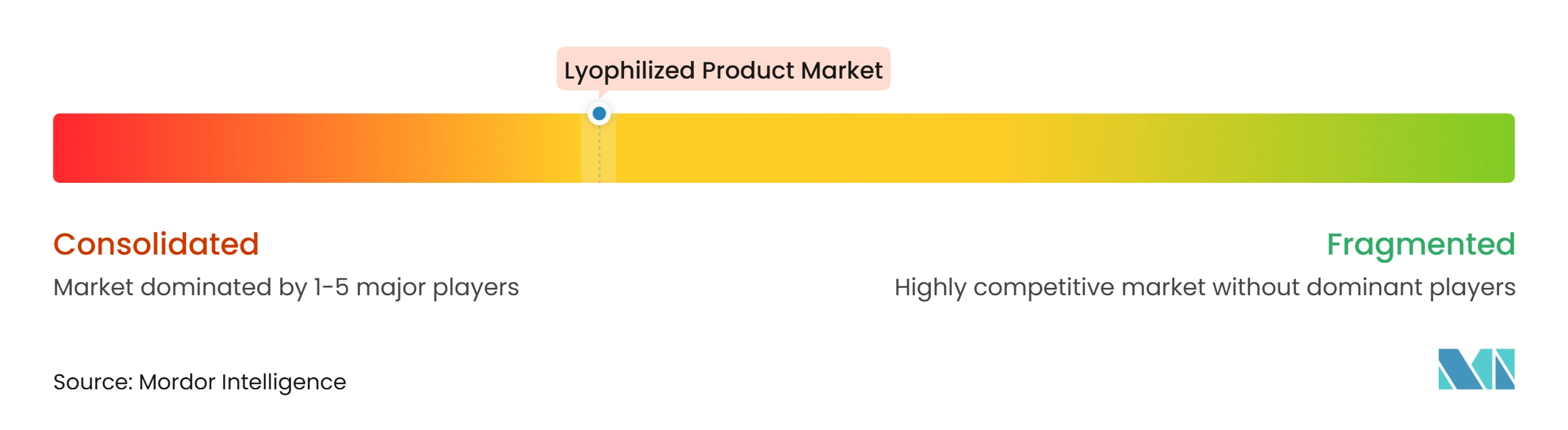
The lyophilized product market is moderately consolidated among innovator companies and more fragmented among generic and biosimilar suppliers. AbbVie, Pfizer, Novartis, Sanofi, Bristol-Myers Squibb, Takeda, and Johnson & Johnson manage high-value biologic portfolios that depend on durable sterile manufacturing capabilities. Their advantage rests on validated processes, qualified equipment, regulatory experience, and familiarity with complex formulations that cannot be moved easily between facilities. These capabilities take time and substantial investment to develop, which makes process knowledge as important as a product portfolio in the lyophilized product market. Competition among generic and biosimilar suppliers is more focused on filing speed, price, and supply reliability, particularly after exclusivity periods end.
Fresenius Kabi and Dr. Reddy's Laboratories combined development and commercialization capabilities for Zimrixby, which received FDA approval in August 2026. This type of partnership allows companies to join specialized development expertise with commercialization resources without building every capability within a single operation. Biocon launched Yesafili in the United States in August 2026 after it received an FDA interchangeable designation. Biocon Biologics, Dr. Reddy's Laboratories, Amneal Pharmaceuticals, Cipla, and Zydus Cadila are increasing their presence in generic and biosimilar categories, where sterile execution and reliable supply can determine commercial acceptance.
The remaining opportunity is concentrated in lyophilized mRNA lipid-nanoparticle and advanced-modality formulations. Process analytical technology, lipid-nanoparticle cycle development, controlled nucleation, and isolator-integrated aseptic processing can differentiate organizations that serve this work. Those capabilities address the specific stability and sterility demands that make advanced modalities more difficult than conventional injectable products. At the same time, high equipment costs, complex validation, and lengthy cycle times can limit how quickly new competitors enter, preserving an advantage for firms with qualified capacity and experienced teams. This balance means the lyophilized product market is likely to reward sustained process development and dependable execution rather than simple expansion of equipment capacity.
Lyophilized Product Industry Leaders
-
Pfizer Inc.
-
Novartis AG
-
Sanofi
-
Merck & Co., Inc.
-
Bristol Myers Squibb Company
- *Disclaimer: Major Players sorted in no particular order
Lyophilized Product Market Companies Covered in this Report
- Abbvie
- Affy Pharma Private Limited
- Amneal Pharmaceuticals
- Biocon
- Biogen
- Bristol-Myers Squibb
- BTG PLC
- Cipla
- Ciron Drugs & Pharmaceuticals Pvt. Ltd.
- Dr. Reddy’s Laboratories
- Fresenius
- GlaxoSmithKline
- Johnson & Johnson
- Jubilant Pharmova Limited
- Merck
- Novartis
- Otsuka
- Pfizer
- Sanofi
- Takeda Pharmaceuticals
- Viatris
- Zydus Group
Recent Industry Developments in Lyophilized Product Market
- August 2026: Fresenius Kabi announced United States FDA approval of Zimrixby (rituximab-cdxx), a lyophilized CD20-directed biosimilar of Rituxan developed by Dr. Reddy's Laboratories and commercialized exclusively by Fresenius Kabi in the US, expanding the company's oncology and immunology biosimilar portfolio as part of its vertically integrated, end-to-end biopharma strategy.
- August 2026: The United States FDA approved Mimrylo (rusfertide), a lyophilized powder for subcutaneous injection developed by Takeda and Protagonist Therapeutics, as a first-in-class hepcidin mimetic for the treatment of erythrocytosis in adults with polycythemia vera, broadening the lyophilized hematology and oncology pipeline.
- July 2026: The FDA and EMA accepted for review Fresenius Kabi's BLA and MAA for PB016, a proposed vedolizumab biosimilar in lyophilized vial form for IV administration in Crohn's disease and ulcerative colitis, the fourth biosimilar candidate submitted by Fresenius Kabi for major autoimmune indications in the current regulatory cycle.
Global Lyophilized Product Market Report Scope
According to the report’s scope, the lyophilized product market refers to the global healthcare and pharmaceutical segment focused on products preserved through freeze‑drying (lyophilization). This process removes water from sensitive biologicals, drugs, and formulations to enhance stability, shelf life, and ease of transport.
The lyophilized product market is segmented into product type, packaging type, application, end-user, and geography. By product type, the market is segmented into lyophilized small molecule drugs, lyophilized monoclonal antibodies (mAbs) & other biologics, lyophilized vaccines, lyophilized peptides & protein therapeutics, and other product types. By packaging type, the market is segmented into vials, cartridges, and prefilled devices. By application, the market is segmented into autoimmune diseases, respiratory diseases, gastrointestinal disorders, oncology, cardiovascular diseases, infectious diseases, and other applications. By end-user, the market is segmented into hospitals & clinics, specialty clinics, ambulatory surgical centers, and other end-users. By geography, the market is segmented into North America, Europe, Asia-Pacific, the Middle East and Africa, and South America. The report also covers the estimated market sizes and trends for 17 countries across major regions globally. The report offers values (USD) for all the above segments.
Segmentation Overview
| Lyophilized Small Molecule Drugs |
| Lyophilized Monoclonal Antibodies (mAbs) & Other Biologics |
| Lyophilized Vaccines |
| Lyophilized Peptides & Protein Therapeutics |
| Other Product Types |
| Vials |
| Cartridges |
| Prefilled Devices |
| Autoimmune Diseases |
| Respiratory Diseases |
| Gastrointestinal Disorders |
| Oncology |
| Cardiovascular Diseases |
| Infectious Diseases |
| Other Applications |
| Hospitals & Clinics |
| Specialty Clinics |
| Ambulatory Surgical Centers |
| Other End-Users |
| North America | United States |
| Canada | |
| Mexico | |
| Europe | Germany |
| United Kingdom | |
| France | |
| Italy | |
| Spain | |
| Rest of Europe | |
| Asia-Pacific | China |
| Japan | |
| India | |
| Australia | |
| South Korea | |
| Rest of Asia-Pacific | |
| Middle East and Africa | GCC |
| South Africa | |
| Rest of Middle East and Africa | |
| South America | Brazil |
| Argentina | |
| Rest of South America |
| By Product Type | Lyophilized Small Molecule Drugs | |
| Lyophilized Monoclonal Antibodies (mAbs) & Other Biologics | ||
| Lyophilized Vaccines | ||
| Lyophilized Peptides & Protein Therapeutics | ||
| Other Product Types | ||
| By Packaging Type | Vials | |
| Cartridges | ||
| Prefilled Devices | ||
| By Application | Autoimmune Diseases | |
| Respiratory Diseases | ||
| Gastrointestinal Disorders | ||
| Oncology | ||
| Cardiovascular Diseases | ||
| Infectious Diseases | ||
| Other Applications | ||
| By End-User | Hospitals & Clinics | |
| Specialty Clinics | ||
| Ambulatory Surgical Centers | ||
| Other End-Users | ||
| By Geography | North America | United States |
| Canada | ||
| Mexico | ||
| Europe | Germany | |
| United Kingdom | ||
| France | ||
| Italy | ||
| Spain | ||
| Rest of Europe | ||
| Asia-Pacific | China | |
| Japan | ||
| India | ||
| Australia | ||
| South Korea | ||
| Rest of Asia-Pacific | ||
| Middle East and Africa | GCC | |
| South Africa | ||
| Rest of Middle East and Africa | ||
| South America | Brazil | |
| Argentina | ||
| Rest of South America | ||
Key Questions Answered in the Report
What is the forecast for the lyophilized product market?
The lyophilized product market is forecasted to increase from USD 399.06 billion in 2026 to USD 425.89 billion in 2027, and to reach USD 629.29 billion by 2032, growing at an 8.12% CAGR.
Which product type has the largest share?
Lyophilized small molecule drugs held a 37.42% share in 2026, supported by hospital demand for stable sterile powders for injection.
Which application is growing fastest?
Oncology is forecasted to grow at a 10.36% CAGR through 2032, supported by biologics, biosimilars, and targeted therapies.
Which region is expanding fastest?
Asia-Pacific is projected to grow at an 11.42% CAGR through 2032, supported by biologics localization and sterile injectables capacity.