
Low-Fat Yogurt Market Size and Share
Market Overview
| Study Period | 2026 - 2031 |
|---|---|
| Market Size (2026) | USD 29.74 Billion |
| Market Size (2031) | USD 41.75 Billion |
| Growth Rate (2026 - 2031) | 7.02 % |
| Fastest Growing Market | Asia-Pacific |
| Largest Market | Asia-Pacific |
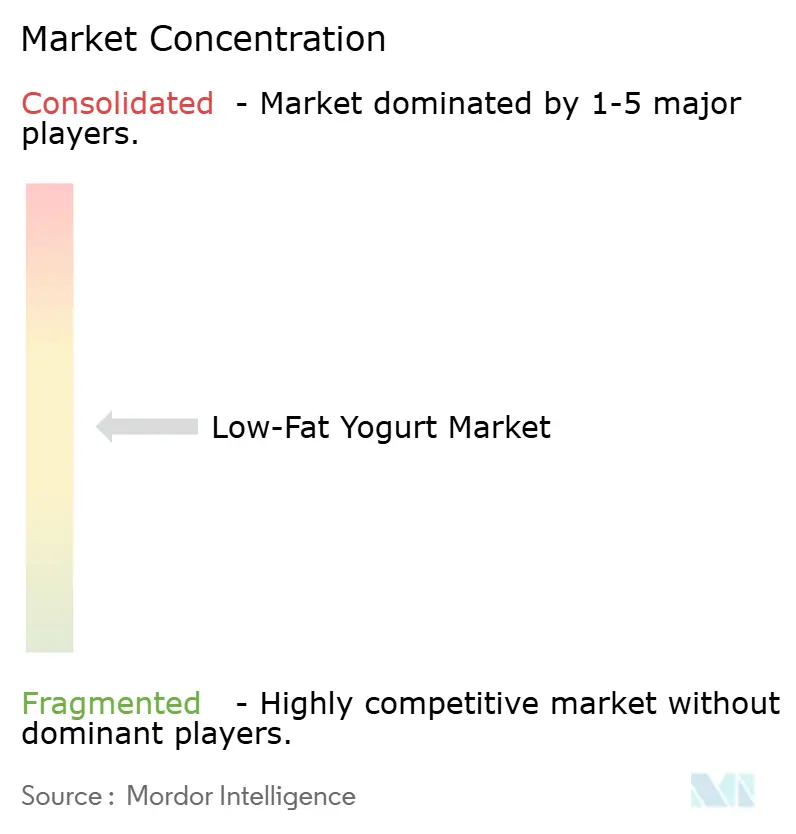
| Market Concentration | Medium |
Major Players
*Disclaimer: Major Players sorted in no particular order Image © Mordor Intelligence. Reuse requires attribution under CC BY 4.0. |
|
Low-Fat Yogurt Market Analysis by Mordor Intelligence
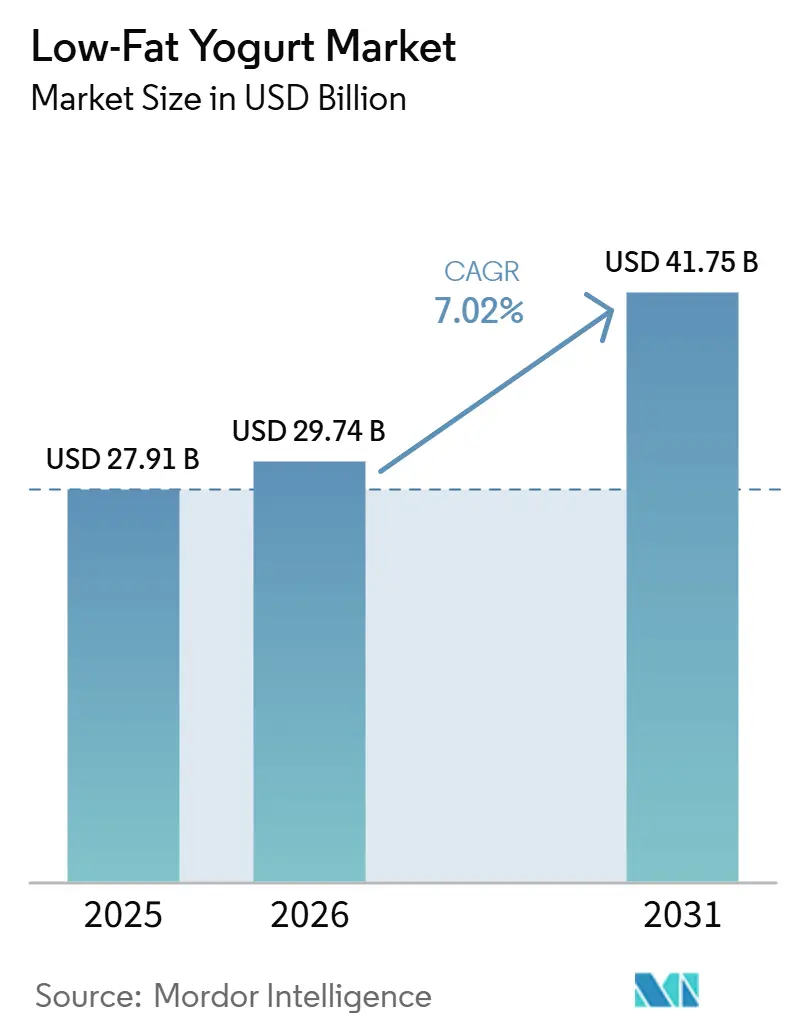
The low-fat yogurt market size is valued at USD 29.74 billion in 2026, growing from the 2025 value of USD 27.91 billion, and is forecast to climb to USD 41.75 billion by 2031, advancing at a 7.02% CAGR during the forecast period. Consumer demand is steadily shifting away from indulgent dairy products toward refrigerated formats that combine digestive health benefits, high protein content, and calorie control in a single offering. An emerging growth catalyst is the expanding body of clinical evidence supporting cultured dairy products. A 2026 peer-reviewed study published in the Pakistan Journal of Medical & Cardiological Review reported that regular probiotic yogurt consumption improved insulin sensitivity and gut microbiota composition among UK adults participating in a structured weight-management program, reinforcing yogurt's credibility as a clinically supported functional food. As scientific validation of probiotic and metabolic health benefits continues to strengthen, low-fat yogurt is expanding beyond its traditional health-conscious consumer base to attract a broader audience seeking evidence-backed nutrition and everyday wellness solutions. The low-fat yogurt market faces pressure from premium full-fat Greek yogurt and skyr products, which are increasingly perceived as healthy alternatives, intensifying competition for health-conscious consumers. Similarly, concerns over the taste and clean-label appeal of artificial sweeteners in low-fat formulations are limiting repeat purchases. Growth is further constrained by underdeveloped cold-chain infrastructure across emerging markets, restricting product availability and market penetration.
Key Report Takeaways
- By product type, spoonable yogurt held 62.02% of the low-fat yogurt market share in 2025, while drinkable yogurt is forecast to grow at an 8.05% CAGR through 2031.
- By source, dairy-based variants accounted for 51.24% of low-fat yogurt market share in 2025, while non-dairy variants are projected to expand at an 8.41% CAGR through 2031.
- By flavor, flavored yogurt held 78.74% of 2025 revenue, while unflavored variants are forecast to grow at a 9.26% CAGR through 2031.
- By distribution channel, off-trade channels represented 55.14% of 2025 sales, while on-trade channels are forecast to expand at a 9.42% CAGR through 2031.
- By geography, Asia-Pacific accounted for 53.38% of 2025 revenue and is forecast to grow at an 8.64% CAGR through 2031.
Note: Market size and forecast figures in this report are generated using Mordor Intelligence’s proprietary estimation framework, updated with the latest available data and insights as of January 2026.
Market Trends and Insights
Drivers Impact Analysis of Low-Fat Yogurt Market*
| Driver | (~) % Impact on CAGR Forecast | Geographic Relevance | Impact Timeline |
|---|---|---|---|
| Expanding demand for gut-health supporting food | +1.5% | Global, with leading gains in Asia-Pacific and North America | Medium term (2-4 years) |
| Expansion of probiotic and functional yogurt offerings | +1.3% | Global, strongest in North America, Europe, and East Asia | Medium term (2-4 years) |
| Growing demand for low-calorie snack options | +1.0% | North America, Europe, urban Asia-Pacific | Short term (≤ 2 years) |
| Product innovation in flavors and formulations | +0.9% | Global | Short term (≤ 2 years) |
| Expanding modern retail and refrigerated distribution | +0.8% | Southeast Asia, South America, Middle East and Africa | Long term (≥ 4 years) |
| Growing preference for weight management foods | +1.1% | North America, Europe, urban Asia | Medium term (2-4 years) |
| Source: Mordor Intelligence | |||
Expanding Demand for Gut-Health Supporting Foods
Growing scientific evidence linking gut microbiome health to metabolic function, immunity, and overall well-being is repositioning low-fat yogurt from a calorie-conscious dairy product to a clinically supported functional food. This shift is increasingly reflected in consumer behavior, with the International Food Information Council (IFIC) reporting that 32% of U.S. consumers actively seek probiotics, while 24% consider digestive health their top health priority[1]Source: International Food Information Council (IFIC), "IFIC Spotlight Survey: Consumer Insights on Gut Health & Probiotics," April 2022, ift.org. Fermented dairy products containing live probiotic cultures such as Lactobacillus bulgaricus and Streptococcus thermophilus have demonstrated benefits for digestive health, gut microbiota balance, and intestinal function, reinforcing consumer confidence in probiotic yogurt. As gut-health awareness continues to rise, functional health positioning is increasingly overtaking taste-led marketing as the primary differentiator within the yogurt category. This trend enables premium probiotic low-fat yogurt products to sustain higher price points, while manufacturers investing in strain-specific, clinically validated formulations and evidence-based health claims are well positioned to capture greater consumer trust and premium value.
Expansion of Probiotic and Functional Yogurt Offerings
Manufacturers are shifting from broad probiotic positioning toward targeted formulations addressing specific health needs. This trend is supported by the growing prevalence of obesity, with the U.S. Centers for Disease Control and Prevention (CDC) estimating that more than 2 in 5 U.S. adults have obesity, driving demand for weight-management and high-protein nutritional products[2]Source: U.S. Centers for Disease Control and Prevention (CDC), "Adult Obesity Facts", May 2024, cdc.gov. At Vitafoods Europe 2026, Arla Foods Ingredients introduced a fermented, high-protein, low-fat drinking yogurt delivering 20 g of protein per 200 ml serving, specifically designed to support consumers using GLP-1 medications by helping maintain protein intake and muscle mass. Danone further strengthened this trend with the launch of Oikos Fusion in 2025, a cultured dairy drink positioned for weight-management journeys, including GLP-1 users. As ingredient suppliers increasingly collaborate with branded manufacturers to develop clinically targeted formulations, innovation is expanding beyond digestive health into bone health, cognition, sleep, and metabolic wellness, enabling faster commercialization of premium functional low-fat yogurt products.
Growing Preference for Weight Management Foods
The rapid adoption of GLP-1 weight-loss medications is creating demand for nutrient-dense foods that combine high protein, lower fat, and portion control to support reduced calorie intake and muscle preservation. The opportunity is underpinned by the continued high prevalence of obesity, with the U.S. Centers for Disease Control and Prevention (CDC) reporting that 40.3% of U.S. adults had obesity during 2021–2023, underscoring sustained demand for effective weight-management solutions. According to Arla Foods Ingredients, 11% of global consumers attempting to lose weight used GLP-1 medications in 2025, increasing to 18% in the United States, highlighting a rapidly expanding consumer segment with specialized nutritional needs. In response, Lactalis launched Pro-Fiber in 2025, a high-protein, fiber-enriched yogurt positioned specifically for GLP-1 users. As demand extends beyond active treatment to long-term weight maintenance and satiety support, low-fat yogurt fortified with protein, probiotics, and fiber is emerging as a preferred functional nutrition format.
Growing Demand for Low-Calorie Snack Options and Product Innovation
Low-fat and reduced-fat claims recorded the highest unit-sales gains among healthy snack claims in 2025, according to the Institute of Food Technologists (IFT), reflecting consumers' growing preference for healthier, nutrient-dense snacking options. Low-fat yogurt is well positioned to capitalize on this shift by combining reduced-fat credentials with complementary functional benefits such as high protein, lactose-free formulations, added fiber, probiotics, and vitamin fortification. Demonstrating this evolution, Danone reformulated its Danimals low-fat yogurt pouches and smoothies in 2026 to include calcium, vitamin D, and fiber while eliminating artificial colors, flavors, and high-fructose corn syrup, aligning children's products with clean-label and nutrition-focused preferences. Supported by the continued expansion of modern retail, quick-commerce platforms, and refrigerated distribution infrastructure, low-fat yogurt is increasingly positioned as a premium, functional snack suitable for everyday consumption across multiple consumer segments.
Restraints Impact Analysis of Low-Fat Yogurt Market*
| Restraint | (~) % Impact on CAGR Forecast | Geographic Relevance | Impact Timeline |
|---|---|---|---|
| Competition from full-fat greek yogurt products | -1.2% | North America, Europe | Short term (≤ 2 years) |
| Higher prices than conventional yogurt products | -0.8% | Emerging markets, price-sensitive regions | Medium term (2-4 years) |
| Short shelf life increases distribution challenges | -0.7% | Southeast Asia, Africa, rural South America | Long term (≥ 4 years) |
| Consumer concerns over artificial sweeteners usage | -0.9% | Global, most pronounced in Europe and North America | Medium term (2-4 years) |
| Source: Mordor Intelligence | |||
Competition From Full-Fat Greek Yogurt Products, Higher Prices, and Distribution Limits
The low-fat yogurt market faces growing competitive pressure as full-fat Greek yogurt and skyr increasingly attract health-conscious consumers through high-protein, probiotic, and satiety-focused positioning. As these products redefine healthy dairy beyond fat reduction, low-fat brands must compete on broader functional benefits rather than reduced-fat claims alone. The launch of Chobani's 20 g Protein Flip range in 2026 underscores the industry's shift toward protein-led value propositions. In addition, sustaining a price premium remains challenging in cost-sensitive markets, where consumers prioritize nutritional value and affordability. Growth is further constrained by inadequate cold-chain infrastructure across parts of Southeast Asia, sub-Saharan Africa, and rural South America, creating opportunities for manufacturers to invest in extended shelf-life technologies and alternative distribution models that improve market reach.
Consumer Concerns Over Artificial Sweeteners Usage
Maintaining taste and clean-label appeal remains a key challenge for low-fat yogurt manufacturers, as fat reduction often requires alternative sweetening systems to preserve flavor and texture. A 2024 study published in the Journal of Dairy Science found that consumers rated stevia-sweetened yogurt lower than sucrose-sweetened formulations, frequently describing it as bitter, metallic, and astringent, highlighting the risk of lower repeat purchases. Similarly, the U.S. Food and Drug Administration (FDA) continues to strengthen nutrition-label transparency through its updated "Healthy" food labeling framework, reflecting growing consumer focus on ingredient quality and nutritional composition rather than calorie reduction alone[3]Source: U.S. Food and Drug Administration (FDA), "Food Labeling: Nutrient Content Claims; Definition of Term -Healthy", Final Rule, December 2024, fda.gov. In response, manufacturers are increasingly incorporating sweeteners such as allulose, honey, and fructooligosaccharides to improve sensory performance while maintaining clean-label positioning, although these ingredients can increase formulation costs and complexity. As consumer scrutiny of ingredients intensifies, brands must balance taste, nutritional value, and label transparency to sustain long-term category growth.
*Our forecasts treat driver/restraint impacts as directional, not additive. The impact forecasts reflect baseline growth, mix effects, and variable interactions.
Low-Fat Yogurt Market Segment Analysis
By Product Type:
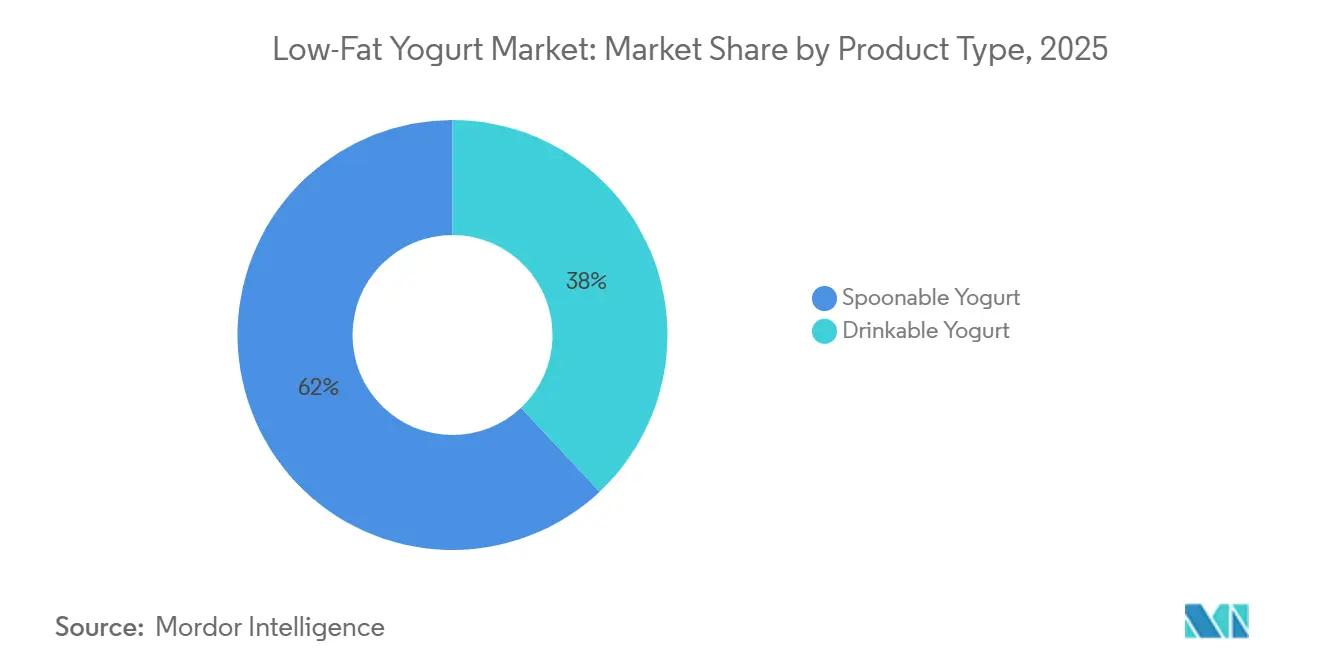
Drinkable Formats Capturing New Consumption OccasionsSpoonable yogurt accounted for 62.02% of the low-fat yogurt market in 2025, supported by its versatility across multiple consumption occasions, including breakfast, post-workout recovery, snacks, and culinary applications. Its integration into everyday household routines provides a broader consumption base than other yogurt formats. In contrast, drinkable yogurt is projected to expand at a CAGR of 8.05% during 2026–2031, driven by rising demand for convenient, on-the-go nutrition among urban consumers. This trend is particularly evident in Asia-Pacific and Latin America, where fast-paced lifestyles are increasing demand for portable, ready-to-consume dairy products. The distinct consumption occasions of spoonable and drinkable yogurt are encouraging manufacturers to tailor packaging, flavors, and retail strategies to meet different consumer needs.
The distinction between spoonable and drinkable yogurt is becoming less pronounced as manufacturers introduce multifunctional products that combine convenience with enhanced nutritional value. Innovation is increasingly focused on improving texture, protein delivery, probiotic stability, and shelf life rather than simply introducing new flavors. Technologies such as high-pressure processing (HPP), advanced fermentation, and probiotic encapsulation are helping extend product freshness while preserving live cultures, enabling broader retail distribution and reducing cold-chain constraints. At the same time, manufacturers are differentiating both formats through clean-label formulations, functional ingredients, and premium positioning, allowing them to address evolving consumer preferences across traditional meal occasions and emerging on-the-go consumption.


By Source:
Plant-Based Products Expanding Consumer AccessDairy-based products accounted for 51.24% of the low-fat yogurt market in 2025, supported by established consumer trust, widespread availability, and a strong nutritional profile. However, plant-based low-fat yogurt is projected to grow at a CAGR of 8.41% through 2031, driven by rising lactose intolerance, flexitarian eating patterns, and demand for sustainable nutrition. Rather than replacing dairy, plant-based products are broadening the category by attracting new consumer segments seeking greater dietary variety and functional nutrition.
Manufacturers are increasingly positioning plant-based yogurt around nutritional equivalence instead of dairy substitution. Recent product innovation has focused on improving protein quality, fiber content, and micronutrient fortification to narrow the nutritional gap with conventional yogurt while enhancing taste and texture. Plant-based adoption is expanding even in mature dairy markets, where consumers increasingly incorporate these products into their diets for health, environmental, or lifestyle reasons without fully eliminating dairy consumption. Regulatory frameworks, including Regulation (EU) No. 1169/2011, continue to shape product naming and labeling requirements for plant-based alternatives, increasing compliance costs and favoring manufacturers with greater regulatory and formulation capabilities.
By Flavor:
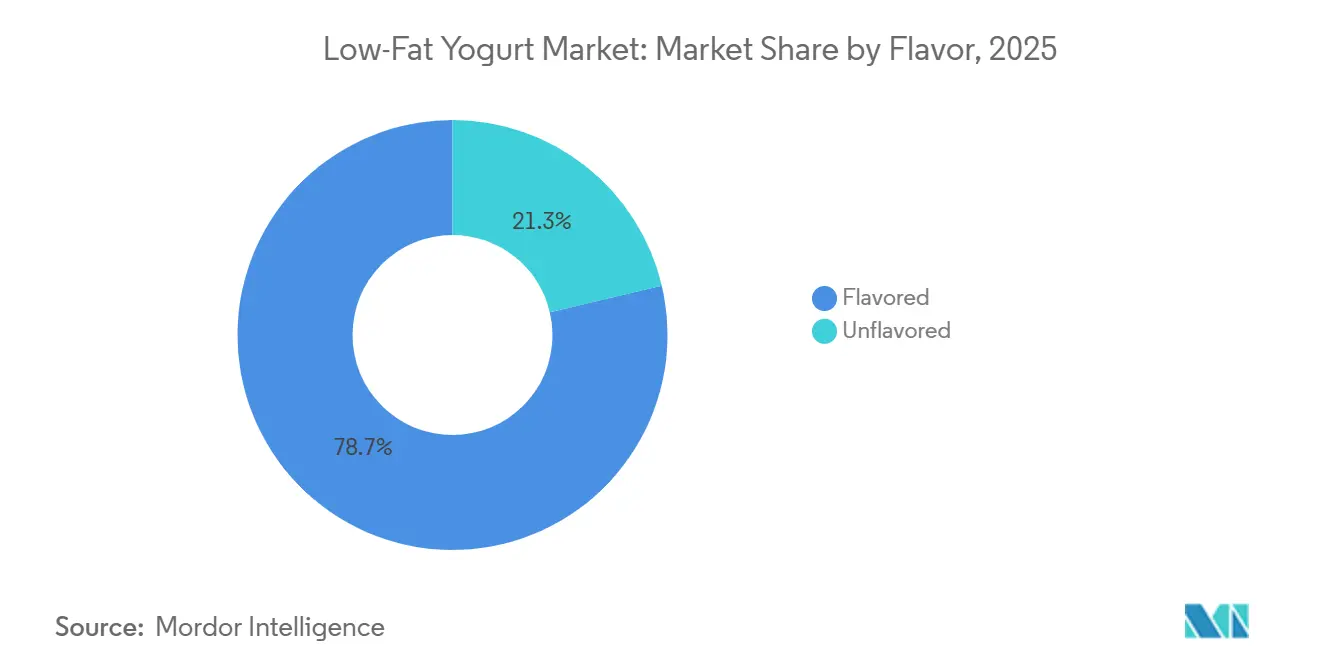
Unflavored Growth Reflects Demand for Simpler LabelsFlavored yogurt accounted for 78.74% of the low-fat yogurt market in 2025, driven by its strong appeal across snacking, breakfast, and impulse purchase occasions. Continuous innovation in fruit blends, botanical ingredients, globally inspired flavors, and indulgence-inspired concepts is helping manufacturers sustain consumer interest while enhancing nutritional value through higher protein, probiotics, and functional ingredients. This enables flavored yogurt to retain broad consumer appeal without departing from its convenient refrigerated format, supporting both premiumization and product portfolio expansion.
In contrast, unflavored low-fat yogurt is projected to register the fastest growth, at a CAGR of 9.26% during 2026–2031, reflecting rising demand for minimally processed, clean-label products with greater versatility. Consumers increasingly prefer unflavored variants for personalized nutrition, allowing them to control sweetness while using yogurt in smoothies, meal preparation, or high-protein diets. Growing interest in weight management, fitness, and metabolic health is further strengthening demand for simple formulations enriched with protein, probiotics, and functional ingredients. As ingredient transparency becomes a more important purchase criterion, manufacturers are increasingly adopting a dual-product strategy, leveraging flavored products to drive mass-market appeal while expanding unflavored offerings to capture health-conscious consumers seeking clean-label, multifunctional nutrition.
By Distribution Channel:
On-Trade Creates Premium Consumption OpportunitiesOff-trade channels accounted for 55.14% of the low-fat yogurt market in 2025, with supermarkets, hypermarkets, and grocery retailers remaining the primary purchase destinations due to their broad product assortment, competitive pricing, and established refrigerated infrastructure. Continued expansion of modern retail, growing private-label penetration, and promotional activity are reinforcing channel dominance, while the rapid growth of e-commerce and quick-commerce is improving access to chilled dairy products through faster last-mile delivery. As digital grocery adoption accelerates, manufacturers are increasingly investing in integrated cold-chain logistics and omnichannel fulfillment to ensure product quality, availability, and consumer convenience.
Meanwhile, on-trade channels are projected to expand at a CAGR of 9.42% through 2031, supported by the growing incorporation of low-fat yogurt into cafés, quick-service restaurants (QSRs), health-focused eateries, and specialty nutrition outlets. Rising demand for protein-rich breakfasts, smoothie bowls, parfaits, and functional snacks is creating new consumption occasions beyond the home, allowing brands to strengthen product visibility and command premium pricing. In parallel, pharmacies and specialty health retailers are emerging as important distribution channels for clinically positioned and functional yogurt products, where professional recommendations can enhance consumer confidence. The complementary growth of foodservice and health-focused retail is expected to diversify consumption occasions and broaden the category's addressable market beyond traditional retail purchases.
Geography Analysis
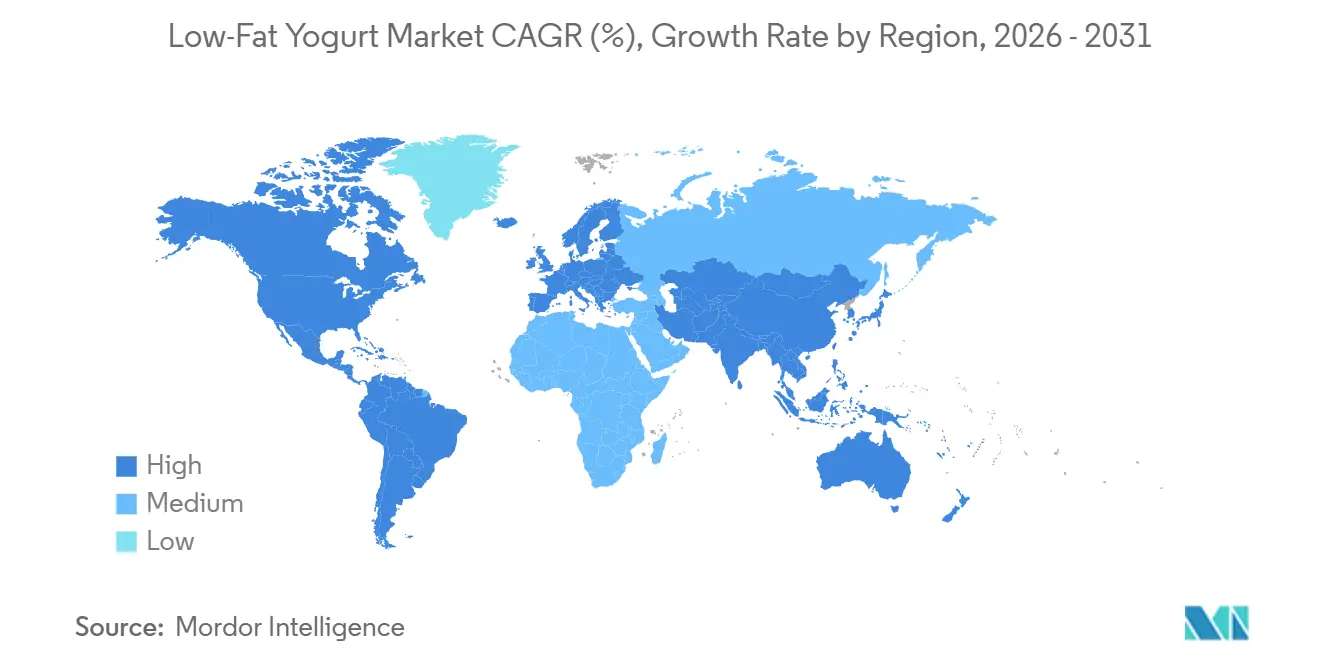
Asia-Pacific Low-Fat Yogurt Market
Asia-Pacific accounted for 53.38% of the low-fat yogurt market in 2025 and is projected to grow at a CAGR of 8.64% through 2031, supported by its large consumer base, rising health awareness, and expanding cold-chain infrastructure. China and India continue to drive volume growth through increasing demand for functional dairy products and wider retail penetration, while Japan and South Korea remain key markets for premium, probiotic, and high-value yogurt offerings. Ongoing investments in nutrition-focused product innovation, modern retail, and refrigerated logistics are strengthening regional market expansion, although limited cold-chain infrastructure continues to restrict penetration in parts of Southeast Asia.
North America and Europe Low-Fat Yogurt Market
North America and Europe remain the global centers of product innovation and premiumization, supported by high consumer awareness of functional nutrition and established refrigerated distribution networks. Manufacturers are expanding portfolios through acquisitions, clean-label reformulations, and clinically positioned products enriched with protein, probiotics, and fiber. Demand in these regions is increasingly driven by digestive health, weight management, and high-protein nutrition, while stringent regulatory frameworks for nutrition and health claims continue to reinforce consumer confidence and encourage evidence-based product differentiation.
Middle East and Africa and South America Low-Fat Yogurt Market
South America, the Middle East, and Africa present attractive long-term growth opportunities, driven by urbanization, rising disposable incomes, and improving retail infrastructure. Manufacturers are increasingly reformulating products with functional ingredients such as probiotics, fiber, and protein to meet evolving consumer preferences. However, market expansion remains constrained by fragmented cold-chain networks, regulatory compliance requirements, and distribution challenges beyond major metropolitan areas. Continued investment in refrigerated logistics, modern trade, and localized product development will be critical to unlocking the growth potential of these emerging markets.

Competitive Landscape
The low-fat yogurt market exhibits moderate competitive concentration, with multinational dairy companies leveraging strong brand equity, extensive retail distribution, and large-scale manufacturing, while regional players compete through localized product innovation and functional differentiation. Strategic investments in manufacturing facilities and processing infrastructure are enabling leading companies to improve operational efficiency, meet growing demand for high-protein and functional yogurt, and accelerate new product commercialization.
Portfolio optimization through mergers, acquisitions, and strategic partnerships is further reshaping the competitive landscape. Leading dairy companies are strengthening their regional presence by acquiring established yogurt brands, expanding distribution capabilities, and integrating production assets to improve economies of scale. These transactions are enhancing market access, reinforcing supply security, and enabling faster commercialization of innovative products across high-growth regions, particularly in North America and Asia-Pacific.
Competition is increasingly shifting toward clinically positioned and functionally differentiated products targeting digestive health, weight management, metabolic wellness, and clean-label nutrition. At the same time, private-label manufacturers are narrowing the innovation gap by introducing products with added protein, probiotics, fiber, and premium formulations, increasing pricing pressure on mainstream brands. As functional claims become more widely adopted, sustained competitive advantage will depend on scientifically validated health benefits, superior sensory performance, manufacturing efficiency, and strong omnichannel distribution rather than reduced-fat positioning alone.
Low-Fat Yogurt Industry Leaders
-
Danone S.A.
-
Lactalis Group
-
Arla Foods amba
-
Royal FrieslandCampina N.V.
-
Dairy Farmers of America, Inc.
- *Disclaimer: Major Players sorted in no particular order
Low-Fat Yogurt Market Companies Covered in this Report
- Danone S.A.
- Chobani, LLC
- General Mills, Inc.
- Lactalis Group
- FAGE International S.A.
- Arla Foods amba
- Nestlé S.A.
- Unternehmensgruppe Theo Müller
- Ehrmann SE
- Royal FrieslandCampina N.V.
- Valio Ltd.
- Sodiaal SCA
- Schreiber Foods, Inc.
- Dairy Farmers of America, Inc.
- The Hain Celestial Group, Inc.
- Glenisk Ltd.
- Biotiful Dairy Ltd.
- Yeo Valley Production Ltd.
- Almarai Company
- Yakult Honsha Co., Ltd.

Recent Industry Developments in Low-Fat Yogurt Market
- July 2026: Chobani launched its 20 g Protein Flip Greek Yogurt range in 4 new flavors, Tropical Mango Coconut, Strawberry Banana Cashew, Almond Coconut Chocolate, and Pomegranate Pistachio Chocolate, intensifying competition with Danone's Oikos Pro in the high-protein cultured dairy tier.
- Apr 2026: Arla Foods Ingredients showcased GLP-1 companion nutrition concepts at Vitafoods Europe, including a low-fat drinking yogurt delivering 20 g protein per 200 ml serving and a spoonable variant delivering 20 g protein per 120 g serving, both lactose-reduced and high in calcium.
- November 2025: Lactalis launched Ratio Pro-Fiber in the United States, explicitly positioned as GLP-1-friendly, under the Ratio brand acquired from General Mills. The product delivers combined protein and fiber to address nutritional gaps during rapid weight loss.


Global Low-Fat Yogurt Market Report Scope
The low-fat yogurt market includes fermented yogurt products with reduced fat content compared to conventional yogurt, offering nutritional benefits such as protein, probiotics, vitamins, and minerals.
The market is segmented by Product Type, Source, Flavor, Distribution Channel, and Geography. Based on Product Type, the market is segmented into Spoonable Yogurt and Drinkable Yogurt. Based on Source, the market is segmented into Dairy-Based and Non-Dairy-Based low-fat yogurt. Based on Flavor, the market is segmented into Flavored and Unflavored low-fat yogurt. Based on Distribution Channel, the market is segmented into Off-Trade and On-Trade. Based on Geography, the market is segmented into North America, Europe, Asia-Pacific, South America, and the Middle East & Africa. For each segment, the market forecasts are provided in terms of value (USD).
| Drinkable Yogurt |
| Spoonable Yogurt |
| Dairy-Based |
| Non-Dairy-Based |
| Flavored |
| Unflavored |
| On-trade | |
| Off-trade | Convenience Stores |
| Specialist Retail Stores | |
| Supermarkets and Hypermarkets | |
| Online Retail Stores | |
| Other Distribution Channels |
| North America | United States |
| Canada | |
| Mexico | |
| Rest of North America | |
| Europe | Germany |
| United Kingdom | |
| Italy | |
| France | |
| Spain | |
| Netherlands | |
| Poland | |
| Belgium | |
| Sweden | |
| Rest of Europe | |
| Asia-Pacific | China |
| India | |
| Japan | |
| Australia | |
| Indonesia | |
| South Korea | |
| Thailand | |
| Singapore | |
| Rest of Asia-Pacific | |
| South America | Brazil |
| Argentina | |
| Colombia | |
| Chile | |
| Peru | |
| Rest of South America | |
| Middle East and Africa | South Africa |
| Saudi Arabia | |
| United Arab Emirates | |
| Nigeria | |
| Egypt | |
| Morocco | |
| Turkey | |
| Rest of Middle East and Africa |
| Product Type | Drinkable Yogurt | |
| Spoonable Yogurt | ||
| Source | Dairy-Based | |
| Non-Dairy-Based | ||
| Flavor | Flavored | |
| Unflavored | ||
| Distribution Channel | On-trade | |
| Off-trade | Convenience Stores | |
| Specialist Retail Stores | ||
| Supermarkets and Hypermarkets | ||
| Online Retail Stores | ||
| Other Distribution Channels | ||
| Geography | North America | United States |
| Canada | ||
| Mexico | ||
| Rest of North America | ||
| Europe | Germany | |
| United Kingdom | ||
| Italy | ||
| France | ||
| Spain | ||
| Netherlands | ||
| Poland | ||
| Belgium | ||
| Sweden | ||
| Rest of Europe | ||
| Asia-Pacific | China | |
| India | ||
| Japan | ||
| Australia | ||
| Indonesia | ||
| South Korea | ||
| Thailand | ||
| Singapore | ||
| Rest of Asia-Pacific | ||
| South America | Brazil | |
| Argentina | ||
| Colombia | ||
| Chile | ||
| Peru | ||
| Rest of South America | ||
| Middle East and Africa | South Africa | |
| Saudi Arabia | ||
| United Arab Emirates | ||
| Nigeria | ||
| Egypt | ||
| Morocco | ||
| Turkey | ||
| Rest of Middle East and Africa | ||


Key Questions Answered in the Report
What is the low-fat yogurt market size in 2026?
The low-fat yogurt market size is USD 29.74 billion in 2026 and is forecast to reach USD 41.85 billion by 2031, at a 7.0% CAGR.
Which region leads low-fat yogurt sales?
Asia-Pacific led with 53.38% of 2025 revenue and is forecast to grow at an 8.64% CAGR through 2031.
Why are consumers choosing low-fat yogurt?
Demand is supported by interest in gut health, calorie control, protein intake, portable snacks, and foods suitable for weight-management routines.
What is the fastest-growing source category?
Non-dairy yogurt is forecast to grow at an 8.41% CAGR through 2031, supported by lactose intolerance, veganism, and flexitarian eating.
Page last updated on:





