
Interleukin-2 Market Size and Share
Market Overview
| Study Period | 2020 - 2031 |
|---|---|
| Market Size (2026) | USD 1.78 Billion |
| Market Size (2031) | USD 2.44 Billion |
| Growth Rate (2026 - 2031) | 6.50 % |
| Fastest Growing Market | Asia-Pacific |
| Largest Market | North America |
| Market Concentration | Medium |
Major Players *Disclaimer: Major Players sorted in no particular order Image © Mordor Intelligence. Reuse requires attribution under CC BY 4.0. | |
Interleukin-2 Market Analysis by Mordor Intelligence
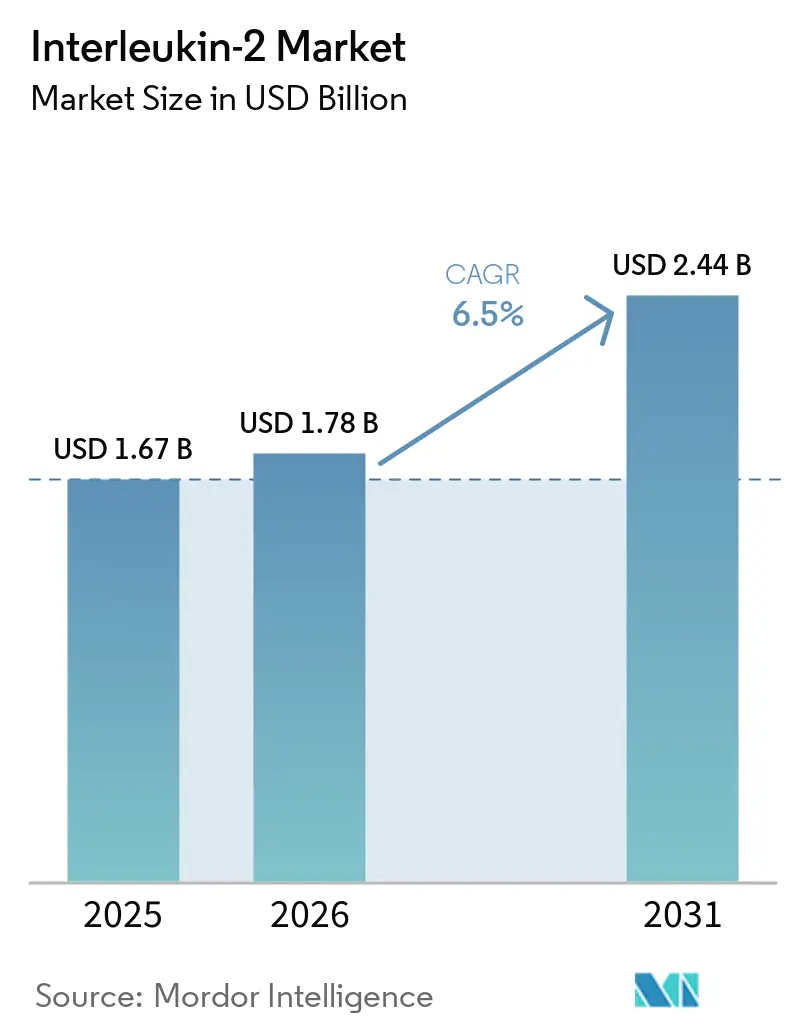
The Interleukin-2 Market size was valued at USD 1.67 billion in 2025 and is estimated to grow from USD 1.78 billion in 2026 to reach USD 2.44 billion by 2031, at a CAGR of 6.5% during the forecast period (2026-2031).
Aldesleukin remains the primary revenue contributor to the Interleukin-2 market, while newer receptor agonists and fusion proteins continue to advance through development. The treatment landscape is shifting toward products that enhance immune activity and reduce the safety limitations of conventional high-dose therapy. Combination regimens with checkpoint inhibitors are strengthening IL-2’s clinical role in selected cancers. Autoimmune applications are also expanding opportunities beyond oncology, particularly where low-dose treatment increases regulatory T-cell populations. Companies that demonstrate durable responses with less intensive administration have a clearer path to broader adoption and outpatient use.
Key Report Takeaways
- By product type, aldesleukin held 65.45% of the Interleukin-2 market share in 2025, while engineered IL-2 receptor agonists are projected to grow at a 6.92% CAGR through 2031.
- By route of administration, intravenous delivery held 88.65% of revenue in 2025, while subcutaneous administration is projected to expand at a 7.44% CAGR through 2031.
- By indication, melanoma accounted for 35.66% of revenue in 2025, while renal cell carcinoma is projected to advance at an 8.56% CAGR through 2031.
- By end user, hospitals and clinics held 65.78% of revenue in 2025, while specialty cancer centers are projected to grow at a 9.22% CAGR through 2031.
- By geography, North America held 39.34% of revenue in 2025, while Asia-Pacific is forecast to expand at an 8.45% CAGR through 2031.
Note: Market size and forecast figures in this report are generated using Mordor Intelligence’s proprietary estimation framework, updated with the latest available data and insights as of January 2026.
Market Trends and Insights
Drivers Impact Analysis of Interleukin-2 Market*
| DRIVER | (~) % IMPACT ON CAGR FORECAST | GEOGRAPHIC RELEVANCE | IMPACT TIMELINE |
|---|---|---|---|
| Expansion of IL-2 use in tumor-infiltrating lymphocyte therapy | +1.4% | Global, with the greatest effect in North America and Europe at leading lifileucel treatment centers | Medium term (2-4 years) |
| Growth of engineered IL-2 receptor-biased therapies | +1.6% | Global, with early uptake in North America and expansion through clinical trial networks in Asia-Pacific and Europe | Long term (≥ 4 years) |
| Increasing adoption of IL-2 and checkpoint inhibitor combinations | +1.2% | North America and Europe, with rapid growth in Asia-Pacific | Medium term (2-4 years) |
| Rising demand for low-dose IL-2 in autoimmune disease | +0.9% | China-led activity in Asia-Pacific, with development also in North America and Europe | Long term (≥ 4 years) |
| Treg-directed immunotherapy for immune-tolerance restoration | +0.7% | North America and the European Union, where chronic autoimmune disease has high unmet need | Long term (≥ 4 years) |
| IL-2 demand from decentralized and self-administered formulations | +0.6% | Global, especially Europe and North America with established hub-and-spoke oncology care | Short term (≤ 2 years) |
| Source: Mordor Intelligence | |||
Expansion of IL-2 Use in Tumor-Infiltrating Lymphocyte Therapy
High-dose IL-2 supports the persistence and activity of tumor-infiltrating lymphocytes (TILs) after infusion. Without adequate signaling support, infused cells can contract rapidly and lose therapeutic effect. A meta-analysis of 13 TIL studies involving 617 patients with advanced melanoma reported a 34% objective response rate following prior anti-PD-(L)1 treatment. New manufacturing protocols combine IL-2 with IL-15 and IL-21 in closed perfusion bioreactors to improve product quality and reduce exhaustion markers, potentially expanding eligibility for TIL-based combination therapies in the Interleukin-2 market.
Iovance studied IOV-3001, a modified IL-2 fusion protein designed to expand effector T cells while limiting regulatory T-cell activation. The company planned Phase II advancement of a low-dose TIL regimen in 2026 to support a less burdensome treatment model.[1]C. Alves Costa Silva et al., “Dual Role of Interleukin-2 in Tumor-Infiltrating Lymphocyte Therapy,” Clinical Cancer Bulletin, springer.com. Australia approved Amtagvi (lifileucel) for previously treated advanced melanoma in June 2026, expanding access to TIL therapy outside the United States. This development supported demand for companion IL-2 products administered after cell infusion.
Growth of Engineered IL-2 Receptor-Biased Therapies
Engineered IL-2 programs target IL-2Rβγ, or CD122/CD132, activity toward effector T cells and natural killer cells while reducing CD25, or IL-2Rα, signaling. This approach aims to limit regulatory T-cell activation and vascular toxicity. Medicenna reported a 42% objective response rate and an 83% disease control rate among 12 evaluable patients with checkpoint-resistant solid tumors treated with MDNA11. In the ABILITY-1 Phase I/II study, 55 monotherapy patients across 18 cancer types reported a 24% objective response rate after checkpoint inhibitor failure.
A first-in-human Phase I study of a no-alpha IL-2 mutein reported a 60% disease control rate at 12 months at the recommended Phase II dose of 1,200 IU/kg. The study also reported 60% CD8 T-cell Ki67 proliferation and 87% natural killer cell proliferation without vascular leak syndrome.[2]D. Davar et al., “Pembrolizumab Plus High-Dose IL-2 in Advanced Clear Cell Renal Cell Carcinoma,” Nature Communications, nature.com. AstraZeneca is evaluating AZD6750, a CD8-guided cytokine designed to restrict activity to intratumoral CD8+ T cells. A Phase I/II study of AZD6750 with rilvegostomig is enrolling under NCT07115043.
Increasing Adoption of IL-2 and Checkpoint-Inhibitor Combinations
Checkpoint inhibitors remove inhibitory signals from exhausted T cells, while IL-2 supports T-cell expansion and effector function. A Phase II study in treatment-naive advanced clear-cell renal cell carcinoma reported a 73% objective response rate with pembrolizumab plus high-dose IL-2. The study also reported a 42% complete response rate and a median overall survival exceeding 84 months. As of the May 2026 analysis, 42.3% of patients had treatment-free intervals exceeding five years.
Historical objective response rates for IL-2 monotherapy in renal cell carcinoma ranged from 21% to 24.7%, supporting interest in combination regimens. A Phase Ib study of simlukafusp alfa with atezolizumab and bevacizumab reported a 47% objective response rate in the triplet arm for metastatic renal cell carcinoma. The study also reported median progression-free survival of 18.3 months and sustained T-cell and natural killer cell expansion in tumor biopsies. These findings support IL-2's role in broader immunotherapy strategies within the Interleukin-2 market.[3]J. He et al., “Low Dose IL-2 Therapy Restores Regulatory T Cells in Patients With Systemic Lupus Erythematosus,” Nature Communications, nature.com.
Rising Demand for Low-Dose IL-2 in Autoimmune Disease
Low-dose IL-2 can expand regulatory T cells without the cytokine storm associated with oncology-dose treatment. In a Phase IIb study of 152 patients with systemic lupus erythematosus, the 1.0 million IU subcutaneous group achieved a 69.7% SRI-4 response rate at week 12, compared with 23.5% in the placebo group. The difference remained significant through week 24, with P<0.001. The highest-dose group also had lower anti-dsDNA antibody levels and reduced prednisone use.
A randomized study involving 60 patients with Behçet's syndrome found that low-dose IL-2 reduced the oral ulcer count from 1.57 in the placebo group to 0.69, with P=0.001 and no serious adverse events. Regulatory T-cell expansion was the reported biological correlate. The systemic lupus erythematosus trial was conducted at 12 Chinese hospitals, positioning China as a key contributor of clinical evidence. Low-dose IL-2 has also been studied in difficult-to-treat rheumatoid arthritis, supporting the long-term autoimmune opportunity in the Interleukin-2 market.
Restraints Impact Analysis of Interleukin-2 Market*
| RESTRAINT | (~) % IMPACT ON CAGR FORECAST | GEOGRAPHIC RELEVANCE | IMPACT TIMELINE |
|---|---|---|---|
| High-Dose IL-2 toxicity and intensive-care requirements | -0.8% | Global, with the strongest effect in South America and the Middle East and Africa where ICU oncology capacity is limited | Short term (≤ 2 years) |
| Short half-life and frequent dosing of conventional aldesleukin | -0.5% | Global, with stronger pressure in Asia-Pacific and Europe where outpatient protocols are prioritized | Medium term (2-4 years) |
| Substitution from checkpoint inhibitors and other immunotherapies | -0.7% | North America and Europe, where checkpoint inhibitor use is highest | Medium term (2-4 years) |
| Limited reimbursement alignment for complex IL-2-based treatment pathways | -0.4% | Global, with a clear gap in European systems for multi-agent oncology pricing | Long term (≥ 4 years) |
| Source: Mordor Intelligence | |||
High-Dose IL-2 Toxicity and Intensive-Care Requirements
High-dose aldesleukin has a demanding clinical safety profile. A study of 391 patients found that 87% experienced hypotension, while 73% experienced vascular leak syndrome or edema. The need for intensive monitoring restricts administration to large academic centers with appropriate clinical infrastructure. Limited ICU oncology capacity in Brazil, India, and parts of the Middle East and Africa further limits patient access. The short half-life of conventional aldesleukin increases the treatment burden in the Interleukin-2 market, as dosing may be required every 8 hours. Post-infusion IL-2 toxicity also affects the TIL therapy pathway. Lifileucel regimens showed a 7.5% treatment-related mortality rate in the cited analysis. Iovance received FDA IND clearance in June 2026 for IOV-5001, an IL-12-tethered TIL therapy designed without post-infusion IL-2.
Substitution From Checkpoint Inhibitors and Other Immunotherapies
PD-1 and PD-L1 checkpoint inhibitors are widely used as first-line treatments for melanoma and renal cell carcinoma, which account for a significant share of the current IL-2 revenue base. Monthly intravenous or subcutaneous checkpoint inhibitor regimens are simpler than multi-dose daily aldesleukin treatment requiring intensive monitoring. This convenience supports treatment preference for checkpoint inhibitors among appropriate patient populations. Substitution pressure is strongest for aldesleukin monotherapy in the Interleukin-2 market and is less direct for combination regimens and engineered IL-2 products. High-dose IL-2 combinations can still provide durable outcomes in selected patients. In the cited renal cell carcinoma study, complete responders had treatment-free intervals exceeding 5 years, an outcome not routinely replicated by checkpoint inhibitor monotherapy.
*Our forecasts treat driver/restraint impacts as directional, not additive. The impact forecasts reflect baseline growth, mix effects, and variable interactions.
Interleukin-2 Market Segment Analysis
By Product Type:
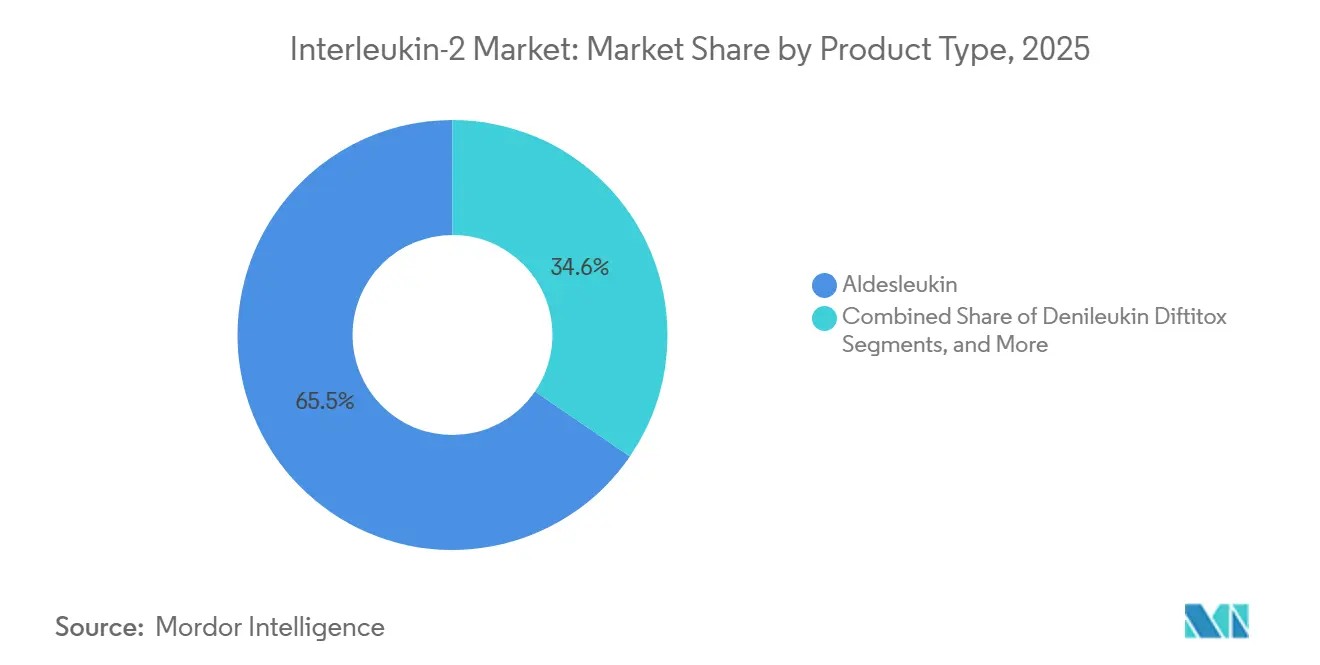
Engineered Variants Redefine the Revenue MixAldesleukin held 65.45% of product revenue in 2025, supported by more than three decades of clinical use and the lack of a broadly approved replacement. This established base continues to underpin the Interleukin-2 market. Engineered IL-2 receptor agonists are the fastest-growing product segment, with a projected CAGR of 6.92% during 2026-2031. By January 2026, Medicenna had enrolled more than 110 patients across 29 cancer types in the ABILITY-1 Phase 1/2 study and reported a 50% objective response rate in second- and third-line settings. Anaveon presented Phase 1 data for ANV600 at ASCO 2026, established a recommended Phase 2 dose, and reported tumor shrinkage in post-checkpoint and checkpoint-naive patients.
Denileukin diftitox, marketed as LYMPHIR and REMITORO, is the second-largest product category, with revenue generated primarily from cutaneous T-cell lymphoma treatment and ongoing development in diffuse large B-cell lymphoma. Pegylated IL-2 products and fusion proteins remain smaller categories but hold strategic importance. Nektar initiated Phase 3 ZENITH AD trials of rezpegaldesleukin for atopic dermatitis in July 2026; positive results could establish the first approved pegylated IL-2 product for a major autoimmune indication. Krystal received FDA RMAT designation for KB707 in advanced NSCLC in February 2026. KB707 delivers localized IL-2 and IL-12 expression through inhalation, adding a differentiated delivery model to the Interleukin-2 market.



By Route of Administration:
Subcutaneous Delivery Gains MomentumIntravenous delivery held 88.65% of route-of-administration revenue in 2025, reflecting the use of high-dose aldesleukin through monitored intravenous infusion. Subcutaneous administration is projected to grow at a CAGR of 7.44% during 2026-2031. Low-dose autoimmune protocols commonly use subcutaneous injections every other day, while engineered IL-2 products are increasingly moving toward formulations that support outpatient delivery. A mixed-methods analysis found that subcutaneous immunotherapy reduced treatment time by 85% to 90% compared with intravenous administration, generated annual savings of EUR 1,410 (USD 1,537) per patient, and reduced oncology day-hospital occupancy by 40%.
In the June 2026 survey, 92% of patients preferred subcutaneous delivery when efficacy and safety were equivalent, while 82% of healthcare professionals supported out-of-hospital administration for suitable patients. These preferences encourage manufacturers to develop subcutaneous-compatible products, as formulation affects treatment settings and provider access. The SILVER Phase Ib study is evaluating low-dose subcutaneous IL-2 at 125,000 IU/kg with tebentafusp in uveal melanoma. The study demonstrates the growing use of subcutaneous IL-2 in newer combination regimens and can broaden access across the Interleukin-2 industry.
By Indication:
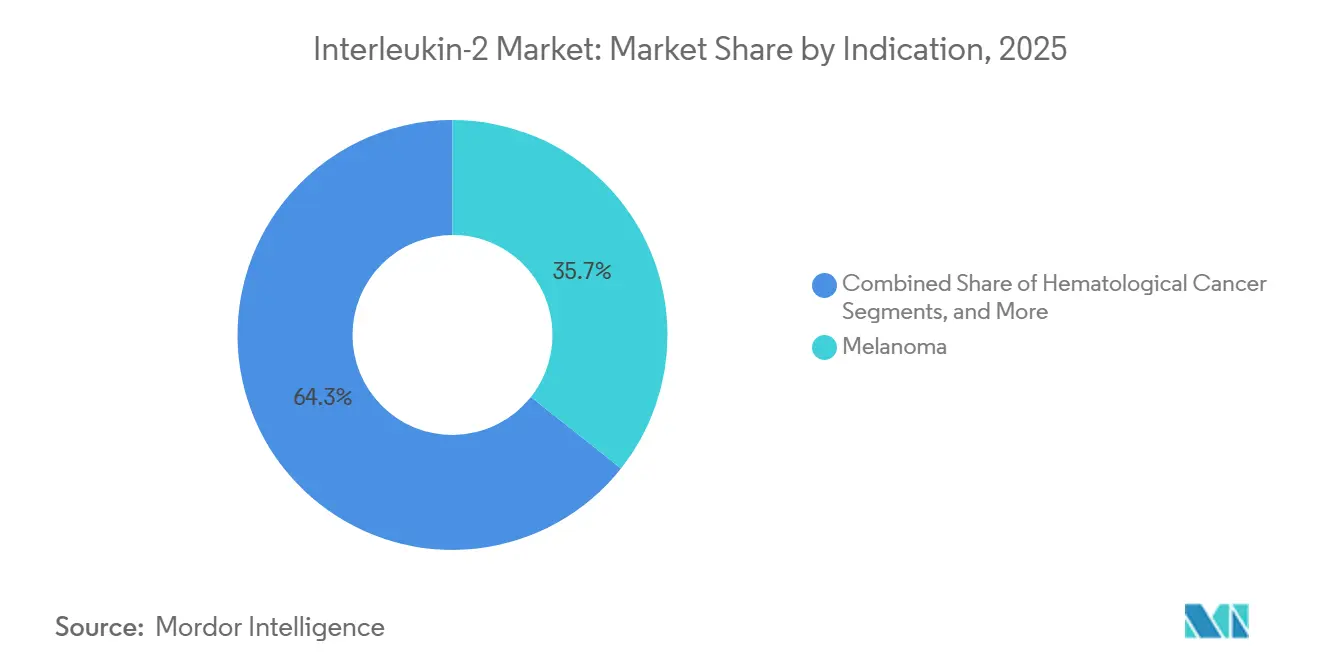
Renal Cell Carcinoma Builds on Durable Combination DataMelanoma held 35.66% of indication revenue in 2025, supported by lifileucel and high-dose IL-2 TIL regimens, aldesleukin combinations, and emerging denileukin diftitox activity in T-cell lymphoproliferative disease. Renal cell carcinoma is the fastest-growing indication, with a projected CAGR of 8.56% during 2026-2031. Pembrolizumab plus high-dose IL-2 reported a 73% objective response rate, compared with historical aldesleukin monotherapy rates of 21% to 24.7%. This evidence is increasing interest in combination protocols where durable, treatment-free responses remain a clinical priority.
Autoimmune disease represents a long-term opportunity beyond oncology. Low-dose IL-2 has restored regulatory T-cell and effector T-cell balance in studies of systemic lupus erythematosus, difficult-to-treat rheumatoid arthritis, and Behçet's syndrome. The global systemic lupus erythematosus population is estimated at 5 million, exceeding the cancer populations currently driving revenue, while treatment courses can be longer than most oncology regimens. Hematological cancers continue to contribute through denileukin diftitox in cutaneous T-cell lymphoma, and Phase 2 studies in diffuse large B-cell lymphoma are expanding the relevant patient population.
By End User:
Specialty Cancer Centers Become Important Growth SitesHospitals and clinics held 65.78% of end-user revenue in 2025 because high-dose aldesleukin requires institutional treatment capacity. Specialty cancer centers are projected to grow at a CAGR of 9.22% during 2026-2031. As of July 2026, Iovance operated more than 95 authorized Amtagvi treatment centers globally, while the TILVANCE-301 Phase 3 trial continued to enroll patients across international sites. This network supports specialized cell therapy delivery and related IL-2 administration, positioning specialty centers as key adoption sites.
Specialty cancer centers can adopt engineered IL-2 products and combination regimens more quickly than general hospitals, which may face rigid formularies and standardized treatment protocols. Academic medical centers and research institutes represent a smaller revenue segment but remain important sites for first-in-human and registrational trials. These trials determine which engineered products progress to commercial use. As low-dose autoimmune programs move toward potential approval, rheumatology and dermatology specialty clinics may emerge as a fourth meaningful end-user category, broadening the Interleukin-2 market beyond oncology-focused care settings.
Geography Analysis
North America and Europe Interleukin-2 Market
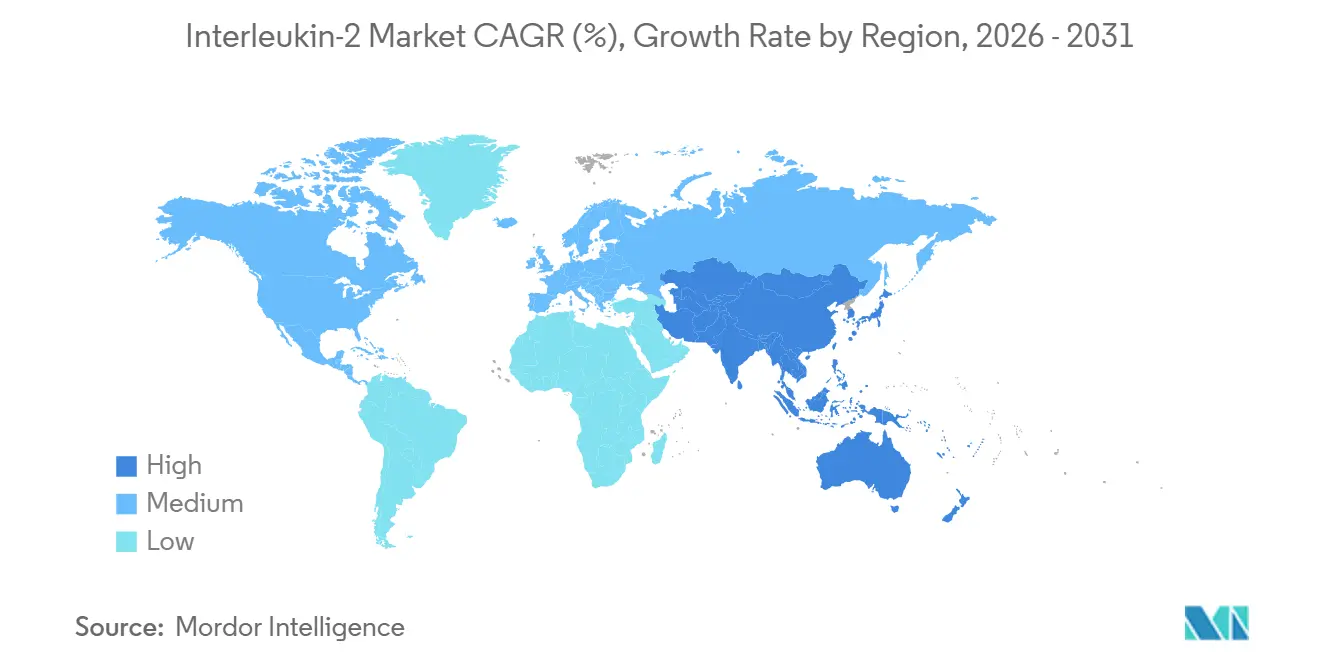
North America held 39.34% of the Interleukin-2 market revenue in 2025. The United States has FDA-approved Proleukin and LYMPHIR products, an expanding lifileucel treatment-center network, and academic centers that administer high-dose IL-2 and conduct clinical trials. Canada supports market access through its developing oncology reimbursement framework, while private oncology clinics are an important access route in Mexico. Europe benefits from an established oncology infrastructure and multinational clinical trial activity, led by Germany, France, and the United Kingdom. The European Medicines Agency reviewed Iovance's resubmitted marketing authorization application in 2026, supporting European access to TIL therapy.
APAC Interleukin-2 Market
Asia-Pacific is the fastest-growing region, with a projected CAGR of 8.45% during 2026-2031. China accounted for 40%-45% of Asia-Pacific demand in 2026, driven by recombinant human IL-2 use in oncology, public immunotherapy research investment, and low-dose autoimmune trials. A Phase IIb systemic lupus erythematosus study across 12 Chinese hospitals positioned China as a clinical evidence producer and treatment market. Japan and South Korea contributed 30%-35% of regional revenue, supported by REMITORO approval, manufacturing capacity, and biotechnology activity.
MEA and South America Interleukin-2 Market
The Middle East, Africa, and South America remain smaller regional segments in the Interleukin-2 market. Saudi Arabia and the United Arab Emirates are expanding national oncology programs, although ICU requirements limit adoption in certain facilities. Brazil leads South American adoption through regulatory alignment and a growing private oncology sector. Reimbursement systems in both regions have not fully adapted to the cost structure of IL-2 combinations and adoptive cell therapy, favoring outpatient-compatible engineered and subcutaneous products over hospital-dependent aldesleukin regimens.

Competitive Landscape
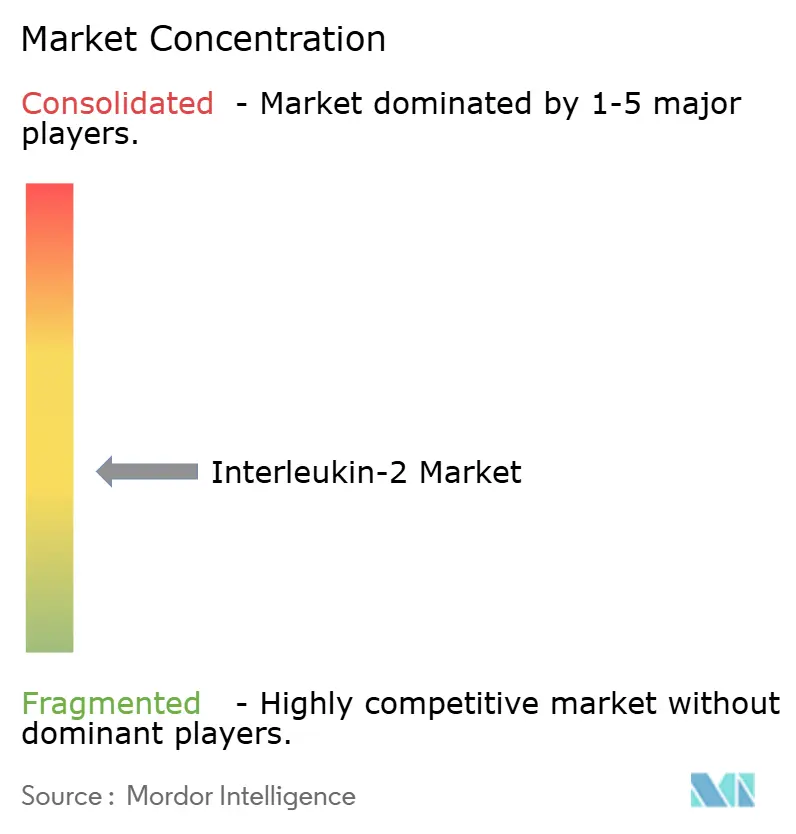
The Interleukin-2 market is moderately fragmented at the company level, with no company controlling more than a mid-teens share of total revenue. Product revenue is more concentrated, as aldesleukin represents most of the current value. Established franchises support pipeline investment, while receptor agonists, fusion proteins, and pegylated variants compete through clinical differentiation and tolerability. Peer-reviewed research reported trispecific VHH-based antibodies targeting all three IL-2 receptor subunits in 2026, indicating potential product designs beyond current Phase 1 and Phase 2 programs.
Iovance generated USD 99 million in second-quarter 2026 revenue, demonstrating the commercial relevance of the TIL-plus-IL-2 model. Its June 2026 Australian approval for Amtagvi expanded the product into a third global regulatory market. Nektar initiated two global Phase 3 trials of rezpegaldesleukin for moderate-to-severe atopic dermatitis in July 2026. Krystal's FDA RMAT designation for KB707 in advanced NSCLC may accelerate its development pathway, reflecting differentiated clinical and delivery positions in the Interleukin-2 market.
ILTOO Pharma is developing low-dose IL-2 for systemic lupus erythematosus, while Philogen completed Phase 3 FIBROSARC enrollment for L19-IL2, or Darleukin, in soft tissue sarcoma. These programs expand the indication base beyond melanoma and renal cell carcinoma. Lifileucel received FDA Fast Track designation in NSCLC, and this designation, along with KB707 RMAT status, supports faster development. Competition depends on safety, administration, combination evidence, and access in specialist settings.
Interleukin-2 Industry Leaders
Iovance Biotherapeutics, Inc.
Merck & Co., Inc.
Eisai Co., Ltd.
Nektar Therapeutics
Innovent Biologics, Inc.
- *Disclaimer: Major Players sorted in no particular order
Interleukin-2 Market Companies Covered in this Report
- Anaveon AG
- Ascendis Pharma A/S
- Asher Biotherapeutics, Inc.
- BioNTech
- Citius Pharmaceuticals, Inc.
- Corvus Pharmaceuticals, Inc.
- Cue Biopharma, Inc.
- Eisai
- Equillium, Inc.
- ILTOO Pharma
- Innovent Biologics, Inc.
- Iovance Biotherapeutics, Inc.
- Krystal Biotech, Inc.
- Medicenna Therapeutics Corp.
- Merck
- Mural Oncology plc
- Nektar Therapeutics
- Philogen S.p.A.
- Sanofi
- Synthekine, Inc.
- TILT Biotherapeutics Ltd
- Werewolf Therapeutics, Inc.
- Xilio Therapeutics, Inc.

Recent Industry Developments in Interleukin-2 Market
- July 2026: Nektar Therapeutics initiated two global Phase 3 ZENITH AD trials of rezpegaldesleukin in patients aged 12 years and older with moderate-to-severe atopic dermatitis, supporting a potential BLA submission in 2029. The FDA also aligned on a single 850-patient registrational Phase 3 ZENITH AA trial for alopecia areata.
- June 2026: Iovance Biotherapeutics received Australian TGA approval for Amtagvi (lifileucel) for previously treated advanced melanoma, establishing Australia as the third global regulatory market for lifileucel.
- May 2026: Anaveon presented positive Phase 1 EXPAND-1 data for ANV600 (sunekafusp alfa) at ASCO 2026, establishing a recommended Phase 2 dose and demonstrating tumor shrinkage across patient groups.
- March 2026: Iovance initiated a Phase 1/2 trial of IOV-3001 in previously treated unresectable or metastatic melanoma patients receiving lifileucel. The therapy was designed to enable less frequent dosing and selective effector T-cell expansion.


Global Interleukin-2 Market Report Scope
As per the scope of the report, Interleukin-2 (IL-2) is a type of signaling protein called a cytokine that regulates the activities of white blood cells and is essential for the body's immune response.
The interleukin-2 market is segmented by product type, route of administration, indication, end user, and geography. By product type, the market includes aldesleukin, denileukin diftitox, engineered IL-2 receptor agonists, pegylated IL-2 products, IL-2 fusion proteins, and other IL-2 products. By route of administration, the market is segmented into intravenous, subcutaneous, and other routes of administration. By indication, the market is categorized into renal cell carcinoma, melanoma, hematological cancers, autoimmune diseases, and other indications. By end user, the market is segmented into hospitals and clinics, academic medical centers and research institutes, specialty cancer centers, and other end users. By geography, the market is analyzed across North America, Europe, Asia-Pacific, the Middle East and Africa, and South America. The report also covers the estimated market sizes and trends for 17 countries across major regions globally. The report offers market sizes and forecasts in terms of value (USD) for the above segments.
| Aldesleukin |
| Denileukin Diftitox |
| Engineered IL-2 Receptor Agonists |
| Pegylated IL-2 Products |
| IL-2 Fusion Proteins |
| Other IL-2 Products |
| Intravenous |
| Subcutaneous |
| Others |
| Renal Cell Carcinoma |
| Melanoma |
| Hematological Cancer |
| Autoimmune Disease |
| Other Indications |
| Hospitals and clinics |
| Academic Medical Centers and Research Institutes |
| Specialty Cancer Centers |
| Others |
| North America | United States |
| Canada | |
| Mexico | |
| Europe | Germany |
| United Kingdom | |
| France | |
| Italy | |
| Spain | |
| Rest of Europe | |
| Asia-Pacific | China |
| India | |
| Japan | |
| Australia | |
| South Korea | |
| Rest of Asia-Pacific | |
| Middle East and Africa | GCC |
| South Africa | |
| Rest of Middle East and Africa | |
| South America | Brazil |
| Argentina | |
| Rest of South America |
| By Product Type | Aldesleukin | |
| Denileukin Diftitox | ||
| Engineered IL-2 Receptor Agonists | ||
| Pegylated IL-2 Products | ||
| IL-2 Fusion Proteins | ||
| Other IL-2 Products | ||
| By Route of Administration | Intravenous | |
| Subcutaneous | ||
| Others | ||
| By Indication | Renal Cell Carcinoma | |
| Melanoma | ||
| Hematological Cancer | ||
| Autoimmune Disease | ||
| Other Indications | ||
| By End User | Hospitals and clinics | |
| Academic Medical Centers and Research Institutes | ||
| Specialty Cancer Centers | ||
| Others | ||
| By Geography | North America | United States |
| Canada | ||
| Mexico | ||
| Europe | Germany | |
| United Kingdom | ||
| France | ||
| Italy | ||
| Spain | ||
| Rest of Europe | ||
| Asia-Pacific | China | |
| India | ||
| Japan | ||
| Australia | ||
| South Korea | ||
| Rest of Asia-Pacific | ||
| Middle East and Africa | GCC | |
| South Africa | ||
| Rest of Middle East and Africa | ||
| South America | Brazil | |
| Argentina | ||
| Rest of South America | ||


Key Questions Answered in the Report
What is the expected value of the Interleukin-2 market by 2031?
The Interleukin-2 market is forecast to reach USD 2.44 billion by 2031, from USD 1.78 billion in 2026, at a 6.50% CAGR.
Which Interleukin-2 product type has the largest revenue position?
Aldesleukin held 65.45% of product revenue in 2025, supported by its established use in oncology care.
Which treatment area is growing fastest for IL-2 therapies?
Renal cell carcinoma is projected to grow at an 8.56% CAGR through 2031, supported by combination data with pembrolizumab and high-dose IL-2.
Why are engineered IL-2 products being developed?
These products seek to stimulate effector T cells and natural killer cells while reducing CD25 signaling and the vascular toxicity associated with conventional therapy.
How are subcutaneous formulations changing IL-2 treatment?
Subcutaneous administration is forecast to grow at a 7.44% CAGR through 2031 and can support shorter treatment time and more outpatient care.
Which region is expanding fastest for IL-2 therapies?
Asia-Pacific is forecast to grow at an 8.45% CAGR through 2031, with China contributing 40% to 45% of regional demand in 2026, supporting regional expansion in the Interleukin-2 market.
Page last updated on:





