
Hypopituitarism Diagnostics Market Size and Share
Market Overview
| Study Period | 2020 - 2031 |
|---|---|
| Market Size (2026) | USD 298.13 Million |
| Market Size (2031) | USD 409.54 Million |
| Growth Rate (2026 - 2031) | 6.56 % |
| Fastest Growing Market | Asia-Pacific |
| Largest Market | North America |
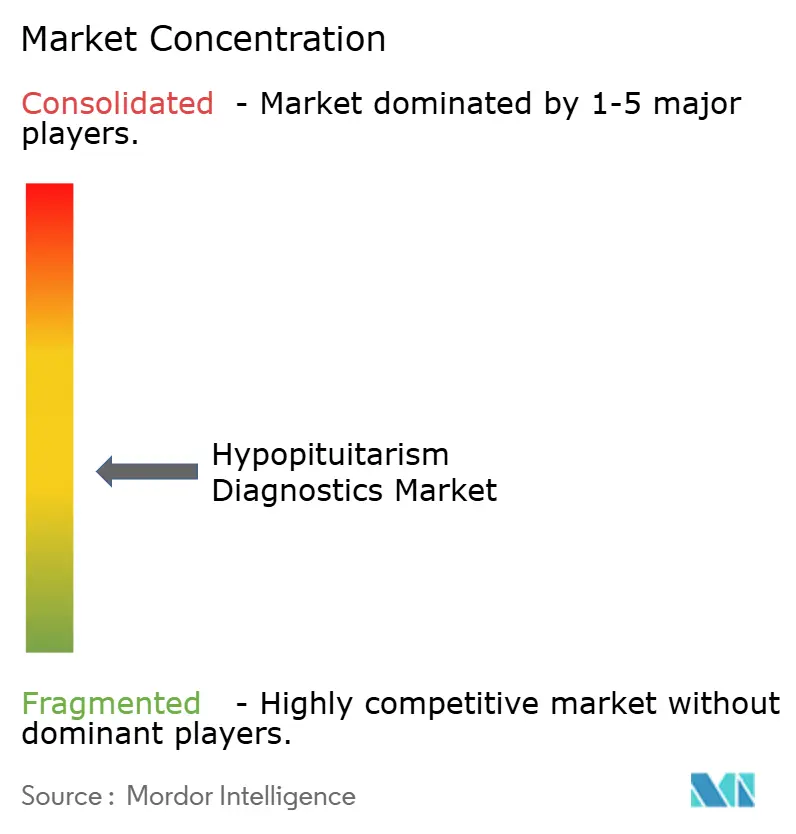
| Market Concentration | Medium |
Major Players *Disclaimer: Major Players sorted in no particular order Image © Mordor Intelligence. Reuse requires attribution under CC BY 4.0. | |
Hypopituitarism Diagnostics Market Analysis by Mordor Intelligence
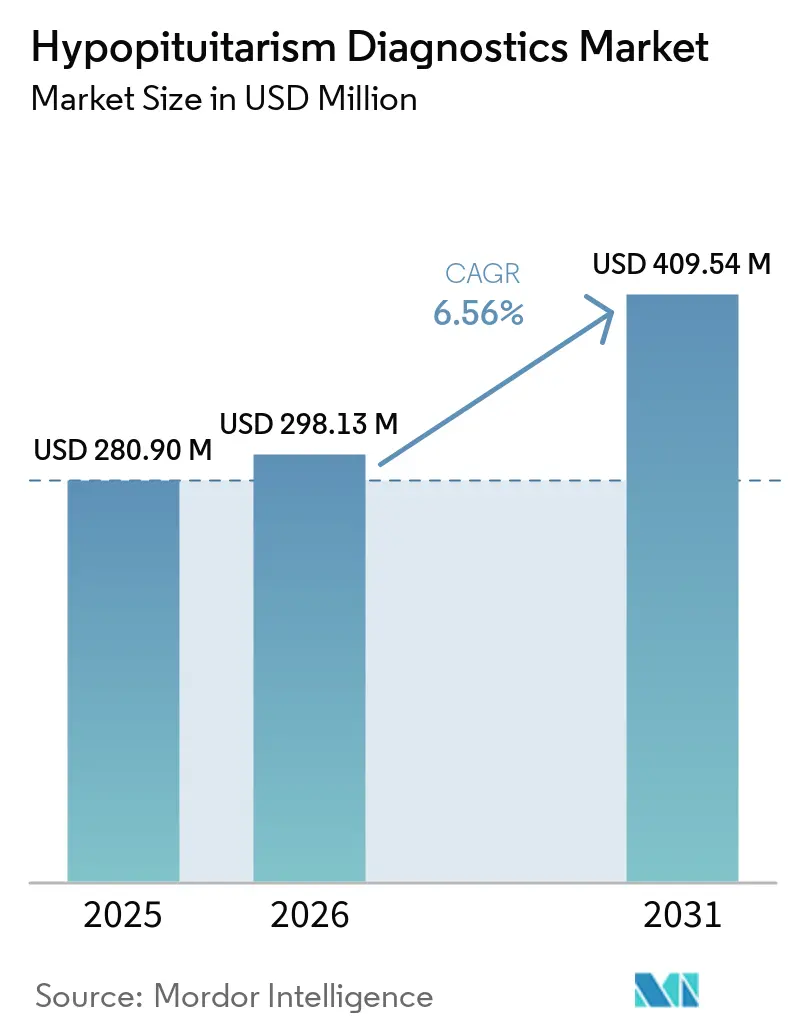
The hypopituitarism diagnostics market is projected to expand from USD 280.90 million in 2025 and USD 298.13 million in 2026 to USD 409.54 million by 2031, registering a CAGR of 6.56% between 2026 and 2031. The hypopituitarism diagnostics market is supported by a sizable population whose condition remains unidentified, while delayed diagnosis can carry serious clinical consequences. Adult prevalence was reported at 37.5 to 45.5 cases per 100,000 people, and the standardized mortality rate was nearly 8 times that of the general population, which supports earlier and broader evaluation. New oncology treatment pathways, formal follow-up for brain injury and radiation patients, and automation in laboratory workflows are widening the routine testing base. The hypopituitarism diagnostics market also benefits when hospitals can use established analyzers for broader hormone panels instead of referring every case to specialized laboratories. Platform consistency, specialist availability, and access to advanced imaging will remain important limits on adoption, particularly outside established referral networks.
Key Report Takeaways
- By test type, hormone blood tests held 40.26% of the hypopituitarism diagnostics market share in 2025, while imaging diagnostics is forecasted to grow at a 7.16% CAGR through 2031.
- By application, clinical diagnosis accounted for 44.32% of the hypopituitarism diagnostics market in 2025, while screening is expected to expand at a 8.24% CAGR through 2031.
- By technology, immunoassay held 42.22% revenue share in 2025, while imaging technology is forecasted to grow at an 8.52% CAGR through 2031.
- By end-user, hospitals accounted for 45.14% revenue share in 2025, while diagnostic laboratories are anticipated to grow at a 7.64% CAGR through 2031.
- By geography, North America held 46.31% revenue share in 2025, while Asia-Pacific is projected to grow at a 9.23% CAGR through 2031.
Note: Market size and forecast figures in this report are generated using Mordor Intelligence’s proprietary estimation framework, updated with the latest available data and insights as of January 2026.
Market Trends and Insights
Drivers Impact Analysis of Hypopituitarism Diagnostics Market*
| Driver | (~) % Impact on CAGR Forecast | Geographic Relevance | Impact Timeline |
|---|---|---|---|
| Rising Identification of Pituitary Hormone Deficiencies | +1.8% | Global | Medium term (2-4 years) |
| Increasing Testing of Pituitary Tumors and Treatment-Related Dysfunction | +1.2% | North America and Europe | Medium term (2-4 years) |
| Expanding Screening of Traumatic Brain Injury and Post-Radiation Populations | +0.9% | Global, with early concentration in North America and Europe | Short term (≤ 2 years) |
| Growth of Automated Hormone Immunoassay and Pituitary Imaging Workflows | +1.0% | North America, Europe, and core Asia-Pacific markets | Medium term (2-4 years) |
| Improved Detection of Immune Checkpoint Inhibitor-Associated Hypophysitis | +0.8% | North America and Europe | Short term (≤ 2 years) |
| Increasing Use of Copeptin and Multiplex Endocrine Testing in Ambiguous Cases | +0.5% | Europe and North America, with expansion to Asia-Pacific | Long term (≥ 4 years) |
| Source: Mordor Intelligence | |||
Rising Identification of Pituitary Hormone Deficiencies
Hypopituitarism is often missed rather than inherently rare, which leaves a substantial group of patients without a confirmed diagnosis or an appropriate hormone workup. Adult prevalence of 37.5 to 45.5 cases per 100,000 people indicates a meaningful pool for the hypopituitarism diagnostics market, especially because untreated disease carries a standardized mortality rate nearly 8 times that of the general population.[1] Increased use of MRI for headaches and neurological assessment also identifies pituitary incidentalomas that require biochemical follow-up, even when imaging was ordered for a separate clinical concern.[2] Sellar tumors and other space-occupying lesions account for nearly 50% of acquired cases, so broader MRI availability can bring more patients into assessment earlier. Routine basal panels can measure cortisol, ACTH, TSH, free T4, IGF-1, and gonadotropins together, which makes comprehensive evaluation more practical within referral pathways.
Expanding Screening of Traumatic Brain Injury and Post-Radiation Populations
Traumatic brain injury and radiation-related pituitary insufficiency represent clinically significant groups that have historically received inconsistent screening after the initial episode of care. A 2024 meta-analysis found any pituitary insufficiency in 61% of adults treated with radiation for brain, head, and neck tumors, with growth hormone deficiency reported most often at 40%. Clinical follow-up guidance calls for structured assessment after moderate to severe brain injury, with testing at defined intervals when symptoms or risk factors remain present.[3] These care pathways create repeat testing over several years instead of a single diagnostic encounter. The hypopituitarism diagnostics market therefore gains from hospital systems that connect neurotrauma, oncology, endocrinology, and laboratory services through a consistent follow-up pathway.
Growth of Automated Hormone Immunoassay and Pituitary Imaging Workflows
Automation is changing how laboratories manage pituitary testing by allowing several hormone measurements to be processed in a shared high-throughput workflow. Roche cobas Elecsys and Siemens Healthineers Atellica IM systems can run multi-hormone panels that include cortisol, ACTH, TSH, growth hormone, LH, FSH, and prolactin, reducing manual handling in hospital core laboratories. The designation can extend access to mass spectrometry-based steroid testing beyond high-complexity reference laboratories in the United States. Deep-learning reconstruction in dynamic contrast-enhanced pituitary MRI is improving temporal resolution without extending scan times, while AI-assisted imaging has been studied for improved microadenoma detection. The hypopituitarism diagnostics market can benefit as these changes reduce the practical burden of comprehensive laboratory and imaging evaluation.
Improved Detection of Immune Checkpoint Inhibitor-Associated Hypophysitis
The expanding use of immune checkpoint inhibitors in oncology is creating a defined group that requires close endocrine surveillance during treatment. MRI can be normal in checkpoint inhibitor-associated hypophysitis, so imaging alone cannot exclude the condition when symptoms or ACTH changes are present. Endocrine-led classification of treatment-related pituitary toxicity supports clearer differentiation among hypophysitis, hypopituitarism, and isolated ACTH deficiency. As oncology protocols make multi-axis testing more consistent, the hypopituitarism diagnostics market gains a demand channel based on active treatment monitoring rather than only symptomatic referrals.
Restraints Impact Analysis of Hypopituitarism Diagnostics Market*
| Restraint | (~) % Impact on CAGR Forecast | Geographic Relevance | Impact Timeline |
|---|---|---|---|
| Complex Interpretation of Basal and Dynamic Hormone Tests | -0.6% | Global | Long term (≥ 4 years) |
| Limited Endocrinology Expertise Outside Specialist Centers | -0.8% | South America, Middle East and Africa, and emerging Asia-Pacific markets | Long term (≥ 4 years) |
| Interassay Variability and Hormone Replacement Interference | -0.5% | Global | Medium term (2-4 years) |
| Fragmented Adoption of Copeptin and Advanced Dynamic Testing | -0.4% | Asia-Pacific, Middle East and Africa, and South America | Long term (≥ 4 years) |
| Source: Mordor Intelligence | |||
Complex Interpretation of Basal and Dynamic Hormone Tests
Hypopituitarism testing requires careful interpretation because errors can arise before analysis, during measurement, and when results are applied to a clinical decision. A 2024 review identified cross-reactions, interfering antibodies, nutritional supplement interactions, and poorly standardized analytical cutoffs as recurring causes of misleading laboratory results. Insulin tolerance, glucagon stimulation, and ACTH stimulation testing can take considerable time and require clinical supervision. Their results also vary with the assay platform and cutoff applied, limiting direct comparison across laboratories. This complexity slows the hypopituitarism diagnostics market because laboratories need specialized protocols, clinical teams may seek confirmation, and the total diagnostic episode becomes more resource intensive.
Limited Endocrinology Expertise Outside Specialist Centers
The clinical interpretation needed for hypopituitarism is concentrated in tertiary and academic medical centers, leaving many community and regional settings with limited specialist support. This shortfall is most apparent across South America, the Middle East, sub-Saharan Africa, and emerging Asia-Pacific markets, where abnormal hormone results may not lead to a complete follow-up assessment. Remote review services and AI-supported pattern recognition may improve access over time, although widespread use is still limited in resource-constrained settings. Until referral systems mature, the hypopituitarism diagnostics market will not fully convert installed laboratory capacity into completed diagnostic volume.
*Our forecasts treat driver/restraint impacts as directional, not additive. The impact forecasts reflect baseline growth, mix effects, and variable interactions.
Hypopituitarism Diagnostics Market Segment Analysis
By Test Type:
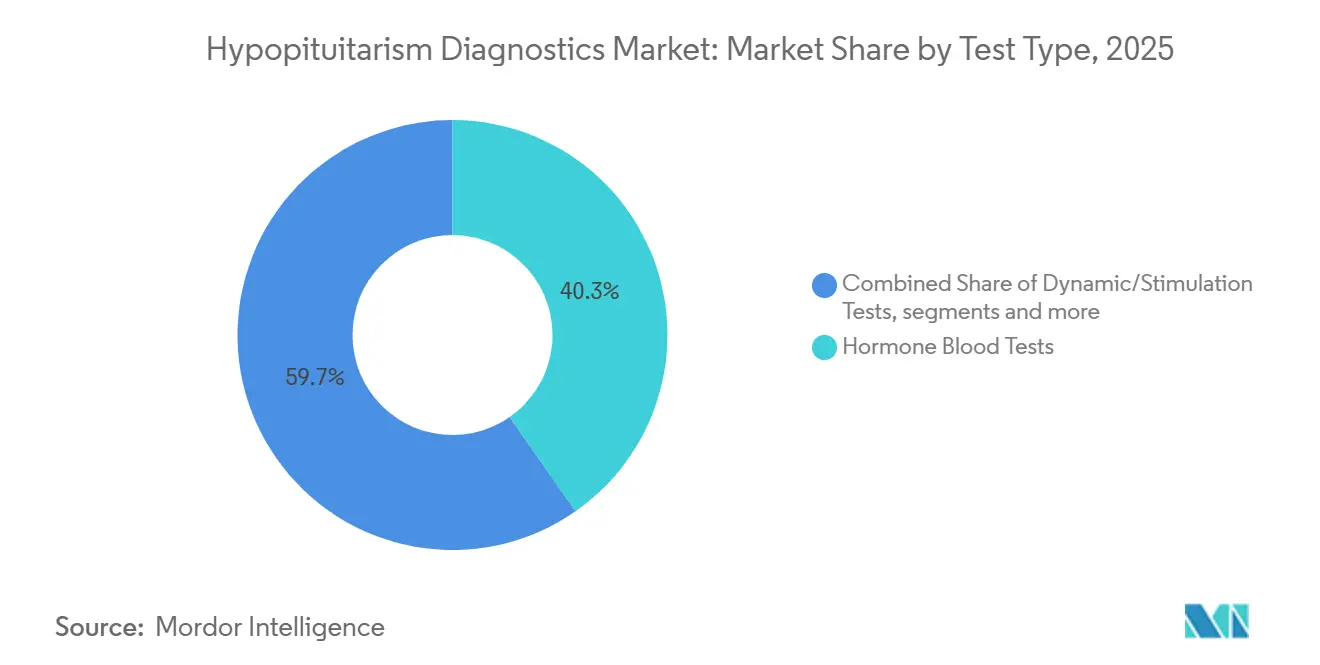
Imaging Diagnostics Expands While Hormone Panels Anchor TestingHormone blood tests held 40.26% revenue share in 2025, making them the largest test type in the hypopituitarism diagnostics market. Basal multi-hormone panels are usually the first step because clinicians need to evaluate several pituitary axes before confirming the source of a deficiency. ECLIA and other automated immunoassay methods allow hospital laboratories to process those measurements within routine workflows.
Dynamic and stimulation tests form the next layer when basal values are unclear or when confirmation of growth hormone and ACTH deficiency is needed. Insulin tolerance, glucagon stimulation, and ACTH stimulation protocols require supervised sampling, so they remain concentrated in hospitals and specialist centers. Imaging diagnostics is forecasted to grow at a 7.16% CAGR through 2031, supported by pituitary MRI use in suspected structural disease and treatment-related hypophysitis. AI-assisted MRI methods are being examined for higher-resolution detection of pituitary microadenomas and structural change, which can strengthen the role of imaging in complex workups.

By Application:
Clinical Diagnosis Leads While Screening Builds Protocol-Based VolumeClinical diagnosis represented 44.32% of revenue in 2025, reflecting the continued role of symptom-led referrals in the hypopituitarism diagnostics market. Fatigue, hypogonadism, growth failure, visual symptoms, and other endocrine concerns often lead clinicians to request initial testing. Clinical diagnosis will therefore continue to supply the main testing base across hospital endocrinology and specialist services.
Screening is expected to grow at a 8.24% CAGR through 2031, making it the fastest-growing application. Structured follow-up for traumatic brain injury, cranial radiation, and checkpoint inhibitor treatment creates known at-risk groups that can be assessed on scheduled intervals. Monitoring remains a steady application for people receiving hormone replacement therapy, because periodic testing is needed to evaluate treatment adequacy.
By Technology:
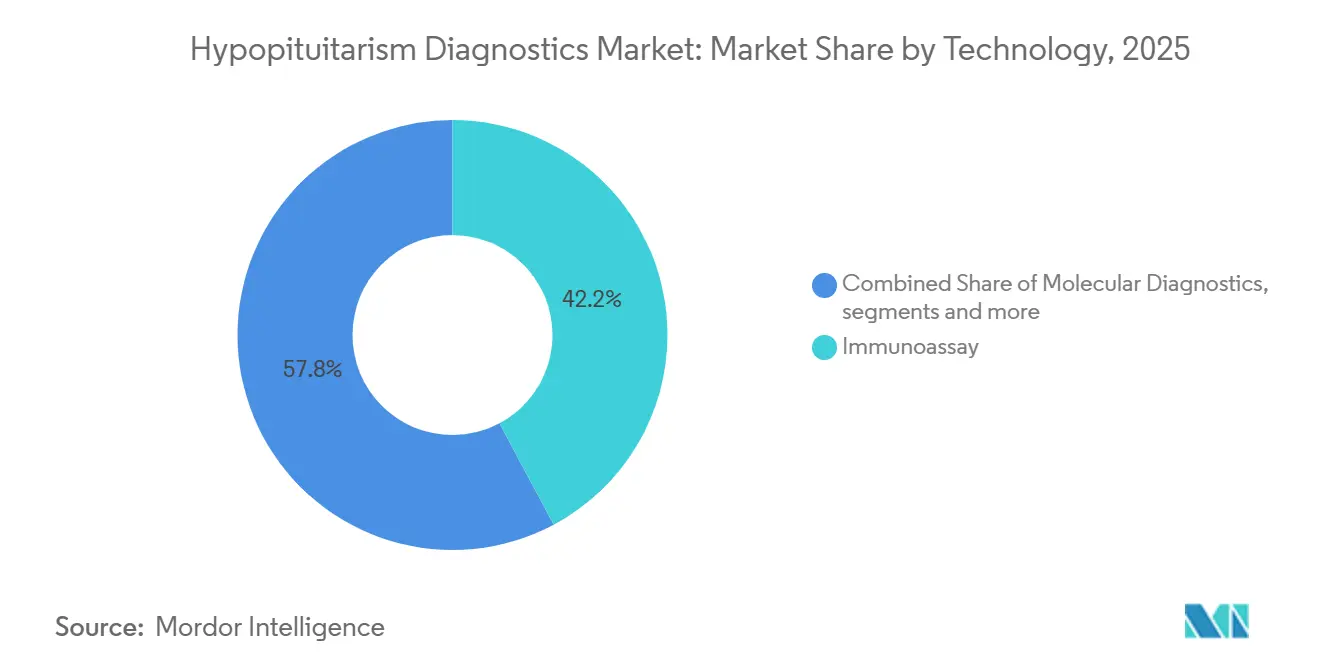
Immunoassay Remains the Core Platform While Imaging Gains GroundImmunoassay held 42.22% revenue share in 2025, supported by its established role in basal testing and monitoring. Roche cobas e systems and Siemens Healthineers Atellica IM systems support high-throughput measurement of several hormones in hospital core laboratory settings. The hypopituitarism diagnostics market relies on these platforms because a broad assay menu can support both initial workups and repeat monitoring. Standardization is important because hormone results must remain clinically reliable when laboratories use automated testing at scale.
Molecular diagnostics serves a smaller but relevant role in congenital and hereditary cases where genetic causes require further investigation. Next-generation sequencing can complement functional hormone assays when pediatric presentations or family history suggest an inherited condition. Imaging technology is forecasted to grow at an 8.52% CAGR through 2031, the fastest rate among the identified technology categories. The technology mix will remain anchored in immunoassay because imaging supplements, rather than replacing, biochemical confirmation.
By End-User:
Hospitals Maintain Leadership While Diagnostic Laboratories Increase ThroughputHospitals accounted for 45.14% revenue share in 2025 and remain the leading end-user group. They are particularly important for dynamic stimulation tests that require supervised infusions, repeated blood draws, and prompt support if adverse events occur. Hospital endocrinology departments also benefit from integrated analyzers, electronic ordering, and direct access to imaging and specialist consultation. The hypopituitarism diagnostics industry remains dependent on hospitals for high-acuity evaluation and confirmation of difficult cases.
Diagnostic laboratories are anticipated to expand at a 7.64% CAGR through 2031 as more static hormone panels and genetic tests move to high-throughput reference settings. Large United States reference networks offer broad pituitary hormone menus and short turnaround times, allowing community clinicians to access specialized testing without operating a complete endocrine laboratory. Their role is especially important for specialty assay suppliers because these clinics manage patients who need repeated and clinically detailed testing.
Geography Analysis
North America Hypopituitarism Diagnostics Market
North America held 46.31% revenue share in 2025, giving it the largest regional position in the hypopituitarism diagnostics market. The United States has concentrated pituitary centers at academic medical institutions, including Mayo Clinic, Barrow Neurological Institute, and Johns Hopkins, which support high-complexity testing and multidisciplinary referrals. Canada adds volume through provincial healthcare systems that are formalizing links between brain injury care and endocrinology follow-up. The region also has a dense installed base of immunoassay platforms from Roche, Siemens Healthineers, and Abbott, which supports routine endocrine workflow capacity.
Europe Hypopituitarism Diagnostics Market
Europe is the second-largest regional block, supported by mature specialist networks and national reference laboratories in Germany, the United Kingdom, France, Italy, and Spain. The European Union In Vitro Diagnostics Regulation is changing validation requirements and can favor established platforms that have strong regulatory documentation. Structured brain injury follow-up and endocrine referral practices support demand for dynamic testing where specialist capacity is available. Germany, France, Italy, Spain, and the United Kingdom have established endocrinology networks that can process complex referrals within tertiary care pathways. Eastern European countries, including Poland and the Czech Republic, show growing need for specialized testing, although procurement cycles for advanced platforms can delay near-term uptake. These differences create a mixed opportunity across the regional hypopituitarism diagnostics market.
APAC, South America and MEA Hypopituitarism Diagnostics Market
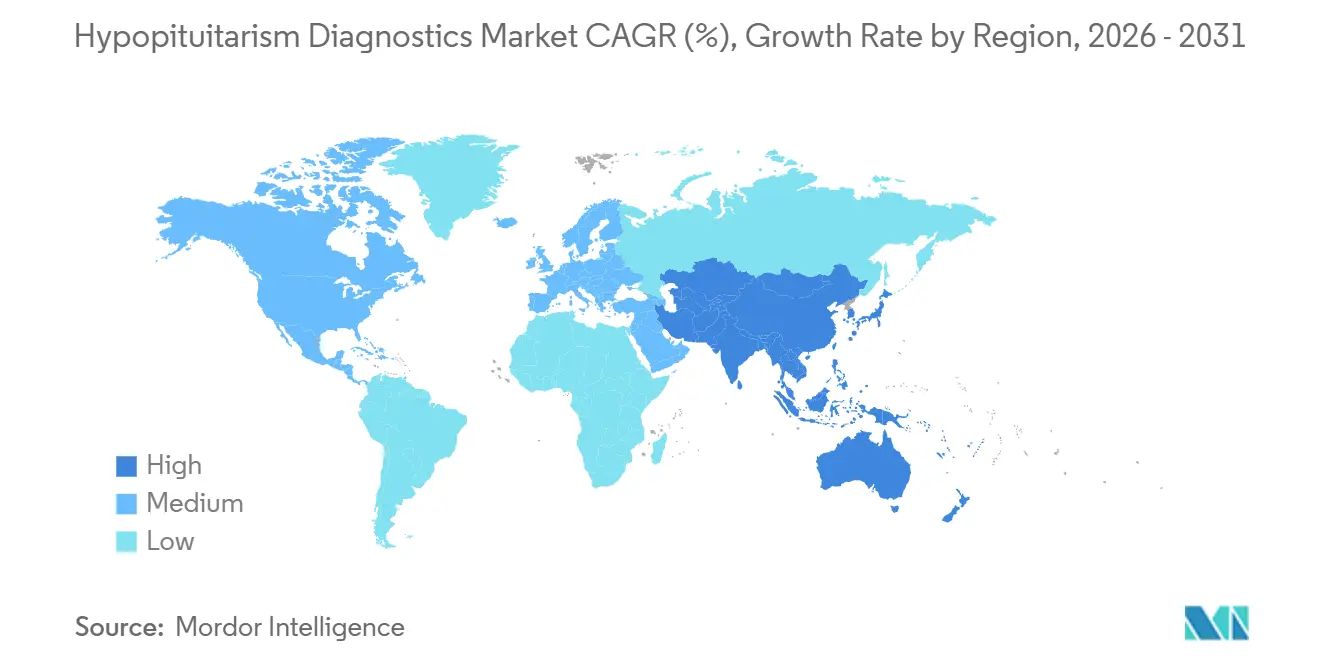
Asia-Pacific is projected to grow at a 9.23% CAGR through 2031, the fastest regional rate in the hypopituitarism diagnostics market size. Healthcare infrastructure investment, increasing specialist training, and wider awareness of endocrine disorders are supporting adoption in China, India, Japan, and South Korea. Japan classifies anterior pituitary hypofunction as a designated intractable disease, which provides insurance coverage for diagnostic workups and requires multi-axis hormone evaluation under published criteria. China benefits from centralized hospital procurement and increasing use of chemiluminescent immunoassay systems. India and South Korea are expanding endocrine services in urban tertiary centers, although access remains uneven beyond those locations. South America, the Middle East, and Africa are growing from a lower base, with Brazil and Saudi Arabia as key access points. Limited specialist density and fragmented laboratory infrastructure continue to slow adoption in these regions.
Competitive Landscape
The hypopituitarism diagnostics market is moderately fragmented, with large in vitro diagnostics platform companies supplying most high-throughput immunoassay capacity. F. Hoffmann-La Roche, Siemens Healthineers, Abbott Laboratories, and Danaher Corporation compete through analyzer breadth, laboratory integration, assay menus, and recurring reagent supply. DiaSorin S.p.A. and Immunodiagnostic Systems Holdings PLC occupy a specialty tier focused on endocrine assay specificity and targeted panel capability. DiaSorin’s LIAISON platform includes TSH-receptor antibody testing relevant to pituitary-thyroid axis differentiation. Reference laboratory networks, including Quest Diagnostics, Laboratory Corporation of America Holdings, ARUP Laboratories, and Mayo Clinic Laboratories, both purchase laboratory systems and compete with hospital laboratories through specialized send-out testing menus.
Competition also reflects the difficulty of offering accurate results across varied endocrine use cases. Laboratory buyers need broad hormone menus, stable workflows, regulatory support, and clear clinical performance when deciding which systems to use. Siemens Healthineers’ May 2026 announcement on continuous HoST-TT certification for Atellica IM Testosterone II reinforced the value of assay standardization in endocrine workflows. These moves show why product performance, regulatory access, and specialty menu depth remain central competitive factors.
Open opportunities remain in AI-supported pituitary imaging interpretation, point-of-care hormone panels for ambulatory endocrinology clinics, and multiplexed dynamic testing kits that reduce the burden of stimulation protocols. Mindray Medical International can challenge established suppliers in Asia-Pacific with cost-competitive chemiluminescent immunoassay analyzers for price-sensitive hospital procurement. Assay harmonization remains another competitive issue because inconsistent measurements can complicate patient classification and repeat testing. Companies that support credible standardization efforts may be better placed when institutional buyers place more weight on cross-platform reliability. The hypopituitarism diagnostics market is therefore competitive across instrument capability, assay quality, regulatory positioning, service reach, and the ability to address complex clinical workflows.
Hypopituitarism Diagnostics Industry Leaders
-
Siemens Healthineers AG
-
F. Hoffmann-La Roche AG
-
Abbott Laboratories
-
Danaher Corporation
-
DiaSorin S.p.A.
- *Disclaimer: Major Players sorted in no particular order
Hypopituitarism Diagnostics Market Companies Covered in this Report
- Abbott Laboratories
- ARUP Laboratories
- Beckton Dickinson
- bioMérieux
- Bio-Rad Laboratories
- Danaher
- DiaSorin
- Roche
- Fujirebio Holdings, Inc.
- Hologic
- Immunodiagnostic Systems Holdings PLC
- LabCorp
- Mayo Clinic Laboratories
- Mindray
- QIAGEN
- Quest Diagnostics
- Revvity, Inc.
- Siemens Healthineers
- Thermo Fisher Scientific
- Tosoh
Recent Industry Developments in Hypopituitarism Diagnostics Market
- May 2026: Siemens Healthineers announced that its Atellica IM Testosterone II assay achieved continuous CDC Hormone Standardization Program for Total Testosterone certification, confirming equivalence to high-performance liquid chromatography-tandem mass spectrometry. The TSTII is the only fully automated immunoassay to hold this certification uninterruptedly since 2019, supporting compliance with Endocrine Society and American Urological Association guidelines for gonadal axis assessment in hypopituitarism workup.
- March 2026: Roche received CLIA moderate complexity designation from the U.S. FDA for its Ionify steroid assay panel, covering Estradiol, DHEA, DHEA-S, Progesterone, 17-Hydroxyprogesterone, and Androstenedione, on the cobas Mass Spec solution. This designation significantly expands accessibility, allowing routine laboratories to perform mass spectrometry-based adrenal and gonadal axis assessments without specialized operator requirements.
- April 2026: DiaSorin published FY2026 guidance projecting 5% to 6% revenue growth at constant exchange rates and adjusted EBITDA margins of 32% to 33%, reflecting sustained commercial momentum across its specialty immunodiagnostics portfolio, which includes endocrine assays with direct relevance to pituitary function evaluation.
Global Hypopituitarism Diagnostics Market Report Scope
According to the report’s scope, the hypopituitarism diagnostics market refers to the segment within clinical diagnostics focused on identifying partial or complete deficiencies in pituitary hormone secretion, using imaging, biochemical assays, and stimulation tests to enable early detection, differential diagnosis, and treatment planning.
The hypopituitarism diagnostics market is segmented into test type, application, technology, end-user, and geography. By test type, the market is segmented into hormone blood tests, dynamic/stimulation tests, imaging diagnostics, and other test types. By application, the market is segmented into clinical diagnosis, screening, and monitoring. By technology, the market is segmented into immunoassay, molecular diagnostics, and imaging technology. By end-user, the market is segmented into hospitals, diagnostic laboratories, specialty endocrinology clinics, and other end-users. By geography, the market is segmented into North America, Europe, Asia-Pacific, the Middle East and Africa, and South America. The report also covers the estimated market sizes and trends for 17 countries across major regions globally. The report offers values (USD) for all the above segments.
Segmentation Overview
| Hormone Blood Tests |
| Dynamic/Stimulation Tests |
| Imaging Diagnostics |
| Other Test Types |
| Clinical Diagnosis |
| Screening |
| Monitoring |
| Immunoassay |
| Molecular Diagnostics |
| Imaging Technology |
| Hospitals |
| Diagnostic Laboratories |
| Specialty Endocrinology Clinics |
| Other End-Users |
| North America | United States |
| Canada | |
| Mexico | |
| Europe | Germany |
| United Kingdom | |
| France | |
| Italy | |
| Spain | |
| Rest of Europe | |
| Asia-Pacific | China |
| Japan | |
| India | |
| Australia | |
| South Korea | |
| Rest of Asia-Pacific | |
| Middle East and Africa | GCC |
| South Africa | |
| Rest of Middle East and Africa | |
| South America | Brazil |
| Argentina | |
| Rest of South America |
| By Test Type | Hormone Blood Tests | |
| Dynamic/Stimulation Tests | ||
| Imaging Diagnostics | ||
| Other Test Types | ||
| By Application | Clinical Diagnosis | |
| Screening | ||
| Monitoring | ||
| By Technology | Immunoassay | |
| Molecular Diagnostics | ||
| Imaging Technology | ||
| By End-User | Hospitals | |
| Diagnostic Laboratories | ||
| Specialty Endocrinology Clinics | ||
| Other End-Users | ||
| By Geography | North America | United States |
| Canada | ||
| Mexico | ||
| Europe | Germany | |
| United Kingdom | ||
| France | ||
| Italy | ||
| Spain | ||
| Rest of Europe | ||
| Asia-Pacific | China | |
| Japan | ||
| India | ||
| Australia | ||
| South Korea | ||
| Rest of Asia-Pacific | ||
| Middle East and Africa | GCC | |
| South Africa | ||
| Rest of Middle East and Africa | ||
| South America | Brazil | |
| Argentina | ||
| Rest of South America | ||
Key Questions Answered in the Report
What is the expected growth rate for hypopituitarism diagnostics market through 2031?
The hypopituitarism diagnostics market is forecasted to grow at a 6.56% CAGR from 2026 to 2031, growing from USD 280.90 million in 2025 to USD 298.13 million in 2026 to reach USD 409.54 million by 2031.
Which test type is growing fastest for hypopituitarism diagnosis?
Imaging diagnostics is forecasted to grow at a 7.16% CAGR through 2031, supported by greater use of pituitary MRI and AI-assisted imaging methods.
Why is screening becoming more important in hypopituitarism care?
Screening is forecasted to grow at an 8.24% CAGR as traumatic brain injury, cranial radiation, and checkpoint inhibitor programs create scheduled testing groups.
Which region is expected to grow fastest in hypopituitarism diagnostics?
Asia-Pacific is projected to grow at a 9.23% CAGR through 2031, supported by health infrastructure investment and expanding endocrine services.