
Hydrogen Water Market Size and Share
Market Overview
| Study Period | 2022 - 2032 |
|---|---|
| Market Size (2027) | USD 3.31 Billion |
| Market Size (2032) | USD 5.85 Billion |
| Growth Rate (2027 - 2032) | 12.05 % |
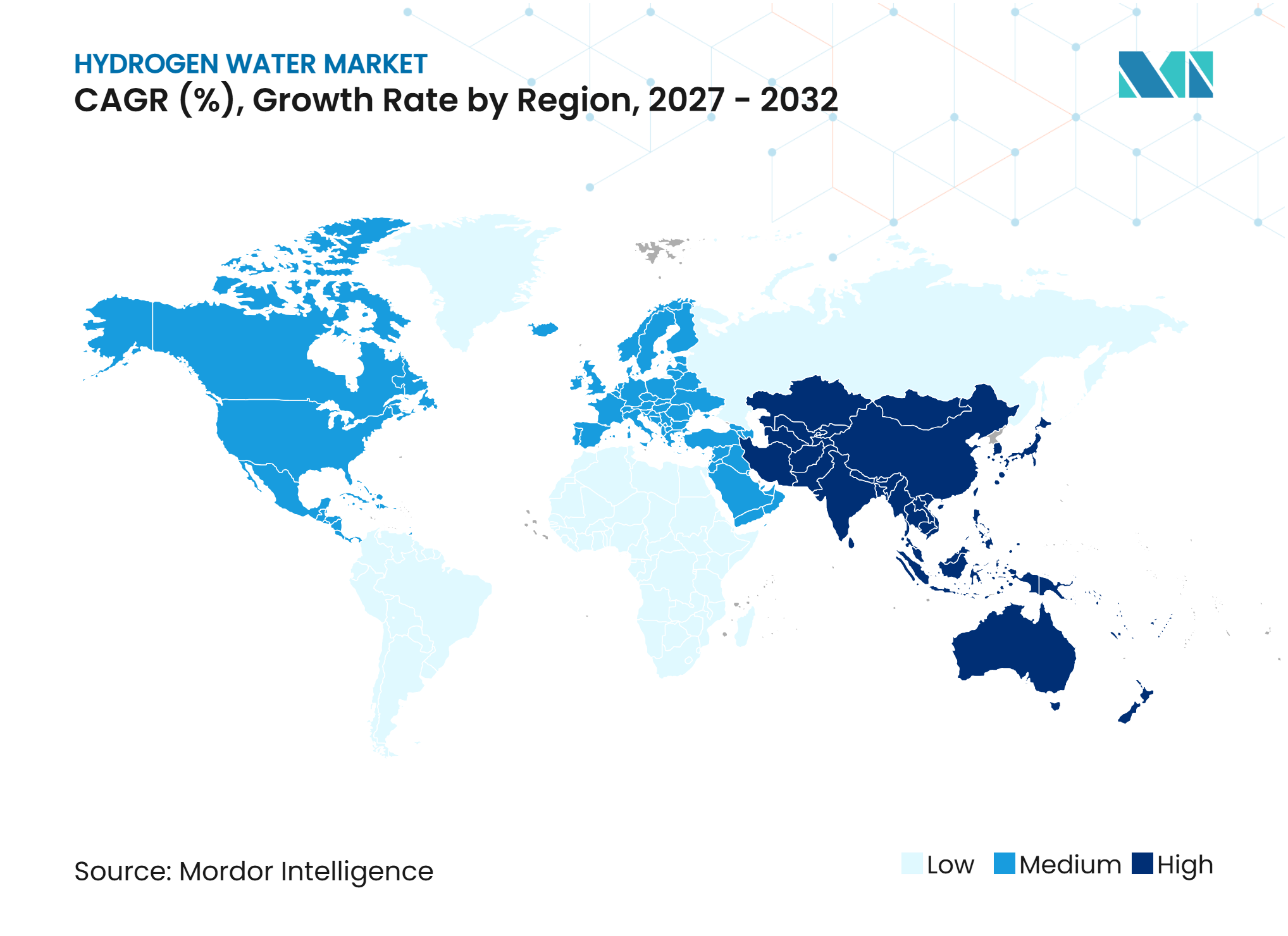
| Fastest Growing Market | Asia-Pacific |
| Largest Market | North America |
| Market Concentration | Low |
Major Players
*Disclaimer: Major Players sorted in no particular order Image © Mordor Intelligence. Reuse requires attribution under CC BY 4.0. |
|
Hydrogen Water Market Analysis by Mordor Intelligence
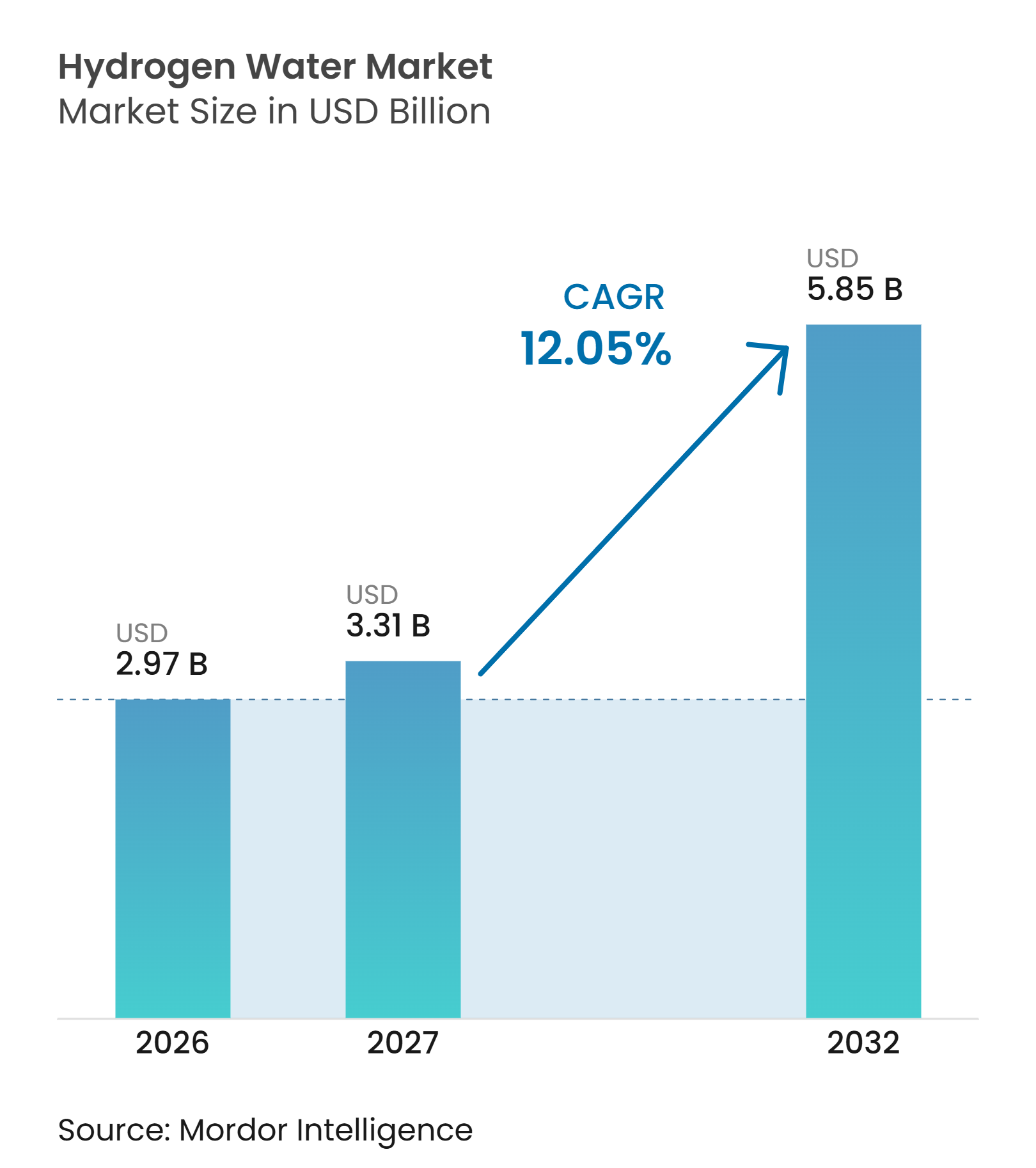
The hydrogen water market size was valued at USD 2.97 billion in 2026 and is estimated to grow from USD 3.31 billion in 2027 to reach USD 5.85 billion by 2032, at a CAGR of 12.05% during the forecast period (2027-2032). The hydrogen water market is supported by consumer spending on preventive health, smaller electrolysis equipment, and broader retail availability of devices and ready-to-drink products. A 2025 randomized controlled trial linked eight weeks of hydrogen-rich water consumption with lower total and low-density lipoprotein cholesterol, reduced cravings, and higher glucagon-like peptide-1 levels among obese adults. Japan’s Consumer Affairs Agency approved a second functional food notification for hydrogen water in August 2025, strengthening the category’s credibility in its most established national setting. The hydrogen water market also faces limits from incomplete long-term clinical evidence, high equipment costs, product-storage challenges, and closer scrutiny of health claims by regulators.
Key Report Takeaways
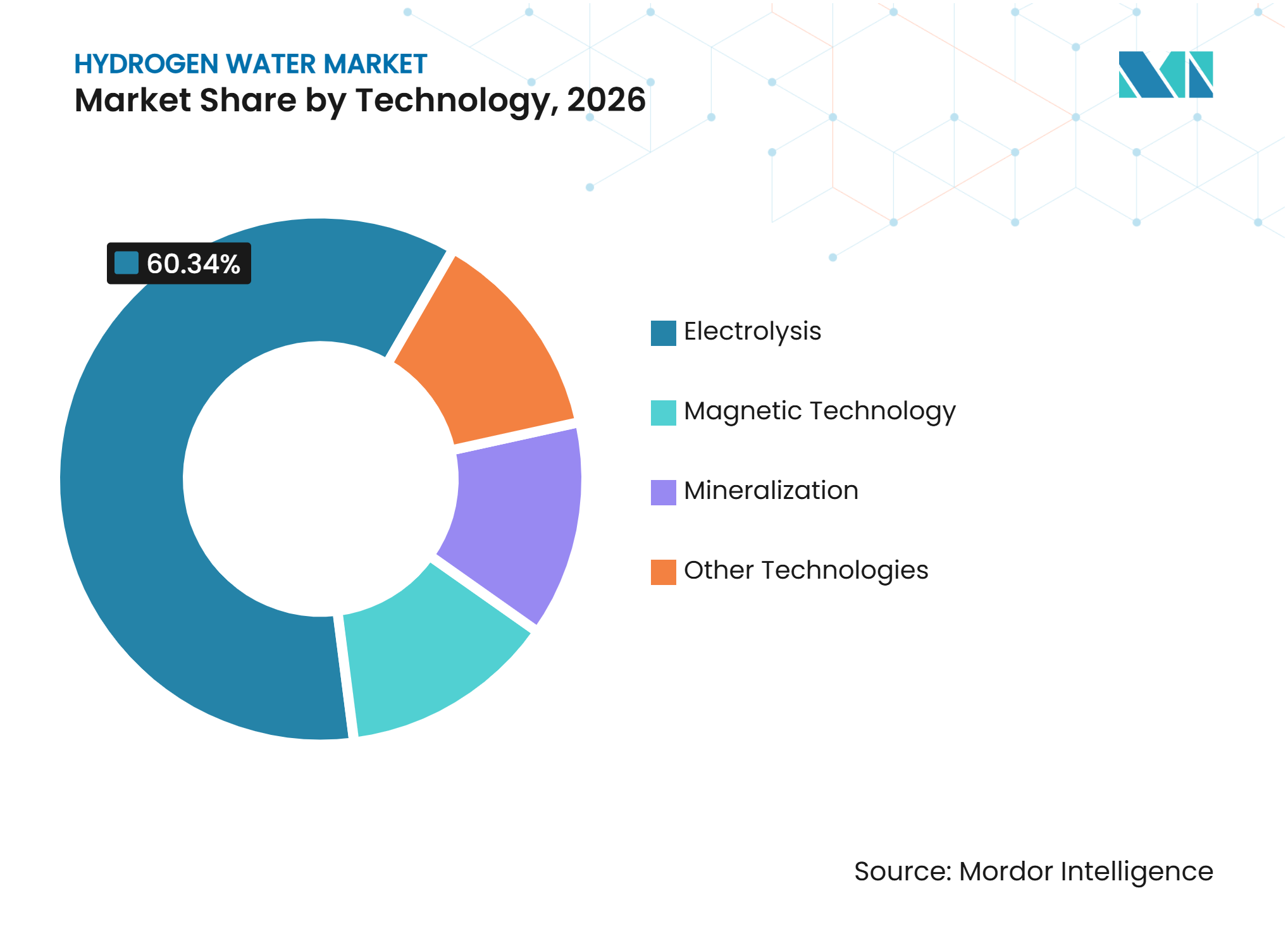
- By technology, electrolysis held 60.34% of the hydrogen water market share in 2026 and is projected to advance at a 12.89% CAGR through 2032.
- By product type, hydrogen water generators held 58.13% of the hydrogen water market share in 2026, while hydrogen-infused beverages are projected to advance at a 13.23% CAGR through 2032.
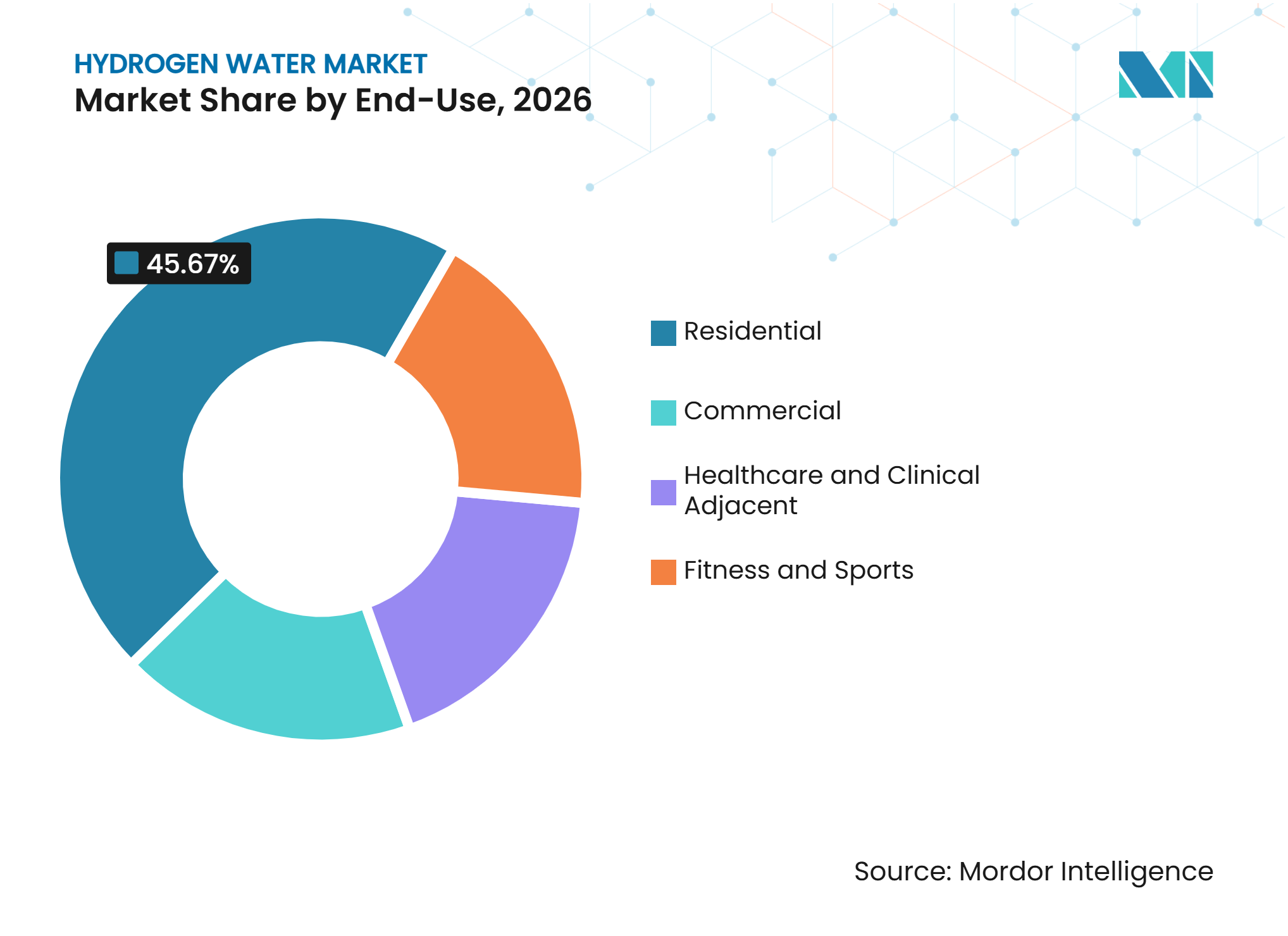
- By end-use, residential held 45.67% of the hydrogen water market share in 2026, while fitness and sports are projected to advance at a 13.67% CAGR through 2032.
- By geography, North America held 34.58% of the hydrogen water market share in 2026, while Asia-Pacific is projected to advance at a 13.20% CAGR through 2032.
Note: Market numbers in this report are based on Mordor Intelligence's proprietary estimation framework, which combines nine months of actuals with Q4 projections for base year 2026.
Market Trends and Insights
Drivers Impact Analysis of Hydrogen Water Market*
| Driver | (~) % Impact on CAGR Forecast | Geographic Relevance | Impact Timeline |
|---|---|---|---|
| Health and Wellness Adoption of Functional Hydration | +3.8% | Global, with intensity peaks in North America, Japan, and South Korea | Medium term (2-4 years) |
| Expansion of At-Home and Portable Electrolysis | +3.0% | North America and APAC core, spillover to EU and MEA | Medium term (2-4 years) |
| Growth of Fitness, Sports Recovery and Corporate Wellness Use | +2.5% | North America and Europe primary; ASEAN emerging | Short term (<=2 years) |
| E-Commerce, Subscription and Direct-to-Consumer Reach | +2.0% | North America, China, South Korea; accelerating in ASEAN | Short term (<=2 years) |
| Packaged and Flavored Hydrogen Beverages | +1.5% | North America primary; EU and APAC secondary | Long term (>=4 years) |
| Source: Mordor Intelligence | |||
Health and Wellness Adoption of Functional Hydration
Consumer demand for drinks associated with physiological benefits is changing investment priorities in the packaged beverage sector. The hydrogen water market benefits from interest in products positioned around metabolic health and daily wellness routines. Hydrogen’s selective interaction with hydroxyl radicals has attracted attention because it does not seek to suppress all reactive oxygen species. The 2025 HYDRAPPET randomized controlled trial reported lower total and low-density lipoprotein cholesterol, less appetite-related craving, and higher glucagon-like peptide-1 after eight weeks of hydrogen-rich water consumption in obese adults. These findings can broaden interest beyond established wellness consumers, especially among people already monitoring metabolic health markers.
Expansion of At-Home and Portable Electrolysis
Smaller electrolysis systems are widening access to on-demand hydrogen generation at home and while traveling. The transition from countertop units to lightweight bottle caps and portable flasks gives the hydrogen water market a broader range of price points and use settings. Echo Technologies LLC presented the Echo Flask at the Consumer Electronics Show (CES) 2025 with a touchscreen, companion application, Apple Health integration, and independently verified hydrogen output of up to 8.25 ppm[1]. Its February 2025 arrangement with Truemed also enabled eligible purchases through Health Savings Account (HSA) and Flexible Spending Account funds. Japan’s Electrical Appliances and Materials Safety Act creates an important compliance factor for electrically powered hydrogen-generating equipment. Producers with relevant product testing and established quality systems can use these requirements to distinguish their devices from lower-quality alternatives.
Growth of Fitness, Sports Recovery and Corporate Wellness Use
Fitness and sports are the fastest-growing end-use category, reflecting growing interest in hydration products used around training and recovery. A 2025 double-blind trial involving 22 female elite athletes reported improvements in muscle mass, fat mass, and peak torque after hydrogen-rich water consumption under intensive exercise conditions. A separate six-week trial in adults over 50 found lower biomarkers of acute exercise-related muscle damage following resistance training. The evidence gives gyms, sports academies, and coaching facilities a basis for testing hydrogen water within recovery programs, although it does not establish therapeutic outcomes. Corporate wellness locations can also adopt water stations where staff health programs and post-exercise amenities justify equipment investment. These institutional settings may provide steadier repeat demand than single consumer purchases in the hydrogen water market.
E-Commerce, Subscription and Direct-to-Consumer Reach
Direct-to-consumer sales and subscriptions are changing how brands acquire, retain, and support customers. Online sales allow producers to combine device purchases with filter replacements, tablets, guidance, and repeat-order programs. This structure reduces dependence on retailer margins and gives companies clearer visibility into ongoing demand. DrinkHRW uses product validation and certification as part of a trust-based proposition, while companies with established online storefronts can pair education with recurring orders. Perricone Hydrogen Water Company announced a national distribution expansion in July 2025, extending activity across retail, media, Amazon, and direct-to-consumer channels. Packaged and flavored hydrogen beverages can benefit from the same online discovery model, particularly when their single-serve format removes the need for consumers to understand device operation.
Restraints Impact Analysis of Hydrogen Water Market*
| Restraint | (~) % Impact on CAGR Forecast | Geographic Relevance | Impact Timeline |
|---|---|---|---|
| Limited Long-Term Clinical Evidence and Consumer Skepticism | -1.8% | Global, most acute in Western regulated markets (North America, EU) | Long term (>=4 years) |
| High Product and Equipment Cost Versus Conventional Water | -1.4% | Emerging markets (South Asia, SEA, Latin America) and mass-market segments | Medium term (2-4 years) |
| Hydrogen Loss, Shelf-Life and Concentration-Verification Risk | -0.9% | Global - most acute for pre-packaged beverage formats | Short term (<=2 years) |
| Source: Mordor Intelligence | |||
Limited Long-Term Clinical Evidence and Consumer Skepticism
The clinical evidence base is expanding, but many human studies have small samples and short study periods. This limits the range of health claims that producers can responsibly make in the hydrogen water market. The U.S. Food and Drug Administration lists hydrogen gas in Generally Recognized as Safe Notice 000520 for specified beverage applications[2]. That safety position does not support disease-treatment marketing claims. In July 2026, the U.S. Food and Drug Administration issued a warning letter to H2Bev and H2 RENU Inc. regarding acidified food requirements and disease-treatment claims. The action shows that product messaging, formulation controls, and manufacturing records require close attention. Regulatory review by the U.S. Food and Drug Administration and Japan’s Consumer Affairs Agency can improve category discipline, but it also increases the cost of compliant entry.
High Product and Equipment Cost Versus Conventional Water
Established electrolysis units are priced from USD 2,380 to USD 5,980, while portable generators are priced from USD 90 to USD 350. These levels can restrict adoption among consumers who compare the product with conventional bottled or municipal water. The cost structure reflects specialized membranes and platinum-coated titanium electrodes, which cannot be reduced sharply without possible quality trade-offs. Enagic raised prices for its U.S. ionizer range in September 2025 after tariffs on Japanese electronics imports increased costs. Higher upfront prices can heighten dissatisfaction if consumers do not perceive a clear benefit. This produces a split in the hydrogen water market, where devices address committed users and ready-to-drink products provide a more accessible entry format.
*Our forecasts treat driver/restraint impacts as directional, not additive. The impact forecasts reflect baseline growth, mix effects, and variable interactions.
Hydrogen Water Market Segment Analysis
By Technology:
Electrolysis Leads Through Performance and Device InnovationElectrolysis held 60.34% of the hydrogen water market share in 2026 and is projected to advance at a 12.89% CAGR through 2032. This position reflects demand for on-demand generation and higher dissolved-hydrogen concentrations. Solid Polymer Electrolyte and Proton Exchange Membrane systems separate hydrogen and oxygen with a polymer membrane. This design can reduce the risk of unwanted byproducts associated with some alkaline systems. A 2025 review described Proton Exchange Membrane water electrolyzers as compact systems capable of high-purity hydrogen production, with optimized electrode structures improving mass-transport performance. These technical characteristics support their use in consumer devices where size, output, and safety are central purchase considerations, while the separation of gases can help manufacturers present a more clearly controlled production method to buyers assessing portable and household equipment.
H2CAP illustrates the shift toward compact equipment through its battery-free, USB-powered cap format. The product is described as using a multi-layer platinum-coated titanium electrode system and producing 1,000 to 1,500 parts per billion (ppb) of dissolved hydrogen, illustrating how compact formats can seek to combine portability with a defined output proposition rather than relying solely on general wellness positioning. Electrolysis producers can compete on concentration reliability, device durability, verification, and compliance rather than on price alone. Magnetic technology serves consumers seeking a natural-process narrative, but it does not center its proposition on dissolved-hydrogen measurement. Mineralization uses reactive minerals, including magnesium, to generate hydrogen and supports tablet formats such as those used by DrinkHRW. These formats can suit travel and convenience needs, while device-based electrolysis continues to define the premium end of the hydrogen water market and offers suppliers an opportunity to connect verified concentration output with warranty, customer support, and replacement-part services.



By Product Type:
Hydrogen Water Generators Sustain Value While Hydrogen-Infused Beverages Expand AccessHydrogen water generators held 58.13% of the hydrogen water market share in 2026. Their value position reflects high average selling prices, installed household systems, and recurring filter or maintenance demand. Household adoption is particularly relevant in Japan and South Korea, where the category has a longer consumer history. Hydrogen-infused beverages are projected to advance at a 13.23% CAGR through 2032. Their single-serve format reduces the need for equipment ownership and can make the category easier for new users to try. This contrast gives the hydrogen water industry both durable device revenue and a pathway to higher-volume packaged consumption, allowing brands to address consumers who prioritize long-term home use as well as those who prefer a lower-commitment trial through a ready-to-drink format.
HyVIDA Brands Inc. licensed its hydrogen infusion technology to oHy, which launched organic hydrogen-infused sparkling water at Sprouts Farmers Market in March 2025 at USD 1.25 per can. The launch showed that canned formats can reach a lower retail price than most generator-led propositions. Hydrogen water bottles occupy a middle position, offering on-demand production without the scale or expense of a whole-home device. Echo Technologies LLC launched hydrogen prebiotic powder packets in April 2025, pairing molecular hydrogen with prebiotic fiber in a single-serve supplement format. Tablets and other portable formats can serve as complementary purchases for people who already use generators, especially where commuting, travel, workplace routines, and a preference for portion-controlled formats make a fixed appliance less suitable for every daily consumption occasion.
By End-Use:
Residential Provides the Base, While Fitness and Sports AccelerateResidential held 45.67% of the hydrogen water market share in 2026. Household generators in Japan, South Korea, and North America provide the installed base for this end-use category. Portable device adoption is also expanding among health-focused households in urban areas. Filter replacement, device upgrades, and tablet subscriptions support recurring demand after the original equipment purchase. Enagic’s distributor-led model and DrinkHRW’s repeat-purchase format show how brands can build household relationships beyond a single sale. Residential demand therefore remains central to the hydrogen water market size across hardware and consumable formats, as household users can create repeat demand through filter changes, service needs, accessory purchases, and the gradual replacement of older devices with newer portable or connected equipment.
Fitness and sports are projected to advance at a 13.67% CAGR through 2032. Gyms, sports academies, and performance-coaching facilities can introduce hydrogen water within exercise and recovery routines. The healthcare and clinical-adjacent segment could become more relevant if larger clinical studies confirm early research. A 2025 prospective study evaluated hydrogen-rich water for acute radiation mucositis, indicating interest in a clinical-adjacent setting without establishing a standard treatment use. Commercial end-use includes offices, hotels, and food-service venues that use wellness facilities and hospitality positioning to support demand. Clear food-labeling frameworks will remain important where institutional buyers seek reliable compliance and quality documentation, because procurement teams generally require clear product specifications, manufacturer records, and credible statements about intended use before adding a wellness product to a facility offering.

Geography Analysis
North America
North America held 34.58% of the hydrogen water market share in 2026. Demand is supported by premium devices, developed direct-to-consumer channels, and consumer willingness to spend on functional hydration. The United States favors portable and countertop products, allowing digital-first companies to compete with established appliance brands. Echo Technologies LLC has used smart-device design and online promotion to build awareness around the Echo Flask. Canada contributes through specialty wellness retail and subscription models, while Mexico remains more sensitive to equipment prices. The U.S. Food and Drug Administration’s Generally Recognized as Safe Notice and New Dietary Ingredient review pathway shape the compliance environment for relevant products. The July 2026 warning letter to H2Bev also signals closer oversight of beverage production and disease-related marketing claims.
Asia-Pacific
Asia-Pacific is projected to advance at a 13.20% CAGR through 2032. Japan supports the region through an established consumer base and formal functional-food processes. Japan’s Consumer Affairs Agency approved a second functional food notification for hydrogen water in August 2025. The Japan Molecular Hydrogen Association has encouraged concentration measurement and device quality practices, and the Electrical Appliances and Materials Safety Act provides further compliance influence for electrical products. South Korea combines functional-food interest with advanced e-commerce infrastructure and an active beauty and wellness consumer base. China contributes manufacturing capacity, and Guangzhou Olansi Healthcare Co. Ltd. participates in international trade events while supplying original equipment manufacturing and original design manufacturing devices.
Europe, South America, and Middle East and Africa
Europe, South America, and the Middle East and Africa remain smaller but diverse parts of the hydrogen water market. Germany and Nordic countries offer demand conditions that favor premium wellness equipment, while the United Kingdom and France are expanding through specialist retail and online-first distribution. The absence of a harmonized European standard for hydrogen water can complicate cross-border distribution and product positioning. Brazil and Argentina present longer-term potential, although currency variability and import dependence limit affordability for premium equipment. Saudi Arabia and other Gulf Cooperation Council markets can support early-stage demand through wellness spending, hotels, and specialty retail. South Africa is a relevant entry point in Sub-Saharan Africa, while e-commerce is helping companies seed demand across Southeast Asia, the Middle East, and Latin America before organized retail becomes established.
Competitive Landscape
Market Concentration
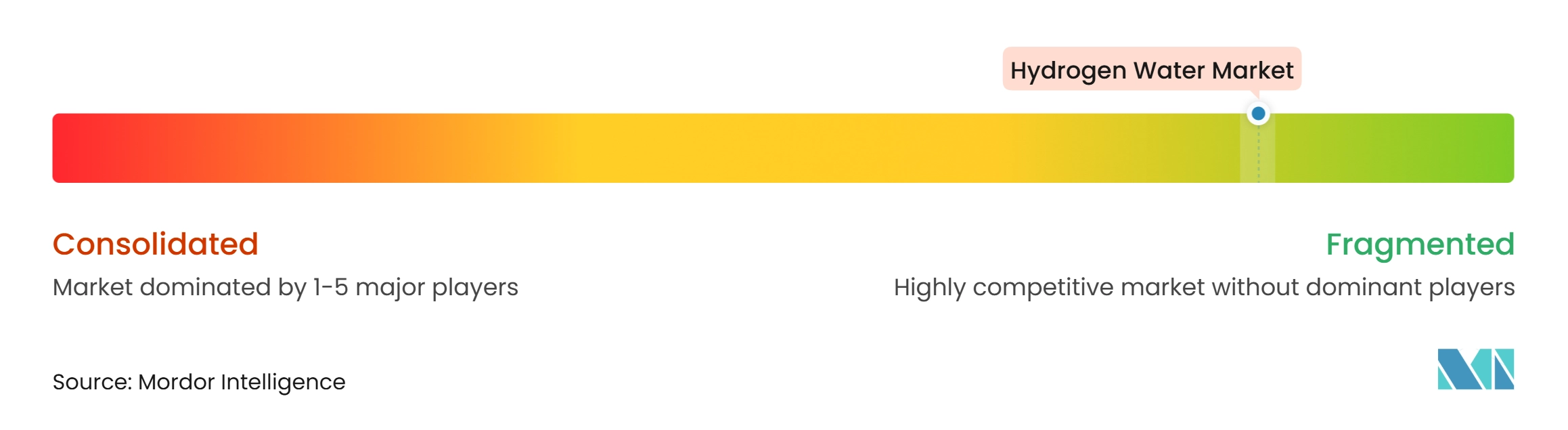
The hydrogen water market is highly fragmented, with top players including Echo Technologies LLC, Enagic, Tyent USA, H2Bev, and HyVIDA Brands Inc. Enagic has established recognition in premium home ionizers through its global distributor network and long operating history. Guangzhou Olansi Healthcare Co. Ltd. serves original equipment manufacturing and original design manufacturing customers, giving it relevance in value-oriented hardware supply. These differences leave room for brands to compete through technical output, convenience, supply capability, consumer education, after-sales service, and clear claims discipline across retail, online, institutional, and specialist wellness channels worldwide over the forecast period.
Product validation and compliance are increasingly important competitive tools. Echo Technologies LLC disclosed its Echo Flask at CES 2025 and later introduced a hydrogen prebiotic product, extending its proposition beyond a single device. H2CAP emphasizes compact cap-based hydrogen generation, while ionBottles and Piurify LLC focus on portable device formats. Enagic introduced the SD501DX in 2025 as a new flagship ionizer model. These moves show that hardware makers are responding to interest in smaller, more connected, and more portable products. Independent output testing and relevant product certifications can strengthen trust where consumers cannot readily verify dissolved-hydrogen concentration themselves.
Beverage companies are also testing new formats and retail pathways. The oHy’s March 2025 Sprouts launch used technology licensed from HyVIDA Brands Inc., bringing canned hydrogen-infused sparkling water to a mainstream retail setting. Perricone Hydrogen Water Company expanded national distribution activity in July 2025 through retail, Amazon, direct-to-consumer, and media channels. The U.S. Food and Drug Administration’s 2026 warning letter against H2Bev LLC demonstrates that claims compliance can reshape competition by raising the importance of quality management and documented manufacturing controls.
Hydrogen Water Industry Leaders
-
Echo Technologies LLC
-
Enagic
-
Tyent USA
-
H2Bev
-
HyVIDA Brands Inc.
- *Disclaimer: Major Players sorted in no particular order
Hydrogen Water Market Companies Covered in this Report
- Aquarion AG
- DrinkHRW
- Echo Technologies LLC
- Enagic
- Guangzhou Olansi Healthcare Co. Ltd.
- H2Bev
- H2CAP
- HyEdge Inc.
- HyVIDA Brands Inc.
- ionBottles
- Lourdes Hydrogen Water
- Naturally Plus
- Perricone Hydrogen Water Company
- Piurify LLC
- Tyent USA
Recent Industry Developments in Hydrogen Water Market
- September 2026: oHy announced the nationwide launch of its hydrogen sparkling water across more than 800 Target stores in the United States, offering four organic flavors. The retail rollout expanded the availability of ready-to-drink hydrogen water through a major national retail channel.
- January 2026: Kultura Brands, Inc. launched Thirst Responder, a hydrogen-rich canned water brand, through its direct-to-consumer channel and outlined plans for an initial rollout across approximately 700 retail locations in the United States. The launch added another packaged hydrogen-water brand to the functional beverage segment and extended distribution plans into pharmacy and healthcare-related retail channels.
Global Hydrogen Water Market Report Scope
Hydrogen water is water infused with molecular hydrogen (H₂), which is marketed for its potential antioxidant properties and use in health and wellness applications. It is produced using technologies that dissolve hydrogen gas into water and maintain its concentration for consumption. The market includes specialized bottles, water generators, and ready-to-drink hydrogen-infused beverages for residential, commercial, fitness, and healthcare-related applications.
The Hydrogen Water Market is segmented by technology, product type, end-use, and geography. By technology, the market is segmented into electrolysis, magnetic technology, mineralization, and other technologies. By product type, the market is segmented into hydrogen water bottles, hydrogen water generators, hydrogen-infused beverages, and other product types. By end-use, the market is segmented into residential, commercial, healthcare and clinical adjacent, and fitness and sports. The report also covers the market size and forecasts for hydrogen water in 15 countries across major regions. For each segment, the market sizing and forecasts have been done on the basis of value (USD).
Segmentation Overview
| Electrolysis |
| Magnetic Technology |
| Mineralization |
| Other Technologies |
| Hydrogen Water Bottles |
| Hydrogen Water Generators |
| Hydrogen-Infused Beverages |
| Other Product Types |
| Residential |
| Commercial |
| Healthcare and Clinical Adjacent |
| Fitness and Sports |
| Asia-Pacific | China |
| India | |
| Japan | |
| South Korea | |
| ASEAN Countries | |
| Rest of Asia-Pacific | |
| North America | United States |
| Canada | |
| Mexico | |
| Europe | Germany |
| United Kingdom | |
| France | |
| Italy | |
| NORDIC Countries | |
| Rest of Europe | |
| South America | Brazil |
| Argentina | |
| Rest of South America | |
| Middle East and Africa | Saudi Arabia |
| South Africa | |
| Rest of Middle East and Africa |
| By Technology | Electrolysis | |
| Magnetic Technology | ||
| Mineralization | ||
| Other Technologies | ||
| By Product Type | Hydrogen Water Bottles | |
| Hydrogen Water Generators | ||
| Hydrogen-Infused Beverages | ||
| Other Product Types | ||
| By End-Use | Residential | |
| Commercial | ||
| Healthcare and Clinical Adjacent | ||
| Fitness and Sports | ||
| By Geography | Asia-Pacific | China |
| India | ||
| Japan | ||
| South Korea | ||
| ASEAN Countries | ||
| Rest of Asia-Pacific | ||
| North America | United States | |
| Canada | ||
| Mexico | ||
| Europe | Germany | |
| United Kingdom | ||
| France | ||
| Italy | ||
| NORDIC Countries | ||
| Rest of Europe | ||
| South America | Brazil | |
| Argentina | ||
| Rest of South America | ||
| Middle East and Africa | Saudi Arabia | |
| South Africa | ||
| Rest of Middle East and Africa | ||
Key Questions Answered in the Report
What is the size of the hydrogen water market?
The hydrogen water market size was valued at USD 2.97 billion in 2026 and is estimated to grow from USD 3.31 billion in 2027 to reach USD 5.85 billion by 2032, at a CAGR of 12.05% during the forecast period (2027-2032).
What is driving demand for hydrogen water?
Consumer interest in functional hydration, portable electrolysis devices, fitness recovery, and direct-to-consumer sales is supporting demand.
Which technology held the largest share in 2026?
Electrolysis led with a 60.34% share in 2026.
Which product type is projected to advance fastest through 2032?
Hydrogen-infused beverages are projected to advance at a 13.23% CAGR through 2032 because they offer a single-serve option without device ownership.