
| Study Period | 2019 - 2030 |
| Forecast Data Period | 2025 - 2030 |
| Historical Data Period | 2019 - 2023 |
| Market Size (2025) | USD 22.70 Million |
| Market Size (2030) | USD 36.10 Million |
| CAGR (2025 - 2030) | 9.70% |
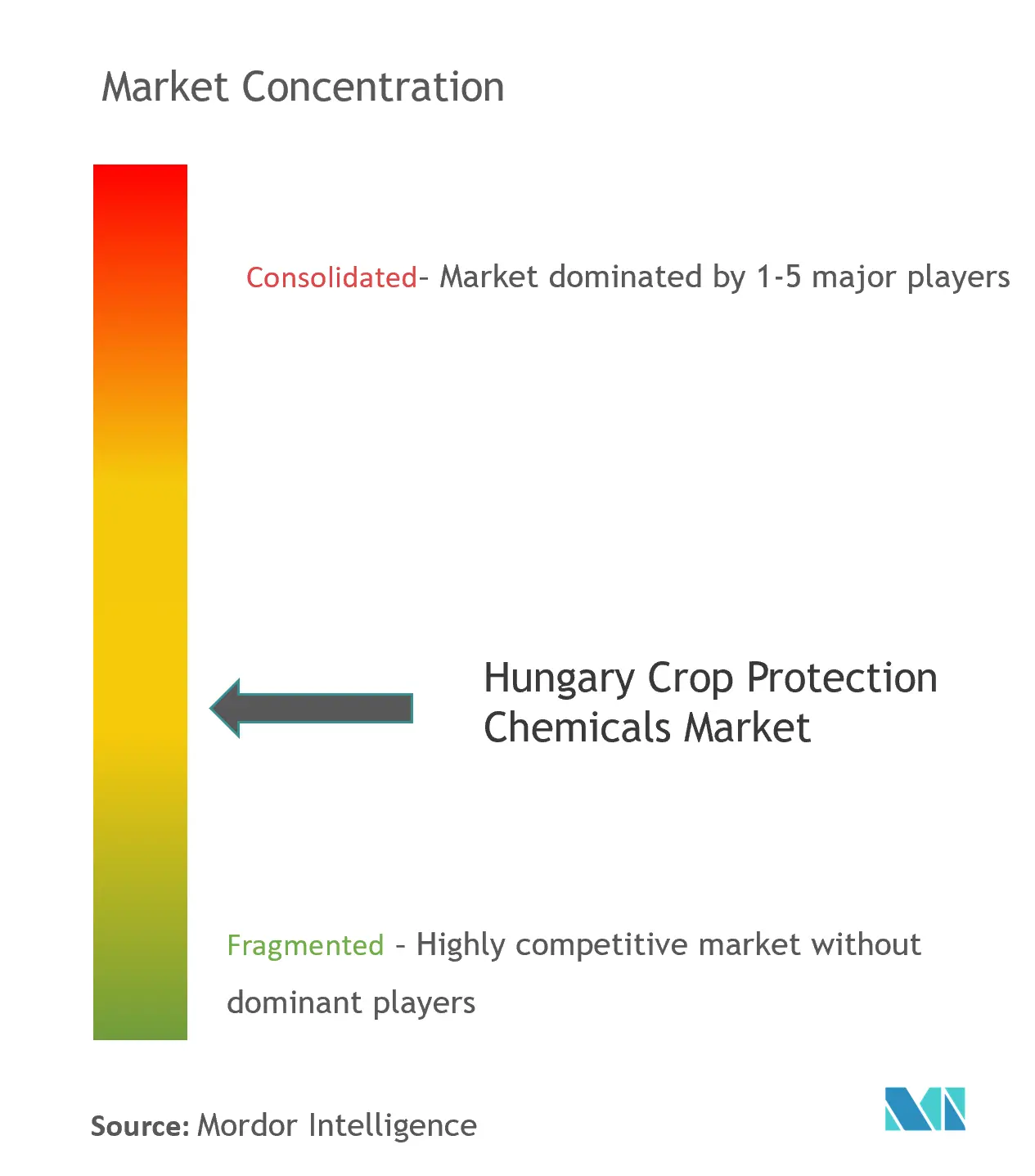
| Market Concentration | Low |
Major Players *Disclaimer: Major Players sorted in no particular order |
Hungary Crop Protection Chemicals Market Analysis by Mordor Intelligence
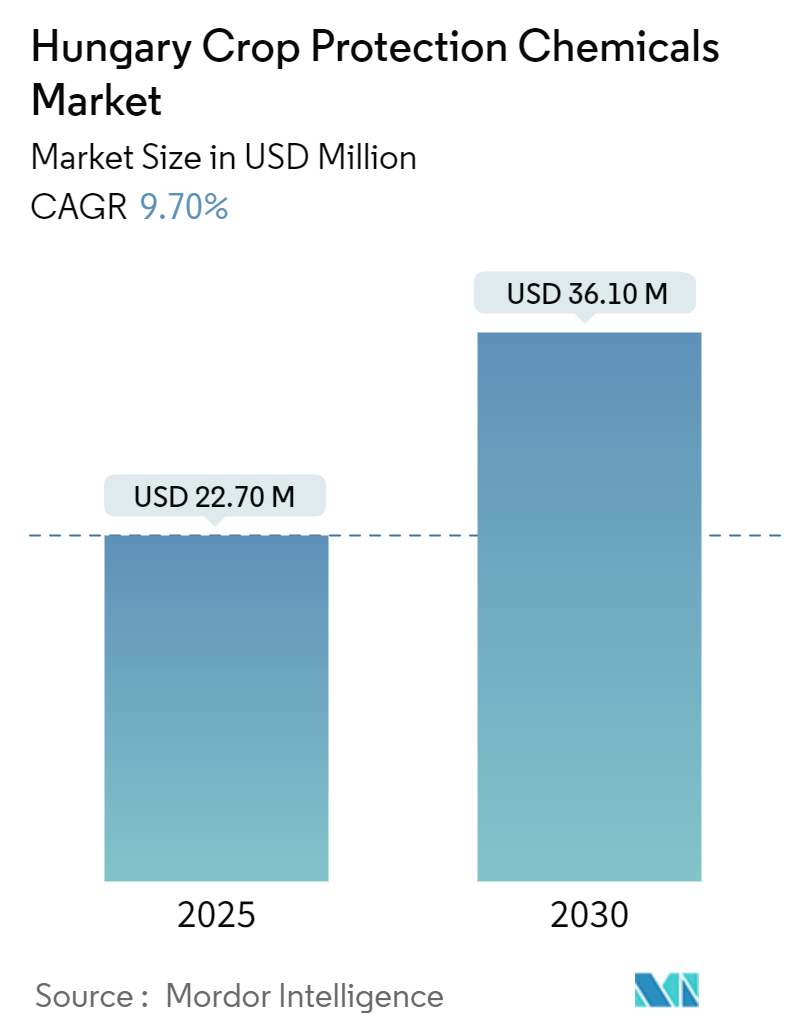
The Hungary Crop Protection Chemicals Market size is estimated at USD 22.70 million in 2025, and is expected to reach USD 36.10 million by 2030, at a CAGR of 9.70% during the forecast period (2025-2030).
Hungary's population growth and economic development have increased demand for high-quality food products, creating pressure on agriculture to maximize crop yields. Farmers have intensified their use of pesticides to protect crops from pests, diseases, and weeds to ensure higher and more stable yields. FAOSTAT 2024 data shows that herbicide use in Hungarian agriculture increased from 4358.1 metric tons in 2021 to 4617.8 metric tons in 2022.
Hungarian agricultural policies include subsidies and support programs that enable farmers to invest in crop protection products, including pesticides. Government initiatives focused on agricultural sustainability and food production security contribute to increased pesticide demand.
Climate change has intensified pest and plant disease pressures in Hungary, as warmer temperatures and altered precipitation patterns create favorable conditions for pest proliferation. Farmers increasingly depend on pesticides as primary protection against these emerging and expanding threats. The rise in unpredictable weather patterns and extreme weather events has made crop production more vulnerable, increasing the need for pesticides that provide effective crop protection across varying conditions.
Hungary Crop Protection Chemicals Market Trends and Insights
Escalated Adaptation of Biopesticides
Consumers demonstrate a growing awareness of health and environmental risks associated with synthetic pesticides. This shift in consumer preferences toward products grown with minimal chemical inputs has led farmers to adopt biopesticides.
The European Union's stringent pesticide regulations promote safer and sustainable agricultural practices. Hungary, as an EU member, implements these policies, which prioritize environmentally friendly alternatives like biopesticides. These regulations, which support less toxic and selective pest control solutions, drive the growth of the biopesticides market.
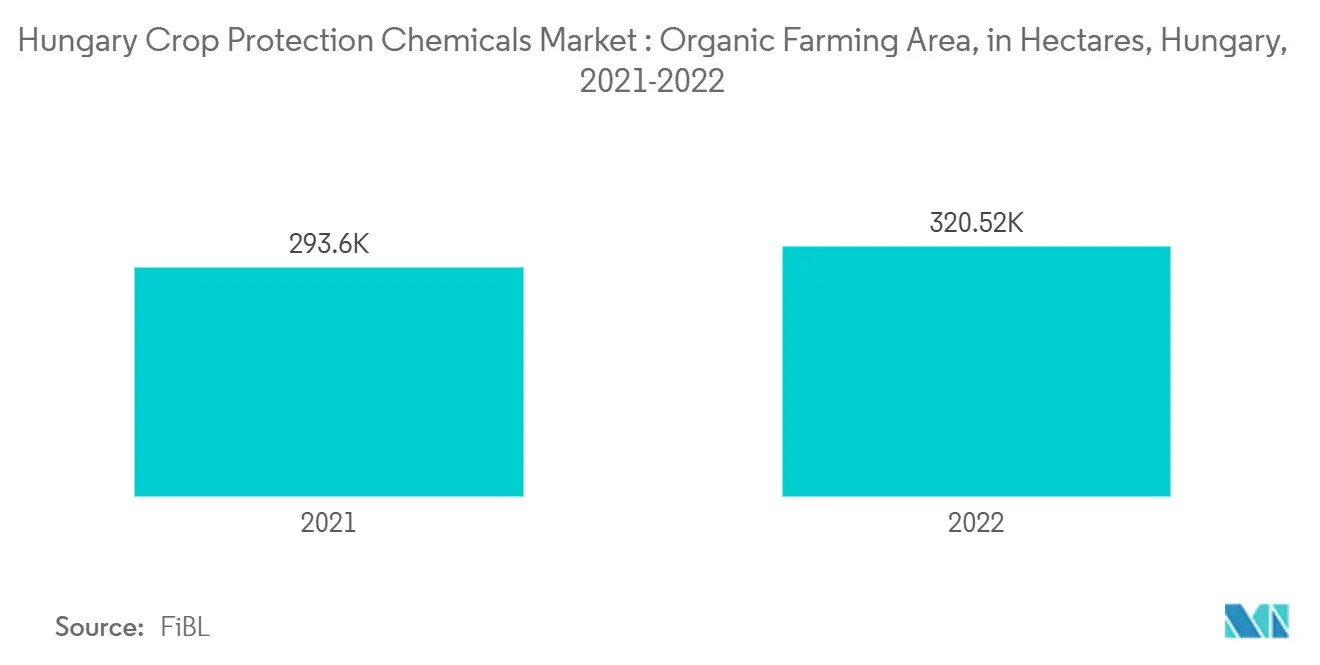
Organic farming in Hungary continues to expand as farmers and food producers pursue organic certification to meet rising consumer demand. Since organic standards restrict synthetic pesticide use, biopesticides remain the primary pest management solution in organic farming. According to FibL statistics, the organic farming area increased to 320.5 thousand hectares in 2022 from 293.6 thousand hectares in 2021. Agriculture ministry data indicates that in 2023, controlled organic farming covered more than 320,000 hectares.
Therefore, the Hungarian biopesticides market maintains consistent growth, supported by environmental awareness, sustainable agriculture demand, and regulatory frameworks.
Recurring Instances of Pest Attacks on Important Crops
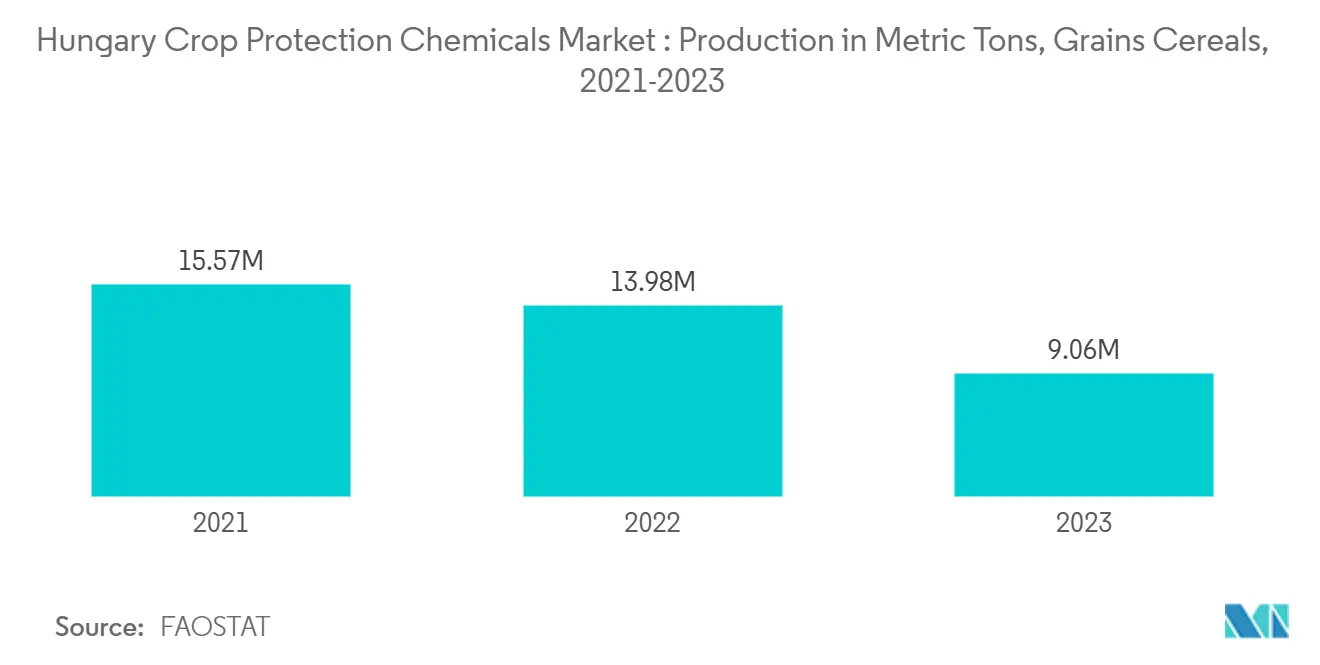
Climate change has significantly impacted Hungary's agricultural sector, particularly affecting grains and cereals. The country's farmers face increased crop losses due to extreme weather events such as droughts, excessive rains, and unpredictable climate conditions. These challenges drive the demand for pesticides to mitigate losses and stabilize yields. According to FAOSTAT, cereals yield decreased to 4,032 kg/ha in 2023 from 5,920 kg/ha in 2022.
Droughts have become more frequent in Hungary, severely impacting water availability for crops like wheat, corn, and barley. Drought stress weakens plants, making them more susceptible to pests and diseases. Farmers increasingly rely on pesticides to protect weakened crops and minimize additional losses from pest infestations.
Excessive rains and prolonged periods of high humidity create favorable conditions for fungal and bacterial diseases, especially in cereals like wheat and barley. Fungal diseases such as rust, mildew, and blight occur more frequently in these conditions, necessitating higher fungicide usage to protect crops from widespread infection.
The impact of climate change on Hungarian agriculture continues to drive pesticide market growth. As extreme weather events and pest pressures persist, pesticide use in the grains and cereals sectors is anticipated to increase. The market may shift toward targeted, resilient, and sustainable pesticide products, including biopesticides, as part of an adaptive strategy to address climate-related challenges.
Competitive Landscape
Hungary's crop protection chemicals market is highly competitive with major international players such as Bayer AG, UPL Limited, Ori Agro, and Nufarm Limited occupying a major share in the region. New product launches, mergers & acquisitions, and partnerships are the major strategies adopted by these leading companies in the market. These companies are also focusing on investing in innovations, collaborations, and expansions, to increase their market share.
Hungary Crop Protection Chemicals Industry Leaders
-
Bayer AG
-
Oro Agri
-
UPL Ltd
-
Nufarm Ltd
-
Belchim Crop Protection
- *Disclaimer: Major Players sorted in no particular order
Recent Industry Developments
- January 2024: ADAMA Ltd. launched five new cereal fungicide products across Europe to address major diseases affecting farmer yields during the crop's reproductive phase.
- June 2023: Madex Twin, launched in 2023, is a granulovirus insecticide that targets codling moth and oriental fruit moth larvae in stone and pome fruit crops.
Hungary Crop Protection Chemicals Market Report Scope
Crop protection chemicals constitute a class of agrochemicals, which are used for preventing the deterioration of crops from insects and pest infestation. The Hungary Crop Protection Chemicals Market is segmented by Function (Fungicide, Herbicide, Insecticide, Molluscicide, and Nematicide), Origin (Bio-based and Synthetic), and Crop Type (Commercial Crops, Fruits & Vegetables, Grains & Cereals, Pulses & Oilseeds, and Turf & Ornamental). The report offers market size and forecasts in terms of value (USD) for all the above segments.
Function
| Herbicide |
| Fungicide |
| Insecticide |
| Nematicide |
| Molluscicide |
Origin
| Bio-based |
| Synthetic |
Crop Type
| Commercial Crops |
| Fruits & Vegetables |
| Grains & Cereals |
| Pulses & Oilseeds |
| Turf & Ornamentals |
| Function | Herbicide |
| Fungicide | |
| Insecticide | |
| Nematicide | |
| Molluscicide | |
| Origin | Bio-based |
| Synthetic | |
| Crop Type | Commercial Crops |
| Fruits & Vegetables | |
| Grains & Cereals | |
| Pulses & Oilseeds | |
| Turf & Ornamentals |
Key Questions Answered in the Report
How big is the Hungary Crop Protection Chemicals Market?
The Hungary Crop Protection Chemicals Market size is expected to reach USD 22.70 million in 2025 and grow at a CAGR of 9.70% to reach USD 36.10 million by 2030.
What is the current Hungary Crop Protection Chemicals Market size?
In 2025, the Hungary Crop Protection Chemicals Market size is expected to reach USD 22.70 million.
Who are the key players in Hungary Crop Protection Chemicals Market?
Bayer AG, Oro Agri, UPL Ltd, Nufarm Ltd and Belchim Crop Protection are the major companies operating in the Hungary Crop Protection Chemicals Market.
What years does this Hungary Crop Protection Chemicals Market cover, and what was the market size in 2024?
In 2024, the Hungary Crop Protection Chemicals Market size was estimated at USD 20.50 million. The report covers the Hungary Crop Protection Chemicals Market historical market size for years: 2019, 2020, 2021, 2022, 2023 and 2024. The report also forecasts the Hungary Crop Protection Chemicals Market size for years: 2025, 2026, 2027, 2028, 2029 and 2030.
Hungary Crop Protection Chemicals Market Report
Statistics for the 2025 Hungary Crop Protection Chemicals market share, size and revenue growth rate, created by Mordor Intelligence™ Industry Reports. Hungary Crop Protection Chemicals analysis includes a market forecast outlook for 2025 to 2030 and historical overview. Get a sample of this industry analysis as a free report PDF download.