
Pet Wellness Services Market Size and Share
Market Overview
| Study Period | 2022 - 2032 |
|---|---|
| Market Size (2027) | USD 60.71 Billion |
| Market Size (2032) | USD 81.17 Billion |
| Growth Rate (2027 - 2032) | 5.98 % |
| Fastest Growing Market | Asia-Pacific |
| Largest Market | North America |
| Market Concentration | Low |
Major Players *Disclaimer: Major Players sorted in no particular order Image © Mordor Intelligence. Reuse requires attribution under CC BY 4.0. | |
Pet Wellness Services Market Analysis by Mordor Intelligence
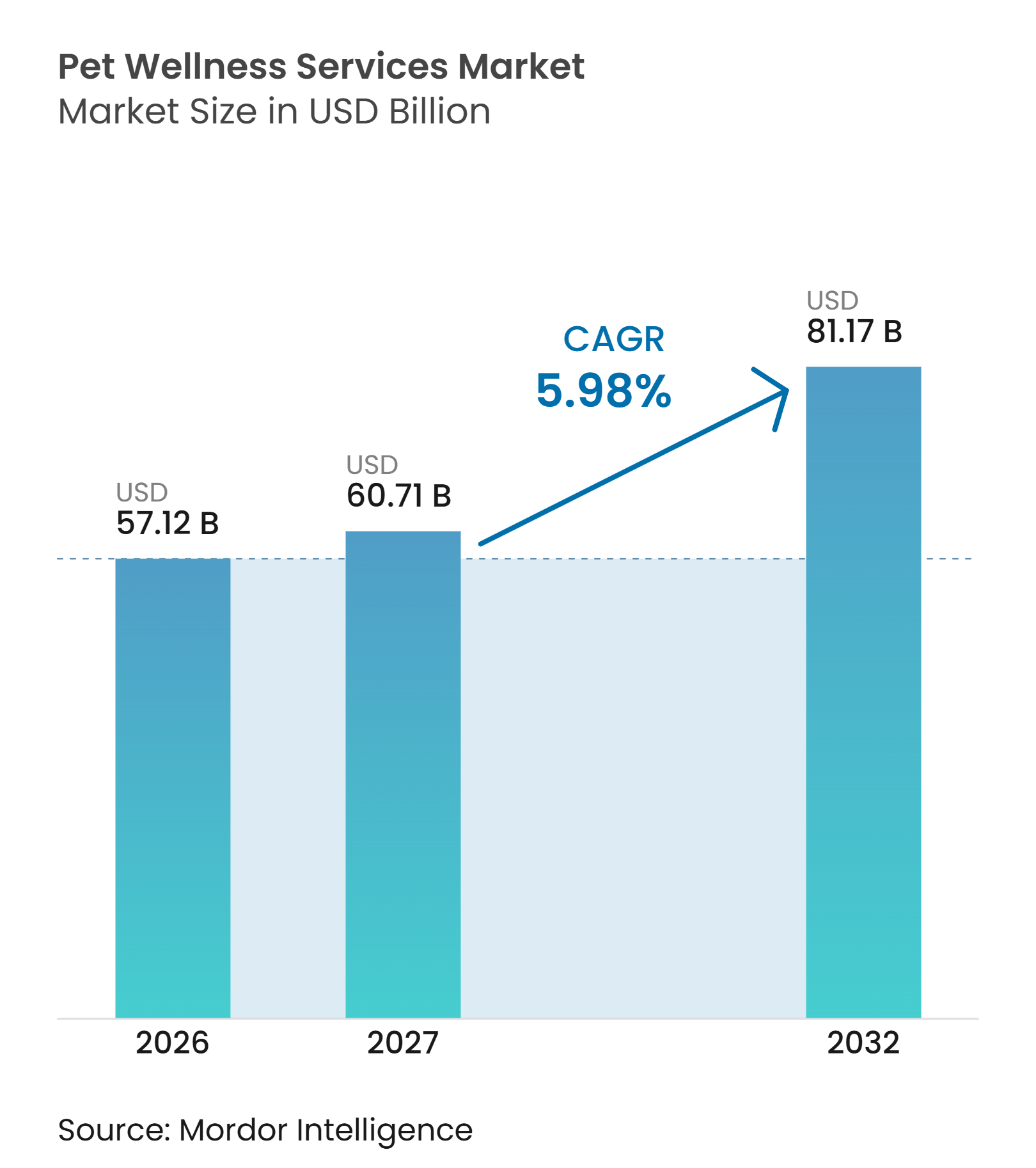
The global pet wellness services market size was valued at USD 57.12 billion in 2026 and is estimated to grow from USD 60.71 billion in 2027 to reach USD 81.17 billion by 2032, at a CAGR of 5.98% during the forecast period (2027-2032). Demand is shifting beyond illness-driven veterinary visits toward preventive, nutritional, behavioral, and hygiene support. This shift reflects the growing inclusion of pets in household health and spending decisions. The Global Pet Wellness Services Market benefits from recurring service models, including wellness plans, subscriptions, and insurance-linked offerings. Clinic networks remain central to care delivery, while digital and at-home formats improve access for households facing distance, scheduling, or cost barriers. Affordability concerns, workforce shortages, and regulations that restrict virtual service delivery in certain markets moderate growth.
Key Report Takeaways
- By service type, Preventive & Routine Veterinary Care accounted for 34.40% of the global pet wellness services market share in 2026, while Nutrition & Weight Management is projected to grow at a 7.54% CAGR through 2032.
- By pet type, Dogs accounted for 52.60% of the global pet wellness services market share in 2026, while Cats are projected to grow at a 7.87% CAGR through 2032.
- By delivery setting, Veterinary Clinics and Hospitals accounted for 48.10% of the global pet wellness services market revenue in 2026, while Online and Digital Platforms are projected to grow at an 8.12% CAGR through 2032.
- By business model, Pay-per-Service accounted for 55.60% of the global pet wellness services market revenue in 2026, while Subscription and Membership Plans are projected to grow at a 7.56% CAGR through 2032.
- By geography, North America accounted for 39.70% of the global pet wellness services market revenue in 2026, while Asia-Pacific is projected to grow at a 7.76% CAGR through 2032.
Note: Market numbers in this report are based on Mordor Intelligence's proprietary estimation framework, which combines nine months of actuals with Q4 projections for base year 2026.
Market Trends and Insights
Drivers Impact Analysis of Pet Wellness Services Market*
| Driver | (~) % Impact on CAGR Forecast | Geographic Relevance | Impact Timeline |
|---|---|---|---|
| Pet Humanization and Premium Wellness Spending | +2.0% | Global, with stronger relevance in North America, Western Europe, and East Asia | Long term (≥ 4 years) |
| Preventive Care and Early-Diagnosis Adoption | +1.2% | Global, maturing in North America and Europe and accelerating in Asia-Pacific | Medium term (2-4 years) |
| Expansion of Digital, Mobile, and At-Home Care Access | +1.0% | Global, with incremental relevance in Asia-Pacific, South America, and rural North America | Medium term (2-4 years) |
| Growth of Insurance-Linked and Subscription Wellness Plans | +0.8% | North America, the United Kingdom, Germany, and expanding Asia-Pacific markets | Medium term (2-4 years) |
| Connected Pet Health Records and Monitoring | +0.4% | North America and Western Europe, with early adoption in Asia-Pacific | Long term (≥ 4 years) |
| Vet-Capacity-Aware Remote Triage and Home Monitoring | +0.3% | North America, with spillover to Australia, the United Kingdom, and Nordic markets | Short term (≤ 2 years) |
| Source: Mordor Intelligence | |||
Pet Humanization and Premium Wellness Spending
Pet humanization is expanding beyond food purchases to include greater demand for professional wellness support. Households increasingly value services that support mobility, behavior, nutrition, dental care, and everyday comfort. The American Animal Hospital Association (AAHA) reported that lifetime care costs for a dog can reach USD 60,602 over 15 years, while lifetime care costs for cats increased by 19.4% between 2022 and 2025[1]. These spending patterns create opportunities for providers to connect routine examinations with dental, grooming, nutrition, and behavioral services. The global pet wellness services market benefits when providers offer continuity across multiple service needs rather than individual appointments. This trend is strongest where pet owners have convenient access to organized clinics and recurring payment options.
Preventive Care and Early-Diagnosis Adoption
Preventive care is becoming a routine component of companion animal care, increasing planned interactions between pet owners and veterinary providers. According to the AAHA, wellness plans can improve adherence to recommended preventive services and encourage regular clinic visits. Regular examinations, vaccinations, laboratory testing, and dental checkups can identify health risks before they require complex treatment. The American Veterinary Medical Association updated its Model Veterinary Practice Act in 2025, including provisions addressing telemedicine within veterinary practice standards. This guidance supports the appropriate use of remote tools alongside established clinical care. The global pet wellness services market benefits from this shift, as planned visits provide a more consistent care pathway than emergency-only treatment. This model also helps clinics maintain client relationships between in-person consultations.
Expansion of Digital, Mobile, and At-Home Care Access
Digital and mobile services can reduce the distance and time barriers that prevent some pet owners from seeking routine guidance. Since its 2021 launch, Dutch has completed more than 700,000 virtual visits through its platform, demonstrating the reach of online channels that address clear consumer needs[2]. Remote consultations support triage, follow-up discussions, and non-emergency questions, while physical examinations and procedures remain clinic-based. Mobile clinics and at-home services provide additional options for owners with mobility constraints or limited access to nearby veterinary practices. These approaches can expand the global pet wellness services market across rural, suburban, and densely populated urban areas, where conventional appointment models may be less convenient. However, adoption depends on local veterinary practice regulations and clear referral pathways for cases requiring in-person care.
Growth of Insurance-Linked and Subscription Wellness Plans
Subscription- and insurance-linked models make pet care costs more predictable for owners and improve revenue visibility for providers. Trupanion reported total revenue of USD 1.44 billion in 2025, an increase of 12% year over year, while subscription business revenue grew by 16% to USD 989.3 million[3]. Wellness plans can encourage pet owners to complete recommended veterinary visits, dental procedures, and laboratory tests. These models are most established in North America and parts of Europe, where pet insurance penetration and structured veterinary clinic networks are more developed. Banfield’s Optimum Wellness Plans represent a clinic-based model that offers monthly plans for preventive care services. The global pet wellness services market benefits as subscriptions replace irregular out-of-pocket spending with planned care schedules. However, providers must clearly communicate plan coverage and exclusions to prevent confusion about included services.
Restraints Impact Analysis of Pet Wellness Services Market*
| Restraint | (~) % Impact on CAGR Forecast | Geographic Relevance | Impact Timeline |
|---|---|---|---|
| High Out-of-Pocket Cost and Affordability Barriers | -1.5% | Global, with higher exposure in South America, Southeast Asia, rural North America, and the Middle East and Africa | Long term (≥ 4 years) |
| Veterinary Workforce Shortages and Uneven Service Capacity | -1.2% | Global, with critical gaps in rural North America, South Africa, and South Asia | Long term (≥ 4 years) |
| Fragmented Telehealth Rules and Cross-Border Licensing | -0.8% | North America and European cross-border markets | Medium term (2-4 years) |
| Interoperability and Consent Friction Across Pet Health Data | -0.5% | North America and Europe, with spillover into digital-first Asia-Pacific markets | Long term (≥ 4 years) |
| Source: Mordor Intelligence | |||
High Out-of-Pocket Cost and Affordability Barriers
Affordability remains the primary demand-side restraint in the global pet wellness services market. The American Animal Hospital Association (AAHA) reported in 2025 that nearly half of pet owners faced financial concerns related to unexpected veterinary expenses. These concerns can lead households to delay preventive visits, dental care, and diagnostic services until conditions become more serious. As a result, service uptake remains uneven: insured and higher-income pet owners can maintain broader care routines, while other owners rely mainly on urgent or lower-cost services. Subscription plans, clinic payment options, and clearly priced bundled packages can reduce some barriers. However, these options do not eliminate the underlying budget pressures faced by households. This restraint is particularly significant in regions with low pet insurance penetration and limited access to professional veterinary networks outside major cities.
Veterinary Workforce Shortages and Uneven Service Capacity
Veterinary workforce shortages constrain service capacity, even when consumer demand is strong. In 2025, the AVMA reported that the USDA had identified 243 rural veterinary shortage areas across 46 United States states, highlighting significant geographic access gaps[4]. These shortages most directly affect non-urban communities, where practices may have fewer clinicians and clients may need to travel longer distances. They can also increase waiting times and limit clinics' ability to provide wellness, behavioral, and follow-up services. The global pet wellness services market requires an adequate supply of veterinarians, technicians, and trained support staff to translate interest in preventive care into appointments. Remote triage, technician-led workflows within authorized scopes of practice, and mobile units can help ease capacity constraints. However, these measures must operate under appropriate clinical governance to maintain care quality and patient safety.
*Our forecasts treat driver/restraint impacts as directional, not additive. The impact forecasts reflect baseline growth, mix effects, and variable interactions.
Consumer Preferences & Spending Patterns
Pet owners increasingly seek services beyond basic veterinary treatment, including behavioral training, preventive care, and species-specific wellness support. The American Pet Products Association (APPA) reported that 48% of United States cat owners used training methods in 2025, representing a 41% increase from 2018. In Europe, the European Pet Food Industry Federation (FEDIAF)'s 2026 report identified 306 million pets across 140 million pet-owning households, representing 49% of households across its 41-country coverage. This broad pet ownership base supports demand for tailored services, although preferences vary by species, household circumstances, and access to qualified providers. Businesses can address this demand through feline behavior consultations, age-specific wellness plans, and integrated grooming and training packages. However, providers should track actual service uptake rather than assume that pet ownership automatically translates into spending.
Spending patterns reflect sustained investment in pet care alongside significant affordability constraints. Animal Medicines Australia’s 2025 study estimated that Australian pet owners spend AUD 1.9 billion (USD 1.27 billion) annually on veterinary services, AUD 900 million on clipping and grooming, AUD 800 million (USD 536.12 million) on training, behavior, and therapy, and AUD 1 billion (USD 0.67 billion) on pet insurance. Meanwhile, Synchrony’s 2025 Pet Lifetime of Care Study estimated that 15-year care costs could reach USD 60,602 for dogs and USD 47,106 for cats. Nearly half of surveyed owners reported concerns about covering unexpected expenses. These findings indicate that recurring wellness services compete with essential and unplanned veterinary costs. Transparent pricing, phased treatment options, and clearly defined membership benefits can help providers address budget sensitivity without relying solely on discounting.
Service Market Performance Intelligence
Clinical service performance depends on preventive care needs, diagnostic complexity, and owners’ acceptance of recommended treatments. The American Animal Hospital Association reported that most dogs and cats developed periodontal disease by age three. Dental X-rays also identified hidden disease in 27.8% of dogs and 41.7% of cats with normal-appearing teeth. These findings supported routine dental screening, radiography, and professional cleaning. However, comprehensive procedures required anesthesia, trained staff, and specialized equipment, creating capacity and cost constraints. Providers improved performance through early screening, risk-based treatment plans, and clear referral pathways.
The United States market showed distinct contributions from clinical services and wellness categories. The American Pet Products Association (APPA) reported USD 41.0 billion in veterinary care and product sales and USD 14.3 billion in other pet services, including grooming, training, and pet insurance, in 2024. APPA projected these categories to reach USD 42.4 billion and USD 14.9 billion, respectively, by 2026. The North American Pet Health Insurance Association (NAPHIA) reported USD 5.2 billion from North American pet insurance policies in 2024, up 20.8% year over year, with 7.03 million insured pets. An American Animal Hospital Association (AAHA) survey of 557 veterinary professionals found that 84.4% adjusted treatment recommendations because of client cost concerns. Accessible pricing, insurance partnerships, and clear treatment options supported completed care.
Pet Wellness Services Market Segment Analysis
By Service Type:
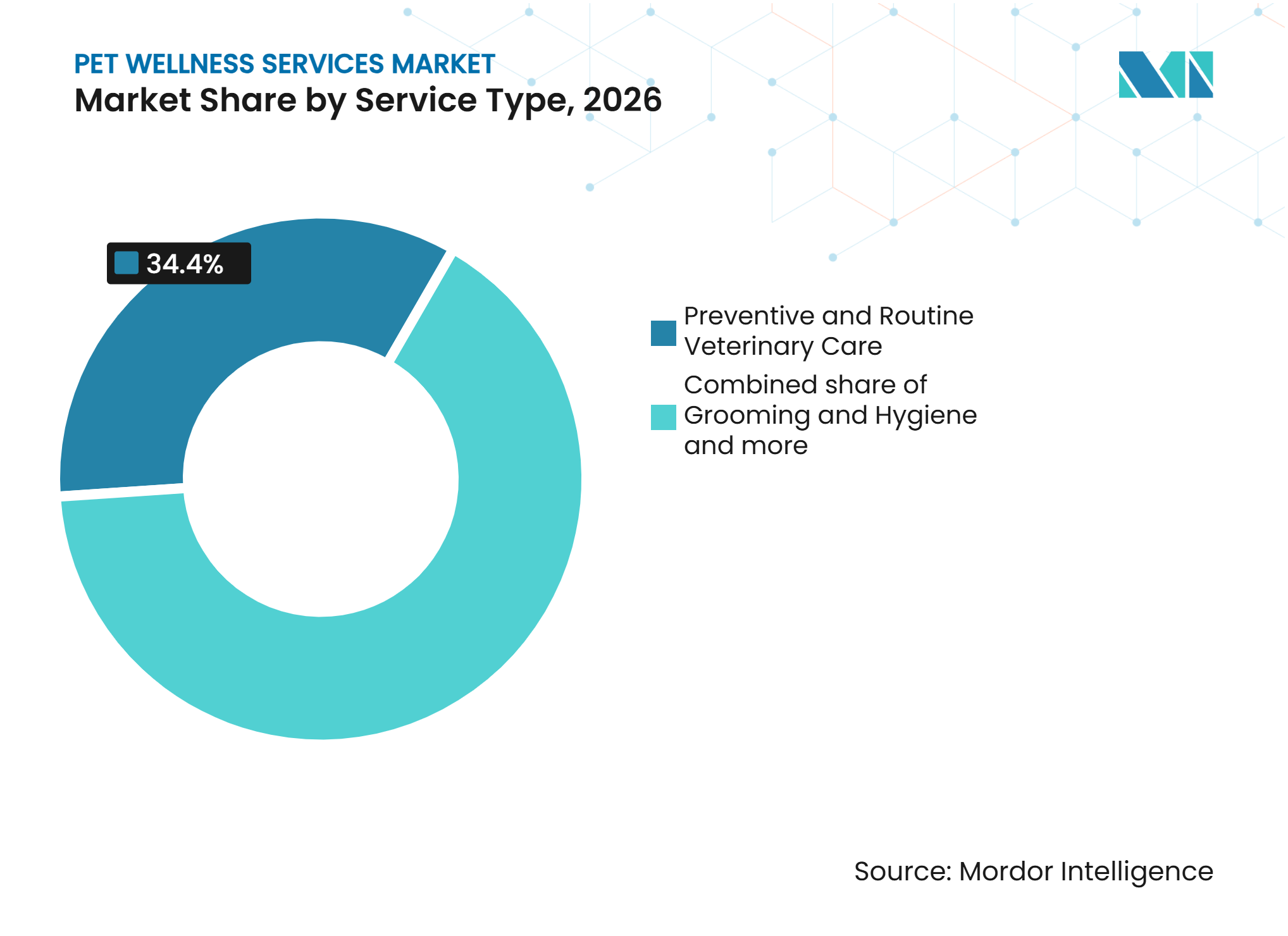
Preventive Care Anchors While Nutrition AcceleratesPreventive & Routine Veterinary Care accounted for 34.40% of global revenue in 2026. It remains the core service category, as vaccinations, wellness examinations, routine testing, and parasite prevention drive recurring clinic visits. These services also support referrals for dental care, nutrition counseling, grooming, and behavioral support. The AVMA’s updated Model Veterinary Practice Act provides a professional framework for veterinary care delivery, including telemedicine considerations. This category remains the primary entry point for clinical wellness. Clinic networks can support preventive care by packaging recurring services into clear care plans.
Nutrition & Weight Management is projected to grow at a CAGR of 7.54% through 2032. Pet owners increasingly seek guidance on feeding routines, life-stage nutritional needs, and weight-related health risks. Counseling can support repeat engagement when integrated with regular examinations and measurable care goals. Dental Care and Oral Hygiene remain important, as the AVMA identifies periodontal disease as common among adult dogs and cats. Grooming and hygiene services increasingly align with wellness care through attention to animal handling, skin condition monitoring, and hygiene standards. Fitness, training, and behavior services offer another way to address daily pet welfare in a structured setting.



By Pet Type:
Dogs Sustain Market Volume, Cats Drive Incremental GrowthDogs accounted for 52.60% of global revenue in 2026. This share reflects the regular use of preventive consultations, professional grooming, training, dental care, and nutrition support. Many dog owners maintain routines for walking, obedience training, vaccination, and parasite prevention, supporting recurring wellness appointments and related services. The segment also benefits from the broad availability of services tailored to canine needs. Demand is supported by higher service use per animal and an established provider base.
The cat segment is forecast to grow at a CAGR of 7.87% through 2032. APPA reported that multi-cat households increased from 2018 to 2024, while the share of single-cat households declined during the same period. This shift supports demand for feline preventive care, nutrition advice, dental care, and behavioral support. APPA also reported increased use of training methods among cat owners, indicating that care routines extend beyond traditional clinical services. Birds and other pet types remain smaller segments but have specialized service needs that standard clinic formats do not fully address.
By Delivery Setting:
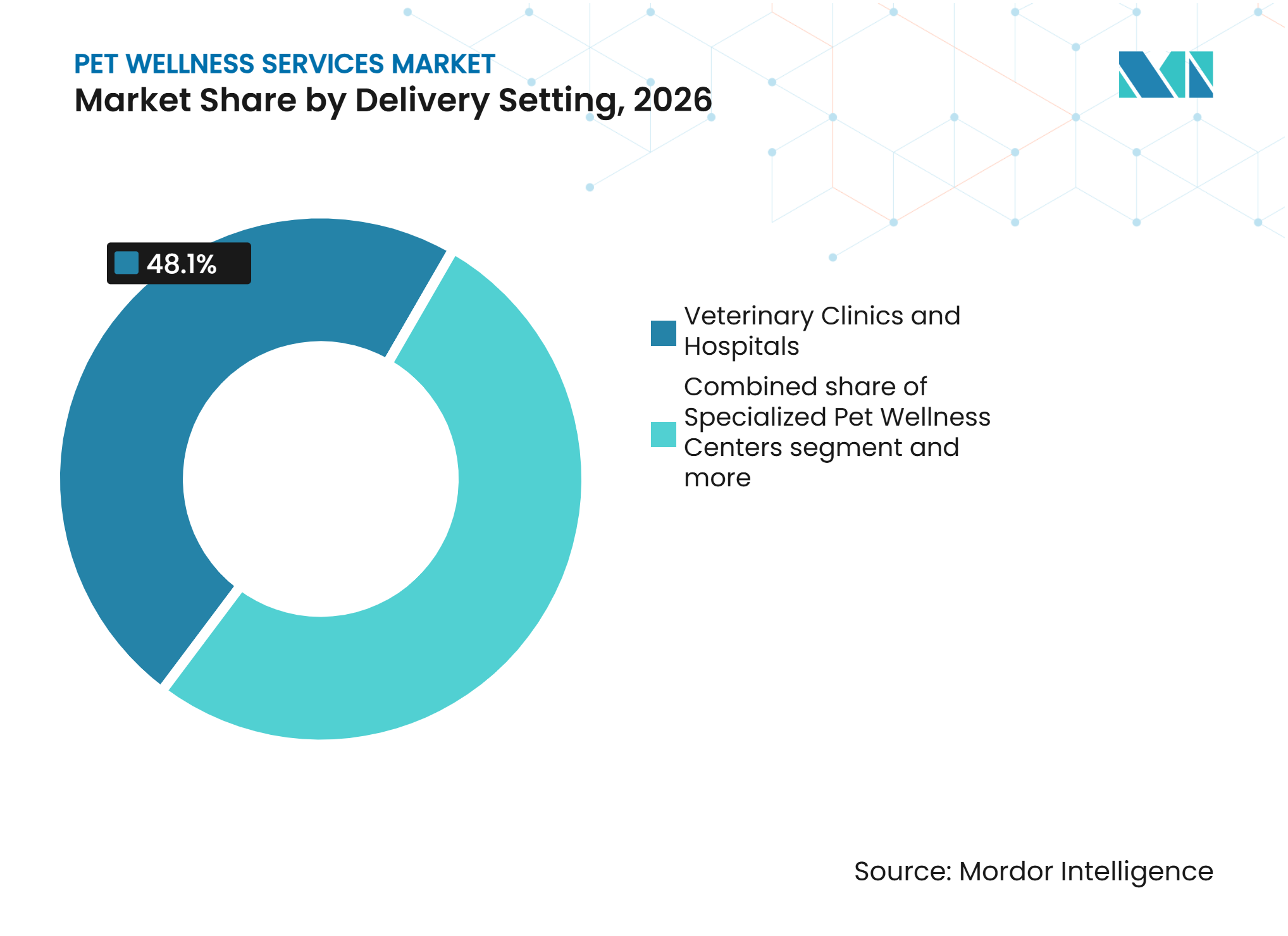
Clinics Still Central, Digital Platforms the Growth EngineVeterinary clinics and hospitals accounted for 48.10% of global revenue in 2026. They remain the preferred setting for physical examinations, diagnostics, vaccinations, dental procedures, and cases requiring direct clinical judgment. Pet owners’ trust in ongoing veterinary relationships supports this role. In 2025, Mission Pet Health reported that its combined organization operated more than 850 hospitals across 41 United States states. Large networks can standardize systems and expand access, while independent clinics retain local relevance. The global pet wellness services market continues to rely on physical clinics for services that cannot be delivered remotely.
Online and digital platforms are forecast to grow at a CAGR of 8.12% through 2032. They provide convenient access to triage, follow-up guidance, and non-emergency wellness consultations. Dutch has completed more than 700,000 virtual visits since 2021, demonstrating telehealth’s ability to reach pet owners beyond conventional appointments. Specialized wellness centers offer rehabilitation, behavioral care, and integrated care. Mobile and at-home providers address demand for convenience, particularly in urban areas and regions with limited transportation access. Digital platform growth remains dependent on regulatory compliance, clinical escalation protocols, and local veterinary support.

By Business Model:
Pay-per-Service Leads, Subscriptions Redefine RetentionPay-per-Service accounted for 55.60% of global revenue in 2026. The model remains widely used because many pet owners arrange care around individual appointments and immediate needs. It allows clients to select services but makes spending less predictable for households and providers. Preventive services may also be deferred during short-term budget constraints. Bundled wellness packages offer an alternative by grouping defined services without requiring long-term contracts. The global pet wellness services market continues to rely on pay-per-service arrangements, particularly where insurance and membership plans remain underdeveloped.
Subscription and Membership Plans are projected to grow at a 7.56% CAGR through 2032. Trupanion reported 16% growth in subscription business revenue in 2025, reflecting the broader shift toward recurring pet healthcare payment models. Banfield Pet Hospital offers monthly Optimum Wellness Plans that include selected preventive services in a scheduled care format. Insurance-linked wellness plans may reinforce this trend by linking care financing with preventive engagement. Providers can use subscriptions to improve recall, retention, and adherence, provided they communicate plan terms and coverage clearly. Adoption is likely to increase fastest where customers are familiar with insurance, digital payments, and organized veterinary chains.
Geography Analysis
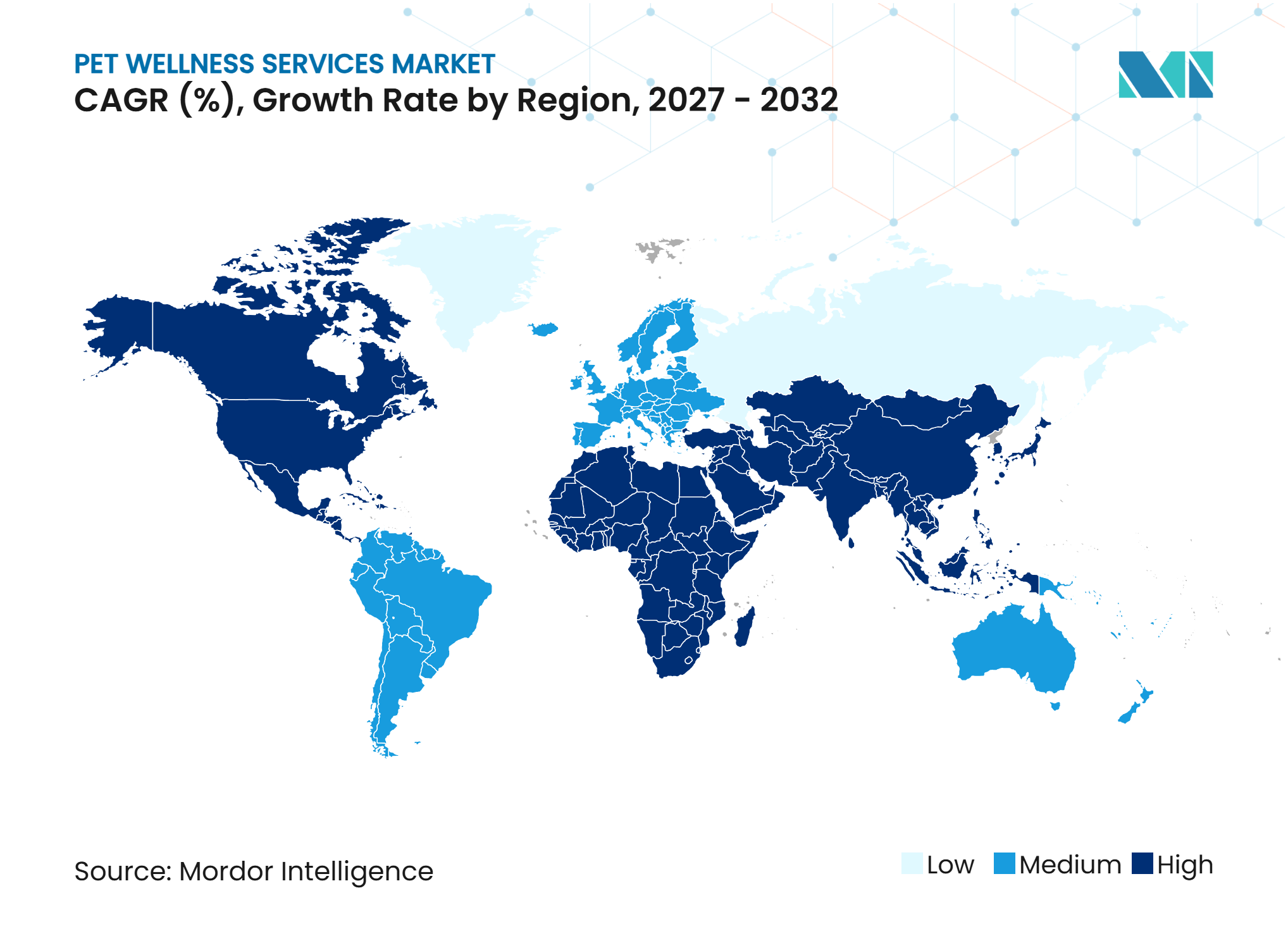
North America accounted for 39.70% of global revenue in 2026, equivalent to USD 22.68 billion. The region benefited from a dense veterinary clinic network, established pet insurance activity, and broad owner awareness of preventive care. United States pet industry expenditure reached USD 151 billion in 2024. Corporate networks, independent practices, and retail-linked formats supported a diverse service base. Telehealth and subscription models reduced friction in follow-up care. However, the United States Department of Agriculture (USDA) designated 243 rural veterinary shortage areas in 2025, highlighting uneven access outside major population centers. State veterinary practice requirements influenced digital service deployment.
Asia-Pacific is forecast to grow at a 7.76% CAGR through 2032. Urban pet ownership, digital service adoption, and first-time owners support demand for accessible wellness services. The region includes mature markets and developing markets with expanding veterinary networks. Providers offer clinic-based, mobile, and app-supported consultations. Growth will depend on clinical capacity, insurance development, and veterinary practice regulations.
South America is supported by urban pet ownership and demand for preventive, grooming, and nutritional services. Europe requires compliance with country-level veterinary, consumer protection, and data regulations. Zoetis completed its acquisition of Veterinary Pathology Group in November 2025 to strengthen diagnostics in the United Kingdom and Ireland. In the Middle East and Africa, workforce capacity can limit preventive service availability. Growth will depend on organized clinics, trained staff, and payment models.
Service Provider Network & Expansion Intelligence
Veterinary service networks are expanding through acquisitions, multi-site consolidation, and partnerships with established retailers. In the United States, Mission Pet Health launched in July 2025 with more than 850 hospitals across 41 states. CVS Group also expanded its Australian footprint from 43 to 51 practice sites through acquisitions. These developments show how consolidation can expand geographic coverage and support shared operational infrastructure. However, providers must preserve clinical autonomy and local relationships when integrating independent practices.
Retail partnerships and technology-led acquisitions are extending provider networks through alternative delivery models. In May 2026, Tractor Supply acquired VIP Petcare, whose network served more than 1 million pets annually through approximately 2,700 retail locations across 39 states. The business also conducted more than 60,000 community veterinary clinics annually, demonstrating the reach of mobile, retail-hosted services. Separately, Chewy’s planned acquisition of Modern Animal was expected to increase its veterinary clinic footprint from 18 to 47 locations. Together, these models highlight expansion opportunities through physical clinics, mobile services, and integrated digital platforms.
Competitive Landscape
Market Concentration
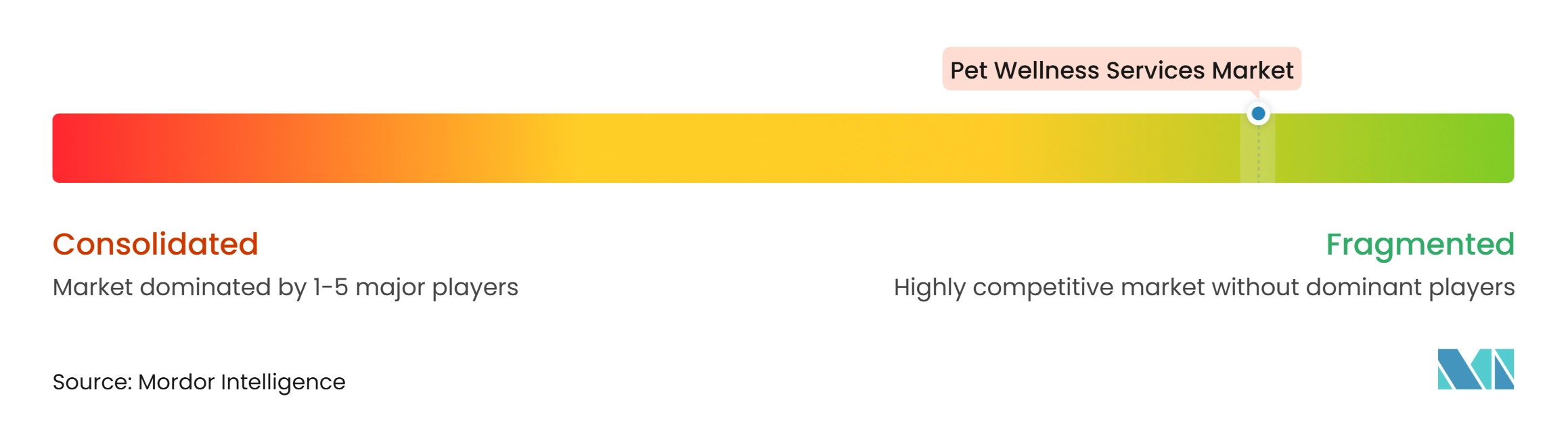
The global pet wellness services market remains fragmented because service delivery is local, relationship-driven, and dependent on clinical capacity. The top five companies account for less than 30% of global revenue. Mars Veterinary Health participates through VCA Animal Hospitals (VCA), Banfield, BluePearl, and AniCura. Large operators benefit from shared procurement, practice systems, and clinical technology investments. However, independent and regional clinics remain competitive as pet owners value proximity and familiar providers. Competition is increasing in digital triage, remote support, membership plans, and specialized wellness services.
Consolidation continues to reshape provider networks. Mission Pet Health launched in July 2025 following the combination of Southern Veterinary Partners and Mission Veterinary Partners, creating a network of more than 850 hospitals across 41 United States states. Chewy agreed to acquire SmartEquine in October 2025, expanding its presence in equine health and nutrition. CVS Group also expanded its Australian clinic network through acquisitions reported in its 2025 results.
Technology is a key differentiator when it reduces administrative workloads and supports client engagement. IDEXX announced its acquisition of CoVet in 2026 to add AI-native ambient listening and clinical workflow capabilities to its software ecosystem. Airvet’s 2025 financing supported enterprise-distributed pet telehealth expansion. Service gaps remain in rural access, dental wellness, and care for birds and other companion species.
Pet Wellness Services Industry Leaders
-
Mars, Incorporated
-
IVC Evidensia
-
National Veterinary Associates (NVA)
-
CVS Group plc
-
Pets at Home Group plc
- *Disclaimer: Major Players sorted in no particular order
Pet Wellness Services Market Companies Covered in this Report
- Mars, Incorporated
- National Veterinary Associates (NVA)
- IVC Evidensia
- Greencross Limited
- CVS Group plc
- Pets at Home Group plc
- Petco Health and Wellness Company, Inc.
- PetSmart LLC
- Chewy, Inc.
- Zoetis Inc.
- IDEXX Laboratories, Inc.
- Trupanion, Inc.
- Vetster Inc.
- Airvet
- FirstVet
- PetVet Care Centers
- VetPartners
- VetCare Canada
- Animal Emergency Australia
- Altano Group
Recent Industry Developments in Pet Wellness Services Market
- September 2026: IDEXX announced the acquisition on 16 September 2026 and acquired CoVet for approximately USD 250 million. The deal integrates AI-powered clinical documentation and workflow tools into its veterinary software ecosystem.
- August 2026: IDEXX launched Catalyst proBNP, a dual-species, point-of-care cardiac biomarker test for cats and dogs. The test expands in-clinic cardiac assessment, delivering quantitative results within minutes and supporting earlier screening and clinical decision-making.
- October 2025: Chewy agreed to acquire SmartEquine, formerly SmartPak Equine, expanding its portfolio into subscription-based equine supplements, personalized nutrition and specialty products. The USD 175 million acquisition was completed in February 2026.
- September 2025: CVS Group acquired a 75% interest in six Sydney Animal Hospital practices as part of two Australian acquisitions involving eight sites for GBP 23.6 million (USD 15.82 million), expanding its Australian footprint to 51 practice sites across 31 practices.
Global Pet Wellness Services Market Report Scope
The global pet wellness services market report analyzes pet wellness services across preventive and routine veterinary care, grooming and hygiene, fitness, training and behavior, dental care, and nutrition and weight management. The market is segmented by service type, pet type, delivery setting, business model, and geography. The study examines drivers such as pet humanization, preventive-care adoption, digital and mobile service expansion, insurance-linked wellness plans, connected health monitoring, and remote triage, alongside restraints including affordability barriers, veterinary workforce shortages, fragmented telehealth regulations, and pet health data interoperability challenges. It evaluates provider networks, service availability, geographic expansion, service pricing, customer acquisition trends, consumer preferences, service adoption, and spending patterns. The report provides market size and growth forecasts, regional analyses across North America, South America, Europe, Asia-Pacific, and the Middle East and Africa, competitive landscape assessments, market concentration, market shares, strategic developments, and company profiles. It also explores opportunities in affordable hybrid wellness access for underserved pet owners and portable, identity-linked preventive-care ecosystems. Market estimates and forecasts are presented in value across all covered segments for 2022–2032.
Segmentation Overview
Key Questions Answered in the Report
What is the forecast growth rate for pet wellness services?
The global pet wellness services market is forecast to grow at a 5.98% CAGR from 2027 to 2032, reaching USD 81.17 billion by 2032.
Which pet wellness service is the largest?
Preventive & Routine Veterinary Care leads with a 34.40% share in 2026, supported by routine examinations, vaccinations, testing, and parasite prevention.
Which pet wellness service is growing fastest?
Nutrition & Weight Management is projected to record the fastest service-type growth at a 7.54% CAGR through 2032.
Why are subscription wellness plans gaining traction?
They make costs more predictable and support regular preventive care. Trupanion reported 16% subscription revenue growth in 2025.
Which region has the highest growth outlook for pet wellness services?
Asia-Pacific is projected to grow at a 7.87% CAGR through 2032, supported by urban pet ownership and increasing digital access.
What limits access to pet wellness services?
High out-of-pocket costs, limited veterinary capacity, local telehealth rules, and fragmented health data systems can limit access and service adoption.