
Marine Scrubber Market Size and Share
Market Overview
| Study Period | 2022 - 2032 |
|---|---|
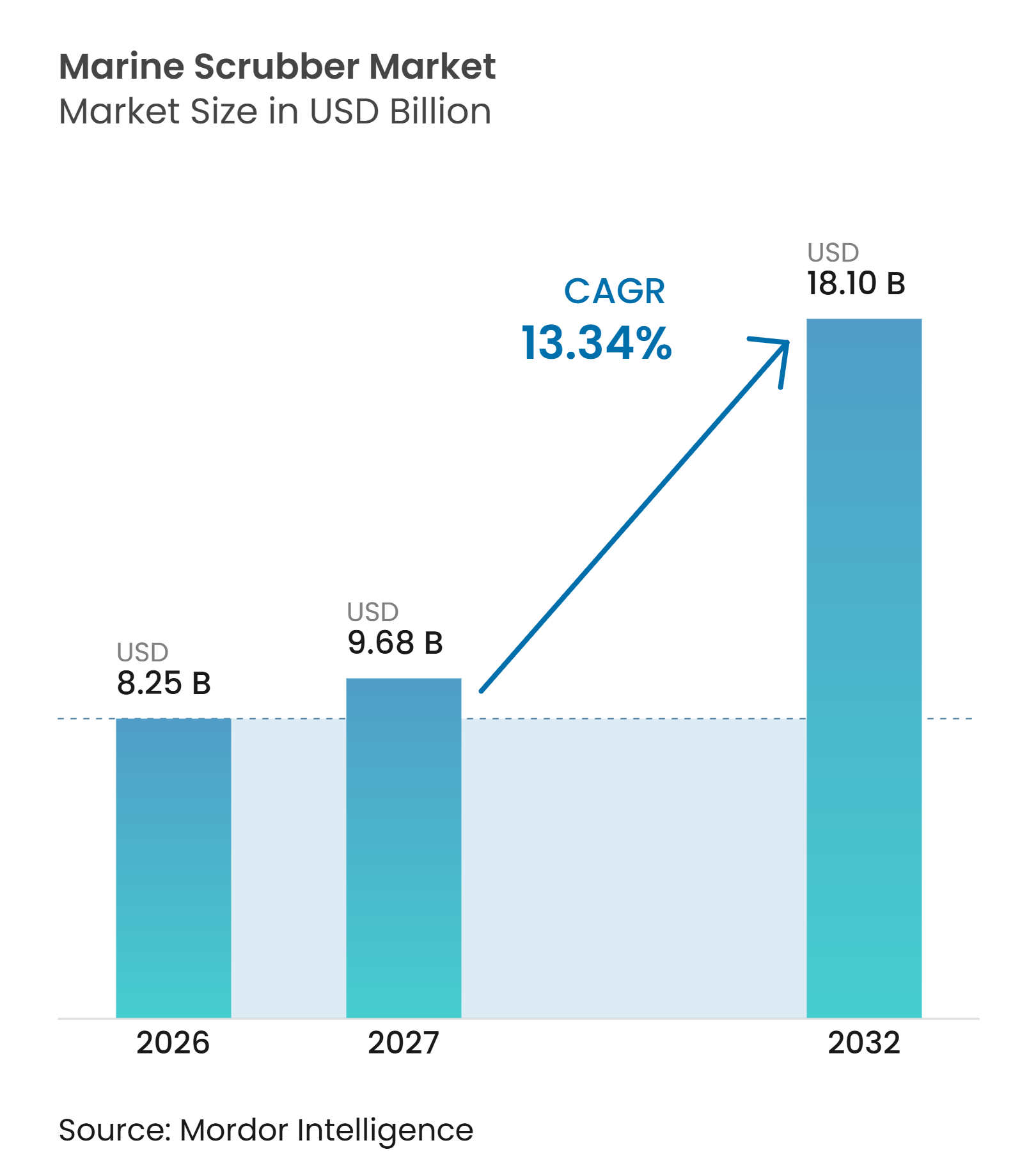
| Market Size (2027) | USD 9.68 Billion |
| Market Size (2032) | USD 18.10 Billion |
| Growth Rate (2027 - 2032) | 13.34 % |
| Fastest Growing Market | Asia-Pacific |
| Largest Market | Asia-Pacific |
| Market Concentration | Medium |
Major Players *Disclaimer: Major Players sorted in no particular order Image © Mordor Intelligence. Reuse requires attribution under CC BY 4.0. | |
Marine Scrubber Market Analysis by Mordor Intelligence
The marine scrubber market size is expected to increase from USD 8.25 billion in 2026 to USD 9.68 billion in 2027 and reach USD 18.10 billion by 2032, growing at a CAGR of 13.34% over 2027-2032. Broader sulfur-control coverage is shaping the market by making compliance planning relevant across more operating routes. Operators with vessels that repeatedly enter regulated waters can weigh installed exhaust treatment against continued fuel switching over the vessel's remaining service life. Changing discharge rules are also influencing the technology mix, as shipowners must consider both washwater handling and sulfur emissions control. Asian shipbuilding capacity supports newbuild integration, while European regulations are directing attention toward hybrid and zero-discharge options. Suppliers are expanding the role of marine scrubber systems through reporting, lifecycle support, and carbon-capture-ready configurations where vessel and route profiles justify the investment.
Key Report Takeaways
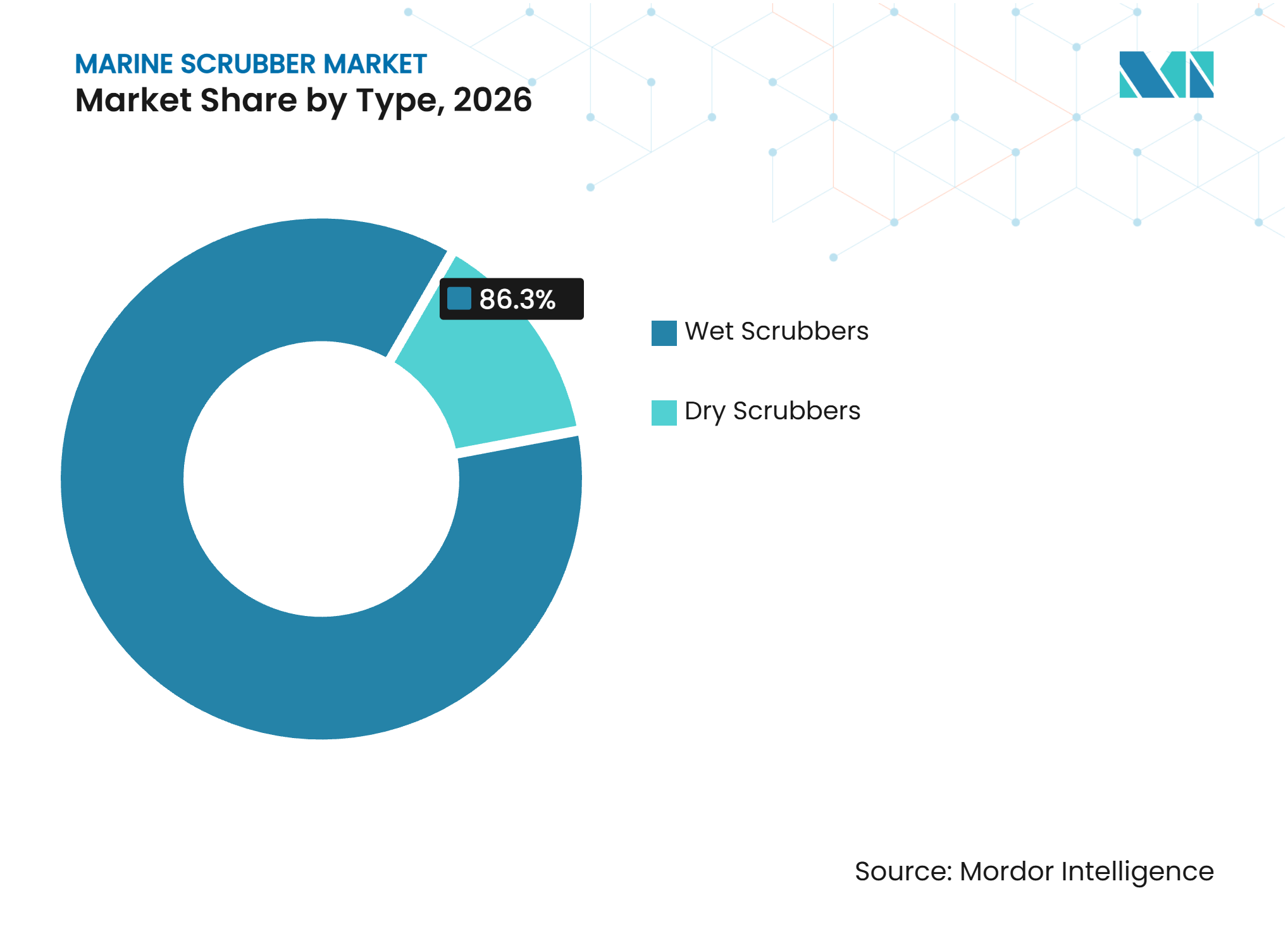
- By type, wet scrubbers held 86.3% of the marine scrubber market share in 2026, while dry scrubbers are forecast to grow at a 14.3% CAGR through 2032.
- By vessel type, bulk carriers accounted for 33.4% of installations in 2026, while container ships are forecast to grow at a 13.5% CAGR through 2032.
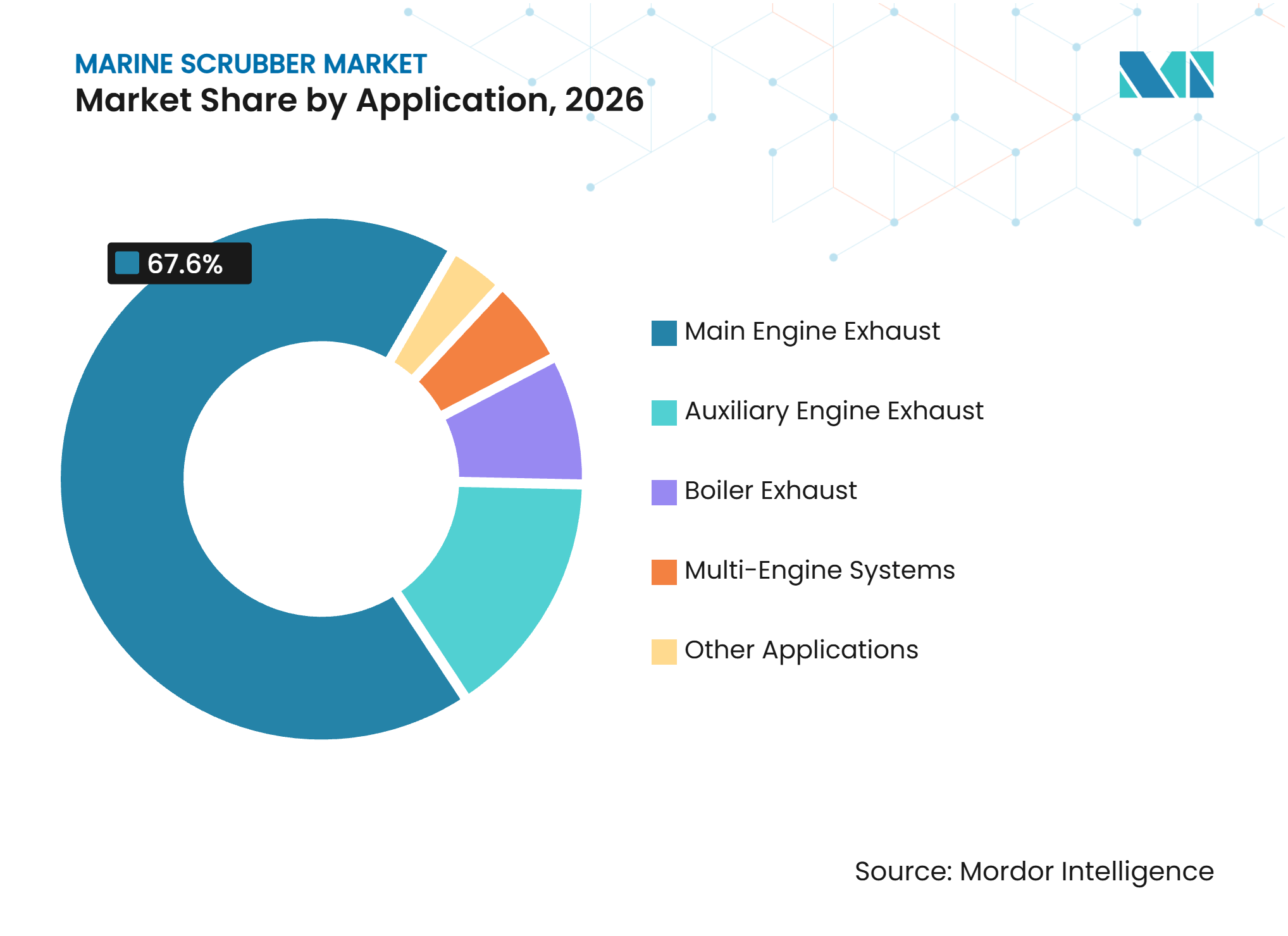
- By application, main engine exhaust accounted for 67.6% of the marine scrubber market size in 2026, while multi-engine systems are forecast to grow at a 14.1% CAGR through 2032.
- By geography, Asia-Pacific accounted for 43.2% of the marine scrubber market size in 2026 and is forecast to grow at a 14.6% CAGR through 2032.
Note: Market numbers in this report are based on Mordor Intelligence's proprietary estimation framework, which combines nine months of actuals with Q4 projections for base year 2026.
Market Trends and Insights
Drivers Impact Analysis of Marine Scrubber Market*
| Driver | (~) % Impact on CAGR Forecast | Geographic Relevance | Impact Timeline |
|---|---|---|---|
| IMO Sulfur Compliance and Emission-Control Area Expansion | +4.2% | Global; highest intensity in Europe, APAC, and North America | Short term (≤ 2 years) |
| HSFO-VLSFO Price-Spread Economics | +2.1% | Global; strongest in APAC bunkering hubs and Atlantic routes | Short to medium term (≤ 3 years) |
| Retrofit Payback on High-Utilization Vessels | +1.8% | Global; concentrated in bulk carrier and tanker segments | Short to medium term (≤ 3 years) |
| Growth of Asian Shipbuilding and Retrofit Capacity | +2.5% | APAC core (China, South Korea, Japan); spill-over to Southeast Asia | Medium term (2–4 years) |
| Zero-Discharge Hybrid Upgrades in OSPAR-Exposed Fleets | +1.4% | Europe (North-East Atlantic, Baltic, North Sea); EU territorial waters | Medium to long term (2–5 years) |
| Scrubber-to-Carbon-Capture Integration Readiness | +0.9% | Global; early adoption in Europe and APAC | Long term (≥ 4 years) |
| Source: Mordor Intelligence | |||
IMO Sulfur Compliance and Emission-Control Area Expansion
The marine scrubber market benefits when sulfur limits apply to a wider range of shipping routes. The Mediterranean Sea Emission Control Area became effective in May 2025 and extended the 0.1% sulfur requirement across a major shipping corridor. MARPOL Annex VI allows exhaust gas cleaning systems to be used as an equivalent compliance method when they meet applicable requirements. This option gives operators a way to continue using conventional fuel on vessels that operate repeatedly in sulfur-controlled areas. The compliance decision is more relevant for vessels with route networks that intersect several control areas during their normal service pattern. The marine scrubber market therefore gains support from regulations that require fleet managers to assess compliance across the full operating profile rather than on a single voyage basis.
Asian Shipbuilding and Retrofit Capacity Growth
The marine scrubber market is supported by the concentration of vessel construction and equipment integration capability in Asia. Chinese and South Korean yards have the capacity to incorporate emissions control equipment during newbuild construction, which can reduce the disruption associated with later retrofits. This makes newbuild installation a practical option for owners that expect to trade on routes with persistent sulfur control obligations. Local manufacturing and service availability can also shorten procurement and installation planning for regional owners. Manta Marine Technologies entered a 5-year licensing agreement with Suntech Equipment in January 2026 to manufacture and install systems based on Manta Marine Technologies' scrubber design in China. This arrangement illustrates how established technology providers are seeking scale through Chinese fabrication and installation capacity.
Zero-Discharge Hybrid Upgrades in OSPAR-Exposed Fleets
The marine scrubber market is also receiving demand from vessels that already have open-loop systems but must adapt to washwater restrictions. OSPAR Decision 2025/01 prohibits open-loop exhaust gas cleaning system washwater discharge in ports and internal waters from July 1, 2027, followed by a broader discharge prohibition from July 1, 2029.[1] Denmark adopted restrictions on polluted washwater from ships in coastal areas during 2025, which further directs vessel operators toward zero-discharge solutions. Hybrid systems allow operators to change operating mode when entering waters where discharge is restricted. This creates a replacement and upgrade opportunity within the installed fleet, rather than limiting demand to first-time installations. It also places greater value on designs with adequate holding capacity, closed-loop capability, and service support.
Scrubber-to-Carbon-Capture Integration Readiness
The marine scrubber market has an additional role where exhaust treatment is designed to work with onboard carbon capture. Wärtsilä launched a carbon capture solution for shipping in May 2025 following a full-scale installation on the ethylene carrier Clipper Eris. The company stated that the system can be integrated with existing sulfur oxide scrubbers and targets up to 70% carbon dioxide (CO2) capture.[2] Integrated exhaust treatment can give shipowners a clearer pathway for later decarbonization when the vessel's trading pattern and remaining service life support it. It can also favor systems that are designed with space, piping, power, and monitoring requirements in mind. This does not replace the near-term role of sulfur compliance, but it broadens the range of reasons an operator may consider a more adaptable system.
Restraints Impact Analysis of Marine Scrubber Market*
| Restraint | (~) % Impact on CAGR Forecast | Geographic Relevance | Impact Timeline |
|---|---|---|---|
| Washwater Discharge Bans and Route-Specific Usability Loss | -1.8% | Europe (OSPAR, Baltic); potential Mediterranean extension by Spain and France | Short to medium term (≤ 3 years) |
| Alternative-Fuel Adoption Risk to Scrubber Utilization | -1.4% | Global; strongest in container and cruise segments transitioning to LNG/methanol | Long term (≥ 4 years) |
| Retrofit Downtime, Space, and Structural-Integration Constraints | -0.9% | Global; most acute in smaller vessel classes and aging fleet segments | Medium term (2–4 years) |
| Sludge, Alkali, and Port-Reception-Capacity Bottlenecks | -0.6% | Emerging-market ports in Southeast Asia, Africa, South America | Medium to long term (3–5 years) |
| Source: Mordor Intelligence | |||
Washwater Discharge Bans and Route-Specific Usability Loss
Washwater restrictions limit the operational flexibility of open-loop scrubbers and constrain demand in the marine scrubber market. An open-loop-only vessel without holding capacity may need to switch fuels when entering a restricted port or coastal area, reducing the financial benefit the owner anticipated at the time of installation. The OSPAR timetable provides a clear compliance deadline but also adds uncertainty for operators deciding between upgrading their systems, switching fuels, or changing routes. While the same restrictions can support demand for hybrid and dry systems, this does not offset the immediate cost and planning burden for existing open-loop installations. The impact is most pronounced for vessels that spend significant time in ports and inland waters subject to discharge restrictions.
Alternative-Fuel Adoption Risk to Scrubber Utilization
Alternative-fuel vessels reduce the need for sulfur-removal equipment, as they do not rely on heavy fuel oil in the same way as conventional vessels. This creates a longer-term constraint for the marine scrubber market, particularly in vessel classes with active newbuild programs. The American Bureau of Shipping noted that fuel availability, cost, infrastructure, and safety considerations remain central to maritime decarbonization decisions. These factors slow a uniform shift away from conventional fuels, leaving a substantial period during which existing vessels still require compliant sulfur-control solutions. Shipowners must weigh scrubber retrofits against fuel switching, dual-fuel newbuilds, and the vessel's expected trading life. This restraint is strongest where fleet renewal is faster, while older vessels and those with high fuel consumption may continue to find exhaust gas cleaning a viable option.
*Our forecasts treat driver/restraint impacts as directional, not additive. The impact forecasts reflect baseline growth, mix effects, and variable interactions.
Marine Scrubber Market Segment Analysis
By Type:
Wet Scrubber Dominance Tested by Discharge RegulationWet scrubbers held 86.3% of total demand in 2026. Their installed base reflects the compliance investment cycle that followed the International Maritime Organization's 2020 sulfur rules. Open-loop designs were widely selected due to their lower capital cost and straightforward operation for vessels permitted to discharge washwater. Closed-loop and hybrid designs have become more relevant as operators prepare for varying local discharge requirements. Hybrid equipment allows a vessel to switch between open-loop and closed-loop operation when its route enters a restricted zone. This flexibility helps retain the practical value of wet systems where the vessel has the tanks, pumps, and operating procedures required for zero-discharge periods. Owners must also consider water-treatment equipment, consumables, crew procedures, and port restrictions when evaluating a wet system. These requirements can be managed effectively where the vessel has a predictable operating pattern and planned maintenance support.
Dry scrubbers are projected to expand at a 14.3% CAGR through 2032, making them the fastest-growing type in the marine scrubber market. Their appeal is strongest where washwater discharge is prohibited or where owners want to avoid liquid-effluent management. Dry designs can also support a broader exhaust-treatment plan, as they can be developed around sorbent-based processes and other emissions-control equipment. This shift does not mean wet systems will quickly lose their established position, given their large installed base and the suitability of many routes for their operation. Instead, new orders increasingly depend on vessel design, port calls, and the ability to meet future restrictions without frequent fuel changes. Suppliers with approved designs and shipyard integration experience are better positioned to address the required modification, certification, and service work. For a shipowner, the comparison involves available onboard space, system weight, handling requirements, and the expected route profile. A dry design may be more suitable where discharge compliance is the primary concern, while a hybrid wet system may suit vessels requiring flexibility across multiple operating areas.



By Vessel Type:
Bulk Carrier Scale and Container Ship MomentumBulk carriers represented 33.4% of vessel-type installations in 2026. Their high daily fuel consumption on long-haul dry-bulk routes gives sulfur-compliance decisions clear operational significance. A large bulker can consume considerable fuel over an extended iron ore, coal, or grain voyage, so the value of fuel flexibility accumulates across its schedule. Tankers also remain relevant, as crude, chemical, and product trades often involve long voyages and regular calls at controlled waters. Newbuild installation is generally less disruptive than retrofitting because the scrubber, funnel arrangement, power systems, and piping can be incorporated into the vessel's original design. This approach allows owners to align emissions equipment decisions with fleet-renewal plans and gives shipyards more opportunity to coordinate structural work and machinery layout before delivery. Retrofits remain possible, but owners must weigh installation duration against the vessel's revenue-earning schedule and planned dry-dock period.
Container ships are forecast to expand at a 13.5% CAGR through 2032, the highest rate among vessel types in the marine scrubber market. Their scheduled services often cross regions with different fuel and discharge requirements, making system flexibility valuable. Container operators must also protect schedule reliability, so retrofit planning depends on shipyard availability and the ability to limit off-hire periods. Large vessels may justify more integrated solutions because their main engines, auxiliary engines, and boilers can produce a complex exhaust profile. Cruise ships, ro-ro vessels, ferries, and offshore support vessels may also require tailored solutions due to their operating patterns, which include frequent port calls and multiple engines. In July 2026, Wartsila Corporation was selected to provide hybrid exhaust scrubber systems and fuel-flexible engines for nine Grimaldi Group ferry newbuildings, illustrating the scale of equipment packages for multi-unit passenger and ro-pax operations. Equipment choices for these vessels must account for frequent maneuvering, port stays, and a higher need for operational continuity. This increases the value of system designs that can be operated consistently by crews across multiple vessels in the same fleet.
By Application:
Main Engine Primacy with System Integration Gaining ShareMain engine exhaust accounted for 67.6% of total value in 2026. Main propulsion generally represents the largest share of a vessel's fuel consumption and sulfur oxide (SOx) emissions during sea passage, making the main engine the first priority when an owner selects an exhaust gas cleaning system. Single-engine systems were common in the initial compliance wave, as they allowed operators to address the largest emission source with lower technical complexity. Auxiliary engines and boilers remain important because port stays, maneuvering, cargo operations, and hotel loads can generate material emissions beyond main propulsion. Whole-vessel planning is therefore becoming more relevant for ships subject to close inspection at ports and within emission-control areas. The application decision should reflect the vessel's power configuration and the time it spends at sea, at berth, and in controlled waters. A system treating only the main engine may be adequate for one trading pattern but insufficient for a vessel with substantial auxiliary demand.
Multi-engine systems are forecast to grow at a 14.1% CAGR through 2032. They are relevant for vessels requiring coordinated treatment across propulsion, auxiliary, and boiler exhaust streams. This application is particularly valuable for complex vessels where separate equipment for each source would create unnecessary space and maintenance demands. Integrated layouts can make monitoring, maintenance planning, and crew procedures more consistent across the vessel. They can also provide operators with a foundation for carbon-capture integration where exhaust streams are managed through a coordinated arrangement. Wartsila Corporation's nine-vessel Grimaldi program illustrates the scale of projects that can result when hybrid systems are specified across multiple exhaust sources and newbuild vessels. The design process requires careful consideration of exhaust routing, back pressure, electrical demand, and the placement of treatment equipment. These engineering decisions are easier to manage during construction but can also be addressed in a well-planned retrofit.

Geography Analysis
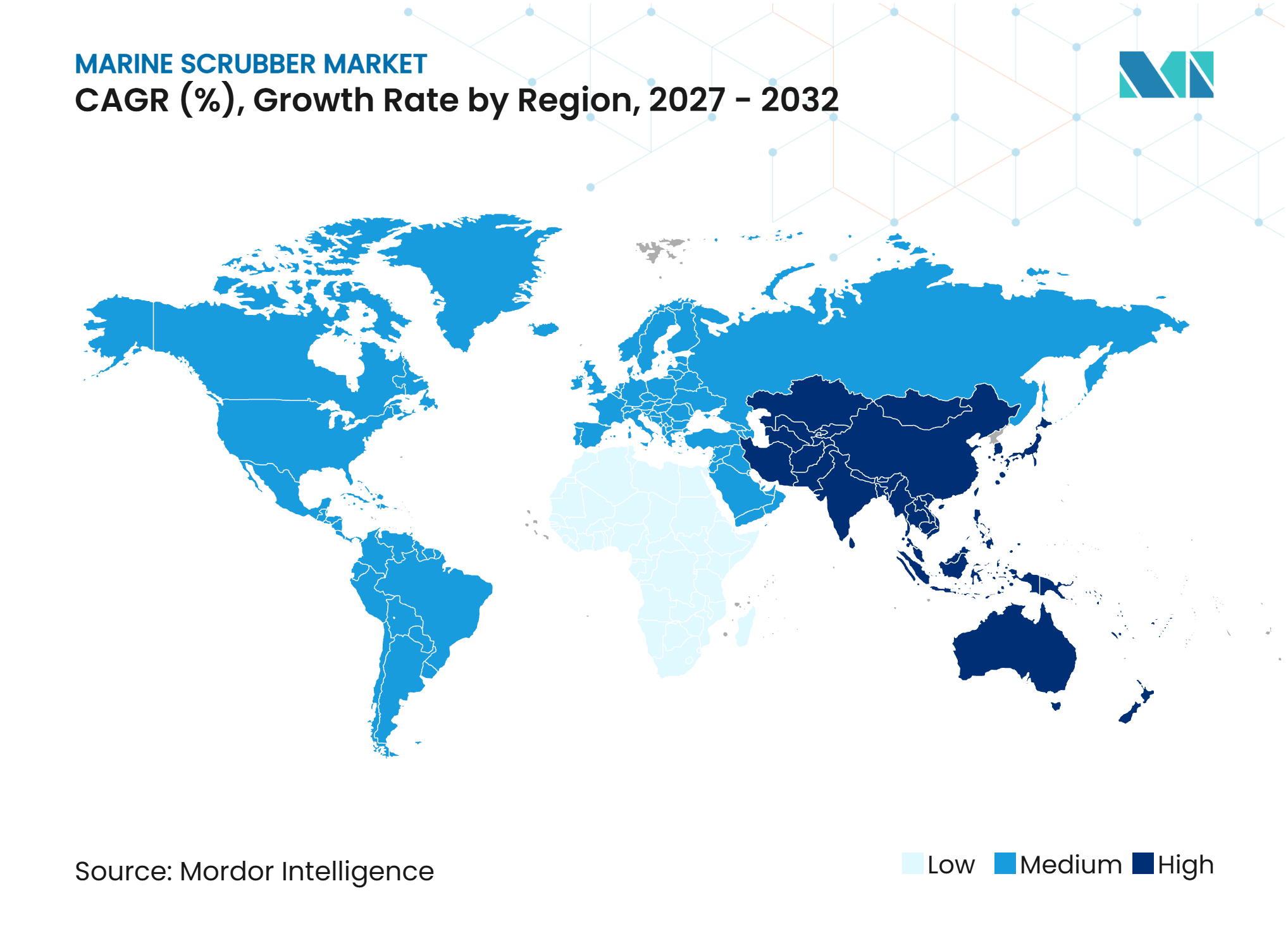
Asia-Pacific accounted for 43.2% of the marine scrubber market in 2026 and is forecast to grow at a 14.6% CAGR through 2032. The region combines shipbuilding, fleet ownership, equipment manufacturing, and trade activity. Chinese and South Korean yards give owners access to newbuild integration and retrofit capacity. This matters because installation depends on vessel construction schedules and dry-dock availability. The 2026 Manta Marine Technologies agreement with Suntech Equipment reflects continued interest in combining established system designs with Chinese manufacturing capacity.[3] Regional operators can consider scrubber selection during newbuild planning rather than only after a vessel enters service.
Europe is a major center for regulation and technology renewal. OSPAR's 2027 and 2029 deadlines are directing existing open-loop installations toward reassessment. Denmark's 2025 restrictions show how national actions can affect operating choices before wider regional deadlines take effect. Europe's marine scrubber market share depends less on first-time installations than on upgrades, service, and zero-discharge capability. European specialist suppliers can compete where certified equipment and lifecycle support are valued over lower initial cost.
North America has a 200-nautical-mile emission control area on both coasts that supports ongoing compliance needs. The region's washwater standards and port requirements can favor hybrid or closed-loop configurations. The Middle East is gaining relevance because vessels departing the Arabian Gulf for Europe may enter sulfur-controlled waters during their voyage. Africa and South America hold smaller current positions, but internationally trading bulk, petroleum, and agricultural cargo fleets remain subject to MARPOL Annex VI requirements. Across all regions, the marine scrubber market is tied to route exposure, vessel age, shipyard access, and the owner's confidence in conventional fuel. These factors shape market dynamics because owners do not assess equipment in isolation from commercial deployment, dry-dock timing, and crew readiness.
Competitive Landscape
Market Concentration
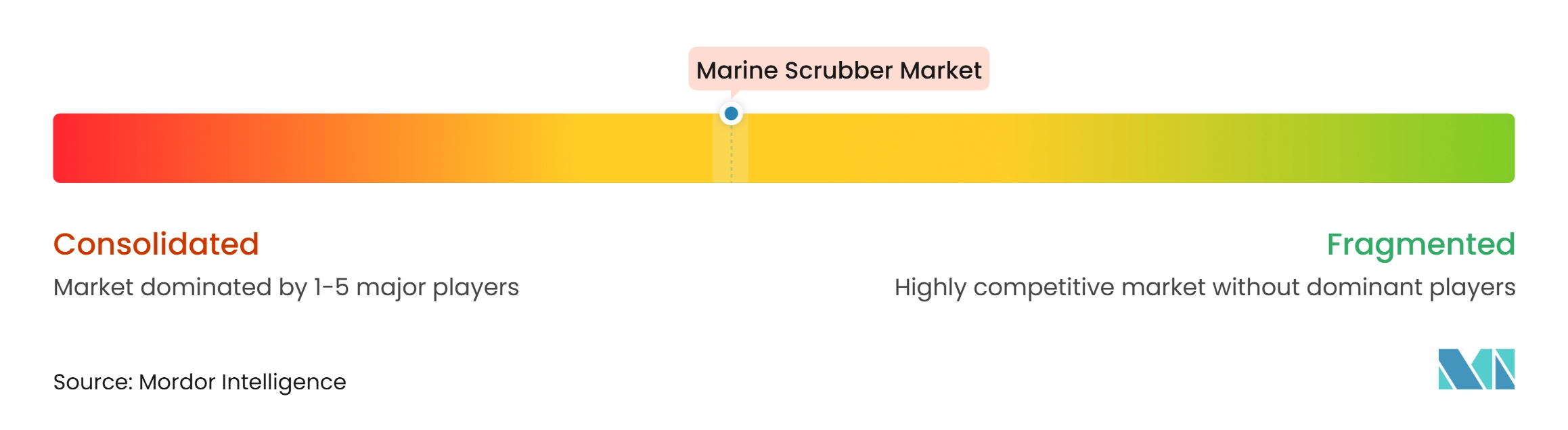
The marine scrubber market is moderately consolidated, with established specialists including Alfa Laval, Wartsila, Yara Marine Technologies, PANASIA, PureteQ, and CR Ocean Engineering. Competition is based on system type, vessel class, engineering capability, installation access, and after-sales coverage. Suppliers must address sulfur removal, washwater management, certification, remote monitoring, and lifecycle maintenance. Equipment sale is only one part of the supplier relationship, as operational support affects the customer's ability to demonstrate compliance over time. These requirements favor suppliers that can support the vessel from system selection through installation, crew familiarization, periodic inspection, spare-parts planning, and technical troubleshooting. The market rewards suppliers that understand the vessel's operating pattern, including port calls, fuel choice, maintenance windows, and the practical limits of onboard space. An owner may favor a provider with a lower-cost system for a simple vessel and a different provider with deeper integration expertise for a more complex vessel. This makes technical fit and the quality of project delivery as important as the initial purchase price.
Suppliers are also using carbon capture to differentiate their system portfolios. Wartsila's 2025 launch linked onboard carbon capture with existing sulfur oxide (SOx) scrubbers, targeting up to 70% carbon dioxide (CO2) capture. Langh Tech completed commercial onboard carbon capture installations on four bulk carriers during 2025, with the vessels using Langh Tech hybrid scrubbers and onboard carbon capture modules. These developments position exhaust gas cleaning as part of a wider vessel-emissions architecture and give shipowners a reason to consider future adaptability when selecting a scrubber system. The marine scrubber market can benefit when owners treat the exhaust line as an asset that can be upgraded rather than as a fixed compliance expense. That approach requires early consideration of equipment space, power demand, controls, exhaust routing, and crew skills. It also requires a clear view of which upgrades will be feasible during the vessel's next planned maintenance period.
Competition is not fully concentrated, as suppliers serve different vessel sizes, system designs, and regional shipyard networks. Manta Marine Technologies used a licensing model in China during 2026, allowing a local manufacturer to build and install systems based on its design. Wartsila's 2026 Grimaldi contract demonstrates the value of combining engines and hybrid exhaust systems in a single newbuild package.[4] Suppliers also compete on spare parts, training, monitoring, and maintenance over the vessel's working life. The marine scrubber market remains accessible to specialists with differentiated designs, but approval requirements and engineering experience can present meaningful barriers for new entrants. A supplier that lacks project references, service access, or an established shipyard relationship may face a longer route to acceptance from vessel operators. The selection process also reflects the owner's tolerance for installation risk and the availability of ongoing support in the vessel's main trading regions. A market concentration score cannot be assigned from the available source-compliant material, as it does not provide the combined share of leading players.
Marine Scrubber Industry Leaders
-
Wärtsilä Oyj Abp
-
Alfa Laval AB
-
Yara Marine Technologies AS
-
Ecospray Technologies S.r.l.
-
CR Ocean Engineering, Inc.
- *Disclaimer: Major Players sorted in no particular order
Marine Scrubber Market Companies Covered in this Report
- Alfa Laval AB
- ANDRITZ AG
- Clean Marine AS
- CR Ocean Engineering, Inc.
- Ecospray Technologies S.r.l.
- Fuji Electric Co., Ltd.
- KwangSung Co., Ltd.
- Langh Tech Oy Ab
- ME Production A/S
- Mitsubishi Heavy Industries, Ltd.
- Pacific Green Marine Technologies Ltd.
- PANASIA CO., LTD.
- PureteQ A/S
- SAACKE GmbH
- Shanghai Bluesoul Environmental Technology Co., Ltd.
- Valmet Oyj
- VDL AEC Maritime B.V.
- Wärtsilä Oyj Abp
- Weihai Puyi Marine Environmental Technology Co., Ltd.
- Yara Marine Technologies AS
Recent Industry Developments in Marine Scrubber Market
- July 2026: Wärtsilä was selected to supply hybrid exhaust scrubber systems, Wärtsilä 46F fuel-flexible engines, and integrated propulsion solutions for nine ro-pax ferries being built for Grimaldi Group at China Merchants Shipbuilding Industry Group Weihai Shipyard. The vessels comprise four ships for Grimaldi Lines, three for Finnlines, and two for Minoan Lines. Equipment deliveries are scheduled between 2026 and 2028.
- January 2026: Manta Marine Technologies signed a five-year licensing agreement with Suntech Equipment to manufacture and install SOx scrubber systems based on Manta Marine Technologies' proprietary design. The technology has been deployed in more than 500 scrubbers across over 350 vessels globally, with the partnership focused primarily on expanding penetration in the Chinese market.
- September 2025: PaxOcean Zhoushan delivered Martta, the third vessel in a three-ship eco-advanced feeder vessel program for Langh Ship. All three vessels are equipped with Langh Tech hybrid scrubbers and are prepared for future onboard carbon capture installations. According to the companies, the combined scrubber and carbon-capture-ready configuration can help reduce CO2 emissions by up to 50%.
- May 2025: Wärtsilä commercially launched its onboard carbon capture solution (CCS) for shipping following successful full-scale deployment aboard Clipper Eris, a 21,000 m3 ethylene carrier operated by Solvang ASA. The system is capable of reducing vessel CO2 emissions by up to 70% and is designed to integrate with existing exhaust scrubber installations.
Global Marine Scrubber Market Report Scope
Marine scrubbers are exhaust gas cleaning systems installed on ships to reduce sulfur oxide (SOx) and other harmful emissions generated from marine fuel combustion. These systems help vessel operators comply with international maritime emission regulations while continuing to use conventional marine fuels. Marine scrubbers remove pollutants from engine and boiler exhaust gases before they are released into the atmosphere. They are widely deployed across commercial shipping fleets, including container ships, tankers, bulk carriers, and cruise vessels, to improve environmental performance and regulatory compliance.
The global marine scrubber market is segmented by type into wet scrubbers and dry scrubbers. By vessel type, the market is segmented into bulk carriers, container ships, oil tankers, chemical tankers, product tankers, LNG/LPG carriers, cruise ships, Ro-Ro and Ro-Pax vessels, ferries, offshore support vessels, general cargo ships, and other vessels. By application, the market is segmented into main engine exhaust, auxiliary engine exhaust, boiler exhaust, multi-engine systems, and other applications. The report also covers the market size and forecasts for the global marine scrubber market across 26 countries in key regions. For each segment, the market sizing and forecasts are provided on the basis of value (USD).
Segmentation Overview
| Wet Scrubbers |
| Dry Scrubbers |
| Bulk Carriers |
| Container Ships |
| Oil Tankers |
| Chemical Tankers |
| Product Tankers |
| LNG/LPG Carriers |
| Cruise Ships |
| Ro-Ro and Ro-Pax Vessels |
| Ferries |
| Offshore Support Vessels |
| General Cargo Ships |
| Other Vessels |
| Main Engine Exhaust |
| Auxiliary Engine Exhaust |
| Boiler Exhaust |
| Multi-Engine Systems |
| Other Applications |
| North America | United States |
| Canada | |
| Mexico | |
| Rest of North America | |
| South America | Brazil |
| Argentina | |
| Chile | |
| Rest of South America | |
| Europe | Germany |
| France | |
| Italy | |
| Spain | |
| United Kingdom | |
| Poland | |
| Russia | |
| Rest of Europe | |
| Asia-Pacific | China |
| India | |
| Japan | |
| South Korea | |
| Australia | |
| Indonesia | |
| Vietnam | |
| Thailand | |
| Rest of Asia-Pacific | |
| Middle East | Jordan |
| Saudi Arabia | |
| United Arab Emirates | |
| Turkey | |
| Rest of Middle East | |
| Africa | South Africa |
| Egypt | |
| Morocco | |
| Rest of Africa |
| By Type | Wet Scrubbers | |
| Dry Scrubbers | ||
| By Vessel Type | Bulk Carriers | |
| Container Ships | ||
| Oil Tankers | ||
| Chemical Tankers | ||
| Product Tankers | ||
| LNG/LPG Carriers | ||
| Cruise Ships | ||
| Ro-Ro and Ro-Pax Vessels | ||
| Ferries | ||
| Offshore Support Vessels | ||
| General Cargo Ships | ||
| Other Vessels | ||
| By Application | Main Engine Exhaust | |
| Auxiliary Engine Exhaust | ||
| Boiler Exhaust | ||
| Multi-Engine Systems | ||
| Other Applications | ||
| By Geography | North America | United States |
| Canada | ||
| Mexico | ||
| Rest of North America | ||
| South America | Brazil | |
| Argentina | ||
| Chile | ||
| Rest of South America | ||
| Europe | Germany | |
| France | ||
| Italy | ||
| Spain | ||
| United Kingdom | ||
| Poland | ||
| Russia | ||
| Rest of Europe | ||
| Asia-Pacific | China | |
| India | ||
| Japan | ||
| South Korea | ||
| Australia | ||
| Indonesia | ||
| Vietnam | ||
| Thailand | ||
| Rest of Asia-Pacific | ||
| Middle East | Jordan | |
| Saudi Arabia | ||
| United Arab Emirates | ||
| Turkey | ||
| Rest of Middle East | ||
| Africa | South Africa | |
| Egypt | ||
| Morocco | ||
| Rest of Africa | ||
Key Questions Answered in the Report
What is the projected value of the marine scrubber market by 2032?
The marine scrubber market is projected to reach USD 18.10 billion by 2032, expanding at a 13.34% CAGR from 2027 to 2032.
Why are shipowners installing marine scrubbers?
Shipowners use scrubbers as a MARPOL Annex VI equivalence option to manage sulfur compliance while continuing to operate vessels on conventional fuel. The decision depends on route exposure, vessel age, fuel strategy, and installation feasibility.
Which marine scrubber type is growing fastest?
Dry scrubbers are forecast to grow at a 14.3% CAGR through 2032 because they avoid washwater discharge and suit restricted operating areas. They are evaluated alongside wet and hybrid alternatives based on the vessel's operating profile.
Which vessel type has the strongest projected growth for scrubber installations?
Container ships are forecast to record the highest vessel-type CAGR at 13.5% through 2032. Their scheduled services can cross several controlled waters, increasing the importance of adaptable operating arrangements.
How do OSPAR washwater rules affect marine scrubber decisions?
OSPAR will prohibit open-loop discharge in ports and internal waters from July 1, 2027, which increases the need for hybrid upgrades, closed-loop operation, or fuel switching. Operators need to plan around the vessel's route and holding capacity.
Can a marine scrubber work with onboard carbon capture?
Yes. Wärtsilä and Langh Tech have demonstrated scrubber-linked carbon capture approaches, which can support future vessel emissions-control upgrades. Owners planning compatible space, power, and exhaust arrangements at an early stage can position the marine scrubber market to benefit from this integration.