
France Medical Tourism Market Size and Share
Market Overview
| Study Period | 2021 - 2031 |
|---|---|
| Forecast Data Period | 2026 - 2031 |
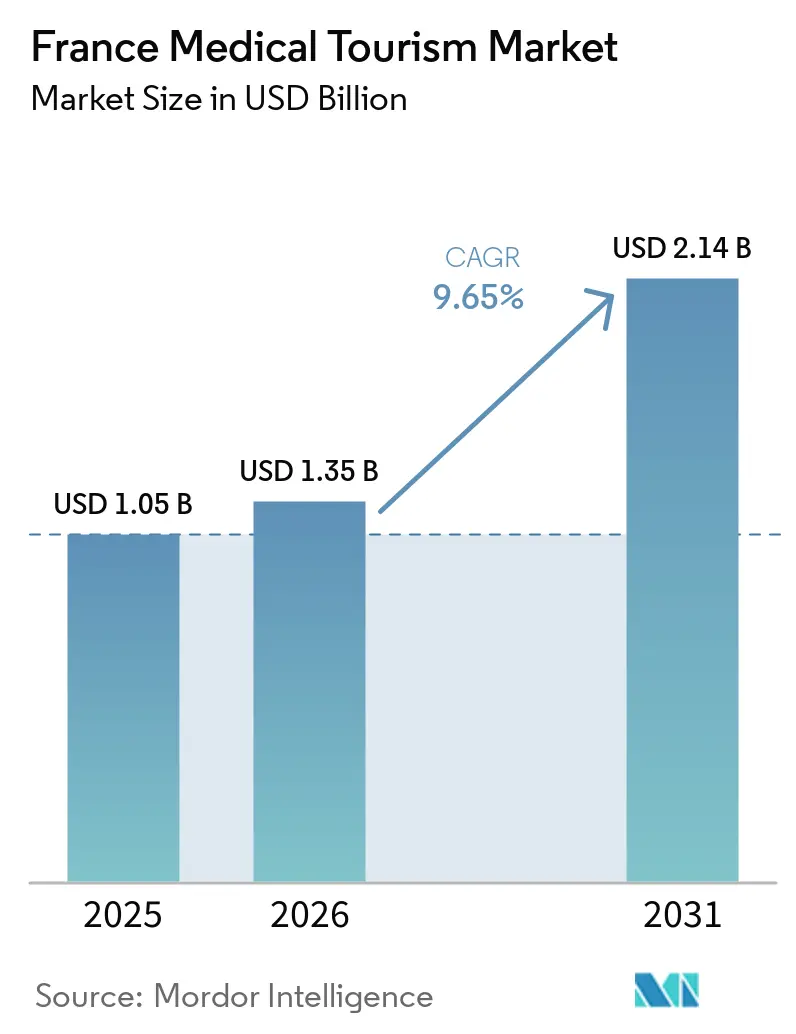
| Base Year Market Size (2025) | USD 1.05 Billion |
| Market Size (2026) | USD 1.35 Billion |
| Market Size (2031) | USD 2.14 Billion |
| Growth Rate (2026 - 2031) | 9.65 % |
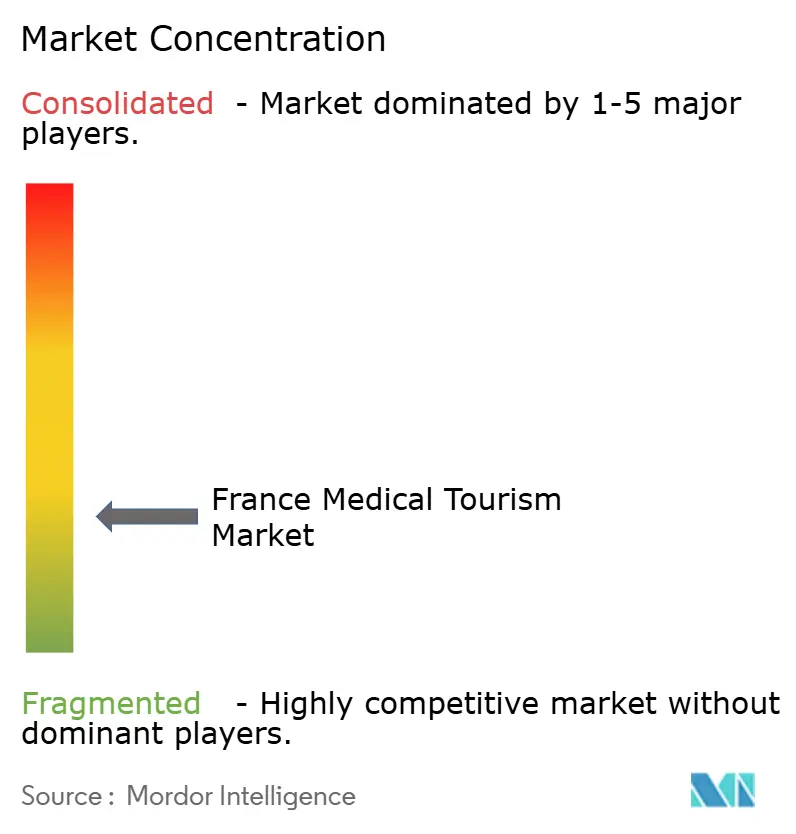
| Market Concentration | Low |
Major Players *Disclaimer: Major Players sorted in no particular order Image © Mordor Intelligence. Reuse requires attribution under CC BY 4.0. | |
France Medical Tourism Market Analysis by Mordor Intelligence
The France medical tourism market was valued at USD 1.05 billion in 2025 and estimated to grow from USD 1.15 billion in 2026 to reach USD 2.14 billion by 2031, at a CAGR of 9.65% during the forecast period (2026–2031). International arrivals totaled 102 million in 2025, supporting patient inflows through established air connectivity, hospitality infrastructure, and destination familiarity. The market benefits from the strength of French hospital systems, particularly in oncology and other complex specialties, where institutional reputation often influences patient choices[1]. Competitive pricing further supports the market, with the French Healthcare Association noting that procedure costs in France are significantly lower than in the United States. This attracts both self-paying patients and insured patients. Private providers are improving patient conversion by creating international patient bureaus, partnering with insurers, and offering multilingual support. Public institutions remain key for research-driven and high-acuity care. Challenges include administrative delays and limited specialist capacity. Providers combining clinical expertise with streamlined patient coordination are better positioned to gain a competitive advantage.
Key Report Takeaways
- By treatment type, Cancer Treatments held a 24.83% share of the France Medical Tourism Market in 2025, while Cosmetic and Plastic Surgery is projected to grow at the highest CAGR of 10.34% by 2031.
- By booking channel, Direct Hospital Booking accounted for a 54.62% share of the France Medical Tourism Market in 2025, while Medical Tourism Facilitators are projected to grow at the highest CAGR of 10.96% by 2031.
- By healthcare provider type, Private Hospitals and Clinics captured a 61.41% share of the France Medical Tourism Market in 2025 and are also projected to grow at the highest CAGR of 11.63% by 2031.
- By patient origin, Europe accounted for a 42.34% share of the France Medical Tourism Market in 2025, while the Middle East and Africa are projected to grow at the highest CAGR of 11.97% by 2031.
- By geography, Île-de-France held a 40.86% share of the France Medical Tourism Market in 2025, while Provence-Alpes-Côte d'Azur is projected to grow at the highest CAGR of 11.35% by 2031.
Note: Market size and forecast figures in this report are generated using Mordor Intelligence’s proprietary estimation framework, updated with the latest available data and insights as of January 2026.
France Medical Tourism Market Trends and Insights
Drivers Impact Analysis*
| Driver | (~) % Impact on CAGR Forecast | Geographic Relevance | Impact Timeline |
|---|---|---|---|
| High Clinical Credibility and Brand Trust Among Cross-Border Patients | +2.1% | Global, concentrated in the Gulf States, North Africa, and Sub-Saharan Africa | Long term (≥ 4 years) |
| Pricing Advantage Versus the United States and Other High-Cost Destinations | +1.8% | North America, Western Europe, the Middle East | Medium term (2-4 years) |
| Multilingual and Concierge-Led Care Journeys | +0.7% | Global, especially non-Francophone origin markets | Medium term (2-4 years) |
| Rising Demand for Cosmetic, Dental, and Fertility Care | +1.5% | Europe, the Middle East, and Africa | Medium term (2-4 years) |
| Digitized Pre-Travel Triage and Remote Second Opinions | +0.9% | Global, stronger in Asia-Pacific and North America | Medium term (2-4 years) |
| Specialized Oncology and Rare-Disease Treatment Reputation | +1.6% | Middle East, North Africa, Eastern Europe | Long term (≥ 4 years) |
| Source: Mordor Intelligence | |||
High Clinical Credibility and Brand Trust Among Cross-Border Patients
The medical tourism market in France consistently attracts patients seeking complex care, thanks to the strong clinical expertise of its referral institutions across various specialties. AP-HP handles a significant number of stays by foreign patients each year, primarily from the Gulf, Eastern Europe, North Africa, and Sub-Saharan Africa. This patient base demonstrates that the market is not limited to elective, leisure-related treatments but is also focused on medically necessary care. Gustave Roussy has treated a substantial number of patients in its latest reporting period and enrolled many in clinical trials, reinforcing France's reputation for advanced treatment protocols. Research-driven care fosters trust that smaller facilities often cannot match, ensuring stable referral relationships even when patients consider multiple destinations[2].
Pricing Advantage Versus the United States and Other High-Cost Destinations
The medical tourism market in France is competitive due to significantly lower treatment costs compared to the United States. Treatment expenses in France are reportedly substantially lower for similar procedures, making it an appealing option for cross-border patients. This cost advantage is more pronounced when patients can clearly estimate the entire treatment process, including consultations, surgery, rehabilitation, and follow-up tests. ELSAN has utilized this approach to attract United Kingdom patients through the NHS overseas support pathway, positioning France as a practical choice for medical care. Providers offering complete cost transparency are better positioned in the French medical tourism market, as international patients often focus on the total payable amount rather than individual procedure quotes when comparing destinations[3].
Multilingual and Concierge-Led Care Journeys
The France medical tourism market depends on hospitals' ability to assist patients before arrival, during treatment, and after discharge. The French Healthcare Association has introduced a nine-member concierge charter outlining rapid referrals, confidentiality, transparent pricing, and ethical practices, providing a standardized service framework. International patients often assess not only clinical expertise but also the ease of managing records, payments, travel, and communication. Facilities such as the American Hospital of Paris and other private providers have developed international patient services in collaboration with global insurers, reducing administrative challenges and ensuring smoother processes. Multilingual coordination and concierge-led services simplify the medical journey, improving patient conversion rates by making the experience more predictable and manageable.
Rising Demand for Cosmetic, Dental, and Fertility Care
The France medical tourism market is growing in the elective care segment, where patients combine medical treatment with short-stay travel. Cosmetic and plastic surgery is the fastest-growing category, supported by recognized providers in Paris, Lyon, and the Riviera. These locations, with private clinics, streamline treatment, recovery, and international patient services more effectively than public facilities. Fertility care also drives growth, as France offers extensive access to assisted reproduction services, including full coverage for multiple IVF cycles for eligible women. This policy strengthens the country’s reputation as a destination for reproductive care. The American Hospital of Paris enhanced this position by introducing an AI-assisted ART protocol, showcasing technological advancements in fertility care within the market.
Restraints Impact Analysis*
| Restraint | (~) % Impact on CAGR Forecast | Geographic Relevance | Impact Timeline |
|---|---|---|---|
| Administrative Friction in Visa, Insurance, and Documentation Flows | -0.6% | Global, most acute for non-European Union, non-United States and non-UAE passport holders | Medium term (2-4 years) |
| Domestic Capacity Constraints in High-Demand Specialist Centers | -0.5% | Île-de-France, concentrated in oncology and fertility | Long term (≥ 4 years) |
| Fragmented Patient Acquisition Across Providers and Facilitators | -0.4% | Global, especially North America and Asia-Pacific origin markets | Medium term (2-4 years) |
| Cross-Border Care Continuity and Post-Treatment Follow-Up Gaps | -0.4% | All geographies, more acute for long-haul patients from Middle East, Africa, and Asia-Pacific | Long term (≥ 4 years) |
| Source: Mordor Intelligence | |||
Administrative Friction in Visa, Insurance, and Documentation Flows
The France medical tourism market faces challenges due to administrative delays, even after the treatment intent is confirmed. Medical visa processing often takes several days for standard applications and longer for complex cases, creating risks for patients who need urgent care. Insurance arrangements vary among providers: larger institutions often collaborate with global insurers, while smaller facilities may lack such arrangements. This disparity affects mid-income patients who value French healthcare quality but may struggle with significant out-of-pocket expenses during the documentation process. Providers with efficient pre-admission coordination and better insurer compatibility are more likely to secure complex cases, thereby reducing the likelihood that patients will seek faster alternatives[4].
Domestic Capacity Constraints in High-Demand Specialist Centers
The France medical tourism market faces challenges due to the overlap between its key international specialties and high domestic demand. Institut Curie’s proton therapy services treat a significant number of patients annually, with its radiotherapy investments focusing on technological improvements rather than expanding inpatient capacity. Public hospitals operate under equal-access principles, limiting their ability to allocate specialist capacity exclusively for international patients. Ramsay Santé, with its extensive network of facilities and patient base, helps mitigate some of this strain. However, much of its operations extend beyond specialist oncology and surgical services. Growth in the France medical tourism market is primarily driven by private providers increasing specialist capacity without relying on already constrained public hospitals.
*Our forecasts treat driver/restraint impacts as directional, not additive. The impact forecasts reflect baseline growth, mix effects, and variable interactions.
Segment Analysis
By Treatment Type: Oncology Anchors Revenue While Aesthetics Leads Growth
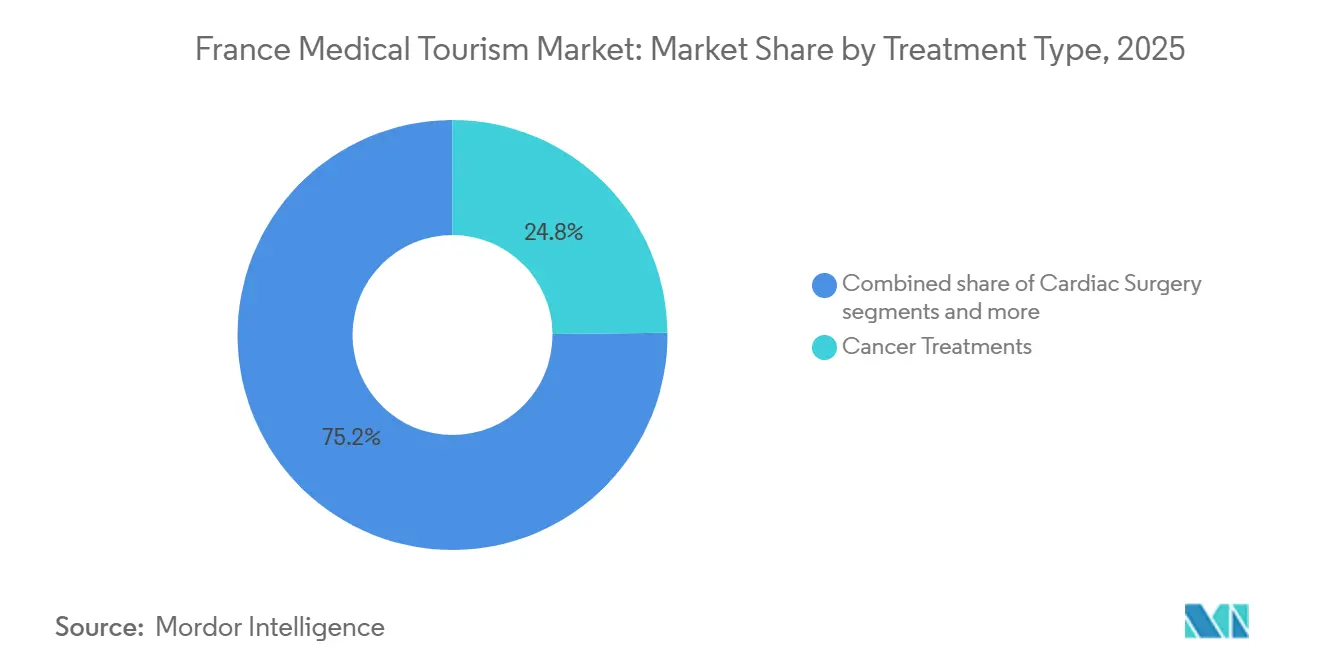
Cancer treatments represented 24.83% of the France medical tourism market in 2025, making oncology the largest segment by revenue. This is due to the country’s advanced cancer treatment infrastructure, including institutions like Gustave Roussy, Institut Curie, and the Unicancer network. These facilities attract patients seeking treatment, clinical trials, specialist consultations, and advanced radiotherapy. Cardiac surgery remains significant, offering advanced procedures through established hospital systems, particularly where insurer or government-backed arrangements are in place. Orthopedic surgery supports steady cross-border patient volumes, aided by structured intake pathways such as ELSAN’s United Kingdom-facing program.
Cosmetic and plastic surgery is the fastest-growing segment in France's medical tourism market, with a projected 10.34% CAGR through 2031. Growth is driven by private clinical networks in cities like Paris and Lyon, as well as in coastal areas, where elective procedures are paired with streamlined hospitality and recovery services. Fertility treatments are expanding as France offers a regulated and credible environment for assisted reproduction. Private centers offer faster access than public healthcare pathways. The "Others" category, including dental and neurological treatments, adds depth to the market. AP-HP highlights hepatology and neurological pathologies as key areas attracting international patients. Growth in this category reflects high-acuity revenue, elective private care, and specialized treatments where France maintains cross-border credibility.

By Booking Channel: Direct Relationships Dominate but Facilitators Accelerate
Direct hospital booking held 54.62% of the France medical tourism market in 2025, reflecting the reliance on established institutional relationships. This channel remains strong due to long-standing connections between public hospital systems, major cancer centers, private hospitals, embassies, sovereign payers, and returning international patients. The market relies on these direct pathways for complex care, where foreign ministries, insurers, or physicians often prefer direct contact with hospitals rather than intermediaries. French Hospitals are improving discoverability by centralizing provider profiles and contact information, enhancing the efficiency of direct bookings. Direct booking is particularly important in oncology and tertiary care, where institutional trust outweighs marketing efforts.
Medical tourism facilitators are the fastest-growing booking channel in the France medical tourism market, with a projected compound annual growth rate (CAGR) of 10.96% through 2031. Their growth is driven by first-time patients needing assistance with translation, scheduling, payment processes, airport transfers, and post-discharge planning. The French Healthcare Association’s concierge charter supports this growth by setting minimum service standards for ethics, confidentiality, transparent pricing, and referral efficiency. The "Others" segment, including international insurance networks and embassy-linked referrals, remains significant, particularly for financing complex cases through institutional arrangements rather than self-pay pathways. The France medical tourism market is shifting toward a mixed booking structure, where hospital brands remain central, but facilitators play an increasingly important role in improving access and conversion rates.
By Healthcare Provider Type: Private Sector Leads on Both Share and Growth
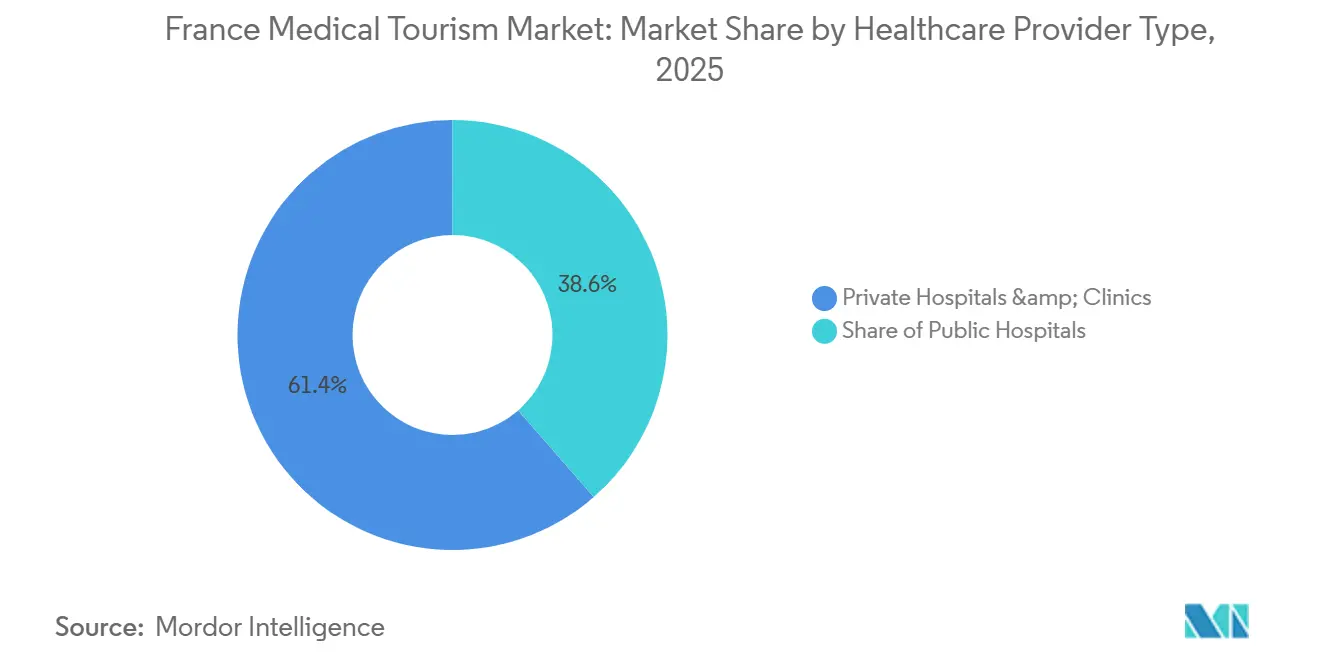
Private hospitals and clinics held 61.41% of the France medical tourism market share in 2025 and are expected to grow at a CAGR of 11.63% through 2031. Their success stems from adapting to the needs of foreign patients through international desks, insurer partnerships, single-room options, and faster scheduling. These facilities effectively address both clinical care and non-clinical coordination. The American Hospital of Paris demonstrates this approach by combining Joint Commission accreditation with international insurer compatibility, attracting patients from North America and the Middle East. Growth in the private sector is further supported by investments such as Ramsay Santé’s facility upgrades and network expansion in major cities.
Public hospitals play a critical role in high-acuity and research-driven cases that private providers may not handle at the same scale. AP-HP’s foreign patient volume underscores its expertise in complex specialties such as hepatology, neurology, and transplant care. Public systems benefit from academic networks, multidisciplinary governance, and access to clinical trials, which are vital for oncology and rare-disease patients. The French Hospital Quality label enhances the reputation of both public and private institutions by providing a unified quality benchmark. The France medical tourism market remains balanced, with private providers excelling in execution and public hospitals focusing on advanced care.
By Patient Origin: European Dominance Persists, MEA Volumes Accelerate
Europe accounted for 42.34% of the France medical tourism market in 2025, making it the largest patient origin segment. This is due to geographic proximity, easier travel logistics, and a cross-border care framework supporting planned treatment movement. European patients face fewer coordination challenges compared to long-haul travelers. The United Kingdom pathway is significant in orthopedics and delayed-care categories, with ELSAN targeting NHS-supported referrals. European demand provides a stable volume base, while higher-value segments are influenced by distant regions.
The Middle East and Africa (MEA) region is the fastest-growing origin segment, with a projected annual growth rate (CAGR) of 11.97% through 2031. Growth is driven by government-backed high-acuity referrals from Gulf countries and private-pay patients from North and Sub-Saharan Africa seeking elective or specialist procedures. North America contributes to lower patient volumes but remains important for value. Patients often seek second opinions, advanced oncology treatments, or complex procedures, leveraging the strong reputations of French medical institutions.
Asia-Pacific and South America are less developed origin segments. However, digital access and remote record review are gradually increasing France’s accessibility to patients from these regions. The France medical tourism market combines a stable European base with a growing Middle East and Africa corridor specializing in high-acuity and elective care. North America adds value through advanced procedures, while Asia-Pacific and South America show potential driven by digital connectivity.
Geography Analysis
Île-de-France represented 40.86% of the France medical tourism market in 2025, benefiting from the highest concentration of tertiary hospitals, academic medical centers, and private international-facing facilities. Institutions such as AP-HP, Institut Curie, Gustave Roussy, Hôpital Foch, and the American Hospital of Paris provide the region with unmatched scale. France generated EUR 77.5 billion (USD 91.16 billion) in tourism receipts in 2025, with the Paris region accounting for a significant share of the accommodation and transport infrastructure required for international patients. The region’s clinical capacity, specialist density, and destination services ensure its continued dominance in the market.
Auvergne-Rhône-Alpes is a key geography in the France medical tourism market, supported by Lyon’s expertise in oncology, reconstructive surgery, and related specialties. Center Léon Bérard treated 43,527 patients in 2024, with 18% participating in clinical trials, reinforcing Lyon’s role as a specialist destination. The region benefits from proximity to Swiss patients and selective cross-border referral pathways. Ramsay Santé expanded its presence by acquiring the Jean Mermoz facility in Lyon in July 2025, enhancing capacity and operations. This region serves as a secondary hub and an overflow option for patients who do not require care at Paris-based institutions.
Provence-Alpes-Côte d’Azur is the fastest-growing segment, with a forecasted CAGR of 11.35% from 2026 to 2031. Nice University Hospital, with agreements in over 20 countries, treats more than 2,000 international short-stay patients annually. Direct air connectivity through Nice facilitates access for patients from Southern Europe, North Africa, and the Gulf. The Rest of France segment adds resilience by distributing demand across oncology, transplant, and specialist centers, reducing reliance on major hubs and supporting growth through expanded specialist capacity.
Competitive Landscape
The France medical tourism market is fragmented, with competition driven by institutional credibility, accreditation, and specialty depth rather than price-focused promotion. Key players include AP-HP, Institut Curie, Gustave Roussy, the American Hospital of Paris, Ramsay Santé, and ELSAN, each competing based on care complexity, payer mix, and patient access models. The American Hospital of Paris enhanced its reputation by securing the HAS “Confirmed Quality of Care” certification, adding another quality marker for international patients. Institut Curie further differentiated itself by commissioning its MRI-Linac platform, strengthening France’s precision radiotherapy capabilities for complex oncology cases. Providers combining recognized specialties with clear evidence of quality and investment are rewarded in this market.
Strategic initiatives have focused on expanding capacity, extending network reach, and improving service models. Ramsay Santé acquired multiple multidisciplinary medical centers, broadening its urban care network across key cities. It also consolidated its presence in Lyon through the acquisition of a major facility, reinforcing its position in a regional healthcare hub. Hôpital Paris Saint-Joseph launched a significant transformation program to enhance specialist capacity in the southern Île-de-France corridor. These developments show that competition is shaped by long-term healthcare investments rather than short-term efforts.
The market still has untapped opportunities in remote triage, coordinated cross-site care, and structured post-treatment follow-up. Domestic digital infrastructure, demonstrated by teleconsultation volumes, is robust enough to support international use cases if integrated into foreign patient pathways. Facilitators remain important, but the intermediary layer between hospitals and patients is fragmented. Smaller regional hospitals can improve their participation by enhancing international visibility, coordinating with insurers, and using multilingual communication. Providers with strong specialties and better coordination systems can gain market share.
France Medical Tourism Industry Leaders
-
Assistance Publique - Hôpitaux de Paris
-
Institut Curie
-
Institut Gustave Roussy
-
American Hospital of Paris
-
Ramsay Santé
- *Disclaimer: Major Players sorted in no particular order
Recent Industry Developments
- February 2026: Ramsay Health Care Limited plans to distribute its 52.79% stake in Ramsay Santé to shareholders through an in-specie distribution. Expected by Q4 2026, pending shareholder approval, the demerger would establish Ramsay Santé as an independent publicly traded entity, impacting its capital allocation, growth strategy, and international patient expansion plans.
- February 2026: Hôpital Paris Saint-Joseph has initiated a EUR 560 million (USD 658.73 million) transformation program, including the new Hôpital Marie-Lannelongue opening in Le Plessis-Robinson and oncology and urology centers planned for completion by 2028.
- October 2025: The American Hospital of Paris received HAS certification for "Confirmed Quality of Care," maintaining its distinction as the only civilian hospital outside the United States with full Joint Commission accreditation.
- October 2025: The American Hospital of Paris implemented an AI-assisted ART protocol using the EmbryoScope+ time-lapse system and RFID-based RI Witness traceability, supported by COFRAC ISO 15189 and Joint Commission accreditations.
France Medical Tourism Market Report Scope
| Cardiac Surgery |
| Cosmetic and Plastic Surgery |
| Orthopedic Surgery |
| Cancer Treatments |
| Fertility Treatments |
| Others (Dental Treatment, Neurological Treatment, etc.) |
| Direct Hospital Booking |
| Medical Tourism Facilitators |
| Others (International Insurance Networks, Government & Embassy Referrals, etc.) |
| Public Hospitals |
| Private Hospitals & Clinics |
| North America |
| South America |
| Europe (Including France) |
| Asia-Pacific |
| Middle East and Africa |
| Île-de-France (Paris Region) |
| Auvergne-Rhône-Alpes |
| Provence-Alpes-Côte d’Azur |
| Rest of France |
| By Treatment Type | Cardiac Surgery |
| Cosmetic and Plastic Surgery | |
| Orthopedic Surgery | |
| Cancer Treatments | |
| Fertility Treatments | |
| Others (Dental Treatment, Neurological Treatment, etc.) | |
| By Booking Channel | Direct Hospital Booking |
| Medical Tourism Facilitators | |
| Others (International Insurance Networks, Government & Embassy Referrals, etc.) | |
| By Healthcare Provider Type | Public Hospitals |
| Private Hospitals & Clinics | |
| By Patient Origin | North America |
| South America | |
| Europe (Including France) | |
| Asia-Pacific | |
| Middle East and Africa | |
| By Geography | Île-de-France (Paris Region) |
| Auvergne-Rhône-Alpes | |
| Provence-Alpes-Côte d’Azur | |
| Rest of France |
Key Questions Answered in the Report
What is the projected value of France medical tourism by 2031?
The France medical tourism market is projected to reach USD 2.14 billion by 2031, up from USD 1.05 billion in 2025, at a 9.65% CAGR.
Which treatment category leads revenue in France medical tourism?
Cancer Treatments led with 24.83% of revenue in 2025, driven by France's strong oncology institutions, trial access, and advanced radiotherapy capacity.
Which care segment is growing fastest in France?
Cosmetic and Plastic Surgery is the fastest-growing treatment segment, with a forecast CAGR of 10.34% through 2031.
Why do private hospitals lead foreign patient inflows in France?
Private Hospitals and Clinics held 61.41% share in 2025 because they offer stronger international desks, faster scheduling, insurer links, and patient-focused coordination.
Which region is the main hub for inbound patients in France?
Île-de-France led with 40.86% share in 2025 due to the concentration of major hospitals, oncology centers, and international patient infrastructure in and around Paris.
Which origin region is expanding fastest for France?
The Middle East and Africa are the fastest-growing origin segments, with a projected 11.97% CAGR through 2031, supported by both government-backed referrals and private-pay demand.