
Electric Clothes Dryers Market Size and Share
Market Overview
| Study Period | 2020 - 2031 |
|---|---|
| Market Size (2026) | USD 14.66 Billion |
| Market Size (2031) | USD 18.98 Billion |
| Growth Rate (2026 - 2031) | 5.30 % |
| Fastest Growing Market | Asia-Pacific |
| Largest Market | North America |
| Market Concentration | Medium |
Major Players *Disclaimer: Major Players sorted in no particular order Image © Mordor Intelligence. Reuse requires attribution under CC BY 4.0. | |
Electric Clothes Dryers Market Analysis by Mordor Intelligence
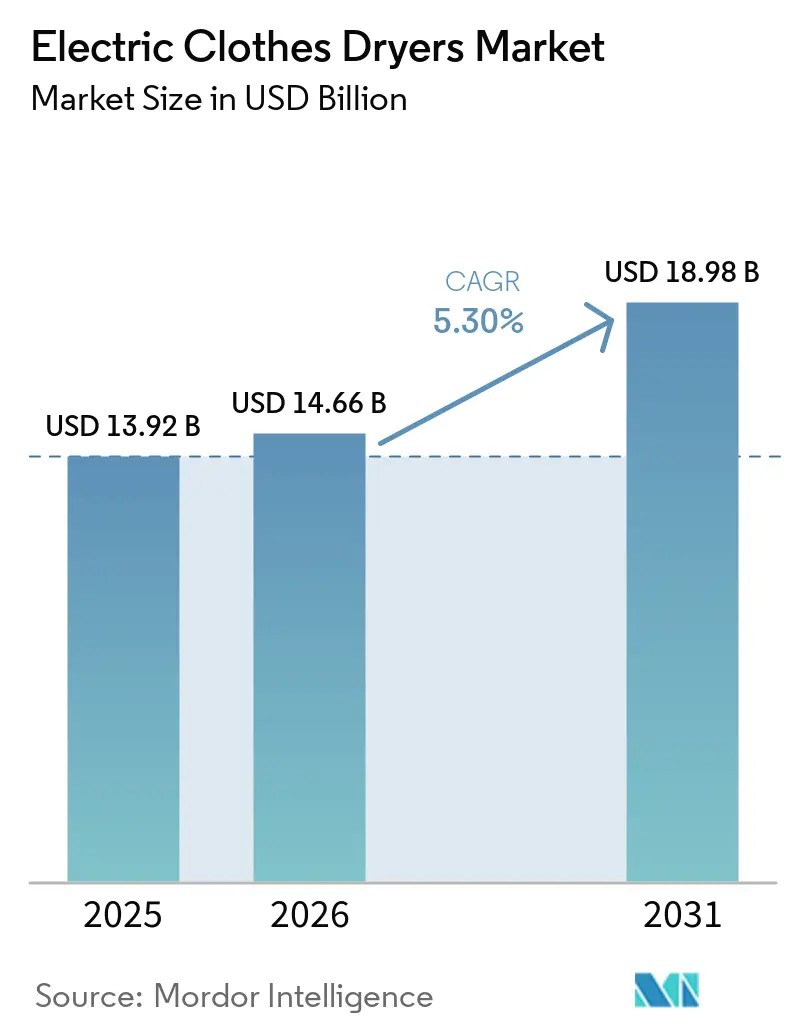
The electric clothes dryers market size was valued at USD 13.92 billion in 2025 and is estimated to grow from USD 14.66 billion in 2026 to reach USD 18.98 billion by 2031, at a CAGR of 5.30% during the forecast period (2026-2031). Urbanization, energy-efficiency mandates, and the wider adoption of smart-home platforms are shortening replacement cycles and prompting first-time purchases in developing economies. Regulatory measures such as the United States Department of Energy (DOE) minimum combined-energy-factor rule of 3.93 lb/kWh, effective March 2028, are accelerating the shift toward heat-pump-based designs [1]. North America remains the largest regional buyer base, supported by government rebate programs for ENERGY STAR® models, while Asia-Pacific records the fastest unit growth as compact, ventless appliances better fit high-density housing. Manufacturers are embedding artificial intelligence, Matter 1.3 compatibility and self-diagnostics to raise average selling prices and reduce field-service costs.
Key Report Takeaways
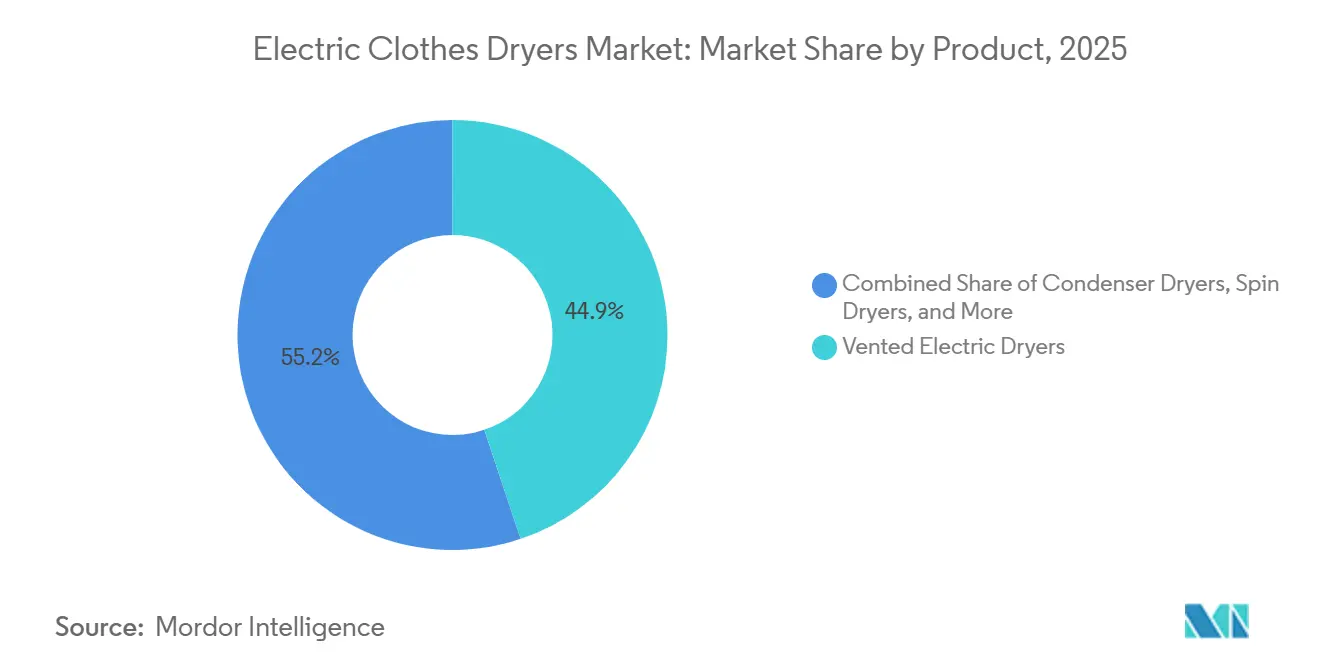
- By product type, vented models accounted for 44.85% of the electric clothes dryers market share in 2025, while condenser dryers are projected to grow at the fastest CAGR of 6.37% during 2026-2031.
- By capacity, the 7.1-9 kg bracket held 54.63% share of the electric clothes dryers market size in 2025, while dryers above 9 kg are projected to grow at the fastest CAGR of 5.81% during 2026-2031.
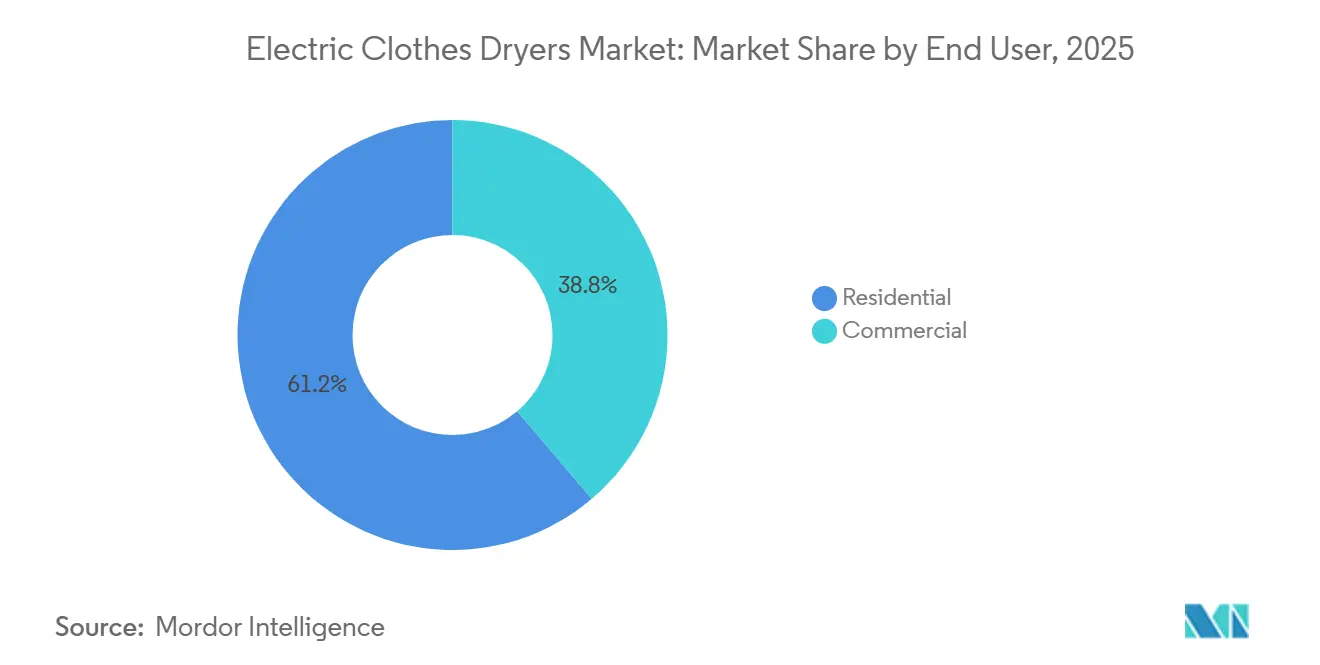
- By end user, residential purchases represented 61.21% share of the electric clothes dryers market in 2025, while commercial demand is poised for a 6.93% CAGR to 2031.
- By distribution channel, B2C/Retail outlets captured 72.26% share of the electric clothes dryers market size in 2025; online sales within this channel will rise at a 7.16% CAGR.
- By geography, North America led with 32.35% electric clothes dryers market share in 2025, whereas Asia-Pacific is forecast to grow at a 5.65% CAGR.
- The global electric clothes dryers market exhibits moderate consolidation, with the top players such as Whirlpool Corporation, Electrolux AB, LG Electronics Inc., Samsung Electronics Co., Ltd., and BSH Hausgeräte GmbH holding major market share in 2025 through diversified product portfolios spanning entry-level to premium segments.
Note: Market size and forecast figures in this report are generated using Mordor Intelligence’s proprietary estimation framework, updated with the latest available data and insights as of January 2026.
Global Electric Clothes Dryers Market Trends and Insights
Drivers Impact Analysis*
| Driver | (~) % Impact on CAGR Forecast | Geographic Relevance | Impact Timeline |
|---|---|---|---|
| Rising urbanization & shrinking living spaces | +1.2% | Global, with concentration in APAC megacities | Medium term (2-4 years) |
| Energy-efficient heat-pump technology adoption | +0.8% | North America & EU leading, APAC following | Long term (≥4 years) |
| Government rebates for ENERGY STAR® dryers | +0.6% | North America primary, EU secondary | Short term (≤2 years) |
| Growth of online appliance retail | +0.4% | Global, accelerated in emerging markets | Medium term (2-4 years) |
| IoT & smart-home ecosystem integration | +0.3% | Developed markets first, urban centers globally | Long term (≥4 years) |
| Electrification mandates replacing gas dryers | +0.2% | North America & EU regulatory focus | Long term (≥4 years) |
| Source: Mordor Intelligence | |||
Rising Urbanization & Shrinking Living Spaces
Global urban density is pushing appliance makers to rethink form factors; compact and stackable dryers now headline launch schedules. In China, exporters shipped 4.48 billion household appliances in 2024, up 20.8% year on year, underscoring how manufacturers tailor ventless dryers for high-rise apartments. Ventless heat-pump technology removes the need for ductwork, a prime advantage in towers where external vents are often disallowed. BSH’s 500 and 800 Series compact dryer lines deliver 2.4 cu ft capacity yet meet full-size performance benchmarks, allowing urban residents to avoid communal laundry rooms. The urban segment coexists with suburban demand for larger drums, forcing vendors to maintain dual portfolios rather than one universal platform.
Energy-Efficient Heat-Pump Technology Adoption
Heat-pump dryers, which use refrigeration cycles instead of traditional resistive heating, can reduce electricity consumption by up to 60%. These highly efficient appliances also offer ventless operation, allowing for flexible installation in spaces like closets or interior walls without the need for major structural changes. According to ENERGY STAR, widespread national adoption of heat-pump dryers in the United States could result in USD 147 million in annual utility bill savings and eliminate greenhouse gas emissions equivalent to removing 152,000 cars from the road. While this projection is specific to the U.S., the implications are globally relevant, especially for countries seeking to reduce residential energy demand and carbon footprints through electrification and appliance efficiency standards. In support of this transition, New York State offers rebates of up to USD 840 for qualifying heat-pump dryer models, which could translate to household savings of around USD 330 per year. However, several barriers remain, including higher upfront costs, longer drying cycles, and consumer hesitancy. Addressing these challenges will require public education campaigns, performance demonstrations, and the introduction of flexible financing options to communicate long-term lifecycle benefits and improve adoption rates globally.
Government Rebates for ENERGY STAR® Dryers
The Inflation Reduction Act funds the HEAR program, which offers point-of-sale rebates of up to USD 840 for ENERGY STAR heat-pump clothes dryers to households at or below 150% of area median income, within a USD 14,000 household cap. The program is administered by states and was active in about 12 states in 2026. The DOE projects that updated dryer standards, effective from 2028, will save 2.7 quadrillion BTUs and deliver USD 3.28–8.71 billion in consumer benefits through 2057. These incentives often trigger sales surges, compressing production timelines and requiring manufacturers to align capacity with program rollouts. States like California and Massachusetts amplify this impact with additional rebates, accelerating adoption but increasing short-term market volatility.
Growth of Online Appliance Retail
E-commerce represents the fastest channel in the electric clothes dryers market, advancing at a 7.16% CAGR as consumers rely on 3-D visualizers and verified reviews in lieu of showroom demos. Big-box chains deploy omnichannel inventory systems that promise 48-hour delivery, professional installation, and haul-away in one bundled service, bridging the experience gap between digital and physical retail. Manufacturers must now optimize product listings for search engine visibility alongside maintaining planogram compliance in brick-and-mortar stores. Data show that online customers favor top-spec SKUs, boosting average selling prices and encouraging brands to showcase premium features such as AI-guided cycles and Wi-Fi diagnostics.
Restraints Impact Analysis*
| Restraint | (~) % Impact on CAGR Forecast | Geographic Relevance | Impact Timeline |
|---|---|---|---|
| High upfront cost of heat-pump models | -0.7% | Global, most acute in price-sensitive markets | Medium term (2-4 years) |
| Supply-chain volatility (compressors, chips) | -0.5% | Global manufacturing hubs, cascading effects | Short term (≤ 2 years) |
| Dryer-fire safety & stricter standards | -0.4% | North America & EU regulatory focus | Medium term (2-4 years) |
| Cultural preference for line-drying | -0.3% | Asia-Pacific, Southern Europe, emerging markets | Long term (≥ 4 years) |
| Source: Mordor Intelligence | |||
High Upfront Cost of Heat-Pump Models
Retail prices for heat-pump units run 40-60% above conventional electric counterparts, deterring budget-constrained shoppers despite superior lifecycle economics. Field studies show that consumers resist payback periods beyond three years, even when supported by rising electricity tariffs. Component costs remain elevated because compressors and refrigerants lack the scale efficiencies of resistive heating elements. Brands respond with value-engineered SKUs and point-of-sale financing, yet high borrowing rates in emerging markets blunt these efforts.
Supply-Chain Volatility (Compressors, Chips)
Special-purpose microcontrollers and variable-speed compressors compete with automotive, HVAC, and consumer electronics demand. Lead times for eight-bit microcontrollers stretched to 30 weeks in 2024, causing sporadic plant shutdowns. The CHIPS and Science Act funds fab expansion, but appliance volumes are marginal relative to smartphones, limiting foundry allocation priority[2]. Manufacturers dual-source components and localize sub-assembly, but these moves require multi-year reverse-engineering and capital budgets that will not ease near-term tightness.
*Our forecasts treat driver/restraint impacts as directional, not additive. The impact forecasts reflect baseline growth, mix effects, and variable interactions.
Segment Analysis
By Product Type: Ventless Adoption Reconfigures Portfolios
Vented dryers held the largest share of the electric clothes dryers market at 44.85% in 2025, reflecting their dominance in detached housing, where wall vents are readily available. Condenser variants now record a 6.37% CAGR, helped by city-center housing stock that forbids external exhaust. Heat-pump sub-variants within the condenser class deliver up to 60% energy savings, meeting the 2028 DOE threshold well ahead of schedule. LG’s Wash Combo adds Inverter Heat Pump technology and a direct-drive motor to merge washer and dryer in one chassis, targeting tenants of micro-apartments in Seoul and Tokyo[3]. Smart connectivity is becoming table stakes, with Whirlpool rolling out Matter-ready firmware updates that allow voice-controlled cycle modification without proprietary hubs.
Manufacturers now differentiate products through noise attenuation, cycle customization, and antimicrobial drum coatings rather than pure capacity. The convergence of sensors, reversible doors, and quick-install kits blurs the traditional vented versus condenser divide. Vendors offering modular exhaust kits and firmware that toggles vented and ventless modes ensure a single SKU can serve multiple regional codes, improving inventory turns.
By Capacity: Bigger Drums Pursue Efficiency Gains
Units rated 7.1-9 kg captured 54.63% electric clothes dryers market share in 2025 because they match median household laundry loads. Machines exceeding 9 kg are the fastest climbers, registering a 5.81% CAGR, as extended families and multifamily housing managers prioritize batch throughput. Larger drums improve energy per kilogram efficiency, offsetting their floor-space penalty. Samsung’s Bespoke AI Laundry system offers 13 kg drying inside a 27-inch footprint, positioning commercial-grade resilience as a premium residential feature.
Designers mitigate volume growth with re-engineered cabinet framing, high-torque motors, and AI cycle optimization that senses moisture gradients and spins gently at partial fill levels. Conversely, sub-7 kg models retain a foothold in Europe and Japan, where bathrooms often double as laundry zones. Vendors embed wall-mount kits and condensate pumps so compact units integrate into non-traditional spaces, sustaining relevance despite scale economies favoring larger formats.
By End User: Commercial Demand Adds Momentum
Residential customers represented 61.21% of sales in 2025, underpinned by replacement cycles and new-home completions. Commercial buyers—from hotels to coin laundries and expected to expand at a 6.93% CAGR through 2031. Electrolux Professional relies on laundry equipment for 38% of its revenue, evidence that commercial specifications constitute a business model separate from consumer brands. Property developers prefer stacked commercial centers that slash per-unit maintenance, while hospitals adopt low-temperature heat-pump dryers to maintain linen integrity.
Technology transfer flows from institutional to consumer spheres; stainless-steel lifter paddles, airflow monitoring, and predictive maintenance, once exclusive to on-premises laundries, now appear in mid-tier household SKUs. Commercial buyers influence local after-sales ecosystems, prompting OEMs to launch 24-hour parts depots and technician-training portals that spill over into residential service levels.
By Distribution Channel: Omnichannel Becomes Mandatory
B2C retail held 72.26% of the electric clothes dryers market size in 2025, but its composition is rapidly shifting. Pure-play e-commerce and click-and-collect hybrids compress decision windows: shoppers read reviews and complete checkout within the same hour. Home-improvement chains deploy interactive kiosks where augmented reality shows a dryer in the customer’s laundry room, helping maintain foot traffic.
Manufacturers expand direct-to-consumer storefronts that bundle five-year warranties and subscription lint-filter delivery, capturing service margin previously ceded to retailers. For large multi-family projects, developers negotiate volume rebates directly with OEMs, bypassing distributors. Channel conflict pressures vendors to institute minimum advertised price policies while still supporting discount periods aligned with state rebate calendars.
Geography Analysis
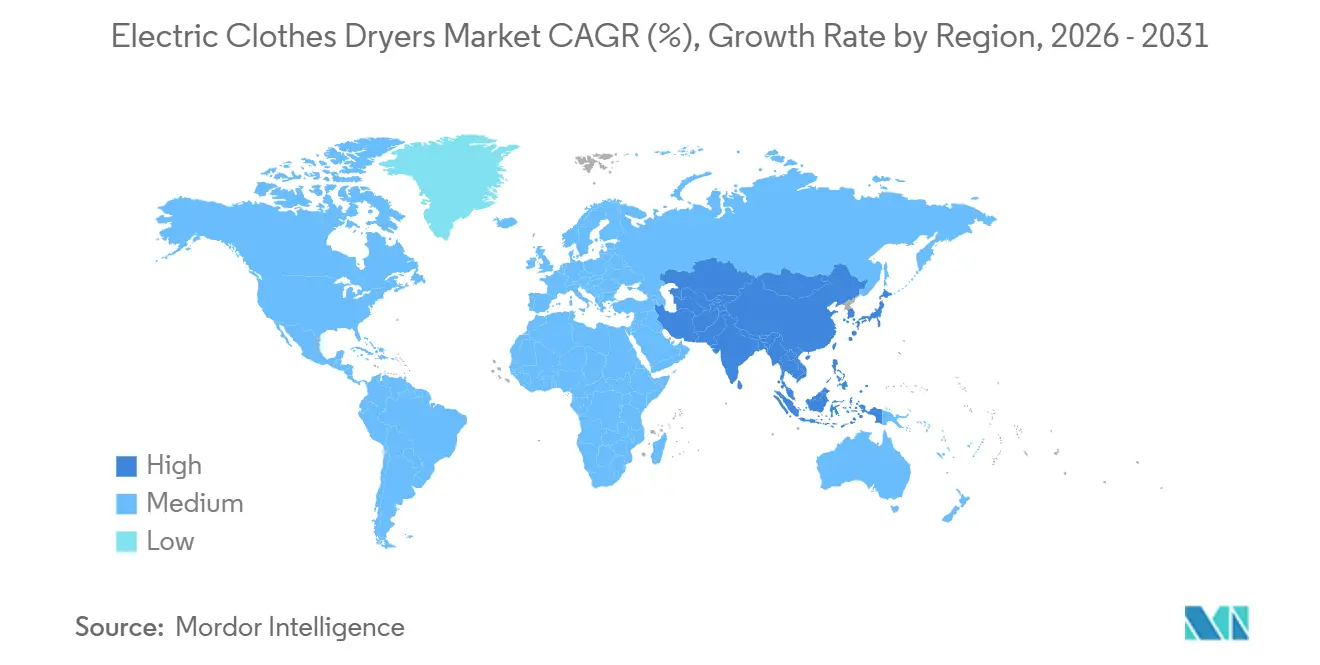
North America remains the largest regional component of the electric clothes dryers market, accounting for a 32.35% share in 2025. Mature housing stock and routine replacement cycles form a consistent demand backbone. The DOE’s combined-energy-factor mandate, effective March 2028, is motivating early trade-ins, predominantly for ENERGY STAR heat-pump models. Provincial carbon goals in Canada add incremental pull, with utilities funding point-of-sale rebates that narrow the heat-pump premium. Mexico’s urban corridors continue to lag in penetration but demonstrate double-digit volume growth as retailers offer installment financing. The region also benefits from a robust network of third-party logistics firms specializing in heavy-goods last-mile delivery, reducing lead times and enhancing consumer satisfaction.
Asia-Pacific is the fastest-growing region, advancing at a 5.65% CAGR through 2031. China’s government incentives for high-efficiency white-goods manufacturing and the proliferation of 40-story apartment blocks make ventless dryers an attractive choice. Japan’s compact bathroom-dryer designs continue to influence regional form factors, while South Korea’s early smart-home adoption creates a proving ground for AI-guided cycles. India, Indonesia and the Philippines contribute rising unit shipments as middle-income households migrate to organized urban housing. However, cultural preference for line-drying in rural zones moderates national averages, requiring vendors to localize marketing narratives around fabric hygiene and time savings rather than energy efficiency alone.
Europe places outsized emphasis on carbon reduction. Eco-design regulations and A-grade energy labeling push manufacturers to accelerate heat-pump roadmaps, especially in Germany, France and the Nordics. High electricity prices deliver sub-three-year payback periods, making upfront premiums palatable in those markets. Southern Europe lags in uptake, challenged by both culture and mild climates suited to outdoor drying, yet stricter fire codes for balconies in urban centers are beginning to chip away at resistance. Supply-chain localization is another trend; EU funds encourage compressor plants in Eastern Europe, shortening lead times and insulating producers from geopolitical disruptions.
Competitive Landscape
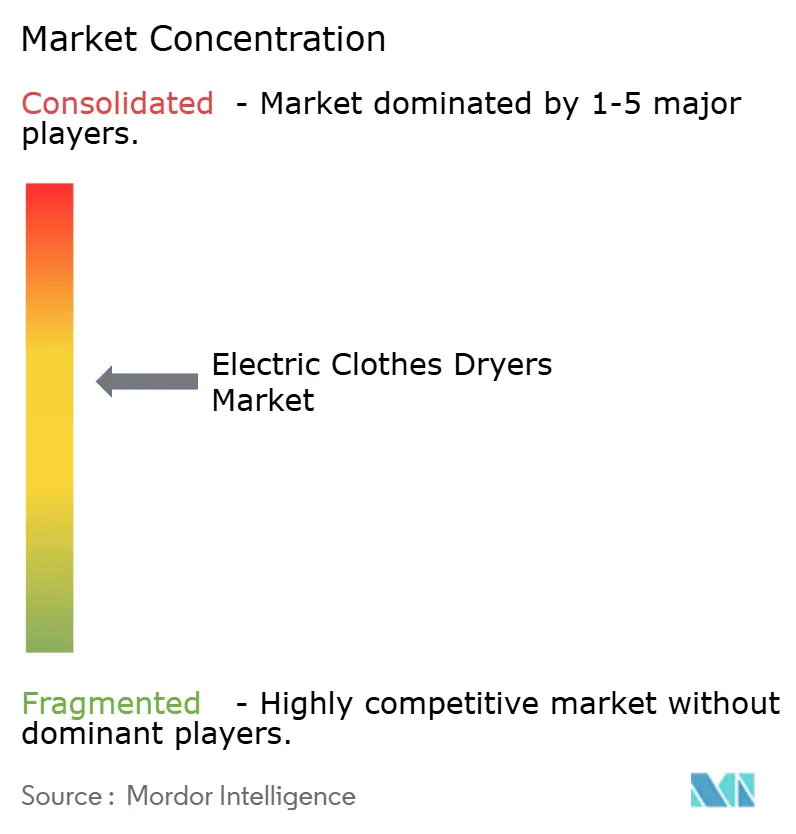
Competition is moderately concentrated: Whirlpool Corporation, Electrolux AB, LG Electronics Inc., Samsung Electronics Co., Ltd., and BSH Hausgeräte GmbH collectively hold a significant share of 2025 global sales. Each leverages broad catalogs that stretch from entry-level vented units to premium heat-pump models with AI diagnostics. Samsung’s Bespoke AI Laundry line integrates load-prediction algorithms and Matter 1.3 compatibility, illustrating how software differentiates hardware that has reached functional parity. Whirlpool answers with learning-cycle engines that adjust drum speed and reverse tumble patterns to minimize creasing, thereby positioning fabric care rather than sheer capacity as the value driver.
Investment in R&D remains high: BSH allocated EUR 850 million in 2023-approximately 5.5% of revenue, to expand heat-pump and connectivity portfolios. LG focuses on inverter motors and dual-inverter heat-pump compressors to reduce operating noise and power draw simultaneously. Electrolux employs adaptive humidity sensors from its commercial division to bring commercial-grade precision to home appliances, creating a technology-trickle-down that sustains premium price points.
Emerging challengers exploit direct-to-consumer websites and social-media promotions to bypass traditional retail barriers. Their niche focus spans super-compact dryers for studio apartments and sustainable models using low-GWP refrigerants. Incumbents respond by incubating sub-brands or acquiring specialty startups to close gaps swiftly. After-sales ecosystems become a battleground: premium players promise 48-hour spare-parts delivery and predictive-maintenance dashboards to lock in repeat purchases and ancillary revenues such as detergent pods or extended warranties.
Electric Clothes Dryers Industry Leaders
-
Whirlpool Corporation
-
Electrolux AB
-
LG Electronics Inc.
-
Samsung Electronics Co., Ltd.
-
BSH Hausgeräte GmbH
- *Disclaimer: Major Players sorted in no particular order
Recent Industry Developments
- April 2025: BSH Home Appliances has launched its compact 500 and 800 Series dryers, designed for modern living spaces and equipped with smart Home Connect technology. Both models have earned the ENERGY STAR Most Efficient 2024 certification, highlighting their superior energy performance and sustainability.
- March 2025: LG Electronics has introduced the WashCombo™ All-in-One Washer/Dryer, featuring advanced Inverter HeatPump™ Technology for efficient performance. This innovative appliance reduces energy consumption by up to 60% compared to traditional vented dryer designs, offering a more sustainable laundry solution.
- March 2025: Samsung Electronics has unveiled its Bespoke AI Laundry range, which integrates heat-pump drying technology with intelligent adaptive algorithms for optimized fabric care. Designed to meet diverse global voltage standards, the lineup offers enhanced energy efficiency and smart performance tailored to user needs worldwide.
Global Electric Clothes Dryers Market Report Scope
| Vented Electric Dryers | |
| Condenser Dryers | Traditional Condenser |
| Heat-Pump Dryers | |
| Spin Dryers | |
| Smart Connected Dryers | |
| Stackable / Combo Washer-Dryers |
| Less Than or Equal to 7 kg (Small) |
| 7.1 – 9 kg (Medium) |
| Greater Than 9 kg (Large) |
| Residential |
| Commercial |
| B2C/Retail | Multi-brand Stores (big box retailers, department stores, electronics chain, home improvement centers) |
| Exclusive Brand Outlets | |
| Online | |
| Other Distribution Channels | |
| B2B/Directly from the Manufacturers |
| North America | Canada |
| United States | |
| Mexico | |
| South America | Brazil |
| Peru | |
| Chile | |
| Argentina | |
| Rest of South America | |
| Asia-Pacific | India |
| China | |
| Japan | |
| Australia | |
| South Korea | |
| South East Asia (Singapore, Malaysia, Thailand, Indonesia, Vietnam, and Philippines) | |
| Rest of Asia-Pacific | |
| Europe | United Kingdom |
| Germany | |
| France | |
| Spain | |
| Italy | |
| BENELUX (Belgium, Netherlands, and Luxembourg) | |
| NORDICS (Denmark, Finland, Iceland, Norway, and Sweden) | |
| Rest of Europe | |
| Middle East and Africa | United Arab Emirates |
| Saudi Arabia | |
| South Africa | |
| Nigeria | |
| Rest of Middle East and Africa |
| By Product Type | Vented Electric Dryers | |
| Condenser Dryers | Traditional Condenser | |
| Heat-Pump Dryers | ||
| Spin Dryers | ||
| Smart Connected Dryers | ||
| Stackable / Combo Washer-Dryers | ||
| By Capacity | Less Than or Equal to 7 kg (Small) | |
| 7.1 – 9 kg (Medium) | ||
| Greater Than 9 kg (Large) | ||
| By End-User | Residential | |
| Commercial | ||
| By Distribution Channel | B2C/Retail | Multi-brand Stores (big box retailers, department stores, electronics chain, home improvement centers) |
| Exclusive Brand Outlets | ||
| Online | ||
| Other Distribution Channels | ||
| B2B/Directly from the Manufacturers | ||
| By Geography | North America | Canada |
| United States | ||
| Mexico | ||
| South America | Brazil | |
| Peru | ||
| Chile | ||
| Argentina | ||
| Rest of South America | ||
| Asia-Pacific | India | |
| China | ||
| Japan | ||
| Australia | ||
| South Korea | ||
| South East Asia (Singapore, Malaysia, Thailand, Indonesia, Vietnam, and Philippines) | ||
| Rest of Asia-Pacific | ||
| Europe | United Kingdom | |
| Germany | ||
| France | ||
| Spain | ||
| Italy | ||
| BENELUX (Belgium, Netherlands, and Luxembourg) | ||
| NORDICS (Denmark, Finland, Iceland, Norway, and Sweden) | ||
| Rest of Europe | ||
| Middle East and Africa | United Arab Emirates | |
| Saudi Arabia | ||
| South Africa | ||
| Nigeria | ||
| Rest of Middle East and Africa | ||
Key Questions Answered in the Report
How large is the electric clothes dryers market?
The market was valued at USD 13.92 billion in 2025 and is forecast to reach USD 18.98 billion by 2031.
What CAGR is forecast for electric dryers through 2031?
The market is projected to grow at a 5.30% CAGR during 2026-2031.
Which product type is growing fastest?
Condenser, particularly heat-pump variants, are advancing at 6.37% CAGR as ventless installation suits urban housing.
Which region is expected to add the most incremental units?
Asia-Pacific is forecast to register the quickest growth, expanding at a 5.65% CAGR due to rapid urbanization.
Why are heat-pump dryers gaining popularity?
They cut energy use by up to 60% compared with resistive models and qualify for rebates that lower ownership cost.
What role do smart-home protocols play?
Matter 1.3 integration lets dryers coordinate with other devices for energy optimization and remote diagnostics.