
Edible Algae Market Size and Share
Market Overview
| Study Period | 2022 - 2032 |
|---|---|
| Market Size (2027) | USD 4.94 Billion |
| Market Size (2032) | USD 6.97 Billion |
| Growth Rate (2027 - 2032) | 7.14 % |
| Fastest Growing Market | Asia-Pacific |
| Largest Market | North America |
| Market Concentration | Low |
Major Players *Disclaimer: Major Players sorted in no particular order Image © Mordor Intelligence. Reuse requires attribution under CC BY 4.0. | |
Edible Algae Market Analysis by Mordor Intelligence
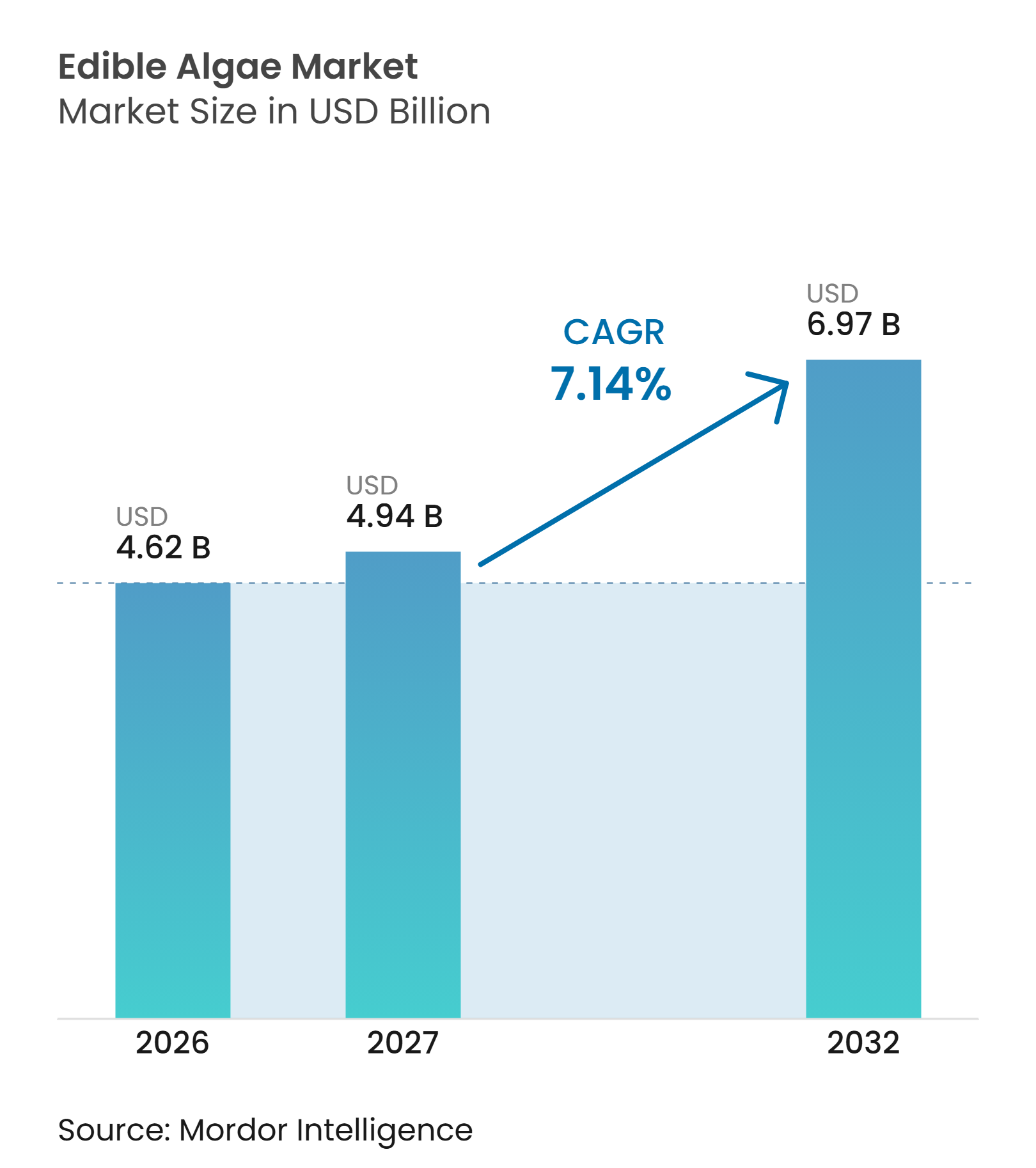
The edible algae market size was valued at USD 4.62 billion in 2026 and estimated to grow from USD 4.94 billion in 2027 to reach USD 6.97 billion by 2032, at a CAGR of 7.14% during the forecast period (2027-2032). The edible algae market is shifting toward ingredients that combine protein, hydrocolloids, pigments, and omega-3 fatty acids on a single production platform. Food manufacturers increasingly seek inputs that do not rely on arable land or freshwater irrigation. Regulatory actions targeting synthetic food colors are expanding the commercial role of algae-derived pigments. Government-backed cultivation programs are also increasing supply capacity in coastal regions. However, the edible algae market remains fragmented, as separate companies typically manage cultivation, extraction, formulation, and finished-product manufacturing.
Key Report Takeaways
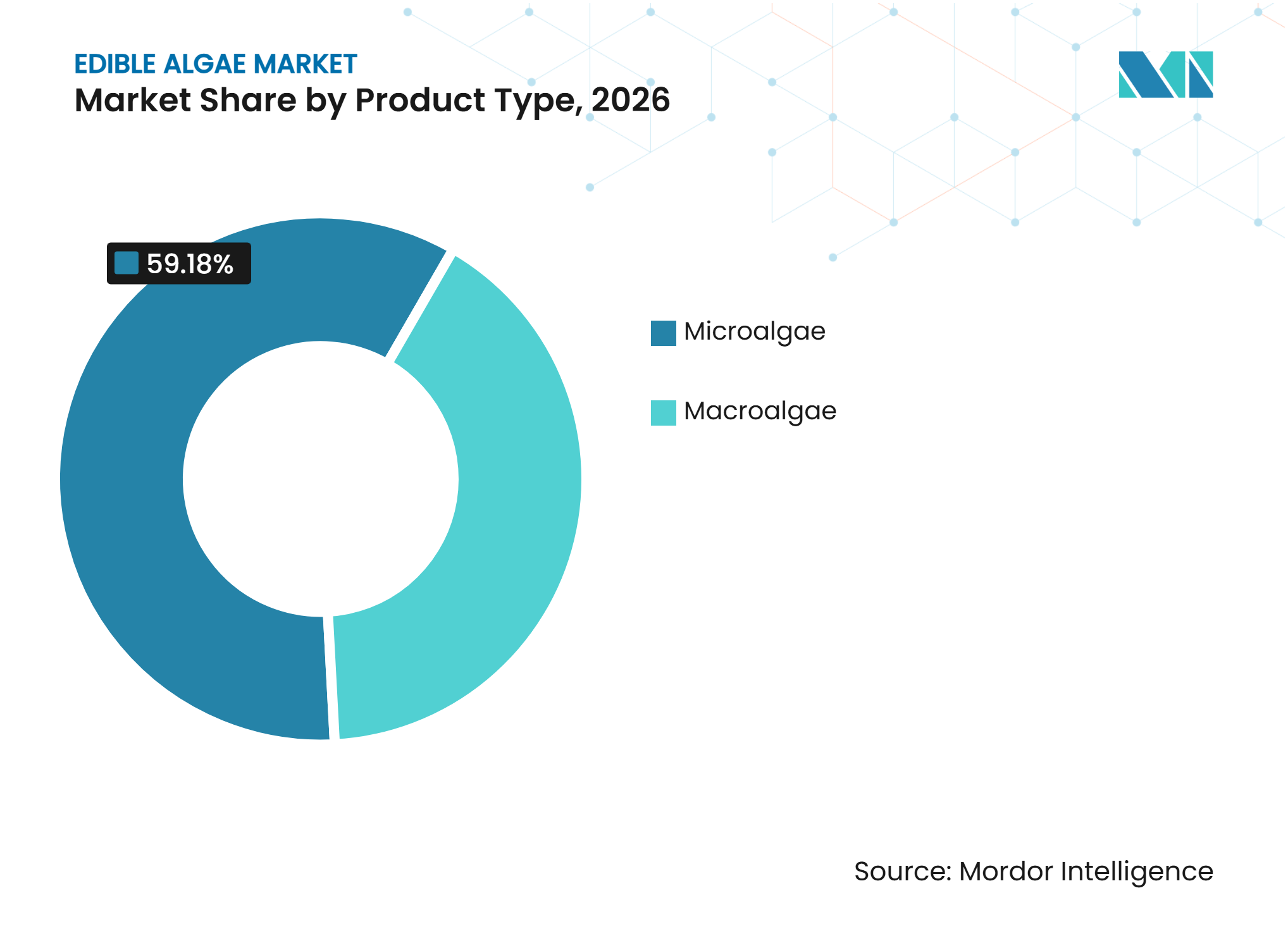
- By product type, microalgae held 59.18% of the edible algae market share in 2026, while macroalgae is anticipated to register the fastest CAGR of 8.31% during 2027-2032.
- By source, marinewater accounted for the largest market share of 66.16% in 2026, while freshwater is anticipated to expand at the fastest CAGR of 8.42% during 2027-2032.
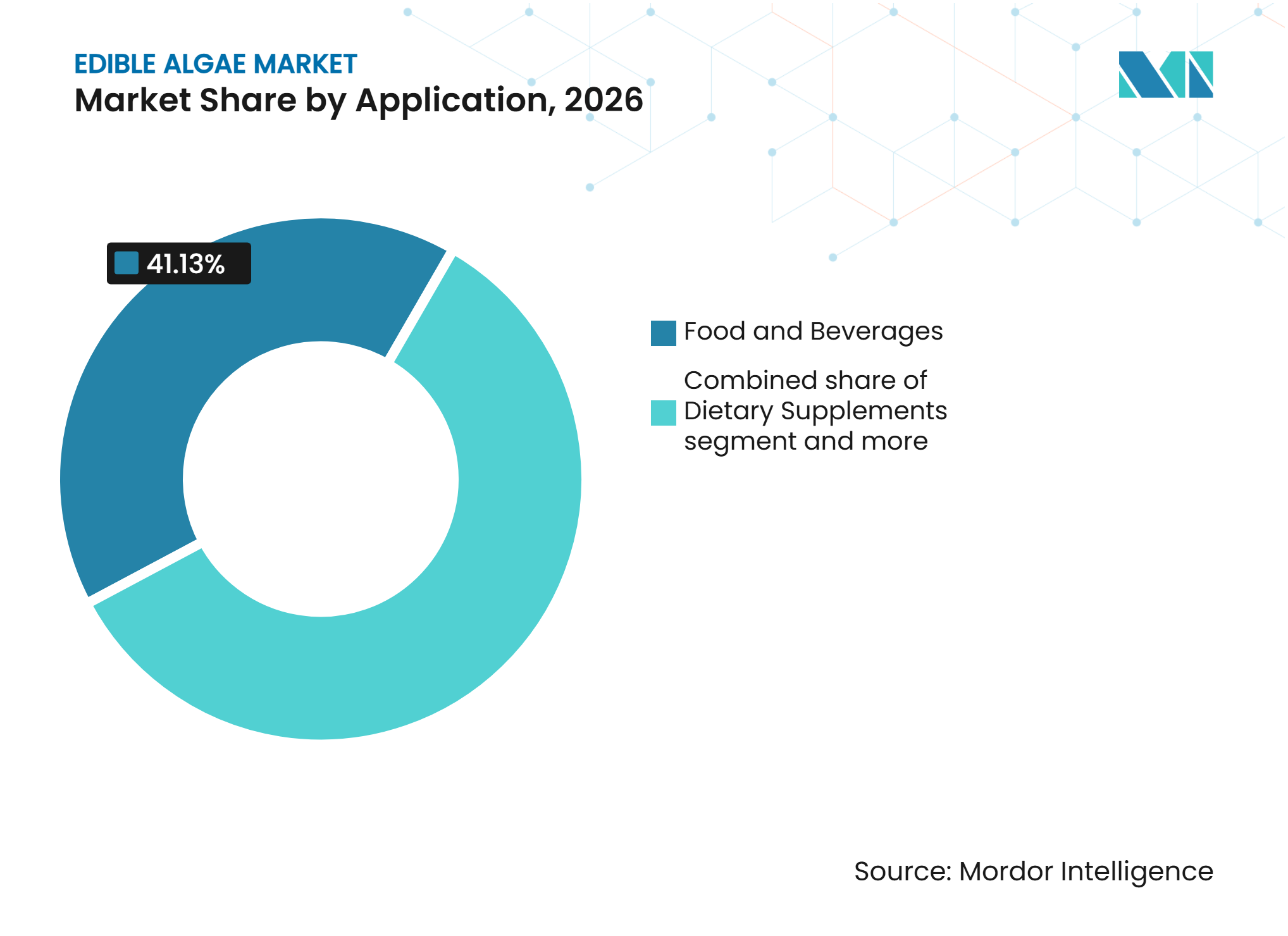
- By application, food and beverages led the global edible algae market with a share of 41.13% in 2026, while dietary supplements are projected to register the fastest CAGR of 8.21% during 2027-2032.
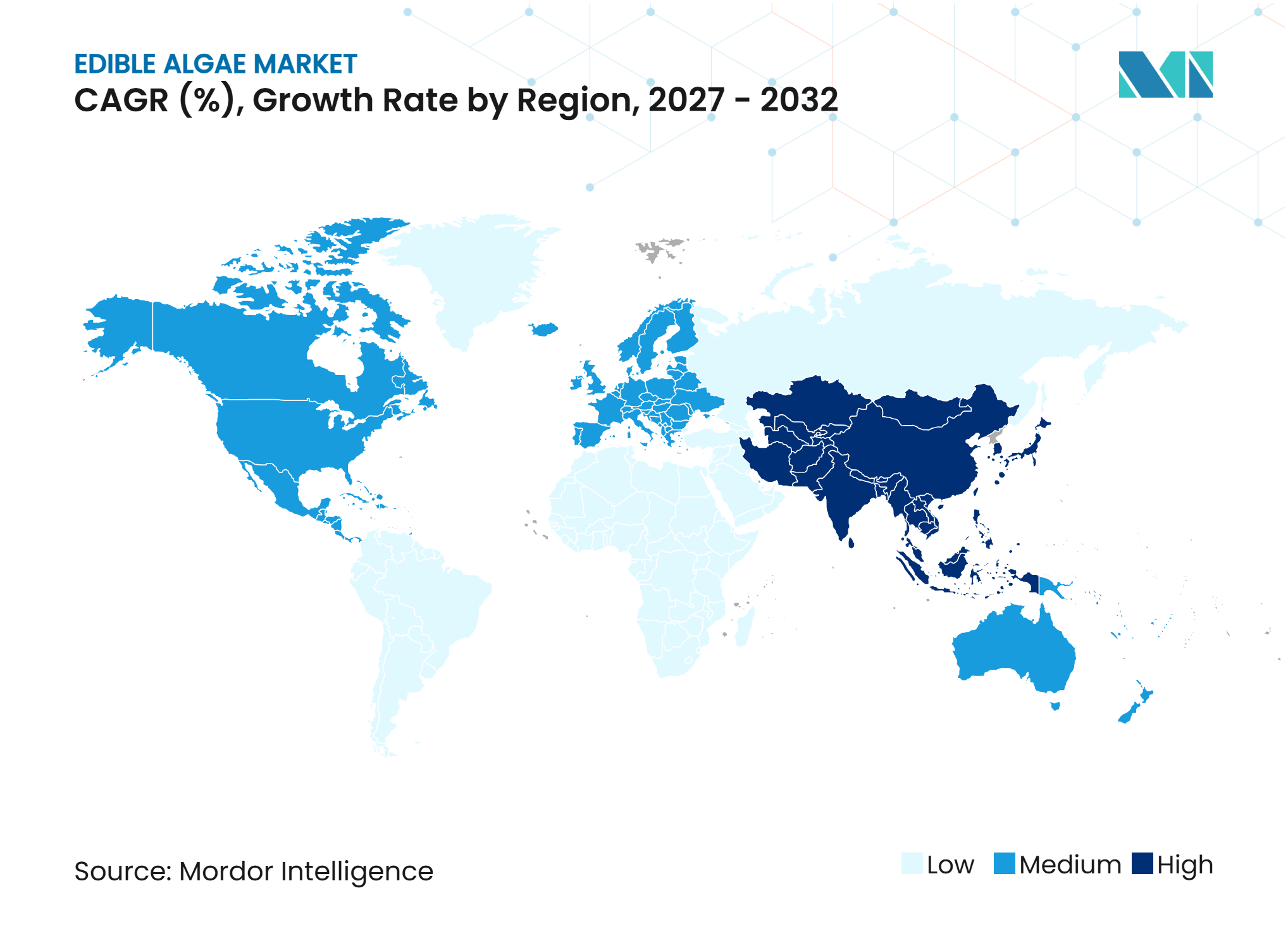
- By geography, North America dominated the edible algae market with a share of 37.89% in 2026, while Asia-Pacific is anticipated to register the fastest CAGR of 8.68% during 2027-2032.
Note: Market numbers in this report are based on Mordor Intelligence's proprietary estimation framework, which combines nine months of actuals with Q4 projections for base year 2026.
Market Trends and Insights
Drivers Impact Analysis of Edible Algae Market*
| Driver | (~) % Impact on CAGR Forecast | Geographic Relevance | Impact Timeline |
|---|---|---|---|
| Rising consumer demand for nutrient-dense food products | +1.8% | Global | Medium term (2-4 years) |
| Growing adoption of alternative protein ingredients | +1.5% | Global, with early gains in North America and European Union | Medium term (2-4 years) |
| Expanding use of algae-derived hydrocolloids in food processing | +1.2% | Global, led by Asia-Pacific and European Union | Long term (≥ 4 years) |
| Demand for natural food colorants and clean-label ingredients | +0.9% | North America and European Union | Short term (≤ 2 years) |
| Government investments in seaweed cultivation and processing infrastructure | +0.8% | Asia-Pacific, South Asia, Sub-Saharan Africa | Medium term (2-4 years) |
| Development of advanced microalgae cultivation and technologies | +1.0% | Global, with early adoption in Asia-Pacific and North America | Long term (≥ 4 years) |
| Source: Mordor Intelligence | |||
Rising Consumer Demand for Nutrient-Dense Food Products
Growing consumer preference for nutrient-rich food products is driving the adoption of edible algae as an alternative source of essential nutrients, including protein, dietary fiber, vitamins, minerals, and amino acids. Food manufacturers are incorporating seaweeds, such as nori, wakame, and kelp, and microalgae, such as spirulina and chlorella, into snacks, beverages, fortified foods, and nutritional formulations. In April 2025, India’s Ministry of Fisheries, Animal Husbandry and Dairying highlighted seaweed’s nutritional composition, including its vitamin, mineral, and amino acid content, recognizing its potential as a nutrient-rich food resource[1]. Additionally, in July 2026, the European Commission highlighted the nutritional contributions of seaweed and microalgae, particularly their protein, mineral, and fatty acid content, as well as their applications in everyday food products[2]. These developments strengthened the nutritional positioning of edible algae and support its adoption across food and beverage applications.
Growing Adoption of Alternative Protein Ingredients
Rising demand for alternative protein sources is driving the incorporation of edible algae into food formulations, as manufacturers diversify protein ingredients beyond conventional animal- and plant-based sources. Microalgae, particularly spirulina and chlorella, offer high protein content and essential amino acids, making them suitable for protein powders, fortified beverages, nutritional bars, and plant-based food formulations. Algae-based proteins also enable food manufacturers to develop specialized nutritional products with distinct functional and nutritional properties. The versatility of microalgae in food processing, coupled with growing interest in diversified protein sources, is strengthening their commercial potential in the global edible algae market.
Expanding Use of Algae-Derived Hydrocolloids in Food Processing
The growing use of natural hydrocolloids in food manufacturing is driving demand for edible algae, particularly red and brown macroalgae, which are key sources of agar, carrageenan, and alginate. These algae-derived ingredients act as gelling, thickening, emulsifying, and stabilizing agents in dairy products, confectionery, bakery products, sauces, and processed foods. They help manufacturers enhance texture, consistency, and shelf stability. Their functional versatility and compatibility with diverse food formulations encourage food processors to incorporate seaweed-derived ingredients into a broader range of packaged and processed food products, thereby strengthening commercial demand for edible algae.
Demand for Natural Food Colorants and Clean-Label Ingredients
Growing consumer preference for naturally derived food colors and clean-label ingredients is driving the adoption of edible microalgae, particularly spirulina, as an alternative to synthetic coloring agents. Spirulina contains phycocyanin, a natural blue pigment used in beverages, confectionery, dairy products, frozen desserts, and other food formulations. Food manufacturers are incorporating algae-derived pigments to enhance product appearance while meeting consumer demand for recognizable, naturally sourced ingredients. In February 2026, the United States Food and Drug Administration (FDA) issued a final order expanding the permitted use of spirulina extract as a color additive in human foods, subject to specified restrictions[3]. This regulatory development is expected to support the use of spirulina-derived pigments across a broader range of food applications.
Restraints Impact Analysis of Edible Algae Market*
| Restraint | (~) % Impact on CAGR Forecast | Geographic Relevance | Impact Timeline |
|---|---|---|---|
| Risk of heavy metal and contaminant accumulation in seaweed | -0.5% | Global, highest concern in European Union and North America | Short term (≤ 2 years) |
| High production costs and energy-intensive microalgae cultivation | -0.7% | Global | Medium term (2-4 years) |
| Lengthy food approval procedures and regulatory restrictions | -0.4% | North America and European Union | Medium term (2-4 years) |
| Limited consumer acceptance due to distinctive taste, odor, and texture | -0.4% | North America, Europe | Long term (≥ 4 years) |
| Source: Mordor Intelligence | |||
Risk of Heavy Metal and Contaminant Accumulation in Seaweed
Seaweed’s ability to absorb and accumulate substances from the surrounding marine environment poses food safety challenges for edible algae producers and food manufacturers. Certain seaweed species can accumulate heavy metals and contaminants, including arsenic, cadmium, lead, and mercury, depending on species characteristics, cultivation location, and water quality. Excessive concentrations of these substances can pose health risks and limit the suitability of contaminated seaweed for human consumption. Producers must implement stringent quality testing, monitoring, traceability, and processing controls to comply with food safety requirements. These additional quality assurance measures increase production costs and may restrict the commercial availability of certain seaweed species for food applications.
High Production Costs and Energy-Intensive Microalgae Cultivation
Commercial microalgae production requires substantial capital investment and operating expenditure for cultivation infrastructure, nutrient supply, water management, temperature regulation, harvesting, and biomass processing. Closed photobioreactor systems require specialized equipment and continuous monitoring to maintain optimal algal growth conditions. Dewatering, drying, and extraction processes further increase energy consumption and processing costs. In addition, producers require technical expertise and controlled cultivation environments to maintain consistent biomass quality and production yields. These cost-intensive requirements raise the final price of algae-derived ingredients, reducing their competitiveness against conventional protein sources, synthetic food additives, and other established food ingredients, particularly in price-sensitive markets.
*Our forecasts treat driver/restraint impacts as directional, not additive. The impact forecasts reflect baseline growth, mix effects, and variable interactions.
Edible Algae Market Segment Analysis
By Product Type:
Microalgae Leads, Macroalgae Surges in Targeted ApplicationsMicroalgae accounted for 59.18% of the edible algae market in 2026. Spirulina and chlorella have established demand in dietary supplements and food fortification applications. Spirulina contains 50% to 70% protein by dry biomass weight, making it a valuable ingredient in protein-enriched food formulations. Chlorella has a strong presence in Japan, Taiwan, and South Korea and is increasingly used in beverages, pasta, and bakery products. Astaxanthin derived from Haematococcus pluvialis serves as a premium antioxidant supplement and for skincare applications. Moreover, microalgae are available in powder, liquid, and extract forms, supporting their incorporation into a wide range of nutritional and functional food products.
Macroalgae are forecast to grow at a CAGR of 8.31% through 2032. Demand for carrageenan, alginate, and agar supports the macroalgae segment of the edible algae market. Manufacturers use these ingredients as texturizers in plant-based dairy and meat alternatives. South Korea expanded capacity support in 2025, with Jindo County signing an investment agreement to establish 10 dried seaweed production lines. This expansion targets both domestic and export demand. Furthermore, the availability of edible seaweed varieties, including nori, wakame, and kelp, supports their use in snacks, soups, seasonings, and ready-to-eat food products.


By Source:
Marine Dominates, Freshwater Gains Through TechnologyMarinewater algae accounted for 66.16% of the edible algae market in 2026. Marine farms serve as the primary source of brown and red macroalgae and support many open-pond spirulina production systems. Kombu, wakame, nori, and carrageenan-producing Kappaphycus rely on marine cultivation. Coastal production remains central across Asia, Europe, and the Americas. In India, the Pradhan Mantri Matsya Sampada Yojana continued to support seaweed cultivation. Additionally, established coastal harvesting networks and processing facilities support the commercial availability of marine algae for food ingredients, nutritional products, and industrial applications.
Freshwater algae is projected to grow at a CAGR of 8.42% through 2032. Controlled photobioreactor systems can prevent exposure to contaminants associated with seawater, providing freshwater producers with a food safety advantage in sensitive applications. Closed systems can also operate near demand centers in landlocked regions, extending the commercial reach of microalgae ingredients. Therefore, the edible algae market is likely to rely on freshwater systems for products where tighter specifications justify higher production costs. Furthermore, controlled cultivation environments allow producers to maintain more consistent biomass composition and improve production planning for specialized food and supplement formulations.
By Application:
Food and Beverages Anchors Revenue, Supplements Drive Fastest GrowthFood and beverages accounted for 41.13% of the edible algae market in 2026. The segment relies on macroalgae-derived hydrocolloids that provide stability, encapsulation, texture, and gel-forming properties. Carrageenan is used in dairy and dairy-alternative products, while alginate supports coatings, dressings, and beverage applications. Agar can replace gelatin in confectionery products and vegan gels. Whole seaweed ingredients, such as nori and wakame, are also gaining traction in snack foods. Fucoidan and ulvan support the use of algae ingredients in personal care and cosmetics. Demand from the animal feed segment is increasing alongside the growth of aquaculture activities.
Dietary supplements are forecast to expand at a CAGR of 8.21% through 2032. Algal docosahexaenoic acid (DHA) produced through fermentation offers supplement brands an alternative to fish oil, particularly when marine raw material availability is disrupted. Corbion and DSM-Firmenich are established suppliers of algae-derived DHA ingredients. In 2025, Corbion entered into a partnership with Kuehnle AgroSystems to develop natural astaxanthin through fermentation of heterotrophic algae. The agreement expanded the potential application of fermentation beyond production.


Geography Analysis
North America
North America dominated the edible algae market, accounting for 37.89% market share in 2026. Established demand for seaweed-based food products, dietary supplements, and algae-derived ingredients in the United States and Canada supports this position. The region benefits from growing consumer interest in nutrient-rich foods, expanding applications of spirulina and chlorella in nutritional products, and well-established food processing and distribution infrastructure. The United States is also developing its domestic seaweed cultivation industry, particularly in Alaska, Maine, and the Pacific Northwest.
Asia-Pacific
Asia-Pacific is projected to register the fastest growth in the market, with a CAGR of 8.68% during 2027-2032. Established seaweed consumption patterns, large-scale cultivation, and expanding food-processing industries in China, Japan, South Korea, and Indonesia support this growth. The region benefits from the traditional use of edible seaweed varieties, including nori, wakame, kombu, and laver, in everyday food products, as well as the growing commercial use of spirulina and chlorella in nutritional products. Moreover, the region's established seaweed production base is improving the availability of raw materials and supporting the expansion of edible algae applications across Asia-Pacific.
Europe, South America, and the Middle East and Africa
The European edible algae market is supported by increasing investment in sustainable aquaculture, growing interest in alternative food ingredients, and the development of algae-based food applications across major economies, including France, Germany, Spain, Ireland, and the Netherlands. In South America, the edible algae market is supported by established seaweed production activities in Chile and Brazil, growing interest in marine-based food resources, and opportunities for value-added algae product development. Morocco is developing its seaweed cultivation industry through aquaculture investments and initiatives focused on food, animal nutrition, cosmetics, and pharmaceutical applications.
Competitive Landscape
Market Concentration
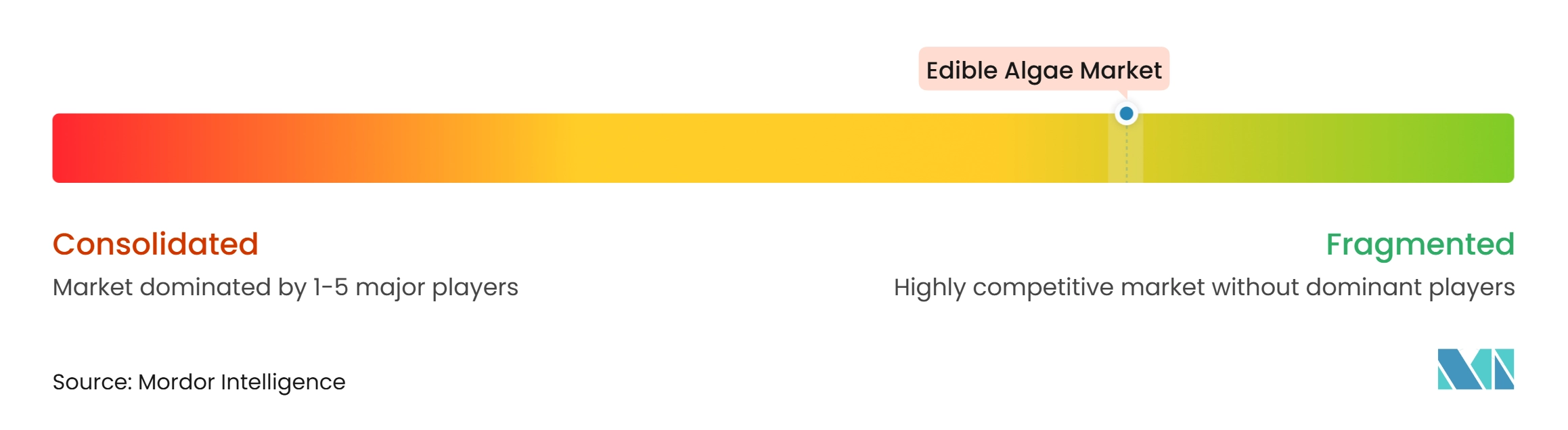
The edible algae market is fragmented, reflecting deep specialization across the value chain. Cultivation-focused firms rarely control extraction processes, while ingredient producers seldom own retail brands. This structure creates a partnership-intensive ecosystem, with vertical integration remaining the exception. The competitive landscape includes microalgae specialists, such as Cyanotech Corporation, DIC Corporation, Corbion N.V., and Roquette Frères. Diversified companies, such as DSM-Firmenich, BASF SE, and Cargill, Incorporated, operate in the premium ingredient segment, where fermentation technology and global distribution networks create defensible competitive positions.
Corbion N.V. specializes in fermentation-based microalgae ingredients, particularly algae-derived omega-3 DHA. Algaia develops brown seaweed-derived alginates for food, personal care, and pharmaceutical applications. These companies compete based on ingredient functionality, formulation expertise, supply reliability, and the development of application-specific algae solutions.
Asian and European producers also contribute to the competitive landscape through specialized cultivation, nutritional products, and international ingredient distribution. Far East Bio-Tec Co., Ltd. (FEBICO), Sun Chlorella Corporation, and EID Parry (India) Limited offer products such as organic spirulina, chlorella powders, tablets, extracts, and nutritional supplements. Their competitive positioning is supported by cultivation expertise, product quality certifications, specialized processing capabilities, and established distribution networks across international markets.
Edible Algae Industry Leaders
-
Cyanotech Corporation
-
DIC Corporation
-
Roquette Frères
-
Corbion N.V.
-
BASF SE
- *Disclaimer: Major Players sorted in no particular order
Edible Algae Market Companies Covered in this Report
- Cyanotech Corporation
- DIC Corporation
- Corbion N.V.
- Roquette Frères
- EID Parry (India) Limited
- Far East Bio-Tec Co., Ltd.
- Sun Chlorella Corporation
- Algaia S.A.
- Acadian Seaplants Limited
- Gelymar S.A.
- Cargill, Incorporated
- CP Kelco U.S., Inc.
- BASF SE
- DSM-Firmenich
- Cellana Inc.
- Algatech Ltd.
- Microphyt
- Phycom B.V.
- Allmicroalgae Natural Products S.A.
- Yunnan Green A Biological Project Co., Ltd.
Recent Industry Developments in Edible Algae Market
- March 2026: Brevel introduced Purallis, a clean-label chlorella ingredient produced using its proprietary illuminated fermentation technology.
- March 2026: Marine Biologics introduced SeaTex, a single-ingredient seaweed powder that stabilizes proteins, fibers, minerals, and fats in food and beverage formulations.
- November 2025: Roquette Frères expanded and rebranded its plant-care division as Agriscience, integrating the acquired IFF Pharma Solutions portfolio. The expanded division includes the seaweed-based Scogin® crop nutrition brand, cellulosic solutions, and legacy plant-based offerings.
- April 2025: Acadian Seaplants Limited closed its operations in Jonesboro, Maine, citing tariffs, exchange-rate impacts, and elevated transportation costs.
Global Edible Algae Market Report Scope
Edible algae refers to consumable aquatic organisms, including macroalgae (seaweed) and microalgae, used as food due to their nutritional content. The edible algae market is segmented by product type, source, application, and geography. By product type, the market is segmented into macroalgae and microalgae. By source, the market is segmented into freshwater and marinewater. By application, the market is segmented into food and beverages, personal care and cosmetics, dietary supplements, animal feed, pharmaceuticals, and other applications. Based on geography, the market is classified into North America, Europe, Asia-Pacific, South America, and the Middle East and Africa. The market forecasts are provided in terms of value (USD).
Segmentation Overview
| Macroalgae |
| Microalgae |
| Freshwater |
| Marinewater |
| Food and Beverages |
| Personal Care and Cosmetics |
| Dietary Supplements |
| Animal Feed |
| Pharmaceuticals |
| Other Applications |
| North America | United States |
| Canada | |
| Mexico | |
| Rest of North America | |
| Europe | Germany |
| United Kingdom | |
| Italy | |
| France | |
| Spain | |
| Poland | |
| Netherlands | |
| Rest of Europe | |
| Asia-Pacific | China |
| India | |
| Japan | |
| Australia | |
| Thailand | |
| Indonesia | |
| Rest of Asia-Pacific | |
| South America | Brazil |
| Argentina | |
| Chile | |
| Peru | |
| Rest of South America | |
| Middle East and Africa | South Africa |
| United Arab Emirates | |
| Saudi Arabia | |
| Turkey | |
| Egypt | |
| Rest of Middle East and Africa |
| By Product Type | Macroalgae | |
| Microalgae | ||
| By Source | Freshwater | |
| Marinewater | ||
| By Application | Food and Beverages | |
| Personal Care and Cosmetics | ||
| Dietary Supplements | ||
| Animal Feed | ||
| Pharmaceuticals | ||
| Other Applications | ||
| By Geography | North America | United States |
| Canada | ||
| Mexico | ||
| Rest of North America | ||
| Europe | Germany | |
| United Kingdom | ||
| Italy | ||
| France | ||
| Spain | ||
| Poland | ||
| Netherlands | ||
| Rest of Europe | ||
| Asia-Pacific | China | |
| India | ||
| Japan | ||
| Australia | ||
| Thailand | ||
| Indonesia | ||
| Rest of Asia-Pacific | ||
| South America | Brazil | |
| Argentina | ||
| Chile | ||
| Peru | ||
| Rest of South America | ||
| Middle East and Africa | South Africa | |
| United Arab Emirates | ||
| Saudi Arabia | ||
| Turkey | ||
| Egypt | ||
| Rest of Middle East and Africa | ||
Key Questions Answered in the Report
What is the current size and future growth outlook of the edible algae market?
The edible algae market was valued at USD 4.62 billion in 2026 and is estimated to reach USD 4.94 billion in 2027. The market is projected to grow to USD 6.97 billion by 2032, registering a CAGR of 7.14% during 2027-2032.
Which product type held the largest share of the edible algae market in 2026?
Microalgae was the largest product type segment in 2026, accounting for 59.18% of the edible algae market.
Which source segment dominated the edible algae market in 2026?
Marinewater was the leading source segment in 2026, accounting for 66.16% of the market share.
Which application held the largest share of the edible algae market in 2026?
Food and Beverages was the largest application segment in 2026, accounting for 41.13% of the market.
Which region dominated the edible algae market in 2026?
North America dominated the market in 2026, accounting for 37.89% of the total market share.