
Cultured Buttermilk Market Size and Share
Market Overview
| Study Period | 2021 - 2031 |
|---|---|
| Market Size (2026) | USD 2.25 Billion |
| Market Size (2031) | USD 3.33 Billion |
| Growth Rate (2026 - 2031) | 5.86 % |
| Fastest Growing Market | Middle East and Africa |
| Largest Market | Asia-Pacific |
| Market Concentration | Medium |
Major Players *Disclaimer: Major Players sorted in no particular order Image © Mordor Intelligence. Reuse requires attribution under CC BY 4.0. | |
Cultured Buttermilk Market Analysis by Mordor Intelligence
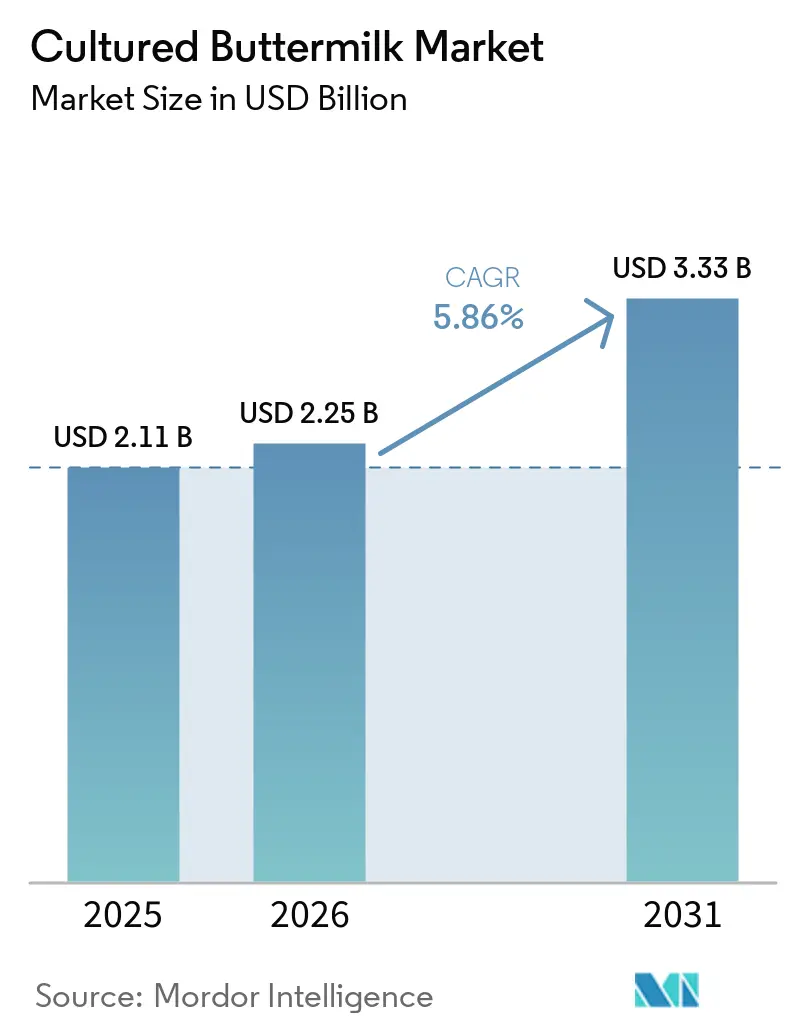
The cultured buttermilk market size is expected to grow from USD 2.11 billion in 2025 to USD 2.25 billion in 2026 and is forecast to reach USD 3.33 billion by 2031 at a 5.86% CAGR over 2026–2031. Demand for cultured buttermilk is expanding beyond traditional home cooking to include beverages, prepared foods, and bakery applications. Growing consumer interest in digestive wellness is driving the adoption of fermented dairy products. Its acidity, flavor, moisture-retention capabilities, and dough-enhancing properties further support its use in baking. Organic and flavored variants, convenient packaging formats, and the expansion of online grocery channels are creating additional market opportunities.
Key Report Takeaways
- By product type, plain cultured buttermilk held 66.66% of the cultured buttermilk market share in 2025, while flavored variants recorded the highest projected CAGR at 6.01% through 2031.
- By fat content, low-fat cultured buttermilk accounted for 53.04% of the cultured buttermilk market size in 2025 and is forecasted to grow at a 6.50% CAGR through 2031.
- By nature, conventional products accounted for 86.69% of revenue in 2025, while organic cultured buttermilk is forecast to expand at a 7.97% CAGR through 2031.
- By packaging type, bottles held 42.05% of revenue in 2025, while pouches recorded the highest projected CAGR at 6.81% through 2031.
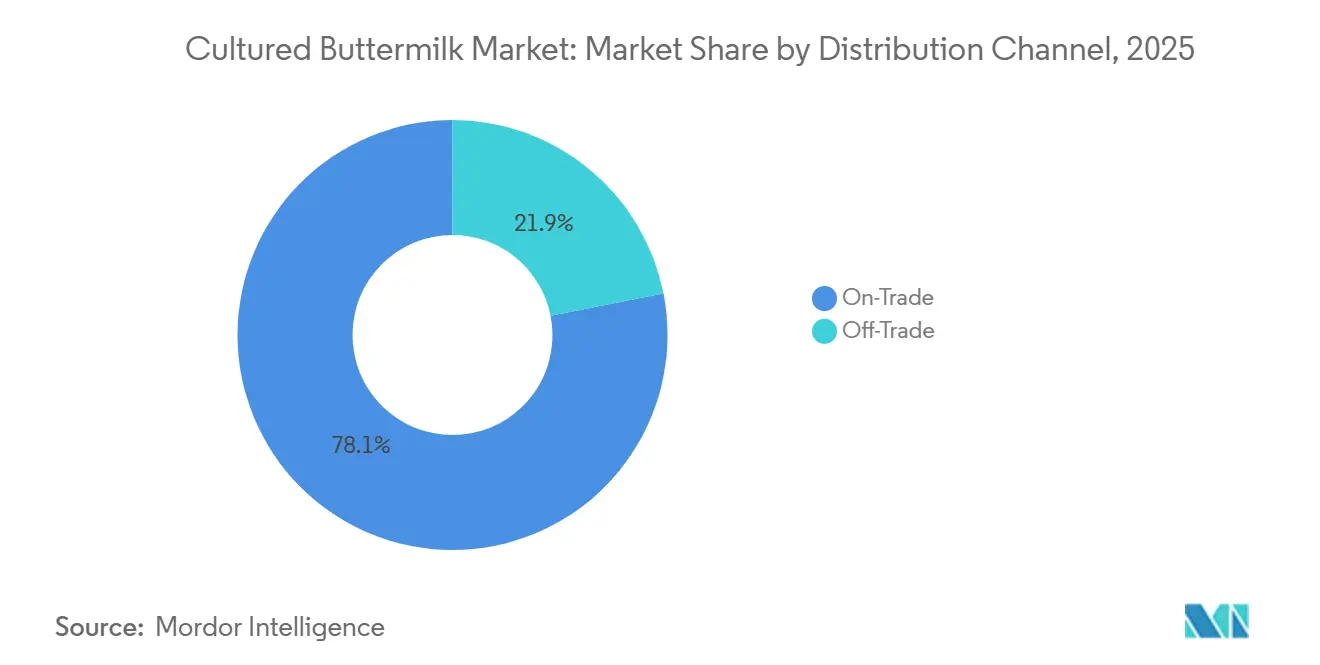
- By distribution channel, on-trade held 78.12% of revenue in 2025, while off-trade is forecast to grow at a 7.04% CAGR through 2031.
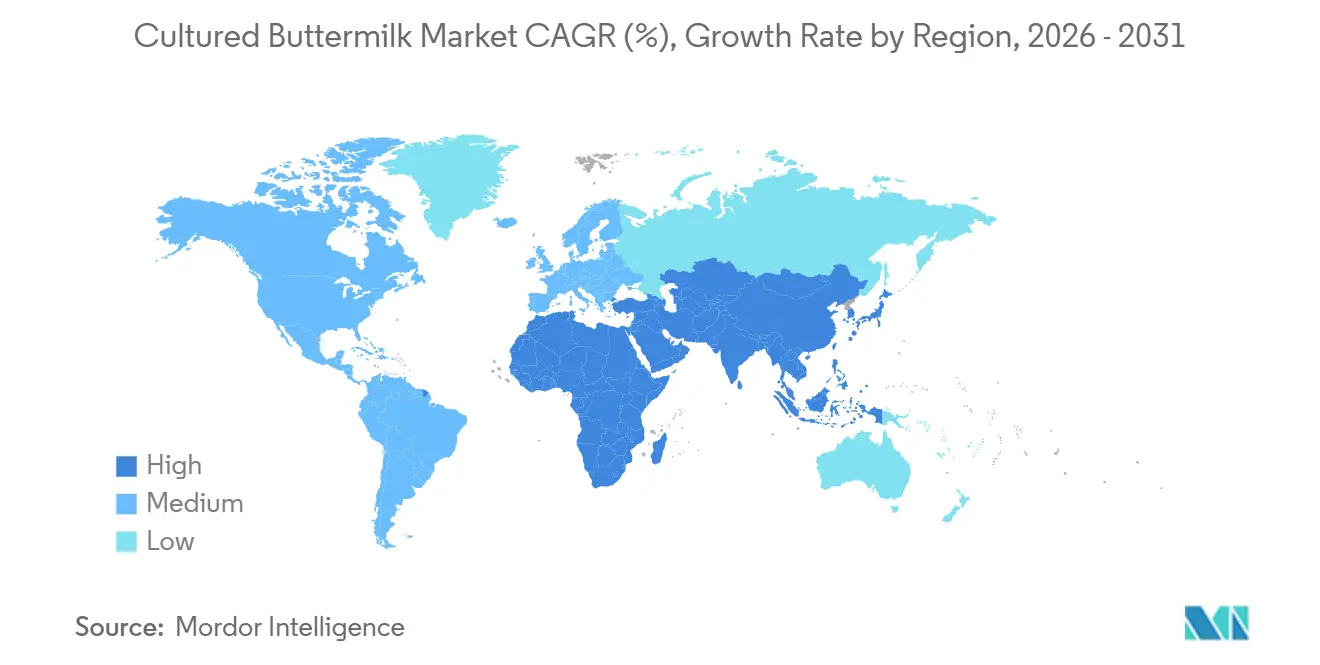
- By geography, Asia-Pacific held 39.41% of revenue in 2025, while the Middle East and Africa is forecast to grow at a 7.68% CAGR through 2031.
Note: Market size and forecast figures in this report are generated using Mordor Intelligence’s proprietary estimation framework, updated with the latest available data and insights as of January 2026.
Global Cultured Buttermilk Market Trends and Insights
Drivers Impact Analysis*
| Driver | (~) % Impact on CAGR Forecast | Geographic Relevance | Impact Timeline |
|---|---|---|---|
| Gut health and probiotic positioning | +1.9% | Global | Short term (≤ 2 years) |
| Demand for clean-label fermented dairy | +1.3% | North America and Europe | Short term (≤ 2 years) |
| Versatile use in bakery and food formulation | +0.9% | Global | Medium term (2-4 years) |
| Growing demand for long-shelf-life buttermilk powder | +0.7% | Asia-Pacific, Middle East and Africa, North America | Medium term (2-4 years) |
| Widening applications of cultured buttermilk | +0.6% | North America, Europe, Asia-Pacific | Long term (≥ 4 years) |
| Expansion of foodservice and hospitality demand | +0.7% | Asia-Pacific, North America, Middle East and Africa | Medium term (2-4 years) |
| Source: Mordor Intelligence | |||
Gut Health and Probiotic Positioning
Growing awareness of gut health and interest in probiotic products are creating opportunities for cultured buttermilk manufacturers to strengthen their functional dairy offerings. For instance, in June 2025, according to the India Brand Equity Foundation (IBEF), India's probiotics market reached ₹2,070 crore in 2025, recording 22% growth on a moving annual total basis in May 2025. Amul also reported selling approximately 3 million liters of probiotic buttermilk daily, demonstrating the commercial presence of probiotic formulations within India's dairy sector [1]. These developments create opportunities for manufacturers to differentiate cultured buttermilk through probiotic positioning and substantiated digestive health benefits.
Demand for Clean-Label Fermented Dairy
Clean-label formulation offers opportunities for buttermilk manufacturers to differentiate their products through ingredient purity and transparency. For instance, in 2024, according to the American Dairy Products Institute (ADPI), its ingredient bulletin specifies that dry buttermilk produced by drying pasteurized liquid buttermilk obtained from butter churning must contain at least 30.0% protein, while dry buttermilk products contain less than 30.0% protein. The bulletin also prohibits the use of nonfat dry milk, dry whey, ingredients other than buttermilk, added preservatives, neutralizing agents, and other chemicals in these products [2].
Versatile Use in Bakery and Food Formulation
Cultured buttermilk adds acidity, moisture, texture, flavor, and leavening performance to bakery and food formulations. Its acidity reacts with alkaline leavening agents, while dairy solids influence dough and finished-product quality. It is used in biscuits, breads, pancakes, waffles, cakes, sauces, dressings, confectionery, and prepared foods. For food manufacturers, cultured buttermilk serves several formulation functions as a single ingredient, helping maintain consistent taste and texture while reducing the need for additional inputs. Its broad functionality creates opportunities beyond direct beverage consumption and supports demand for business-to-business food ingredients.
Growing Demand for Long-Shelf-Life Buttermilk Powder
Demand for long-shelf-life buttermilk powder is driven by its ease of storage and handling relative to refrigerated liquid buttermilk. For instance, in April 2026, according to the USDA National Agricultural Statistics Service, U.S. dry buttermilk production remained substantial in 2025, totaling 12,670 thousand lb in May, 10,336 thousand lb in June, 10,203 thousand lb in July, 9,879 thousand lb in August, and 10,967 thousand lb in September [3]. Sustained dry buttermilk production indicates its established availability as a shelf-stable dairy ingredient for food processing applications.
Restraints Impact Analysis*
| Restraint | (~) % Impact on CAGR Forecast | Geographic Relevance | Impact Timeline |
|---|---|---|---|
| Short shelf life and cold-chain dependence | -0.6% | Asia-Pacific, Middle East and Africa, South America | Medium term (2-4 years) |
| Competition from plant-based fermented beverages | -0.4% | North America and Europe | Short term (≤ 2 years) |
| Variability in milk-fat and protein specifications | -0.2% | Global | Long term (≥ 4 years) |
| Sodium-reduction and fermentation-labeling constraints | -0.1% | North America and European Union | Medium term (2-4 years) |
| Source: Mordor Intelligence | |||
Short Shelf Life and Cold-Chain Dependence
Fresh cultured buttermilk has a relatively short shelf life and requires continuous refrigeration during processing, transportation, retail storage, and delivery. This reliance on cold-chain infrastructure increases distribution costs and restricts market access in regions with unreliable refrigeration or high energy costs. Temperature-control disruptions can also compromise product quality and availability, reducing retailers’ willingness to stock chilled products. Although improved packaging and powdered formats can address some logistical challenges, fresh cultured buttermilk remains highly dependent on efficient refrigerated distribution.
Competition from Plant-Based Fermented Beverages
Cultured buttermilk faces increasing competition from plant-based fermented beverages that appeal to consumers seeking digestive wellness, convenient formats, and modern beverage options. Products such as plant-based probiotic drinks and fermented alternatives compete for the same refrigerated shelf space and consumption occasions. This competition is particularly significant in developed markets where consumers have access to a wide range of fermented beverage options. Cultured buttermilk can differentiate itself through its familiar dairy base, distinctive taste, nutritional profile, and versatility in drinking and food applications.
*Our forecasts treat driver/restraint impacts as directional, not additive. The impact forecasts reflect baseline growth, mix effects, and variable interactions.
Segment Analysis
By Product Type: Plain Formats Dominate, Flavored Variants Accelerate
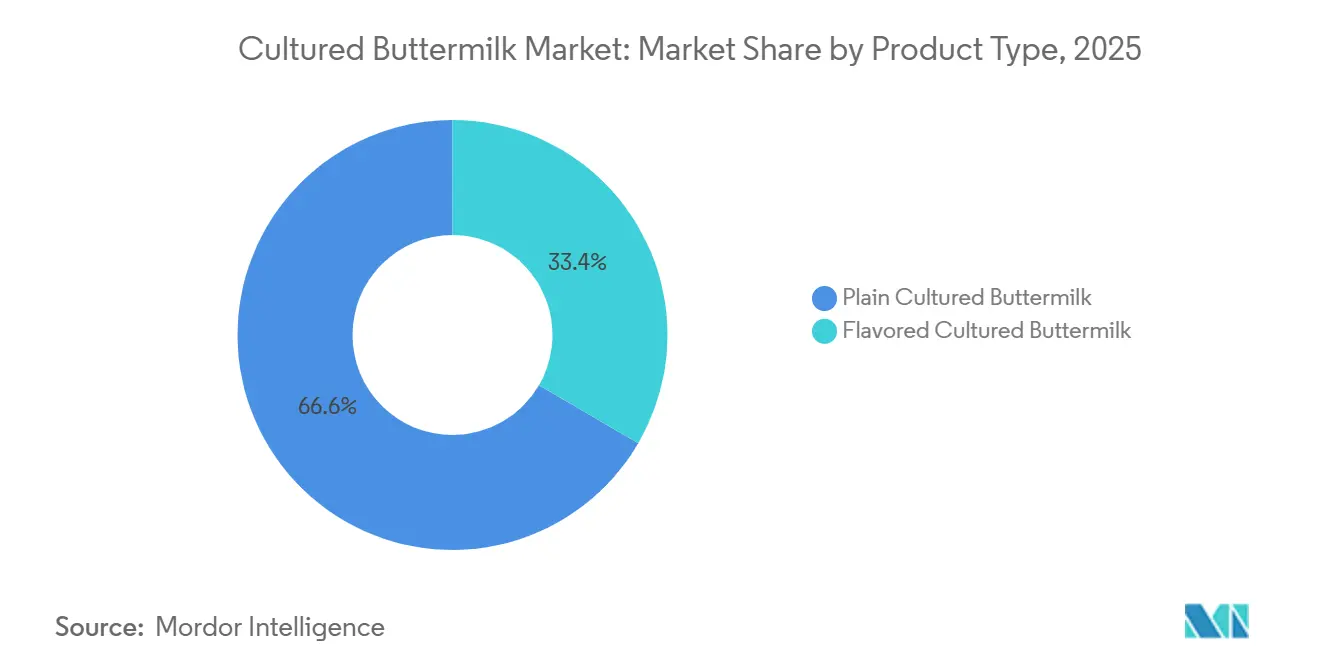
Plain cultured buttermilk held a 66.66% of the cultured buttermilk market share in 2025. This position reflects its widespread use in household cooking, foodservice applications, and commercial food formulations. Plain varieties provide a neutral base for baking, salad dressings, marinades, and recipes that require controlled acidity without added flavor. They also serve as a daily drink in regions where consumers commonly prefer salted or lightly spiced buttermilk. This versatility gives plain cultured buttermilk a broader range of applications than narrowly targeted beverage products. It also enables suppliers to serve retail consumers and industrial buyers using related production capabilities.
Flavored cultured buttermilk is forecast to expand at a CAGR of 6.01% through 2031. Flavor innovation can extend consumption beyond meal accompaniment and cooking into snacking and refreshment occasions. Spiced variants with cumin, ginger, and mint are relevant in South Asia, while fruit-based options may suit other regions. Manufacturers must preserve the tangy fermented profile while managing ingredient lists, sweetness, sodium, and shelf-life requirements. The cultured buttermilk market can benefit when companies align flavors with local dietary habits.
By Fat Content: Low-Fat Leadership Reflects Health Positioning
Low-fat cultured buttermilk is projected to account for 53.14% of the cultured buttermilk market share in 2025 and is forecast to expand at a CAGR of 6.50% through 2031. Its market leadership and growth indicate that lower-fat products are central to category demand rather than a niche dietary preference. Consumers view low-fat formats as lighter options while still expecting the sour flavor and cooking performance of cultured buttermilk. These products also align with broader consumer interest in food choices that provide protein and fermented dairy benefits without a heavy product profile. Producers can leverage this positioning in retail messaging provided that nutrition claims remain accurate and comply with local regulations.
Full-fat and fat-free cultured buttermilk address distinct consumer preferences and application requirements. Full-fat cultured buttermilk offers a richer mouthfeel, enhanced flavor, and strong functional performance in bakery and foodservice applications. In contrast, fat-free cultured buttermilk appeals to consumers seeking lower-fat dairy products and supports specific dietary formulations. Optimizing fat content allows manufacturers to maintain the characteristic cultured flavor and texture while developing products tailored to diverse consumer and application needs. This creates opportunities to offer differentiated fat-content options across retail, foodservice and industrial food applications.
By Nature: Conventional Scale and Organic Premium Growth
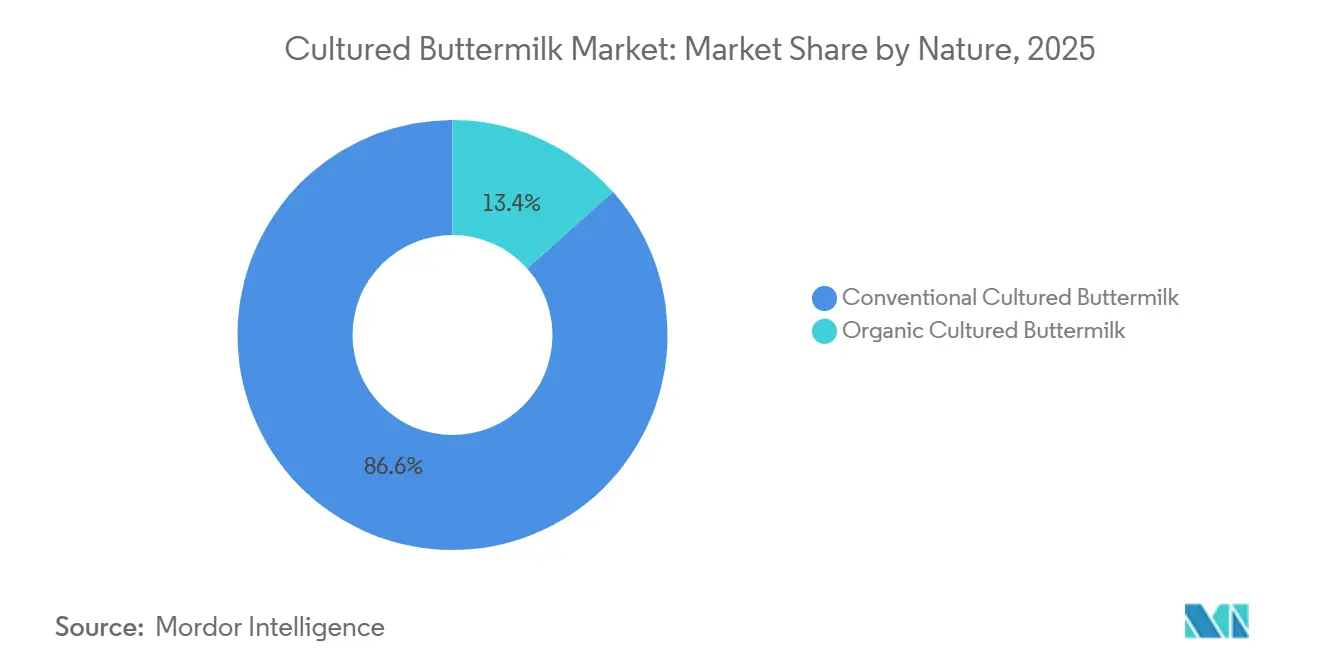
Conventional cultured buttermilk accounted for 86.69% of the cultured buttermilk market share in 2025. It remains the mainstream segment supported by its broad availability, established production networks, and competitive pricing. A large base of dairy processors with established milk procurement and processing capabilities further supports the segment. Its affordability makes it suitable for mass-market retail, foodservice, and commercial food manufacturing applications. Conventional products also allow manufacturers to offer various fat levels, pack sizes, and formulations based on market requirements. Strong distribution through supermarkets, convenience stores, and foodservice channels supports widespread consumption.
Organic cultured buttermilk is forecast to expand at a CAGR of 7.97% through 2031. The segment is driven by consumer interest in certified ingredients, sustainable farming practices, and product traceability. Its production requires certified organic milk and controlled processing systems, resulting in more stringent sourcing and manufacturing requirements than conventional products. The segment also benefits from the growing availability of organic dairy products across mainstream and specialty retail channels. Overall organic cultured buttermilk presents opportunities for premiumization and differentiation within the broader cultured buttermilk market.
By Packaging Type: Bottles Lead, Pouches Improve Accessibility
Bottles accounted for 42.15% of the cultured buttermilk market share in 2025, making them the leading packaging format. Consumer familiarity, suitability for refrigerated dairy displays, and strong brand visibility support their market position. Pouches are projected to expand at a CAGR of 6.81% through 2031, driven by their lightweight design, lower transportation requirements, space efficiency, and suitability for single-serve formats. Pouches are particularly attractive in emerging markets where affordable and convenient packaging supports wider distribution. The continued use of bottles and faster adoption of pouches are expected to diversify packaging preferences across the market.
Tetrapaks provide cultured buttermilk manufacturers with an alternative to conventional bottles, offering lightweight, space-efficient packaging that facilitates transportation and storage. Their rectangular design improves shelf utilization and can reduce logistics requirements compared with rigid containers. Other formats, including flexible and specialty packaging, offer additional options for manufacturers targeting specific pack sizes, foodservice requirements, and distribution conditions. These formats support product differentiation while enabling manufacturers to balance packaging costs, product protection, convenience and sustainability considerations.
By Distribution Channel: On-Trade Leadership, Off-Trade Growth
On-trade accounted for 78.12% of the cultured buttermilk market share in 2025, making it the leading distribution channel. This channel includes restaurants, hotels, cafés, institutional caterers, and other foodservice outlets. Demand within the channel reflects the use of cultured buttermilk in beverages, meal accompaniments, baking, marinades, dressings, and prepared foods. Foodservice buyers may purchase chilled liquid products in bulk or select ingredient formats with longer shelf lives. The dominance of the on-trade channel also indicates that consumption of cultured buttermilk extends beyond households.
The off-trade channel is forecast to expand at a CAGR of 7.04% through 2031. Supermarkets, hypermarkets, convenience stores, specialty outlets, and online stores represent the primary off-trade distribution channels. This channel allows brands to communicate ingredient information, flavor options, organic certifications, and serving suggestions directly at the point of purchase. It also supports the sale of single-serve pouches, bottles, and larger household packs. The cultured buttermilk market can leverage off-trade expansion to reach consumers seeking convenient products for home consumption.
Geography Analysis
Asia-Pacific accounted for 39.41% of market revenue in 2025, making it the largest regional market. India is a key demand center due to the widespread consumption of chaas and mattha, while China, Japan, South Korea, and Australia offer opportunities in food processing and premium dairy products. The Middle East & Africa are projected to register a CAGR of 7.68% through 2031, driven by familiarity with fermented dairy products and growing packaged dairy consumption. Saudi Arabia, Egypt, Turkey, South Africa, and Nigeria offer opportunities across retail, foodservice, and food-processing applications.
Powdered products and innovative packaging can expand market reach by improving flexibility in storage, transportation, and distribution. Growth across both regions will be supported by products tailored to local preferences, competitive pricing, and strengthening distribution networks. North America, Europe, and South America are important regional markets for cultured buttermilk supported by established dairy industries, food-processing capabilities, and expanding demand for packaged foods. North America is led by the United States with Canada and Mexico providing additional opportunities through retail, bakery, foodservice and industrial applications while strong dairy-processing infrastructure supports reliable supply.
Europe benefits from longstanding fermented-dairy traditions with the United Kingdom, Germany, France, Italy, Spain, the Netherlands, Poland, Belgium and Sweden offering opportunities across retail and food manufacturing, supported by developed cooperative networks and demand for organic and traceable products. South America led by Brazil and supported by Argentina, Colombia, Chile and Peru offers further potential as packaged dairy consumption, food processing and modern retail expand. Across these regions premium products, organic formulations and diverse food applications can support market development alongside established mainstream products. Overall strong dairy supply chains, evolving consumer preferences and expanding distribution networks provide a favorable foundation for cultured buttermilk growth across the Americas and Europe.
Competitive Landscape
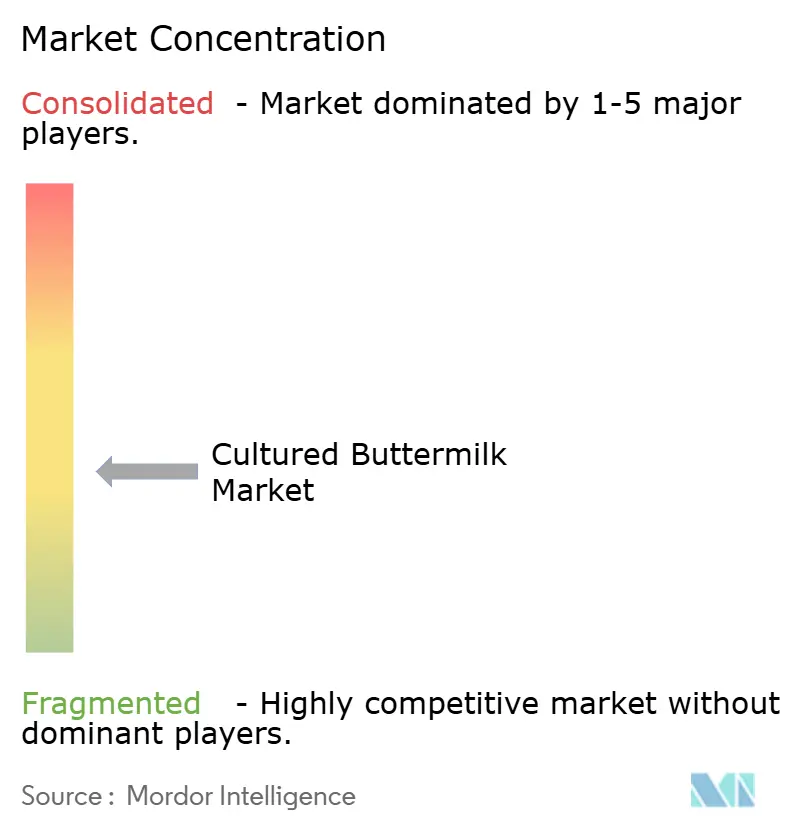
The cultured buttermilk market is fragmented, with regional cooperatives, specialty creameries, and larger dairy groups competing through milk supply, manufacturing, distribution, and local market knowledge. Key companies include Darigold, Organic Valley, Dairy Farmers of America, Hiland Dairy, and Clover Sonoma. Market positions rely on processing facilities, retail relationships, farm supply, and consumer trust. Darigold, the marketing and processing subsidiary of Northwest Dairy Association, is owned by family farms in Washington, Oregon, Idaho, and Montana. Its cooperative structure supports investments in milk procurement and processing. Danone, Arla Foods, and FrieslandCampina compete by leveraging broader distribution networks and expertise in fermented dairy.
Local producers often have advantages due to their understanding of regional consumer preferences and retail conditions. Capacity expansion and distribution partnerships serve as practical competitive tools as cultured buttermilk products rely on dependable processing capabilities and retail access. Darigold’s Pasco facility began receiving and processing up to 8 million lb of milk per day, supporting butter and powdered milk production for domestic and export customers. The project also includes lower-emission milk-dryer burners and a process-water reuse arrangement. Organic Valley’s plan to add more than 100 small organic farms in 2024 reflects a different strategy focused on certified supply and geographic diversification. These initiatives strengthen the dairy supply systems that support value-added products.
Companies also compete through flavor innovation, clean-label positioning, packaging and their ability to supply food manufacturers. In the cultured buttermilk market opportunities are often local or channel-specific reducing the likelihood that a single national strategy will succeed across all markets. Smaller producers can compete through regional identity, grass-fed sourcing, organic certifications and specialty retail relationships. Larger processors benefit from automation, scale, storage capacity and reliable service for supermarket and foodservice accounts. The cultured buttermilk market may become more competitive as plant-based fermented beverages target health-conscious consumers. Companies must preserve buttermilk’s distinct sensory attributes while improving convenience and availability. The strongest competitors will combine reliable supply systems with locally relevant formats and flavors.
Cultured Buttermilk Industry Leaders
-
Dairy Farmers of America, Inc.
-
Darigold, Inc.
-
Groupe Lactalis
-
CROPP Cooperative (Organic Valley)
-
Hiland Dairy Foods Company, LLC
- *Disclaimer: Major Players sorted in no particular order
Recent Industry Developments
- June 2026: Heritage Foods launched an influencer campaign for its probiotic buttermilk to increase product awareness and promote its positioning as a health-oriented dairy beverage through digital engagement.
- November 2024: MilkyMist partnered with SIG and AnaBio Technologies to launch a long-life probiotic buttermilk in aseptic carton packaging combining probiotic encapsulation with aseptic filling technology enabling the product to remain shelf-stable without refrigeration while maintaining probiotic viability.
Global Cultured Buttermilk Market Report Scope
Cultured buttermilk is a fermented dairy beverage produced by culturing milk. It is available in plain and flavored varieties, including full-fat, low-fat, and fat-free formulations. The cultured buttermilk market is segmented by product type, nature, packaging type, distribution channel, and geography. By product type, the market is categorized into plain and flavored cultured buttermilk. By nature, it is segmented into conventional and organic cultured buttermilk. By packaging type, the market includes pouches, Tetra Paks, bottles, and other packaging formats. By distribution channel, the market is divided into on-trade and off-trade channels. By geography, the market is segmented into North America, Europe, Asia-Pacific, South America, and the Middle East and Africa. Market sizing and forecasts for all segments are provided in value terms (USD million).
| Plain Cultured Buttermilk |
| Flavored Cultured Buttermilk |
| Full-Fat Cultured Buttermilk |
| Low-Fat Cultured Buttermilk |
| Fat-Free Cultured Buttermilk |
| Conventional |
| Organic |
| Pouches |
| Tetrapacks |
| Bottles |
| Others |
| On-Trade | |
| Off-Trade | Supermarkets and Hypermarkets |
| Convenience Stores | |
| Specialty Stores | |
| Online Retail |
| North America | United States |
| Canada | |
| Mexico | |
| Rest of North America | |
| Europe | United Kingdom |
| Germany | |
| France | |
| Italy | |
| Spain | |
| Netherlands | |
| Poland | |
| Belgium | |
| Sweden | |
| Rest of Europe | |
| Asia-Pacific | China |
| Japan | |
| India | |
| Australia | |
| Indonesia | |
| South Korea | |
| Thailand | |
| Singapore | |
| Rest of Asia-Pacific | |
| South America | Brazil |
| Argentina | |
| Colombia | |
| Chile | |
| Peru | |
| Rest of South America | |
| Middle East and Africa | South Africa |
| Saudi Arabia | |
| United Arab Emirates | |
| Nigeria | |
| Egypt | |
| Morocco | |
| Turkey | |
| Rest of Middle East and Africa |
| By Product Type | Plain Cultured Buttermilk | |
| Flavored Cultured Buttermilk | ||
| By Fat Content | Full-Fat Cultured Buttermilk | |
| Low-Fat Cultured Buttermilk | ||
| Fat-Free Cultured Buttermilk | ||
| By Nature | Conventional | |
| Organic | ||
| By Packaging Type | Pouches | |
| Tetrapacks | ||
| Bottles | ||
| Others | ||
| By Distribution Channel | On-Trade | |
| Off-Trade | Supermarkets and Hypermarkets | |
| Convenience Stores | ||
| Specialty Stores | ||
| Online Retail | ||
| By Geography | North America | United States |
| Canada | ||
| Mexico | ||
| Rest of North America | ||
| Europe | United Kingdom | |
| Germany | ||
| France | ||
| Italy | ||
| Spain | ||
| Netherlands | ||
| Poland | ||
| Belgium | ||
| Sweden | ||
| Rest of Europe | ||
| Asia-Pacific | China | |
| Japan | ||
| India | ||
| Australia | ||
| Indonesia | ||
| South Korea | ||
| Thailand | ||
| Singapore | ||
| Rest of Asia-Pacific | ||
| South America | Brazil | |
| Argentina | ||
| Colombia | ||
| Chile | ||
| Peru | ||
| Rest of South America | ||
| Middle East and Africa | South Africa | |
| Saudi Arabia | ||
| United Arab Emirates | ||
| Nigeria | ||
| Egypt | ||
| Morocco | ||
| Turkey | ||
| Rest of Middle East and Africa | ||
Key Questions Answered in the Report
What is the market size of the cultured buttermilk market?
The global cultured buttermilk market was valued at USD 2.11 billion in 2025 and increased to USD 2.25 billion in 2026. The market is projected to reach USD 3.33 billion by 2031, growing at a CAGR of 5.86% during 2026–2031.
Which cultured buttermilk product type led the market in 2025?
Plain cultured buttermilk led with 66.66% of revenue in 2025 as it is widely used in cooking, foodservice and industrial formulation.
Which region has the highest growth outlook for cultured buttermilk?
The Middle East and Africa is forecast to grow at a 7.68% CAGR through 2031 supported by rising demand for shelf-stable dairy products, improving local dairy manufacturing, investment in cold-chain infrastructure, growing demand for convenient and value-added dairy products.
What is the biggest operational challenge for producers?
Refrigerated storage and transport remain the main challenge for fresh products particularly where cold-chain infrastructure is inconsistent.