
Market Overview
| Study Period | 2021 - 2031 |
|---|---|
| Forecast Data Period | 2026 - 2031 |
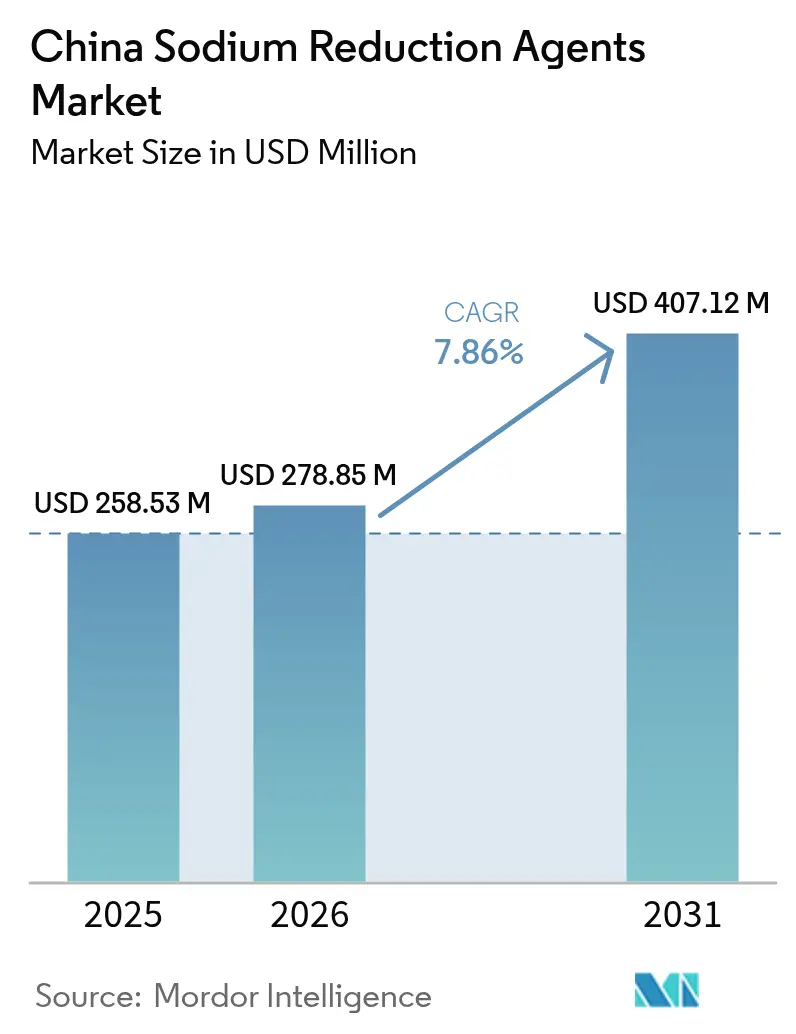
| Base Year Market Size (2025) | USD 258.53 Million |
| Market Size (2026) | USD 278.85 Million |
| Market Size (2031) | USD 407.12 Million |
| Growth Rate (2026 - 2031) | 7.86 % |
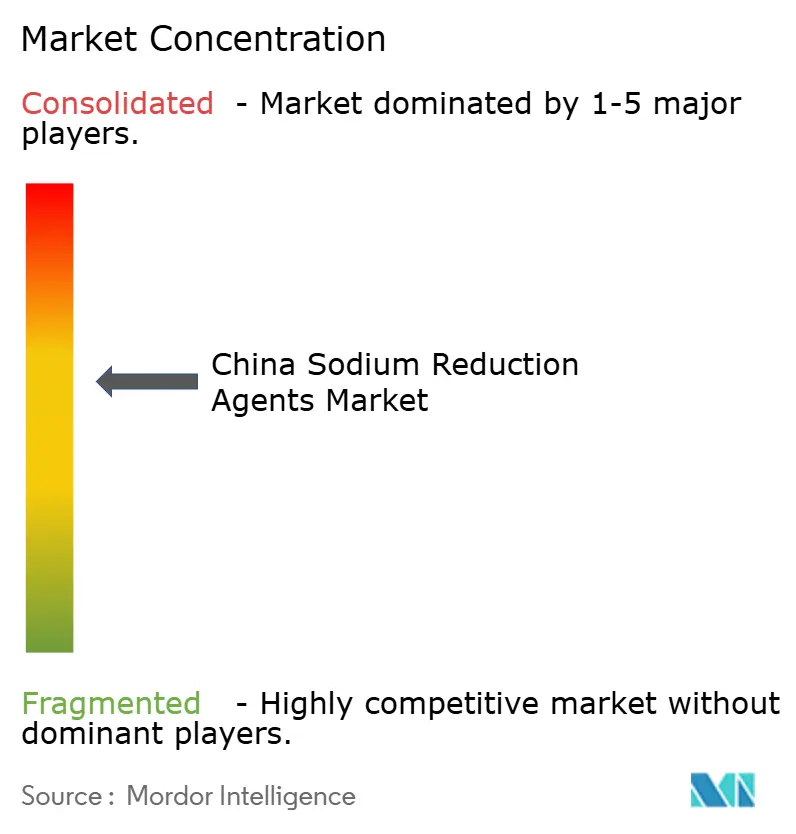
| Market Concentration | Medium |
Major Players *Disclaimer: Major Players sorted in no particular order Image © Mordor Intelligence. Reuse requires attribution under CC BY 4.0. | |
China Sodium Reduction Agents Market Analysis by Mordor Intelligence
China sodium reduction agents market size in 2026 is estimated at USD 278.85 million, growing from 2025 value of USD 258.53 million with 2031 projections showing USD 407.12 million, growing at 7.86% CAGR over 2026-2031. Beijing's "Healthy China 2030" initiative, which aims to reduce average salt consumption to 5 grams per day, is driving reformulation efforts in packaged foods. Urban consumers with higher health awareness are increasingly accepting sodium reductions of up to 35%, provided that the taste of the products remains intact. Technological advancements, such as yeast-extract umami enhancers and Artificial Intelligence (AI)-driven sensory modeling, have significantly shortened product development timelines from 24 months to nine months. Factors such as clear policy direction, the growing penetration of e-commerce for reformulated products into Tier-3 cities, and supply chain innovations that integrate taste masking with shelf-life improvements are collectively supporting the market's sustained growth. Competitive intensity remains moderate, with existing players scaling up domestic fermentation capacity to reduce China's 50% reliance on imported potash-based potassium chloride (KCl).
Key Report Takeaways
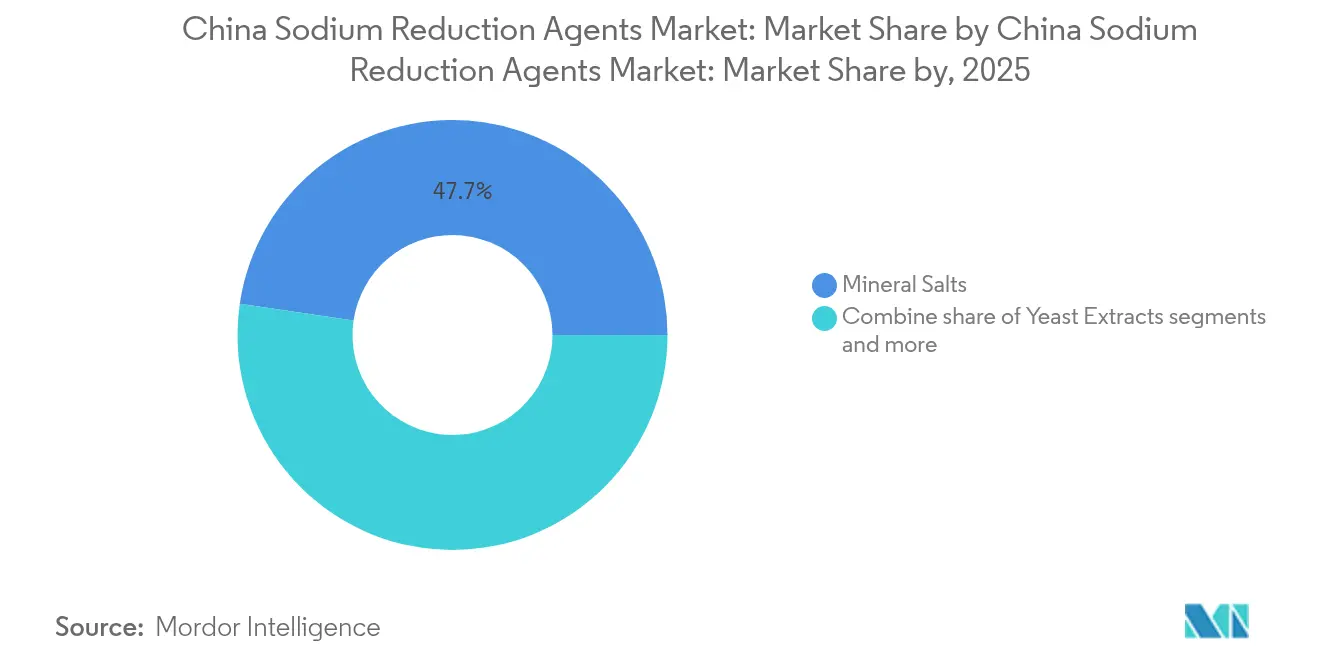
- By product type, mineral salts led with 47.68% of China sodium reduction agents market share in 2025, while yeast extracts are forecast to grow at a 8.74% CAGR to 2031.
- By form, powders and granules commanded 67.55% share of the China sodium reduction agents market size in 2025; liquids record the fastest 9.02% CAGR through 2031.
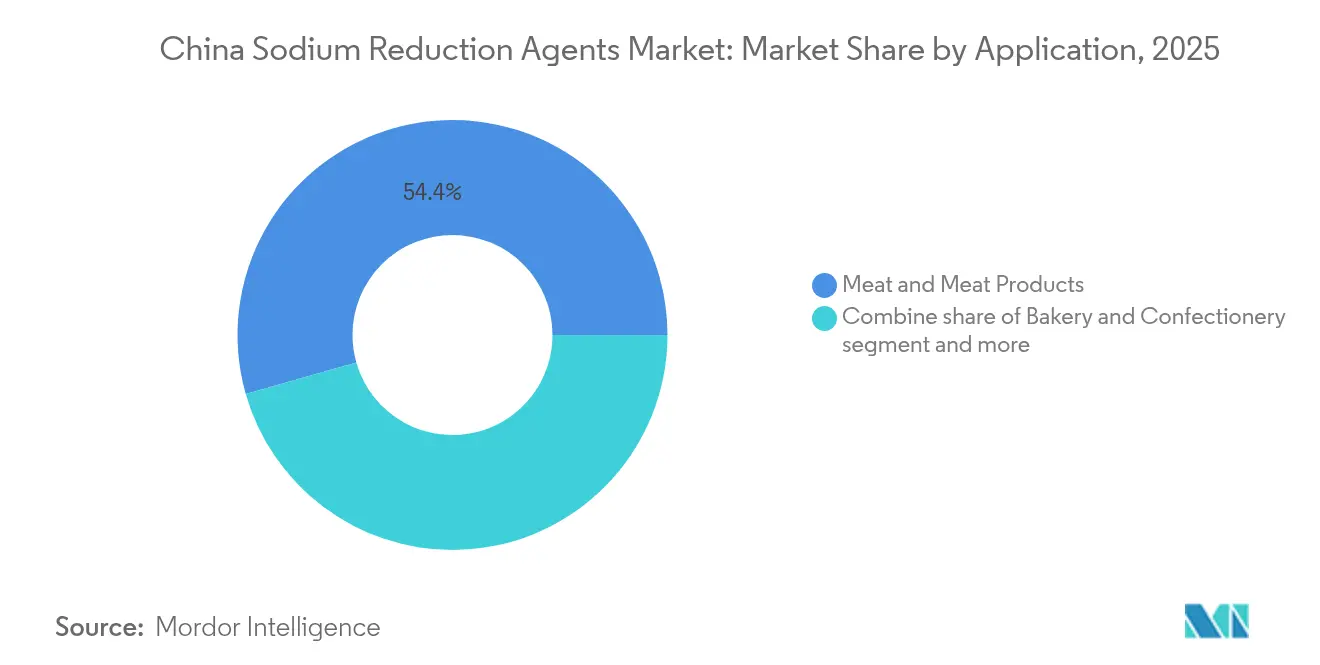
- By application, meat products captured 54.42% of the China sodium reduction agents market size in 2025 and are advancing at a 8.88% CAGR through 2031.
Note: Market size and forecast figures in this report are generated using Mordor Intelligence’s proprietary estimation framework, updated with the latest available data and insights as of 2026.
China Sodium Reduction Agents Market Trends and Insights
Drivers Impact Analysis*
| Driver | (~)% Impact on CAGR Forecast | Geographic Relevance | Impact Timeline |
|---|---|---|---|
| Increased consumer awareness of sodium-related health risks driving demand for low-sodium food products | +2.1% | National, with stronger uptake in Tier-1 and Tier-2 cities (Beijing, Shanghai, Guangzhou, Shenzhen) | Medium term (2-4 years) |
| "Healthy China 2030" targets reducing salt intake, pressuring industries to reformulate products | +1.9% | National policy mandate; enforcement concentrated in packaged-food hubs (Shandong, Guangdong, Jiangsu) | Long term (≥ 4 years) |
| Government campaigns promoting reduced-sodium products through media, schools, and community initiatives | +1.3% | National, with pilot programs in urban centers and school feeding systems | Medium term (2-4 years) |
| Health-conscious urban consumers increasing demand for low-sodium packaged foods and beverages | +1.5% | Tier-1 and Tier-2 cities; spillover to Tier-3 cities via e-commerce channels | Short term (≤ 2 years) |
| Processed food category growth creating opportunities for sodium reduction reformulation | +1.2% | National, with highest growth in coastal manufacturing provinces (Guangdong, Zhejiang, Fujian) | Medium term (2-4 years) |
| Technological advancements improving salt replacers to better replicate traditional saltiness in foods | +0.8% | National, with R&D concentrated in Beijing, Shanghai, and Langfang innovation hubs | Long term (≥ 4 years) |
| Source: Mordor Intelligence | |||
Increased consumer awareness of sodium-related health risks driving demand for low-sodium food products
Urban Chinese consumers are increasingly altering their eating habits, as data indicates that a majority of adults consume sodium levels exceeding recommended limits. The 2024 Chinese Hypertension Guidelines emphasize the use of potassium-enriched salt substitutes as a clinical strategy to address this issue. This trend is particularly evident in Tier-1 cities, where higher disposable incomes and heightened health awareness enable consumers to choose premium-priced reformulated snacks, sauces, and ready meals labeled as "low-sodium" or "reduced-salt." A study of thousands of prepackaged foods in Zhejiang province revealed that a significant portion of these products were high in sodium, with an average sodium content exceeding 1,000 milligrams per 100 grams. In response, manufacturers in categories such as egg products, soy-based foods, and convenience meals are working to comply with the draft front-of-pack labeling guidelines released in August 2024. These guidelines propose a rating system ranging from A to D, along with warning labels specifically targeting children's food products. These regulatory measures align with the growing consumer willingness to pay a premium for healthier options, creating opportunities for ingredient suppliers to collaborate with brand owners through co-development partnerships. Further supporting this trend, the December 2024 Hunan cohort study demonstrated that salt substitutes containing 25 percent potassium chloride were more effective in reducing sodium intake compared to blends with 13 percent potassium chloride. This provides formulators with clinical evidence to justify the use of higher inclusion rates, even when sensory challenges may arise.
“Healthy China 2030” targets reducing salt intake, pressuring industries to reformulate products
Beijing's "Healthy China 2030" initiative aims to reduce the average salt consumption across the population to below 5 grams per day [1]. Achieving this target requires coordinated efforts from the food manufacturing, catering, and retail industries. The China Food and Nutrition Development Plan (2025-2030) supports this objective by establishing interim benchmarks for sodium content in processed foods. These benchmarks are enforced through GB 28050-2025 nutrition labeling standards, which mandate the declaration of sodium content and set thresholds for "low-sodium" and "sodium-free" claims. This regulatory framework compels manufacturers in key provinces such as Shandong, Guangdong, and Jiangsu, which together account for over 40 percent of China's packaged food production, to adopt sodium reduction strategies or risk reputational and regulatory consequences. In November 2024, the Chinese Center for Disease Control and Prevention released the China Food Industry Salt Reduction Guide (Second Edition). This guide outlines technical approaches for gradual sodium reduction, exploration of alternative flavors such as spicy, sour, and aromatic spices, and process innovations. It serves as a regulatory roadmap, reducing the risks associated with reformulation investments. The guide also emphasizes the use of front-of-pack nutrition labels and encourages public sharing of reformulation achievements. These measures are expected to accelerate competitive benchmarking and shorten the time-to-market for sodium-reduced stock-keeping units (SKUs), amplifying the long-term impact of sodium reduction efforts.
Government campaigns promoting reduced-sodium products through media, schools, and community initiatives
State-sponsored media campaigns and school-based nutrition education programs are influencing consumer perceptions of sodium-related health risks. Organizations such as the Chinese Nutrition Society and China Centers for Disease Control and Prevention (China CDC) are utilizing multi-channel messaging to highlight the connection between excessive salt intake and health issues like cardiovascular disease, stroke, and kidney dysfunction. The 2024 Chinese Hypertension Guidelines endorse the use of salt substitutes as part of clinical management, supporting potassium-enriched formulations and equipping healthcare professionals with evidence-based guidance for patient counseling[2]. Urban school feeding programs are piloting reduced-sodium meal plans, fostering a generation of younger consumers accustomed to lower-salt flavor profiles. This demographic shift is expected to sustain demand for sodium reduction agents in the medium term. Community-level initiatives, such as cooking demonstrations and salt-spoon distribution campaigns, emphasize that discretionary salt, which accounts for approximately 70 percent of sodium intake in China, can be reduced without compromising taste. These efforts are gradually lowering the sensory threshold for manufacturers reformulating products, as consumers adapt to less-salty taste profiles. The combined impact of policy-driven measures and grassroots behavior change is accelerating the market's transition from niche health-food products to broader mainstream adoption.
Health-conscious urban consumers increasing demand for low-sodium packaged foods and beverages
Affluent consumers in Beijing, Shanghai, Guangzhou, and Shenzhen are driving a trend toward premiumization in packaged foods, with low-sodium claims emerging as a key differentiator across categories such as instant noodles and dairy beverages. E-commerce platforms are further supporting this trend by providing Tier-3 city consumers access to reformulated products that were previously limited to Tier-1 retail channels. This has effectively broadened the availability of health-focused SKUs and expanded the market for sodium reduction agents. A 2024 study on prepackaged foods in Zhejiang revealed that high-sodium products (average 1,018.6 mg Na per 100 g) dominate categories such as egg, soy, convenience, meat, and vegetable products. However, brand owners are now actively reformulating their offerings in preparation for the August 2024 draft front-of-pack labeling guidelines, which propose A-to-D rating systems and warning labels for children's foods. This regulatory development aligns with increasing disposable incomes and growing health awareness, fostering a consumer base willing to pay a 10 to 15 percent premium for low-sodium alternatives. Ingredient suppliers can leverage this opportunity by co-developing formulations that emphasize clean-label attributes—such as yeast extracts, fermented peptides, and botanical extracts—rather than relying solely on potassium chloride blends, which are often perceived negatively by health-conscious consumers due to their "chemical" association.
Restraints Impact Analysis*
| Restraint | (~)% Impact on CAGR Forecast | Geographic Relevance | Impact Timeline |
|---|---|---|---|
| Difficulty maintaining taste and consumer acceptance in sodium-reduced traditional Chinese foods | -1.4% | National, with acute challenges in Sichuan, Hunan, and Guangdong cuisines reliant on fermented condiments | Short term (≤ 2 years) |
| Sensory issues with potassium chloride requiring advanced masking techniques for bitterness and metallic notes | -1.1% | National, affecting all product categories using mineral-salt replacers | Medium term (2-4 years) |
| Food safety concerns due to reduced preservative effects in low-sodium products like meats and sauces | -0.7% | National, with heightened scrutiny in meat processing hubs (Henan, Shandong, Sichuan) | Medium term (2-4 years) |
| Higher production costs and lower profit margins for reduced-sodium and blended salts | -0.6% | National, with cost pressures most acute for small and medium-sized enterprises | Short term (≤ 2 years) |
| Source: Mordor Intelligence | |||
Difficulty maintaining taste and consumer acceptance in sodium-reduced traditional Chinese foods
Traditional Chinese condiments, such as soy sauce, oyster sauce, fermented bean pastes, and pickled vegetables, derive their characteristic flavors from high sodium chloride concentrations, which also act as microbial inhibitors during fermentation and storage. Reformulating these products to comply with GB 28050-2025 thresholds poses a significant sensory challenge, particularly in Sichuan, Hunan, and Guangdong cuisines, where salty, umami, and fermented flavors are integral. A review published in 2024 in *Food Science & Human Wellness* highlighted that reduced-salt soy sauce formulations often experience diminished umami intensity and altered fermentation kinetics, necessitating extended aging or enzymatic interventions to restore flavor complexity. The China Food Industry Salt Reduction Guide (Second Edition) addresses this issue by recommending gradual sodium reduction protocols with small percentage decrements over multi-year cycles and exploring alternative flavoring options, such as spicy, sour, and aromatic spices, to offset sodium loss. However, even incremental changes risk consumer rejection in categories where brand loyalty is closely tied to taste consistency. This forces manufacturers to invest in consumer education and trial-size stock-keeping units (SKUs) to help consumers adapt to the new formulations. The short-term impact is particularly challenging for small and medium-sized enterprises, which often lack the research and development resources and sensory testing facilities needed to validate reformulations. This creates a competitive advantage for multinational ingredient suppliers, who can provide turnkey solutions supported by clinical taste panels.
Sensory issues with potassium chloride requiring advanced masking techniques for bitterness and metallic notes
Potassium chloride, the primary mineral-salt replacer in the market for 2024, introduces bitterness and metallic off-notes when inclusion rates exceed 25 percent. This limitation restricts the extent of sodium reduction achievable and necessitates the use of expensive masking strategies. A 2025 peer-reviewed study published in Frontiers in Nutrition revealed that wheat-based bakery products formulated with 3.6 grams of potassium chloride (KCl) per 1,000 grams of flour maintained acceptable saltiness without significant off-flavors. However, higher inclusion levels (5.4 grams per 1,000 grams of flour) negatively impacted flavor acceptability, introducing bitterness and metallic aftertastes. Calcium chloride (CaCl2), tested as an alternative, produced even stronger soapy and metallic notes, making it unsuitable for most applications unless advanced encapsulation or co-ingredient masking techniques are utilized. Kerry Group's Tastesense Salt addresses these sensory challenges by incorporating botanical extracts, peptides, and fermented flavor modulators to mask potassium chloride's off-notes. However, these solutions come with a 20 to 30 percent cost premium compared to standard potassium chloride blends. Over the medium term, this is expected to create a division within the market. Premium brands are likely to adopt multi-ingredient masking systems to achieve sodium reductions of 40 to 60 percent, while value brands will remain limited to reductions of 20 to 25 percent using unmasked potassium chloride. This difference may strengthen consumer perceptions that low-sodium products are of lower quality compared to their standard counterparts.
*Our forecasts treat driver/restraint impacts as directional, not additive. The impact forecasts reflect baseline growth, mix effects, and variable interactions.
Segment Analysis
By Product Type: Yeast Extracts Gain as Clean-Label Umami Demand Surges
In 2025, mineral salts accounted for 47.68% of the China sodium reduction agents market, primarily driven by potassium chloride (KCl) blends, which act as substitutes for sodium chloride in processed meats, condiments, and instant noodles. Yeast extracts are projected to grow at a compound annual growth rate (CAGR) of 8.74% through 2031, driven by formulators' preference for clean-label umami enhancers that avoid the bitterness and metallic aftertastes associated with high levels of potassium chloride. Angel Yeast, with a global yeast extract production capacity of 150,000 tonnes and 21 production lines across 10 cities in China, is well-positioned to capitalize on this trend. The company's AnPro® yeast protein and yeast extract-based solutions enable up to 35% salt reduction while preserving umami flavor and mouthfeel.
Amino acids and glutamates, the third segment, are used in meat products, where basic amino acids such as L-lysine and L-arginine enhance salty perception and mask undesirable flavors. However, regulatory scrutiny of monosodium glutamate (MSG) limits growth in this segment, despite Meihua Holdings expanding its MSG production capacity to 3.2037 million tonnes in 2024. This regulatory environment continues to influence the adoption of glutamates in the market.

By Form: Liquid Formats Accelerate in Sauces and Beverages
Powder/granule forms accounted for 67.55% of the market in 2025, primarily due to their compatibility with dry seasoning blends, instant noodle packets, and bakery mixes. These formats enable manufacturers to utilize existing blending infrastructure, which helps avoid the need for significant capital investment in liquid-dosing systems. This ease of integration has made powder and granule forms a preferred choice for many manufacturers.
On the other hand, liquid sodium reduction agents are expected to grow at a compound annual growth rate (CAGR) of 9.02% through 2031. This growth is driven by the increasing adoption of in-line dosing systems by beverage and sauce manufacturers. These systems provide precise sodium control and address the challenges of dust handling and dissolution associated with powder formats. A notable example is Kerry Group's Tastesense Salt, launched in April 2024. This liquid solution for snack seasonings includes botanical extracts, peptides, and fermented flavor modulators pre-dissolved in a carrier system. It allows snack manufacturers to spray-apply sodium reduction agents during the final seasoning step, achieving over 60% sodium reduction with minimal reformulation of base recipes.
By Application: Meat Products Dominate Yet Face Acute Reformulation Complexity
Meat and meat products accounted for 54.42% of sodium reduction agents in 2025 and are projected to grow at a compound annual growth rate (CAGR) of 8.88% through 2031. This growth is driven by reformulation mandates targeting products such as sausages, ham, and cured meats, where sodium traditionally serves as both a flavor enhancer and a microbial inhibitor. The publication of GB 2760-2024 in August 2024 eliminated preservatives such as epsilon-polylysine, nisin, and sorbates from canned foods. This change has prompted meat processors to adopt alternative preservation methods, including natural antioxidants, fermentation-derived antimicrobials, and modified-atmosphere packaging. These methods increase the complexity and cost of sodium-reduction initiatives. A 2024 review in Food Science and Human Wellness highlighted that reduced-salt meat formulations often experience issues such as diminished water-holding capacity, altered texture, and accelerated lipid oxidation. To address these challenges, multi-ingredient solutions, including phosphates, hydrocolloids, and antioxidants, are required to restore functionality.
Condiments, seasonings, and sauces represent the second-largest application for sodium reduction agents and face similar challenges. Balancing sodium reduction with microbial stability and flavor intensity is particularly difficult in fermented products, such as soy sauce and bean paste. In these products, sodium chloride plays a critical role in modulating fermentation kinetics and preventing spoilage. These challenges necessitate innovative approaches to maintain product quality while meeting sodium reduction goals.
Geography Analysis
The sodium reduction agents market in China is geographically concentrated in coastal manufacturing provinces such as Guangdong, Zhejiang, Jiangsu, and Shandong. These provinces collectively account for over 50% of the country's packaged-food production and host facilities for both multinational and domestic brands. These facilities are subject to GB 28050-2025 labeling standards and the "Healthy China 2030" reformulation mandates . Guangdong, the largest food-processing hub, is home to condiment manufacturers such as soy sauce and oyster sauce producers, as well as meat processors. These companies are early adopters of yeast extracts and mineral-salt blends to meet sodium-reduction targets set by provincial health bureaus. In Zhejiang, the concentration of snack and bakery producers drives demand for powder and granule formats that integrate seamlessly into dry seasoning blends and instant noodle packets.
Shandong, a major meat-processing center, faces significant reformulation challenges. Processors must balance sodium reduction with food safety requirements in products such as sausages, ham, and cured meats. This has created demand for multifunctional ingredients like Corbion's Origin® and Verdad® solutions, which provide both antimicrobial control and sodium reduction. Meanwhile, Jiangsu's dairy and beverage manufacturers are adopting liquid sodium reduction agents that enable in-line dosing and precise sodium control. This trend has been amplified by DSM-Firmenich's 2024 acquisition of full ownership in ArtSci Biology Technologies Company Limited, enhancing local research and development capabilities for dairy, beverage, and baked-goods formulations. Inland provinces such as Henan, Sichuan, and Hunan are lagging in sodium reduction adoption due to the prevalence of small and medium-sized enterprises with limited research and development budgets and sensory labs. However, these regions are poised for growth as provincial health bureaus enforce GB 28050-2025 thresholds and consumers in Tier-3 cities gain access to reformulated products through e-commerce platforms. Sichuan and Hunan, known for their spicy and fermented cuisines, face unique reformulation challenges. Traditional condiments like fermented bean paste and pickled vegetables rely on high sodium chloride concentrations for their flavor identity. Gradual-reduction protocols and alternative flavor strategies, such as incorporating spicy, sour, and aromatic spices, are recommended in the November 2024 China Food Industry Salt Reduction Guide. Tier-1 cities, including Beijing, Shanghai, Guangzhou, and Shenzhen, are demand epicenters where affluent, health-conscious consumers drive premiumization in packaged foods. These consumers are willing to pay 10 to 15 percent premiums for low-sodium variants, creating demand for clean-label yeast extracts and fermented peptides over commodity potassium chloride blends. Tier-2 cities are experiencing rapid adoption as dual-income households and convenience-store proliferation expand access to reformulated stock-keeping units (SKUs). Meanwhile, Tier-3 cities remain price-sensitive but are gradually acclimating to lower-salt flavor profiles through government campaigns and school-based nutrition education. The geographic dispersion of reformulation activity, from coastal manufacturing hubs to inland processing centers and from Tier-1 urban consumers to Tier-3 price-sensitive shoppers, creates a heterogeneous market. Ingredient suppliers must tailor product portfolios, such as powder versus liquid formats and mineral salts versus yeast extracts, and adjust go-to-market strategies, such as direct sales versus distributor partnerships, to align with regional manufacturing capabilities, regulatory enforcement intensity, and consumer willingness to pay.
Regulatory Landscape
China's sodium reduction agents market operates under the broader Food Safety Law framework and national nutrition policy direction, anchored by the Healthy China 2030 program and its salt-intake goal of 5 grams per day. For packaged foods, GB 28050-2025 nutrition labeling requirements make sodium declaration and regulated claim usage (such as "low-sodium" and "sodium-free") central to reformulation decisions, shaping how mineral-salt replacers, yeast extracts, and other flavor systems are positioned on-pack.
On the formulation side, GB 2760-2024 (Standard for the Use of Food Additives) was issued in March 2024 and implemented in February 2025, updating permissible additives and usage limits that interact with preservation strategies when sodium is reduced, particularly for meat and canned applications. Technical guidance has also become more operational, with the China CDC's China Food Industry Salt Reduction Guide (Second Edition) (released in November 2024) outlining practical routes for gradual sodium reduction and alternative flavoring approaches, which reduces uncertainty for manufacturers scaling reduced-salt SKUs across key packaged-food provinces.
Value Chain Analysis
The value chain begins with upstream raw materials, including potash-based potassium chloride and other mineral salts, as well as fermentation substrates for yeast-extract and fermented flavor systems. Ingredient manufacturing then covers mineral-salt blending, fermentation, extraction, and spray-drying for powders and granules, alongside liquid compounding for in-line dosing solutions. Domestic fermentation capacity expansion by players such as Angel Yeast supports clean-label umami solutions, while continued reliance on imported potash-based KCl remains a sensitivity for mineral-salt formulations.
At the midstream stage, application development and technical services are important because sodium-reduction systems depend on sensory optimization, including bitterness masking for KCl, umami rebuilding for condiments, and functionality restoration in meats. Suppliers typically deliver these capabilities through application labs and co-development agreements with brand owners. Downstream, large food manufacturers in coastal packaged-food hubs often integrate sodium-reduction agents into standardized reformulation programs, while multi-tier distributors and regional blenders serve mid-sized processors that require formulation support and smaller-lot logistics. E-commerce growth for reformulated products also feeds back into demand signals from Tier-3 markets, raising the importance of scalable, cost-managed solutions in powders and granules as well as spray-applied and in-line dosed liquids.
Competitive Landscape
The China sodium reduction agents market is moderately consolidated. Angel Yeast leads in clean-label umami enhancers, supported by its 150,000-tonne global yeast extract capacity, 21 production lines across 10 cities in China, and 38 years of fermentation expertise. Meanwhile, multinational ingredient companies, including DSM-Firmenich, Kerry Group, Cargill, and Corbion, are employing precision fermentation platforms, AI-driven sensory modeling, and strategic acquisitions to expedite reformulation processes and expand their presence in premium market segments.
DSM-Firmenich's acquisition of full ownership in ArtSci Biology Technologies Co., Ltd. in 2024 and its Global Strategic Cooperation Memorandum with Yili Group highlight its strategy of embedding local research and development capabilities and co-developing formulations with Tier-1 brand owners to mitigate adoption risks. Similarly, Kerry Group's launch of Tastesense Salt in April 2024, a liquid solution capable of achieving over 60% sodium reduction in snacks, demonstrates the competitive advantage of multi-modal flavor enhancement over single-ingredient solutions. Meihua Holdings' acquisition of Kyowa Hakko Bio's food-grade and pharmaceutical amino acid assets in November 2024 for approximately JPY 10.5 billion (USD 70 million) marks a strategic shift toward precision-fermented ingredients and overseas production. This move positions the company to compete in higher-margin segments beyond commodity monosodium glutamate (MSG).
Growth opportunities exist in fermented peptides, botanical extracts, and enzymatic flavor modulators, which can achieve sodium reductions of 50% to 60% without the sensory limitations often associated with high-inclusion potassium chloride formulations. However, these solutions face challenges, including limited production scalability and the need for sensory validation across various food applications. Technology plays a crucial role in maintaining competitiveness. Companies that can shorten reformulation timelines from 18–24 months to 6–9 months using AI-driven receptor modeling and high-throughput sensory screening are positioned to gain a significant market advantage. This urgency is fueled by the need to meet GB 28050-2025 thresholds and front-of-pack labeling requirements. Corbion's planned 2024 launch of AI-powered Listeria control models and its expansion of natural preservation portfolios, such as Origin and Verdad, highlight the potential of multi-functional ingredients. These ingredients, which provide both sodium reduction and shelf-life extension, are expected to command premium pricing and achieve faster market adoption.
China Sodium Reduction Agents Industry Leaders
-
Angel Yeast Co. Ltd.
-
Givaudan SA
-
Lesaffre
-
Innophos Holdings Inc.
-
ABF Ingredients
- *Disclaimer: Major Players sorted in no particular order
Market Opportunities and Future Outlook
Institutional and regulated food channels create clear whitespace for standardized sodium-reduction systems that can be replicated across menus and SKUs, particularly where labeling and public-health messaging are already active. The China Food Industry Salt Reduction Guide (Second Edition) (November 2024) offers practical reformulation routes, while GB 28050-2025 tightens the requirement for consistent sodium declaration and compliant claims, increasing demand for turnkey solutions that combine salt replacement, taste modulation, and, for meats and sauces, stability support.
Category-specific opportunities are concentrated where sodium is structurally embedded in both taste and safety, including fermented condiments, sauces, and meat products. Recent commercial moves highlight this direction, such as COFCO Catering's November 2025 launch of a salt-reduced light soy sauce positioned around a defined salt reduction while maintaining key quality parameters, and Qianhe Seasoning's April 2026 action plan that prioritizes "clean label" and sodium reduction process R&D. On the ingredient side, adoption of fermentation-derived flavor systems, including yeast extracts and related savory modulators, supports reformulation targets in a way that helps avoid the sensory ceiling of unmasked potassium chloride. At the same time, growth in liquid formats, including spray-applied and in-line dosed solutions for sauces and snack seasonings, broadens the opportunity for suppliers that can pair local application support with scalable production.
Recent Industry Developments
- April 2026: Qianhe Seasoning released its 2026 "Quality Improvement and Efficiency Enhancement" action plan, stating continued R&D focus on clean-label and sodium-reduction processes for health-oriented product innovation. The disclosure signals sustained investment in reformulation capability within mainstream condiments, supporting broader adoption of sodium-reduction ingredient systems across soy-sauce and seasoning portfolios.
- November 2025: COFCO Catering launched the "Fuzhanggui" salt-reduced light soy sauce, using formula optimization to cut salt by 25% while maintaining total nitrogen (amino acid form) at or above 1.0 g/100 ml. The product provides a concrete benchmark for "salt-reduced but not quality-reduced" positioning in foodservice-oriented channels, reinforcing demand for sodium-reduction agents tailored to fermented condiment matrices.
- September 2024: Angel Yeast partnered with external experts, including Dr. Yao Ying of Tongji Medical College (Huazhong University of Science and Technology), during China’s 915 Salt Reduction Week to promote yeast-extract approaches to lowering sodium intake. The initiative strengthens technical credibility for fermentation-derived sodium reduction solutions and supports broader manufacturer adoption beyond mineral-salt-only replacement strategies.
Research Methodology Framework and Report Scope
Market Definition and Coverage
For this report, the market is defined as the value of sodium reduction agents sold for use in food and beverage reformulation in China, where these ingredients help lower sodium while keeping taste, texture, and shelf stability acceptable.
Scope exclusions: It excludes low-sodium finished foods and restaurant meals, and it also excludes general nutrition advice, devices, and services that do not result in the sale of a sodium reduction agent.
Segmentation Overview
- By Product Type
- Amino Acids and Glutamates
- Mineral Salts
- Yeast Extracts
- Others
- By Form
- Powder/Granules
- Liquid
- By Application
- Bakery and Confectionery
- Condiments, Seasonings and Sauces
- Dairy and Frozen Foods
- Meat and Meat Products
- Snacks
- Others
Data Sources, Market Sizing, and Validation
Desk Research
Desk work started by clarifying what is being counted and where demand sits, then mapping it to China food processing realities. We used public sources such as the National Health Commission of the PRC, the National Bureau of Statistics of China, the China National Center for Food Safety Risk Assessment, and Codex Alimentarius standards to understand sodium targets, ingredient use rules, and labeling boundaries.
To translate those rules into a market model, we also reviewed company annual reports and investor slides, association and conference materials, and reputable press coverage on reformulation and clean label shifts. For cross-checks on trade exposure and supply availability (especially for mineral salts), import and export statistics and a shipment-level trade database were referenced, and a patent database was used to see which reduction approaches are generating filings. The desk research sources listed here are illustrative, and many other public documents were also used for data collection, validation, and clarification.
Primary Interviews and Surveys
Primary work focused on how sodium reduction agents are adopted in China, since label claims and formula choices often change by product category and price tier. We spoke with ingredient suppliers, food manufacturers, contract formulators, and quality and regulatory professionals across major consuming hubs, then used these discussions to confirm penetration, typical dosing ranges, and realistic price bands by form.
When desk inputs conflicted, we rechecked assumptions through follow-up calls so the final sizing matches procurement behavior and what formulators actually specify in recipes.
Distribution of primary research fieldwork respondents
| Company type | Respondent position |
|---|---|
| Top tier: 33% | CXOs: 12% |
| Mid tier: 50% | Functional/Unit leaders: 31% |
| Smaller Players: 17% | Managers: 57% |
Market-Sizing & Forecasting
Sizing was built using a top-down approach, where processed food output and category-level reformulation activity were used to reconstruct the addressable demand pool for sodium reduction agents in China, then that pool was filtered by adoption rates and ingredient intensity. To keep the model grounded, we also ran selective bottom-up checks using sampled supplier revenue signals and a price times volume logic by major application clusters, then used the comparisons to adjust totals where needed.
Inputs that mattered most included packaged food production trends, regulatory and voluntary sodium-reduction targets, the share of products undergoing reformulation, typical dosage ranges by application, and average selling prices by ingredient family and form (powder or liquid). Because pricing can shift with raw material costs and mix changes between mineral salts, yeast extracts, and amino-acid based solutions, we treated price as a variable rather than a fixed assumption.
Forecasts were produced using scenario analysis, where the adoption curve and pricing path were stress-tested under faster and slower reformulation cycles, followed by an analyst-chosen base case aligned to expert consensus. Gaps in bottom-up signals, which are common with private suppliers, were handled with bounded ranges and then normalized using category demand indicators so the final number remains repeatable.
Data Validation & Update Cycle
Outputs were validated by checking whether implied consumption levels make sense against processed food volumes, typical use rates, and trade and production signals for key input materials. Variance checks were run across applications so one end-use did not unintentionally over-contribute due to a single aggressive assumption, and a second analyst reviewed the model logic before sign-off.
Reports are refreshed annually, and interim updates are made when a material event changes demand or pricing, such as a major regulation update or a sharp input-cost swing. Before delivery, a final review pass is completed so the market size and narrative reflect the latest available information.
Mordor Intelligence's China Sodium Reduction Agents Market Market Size Measured Against Other Published Estimates
It is normal to see different market sizes for sodium reduction agents in China, even when the topic sounds the same. The biggest reasons are usually what is included as an agent versus an adjacent ingredient, how finished foods are treated, and whether the estimate is aligned to a specific base year and exchange rate timing.
By tracking dosage norms and application-level adoption, Mordor Intelligence keeps the value tied to agent demand inside China food reformulation, rather than counting broader low-sodium ingredient baskets or downstream finished products.
Benchmark comparison
| Source | Market Size | Gaps in Research Methodology |
|---|---|---|
| Mordor Intelligence | USD 258.53 M (2025) | |
| Global Consultancy A | USD 380.00 M (2024) | Uses an earlier base year and a wider ingredient definition that can include flavor enhancers and acidulants as part of the sodium reduction toolkit, which expands the counted basket versus a stricter agent-only boundary. |
| Industry Data Provider B | USD 1.35 B (2026) | Appears to size a broader manufacturer-level intermediate ingredient market, with a scope that can pull in added processing and service components and a wider set of technologies, which lifts value beyond the food reformulation agent spend. |
The table shows that most of the spread is explained by boundary choices and timing, not by a disagreement that demand exists. When scope is kept tight to sodium reduction agents used in reformulation, and prices and adoption are checked against category realities, the result is easier to trace and re-run when assumptions change.
Key Questions Answered in the Report
How large is the China sodium reduction agents market in 2026?
The market is valued at USD 278.85 million in 2026.
What is the expected CAGR for sodium reduction agents in China?
Forecasts point to an 7.86% CAGR between 2026 and 2031.
Which product segment is growing fastest?
Yeast extracts are expanding at a 8.74% CAGR as clean-label demand rises.
Which application accounts for the largest share of demand?
Meat products capture 54.42% of use due to regulatory pressure and high baseline sodium levels.