
China Smart Bathroom Market Size and Share
Market Overview
| Study Period | 2021 - 2032 |
|---|---|
| Forecast Data Period | 2027 - 2032 |
| Base Year Market Size (2026) | USD 1.86 Billion |
| Market Size (2027) | USD 2.13 Billion |
| Market Size (2032) | USD 4.17 Billion |
| Growth Rate (2027 - 2032) | 14.36 % |
| Market Concentration | Medium |
Major Players *Disclaimer: Major Players sorted in no particular order Image © Mordor Intelligence. Reuse requires attribution under CC BY 4.0. | |
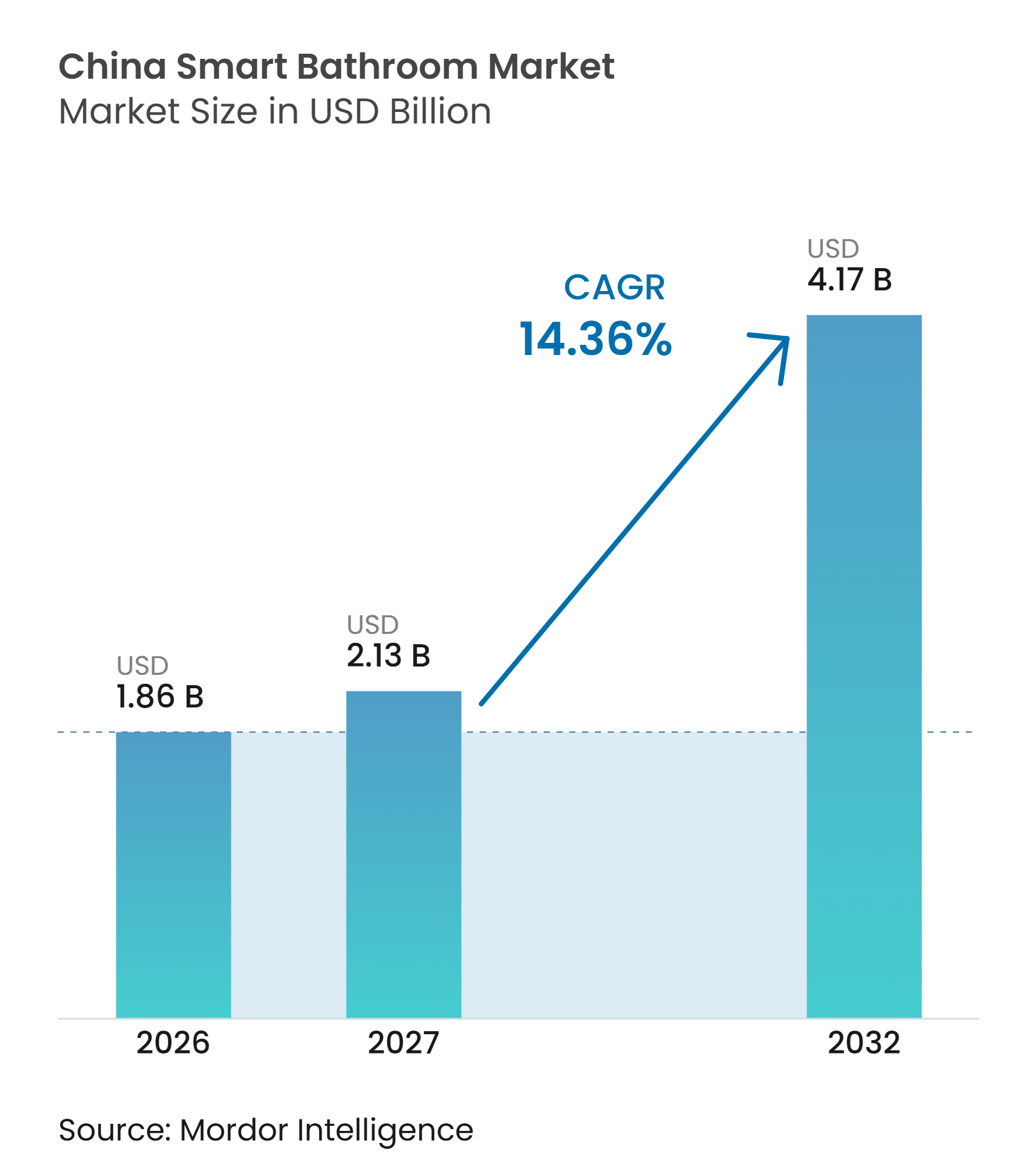
China Smart Bathroom Market Analysis by Mordor Intelligence
The China smart bathroom market size is expected to increase from USD 1.86 billion in 2026 to USD 2.13 billion in 2027 and reach USD 4.17 billion by 2032, growing at a CAGR of 14.36% over 2027-2032. Demand is shifting toward replacement purchases because the country’s large existing housing base creates more opportunities than a subdued new-home pipeline. Smart-home connectivity is making bathroom devices part of wider household systems, which favors brands that can connect toilets, showers, mirrors, lighting, and ventilation. National and local renovation subsidies lower the upfront cost of eligible water-efficient products, while aging-in-place programs support accessible bathroom upgrades. Mandatory certification for electronic toilets raises minimum product standards and makes compliance a more important competitive requirement. The China smart bathroom market is also shaped by price pressure in mid-tier products, even as health-monitoring and accessibility features support premium offerings.
Key Report Takeaways
- By product type, smart toilets and smart bidet seats held 55.73% of the China smart bathroom market share in 2026, while smart faucets are projected to grow at the fastest CAGR of 17.27% during 2027–2032.
- By construction type, replacement and retrofit accounted for 56.91% of the China smart bathroom market share in 2026 and are projected to grow at the fastest CAGR of 16.53% between 2027 and 2032.
- By end user, residential held 76.83% of the China smart bathroom market share in 2026, while commercial is projected to grow at the fastest CAGR of 15.65% between 2027 and 2032.
- By distribution channel, B2C / retail held 79.62% of the China smart bathroom market share in 2026 and is projected to grow at the fastest CAGR of 17.71% between 2027 and 2032.
- By region, East China held 34.54% of the China smart bathroom market share in 2026, while Southwest China is projected to grow at the fastest CAGR of 16.05% between 2027 and 2032.
Note: Market numbers in this report are based on Mordor Intelligence's proprietary estimation framework, which combines nine months of actuals with Q4 projections for base year 2026.
Market Trends and Insights
Drivers Impact Analysis of China Smart Bathroom Market*
| Driver | (~) % Impact on CAGR Forecast | Geographic Relevance | Impact Timeline |
|---|---|---|---|
| Low Smart-Toilet Penetration Creates Replacement Headroom | +3.5% | National, with early gains in Tier-1 and Tier-2 cities and expansion into Southwest and Central China | Long term (≥ 4 years) |
| Expansion Smart-Home and Whole-Home Connectivity | +2.0% | East China and South China, with expansion into North China | Medium term (2-4 years) |
| Trade-In Policies and Existing-Home Renovation Demand | +2.5% | National, especially Shanghai, Beijing, Sichuan, and Shandong | Short term (≤ 2 years) |
| Aging Population and Accessible Bathroom Requirements | +1.5% | National, focused on urban areas with older populations | Long term (≥ 4 years) |
| China-Based Manufacturing and Falling Smart-Toilet Costs | +1.2% | Guangdong, Fujian, and Zhejiang manufacturing clusters, with national demand benefits | Medium term (2-4 years) |
| Health Monitoring and Hygiene-Oriented Product Innovation | +1.8% | East China and South China early adopters, expanding nationally through e-commerce | Medium term (2-4 years) |
| Source: Mordor Intelligence | |||
Low Smart-Toilet Penetration Creates Replacement Headroom
China’s smart-toilet penetration reached 9.6% in mid-2025, leaving substantial room for first-time adoption and replacement purchases[1]. The China smart bathroom market benefits because many households still use conventional sanitary fixtures and can upgrade as renovation budgets become available. A first installed base of smart toilets has now entered the period when consumers consider replacing older products. The China Home Appliance Association identifies an 8-year safe-use life for smart toilets, which supports the replacement case as earlier installations age. Modern designs also offer stronger hygiene functions, more automation, and connected features than older units. This difference gives households a reason to replace a functioning fixture when they renovate rather than wait for failure. Replacement demand is less dependent on the pace of new-home delivery, which reduces the effect of the property downturn on the China smart bathroom market. Existing homes can receive upgrades one room at a time, making the purchase more accessible than a whole-home renovation. The pattern is most visible in Tier-1 and Tier-2 cities, where homeowners have greater exposure to smart appliances and more developed installation services. Lower penetration in inland cities creates a later opportunity as products become more affordable and local retail coverage broadens. The long replacement cycle also gives brands time to build service relationships and encourage repeat purchases. Products that fit standard bathrooms and require less installation work are likely to benefit most from this demand.
Expansion of Smart-Home and Whole-Home Connectivity
Whole-home connectivity gives bathroom brands a route to compete on integration rather than on hardware specifications alone. AXENT and Huawei Cloud announced cooperation on an OpenHarmony bathroom ecosystem in June 2025, including Wi-Fi, Bluetooth, and StarFlash connectivity across bathroom devices and home networks[2]. The China smart bathroom market gains when toilets, mirrors, showers, lighting, and ventilation can respond to shared routines and household settings. Connected devices can also simplify operation for consumers who want consistent controls across rooms. This approach may raise switching costs after households select a preferred platform and compatible product range. It also changes the role of bathroom brands, which must increasingly support software, devices, and services rather than sell isolated fixtures.
The opportunity is strongest in East China and South China, where affluent households and smart-home adoption are more established. Retailers can demonstrate connected products in showrooms, helping consumers understand features that are difficult to assess from a product listing alone. Device compatibility can benefit domestic suppliers with established relationships in local smart-home ecosystems. It can also create a hurdle for smaller brands that lack the engineering resources to maintain secure and reliable connected products. Whole-home offerings remain relevant to renovation projects because they can be installed alongside new lighting, ventilation, and water-management equipment. This gives the China smart bathroom market another channel for value growth beyond individual toilet replacement.
Trade-In Policies and Existing-Home Renovation Demand
Under the 2025 kitchen-and-bath renovation program, subsidies were capped at 15% of the final price (or 20% for Grade 1 water- or energy-efficient products), with localities choosing eligible categories. In 2026, smart toilets are not on the national trade-in list, but provinces and cities have actively added them under locally funded programs. The broader kitchen-and-bath renovation policy places smart bathroom products within a sustained push to improve existing homes. These measures make the China smart bathroom market more accessible to households that might otherwise postpone an upgrade. They also consistently reward products that meet water-efficiency requirements, encouraging manufacturers to position certified models prominently. The policy effect remains most immediate where local authorities have tailored their own execution.
On 23 July 2026, Beijing added 10 smart product categories to its trade-in subsidies, including smart toilets and seats, at 15% of the final price, capped at CNY 1,500 per item; products carrying an efficiency label must be Grade 1. Shanghai’s program covers smart bathroom products across 7 categories, which provides a broad local base for retail promotion. Subsidies can support sales of fixtures with higher initial prices when the consumer can see a direct saving at purchase. They also support the replacement and retrofit segment because the benefit applies to upgrades in occupied homes. The China smart bathroom market therefore has a short-term policy tailwind that does not rely on a recovery in new construction. Retailers and brands that clearly explain eligibility and arrange installation can convert this localized support more effectively.
Aging Population and Accessible Bathroom Requirements
Bathroom safety is becoming a more important product requirement as more older people remain in their homes. China’s disease-surveillance estimates indicate that more than 40 million older people fall at least once a year, about half of them at home. Accessible fixtures, seat heating, automatic cleaning, and easier controls can address some of the safety and hygiene concerns associated with aging in place. The China smart bathroom market can therefore draw demand from households buying for parents as well as from older consumers themselves. Government support reinforces this demand because aging-in-place products can receive subsidies of up to 30%. The demand case is strongest in urban areas where service providers can assess homes and complete modifications. Shanghai permits repeated applications under its home aging-adaptation subsidy cycle, up to a cumulative CNY 5,000 (USD 714.1) per household. China’s standardization system is also developing technical requirements for barrier-free toilet sanitary ware. These actions make accessible design a more defined commercial category rather than a limited specialty offering. Smart bathrooms can bring together barrier-free layouts, sensor controls, hygiene features, and functions that help family members monitor daily needs. Companies need to ensure that added technology remains simple enough for older users to operate. The long-term opportunity rests on dependable installation, after-sales support, and products that address practical mobility needs.
Restraints Impact Analysis of China Smart Bathroom Market*
| Restraint | (~) % Impact on CAGR Forecast | Geographic Relevance | Impact Timeline |
|---|---|---|---|
| Weak Residential Real-Estate and Home-Furnishing Demand | -2.5% | National, with the greatest exposure in Tier-3 and Tier-4 cities and North China | Medium term (2-4 years) |
| Product Price Deflation and Margin Pressure | -1.8% | National, particularly online channels and mid-tier brands | Short term (≤ 2 years) |
| Certification, Safety, and Data-Compliance Burden | -0.8% | National, with higher costs for small and medium enterprises in Chaozhou and Foshan clusters | Short term (≤ 2 years) |
| Installation Complexity and Fragmented After-Sales Service | -0.6% | National, with greater challenges in lower-tier cities | Medium term (2-4 years) |
| Source: Mordor Intelligence | |||
Weak Residential Real-Estate and Home-Furnishing Demand
In 2025, new residential floor space sold fell 9.2%, and residential sales value fell 13.0% (NBS), while residential completions dropped 20.2%. The ongoing adjustment can reduce specification volumes in premium developments, where developers have historically installed more smart bathroom products. It can also lead developers to use lower-cost finishing packages when budgets are under pressure. This restraint is more pronounced in lower-tier cities, where new-build activity contributes a larger share of bathroom demand. The China smart bathroom market must therefore rely more heavily on renovations, resale-home upgrades, and commercial projects. The effect is uneven because occupied homes can still produce demand when owners renovate or adapt their bathrooms. Trade-in incentives help direct spending toward these projects, but they do not fully replace demand from large new residential developments. Brands with a balanced mix of retail and project business are better positioned to manage this difference. Products designed for straightforward retrofit installation can reduce dependence on developer-led specifications. North China and cities with weaker property activity may face more pressure than the leading coastal markets. The medium-term outlook depends on whether renovation spending remains strong enough to offset reduced new-construction volumes.
Product Price Deflation and Margin Pressure
Price competition is a significant challenge in the China smart bathroom market, especially for smart toilets sold through online channels. Leading brands posted volume growth while revenue lagged as average selling prices fell (CHEAA). Combined net profit of six listed sanitaryware companies fell 66.2% in 2025. Lower prices can expand access for consumers, but they reduce the revenue available for product development, retail support, and after-sales service. Domestic bathroom specialists also face pressure from appliance companies that can use larger purchasing and distribution networks. Mid-tier brands are most exposed when product features become difficult for consumers to distinguish. Brands that compete only on price may find it difficult to maintain margins while meeting certification and service requirements.
Premium products offer a partial response when they provide clear value through hygiene, accessible design, water efficiency, or health-oriented functions. Certification enforcement may also limit the lowest-priced non-compliant offerings and improve consumer confidence in qualified models. The China smart bathroom market still requires brands to manage price expectations carefully, particularly in digital retail where comparisons are immediate. Product bundles, reliable installation, and longer service support can help shift attention from headline price to total value. However, these approaches require investment and may be harder for small producers to sustain. Near-term profitability will remain sensitive to price pressure even where unit demand grows.
*Our forecasts treat driver/restraint impacts as directional, not additive. The impact forecasts reflect baseline growth, mix effects, and variable interactions.
China Smart Bathroom Market Segment Analysis
By Product Type:
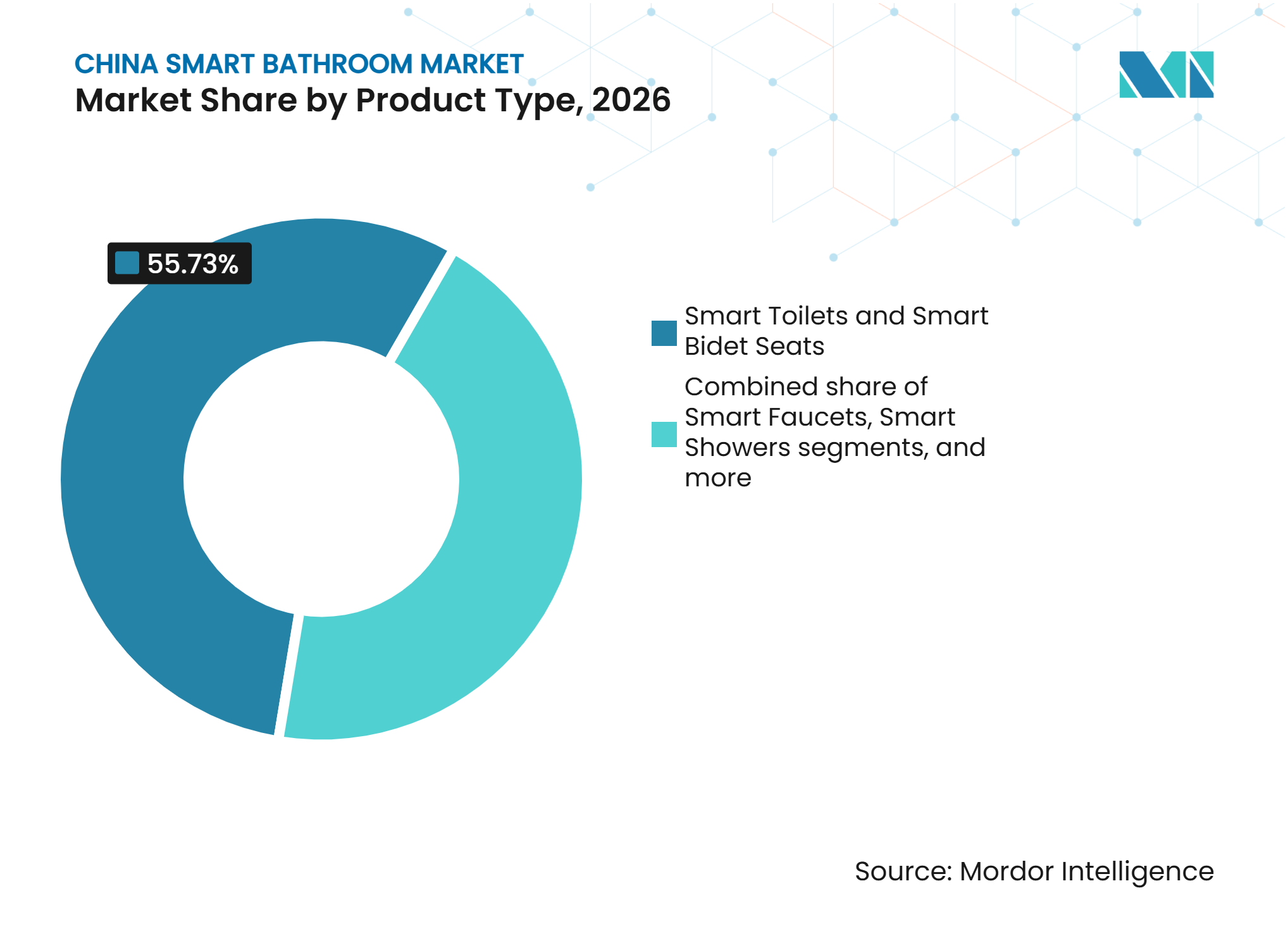
Smart Toilets Anchor Value and Faucets Lead GrowthSmart toilets and smart bidet seats held 55.73% of the China smart bathroom market share in 2026, making them the largest product category. Their position reflects high average values and a broad set of hygiene, cleaning, seat-warming, and automated-control functions. Smart toilets are also the product most directly affected by China’s certification requirements for electronic toilets. Mandatory certification makes safety and electrical compliance central to product design and retailing. The category benefits from consumer familiarity because smart toilets have been sold in China for more than a decade. It is also the main entry point for newer health-oriented product features. Products that combine everyday comfort with a clear practical benefit are better placed to encourage replacement purchases.
Smart faucets are forecast to record the highest product CAGR at 17.27% between 2027 and 2032. Their growth is supported by demand for touchless operation in healthcare facilities, offices, hotels, and other commercial settings. Connected faucets can also form part of water-management systems in smart homes. Smart showers add functions such as personalized temperature control, while smart mirrors can support digital display and connected-home use. Smart bathtubs, soap dispensers, and hand dryers address more specialized residential and commercial needs. Water-efficiency requirements matter across the product portfolio because eligible products can receive support under the trade-in policy. The China smart bathroom market has room for these categories to grow, but smart toilets are likely to remain the main source of value.



By Construction Type:
Replacement Leads Value Growth While New Construction Retains Specification PremiumReplacement and retrofit accounted for 56.91% of the China smart bathroom market share in 2026 and are projected to expand at a 16.53% CAGR between 2027 and 2032. This segment benefits from the scale of existing urban housing and from homeowners upgrading bathrooms during renovation. A retrofit can focus on a single fixture, which can make the purchase more manageable than a full remodeling project. Subsidies for eligible products further support this pattern. The category also benefits as earlier smart-toilet installations approach the end of their recommended use period. Brands that offer standard sizing and dependable installation have a clear advantage in retrofit work.
New construction remains important because developers can specify multiple connected bathroom products at the same time. This channel is more exposed to fluctuations in property development and finishing budgets. Premium residential projects can still support higher-value product combinations, especially in leading coastal cities. Hotels, healthcare facilities, and office projects also create new-build opportunities outside housing. These buyers often prioritize hygiene, durability, and coordinated design rather than the lowest purchase price. The China smart bathroom industry therefore needs both renovation-led volume and selected new-build specifications. The balance between the two favors replacement demand during the forecast period.
By End User:
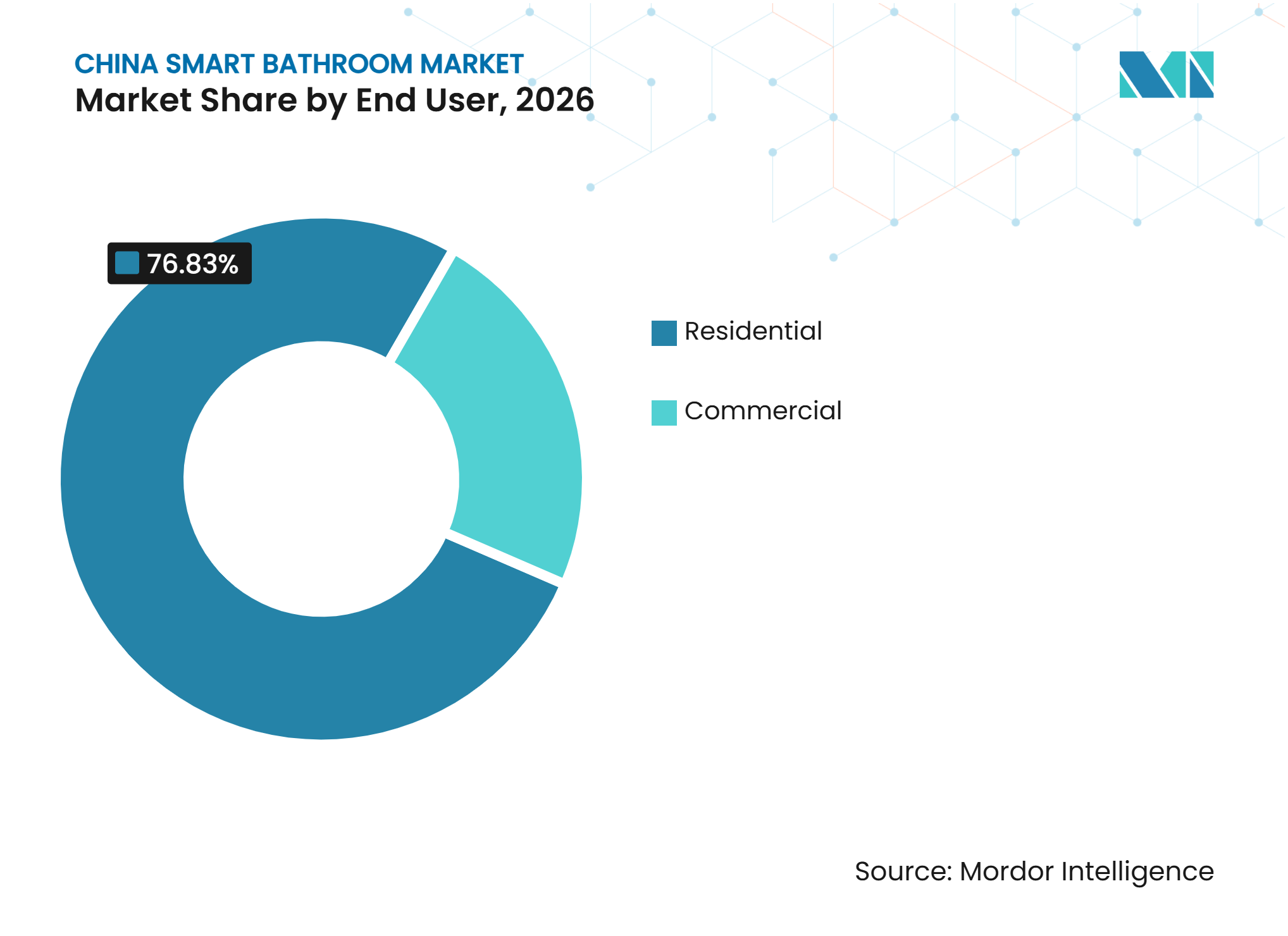
Residential Dominates and Commercial Channels AccelerateResidential users accounted for 76.83% of the China smart bathroom market share in 2026. Bathrooms are personal spaces, so household preferences on hygiene, comfort, accessibility, and convenience drive much of this spending. Residential buyers can choose one product at a time, which makes smart toilets and bidet seats accessible during smaller renovation projects. Government trade-in support also directly serves this customer group. Younger consumers may be more receptive to connected controls and health-oriented features, while older households may prioritize accessible operation and safety. These varied needs allow brands to create different product ranges without changing the basic household focus.
Commercial users are projected to expand at a 15.65% CAGR between 2027 and 2032. Hotels use bathroom upgrades to support guest comfort and brand positioning. Healthcare facilities need touchless, antimicrobial, and sensor-based fixtures that support hygiene protocols. Offices can specify automated faucets and dispensers as part of wellness-focused building upgrades. Commercial contracts can involve higher order values and repeat installation work, but buyers often require clear service commitments. The China smart bathroom market has an opportunity to develop specialist products and maintenance offerings for these settings. Commercial growth does not displace residential demand, but it broadens the customer base beyond household renovation.

By Distribution Channel:
B2C and Retail Shape Consumer AccessB2C and retail channels held 79.62% of the China smart bathroom market share in 2026 and are forecast to expand at a 17.71% CAGR between 2027 and 2032. This channel includes digital retail, specialty stores, home-furnishing retailers, and other consumer-facing outlets. It is important because consumers often research products online before seeking a demonstration or arranging installation. Online channels can make a wider product range available beyond the largest cities. They also give brands an efficient way to explain product features, subsidies, and water-efficiency credentials. The speed of B2C growth reflects the continued importance of direct household purchases.
Showrooms remain relevant because customers can assess comfort, controls, design, and perceived quality before buying a bathroom product. Retailers can also help consumers understand compatibility with existing plumbing and power connections. This service is particularly valuable for higher-priced toilets, showers, and connected product combinations. Online retail can add price pressure, especially in standardized mid-tier models. B2B and direct sales remain smaller but are important for hotel, healthcare, office, and developer projects. The China smart bathroom market will continue to rely on a mix of digital discovery, physical demonstration, and professional installation. Brands that coordinate these steps can reduce hesitation at the point of purchase.
Geography Analysis
East China held 34.54% of the China smart bathroom market share in 2026 and remains the country’s largest regional market. Its strength comes from high household incomes, dense urban housing, established home-furnishing retail, and a large concentration of bathroom manufacturing. Shanghai and nearby cities support premium renovation demand because consumers have strong exposure to smart-home products and specialist showrooms. Fujian’s Xiamen and Quanzhou clusters add supply-side depth and support national distribution. JOMOO’s base in Nan'an, Quanzhou, illustrates the importance of the province to domestic bathroom manufacturing. East China also benefits from local policy support, including Shanghai’s coverage of smart bathroom products across 7 subsidy categories.
South China is another major center because Guangdong contains dense clusters for sanitary ware, faucets, and bathroom hardware. Manufacturers in Kaiping, Chaozhou, and Foshan support domestic brands as well as original equipment production. The region’s strong supply base can shorten product-development cycles and support a wide range of price points. North China benefits from demand in Beijing and Tianjin, particularly where renovation policies encourage household upgrades. Beijing’s inclusion of smart toilets in its consumer subsidy program provides a direct local stimulus. Central China has opportunities linked to urban renewal and rising household spending, while Northeast China has more limited growth because of population outflow and an older demographic profile.
Southwest China is forecast to expand at a 16.05% CAGR between 2027 and 2032, which creates the clearest regional growth opportunity for the China smart bathroom market. Chengdu and Chongqing combine rising household incomes with expanding commercial and hospitality activity. The region’s lower installed base allows brands to pursue first-time buyers alongside renovation customers. Success depends on adding local showrooms, installers, and after-sales service rather than relying only on online sales. Northwest China remains the smallest regional market but has focused opportunities for public smart-sanitation equipment along tourism routes. Regional strategies must reflect local income levels, construction activity, and service coverage rather than apply a single national approach.
Competitive Landscape
Market Concentration
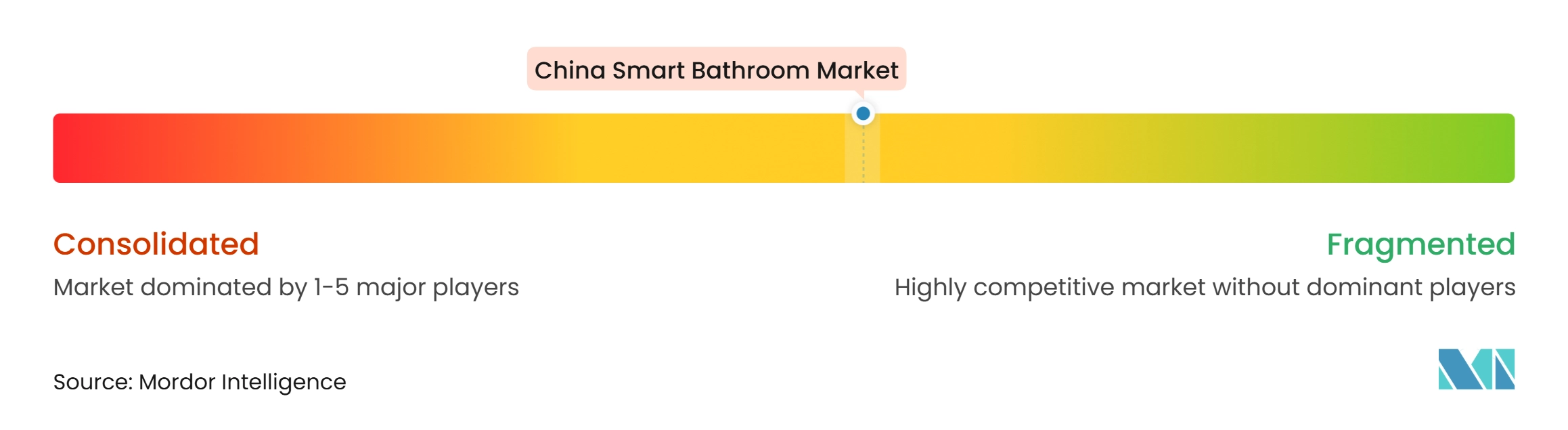
The China smart bathroom market is moderately concentrated, with domestic bathroom specialists, international premium brands, and appliance companies competing across different price points and channels. JOMOO is a leading domestic participant with a broad range of toilets, faucets, showers, and connected bathroom products. Arrow Home Group and HEGII also compete through comprehensive product portfolios and investments in intelligent and health-oriented functions. TOTO and Kohler retain a strong role in premium hotels and high-end residential projects, where established product performance and design credentials remain important. Panasonic has a distinct position in products that emphasize hygiene and healthcare-related use. The market structure favors companies that can deliver product compliance, installation, and service across multiple regions.
Certification is becoming a material competitive requirement. China’s mandatory CCC certification for electronic toilets took effect in July 2025, and uncertified products cannot be manufactured, sold, or imported. Large companies can spread certification, engineering, and service costs across a wider sales base. Smaller producers may face a greater burden as they meet safety, quality, and data-handling requirements. This dynamic can gradually favor brands with established compliance systems and national retail coverage.
Leading companies are also using product and ecosystem moves to differentiate their offerings. Arrow Home Group presented its intelligent-perception collection at Kitchen & Bath China 2025, including smart toilets and a barrier-free bathroom suite for older and mobility-impaired users. These strategies aim to protect value in a market where basic product features can quickly become common. Companies also need to manage privacy and consumer trust when products collect health-related information.
China Smart Bathroom Industry Leaders
-
JOMOO Group
-
Guangdong HEGII Sanitary Ware Co., Ltd.
-
Arrow Home Group Co., Ltd.
-
Kohler China Investment Co., Ltd.
-
TOTO (China) Co., Ltd.
- *Disclaimer: Major Players sorted in no particular order
China Smart Bathroom Market Companies Covered in this Report
- JOMOO Group
- Arrow Home Group Co., Ltd.
- HEGII Sanitary Ware Group Co., Ltd.
- Xiamen R&T Plumbing Technology Co., Ltd.
- Huida Sanitary Ware Co., Ltd.
- Kohler China Investment Co., Ltd.
- TOTO Ltd.
- Panasonic Corporation
- LIXIL Corporation
- Roca Sanitario S.A.U.
- Duravit AG
- Villeroy & Boch AG
- Guangdong Dongpeng Sanitary Ware Co., Ltd.
- Foshan Sunzoom Sanitary Ware Co., Ltd.
- Haier Smart Home Co., Ltd.
- Midea Group Co., Ltd.
- Zhejiang Xima Sanitary Ware Co., Ltd.
- Guangdong AOSMAN Sanitary Ware Co., Ltd.
- Guangdong Tejier Sanitary Ware Co., Ltd.
- AXENT
- Guangdong MCOHOME Technology Co., Ltd.
Recent Industry Developments in China Smart Bathroom Market
- June 2026: JOMOO stated that it ranked first in bathroom category sales on JD.com, Tmall, Douyin, Pinduoduo, Amazon, Lazada, Shopee, and noon during the 618 shopping festival, citing third-party consultancy data.
- August 2025: Arrow Home Group invested CNY 156 million (USD 22.2 million) in R&D in the first half of 2025 and launched the Shunjing P50 smart toilet with a full-circuit sterilization system, foam-shield activation, and scale-prevention technology for hard-water areas.
- June 2025: AXENT and Huawei Cloud Computing Technology Ltd. signed a full OpenHarmony ecosystem cooperation agreement at Huawei Developer Conference 2025. The partnership uses Wi-Fi, Bluetooth, and StarFlash connectivity across bathroom devices and smart-home networks.
- May 2025: Arrow Home Group introduced its New Life with Intelligent Perception collection at Kitchen & Bath China 2025, including the P5 intelligent toilet, the P9 urine-test toilet, and the Heyue barrier-free bathroom suite.
China Smart Bathroom Market Report Scope
Smart bathroom products integrate advanced sensors, IoT connectivity, and automated systems to enhance user comfort, hygiene, and energy efficiency. The China smart bathroom market is segmented by product type, construction type, end user, distribution channel, and region. By product type, the market is segmented into smart toilets and smart bidet seats, smart faucets, smart showers, smart bathroom mirrors, smart bathtubs, smart soap dispensers, smart hand dryers, and others (smart water leak controllers, ventilation, heated towel rails). By construction type, the market is segmented into new construction and replacement and retrofit. By end user, the market is segmented into residential and commercial (hotels and restaurants, healthcare facilities, offices and commercial buildings, and others). By distribution channel, the market is segmented into B2C / retail (home centers/DIY showrooms, specialty showrooms and dealers, wholesale and trade channels, online stores and direct-to-consumer, and other distribution channels) and B2B / direct sales. By region, the market is segmented into East China, North China, Northeast China, South China, Central China, Southwest China, and Northwest China. The report offers the market size in value terms in USD for all the above-mentioned segments.
Segmentation Overview
| Smart Toilets and Smart Bidet Seats |
| Smart Faucets |
| Smart Showers |
| Smart Bathroom Mirrors |
| Smart Bathtubs |
| Smart Soap Dispensers |
| Smart Hand Dryers |
| Others (Smart Water Leak Controllers, Ventilation, Heated Towel Rails) |
| New Construction |
| Replacement and Retrofit |
| Residential | |
| Commercial | Hotels and Restaurants |
| Healthcare Facilities | |
| Offices and Commercial Buildings | |
| Others |
| B2C/Retail | Home Centers/DIY Showrooms |
| Specialty Showrooms and Dealers | |
| Wholesale and Trade Channels | |
| Online Stores and Direct-to-Consumer | |
| Other Distribution Channels | |
| B2B/Direct Sales |
| East China |
| North China |
| Northeast China |
| South China |
| Central China |
| Southwest China |
| Northwest China |
| By Product Type | Smart Toilets and Smart Bidet Seats | |
| Smart Faucets | ||
| Smart Showers | ||
| Smart Bathroom Mirrors | ||
| Smart Bathtubs | ||
| Smart Soap Dispensers | ||
| Smart Hand Dryers | ||
| Others (Smart Water Leak Controllers, Ventilation, Heated Towel Rails) | ||
| By Construction Type | New Construction | |
| Replacement and Retrofit | ||
| By End User | Residential | |
| Commercial | Hotels and Restaurants | |
| Healthcare Facilities | ||
| Offices and Commercial Buildings | ||
| Others | ||
| By Distribution Channel | B2C/Retail | Home Centers/DIY Showrooms |
| Specialty Showrooms and Dealers | ||
| Wholesale and Trade Channels | ||
| Online Stores and Direct-to-Consumer | ||
| Other Distribution Channels | ||
| B2B/Direct Sales | ||
| By Region | East China | |
| North China | ||
| Northeast China | ||
| South China | ||
| Central China | ||
| Southwest China | ||
| Northwest China | ||
Key Questions Answered in the Report
What is the projected growth rate for smart bathrooms in China?
The China smart bathroom market size is projected to expand from USD 1.67 billion in 2026 and USD 1.86 billion in 2027 to USD 3.65 billion by 2032, registering a CAGR of 14.36% between 2027 and 2032.
Which smart bathroom product has the largest share in China?
Smart toilets and smart bidet seats lead product demand with a 55.73% share in 2026. Their position reflects established consumer familiarity with hygiene, seat-warming, automated cleaning, and connected functions.
Which smart bathroom product is growing fastest in China?
Smart faucets are forecast to record the highest product CAGR at 17.27% between 2027 and 2032. Touchless operation, commercial hygiene requirements, and compatibility with connected water-management systems support their expansion.
What is driving replacement demand for smart toilets in China?
Low adoption, aging installed products, renovation activity, and trade-in subsidies support replacement purchases. Products that fit standard bathrooms and include reliable installation services are well placed to benefit.
Which region is growing fastest for smart bathrooms in China?
Southwest China is forecast to expand at a 16.05% CAGR % between 2027 and 2032. Rising urban incomes in Chengdu and Chongqing, commercial activity, and lower adoption create an opportunity for first-time purchases and replacement demand.
How does CCC certification affect electronic toilets in China?
Since July 2025, uncertified electronic toilets cannot be manufactured, sold, or imported. This raises the importance of safety compliance and may favor brands that can fund certification, engineering, and nationwide service. For buyers, the requirement makes verified certification an important consideration when selecting a product, arranging installation, and assessing long-term product support.