
China Pet Veterinary Diets Market Size and Share
Market Overview
| Study Period | 2021 - 2031 |
|---|---|
| Forecast Data Period | 2026 - 2031 |
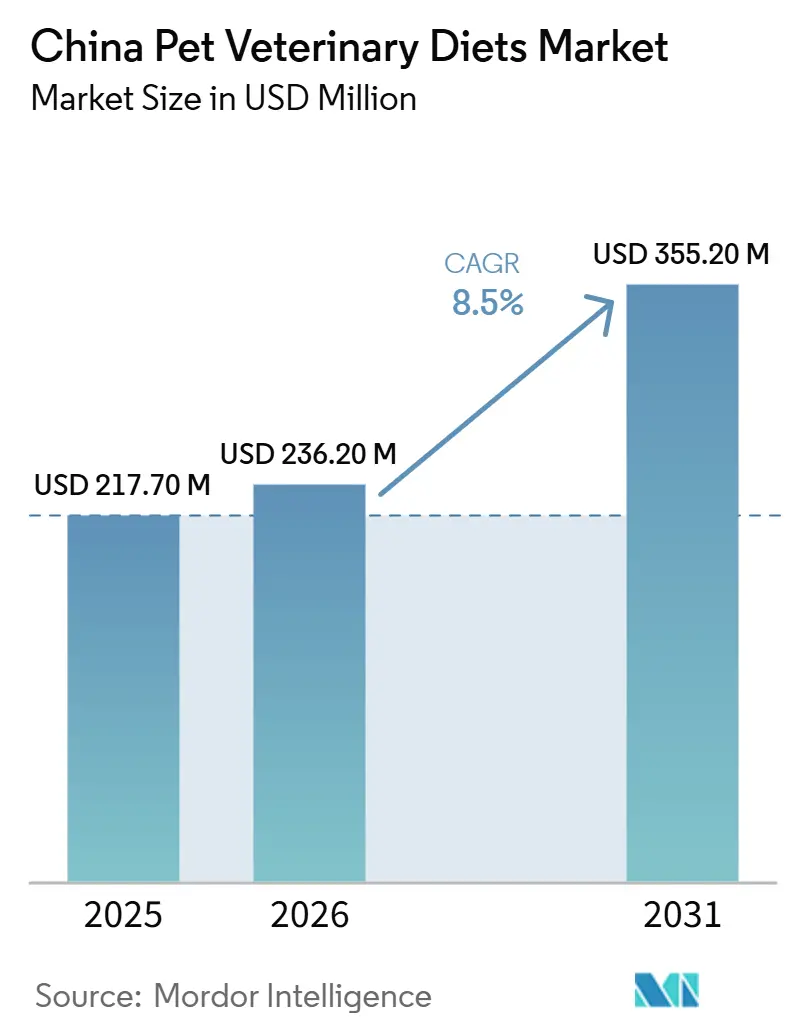
| Base Year Market Size (2025) | USD 217.70 Million |
| Market Size (2026) | USD 236.20 Million |
| Market Size (2031) | USD 355.20 Million |
| Growth Rate (2026 - 2031) | 8.50 % |
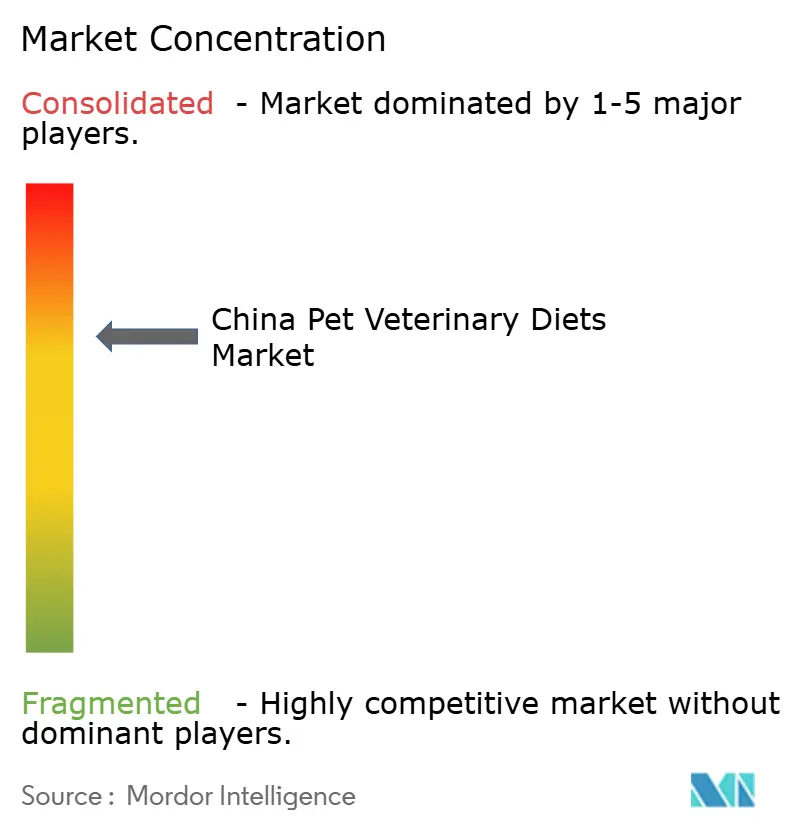
| Market Concentration | Medium |
Major Players *Disclaimer: Major Players sorted in no particular order Image © Mordor Intelligence. Reuse requires attribution under CC BY 4.0. | |
China Pet Veterinary Diets Market Analysis by Mordor Intelligence
The China Pet Veterinary Diets Market size was USD 217.70 million in 2025, which is projected to reach USD 236.20 million in 2026, and USD 355.20 million by 2031, growing at a CAGR of 8.50% from 2026 to 2031. China’s Ministry of Agriculture and Rural Affairs issued Announcement No. 976 in December 2025, introducing the NY/T 4838-2025 standard, which came into effect on May 1, 2026[1]Source: Ministry of Agriculture and Rural Affairs of China, “Announcement No. 976, NY/T 4838-2025 Full-Price Pet Food Prescription Diet General Requirements,” MARA release, sohu.com. This established the first national prescription pet food framework in the China pet veterinary diet market, incorporating mandatory nutritional indicators across 19 therapeutic diet categories. Demand in this market is further supported by a growing and aging pet population. According to the 2026 China Pet Industry White Paper, urban cat ownership continued to rise, clinic visits for dogs and cats remained high for digestive and urinary issues, and the number of older pets increased steadily. Digital refill models are facilitating repeat purchases, which is critical for the China pet veterinary diet market, as it relies on consistent compliance following diagnosis rather than one-time purchases. Competition remains most intense within the clinic channel, where global brands maintain an advantage due to their expertise in technical education. Meanwhile, domestic players are strengthening their position through improved hospital access, expanded online presence, and local supply capabilities. The primary challenges to broader adoption include premium pricing outside major cities and a decline in owner adherence after the initial prescription cycle. Consequently, market growth will depend not only on higher diagnosis rates but also on enhanced education and follow-up tools to improve compliance.
Key Report Takeaways
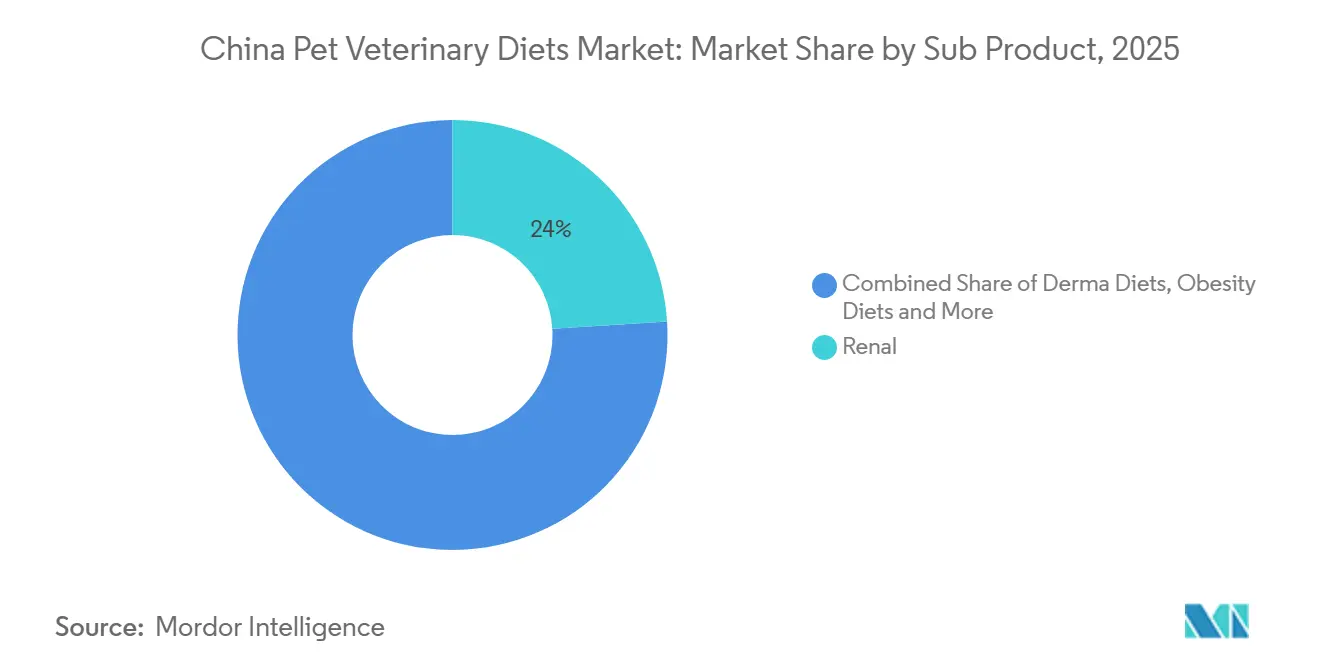
- By sub product, renal accounted for 24.0% of the China pet veterinary diet market size in 2025, while digestive sensitivity is projected to be the fastest-growing segment, expanding at a 9.5% CAGR through 2026 to 2031.
- By pets, dogs held 53.0% of the China pet veterinary diet market share in 2025, while cats is the fastest segment with a projected CAGR at 8.5% through 2026 to 2031.
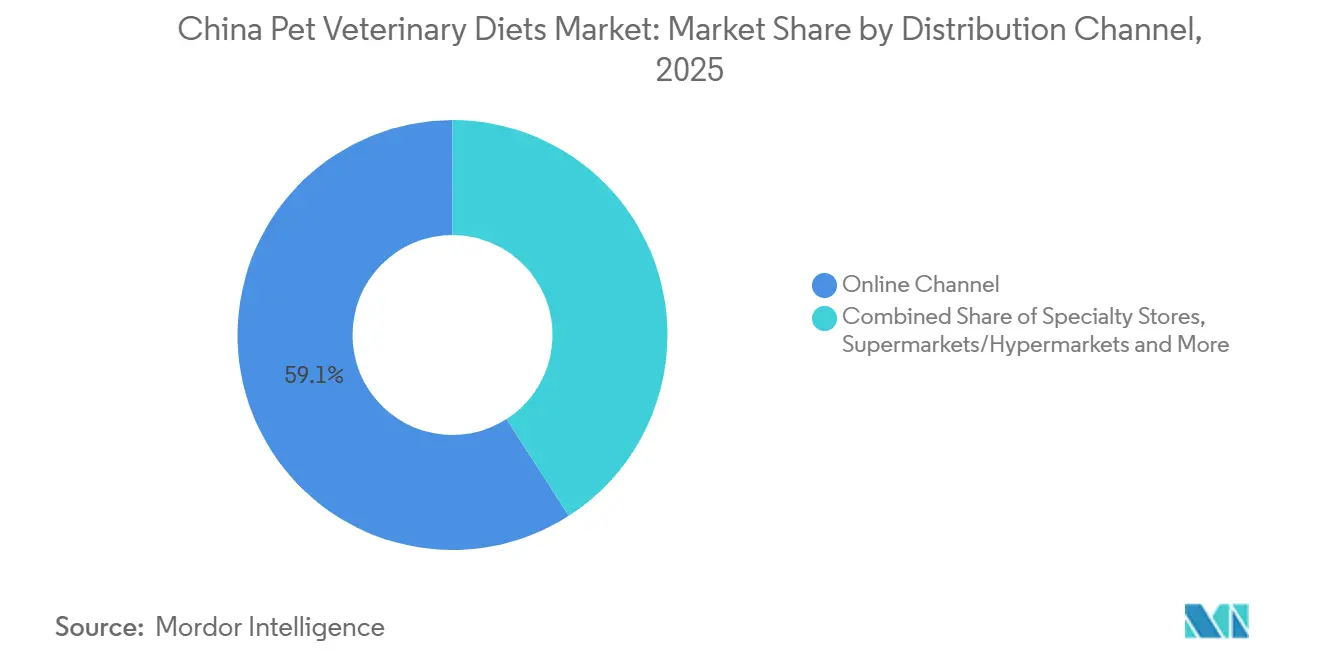
- By distribution channel, the Online channel held 59.1% of the China pet veterinary diet market size in 2025 and is also advancing at the fastest 9.9% CAGR through 2026 to 2031.
Note: Market size and forecast figures in this report are generated using Mordor Intelligence’s proprietary estimation framework, updated with the latest available data and insights as of January 2026.
China Pet Veterinary Diets Market Trends and Insights
Drivers Impact Analysis*
| Driver | (~) % Impact on CAGR Forecast | Geographic Relevance | Impact Timeline |
|---|---|---|---|
| Rising veterinary diagnosis of chronic pet conditions | +2.1% | Tier 1 and Tier 2 cities, early gains in Tier 3 | Short term (≤ 2 years) |
| Pet humanization and therapeutic premiumization | +1.6% | National, strongest in first-tier cities | Medium term (2-4 years) |
| Online veterinary refill and O2O fulfillment expansion | +1.3% | National, concentrated in coastal urban centers | Short term (≤ 2 years) |
| Rising cat ownership and feline-specific nutrition need | +1.1% | National, faster in high-density urban areas | Long term (≥ 4 years) |
| Digitized clinic-to-consumer prescription workflow | +0.9% | Tier 1 and new first-tier cities | Medium term (2-4 years) |
| Growth of condition-specific formulation innovation | +0.7% | National, supply-side driven | Long term (≥ 4 years) |
| Source: Mordor Intelligence | |||
Rising Veterinary Diagnosis of Chronic Pet Conditions
The demand for prescription diets in the China pet veterinary diet market is closely linked to the incidence of diagnosed diseases rather than general pet ownership. According to the 2026 China Pet Industry White Paper, feline lower urinary tract syndrome accounted for 10.2% of all cat clinic visits in 2025, while gastroenteritis was the leading reason for dog consultations at 6.9%. Additionally, the 2025 China Pet Medical Food Industry White Paper highlighted that urban pets aged 7 years and older reached 30 million in 2025, a demographic with significant exposure to chronic renal disease and prolonged dietary management needs[2]Source: China Veterinary Association and PetData, “2025 China Pet Medical Food Industry White Paper,” Toutiao, toutiao.com. This is important because older pets are more likely to remain on therapeutic diets for extended periods after diagnosis. In 2024, diagnosis-linked penetration stood at 24.4% for dogs and 17.8% for cats, indicating potential for further improvement in treatment adoption. Furthermore, annual per-pet spending increased by 27.9% in the same year, reflecting higher expenditures by owners who adopt sustained care practices. As diagnostic capabilities improve across urban clinics, the China pet veterinary diet market is projected to grow through an expanding active patient base rather than relying solely on price increases.
Pet Humanization and Therapeutic Premiumization
The growing trend of treating pets as family members is driving increased investment in clinical nutrition in the China pet veterinary diet market. According to Xinhua, China’s pet population exceeded the number of children under 4 in 2024, marking a significant shift in household spending priorities. During Tmall’s Double Eleven event in 2024, sales of prescription and functional pet food grew year over year by more than 100%, while sales of specialized health products surged by 500%. This trend indicates that premium health nutrition is transitioning from a niche purchase to a more widely accepted aspect of pet care. Additionally, pet owners are increasingly opting for formulas that support long-term condition management rather than focusing solely on short-term symptom relief. This shift expands the potential market for therapeutic diets, which bridge the gap between medicine and daily feeding. Consequently, the China pet veterinary diet market benefits not only from a growing pet population but also from a rising proportion of owners committed to maintaining structured health routines following a diagnosis.
Online Veterinary Refill and O2O Fulfillment Expansion
The China pet veterinary diet market relies heavily on online channels, driven primarily by refill behavior rather than mere convenience. Repeat-purchase models that integrate veterinarians' recommendations with home-delivery services reduce the need for clinic visits for refills. This is particularly important as therapeutic diets often require ongoing use, and convenient refill options support adherence following the initial consultation. In December 2025, Boehringer Ingelheim and JD Health entered into a strategic cooperation agreement to optimize omni-channel supply chains, enhance digital brand presence, and improve professional user services in China's pet health market[3]Source: Boehringer Ingelheim Animal Health China, “Boehringer Ingelheim and JD Health Sign Comprehensive Strategic Cooperation Agreement,” Boehringer Ingelheim China, boehringer-ingelheim.cn. This collaboration underscores the role of major animal health companies, alongside retailers, in developing digital infrastructure. As these systems expand, the China pet veterinary diet market is anticipated to benefit from increased repeat sales and a stronger connection between clinical recommendations and consumer purchasing behavior.
Rising Cat Ownership and Feline-Specific Nutrition Need
Cats are playing an increasingly significant role in the China pet veterinary diet market due to their larger population and the prevalence of conditions requiring long-term nutritional management. According to the 2026 China Pet Industry White Paper, the urban cat population in China reached 72.89 million in 2025, surpassing the dog population of 53.43 million. The report also highlighted that the cat population is growing at an annual rate of 1.9%, compared to 1.6% for dogs, while spending on cats increased by 5.2% in 2025, compared to 3.2% for dogs. This trend is important as cats are more prone to urinary, renal, and metabolic conditions, which align closely with prescription diet categories. Additionally, indoor lifestyles and longer lifespans among cats support the need for ongoing nutritional management rather than one-time interventions. With more pet owners accessing cat care through urban channels, education on preventive feeding practices is becoming more scalable. Consequently, the China pet veterinary diet market is experiencing stronger growth in feline demand, even though dogs currently account for a larger share of revenue.
Restraints Impact Analysis*
| Restraint | (~) % Impact on CAGR Forecast | Geographic Relevance | Impact Timeline |
|---|---|---|---|
| Premium pricing versus mainstream pet food | -1.8% | Tier 3 and lower cities, national for mass-market households | Medium term (2-4 years) |
| Regulatory approval and label compliance friction | -1.1% | National | Short term (≤ 2 years) |
| Limited veterinarian dispensing capacity in lower tier cities | -0.8% | Tier 3 to Tier 5 cities and rural markets | Long term (≥ 4 years) |
| Trust gap around clinical efficacy and owner adherence leakage | -0.6% | National | Medium term (2-4 years) |
| Source: Mordor Intelligence | |||
Premium Pricing Versus Mainstream Pet Food
Price remains a significant barrier to broader access in the China pet veterinary diet market. Prescription veterinary diets in China are typically priced 4 to 8 times higher than equivalent-weight mainstream kibble, limiting adoption primarily to higher-income urban households. This pricing disparity is particularly impactful in lower-tier cities, where pet ownership is increasing, but discretionary spending remains limited. Prior to the implementation of the May 2026 standard, some imported therapeutic products faced formal distribution barriers, leading to parallel imports and increased counterfeit risks in certain markets. While the new regulatory framework has reduced confusion, it has not addressed the premium cost difference between clinical diets and standard pet food. Virbac’s local manufacturing initiative in Changzhou highlights the potential of domestic production as a pricing strategy in this category. Unless more brands develop methods to narrow the price gap, the China pet veterinary diet market is anticipated to continue growing more rapidly in top-tier cities than in the broader mass market.
Regulatory Approval and Label Compliance Friction
The new national framework presents a positive outlook for long-term category development but imposes short-term compliance challenges in the China pet veterinary diet market. The NY/T 4838-2025 standard, issued by the Ministry of Agriculture and Rural Affairs through Announcement No. 976 on December 30, 2025, became enforceable on May 1, 2026. Existing products in circulation must now comply with specified nutritional parameters, revised labeling requirements, and mandatory language on veterinarian consultation. This increases the cost and complexity of market participation, particularly for smaller players and newly imported stock-keeping units. For new product registrations, domestic approval processes and import requirements differ, leading to additional time and execution risks. Larger brands with established local regulatory expertise and validation are better positioned to navigate this transition compared to late entrants. In the short term, the China pet veterinary diet market is anticipated to become more standardized and regulated, though entry barriers may rise.
*Our forecasts treat driver/restraint impacts as directional, not additive. The impact forecasts reflect baseline growth, mix effects, and variable interactions.
Segment Analysis
By Sub Product: Renal Diets Lead Volume While Digestive Formulas Drive the Growth
Renal accounted for 24.0% of sub-product revenue in 2025, making them the largest category within the China pet veterinary diet market. This dominance of renal formulas is attributed to the aging pet population and the prevalence of kidney-related conditions in both cats and dogs. According to the 2025 China Pet Medical Food Industry White Paper, the incidence of chronic kidney disease in cats aged 6 years and older was 30%, while renal failure in dogs aged 10 years and older exceeded 25%. Digestive Sensitivity contributed 19% of revenue in 2025, followed by Obesity Diets at 17% and Diabetes at 12%. The remaining market share was distributed among urinary tract disease diets, oral care diets, derma diets, and other veterinary diets. This distribution within the China pet veterinary diet market highlights that chronic disease feeding is not limited to a single condition. Furthermore, the 2026 China Pet Industry White Paper reported that gastroenteritis was the leading cause of veterinary consultations for dogs and the second most common for cats, underscoring the broad clinical demand for digestive sensitivity diets during the forecast period.
The Digestive Sensitivity segment is projected to grow at a CAGR of 9.5% from 2026 to 2031, outpacing the overall growth of the China pet veterinary diet market. Renal diets, obesity diets, and diabetes-related diets are also anticipated to expand during the forecast period, indicating that the largest condition categories are growing concurrently rather than competing with one another. The national standard implemented in May 2026 establishes nutritional thresholds for therapeutic categories such as renal and obesity formulas, which is anticipated to enhance quality consistency across the market. This is significant as clinical confidence increases when formula claims are supported by clear specifications. Additionally, it enables established brands to maintain their market position against less precisely positioned alternatives. Farmina’s 2025 launch of VetLife Dog Treats, which included condition-specific stock-keeping units for renal function, gastrointestinal health, and struvite management, highlights the category's expansion beyond complete diets into related formats. In the China pet veterinary diet market, this diversification can increase wallet share within each condition category without altering the core disease mix.



By Pets: Dogs Hold a Large Share of the Market as Feline Demand Witness Growth
In 2025, dogs accounted for 53.0% of the China pet veterinary diet market share, maintaining their position as the largest pet segment by revenue. The dominance of dogs reflects a longer history of clinical diet adoption and higher average veterinary spending per pet in China, rather than a lower disease burden among cats. According to the 2026 China Pet Industry White Paper, the urban cat population in China reached 72.89 million in 2025, compared to 53.43 million for dogs. Additionally, cat-related spending grew by 5.2% in 2025, outpacing the 3.2% growth for dogs, indicating stronger consumer momentum for cats. The current revenue gap highlights the maturity of canine prescription habits rather than future demand trends.
Cats are projected to grow at a CAGR of 8.5% from 2026 to 2031, making them the fastest-growing segment in the China pet veterinary diet market. This growth is driven by a combination of demographic and clinical factors, including indoor lifestyles, urinary and metabolic health issues, and increased engagement with preventive nutrition among younger urban pet owners. Feline lower urinary tract syndrome remains a prevalent clinical diagnosis, while chronic kidney disease management supports long-term feeding requirements. Other pets, though a smaller segment, represent a potential niche market as pet ownership expands in urban areas.
Currently, dogs continue to anchor revenue in the China pet veterinary diet market, while cats are shaping the next phase of category expansion. The market is gradually transitioning toward a more balanced pet mix over the forecast period. This shift is anticipated to benefit brands with robust feline clinical portfolios and effective owner education strategies for long-term product use.
By Distribution Channel: Online Leadership Redefines Prescription Diet Access
In 2025, the Online Channel accounted for 59.1% of distribution revenue, establishing itself as the leading channel in the China pet veterinary diet market. This dominance extends beyond general e-commerce preferences, as the category relies heavily on repeat purchases following clinical recommendations. Online refill options reduce the need for pet owners to visit clinics for each purchase, enhancing convenience and supporting adherence to prescribed diets. While Specialty Stores remain relevant, particularly for premium shoppers in larger urban areas, they primarily cater to consultative selling and adjacent health products. In contrast, Supermarkets/Hypermarkets focus on basic health products but are less suitable for therapeutic diets requiring veterinary oversight.
The Online Channel is projected to grow at the fastest rate of 9.9% through 2031. This growth highlights the China pet veterinary diet market's increasing reliance on integrated clinic-to-home purchasing models. Additionally, channel advantage is shifting from traditional shelf presence to data-driven refill systems, making it more challenging for brands to compete solely through offline distribution. Over the forecast period, companies that effectively integrate technical recommendations, digital ordering, and reliable fulfillment are anticipated to outperform competitors. Channel structure will remain a key differentiator between brands that secure repeat therapy cycles and those that do not.
Geography Analysis
First-tier cities remained the strongest commercial base for the China pet veterinary diet market in 2025, driven by the highest diagnosis rates, stronger income levels, and better digital refill access. Beijing, Shanghai, Guangzhou, and Shenzhen exhibited the highest prescription diet penetration, collectively accounting for 3,920 pet medical institutions as of December 2024. The institution count in these four cities increased by 12.4% year-on-year, indicating continued expansion of the core clinical network in the most developed urban markets. These cities also generated a significant share of prescription diet revenue due to better specialist care, higher owner awareness, and more routine follow-ups after diagnosis.
The 15 new first-tier cities are becoming a key growth area for the China pet veterinary diet market. Their combined pet medical institution count reached 8,725 as of December 2024, up 17.7% year on year. This growth rate surpassed that of the four first-tier cities, signaling a broader distribution of clinical infrastructure. Pet ownership is expanding beyond the largest metropolitan centers, supporting medium-term demand in cities such as Hangzhou, Chengdu, Nanjing, and Wuhan. However, many clinics in these cities remain single-location operations with limited specialization, making consistent multi-condition dietary management more challenging compared to larger hospital groups. While these cities are growing rapidly, they require stronger technical support and improved refill systems to bridge the gap with the most mature urban markets.
Tier 3 to Tier 5 cities and rural markets offer the China pet veterinary diet market its longest expansion potential but also highlight significant infrastructure gaps. According to Xinhua, citing Goldman Sachs, China’s pet population is estimated to continue growing outside the largest cities. Additionally, the China Feed Industry Association reported that domestic pet food production reached 1.9 million metric tons in 2025, a 17.9% year-on-year increase as of 2026 reporting. While the supply side is improving, the expansion of prescription diets in these markets requires a combination of clinic density, digital refill access, and increased owner awareness. The May 2026 national standard provides a clearer regulatory framework for the category, but commercial development in lower-tier markets will require additional time.
Competitive Landscape
The China pet veterinary diet market is moderately concentrated, with global brands such as Mars Incorporated, Nestlé S.A. (Purina), General Mills Inc. (Blue Buffalo), and Colgate-Palmolive Company (Hill's Pet Nutrition Inc.) maintaining a strong presence in the veterinary clinic channel, while domestic competitors expand through pet clinic access and online platforms. Veterinary clinics remain the primary channel, as veterinarians play a critical role in recommending diets and influencing pet owners' adherence to prescribed diets after diagnosis. Mars Incorporated, through Royal Canin, with over 30 years of experience in China, has introduced more than 350 nutritional combinations, highlighting its extensive clinical and commercial presence. Hills Pet Nutrition Inc. remains a strong competitor, leveraging its science-driven therapeutic product lines and ongoing development across various condition categories. Meanwhile, domestic brands are gaining traction in areas where import substitution, local familiarity, and online strategies outweigh the influence of established global brands.
Competition in the China pet veterinary diet market is evolving from channel expansion to a focus on clinical validation. For instance, Hill’s Pet Nutrition Inc. planned launch in June 2026 of k/d + Derm Complete and k/d + z/d Hydrolyzed demonstrates this shift. These formulas address kidney support alongside a secondary condition, aligning with the prevalence of comorbidities in aging pets. Similarly, Royal Canin has emphasized technical education and digital refill integration, linking field support to repeat purchases. These strategies indicate that market leadership is increasingly driven by clinical relevance and operational integration rather than marketing efforts alone.
Local production is becoming a key competitive advantage in the China pet veterinary diet market. Virbac’s GMP-certified manufacturing partnership in Changzhou, launched in September 2025, provides a pathway to local supply, potentially faster regulatory approvals, and greater pricing flexibility compared to an import-dependent model. Concurrently, domestic players like Zhongchong are expanding hospital coverage and promoting import substitution in condition-specific categories. Opportunities remain in areas such as affordable therapeutic formats for Tier 2 and lower-tier cities, enhanced feline multi-condition portfolios, and improved owner adherence support post-prescription. These segments are yet to be dominated by any single company, leaving room for market share shifts, even as multinational brands continue to shape the core structure of the market.
China Pet Veterinary Diets Industry Leaders
Mars Incorporated
Colgate-Palmolive Company (Hills Pet Nutrition Inc.)
General Mills Inc. (Blue Buffalo)
Virbac
Nestlé S.A. (Purina)
- *Disclaimer: Major Players sorted in no particular order

Recent Industry Developments
- June 2026: Colgate-Palmolive Company (Hill's Pet Nutrition Inc. ) launched pet food products globally, including in China. The Prescription Diet k/d + Derm Complete and k/d + z/d Hydrolyzed products are designed for pets with kidney issues alongside skin or gastrointestinal sensitivities. Both products feature ActivBiome+ Kidney Defense and are available immediately through veterinary recommendation in dry and wet formats.
- April 2026: Colgate-Palmolive Company (Hill's Pet Nutrition Inc. ) introduced Prescription Diet Metabolic + j/d for cats globally, including China, combining weight management with joint mobility support in a single formula. In clinical trials, 88% of cats lost weight within 2 months.
- December 2025: Boehringer Ingelheim and JD Health signed a comprehensive strategic cooperation agreement in Shanghai, targeting China's omni-channel pet health digital ecosystem, including supply chain optimization, digital brand building, and professional user services for the oral pet health market.


China Pet Veterinary Diets Market Report Scope
Pet veterinary diets (also known as therapeutic or prescription diets) are specialized, scientifically formulated pet foods designed to treat, prevent, or manage specific medical conditions.
The China Pet Veterinary Diets Market Report is segmented by sub product (Diabetes, Renal, Urinary Tract Disease, Digestive Sensitivity, Oral Care Diets, Derma Diets, Obesity Diets, and Others), by pets (Cats, Dogs, and Other Pets), and by distribution channel (Convenience Stores, Online Channel, Specialty Stores, Supermarkets/Hypermarkets, and others). The market forecasts are provided in terms of value in USD and volume in metric tons.
| Diabetes |
| Digestive Sensitivity |
| Oral Care Diets |
| Renal |
| Urinary Tract Disease |
| Obesity Diets |
| Derma Diets |
| Other Veterinary Diets |
| Cats |
| Dogs |
| Other Pets |
| Convenience Stores |
| Online Channel |
| Specialty Stores |
| Supermarkets/Hypermarkets |
| Other Channels |
| By Sub Product | Diabetes |
| Digestive Sensitivity | |
| Oral Care Diets | |
| Renal | |
| Urinary Tract Disease | |
| Obesity Diets | |
| Derma Diets | |
| Other Veterinary Diets | |
| By Pets | Cats |
| Dogs | |
| Other Pets | |
| By Distribution Channel | Convenience Stores |
| Online Channel | |
| Specialty Stores | |
| Supermarkets/Hypermarkets | |
| Other Channels |


Key Questions Answered in the Report
How large is the China pet veterinary diet space in 2026?
It stands at USD 236.2 million in 2026 and is projected to reach USD 355.2 million by 2031 at an 8.5% CAGR.
Which condition category leads therapeutic pet food demand in China?
Renal diets led with 24.0% of revenue in 2025, supported by the high burden of chronic kidney conditions in aging pets.
Which condition category is growing fastest through 2031?
Digestive Sensitivity is projected to record the fastest growth at a 9.5% CAGR, supported by high clinic visit rates for gastroenteritis.
Why is online distribution so important in this category?
The Online Channel held 59.1% of revenue in 2025 and supports refill convenience after diagnosis, which improves adherence and repeat purchases.
Are dogs or cats driving faster growth in clinical pet nutrition in China?
Dogs held the larger 53.0% revenue share in 2025, but cats are estimated to grow faster at an 8.5% CAGR through 2031.
Page last updated on:


 Your data is secure and never sold or shared.


