
Casual Wear Market Size and Share
Market Overview
| Study Period | 2021 - 2031 |
|---|---|
| Market Size (2026) | USD 664.33 Billion |
| Market Size (2031) | USD 812.43 Billion |
| Growth Rate (2026 - 2031) | 4.11 % |
| Fastest Growing Market | South America |
| Largest Market | Asia-Pacific |
| Market Concentration | Medium |
Major Players
*Disclaimer: Major Players sorted in no particular order Image © Mordor Intelligence. Reuse requires attribution under CC BY 4.0. |
|
Casual Wear Market Analysis by Mordor Intelligence
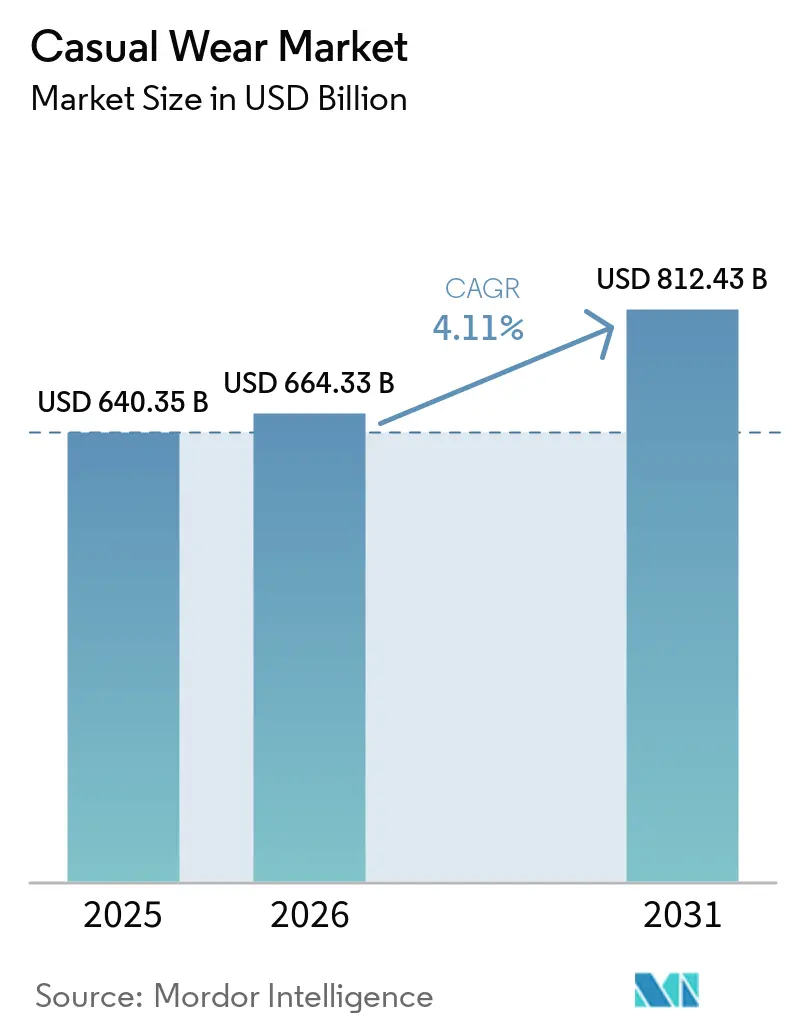
The casual wear market size is expected to grow from USD 640.35 billion in 2025 to USD 664.33 billion in 2026 and is forecast to reach USD 812.43 billion by 2031 at a 4.11% CAGR over 2026-2031. Market growth is driven by the increasing preference for comfortable and versatile everyday apparel, supported by the widespread adoption of casual dress codes in workplaces, the continued popularity of athleisure and streetwear, and the expansion of e-commerce and omnichannel retailing. Advances in sustainable and functional fabric technologies, along with rising consumer interest in environmentally responsible apparel, are further shaping product innovation and purchasing decisions. However, the market continues to face challenges from fluctuating raw material costs, increasing regulatory requirements related to textile sustainability and product compliance, rapidly changing fashion trends that can lead to inventory obsolescence, and the proliferation of counterfeit products, all of which affect profitability and operational efficiency across the value chain.
Key Report Takeaways
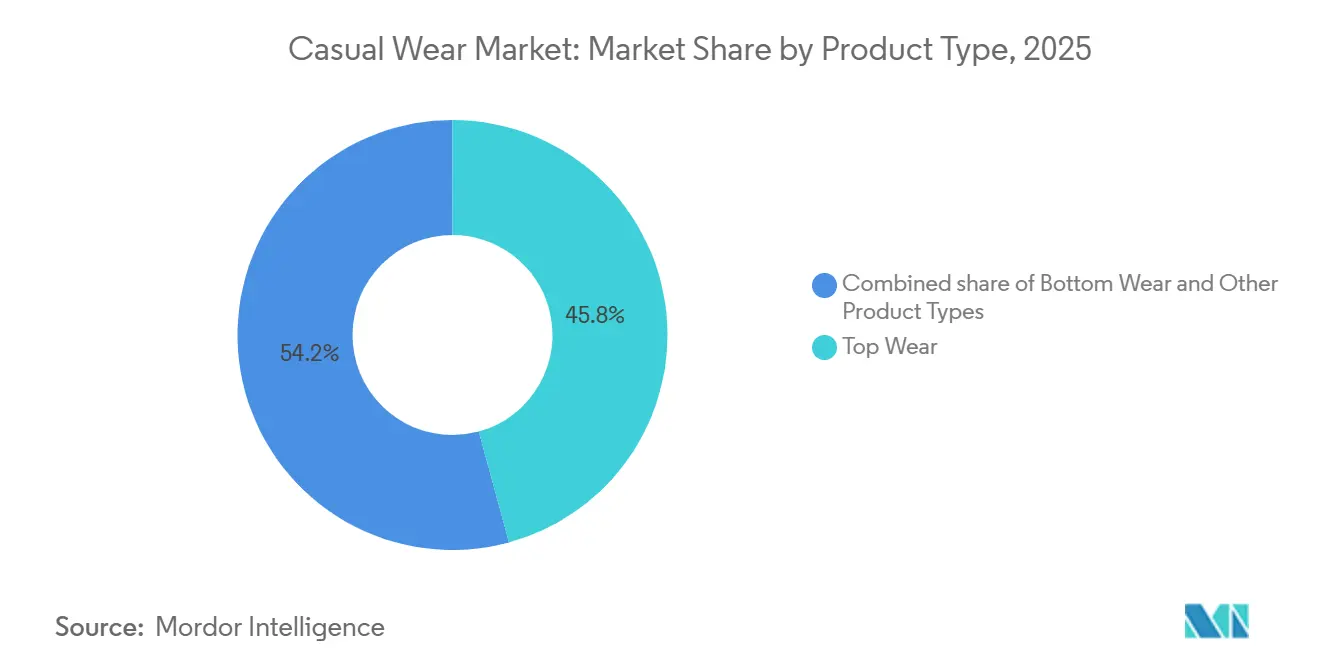
- By product type, top wear held 45.76% of the casual wear market share in 2025, while bottom wear is forecast to expand at a 5.05% CAGR from 2026 to 2031
- By category, mass held 67.85% share in 2025, while premium is projected to grow at a 5.65% CAGR through 2031
- By fabric type, cotton accounted for 42.13% share in 2025, while nylon is expected to grow at a 5.12% CAGR during 2026 to 2031
- By end user, women represented 51.95% share in 2025, while men recorded the highest projected CAGR at 5.96% through 2031
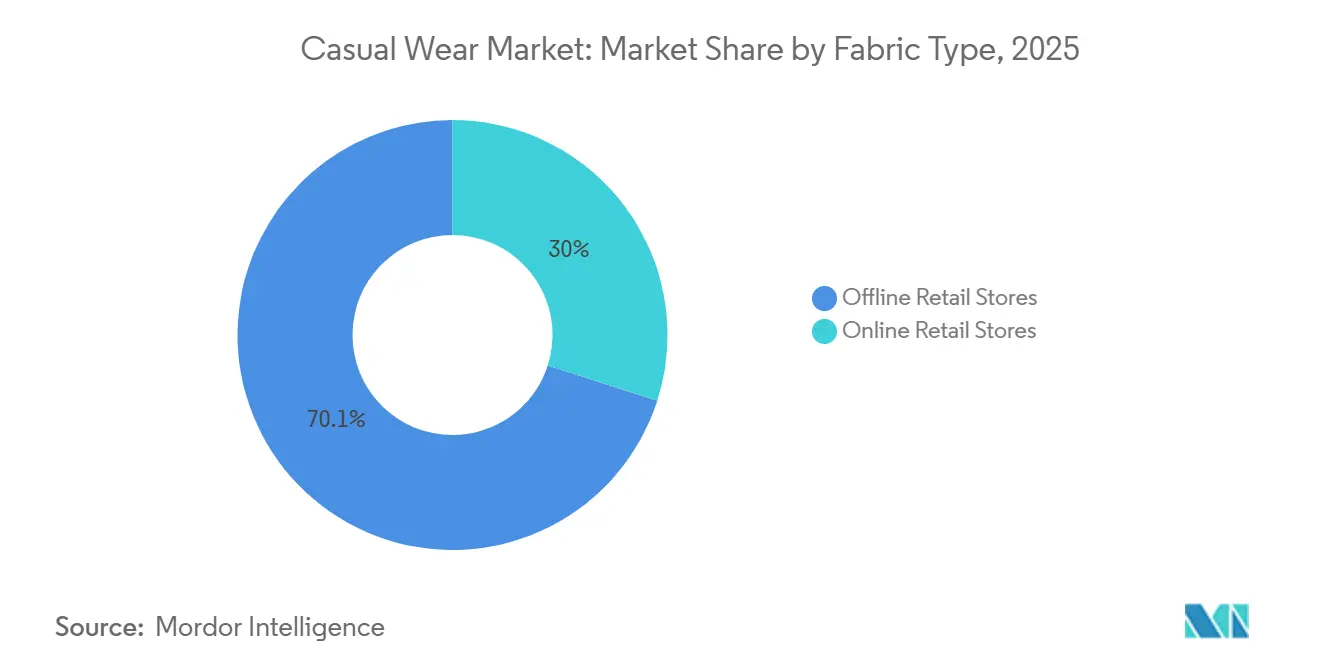
- By distribution channel, offline retail stores held 70.05% share in 2025, while online retail stores are projected to grow at a 6.25% CAGR through 2031
- By geography, Asia-Pacific held 32.56% share in 2025, while South America is forecast to grow at a 5.19% CAGR from 2026 to 2031
Note: Market size and forecast figures in this report are generated using Mordor Intelligence’s proprietary estimation framework, updated with the latest available data and insights as of January 2026.
Global Casual Wear Market Trends and Insights
Drivers Impact Analysis*
| Driver | (~) % Impact on CAGR Forecast | Geographic Relevance | Impact Timeline |
|---|---|---|---|
| Rising influence of social media and digital fashion trends | +0.6% | Global, with concentrated impact in North America, Asia-Pacific, and Europe | Short term (≤ 2 years) |
| Increasing acceptance of casual dress codes across workplaces | +0.8% | Global; strongest in North America, Europe, and urban Asia-Pacific | Long term (≥ 4 years) |
| Continuous innovation in sustainable and functional fabrics | +0.5% | Europe (regulatory pull), North America, Asia-Pacific (manufacturing innovation) | Medium term (2-4 years) |
| Expansion of e-commerce and omnichannel fashion retail | +0.8% | Global; highest growth in South America, South/Southeast Asia, Middle East and Africa | Medium term (2-4 years) |
| Expansion of athleisure and sport-inspired fashion | +0.7% | North America, Asia-Pacific core, spill-over to Middle East and Africa | Short term (≤ 2 years) |
| Growing popularity of streetwear and youth fashion culture | +0.4% | North America, Europe, East Asia, with growing Middle East and Africa relevance | Short term (≤ 2 years) |
| Source: Mordor Intelligence | |||
Rising Influence of Social Media and Digital Fashion Trends
The growing influence of social media and digital platforms is reshaping fashion discovery, enabling brands to engage consumers through influencer content, creator-led styling, and integrated shopping experiences. According to the International Telecommunication Union (ITU) Facts and Figures 2024, 5.5 billion people, representing 68% of the global population, were using the internet in 2024, expanding the potential reach of digital fashion content[1]Source: International Telecommunication Union, "Internet use", itu.int. The same report noted that 79% of individuals aged 15–24 used the internet globally in 2024, compared with 66% of the rest of the population, highlighting the strong online engagement of younger consumers[2]Source: International Telecommunication Union, "Youth Internet use", itu.int. Additionally, the OECD Digital Economy Outlook 2024 found that individuals aged 18–24 are 25 percentage points more likely to source information from social media than those aged 65 and older, reinforcing the growing role of digital platforms in influencing casual wear trends and purchasing decisions[3]Source: Organisation for Economic Co-operation and Development, "OECD Digital Economy Outlook 2024 (Volume 2)", oecd.org.
Increasing Acceptance of Casual Dress Codes Across Workplaces
The growing acceptance of casual dress codes in workplaces is supporting demand for casual wear, as organizations adopt more flexible workplace policies. The expansion of hybrid and remote working models has further encouraged the use of comfortable yet presentable apparel suitable for both professional and personal settings. Employees are increasingly seeking versatile clothing that can transition between work, social, and leisure activities, driving purchases of smart-casual and athleisure-inspired garments. This shift in workplace culture continues to reinforce long-term demand for functional, comfortable, and stylish casual wear across diverse consumer groups.
Continuous Innovation in Sustainable and Functional Fabrics
Continuous innovation in sustainable and functional fabrics is driving growth in the casual wear market by improving product performance and meeting evolving consumer expectations. Apparel manufacturers are increasingly incorporating recycled fibers, organic materials, moisture-wicking textiles, stretch fabrics, and temperature-regulating technologies to improve comfort, durability, and everyday functionality. Investment in environmentally responsible materials and low-impact production processes is also strengthening the appeal of casual wear among sustainability-conscious consumers. These developments are enabling brands to differentiate their product offerings and support sustained demand across a range of casual apparel categories.
Expansion of E-Commerce and Omnichannel Fashion Retail
The expansion of e-commerce and omnichannel fashion retail is driving growth in the casual wear market by improving product accessibility and the overall shopping experience. Digital platforms allow consumers to browse extensive product assortments, compare prices, and make purchases from any location, while omnichannel strategies integrate online and offline touchpoints. Features such as personalized recommendations, virtual try-on tools, flexible delivery options, and hassle-free returns are strengthening consumer engagement. As brands continue to invest in digital commerce and unified retail ecosystems, the availability and reach of casual wear products are expanding across diverse consumer segments.
Restraints Impact Analysis*
| Restraint | (~) % Impact on CAGR Forecast | Geographic Relevance | Impact Timeline |
|---|---|---|---|
| Synthetic-fiber dependency and sustainability scrutiny | -0.3% | Europe (Regulations), North America, Asia-Pacific manufacturing hubs | Medium term (2-4 years) |
| Counterfeit and clone product proliferation | -0.2% | Global; highest impact in Asia-Pacific, Middle East and Africa, and South America | Long term (≥ 4 years) |
| Increasing regulatory requirements for textile sustainability and product compliance | -0.2% | Europe (primary), with North America and Asia-Pacific following | Medium term (2-4 years) |
| Rapidly changing fashion trends leading to inventory obsolescence | -0.2% | Global; highest impact on brands with long sourcing lead times | Short term (≤ 2 years) |
| Source: Mordor Intelligence | |||
Synthetic-Fiber Dependency and Sustainability Scrutiny
The casual wear market faces challenges due to its continued reliance on synthetic fibers, which are increasingly subject to environmental scrutiny from consumers, regulators, and advocacy groups. Concerns over microplastic pollution, fossil fuel-based raw materials, and the environmental impact of textile production are driving demand for sustainable alternatives. At the same time, brands face pressure to improve supply chain transparency, adopt responsible sourcing practices, and substantiate sustainability claims, raising compliance and operational costs. These factors can limit profitability and create challenges for manufacturers transitioning to more sustainable product portfolios.
Counterfeit and Clone Product Proliferation
The proliferation of counterfeit and clone products poses a significant challenge to the casual wear market by eroding brand value and diverting sales from legitimate manufacturers. The widespread availability of imitation apparel through informal retail channels and online marketplaces makes it difficult for consumers to distinguish authentic products from low-quality replicas. This affects consumer trust and intensifies price competition, particularly for established and premium brands. As a result, companies are compelled to invest more in brand protection, product authentication, and enforcement measures, increasing operational costs and market complexity.
*Our forecasts treat driver/restraint impacts as directional, not additive. The impact forecasts reflect baseline growth, mix effects, and variable interactions.
Segment Analysis
By Product Type: Top Wear's Scale Masks Bottom Wear's Momentum
Top wear accounted for the largest share of the casual wear market, at 45.76% in 2025. This is attributed to its broad product portfolio, including T-shirts, polo shirts, casual shirts, hoodies, and sweatshirts. These garments cater to a wide range of everyday occasions, from work and travel to leisure and social activities, making them wardrobe essentials across all age groups. Frequent replacement cycles, year-round demand, and continuous style refreshes further support the segment's dominant market position. The segment also benefits from its adaptability to changing fashion preferences and seasonal variations. A wide range of price points and designs further supports its accessibility across consumer groups.
Bottom wear is projected to register the fastest growth, expanding at a 5.05% CAGR during 2026–2031. Rising consumer preference for versatile denim, joggers, chinos, cargo pants, and athleisure-inspired bottoms is supporting demand across both casual and smart-casual wardrobes. Manufacturers are also introducing improved fits, stretch fabrics, and sustainable materials to enhance comfort and functionality, driving higher consumer adoption. The increasing emphasis on versatile clothing is encouraging consumers to select bottom-wear styles suitable for multiple settings. Broader product availability across retail formats is also supporting consumer choice and adoption.



By Category: Mass Scale Versus Premium Acceleration
Mass accounted for the largest share of the casual wear market, at 67.85% in 2025, owing to its affordability, broad product availability, and appeal across a wide consumer base. The segment benefits from strong demand for everyday essentials such as T-shirts, jeans, shirts, and sweatshirts, particularly in price-sensitive and emerging markets. Extensive distribution through supermarkets, department stores, specialty retailers, and online platforms further reinforces its dominant market position.
The premium segment is projected to register the fastest growth, at a CAGR of 5.65% during 2026–2031. Rising consumer preference for higher-quality materials, superior craftsmanship, and versatile designs suitable for both casual and semi-formal settings is driving demand for premium casual apparel. Growing disposable incomes, premiumization , and increasing consumer willingness to invest in durable and sustainable clothing are also supporting the segment's expansion.
By Fabric Type: Cotton's Foundation and Nylon's Rise
Cotton accounted for the largest share of the casual wear market, at 42.13% in 2025, owing to its softness, breathability, durability, and suitability for everyday apparel. Its widespread use across T-shirts, shirts, dresses, jeans, and other casual garments makes it the preferred fabric for consumers seeking comfort and versatility. The material's broad availability, ease of maintenance, and compatibility with both mass-market and premium apparel further support its dominant market position.
Nylon is projected to register the fastest growth, expanding at a 5.12% CAGR during 2026–2031. Increasing demand for lightweight, stretchable, and moisture-wicking fabrics in athleisure-inspired and performance casual wear is driving nylon adoption. Ongoing advancements in recycled nylon production, fabric engineering, and sustainable textile technologies are further enhancing its appeal, enabling manufacturers to combine functionality with improved environmental performance.
By End User: Women's Dominance and Men's Rapid Expansion
Women accounted for the largest share of the casual wear market, at 51.95% in 2025, driven by a wider range of apparel options, higher purchase frequency, and strong demand for fashion-forward everyday clothing. The segment includes diverse product categories such as tops, dresses, jeans, leggings, and athleisure, catering to various lifestyles and occasions. Continuous product launches, seasonal collections, and evolving fashion trends further reinforce the segment's dominant market position.
Men are projected to represent the fastest-growing end-user segment, expanding at a 5.96% CAGR during 2026–2031. Increasing acceptance of casual dressing in workplaces, rising demand for versatile everyday apparel, and the growing popularity of athleisure are driving growth across men's casual wear. Brands are also expanding their offerings with modern fits, performance fabrics, and lifestyle-oriented collections, supporting higher adoption across different age groups and occasions.
By Distribution Channel: Offline Scale Versus Online Velocity
Offline retail stores accounted for the largest share of the casual wear market, at 70.05% in 2025, driven by consumers' preference to assess fit, fabric quality, and comfort before purchasing. Specialty apparel stores, department stores, supermarkets, and hypermarkets continue to attract significant footfall by offering a wide product assortment, immediate product availability, and in-store promotional activities. These advantages help maintain the channel's dominant position, particularly in developing markets.
Online retail stores are projected to register the fastest growth, expanding at a CAGR of 6.25% during 2026–2031. Increasing internet penetration, smartphone adoption, and the convenience of digital shopping are encouraging consumers to purchase casual apparel through e-commerce platforms. Features such as personalized recommendations, virtual try-ons, flexible payment options, and easy returns are further improving the online shopping experience, while omnichannel strategies continue to strengthen digital sales.
Geography Analysis
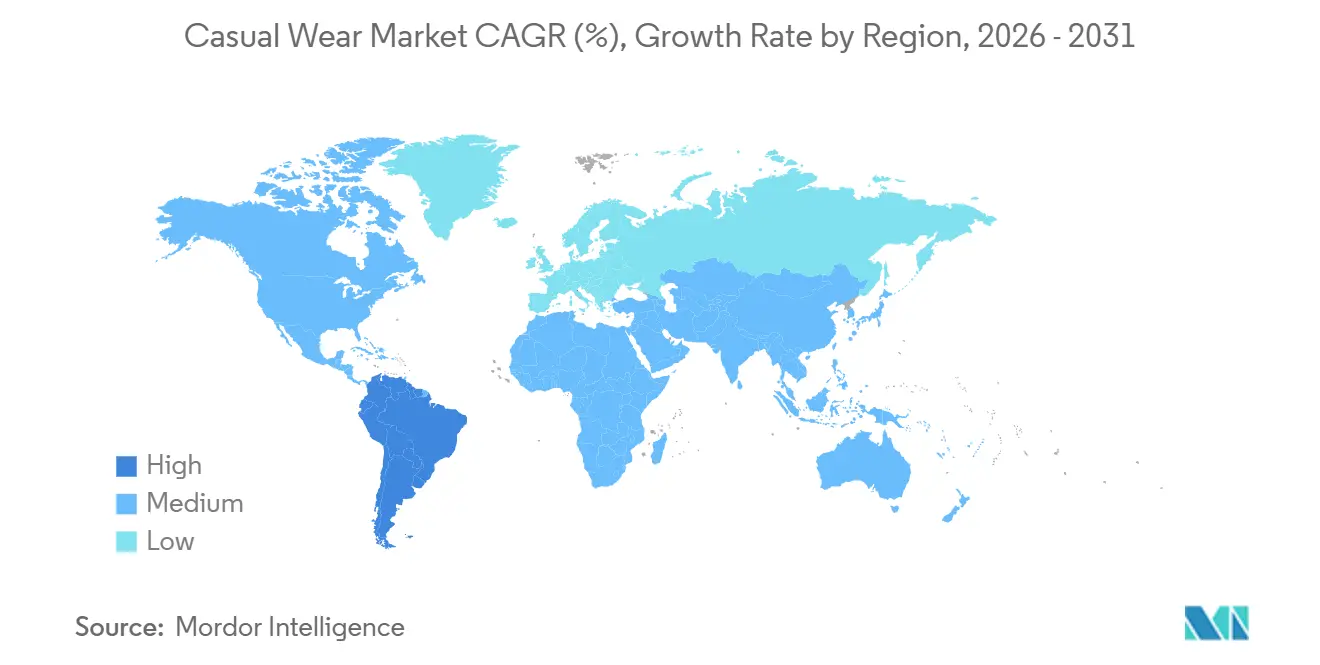
Asia-Pacific accounted for the largest share of the casual wear market at 32.56% in 2025, supported by its large consumer base, rapid urbanization, rising disposable incomes, and a strong apparel manufacturing ecosystem. Countries such as China, India, Japan, South Korea, and Indonesia continue to drive regional demand through expanding middle-class populations, evolving fashion preferences, and increasing adoption of casual and athleisure apparel. The rapid growth of organized retail and e-commerce platforms further supports the region's market position.
South America is projected to register the fastest growth, expanding at a CAGR of 5.19% during 2026–2031. Rising consumer spending on apparel, increasing fashion awareness, and expanding access to organized retail and online shopping are supporting market growth across the region. Brazil remains the primary growth driver due to its large apparel industry and growing demand for affordable and premium casual wear, while other South American countries are witnessing increasing participation from both domestic and international fashion brands.
North America and Europe represent mature markets characterized by high per-capita apparel spending, established retail infrastructure, and strong demand for premium and sustainable casual wear. The Middle East and Africa are steadily expanding, supported by a young population, increasing urbanization, and the gradual development of organized retail and digital commerce. These regions are expected to offer long-term growth opportunities as fashion accessibility and consumer purchasing power continue to improve.

Competitive Landscape
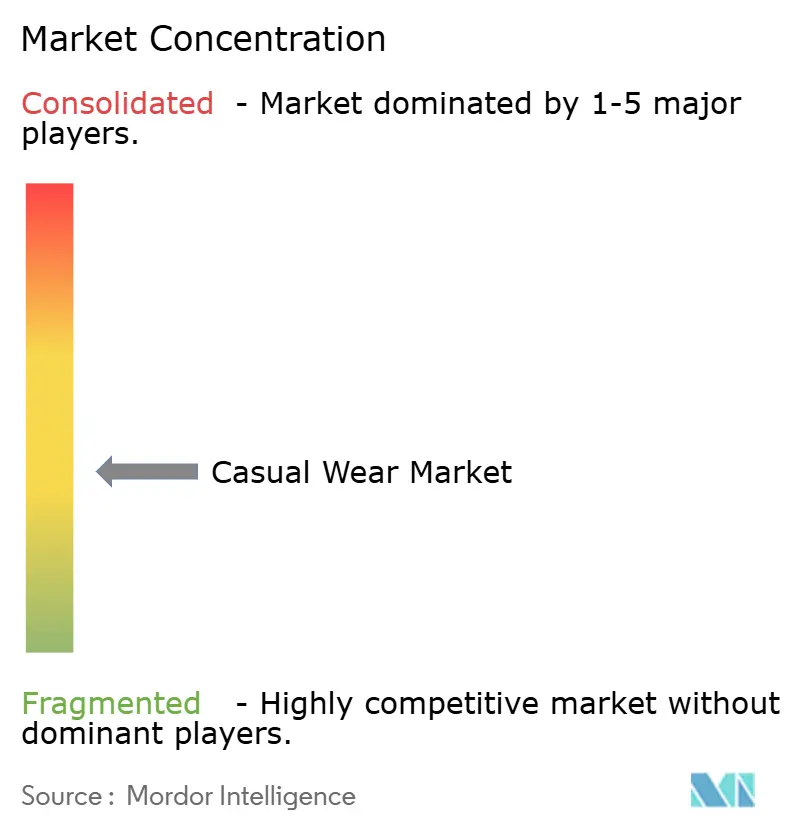
The casual wear market is moderately fragmented, with competition spread across global apparel brands, regional manufacturers, and emerging direct-to-consumer companies. Major players, including Nike, Inc., Adidas AG, Hennes & Mauritz AB (H&M), Inditex Group, and Lululemon Athletica, maintain strong market positions through extensive product portfolios, established brand recognition, and wide retail networks. Regional brands continue to strengthen their presence by catering to local fashion preferences and price-sensitive consumer segments.
Leading companies are focusing on expanding omnichannel retail capabilities, strengthening digital commerce, and introducing sustainable and functional apparel collections to enhance consumer engagement. They are also investing in innovative fabrics, product personalization, data-driven merchandising, and strategic collaborations to differentiate their offerings and respond to changing fashion trends. Geographic expansion into emerging markets and supply chain optimization remain key competitive priorities.
The market is also witnessing increasing competition from digitally native fashion brands and private-label retailers, particularly through online sales channels. Rising demand for sustainable apparel, premium casual wear, and athleisure-inspired clothing is creating growth opportunities for both established companies and new entrants. As consumer preferences continue to evolve, product innovation, pricing strategies, and brand differentiation are expected to remain the primary factors shaping competition in the global casual wear market.
Casual Wear Industry Leaders
-
Nike, Inc.
-
Adidas AG
-
Hennes and Mauritz AB
-
Inditex Group
-
Lululemon Athletica
- *Disclaimer: Major Players sorted in no particular order

Recent Industry Developments
- May 2026: NikeSKIMS launched the Studio Stretch collection, featuring an ultrasoft and lightweight performance material designed for studio workouts and everyday wear. The collection offers light compression, enhanced stretch, and a soft hand feel to provide comfort and flexibility during movement. As part of the brand’s head-to-toe system of dress, Studio Stretch includes close-to-body essentials designed for layering and versatile styling across active and casual settings.
- January 2026: ANTA Sports announced plans to acquire a 29.06% stake in PUMA SE as part of its multi-brand globalization strategy. The acquisition is expected to strengthen ANTA Sports’ global presence while supporting PUMA’s growth across key markets, including China. The partnership aims to leverage complementary capabilities across product categories, regional reach, and brand management, while maintaining PUMA’s operational independence and brand identity.
- August 2025: H&M entered the Brazilian market by launching its first physical store and e-commerce platform simultaneously, expanding its retail footprint in South America. The expansion introduces H&M’s apparel offerings to Brazilian consumers through both offline and online channels, supporting the company’s broader global market growth strategy.


Global Casual Wear Market Report Scope
The casual wear market comprises everyday apparel designed for comfort, versatility, and style, catering to a wide range of consumer lifestyles and occasions. The market is segmented into product type comprising top wear, bottom wear, and other product types; category including mass and premium; fabric type covering cotton, polyester, denim, nylon, and other fabric types; end user including men, women, and children; distribution channel comprising offline retail stores and online retail stores; and geography covering North America, Europe, Asia-Pacific, South America, and the Middle East and Africa. For each segment, the market sizing and forecasting have been done in value terms (USD billion).
| Top Wear |
| Bottom Wear |
| Other Product Types |
| Mass |
| Premium |
| Cotton |
| Polyester |
| Nylon |
| Denim |
| Other Fabric Types |
| Men |
| Women |
| Children |
| Offline Retail Stores | Supermarkets/Hypermarkets |
| Specialty Stores | |
| Department Stores | |
| Other Offline Retail Stores | |
| Online Retail Stores |
| North America | United States |
| Canada | |
| Mexico | |
| Rest of North America | |
| Europe | Germany |
| United Kingdom | |
| Italy | |
| France | |
| Spain | |
| Netherlands | |
| Poland | |
| Belgium | |
| Sweden | |
| Rest of Europe | |
| Asia-Pacific | China |
| India | |
| Japan | |
| Australia | |
| Indonesia | |
| South Korea | |
| Thailand | |
| Singapore | |
| Rest of Asia-Pacific | |
| South America | Brazil |
| Argentina | |
| Colombia | |
| Chile | |
| Peru | |
| Rest of South America | |
| Middle East and Africa | South Africa |
| Saudi Arabia | |
| United Arab Emirates | |
| Nigeria | |
| Egypt | |
| Morocco | |
| Turkey | |
| Rest of Middle East and Africa |
| By Product Type | Top Wear | |
| Bottom Wear | ||
| Other Product Types | ||
| By Category | Mass | |
| Premium | ||
| By Fabric Type | Cotton | |
| Polyester | ||
| Nylon | ||
| Denim | ||
| Other Fabric Types | ||
| By End User | Men | |
| Women | ||
| Children | ||
| By Distribution Channel | Offline Retail Stores | Supermarkets/Hypermarkets |
| Specialty Stores | ||
| Department Stores | ||
| Other Offline Retail Stores | ||
| Online Retail Stores | ||
| By Geography | North America | United States |
| Canada | ||
| Mexico | ||
| Rest of North America | ||
| Europe | Germany | |
| United Kingdom | ||
| Italy | ||
| France | ||
| Spain | ||
| Netherlands | ||
| Poland | ||
| Belgium | ||
| Sweden | ||
| Rest of Europe | ||
| Asia-Pacific | China | |
| India | ||
| Japan | ||
| Australia | ||
| Indonesia | ||
| South Korea | ||
| Thailand | ||
| Singapore | ||
| Rest of Asia-Pacific | ||
| South America | Brazil | |
| Argentina | ||
| Colombia | ||
| Chile | ||
| Peru | ||
| Rest of South America | ||
| Middle East and Africa | South Africa | |
| Saudi Arabia | ||
| United Arab Emirates | ||
| Nigeria | ||
| Egypt | ||
| Morocco | ||
| Turkey | ||
| Rest of Middle East and Africa | ||


Key Questions Answered in the Report
What is the projected value of the casual wear market by 2031?
The casual wear market is expected to reach USD 812.43 billion by 2031, rising from USD 664.33 billion in 2026 at a 4.11% CAGR.
Which product segment leads global demand for casual wear?
Top wear was the largest product type in 2025 with a 45.76% share, supported by broad use across age groups, income levels, and occasions.
Which category is growing faster, mass or premium?
Mass remained the largest category with 67.85% share in 2025, while premium is growing faster at a 5.65% CAGR through 2031.
Why are online channels becoming more important for apparel brands?
Online retail stores are expected to grow at 6.25% CAGR, helped by mobile shopping, repeat replenishment, and stronger integration with store networks.
Page last updated on:


 Your data is secure and never sold or shared.


