
Market Overview
| Study Period | 2020 - 2031 |
|---|---|
| Forecast Data Period | 2026 - 2031 |
| Historical Data Period | 2020 - 2024 |
| Growth Rate | 6.24 % |
Major Players *Disclaimer: Major Players sorted in no particular order Image © Mordor Intelligence. Reuse requires attribution under CC BY 4.0. | |
Canada Artificial Organs And Bionic Implants Market Analysis by Mordor Intelligence
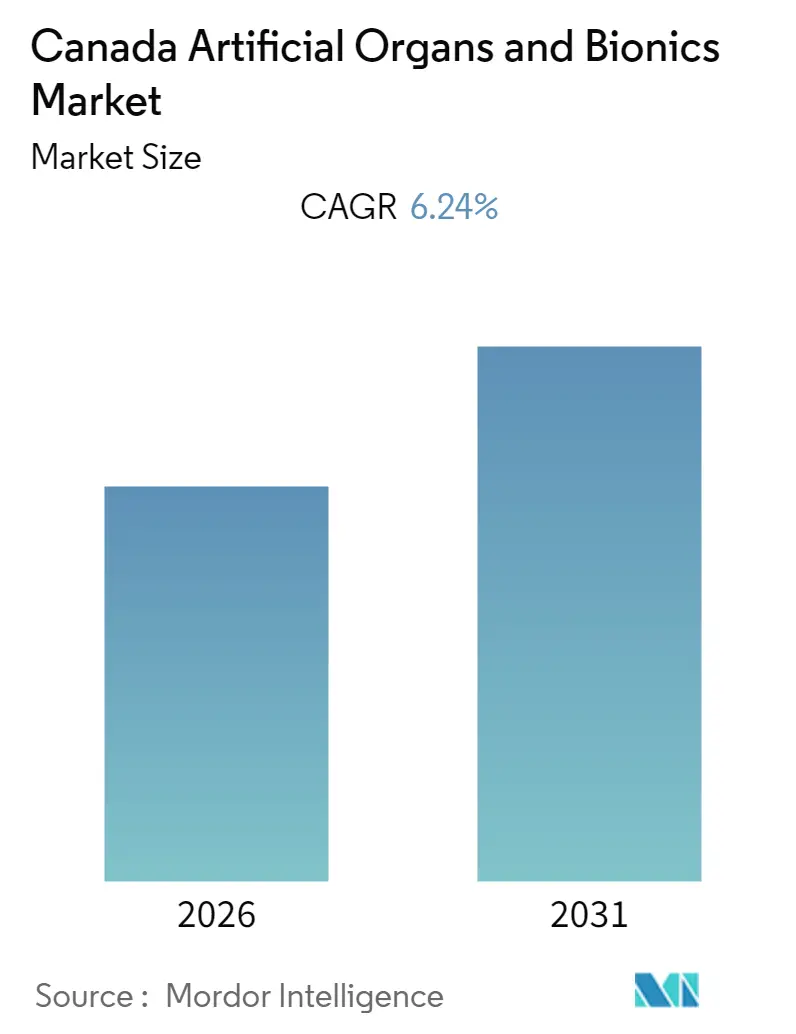
The Canada Artificial Organs And Bionic Implants Market size was valued at USD 1.34 billion in 2025 and estimated to grow from USD 1.42 billion in 2026 to reach USD 1.93 billion by 2031, at a CAGR of 6.24% during the forecast period (2026-2031).
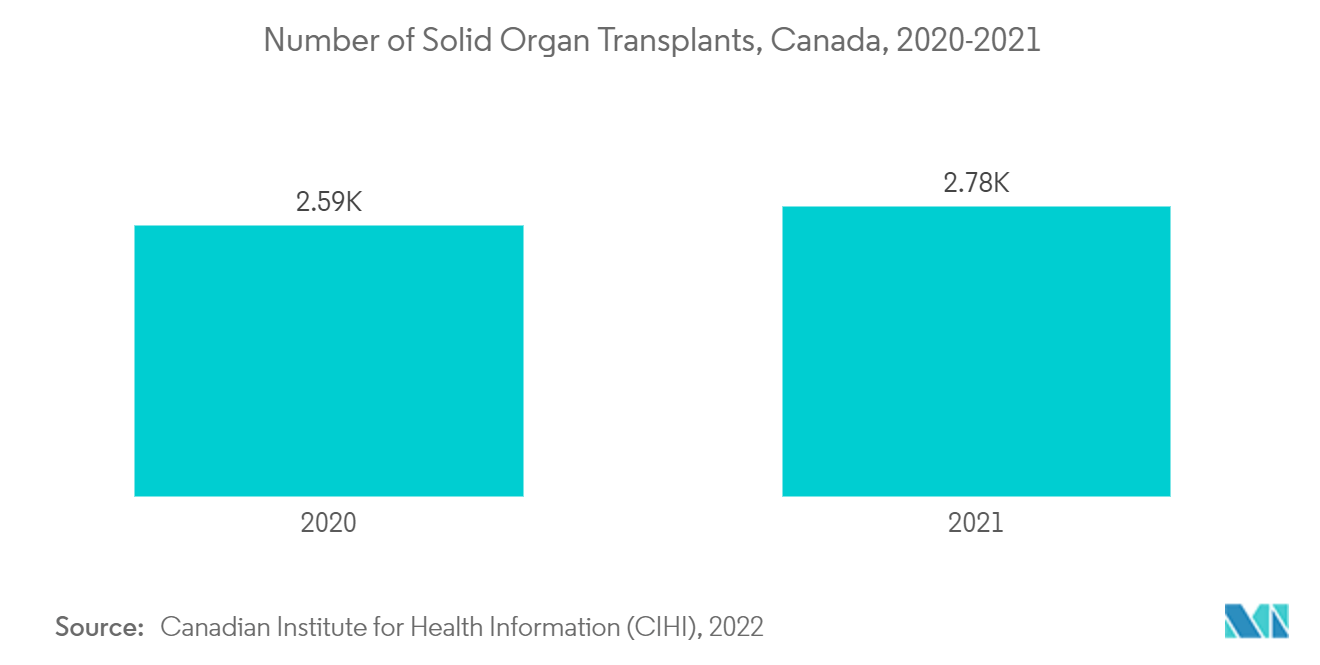
The COVID-19 outbreak significantly impacted the market initially, as elective and semi-urgent medical care and procedures were discontinued to maintain the patient care capacity. Thus, the initial period of the pandemic adversely impacted the market due to a decrease in organ transplantations. For instance, according to the study published in BMC Medical Ethics in October 2021, the organ and tissue donation and transplantation (OTDT) system faced ethical challenges in Canada due to pandemic, such as risks of infection and resource allocation. However, the easing of lockdowns and a growing number of transplants due to pending cases are likely to accelerate the market's growth during the forecast period. According to the study published in the Canadian Medical Association Journal in September 2021, there was feasibility for lung transplantation in patients following severe acute COVID-19 infection in Toronto. Therefore, during the later phases of the pandemic, the market grew due to the rising number of lung transplantation. Thus, the market is anticipated to reach the pre-pandemic levels by mid-2023.
The factors driving the market's growth include the rising incidence of organ failure and scarcity of organ donors.
The scarcity of natural organs for donation in Canada is fueling the market. For instance, according to the Canadian Institute of Health Information, published in June 2022, a total of 4,043 Canadians were waiting for transplants as of December 31, 2021. According to the same source, 57% of people were still on the wait list, while 43% were temporarily put on hold for medical or other reasons.
The rising investments from the Canadian government for the development of artificial organs is expected to drive the market's growth. For instance, in April 2022, the Government of Canada invested CAD 2 million (USD 1.4 million) for research on innovative organ and tissue donation projects to reduce the waiting times for organ donations.
Thus, due to the scarcity of donor organs and rising initiatives from the government, the market is expected to register significant growth over the forecast period. However, the high cost of the procedure and the risk of compatibility and malfunctions may slow down the market's growth.
Note: Market size and forecast figures in this report are generated using Mordor Intelligence’s proprietary estimation framework, updated with the latest available data and insights as of 2026.
Canada Artificial Organs And Bionic Implants Market Trends and Insights
Artificial Kidney Segment is Expected to Witness Significant Growth During the Forecast Period
Renal replacement therapy (Artificial Kidney) mimics the complex structure of the human kidney while maintaining the patient's quality of life. Artificial kidneys may be wearable or implantable options for kidney replacement therapy.
The artificial kidney segment is expected to register significant growth over the forecast period due to the rising number of transplant surgeries and the large population suffering from kidney diseases. According to the Canadian Institute for Health Information 2022, about 1,673 kidney transplants were performed in the country, and 3,060 people were waiting for a transplant as of December 31, 2021. According to the same source, about 105 people died in 2021 while waiting for a transplant. Therefore, such a huge demand for kidney transplantation in Canada is expected to drive the segment's growth.
The high prevalence of chronic kidney diseases is expected to drive the segment's growth. Chronic kidney disease is a result of kidney damage or decreased kidney function for three months or more. As per the Kidney Foundation of Canada 2022, 1 in 10 Canadian has kidney disease. Thus, such a high prevalence is driving the demand for artificial kidney transplants.


Ear Bionics May Show Healthy Growth During the Forecast Period
Ear bionics work by translating sound into nerve impulses that are transmitted to the brain, thereby assisting those with severe to profound hearing loss. For these devices, electrodes are implanted inside the cochlea and a transmitter is put beneath the skin behind the ear (a cone-shaped tube in the inner ear).
The rising demand for ear bionics led to increased initiatives from key market players to launch their products, thus driving the market's growth. For instance, in November 2022, the Cochlear Nucleus 8 Sound processor developed by Cochlear Limited was approved by the US FDA. By the end of 2022, the Nucleus 8 Sound Processor was marketed in the United States and Canada. Such launches and approvals in Canada are expected to drive the segment's growth.
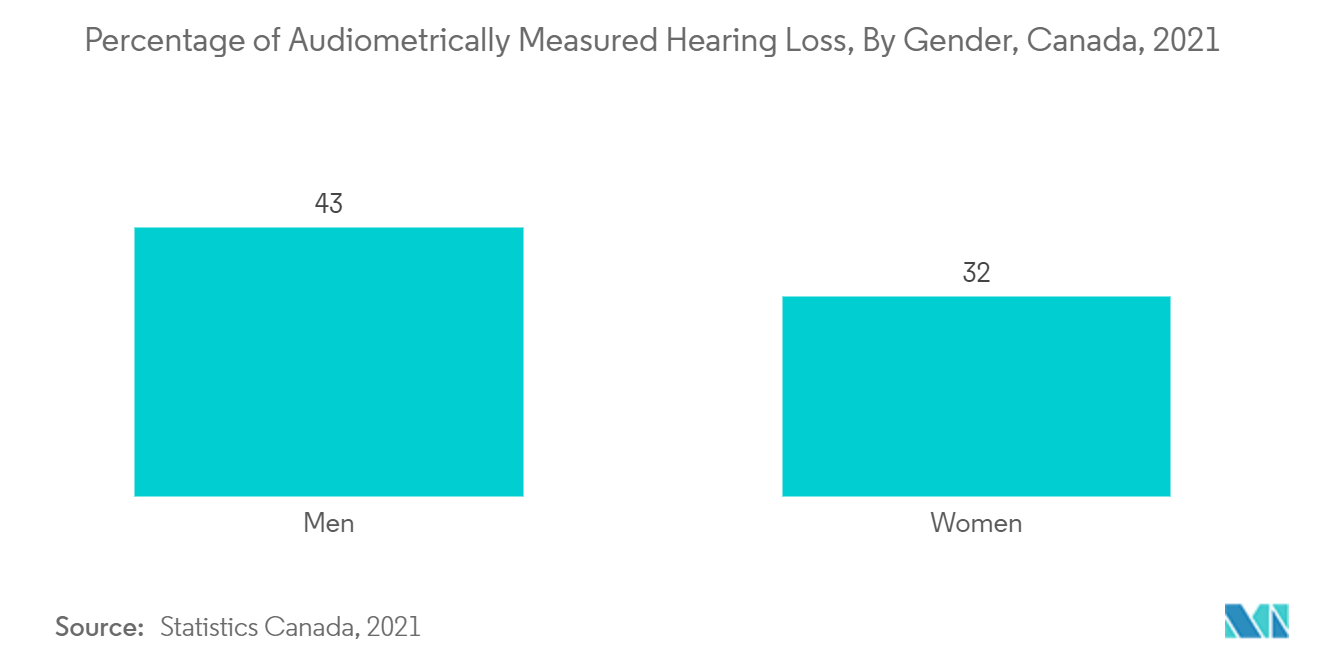
According to Statistics Canada, in October 2021, 38% of adults aged 20-79 years had hearing loss, while 37% had tinnitus. Such a huge incidence of hearing problems in Canadian adults is expected to boost the segment's growth due to the rising development of hearing aids and bionics in the region.
Therefore, the growing number of hearing problems and the development of bionics for hearing are expected to drive the segment's growth.
Competitive Landscape
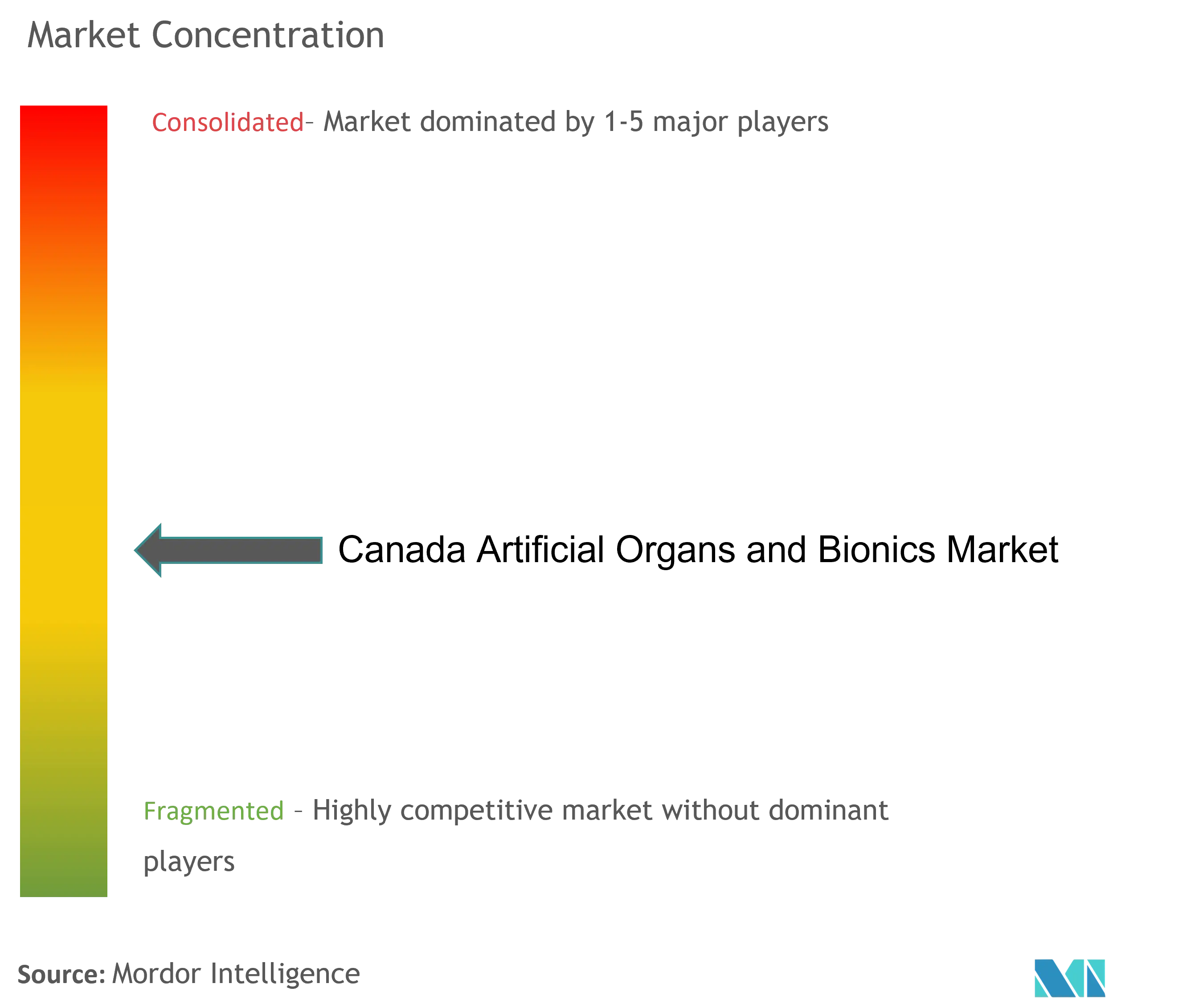
The Canada artificial organs and bionic implants market is moderately competitive due to the presence of multiple companies operating in the country. The competition in the market is due to the rising launch of products by market players and key strategies from international and local companies in the market. Some of the players in the market include Asahi Kasei Medical Co. Ltd, Baxter International Inc., Berlin Heart GmbH, Boston Scientific Corporation, Ekso Bionics Holdings Inc., Getinge AB, Medtronic PLC, and Ossur.
Canada Artificial Organs And Bionic Implants Industry Leaders
Ossur
Cochlear
Baxter
Boston Scientific
Medtronic PLC
- *Disclaimer: Major Players sorted in no particular order

Market Opportunities and Future Outlook
Canada has visible whitespace for next-generation artificial organ substitutes and bionic implants that reduce reliance on donor supply and widen access to advanced implantable therapies, supported by the transplant backlog (4,043 Canadians waiting for transplants as of December 31, 2021, per CIHI, with kidney demand a major contributor). That demand is aligning with a domestic push to build clinical-stage and commercial-scale biomanufacturing for tissue-engineered products. In July 2024, the federal and British Columbia governments announced a CAD 72.75 million joint investment with Vancouver-based Aspect Biosystems to establish a clinical-stage biomanufacturing facility for bioprinted tissue therapeutics. In April 2026, the federal government announced a CAD 127 million investment involving Aspect Biosystems and Providence Health Care, including a CAD 79 million contribution tied to expanding 3D tissue printing capacity and advancing clinical development of cellular medicines.
The near-term opportunity is concentrated in technology platforms and care pathways that can translate into reimbursable implantable solutions, including cochlear implants and neuromodulation, alongside the emerging pipeline of bioprinted tissues. Health Canada oversight under the Medical Devices Regulations (risk-based Classes I to IV) and its device evidence expectations for novel manufacturing methods such as 3D printing create a clearer route for innovators to build bench, biocompatibility, and clinical evidence for higher-risk implantables. Investments in advanced manufacturing also help improve supply reliability and localize critical inputs for implantable and tissue-based therapies, and in March 2025 federal support was announced for OmniaBio to expand AI and robotics-enabled cell and gene therapy manufacturing at McMaster Innovation Park in Hamilton, which strengthens Canada-based capabilities for regenerative-medicine adjacent development and scale-up.
Recent Industry Developments
- May 2026: Medtronic announced that BrainSense technology, including Adaptive deep brain stimulation (aDBS) and the BrainSense Electrode Identifier (EI), was licensed by Health Canada for Parkinsons disease management. The licensure improves access to data-driven, adaptive neuromodulation platforms in Canada and reinforces the shift toward personalized implantable therapies within the countrys bionics and neurostimulation segments.
- March 2025: Medtronic launched the Inceptiv closed-loop rechargeable spinal cord stimulation (SCS) system in Canada after Health Canada licensure. The system expands the implantable pain-therapy options in the country with closed-loop functionality and an MRI-conditional design, supporting broader clinical adoption in chronic pain pathways.
- January 2025: Medtronic reported completion of its fifth implant program in Canada for the Aurora EV-ICD (extravascular implantable cardioverter-defibrillator) system after receiving a Health Canada license, with implants performed at Canadian health centers including Southlake Regional Health Center in Ontario. Continued program execution indicates growing procedural readiness for extravascular cardiac rhythm management alternatives that avoid traditional transvenous leads.


Research Methodology Framework and Report Scope
Market Definition and Coverage
This market is defined as the value of implantable artificial organs and bionic implant devices used to replace, support, or restore organ and body functions for patients in Canada, measured as revenues generated within the country for these devices.
Scope exclusions: We exclude non-implant external assistive devices, routine surgical consumables, and general hospital services that are not part of the device selling price.
Segmentation Overview
- By Type
- Artificial Organ
- Artificial Heart
- Artificial Kidneys
- Artificial Lungs
- Cochlear Implants
- Other Organ Types
- Bionics
- Vision Bionics
- Ear Bionics
- Orthopedic Bionic
- Cardiac Bionics
- Artificial Organ
Data Sources, Market Sizing, and Validation
Desk Research
Desk research was used to set the basic boundaries of what counts as an artificial organ or a bionic implant in Canada, and to build the first view of demand signals. We relied on public, non-paywalled sources such as Statistics Canada, Health Canada device and safety communications, the Canadian Institute for Health Information (CIHI), and provincial health ministry publications that describe procedure volumes and system priorities.
To keep the model anchored to real pricing and supply conditions, we also reviewed sources such as company annual reports, investor presentations, peer-reviewed clinical journals on implant adoption and outcomes, and reputable press coverage of procurement and reimbursement updates. Where needed, we used paid subscriptions for company financials and news intelligence, plus patent databases to sanity-check innovation cadence and product refresh cycles. The desk sources listed here are illustrative only, and many other public and paid references were also used for data collection, validation, and clarification.
Primary Interviews and Surveys
Primary work focused on validating what is actually being implanted in Canada, how purchase decisions happen, and how pricing shifts with upgrades and bundled components. We spoke with a mix of manufacturers and distributors, clinicians and lab leaders involved in implant selection, and procurement or reimbursement stakeholders, and then cross-checked themes across major provinces to reduce single-site bias.
The interviews helped confirm utilization ranges, typical replacement cycles, and which device types are expanding faster due to changes in clinical practice. This tightened assumptions that are hard to infer from public statistics alone.
Distribution of primary research fieldwork respondents
| Company type | Respondent position |
|---|---|
| Top tier: 39% | CXOs: 15% |
| Mid tier: 45% | Functional/Unit leaders: 25% |
| Smaller Players: 16% | Managers: 60% |
Market-Sizing & Forecasting
Our sizing starts from a top-down build that reconstructs the Canada demand pool using procedure and patient-treatment signals, and then converts that into device revenues using category-level price points. Because the market mixes high value implants with different replacement patterns, the model was structured around key device families and their usage intensity rather than relying on a single average.
Inputs that materially move the totals include implant procedure volumes (for example, cardiac and orthopedic), diagnosed and treated patient pools relevant to organ support, donor-organ shortage indicators that influence substitution demand, average selling price progression for premium versus standard devices, and replacement or upgrade cycles (such as for cochlear systems). The forecast was run with scenario analysis, where the base case is adjusted using expert views on adoption speed, reimbursement stability, and supply availability, and then checked for realism against historical growth.
Selective bottom-up approximations were used to corroborate totals, including sampled ASP times volume checks for a few device categories and channel discussions on mix shifts. Where gaps appear in smaller subcategories, ranges were estimated using proxied utilization rates and then tightened through follow-up calls before finalizing the totals.
Data Validation & Update Cycle
Validation was done in several passes so the final number is consistent with what the Canada healthcare system can realistically absorb. Model outputs were compared against independent signals such as procedure trends, reported device adoption patterns, and pricing movement, and any sharp jumps were re-checked at the input level before sign-off.
We also run variance checks across segments so that no single assumption quietly drives the overall market, and then a second analyst reviews the logic and key parameters. The report is refreshed annually, with interim updates when material events occur, such as major reimbursement changes, safety actions, or notable product launches. Before delivery, a fresh review pass is completed so clients receive an updated view aligned to the latest available public and interview-backed inputs.
Mordor Intelligence's Canada Artificial Organs Bionic Implants Market Sizing Compared With Other Published Estimates
Published market values for Canada artificial organs and bionic implants can look far apart, even when they appear to talk about the same devices. The differences usually come from what is counted in scope, which year is treated as the starting point, and how pricing and adoption are projected when clinical practice and reimbursement are changing.
The table shows a noticeable spread that is largely explained by what gets bundled into the device value and how fast price and penetration are assumed to move year to year. Some estimates effectively pull in broader bionics and assistive categories or apply aggressive ASP expansion across all implant types, while other figures start from a higher procedure baseline year that is not re-checked against recent hospital capacity and referral flows.
Benchmark comparison
| Source | Market Size | Gaps in Research Methodology |
|---|---|---|
| Mordor Intelligence | USD 1.34 B (2025) | |
| Industry Research Publisher A | USD 1.65 B (2024) | Uses a different base year and a wider device basket, and its growth path implies faster adoption and pricing uplift across multiple implant categories without tying each to Canada procedure capacity signals. |
| Horizon Databook B | USD 2.31 B (2022) | Starts from an earlier high revenue year and groups artificial organs with broader bionics revenues, which can raise the total when adjacent categories and earlier-cycle pricing are blended into one country number. |
The table points to scope and starting-point choices as the main drivers of the gap, and in Mordor Intelligence's model the value is counted only for implantable artificial organ and bionic implant devices sold into Canada, with growth paced by procedure-linked demand and measured ASP progression rather than a single broad uplift factor.


Key Questions Answered in the Report
What is the current Canada artificial organs and bionic implants market size?
The Canada artificial organs and bionic implants market is projected to register a CAGR of 6.24% during the forecast period (2026-2031)
Who are the key players in Canada artificial organs and bionic implants market?
Ossur, Cochlear, Baxter, Boston Scientific and Medtronic PLC are the major companies operating in the Canada artificial organs and bionic implants market.
What years does this Canada artificial organs and bionic implants market cover?
The report covers the Canada artificial organs and bionic implants market historical market size for years: 2020, 2021, 2022, 2023, 2024 and 2025. The report also forecasts the Canada artificial organs and bionic implants market size for years: 2026, 2027, 2028, 2029, 2030 and 2031.
Page last updated on:





