
Brown Rice Market Size and Share
Market Overview
| Study Period | 2022 - 2032 |
|---|---|
| Market Size (2027) | USD 12.86 Billion |
| Market Size (2032) | USD 16.68 Billion |
| Fastest Growing Market | Asia-Pacific |
| Largest Market | Asia-Pacific |
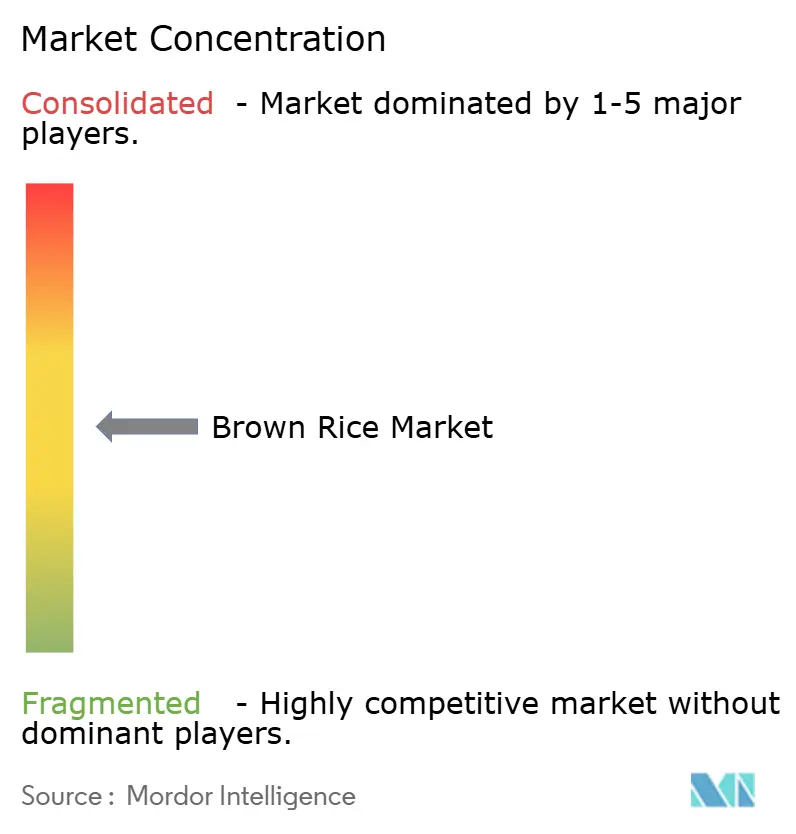
| Market Concentration | Medium |
Major Players *Disclaimer: Major Players sorted in no particular order Image © Mordor Intelligence. Reuse requires attribution under CC BY 4.0. | |
Brown Rice Market Analysis by Mordor Intelligence
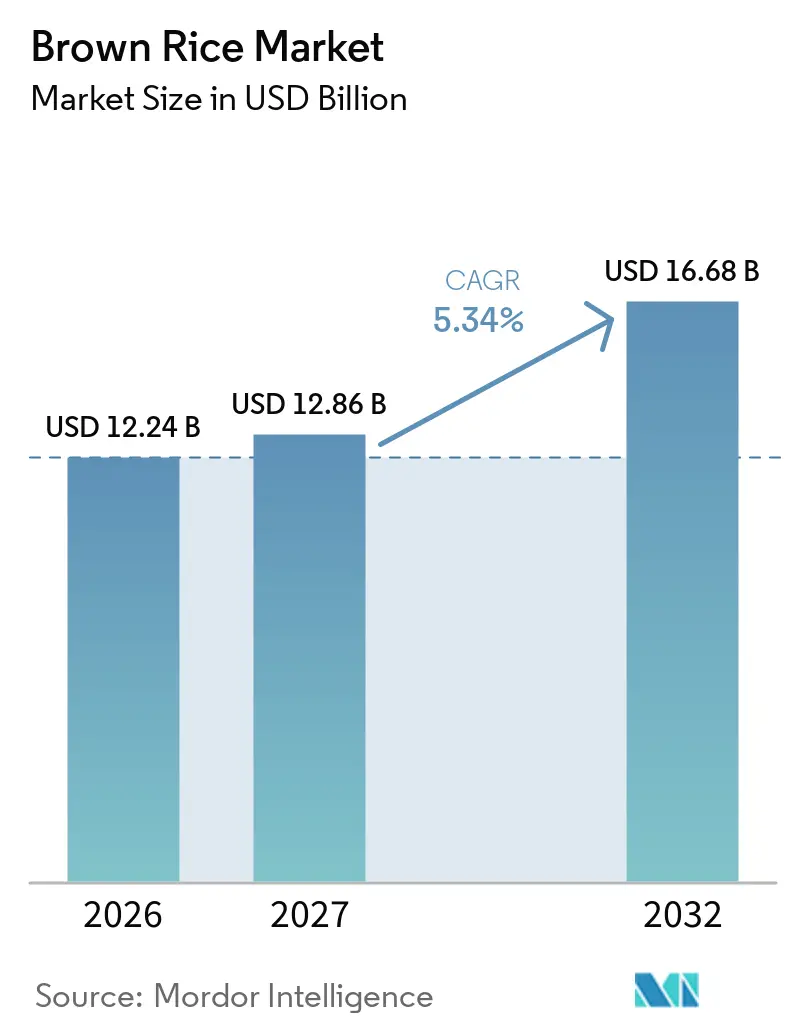
The brown rice market size is estimated at USD 12.24 billion by 2026 and is projected to reach USD 12.86 billion by 2027 and USD 16.68 billion by 2032, at a CAGR of 5.34% during the forecast period (2027-2032). The brown rice market benefits from consumer preference for less processed staple foods that retain the bran and germ layers. These layers provide dietary fiber, B vitamins, gamma-aminobutyric acid, and gamma-oryzanol, which support the product's health-oriented position. Consumer demand is also becoming more taste-led, which creates room for brands that improve convenience and recipes instead of relying only on health claims [1]. The brown rice market is shaped by premium organic products, functional formats, and online retail, while supermarkets remain important for staple purchases, and success will depend on making these options simple to prepare, easy to find, and suitable for familiar meals. Competitive activity increasingly focuses on convenience, certified production, and differentiated grain varieties rather than commodity volume alone.
Key Report Takeaways
- By product type, long grain brown rice held 54.75% of the brown rice market share in 2026, while it is forecast to grow at a 6.21% CAGR through 2032.
- By nature, conventional brown rice held 89.26% of the brown rice market share in 2026, while organic brown rice is forecast to grow at a 7.22% CAGR through 2032.
- By category, mass brown rice accounted for 76.52% of value in 2026, while premium brown rice is forecast to grow at a 7.27% CAGR through 2032.
- By distribution channel, supermarkets and hypermarkets held 61.83% of value in 2026, while online retail is forecast to grow at a 6.35% CAGR through 2032.
- By geography, Asia-Pacific held 42.64% of value in 2026, and is forecast to grow at a 7.58% CAGR through 2032.
Note: Market numbers in this report are based on Mordor Intelligence's proprietary estimation framework, which combines nine months of actuals with Q4 projections for base year 2026.
Global Brown Rice Market Trends and Insights
Drivers Impact Analysis*
| Driver | (~) % Impact on CAGR Forecast | Geographic Relevance | Impact Timeline |
|---|---|---|---|
| Growing popularity of minimally processed foods | +1.2% | Global, strongest in North America and Europe | Short term (≤ 2 years) |
| Growing demand from fitness-conscious consumer segments | +1.0% | Asia-Pacific, North America | Medium term (2-4 years) |
| Expanding demand for organic food products | +0.9% | North America, Europe, APAC core | Medium term (2-4 years) |
| Expanding government initiatives promoting whole grain consumption | +0.8% | China, EU, India | Medium term (2-4 years) |
| Increasing adoption of brown rice in diabetic-friendly diets | +0.7% | Global, early gains in South and Southeast Asia | Long term (≥ 4 years) |
| Increasing investments in advanced rice processing technologies | +0.5% | Japan, China, United States | Long term (≥ 4 years) |
| Source: Mordor Intelligence | |||
Growing Popularity of Minimally Processed Foods
Consumers in North America and Europe are choosing single-ingredient whole foods more often than highly processed staples. This preference supports the brown rice market because the grain fits everyday meals without extensive reformulation. More than 57% of surveyed U.S. consumers chose whole-grain options at least half the time they shopped in 2025. More than 77% wanted clear whole-grain labeling on packages, a figure that increased by 10 percentage points in one year, according to the USA Rice Federation. The Whole Grains Council advised companies to lead with flavor and cultural relevance, since taste-led messaging can support more durable purchasing behavior than medical claims [2]. The brown rice market can therefore benefit when brands pair whole-grain credentials with better recipes, convenient formats, and familiar meal occasions.
Growing Demand from Fitness-Conscious Consumer Segments
Fitness-oriented buyers form a growing consumer group for products positioned around balanced meals and functional nutrition. In Japan, health-focused rice and grain products grew 17.4% year over year to JPY 18.8 billion, equivalent to USD 126 million, from April 2024 through March 2025 (Nihon Shokuryo Shimbun). The Japanese brown rice market has a direct connection to this demand because fitness consumers value convenient sources of whole-grain carbohydrates. In South Korea, mixed grain and brown rice variants recorded immense sales growth in 2025, compared with plain white rice. Multi-grain options also reached a significant portion of microwavable ready-to-eat rice sold during the year. These results support investment in ready-to-eat and ready-to-cook offerings that reduce preparation effort for active consumers.
Expanding Demand for Organic Food Products
Organic brown rice is the fastest-growing category segment, although its supply base does not always expand as quickly as retail demand. U.S. organic rice acreage is declining as lower-priced imports from Asian producers pressure domestic growers. This leaves the brown rice market more dependent on foreign supply even as demand for certified products rises. In Indonesia, organic rice demand has grown by 15% to 20% annually, supported by urban health awareness and online distribution [3]. Lundberg Family Farms introduced Black Pearl Rice in February 2025 after 12 years of development and reported a 25% higher crop yield per acre while retaining Regenerative Organic Certified status. Certified varietal development can help producers manage cost pressure while protecting organic positioning.
Expanding Government Initiatives Promoting Whole Grain Consumption
Government dietary programs are increasing the visibility of whole grains in institutional meals and public health campaigns. In January 2025, China issued its National Whole Grain Action Plan for 2024 through 2035, according to the People's Republic of China. The plan supports public education, school and military meal programs, product standards, and certification systems. China stated that the share of whole grains in national grain consumption was below 1% when the plan was issued, according to the People's Republic of China. The brown rice market has a clear route into these programs because brown rice is a familiar grain with established nutritional recognition. In the United States, a statewide whole-grain field-to-fork initiative received USD 19 million in October 2025 for production, processing, and institutional procurement infrastructure.
Restraints Impact Analysis*
| Restraint | (~) % Impact on CAGR Forecast | Geographic Relevance | Impact Timeline |
|---|---|---|---|
| Strong competition from alternative whole grains | -1.2% | Global, most acute in North America and Europe | Medium term (2-4 years) |
| Limited consumer acceptance of chewy texture | -0.9% | Global, most pronounced in East and South Asia | Medium term (2-4 years) |
| Stringent food safety and quality compliance requirements | -0.4% | North America, EU | Medium term (2-4 years) |
| Seasonal production variations affecting consistent market supply | -0.3% | Asia-Pacific, particularly Japan and India | Short term (≤ 2 years) |
| Source: Mordor Intelligence | |||
Strong Competition from Alternative Whole Grains
The brown rice market competes for whole-grain meal occasions with quinoa, oats, millet, teff, and ancient grain blends. These alternatives often use similar health and sustainability messages, which reduces the distinctiveness of a basic brown rice offer. India has redirected the National Food Security Mission toward traditional nutrient-dense grains and has supported millet procurement through Shree Anna Abhiyan. This policy support strengthens a competing group of grains in institutional and household use. Brands need to compete through culinary versatility and easier preparation because fiber and lower glycemic positioning are no longer unique to brown rice. The pressure will remain as competing grains gain shelf space and foodservice menu placements.
Limited Consumer Acceptance of Chewy Texture
Texture remains a persistent obstacle where white rice is the established cultural standard. A 2025 study of brown rice flour waffles in Thailand found lower ratings for taste, texture, and overall acceptability than standard wheat formulations, according to the Journal of Food Health and Bioenvironmental Science. Research also links the bran layer's fiber and phytic acid to longer cooking times and lower palatability for some consumers. Processing methods such as cyclic trace enzymatic hydrolysis and ultrasonic-assisted pretreatments have shown technical potential, according to MDPI Foods. However, the available evidence places these approaches at laboratory scale rather than in cost-effective mass production. The brown rice market will face slower household adoption until preparation time and texture are closer to white rice.
*Our forecasts treat driver/restraint impacts as directional, not additive. The impact forecasts reflect baseline growth, mix effects, and variable interactions.
Segment Analysis
By Product Type: Long Grain's Culinary Range Anchors Both Share and Growth
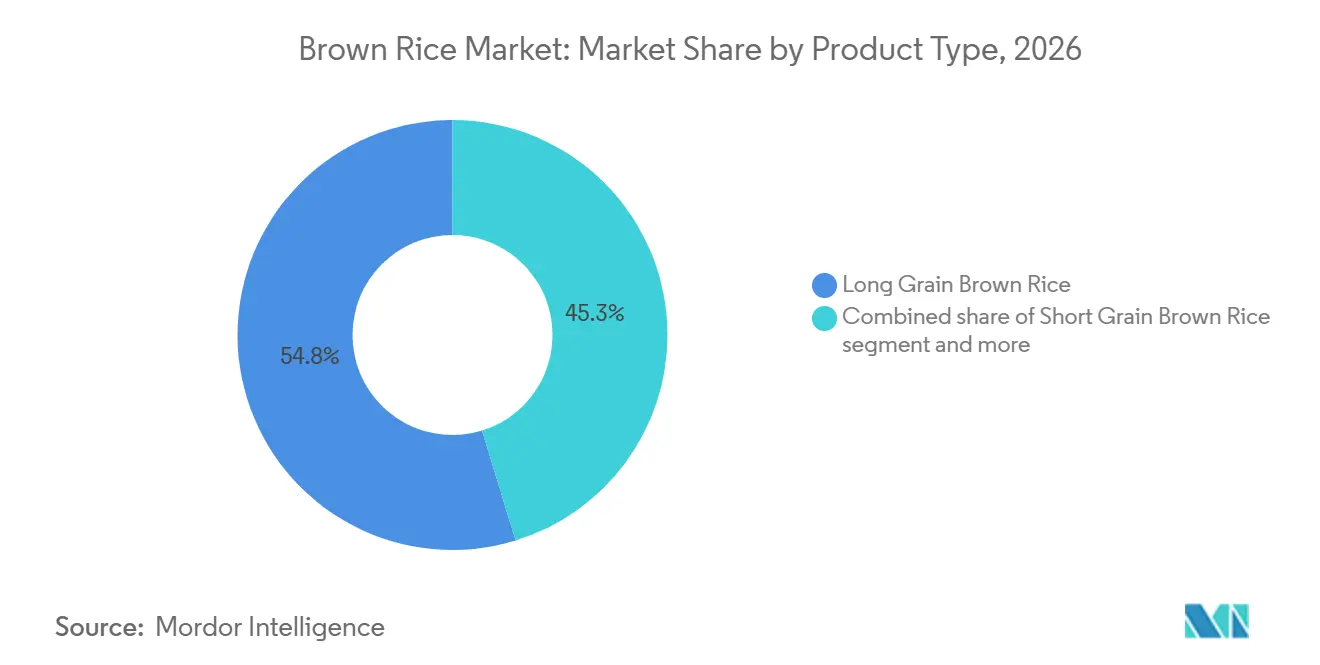
Long grain brown rice held 54.75% of value in 2026 and is projected to grow at a 6.21% CAGR through 2032. This makes long grain the largest product type and the fastest-growing type in the brown rice market. Its use in South Asian pilafs, North American grain bowls, and foodservice supports broad household and commercial demand. Millennials and Gen X are important users of long-grain formats, and flavor and enjoyment rank above health as purchase drivers.
The segment is established in routine consumption and is also suited to premium ready-to-cook and meal-kit formats. Short grain holds a higher-value niche in Japan and South Korea, where it is marketed as a functional food. Toyo Rice's Kinme Roucat Genmai held the top place in Japan's brown rice point-of-sale rankings for 6 consecutive years as of 2025, according to the Nihon Shokuryou Shimbun. Medium grain serves specialty applications such as risotto and sushi alternatives, but it has narrower household use. These differences give product developers clear choices between broadly used long grain and more specialized formats.

By Nature: Organic's Supply Gap Is the Segment's Defining Commercial Tension
Conventional brown rice accounted for 89.26% of value in 2026, supported by established supply chains, broad availability, and accessible prices. Organic brown rice is forecast to grow at a 7.22% CAGR through 2032. The brown rice market size for organic products is supported by consumer willingness to pay for certified production. Yet the decline in U.S. organic acreage creates a gap between growing retail demand and domestic supply.
LT Foods reported 41% year-over-year growth in its organic segment during FY2025, which reflects continued demand for premium offerings. USDA National Organic Program certification and EU Organic Farming Regulation 2018/848 require third-party certification and supply-chain traceability. These requirements increase entry costs for smaller producers but can strengthen the position of certified suppliers. Companies with certified production and direct digital channels can capture higher organic demand while reducing dependence on conventional retail routes.
By Category: Premium's Functional Positioning Outpaces the Mass Market
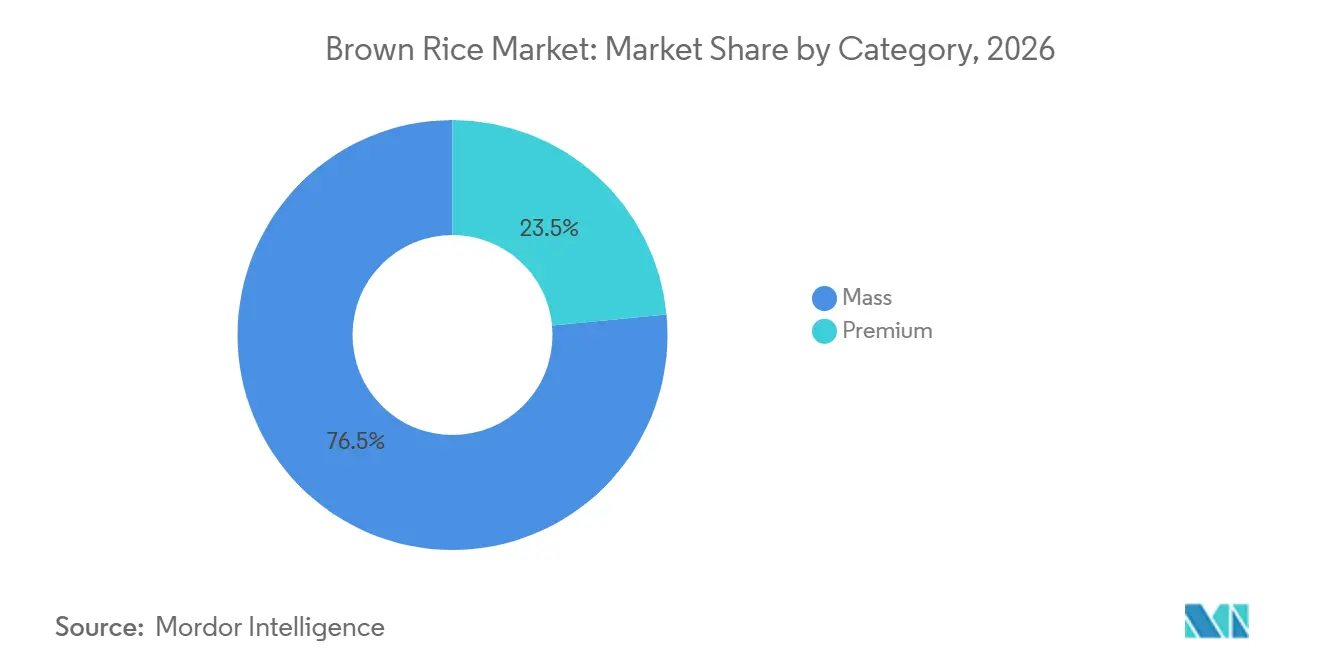
Mass brown rice accounted for 76.52% of value in 2026, reflecting institutional procurement, foodservice purchases, and price-sensitive retail demand. Premium brown rice is projected to grow at a 7.27% CAGR through 2032. The brown rice market is expanding in premium formats through germinated products, gamma-aminobutyric acid-enriched variants, and products positioned for glycemic management and gut health. These formats target consumers who look for functional attributes beyond a basic staple product.
Demand for mass-market brown rice is growing due to its affordability, wider retail availability, and increasing consumer awareness of whole-grain nutrition. Price-sensitive consumers are increasingly choosing economical brown rice options as healthier alternatives to polished white rice, while expanding supermarket, grocery store, and online distribution support broader household adoption. Yamato Sangyo reported annual sales growth of 60% for its gamma-aminobutyric acid-enriched germinated brown rice powder after reformulation and functional food label certification, according to Nihon Shokuryou Shimbun. Functional positioning and direct digital sales can raise the value captured from specialty formats. This supports premium formats as a distinct growth path within the brown rice market.
By Distribution Channel: Online Accelerates as Physical Retail's Structural Advantages Compress
Supermarkets and hypermarkets held 61.83% of the brown rice market size in 2026 because shoppers commonly buy staple foods through established physical retail. Online retail is forecast to grow at a 6.35% CAGR through 2032. Physical stores retain an advantage in bulk packaging, routine replenishment, and immediate product availability. Online platforms, however, can show premium and niche stock-keeping units that many stores cannot support.
KRBL stated in a 2025 interview that e-commerce and quick commerce represented 18% of its India revenue, up from 3% to 4% 3 years earlier. This statement is retained as a company example, but its media source is excluded from the citations. In China, 4 U.S. rice brands and 13 product types, including organic and brown rice products, were available on Taobao in 2025, compared with 1 brand and 4 products 2 years earlier, according to the USA Rice Federation. Online retail offers a practical route to cross-border premium assortment. The brown rice market can use this channel to reach consumers seeking specific certifications, grain types, and convenience formats.
Geography Analysis
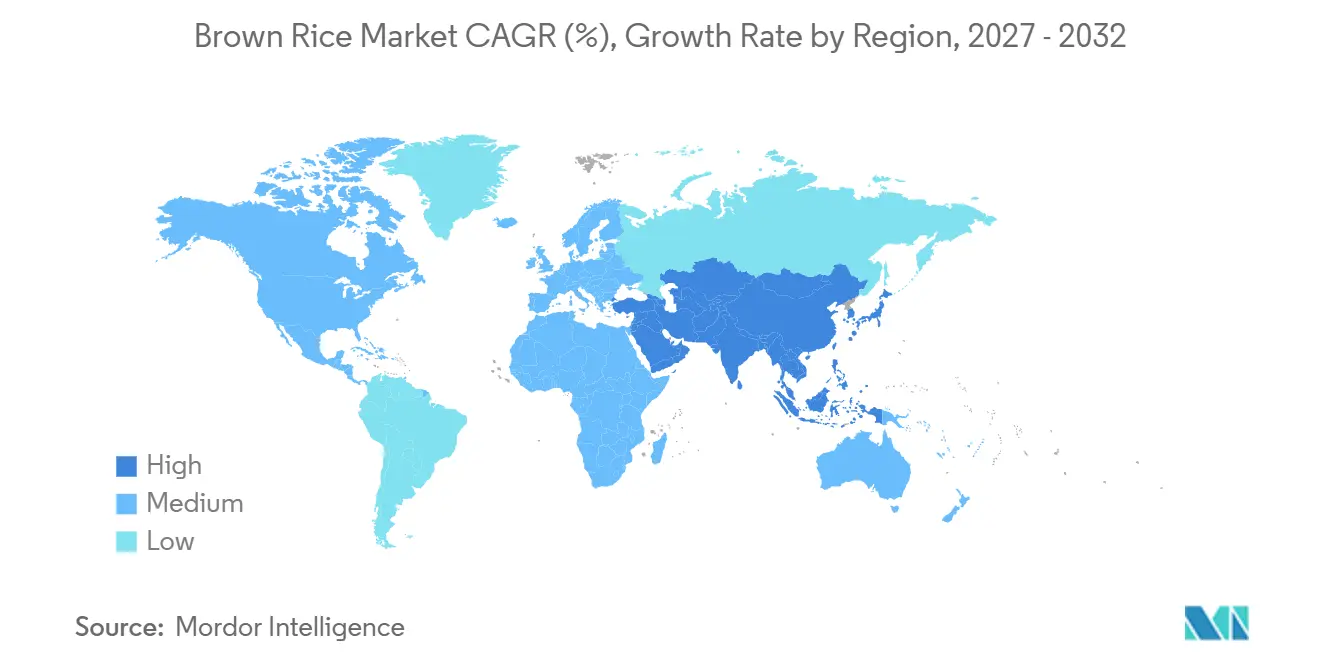
Asia-Pacific held 42.64% of global value in 2026 and is projected to grow at a 7.58% CAGR through 2032. The region's position in the brown rice market combines established rice consumption with increasing demand for healthier variants. China's National Whole Grain Action Plan seeks to raise whole grains from a sub-1% share of national grain consumption through education, institutional meals, and product standards, according to the Republic of China. Japan's health-oriented rice and grain category grew 17.4% year over year to JPY 18.8 billion, equivalent to USD 126 million, in the 12 months through March 2025 (Nihon Shokuryou Shimbun).
North America and Europe form the second-largest premium demand cluster for the brown rice market. In the United States, awareness exceeds 95% among adults, and 90% of adults have consumed brown rice (USA Rice Federation). The key task is therefore to increase buying frequency rather than to create initial awareness. The USD 19 million Washington initiative supports supply-chain infrastructure from production to institutional purchasing, according to the University of Washington. Organic demand is rising while domestic U.S. supply faces import competition, making domestic varietal development more important.
The Middle East and Africa and South America remain smaller but strategically relevant regions. The brown rice market in GCC countries can benefit from demand for low-glycemic whole-grain products, although imported products must meet local food quality rules. Brazil supports South American demand through its large production and consumption base. Ebro Foods acquired Argentine processor Hispasur S.A. in late 2025, indicating interest in regional sourcing capacity, but the non-qualifying finance-site link is excluded. South American demand remains focused on volume, while organic products are at an earlier stage and regional supply can provide support during Asian crop shortages.
Competitive Landscape
The brown rice market has a moderate concentration score. KRBL, LT Foods, Ebro Foods, Ricegrowers, and Riceland compete alongside premium organic brands such as Lundberg Family Farms and Lotus Foods. Larger processors compete through procurement scale, processing capacity, and physical distribution. Premium suppliers focus on proprietary varieties, functional processing, and sustainability certifications. This structure keeps the brown rice market fragmented across mainstream and specialized offers.
Ebro Foods reported EUR 2.33 billion in turnover and EUR 337.5 million in adjusted EBITDA for its rice division in FY2025. Its microwavable and specialty formats contributed to growth in key markets. Lundberg Family Farms introduced Black Pearl Rice after 12 years of development and reported a 25% per-acre yield improvement under regenerative organic conditions. The move shows how breeding programs can address the cost challenges of organic production.
Certification is increasingly important for premium shelf access and consumer trust. USDA Organic, Regenerative Organic Certified, and EU Organic Farming Regulation 2018/848 distinguish products in health-oriented channels. LT Foods reported 21% year-over-year growth in its ready-to-cook and ready-to-eat business in FY2025. This company example supports the role of convenience formats. Riceland Foods entered a logistics partnership with ODW Logistics in April 2025 to increase warehousing and transportation capacity in Memphis, Tennessee. Companies that lack certified supply or convenience offerings may face greater pressure from lower-priced imports in mass retail.
Brown Rice Industry Leaders
-
KRBL Limited
-
LT Foods Limited
-
Ebro Foods, S.A.
-
Lundberg Family Farms
-
Kohinoor Foods Limited
- *Disclaimer: Major Players sorted in no particular order
Recent Industry Developments
- January 2026: Ebro Foods acquired the remaining 30% stake in Bertagni S.p.A. through its French subsidiary Lustucru Premium Groupe for EUR 112.5 million, consolidating its premium rice and pasta portfolio in Europe. The move signals a deliberate shift toward brand-value competition over commodity volume across Ebro's international rice division.
- April 2025: Riceland Foods entered a logistics partnership with ODW Logistics for warehousing and transportation capacity in Memphis, Tennessee, aimed at expanding distribution throughput for conventional and brown rice product lines across Central and Southern U.S. markets.
- February 2025: Lundberg Family Farms introduced Black Pearl Rice after 12 years of proprietary development, achieving a 25% higher crop yield per acre under regenerative organic conditions, and simultaneously announced an accelerated specialty organic rice breeding program with 3 additional varieties in the pipeline.
Global Brown Rice Market Report Scope
The brown rice market encompasses the production, distribution, and sale of whole-grain rice that retains its bran and germ layers, catering to consumer demand for nutritious and minimally processed food products. The Brown Rice Market is Segmented by Product Type (Long Grain Brown Rice, Short Grain Brown Rice, and Medium Grain Brown Rice), Nature (Organic and Conventional), Category (Premium and Mass), by Distribution Channel (Supermarkets and Hypermarkets, Convenience/Grocery Stores, Online Retail Stores, and Other Distribution Channels), and by Geography (North America, Europe, Asia-Pacific, South America, and Middle East and Africa). The Market Forecasts are Provided in Terms of Value (USD).
| Long Grain Brown Rice |
| Short Grain Brown Rice |
| Medium Grain Brown Rice |
| Organic |
| Conventional |
| Premium |
| Mass |
| Supermarkets and Hypermarkets |
| Convenience/Grocery Stores |
| Online Retail Stores |
| Other Distribution Channels |
| North America | United States |
| Canada | |
| Mexico | |
| Rest of North America | |
| Europe | Germany |
| United Kingdom | |
| Italy | |
| France | |
| Spain | |
| Netherlands | |
| Poland | |
| Belgium | |
| Sweden | |
| Rest of Europe | |
| Asia-Pacific | China |
| India | |
| Japan | |
| Australia | |
| Indonesia | |
| South Korea | |
| Thailand | |
| Singapore | |
| Rest of Asia-Pacific | |
| Middle East and Africa | South Africa |
| Saudi Arabia | |
| United Arab Emirates | |
| Nigeria | |
| Egypt | |
| Morocco | |
| Turkey | |
| Rest of Middle East and Africa | |
| South America | Brazil |
| Argentina | |
| Colombia | |
| Chile | |
| Peru | |
| Rest of South America |
| By Product Type | Long Grain Brown Rice | |
| Short Grain Brown Rice | ||
| Medium Grain Brown Rice | ||
| By Nature | Organic | |
| Conventional | ||
| By Category | Premium | |
| Mass | ||
| By Distribution Channel | Supermarkets and Hypermarkets | |
| Convenience/Grocery Stores | ||
| Online Retail Stores | ||
| Other Distribution Channels | ||
| By Geography | North America | United States |
| Canada | ||
| Mexico | ||
| Rest of North America | ||
| Europe | Germany | |
| United Kingdom | ||
| Italy | ||
| France | ||
| Spain | ||
| Netherlands | ||
| Poland | ||
| Belgium | ||
| Sweden | ||
| Rest of Europe | ||
| Asia-Pacific | China | |
| India | ||
| Japan | ||
| Australia | ||
| Indonesia | ||
| South Korea | ||
| Thailand | ||
| Singapore | ||
| Rest of Asia-Pacific | ||
| Middle East and Africa | South Africa | |
| Saudi Arabia | ||
| United Arab Emirates | ||
| Nigeria | ||
| Egypt | ||
| Morocco | ||
| Turkey | ||
| Rest of Middle East and Africa | ||
| South America | Brazil | |
| Argentina | ||
| Colombia | ||
| Chile | ||
| Peru | ||
| Rest of South America | ||
Key Questions Answered in the Report
What is the projected growth rate for brown rice through 2032?
The category is projected to grow at a 5.34% CAGR from 2027 through 2032, reaching USD 16.68 billion by 2032.
Which brown rice product type is growing fastest?
Long grain is both the largest product type at 54.75% of 2026 value and the fastest-growing type at a 6.21% CAGR through 2032.
Why is organic brown rice growing faster than conventional rice?
Organic brown rice is forecast to grow at a 7.22% CAGR because certified products attract health-focused buyers, despite constraints in domestic supply.
Which region leads global demand for brown rice?
Asia-Pacific led with 42.64% of global value in 2026 and is forecast to grow at a 7.58% CAGR through 2032.