
Bronchiectasis Drugs Market Size and Share
Market Overview
| Study Period | 2020 - 2031 |
|---|---|
| Market Size (2026) | USD 2.66 Billion |
| Market Size (2031) | USD 5.28 Billion |
| Growth Rate (2026 - 2031) | 14.69 % |
| Fastest Growing Market | Asia-Pacific |
| Largest Market | North America |
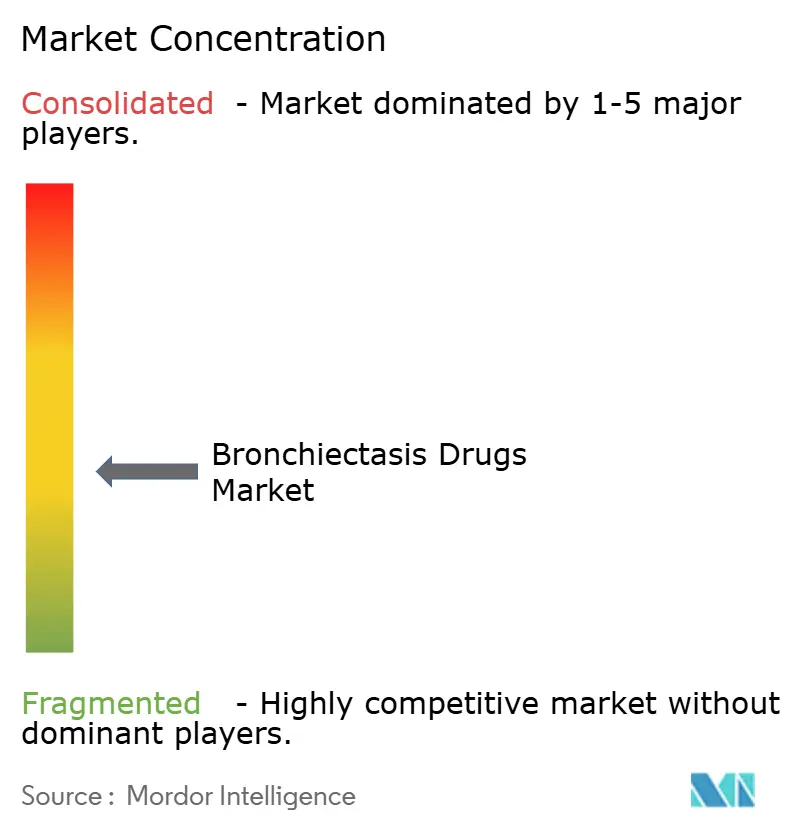
| Market Concentration | Medium |
Major Players *Disclaimer: Major Players sorted in no particular order Image © Mordor Intelligence. Reuse requires attribution under CC BY 4.0. | |
Bronchiectasis Drugs Market Analysis by Mordor Intelligence
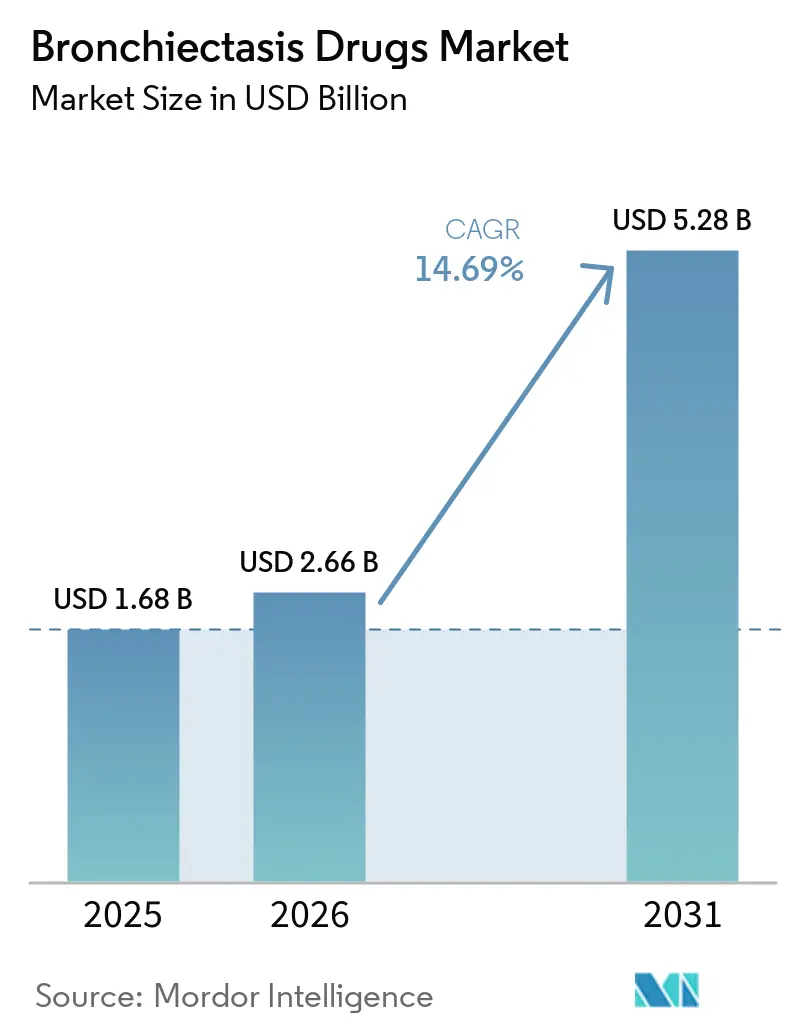
The bronchiectasis drugs market is expected to increase from USD 1.68 billion in 2025 to USD 2.66 billion in 2026, to reach USD 5.28 billion by 2031, growing at a CAGR 14.69% over 2026-2031. In August 2025, Brinsupri (brensocatib) became the first approved treatment specifically designed for non-cystic fibrosis bronchiectasis (NCFB). Previously, clinicians relied on asthma and chronic obstructive pulmonary disease (COPD) therapies that did not directly target neutrophilic airway inflammation. Insmed reported USD 309.2 million in Brinsupri revenue in the second quarter of 2026, up 49% from the first quarter, and raised its full-year guidance to USD 1.25 billion to USD 1.40 billion. Broader CT access improved bronchiectasis detection, while specialist care, reimbursement coverage, and patient monitoring influenced treatment adoption. A 2024 meta-analysis estimated the global adult bronchiectasis prevalence at 680 per 100,000 people, although diagnostic gaps remained significant in lower-resource settings.
Key Report Takeaways
- By drug class, antibiotics held 38.59% of the bronchiectasis drugs market share in 2025, while DPP-1 and Cathepsin C inhibitors are projected to grow at a 24.25% CAGR through 2031.
- By route of administration, oral accounted for 50.09% of the market share in 2025, and it is also projected to expand at an 17.97% CAGR through 2031.
- By patient type, adults represented 57.45% of revenue in 2025, while older adults are projected to record a 16.30% CAGR through 2031.
- By distribution channel, retail and community pharmacies accounted for 42.87% of revenue in 2025, while specialty pharmacies are expected to advance at a 17.30% CAGR through 2031.
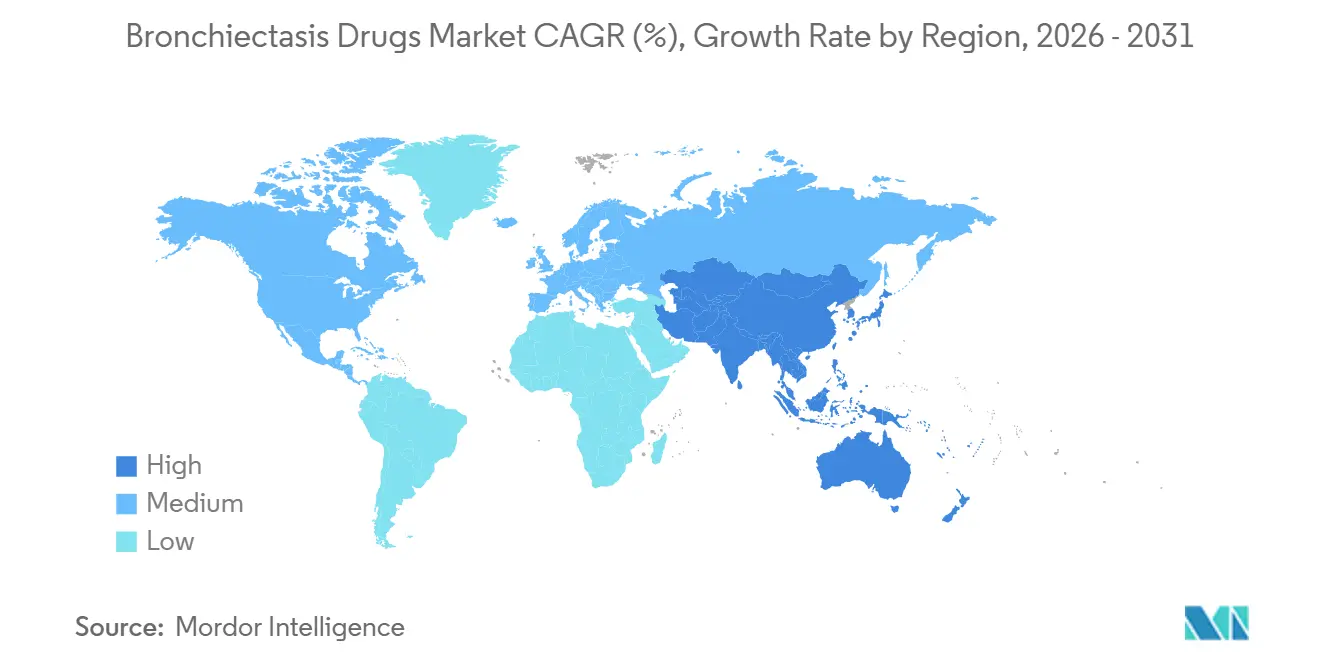
- By geography, North America held 44.75% of total treatment revenue in 2025, while Asia-Pacific is projected to expand at a 17.25% CAGR through 2031.
Note: Market size and forecast figures in this report are generated using Mordor Intelligence’s proprietary estimation framework, updated with the latest available data and insights as of January 2026.
Market Trends and Insights
Drivers Impact Analysis of Bronchiectasis Drugs Market*
| DRIVER | (~) % IMPACT ON CAGR FORECAST | GEOGRAPHIC RELEVANCE | IMPACT TIMELINE |
|---|---|---|---|
| Rising diagnosis of bronchiectasis through high-resolution CT and microbiology | +1.4% | Global, with the strongest impact in North America, Europe, China, Japan, South Korea, and urban Asia-Pacific markets | Medium term (2-4 years) |
| Expansion of disease-modifying therapy following brensocatib approval | +1.2% | North America, Europe, Japan, and selected high-income Asia-Pacific markets | Short term (≤ 2 years) |
| Recurrent exacerbations and long-term antibiotic utilization | +0.9% | Global, with higher relevance in markets with established specialist respiratory care | Medium term (2-4 years) |
| Growing recognition of chronic pseudomonas aeruginosa infection | +0.6% | North America, Europe, Australia, Japan, China, and South Korea | Medium term (2-4 years) |
| Precision stratification by neutrophilic and eosinophilic phenotypes | +0.5% | North America and Europe, followed by Japan and developed Asia-Pacific markets | Medium term (2-4 years) |
| Home-Based Nebulization and Digital Adherence Monitoring | +0.3% | North America, Western Europe, Japan, Australia, and South Korea | Short term (≤ 2 years) |
| Source: Mordor Intelligence | |||
Rising Diagnosis of Bronchiectasis Through High-Resolution CT and Microbiology
Respiratory specialists increasingly identified bronchiectasis when assessing patients with persistent asthma or COPD symptoms using high-resolution CT. The WHO identified chronic respiratory disease as a key setting for earlier diagnosis and coordinated respiratory care. As a result, specialist consultations for obstructive lung disease became an important pathway to bronchiectasis diagnosis and subsequent treatment. A 2026 European Respiratory Society review reported rising prevalence across multiple cohorts as diagnostic capacity improved. The European Medicines Agency granted PRIME support to brensocatib, reflecting the unmet need in NCFB and a clearer regulatory pathway for disease-specific therapies.[1]Jing Liu et al., “Prevalence of Bronchiectasis in Adults: A Meta-Analysis,” BMC Public Health, doi.org. The bronchiectasis drugs market could expand as more diagnosed patients moved from general respiratory care into specialist treatment pathways.
Recurrent Exacerbations and Long-Term Antibiotic Utilization
A 2025 randomized trial found that dual and triple inhaled bronchodilator regimens reduced exacerbations among bronchiectasis patients with airflow obstruction. The findings strengthened the clinical rationale for long-acting combination therapies in patients with coexisting obstructive respiratory disease. This supported demand for products such as GSK’s Trelegy Ellipta and AstraZeneca’s Breztri Aerosphere. The 2025 European Respiratory Society guideline advised against routine inhaled corticosteroid use in patients without asthma or COPD while maintaining its role for eligible patients. The guidance focused treatment on appropriate patient populations and supported recurring prescription demand in the bronchiectasis drugs market.[2]World Health Organization, “Global Scientific Panel on Chronic Respiratory Diseases: Background Paper,” World Health Organization, who.int.
Precision Stratification by Neutrophilic and Eosinophilic Phenotypes
Blood eosinophil counts became increasingly relevant in identifying bronchiectasis patients who could benefit from inhaled corticosteroids. EMBARC registry findings published in 2025 showed fewer exacerbations and hospitalizations among corticosteroid users with elevated eosinophil levels than among comparable patients with normal levels. This evidence supported phenotype-based treatment decisions rather than broad empirical use. It also provided manufacturers with a clearer basis for developing therapies for patients with eosinophilic disease characteristics. Sanofi’s itepekimab program introduced a biologic approach that differed from DPP-1 inhibition. The bronchiectasis drugs market could develop separate treatment pathways for neutrophilic and eosinophilic disease if future clinical evidence supported distinct labels.
Home-Based Nebulization and Digital Adherence Monitoring
Digital respiratory tools helped patients track medication-use patterns and receive adherence reminders outside clinical settings. Aptar Digital Health received FDA 510(k) clearance in 2025 for HeroTracker Sense, a Bluetooth-enabled sensor for pressurized metered-dose inhalers. These tools supported care teams in distinguishing poor adherence from inadequate drug response. Oral brensocatib reduced dependence on inhaler training because patients took it once daily. Insmed’s inLighten program combined financial support with services designed to support treatment use. The bronchiectasis drugs market increasingly extended beyond medicines to include patient support and home-based monitoring.
Restraints Impact Analysis of Bronchiectasis Drugs Market*
| RESTRAINT | (~) % IMPACT ON CAGR FORECAST | GEOGRAPHIC RELEVANCE | IMPACT TIMELINE |
|---|---|---|---|
| Inhaler-use errors and treatment-adherence gaps | -0.8% | Global, with higher severity in low- and middle-income countries | Medium term (2-4 years) |
| Safety concerns associated with corticosteroids and bronchodilators | -0.7% | Global, with the highest regulatory scrutiny in North America and Europe | Short term (≤ 2 years) |
| Reimbursement friction for long-term inhaled and specialty therapies | -0.5% | Europe, Asia-Pacific, South America, the Middle East and Africa, and other tender-based markets | Medium term (2-4 years) |
| Device burden and adherence challenges in chronic nebulized therapy | -0.4% | Global, with a greater effect in low- and middle-income countries and rural care settings | Medium term (2-4 years) |
| Source: Mordor Intelligence | |||
Device Burden and Adherence Challenges in Chronic Nebulized Therapy
Correct inhaler technique remains essential for patients to achieve expected treatment benefits. Uneven access to telehealth support and specialist guidance creates gaps in respiratory care. Incorrect inhaler use may make patients appear unresponsive despite appropriate therapy, prompting unnecessary medication changes. The European Respiratory Society guideline requires careful patient selection for inhaled corticosteroids, which remains challenging without regular respiratory monitoring. These gaps limit treatment outcomes and slow the adoption of higher-value inhaled regimens in the bronchiectasis drugs market.
Antimicrobial Resistance and Diminishing Antibiotic Durability
Safety considerations remain critical when selecting long-term anti-inflammatory and bronchodilator therapies. The European Respiratory Society guideline limits routine inhaled corticosteroid use because benefit-risk profiles vary across patient groups. Brensocatib requires continued safety monitoring after approval. In the ASPEN study, alanine aminotransferase elevations greater than three times the upper limit of normal occurred in 0.9% of patients receiving 25 mg, while skin cancer occurred in 1.9% of patients, compared with 1.1% for placebo. These findings may make prescribers cautious about transitioning patients to newer treatments, while payer authorization and post-marketing surveillance requirements may delay market access.
*Our forecasts treat driver/restraint impacts as directional, not additive. The impact forecasts reflect baseline growth, mix effects, and variable interactions.
Bronchiectasis Drugs Market Segment Analysis
By Drug Class:
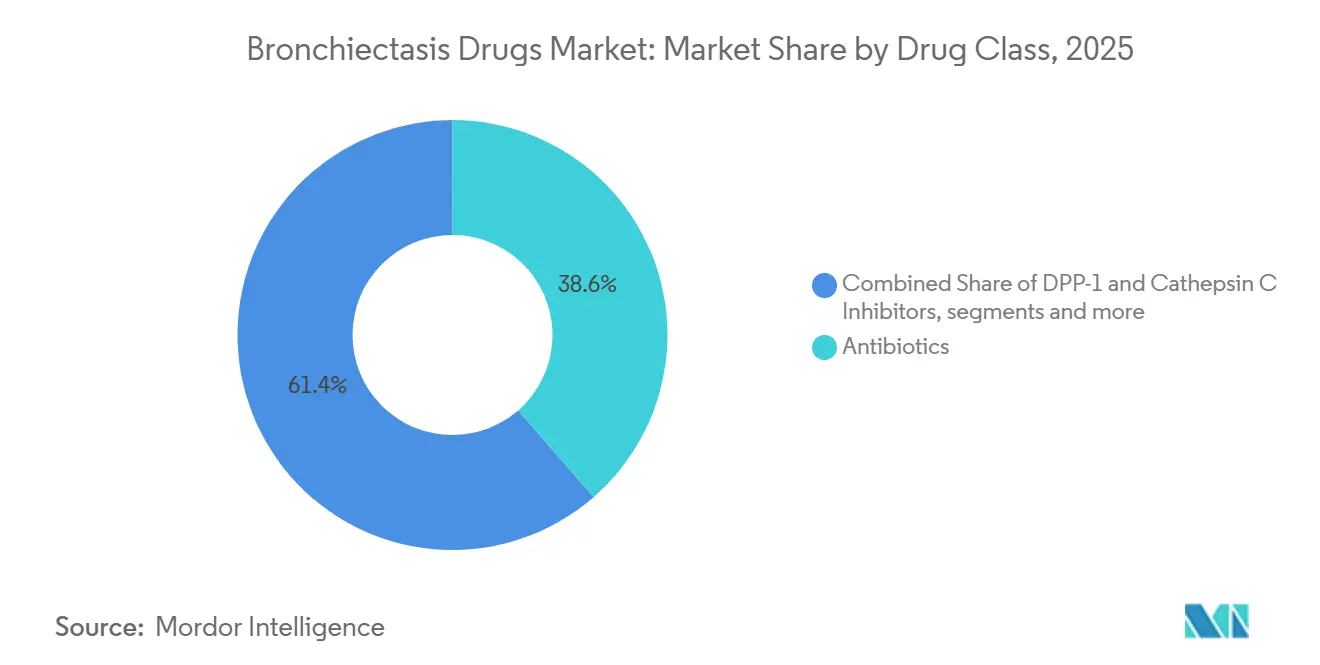
Antibiotics Lead, DPP-1 and Cathepsin C Inhibitors Grow FastestAntibiotics accounted for 38.59% of the bronchiectasis drugs market in 2025. Recent clinical evidence continues to strengthen the antibiotics subsegment in the bronchiectasis market. A July 2024 meta-analysis published in CHEST confirmed that inhaled antibiotics significantly reduce exacerbation frequency and sputum bacterial load in adults with bronchiectasis, supporting greater adoption of long-term suppressive antibiotic therapy. Additionally, the January 2024 ERASE trial demonstrated the effectiveness of inhaled tobramycin, with or without oral ciprofloxacin, for eradicating Pseudomonas aeruginosa, validating combination antibiotic approaches for chronic infection management. Together, these findings are expected to boost physician confidence, support guideline-based use, and drive growth of the antibiotics subsegment in bronchiectasis treatment.
DPP-1 and Cathepsin C inhibitors are projected to grow at a CAGR of 24.25% through 2031, making them the fastest-growing drug class. Recent clinical advancements have strengthened the emerging DPP-1 and cathepsin C inhibitor subsegments in the bronchiectasis drugs market. The Phase III ASPEN trial demonstrated that the DPP-1 inhibitor brensocatib reduced exacerbations in bronchiectasis patients, providing a strong foundation for disease-modifying therapy. Additionally, the Phase II AIRLEAF trial reported positive dose-finding results for the cathepsin C inhibitor BI 1291583, supporting pipeline expansion and increasing the future therapeutic options available for bronchiectasis management.



By Route of Administration:
Oral Therapies Accounted for the Largest Share and Fastest GrowthOral route of administration accounted for 50.09% of the bronchiectasis drugs market in 2025, and it is also expected to be the fastest-growing segment with a projected CAGR of 17.97% thorugh 2031. Brensocatib introduced an oral, once-daily treatment option designed specifically for non-cystic fibrosis bronchiectasis (NCFB). The broader DPP-1 inhibitor class may create additional oral treatment options following the first commercial entry. A 2025 meta-analysis found that DPP-1 inhibitors reduced exacerbation frequency by 27%, with a risk ratio of 0.73 and moderate-certainty evidence. Oral therapies may support homecare and specialty clinic models by reducing device-handling requirements and enabling treatment outside hospitals.
Oral azithromycin remained an important treatment option for preventing pulmonary exacerbations in bronchiectasis. A 2025 systematic review and meta-analysis involving 562 patients across six randomized controlled trials confirmed its efficacy in reducing exacerbation frequency, reinforcing the clinical value of oral antibiotic therapy and supporting continued growth of the oral-route segment in the market.
By Patient Type:
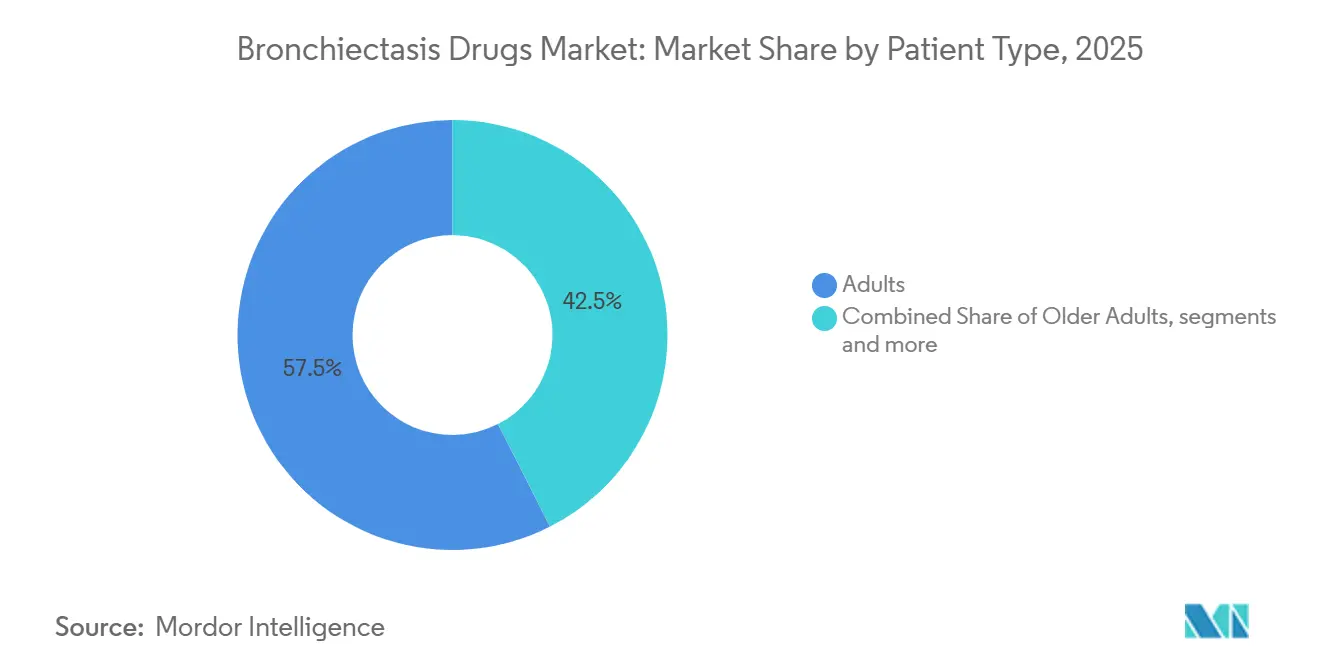
Older Adults are the Fastest-Growing CohortAdults accounted for 57.45% of bronchiectasis drug revenue in 2025, driven by the higher diagnosed prevalence of bronchiectasis among adults due to cumulative respiratory exposures, comorbidities, and structural lung damage. Demand within this segment was further supported by the growing adoption of disease-modifying therapies. The ASPEN protocol and baseline characteristics study published in 2024 established a robust clinical foundation for evaluating brensocatib in adults with non-cystic fibrosis bronchiectasis, reinforcing confidence in emerging targeted treatments and supporting continued growth of the adult segment.
The older adults are forecasted to expand at a CAGR of 16.30% through 2031, as bronchiectasis prevalence increases with age and improved diagnosis. Growth in this segment is supported by expanding clinical focus on age-specific disease management. A 2025 review published in Clinics in Geriatric Medicine highlighted the need for tailored diagnostic and treatment approaches for older adults with bronchiectasis, addressing the impact of comorbidities, polypharmacy, and functional limitations. This increasing emphasis on geriatric-focused care is expected to encourage earlier diagnosis, more consistent treatment initiation, and greater utilization of bronchiectasis therapies among aging patient populations.
By Distribution Channel:
Retail and Community Pharmacies Lead, Specialty Pharmacies ExpandRetail and community pharmacies accounted for 42.87% of distribution channel revenue in 2025, supported by their extensive prescription dispensing networks and accessibility for patients requiring long-term respiratory therapies. Continued pharmacy consolidation, including CVS Health’s acquisition of former Rite Aid and Bartell Drugs stores and prescription files, helped preserve medication access for patients receiving chronic bronchiectasis treatments such as antibiotics and mucolytic therapies, reinforcing the segment’s leadership position.
Specialty pharmacies are projected to grow at a CAGR of 17.30% through 2031, driven by their expanding role in dispensing innovative bronchiectasis therapies. The launch of brensocatib through a limited-distribution network involving Amber Specialty Pharmacy, PANTHERx Rare Pharmacy, and later Maxor Specialty Pharmacy established a specialized commercial infrastructure for disease-modifying bronchiectasis treatment. This growing reliance on specialty pharmacy channels for advanced therapies is expected to support strong growth of the segment over the coming years.
Geography Analysis
North America Bronchiectasis Drugs Market
North America held a 44.75% share of the bronchiectasis drugs market in 2025. The United States has the largest commercially addressable diagnosed NCFB population and the most developed specialty reimbursement infrastructure. Insmed estimated that the United States had 500,000 diagnosed NCFB patients, with half potentially meeting the clinical eligibility criteria for brensocatib. Brinsupri had an annual list price of USD 88,000 per patient in the United States, supporting higher revenue per treated patient. Canada and Mexico added demand for bronchodilators and corticosteroids, although access to disease-specific therapies developed more slowly.
Europe Bronchiectasis Drugs Market
Europe was the second-largest regional market for bronchiectasis drugs. The European Commission authorized Brinsupri in November 2025 for patients aged 12 years and older with at least two exacerbations in the preceding 12 months. Pricing and reimbursement negotiations across member states can delay broad commercial access. The EMA estimated that 400,000 to 3 million people in the European Union had NCFB, highlighting uneven diagnosis and disease recording. Germany, the United Kingdom, and France remained key early-access markets, while the United Kingdom authorized Brinsupri in February 2026 for eligible patients aged 12 years and older.
APAC, MEA and South America Bronchiectasis Drugs Market
Asia-Pacific is forecast to grow at a CAGR of 17.25% through 2031, the highest regional rate in the bronchiectasis drugs market. China reported a prevalence of 1,200 per 100,000 people aged 40 years and older, and the BE-China registry improved visibility into the country’s patient population. Insmed expected a Japanese regulatory decision for brensocatib in the second half of 2026. South Korea reported a prevalence of 886 per 100,000 adults, indicating significant treatment demand, while tuberculosis-related lung damage remained a major cause of bronchiectasis in India. The Middle East and Africa and South America held a combined share below 15% in 2025, where tender procurement and access constraints favored generic respiratory therapies.

Competitive Landscape
The bronchiectasis drugs market has a broad generic segment and a smaller group of companies developing disease-specific therapies. Insmed has a first-mover position, as Brinsupri is the only approved treatment specifically designed for NCFB. GSK plc, AstraZeneca PLC, Boehringer Ingelheim International GmbH, Teva Pharmaceutical Industries LTD, Cipla Limited, Insmed Incorporated, and Viatris Inc. compete in established respiratory medicines through product portfolios, manufacturing scale, inhaler design, and tender execution. Hikma Pharmaceuticals, Dr. Reddy’s Laboratories, and Lupin also supply inhalation products through public-sector and hospital channels. In emerging markets, price remains the key procurement factor for generic respiratory medicines, limiting differentiation outside disease-specific treatments.
Boehringer Ingelheim advanced verducatib through the Phase III AIRTIVITY study, which began in June 2025. The program poses a major challenge to Brinsupri, as both treatments target DPP-1 and neutrophilic inflammation. AstraZeneca pursued AZD0292, an intravenous antibody program for NCFB patients with chronic Pseudomonas aeruginosa colonization, and began its Phase IIb study in November 2025, with estimated completion in June 2028. Sanofi’s itepekimab program added a potential biologic option for patients with eosinophilic characteristics. These developments indicate that competition is likely to expand beyond a single drug class.
A 2026 CHEST analysis found moderate-certainty evidence that DPP-1 inhibitors reduce exacerbation frequency, supporting continued investment in this clinically and commercially validated treatment class. Opportunities remained in eosinophilic disease, inhaled antibiotics for chronic Pseudomonas or nontuberculous mycobacterial infections, and pediatric formulations. As of July 2026, no approved therapy addressed all these patient needs. Established companies can leverage respiratory distribution capabilities for new launches, while smaller innovators may target well-defined patient groups with clearer clinical differentiation. The bronchiectasis drugs market remains concentrated in disease-specific innovation and fragmented across established respiratory products.
Bronchiectasis Drugs Industry Leaders
Insmed Incorporated
Teva Pharmaceutical Industries Ltd
Viatris Inc.
Cipla Ltd
AstraZeneca PLC
- *Disclaimer: Major Players sorted in no particular order
Bronchiectasis Drugs Market Companies Covered in this Report
- ACI Pharmaceuticals Ltd
- AdvaCare
- ALTURiX Ltd
- Armata Pharmaceuticals, Inc.
- AstraZeneca
- Bayer
- Boehringer Ingelheim
- Cameron Pharmaceuticals, LLC
- Chemax Pharma
- Chiesi Farmaceutici
- Cipla
- Fresenius
- GlaxoSmithKline
- Insmed
- Merck
- Pfizer
- ReVagenix, Inc.
- Sanofi
- STELLAPHARM J.V. CO., LTD
- Teva Pharmaceutical Industries
- Unilab, Inc.
- Viatris
- Zambon S.p.A.

Recent Industry Developments in Bronchiectasis Drugs Market
- June 2026: Insmed partnered with EMBARC to conduct a three-year, open-label study of brensocatib 25 mg in European bronchiectasis patients, generating long-term real-world evidence beyond the 52-week ASPEN trial.
- February 2026: The MHRA authorized Brinsupri 25 mg for NCFB patients aged 12 years and older with at least two flare-ups in the preceding 12 months, marking the first UK license specifically for NCFB.
- November 2025: The European Commission approved Brinsupri 25 mg for eligible EU patients aged 12 years and older with at least two exacerbations in the prior 12 months, following a positive EMA opinion in October 2025.
- August 2025: The FDA approved Brinsupri 10 mg and 25 mg for adults and patients aged 12 years and older with NCFB; the 25 mg dose reduced annual exacerbation rates by 19.4% versus placebo.


Global Bronchiectasis Drugs Market Report Scope
As per the scope of the report, bronchiectasis is a chronic lung condition where the large airways (bronchi) become permanently widened, damaged, and scarred, trapping mucus and leading to repeated infections. Medications used to manage it focus on clearing mucus, fighting bacterial infections, and controlling airway inflammation.
The bronchiectasis drugs market is segmented by drug class, route of administration, patient type, distribution channel, and geography. By drug class, the market includes antibiotics, mucolytics and expectorants, bronchodilators, anti-inflammatory agents, DPP-1 and cathepsin C inhibitors, biologic therapies, and other drug classes. By route of administration, the market is segmented into inhalation, oral, and parenteral. By patient type, the market is categorized into adults, older adults, and pediatric patients. By distribution channel, the market is segmented into hospital pharmacies, specialty pharmacies, retail and community pharmacies, and online pharmacies. By geography, the market is analyzed across North America, Europe, Asia-Pacific, the Middle East and Africa, and South America. The report also covers estimated market sizes and trends for 17 countries across major regions globally. The report offers market sizes and forecasts in terms of value (USD) for the above segments.
| Antibiotics |
| Mucolytics and Expectorants |
| Bronchodilators |
| Anti-Inflammatory Agents |
| DPP-1 and Cathepsin-C Inhibitors |
| Biologic Therapies |
| Other Drug Classes |
| Inhalation |
| Oral |
| Parenteral |
| Adults |
| Older Adults |
| Pediatric Patients |
| Hospital Pharmacies |
| Specialty Pharmacies |
| Retail and Community Pharmacies |
| Online Pharmacies |
| North America | United States |
| Canada | |
| Mexico | |
| Europe | Germany |
| United Kingdom | |
| France | |
| Italy | |
| Spain | |
| Rest of Europe | |
| Asia-Pacific | China |
| Japan | |
| India | |
| Australia | |
| South Korea | |
| Rest of Asia-Pacific | |
| Middle East and Africa | GCC |
| South Africa | |
| Rest of Middle East and Africa | |
| South America | Brazil |
| Argentina | |
| Rest of South America |
| By Drug Class | Antibiotics | |
| Mucolytics and Expectorants | ||
| Bronchodilators | ||
| Anti-Inflammatory Agents | ||
| DPP-1 and Cathepsin-C Inhibitors | ||
| Biologic Therapies | ||
| Other Drug Classes | ||
| By Route of Administration | Inhalation | |
| Oral | ||
| Parenteral | ||
| By Patient Type | Adults | |
| Older Adults | ||
| Pediatric Patients | ||
| By Distribution Channel | Hospital Pharmacies | |
| Specialty Pharmacies | ||
| Retail and Community Pharmacies | ||
| Online Pharmacies | ||
| By Geography | North America | United States |
| Canada | ||
| Mexico | ||
| Europe | Germany | |
| United Kingdom | ||
| France | ||
| Italy | ||
| Spain | ||
| Rest of Europe | ||
| Asia-Pacific | China | |
| Japan | ||
| India | ||
| Australia | ||
| South Korea | ||
| Rest of Asia-Pacific | ||
| Middle East and Africa | GCC | |
| South Africa | ||
| Rest of Middle East and Africa | ||
| South America | Brazil | |
| Argentina | ||
| Rest of South America | ||


Key Questions Answered in the Report
What is driving demand for bronchiectasis drugs?
Earlier diagnosis through specialist respiratory care and the arrival of brensocatib are key factors. The market is forecasted to grow at a 14.69% CAGR from 2026 to 2031.
What is the value of the bronchiectasis drugs sector in 2026?
The market value is expected to be USD 2.66 billion in 2026 and is forecasted to reach USD 5.28 billion by 2031.
Which drug class category has the largest revenue position?
Antibiotics led the drug class revenue with 38.59% in 2025, supported by their established role in respiratory care.
Why are oral therapies gaining importance in bronchiectasis care?
Oral products are forecasted to grow at a 17.97% CAGR through 2031. Brensocatib introduced a once-daily oral option designed specifically for NCFB.
Which region is growing fastest for bronchiectasis treatment?
Asia-Pacific is projected to record a 17.35% CAGR through 2031, supported by large patient populations and improving diagnosis.
How concentrated is competition among bronchiectasis drug suppliers?
Insmed is the first mover in disease-specific NCFB treatment, while established respiratory products are supplied by numerous branded and generic manufacturers.
Page last updated on:





