
Brazil Protein Ingredients Market Size and Share
Market Overview
| Study Period | 2021 - 2031 |
|---|---|
| Forecast Data Period | 2026 - 2031 |
| Base Year Market Size (2025) | USD 1.18 Billion |
| Market Size (2026) | USD 1.27 Billion |
| Market Size (2031) | USD 1.88 Billion |
| Growth Rate (2026 - 2031) | 8.11 % |
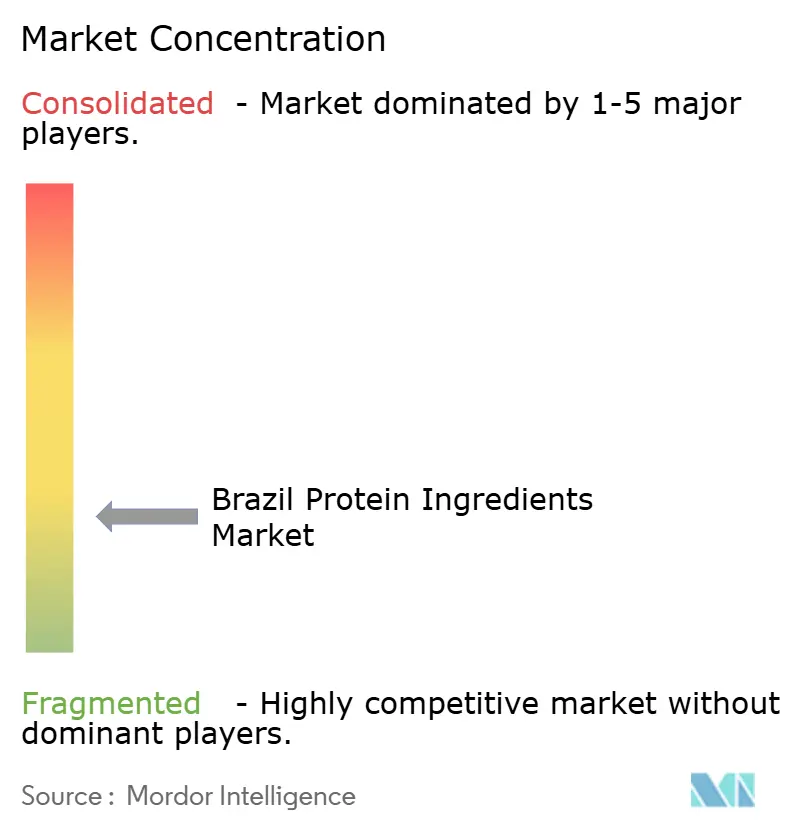
| Market Concentration | Low |
Major Players
*Disclaimer: Major Players sorted in no particular order Image © Mordor Intelligence. Reuse requires attribution under CC BY 4.0. |
|
Brazil Protein Ingredients Market Analysis by Mordor Intelligence
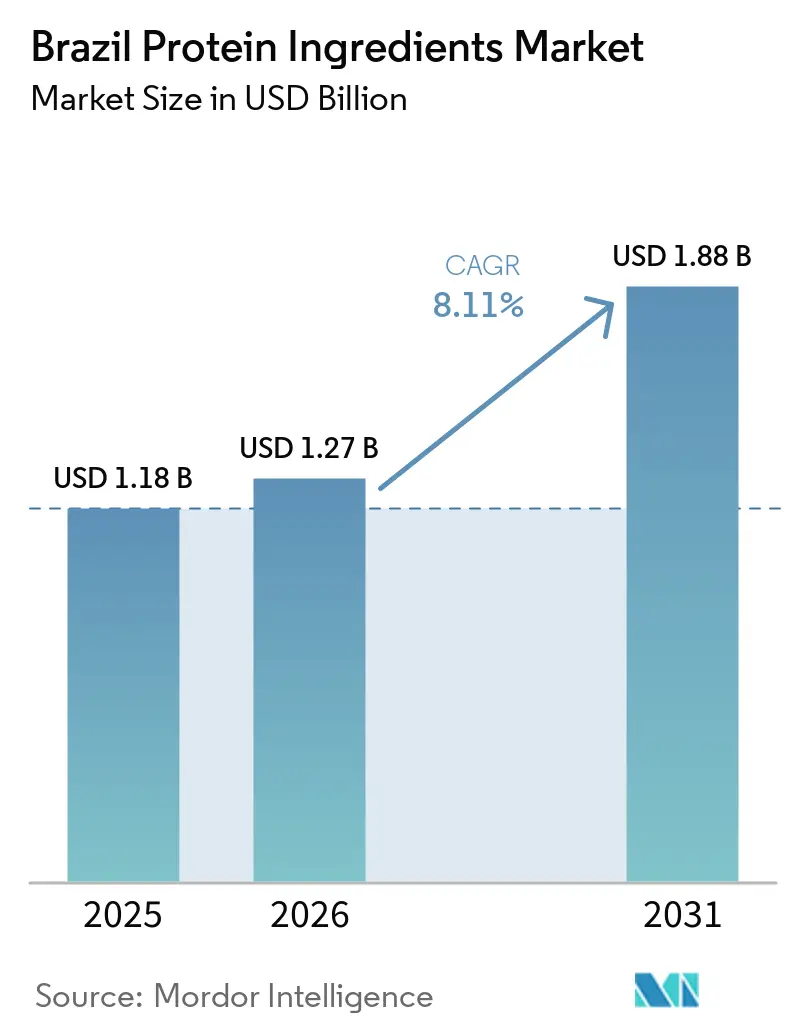
The Brazil protein ingredients market size was valued at USD 1.18 billion in 2025 to reach USD 1.27 billion in 2026, and is forecast to reach USD 1.88 billion by 2031 at a 8.11% CAGR over 2026-2031. The Brazil protein ingredients market benefits from a large consumer base for supplements, active lifestyles, and protein-fortified foods. Retail applications for protein have expanded beyond powders and bars to include beverages, dairy products, bakery items, and other familiar packaged formats. According to the International Trade Administration’s June 2026 report, Brazil had more than 34,000 fitness centers, and sports nutrition sales exceeded USD 1 billion in 2025[1]Source: International Trade Administration, " Brazil Dietary Supplements and Sports Nutrition," trade.gov. Domestic soybean availability provides processors with a reliable feedstock base for soy-derived ingredients, enabling the use of local agricultural inputs in concentrates and isolates for food manufacturers, supplement brands, animal nutrition customers, and export-oriented processors. The market also benefits from protein’s increasing incorporation into everyday food and beverage products rather than its continued limitation to specialized nutrition applications. However, imported whey remains a significant sourcing exposure for manufacturers, increasing the importance of local processing capacity and stable supply chains, particularly for buyers requiring consistent supplies of high-purity ingredients for premium powders, beverages, clinical nutrition products, and fortified dairy applications.
Key Report Takeaways
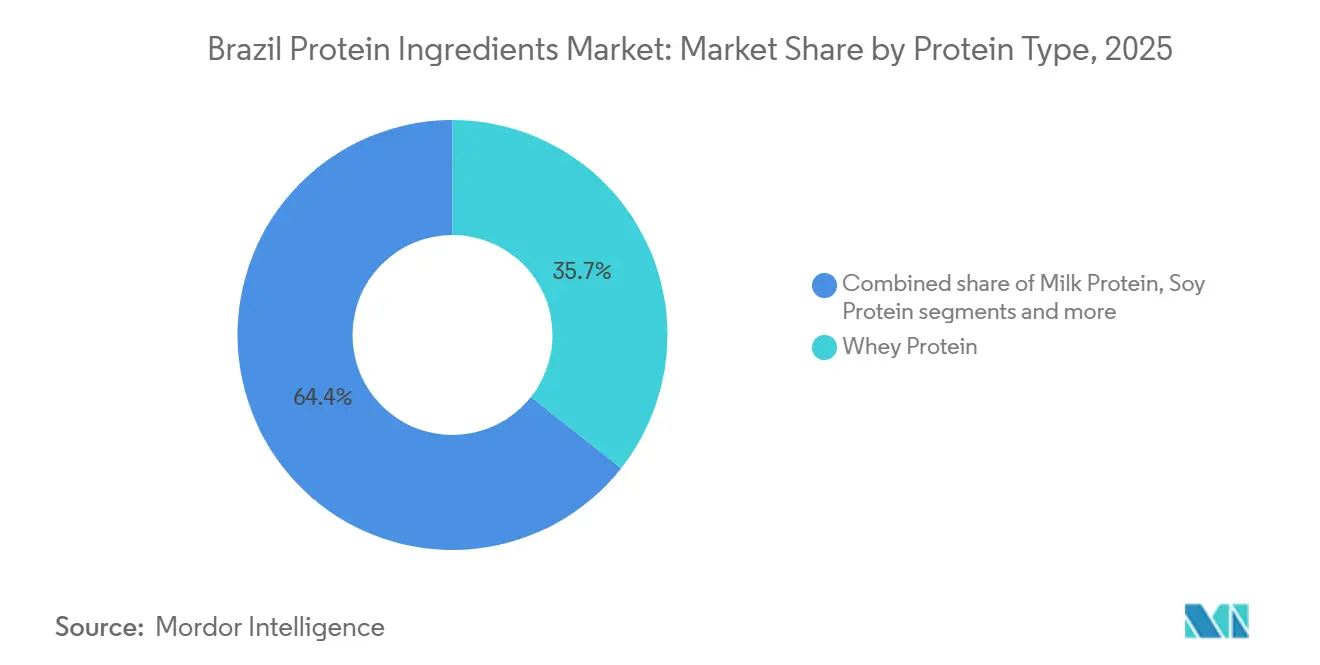
- By protein type, whey protein led the Brazil protein ingredients market with a share of 35.65% in 2025, while pea protein is anticipated to register the fastest CAGR of 9.04% during 2026-2031.
- By source, animal retained a 68.18% share in 2025, whereas microbial is forecast to expand at a 9.65% CAGR through 2031.
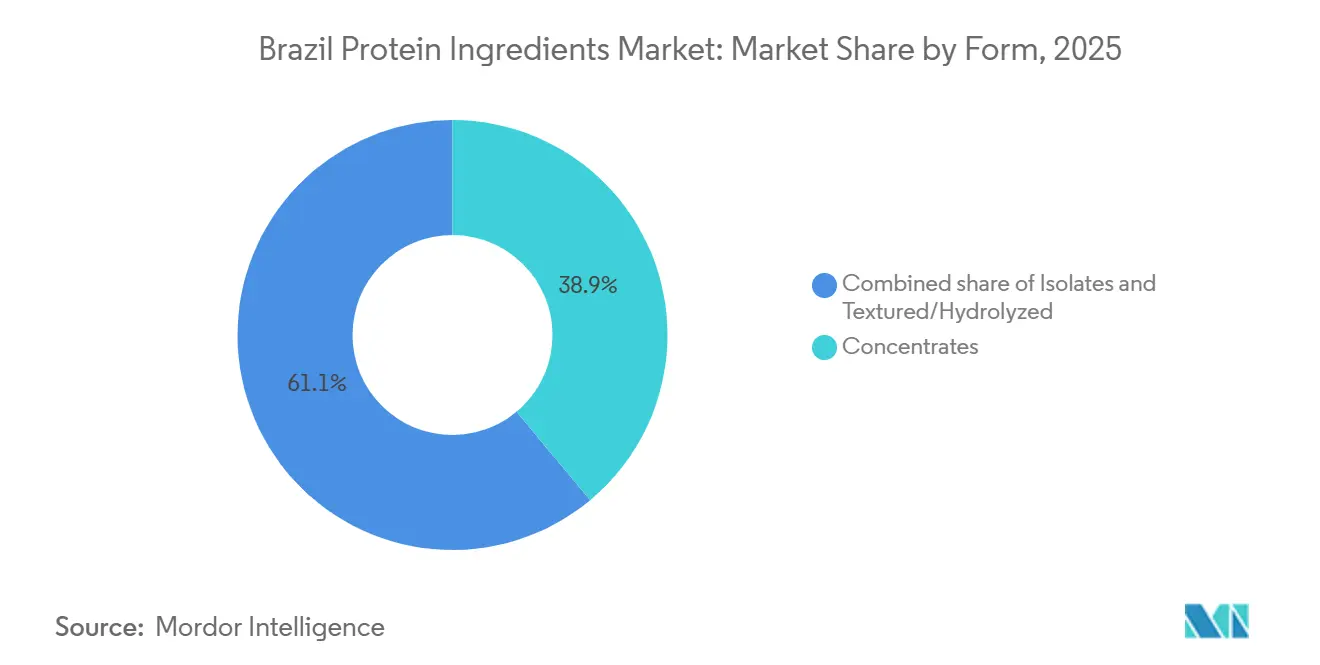
- By form, concentrates retained a 38.94% share in 2025, whereas isolates are forecast to expand at a 9.23% CAGR through 2031.
- By application, food and beverage led the market with a share of 53.78% in 2025, while dietary supplements and sports nutrition are anticipated to register the fastest CAGR of 8.74% during 2026-2031.
Note: Market size and forecast figures in this report are generated using Mordor Intelligence’s proprietary estimation framework, updated with the latest available data and insights as of January 2026.
Brazil Protein Ingredients Market Trends and Insights
Drivers Impact Analysis*
| Driver | (~) % Impact on CAGR Forecast | Geographic Relevance | Impact Timeline |
|---|---|---|---|
| Sports nutrition and active-lifestyle consumption | +2.0% | National, with early gains in São Paulo, Rio de Janeiro, and major urban centers | Short term (≤ 2 years) |
| Plant-based and flexitarian product development | +1.6% | National, concentrated in Southeast and South regions | Medium term (2-4 years) |
| Domestic protein-rich agricultural raw materials | +1.2% | National, with primary sourcing in the Center-West, South, and Northeast | Long term (≥ 4 years) |
| Nutritional optimization in food formulations | +1.0% | National, driven by large food processors in São Paulo and Paraná | Medium term (2-4 years) |
| Diversified food processing applications | +0.7% | National, with spillover to export-facing processors in Mato Grosso do Sul and Rio Grande do Sul | Medium term (2-4 years) |
| Precision fermentation and insect protein pilots | +0.5% | National hub in São Paulo, with research clusters in Campinas and Porto Alegre | Long term (≥ 4 years) |
| Source: Mordor Intelligence | |||
Sports Nutrition and Active-Lifestyle Consumption
Brazil’s more than 34,000 fitness centers support broad demand for protein-focused products. The country ranked second globally by number of fitness centers in the cited trade assessment. Consequently, the Brazil protein ingredients market extends beyond specialty supplement stores and gym users. Food manufacturers are incorporating protein into ready-to-drink beverages, dairy products, and everyday packaged foods. This trend links ingredient purchasing to routine grocery demand and increases the importance of formulation performance across a broader range of product categories. The wider application of protein ingredients distributes demand across whey concentrates, dairy proteins, and soy ingredients. It also provides suppliers with multiple sales channels when supplement demand fluctuates by season or consumer group. A single supplier can serve fitness products, healthy-aging products, convenience foods, meal replacements, and protein-enriched everyday foods.
Plant-Based and Flexitarian Product Development
Archer Daniels Midland's (ADM) 2025 outlook identified Brazil as one of the two leading flexitarian markets. Among Brazilian plant-forward consumers, 35% were familiar with meat extension products, compared with the global average of 16%. These products use pea, soy, or textured vegetable proteins to provide structure and nutrition. Their broader retail distribution directly increases demand for functional protein fractions that enable finished products to maintain the desired texture, mouthfeel, and protein content. The Brazil protein ingredients market stands to benefit as meat extension products gain wider retail distribution. Demand is particularly relevant in the Southeast and South regions, where the supplied material indicates that much of this product development is concentrated.
Domestic Protein-Rich Agricultural Raw Materials
Brazil’s well-established agricultural and livestock ecosystem provides a broad domestic raw material base for protein ingredient manufacturing. Soybeans play a particularly important role in plant-based protein production, while the country’s developed dairy industry supports the availability of milk-derived inputs, including whey and milk proteins. In July 2025, Brazil’s Ministry of Agriculture and Livestock highlighted initiatives under the National Milk Quality Program (PNQL) to strengthen milk quality, inspection, and production practices across the dairy value chain[2]Source: Ministry of Agriculture and Livestock, " National Milk Quality Program," gov.br. Additionally, Brazil’s established food-processing infrastructure enables the conversion of agricultural and animal-derived raw materials into higher-value protein ingredients. This domestic ecosystem supports manufacturers across soy, whey, milk, and other protein categories while providing a diversified local sourcing base for protein ingredient production. *Editorial note: The reference to July 2025 is a future date relative to the current year (2024) and should be verified or revised before publication.*
Nutritional Optimization in Food Formulations
Protein enrichment is increasingly featured in bakery products, dairy beverages, and ready-to-eat meals. These applications require ingredients that preserve taste, texture, and solubility in finished products. As a result, the Brazil protein ingredients market is becoming increasingly important for food formulators beyond traditional sports nutrition applications. Higher-protein foods also appeal to consumers seeking weight management and healthy aging benefits, expanding the potential customer base to shoppers who prefer convenient nutritional support through familiar foods rather than specialist supplements. This trend extends the relevant consumer base beyond regular fitness participants and benefits suppliers that can provide reliable commodity volumes as well as application-specific ingredients.
Restraints Impact Analysis*
| Restraint | (~) % Impact on CAGR Forecast | Geographic Relevance | Impact Timeline |
|---|---|---|---|
| Import dependence, foreign-exchange and landed-cost volatility | -0.9% | National, most acute for specialty proteins distributed via São Paulo and Rio de Janeiro | Short term (≤ 2 years) |
| Sensory and functional limitations | -0.8% | National, most acute in Southeast where premium food launches originate | Medium term (2-4 years) |
| Regulatory compliance for new formulations | -0.6% | National, with compliance activity concentrated in São Paulo under ANVISA oversight | Medium term (2-4 years) |
| Allergen and intolerance concerns limiting ingredient suitability | -0.5% | National, most acute in infant formula and specialized clinical nutrition segments | Long term (≥ 4 years) |
| Source: Mordor Intelligence | |||
Import Dependence, Foreign-Exchange and Landed-Cost Volatility
Imports account for 85% of Brazil's whey protein consumption, exposing formulators to foreign exchange fluctuations and freight costs. This exposure is particularly pronounced when formulations require imported whey protein isolates and cannot readily substitute domestic concentrates or alternative plant-based inputs. International whey protein isolate prices, which range from USD 14 to USD 18 per kg, can quickly increase domestic landed costs. Piracanjuba's planned local whey production capacity may help mitigate part of this exposure. However, manufacturers will likely continue to rely on imports for high-purity isolates and novel protein fractions during the forecast period. This dependence may also create procurement uncertainty when global supply conditions or shipping disruptions affect delivery schedules and product availability. Consequently, manufacturers may need to maintain higher inventory buffers or qualify alternative protein sources to manage supply and cost volatility.
Regulatory Compliance for New Formulations
Off-flavors, grittiness, and poor solubility can hinder the adoption of pea and insect proteins in beverages, bakery products, and dairy alternatives. The supplied research indicates that domestic pea protein production primarily consists of concentrates, while manufacturers import many isolates. Research conducted at Unicamp has demonstrated the nutritional potential of insect-derived protein fractions; however, taste and texture optimization remains an active development challenge. Pre-market authorization can increase the time and cost required to commercialize new protein fractions. Allergen and intolerance concerns can also restrict ingredient selection in infant formula and specialized clinical nutrition, where manufacturers must balance nutritional requirements with product suitability and may have fewer acceptable protein options.
*Our forecasts treat driver/restraint impacts as directional, not additive. The impact forecasts reflect baseline growth, mix effects, and variable interactions.
Segment Analysis
By Protein Type: Whey Leads While Pea Protein Expands Rapidly
In 2025, whey protein accounts for 35.65% of the Brazil protein ingredients market. Its established use in sports nutrition, clinical products, and fortified dairy products supports this position. Milk protein ingredients constitute the next-largest segment, with applications in infant formula, bakery products, and meal replacements. Manufacturers can select casein, milk protein concentrates, and isolates based on protein content, processing requirements, nutritional targets, and desired finished-product characteristics. These ingredients address distinct nutritional and functional requirements. Consequently, whey, milk, and soy account for a substantial share of existing market volume. Rice protein, collagen-derived proteins, and blended products serve more specialized applications in functional beverages and personal care. The Brazil protein ingredients market continues to offer opportunities for these specialized products where formulation requirements differ.
Pea protein is forecast to grow at a CAGR of 9.04% through 2031, driven by demand for non-GMO and lower-allergen ingredients in dairy and meat alternatives. This demand may favor pea protein despite soy's local feedstock advantage. Consumer preferences for clean-label, non-GMO, and lower-allergen ingredients increasingly influence protein-source selection alongside price and supply considerations. These attributes can strengthen product positioning even when locally sourced soy protein offers cost and feedstock advantages. Research by Unicamp on Gryllus assimilis cricket protein provides a scientific foundation for the future development of novel proteins. However, these emerging protein sources remain at an early stage compared with whey, milk, and soy proteins.



By Source: Animal Proteins Lead While Microbial Protein Develops
Animal source accounted for a 68.18% share in 2025. Brazil’s strong dairy base and established whey supply chain supported this leading position. Longstanding links between sports supplement retail and whey and casein products also provide animal proteins with an established route to consumers familiar with powders, shakes, recovery products, and protein-focused nutrition routines. Plant proteins support the expanding meat analog and extender category. Insect proteins remained a very small revenue category in 2026, with early production activity concentrated in São Paulo and initially focused on animal feed.
Microbial protein is projected to register the fastest growth among sources, at a CAGR of 9.65% through 2031. This represents the highest forecast growth rate across the supplied segmentation data. However, the growth rate reflects a small base in 2026, indicating that microbial protein is an emerging category with significant development potential but remains substantially smaller than established animal and plant protein supply chains. Commercial-scale production is less developed than that of animal and plant proteins. Therefore, emerging players must continue to build production capacity, secure regulatory approvals, demonstrate product performance, and establish reliable commercial routes to customers.
By Form: Concentrates Anchor Demand While Isolates Gain Value
Concentrates hold a 38.94% share in 2025. Whey protein concentrate and soy protein concentrate are widely used in food processing, feed, and supplements. Their favorable cost-performance balance makes them suitable for high-volume applications. Domestic production further strengthens their role in the supply base, as large soy processors can provide locally sourced materials for high-volume applications where cost, availability, and consistent functional performance influence purchasing decisions. Textured proteins play an important role in meat analogs by providing structure, while hydrolyzed proteins are used in clinical nutrition because of their digestibility. The Brazil protein ingredients market therefore uses form selection to balance cost, performance, and product requirements.
Isolates are projected to grow at a CAGR of 9.23% through 2031. Premium sports nutrition supports demand, as whey protein isolate products command shelf-price premiums of 40-60% over concentrate-based products. Isolates also enable food formulators to increase protein content with less flavor interference. This capability is particularly relevant for beverages and dairy alternatives, where a clean flavor profile and reliable dispersion can determine whether a product delivers a protein claim without altering the familiar sensory experience consumers expect. The project adds large-scale domestic capacity for this high-value form. Local production can reduce import exposure for whey ingredients, although imported supply remains relevant for customers that require specialized grades and novel fractions.
By Application: Food And Beverage Leads While Supplements Advance
Food and Beverage accounts for 53.78% of the Brazil protein ingredients market in 2025. This application includes bakery, confectionery, dairy alternatives, beverages, and meat analogs. Its broad scope provides the largest demand base within the supplied segmentation. Manufacturers are incorporating protein claims into existing bakery and confectionery product lines, using established products to reach consumers seeking added nutrition without changing their regular shopping or eating habits.
Dietary Supplements and Sports Nutrition is forecast to grow at a CAGR of 8.74% through 2031. The application is expanding beyond traditional fitness users. The supplied research identifies consumers using GLP-1 medications, older adults seeking to maintain lean mass, and mainstream wellness consumers as key demand groups. Consequently, the application serves a broader consumer base than conventional sports nutrition. Protein powders and related products cater to fitness participants, older consumers, weight-management users, and mainstream wellness shoppers. These interconnected applications support demand across the overall application mix.
Geography Analysis
The Southeast region, particularly São Paulo and Rio de Janeiro, serves as a major hub for food, biotechnology, research, and consumer product activities relevant to Brazil’s protein ingredients market. São Paulo benefits from a well-developed food technology ecosystem, while Campinas has emerged as a key center for research and innovation in protein and ingredient technologies. In March 2025, the Institute of Food Technology (ITAL) and Unicamp announced research positions in Campinas focused on developing new plant protein sources with technological and nutritional functionality, highlighting ongoing advancements in next-generation protein ingredients[3]Source: Institute of Food Technology, " Ital and Unicamp offer two postdocs," ital.agricultura.sp.gov.br. These factors strengthen the Southeast region’s role in protein ingredient R&D, specialty formulations, premium product development, and commercialization. Campinas also provides an established link between food industry research and emerging ingredient technologies.
The South plays a significant role in plant-based product development and dairy-related processing. Paraná is important for large food processors and the São Jorge d'Oeste whey project, while Rio Grande do Sul is associated with export-oriented food processing in the supplied material. These areas link agricultural and dairy inputs with domestic food manufacturing, integrating local raw materials, dairy processing, product development, and access to major consumer markets within the same regional supply network. Consequently, the Brazil protein ingredients market demonstrates significant supply- and demand-side activity across the South.
The Center-West accounts for an important share of soybean sourcing for the Brazil protein ingredients market. Mato Grosso do Sul serves as an export-oriented processing location, while the Northeast contributes to the domestic agricultural raw material base. ADM expanded soybean processing operations in Campo Grande, Mato Grosso do Sul, and Porto Franco, Maranhão, during 2025. Geographic specialization connects crop availability, processing sites, and demand centers across the country. As a result, Brazil has a national protein ingredients market with a strong local feedstock base and concentrated advanced-demand centers, where agricultural regions support soy supply and urban and southern processing centers support specialized products and premium applications.
Competitive Landscape
The Brazil protein ingredients market is fragmented. ADM, Cargill, and Bunge compete through vertically integrated soy processing operations and access to domestic feedstocks. Roquette, Ingredion, Kerry Group, Arla Foods, and Glanbia compete through application support, blending capabilities, and specialty processing. These companies supply pea protein, whey isolates, and functional blends through local partnerships or blending operations. Piracanjuba, Sooro Renner, Marfrig Global Foods, and Agropur-affiliated entities hold domestic strengths in dairy and animal proteins. No single supplier dominates the Brazil protein ingredients market across all product forms.
Supply chain localization remains a key competitive priority. Piracanjuba inaugurated an integrated protein complex in São Jorge d'Oeste in March 2026. ADM also inaugurated a 40,000-ton annual premix and feed additives facility in Apucarana, Paraná, in June 2026. These investments strengthen localized protein-related supply and traceability capabilities. They also demonstrate that established companies recognize the value of processing capacity tailored to domestic requirements, rather than relying solely on imported specialty materials.
Regulatory preparedness shapes competition in microbial and insect proteins. Companies that prepare documentation early may be better positioned to launch products when regulatory approvals become available. Future Cow represents precision fermentation activity, while insect protein projects remain at an earlier stage of development. The Brazil protein ingredients market continues to offer opportunities for companies that combine soy supply with high-purity isolates or fermentation capabilities.
Brazil Protein Ingredients Industry Leaders
-
Cargill, Incorporated
-
Kerry Group plc
-
Ingredion Incorporated
-
Roquette Frères
-
Archer Daniels Midland Company
- *Disclaimer: Major Players sorted in no particular order

Recent Industry Developments
- June 2026: ADM inaugurated a new premix and feed additives facility in Apucarana, Paraná. The 7,500 m² facility has an installed annual production capacity of 40,000 tonnes and can produce up to 10 tonnes per hour. The plant features advanced automation, dosage control, and agile traceability capabilities.
- March 2026: Piracanjuba inaugurated an integrated protein manufacturing complex in São Jorge d'Oeste, Paraná, with a total investment of BRL 612 million (approximately USD 107 million). BNDES provided BRL 499 million (approximately USD 88 million) through its Mais Inovação program.
- May 2025: RELCO announced a strategic collaboration with Grupo Piracanjuba to develop a protein and lactose processing facility in São Jorge D’Oeste, Paraná. The project includes a dedicated whey protein concentrate (WPC) plant, which will enable Piracanjuba to process whey from its cheese operations into higher-value protein ingredients.


Brazil Protein Ingredients Market Report Scope
Protein ingredients are concentrated sources of protein derived from animal, plant, microbial, or insect sources. They enhance the nutritional and functional properties of food, beverages, dietary supplements, and animal feed.
The Brazil protein ingredients market is segmented by protein type, source, form, and application. By protein type, the market is segmented into whey protein, milk protein, soy protein, pea protein, and others. By source, the market is segmented into animal, plant, microbial, and insect. By form, the market is segmented into concentrates, isolates, and textured/hydrolyzed. By application, the market is segmented into food and beverage (bakery and confectionery, meat analogs and extenders, dairy alternatives, beverages, and others), animal feed, dietary supplements and sports nutrition, personal care and cosmetics, and others. The market forecasts are provided in terms of value (USD).
| Whey Protein |
| Milk Protein |
| Soy Protein |
| Pea Protein |
| Others |
| Animal |
| Plant |
| Microbial |
| Insect |
| Concentrates |
| Isolates |
| Textured/Hydrolyzed |
| Food and Beverage | Bakery and Confectionary |
| Meat Analogs and Extenders | |
| Dairy Aletrnatives | |
| Beverages | |
| Others | |
| Animal Feed | |
| Dietary Supplements and Sports Nutrition | |
| Personal Care and Cosmetics | |
| Others |
| By Protein Type | Whey Protein | |
| Milk Protein | ||
| Soy Protein | ||
| Pea Protein | ||
| Others | ||
| By Source | Animal | |
| Plant | ||
| Microbial | ||
| Insect | ||
| By Form | Concentrates | |
| Isolates | ||
| Textured/Hydrolyzed | ||
| By Application | Food and Beverage | Bakery and Confectionary |
| Meat Analogs and Extenders | ||
| Dairy Aletrnatives | ||
| Beverages | ||
| Others | ||
| Animal Feed | ||
| Dietary Supplements and Sports Nutrition | ||
| Personal Care and Cosmetics | ||
| Others | ||


Key Questions Answered in the Report
What is the current and projected size of the Brazil protein ingredients market?
The Brazil protein ingredients market is valued at USD 1.18 billion in 2025 and is projected to grow from USD 1.27 billion in 2026 to USD 1.88 billion by 2031, registering a CAGR of 8.11% during 2026-2031.
Which protein type held the largest share in the Brazil protein ingredients market in 2025?
Whey Protein was the leading protein type, accounting for 35.65% of the market in 2025.
Which source segment dominated the Brazil protein ingredients market in 2025?
The Animal source segment dominated the market with a 68.18% share in 2025.
Which form segment accounted for the largest market share in 2025?
Concentrates led the market by form, capturing 38.94% of total revenue in 2025.
Which application segment held the largest share of the Brazil protein ingredients market in 2025?
The Food and Beverage segment was the largest application area, accounting for 53.78% of the market in 2025.
Page last updated on:


 Your data is secure and never sold or shared.


