
Brazil Pet Insurance Market Size and Share
Market Overview
| Study Period | 2021 - 2032 |
|---|---|
| Forecast Data Period | 2027 - 2032 |
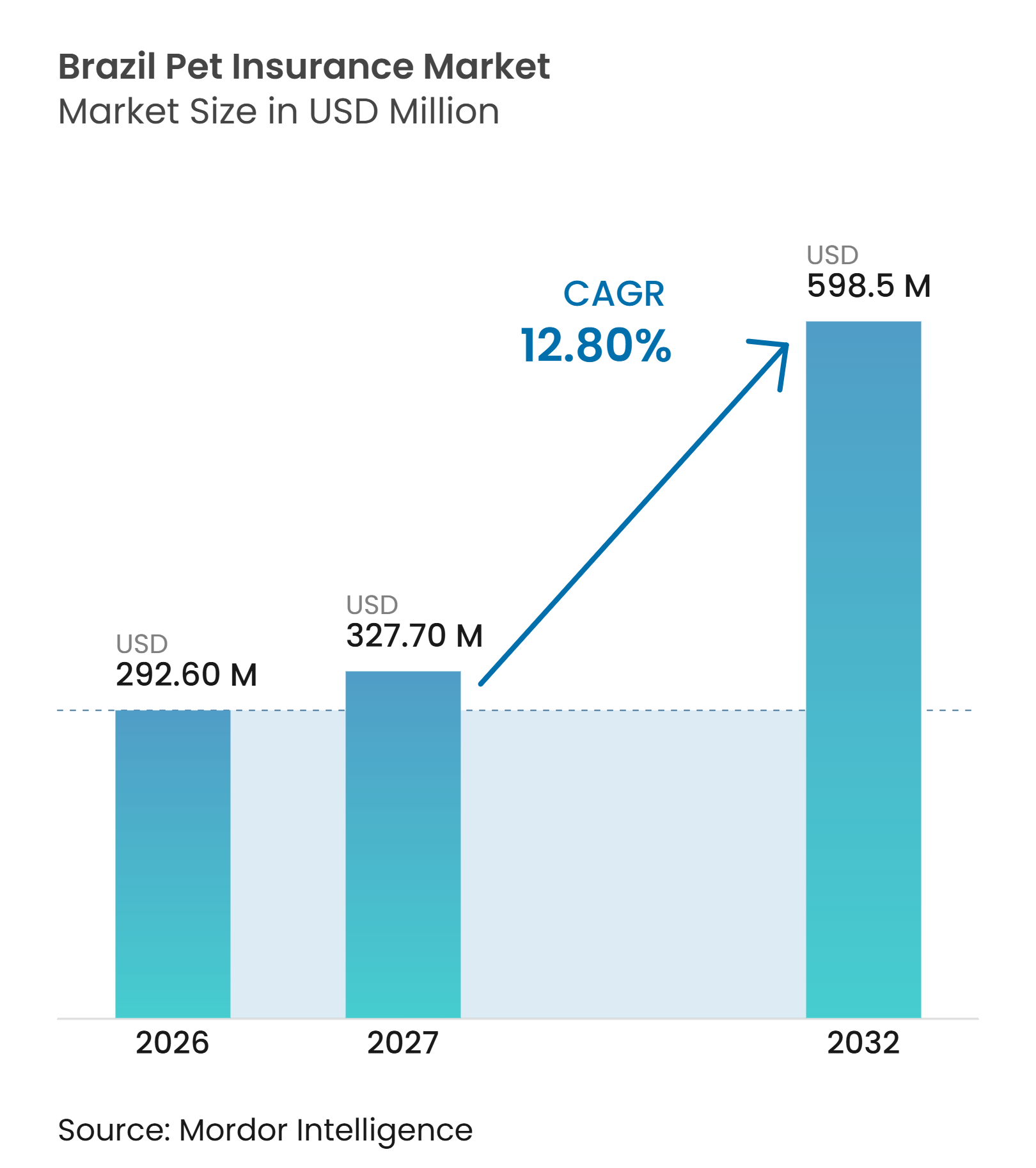
| Base Year Market Size (2026) | USD 292.60 Million |
| Market Size (2027) | USD 327.70 Million |
| Market Size (2032) | USD 598.5 Million |
| Growth Rate (2027 - 2032) | 12.80 % |
| Market Concentration | High |
Major Players *Disclaimer: Major Players sorted in no particular order Image © Mordor Intelligence. Reuse requires attribution under CC BY 4.0. | |
Brazil Pet Insurance Market Analysis by Mordor Intelligence
The Brazil Pet Insurance Market size is projected to expand from USD 292.60 million in 2026 and USD 327.70 million in 2027 to USD 598.5 million by 2032, registering a CAGR of 12.80% between 2027 and 2032.
Brazil had 166.8 million pets in 2026, placing a large companion-animal base behind the market’s still-limited insurance adoption. Rising treatment expenses are making financial protection more relevant for households that already spend a material share of income on pets. Embedded distribution through banks, insurers, telecom operators, and employers can lower acquisition costs and reduce dependence on consumer understanding of coverage terms. The Brazil pet insurance market is also shaped by the distinction between regulated insurance and veterinary assistance plans, which remains central to product design and consumer protection.
Key Report Takeaways
-
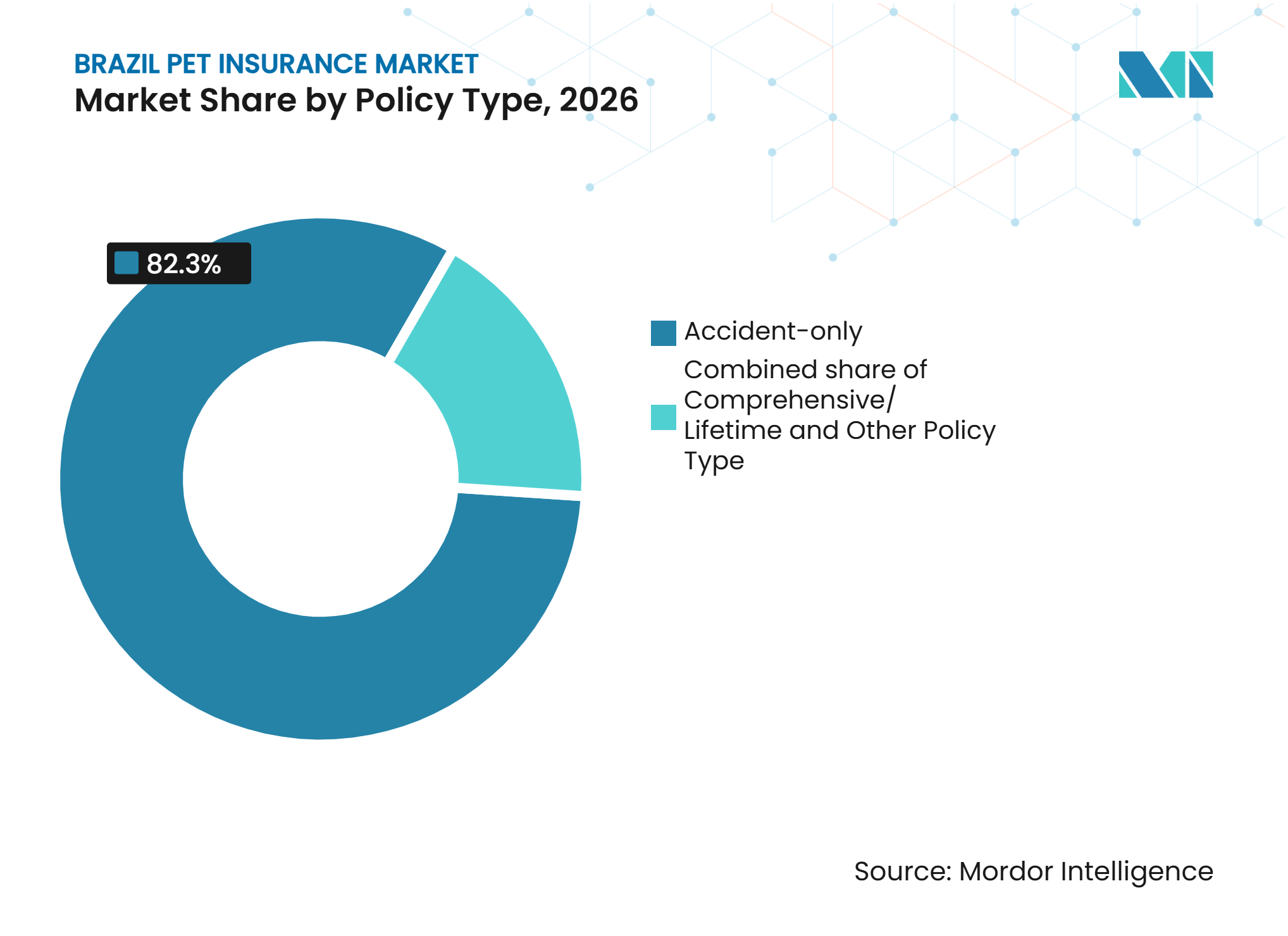
By policy type, accident & illness segment captured 82.3% of the Brazil pet insurance market share in 2026, while accident and illness coverage is projected to grow at a 16.8% CAGR through 2032.
-
By coverage architecture, basic and entry tiers captured 45.4% of the Brazil pet insurance market share in 2026, while comprehensive caps are projected to grow at a 15.7% CAGR through 2032.
-
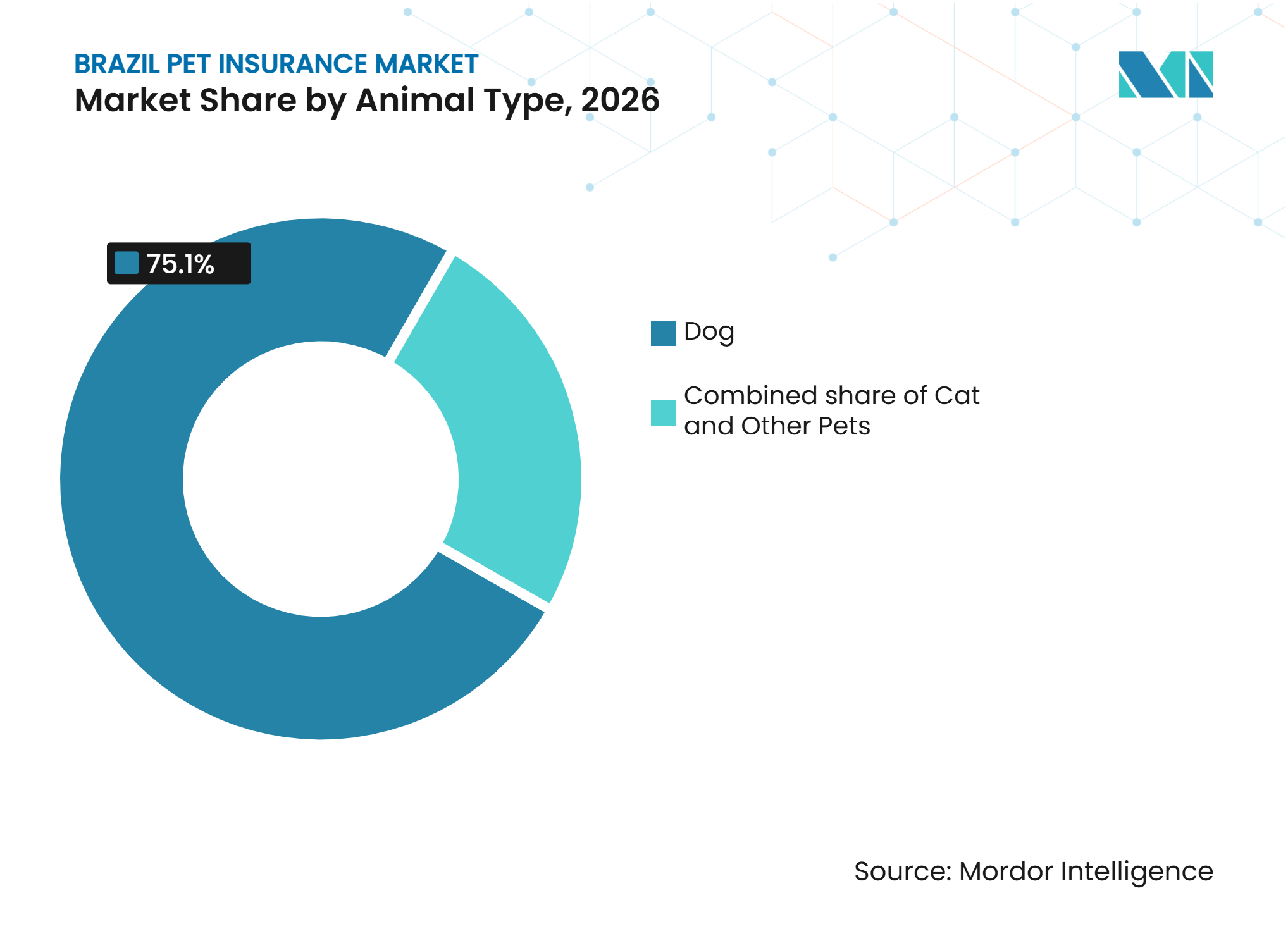
By animal type, dogs captured 75.1% of the Brazil pet insurance market share in 2026, while cat plans are projected to grow at a 15.5% CAGR through 2032.
-
By distribution channel, the broker/MGA-carrier channel captured 39.8% of the Brazil pet insurance market share in 2026, while direct digital distribution is projected to grow at a 14.8% CAGR through 2032.
Note: Market numbers in this report are based on Mordor Intelligence's proprietary estimation framework, which combines nine months of actuals with Q4 projections for base year 2026.
Market Trends and Insights
Drivers Impact Analysis of Brazil Pet Insurance Market*
| Driver | (~) % Impact on CAGR Forecast | Geographic Relevance | Impact Timeline |
|---|---|---|---|
| Rising Veterinary Treatment Costs and Demand for Financial Protection | +3.2% | National, strongest in São Paulo, Rio de Janeiro, and Belo Horizonte metropolitan areas | Short term (≤ 2 years) |
| Pet Humanization and Greater Spending on Animal Healthcare | +2.7% | National, with premium demand concentrated along the Southeast coast | Medium term (2-4 years) |
| Large Pet Population Expanding the Addressable Customer Base | +1.4% | National, with growth extending into Centre-West and Northeast cities | Long term (≥ 4 years) |
| Low Healthcare Protection Penetration and Untapped Adoption Potential | +2.0% | National, with demand potential in secondary and tertiary cities | Long term (≥ 4 years) |
| Expansion of Digital and Affinity-Based Distribution Channels | +2.3% | National, led by São Paulo and digital-first metropolitan areas | Short term (≤ 2 years) |
| Growing Veterinary Services Ecosystem and Preventive-Care Adoption | +1.6% | National, especially mid-tier cities adding specialist clinics | Medium term (2-4 years) |
| Source: Mordor Intelligence | |||
Rising Veterinary Treatment Costs and Demand for Financial Protection
Rising veterinary expenses are increasing the need for financial protection among Brazilian pet owners. A March 2026 survey by João Pessoa's Procon-JP across 14 veterinary establishments found that spaying a female dog weighing up to 5 kg cost BRL 370 (USD 67.2) to BRL 1,450 (USD 263.5), while male cat castration ranged from BRL 150 (USD 27.3) to BRL 1,300 (USD 236.3)[1]. A June 2024 Quaest survey found that 50% of pet owners had forgone veterinary procedures because of financial constraints, with 64% of affected owners experiencing this more than once. These expenses are increasing the appeal of predictable monthly payments and coverage for eligible consultations, diagnostics, surgeries, and hospitalisation, supporting demand in the Brazil pet insurance market.
Pet Humanization and Greater Spending on Animal Healthcare
The increasing integration of pets into Brazilian households is encouraging greater expenditure on animal healthcare and preventive services. A May 2026 CVA Solutions study involving 4,000 pet owners found that households allocated an average of 8% of their monthly budgets to pets, with average monthly expenditure reaching BRL 690 (USD 125.4) for dogs and BRL 574 (USD 104.3) for cats[2]. Additionally, 33% of respondents considered their pets equivalent to children, reflecting stronger emotional attachment and willingness to spend on animal wellbeing. This behaviour is also creating opportunities through employer-sponsored benefits, with Petlove reporting that more than 300 companies offer its corporate pet healthcare benefit. Its entry-level healthcare plans start at BRL 14.90 (USD 2.7) per month. Such arrangements expand distribution beyond direct consumer acquisition and encourage recurring healthcare utilisation.
Large Pet Population Expanding the Addressable Customer Base
Brazil's substantial companion-animal population provides a significant addressable customer base for pet healthcare and insurance providers. According to 2026 estimates reported by the Brazilian Association of Pet Industry Companies (ABEMPET), the country had approximately 166.8 million companion animals, including 62.5 million dogs and 33.3 million cats, representing approximately 95.8 million animals across the two primary pet insurance categories[3]. Despite this large potential customer base, organised healthcare protection remains relatively underpenetrated, particularly among price-sensitive households. Providers are increasingly leveraging digital platforms and veterinary networks to expand their reach. For example, Petlove reports having more than 8,000 clinics, laboratories, and specialists in its network across Brazil. This combination of a large dog-and-cat population and expanding veterinary infrastructure creates substantial long-term opportunities for the Brazil pet insurance market.
Low Healthcare Protection Penetration and Untapped Adoption Potential
The relatively low adoption of organised pet healthcare protection represents a significant opportunity for insurers and veterinary healthcare providers in Brazil. A May 2026 CVA Solutions study found that only 25% of surveyed pet owners subscribed to a pet health plan, compared with 21% in 2024, indicating gradual improvement while leaving considerable room for expansion. The study also found that 37% of non-subscribers considered high costs a barrier, while 67% were willing to pay if monthly subscriptions were priced at BRL 20 (USD 3.6). Regulatory developments are also supporting product innovation, with SUSEP's second Regulatory Sandbox edition listing Neo and Pet Seguros among selected participants for pet insurance. Affordable products, digital enrolment, and veterinary partnerships can help convert uninsured pet owners into customers and support broader adoption in the Brazil pet insurance market.
Restraints Impact Analysis of Brazil Pet Insurance Market*
| Restraint | (~) % Impact on CAGR Forecast | Geographic Relevance | Impact Timeline |
|---|---|---|---|
| Low Consumer Awareness and Understanding of Pet Insurance | -2.1% | National, most acute in the Northeast and North | Medium term (2-4 years) |
| Price Sensitivity and Affordability Constraints | -1.9% | National, strongest among lower-income households in the Northeast and Centre-West | Short term (≤ 2 years) |
| Regulatory Fragmentation and Product Classification Ambiguity | -1.2% | National, with operational effects in states with active complaint records | Medium term (2-4 years) |
| Uneven Veterinary Network Availability and Service Economics | -0.8% | Interior cities, North and Northeast states, and smaller municipalities | Long term (≥ 4 years) |
| Source: Mordor Intelligence | |||
Low Consumer Awareness and Understanding of Pet Insurance
Brazil's pet healthcare market faces consumer education challenges because veterinary subscription services (planos de saúde pet) and regulated pet insurance products can be presented using similar terminology, despite differences in contractual coverage, reimbursement, and claims arrangements. This distinction is becoming increasingly important as PL 631/2026, introduced on 20 February 2026, proposes a regulatory framework for veterinary assistance plans, including federal operating authorisation, minimum coverage requirements and clearer contractual disclosures. The original proposal also establishes a maximum 24-hour waiting period for emergency care and restrictions on unilateral cancellation and exclusion of declared pre-existing conditions. The CMADS rapporteur recommended approval with a substitute in August 2026, and the amendment period closed on 13 October without additional amendments; however, the proposal was removed from the committee agenda on 11 November and remains awaiting deliberation. Until regulatory requirements are clarified and implemented, differences in product structures and contractual terms can complicate consumer understanding and comparison, limiting confidence in the Brazil pet insurance market.
Price Sensitivity and Affordability Constraints
Affordability remains a significant constraint on pet healthcare adoption in Brazil, particularly among lower-income households. A June 2024 Quaest survey found that 19% of pet owners earning up to two minimum wages had never taken their animals to a veterinarian, compared with just 4% among households earning more than five minimum wages. Additionally, 50% of surveyed owners had forgone veterinary procedures because of financial constraints, highlighting the gap between healthcare needs and spending capacity. Entry-level veterinary healthcare subscriptions, such as Porto Seguro's plan starting at BRL 19.90 (USD 3.6) per month, provide a lower-cost access point, although premiums and coverage vary by provider and region. However, recurring payments can remain difficult for households with irregular income, creating challenges for customer conversion and retention. This price sensitivity requires providers to balance affordable premiums, appropriate coverage and sustainable claims management, constraining the expansion of the Brazil pet insurance market.
*Our forecasts treat driver/restraint impacts as directional, not additive. The impact forecasts reflect baseline growth, mix effects, and variable interactions.
Brazil Pet Insurance Market Segment Analysis
By Policy Type:
Accident Plans Anchor the Market While Accident and Illness Coverage AcceleratesThe accident & illness segment accounted for an estimated 82.3% market share in 2026, supported by relatively affordable premiums, simpler coverage structures, and lower initial financial commitments for pet owners. Their position reflects the appeal of entry-level protection among consumers seeking coverage against unexpected veterinary expenses. Brazil's regulatory framework under SUSEP Circular No. 640/2021 formally recognises insurance for companion animals, including animals kept for companionship and family life. It also allows insurers to offer additional coverage for veterinary expenses, examinations, hospitalisation and related services.
Accident and illness coverage is projected to grow at a 16.8% CAGR from 2027 to 2032, driven by demand for protection against illnesses, specialist consultations, diagnostic procedures and hospitalisation. Brazilian insurers already offer products combining accident and illness-related benefits. Porto Seguro's current Pet Light plan covers consultations, laboratory examinations, vaccinations and outpatient procedures, including urgent and emergency care. Pet Plus extends coverage to hospitalisation, with specialist consultations, imaging and surgeries covered under specified inpatient conditions. These products demonstrate the availability of broader veterinary protection, although coverage remains subject to plan terms and limits. Comprehensive coverage can attract higher-income households seeking broader protection, while affordability and sustainable claims management remain important to market expansion.


By Coverage Architecture:
Entry Tiers Retain the Largest Base While Comprehensive Caps Expand FastestBasic and entry-level coverage tiers accounted for an estimated 45.4% market share in 2026, reflecting demand for affordable veterinary healthcare and predictable routine-care expenses. These plans commonly include general consultations, vaccinations and basic laboratory examinations. Petlove's current tiered portfolio includes Leve, Tranquilo, Ideal, Essencial and Completo, with benefits expanding across consultations, vaccinations, laboratory tests, clinical procedures and more advanced treatments depending on the selected plan. Mid-tier products extend benefits to emergency consultations, additional diagnostics and selected clinical procedures, while comprehensive plans offer broader access to specialist care, surgery and hospitalisation.
Comprehensive coverage is projected to record the fastest growth, at a 15.7% CAGR from 2027 to 2032, supported by demand for specialist consultations, surgeries, hospitalisation and higher-value veterinary treatments. Petlove's tiered plans illustrate this approach, with entry-level options focused on routine care and higher-tier options extending to hospitalisation and specialist services. The company reported BRL 2.4 billion in total revenue in 2025 and projected 40% revenue growth in 2026; these are company-wide figures, not revenue generated solely by its pet health plans. Tiered coverage structures allow providers to serve different household budgets while creating opportunities to upgrade customers towards more comprehensive veterinary protection.
By Animal Type:
Dogs Hold the Largest Insured Base While Cats Add Growth MomentumDogs accounted for an estimated 75.1% share of insured animals in 2026, supported by Brazil's substantial canine population. ABEMPET's 2026 estimates place the country's dog population at approximately 62.5 million, while the cat population stands at approximately 33.3 million. The large canine population provides insurers with a substantial addressable customer base and opportunities to develop standardised coverage across different breeds and age groups. Cats are projected to grow at a 15.5% CAGR from 2027 to 2032, supported by increasing feline ownership and opportunities to introduce species-specific healthcare products.
Cat-specific healthcare products are also emerging as a differentiated offering in Brazil. CatLife markets a nationwide health plan exclusively for cats, offering specialist and home consultations, vaccinations, laboratory examinations, telemedicine and selected surgical procedures, subject to plan conditions. It also advertises discounts of up to 40% for households enrolling multiple cats. Other pets include ornamental birds, reptiles, equine animals and small mammals, although these categories require specialised veterinary networks and more tailored coverage. ABEMPET's 2026 estimates identify approximately 44.3 million ornamental birds and 3.1 million reptiles and small mammals in Brazil, highlighting potential customer segments beyond dogs and cats. Expanding species-specific veterinary networks and coverage options could create further diversification opportunities.

By Distribution Channel:
Brokers Lead Current Sales While Digital and Affinity Routes Gain GroundThe broker/MGA-carrier channel accounted for an estimated 39.8% share in 2026, reflecting the role of intermediaries in explaining policy terms, coverage limits and claims procedures to first-time buyers. Direct digital distribution is projected to grow at a 14.8% CAGR through 2032, supported by app-based enrolment and partnerships that connect pet protection with existing consumer services. These channel shares and growth rates are retained as supplied market estimates; public sources reviewed do not independently establish these specific figures.
Partnerships illustrate the expansion of affinity and bancassurance distribution. In October 2026, Chubb Brasil, Vivo and Petlove introduced veterinary assistance as an add-on to Vivo-distributed residential insurance, available through the operator's app and approximately 1,800 stores. The offering includes general veterinary consultations, home visits, clinical follow-ups and laboratory tests, subject to copayment. Banco Inter offers a digital pet health plan in partnership with Petlove through its Super App, while Itaú provides plans through Petlove and APet (Amigoo). Employer benefits are another growing distribution route. Petlove reported that more than 150 companies offered corporate pet health plans in 2025, alongside a 160% year-on-year increase in demand for the corporate offering during January–May 2025. The company now reports serving more than 300 corporate clients. Pet shops and veterinary clinics provide additional referral and point-of-sale opportunities. Overall, distribution is likely to remain a combination of broker-led advice, digital enrolment and partnerships embedded in consumer and employee-benefit ecosystems.
Geography Analysis
Southeast Brazil
Southeast Brazil accounted for 48.2% of Brazil's pet population in the regional distribution reported by ABEMPET, making it the country's largest regional market. The estimate is based on the population data reported in 2026 and should not be interpreted as a share of insured pets. São Paulo and Rio de Janeiro benefit from relatively concentrated veterinary-service infrastructure, supporting access to specialist consultations, diagnostics and hospital care. However, the cited consultation costs of BRL 450 and surgery costs above BRL 5,000 could not be verified against a reliable regional source and have therefore been excluded. Petlove's network includes more than 7,000 accredited partners across 400 cities and 25 of Brazil's 27 state capitals, providing a substantial distribution and service platform.
Employer benefits further support the region's coverage environment, particularly given the concentration of corporate headquarters and financial institutions in major Southeast cities. Petlove reported a 160% increase in demand for corporate pet health plans during January–May 2025, compared with the same period in 2024, with more than 150 companies offering the benefit at the time. Digital and financial-services partnerships provide additional distribution opportunities, although the specific claims regarding Banco Inter, Itaú and Bradesco should be supported by current product disclosures before being used as evidence of regional market penetration. Competition is therefore likely to focus on benefit design, network breadth and customer experience rather than basic geographic access.
Northeast and Centre-West Brazil
The Northeast and Centre-West combine growing urban pet ownership with differences in household affordability and veterinary-service availability. A 2024 Quaest survey found that 19% of pet owners earning up to two minimum wages had never taken their pets to a veterinarian. This is a national income-based finding, not a Northeast-specific or 2025 regional statistic. The same survey found that 50% of respondents had postponed veterinary procedures primarily because of financial constraints, highlighting affordability as a barrier to broader pet healthcare access.
Brasília, Goiânia and Campo Grande offer potential expansion markets as providers extend their veterinary networks beyond major coastal cities. However, the availability of specialist facilities and emergency services varies by location. The proposed National Agency for Veterinary Health (ANS da Veterinária) was discussed at PetVet 2025 as a potential framework for regulating animal health plans, improving sanitary oversight and establishing clearer market standards. The proposal was still undergoing technical development and had not been established as a regulatory authority. Telemedicine and digital veterinary consultations can support triage and follow-up in areas with limited specialist availability, although they cannot replace in-person examinations, emergency treatment or surgery. Insurance uptake in these regions will depend on affordable premiums and the expansion of reliable veterinary networks.
South, North, and Interior Brazil
Southern states, including Paraná, Santa Catarina and Rio Grande do Sul, offer opportunities for expansion through established urban veterinary networks and demand for preventive pet healthcare. Petlove's expansion into Criciúma and Tubarão in August 2026 illustrates the extension of pet health-plan services beyond state capitals. The rollout included 18 accredited partners, comprising two 24-hour clinics and three laboratories, alongside home veterinary services and specialists in areas including cardiology, dermatology, gastroenterology, oncology and ophthalmology. This demonstrates how providers can expand regional coverage by building local partnerships rather than relying exclusively on major metropolitan centres.
The North and more remote interior areas remain comparatively difficult to serve because of lower population density and uneven access to veterinary facilities. Law No. 15,425, enacted on 3 June 2026 and published on 8 June 2026, amended Brazil's Penal Code to make the illegal practice of veterinary medicine a criminal offence. It strengthens professional-accountability provisions but does not directly address regional service availability or establish minimum veterinary-network standards. Digital triage, telemedicine and automated claims processing can improve service accessibility and operational efficiency where a full physical network is not viable, but cannot substitute for emergency and specialist treatment. Overall, regional expansion will depend on locally adapted pricing, partnerships with accredited veterinary providers and investment in service networks.
Competitive Landscape
Market Concentration
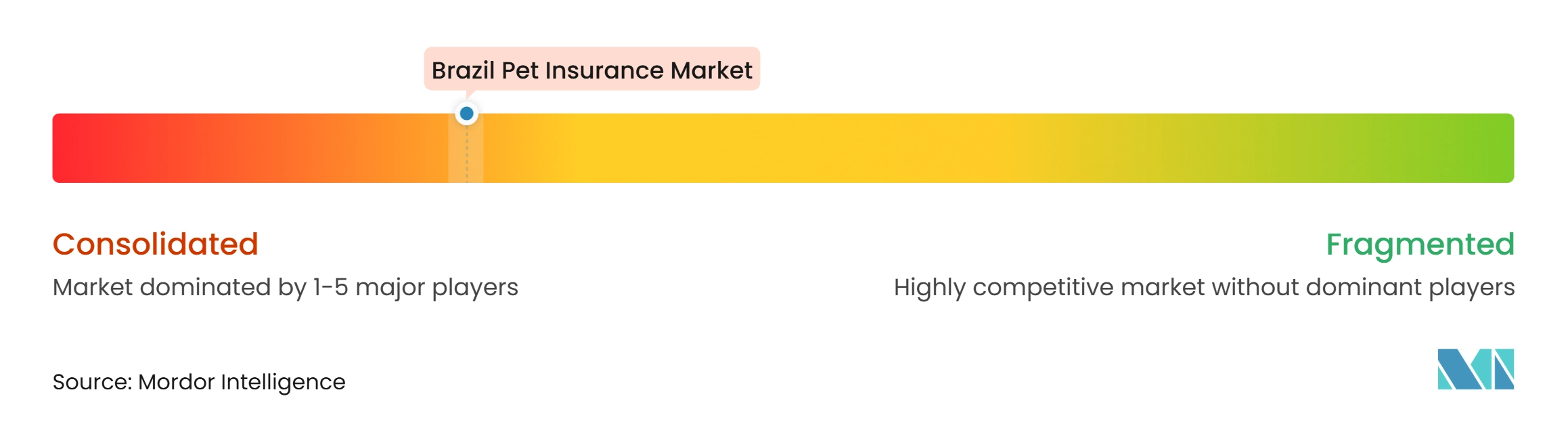
Brazil’s pet insurance and veterinary health-plan market is characterized by a leading provider alongside a fragmented group of specialist operators and insurance-backed assistance offerings. Petlove is a major market participant, with more than 220,000 covered pets reported in January 2026 and a network that has expanded from over 7,000 partners across approximately 400 cities to more than 8,000 clinics, laboratories, and specialists on its current platform. The company reported total group revenue of BRL 2.4 billion (USD 411 million) in 2025. Other operators, including APet Saúde and Meu Pet Club, compete through tiered coverage, reimbursement options, telemedicine, and specialized veterinary services.
Digital distribution, strategic partnerships, and embedded assistance are increasingly shaping competitive positioning. In September 2025, APet Saúde, SUTHUB, and Seguros SURA presented ZeroCode Brokers, a digital distribution platform offering fully digital sales journeys and integration with more than 50 insurers; the integration figure relates to the platform's broader insurance ecosystem rather than APet's individual insurance portfolio. In October 2026, Chubb Brasil, Vivo, and Petlove introduced a partnership integrating Petlove veterinary assistance into a residential insurance offering distributed through Vivo's application and retail channels. Bradesco Seguros also offers pet assistance through its Residencial Pet product, covering dogs and cats with services such as veterinary consultations, teleorientation, and specialist assistance. These offerings represent a combination of veterinary health plans, insurance-linked assistance, and embedded distribution rather than a single homogeneous insurance market.
Regulatory requirements and differences in product classification influence market entry and competition. SUSEP Circular No. 640/2021 specifically addresses rural insurance, including livestock and animal insurance. The sandbox framework is established under Resolution CNSP No. 381/2020 and Circular SUSEP No. 598/2020, subsequently amended by Circular No. 636/2021. Eligible participants can receive temporary authorization for up to 36 months, subject to applicable capital, operational, and product-specific requirements. Larger insurers benefit from established distribution networks and customer relationships, while specialist providers compete through flexible coverage, digital enrollment, reimbursement, and veterinary-service partnerships. Further opportunities exist in employer-sponsored plans, broader feline coverage, and geographic expansion, particularly in underserved regions.
Brazil Pet Insurance Industry Leaders
-
Petlove
-
APet Saúde
-
Plamev Pet
-
Dog Life
-
Doutor Pet
- *Disclaimer: Major Players sorted in no particular order
Brazil Pet Insurance Market Companies Covered in this Report
- Petlove Saúde
- APet Saúde
- Plamev Pet
- Life Pet Hub
- PlanVet
- Pet Health
- Pet Mais Vida
- WeVets
- Meu Pet Club
- Pet Veter
- Apaixonados Saúde Pet
Recent Industry Developments in Brazil Pet Insurance Market
- November 2026: Hero Seguros announced a partnership with Meu Pet Club to launch Seguro Tutor Pet. The product covers a tutor’s financial obligations after death, disability, or involuntary unemployment. Indemnities range from BRL 6,000 (USD 1,000) to BRL 24,000 (USD 4,000) in 12 monthly installments. Hero targets 10,000 insured lives within 12 months, and Sancor Seguros manages underwriting.
- August 2026: PL 631/2026 received a favourable substitute proposal in CMADS, addressing operator authorization, minimum coverage, waiting periods, and cancellation restrictions. The amendment period closed on 13 October without further amendments.
- June 2026: Law No. 15,425/2026 criminalized the unauthorized practice of veterinary medicine, strengthening professional accountability and licensing requirements across veterinary service networks.
- December 2025: Bradesco Seguros launched residential insurance with pet health assistance for dogs and cats, initially targeting higher-income customers, with a broader market rollout plan.
Brazil Pet Insurance Market Report Scope
Segmentation Overview
| Accident & Illness |
| Comprehensive / Lifetime |
| Other Policy Type |
| Basic / entry tiers |
| Mid tiers |
| Comprehensive caps |
| Dog |
| Cat |
| Other Pets (Birds, Exotics, Equine, etc.) |
| Direct digital |
| Broker / MGA-carrier |
| Bancassurance / composite cross-sell |
| Other channels |
| By Policy Type | Accident & Illness |
| Comprehensive / Lifetime | |
| Other Policy Type | |
| By Coverage Architecture | Basic / entry tiers |
| Mid tiers | |
| Comprehensive caps | |
| By Animal Type | Dog |
| Cat | |
| Other Pets (Birds, Exotics, Equine, etc.) | |
| By Distribution Channel | Direct digital |
| Broker / MGA-carrier | |
| Bancassurance / composite cross-sell | |
| Other channels |
Key Questions Answered in the Report
What is the projected growth rate for pet insurance in Brazil?
The Brazil pet insurance market is projected to grow at a 12.8% CAGR from 2027 to 2032, rising from USD 292.6 million in 2026 to USD 598.5 million by 2032.
Which policy type has the largest share in Brazil?
Accident & illness segment led with 82.3% share in 2026 because they offer simpler underwriting and lower monthly prices.
Which pet category is growing fastest in Brazilian insurance plans?
Cat plans are projected to expand at a 15.5% CAGR through 2032, supported by urban ownership patterns and digital purchasing behavior.
How are pet insurance plans distributed in Brazil?
Brokers lead with 39.8% share, while direct digital distribution is projected to grow at a 14.8% CAGR through 2032.
What is limiting adoption of pet protection in Brazil?
Low product understanding, household affordability limits, uneven veterinary networks, and different rules for insurance and service plans limit adoption.
Which region has the strongest base for pet insurance adoption in Brazil?
Southeast Brazil accounted for 48.2% of the country’s pet population in 2026 and has the densest specialist veterinary and distribution infrastructure.