
Beta-thalassemia (B-thal) Treatment Market Size and Share
Market Overview
| Study Period | 2021 - 2032 |
|---|---|
| Market Size (2027) | USD 6.41 Billion |
| Market Size (2032) | USD 9.47 Billion |
| Growth Rate (2027 - 2032) | 8.12 % |
| Fastest Growing Market | Asia-Pacific |
| Largest Market | North America |
| Market Concentration | Medium |
Major Players *Disclaimer: Major Players sorted in no particular order Image © Mordor Intelligence. Reuse requires attribution under CC BY 4.0. | |
Beta-thalassemia (B-thal) Treatment Market Analysis by Mordor Intelligence
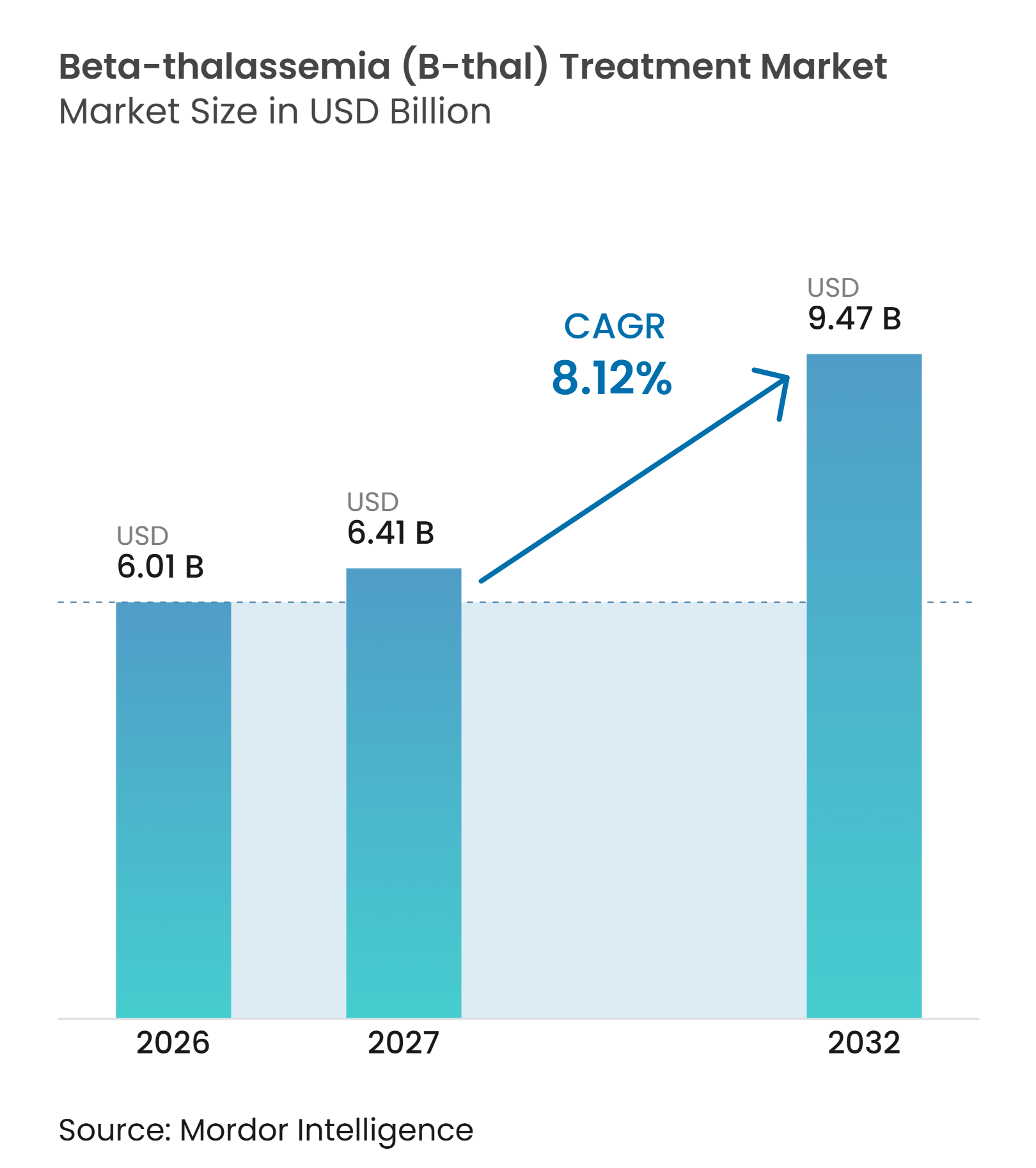
The Beta-thalassemia (B-thal) Treatment Market size is projected to be USD 6.01 billion in 2026, USD 6.41 billion in 2027, and reach USD 9.47 billion by 2032, growing at a CAGR of 8.12% from 2027 to 2032.
The beta-thalassemia (B-thal) treatment market is being reshaped by therapies that reduce transfusion dependence and by one-time genetic treatments that target the disease mechanism. Screening expansion can increase the number of people identified for structured care, especially in high-prevalence countries, and can broaden the beta-thalassemia (B-thal) treatment market over time. Access in the beta-thalassemia (B-thal) treatment market will depend on the ability of health systems to fund expensive treatments and expand specialized treatment capacity. Oral medicines and outpatient care also create an opportunity for the beta-thalassemia (B-thal) treatment market to manage more patients outside hospital settings. The beta-thalassemia (B-thal) treatment market, therefore, combines established supportive care demand with a smaller, high-value curative treatment pathway.
Key Report Takeaways
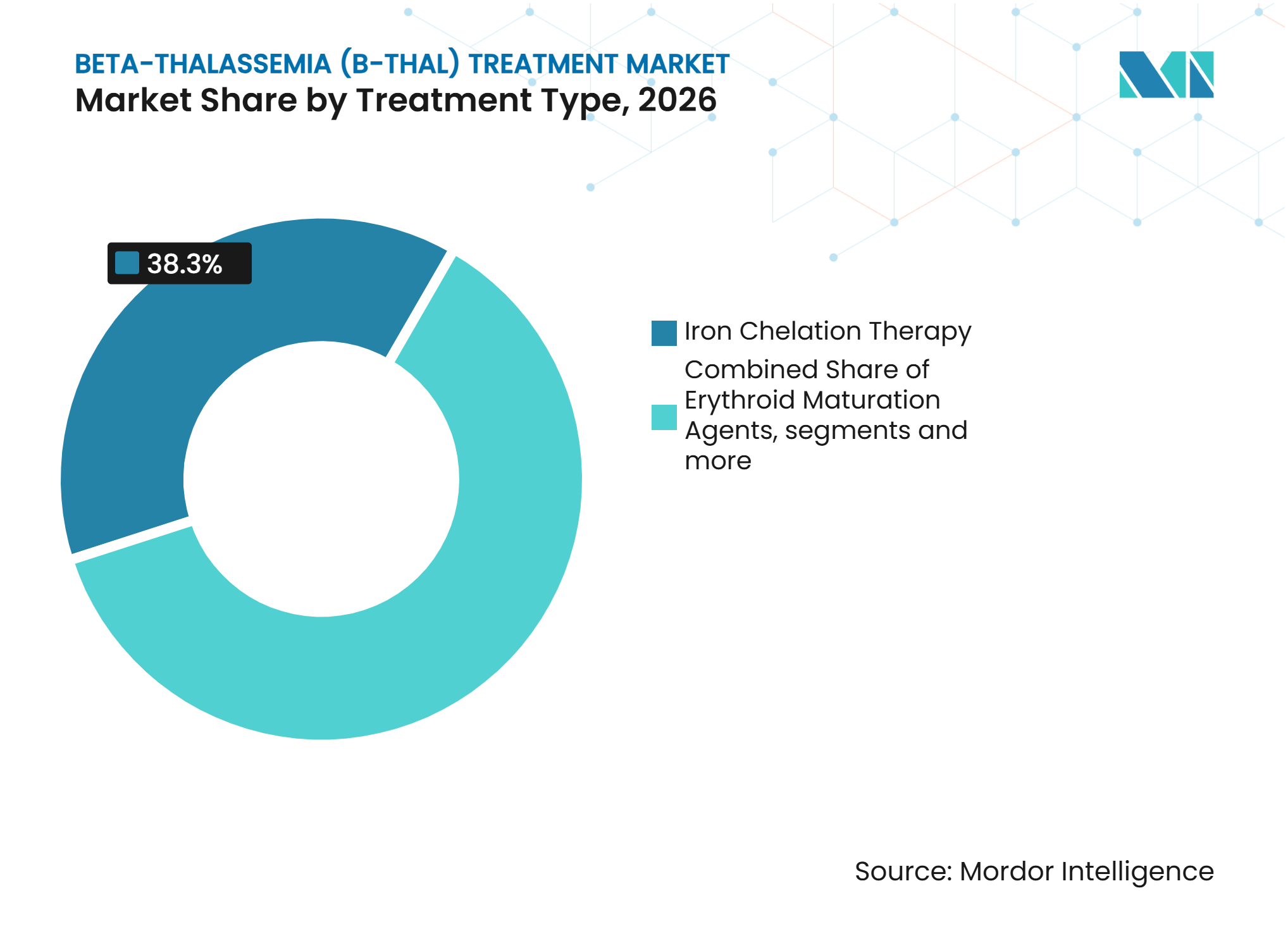
- By treatment type, iron chelation therapy held a 38.32% share in 2026, while erythroid maturation agents are projected to grow at a CAGR of 9.22% through 2032.
- By disease type, beta-thalassemia major accounted for a 46.15% share in 2026, while beta-thalassemia intermedia is forecast to grow at a CAGR of 9.81% through 2032.
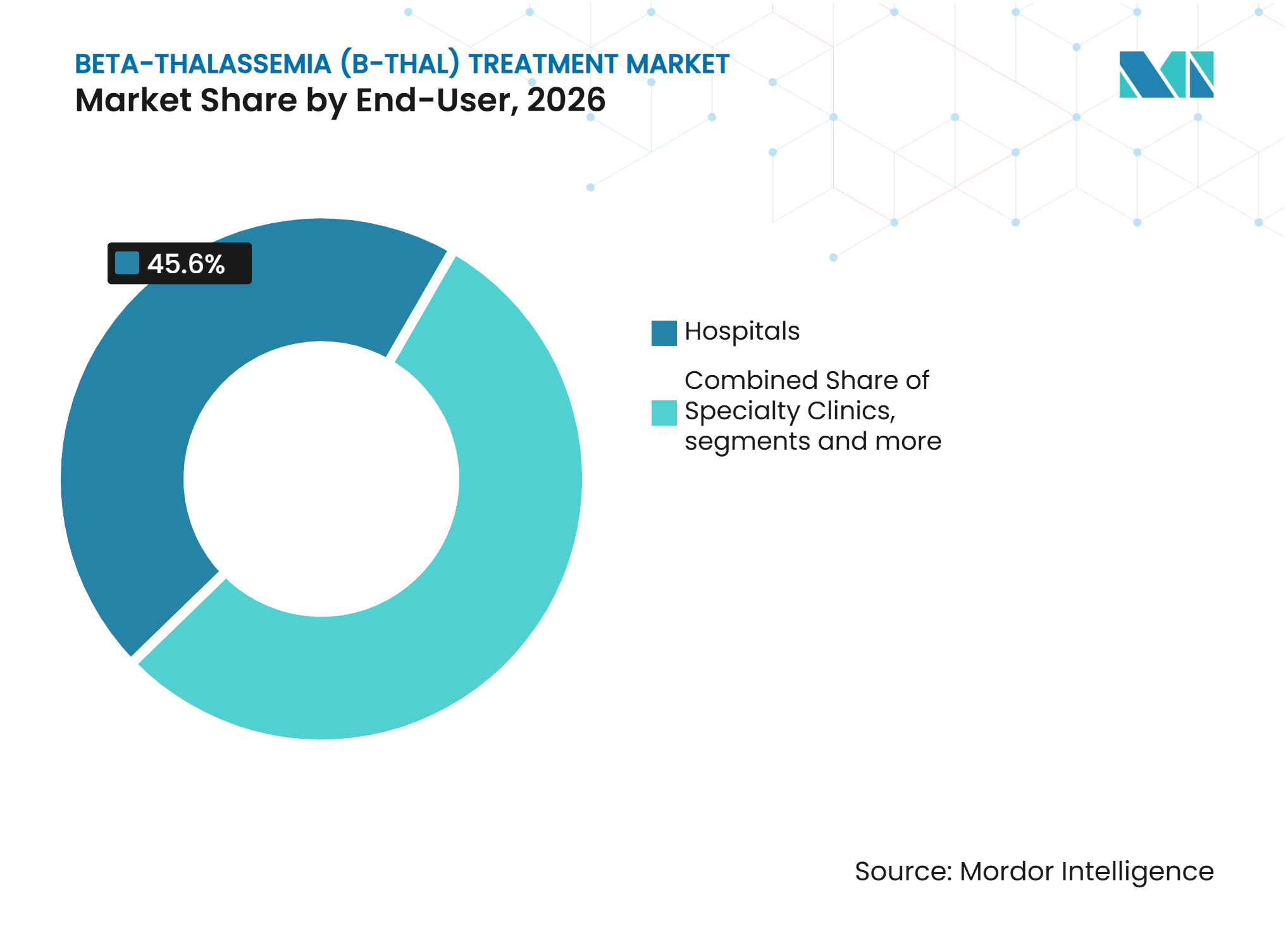
- By end-user, hospitals held a 45.64% share in 2026, while specialty clinics are projected to expand at a CAGR of 8.73% through 2032.
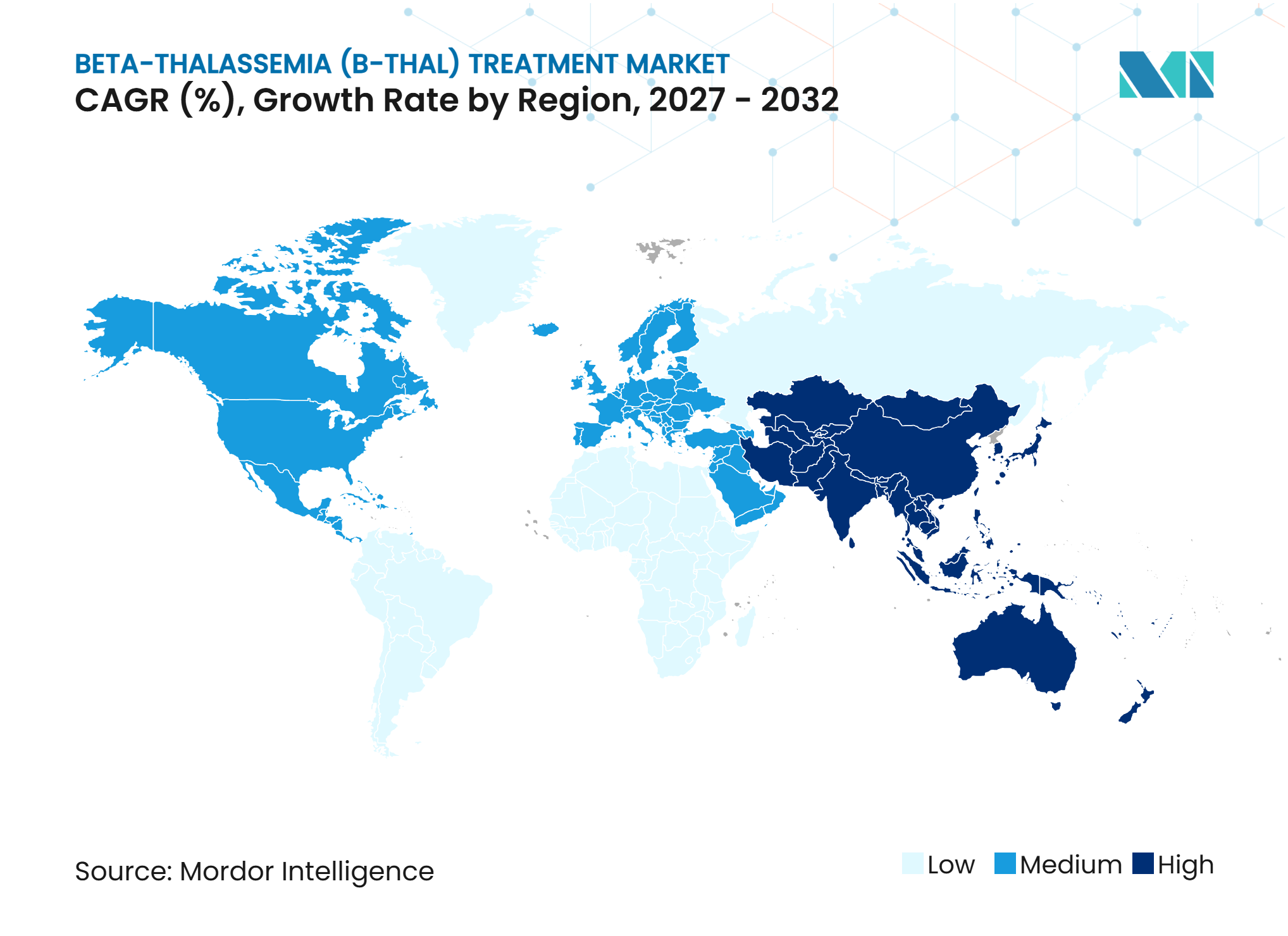
- By geography, North America held a 48.22% share in 2026, while Asia-Pacific is forecast to grow at a CAGR of 10.35% through 2032.
Note: Market numbers in this report are based on Mordor Intelligence's proprietary estimation framework, which combines nine months of actuals with Q4 projections for base year 2026.
Market Trends and Insights
Drivers Impact Analysis of Beta-thalassemia (B-thal) Treatment Market*
| Driver | (~) % Impact on CAGR Forecast | Geographic Relevance | Impact Timeline |
|---|---|---|---|
| Rising Diagnosis and Screening in High-Prevalence Populations | +1.8% | Global, concentrated gains in Asia-Pacific, Middle East and Africa, and South America | Medium term (2-4 years) |
| Expansion of Curative Gene and Gene-Editing Therapies | +2.1% | North America and Europe core, with spillover to GCC and Asia-Pacific | Long term (≥ 4 years) |
| Increasing Adoption of Erythroid Maturation Agents | +1.4% | Global, with early gains in North America, Europe, and GCC | Medium term (2-4 years) |
| Greater Use of Oral Iron Chelation and Home-Based Care | +0.9% | Asia-Pacific, South America, and Middle East and Africa, with growing use in North America and Europe | Short term (≤ 2 years) |
| Growth of Specialized Hemoglobinopathy Treatment Centers | +0.6% | North America and Europe core, with early development in India and China | Medium term (2-4 years) |
| Outcome-Based Reimbursement for One-Time Therapies | +1.0% | North America and the European Union, with early extension to GCC | Medium term (2-4 years) |
| Source: Mordor Intelligence | |||
Rising Diagnosis and Screening in High-Prevalence Populations
The beta-thalassemia (B-thal) treatment market can expand as sequencing and screening programs identify patients whose needs were previously missed. An NGS-based newborn screening method in a Thai population correctly identified beta-thalassemia mutations in 95% of tested neonates and detected rare clinically significant variants missed by conventional multiplex PCR. A family-trio study covering 1,516 newborns in Guangxi found an 11.08% difference between parental screening predictions and neonatal results. This result shows why screening based on limited family information can leave clinically important cases unresolved. A study in Pakistan also found dual mutations in 11 of 64 carriers, supporting more complete genetic testing in consanguineous populations.[1] As testing becomes more complete, the beta-thalassemia (B-thal) treatment market can gain formally diagnosed patients across chronic treatment, monitoring, and curative care.
Expansion of Curative Gene and Gene-Editing Therapies
The beta-thalassemia (B-thal) treatment market is moving beyond chronic disease control as gene-based treatments become available in more care settings. The U.S. Food and Drug Administration approved Casgevy for transfusion-dependent beta-thalassemia in January 2024.[2] The European Commission approved Casgevy in February 2024, making a CRISPR/Cas9 gene-edited option available for eligible patients with transfusion-dependent beta-thalassemia. Italy began national reimbursement for Casgevy on October 8, 2025, and Policlinico San Matteo di Pavia administered the treatment outside a clinical trial in May 2025. The BTHAL-FT007-01 Phase IIb study began in July 2026 with an optimized lentiviral protocol, showing that gene addition continues alongside editing approaches.
Increasing Adoption of Erythroid Maturation Agents
Erythroid maturation agents support the beta-thalassemia (B-thal) treatment market by reducing transfusion burden for appropriate patients. Final BELIEVE trial results reported that patients achieving at least a 33% transfusion reduction maintained a median of 586 cumulative days in response over extended follow-up.[3] The same follow-up found a mean decline of 4.4 mg/g dry weight in liver iron concentration at week 384 when luspatercept was used with iron chelation. A 2025 meta-analysis of 4 randomized trials involving 608 patients reported transfusion independence in 36% of treated patients and at least a 33% reduction in transfusion burden in 58%. An Italian real-world cohort reported that 77% of patients achieved at least a 33% reduction during a 12-week period. These results support continued use of luspatercept and show why agents in this class can complement, rather than replace, chelation in the beta-thalassemia (B-thal) treatment market.
Greater Use of Oral Iron Chelation and Home-Based Care
Oral chelation supports the beta-thalassemia (B-thal) treatment market because it can reduce the treatment burden associated with subcutaneous deferoxamine. In a randomized trial involving 72 transfusion-dependent patients in Pakistan, deferasirox produced a mean ferritin reduction of 715 ng/mL compared with 335 ng/mL for deferoxamine. The study reported adherence of 83.3% for deferasirox and 66.7% for deferoxamine, with a lower composite adverse event rate for the oral therapy. Home-based oral care reduces repeated facility visits and preserves specialist capacity for transfusion, transplant workup, and complex monitoring. The film-coated deferasirox formulation has also been validated in children as young as 1 month, which supports use throughout pediatric care.
Restraints Impact Analysis of Beta-thalassemia (B-thal) Treatment Market*
| Restraint | (~) % Impact on CAGR Forecast | Geographic Relevance | Impact Timeline |
|---|---|---|---|
| Extreme Upfront Cost of Gene and Gene-Editing Therapies | -1.5% | Global, most acute in Asia-Pacific, Middle East and Africa, and South America | Long term (≥ 4 years) |
| Limited Authorized Treatment-Center Capacity | -0.9% | North America and Europe primary, with GCC emerging | Medium term (2-4 years) |
| Inconsistent Diagnosis and Patient Registries in Endemic Countries | -0.7% | Middle East and Africa, South Asia, and Sub-Saharan Africa | Medium term (2-4 years) |
| Long-Term Safety and Durability Uncertainty for Genetic Therapies | -0.6% | Global | Long term (≥ 4 years) |
| Source: Mordor Intelligence | |||
Extreme Upfront Cost of Gene and Gene-Editing Therapies
The cost of genetic treatment remains a significant limit on the beta-thalassemia (B-thal) treatment market. A national reimbursement decision in Italy covered Casgevy for an eligible population of 5,000 patients under a monitored access framework. The economic challenge is substantial because one-time therapies require payment before their long-term benefit is fully observed. Outcomes-based contracts can reduce payer risk, but they require durable patient tracking and workable arrangements when patients change insurers. The CMS Cell and Gene Therapy Access Model began in January 2025 for sickle cell therapies, rather than transfusion-dependent beta-thalassemia. In lower-income endemic settings, chronic transfusion and chelation costs follow a different budget model, which makes the near-term adoption of high-cost one-time treatment more difficult.
Limited Authorized Treatment-Center Capacity
Limited treatment-center capacity can constrain the beta-thalassemia (B-thal) treatment market even after a therapy receives regulatory approval. A Canadian assessment identified 17 potentially eligible centers for exagamglogene autotemcel administration in 2025 and noted potential shortages in transplant personnel and inpatient beds. Such centers need hematology and transplant expertise, cell handling capability, and multidisciplinary teams, which limits designation largely to major academic hospitals. Loma Linda University Cancer Center became the first Southern California site to offer beta-thalassemia gene therapy under FACT accreditation. Expansion is gradual because each new center requires facilities, trained staff, and established post-infusion monitoring. In endemic countries with less developed registries, capacity constraints can coincide with uncertain patient counts and further slow investment in treatment networks.
*Our forecasts treat driver/restraint impacts as directional, not additive. The impact forecasts reflect baseline growth, mix effects, and variable interactions.
Beta-thalassemia (B-thal) Treatment Market Segment Analysis
By Treatment Type:
Oral Chelation Anchors Share While Erythroid Agents Drive GrowthIron chelation therapy held 38.32% of the beta-thalassemia (B-thal) treatment market share in 2026 because patients across disease severity levels require management of transfusional iron overload. Deferasirox remains central to this use because oral, once-daily treatment is easier to integrate into long-term care. A pediatric trial reported a mean serum ferritin reduction of 842 ng/mL with oral deferasirox, compared with 625 ng/mL with subcutaneous deferoxamine. The same evidence supports oral treatment where adherence is a practical part of clinical effectiveness. Stem cell transplant and gene therapy serve different clinical settings because transplant depends on an HLA-matched donor, and genetic therapies depend on specialized delivery capacity.
Erythroid maturation agents represent the fastest-growing treatment category, with the beta-thalassemia (B-thal) treatment market for this segment projected to increase at a CAGR of 9.22% through 2032. Luspatercept has long-term evidence showing sustained response and a reduction in liver iron when used with chelation. Its established clinical record gives prescribers evidence for chronic use in transfusion-dependent disease. Oral treatment may fit more readily into outpatient pathways than a subcutaneous injection given every 21 days. Chelators and erythroid maturation agents can be used together because a lower transfusion burden does not remove the need to manage accumulated iron.



By Disease Type:
Major Holds Dominance, Intermedia Accelerates with Expanded Therapy AccessBeta-thalassemia major held a 46.15% share in 2026 because the transfusion-dependent form requires regular transfusions, chelation, and intensive specialist care. These patients are also the primary candidates for gene therapy, erythroid maturation agents, and stem cell transplantation. Regulatory pathways for transfusion-dependent disease have supported the commercial development of therapies for this population. Casgevy and Zynteglo change the revenue profile of this segment by introducing low-volume, high-cost one-time interventions. The chronic need for transfusion and chelation still sustains recurring care requirements for patients who do not receive or are not eligible for curative treatment.
The beta-thalassemia (B-thal) treatment market for intermediates is forecasted to grow at a CAGR of 9.81% through 2032, the fastest rate among disease types. The availability of an oral therapy for both transfusion-dependent and non-transfusion-dependent adults broadens treatment options for this group. Beta-thalassemia minor mainly contributes to screening and diagnostic services because it is a carrier state with limited direct drug demand. Better diagnosis can still increase monitoring and counseling needs for this group.
By End-User:
Hospitals Control Curative Therapy Volume, Specialty Clinics Emerge as the Oral-Era Growth EngineHospitals held a 45.64% share in 2026 because they provide the complex infrastructure needed for gene therapy and stem cell transplantation. Casgevy and Zynteglo treatment pathways include cell collection, manufacturing, conditioning, infusion, and post-infusion monitoring. These activities require inpatient resources and specialist coordination. Academic hospitals also conduct many early-stage gene therapy trials. Policlinico San Matteo administered Casgevy outside a clinical trial in May 2025.
Specialty clinics are expected to expand at a CAGR of 8.73% through 2032 as oral care shifts part of routine management away from hospital settings. Deferasirox and oral alternatives can be prescribed and monitored in outpatient hemoglobinopathy services. The Thalassemia International Federation identified 9 collaborating centers across 4 countries that collectively serve 5,750 patients, illustrating the role of specialist networks in standardizing care. Home-care settings remain smaller, but oral chelation reduces the supervision needed for subcutaneous treatment.

Geography Analysis
North America
North America held a 48.22% share in 2026, supported by approved therapies and established payer systems. The region includes Casgevy, Zynteglo, and Reblozyl among the available treatment options. The CMS access model enrolled 33 states and the District of Columbia from January 2025, although its initial scope was sickle cell therapies. The model provides a useful payment framework for future transfusion-dependent beta-thalassemia discussions. Canada had 17 eligible treatment centers in a 2025 assessment, but bed and personnel availability could limit treatment volumes.
Europe
Europe is the second-largest geography, with demand linked to Mediterranean-heritage populations in Italy, Greece, Cyprus, Spain, France, and the United Kingdom. Italy’s reimbursement decision for Casgevy became effective in October 2025 and covered a nationally eligible group of 5,000 patients under registry monitoring. The region also gained a new oral treatment option when mitapivat received authorization for eligible adults with transfusion-dependent and non-transfusion-dependent thalassemia in 2026. France, Germany, the United Kingdom, and Spain retain national treatment networks that support specialized care. Austria’s St. Anna Kinderspital announced that it would begin administering Casgevy in late 2026.
Asia-Pacific, Middle East and Africa, and South America
Asia-Pacific is forecasted to record the highest growth rate, with the beta-thalassemia (B-thal) treatment market projected to advance at a CAGR of 10.35% through 2032. China carries more than 30 million thalassemia gene carriers, including 300,000 people with severe or intermediate disease. India faces limited donor availability and limited access to gene therapy, while a new 10-bed BMT center in Bengaluru indicates early capacity development. The Middle East and Africa demand is supported by GCC investment in specialized care, including Burjeel’s Abu Dhabi center. South America continues to rely mainly on transfusion and chelation, with gene therapy access dependent on future affordability pathways.
Competitive Landscape
Market Concentration
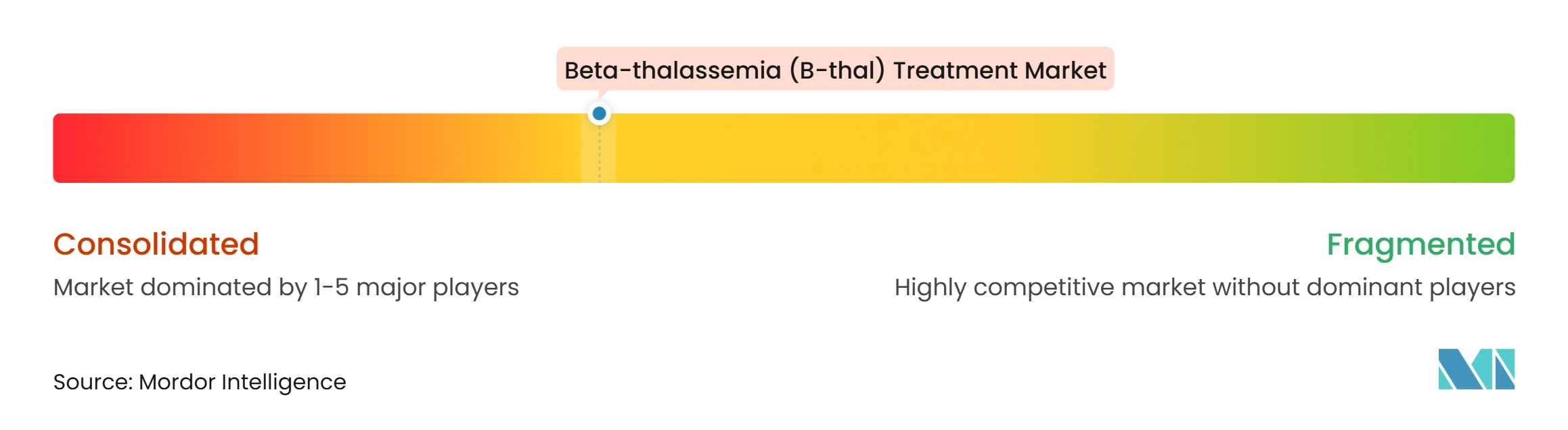
The beta-thalassemia (B-thal) treatment market is moderately concentrated. Vertex Pharmaceuticals and CRISPR Therapeutics market Casgevy, a one-time gene-edited treatment for eligible transfusion-dependent patients. Bristol Myers Squibb’s Reblozyl has a mature evidence base from the BELIEVE and BEYOND programs. These competing models differ in treatment duration, delivery setting, and payment requirements. The curative tier remains difficult to enter because developers need clinical evidence, manufacturing capacity, and treatment-center networks. This structure gives established developers a meaningful advantage in the beta-thalassemia (B-thal) treatment market.
Agios Pharmaceuticals entered the European thalassemia setting with mitapivat authorization in 2026, adding an oral therapeutic option for eligible adults. The once-daily or twice-daily oral format has a different access profile from injectable luspatercept and from one-time genetic treatment. Beam Therapeutics published Phase 1/2 BEACON data in April 2026, placing base editing among the approaches being investigated for severe hemoglobin disorders. Its ESCAPE approach is intended to use anti-CD117 conditioning in place of genotoxic conditioning. This could broaden eligibility if clinical development supports the approach. Treatment developers are therefore competing on clinical benefit, delivery complexity, and the ability to work within payer budgets.
The beta-thalassemia (B-thal) treatment market also has room for lower-cost oral agents and treatments for non-transfusion-dependent patients. Specialized manufacturing and long-term follow-up requirements remain barriers for new genetic therapies. Regulatory standards for advanced therapy medicinal products favor companies that can maintain manufacturing quality and pharmacovigilance systems. Supportive care remains less concentrated because chelation and outpatient management can be delivered through a wider set of providers.
Beta-thalassemia (B-thal) Treatment Industry Leaders
-
Vertex Pharmaceuticals Incorporated
-
CRISPR Therapeutics AG
-
bluebird bio, Inc.
-
Bristol Myers Squibb
-
Agios Pharmaceuticals, Inc.
- *Disclaimer: Major Players sorted in no particular order
Beta-thalassemia (B-thal) Treatment Market Companies Covered in this Report
- Agios Pharmaceuticals, Inc.
- Beam Therapeutics Inc.
- Bluebird Bio
- Bristol-Myers Squibb
- Chiesi Farmaceutici
- Cipla
- CRISPR Therapeutics AG
- Disc Medicine, Inc.
- EdiGene Inc.
- Editas Medicine, Inc.
- Roche
- Merck
- Novartis
- Novo Nordisk
- Orchard Therapeutics plc
- Pfizer
- Sanofi
- Silence Therapeutics plc
- Vertex Pharmaceuticals
- Zydus Lifesciences Limited
Recent Industry Developments in Beta-thalassemia (B-thal) Treatment Market
- July 2026: The BTHAL-FT007-01 Phase IIb trial launched at IRCCS Ospedale San Raffaele and Ospedale Pediatrico Bambino Gesù with 9 transfusion-dependent beta-thalassemia patients aged 3-35 years and evaluated an optimized GLOBE lentiviral protocol.
- May 2026: The European Commission granted marketing authorization for PYRUKYND (mitapivat, Agios Pharmaceuticals) on May 24, 2026, for adults with transfusion-dependent and non-transfusion-dependent alpha- or beta-thalassemia with orphan designation; commercialization across the EEA, United Kingdom, and Switzerland is managed by Avanzanite Bioscience under a June 2025 exclusive commercial agreement.
- April 2026: Beam Therapeutics published Phase 1/2 BEACON trial data for ristoglogene autogetemcel in the New England Journal of Medicine, while its ESCAPE anti-CD117 platform advanced BEAM-103 into Phase 1 healthy-volunteer trials.
Global Beta-thalassemia (B-thal) Treatment Market Report Scope
According to the report’s scope, the beta‑thalassemia (B-thal) treatment market encompasses products and services aimed at managing and treating beta‑thalassemia, including blood transfusions, iron chelation therapies, gene therapies, and emerging curative approaches. It also covers diagnostic tools for early detection and monitoring, as well as supportive care infrastructure in hospitals and clinics.
The beta‑thalassemia (B-thal) treatment market is segmented into treatment type, disease type, end-user, and geography. By treatment type, the market is segmented into iron chelation therapy, erythroid maturation agents, stem cell therapy, gene therapy, and other treatment types. By disease type, the market is segmented into beta-thalassemia major, beta-thalassemia intermedia, and beta-thalassemia minor. By end-user, the market is segmented into hospitals, specialty clinics, academic & research institutes, home-care settings, and other end-users. By geography, the market is segmented into North America, Europe, Asia-Pacific, the Middle East and Africa, and South America. The report also covers the estimated market sizes and trends for 17 countries across major regions globally. The report offers values (USD) for all the above segments.
Segmentation Overview
| Iron Chelation Therapy |
| Erythroid Maturation Agents |
| Stem Cell Therapy |
| Gene Therapy |
| Other Treatment Types |
| Beta-thalassemia Major |
| Beta-thalassemia Intermedia |
| Beta-thalassemia Minor |
| Hospitals |
| Specialty Clinics |
| Academic & Research Institutes |
| Home-care settings |
| Other End-Users |
| North America | United States |
| Canada | |
| Mexico | |
| Europe | Germany |
| United Kingdom | |
| France | |
| Italy | |
| Spain | |
| Rest of Europe | |
| Asia-Pacific | China |
| Japan | |
| India | |
| Australia | |
| South Korea | |
| Rest of Asia-Pacific | |
| Middle East and Africa | GCC |
| South Africa | |
| Rest of Middle East and Africa | |
| South America | Brazil |
| Argentina | |
| Rest of South America |
| By Treatment Type | Iron Chelation Therapy | |
| Erythroid Maturation Agents | ||
| Stem Cell Therapy | ||
| Gene Therapy | ||
| Other Treatment Types | ||
| By Disease Type | Beta-thalassemia Major | |
| Beta-thalassemia Intermedia | ||
| Beta-thalassemia Minor | ||
| By End-User | Hospitals | |
| Specialty Clinics | ||
| Academic & Research Institutes | ||
| Home-care settings | ||
| Other End-Users | ||
| By Geography | North America | United States |
| Canada | ||
| Mexico | ||
| Europe | Germany | |
| United Kingdom | ||
| France | ||
| Italy | ||
| Spain | ||
| Rest of Europe | ||
| Asia-Pacific | China | |
| Japan | ||
| India | ||
| Australia | ||
| South Korea | ||
| Rest of Asia-Pacific | ||
| Middle East and Africa | GCC | |
| South Africa | ||
| Rest of Middle East and Africa | ||
| South America | Brazil | |
| Argentina | ||
| Rest of South America | ||
Key Questions Answered in the Report
What is the projected value of the beta-thalassemia (B-thal) treatment market by 2032?
The beta-thalassemia (B-thal) treatment market is projected to grow from USD 6.01 billion in 2026 to USD 6.41 billion in 2027 and reach USD 9.47 billion by 2032, at a CAGR of 8.12% during the 2027–2032 forecast period.
Which treatment category leads to beta-thalassemia care?
Iron chelation therapy led with 38.32% share in 2026 because it remains necessary for managing transfusional iron overload.
Which therapy category is growing fastest?
Erythroid maturation agents are forecasted to grow at a CAGR of 9.22% through 2032, supported by luspatercept evidence and newer oral options.
Which region has the strongest growth outlook?
Asia-Pacific is projected to grow at a CAGR of 10.35% through 2032, reflecting its large-affected population and expanding diagnostic capacity.