
Market Overview
| Study Period | 2020 - 2031 |
|---|---|
| Forecast Data Period | 2026 - 2031 |
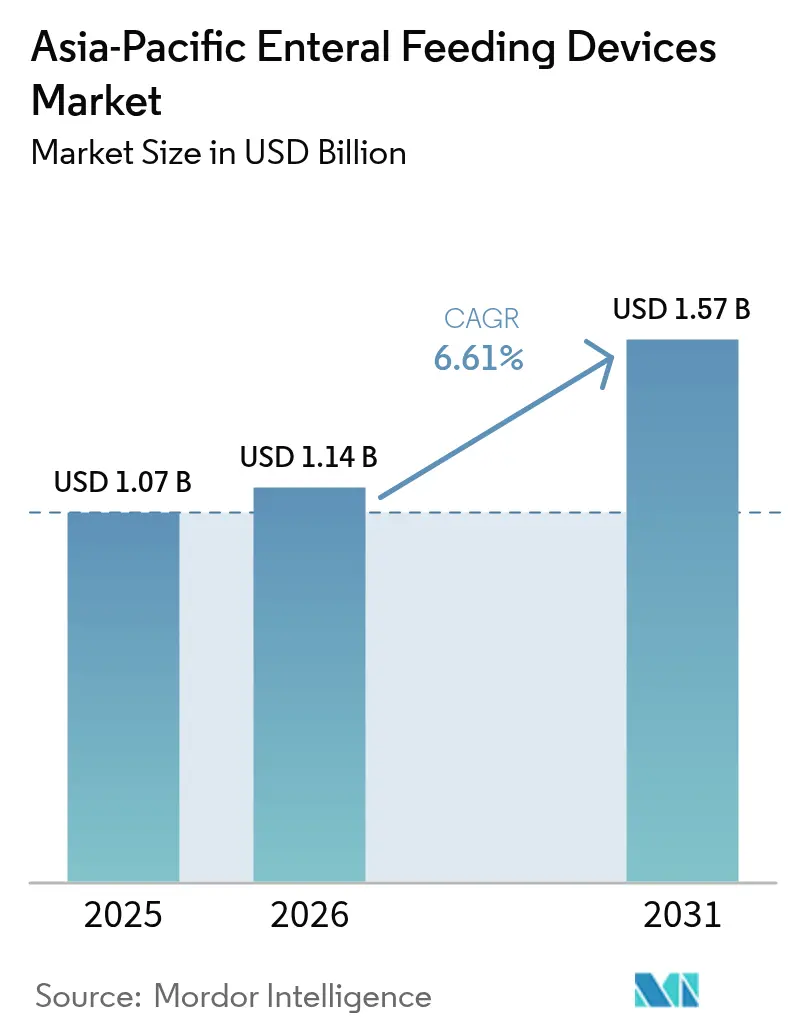
| Base Year Market Size (2025) | USD 1.07 Billion |
| Market Size (2026) | USD 1.14 Billion |
| Market Size (2031) | USD 1.57 Billion |
| Growth Rate (2026 - 2031) | 6.61 % |
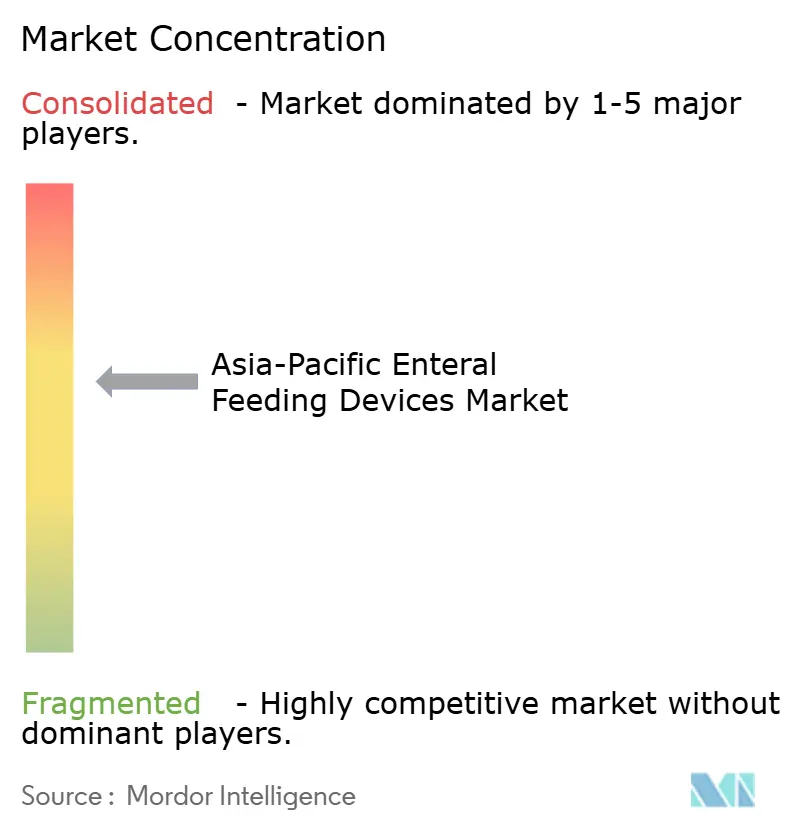
| Market Concentration | Medium |
Major Players *Disclaimer: Major Players sorted in no particular order Image © Mordor Intelligence. Reuse requires attribution under CC BY 4.0. | |
Asia-Pacific Enteral Feeding Devices Market Analysis by Mordor Intelligence
Asia Pacific enteral feeding devices market size in 2026 is estimated at USD 1.14 billion, growing from 2025 value of USD 1.07 billion with 2031 projections showing USD 1.57 billion, growing at 6.61% CAGR over 2026-2031. Rising life expectancy, strong growth in chronic disease incidence, and accelerated hospital‐capacity expansion underpin this steady trajectory. An ageing demographic is especially influential; people aged 60 and older will account for 22.2% of ASEAN’s population by 2050, reinforcing demand for long-term nutritional support. Providers are pivoting toward connected feeding pumps that integrate with telehealth platforms, while governments encourage indigenous production to lower costs, particularly in India where locally manufactured devices may be priced 50% below imports. Investment in medical infrastructure also remains robust: ASEAN healthcare spending climbed 42% in the five years to 2021, creating additional headroom for equipment upgrades and replacement cycles. Competitive intensity is moderate, but product innovation—such as camera-guided tube placement and wireless pump monitoring—has emerged as the primary differentiator rather than price alone.
Key Report Takeaways
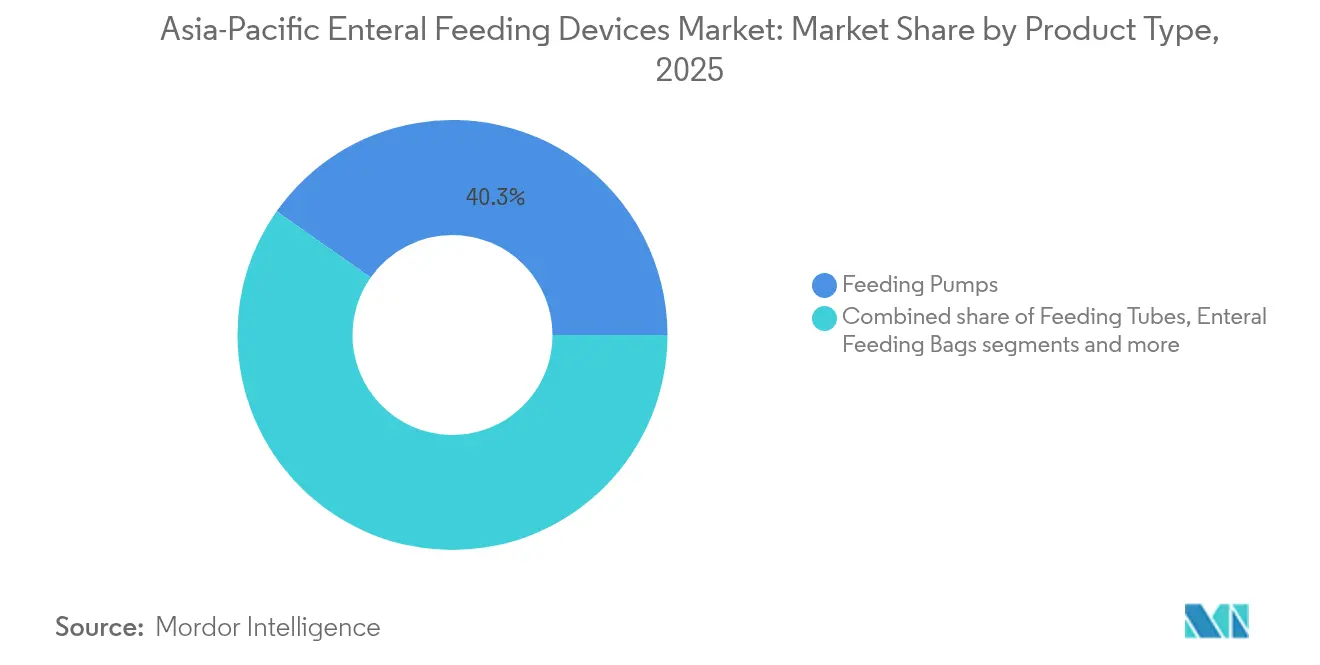
- By product type, feeding pumps led with 40.25% of the Asia Pacific enteral feeding devices market share in 2025, while feeding tubes are projected to expand at a 7.62% CAGR through 2031.
- By age group, adults accounted for 72.94% of the Asia Pacific enteral feeding devices market size in 2025; pediatric & neonatal care is the fastest‐growing cohort at 7.86% CAGR to 2031.
- By distribution channel, offline sales commanded 85.72% share in 2025; online channels are climbing at 8.05% CAGR thanks to digital procurement platforms.
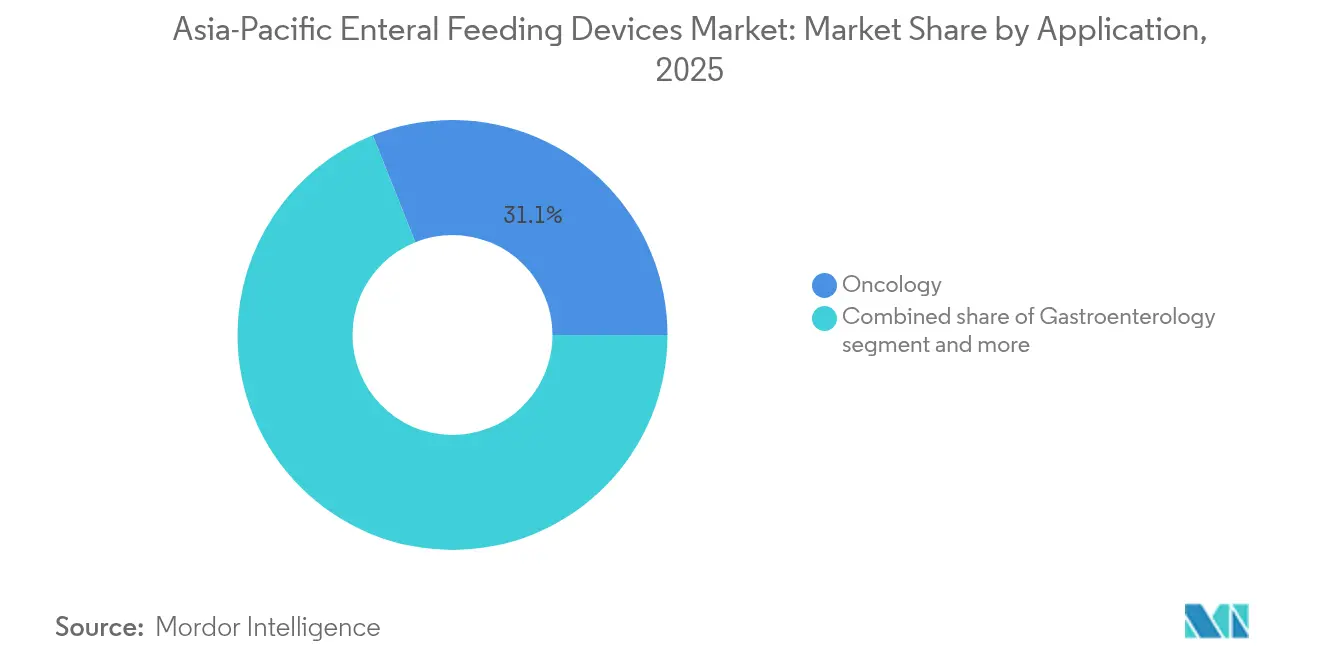
- By application, oncology held 31.05% of the Asia Pacific enteral feeding devices market size in 2025; critical care & trauma is set to grow at a 7.38% CAGR between 2026-2031.
- By end-user, hospitals represented 54.68% of 2025 revenue, while home care settings are growing 7.21% annually.
- By geography, China dominated with 40.88% share in 2025, whereas India is projected to log the highest 7.84% CAGR to 2031.
Note: Market size and forecast figures in this report are generated using Mordor Intelligence’s proprietary estimation framework, updated with the latest available data and insights as of 2026.
Asia-Pacific Enteral Feeding Devices Market Trends and Insights
Drivers Impact Analysis*
| Driver | (~) % Impact on CAGR Forecast | Geographic Relevance | Impact Timeline |
|---|---|---|---|
| Rapid Ageing Across East Asia Drives Post-Acute Nutrition Demand | +1.8% | China, Japan, South Korea | Long term (≥ 4 years) |
| Neonatal ICU Capacity Expansion Boosts Premature-Birth Feeding Volumes | +1.2% | India, China, Southeast Asia | Medium term (2-4 years) |
| Home-Based Long-Term Care Reimbursement Reforms in China & Japan | +1.0% | China, Japan | Medium term (2-4 years) |
| Telerehabilitation Protocols Mandate Pump Connectivity | +0.7% | Australia, Singapore, developed APAC | Short term (≤ 2 years) |
| Surge in Gastrointestinal Cancer Surgeries Elevating Post-Operative Tube-Feeding Adoption | +0.6% | China, Japan, India, Australia | Medium term (2-4 years) |
| Military Field-Hospital Procurement in Indo-Pacific | +0.5% | Australia, Japan, South Korea, India | Medium term (2-4 years) |
| Source: Mordor Intelligence | |||
Rapid Ageing Across East Asia Drives Post-Acute Nutrition Demand
East Asian health systems already treat malnutrition in 25% of older adults[1], and absolute caseloads will rise alongside demographic ageing, reinforcing long-term reliance on enteral feeding solutions. Dysphagia after stroke is a common trigger for device placement, and clinical guidelines from the VA/DoD now recommend enteral nutrition as a standard stroke-recovery intervention. Community screening programs increasingly flag undernutrition, which correlates with 41% higher emergency-department visits[2] and 52% greater inpatient admissions among seniors, intensifying payer focus on early nutritional therapy. As primary-care settings assume greater accountability for geriatric outcomes, demand shifts from hospital-only devices to portable pumps suitable for step-down and home environments. Manufacturers are responding with low-volume precision pumps that minimize aspiration risk while maintaining flow stability over extended use cycles.
Neonatal ICU Capacity Expansion Boosts Premature-Birth Feeding Volumes
Surging NICU bed counts in China, India, and much of Southeast Asia have improved survival for preterm infants, who require highly regulated enteral nutrition[3] to mitigate growth impairment. Hospitals deploying standardized feeding‐intolerance scoring systems can initiate enteral feeds within 7 days post-surgery, cutting complication rates in necrotizing enterocolitis cases by 17%. Clinical variability among 336 Asian hospitals—especially differences in ventilation and humidity protocols—creates headroom for advanced pumps offering adaptive flow control and real-time gastric-residual monitoring. Suppliers that bundle neonatal-specific tubes with micro-bore connectors stand to gain as care guidelines tighten around tube size, placement accuracy, and cleaning protocols. With governments funding NICU upgrades, procurement budgets increasingly include connected pumps that feed data back to centralized dashboards for audit and quality improvement.
Home-Based Long-Term Care Reimbursement Reforms in China & Japan
Only 40% of Asia Pacific countries reimbursed home enteral nutrition before 2024; that share is rising fast, led by China’s long-term care insurance pilots and Japan’s home-visit fee updates that cover nutritional support supplies. Correlation between national health-expenditure growth and commercial formula use is clear: middle-income markets shifting away from blenderized diets demand ready-to-hang solutions with extended shelf life. Vietnam’s 2024 reforms—streamlining drug registration and lifting insurance coverage[4] to 94.1%—signal a broader policy tailwind for home-care devices across ASEAN. Yet most nutrition-support teams remain concentrated in urban hospitals, so suppliers collaborate with visiting-nurse networks to train caregivers on pump programming, sanitation, and troubleshooting.
Telerehabilitation Protocols Mandate Pump Connectivity
Health systems that moved rehabilitation online during COVID-19 now require feeding devices that transmit dosage logs and alarm histories to clinical dashboards. Portable pumps featuring 19-hour battery life and WLAN connectivity integrate with electronic health records to trigger alerts when flow deviations exceed programmed tolerances. Studies across 18 telehealth programs show machine-learning algorithms can predict adverse events and recommend dosage adjustments, enhancing patient engagement while cutting nurse callouts by 14%. Cardinal Health’s Kangaroo Connect Portal exemplifies this model, giving clinicians secure browser access to feeding histories and facilitating remote diagnostics. As reimbursement parity for virtual care takes hold, IoT-ready devices are fast becoming table stakes in the Asia Pacific enteral feeding devices market.
Restraints Impact Analysis*
| Restraint | (~) % Impact on CAGR Forecast | Geographic Relevance | Impact Timeline |
|---|---|---|---|
| Tube-Induced Mucosal Injuries & Infection Risks | -0.9% | Global, particularly developing markets | Long term (≥ 4 years) |
| Reimbursement Caps for Disposable Sets in Asean | -0.6% | ASEAN countries | Medium term (2-4 years) |
| Single-Use Plastic Regulations for Medical Tubing | -0.4% | Australia, Japan, developed APAC | Long term (≥ 4 years) |
| Local OEM Price Wars in India Lower Profitability | -0.3% | India | Short term (≤ 2 years) |
| Source: Mordor Intelligence | |||
Tube-Induced Mucosal Injuries & Infection Risks
Extended nasogastric placement can distort the epiglottis' shape and narrow the pharynx, particularly when paired with tracheostomy, leading to higher aspiration rates and prolonged hospitalization. HACCP-style monitoring programs reduce total microbial load in formula delivery, yet compliance remains uneven, and no cleaning technique fully eliminates bacterial colonization after 28 days. ISO 80369-3 connectors solve misconnections but not tube degradation or biofilm build-up. In resource-constrained wards, re-use of single-use components persists, elevating infection risk and dampening uptake of premium systems. Manufacturers must demonstrate measurable reductions in adverse events to overcome clinician hesitancy.
Reimbursement Caps for Disposable Sets in ASEAN
Government price ceilings on consumables in Indonesia, Vietnam, and Malaysia squeeze margins on administration sets and gravity bags, limiting hospitals’ ability to adopt newest-generation low-volume residual kits. Indonesia’s TKDN rules further tilt procurement toward domestically assembled sets, complicating the supply chain for multinationals and elongating tender cycles. Providers sometimes resort to re-sterilizing tubing, increasing infection liability while depressing replacement volumes. Harmonization under an eventual ASEAN Medical Device Directive could ease cross-border sales, but near-term revenue growth remains gated by fragmented reimbursement mechanisms that disfavor advanced single-use accessories.
*Our forecasts treat driver/restraint impacts as directional, not additive. The impact forecasts reflect baseline growth, mix effects, and variable interactions.
Segment Analysis
By Product Type: Precision Pumps Retain Lead While Tubes Accelerate
Feeding pumps generated 40.25% of the Asia Pacific enteral feeding devices market share in 2025, underscoring the central role of precision delivery technology in acute and chronic care. Volumetric models dominate because their peristaltic rollers maintain consistent flow irrespective of viscosity, a critical need in oncology and ICU settings. The Asia Pacific enteral feeding devices market size for feeding pumps is forecast to grow at a 5.18% CAGR that reflects pump-replacement cycles more than first-time installations. Wireless telemetry, dose-error-reduction software, and automated flush protocols differentiate premium units, while entry-level devices emphasize ruggedness for emerging-market hospitals.
Feeding tubes, in contrast, are expanding at 7.62% CAGR as basic access becomes universal across secondary hospitals. Innovations such as Cardinal Health’s IRIS camera-guided tube replace blind placement, cutting malposition rates by 87% and reducing radiographic confirmation cost. ENFit connectors gained regulatory mandates across Japan and Australia, compelling large-scale legacy stock conversions. Administration sets and syringes post mid-single-digit growth, primarily volume-driven, as each pump requires multiple disposables daily. Environmental scrutiny is rising, so suppliers explore bio-based PVC alternatives that maintain flexibility without leaching plasticizers, balancing cost and compliance with single-use plastic bans in Australia and some Japanese prefectures.

By Age Group: Adult Dominance Confronts Rapid Pediatric Uptake
Adults accounted for 72.94% of the Asia Pacific enteral feeding devices market size in 2025, a ratio reflecting high prevalence of stroke, cancer, and neurologic dysphagia in older cohorts. Adult products emphasize easy programmability for nursing staff and compatibility with thickened formulas used for dysphagia management. The Asia Pacific enteral feeding devices market share held by adults is expected to remain above 70% through 2031, albeit with incremental volume gains mainly in home-care settings.
Pediatric and neonatal segments, though smaller, are growing 7.86% annually. Very-low-birth-weight infants require micro-bore tubes and fortified breast-milk formulations; pump suppliers add ultralow-flow modes capable of 0.5 mL/h resolution to meet these needs. Portable warmers keep milk at physiologic temperature en route from milk bank to incubator, decreasing lipid adherence to syringe walls. Pediatric home-care programs in Australia trial connected pumps with gamified caregiver apps that flag occlusions and allow asynchronous dietitian consults, further accelerating uptake beyond hospital walls.
By Distribution Channel: Offline Rules but E-commerce Gains Momentum
Traditional hospital and distributor channels governed 85.72% of the Asia Pacific enteral feeding devices market share in 2025 as procurement teams valued bundled service contracts and 24/7 technical support. Large-volume tenders still favor multinationals able to finance consignment inventories and deliver on‐site training. However, online sales are rising 8.05% per year on a low base. Specialty e-pharmacies and device portals offer subscription replenishment for tubes and bags, syncing delivery intervals with pump usage logs.
Regulatory frameworks present a mixed picture: India allows licensed online pharmacies to fulfill class B device prescriptions nationally, while Indonesia requires local distributor registration, slowing cross-border platforms. Hospitals increasingly use e-tender portals to solicit quotes, compressing price-discovery timelines and improving transparency. Suppliers thus integrate e-commerce within customer-relationship portals that host training videos and preventive-maintenance schedules, aligning digital procurement with after-sales service expectations.
By Application: Oncology Care Leads as Critical Care Accelerates
Cancer-related malnutrition drives 31.05% of the Asia Pacific enteral feeding devices market size in 2025, as chemotherapy and radiotherapy compromise oral intake and increase metabolic requirements. Oncology protocols often switch from nasogastric to percutaneous endoscopic gastrostomy (PEG) within two weeks to reduce aspiration risk, lifting demand for low-profile buttons and ambulatory pumps. Formulation suppliers co-market immune-enhancing blends rich in arginine and omega-3 fatty acids to improve wound healing, bundling tube kits for protocol adherence.
Critical care & trauma is the fastest-growing application at 7.38% CAGR. Early enteral nutrition within 48 hours in ICU settings halves ventilator days and reduces sepsis incidence, pushing intensivists to adopt auto-priming pumps that begin feeding immediately after line placement. Combined trauma-oncology cases, such as maxillofacial cancer resections, necessitate feeding devices that transition from inpatient to outpatient use without changing connectors or bag formats, creating integrative product families across acuity levels.
By End-User: Hospital Core Endures, Home Care Outpaces
Hospitals absorbed 54.68% of the Asia Pacific enteral feeding devices market share in 2025, buoyed by operating-room tube placements and high‐throughput ICUs. They continue to purchase fleet-size pump systems with central docking chargers and enterprise data-capture licenses. Nevertheless, home care grows 7.21% annually, fueled by reimbursement expansion in China and Japan and more lenient insurance approvals for pump consumables. The Asia Pacific enteral feeding devices market size for home care is set to surpass USD 0.39 billion by 2031, reflecting a structural shift toward community-based chronic-disease management .
Ambulatory surgical centers incrementally add share as day-surgery volumes climb, but their purchasing remains tied to hospital group purchasing organizations. Long-term-care facilities in Australia adopt gravity sets for low-acuity residents, a cost-effective compromise where full pumps are unnecessary. Suppliers target this segment with bag-in-box formula formats that reduce plastic weight by 34% and minimize waste.
Geography Analysis
China generated 40.88% of 2025 revenue in the Asia Pacific enteral feeding devices market, a position anchored by aggressive hospital expansion and population ageing . NMPA reforms that streamline registration—coupled with provincial procurement initiatives—accelerate uptake of smart pumps featuring Mandarin language interfaces. Volume-based procurement, however, pressures pricing, prompting suppliers to localize assembly to meet cost thresholds. The government’s digital-health blueprint favors connected devices, enabling real-time nutritional data integration into hospital information systems.
India, the fastest-growing geography at 7.84% CAGR, benefits from a national production-linked incentive scheme that subsidizes domestic device manufacturing. With 70% of its devices still imported, joint ventures—such as Nestlé Health Science and Dr. Reddy’s—illustrate a pivot toward in-country value creation. State insurance programs push for cost-effective enteral solutions, so suppliers introduce modular pump platforms that accept both low-cost gravity-bag sets and premium auto-flush sets, optimizing for variable purchasing power across urban and rural hospitals.
Mature markets—Japan, Australia, and South Korea—demand high-spec connectivity and comply early with single-use-plastic restrictions, prompting R&D into recyclable elastomer tubing. Japan’s dual food-drug classification for formulas encourages collaboration between pharmaceutical distributors and foodservice logistics providers. Australia’s post-market surveillance audits raise the bar on adverse-event reporting, favoring manufacturers with robust quality systems.
The rest of Asia Pacific, encompassing Indonesia, Malaysia, Thailand, and the Philippines, collectively represents a fast-expanding opportunity. Indonesia spends IDR 218.5 trillion on healthcare annually and has achieved 98% universal coverage, although TKDN content rules dictate that at least 40% of device value be produced domestically. Thailand’s EEC medical-hub strategy allocates tax breaks for device makers that establish ASEAN distribution centers, strategically positioning the country as a logistics node for cross-border shipments.
Regulatory Landscape
Asia-Pacific enteral feeding devices are governed by country-specific medical-device frameworks, with growing reliance on international standards and quality-system conformity. In Australia, the Therapeutic Goods Administration (TGA) regulates devices under the Therapeutic Goods Act 1989 and the Therapeutic Goods (Medical Devices) Regulations 2002. This requires conformity with the Essential Principles and inclusion in the Australian Register of Therapeutic Goods (ARTG) before supply. In other APAC markets, regulators use reliance or abridged pathways that streamline local registration by referencing approvals from established regulators such as the TGA, Singapore HSA, or the US FDA, which can accelerate entry for pumps, tubes, and ENFit-compatible accessories.
China is a pivotal market because the National Medical Products Administration (NMPA) oversees device registration and manufacturing oversight, including review and registration requirements for imported Class II and III devices. In November 2025, the NMPA released a revised Good Manufacturing Practice (GMP) for medical devices that takes effect on November 1, 2026, tightening compliance expectations under a more explicit quality-management focus. This timeline creates a near-term compliance milestone for suppliers using China as a high-volume demand market or an assembly base for regional tenders.
Value Chain Analysis
The value chain covers medical-grade raw materials (polyurethane resins, PVC alternatives, and silicones), component manufacturing (connectors, tubing, pump mechanics, sensors), device assembly and sterilization, and then multi-tier distribution to hospitals and home-care channels. Multinational manufacturers such as Abbott, Fresenius Kabi, Avanos Medical, Cardinal Health, Nestle Health Science, B. Braun, and Medtronic typically pair centralized product platforms with localized packaging, servicing, and training delivered via national distributors, hospital tender channels, and, increasingly, online procurement portals for replenishment items (bags, sets, and syringes). Clinical adoption is supported by nutrition-support teams and protocols that standardize ordering, pump programming, and caregiver training, especially as care shifts from acute settings to step-down and home environments.
Key friction points in the region often relate to sterilization capacity and regulatory audit readiness. Imported-device inspections and documentation reviews can extend lead cycles in parts of India and Southeast Asia, while localization and domestic-content requirements also shape chain design. Indonesia's TKDN thresholds favor local assembly of disposables and sets, and ASEAN alignment efforts under the ASEAN Medical Device Directive (AMDD) aim to standardize dossier structures across member states. In addition, India Medical Device Rules (2017) can require local clinical investigation for some higher-risk imports that have not been cleared by selected reference countries, which can affect launch sequencing for advanced pumps and specialty tubes.
Competitive Landscape
The Asia Pacific enteral feeding devices industry is characterized by moderate concentration. Abbott, Medtronic, Fresenius Kabi, Cardinal Health, B. Braun, Avanos Medical, and Nutricia collectively command the lion’s share of revenue, leveraging diversified portfolios and broad regional distribution. Abbott’s Nutrition segment grew 6.8% organically in Q1 2025 on the strength of Ensure and Glucerna, supported by USD 0.5 billion in incremental R&D and manufacturing investment targeted at emerging markets. Cardinal Health’s IRIS camera-equipped tube and Kangaroo Connect telemetry platform differentiate in placement safety and remote monitoring.
Local challengers in India and China manufacture cost-competitive tubes and gravity sets, often pricing 35-45% below multinationals. These players capitalize on public-sector tenders, emphasizing the lowest bid, yet may struggle to match premium feature sets such as ENFit transition kits or Bluetooth connectivity. Sustainability has become a new axis of competition; Nutricia reformulated its Nutrison range to reduce carbon footprint by 17% while increasing caloric density, meeting growing hospital sustainability KPIs. OEMs are also exploring silicone-free feed lines to comply with looming Japanese and Australian recycling mandates.
Strategic partnerships proliferate: Avanos and Samsung SDS pilot IoT middleware that synthesizes pump data with electronic medical records, whereas Fresenius Kabi collaborates with Alibaba Cloud for AI-enabled supply chain management in China. M&A activity remains measured but is expected to accelerate as digital-capability gaps widen between incumbents and niche innovators.
Asia-Pacific Enteral Feeding Devices Industry Leaders
-
Abbott Laboratories
-
Becton, Dickinson and Company
-
Boston Scientific Corp.
-
ConMed Corporation
-
Vygon S.A.
- *Disclaimer: Major Players sorted in no particular order
Market Opportunities and Future Outlook
Procurement whitespace is developing around safety-led standardization and workflow digitization, particularly where hospitals codify enteral practices into electronic ordering and documented handling protocols. In South Korea, the Korean Society for Parenteral and Enteral Nutrition (KSPEN) published practical guidance (including 2025 and 2026 parts) focused on standardized enteral nutrition orders and safety practices for preparation and handling. This supports demand for systems that help providers maintain consistent prescriptions, traceability, and handling compliance. Suppliers have an opportunity to bundle pumps, ENFit-compatible administration sets, and digital documentation tools that connect with hospital electronic medical records, rather than selling hardware and disposables as separate line items.
Neonatal and high-acuity settings remain a differentiation focus, centered on misconnection prevention, tube securement, and placement assurance, with product activity visible in India and other emerging APAC care centers. Vygon India, for instance, introduced its Nutrisafe2 neonatal enteral feeding system to address misconnection risk in NICUs, reinforcing demand for neonatal-specific connectors and protocols alongside micro-bore tubing. Continued expansion of home-care reimbursement in parts of APAC also supports uptake of portable, caregiver-friendly systems, particularly where remote monitoring and auditability are prioritized by providers shifting long-term nutrition support outside hospitals.
Recent Industry Developments
- July 2026: ENvue Medical unveiled ENvue Drive, a robotic-assisted tool expanding enteral feeding workflows and integrating with existing ENvue Navigation Platform. The launch points to guided placement and workflow automation as purchase criteria in hospital environments, particularly for feeding-related device pathways.
- September 2025: Pharmac (New Zealand) approved a listing agreement for medical devices supplied by Abbott Laboratories NZ Limited, effective from September 1, 2025 for Health NZ hospitals. The agreement supports structured public procurement and can affect supplier positioning in tender-driven channels for feeding-related devices and accessories.
- November 2024: Avanos Medical launched the CORGRIP SR nasogastric/nasointestinal tube retention system, a nasal bridle solution designed to reduce tube dislodgement. The launch targets a recurring complication driver in enteral feeding workflows and supports protocol adherence in both acute and long-term care settings.
Research Methodology Framework and Report Scope
Market Definition and Coverage
This market covers revenues generated from devices used to deliver nutrition directly into the gastrointestinal tract in Asia-Pacific, across clinical and home settings. It includes the core hardware for enteral delivery and the supporting components needed to administer feeds safely.
Scope exclusions: Parenteral nutrition products and enteral formulas are excluded from this sizing.
Segmentation Overview
- By Product Type
- Feeding Pumps
- Volumetric Pumps
- Ambulatory Pumps
- Syringe Pumps
- Feeding Tubes
- Nasogastric Tubes
- Gastrostomy Tubes
- Others
- Enteral Feeding Bags
- Administration Sets & Accessories
- Enteral Syringes
- Feeding Pumps
- By Age Group
- Adults
- Pediatric & Neonatal
- By Distribution Channel
- Offline
- Online
- By Application
- Oncology
- Gastroenterology
- Critical Care & Trauma
- Other Applications
- By End-User
- Hospitals
- Ambulatory Surgical Centers
- Home Care Settings
- Other End-Users
- By Geography
- China
- Japan
- India
- Australia
- South Korea
- Rest of Asia-Pacific
Data Sources, Market Sizing, and Validation
Desk Research
We start by building a clean fact base on enteral feeding use, care pathways, and the addressable patient pool across Asia-Pacific. For this, we lean on public sources such as the World Health Organization, OECD health statistics, national health ministry publications, and datasets from the World Bank, along with clinical guidance and articles indexed in PubMed.
Next, the demand context is refined using import and export statistics (where available), regulatory device listings, and broad procurement and tender signals, followed by checks from annual reports, investor presentations, and reputable medical press coverage. In a few cases, paid subscriptions were used only to speed up company financial reads, patent scanning, and shipment level trade checks for consistency. The desk research sources mentioned here are illustrative, and many other public documents and datasets were also used to collect data, validate assumptions, and clear open questions.
Primary Interviews and Surveys
Our primary work focused on confirming how devices are purchased and used across hospitals and home care, and then testing pricing and adoption differences across major Asia-Pacific countries. We spoke with a mix of manufacturers, distributors, clinicians, and procurement stakeholders. This input helped us close gaps on pump penetration, tube replacement behavior, and realistic price ranges by care setting and country.
Distribution of primary research fieldwork respondents
| Company type | Respondent position |
|---|---|
| Top tier: 33% | CXOs: 13% |
| Mid tier: 52% | Functional/Unit leaders: 42% |
| Smaller Players: 15% | Managers: 45% |
Market-Sizing & Forecasting
The core model is built using a top-down approach where treated patient volumes and procedure-led demand indicators are translated into device needs at the country level, then aggregated to an Asia-Pacific total. For enteral feeding devices, we apply practical multipliers that link care delivery to consumption, and only then use representative pricing by device type.
Inputs used in the model include hospital admissions and long-stay indicators, aging and chronic disease burden signals that affect long-term feeding needs, gastrostomy and related procedure volumes as a usage proxy, estimated pump utilization rates in acute care versus home care, and average replacement cycles for tubes and administration sets. To keep totals realistic, we corroborate results with selective bottom-up approximations, such as sampled ASP times estimated unit volumes for pumps and tubes, plus channel checks on typical purchasing bundles and tender-driven pricing. Where company disclosures do not split Asia-Pacific cleanly, revenues are allocated using geography hints from filings and interviews, and then stress-tested against the demand indicators.
For forecasting, we rely on scenario analysis supported by a light regression view of the strongest drivers (patient pool growth, procedure intensity, and care setting shift toward home). Assumptions on pricing progression are reviewed with primary respondents so the forecast reflects normal inflation, mix changes, and reimbursement related adoption changes rather than overly aggressive step-ups.
Data Validation & Update Cycle
We run multi-step checks so the model stays consistent with real-world signals, and the same logic is applied across countries before regional totals are finalized. Outliers are flagged when growth, pricing, or implied unit consumption moves beyond what procurement patterns and clinical usage would allow, and then those items are re-checked with supporting sources or re-contacted experts.
Before sign-off, another analyst reviews the full chain of assumptions, recalculates key worksheets, and confirms that country roll-ups reconcile with the Asia-Pacific total. Reports are refreshed annually, and interim updates are done when material events occur, such as policy changes, major pricing shifts, or meaningful supply moves. Right before delivery, we do a final pass on recent public updates so clients receive the latest view available at that time.
Mordor Intelligence's Asia Pacific Enteral Feeding Devices Market Sizing Compared With Other Published Estimates
Published market values can look far apart because each publisher chooses a different boundary for what counts as a device, which countries are included, and which year and currency timing are used. Differences also come from how pricing is treated, especially when pumps and tube related accessories are grouped differently.
Procedure volume signals, treated patient pool checks, and cross-checks against typical pump utilization in acute care are the evidence that keeps Mordor Intelligence aligned to a device-only demand pool for Asia-Pacific, rather than mixing in nutrition products or broader clinical supplies. The biggest gaps usually appear when estimates roll up adjacent categories, apply uniform pricing across countries, or use older exchange rates without re-validating the implied per-patient spend.
Benchmark comparison
| Source | Market Size | Gaps in Research Methodology |
|---|---|---|
| Mordor Intelligence | USD 1.07 B (2025) | |
| Industry Publisher A | USD 700.00 M (2024) | Uses a different base year and a broader regional roll-up that can compress country pricing differences, which can understate totals when device mix shifts toward pumps and higher-acuity use. |
| Market Portal B | USD 6.50 B (2024) | The estimate appears to sit on a much wider scope boundary for what is counted in the market, and the implied spend per patient is high versus device-only consumption when checked against procedure and utilization proxies. |
The spread mainly reflects boundary choices and how unit demand is translated into revenue across diverse Asia-Pacific price points. By anchoring totals to observable care activity and then sanity-checking implied units and pricing, the estimate remains traceable to a few repeatable steps that a buyer can audit and update.
Key Questions Answered in the Report
How is population ageing shaping demand for enteral feeding devices in Asia Pacific?
Longer life expectancy and higher stroke incidence are increasing the need for post-acute nutritional support, prompting hospitals and home-care providers to standardize tube-feeding protocols for older adults.
Why are connected feeding pumps gaining traction among healthcare providers?
Clinicians value devices that transmit dosage data to electronic records, which simplifies remote monitoring, reduces alarm fatigue, and supports reimbursement models tied to outcome tracking.
What role do neonatal intensive-care upgrades play in market adoption?
Expanded NICU capacity in China, India, and Southeast Asia is driving demand for micro-bore tubes and precision pumps that can safely deliver very low flow rates to premature infants.
How are sustainability requirements influencing product development?
Manufacturers are reformulating formulas to lower carbon footprints and experimenting with recyclable tubing materials to comply with single-use plastic regulations in Australia and Japan.
In what ways are local manufacturing incentives affecting competitive dynamics?
Government programs in India and Indonesia encourage domestic production, enabling local firms to offer lower-priced tubes and sets that intensify price competition for multinational brands
What procurement trends are emerging as hospitals digitize supply chains?
Health systems increasingly use e-tender portals and automated restock systems, rewarding suppliers that integrate training resources, maintenance scheduling, and ordering into a single digital platform.