
Asia-Pacific Bathroom Vanities Market Size and Share
Market Overview
| Study Period | 2020 - 2031 |
|---|---|
| Forecast Data Period | 2026 - 2031 |
| Base Year Market Size (2025) | USD 10.06 Billion |
| Market Size (2026) | USD 10.18 Billion |
| Market Size (2031) | USD 15.02 Billion |
| Growth Rate (2026 - 2031) | 8.09 % |
| Market Concentration | Low |
Major Players *Disclaimer: Major Players sorted in no particular order Image © Mordor Intelligence. Reuse requires attribution under CC BY 4.0. | |
Asia-Pacific Bathroom Vanities Market Analysis by Mordor Intelligence
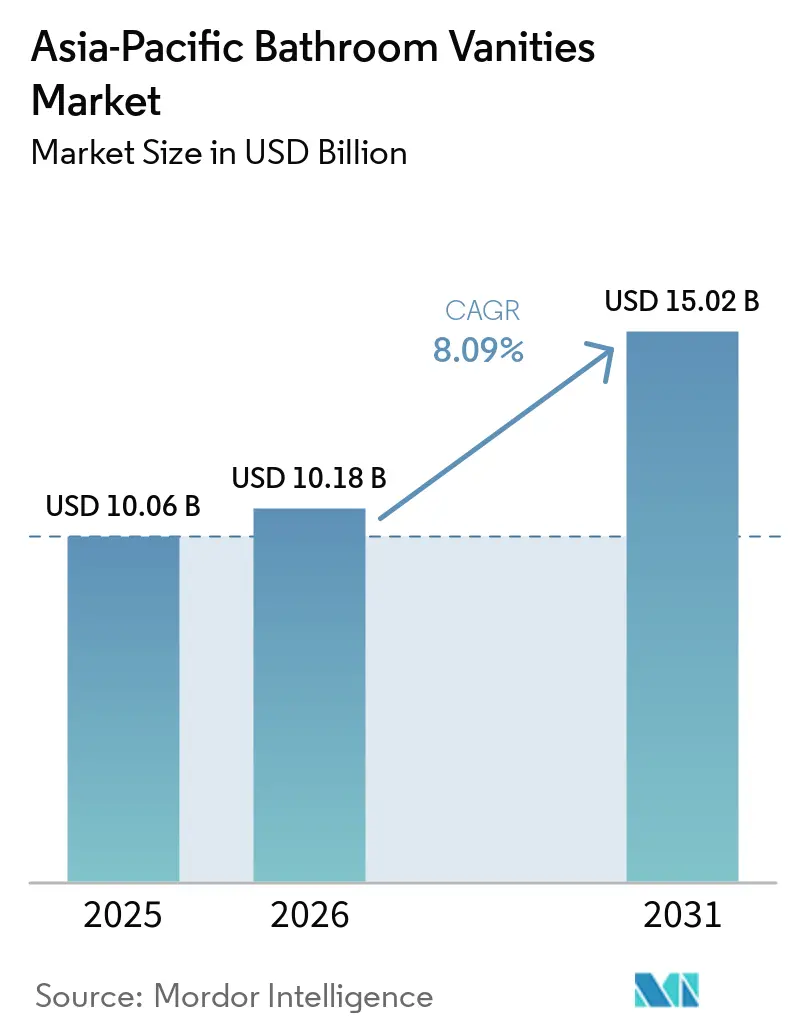
The Asia-Pacific bathroom vanities market size is expected to grow from USD 10.06 billion in 2025 to USD 10.18 billion in 2026 and is forecast to reach USD 15.02 billion by 2031 at 8.09% CAGR over 2026-2031. Urban housing delivery, renovation activity, and hotel construction support demand for complete bathroom fittings across the region. Consumer preferences have shifted toward bathrooms that combine storage, easier cleaning, coordinated finishes, and durable materials suited to local conditions. Manufacturers are responding through more modular designs, smart functions, moisture-resistant products, and broader retail coverage. China remains the largest country market, while India is the fastest-growing country market, supported by housing delivery and commercial construction. The Asia-Pacific bathroom vanities market, therefore, presents different opportunities across entry-level housing, premium renovation, hospitality projects, and replacement demand.
Key Report Takeaways
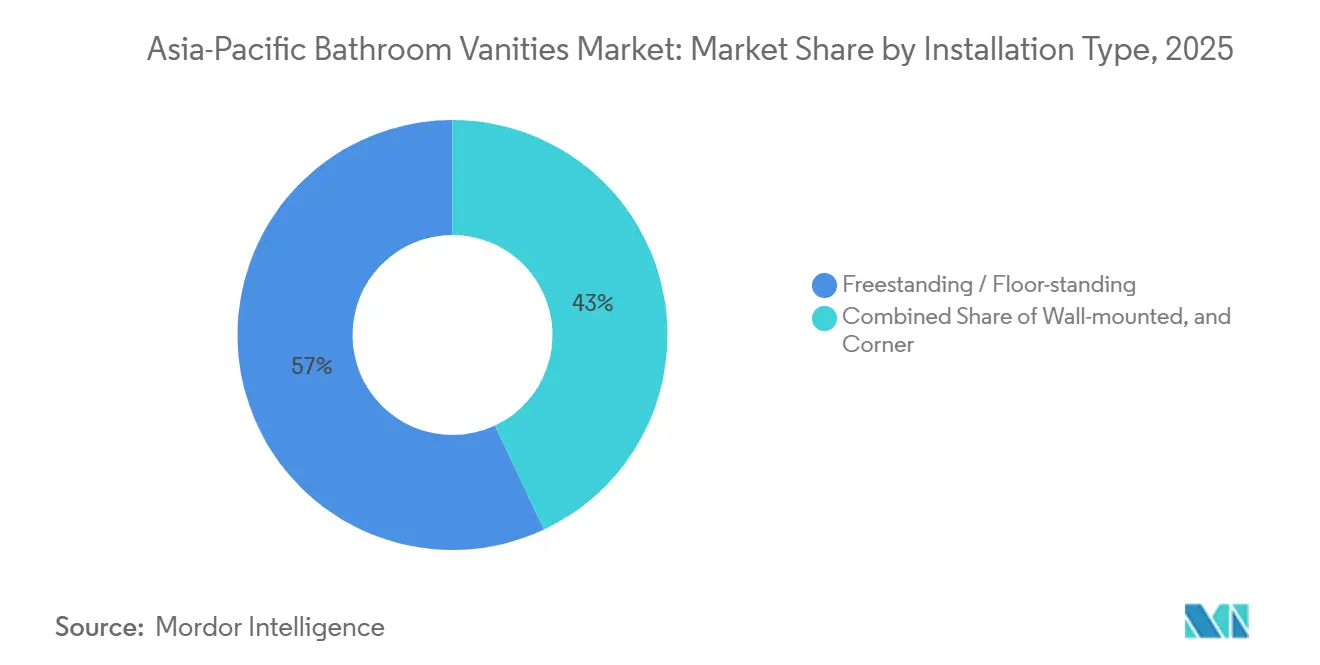
- By installation type, freestanding formats led with 57.00% of the 2025 Asia-Pacific bathroom vanities market share, while wall-mounted configurations are projected to grow at the fastest CAGR of 9.89% through 2031.
- By material, wood accounted for 42.00% of the 2025 Asia-Pacific bathroom vanities market share, and stone is projected to grow at the fastest CAGR of 10.54% through 2031.
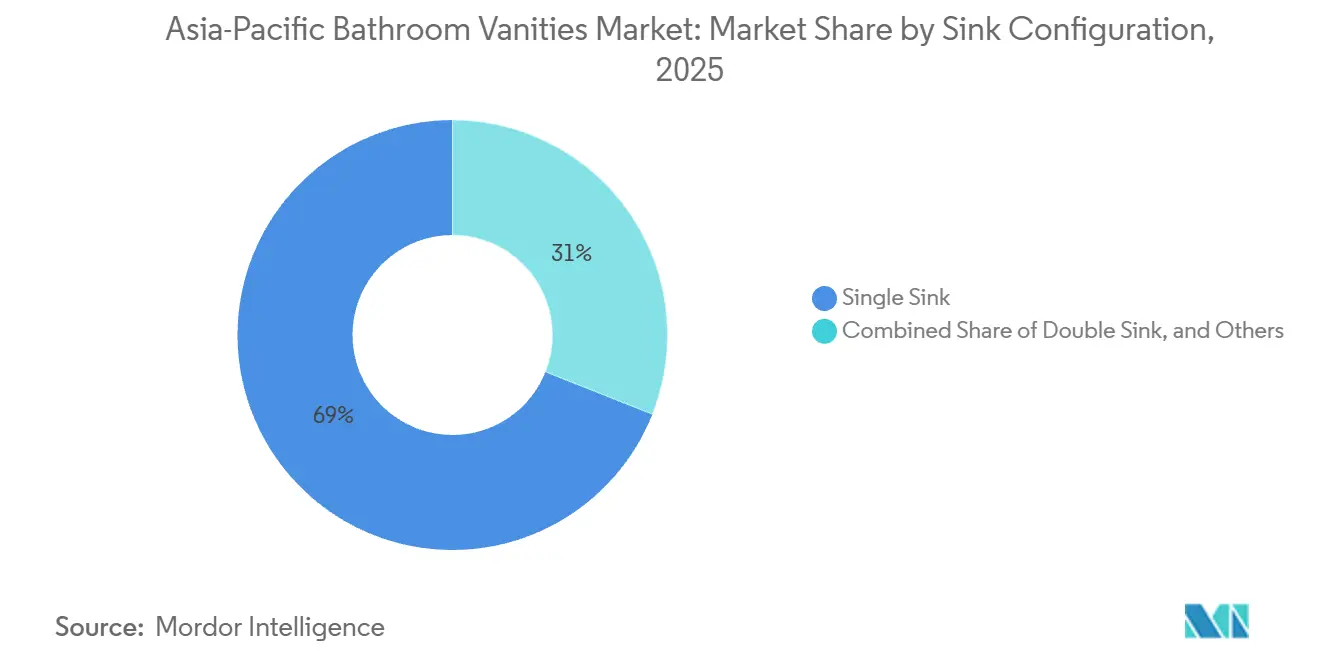
- By sink configuration, single-sink units accounted for 69.00% of the 2025 Asia-Pacific bathroom vanities market share, while double-sink units are projected to grow at the fastest CAGR of 9.51% through 2031.
- By end-user, residential commanded 73.60% of the 2025 Asia-Pacific bathroom vanities market share, while commercial demand is projected to grow at the fastest CAGR of 10.30% through 2031.
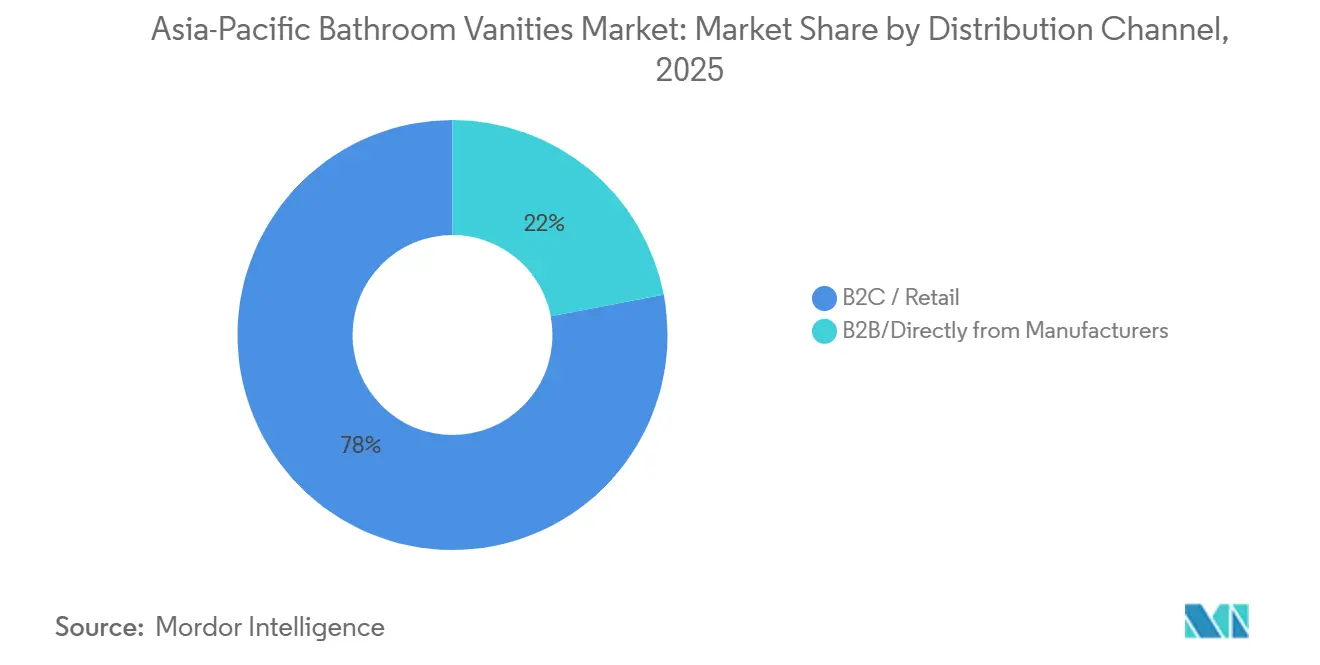
- By distribution channel, B2C/retail contributed 78.00% of the 2025 Asia-Pacific bathroom vanities market share, while direct B2B is projected to grow at the fastest CAGR of 10.85% through 2031.
- By geography, China led with 28.20% of the 2025 bathroom vanities market share, while India is projected to grow at the fastest CAGR of 10.40% through 2031.
Note: Market size and forecast figures in this report are generated using Mordor Intelligence’s proprietary estimation framework, updated with the latest available data and insights as of January 2026.
Asia-Pacific Bathroom Vanities Market Trends and Insights
Drivers Impact Analysis*
| Driver | (~) % Impact on CAGR Forecast | Geographic Relevance | Impact Timeline |
|---|---|---|---|
| Urban Housing and Bathroom Modernization | +2.1% | Region-wide, concentrated in India, China, and Southeast Asia | Long term (≥ 4 years) |
| Middle-Class Spending on Home Aesthetics | +1.7% | China, India, Southeast Asia, and South Korea | Medium term (2-4 years) |
| Compact And Multifunctional Storage Demand | +0.7% | Japan, South Korea, urban China, and Australia | Medium term (2-4 years) |
| Hospitality And Institutional Washroom Expansion | +1.3% | India, Southeast Asia, and China hotel renovation | Medium term (2-4 years) |
| E-Commerce, Visualization, And Omnichannel Purchasing | +1.0% | China, India, Southeast Asia, and Australia | Short term (≤ 2 years) |
| Water-Saving and Easy-Clean Product Innovation | +0.6% | Australia, Japan, South Korea, and urban India | Long term (≥ 4 years) |
| Source: Mordor Intelligence | |||
Urban Housing and Bathroom Modernization Sustains Volume
Urban housing delivery remains a core source of volume for the Asia-Pacific bathroom vanities market. India’s PMAY-U 2.0 program sanctioned 122.06 lakh homes and completed 96.02 lakh homes by November 2025. These projects require standardized bathroom fittings, including practical storage, washbasins, and cabinet units that can be procured at scale. Affordable housing developers also face higher finish expectations than in earlier project cycles. Luxury residential projects have helped reset buyer expectations for completed bathroom spaces across price points. This creates a broader base for products that are functional, durable, simple to install, and suitable for replacement demand.
Middle-Class Spending Reshapes the Value Mix
Middle-income households are placing greater value on finishes, storage, and ease of maintenance in renovation and new-build decisions. This supports a wider range of vanity designs than basic cabinet-and-basin combinations and strengthens demand across mid-range and premium price points. Compact layouts are important in dense cities, where usable bathroom space is limited, and households need storage that does not crowd the room. Multifunctional storage helps households organize daily-use items without adding separate furniture. Water-saving fixtures and easy-clean surfaces also fit the expectations of buyers seeking lower maintenance and more practical bathroom spaces. The Asia-Pacific bathroom vanities market can benefit when suppliers combine these features without making the product difficult to install or service.
Hospitality And Institutional Expansion Drives Specification-Grade Demand
Hotel and institutional projects create demand for products that meet tighter requirements for durability, cleaning, coordinated design, and consistent installation. The Asia-Pacific hotel construction pipeline outside China reached 2,387 projects and 442,973 rooms in the first quarter of 2026. Project count increased 15% year over year, while room count increased 9%. India led this pipeline with 940 projects, representing 39% of the regional total, and the region was expected to open 302 hotels with 59,063 rooms before the end of 2026[1]. Hotels often favor wall-mounted units, stone counters, and double-sink layouts in higher-tier rooms. These requirements give suppliers with dependable project execution a route into the higher-value part of the Asia-Pacific bathroom vanities market.
E-Commerce And Omnichannel Purchasing Changes Product Discovery
Online channels are increasing the visibility of vanity products beyond local showrooms and dealer networks. Buyers can compare finishes, dimensions, storage configurations, and compatible fittings before visiting a store or arranging installation. Digital product information is especially useful for wall-mounted designs and other products that require accurate measurement. Showrooms still matter because buyers often want to inspect finishes, cabinet construction, and basin quality before a major purchase. Retailers can use online tools for discovery and comparison, then use stores to support final selection and installation planning. This combination makes digital catalogs, clear specifications, dependable delivery, and after-sales coordination more important for the Asia-Pacific bathroom vanities market.
Restraints Impact Analysis*
| Restraint | (~) % Impact on CAGR Forecast | Geographic Relevance | Impact Timeline |
|---|---|---|---|
| Moisture, Humidity, and Material-Durability Failures | -1.4% | Southeast Asia and India are tropical, high-humidity locations | Short term (≤ 2 years) |
| Volatile Board, Stone, Hardware, and Freight Costs | -1.1% | Global, concentrated in China, export supply chains | Medium term (2-4 years) |
| Installation Variability and After-Sales Service Gaps | -0.7% | Tier 2 and Tier 3 India, emerging Southeast Asian cities | Long term (≥ 4 years) |
| Fragmented Standards and Local-Brand Price Competition | -0.5% | China, India, and Southeast Asia | Long term (≥ 4 years) |
| Source: Mordor Intelligence | |||
Humidity And Material-Durability Challenges in Tropical Markets
Humidity is a practical constraint for mid-priced cabinet materials in tropical markets. Standard MDF can absorb moisture through repeated wet and dry cycles, causing swelling, delamination, and surface failure within 2 to 4 years. High-moisture-resistant MDF tested under 85% relative-humidity cycles provides a stronger alternative for demanding conditions. These materials carry 15% to 25% higher costs, which can be difficult for entry-level producers to absorb. Singapore Green Mark requirements and Australia’s National Construction Code influence commercial specifications for products with verified performance. Suppliers also need consistent installation and after-sales support in Tier 2 and Tier 3 cities, where service quality can vary.
Input Cost Volatility Constrains Margin Recovery
Bathroom vanities combine engineered wood panels, stone countertops, metal hardware, ceramic basins, finishes, and freight. This mix exposes manufacturers to several input changes at the same time and complicates planning across a 12- to 18-month product cycle. LIXIL said higher component costs in FYE2025 required price optimization and structural reform, even as International Water Technology revenue grew 3.5%[2]. Geberit reported that direct material prices declined 2% in 2025 but expected first-quarter 2026 prices to rise from the fourth quarter of 2025[3]. Freight uncertainty adds another layer of cost risk for manufacturers sourcing boards from Southeast Asia and hardware from China. Fragmented standards and local price competition can make cost recovery harder where buyers focus on the initial purchase price.
*Our forecasts treat driver/restraint impacts as directional, not additive. The impact forecasts reflect baseline growth, mix effects, and variable interactions.
Segment Analysis
By Installation Type: Wall-Mounted Formats Change Urban Bathroom Planning
Freestanding and floor-standing units held 57.00% of the Asia-Pacific bathroom vanities market in 2025. Their position reflects broad suitability across bathroom sizes and simpler installation for contractors. These units also offer a familiar choice for households replacing an older cabinet. Their structure can make plumbing access straightforward during maintenance. Developing markets continue to favor products with manageable installation requirements. Floor-standing products remain relevant where uneven walls or limited installer capability make wall fixing less attractive. They also provide practical storage without requiring extensive wall preparation. Corner units address a smaller need in micro-apartments, where every usable area matters.
Wall-mounted and floating units are projected to grow at a 9.89% CAGR through 2031. Their rising use reflects hotel housekeeping needs and the desire for visible floor space in compact apartments. The format can make cleaning below the cabinet easier. It can also create a less crowded appearance in smaller bathrooms. TOTO launched its ESCUA premium vanity system in August 2025 after a full model change. The system offers touchless faucet operation, 6 design options, adjustable lighting, and Kirei Jokinsui antimicrobial dispensing[4]. Such products show how premium wall-mounted systems can combine cabinetry with integrated functions. Installation quality remains important because incorrect wall fixing can reduce the expected usability of the format.

By Material: Wood Retains Volume While Alternative Surfaces Gain Ground
Wood held 42.00% of the Asia-Pacific bathroom vanities market share in 2025. It spans low-cost MFC panels, engineered products, and solid teak used in luxury projects. This range makes wood suitable for several price tiers. Wood-based products can be finished in many colors and styles. They are also familiar with local fabricators and installers. In coastal and tropical projects, suppliers increasingly specify moisture-resistant engineered substrates. This aims to improve performance where ordinary boards face repeated exposure to humidity. Ceramic remains important in India because integrated basin-and-cabinet products can simplify procurement and installation.
Stone is expected to grow at a 10.54% CAGR through 2031. These materials respond to interest in humidity resistance and more contemporary bathroom finishes. Aluminum frames and glass-panel doors can appeal in coastal settings where corrosion resistance affects the purchase decision. Solid surfaces can offer seamless forms and easier cleaning in certain designs. Stone, including marble, quartz, and granite, retains a premium role in hotel and luxury residential projects. Alternative materials give suppliers a way to differentiate products beyond cabinet color or handle design. They can also reduce the dependence on conventional wood substrates in difficult climate conditions. Material selection in the Asia-Pacific bathroom vanities industry must still balance longevity, cost, appearance, and installation requirements.
By Sink Configuration: Single Sinks Lead While Specialty Designs Grow
Single-sink products held 69.00% of the Asia-Pacific bathroom vanities market share in 2025. The share reflects the dominant apartment layout across much of the region. Urban bathrooms often measure 4 to 8 square meters, limiting the space available for broader counters. A single basin preserves usable surface and circulation space. Affordable housing programs in India and Southeast Asia also use standardized bathroom dimensions. This supports repeatable single-sink layouts. The configuration is easier to specify for large residential projects. It also meets the needs of most small and medium-sized households.
Vessel sinks, integrated multi-bowl units, and console presentations are forecast to grow at a 9.51% CAGR through 2031. These designs have become more visible in boutique hotels and premium homes in Japan, South Korea, and Australia. A vessel sink can create a distinct visual focal point without requiring a larger cabinet footprint. Multi-bowl products serve larger households and suite-tier hotel rooms. Console formats can support a more open appearance in designer-led bathrooms. Double-sink products remain concentrated in master bathrooms and higher-tier hotel suites. These applications expand faster than standard apartments, although they begin from a smaller base. Specialty formats require careful choice of counter space, water connections, and cleaning access.
By End User: Residential Volume and Commercial Growth Shape Demand
Residential applications held 73.60% of the Asia-Pacific bathroom vanities market share in 2025. New housing and replacement purchases make this the largest demand base. Affordable homes require durable, standardized units that can be installed on a scale. Premium homes place greater weight on coordinated finishes and added storage. Renovation also supports residential demand as households update aging bathrooms. Consumer selection depends on the available space, household budget, and installer access. Retail and showroom networks remain important for this segment. The large residential base gives suppliers an incentive to offer products across several price points.
Commercial applications are forecast to grow at a 10.30% CAGR through 2031. Hotels and hospitals create replacement demand that may not appear in new construction pipeline counts. LIXIL said renovation-related sales represented 54% of its Japan Water Technology revenue in FYE2025, a 3 percentage-point increase. This focus reflects the growing importance of renovation in established building stock. Hotel bathroom replacement cycles commonly run 8 to 12 years. Properties built during the 2010 construction cycle are now moving into this renewal period. Commercial buyers often assess product durability, cleaning needs, specification consistency, and supplier support. These factors can favor manufacturers that manage projects and service requirements well.
By Distribution Channel: Online Growth Raises the Value of Coordinated Selling
B2C/retail channels accounted for 78.00% of the Asia-Pacific bathroom vanities market in 2025. China’s home-improvement retail network supports consumer access to a wide range of bathroom products. India’s organized retail footprint is also expanding. Physical stores help buyers examine finishes, cabinet construction, and basin proportions. They allow staff to explain size requirements and compatible fittings. B2B and direct manufacturer channels serve hotels, institutions, and other project buyers. These buyers often use dedicated sales teams and product specifications. The two routes reflect different purchasing processes rather than interchangeable sources of demand.
Direct B2B is forecast to grow at a 10.85% CAGR through 2031. Digital channels make it easier to compare product dimensions, styles, and prices before purchase. In China, dedicated home-renovation sections on large platforms support the discovery of premium bathroom products. Online selling does not remove the need for physical stores. Instead, stores can act as places for product inspection, measurement discussions, and final conversion. Digital channels can handle early research and comparison. Suppliers need reliable images, clear measurements, and accurate product details to limit unsuitable purchases. Omnichannel execution also depends on delivery, installation coordination, and accessible after-sales service.
Geography Analysis
China held 28.20% of the regional share in 2025, giving it the largest position in the Asia-Pacific bathroom vanities market. Its scale reflects both manufacturing capacity and domestic consumption. Demand is moving away from new construction toward renovation and replacement. This shift favors products designed for existing layouts and shorter project timelines. High-value toilets and integrated vanity products supported its position with affluent consumers. Chinese volume brands continue to compete through supply-chain scale, online reach, and smart features.
India is forecast to grow at a 10.4% CAGR through 2031, the fastest country rate in the Asia-Pacific bathroom vanities market. Housing delivery supports demand for standardized bathroom fittings. Hotel construction adds another project-based source of demand. India led the regional hotel pipeline outside China with 940 projects in the first quarter of 2026. LIXIL reported 20% IMEA revenue growth in FYE2025. Southeast Asian markets combine hotel investment, housing needs, and tropical durability requirements. Geberit identified India and Vietnam as its strongest Far East and Pacific growth markets in FY2025.
Japan, Australia, and South Korea represent higher-value settings where renovation and product specification carry more weight than volume. Japan’s aging housing stock supports demand for accessible and barrier-free bathroom upgrades. TOTO reported FY2025 Southeast Asia revenue of JPY 68 billion (USD 0.43 billion), an increase of 10.2%, supported by urbanization in Vietnam and Indonesia. Australia recorded AUD 44.8 billion in total building work in March 2026, up 8% from a year earlier. This environment supports mid-premium and premium product specifications. South Korea’s consumer interest in styled bathrooms supports designer-oriented products and renovated showroom concepts.
Competitive Landscape
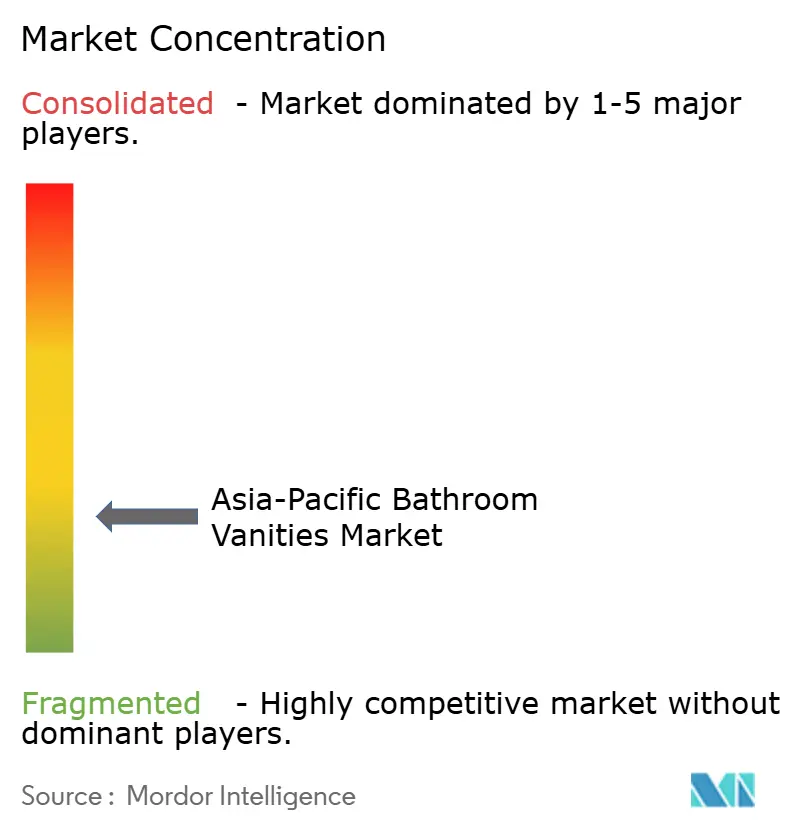
The Asia-Pacific bathroom vanities market is fragmented across the region, although national markets show stronger local concentration. JOMOO, OPPEIN, and Huida compete in China through production scale, smart product integration, and e-commerce access. Global brands such as KOHLER, TOTO, LIXIL, and Duravit focus more heavily on mid-premium and luxury product positions. Jaquar and CERA Sanitaryware benefit from their domestic distribution presence in India. Competition differs by price tier, product specification, and the ability to serve project buyers. Manufacturers also compete on material durability and the availability of installation support. This creates room for both large integrated suppliers and local specialists with established dealer networks.
TOTO introduced the ESCUA premium vanity system in August 2025 with touchless operation, adjustable lighting, and antimicrobial dispensing. The move shows a strategy built around integrated bathroom functions rather than cabinetry alone. LIXIL set a FYE2028 core earnings target of JPY 110 billion, indicating its focus on efficiency and renovation-channel depth. Geberit plans EUR 250 million in capital expenditure over 4 to 5 years for logistics capacity expansion. These actions show that product development, channel execution, and supply reliability are all part of competitive positioning. JOMOO also presented smart bathroom cabinets with built-in dryers in the Philippines in 2026, extending its technology-focused regional approach. Suppliers need to match product features with local installation and servicing capabilities.
An opportunity remains for moisture-resistant materials, modular retrofit sizes, and products suited to Tier 2 and Tier 3 locations. These needs sit between low-cost volume offerings and import premium collections. Tropical durability can be a differentiator where ordinary cabinet boards have a shorter service life. Modular sizing can simplify replacement in older homes and hotels. Price points remain important because many buyers assess the cabinet, basin, fittings, and installation as one purchase. Strong dealer training can help reduce installation variability. The Asia-Pacific bathroom vanities industry is likely to reward firms that deliver reliable products across these linked requirements.
Asia-Pacific Bathroom Vanities Industry Leaders
-
JOMOO Group
-
LIXIL Corporation
-
TOTO Ltd.
-
KOHLER Co.
-
Roca Sanitario, S.A.
- *Disclaimer: Major Players sorted in no particular order
Recent Industry Developments
- March 2026: JOMOO participated in Worldbex Philippines from March 12 to 15 in partnership with Sanitec Bath and Kitchen Specialist. The company presented its Z1 Pro Energy Storage Smart Toilet and smart bathroom cabinets with built-in dryers. The exhibit extended its technology-led product presentation in Southeast Asia and supported its distributor presence in the Philippines.
- March 2026: Geberit AG reported that growth in India and Vietnam within the Far East and Pacific business offset a decline in China. The company also announced EUR 250 million of planned capital expenditure over 4 to 5 years to expand logistics capacity.
- August 2025: TOTO Ltd. launched the ESCUA premium vanity system after an 8-year full model change. The range includes a Sensing System for touchless faucet operation, 6 design variants, automatic lighting adjustment, and Kirei Jokinsui antimicrobial dispensing. The launch expands the company’s premium offering in integrated vanity systems.
- August 2025: TOTO Ltd. launched the GGA integrated toilet system and moved all residential Washlet units to instantaneous water heating. The launch targeted 260,000 tonnes of CO2 reduction in support of the company’s 2026 science-based 1.5°C targets. Although the launch is centered on toilets, it reinforces TOTO’s strategy of offering coordinated bathroom systems.
Asia-Pacific Bathroom Vanities Market Report Scope
| Freestanding / Floor-standing |
| Wall-mounted / Floating |
| Corner |
| Wood |
| Ceramic |
| Stone (Marble, Quartz, Granite) |
| Laminate / MDF |
| Others (Metal, Glass, Solid Surface) |
| Single Sink |
| Double Sink |
| Others (e.g., Vessel, Integrated Multi-bowl) |
| Residential |
| Commercial |
| B2C/Retail | Home Centers |
| Specialty Furniture Stores (including exclusive brand outlets) | |
| Online | |
| Other Distribution Channels (includes hypermarkets, supermarkets, teleshopping, warehouse clubs, departmental stores, etc.) | |
| B2B/Directly from Manufacturers |
| India |
| China |
| Japan |
| Australia |
| South Korea |
| South-East Asia |
| Rest of Asia-Pacific |
| By Installation Type | Freestanding / Floor-standing | |
| Wall-mounted / Floating | ||
| Corner | ||
| By Material | Wood | |
| Ceramic | ||
| Stone (Marble, Quartz, Granite) | ||
| Laminate / MDF | ||
| Others (Metal, Glass, Solid Surface) | ||
| By Sink Configuration | Single Sink | |
| Double Sink | ||
| Others (e.g., Vessel, Integrated Multi-bowl) | ||
| By End User | Residential | |
| Commercial | ||
| By Distribution Channel | B2C/Retail | Home Centers |
| Specialty Furniture Stores (including exclusive brand outlets) | ||
| Online | ||
| Other Distribution Channels (includes hypermarkets, supermarkets, teleshopping, warehouse clubs, departmental stores, etc.) | ||
| B2B/Directly from Manufacturers | ||
| By Geography | India | |
| China | ||
| Japan | ||
| Australia | ||
| South Korea | ||
| South-East Asia | ||
| Rest of Asia-Pacific | ||
Key Questions Answered in the Report
What is the expected growth rate for bathroom vanities in the Asia-Pacific?
The category is forecast to grow at an 8.09% CAGR from 2026 to 2031, reaching USD 15.02 billion by 2031.
Which installation type is growing fastest in Asia-Pacific?
Wall-mounted configurations are projected to grow at a 9.89% CAGR through 2031.
Which materials are gaining demand for bathroom cabinets?
Stone products are expected to grow at a 10.54% CAGR, supported by wood accounted for 42.00% of the 2025 Asia-Pacific bathroom vanities market share
Why are commercial bathroom projects important for suppliers?
The commercial sector represents rapid, high-yield growth. Commercial demand is expanding at a fast 10.30% CAGR, and the Direct B2B channel is the fastest-growing distribution channel overall at 10.85% CAGR.