
Animal Feed Ingredients Market Size and Share
Market Overview
| Study Period | 2022 - 2032 |
|---|---|
| Market Size (2027) | USD 50.17 Billion |
| Market Size (2032) | USD 66.36 Billion |
| Growth Rate (2027 - 2032) | 5.75 % |
| Fastest Growing Market | Africa |
| Largest Market | Asia-Pacific |
| Market Concentration | Low |
Major Players *Disclaimer: Major Players sorted in no particular order Image © Mordor Intelligence. Reuse requires attribution under CC BY 4.0. | |
Animal Feed Ingredients Market Analysis by Mordor Intelligence
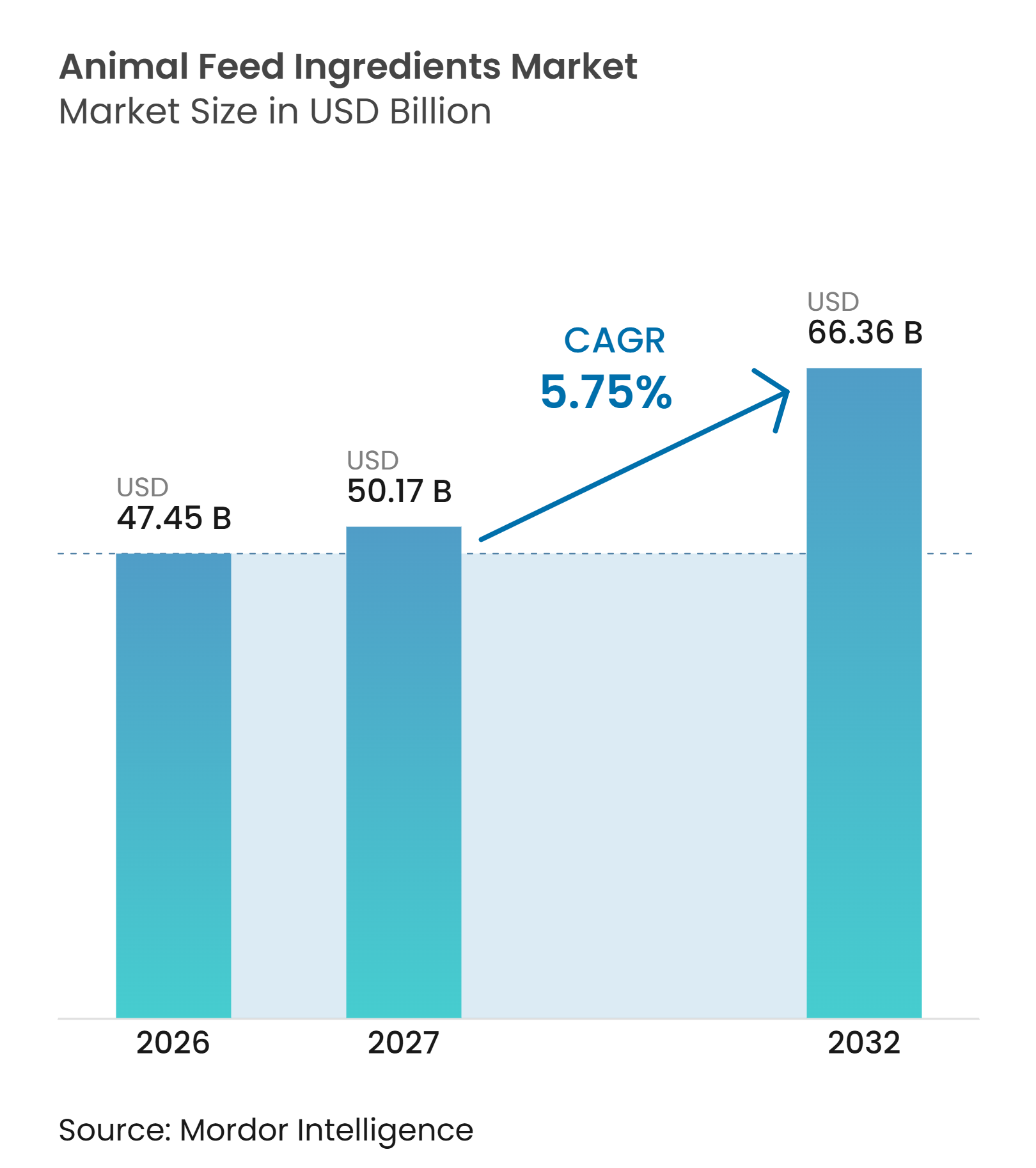
The animal feed ingredients market size was valued at USD 47.45 billion in 2026 and is forecast to grow from USD 50.17 billion in 2027 to reach USD 66.36 billion by 2032, at a CAGR of 5.75% from 2027 to 2032. The market is supported by the shift toward commercial livestock production, increasing compound feed use, and growing demand for nutritionally optimized animal diets. Rising adoption of formulated feed is supporting demand for amino acids, vitamins, minerals, enzymes, and other functional ingredients tailored to different livestock species and production systems. Restrictions on antibiotic growth promoters are also increasing the use of probiotics, organic acids, phytogenics, and enzymes in animal nutrition. Volatile grain and oilseed prices and pressure to improve feed conversion are increasing demand for ingredients that enhance nutrient utilization and production efficiency. The fragmented nature of the market creates opportunities for regional manufacturers, specialized formulation providers, and suppliers offering technical support and products tailored to local livestock and aquaculture production conditions.
Key Report Takeaways
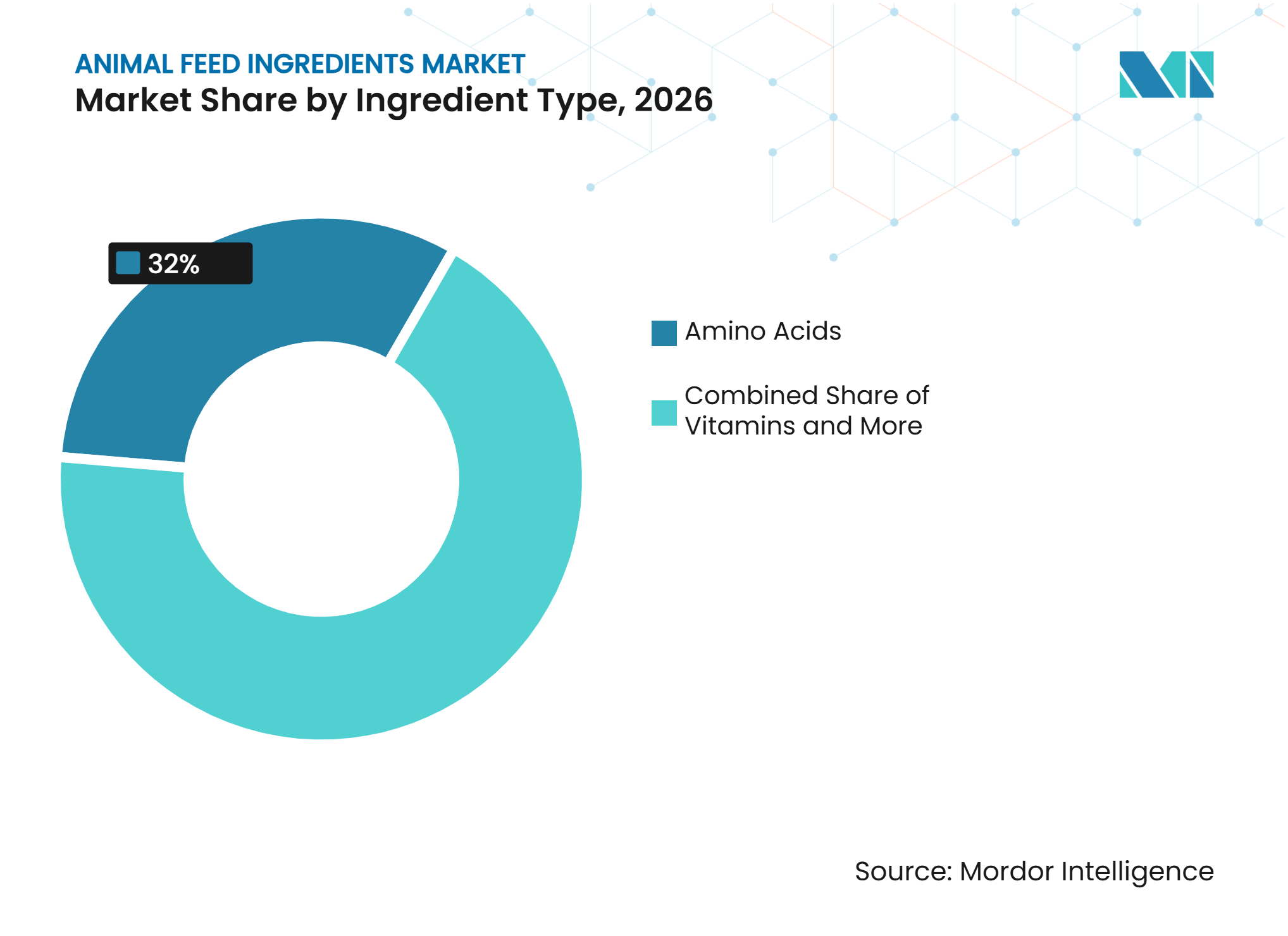
- By ingredient type, amino acids held 32.0% of the animal feed ingredients market share in 2026, while probiotics and prebiotics are forecast to grow at a CAGR of 7.7% from 2027 to 2032.
- By source, plant-based ingredients held 50.0% of the animal feed ingredients market size in 2026, while microbial and fermentation-derived ingredients are forecast to grow at a CAGR of 7.8% from 2027 to 2032.
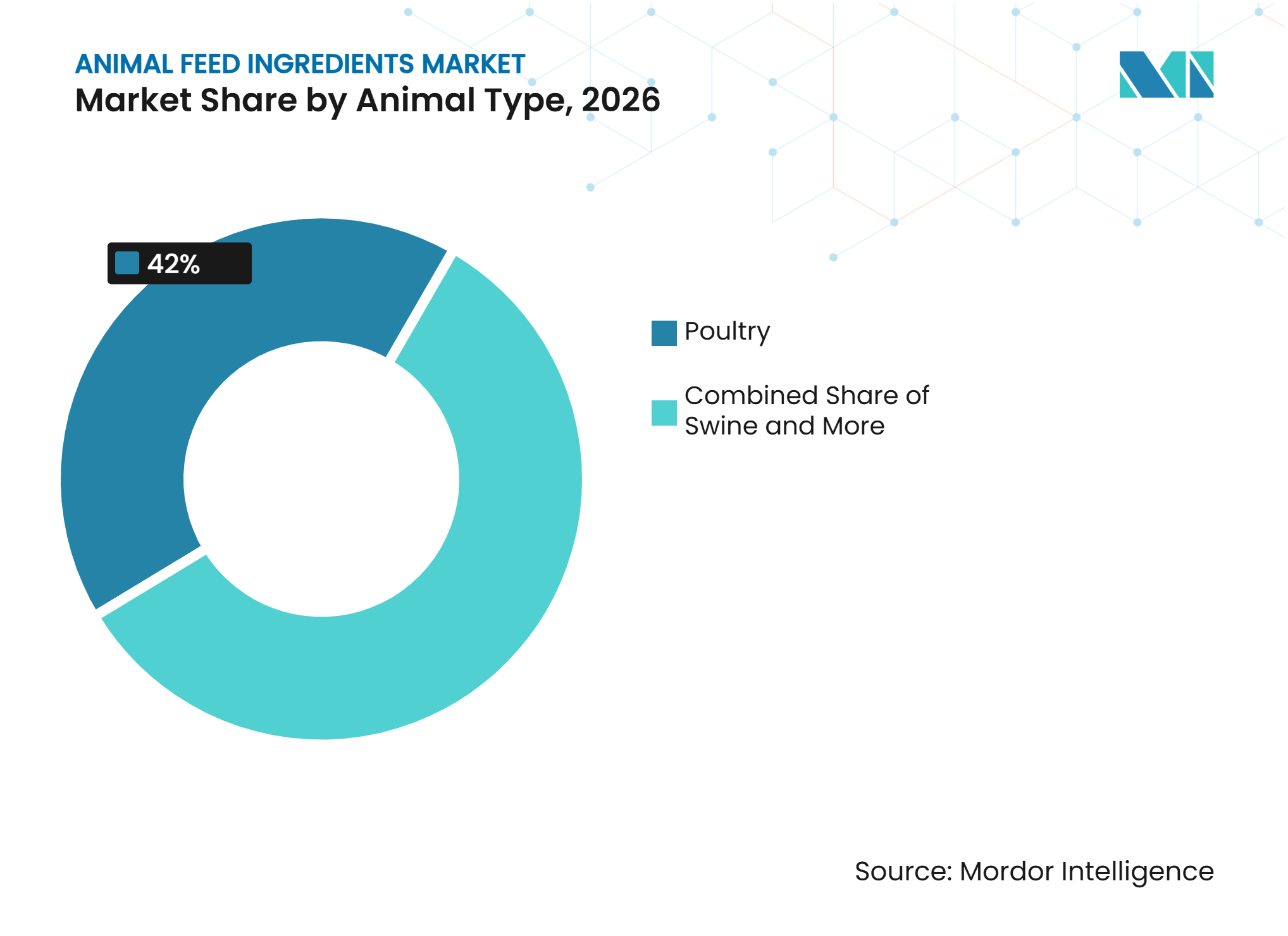
- By animal type, poultry held 42.0% of the market share in 2026, while aquaculture is forecast to grow at a CAGR of 6.8% from 2027 to 2032.
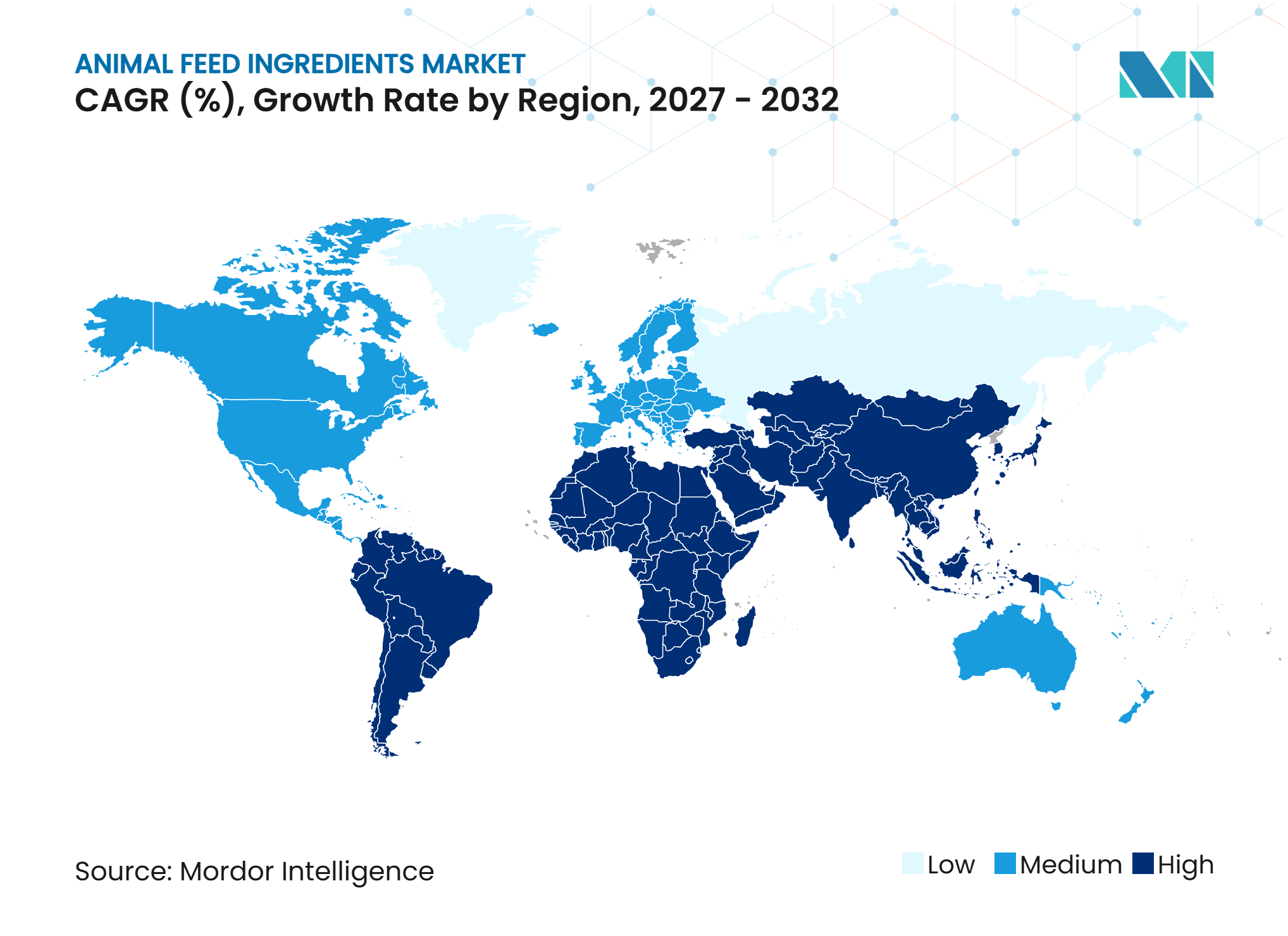
- By geography, Asia-Pacific held 36.0% of the market share in 2026, while Africa is forecast to grow at a CAGR of 7.2% from 2027 to 2032.
Note: Market numbers in this report are based on Mordor Intelligence's proprietary estimation framework, which combines nine months of actuals with Q4 projections for base year 2026.
Market Trends and Insights
Drivers Impact Analysis of Animal Feed Ingredients Market*
| Driver | (~) % Impact on CAGR Forecast | Geographic Relevance | Impact Timeline |
|---|---|---|---|
| Rising Animal-Protein Consumption | +1.5% | Global | Long term (4 years or more) |
| Commercial Livestock and Aquaculture Intensification | +1.2% | Asia-Pacific core, spillover to South America | Medium term (2-4 years) |
| Feed-Conversion and Nutrient-Utilization Optimization | +1.0% | Global | Medium term (2-4 years) |
| Restrictions on Antibiotic Growth Promoters | +0.9% | North America and European Union, spillover to Asia-Pacific | Long term (4 years or more) |
| Automated Micro-Ingredient Dosing and Precision Nutrition | +0.5% | North America and Europe | Long term (4 years or more) |
| Traceable Sustainability and Methane-Reduction Formulation | +0.4% | Europe and North America | Long term (4 years or more) |
| Source: Mordor Intelligence | |||
Rising Animal-Protein Consumption
Rising demand for poultry, pork, dairy, eggs, and farmed seafood supports growth in the animal feed ingredients market. Urbanization and rising incomes are shifting dietary patterns toward greater consumption of livestock and fish products, particularly in middle- and lower-middle-income countries. According to the Organisation for Economic Co-operation and Development (OECD) and the Food and Agriculture Organization of the United Nations (FAO) Agricultural Outlook 2025–2034, daily per capita intake of livestock and fish products in lower-middle-income countries is projected to increase by approximately 25% by 2034, while livestock inventories in these countries are expected to expand by 10% and animal-source food output by 43.6%[1]. The resulting intensification of livestock production is projected to contribute to a 15% increase in global feed consumption over the outlook period, as producers transition toward more commercialized and managed feeding systems, increasing demand for balanced formulations incorporating amino acids, vitamins, minerals, enzymes, and other functional ingredients across different production stages. This shift toward higher-value and nutritionally optimized feed formulations supports growth in the animal feed ingredients market alongside rising animal-protein consumption.
Commercial Livestock and Aquaculture Intensification
Larger and more specialized livestock and aquaculture operations increasingly rely on compound feed and functional ingredients to improve feed conversion, animal health, and production consistency. This supports demand in the animal feed ingredients market for premixes, enzymes, amino acids, and lipid inputs tailored to species-specific nutritional requirements and local raw-material conditions. According to the Organisation for Economic Co-operation and Development (OECD) and the Food and Agriculture Organization of the United Nations (FAO) Agricultural Outlook 2025–2034, the use of oilseed meals in aquaculture feed is projected to increase by 37% to reach 11 million metric tons by 2034, reflecting the growing use of alternative feed ingredients as aquaculture production expands. This transition toward more precisely formulated and nutritionally balanced feeds supports demand for specialized ingredients across commercial livestock and aquaculture operations.
Restrictions on Antibiotic Growth Promoters
Restrictions on antibiotic growth promoters are reshaping feed formulation in major livestock-producing regions. The United States Food and Drug Administration transitioned medically important antimicrobials used in animal feed and drinking water to veterinary oversight under Guidance for Industry #213, increasing regulatory control over their use[2]. Producers are consequently adopting alternatives such as probiotics, organic acids, enzymes, and phytogenics as part of broader animal health and nutrition programs. A 2025 scientific review published in Frontiers in Veterinary Science found that antibiotic alternatives operate through multiple mechanisms and are often used in combination rather than as direct one-for-one replacements. This shift increases demand for specialized feed ingredients while requiring suppliers to provide efficacy data, formulation expertise, regulatory documentation, and field-level application support, benefiting the animal feed ingredients market through both compliance-driven and nutritional demand.
Feed-Conversion and Nutrient-Utilization Optimization
Feed costs make conversion efficiency and nutrient utilization central concerns for livestock and aquaculture producers, driving the use of enzymes, synthetic amino acids, and precision premixes to improve nutrient utilization and reduce nutritional variation that can undermine production performance. Non-antibiotic feed additives, including enzymes, probiotics, organic acids, and phytogenics, are also increasingly incorporated into animal diets to support production performance and animal health. Evonik's continued investment in methionine production reflects the importance of reliable amino acid supply for commercial feed formulation. In March 2025, the company reported investing over EUR 200 million (USD 224.58 million) in its methionine facilities in Singapore and Mobile, Alabama, over the preceding three years[3]. These investments highlight the growing focus on production efficiency, consistent ingredient quality, and optimized nutrient formulations, supporting demand for specialized ingredients in the animal feed ingredients market.
Restraints Impact Analysis of Animal Feed Ingredients Market*
| Restraint | (~) % Impact on CAGR Forecast | Geographic Relevance | Impact Timeline |
|---|---|---|---|
| Volatility in Corn, Soybean, and Oilseed Costs | -1.0% | Global | Short term (2 years or less) |
| Regulatory Complexity and Product-Registration Delays | -0.6% | Europe and Asia-Pacific core | Medium term (2-4 years) |
| Strain, Batch, and Bioavailability Variability in Biological Ingredients | -0.4% | Global | Medium term (2-4 years) |
| Dependence on Concentrated Upstream Supply for Key Micronutrients | -0.5% | North America and European Union | Long term (4 years or more) |
| Source: Mordor Intelligence | |||
Volatility in Corn, Soybean, and Oilseed Costs
Volatility in corn, soybean meal, and oilseed prices can increase feed production costs and create uncertainty for feed manufacturers, influencing their ingredient purchasing decisions. The Organisation for Economic Co-operation and Development (OECD) and the Food and Agriculture Organization of the United Nations (FAO) Agricultural Outlook 2025–2034 noted that vegetable oil prices may face stronger upward pressure than protein meal prices over the outlook period, reflecting differences in supply and demand dynamics across oilseed products. Higher energy and protein feed costs can prompt formulators to prioritize lower-cost raw materials and adjust ingredient inclusion rates to manage overall ration expenses. This can constrain spending on specialty additives, particularly when their performance benefits are not immediately reflected in feed budgets. Continued fluctuations in major commodity prices therefore create uncertainty across feed formulation and procurement, potentially limiting demand growth for higher-value ingredients within the animal feed ingredients market.
Dependence on Concentrated Upstream Supply for Key Micronutrients
The supply of several essential feed-grade amino acids, vitamins, and their precursors is concentrated in a limited number of manufacturing locations, increasing the animal feed ingredients market's exposure to supply-chain disruptions. A 2025 assessment by the Institute for Feed Education and Research (IFEEDER) highlighted the dependence of the United States livestock feed production on geographically concentrated sources of key amino acids and vitamins. These micronutrients and precursors are difficult to remove from feed formulations without affecting nutritional balance. Consequently, trade restrictions, logistics bottlenecks, or unplanned production outages can disrupt ingredient availability and force feed manufacturers to qualify alternative suppliers or reformulate products. Such supply uncertainty can increase procurement risks and price volatility, potentially weakening purchasing confidence and constraining stable demand growth across the animal feed ingredients market.
*Our forecasts treat driver/restraint impacts as directional, not additive. The impact forecasts reflect baseline growth, mix effects, and variable interactions.
Animal Feed Ingredients Market Segment Analysis
By Ingredient Type:
Amino Acids Anchor and Biologicals AccelerateAmino acids held a 32.0% share in 2026, making them the largest ingredient type by share. Their use across poultry, swine, aquaculture, and ruminant diets reflects their role in protein synthesis and feed-conversion management, particularly when formulators seek to meet nutrient requirements without raising crude protein levels unnecessarily. Producers use lysine, threonine, methionine, vitamins, minerals, and enzymes to balance diets around available raw materials, production goals, and the nutritional limits of crop-based ingredients. Thermostable encapsulation has also made phytase and xylanase more suitable for high-temperature pelleting. The animal feed ingredients market retains broad demand for these inputs because their functions apply across multiple livestock systems and feed formats.
Probiotics and prebiotics are forecast to grow at a CAGR of 7.7% from 2027 to 2032, the fastest rate among all ingredient types. Their adoption is linked to antibiotic-reduced production systems and greater attention to gut health, immunity, and feed performance. Scientific evidence supports programs that combine biologicals with acids, enzymes, or phytogenic ingredients. Phytogenics, mycotoxin binders, acidifiers, antioxidants, phosphates, carotenoids, flavors, and non-protein nitrogen address specific formulation and species requirements. Fermentation-derived L-tryptophan and L-valine represent higher-value options within the amino acids category. The animal feed ingredients market is therefore served by both high-volume nutritional inputs and smaller categories with specialized biological or functional roles.



By Source:
Plant Inputs Lead and Fermentation Platforms ExpandPlant-based ingredients held 50.0% of the market share in 2026, supported by soybean meal, corn by-products, rapeseed meal, and wheat middlings. Their established supply chains and competitive costs make them fundamental to feed formulations, although availability remains sensitive to weather, trade, and competing food and fuel demand. Animal-based ingredients remain relevant in selected aquaculture starter diets, while seafood-processing by-products can provide an additional nutrient stream. Source selection depends on cost, nutritional profile, traceability, local availability, and the ability of a material to fit a target diet. The animal feed ingredients market continues to rely on plant inputs as the nutritional base for many commercial feed programs.
Microbial and fermentation-derived ingredients are forecast to grow at a CAGR of 7.8% from 2027 to 2032. Precision fermentation can produce amino acids, vitamins, enzymes, and bioactive peptides with consistent composition and defined functional properties, supporting applications where product consistency is important. Algae-derived and insect-derived ingredients provide additional options as feed formulators seek to diversify protein and lipid sources. In the European Union, novel feed ingredients are subject to regulatory requirements related to feed safety, authorization, and official controls. Cost competitiveness, approval timelines, production scale, and nutritional performance will influence their adoption. Suppliers will need to demonstrate that novel ingredient sources can meet commercial, nutritional, and regulatory requirements.
By Animal Type:
Poultry Leads and Aquaculture Raises Formulation NeedsPoultry held 42.0% of the market share in 2026. Its defined nutrient requirements and short production cycles make feed-conversion results visible to integrators and ingredient suppliers, supporting structured use of feed additives and premixes. Poultry diets incorporate amino acids, enzymes, vitamins, minerals, and gut-health ingredients across broiler, layer, and breeder operations. Swine, cattle, and other ruminants also use targeted nutritional programs, including minerals, vitamins, buffers, and performance additives. A 2025 University of Saskatchewan policy brief identified 3-nitrooxypropanol as a methane-reduction input approved in 64 countries. The animal feed ingredients market benefits from this diversity, as each animal group has distinct nutritional, health, and production needs.
Aquaculture is forecast to grow at the fastest rate among animal types, at a CAGR of 6.8% from 2027 to 2032. Aquafeeds require closer nutritional management as fishmeal inclusion declines and alternative proteins are introduced, creating a need to maintain nutrient balance across changing ingredient combinations. Producers use enzyme, amino acid, and lipid supplementation to maintain diet quality under variable farm conditions. The Food and Agriculture Organization of the United Nations (FAO) identifies responsible feed management as an important element of sustainable aquaculture development. Feed suppliers that combine nutritional expertise with technical support may be better positioned as farmed seafood production expands. The animal feed ingredients market has a direct role in this transition, as ingredient performance affects both feed efficiency and farm consistency.

Geography Analysis
APAC (Asia-Pacific): Scale Supports Specialized Feed Use
Asia-Pacific held 36.0% of the animal feed ingredients market share in 2026, supported by China's integrated poultry and swine sectors and India's growing commercial livestock base. Large integrators in China invest in specialty ingredients when small improvements in feed conversion can lower production costs. India is following a similar path as poultry integrators expand faster than the local supply of specialized feed ingredients. DSM-Firmenich opened its first feed additive plant in Jadcherla, Hyderabad, in August 2025, combining mycotoxin risk management and premix production for India and the wider Asia-Pacific region. Vietnam, Indonesia, and Bangladesh also support demand as shrimp and catfish farming expands. Monsoon conditions, heat stress, and mycotoxin exposure strengthen the need for feed solutions designed for local production conditions.
Africa: Commercial Poultry Expands Feed Demand
Africa is forecast to grow at a CAGR of 7.2% from 2027 to 2032, the fastest rate among all geographic segments. Population growth and the formalization of poultry value chains are driving greater use of compound feed in Egypt, Nigeria, South Africa, Kenya, and Ethiopia. The shift from backyard production to commercial farming is increasing demand for vitamins, amino acids, and mycotoxin binders. Warm and humid storage conditions elevate the risk of mycotoxin contamination in feed materials, supporting demand for binders and antifungal solutions that are less common in basic feed programs.
North America, Europe, and South America: Follow Different Demand Patterns
North America relies heavily on imported specialty micronutrients, with more than 70% of feed-grade amino acids consumed by United States livestock sourced from China in 2025. In February 2026, Archer Daniels Midland Company and Alltech, Inc. launched Akralos Animal Nutrition as a joint venture, operating more than 40 feed mills across the United States and Canada. Europe maintains strict feed regulations, and European Food Safety Authority (EFSA) reviews determine the evidence required to support feed additive claims. South America benefits from a strong soybean and corn base that supports compound feed production for poultry and swine exports. The Middle East is investing in poultry, dairy, and aquaculture systems to strengthen domestic protein supply.
Competitive Landscape
Market Concentration
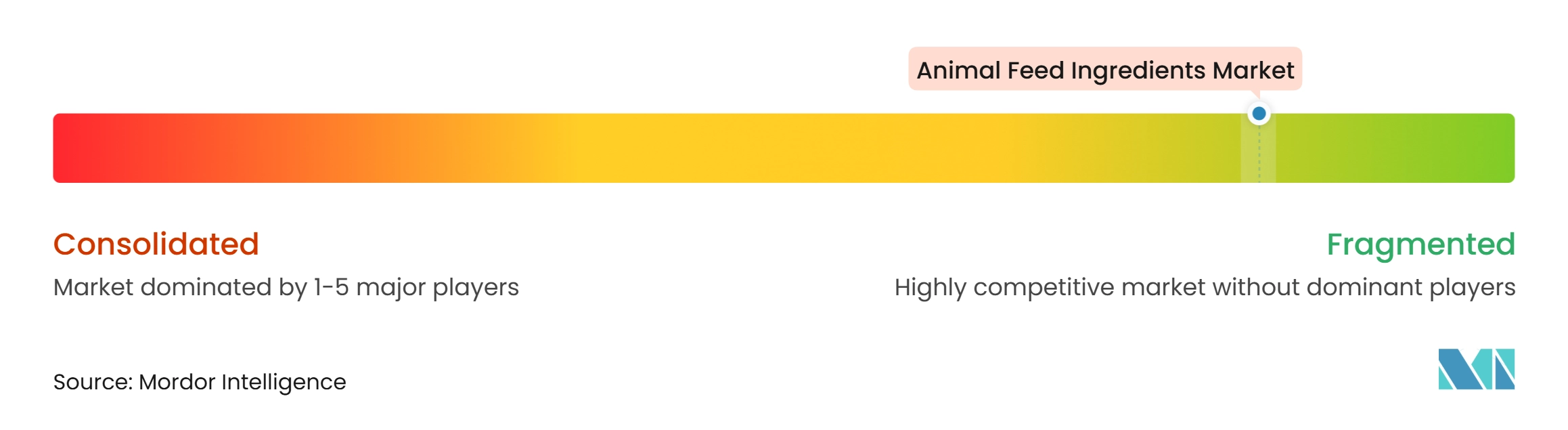
The animal feed ingredients market was fragmented in 2026, with Cargill, Incorporated, Archer Daniels Midland Company, COFCO Corporation, Bunge Global SA, and Louis Dreyfus Company B.V. identified as the major players. Their competitive positions are supported by large-scale procurement capabilities, access to agricultural raw materials, integrated processing operations, and established global logistics and distribution networks. Companies compete through ingredient availability, cost competitiveness, supply reliability, processing capabilities, and their ability to serve feed manufacturers across multiple geographic markets. These capabilities support portfolio development across commodity-based feed ingredients while enabling companies to respond to changes in raw material availability and customer formulation requirements.
Specialty ingredient suppliers also contribute to competition through differentiated products such as amino acids, vitamins, enzymes, premixes, and other functional feed ingredients. These companies compete through formulation expertise, product efficacy, regulatory documentation, and technical support that helps feed manufacturers incorporate specialized ingredients into commercial feeding programs. The growing adoption of precision nutrition and data-driven feeding systems further increases the importance of technical capabilities and customer support alongside ingredient supply.
Opportunities remain in expanding regional production capacity, strengthening local distribution networks, and developing specialized ingredients that improve feed conversion and nutrient utilization. Companies can strengthen their market positions by combining reliable ingredient supply with technical services and formulation expertise. Larger integrated suppliers can broaden their product portfolios and geographic presence through investments and partnerships, while specialized companies can compete through differentiated formulations, targeted applications, and close relationships with regional feed manufacturers.
Animal Feed Ingredients Industry Leaders
-
Cargill, Incorporated
-
Archer Daniels Midland Company
-
COFCO Corporation
-
Bunge Global SA
-
Louis Dreyfus Company B.V.
- *Disclaimer: Major Players sorted in no particular order
Animal Feed Ingredients Market Companies Covered in this Report
- Cargill, Incorporated
- Archer Daniels Midland Company
- COFCO Corporation
- Bunge Global SA
- Louis Dreyfus Company B.V.
- Wilmar International Limited
- Ajinomoto Co., Inc.
- Evonik Industries AG
- DSM-Firmenich AG
- BASF SE
- Nutreco N.V. (SHV Holdings N.V.)
- Alltech, Inc.
- Kemin Industries, Inc.
- Novus International, Inc.
- Adisseo France SAS
- Phibro Animal Health Corporation
- Lallemand Inc.
Recent Industry Developments in Animal Feed Ingredients Market
- June 2026: Archer Daniels Midland Company opened a new premix and feed additives production facility in Apucarana, Paraná, Brazil. The 7,500-square-meter facility has an installed capacity of 40,000 metric tons per year and uses automation and traceability systems to support customized premix formulations for the Brazilian market.
- February 2026: Archer Daniels Midland Company and Alltech, Inc. launched Akralos Animal Nutrition, combining their North American animal feed businesses. The joint venture integrates feed manufacturing operations across the United States and Canada, strengthening the companies' presence in livestock and animal nutrition markets.
- March 2025: Evonik Industries AG announced a technical upgrade to its European methionine production network, including facilities in Antwerp, Belgium, and Wesseling, Germany. The investment focused on improving process control and reducing emissions, supporting the efficiency and reliability of its methionine supply network.
Global Animal Feed Ingredients Market Report Scope
Animal feed ingredients are raw materials and functional additives incorporated into animal diets to provide essential nutrients, improve feed quality, support animal health, and enhance growth and production performance. They include ingredients such as amino acids, vitamins, minerals, enzymes, probiotics and prebiotics, acidifiers, antioxidants, and other nutritional or functional components used in livestock and aquaculture feed. Ingredients used exclusively in pet food are excluded from the scope of this market. The Animal Feed Ingredients Market is Segmented by Ingredient Type (Amino Acids, Vitamins, Minerals, Enzymes, Probiotics and Prebiotics, Phosphates, Acidifiers and Preservatives, Antioxidants, Phytogenics, Mycotoxin Binders and Detoxifiers, Carotenoids, Flavors and Sweeteners, Non-Protein Nitrogen, and Other Feed Ingredients), by Source (Plant-Based, Animal-Based, Microbial and Fermentation-Derived, Chemical and Synthetic, Algae-Derived, and Insect-Derived), by Animal Type (Poultry, Swine, Cattle and Other Ruminants, Aquaculture, and Other Livestock), and by Geography (North America, South America, Europe, Asia-Pacific, Africa, and the Middle East). The Market Forecasts are Provided in Terms of Value (USD) and Volume (Metric Tons).
Segmentation Overview
| Amino Acids |
| Vitamins |
| Minerals |
| Enzymes |
| Probiotics and Prebiotics |
| Phosphates |
| Acidifiers and Preservatives |
| Antioxidants |
| Phytogenics |
| Mycotoxin Binders and Detoxifiers |
| Carotenoids |
| Flavors and Sweeteners |
| Non-Protein Nitrogen |
| Other Feed Ingredients |
| Plant-Based |
| Animal-Based |
| Microbial and Fermentation-Derived |
| Chemical and Synthetic |
| Algae-Derived |
| Insect-Derived |
| Poultry |
| Swine |
| Cattle and Other Ruminants |
| Aquaculture |
| Other Livestock |
| North America | United States |
| Canada | |
| Mexico | |
| Rest of North America | |
| South America | Brazil |
| Argentina | |
| Rest of South America | |
| Europe | Germany |
| France | |
| United Kingdom | |
| Italy | |
| Spain | |
| Russia | |
| Rest of Europe | |
| Asia-Pacific | China |
| India | |
| Japan | |
| South Korea | |
| Australia | |
| Vietnam | |
| Rest of Asia-Pacific | |
| Middle East | Turkey |
| Saudi Arabia | |
| United Arab Emirates | |
| Rest of Middle East | |
| Africa | South Africa |
| Egypt | |
| Rest of Africa |
| By Ingredient Type | Amino Acids | |
| Vitamins | ||
| Minerals | ||
| Enzymes | ||
| Probiotics and Prebiotics | ||
| Phosphates | ||
| Acidifiers and Preservatives | ||
| Antioxidants | ||
| Phytogenics | ||
| Mycotoxin Binders and Detoxifiers | ||
| Carotenoids | ||
| Flavors and Sweeteners | ||
| Non-Protein Nitrogen | ||
| Other Feed Ingredients | ||
| By Source | Plant-Based | |
| Animal-Based | ||
| Microbial and Fermentation-Derived | ||
| Chemical and Synthetic | ||
| Algae-Derived | ||
| Insect-Derived | ||
| By Animal Type | Poultry | |
| Swine | ||
| Cattle and Other Ruminants | ||
| Aquaculture | ||
| Other Livestock | ||
| By Geography | North America | United States |
| Canada | ||
| Mexico | ||
| Rest of North America | ||
| South America | Brazil | |
| Argentina | ||
| Rest of South America | ||
| Europe | Germany | |
| France | ||
| United Kingdom | ||
| Italy | ||
| Spain | ||
| Russia | ||
| Rest of Europe | ||
| Asia-Pacific | China | |
| India | ||
| Japan | ||
| South Korea | ||
| Australia | ||
| Vietnam | ||
| Rest of Asia-Pacific | ||
| Middle East | Turkey | |
| Saudi Arabia | ||
| United Arab Emirates | ||
| Rest of Middle East | ||
| Africa | South Africa | |
| Egypt | ||
| Rest of Africa | ||
Key Questions Answered in the Report
What is the animal feed ingredients market size?
The animal feed ingredients market was valued at USD 47.45 billion in 2026 and is forecast to grow from USD 50.17 billion in 2027 to reach USD 66.36 billion by 2032, at a CAGR of 5.75% from 2027 to 2032.
Which ingredient category holds the largest share in animal feed ingredients?
Amino acids held 32.0% of the market share in 2026. Their role in protein synthesis and diet balancing makes them relevant across poultry, swine, aquaculture, and ruminant feeding programs, including diets that rely on varied crop-based raw materials.
Which animal category is forecast to grow fastest in feed ingredients?
Aquaculture is forecast to grow at a CAGR of 6.8% from 2027 to 2032 because aquafeeds need more specialized nutrient management as alternative protein sources are used and farm conditions can vary.
Why are antibiotic growth promoter restrictions important for feed formulation?
The restrictions increase the use of probiotics, organic acids, enzymes, and phytogenics in broader animal health programs. Suppliers also need evidence, formulation knowledge, regulatory support, and practical guidance for farm-level application.