
Anaphylaxis Treatment Market Size and Share
Market Overview
| Study Period | 2021 - 2032 |
|---|---|
| Market Size (2027) | USD 4.15 Billion |
| Market Size (2032) | USD 5.88 Billion |
| Growth Rate (2027 - 2032) | 7.23 % |
| Fastest Growing Market | Asia-Pacific |
| Largest Market | North America |
| Market Concentration | Medium |
Major Players *Disclaimer: Major Players sorted in no particular order Image © Mordor Intelligence. Reuse requires attribution under CC BY 4.0. | |
Anaphylaxis Treatment Market Analysis by Mordor Intelligence
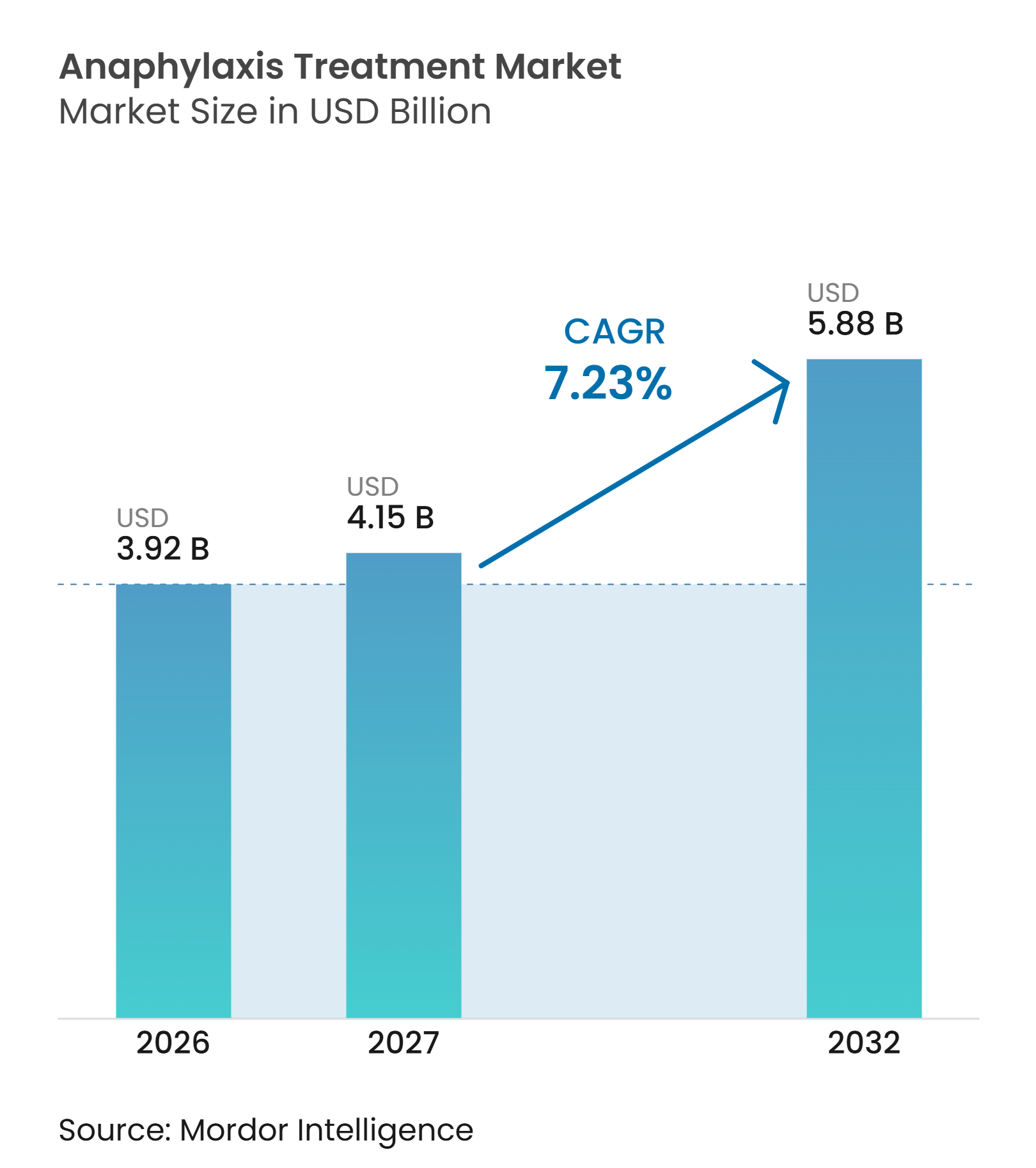
The Anaphylaxis Treatment Market size is expected to increase from USD 3.92 billion in 2026 to USD 4.15 billion in 2027 and reach USD 5.88 billion by 2032, growing at a CAGR of 7.23% over 2027-2032.
The anaphylaxis treatment market is supported by a rising allergy burden, wider emergency epinephrine access, and new formats that can reduce barriers associated with injections. Lifetime anaphylaxis prevalence ranges from 0.3% to 5.1% globally, while annual incidence ranges from 50 to 112 episodes per 100,000 people, which sustains demand for urgent treatment and repeat prescriptions. A substantial treatment gap remains, as ARS Pharmaceuticals reported that 40 million people in the United States had Type I allergic reactions, while 3.2 million filled an active epinephrine prescription in 2023, and only 50% of those patients consistently carried their device. The anaphylaxis treatment market, therefore, has room to grow through better diagnosis, access, and continuity of emergency treatment. The shift toward nasal and sublingual options also changes competition because companies can address patient and caregiver concerns about needle-based devices while meeting institutional purchasing needs.
Key Report Takeaways
- By drug class, epinephrine held 39.54% of the market share in 2026; antihistamines are projected to grow at a CAGR of 8.24% through 2032.
- By route of administration, intramuscular delivery held 40.25% of the market share in 2026; subcutaneous administration is projected to grow at a CAGR of 7.62% through 2032.
- By allergy type, food-induced anaphylaxis accounted for 46.22% of the market share in 2026; medication-induced anaphylaxis is expected to grow at a CAGR of 9.12% through 2032.
- By distribution channel, hospital pharmacies held 44.51% of the market share in 2026; online pharmacies are projected to grow at a CAGR of 8.83% through 2032.
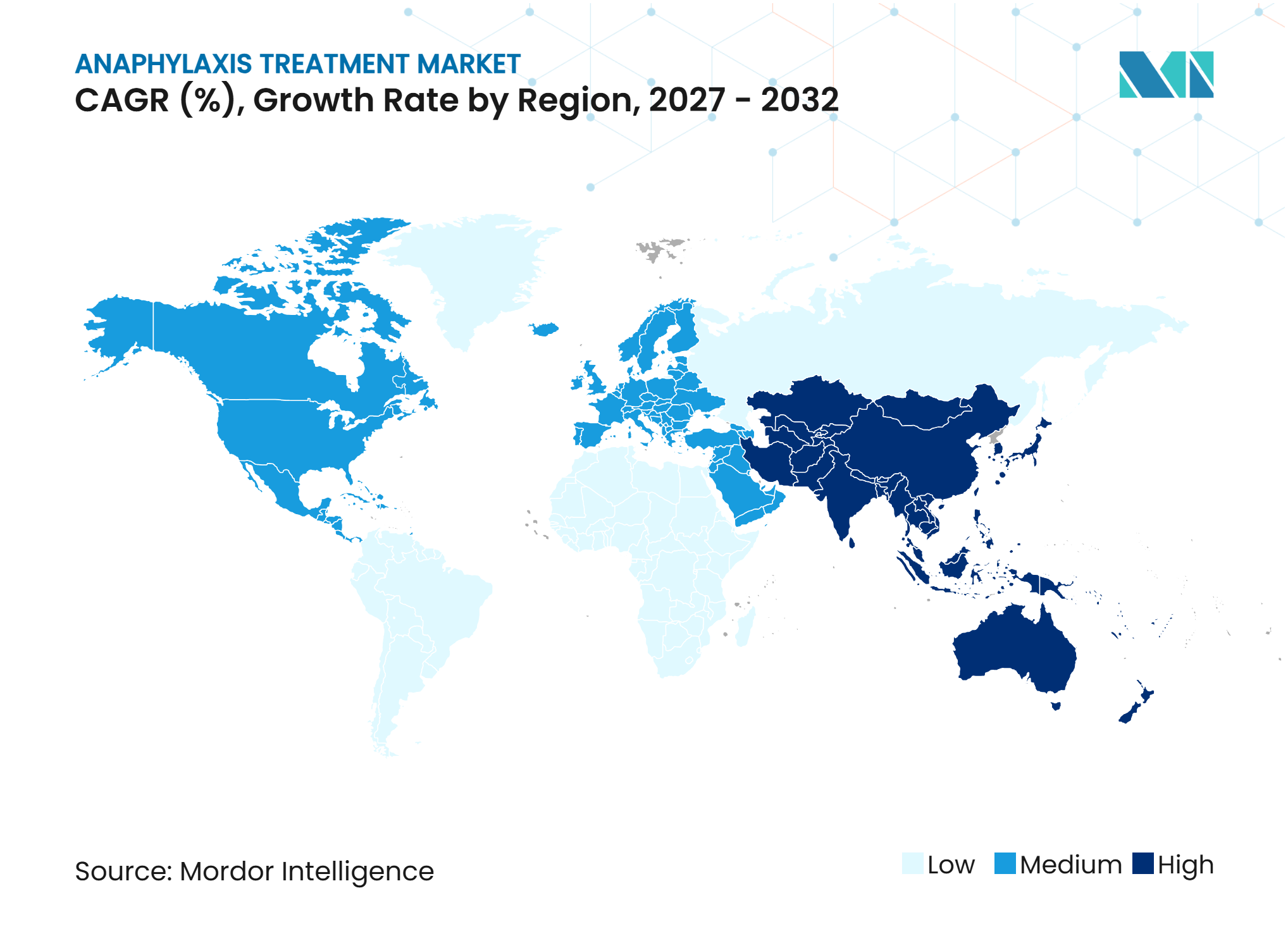
- By geography, North America held 48.34% of the market share in 2026; the Asia-Pacific region is expected to grow at a CAGR of 10.35% through 2032.
Note: Market numbers in this report are based on Mordor Intelligence's proprietary estimation framework, which combines nine months of actuals with Q4 projections for base year 2026.
Market Trends and Insights
Drivers Impact Analysis of Anaphylaxis Treatment Market*
| Driver | (~) % Impact on CAGR Forecast | Geographic Relevance | Impact Timeline |
|---|---|---|---|
| Rising Allergy and Anaphylaxis Burden | +1.8% | Global | Long term (≥ 4 years) |
| Expansion of Stock Epinephrine Programs | +1.0% | North America, widening to EU | Medium term (2-4 years) |
| Generic Availability and Reimbursement Expansion | +1.2% | North America, Europe | Medium term (2-4 years) |
| Needle-Free and User-Centered Delivery Innovation | +1.3% | North America, EU, Japan | Short term (≤ 2 years) |
| EAI Availability Gaps in Emerging Markets | +0.7% | APAC core, spill-over to MEA | Long term (≥ 4 years) |
| Temperature-Stable and Public-Stocking Requirements | +0.4% | Global | Medium term (2-4 years) |
| Source: Mordor Intelligence | |||
Rising Allergy and Anaphylaxis Burden
The growing allergy and anaphylaxis burden expands the treated population in the anaphylaxis treatment market. Trigger patterns differ by location, with peanuts and tree nuts prominent in Western countries, hen’s eggs and cow’s milk prominent in East Asia, and seafood prominent in Southeast Asia. These differences require companies to align clinical education and formulary positioning with local risk patterns. Drug-induced anaphylaxis is the most common cause of fatal reactions globally, and broader use of chemotherapy and biologics increases exposure in oncology and immunology settings. The United Kingdom experienced a sevenfold increase in hospital admissions related to anaphylaxis, with 0.047 deaths per 100,000 people each year.[1] Recurrence after a first episode ranges from 2.6% to 17.6%, creating repeat prescription demand and supporting longer-term volume in the anaphylaxis treatment market.
Expansion of Stock Epinephrine Programs
Stock epinephrine programs create an institutional channel that differs from individual prescriptions in the anaphylaxis treatment market. Schools, public venues, and community sites can purchase emergency doses through procurement processes that offer more predictable volumes. The Asthma and Allergy Foundation of America identifies school and public-place stocking as a continuing access priority in the United States.[2] ARS Pharmaceuticals launched its neffyinSchools program in January 2025 to provide eligible K-12 schools with free doses of neffy nasal spray.[3] Institutional buyers evaluate storage, training, supply continuity, and compliance alongside clinical use. Companies that build public-venue contracting capabilities can secure recurring demand as stocking requirements become more established. This channel can also reduce dependence on a patient’s ability to obtain and carry a personal prescription.
Generic Availability and Reimbursement Expansion
Generic epinephrine auto-injectors have lowered affordability barriers in the anaphylaxis treatment market across the United States and Europe. Lower-cost alternatives can support placement on preferred formulary tiers and improve access for patients who need replacement devices. Several U.S. states have adopted co-pay caps of USD 60 for a two-pack, which reduces patient out-of-pocket exposure. Kaléo reported that a 2025 retrospective analysis of U.S. commercial claims associated AUVI-Q prescriptions with a 23.81% lower rate of anaphylaxis-related inpatient hospitalization than other epinephrine auto-injectors, at 39 versus 52 per 100,000 patients. This type of evidence can influence insurer decisions on formulary placement for differentiated devices. Amneal Pharmaceuticals received FDA approval in December 2025 for epinephrine injection in single-dose and multi-dose vials, which increases institutional supply options. Separate Medicare J-code reimbursement rates for manufacturers can preserve generic incentives while allowing differentiated products to seek premium positioning.
Needle-Free and User-Centered Delivery Innovation
Needle-free formats are changing the product mix of the anaphylaxis treatment market. The FDA approved neffy 2 mg on August 9, 2024, for adults and children weighing at least 30 kg, making it the first nasal spray approved for anaphylaxis treatment. Aquestive Therapeutics announced FDA acceptance of the Anaphylm New Drug Application in June 2025, with a PDUFA action date of January 31, 2026. Anaphylm is a sublingual film that does not require a device or refrigeration. ARS Pharmaceuticals reported that 56% of caregivers fear needle-based devices and more than 40% of patients delay administration, suggesting that ease of use can alter existing product choice as well as reach untreated patients. These formats can make usability a clinical and commercial consideration rather than a convenience feature alone.
Restraints Impact Analysis of Anaphylaxis Treatment Market*
| Restraint | (~) % Impact on CAGR Forecast | Geographic Relevance | Impact Timeline |
|---|---|---|---|
| Stringent Combination-Product Regulation | -0.3% | North America, EU | Long term (≥ 4 years) |
| Device Malfunctions and Product Recalls | -0.2% | North America, Europe | Short term (≤ 2 years) |
| Uneven Specialist and Diagnostic Infrastructure | -0.2% | APAC core, spill-over to MEA | Long term (≥ 4 years) |
| Expiry Waste and Carry-Burden for Multiple Devices | -0.1% | Global | Medium term (2-4 years) |
| Source: Mordor Intelligence | |||
Stringent Combination-Product Regulation
Combination-product regulation can delay product launches in the anaphylaxis treatment market. Epinephrine auto-injectors and nasal sprays may be subject to oversight that considers both their drug and device elements. A 2025 review described differences in post-marketing safety surveillance for drug-device combination products in the European Union and the United States. The FDA published guidance on Unique Device Identifier requirements for combination products in June 2025, showing that compliance expectations continue to develop. Smaller innovators may need more resources and time than for a standard drug application. Development cycles can extend by 12 to 24 months beyond standard drug pathways. The resulting quality-system burden favors established manufacturers that already operate across drug and device requirements.
Device Malfunctions and Product Recalls
Device failures and recalls can reduce confidence in unfamiliar formats within the anaphylaxis treatment market. The clinical risk is high because a treatment failure during an anaphylactic episode can be fatal. In December 2024, Endo USA issued a Class I recall for Adrenalin Chloride Solution, an epinephrine nasal solution, because labeling closely resembled an approved injectable product and could lead to fatal medication errors. Earlier events, including the 2015 Auvi-Q recall for potential dosage inaccuracies, showed how quality concerns can lead to prescription switching and temporary volume disruption. Repeated events can encourage clinicians to compare device reliability as part of treatment choice. They can also increase interest in nasal sprays and sublingual films when avoiding mechanical failure becomes a clinical benefit.
*Our forecasts treat driver/restraint impacts as directional, not additive. The impact forecasts reflect baseline growth, mix effects, and variable interactions.
Anaphylaxis Treatment Market Segment Analysis
By Drug Class:
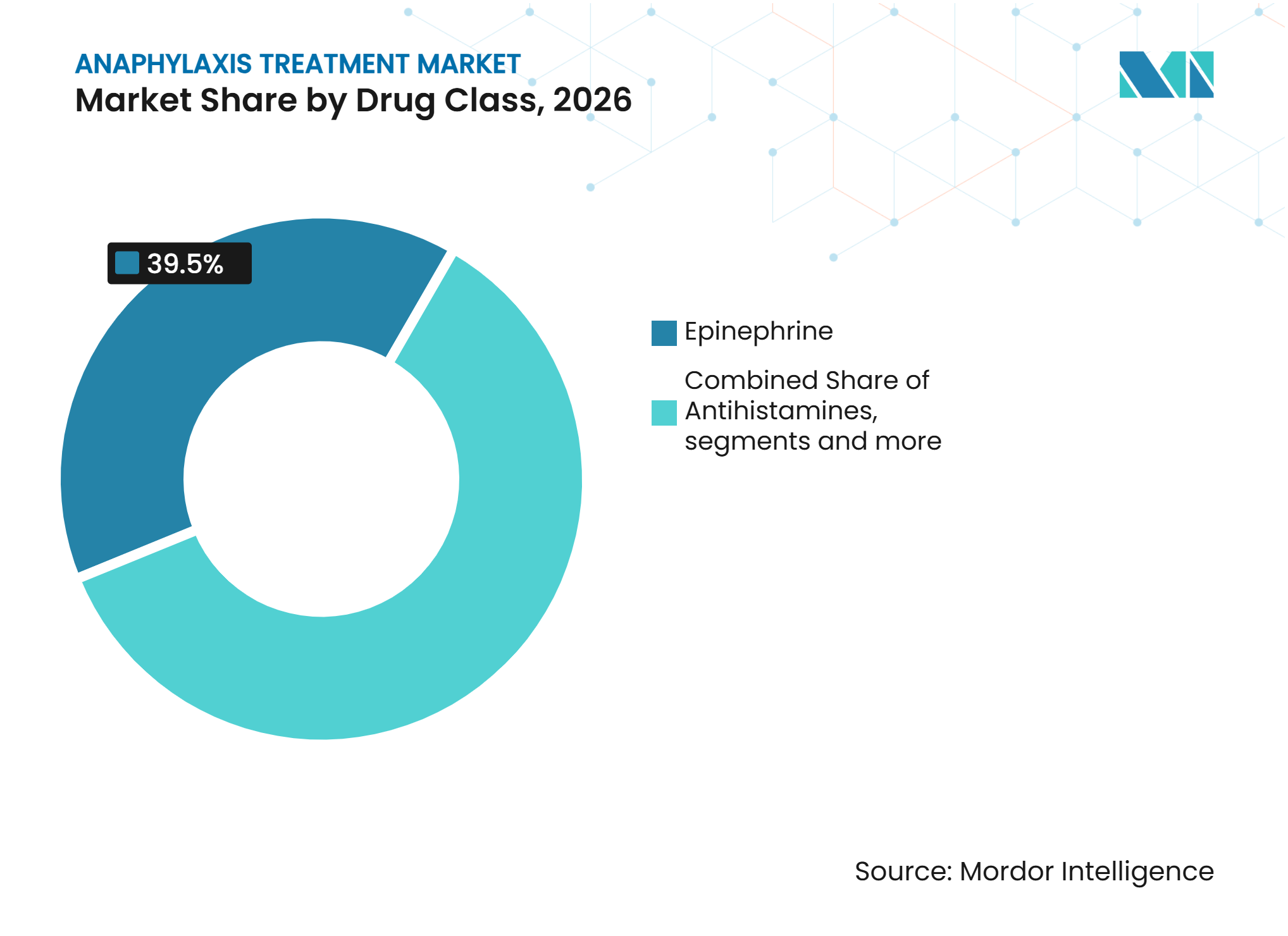
Epinephrine Holds Ground While Antihistamines Gain Adjunct ShareEpinephrine held 39.54% of the anaphylaxis treatment market share in 2026. It remains the first-line medicine for anaphylaxis and has no substitute during the immediate emergency response. The World Allergy Organization recommends intramuscular epinephrine as the immediate intervention for an anaphylactic episode. Established patient and caregiver training, hospital protocols, and emergency preparedness requirements support its continuing lead in the anaphylaxis treatment market.
Antihistamines are projected to grow at 8.24% CAGR through 2032, the fastest rate among drug classes. Their use after initial epinephrine administration supports care during the post-acute period, while greater awareness supports use for mild to moderate allergic symptoms. The Anaphylaxis treatment industry also includes steroids, beta-agonists, and mast cell stabilizers that serve secondary uses after acute care, for bronchospasm, or in prevention protocols.



By Route of Administration:
Subcutaneous Growth Signals Outpatient Channel ShiftIntramuscular administration accounted for 40.25% of the anaphylaxis treatment market size in 2026. Clinical guidance identifies the anterolateral thigh as the preferred site for epinephrine delivery during an emergency. The route benefits from familiar training for patients, caregivers, and healthcare professionals.
Subcutaneous administration is expected to expand at a 7.62% CAGR through 2032. Its use is increasing in allergen immunotherapy and controlled outpatient care, where slower absorption can be clinically acceptable. Oral and other routes remain smaller in volume but are strategically important because sublingual films and topical gels remain part of the development pipeline.
By Allergy Type:
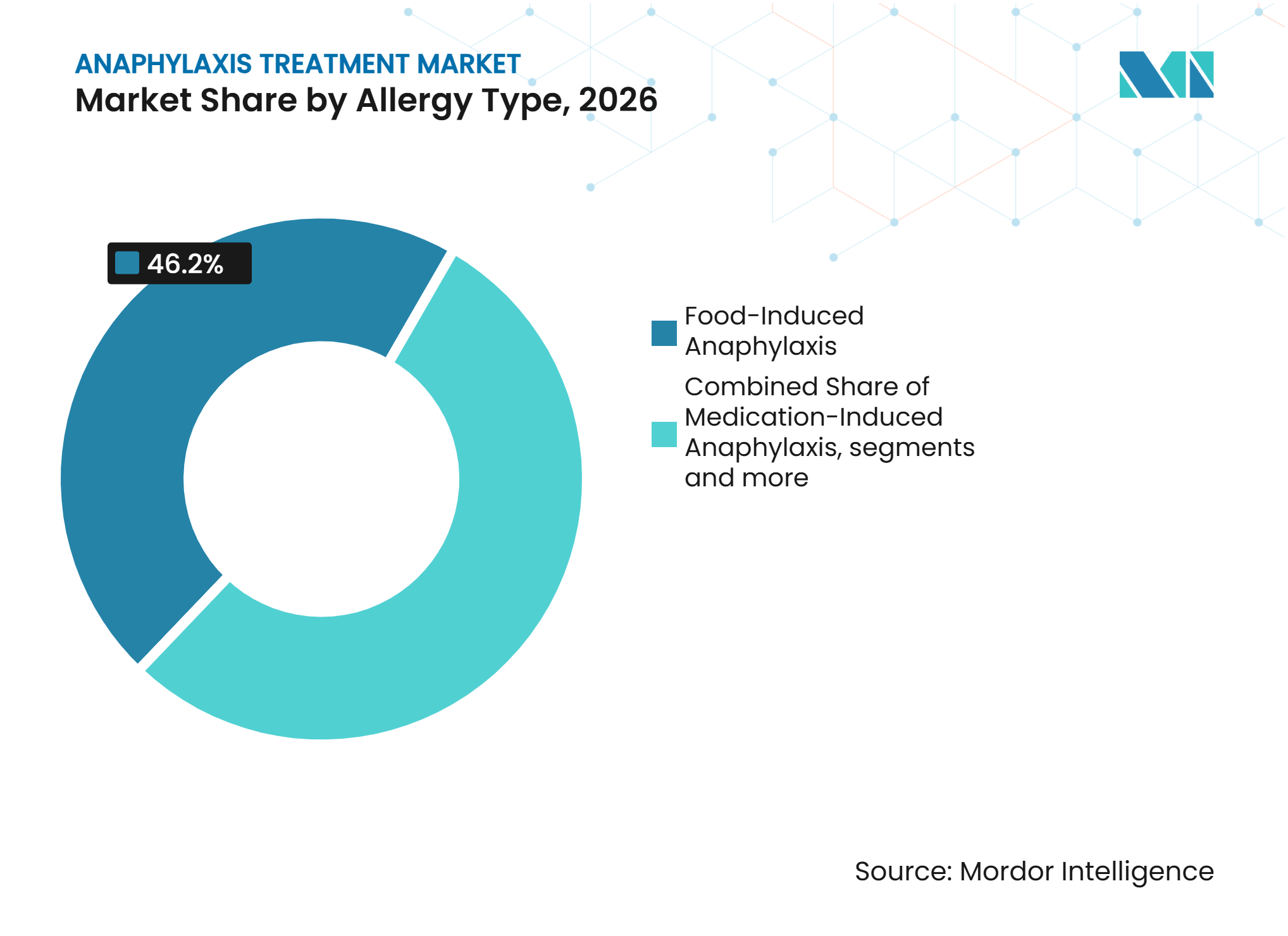
Medication-Induced Anaphylaxis Edges Toward Clinical PriorityFood-induced anaphylaxis accounted for 46.22% of the anaphylaxis treatment market in 2026. It reflects the size of the pediatric food allergy population and the recurring prescription needs of people with known food sensitivities. Food allergy often persists, supporting longer prescription duration, caregiver engagement, and demand for treatments used outside hospitals.
Medication-induced anaphylaxis is forecasted to grow at a 9.12% CAGR through 2032. Expanding use of oncology biologics, monoclonal antibodies, and immunotherapy protocols increases the need for emergency preparedness in clinical settings. Insect-sting and insect-bite reactions remain relevant in rural and agricultural areas of South America, sub-Saharan Africa, and Southeast Asia, where venom allergy may be more prevalent and immunotherapy access limited. Latex and idiopathic anaphylaxis form a smaller group but remain relevant for occupational health and hospital employee safety programs.

By Distribution Channel:
Online Pharmacies Reflect a Patient Behavior ShiftHospital pharmacies held 44.51% of the anaphylaxis treatment market in 2026. Their lead reflects high use of injectable epinephrine in emergency departments, intensive care units, and pre-operative settings. Many products are administered by healthcare professionals in clinical environments rather than self-administered by patients.
Online pharmacies are expected to grow at an 8.83% CAGR through 2032. Home delivery and digital refill models can reduce the effort needed to keep an epinephrine prescription active. Retail pharmacies remain the largest out-of-hospital channel by volume and support stock epinephrine access programs. Branded nasal sprays and possible sublingual products may gain online use among patients who actively manage prescriptions and seek convenient access.
Geography Analysis
North America
North America held 48.34% of the anaphylaxis treatment market share in 2026. The region benefits from high allergy prevalence, mature reimbursement systems, and adoption of new delivery formats. ARS Pharmaceuticals reported that 1 in 13 United States children has severe food allergies. The United States accounts for most regional volume, while Canada and Mexico gain from generic use and primary-care awareness. Fresenius Kabi and Phlow Corp. announced a February 2026 collaboration to create end-to-end U.S. manufacturing for Epinephrine Injection, USP, with a hospital-grade domestic product expected by 2027, subject to FDA approval.
Europe
Europe is the second-largest regional part of the anaphylaxis treatment market. Public health systems and harmonized guidance support access to emergency treatment across the European Union and the United Kingdom. The EMA authorized EURneffy on August 22, 2024, as the first nasal adrenaline spray for emergency treatment against allergic reactions in the European Union. Germany holds the largest country-level position, while EU combination-product oversight can lengthen access timelines, and Eastern Europe continues to face affordability and specialist-access constraints.
Asia-Pacific, Middle East and Africa, and South America
Asia-Pacific is projected to grow at a 10.4% CAGR through 2032, the fastest regional rate in the anaphylaxis treatment market. Rising food allergies in China and India, lower penetration, and regulatory activity support this outlook. India remains centered on hospital-dispensed injectable epinephrine because auto-injector use is limited by price, and there is no mandatory stocking framework. The Middle East and Africa demand is concentrated in GCC tertiary hospitals, while Brazil and Argentina lead South America as urbanization and food diversification raise exposure to novel allergens.
Competitive Landscape
Market Concentration
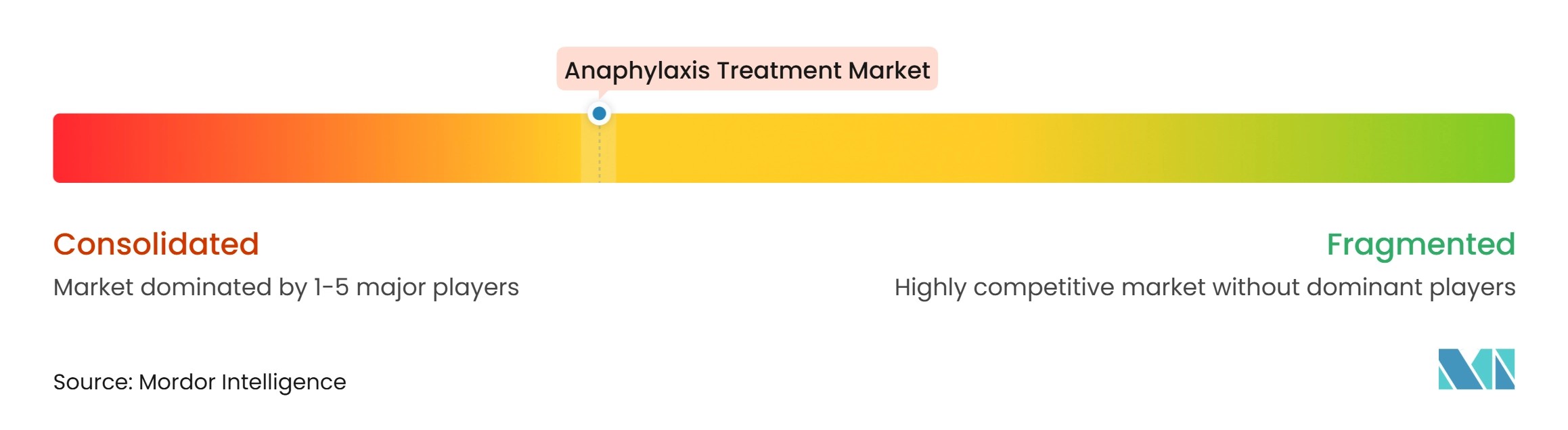
The anaphylaxis treatment market has a moderate-to-high concentration in conventional epinephrine auto-injectors. Viatris, through EpiPen, Kaléo, Amneal Pharmaceuticals, and Teva Pharmaceuticals, holds leading positions across branded and generic auto-injector volume. Fresenius Kabi remains important in hospital injectables and is adding domestic manufacturing capacity through its collaboration with Phlow Corp. FDA guidance on combination-product identifiers adds quality-system requirements that can favor manufacturers with existing drug and device capabilities.
The anaphylaxis treatment market has room to expand through stocking programs at sports facilities, amusement parks, and transit hubs where availability remains inconsistent. These institutional settings have procurement needs that differ from individual prescriptions. Companies that build supply systems for these buyers can establish recurring demand with lower retail-channel churn. Emerging markets are another opportunity because auto-injector use remains low in many locations.
China’s competitive setting remains less consolidated than mature markets. Zhendong Pharmaceutical licensed intranasal epinephrine technology from Nanjing Haiwei in August 2025 to challenge Neffy’s first-mover position in China. Digital health features, including GPS-enabled tracking and links to emergency response systems, could differentiate products for pediatric patients in schools. Bioprojet Pharma, Bausch Health, and Hikma maintain narrower positions tied to regional markets or injectable formulations. Product reliability, institutional supply, regulatory readiness, digital access, and non-injectable formats will remain important areas of competition.
Anaphylaxis Treatment Industry Leaders
-
Viatris Inc.
-
Teva Pharmaceutical Industries Ltd.
-
kaleo, Inc.
-
Amneal Pharmaceuticals, Inc.
-
ALK-Abelló A/S
- *Disclaimer: Major Players sorted in no particular order
Anaphylaxis Treatment Market Companies Covered in this Report
- ALK-Abello
- ALKEM Laboratories Ltd.
- American Regent
- Amneal Pharmaceuticals
- Amphastar Pharmaceuticals
- Aquestive Therapeutics
- ARS Pharmaceuticals, Inc.
- Bausch Health
- Baxter
- Bioprojet Pharma
- Fresenius
- Grand Pharmaceutical Group Limited
- Hikma Pharmaceuticals
- kaleo, Inc.
- Lincoln Medical Ltd.
- Pfizer
- Sandoz Group AG
- Sanofi
- Teva Pharmaceutical Industries
- Viatris
Recent Industry Developments in Anaphylaxis Treatment Market
- February 2026: Fresenius Kabi and Phlow Corp. announced the first-ever end-to-end US manufacturing collaboration for Epinephrine Injection, USP. Phlow will produce the active pharmaceutical ingredient, and Fresenius Kabi will handle finished-dose production; the arrangement is designed to address chronic supply-chain vulnerability and is expected to deliver hospital-grade product by 2027, pending FDA approval.
- December 2025: Amneal Pharmaceuticals received FDA approval for epinephrine injection USP, 1 mg/mL in single-dose and 1 mg/mL (30 mL) multi-dose vials for the US hospital market, expanding institutional supply and adding a third approved institutional format to Amneal's portfolio alongside its existing generic auto-injector franchise.
Global Anaphylaxis Treatment Market Report Scope
According to the report’s scope, the anaphylaxis treatment market refers to the global healthcare segment focused on diagnosis, emergency management, and prevention of anaphylaxis, a severe and potentially life‑threatening allergic reaction. It encompasses epinephrine auto‑injectors, antihistamines, corticosteroids, emergency medical services, and hospital care, with growth driven by rising allergy prevalence and increasing awareness of rapid intervention needs.
The anaphylaxis treatment market is segmented into drug class, route of administration, allergy type, distribution channel, and geography. By drug class, the market is segmented into epinephrine, antihistamines, steroids, beta-agonist, and other drug classes. By route of administration, the market is segmented into intramuscular, subcutaneous, oral, and other routes of administration. By allergy type, the market is segmented into food-induced anaphylaxis, medication-induced anaphylaxis, insect-sting and insect-bite anaphylaxis, and other allergy types. By distribution channel, the market is segmented into hospital pharmacies, retail pharmacies, online pharmacies, and other distribution channels. By geography, the market is segmented into North America, Europe, Asia-Pacific, the Middle East and Africa, and South America. The report also covers the estimated market sizes and trends for 17 countries across major regions globally. The report offers values (USD) for all the above segments.
Segmentation Overview
| Epinephrine |
| Antihistamines |
| Steroids |
| Beta-Agonist |
| Other Drug Classes |
| Intramuscular |
| Subcutaneous |
| Oral |
| Other Routes of Administrations |
| Food-Induced Anaphylaxis |
| Medication-Induced Anaphylaxis |
| Insect-Sting and Insect-Bite Anaphylaxis |
| Other Allergy Types |
| Hospital Pharmacies |
| Retail Pharmacies |
| Online Pharmacies |
| Other Distribution Channels |
| North America | United States |
| Canada | |
| Mexico | |
| Europe | Germany |
| United Kingdom | |
| France | |
| Italy | |
| Spain | |
| Rest of Europe | |
| Asia-Pacific | China |
| Japan | |
| India | |
| Australia | |
| South Korea | |
| Rest of Asia-Pacific | |
| Middle East and Africa | GCC |
| South Africa | |
| Rest of Middle East and Africa | |
| South America | Brazil |
| Argentina | |
| Rest of South America |
| By Drug Class | Epinephrine | |
| Antihistamines | ||
| Steroids | ||
| Beta-Agonist | ||
| Other Drug Classes | ||
| By Route of Administration | Intramuscular | |
| Subcutaneous | ||
| Oral | ||
| Other Routes of Administrations | ||
| By Allergy Type | Food-Induced Anaphylaxis | |
| Medication-Induced Anaphylaxis | ||
| Insect-Sting and Insect-Bite Anaphylaxis | ||
| Other Allergy Types | ||
| By Distribution Channel | Hospital Pharmacies | |
| Retail Pharmacies | ||
| Online Pharmacies | ||
| Other Distribution Channels | ||
| By Geography | North America | United States |
| Canada | ||
| Mexico | ||
| Europe | Germany | |
| United Kingdom | ||
| France | ||
| Italy | ||
| Spain | ||
| Rest of Europe | ||
| Asia-Pacific | China | |
| Japan | ||
| India | ||
| Australia | ||
| South Korea | ||
| Rest of Asia-Pacific | ||
| Middle East and Africa | GCC | |
| South Africa | ||
| Rest of Middle East and Africa | ||
| South America | Brazil | |
| Argentina | ||
| Rest of South America | ||
Key Questions Answered in the Report
What is the forecast for the anaphylaxis treatment market demand through 2032?
The anaphylaxis treatment market is forecasted to reach USD 5.88 billion by 2032, from USD 3.92 billion in 2026 to USD 4.15 billion in 2027, with a 7.23% CAGR from 2027 to 2032.
Which allergy type is growing fastest in treatment demand?
Medication-induced anaphylaxis is projected to grow at a 9.12% CAGR through 2032, supported by wider use of biologics and oncology therapies.
Which channel is growing fastest for treatment access?
Online pharmacies are expected to grow at an 8.83% CAGR through 2032 as home delivery and digital refill services make prescription maintenance easier.
Which region has the fastest projected growth?
Asia-Pacific is projected to grow at a 10.35% CAGR through 2032, supported by lower penetration, rising food allergies, and recent regulatory activity in the anaphylaxis treatment market.