
Advanced Renal Cell Carcinoma Market Size and Share
Market Overview
| Study Period | 2020 - 2031 |
|---|---|
| Market Size (2026) | USD 9.96 Billion |
| Market Size (2031) | USD 13.89 Billion |
| Growth Rate (2026 - 2031) | 6.88 % |
| Fastest Growing Market | Asia-Pacific |
| Largest Market | North America |
| Market Concentration | Medium |
Major Players *Disclaimer: Major Players sorted in no particular order Image © Mordor Intelligence. Reuse requires attribution under CC BY 4.0. | |
Advanced Renal Cell Carcinoma Market Analysis by Mordor Intelligence
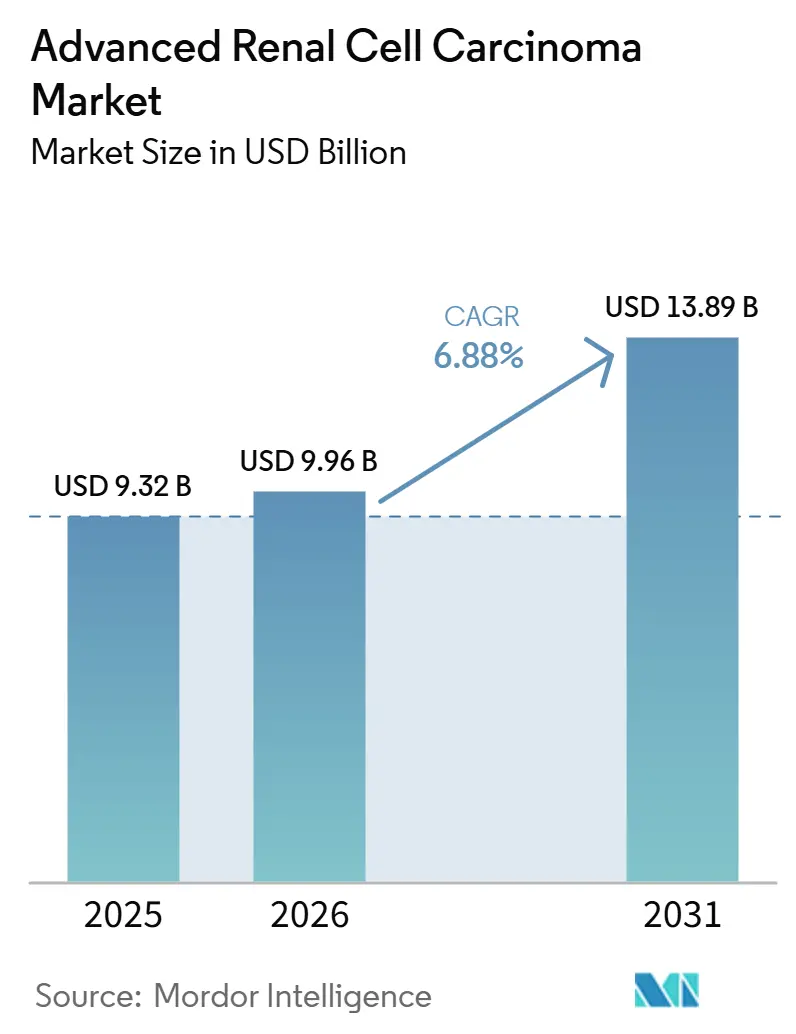
The Advanced Renal Cell Carcinoma Market size was valued at USD 9.32 billion in 2025 and is estimated to grow from USD 9.96 billion in 2026 to reach USD 13.89 billion by 2031, at a CAGR of 6.88% during the forecast period (2026-2031).
The rising incidence of kidney cancer continues to drive demand for systemic treatments, particularly among older populations and in high-income countries. Immunotherapy combinations remain central to treatment decisions, while HIF-2α inhibitors and newer targeted agents are expanding options after disease progression. Earlier use of treatments in adjuvant care may extend the duration of drug therapy for patients, rather than limiting demand to metastatic disease. However, high treatment costs, uneven reimbursement, and unresolved sequencing strategies after immunotherapy continue to pressure the advanced renal cell carcinoma market.
Key Report Takeaways
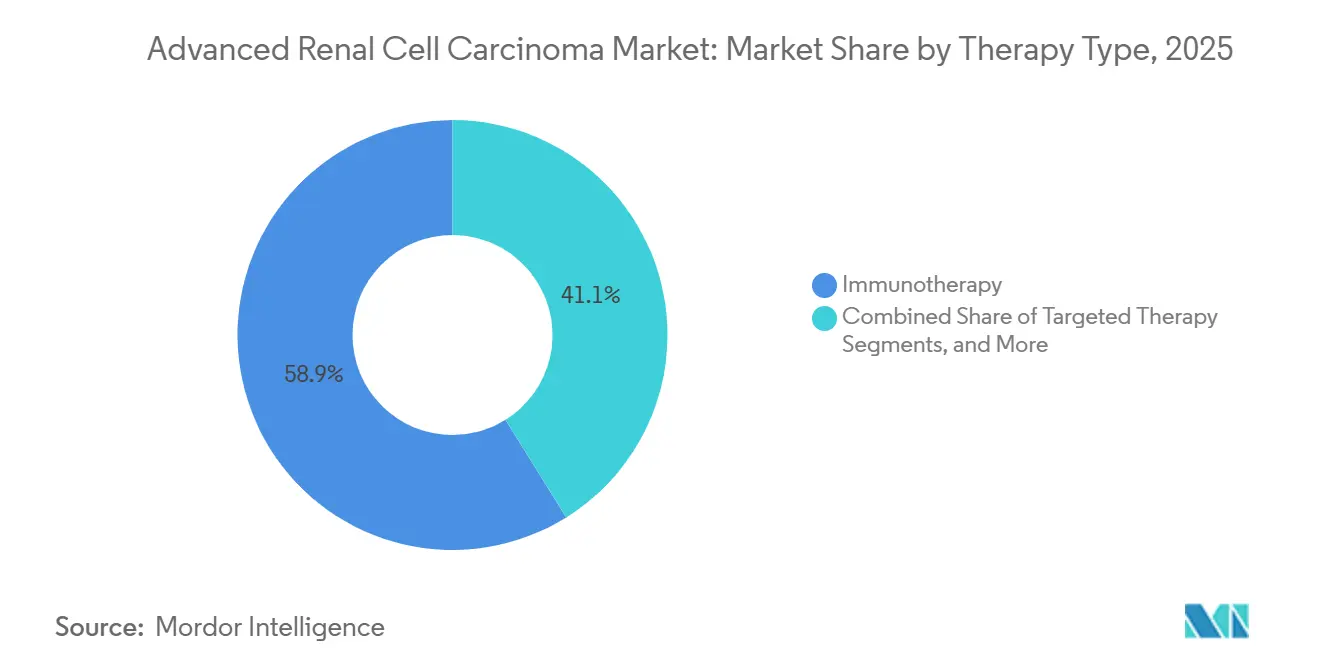
- By therapy type, immunotherapy held 58.88% of the advanced renal cell carcinoma market share in 2025, while targeted therapy is projected to grow at an 8.15% CAGR through 2031.
- By line of therapy, first-line treatment accounted for 64.34% of the advanced renal cell carcinoma market size in 2025, while third-line and later treatment is forecast to expand at a 9.80% CAGR through 2031.
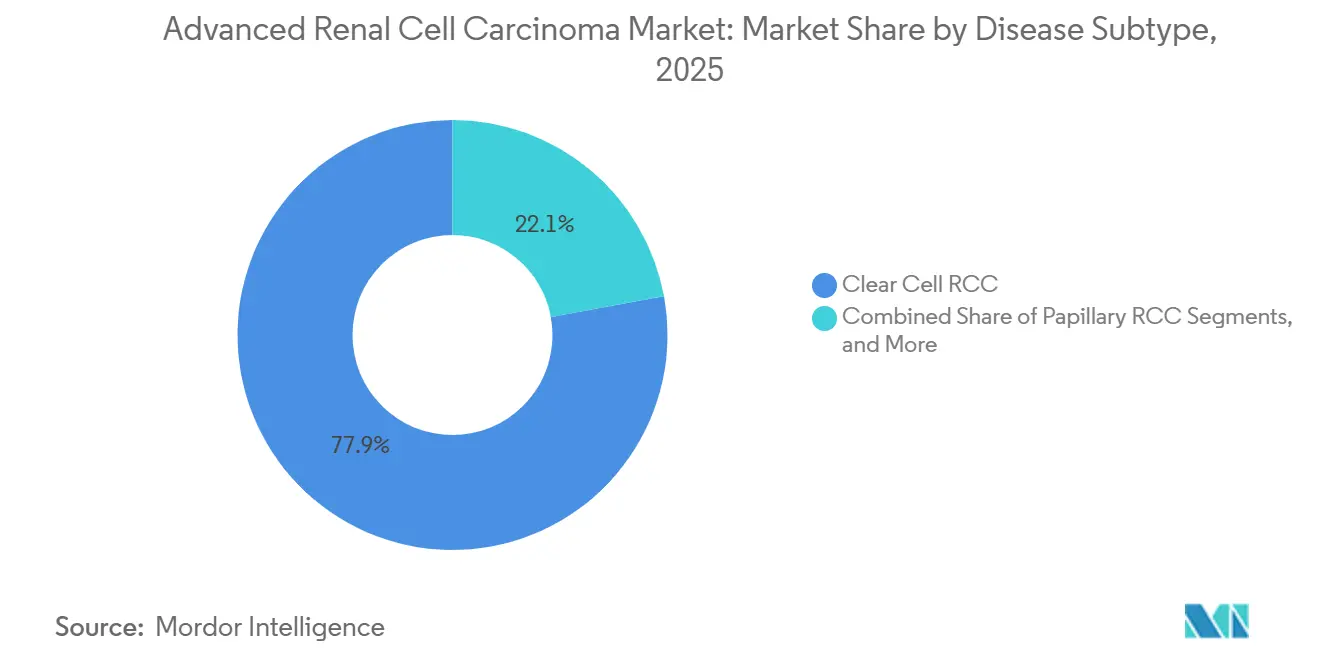
- By disease subtype, clear cell RCC held 77.89% of revenue in 2025, while papillary RCC is expected to advance at a 10.45% CAGR through 2031.
- By route of administration and form, oral administration accounted for 55.88% of revenue in 2025, while subcutaneous administration is projected to grow at a 7.56% CAGR through 2031.
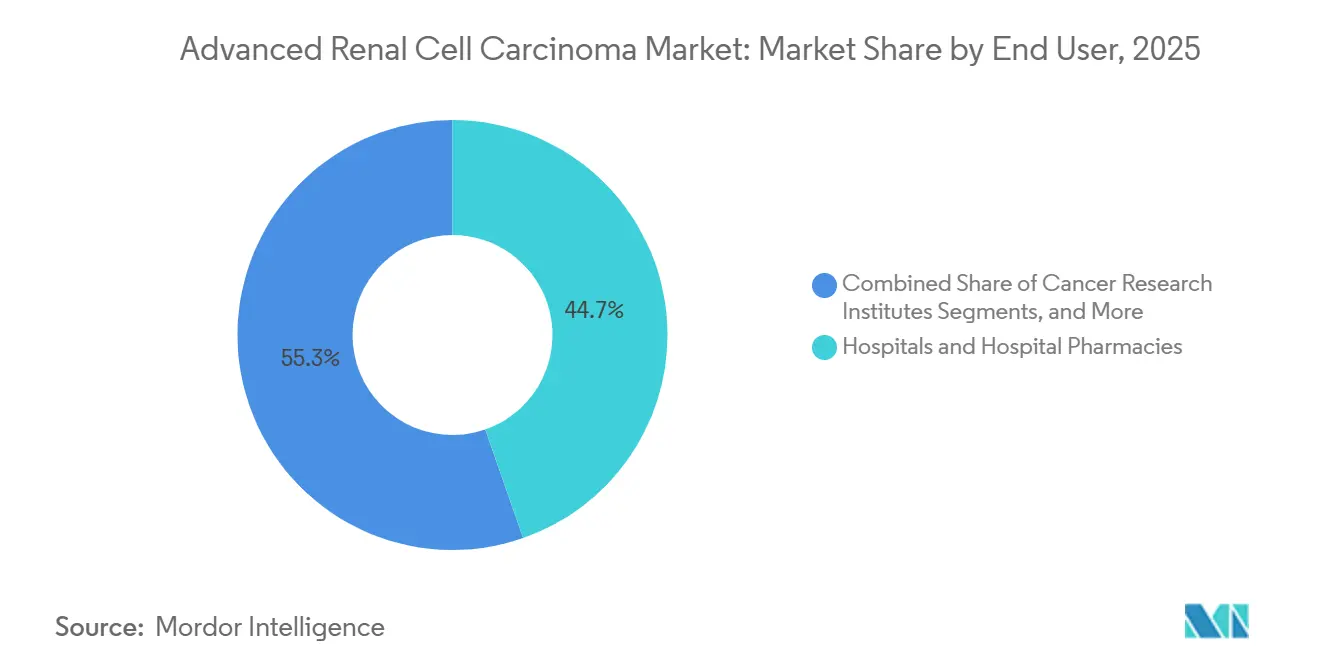
- By end user, hospitals and hospital pharmacies held 44.67% of revenue in 2025, while cancer research institutes are expected to grow at a 9.88% CAGR through 2031.
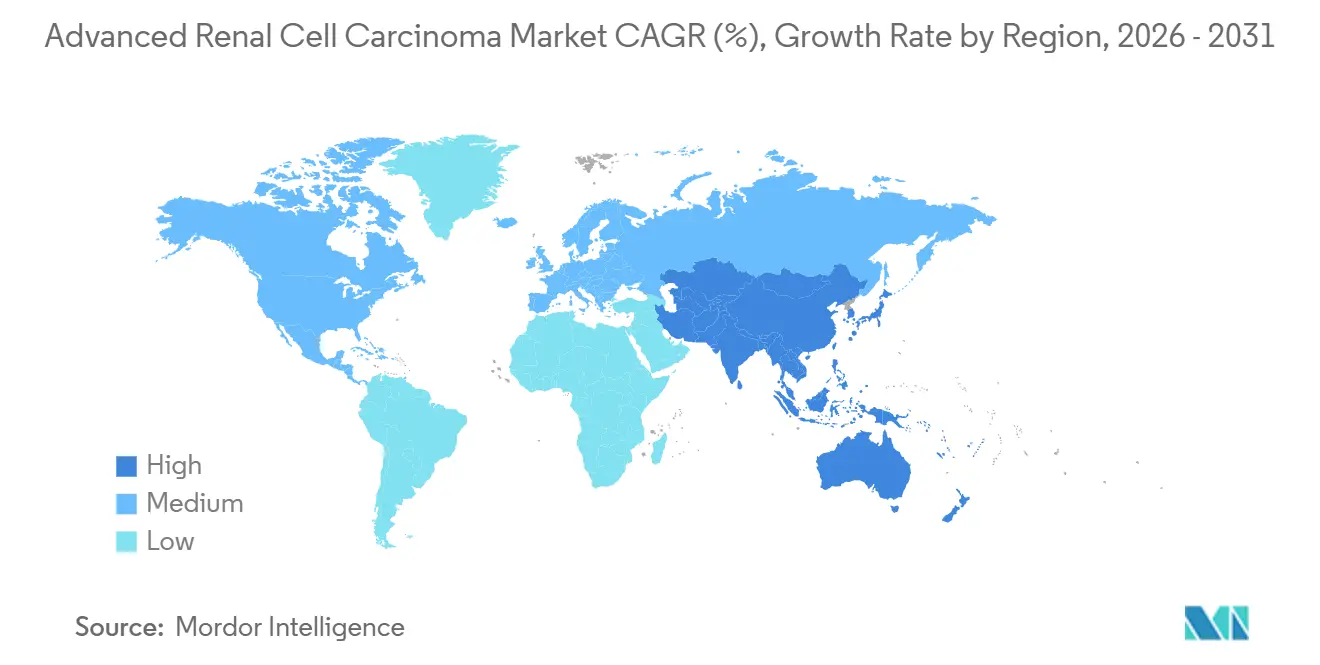
- By geography, North America accounted for 39.89% market size in 2025, while the Asia-Pacific region is projected to grow at a CAGR of 8.58% through 2031.
Note: Market size and forecast figures in this report are generated using Mordor Intelligence’s proprietary estimation framework, updated with the latest available data and insights as of January 2026.
Global Advanced Renal Cell Carcinoma Market Trends and Insights
Drivers Impact Analysis*
| DRIVER | (~) % IMPACT ON CAGR FORECAST | GEOGRAPHIC RELEVANCE | IMPACT TIMELINE |
|---|---|---|---|
| Rising incidence and diagnosis of RCC | +1.8% | Global, especially North America, Eastern Europe, and China | Short term (≤ 2 years) |
| Durable survival benefit from combination immunotherapy | +2.2% | Global, concentrated initially in North America and Europe | Medium term (2-4 years) |
| Expansion of later-line treatment options | +1.5% | North America and Europe, with wider uptake in Asia-Pacific | Medium term (2-4 years) |
| Biomarker-enabled HIF-2α segmentation | +1.2% | North America initially, followed by Europe and Japan | Long term (≥ 4 years) |
| Longer treatment duration and sequential regimen use | +1.0% | Global, with the largest value effect in high-cost settings | Long term (≥ 4 years) |
| Recognition of oligometastatic and site-specific management | +0.6% | North America and Europe, with growing use in Asia-Pacific cancer centers | Long term (≥ 4 years) |
| Source: Mordor Intelligence | |||
Rising Incidence and Diagnosis of RCC
Kidney cancer incidence is rising, expanding the addressable patient pool for systemic treatment. A 2025 analysis found that incident kidney cancer cases among adults aged 65 years and older increased from 70,003 in 1990 to 203,022 in 2024. Older patients often require closer monitoring and may continue treatment across multiple lines of care. Between 20% and 30% of patients present with metastatic disease at diagnosis, while another 30% to 50% progress after local treatment.[1]World Health Organization, “Global Status Report on Cancer 2026,” World Health Organization, who.int In the United States, Merck projected more than 80,000 new kidney cancer cases and more than 15,000 deaths in 2026, supporting sustained demand for advanced disease therapies.[2]BMC Cancer, “Rapidly Increasing Kidney Cancer Burden Among Young Adults,” BMC Cancer, springer.com
Durable Survival Benefit From Combination Immunotherapy
Combination immunotherapy has shifted many first-line advanced RCC settings away from single-agent approaches. Pembrolizumab plus axitinib has demonstrated sustained survival benefit across IMDC risk groups in long-term follow-up. Longer survival increases the number of patients eligible for subsequent therapy after first-regimen failure, extending demand across the treatment pathway. The advanced renal cell carcinoma market benefits as effective first-line care helps patients reach later treatment settings in better clinical condition.
Expansion of Later-Line Treatment Options and Sequential Use
Later-line treatment has gained importance in the advanced renal cell carcinoma market as patients live longer after initial immunotherapy-based regimens. In February 2025, the European Commission granted conditional approval to WELIREG for advanced clear cell RCC after at least two prior lines of therapy, including a PD-1 or PD-L1 inhibitor and VEGF-targeted therapy.[3]Merck, “European Commission Approves Subcutaneous Administration of KEYTRUDA,” Merck, merck.com The approval addressed a setting with limited options after earlier therapy failure and increased the focus on safety, tolerability, and sequencing. A 2026 study of metastasis-directed therapy in systemic therapy-naive oligometastatic RCC reflected growing clinical interest in combining systemic treatment with directed local treatment in selected patients.[4]Merck, “WELIREG Receives First European Commission Approval for Two Indications,” Merck, merck.com
Biomarker-Enabled HIF-2α Segmentation
HIF-2α inhibition offers a differentiated approach from established VEGFR-targeted therapies and checkpoint inhibitors. VHL gene loss is common in clear cell RCC, supporting HIF-2α as a clinically relevant pathway. According to Merck, belzutifan is available in more than 30 countries for previously treated advanced RCC. In June 2026, the FDA approved pembrolizumab and belzutifan for eligible patients with clear cell RCC at intermediate-high or high risk of recurrence after nephrectomy, moving the combination into an earlier treatment stage.
Restraints Impact Analysis*
| RESTRAINT | (~) % IMPACT ON CAGR FORECAST | GEOGRAPHIC RELEVANCE | IMPACT TIMELINE |
|---|---|---|---|
| Treatment-related toxicity and discontinuation | -1.5% | Global, with the highest clinical effect in later-line settings | Medium term (2-4 years) |
| High cost and unequal reimbursement | -1.2% | South America, Middle East and Africa, emerging Asia-Pacific markets, and South Korea | Long term (≥ 4 years) |
| Treatment sequencing uncertainty after IO-TKI failure | -1.5% | Global, with the highest clinical effect in later-line settings | Medium term (2-4 years) |
| Limited prospective evidence in non-clear cell RCC and rare hereditary subtypes | -1.2% | South America, Middle East and Africa, emerging Asia-Pacific markets, and South Korea | Long term (≥ 4 years) |
| Source: Mordor Intelligence | |||
Treatment-Related Toxicity and Discontinuation
Treatment-related toxicity can limit the practical use of new combinations in the advanced renal cell carcinoma market. HIF-2α inhibition can cause anemia and hypoxia, requiring monitoring that specialist oncology centers may manage more effectively than less-resourced settings. Checkpoint inhibitors can trigger immune-related adverse events, including pneumonitis, colitis, and endocrine disorders, and patients may need coordinated care across multiple medical teams. In a U.S. real-world study, inpatient admissions increased from 22% in second-line care to 32.7% in fourth-line care after immunotherapy and VEGF-based treatment failure. Dose reductions, treatment interruptions, and discontinuation can reduce the clinical and commercial value of later-line therapy.
High Cost and Unequal Reimbursement
High therapy costs remain a material barrier to adoption in the advanced renal cell carcinoma market. A U.S. real-world analysis reported total costs of USD 23,605 per patient per month across second-line, third-line, and fourth-line cohorts after immunotherapy and VEGF-based treatment failure. Cost pressure becomes more significant when patients receive multiple therapies sequentially over a longer period. A 2025 cost-effectiveness study found that toripalimab plus axitinib was not cost-effective compared with sunitinib from a U.S. third-party payer perspective. In South Korea, reimbursement criteria have lagged available treatment options in the immunotherapy era, leaving many later-line combinations without broad subsidy.
*Our forecasts treat driver/restraint impacts as directional, not additive. The impact forecasts reflect baseline growth, mix effects, and variable interactions.
Segment Analysis
By Therapy Type: Immunotherapy Leads Revenue While Targeted Agents Expand
Immunotherapy accounted for 58.88% of global revenue in 2025. PD-1 and PD-L1 inhibitors remained widely used, especially in established first-line combinations. Pembrolizumab-, nivolumab-, and ipilimumab-based regimens retained a durable role, supported by clinical evidence across risk groups. Targeted therapy is the fastest-growing segment, with the advanced renal cell carcinoma market size projected to rise at an 8.15% CAGR from 2026 to 2031.
Targeted therapy growth reflects the role of HIF-2α inhibitors and the continued use of next-generation VEGFR-TKIs. The February 2025 European approval of WELIREG for previously treated advanced clear cell RCC gave this category a defined role in European later-line care. Cytokine-based treatments retained limited use where access to newer therapies was restricted, while cytotoxic and other systemic therapies remained relevant for select refractory patients. Oral and subcutaneous forms may shift more treatment away from infusion centers, changing the balance between specialty pharmacy and hospital channels in the advanced renal cell carcinoma industry.



By Line of Therapy: First-Line Care Retains Scale While Later Lines Grow Faster
First-line treatment held 64.34% of global revenue in 2025. This position reflected the high cost of initial treatment and the broad use of immunotherapy combinations when clinicians first managed advanced disease. First-line regimens shaped subsequent care because earlier exposure to immunotherapy and VEGF-targeted agents influenced later treatment choices. Third-line and later treatment is the fastest-growing category, with the advanced renal cell carcinoma market size in this segment forecast to expand at a 9.80% CAGR from 2026 to 2031.
Later-line growth increased as survival improved in earlier stages of care. A systematic review presented at ASCO 2026 found that TKI-based regimens remained a reliable second-line option after immune checkpoint inhibitor failure. The June 2026 approval of pembrolizumab plus belzutifan in adjuvant care blurred the boundary between perioperative and metastatic treatment. Patients exposed to immunotherapy before metastatic recurrence may require different sequencing strategies, creating demand for prospective evidence after adjuvant therapy.
By Disease Subtype: Clear Cell RCC Dominates While Papillary RCC Advances
Clear cell RCC accounted for 77.89% of the advanced renal cell carcinoma market in 2025. Its leading position reflected high prevalence, broad clinical trial representation, and an extensive list of approved therapies. The subtype supported biomarker-based selection because VHL pathway changes were common. Clear cell RCC remained the main competitive setting for checkpoint inhibitors, VEGFR-TKIs, and HIF-2α inhibitors.
Papillary RCC is the fastest-growing subtype and is expected to record a 10.45% CAGR through 2031. Growth in this subtype reflects rising attention to the MET pathway and histology-based treatment selection. Other subtypes, including chromophobe, collecting duct, and hereditary RCC, remained underserved despite the significant burden associated with VHL disease. In Europe, VHL disease affects an estimated 10,000 to 15,000 people, and RCC occurs in 70% of these patients, creating a key opportunity in the advanced renal cell carcinoma industry.
By Route of Administration and Form: Oral Therapies Lead While Subcutaneous Care Gains Use
Oral administration held 55.88% of revenue in 2025, giving it the largest share within the advanced renal cell carcinoma market. Oral VEGFR-TKIs and HIF-2α inhibitors supported this position because clinicians could prescribe them for outpatient use. This format reduced reliance on infusion capacity and supported care delivery where oncology services were limited. Oral therapies also aligned with specialty pharmacy distribution models.
Subcutaneous administration is expected to grow at a 7.56% CAGR from 2026 to 2031. Subcutaneous delivery gained attention because it reduced the time needed to administer checkpoint inhibitors. The European Commission approved subcutaneous nivolumab in May 2025 for multiple solid tumors, including advanced RCC, and subcutaneous pembrolizumab in November 2025 for adult European Union indications. Intravenous administration still held substantial volume, but subcutaneous options may help oncology centers treat more patients while reducing chair-time demand.
By End User: Hospitals Hold the Largest Share While Research Institutes Grow Fastest
Hospitals and hospital pharmacies held 44.67% of advanced renal cell carcinoma market revenue in 2025. They administered many intravenous combinations in settings equipped to monitor immune-related adverse events. Tertiary referral centers concentrated the oncology expertise required for complex treatment decisions. Ambulatory surgical centers and academic institutions served smaller patient groups, including people using oral therapies or participating in trials.
Cancer research institutes are projected to grow at a 9.88% CAGR through 2031, the fastest rate among end users. Clinical trial activity and biomarker-guided enrollment supported the rising role of research institutions. These facilities provided access to investigational agents and specialized testing before treatments became widely available. Specialty pharmacies and long-term care facilities are expanding their roles as oral and subcutaneous therapies become more available, while hospitals remain central to the advanced renal cell carcinoma market.
Geography Analysis
North America held 39.89% of global advanced renal cell carcinoma market revenue in 2025. The region benefited from high disease incidence, early access to new medicines, and public and private reimbursement systems that supported treatment adoption. U.S. women had an age-standardized kidney cancer incidence rate of 8.7 per 100,000, among the highest rates reported globally. The United States received FDA approval for pembrolizumab plus belzutifan in adjuvant clear cell RCC in June 2026, while Canada and Mexico contributed less revenue but continued to expand access.
Europe was the second-largest regional area in the advanced renal cell carcinoma market, with approval pathways supporting access across 27 European Union member states after national reimbursement decisions. The European Commission conditionally approved WELIREG for advanced clear cell RCC in February 2025 and approved subcutaneous nivolumab in May 2025. Germany remained a major revenue center, while South America had lower but improving access. Brazil and Argentina expanded procurement and insurance coverage, although drug costs and fragmented reimbursement continued to limit regional uptake.
Asia-Pacific was the fastest-growing region in the advanced renal cell carcinoma market and is forecast to expand at an 8.58% CAGR from 2026 to 2031. China remained central to this growth due to rising incidence, expanding infrastructure, and locally developed regimens. In May 2026, China’s NMPA approved sintilimab plus fruquintinib for locally advanced or metastatic RCC after prior VEGFR-TKI treatment. Japan’s accelerated pathways and expanding oncology networks in India, South Korea, and Australia supported access, although South Korea still had reimbursement gaps. The Middle East and Africa remained split between early adoption in GCC states and infrastructure and supply barriers across many Sub-Saharan markets, while the Africa Medicines Agency framework offered a longer-term path to alignment.

Competitive Landscape
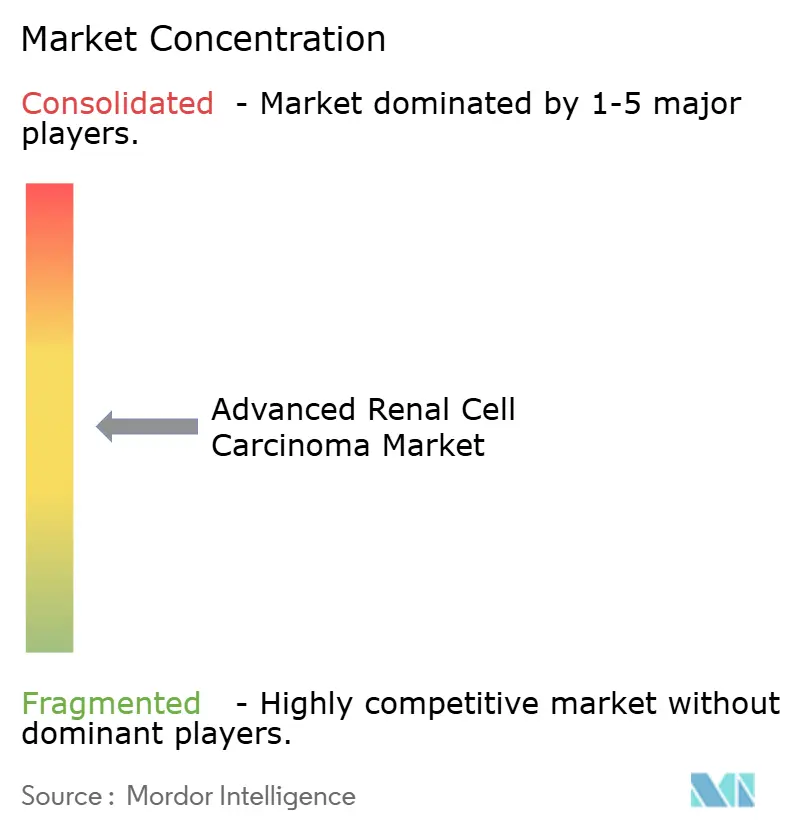
The advanced renal cell carcinoma market is moderately concentrated, with Bristol Myers Squibb, Merck, Exelixis, Roche, BeiGene, HUTCHMED, and Telix Pharmaceuticals holding key positions through approved drugs or late-stage development programs. Merck leveraged KEYTRUDA and WELIREG across adjuvant and advanced disease, and its June 2026 FDA approval for pembrolizumab plus belzutifan extended this strategy into adjuvant clear cell RCC. Earlier positioning may help Merck maintain patient engagement before metastatic treatment begins, while later-line competition focuses on HIF-2α inhibitors and VEGFR-TKIs.
Bristol Myers Squibb continued to build on its CheckMate franchise and the broader use of Opdivo. Its subcutaneous Opdivo formulation received European Commission approval in May 2025, offering a shorter administration format for eligible solid tumor settings. Companies demonstrating benefit after prior immunotherapy could influence later-line prescribing. Pricing negotiations, reimbursement requirements, and regulatory designations will shape adoption timelines across countries.
Competitive opportunities remain in non-clear cell RCC and oligometastatic disease. Non-clear cell disease has fewer late-stage data sets and lacks a broadly established Phase 3 standard across all histologies. HUTCHMED strengthened its position in China through the May 2026 NMPA approval of sintilimab plus fruquintinib for eligible advanced RCC patients. The advanced renal cell carcinoma market has room for new modalities, but adoption will depend on safety, practical delivery, regulatory evidence, and reimbursement support.
Advanced Renal Cell Carcinoma Industry Leaders
Bristol-Myers Squibb Company
AstraZeneca PLC
Merck & Co., Inc.
Pfizer Inc.
Novartis AG
- *Disclaimer: Major Players sorted in no particular order

Recent Industry Developments
- June 2026: Merck received FDA approval for KEYTRUDA and KEYTRUDA QLEX, each with WELIREG (belzutifan), for adjuvant treatment of adults with ccRCC at intermediate-high or high risk of recurrence, based on LITESPARK-022 data.
- May 2026: China’s NMPA approved sintilimab (TYVYT) plus fruquintinib (ELUNATE) for locally advanced or metastatic RCC after prior VEGFR-TKI failure, based on FRUSICA-2 Phase 3 data.
- November 2025: The European Commission approved subcutaneous pembrolizumab (KEYTRUDA QLEX) for approved adult indications in the European Union, including RCC in combination with axitinib.
- May 2026: The European Commission approved subcutaneous Opdivo (nivolumab SC co-formulated with rHuPH20) for multiple solid tumor indications, including advanced RCC, based on Phase 3 CheckMate-67T data.


Global Advanced Renal Cell Carcinoma Market Report Scope
As per the scope of the report, advanced renal cell carcinoma is stage 4 kidney cancer where the tumor has grown outside the kidney and spread to distant organs or lymph nodes, making it harder to cure. It is the most common form of adult kidney cancer, starting in the tiny tubes of the kidney that filter blood.
The advanced renal cell carcinoma market is segmented by therapy type, line of therapy, disease subtype, route of administration and form, end user, and geography. By therapy type, the market is segmented into immunotherapy, targeted therapy, combination therapy, and cytotoxic and other systemic therapy. Immunotherapy includes PD-1 and PD-L1 inhibitors, CTLA-4 inhibitors, and cytokine-based immunotherapy. Targeted therapy includes VEGFR tyrosine kinase inhibitors, HIF-2α inhibitors, mTOR inhibitors, and multikinase and MET inhibitors. Combination therapy includes IO-IO combinations, IO-TKI combinations, and targeted therapy combinations. By line of therapy, the market is segmented into first-line treatment, second-line treatment, third-line and later treatment, and maintenance and treatment sequencing. By disease subtype, the market is segmented into clear cell RCC, papillary RCC, and others. By route of administration and form, the market is segmented into oral, intravenous, subcutaneous, and combination and sequential administration. By end user, the market is segmented into hospitals and hospital pharmacies, cancer research institutes, ambulatory surgical centers, academic and research institutes, and others. By geography, the market is analyzed across North America, Europe, Asia-Pacific, the Middle East and Africa, and South America. The report also covers the estimated market sizes and trends for 17 countries across major regions globally. The report offers the market sizes and forecasts in terms of value (USD) for the above segments.
| Immunotherapy | PD-1 and PD-L1 Inhibitors |
| CTLA-4 Inhibitors | |
| Cytokine-Based Immunotherapy | |
| Targeted Therapy | VEGFR Tyrosine Kinase Inhibitors |
| HIF-2- Inhibitors | |
| mTOR Inhibitors | |
| Multikinase and MET Inhibitors | |
| Combination Therapy | IO-IO Combinations |
| IO-TKI Combinations | |
| Targeted-Therapy Combinations | |
| Cytotoxic and Other Systemic Therapy |
| First-Line Treatment |
| Second-Line Treatment |
| Third-Line and Later Treatment |
| Maintenance and Treatment Sequencing |
| Clear Cell RCC |
| Papillary RCC |
| Other |
| Oral |
| Intravenous |
| Subcutaneous |
| Combination and Sequential Administration |
| Hospitals and Hospital Pharmacies |
| Cancer Research Institutes |
| Ambulatory Surgical Centers |
| Academic and Research Institutes |
| Others |
| North America | United States |
| Canada | |
| Mexico | |
| Europe | Germany |
| United Kingdom | |
| France | |
| Italy | |
| Spain | |
| Rest of Europe | |
| Asia-Pacific | China |
| India | |
| Japan | |
| Australia | |
| South Korea | |
| Rest of Asia-Pacific | |
| Middle East and Africa | GCC |
| South Africa | |
| Rest of Middle East and Africa | |
| South America | Brazil |
| Argentina | |
| Rest of South America |
| By Therapy Type | Immunotherapy | PD-1 and PD-L1 Inhibitors |
| CTLA-4 Inhibitors | ||
| Cytokine-Based Immunotherapy | ||
| Targeted Therapy | VEGFR Tyrosine Kinase Inhibitors | |
| HIF-2- Inhibitors | ||
| mTOR Inhibitors | ||
| Multikinase and MET Inhibitors | ||
| Combination Therapy | IO-IO Combinations | |
| IO-TKI Combinations | ||
| Targeted-Therapy Combinations | ||
| Cytotoxic and Other Systemic Therapy | ||
| By Line of Therapy | First-Line Treatment | |
| Second-Line Treatment | ||
| Third-Line and Later Treatment | ||
| Maintenance and Treatment Sequencing | ||
| By Disease Subtype | Clear Cell RCC | |
| Papillary RCC | ||
| Other | ||
| By Route of Administration and Form | Oral | |
| Intravenous | ||
| Subcutaneous | ||
| Combination and Sequential Administration | ||
| By End User | Hospitals and Hospital Pharmacies | |
| Cancer Research Institutes | ||
| Ambulatory Surgical Centers | ||
| Academic and Research Institutes | ||
| Others | ||
| By Geography | North America | United States |
| Canada | ||
| Mexico | ||
| Europe | Germany | |
| United Kingdom | ||
| France | ||
| Italy | ||
| Spain | ||
| Rest of Europe | ||
| Asia-Pacific | China | |
| India | ||
| Japan | ||
| Australia | ||
| South Korea | ||
| Rest of Asia-Pacific | ||
| Middle East and Africa | GCC | |
| South Africa | ||
| Rest of Middle East and Africa | ||
| South America | Brazil | |
| Argentina | ||
| Rest of South America | ||


Key Questions Answered in the Report
What is the projected value of the advanced renal cell carcinoma market by 2031?
The advanced renal cell carcinoma market is projected to reach USD 13.89 billion by 2031, from USD 9.32 billion in 2026, at a 6.88% CAGR.
Which therapy type holds the largest share in advanced renal cell carcinoma treatment?
Immunotherapy held 58.88% of revenue in 2025, supported by widespread use of PD-1 and PD-L1 inhibitor-based regimens.
Which treatment line is growing fastest for advanced renal cell carcinoma?
Third-line and later treatment is projected to grow at a 9.80% CAGR through 2031 as more patients receive sequential care.
Why is papillary RCC gaining attention?
Papillary RCC is forecast to grow at a 10.45% CAGR through 2031, supported by greater interest in MET-targeted and histology-led treatment approaches.
How are subcutaneous cancer therapies affecting RCC care?
Subcutaneous administration is projected to grow at a 7.56% CAGR through 2031 because it can reduce treatment administration time and infusion-center demand.
What are the main barriers to advanced RCC treatment adoption?
High costs, uneven reimbursement, treatment-related toxicity, and uncertainty over treatment sequencing continue to limit adoption in some settings.
Page last updated on:





