
Activated Clotting Time Testing Market Size and Share
Market Overview
| Study Period | 2021 - 2032 |
|---|---|
| Market Size (2027) | USD 1.44 Billion |
| Market Size (2032) | USD 2.09 Billion |
| Growth Rate (2027 - 2032) | 7.78 % |
| Fastest Growing Market | Asia-Pacific |
| Largest Market | North America |
| Market Concentration | Medium |
Major Players *Disclaimer: Major Players sorted in no particular order Image © Mordor Intelligence. Reuse requires attribution under CC BY 4.0. | |
Activated Clotting Time Testing Market Analysis by Mordor Intelligence
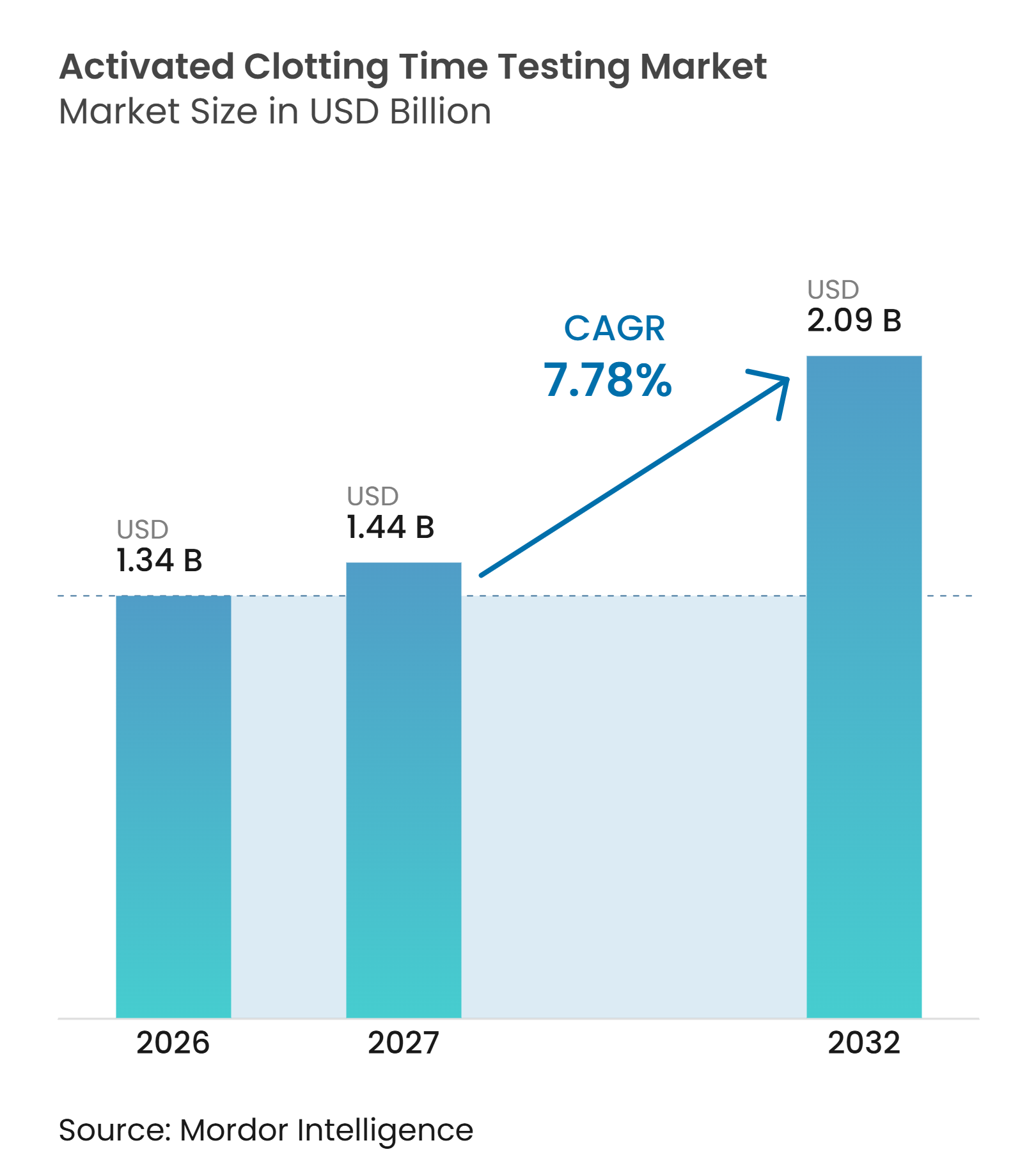
The Activated Clotting Time Testing Market size is expected to grow from USD 1.34 billion in 2026 to USD 1.44 billion in 2027 and is forecast to reach USD 2.09 billion by 2032 at 7.78% CAGR over 2027-2032.
Activated clotting time testing supports immediate heparin management during cardiovascular surgery, percutaneous coronary intervention, extracorporeal membrane oxygenation, and hemodialysis. The movement of selected cardiovascular procedures into ambulatory settings is widening the installed base required for near-patient anticoagulation testing. Suppliers are responding by linking analyzers to recurring cartridge demand, developing portable systems, and improving connectivity across hospital networks. These conditions support demand for the activated clotting time testing market while placing greater weight on clinical validation, workflow fit, and total cost of ownership.
Key Report Takeaways
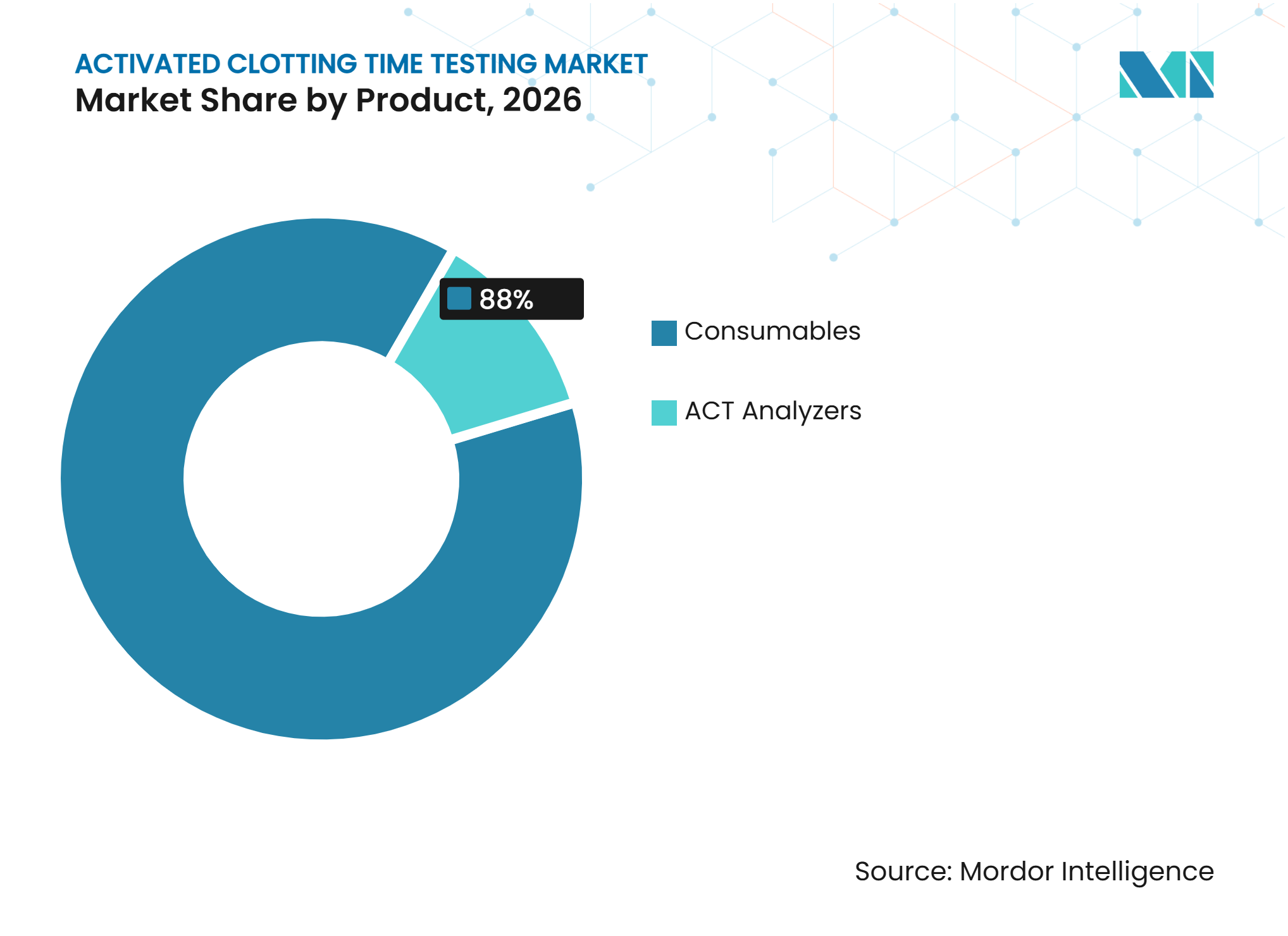
- By product, consumables held 87.99% of the market share in 2026 and are projected to expand at a 9.17% CAGR through 2032.
- By test type, high-range ACT tests held 65.34% of the market share in 2026 and are projected to expand at an 8.23% CAGR through 2032.
- By application, hemodialysis was the largest application in 2026, capturing 48.31% in 2026, while extracorporeal membrane oxygenation recorded the highest projected CAGR at 10.19% through 2032.
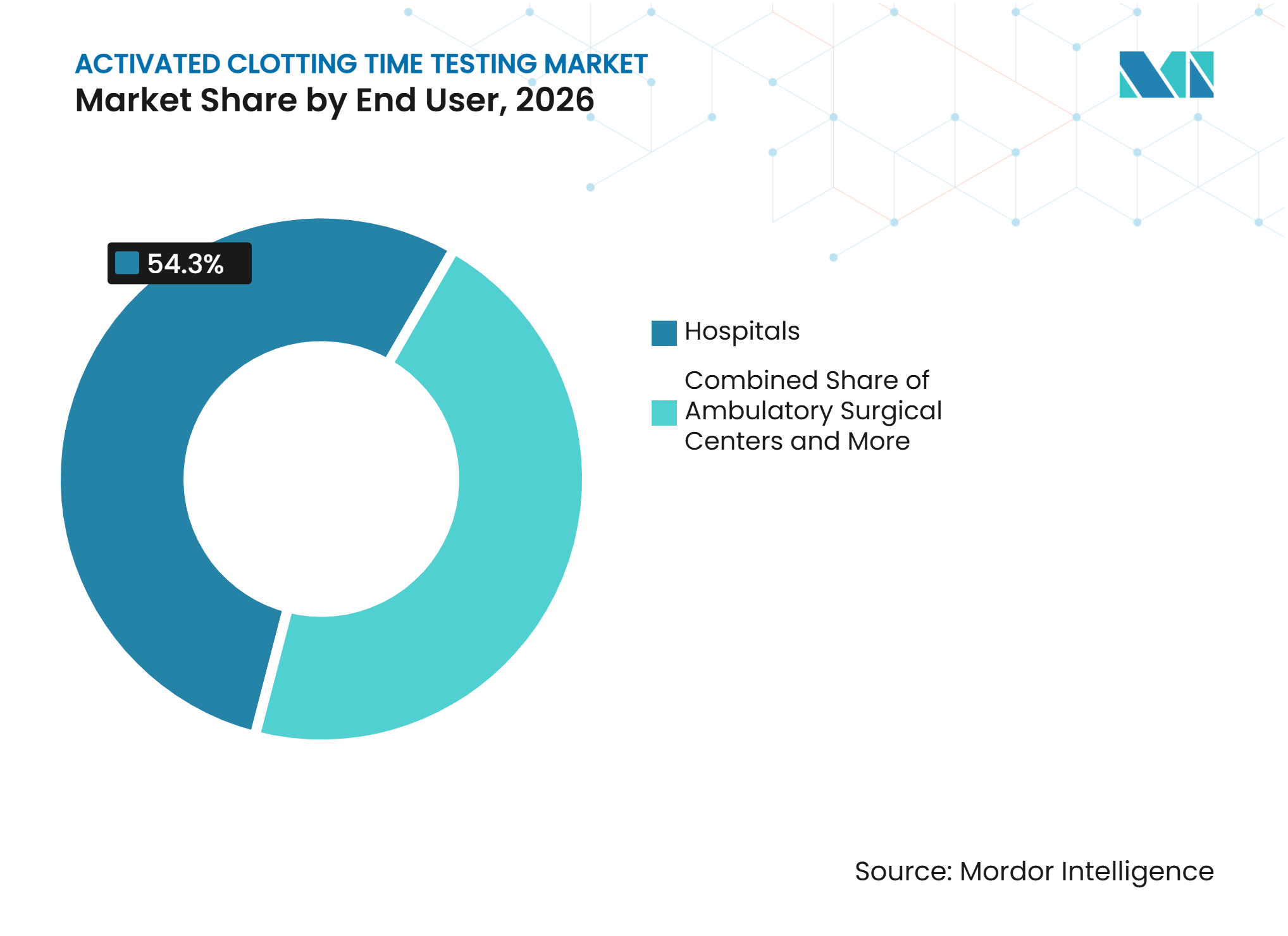
- By end user, hospitals held 54.31% of the market share in 2026, while ambulatory surgical centers are projected to expand at a 10.02% CAGR through 2032.
- By technology, point-of-care testing systems held 68.21% of the market share in 2026, while portable testing systems are projected to expand at a 9.45% CAGR through 2032.
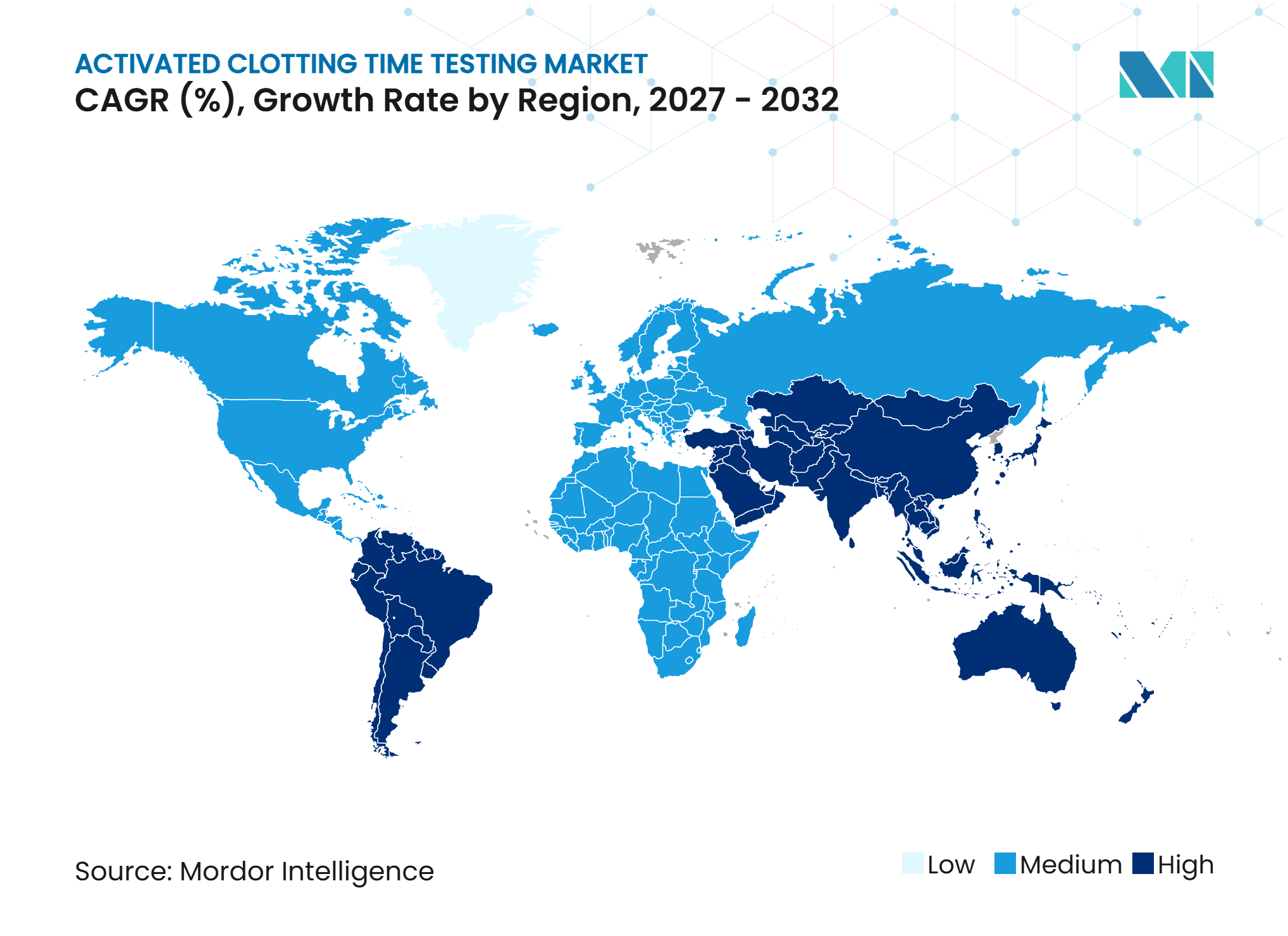
- By geography, North America held 39.89% of the market share in 2026, while Asia-Pacific is projected to expand at a 9.65% CAGR through 2032.
Note: Market numbers in this report are based on Mordor Intelligence's proprietary estimation framework, which combines nine months of actuals with Q4 projections for base year 2026.
Market Trends and Insights
Drivers Impact Analysis of Activated Clotting Time Testing Market*
| Driver | (~) % Impact on CAGR Forecast | Geographic Relevance | Impact Timeline |
|---|---|---|---|
| Rising Cardiovascular Surgery and Interventional Cardiology Volumes | +2.0% | Global | Long term (≥ 4 years) |
| Increasing Point-of-Care Testing Adoption | +1.5% | Global, with strong traction in North America and Europe | Medium term (2-4 years) |
| Growth In ECMO and Extracorporeal Therapies | +1.2% | North America, Europe, East Asia | Medium term (2-4 years) |
| Expansion of Cardiac Care Infrastructure In Asia-Pacific | +1.0% | Asia-Pacific, with spillover to the Middle East and Africa | Long term (≥ 4 years) |
| Increasing Demand for Cartridge-Based, Low-Volume Testing | +0.9% | Global | Short term (≤ 2 years) |
| Increasing Integration of ACT Devices with Hospital Information Systems | +0.7% | North America and Europe | Medium term (2-4 years) |
| Source: Mordor Intelligence | |||
Rising Cardiovascular Surgery and Interventional Cardiology Volumes
Aging populations and greater exposure to hypertension, obesity, and diabetes sustain demand for cardiac care. The United States performs significant volumes of coronary artery bypass grafting and percutaneous coronary intervention, which require close anticoagulation control. PCI activity has risen in several middle-income countries and exceeds rates in some higher-income countries[1]. This procedure mix supports recurring cartridge use in the activated clotting time testing market.
Increasing Point-of-Care Testing Adoption
ACT testing gives clinical teams a near-patient measure of anticoagulation during procedures where laboratory turnaround is not suitable for immediate decisions. A cardiac surgery review describes the continuing importance of device-specific ACT measurement for cardiopulmonary bypass management. Point-of-care systems can support faster documentation and quality oversight when hospitals connect them with existing information workflows. A Swedish survey found that 67% of emergency departments had replaced selected central laboratory analyses with point-of-care alternatives. This broader adoption pattern supports the placement of connected ACT systems in operating rooms, catheterization laboratories, and intensive care units. Clinical validation and quality requirements remain central when facilities select systems for the activated clotting time testing market.
Growth in ECMO and Extracorporeal Therapies
Extracorporeal membrane oxygenation is used for a wider range of cardiopulmonary conditions than before. Centers use ECMO for cardiogenic shock, pulmonary embolism, and perioperative bridge-to-recovery care. A systematic review found that ACT remains a common point-of-care anticoagulation tool at many ECMO centers, despite growth in anti-Xa use. New ECMO programs must choose monitoring protocols, equipment, and supporting consumables as they establish services. That process creates a channel for instrument and cartridge suppliers serving the activated clotting time testing market.
Expansion of Cardiac Care Infrastructure in Asia-Pacific
India had 2,200 cardiac catheterization laboratories against an estimated need for 6,500, which shows the scale of unmet access to interventional cardiac care. The gap is especially relevant in eastern, central, and northeastern states. Public programs and private investment are expanding services beyond major urban cardiac centers. New catheterization laboratories need protocols for heparin monitoring during PCI and other interventional procedures. In Japan, SEKISUI Medical introduced the CP3000α in April 2025 for laboratories seeking a compact coagulation analyzer with high throughput. These investments broaden the customer base for the activated clotting time testing market across both established and developing care networks.
Restraints Impact Analysis of Activated Clotting Time Testing Market*
| Restraint | (~) % Impact on CAGR Forecast | Geographic Relevance | Impact Timeline |
|---|---|---|---|
| High Analyzer and Recurring Consumables Costs | -0.9% | Global, most acute in emerging markets | Long term (≥ 4 years) |
| Variability in ACT Results Across Devices and Activators | -0.7% | Global | Medium term (2-4 years) |
| Limited Standardization of ACT Reference Ranges | -0.6% | Global | Long term (≥ 4 years) |
| Reimbursement and Procurement Fragmentation in Emerging Markets | -0.5% | Middle East and Africa, South America, South Asia, and Southeast Asia | Long term (≥ 4 years) |
| Source: Mordor Intelligence | |||
High Analyzer and Recurring Consumables Costs
Analyzer acquisition is only one part of the financial commitment required for point-of-care anticoagulation testing. Facilities also need staff training, ongoing quality control, service support, and a stable consumable supply. These costs can be difficult for public hospitals and smaller providers in price-sensitive health systems. The recurring use of proprietary cartridges can limit price flexibility once a hospital has validated a platform. Clinical risk makes laboratories cautious about changing chemistry or moving to an unvalidated alternative. The cost structure therefore can slow new adoption in the activated clotting time testing market, especially where procurement budgets are fragmented.
Variability in ACT Results Across Devices and Activators
ACT values can differ between instruments and activator chemistries. A 2025 prospective study in cardiac surgery found limited correlation between Hemochron Signature Elite and Hemochron Response results, with a reported mean bias of negative 20.7%. Another 2025 study found that 42% of paired results from 2 point-of-care ACT platforms could have resulted in different anticoagulation management decisions. Hypothermia, thrombocytopenia, hemodilution, and antiplatelet therapy can further influence measurement interpretation. Clinical teams must therefore set protocols that match the device used in their own environment. This variation adds validation work for facilities considering entry or a change of supplier in the activated clotting time testing market.
*Our forecasts treat driver/restraint impacts as directional, not additive. The impact forecasts reflect baseline growth, mix effects, and variable interactions.
Activated Clotting Time Testing Market Segment Analysis
By Product:
Consumables Sustain the Dominant Revenue EngineConsumables commanded 87.99% of the market share in 2026 and are projected to grow at a 9.17% CAGR through 2032. Their position reflects the repeated cartridge use required during cardiac surgery and other anticoagulation-managed procedures. Each test requires a specialized consumable, so routine clinical use produces recurring demand after an analyzer is installed. Hospitals also tend to validate their procedures with a particular activator chemistry. Changing a consumable supplier can require clinical and operational revalidation. This makes the consumables category the principal revenue engine in the activated clotting time testing industry.
ACT analyzers account for a smaller value base, but they anchor the installed base that supports later cartridge demand. Suppliers can use instrument pricing to secure long-term recurring revenue rather than seek the full margin at the point of capital sale. Haemonetics reported that its hemostasis management revenue rose more than 20% year over year in fiscal 2026, supported by disposable use after capital placements. This model shifts buyer attention toward total cost of ownership, service, and continuity of supply. Procurement decisions remain closely tied to cartridge economics. The activated clotting time testing market therefore depends on both capital placement and dependable consumable pull-through.



By Test Type:
High-Range ACT Tests Define the Clinical StandardHigh-range ACT tests held 65.34% of the market share in 2026 and are forecast to expand at an 8.23% CAGR through 2032. These tests are used where high-dose heparin protocols are common, especially in cardiopulmonary bypass. Cardiac surgery teams have historically used an ACT threshold above 480 seconds during bypass. However, evidence is prompting closer review of the specific threshold used with each device. The segment remains central because major cardiac procedures require rapid and repeated anticoagulation measurements.
The 2025 randomized study of 1,021 cardiac surgery patients found that a target of at least 400 seconds produced comparable transfusion outcomes and lower postoperative blood loss. This change in clinical debate does not necessarily lower demand for testing. Instead, it can increase the need for local validation and repeated measurement while clinicians establish safe operating protocols. Low-range ACT tests remain important in PCI, hemodialysis, and atrial fibrillation ablation. A 2025 study in cryoablation found meaningful differences in target attainment between high-range and low-range assays. The activated clotting time testing industry must therefore support test selection that aligns with clinical setting and heparin regimen.
By Application:
ECMO Accelerates While Hemodialysis Anchors the BaseHemodialysis was the largest application in 2026, holding 48.31%. Hemodialysis supports a broad and recurring testing base because anticoagulation decisions are made across repeated treatment sessions. ACT targets in this setting guide heparin titration during renal replacement therapy. This recurring use differs from the episodic demand associated with major surgery. It gives the activated clotting time testing market a stable base of routine procedures.
Extracorporeal membrane oxygenation is projected to grow at a 10.19% CAGR through 2032. ECMO is growing as treatment expands beyond traditional rescue use into cardiogenic shock, pulmonary embolism, and perioperative support. A systematic review found that ACT remains widely used because it is available at the bedside and produces rapid results[2]. Cardiovascular surgery continues to consume multiple tests per case, even where some bypass volumes are steady. Interventional cardiology and critical care add further demand as outpatient procedures and intensive care protocols evolve. These combined application settings keep the activated clotting time testing market tied to both high-acuity and chronic care workflows.
By End User:
Hospitals Lead While Ambulatory Centers ExpandHospitals accounted for 54.31% of the market share in 2026. They remain the core setting for high-acuity cardiovascular surgery, complex PCI, ECMO, and intensive care. These procedures often require access to surgical backup, blood bank services, and specialized staff. Hospitals are also better positioned to operate multi-department quality systems for point-of-care testing. Their broad clinical scope protects their leading role in the activated clotting time testing market.
Ambulatory surgical centers are the fastest-growing end-user setting, growing at a CAGR of 10.02% from 2027 to 2032. The migration of selected cardiovascular procedures into outpatient settings is a key factor behind this development. These facilities require portable and simple systems that can function without a large central laboratory footprint. Clinical laboratories retain a role in preoperative screening and result confirmation. Specialty clinics may add a smaller pool of demand where low-range anticoagulation monitoring is appropriate. Suppliers in the activated clotting time testing market that combine compact instruments with quality documentation are positioned to address these changing care sites.

By Technology:
Point-of-Care Systems Dominate While Portability AdvancesPoint-of-care testing systems held 68.21% of the market share in 2026. Their leading position is based on the need for real-time results during procedures where immediate heparin decisions are required. Established platforms are widely used in cardiac operating rooms and catheterization laboratories. The clinical value is not only speed but also the ability to repeat testing at the bedside as conditions change. This makes near-patient testing the core technology base in the activated clotting time testing industry.
Portable testing systems are forecast to grow at a 9.45% CAGR through 2032. Battery-operated and compact formats can support testing in cardiac intensive care units, mobile surgical units, rural referral centers, and hospitals with limited laboratory infrastructure. Siemens Healthineers launched its CN-3000 and CN-6000 hemostasis systems in the United States in September 2026, highlighting continuing demand for smaller footprints and integrated testing workflows. Integrated monitoring platforms are also gaining attention where cardiac programs seek broader coagulation oversight. The resulting technology direction in the activated clotting time testing market favors connectivity, portability, and validated performance in addition to basic assay speed.
Geography Analysis
North America
North America held 39.89% of the market share in 2026. The region benefits from a large base of cardiac operating rooms, catheterization laboratories, and ECMO centers. U.S. coronary revascularization activity sustains demand for frequent anticoagulation testing. The continued migration of selected procedures to ambulatory settings creates a need for portable systems and cartridge workflows outside the traditional operating room. Werfen’s 2025 North American commercialization of the ACL TOP Family 70 Series shows the importance of centralized quality management for multi-site laboratories. Regulatory review by the U.S. Food and Drug Administration and laboratory quality requirements remain influential in system selection. Canada adds demand through established cardiac programs, while Mexico presents a developing private-hospital opportunity. These structural conditions preserve North America’s leading role in the activated clotting time testing market.
Asia-Pacific
Asia-Pacific is projected to expand at a 9.65% CAGR through 2032, the fastest regional rate in the activated clotting time testing market. India’s 2,200 catheterization laboratories remain well below the estimated 6,500 required, creating demand for broader access to interventional cardiac care. Expansion into district hospitals and secondary cities will require equipment, training, and repeat-test consumables. Japan remains an important technology market, where SEKISUI Medical launched the compact CP3000α analyzer in April 2025. Siemens Healthineers and Sysmex began delivering CN-6000 and CN-3000 systems in Japan in October 2025. Mature cardiac systems in South Korea and Australia coexist with newer dedicated cardiac programs in Southeast Asia. This mix of mature adoption and new capacity gives suppliers room to offer both advanced connected platforms and practical portable systems.
Europe, the Middle East and Africa, and South America
Europe is a mature regional group with high-volume cardiac programs, while activity in several Eastern European countries is increasing. The European Union’s In Vitro Diagnostic Regulation requires many hemostasis devices in Class C to meet full compliance requirements by 2028. This compliance factor can favor manufacturers with the resources to manage recertification and documentation. The Middle East combines new cardiac infrastructure in Gulf Cooperation Council countries with limited capacity in parts of sub-Saharan Africa, where cardiac surgery programs remain below clinical need. South America offers demand through Brazil’s public hospital network but faces procurement variation and currency-related purchasing pressure. These regions are mixed geographic segments, so local service, training, and price-sensitive offers can be as important as device features. Growth in these areas depends on how providers manage access, reimbursement, and regulatory compliance.
Competitive Landscape
Market Concentration
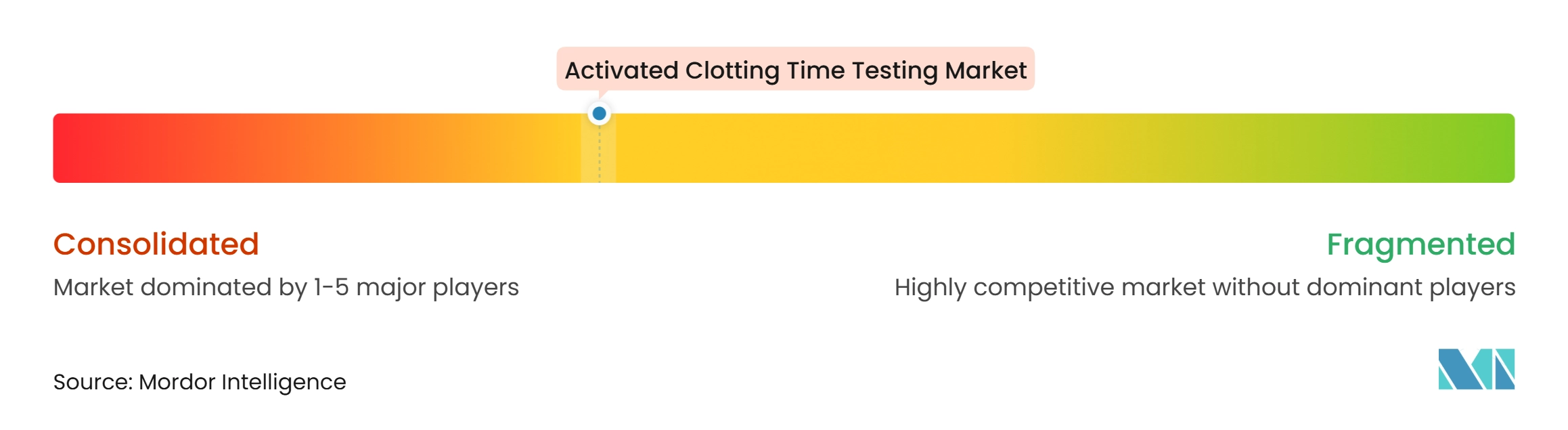
The activated clotting time testing market is moderately consolidated around established diagnostics and hemostasis suppliers, including Werfen, Abbott Laboratories, Siemens Healthineers, and Haemonetics. Their installed-base positions are strongest in high-volume cardiac surgery and catheterization laboratory settings. Competition is shaped by the relationship between capital instruments and recurring consumables. Suppliers may accept pricing pressure on analyzers to build a durable cartridge customer base. This business model makes service quality, workflow integration, and supply reliability central to account retention.
Werfen commercialized the ACL TOP Family 70 Series in North America in March 2025 after U.S. FDA clearance and Health Canada licensure. The system uses HemoHub Intelligent Data Manager to support centralized quality control across laboratory networks. Haemonetics reported more than 20% year-over-year growth in fiscal 2026 hemostasis management revenue, supported by TEG 6s disposable use following capital placements. Siemens Healthineers launched the CN-3000 and CN-6000 in the United States in September 2026, with a smaller footprint and multiple hemostasis testing methods. These actions show a move toward connected data management, compact design, and broader hemostasis portfolios.
Smaller companies can compete through specialized applications and focused clinical positioning. HemoSonics received U.S. FDA 510(k) clearance in September 2025 to expand the Quantra Hemostasis System with QStat Cartridge into peripartum obstetric procedures. Alternative heparin-monitoring methods may also shape competition in ECMO and critical care when clinical programs seek more than one monitoring approach. However, validated workflows and cartridge supply agreements make rapid replacement of existing ACT platforms difficult. The competitive position of leading suppliers therefore rests on installed base coverage, clinical support, software connectivity, and recurring consumables. The activated clotting time testing market remains open to specialized innovation, but broad platform conversion requires substantial validation and account support.
Activated Clotting Time Testing Industry Leaders
-
Abbott Laboratories
-
Haemonetics Corporation
-
Medtronic plc
-
Siemens Healthineers AG
-
Werfen
- *Disclaimer: Major Players sorted in no particular order
Activated Clotting Time Testing Market Companies Covered in this Report
- Abbott Laboratories
- Accriva Diagnostics
- bioMérieux
- Danaher
- Diagnostica Stago SA
- Roche
- Haemonetics
- Helena Laboratories
- HORIBA
- Instrumentation Laboratory Company
- International Technidyne Corporation
- Medtronic
- QIAGEN
- SEKISUI MEDICAL CO. LTD
- Mindray
- Siemens Healthineers
- Sienco
- Sysmex
- Thermo Fisher Scientific
- Werfen
Recent Industry Developments in Activated Clotting Time Testing Market
- November 2026: Werfen received U.S. FDA 510(k) clearance for the ROTEM sigma complete cartridge for assessing perioperative hemorrhage and thrombosis in trauma patients. This extends the ROTEM sigma viscoelastic testing system's U.S. indications beyond cardiovascular surgery and liver transplantation, significantly expanding Werfen's addressable procedure base in emergency and perioperative bleeding management.
- September 2026: Siemens Healthineers launched the CN-3000 and CN-6000 automated hemostasis analyzers in the United States for mid- and high-volume laboratories. The compact platform consolidates clotting, chromogenic, immunoassay, and platelet aggregation methodologies onto a system reported to be up to 60% smaller than comparable alternatives, with up to 13 hours of walkaway time and connectivity to Atellica Data Manager for multisite oversight.
Global Activated Clotting Time Testing Market Report Scope
As per the report’s scope, activated clotting time testing covers point-of-care and laboratory-based assessment of whole-blood clotting time to support heparin anticoagulation management during procedures and care settings that require timely clinical decisions.
The activated clotting time testing market is segmented by product, test type, application, end user, and technology. By product, the market is segmented into ACT analyzers and consumables. By test type, the market is segmented into high-range ACTs and low-range ACTs. By application, the market is segmented into cardiovascular surgery, interventional cardiology, extracorporeal membrane oxygenation, hemodialysis, and critical care. By end user, the market is segmented into hospitals, ambulatory surgical centers, clinical laboratories, and specialty clinics. By technology, the market is segmented into point-of-care testing systems, laboratory-based testing systems, portable testing systems, and integrated monitoring platforms.
By geography, the market is segmented into North America, Europe, Asia-Pacific, the Middle East and Africa, and South America. The market report also covers estimated market sizes and trends for 17 countries across major regions worldwide. The report offers market size and forecasts in value (USD) for the above segments.
Segmentation Overview
| ACT Analyzers |
| Consumables |
| High-Range ACT Tests |
| Low-Range ACT Tests |
| Cardiovascular Surgery |
| Interventional Cardiology |
| Extracorporeal Membrane Oxygenation |
| Hemodialysis |
| Critical Care |
| Hospitals |
| Ambulatory Surgical Centers |
| Clinical Laboratories |
| Specialty Clinics |
| Point-of-Care Testing Systems |
| Laboratory-Based Testing Systems |
| Portable Testing Systems |
| Integrated Monitoring Platforms |
| North America | United States |
| Canada | |
| Mexico | |
| Europe | Germany |
| United Kingdom | |
| France | |
| Italy | |
| Spain | |
| Rest of Europe | |
| Asia-Pacific | China |
| Japan | |
| India | |
| Australia | |
| South Korea | |
| Rest of Asia-Pacific | |
| Middle East and Africa | GCC |
| South Africa | |
| Rest of Middle East and Africa | |
| South America | Brazil |
| Argentina | |
| Rest of South America |
| By Product | ACT Analyzers | |
| Consumables | ||
| By Test Type | High-Range ACT Tests | |
| Low-Range ACT Tests | ||
| By Application | Cardiovascular Surgery | |
| Interventional Cardiology | ||
| Extracorporeal Membrane Oxygenation | ||
| Hemodialysis | ||
| Critical Care | ||
| By End User | Hospitals | |
| Ambulatory Surgical Centers | ||
| Clinical Laboratories | ||
| Specialty Clinics | ||
| By Technology | Point-of-Care Testing Systems | |
| Laboratory-Based Testing Systems | ||
| Portable Testing Systems | ||
| Integrated Monitoring Platforms | ||
| By Geography | North America | United States |
| Canada | ||
| Mexico | ||
| Europe | Germany | |
| United Kingdom | ||
| France | ||
| Italy | ||
| Spain | ||
| Rest of Europe | ||
| Asia-Pacific | China | |
| Japan | ||
| India | ||
| Australia | ||
| South Korea | ||
| Rest of Asia-Pacific | ||
| Middle East and Africa | GCC | |
| South Africa | ||
| Rest of Middle East and Africa | ||
| South America | Brazil | |
| Argentina | ||
| Rest of South America | ||
Key Questions Answered in the Report
What is driving growth in activated clotting time testing?
The need for real-time heparin monitoring during cardiac surgery, PCI, ECMO, and hemodialysis supports demand. The category is forecast to grow at a 7.78% CAGR from 2027 to 2032.
Which product category generates the most revenue?
Consumables led with an 87.99% share in 2026 and are forecast to grow at a 9.17% CAGR through 2032 because each procedure requires repeat cartridge use.
Why are point-of-care systems important for ACT testing?
Point-of-care systems held a 68.21% share in 2026 because they provide timely anticoagulation results during procedures that require immediate decisions.
Which application is growing fastest?
ECMO is the fastest-growing application at a 10.19% CAGR through 2032, supported by broader use in cardiogenic shock, pulmonary embolism, and perioperative care.
Which region has the strongest growth outlook?
Asia-Pacific is forecast to grow at a 9.65% CAGR through 2032 as cardiac care infrastructure expands across India, Japan, and Southeast Asia.
What can limit adoption of ACT platforms?
High analyzer and cartridge costs, device-to-device variability, and the need for local protocol validation can slow adoption, especially in price-sensitive systems.