
Abscess Treatment Market Size and Share
Market Overview
| Study Period | 2021 - 2032 |
|---|---|
| Market Size (2027) | USD 2.42 Billion |
| Market Size (2032) | USD 3.25 Billion |
| Growth Rate (2027 - 2032) | 6.11 % |
| Fastest Growing Market | Asia-Pacific |
| Largest Market | North America |
| Market Concentration | Medium |
Major Players *Disclaimer: Major Players sorted in no particular order Image © Mordor Intelligence. Reuse requires attribution under CC BY 4.0. | |
Abscess Treatment Market Analysis by Mordor Intelligence
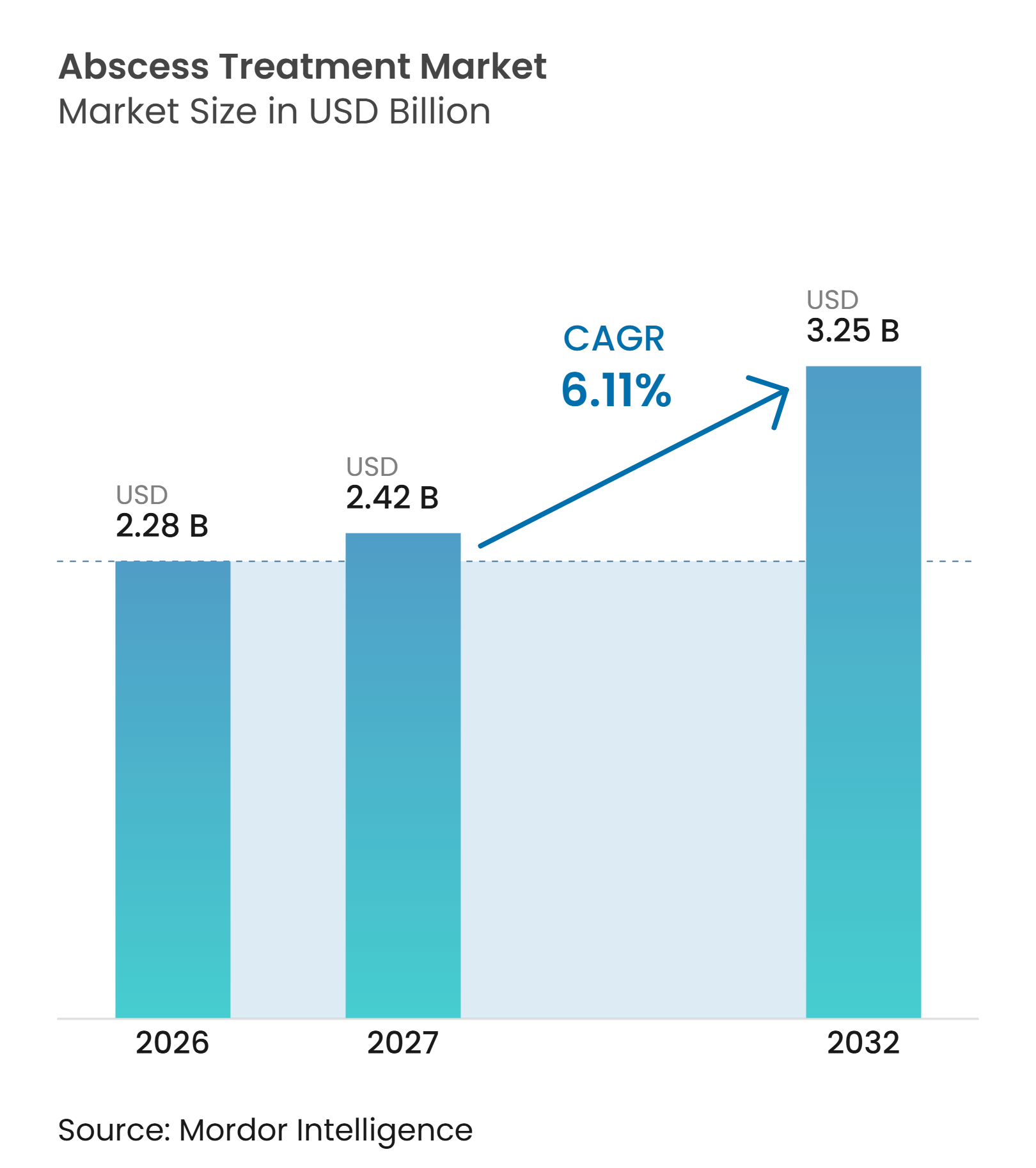
The Abscess Treatment Market size was valued at USD 2.28 billion in 2026 and is estimated to grow from USD 2.42 billion in 2027 to reach USD 3.25 billion by 2032, at a CAGR of 6.11% during the forecast period (2027-2032).
The abscess treatment market benefits from the rising burden of bacterial skin and soft-tissue infections and the growing population with diabetes, obesity, and immunosuppression. These conditions increase infection risk and contribute to recurring care needs. Point-of-care ultrasound supports accurate differentiation between cellulitis and drainable abscesses, helping reduce avoidable admissions and optimize treatment settings. Long-acting injectable antibiotics and once-daily oral therapies with MRSA activity support outpatient care, although antimicrobial resistance, stewardship requirements, and the need for incision and drainage limit drug-driven market growth.
Key Report Takeaways
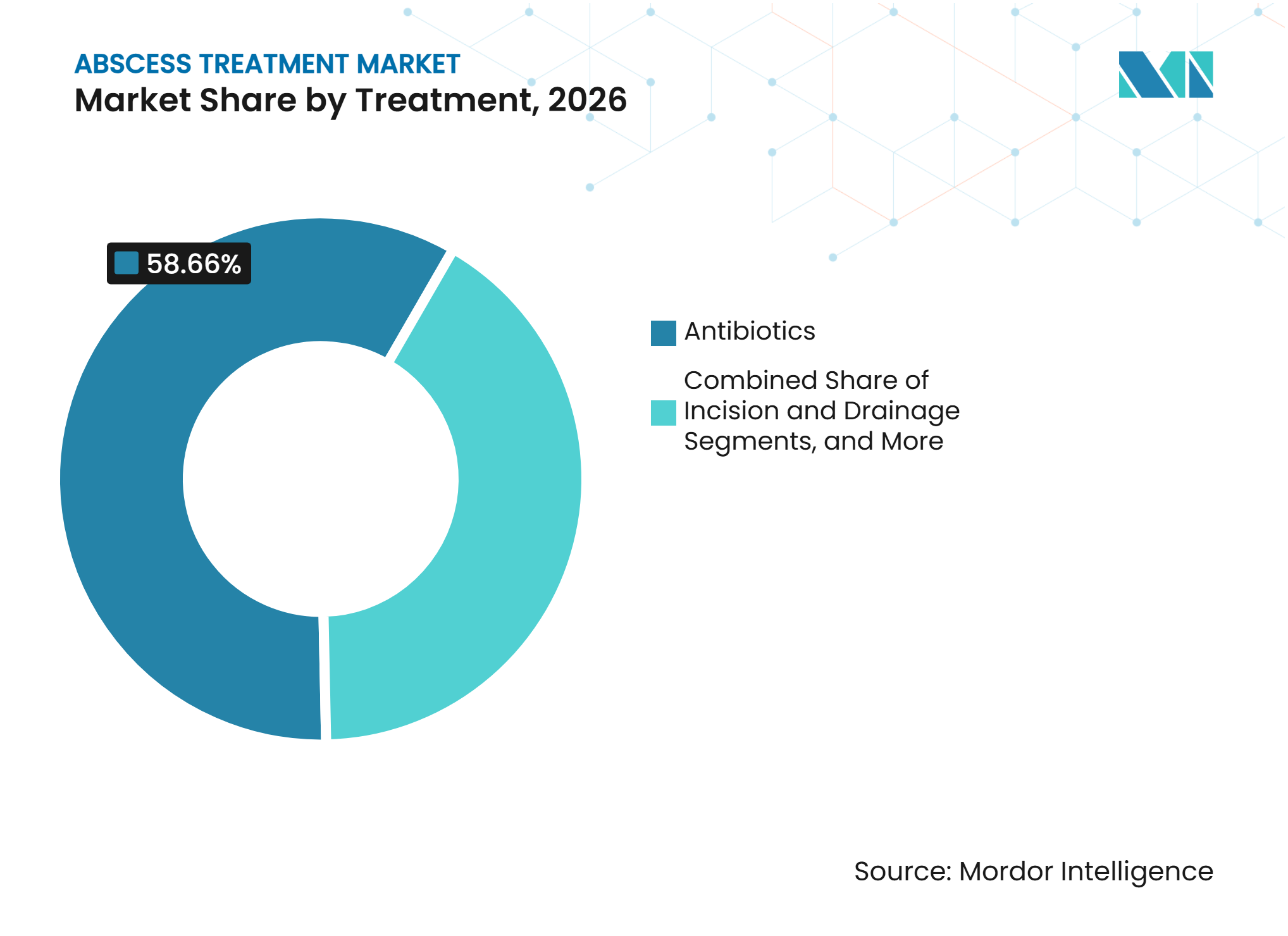
- By treatment, antibiotics held 58.66% of the market share in 2026, while incision and drainage is projected to grow at an 8.22% CAGR through 2032.
- By abscess type, internal abscesses held 54.78% of the market share in 2026, while skin and soft-tissue abscesses are projected to grow at an 8.99% CAGR through 2032.
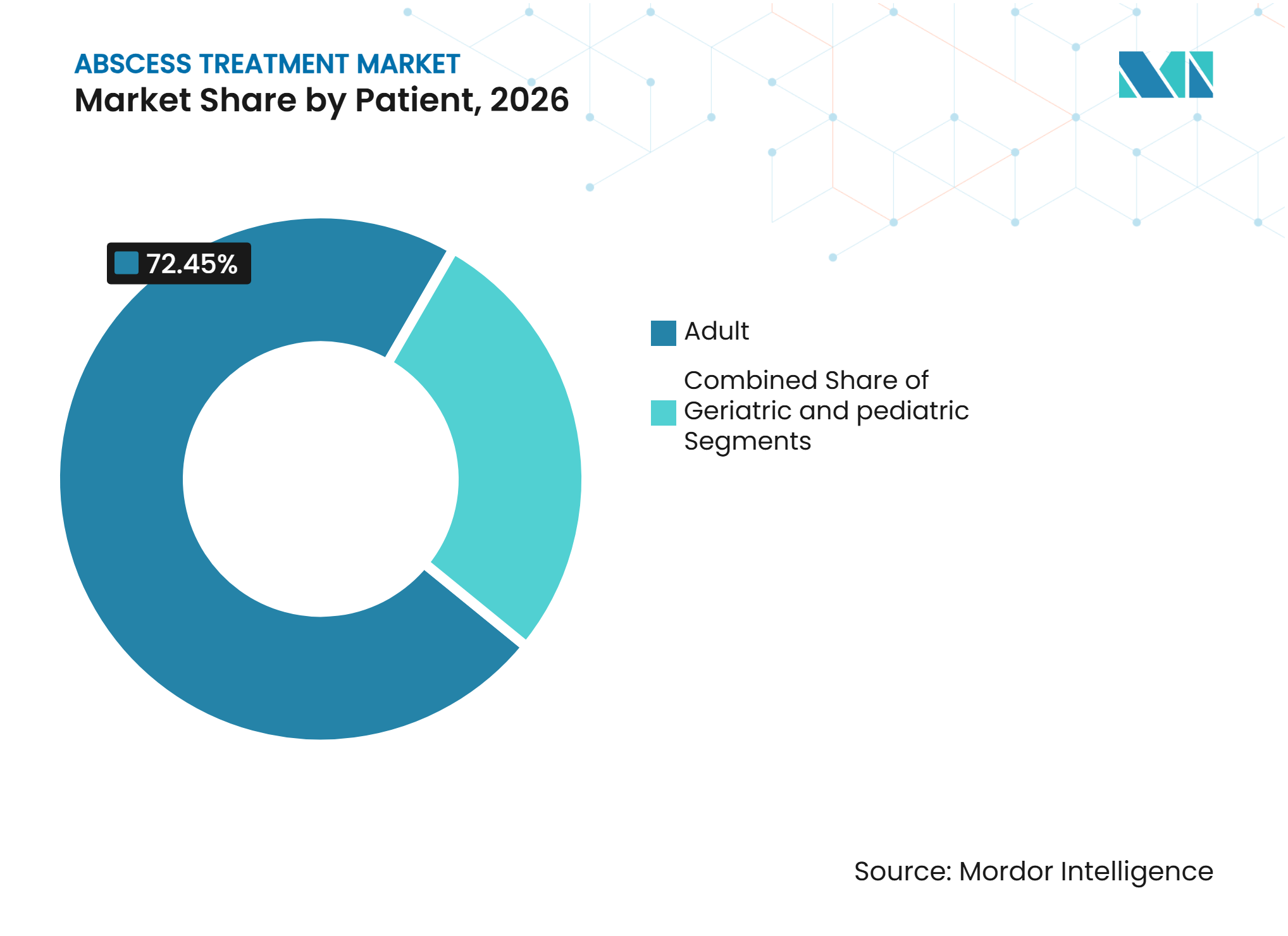
- By patient type, adults held 72.45% of the market share in 2026, while pediatric cases are projected to grow at a 7.45% CAGR through 2032.
- By care setting, hospitals held 56.45% of the market share in 2026, while ambulatory surgical centers are projected to grow at a 7.56% CAGR through 2032.
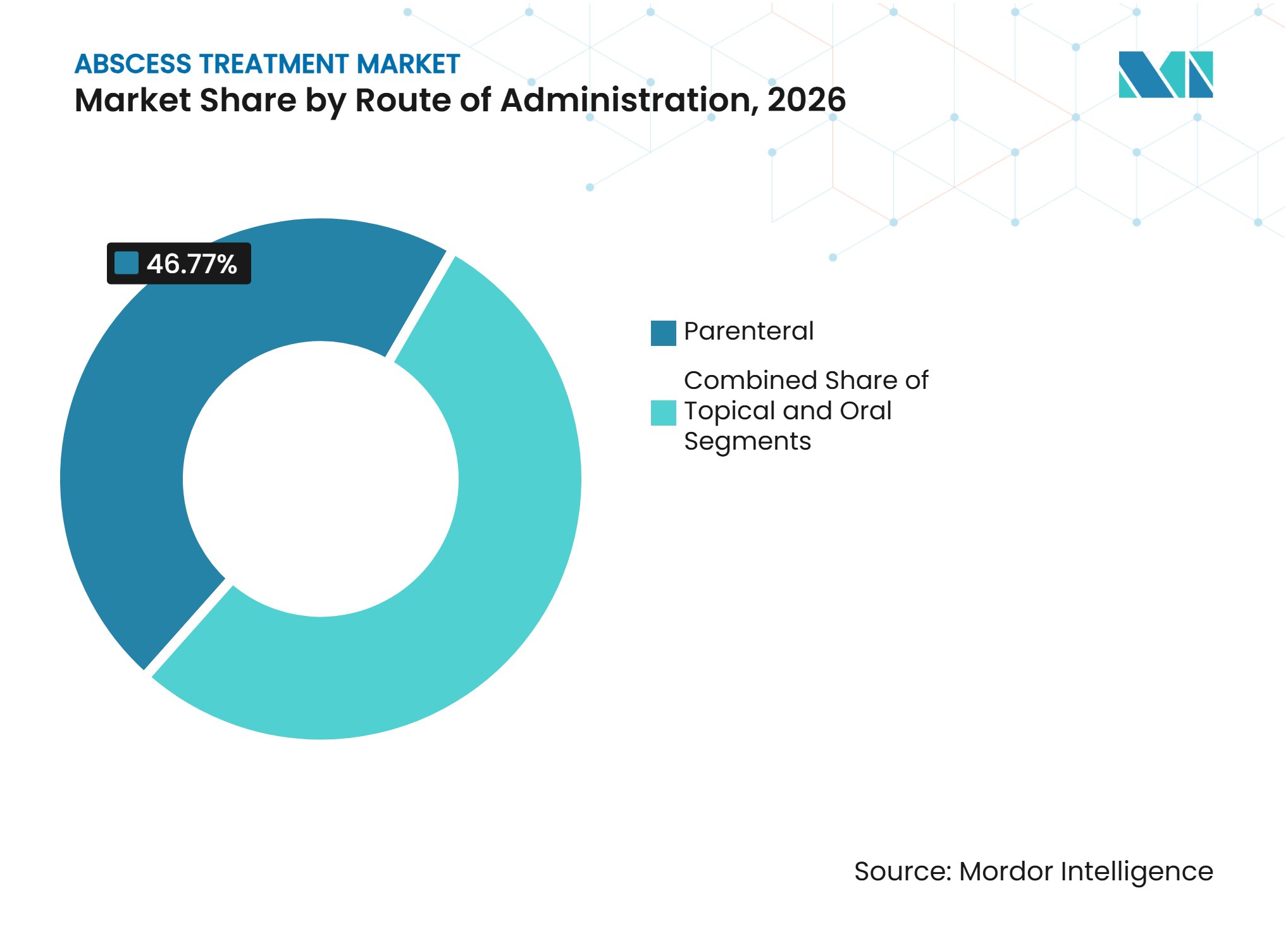
- By route of administration, parenteral formulations held 46.77% of the market share in 2026, while oral formulations are projected to grow at a 9.12% CAGR through 2032.
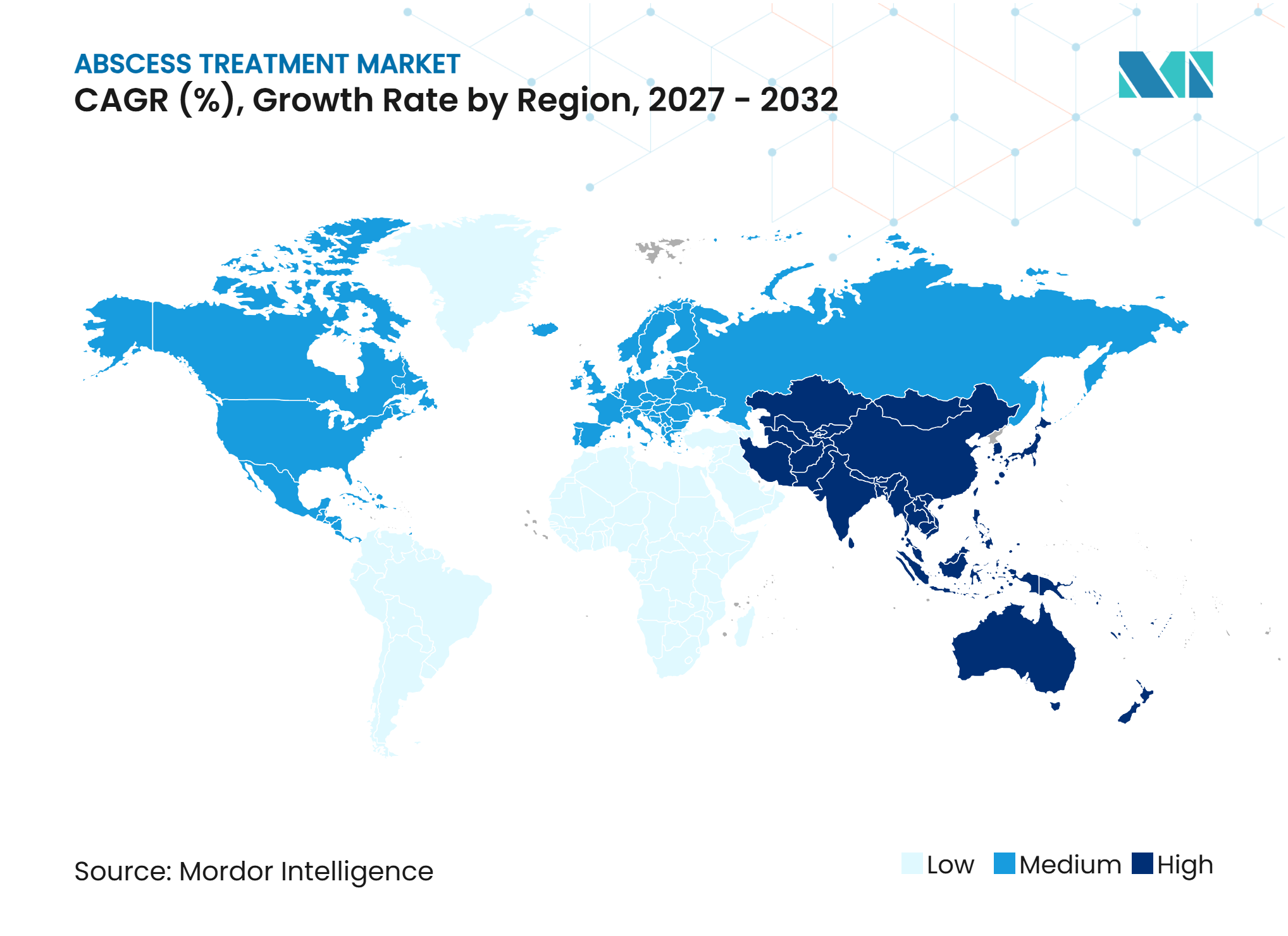
- By geography, North America held 39.65% market share in 2026, while Asia-Pacific is projected to grow at an 8.45% CAGR through 2032.
Note: Market numbers in this report are based on Mordor Intelligence's proprietary estimation framework, which combines nine months of actuals with Q4 projections for base year 2026.
Market Trends and Insights
Drivers Impact Analysis of Abscess Treatment Market*
| Driver | (~) % Impact on CAGR Forecast | Geographic Relevance | Impact Timeline |
|---|---|---|---|
| Rising skin and soft-tissue infection burden | +1.4% | Global, with highest intensity in North America, South Asia, and Sub-Saharan Africa | Medium term (2-4 years) |
| Expansion of POCUS and image-guided drainage | +0.9% | North America, Europe, and core Asia-Pacific markets | Short term (≤ 2 years) |
| Growth of long-acting and outpatient antibacterial therapy | +1.1% | North America and Europe, expanding to Asia-Pacific | Short term (≤ 2 years) |
| Increasing diabetes, obesity, and immunocompromised patient pools | +1.2% | Global, with highest uplift in Asia-Pacific and the Middle East and Africa | Long term (≥ 4 years) |
| Earlier diagnosis and referral for deep or internal abscesses | +0.7% | North America and Europe, with spillover to Gulf Cooperation Council countries | Medium term (2-4 years) |
| Shift toward ambulatory and home-based wound management | +0.6% | North America and Europe | Short term (≤ 2 years) |
| Source: Mordor Intelligence | |||
Rising Skin and Soft-Tissue Infection Burden
Skin and soft-tissue infections remain a common cause of emergency care, with abscesses ranging from superficial furunculosis to deep infections. Complicated infections and recurrence risks are increasing due to population aging, expanded use of immunosuppressive treatments, and the spread of multidrug-resistant organisms. Community-acquired MRSA now affects children, athletes, military personnel, underserved urban communities, and patients with chronic wounds, increasing treatment episodes and demand for procedures and antibiotic therapies in the global abscess treatment market. Resistant gram-negative infections may require broader-spectrum intravenous therapies, increasing treatment costs compared with older generic alternatives.
Growth of Long-Acting and Outpatient Antibacterial Therapy
Long-acting injectable antibiotics are expanding outpatient treatment options for abscess cases. Fresenius Kabi received FDA approval in November 2025 for Dalbavancin for Injection for adult and pediatric patients with acute bacterial skin and skin structure infections caused by susceptible gram-positive organisms. Its single-dose regimen can eliminate the need for indwelling vascular access and support earlier discharge for eligible patients. A 2025 study reported infection-related readmissions of 5% for two-dose dalbavancin versus 19% for standard care, while mean inpatient antibiotic duration was 6.5 days versus 10.1 days.[1] Hikma also received FDA approval in July 2025 for TYZAVAN, a ready-to-infuse vancomycin formulation that reduces preparation requirements in inpatient and outpatient infusion settings.
Increasing Diabetes, Obesity, and Immunocompromised Patient Pools
Diabetes, obesity, and immunosuppression are increasing the number of patients at elevated infection risk. People with diabetes have a 1.5-fold to 4-fold higher risk of common and severe infections than those without diabetes. Hyperglycemia impairs neutrophil function, while neuropathy and microangiopathy weaken skin protection and reduce tissue perfusion. Diabetic patients have complication rates for osteomyelitis, gangrene, sepsis, and amputation that are more than five times higher than those of non-diabetic patients. Corticosteroids, oncology biologics, and transplant regimens also increase susceptibility to abscess-forming organisms, supporting recurring treatment utilization in the abscess treatment market.
Expansion of Point-of-Care Ultrasound and Image-Guided Drainage
Point-of-care ultrasound is becoming an established triage tool for soft-tissue infections, helping clinicians distinguish cellulitis from abscesses requiring drainage. In a 2025 prospective cohort study of pediatric odontogenic infections, handheld ultrasound used by non-specialist clinicians achieved 73.3% diagnostic accuracy and reduced annualized hospital admission rates from 60.0 to 19.5 admissions per year.[2] A comparative liver abscess study reported an 87.2% success rate for ultrasound-guided pigtail catheter drainage, compared with 63.8% for needle aspiration alone. Improved identification of drainable cases reduces unnecessary procedures and supports same-day treatment decisions and outpatient care pathways in the abscess treatment market.
Restraints Impact Analysis of Abscess Treatment Market*
| Restraint | (~) % Impact on CAGR Forecast | Geographic Relevance | Impact Timeline |
|---|---|---|---|
| Antibiotic resistance and empiric-treatment uncertainty | -0.9% | Global, with the greatest impact in South Asia and Sub-Saharan Africa | Long term (≥ 4 years) |
| Procedure-first management limits drug-only revenue capture | -0.5% | Global | Medium term (2-4 years) |
| High cost of complex drainage and inpatient care | -0.6% | Asia-Pacific, the Middle East and Africa, and South America | Long term (≥ 4 years) |
| Fragmented diagnosis and under-reporting of abscess episodes | -0.4% | Asia-Pacific, the Middle East and Africa, and South America | Medium term (2-4 years) |
| Source: Mordor Intelligence | |||
Antibiotic Resistance and Empiric-Treatment Uncertainty
Antimicrobial resistance is increasing the complexity of empiric treatment for skin and soft-tissue infections. The World Health Organization reported in 2025 that surveillance data covered more than 23 million bacteriologically confirmed cases across 110 countries, showing rising resistance among key Gram-positive and Gram-negative pathogens.[3] Resistant organisms may require broader-spectrum therapies, increasing treatment costs and adverse-event risks. Community-associated MRSA and antimicrobial stewardship restrictions on broad-spectrum intravenous agents also limit high-value antibiotic use in the abscess treatment market.
High Cost of Complex Drainage and Inpatient Care
Internal abscesses often require advanced imaging, image-guided drainage or surgery, specialist care, and extended intravenous antibiotic courses, which can limit access in lower-middle-income settings across South Asia, Sub-Saharan Africa, and parts of Latin America. In higher-income settings, payer pressure is shifting eligible patients to ambulatory care pathways and reducing inpatient revenue per episode. A 2025 prospective study found median inpatient bed days of 0.30 for ambulatory care patients, compared with 1.53 days for inpatient cohorts, without increased postoperative complications.[4] Cost-containment measures may delay infrastructure investment while supporting outpatient pathways that reshape the abscess treatment market.
*Our forecasts treat driver/restraint impacts as directional, not additive. The impact forecasts reflect baseline growth, mix effects, and variable interactions.
Abscess Treatment Market Segment Analysis
By Treatment:
Antibiotics Lead While Drainage Procedures Grow FasterAntibiotics held 58.66% of the abscess treatment market share in 2026, supported by their use in mild and moderate cases and as adjunctive therapy after drainage in complex presentations. Oral agents manage dental and periodontal infections, while intra-abdominal abscesses often require prolonged intravenous therapy with carbapenems or piperacillin-tazobactam. Incision and drainage is forecast to grow at an 8.22% CAGR from 2027 to 2032, driven by point-of-care ultrasound and expanding ambulatory surgical center capacity.
A 2025 review found that avoiding routine wound packing after incision and drainage can reduce pain and resource use without compromising safety. Surgical procedures remain essential for complex internal abscesses that do not respond to percutaneous drainage, although minimally invasive image-guided approaches are increasingly replacing open surgery. Biologics add a high-value treatment layer for recurrent hidradenitis suppurativa, while Paratek presented in-vitro data at IDWeek 2026 for omadacycline against 7,200 bacterial clinical isolates from U.S. sites collected during 2024 and 2025.



By Abscess Type:
Internal Cases Lead by Value While Skin Cases Expand FasterInternal abscesses accounted for 54.78% of the market share in 2026, reflecting the higher treatment cost of hepatic, intra-abdominal, pelvic, pulmonary, and brain abscesses. These cases often require advanced imaging, prolonged antibiotic therapy, and specialist procedural care. Brain and epidural abscesses can require neurosurgical consultation, high-dose intravenous therapy, and follow-up neuroimaging. Skin and soft-tissue abscesses are forecast to grow at an 8.99% CAGR from 2027 to 2032, supported by community-acquired MRSA and broader outpatient treatment pathways.
Dental and periodontal abscesses remain high-volume conditions, particularly where delayed dental care is common, although their average treatment value is lower than that of internal abscesses. Anorectal and perirectal abscesses can lead to fistula-in-ano after drainage, creating additional intervention and complication-management needs. In 2025, joint American Academy of Dermatology and HS Foundation guidelines strongly recommended adalimumab, bimekizumab, infliximab, and secukinumab for moderate-to-severe hidradenitis suppurativa.
By Patient:
Adults Account for the Largest Revenue Base While Pediatric Demand RisesAdults held 72.45% of the market share in 2026 because diabetes, obesity, and immunosuppression are more prevalent among the adult population. A 2025 analysis of U.S. healthcare data found that individuals aged 45 to 64 accounted for 75.6% of skin and soft-tissue infection cases among diabetic individuals, compared with 31.1% among matched non-diabetic individuals. Older adults with multiple comorbidities can experience more severe infections and are more likely to require higher-cost inpatient management. Pediatric cases are forecast to grow at a 7.45% CAGR from 2027 to 2032.
The pediatric category is shaped by community-acquired MRSA and expanding access to treatments for inflammatory abscess conditions. A 2025 clinical review noted that MRSA accounted for 30% of Panton-Valentin leukocidin-producing strains in the relevant pediatric infection context. Novartis’ 2026 FDA approval of Cosentyx for pediatric hidradenitis suppurativa broadened biologic treatment options for patients aged 12 years and older. Handheld ultrasound also reduced admissions for pediatric odontogenic infections in a 2025 prospective study, creating a demand profile shaped by biologic availability and more selective triage.

By Care Setting:
Hospitals Retain Revenue Leadership While ASCs Gain GroundHospitals held 56.45% of the market share in 2026 because they manage internal abscesses, complex intravenous therapy, and surgical drainage cases. Their leadership reflects both case complexity and patient volume. A hospital-managed intra-abdominal abscess requiring image-guided drainage and 14 days of intravenous antibiotics generates more revenue than a superficial abscess treated in an urgent care center. Ambulatory surgical centers are projected to grow at a 7.56% CAGR through 2032, supported by expanded capacity for procedure-based care.
Emergency departments and urgent care centers continue to manage a significant share of walk-in cases, using faster ultrasound-guided triage and direct referrals for eligible patients. Specialty clinics in dermatology, colorectal care, and infectious diseases are becoming more relevant as biologics require specialist oversight. Pre-procedure assessment, anesthesia availability, and post-procedure monitoring will determine the pace of patient movement from hospitals to ambulatory surgical centers.
By Route of Administration:
Parenteral Therapy Leads While Oral Therapy Has the Highest GrowthParenteral formulations held 46.77% of the market share in 2026 because moderate-to-severe infections often require intravenous treatment. Intravenous vancomycin remains a core empiric option for MRSA-associated abscesses in hospital settings. Hikma’s TYZAVAN received FDA approval in July 2025 as a ready-to-infuse vancomycin product for skin and skin structure infections. Oral formulations are forecast to grow at a 9.12% CAGR through 2032, the highest growth rate among administration routes.
Oral therapy growth is supported by oral step-down treatment and once-daily agents with MRSA activity that can reduce the need for intravenous access. Trimethoprim-sulfamethoxazole, clindamycin, and doxycycline remain important oral treatment options, while omadacycline offers both intravenous and oral formulations. A 2025 network meta-analysis ranked omadacycline first in efficacy among 18 anti-MRSA antibiotics.
Geography Analysis
North America
North America held 39.65% of the abscess treatment market share in 2026. The market benefits from a high burden of community-acquired MRSA, advanced healthcare infrastructure, and reimbursement support for newer antibiotics and procedural technologies. Innoviva Specialty Therapeutics made ZEVTERA, or ceftobiprole, commercially available to U.S. physicians in May 2025 for approved serious bacterial infections, including acute bacterial skin and skin structure infections. Handheld ultrasound is increasingly used in emergency and urgent care triage, reducing time to drainage and unnecessary imaging. Canada added bimekizumab as a high-value treatment option for moderate-to-severe hidradenitis suppurativa in January 2026.
Asia-Pacific
Asia-Pacific is forecast to expand at an 8.45% CAGR from 2027 to 2032. Growth is driven by a larger diabetic population, expanding healthcare infrastructure in smaller cities across India and China, and broader community MRSA exposure across South and Southeast Asia. Public hospital capacity expansion in India is improving access to inpatient care. Private hospitals in Mumbai, Delhi, and Bangalore are adopting ultrasound-assisted triage and image-guided drainage, strengthening treatment capacity and improving patient access to timely care.
Europe, Middle East and Africa, and South America
Europe has mature outpatient parenteral antimicrobial therapy programs, while the Middle East and Africa and South America show varying levels of access and treatment capacity. The United Kingdom and Germany formalized outpatient intravenous antibiotic guidance in 2025, improving early discharge planning and follow-up care. Incyte received European Commission approval in November 2026 for Povofortay, the first once-daily oral treatment for adults with moderate-to-severe hidradenitis suppurativa in Europe. Gulf Cooperation Council countries are adding image-guided drainage and newer antibiotics, while many sub-Saharan African health systems face limited primary care, antibiotic availability, and diagnostic reporting.
Competitive Landscape
Market Concentration
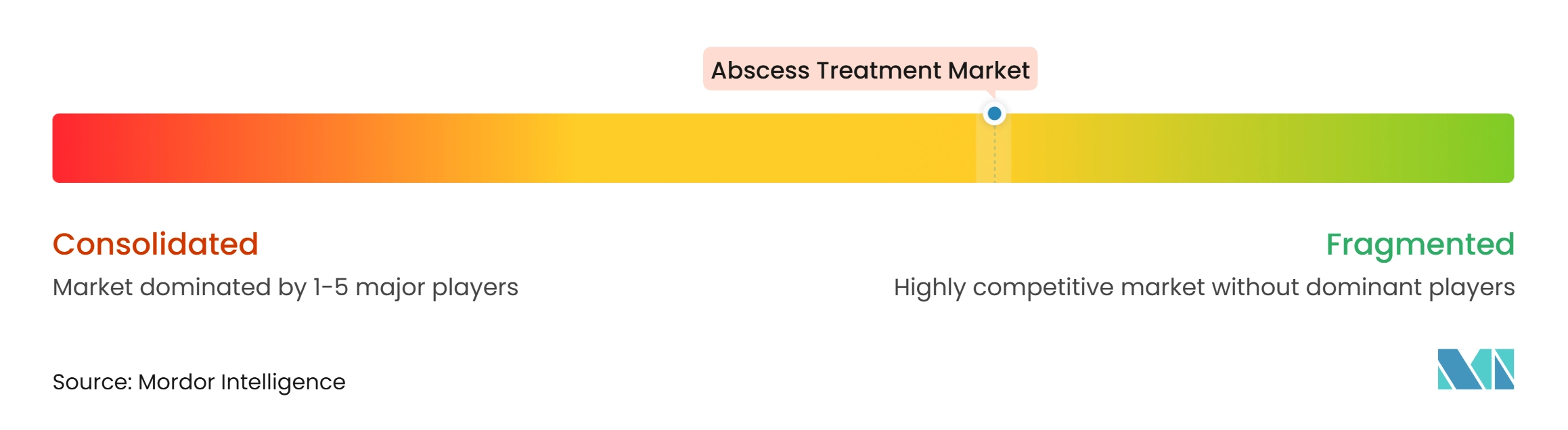
The global abscess treatment market is moderately fragmented. Pfizer, Merck, GSK, and AstraZeneca maintain broad antibiotic portfolios supporting oral and intravenous MRSA treatment. Innoviva Specialty Therapeutics commercialized Basilea Pharmaceutica’s ZEVTERA in the United States in May 2025, expanding access to a newer-generation cephalosporin for approved serious bacterial infections. Mölnlycke Health Care, Convatec, Smith & Nephew, and Medline compete in wound management through dressings and irrigation systems used after drainage procedures.
Generic and biosimilar manufacturers, including Aurobindo Pharma, Dr. Reddy’s Laboratories, Sun Pharmaceutical, and Teva, remain important in price-sensitive markets across Asia-Pacific, Latin America, and the Middle East and Africa. Their competitive position is strongest where procurement decisions prioritize access and cost over premium product differentiation. Biologics add a distinct competitive dimension in hidradenitis suppurativa, with AbbVie reporting October 2026 Phase 3 INTREPID results in which lutikizumab met the HiSCR75 primary endpoint at Week 16, with response rates of 31.4% compared with 23.4% for placebo. Incyte’s povorcitinib program also highlights the role of oral targeted therapies, with its FDA submission under review and U.S. approval and launch anticipated in Q1 2027. Competition will continue to vary by care pathway, with branded anti-infectives, low-cost generics, procedural products, diagnostic tools, and specialty immunology therapies serving distinct patient needs.
Abscess Treatment Industry Leaders
-
Novartis AG
-
Bayer AG
-
F. Hoffmann-La Roche Ltd
-
Teva Pharmaceutical Industries Limited
-
Johnson & Johnson
- *Disclaimer: Major Players sorted in no particular order
Abscess Treatment Market Companies Covered in this Report
- AstraZeneca
- Aurobindo Pharma
- Basilea Pharmaceutica
- Bayer
- Beckton Dickinson
- Coloplast
- Convatec
- CorMedix Inc.
- Dr. Reddy’s Laboratories
- Roche
- GlaxoSmithKline
- Johnson & Johnson
- Medline Industries
- Merck
- Molnlycke Health Care
- Novartis
- Paratek Pharmaceuticals
- Pfizer
- Sanofi
- Smiths Group
- Solventum Corporation
- Sun Pharmaceuticals Industries
- Teva Pharmaceutical Industries
Recent Industry Developments in Abscess Treatment Market
- November 2026: The European Commission approved Incyte’s Povofortay (povorcitinib) as the first once-daily oral treatment for adults with moderate-to-severe hidradenitis suppurativa. Phase 3 STOP-HS1 and STOP-HS2 data showed that up to 71.4% of patients achieved HiSCR50 at Week 54; the FDA had been reviewing the New Drug Application, with U.S. approval anticipated in Q1 2027.
- November 2025: Fresenius Kabi received FDA approval for Dalbavancin for Injection as a single-dose regimen for adults and pediatric patients with acute bacterial skin and skin structure infections caused by susceptible Gram-positive organisms. The generic equivalent of DALVANCE provided a single-infusion treatment course without an indwelling vascular access device, supporting outpatient management for eligible patients.
Global Abscess Treatment Market Report Scope
As per the scope of the report, an abscess is a localized collection of pus that develops within body tissues, organs, or enclosed spaces as a result of an infection, most commonly caused by bacterial organisms. It occurs when the body's immune response attempts to contain an infection, leading to the accumulation of dead white blood cells, bacteria, cellular debris, and damaged tissue within a confined cavity surrounded by inflamed tissue.
The abscess treatment market is segmented by treatment, abscess type, patient group, care setting, route of administration, and geography. By treatment, the market includes antibiotics, incision and drainage, and surgical procedures. By abscess type, the market is segmented into skin and soft tissue abscesses, internal abscesses, intra-abdominal and pelvic abscesses, hepatic abscesses, pulmonary and pleural abscesses, brain and epidural abscesses, dental and periodontal abscesses, anorectal and perirectal abscesses, and other abscess types. By patient group, the market is categorized into pediatric, adult, and geriatric patients. By care setting, the market is segmented into hospitals, emergency departments and urgent care centers, ambulatory surgical centers, specialty clinics, and other care settings. By route of administration, the market is segmented into oral, parenteral, and topical. By geography, the market is analyzed across North America, Europe, Asia-Pacific, the Middle East and Africa, and South America. The report also covers the estimated market sizes and trends for 17 countries across major regions globally. The report offers market sizes and forecasts in terms of value (USD) for the above segments.
Segmentation Overview
| Antibiotics |
| Incision and Drainage |
| Surgical Procedures |
| Skin and Soft-Tissue Abscess | |
| Internal Abscess | Intra-Abdominal and Pelvic Abscess |
| Hepatic Abscess | |
| Pulmonary and Pleural Abscess | |
| Brain and Epidural Abscess | |
| Dental and Periodontal Abscess | |
| Anorectal and Perirectal Abscess | |
| Other Abscess Type |
| Pediatric |
| Adult |
| Geriatric |
| Hospitals |
| Emergency Departments and Urgent Care Centers |
| Ambulatory Surgical Centers |
| Specialty Clinics |
| Other Care Settings |
| Oral |
| Parenteral |
| Topical |
| North America | United States |
| Canada | |
| Mexico | |
| Europe | Germany |
| United Kingdom | |
| France | |
| Italy | |
| Spain | |
| Rest of Europe | |
| Asia-Pacific | China |
| India | |
| Japan | |
| Australia | |
| South Korea | |
| Rest of Asia-Pacific | |
| Middle East and Africa | GCC |
| South Africa | |
| Rest of Middle East and Africa | |
| South America | Brazil |
| Argentina | |
| Rest of South America |
| By Treatment | Antibiotics | |
| Incision and Drainage | ||
| Surgical Procedures | ||
| By Abscess Type | Skin and Soft-Tissue Abscess | |
| Internal Abscess | Intra-Abdominal and Pelvic Abscess | |
| Hepatic Abscess | ||
| Pulmonary and Pleural Abscess | ||
| Brain and Epidural Abscess | ||
| Dental and Periodontal Abscess | ||
| Anorectal and Perirectal Abscess | ||
| Other Abscess Type | ||
| By Patient | Pediatric | |
| Adult | ||
| Geriatric | ||
| By Care Setting | Hospitals | |
| Emergency Departments and Urgent Care Centers | ||
| Ambulatory Surgical Centers | ||
| Specialty Clinics | ||
| Other Care Settings | ||
| By Route of Administration | Oral | |
| Parenteral | ||
| Topical | ||
| By Geography | North America | United States |
| Canada | ||
| Mexico | ||
| Europe | Germany | |
| United Kingdom | ||
| France | ||
| Italy | ||
| Spain | ||
| Rest of Europe | ||
| Asia-Pacific | China | |
| India | ||
| Japan | ||
| Australia | ||
| South Korea | ||
| Rest of Asia-Pacific | ||
| Middle East and Africa | GCC | |
| South Africa | ||
| Rest of Middle East and Africa | ||
| South America | Brazil | |
| Argentina | ||
| Rest of South America | ||
Key Questions Answered in the Report
What is the forecast growth rate for abscess treatment?
The Abscess Treatment Market is forecast to grow at a 6.11% CAGR from 2027 to 2032, rising from USD 2.42 billion in 2027 to USD 3.25 billion by 2032.
Which treatment type generates the most revenue?
Antibiotics lead by treatment type, with a 58.66% share in 2026, reflecting their use in mild cases and as adjunct therapy after drainage.
Which abscess type is growing the fastest?
Skin and soft-tissue abscesses are projected to grow at an 8.99% CAGR through 2032, supported by community-acquired MRSA and broader biologic use for hidradenitis suppurativa.
Why are ambulatory surgical centers gaining relevance?
Ambulatory surgical centers are forecast to grow at a 7.56% CAGR as ultrasound-guided triage and standardized outpatient pathways move suitable superficial cases away from inpatient care.
Why are oral antibiotics growing faster than injectable options?
Oral formulations are expected to grow at a 9.12% CAGR because once-daily MRSA-active agents and oral step-down therapy can support treatment without intravenous access.
Which region has the highest projected growth?
Asia-Pacific is projected to grow at an 8.45% CAGR through 2032, supported by expanding infrastructure, diabetes prevalence, and increased access to antibiotics and drainage procedures.