
Ablation Antenna Unit Market Size and Share
Market Overview
| Study Period | 2021 - 2032 |
|---|---|
| Market Size (2027) | USD 340.15 Million |
| Market Size (2032) | USD 407.13 Million |
| Growth Rate (2027 - 2032) | 3.66 % |
| Fastest Growing Market | Asia-Pacific |
| Largest Market | North America |
| Market Concentration | Medium |
Major Players
*Disclaimer: Major Players sorted in no particular order Image © Mordor Intelligence. Reuse requires attribution under CC BY 4.0. |
|
Ablation Antenna Unit Market Analysis by Mordor Intelligence
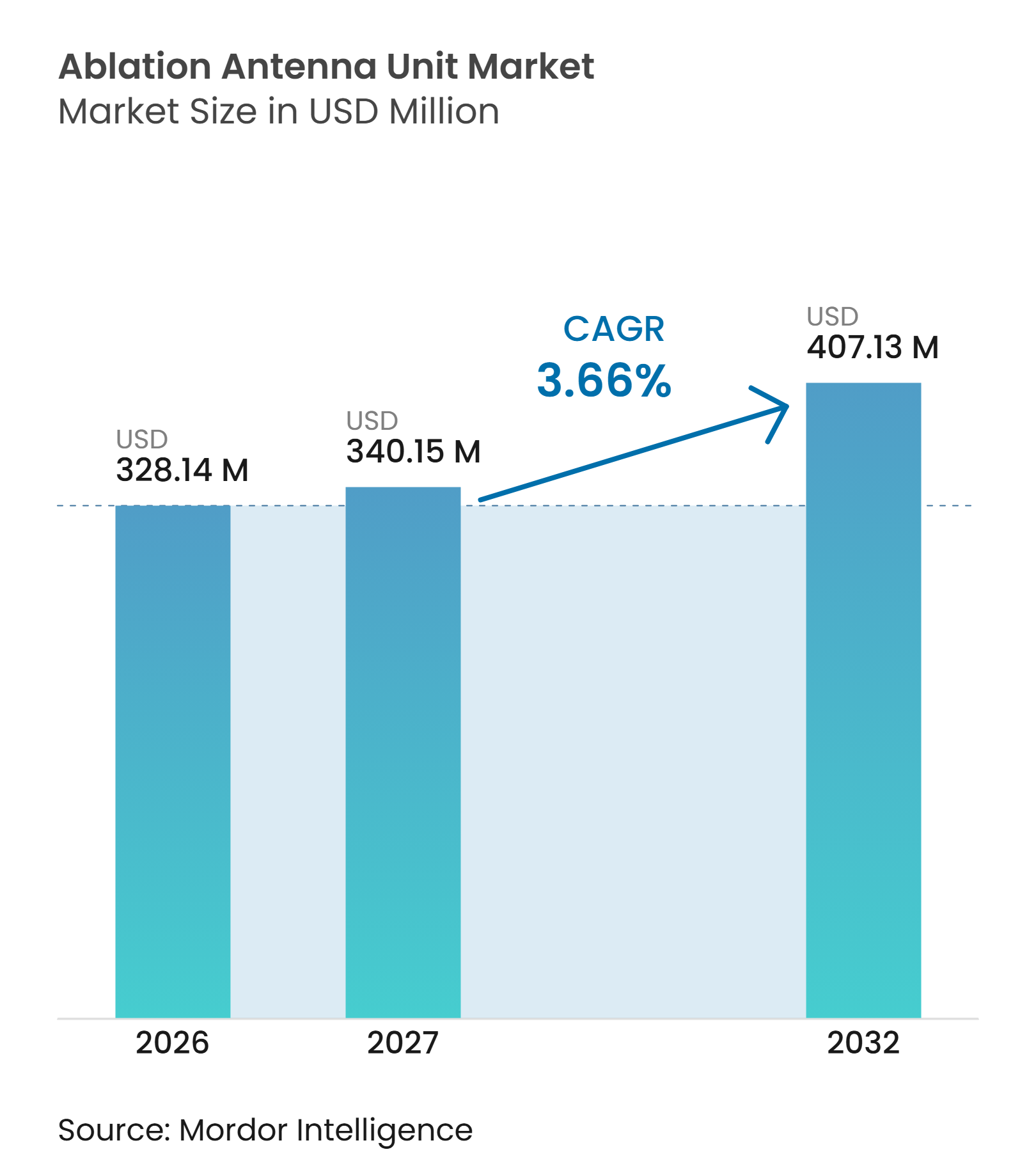
The Ablation Antenna Unit Market size is expected to increase from USD 328.14 million in 2026 to USD 340.15 million in 2027 and reach USD 407.13 million by 2032, growing at a CAGR of 3.66% over 2027-2032.
Growing demand for minimally invasive treatment of liver, lung, kidney, and bone tumors supports the ablation antenna unit market. In 2024, IARC recorded 843,000 new liver cancer cases, 2.6 million new lung cancer cases, and 442,570 new kidney cancer cases globally, supporting the use of thermal ablation across these indications. The market also benefits from image guidance, robotic navigation, and outpatient procedure pathways that improve treatment accessibility. However, reimbursement variations, heat-sink effects near blood vessels, and proprietary generator connections limit adoption, while manufacturers develop higher-power cooled antennas, disposable products, and integrated systems for hospital and ambulatory workflows.
Key Report Takeaways
- By product type, radiofrequency ablation applicators held 45.34% revenue share in 2026, while microwave ablation antenna units are projected to expand at an 8.22% CAGR through 2032.
- By antenna length, the 10 cm to 15 cm segment held 38.45% revenue share in 2026, while pediatric ports are forecast to expand at a 7.56% CAGR through 2032.
- By procedure, percutaneous procedures held 58.60% revenue share in 2026, while bronchoscopic procedures are forecast to expand at a 7.45% CAGR through 2032.
- By application, oncology held 56.45% revenue share in 2026, while cardiovascular and electrophysiology is forecast to expand at a 6.89% CAGR through 2032.
- By end user, hospitals held 58.99% revenue share in 2026, while ambulatory surgery centers are forecast to expand at a 6.12% CAGR through 2032.
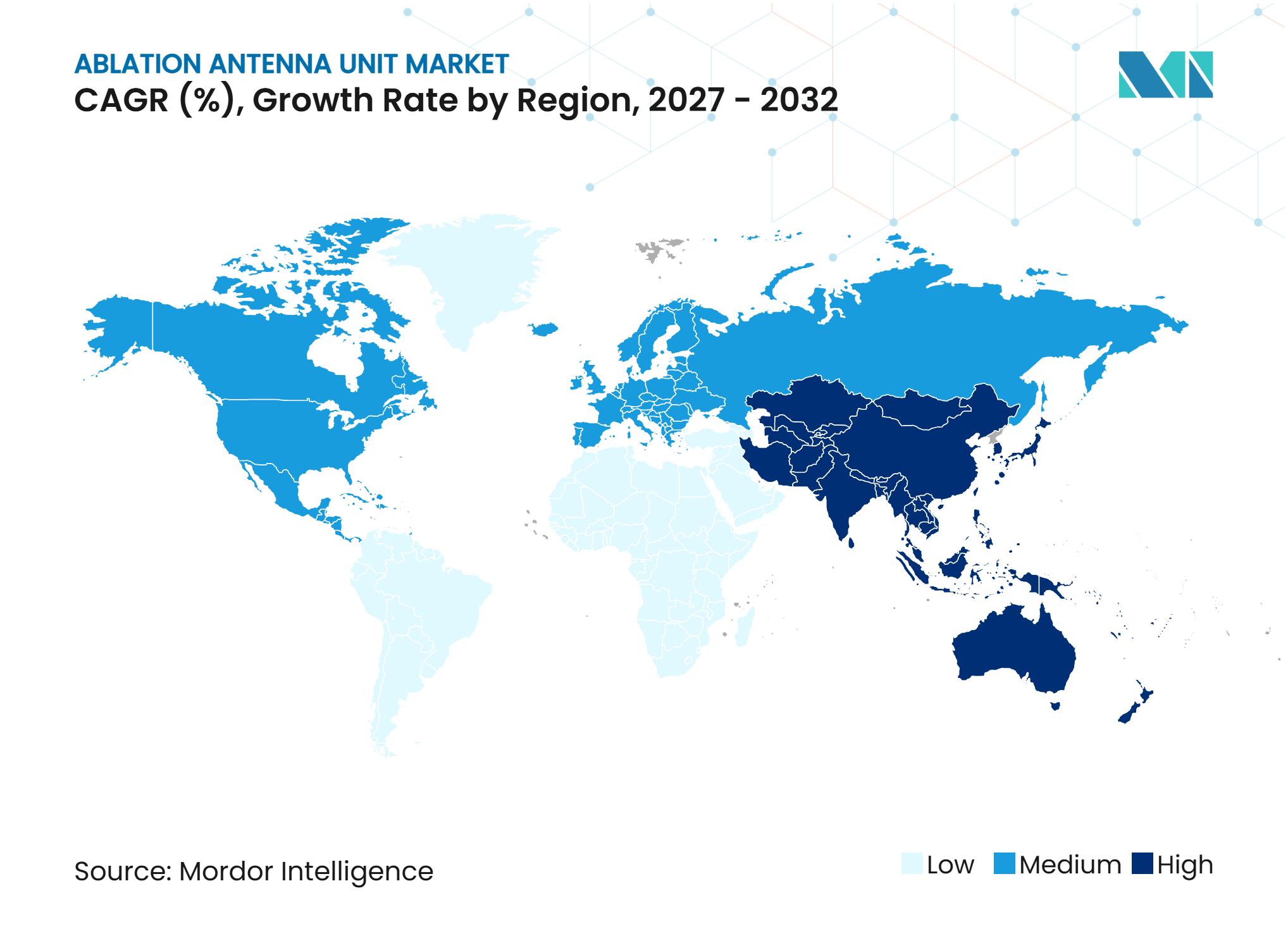
- By geography, North America held 41.03% revenue share in 2026, while Asia-Pacific is forecast to expand at a 7.88% CAGR through 2032.
Note: Market numbers in this report are based on Mordor Intelligence's proprietary estimation framework, which combines nine months of actuals with Q4 projections for base year 2026.
Market Trends and Insights
Drivers Impact Analysis of Ablation Antenna Unit Market*
| Driver | (~) % Impact on CAGR Forecast | Geographic Relevance | Impact Timeline |
|---|---|---|---|
| Rising incidence of liver, lung, kidney, and bone tumors | +0.7% | Global, most acute in Asia-Pacific and North America | Long term (≥ 4 years) |
| Shift toward image-guided minimally invasive tumor treatment | +0.6% | North America and Europe, with spillover to Asia-Pacific | Medium term (2-4 years) |
| Growing use of water-cooled antennas for higher-power delivery | +0.4% | Global | Medium term (2-4 years) |
| Expansion of multi-antenna ablation for larger lesions | +0.3% | North America, Europe, and Japan | Long term (≥ 4 years) |
| Increasing adoption in ambulatory and outpatient settings | +0.5% | North America, with early gains in Europe and South Korea | Short term (≤ 2 years) |
| Smart antenna designs with temperature feedback and procedure data capture | +0.3% | North America and Europe | Long term (≥ 4 years) |
| Source: Mordor Intelligence | |||
Rising Incidence of Liver, Lung, Kidney, and Bone Tumors
Liver cancer accounted for an estimated 850,000 new cases worldwide in 2024 and ranked as the third leading cause of cancer-related mortality, reinforcing demand for local treatments among eligible early-stage patients. The ablation antenna unit market serves patients unable to undergo surgery or transplantation due to age, comorbidities, or tumor location. Lung cancer remained the most commonly diagnosed malignancy, with an estimated 2.6 million new cases globally in 2024, while kidney cancer accounted for 442,570 new cases in 2022.[1] Growing diagnostic imaging use is helping identify small renal masses suitable for ablation, supporting demand for tissue-sparing procedures across hospitals and specialized treatment settings.
Shift Toward Image-Guided Minimally Invasive Tumor Treatment
The ablation antenna unit market benefits from the shift from open surgery to image-guided procedures that reduce the treatment burden for selected patients. Hospital Episode Statistics in England showed that liver ablation procedures increased by 83% over a decade, at a median annual growth rate of 9.4%, while liver resection procedures declined.[2]The Society of Interventional Oncology completed enrollment for 330 tumors in the ACCLAIM trial in July 2025, eight months ahead of schedule, demonstrating strong clinician interest in standardized microwave ablation protocols.[3] Robotic bronchoscopy with microwave probes reduced median navigation time from 28.5 minutes to 2 minutes and maintained a 100% treatment success rate at six months, improving the reproducibility of complex procedures.
Growing Use of Water-Cooled Antennas for Higher-Power Delivery
Water-cooled antenna designs support higher microwave power delivery by limiting excessive heating at the probe surface. A December 2025 study found that fully and partially water-cooled dipole antennas produced near-spherical necrotic volumes of 26 cm³ at 50 W over six minutes at 2.45 GHz. Partially cooled antennas with choke structures improved electromagnetic matching but retained a risk of tip carbonization, while fully cooled designs could produce irregular ablation contours under changing power conditions.[4] A September 2025 U.S. patent application described a flexible, water-cooled microwave probe designed for bronchoscopic delivery, supporting demand for high-performance single-use products.
Increasing Adoption in Ambulatory and Outpatient Settings
Outpatient care is creating a new demand pathway for the ablation antenna unit market, particularly for cardiovascular procedures. CMS is scheduled to add cardiac catheter ablation codes to the Ambulatory Surgery Center Covered Procedures List effective January 1, 2026, creating a formal outpatient reimbursement pathway in the United States. Cardiac ablations per 1,000 patients increased by 29% in 2025, while procedures per electrophysiologist increased from 131 to 185 in the MedAxiom survey. Catheter ablation volumes are projected to grow at an annual rate of 14% from 2025 to 2030, while combined inpatient and outpatient cardiovascular ablation volumes are projected to increase by 26% over five years.
Restraints Impact Analysis of Ablation Antenna Unit Market*
| Restraint | (~) % Impact on CAGR Forecast | Geographic Relevance | Impact Timeline |
|---|---|---|---|
| Reimbursement variation across countries and clinical indications | -0.5% | Europe, Asia-Pacific, and South America | Long term (≥ 4 years) |
| Heat-sink effects near blood vessels and bile ducts | -0.4% | Global | Long term (≥ 4 years) |
| Device-specific ablation-zone variability | -0.3% | Global | Medium term (2-4 years) |
| High clinical switching costs created by generator-antenna compatibility | -0.4% | North America and Europe | Medium term (2-4 years) |
| Source: Mordor Intelligence | |||
Reimbursement Variation Across Countries and Clinical Indications
Reimbursement variation remains a key market restraint, as clinical approval does not always result in funded procedures. Only 11 of 30 countries across the EU, EEA, and UK have a formal health technology assessment process for medical device reimbursement, leaving coverage decisions to national or local payer policies in many markets. In the United States, AngioDynamics reported that LCD L40205 took effect on July 5, 2026, providing Medicare coverage for NanoKnife IRE in favorable intermediate-risk prostate cancer and metastatic colorectal cancer to the liver within defined jurisdictions. Coverage for intracardiac echocardiography in ablation procedures also varies, with broad support in the United States and Japan but narrower adoption in parts of Europe. Uneven payment policies can delay hospital investments and limit procedure adoption.
High Clinical Switching Costs Created by Generator-Antenna Compatibility
Generator and antenna compatibility can restrict supplier changes, even when alternative products are available. Hospitals using proprietary generators may need to replace equipment, retrain staff, and revise procedure protocols before adopting a new antenna platform. This issue was visible during the 2025 and 2026 transition involving NeuWave Medical, when continuity concerns affected users of the NEUWAVE Certus 140 system. Quantum Surgical acquired NeuWave Medical from Johnson & Johnson in February 2026, restoring a path for continued support and forming Precision IO Group. The system operated at 2.45 GHz, delivered up to 140 W per antenna, and enabled simultaneous multi-antenna activation. These switching costs protect established suppliers and increase the investment required for smaller companies to secure hospital contracts.
*Our forecasts treat driver/restraint impacts as directional, not additive. The impact forecasts reflect baseline growth, mix effects, and variable interactions.
Ablation Antenna Unit Market Segment Analysis
By Product Type:
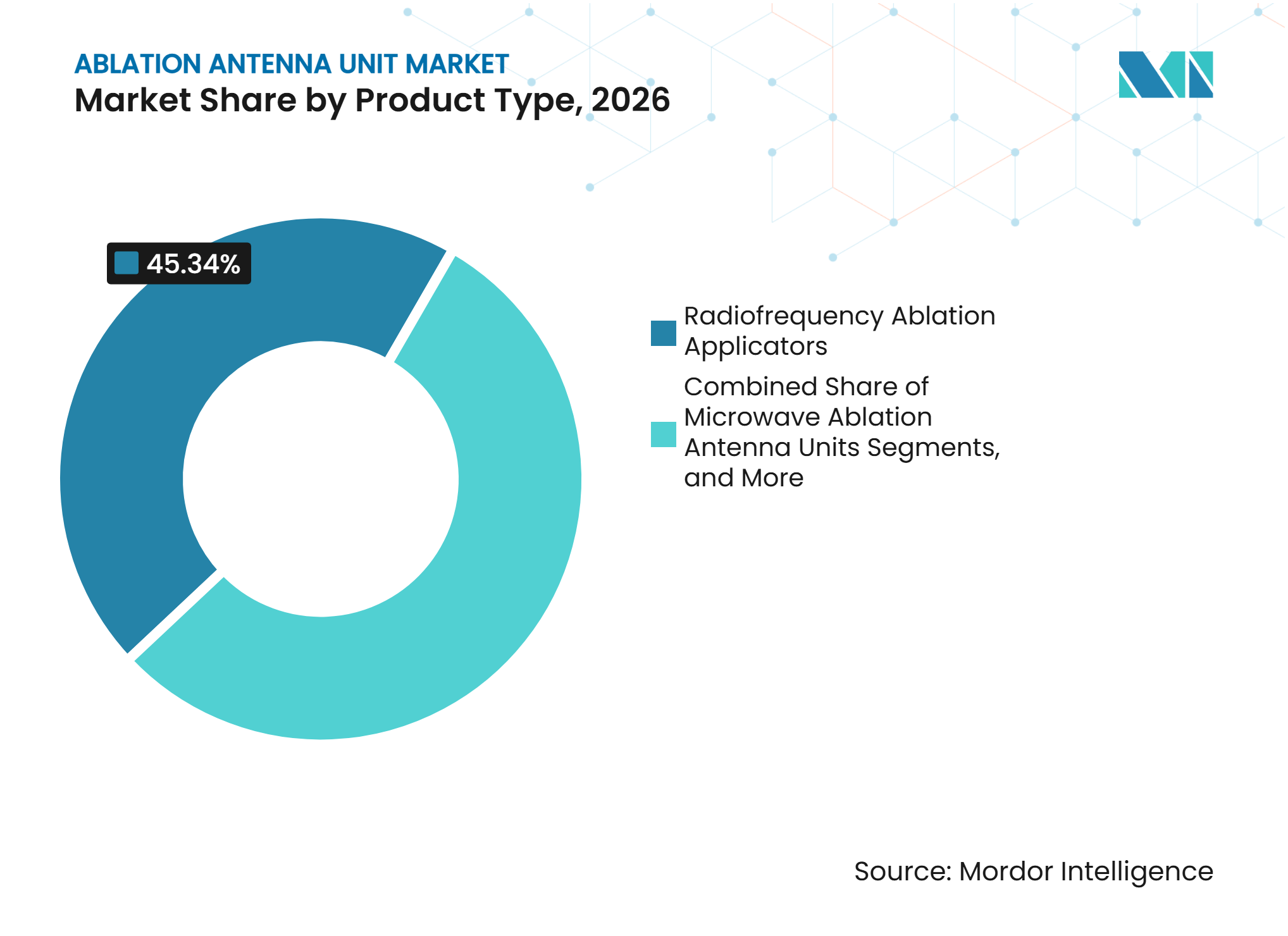
Microwave Antenna Growth Outpaces the Dominant RF SegmentRadiofrequency ablation applicators held 45.34% of the ablation antenna unit market in 2026, supported by their established use in liver, kidney, and cardiac procedures and a large installed base of compatible generators. Hospitals remain familiar with the related workflows, training requirements, and purchasing models, supporting replacement demand. Compatibility constraints also limit switching, as a new applicator often requires a new generator.
Microwave ablation antenna units are projected to grow at an 8.22% CAGR through 2032, driven by faster heating, larger ablation zones, and multi-antenna capability, particularly for tumors larger than 3 cm. Germany’s DeGIR registry showed that microwave ablation accounted for 69.4% of oncological ablation procedures by 2023, compared with 23.6% for radiofrequency ablation. Canyon Medical received FDA 510(k) clearance K261636 for its KY-2450A microwave ablation antenna series in October 2026, reflecting continued innovation in microwave systems.



By Antenna Length:
Mid-Range Formats Lead, Pediatric Configurations AccelerateThe 10 cm to 15 cm segment held 38.45% of the ablation antenna unit market in 2026. This range supports adult percutaneous and laparoscopic procedures by reaching common tissue depths while maintaining a practical distance from critical structures. Hospitals maintain multiple antenna lengths for liver, kidney, and soft-tissue procedures, making portfolio breadth important for suppliers.
Pediatric configurations are projected to grow at a 7.56% CAGR through 2032, supported by increasing ablation use in pediatric oncology and demand for tissue-sparing treatment. Global cancer diagnoses are projected to reach 34.4 million by 2050, 67% higher than in 2024. A March 2025 review identified antenna miniaturization and preservation of ablation-zone sphericity as key research priorities, while adoption will depend on pediatric interventional capacity and reimbursement.
By Procedure:
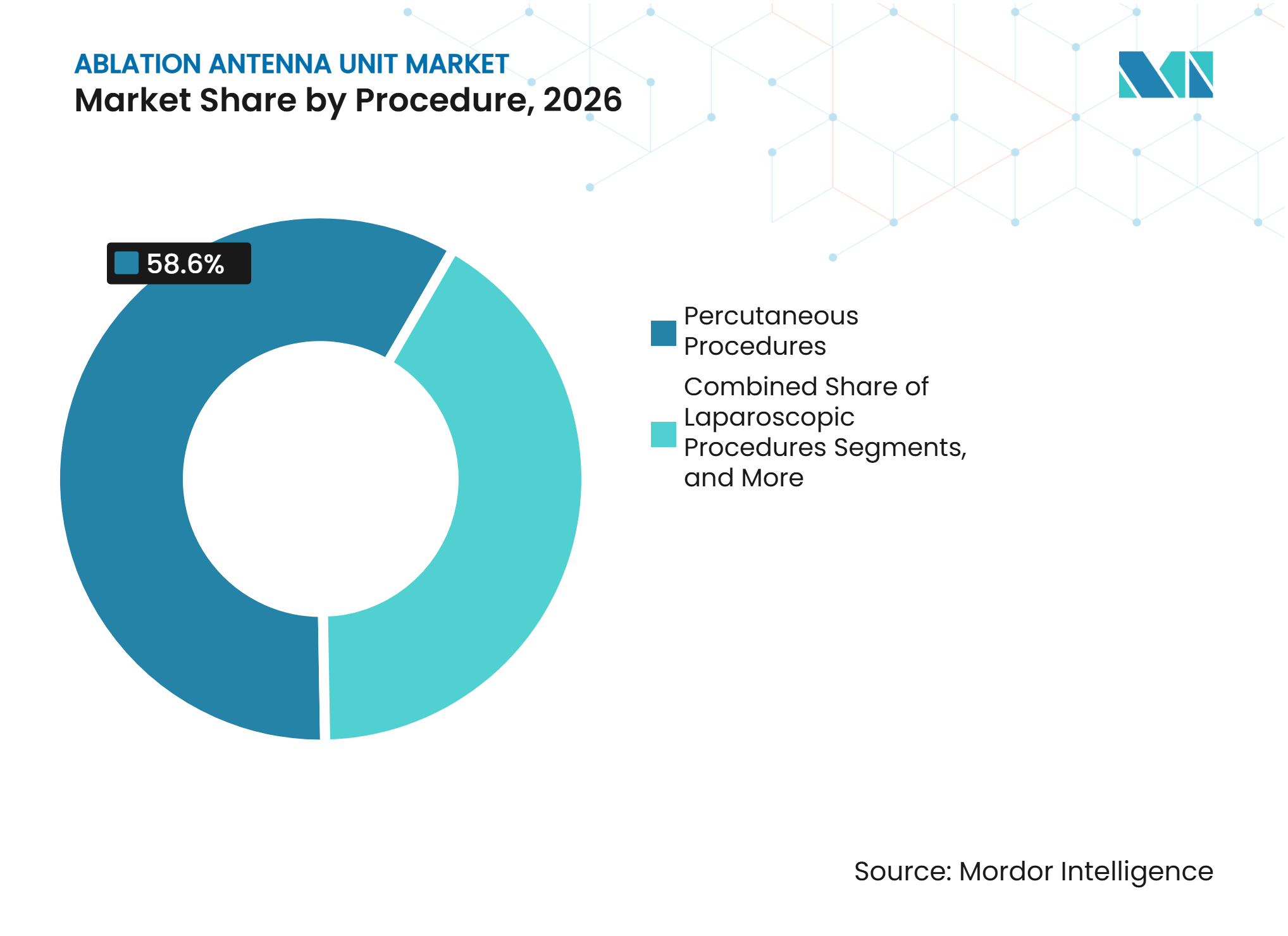
Percutaneous Dominance Coexists With Bronchoscopic GrowthPercutaneous procedures held 58.60% of the ablation antenna unit market in 2026. CT and ultrasound guidance enable access to liver, kidney, lung, and bone lesions through a skin entry point, reducing the need for open surgery in appropriate cases. Standard imaging infrastructure and clinician familiarity continue to support this approach, while laparoscopic, endoscopic, and open procedures serve specific clinical needs.
Bronchoscopic procedures are expected to grow at a 7.45% CAGR through 2032, supported by robotic bronchoscopy combined with microwave ablation for peripheral lung lesions. In a 2025 and 2026 prospective cohort of 21 patients, robotic-assisted bronchoscopy with microwave ablation achieved 100% technical success on postoperative day 1 and 100% treatment success at 6 months. Interim UK results from 19 patients, including 17 robotically performed procedures, supported feasibility, while MedWaves’ AveCure microwave probe is being evaluated for this route.

By Application:
Oncology Anchors Demand, Cardiovascular Electrophysiology AcceleratesOncology held 56.45% of the ablation antenna unit market in 2026, with liver cancer representing the largest indication. Ablation serves as a first-line local treatment for eligible early-stage hepatocellular carcinoma when surgery or transplant is unsuitable. The ACCLAIM trial completed enrollment for 330 tumors in July 2025, eight months ahead of plan, supporting interest in microwave ablation for colorectal liver metastases.
Cardiovascular and electrophysiology is projected to grow at a 6.89% CAGR through 2032. The addition of cardiac catheter ablation to the US outpatient pathway in January 2026 supports access to atrial fibrillation treatment, while major adverse event rates have fallen below 1% at NCDR benchmark levels. Medtronic reported 80% growth in Cardiac Ablation Solutions revenue in fiscal Q3 2026, including 137% growth in the United States, driven by pulsed-field ablation catheter adoption
By End User:
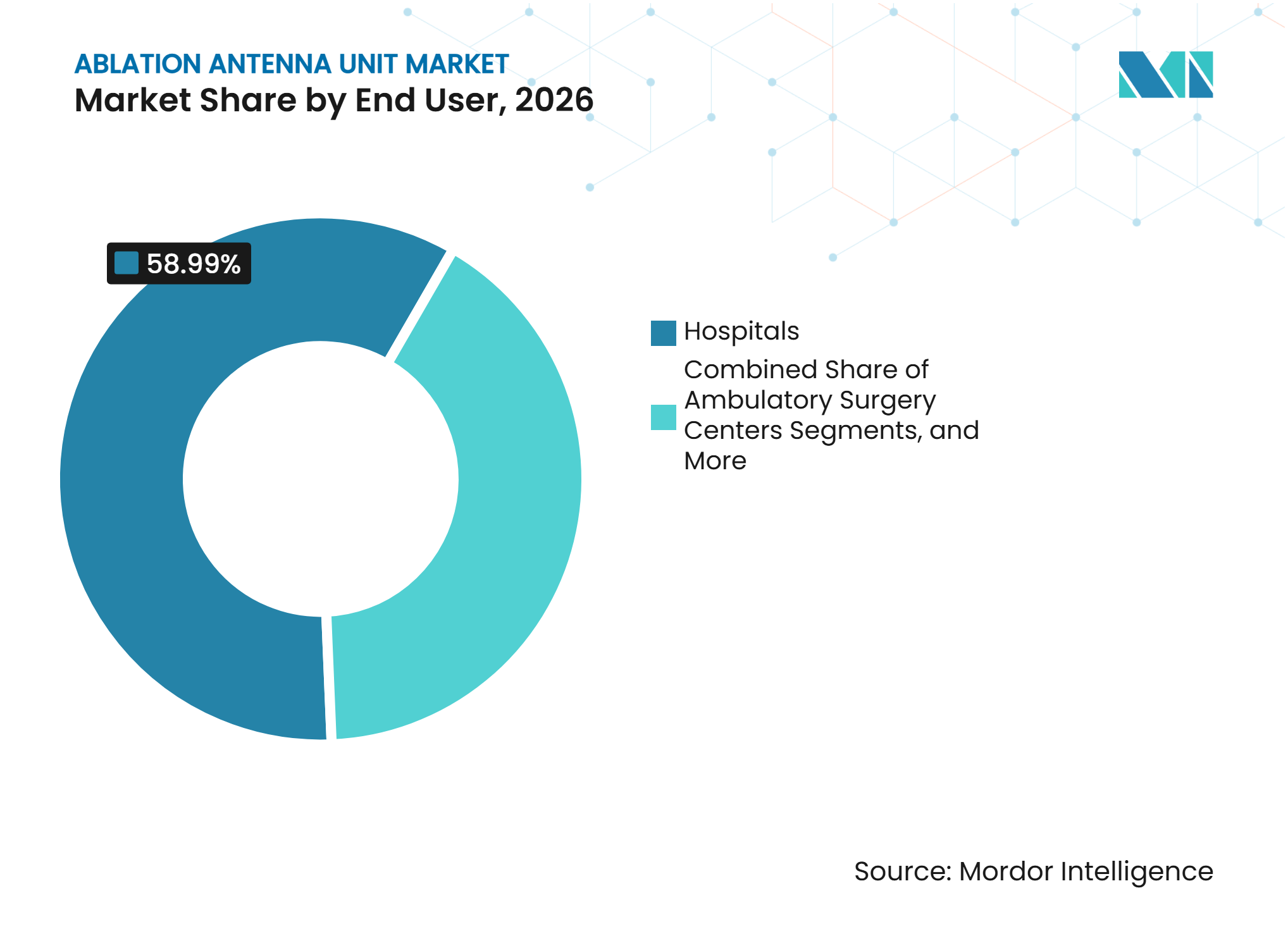
Hospitals Lead, ASC Migration Redefines Procurement PatternsHospitals held 58.99% of the ablation antenna unit market in 2026 due to the capital-intensive requirements of ablation programs, including imaging suites, generators, trained clinical teams, and complex-case support. Cancer treatment centers and interventional radiology centers represent a specialized share of institutional demand. Quantum Surgical stated that NeuWave Medical was used in more than 70% of top US cancer centers at the time of its February 2026 acquisition.
Ambulatory surgery centers are projected to grow at a 6.12% CAGR through 2032. Total adult ASC volume is projected to increase 21% over the decade, while combined cardiovascular ablation volumes are projected to rise 26% over five years. These facilities prioritize single-use, low-footprint products, although regulatory requirements, referral volumes, trained personnel, and emergency transfer arrangements will limit outpatient migration for complex oncology cases.
Geography Analysis
North America
North America held 41.03% of the ablation antenna unit market share in 2026. High cancer screening activity, established interventional radiology capacity, and a developed payment environment supported regional demand. CMS added cardiac catheter ablation codes to the ASC Covered Procedures List in January 2026, creating a reimbursable outpatient pathway for electrophysiology treatment. AngioDynamics stated that LCD L40205 became effective on July 5, 2026, while a Category I CPT code for open pancreatic IRE ablation will take effect on January 1, 2027. FDA Class II requirements, provincial funding in Canada, and hospital-based clinical infrastructure continued to influence product access.
Asia-Pacific
Asia-Pacific is projected to grow at a CAGR of 7.88% through 2032. China contributes significant demand due to its hepatocellular carcinoma burden and domestic manufacturing base, while India benefits from rising cancer care investment and expanding private hospital capacity. Baird Medical secured approvals in Indonesia in March 2025 and in Vietnam and Pakistan in January 2026. The company entered South Korea with ALLIS MED in November 2026. These developments highlight the importance of regulatory access and local distribution in market expansion. Japan supports premium device demand through a mature regulatory system, although reimbursement reviews can extend adoption timelines.
Europe, Middle East and Africa, and South America
EU MDR raised CE marking requirements and extended authorization timelines in Europe, potentially favoring quality-focused suppliers. Mermaid Medical expanded the MaxBlate system to Sweden, where clinicians performed the first benign thyroid nodule procedures using the Thytip 18G microwave antenna in February 2026. Germany, France, and the UK remained key European markets, while the DeGIR registry recorded microwave ablation in 69.4% of German oncological procedures. Investment in Saudi Arabia and the UAE is building interventional oncology capacity. In Brazil, fragmented reimbursement and import costs constrain market activity.
Competitive Landscape
Market Concentration
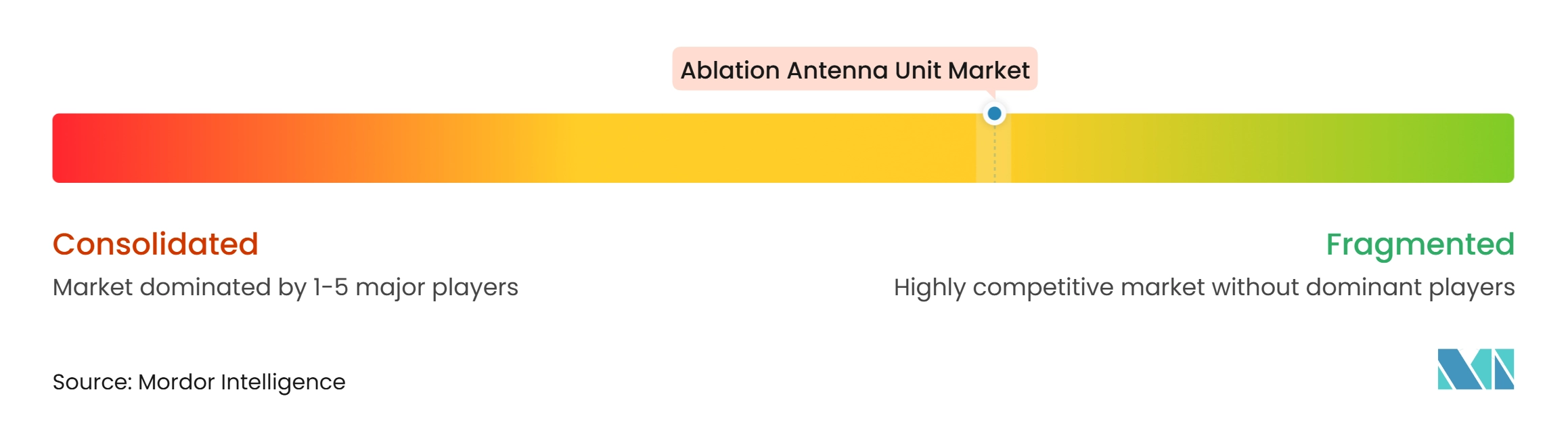
The ablation antenna unit market is moderately fragmented, with no supplier holding a majority position across oncology, cardiac, and urology applications. Boston Scientific, Medtronic, AtriCure, and AngioDynamics compete through clinical programs, proprietary systems, and specialized energy platforms. Medtronic reported 80% growth in Cardiac Ablation Solutions revenue in fiscal Q3 2026, driven by pulsed-field ablation.
Quantum Surgical acquired NeuWave Medical from Johnson & Johnson in February 2026 and formed Precision IO Group. The transaction combined NeuWave’s microwave technology with the Epione robotic-assisted percutaneous ablation platform for CT-guided tumor procedures. NeuWave’s April 2025 multi-gap antenna array patent and AtriCure’s first investigational dual-energy pulsed-field ablation and advanced radiofrequency procedures in Australia during December 2025 highlight the growing focus on integrated platforms.
Chinese manufacturers, including Baird Medical, Canyon Medical, Nanjing ECO Microwave System, and Surgnova Healthcare Technologies, are expanding with competitively priced microwave products. Baird Medical’s entry into South Korea in November 2026 highlights the role of distributors in established clinical markets. Western suppliers retain advantages in hospital relationships, clinical evidence, and service capacity, while FDA Class II and EU MDR requirements create barriers for smaller firms. The market remains fragmented due to diverse clinical pathways and end-user models.
Ablation Antenna Unit Industry Leaders
-
Medtronic PLC
-
Johnson & Johnson
-
NeuWave Medical Inc.
-
AngioDynamics Inc.
-
Boston Scientific Corporation
- *Disclaimer: Major Players sorted in no particular order
Ablation Antenna Unit Market Companies Covered in this Report
- AngioDynamics
- AtriCure
- Avanos Medical
- Betters (Suzhou) Medical Co. Ltd
- Boston Scientific
- Canyon Medical Inc.
- H.S. Hospital Service S.p.A.
- Johnson & Johnson
- Medtronic
- MedWaves Inc.
- Mima-Pro (Nan Tong) Scientific Inc.
- Nanjing ECO Microwave System Co. Ltd
- Nanjing Nuoyuan Medical Devices Co. Ltd
- NeuWave Medical Inc.
- RF Medical Co. Ltd
- Surgnova Healthcare Technologies (Zhejiang) Co. Ltd
- Suzhou Hengrui Medical Equipment Co. Ltd
Recent Industry Developments in Ablation Antenna Unit Market
- November 2026: Baird Medical entered the South Korean market through a strategic distribution partnership with ALLIS MED. ALLIS MED became the Korean license holder and exclusive distributor of Baird Medical’s microwave ablation antenna products, pending Ministry of Food and Drug Safety certification.
- October 2026: Canyon Medical Inc. received FDA 510(k) clearance K261636 for microwave ablation antennas in the KY-2450A series. The clearance followed K241825 and expanded antenna configuration availability in the United States.
- September 2026: AngioDynamics published DIRECT study results showing that an IRE-based strategy for Stage III pancreatic ductal adenocarcinoma achieved a median overall survival of 28 months, compared with 15 months under standard care. The AMA CPT Editorial Panel also approved a Category I CPT code for open pancreatic IRE ablation, effective January 1, 2027.
- June 2026: AngioDynamics received FDA Investigational Device Exemption approval for the RELIEF feasibility study of NanoKnife IRE for lower urinary tract symptoms in men with benign prostatic hyperplasia. The study evaluated a benign disease indication that could broaden the use of IRE-based systems.
Global Ablation Antenna Unit Market Report Scope
As per the scope of the report, an ablation antenna unit is a specialized medical device component used in minimally invasive thermal ablation procedures to deliver electromagnetic energy, such as microwave or radiofrequency energy, directly into targeted tissues. It consists of an antenna or applicator designed to convert transmitted electromagnetic energy into localized heat, resulting in the destruction of abnormal cells through coagulative necrosis while limiting damage to surrounding healthy tissues. These units are generally connected to an external energy generator and are used under imaging guidance to ensure accurate placement and controlled treatment of targeted lesions.
The ablation antenna unit market is segmented by product type, antenna length, procedure, application, end user, and geography. By product type, the market includes microwave ablation antenna units, radiofrequency ablation applicators, laser ablation applicators, and other interstitial thermal ablation applicators. By antenna length, the market is segmented into up to 10 cm, more than 10 cm to 15 cm, more than 15 cm to 20 cm, more than 20 cm to 30 cm, and more than 30 cm. By procedure, the market is categorized into percutaneous procedures, laparoscopic procedures, open surgical procedures, bronchoscopic procedures, endoscopic procedures, and other procedures. By application, the market is segmented into oncology, cardiovascular and electrophysiology, urology, gynecology, and other applications. The oncology segment includes liver cancer, lung cancer, kidney cancer, bone tumors and bone metastases, and other tumors. By end user, the market is segmented into hospitals, ambulatory surgery centers, interventional radiology centers, cancer treatment centers, and other end users. By geography, the market is analyzed across North America, Europe, Asia-Pacific, the Middle East and Africa, and South America. The report also covers the estimated market sizes and trends for 17 countries across major regions globally. The report offers market sizes and forecasts in terms of value (USD) for the above segments.
Segmentation Overview
| Microwave Ablation Antenna Units |
| Radiofrequency Ablation Applicators |
| Laser Ablation Applicators |
| Other Interstitial Thermal Ablation Applicators |
| Up to 10 cm |
| 10 cm to 15 cm |
| More Than 15 cm to 20 cm |
| More Than 20 cm to 30 cm |
| More Than 30 cm |
| Percutaneous Procedures |
| Laparoscopic Procedures |
| Open Surgical Procedures |
| Bronchoscopic Procedures |
| Endoscopic Procedures |
| Other Procedures |
| Oncology | Liver Cancer |
| Lung Cancer | |
| Kidney Cancer | |
| Bone Tumors and Bone Metastases | |
| Other Tumors | |
| Cardiovascular and Electrophysiology | |
| Urology | |
| Gynecology | |
| Other Applications |
| Hospitals |
| Ambulatory Surgery Centers |
| Interventional Radiology Centers |
| Cancer Treatment Centers |
| Other End Users |
| North America | United States |
| Canada | |
| Mexico | |
| Europe | Germany |
| United Kingdom | |
| France | |
| Italy | |
| Spain | |
| Rest of Europe | |
| Asia-Pacific | China |
| India | |
| Japan | |
| Australia | |
| South Korea | |
| Rest of Asia-Pacific | |
| Middle East and Africa | GCC |
| South Africa | |
| Rest of Middle East and Africa | |
| South America | Brazil |
| Argentina | |
| Rest of South America |
| By Product Type | Microwave Ablation Antenna Units | |
| Radiofrequency Ablation Applicators | ||
| Laser Ablation Applicators | ||
| Other Interstitial Thermal Ablation Applicators | ||
| By Antenna Length | Up to 10 cm | |
| 10 cm to 15 cm | ||
| More Than 15 cm to 20 cm | ||
| More Than 20 cm to 30 cm | ||
| More Than 30 cm | ||
| By Procedure | Percutaneous Procedures | |
| Laparoscopic Procedures | ||
| Open Surgical Procedures | ||
| Bronchoscopic Procedures | ||
| Endoscopic Procedures | ||
| Other Procedures | ||
| By Application | Oncology | Liver Cancer |
| Lung Cancer | ||
| Kidney Cancer | ||
| Bone Tumors and Bone Metastases | ||
| Other Tumors | ||
| Cardiovascular and Electrophysiology | ||
| Urology | ||
| Gynecology | ||
| Other Applications | ||
| By End User | Hospitals | |
| Ambulatory Surgery Centers | ||
| Interventional Radiology Centers | ||
| Cancer Treatment Centers | ||
| Other End Users | ||
| By Geography | North America | United States |
| Canada | ||
| Mexico | ||
| Europe | Germany | |
| United Kingdom | ||
| France | ||
| Italy | ||
| Spain | ||
| Rest of Europe | ||
| Asia-Pacific | China | |
| India | ||
| Japan | ||
| Australia | ||
| South Korea | ||
| Rest of Asia-Pacific | ||
| Middle East and Africa | GCC | |
| South Africa | ||
| Rest of Middle East and Africa | ||
| South America | Brazil | |
| Argentina | ||
| Rest of South America | ||
Key Questions Answered in the Report
What is driving demand for ablation antenna units?
Demand is supported by the clinical use of minimally invasive treatment for liver, lung, kidney, and bone tumors, alongside broader use of image-guided procedures.
What is the projected growth rate for ablation antenna units?
The ablation antenna unit market is projected to grow at a 3.66% CAGR from 2027 to 2032, reaching USD 407.13 million by 2032.
Which product type is growing fastest?
Microwave ablation antenna units are the fastest-growing product type, with a projected 8.22% CAGR through 2032.
Why do hospitals remain important purchasers of ablation systems?
Hospitals held 58.99% share in 2026 because they have imaging suites, trained teams, generator infrastructure, and support for complex cases.
Which procedure route is expanding fastest?
Bronchoscopic procedures are projected to grow at a 7.45% CAGR through 2032, supported by robotic bronchoscopy and microwave ablation evidence.
Which region is expected to grow fastest?
Asia-Pacific is projected to grow at a 7.88% CAGR through 2032, supported by infrastructure investment, local manufacturing, and regulatory expansion.