

| Study Period | 2019 - 2030 |
| Base Year For Estimation | 2024 |
| Forecast Data Period | 2025 - 2030 |
| Market Size (2025) | USD 14.57 Billion |
| Market Size (2030) | USD 20.65 Billion |
| CAGR (2025 - 2030) | 7.22% |
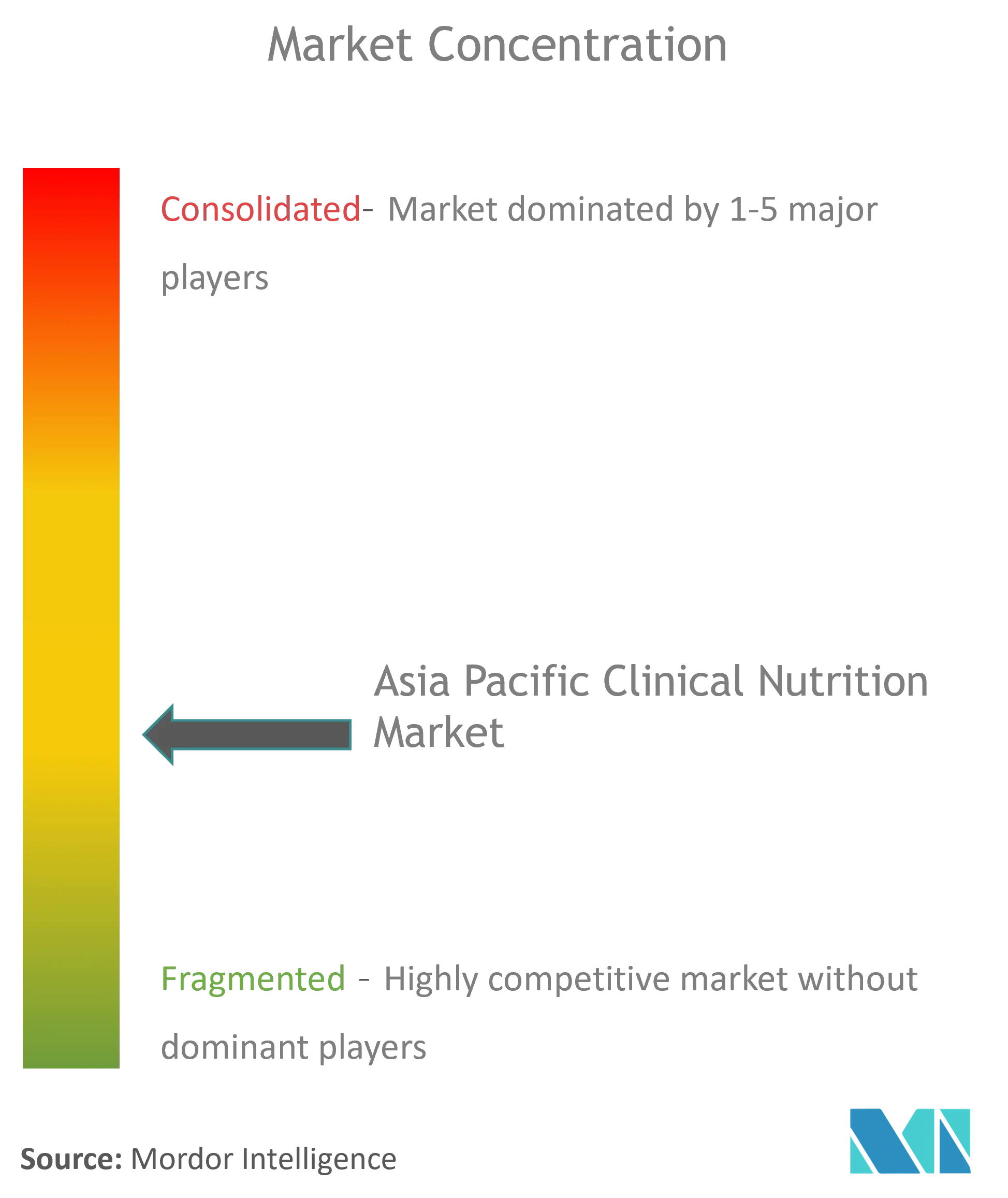
| Market Concentration | Medium |
Major Players
*Disclaimer: Major Players sorted in no particular order |
Asia-Pacific Clinical Nutrition Market Analysis by Mordor Intelligence
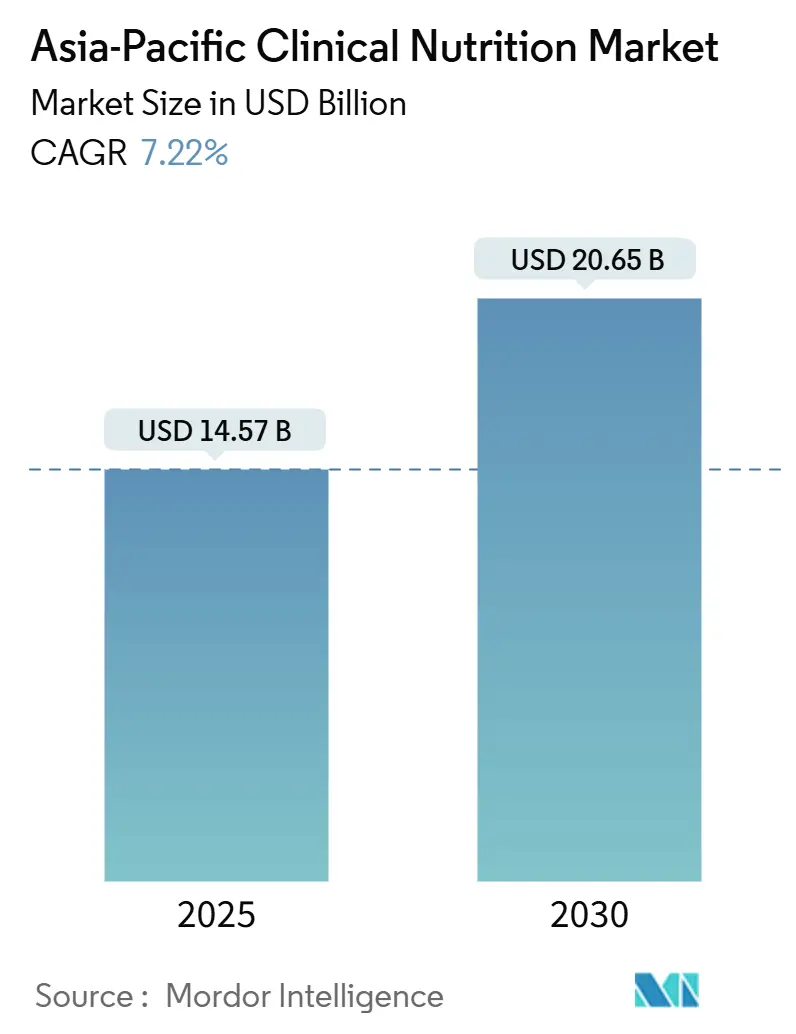
The Asia-Pacific Clinical Nutrition Market size is estimated at USD 14.57 billion in 2025, and is expected to reach USD 20.65 billion by 2030, at a CAGR of 7.22% during the forecast period (2025-2030).
COVID-19 significantly impacted the market studied in the initial phase as the patients affected with COVID-19 required nutrition and a proper diet to maintain their quality of life. For instance, an article published by PubMed depicted that an effective strategy, along with proper nutrition to prevent and treat COVID-19, was anticipated to improve nutrition to strengthen the immune system. Vitamin D has been recommended to prevent COVID-19, and an intake of 250 μg/day has been shown to raise serum 25(OH)D concentrations above 40-60 ng/mL (100-150 nmol/L). Low vitamin D3 leads to an increase in anti-inflammatory and immunoregulating interleukin 10 (IL-10) cytokines. It reduces the frequency of Th17 cells, which, in turn, decreases IL-17 and proinflammatory cytokine tumor necrosis factor-alpha (TNFα) production, decreasing inflammatory effects in the host. Thus, vitamin D deficiency is often found in patients with COVID-19. The Japanese diet closely resembles a "nutrient-dense dietary pattern", and it includes a lot of elements that guard against COVID-19 infection. People have become more aware and conscious of their nutritional intake in the post-pandemic scenario, which is anticipated to drive market growth in the coming years.
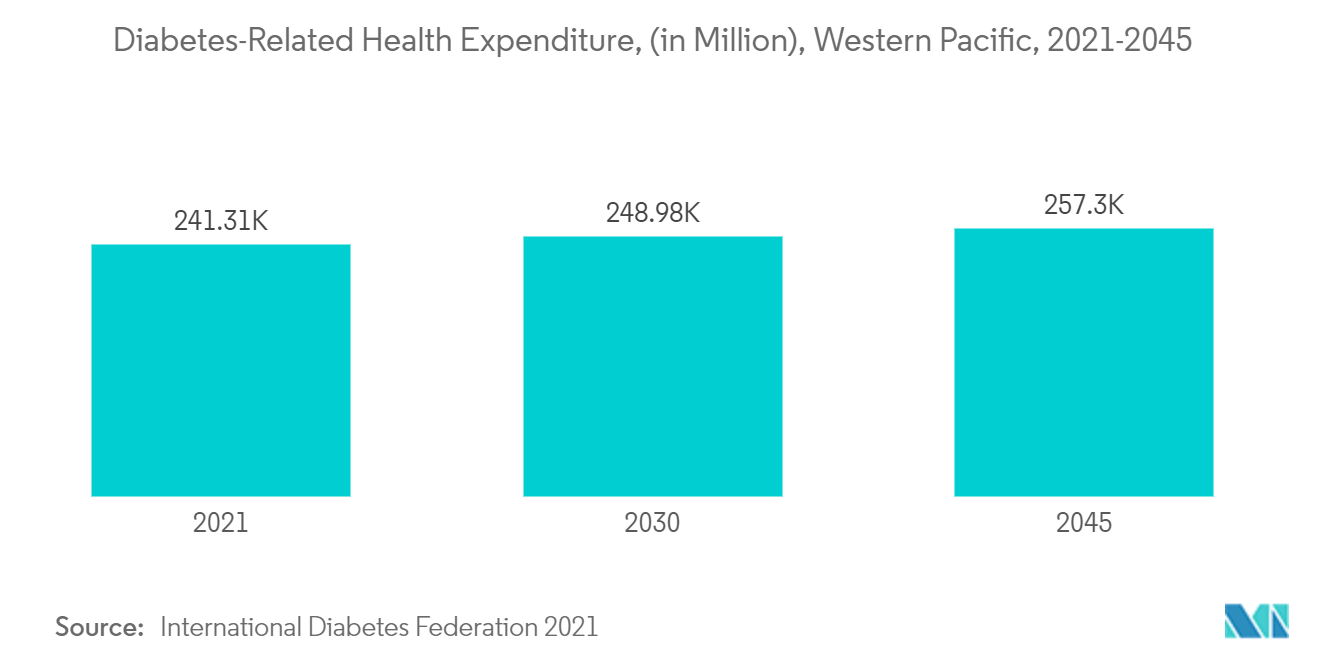
The major factors attributing to the growth of the Asia-Pacific clinical nutrition market include an increase in the prevalence of metabolic disorders and neurological diseases, a rise in the geriatric population in the Asia Pacific Region, and high spending on healthcare. For instance, as per the IDF 2021 report, in India, the number of people with diabetes was 74,194.7. Furthermore, as per the same source, the total diabetes-related health expenditure in 2021 was USD 8,485.8 million.
Dietary therapy is critical for normal growth and development and to prevent acute complications. It prevents long-term complications of the given disorder. A failure to follow specific dietary treatment can lead to complications and even death in individuals with metabolic disorders. Nutrition therapy for patients with inherited metabolic disorders is lifelong. The management of patients with many inborn errors of metabolism requires a multidisciplinary approach that combines both nutrition and medical management. In these disorders, nutrition therapy is a critical component of the management to prevent acute complications, such as metabolic decompensation, and to prevent long-term complications of the given disorder.
Vitamin D deficiency is one of the major crises faced by many people and is likely to cause serious illness. The presence of competitors, mergers, acquisitions, and product launches is anticipated to boost market growth as these activities increase the availability of products and raise competition. For instance, in March 2021, Royal DSM, a purpose-led global science-based company in nutrition, health, and sustainable living, launched ampli-D, a fast-acting form of vitamin D for dietary supplements in Australia. The availability of DSM's ampli-D in Australia, the first market for its launch, follows regulatory approval by TGA for its use in dietary supplements that do not require a doctor's prescription.
Most metabolic syndromes result in situations where the body lacks the capability to synthesize non-essential molecules, like vitamins and amino acids, and several molecules involved in metabolic pathways. Most of these conditions can be managed only with the supplementation of one or two nutrients. All these factors are anticipated to boost the market growth. However, there are a few factors that may restrain market growth, such as the heterogeneous nature of government coverage/reimbursement across countries.
Asia-Pacific Clinical Nutrition Market Trends and Insights
Oral and Enternal Segment is Expected to Hold a Significant Market Share in the Asia-Pacific Clinical Nutrition Market Over the Forecast Period
Oral clinical nutrition accounts for the largest share owing to the ease of administration and wide acceptance of the oral route. Among all the routes of administration available for clinical nutrition, oral and enteral routes are used the most, followed by the parenteral route. This is mainly because of the additional cost of processing the products/nutrients involved in parenteral routes. Until other routes of administration are deemed necessary, physicians mostly prefer the oral route, as it involves lesser complexities and costs compared to the other two routes of administration. If the patients can consume food orally, their stomach and intestine functionalities are not affected, and the oral route is the preferred route of administration for clinical nutrition.
It is estimated that the number of people with dementia is expected to upsurge to 1.1 million by 2058. People with dementia are likely to use oral nutritional supplements to improve their living. For instance, as per an article published by PubMed, low dietary intake is a sign of malnutrition risk in dementia patients, which has an impact on daily activities, nutritional statuses, and disease progression. The results of the study demonstrated that oral nutrition supplements (ONS) have a positive impact on nutritional intake, nutritional status, and cognitive and physical outcomes in older people with dementia.
Furthermore, the rise in government initiatives to provide proper nutrition to poor economies is one of the major fuelling factors for the growth of the market . For instance, as per the March 2022 update from WHO, the Republic of Korea contributed USD 7.8 million to improve the health and nutrition of school-aged children in Timor-Leste. In collaboration with the Timor-Leste Ministry of Education, Youth, and Sports (MoEYS) and the Ministry of Health (MoH), the WFP and WHO are anticipated to use this donation to improve the health and nutritional status of schoolchildren.
Thus, owing to the above factors, the oral and enteral route of the administration segment is likely to witness growth over the forecast period.
Understand The Key Trends Shaping This Market
Download PDF
India is Anticipated to Dominate the Market and is Expected to Grow During the Forecast Period
India is expected to dominate the clinical nutrition market throughout the forecast period, owing to factors such as the rising prevalence of neurological diseases, metabolic disorders, and cancer and the rise in healthcare expenditure. For instance, the Dementia India report 2020 mentioned that the estimated number of people aged above 60 who had dementia was 5.3 million. This means that one in 27 people above the age of 60 in India has dementia. People with dementia take nutritional supplements in order to improve their patient outcomes and quality of life. For instance, as per an article published in March 2022 by PubMed, people with dementia and Alzheimer's disease frequently have vitamin B12 and folic acid deficiencies. Together, these two supplements can aid in reducing blood levels of an amino acid that is frequently connected to dementia.
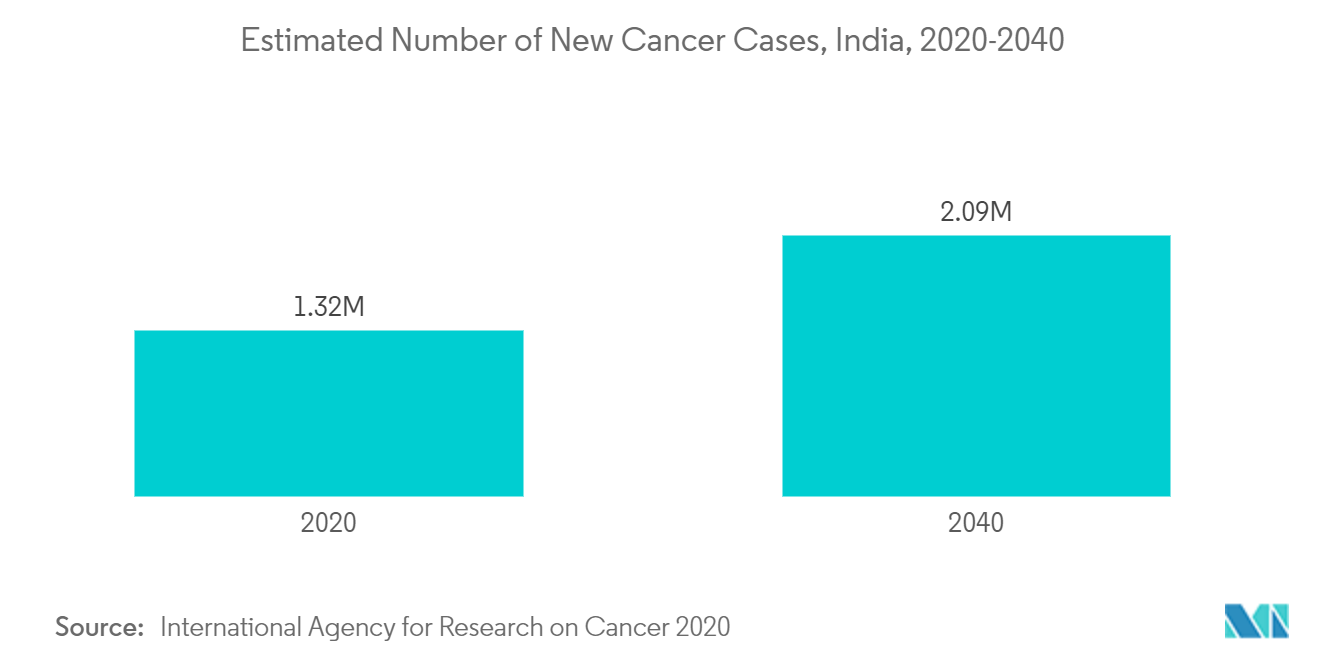
Furthermore, cancer patients frequently require nutritional supplements, as their body weakens as therapy starts. Hence, oncology nutrition holds a major part in the clinical nutrition market. As per the Globocan 2020 report, the total number of cancer cases in 2020 in India was 1,324,413. Furthermore, the presence of competitors, mergers, and collaborations in the field of clinical nutrition in India is likely to increase market growth as these factors improve the competition and product availability. For instance, Esperer launched its nutrition development center in Hyderabad; the facility in Hyderabad is anticipated to house a variety of cohesive capabilities, including investigative workrooms and product improvement sub-centers with a devoted laboratory for analyzing sensory components, packing, and taste. At the new EsNDC, Esperer is focused and keeps track of cancer patients to identify dietary changes and assists in creating novel nutrition products and delivery technologies to broaden its existing and future product offerings.
Hence, considering the above-mentioned factors, India is likely to witness growth in the studied market over the forecast period.
Get Analysis on Important Geographic Markets
Download PDF
Competitive Landscape
The Asia-Pacific clinical nutrition market is highly fragmented and competitive, with several major players operating in the region. In terms of market share, a few major players dominate the market. Additionally, a few more players are expected to enter it in the coming years. Some of the key players are Abbott, Nestlé (Nestlé Health Science), Baxter, B. Braun SE, and Danone SA (Nutricia).
Asia-Pacific Clinical Nutrition Industry Leaders
-
Abbott
-
Baxter
-
Danone SA (Nutricia)
-
Nestlé (Nestlé Health Science)
-
B. Braun SE
- *Disclaimer: Major Players sorted in no particular order
Need More Details on Market Players and Competitors?
Download PDF
Recent Industry Developments
- September 2022: H&H Group-owned Swisse, Australia's leading health, wellness, and beauty nutrition company, launched three new products in India, namely SwisseMe Melatonin Gummies, Biotin Gummies, and Plant Protein Powder.
- July 2022: Nestle launched China's first Foods for Special Medical Purpose (FSMP) for patients suffering from tumor-related conditions after going through a five-year-long approval process from the Chinese regulator.
You Can Purchase Parts Of This Report. Check Out Prices For Specific Sections
Get Price Break-up Now
Asia-Pacific Clinical Nutrition Market Report Scope
As per the report's scope, clinical nutrition is an area of medicine that offers treatment of medical disorders caused by an improper diet or the body's inability to absorb the nutrients available in a normal diet. These clinical nutrition products are aimed at treating metabolic disorders, eating or nutritional disorders, and other disorders.
The Asia-Pacific clinical nutrition market is segmented by route of administration (oral and enteral, and parenteral), application (malnutrition, metabolic disorders, gastrointestinal diseases, neurological diseases, cancer, and other diseases), end-user (pediatric and adult), distribution channel (pharmacies, hospitals, nursing homes, and others) and geography (China, Japan, India, Australia, South Korea, Rest of Asia-Pacific). The report offers values in USD for the abovementioned segments.
By Route of Administration
| Oral and Enteral |
| Parenteral |
By Application
| Malnutrition |
| Metabolic Disorders |
| Gastrointestinal Diseases |
| Neurological Diseases |
| Cancer |
| Other Diseases |
By End User
| Pediatric |
| Adult |
By Distribution Channel
| Pharmacies |
| Hospitals |
| Nursing Homes |
| Others |
Geography
| China |
| Japan |
| India |
| Australia |
| South Korea |
| Rest of Asia-Pacific |
| By Route of Administration | Oral and Enteral |
| Parenteral | |
| By Application | Malnutrition |
| Metabolic Disorders | |
| Gastrointestinal Diseases | |
| Neurological Diseases | |
| Cancer | |
| Other Diseases | |
| By End User | Pediatric |
| Adult | |
| By Distribution Channel | Pharmacies |
| Hospitals | |
| Nursing Homes | |
| Others | |
| Geography | China |
| Japan | |
| India | |
| Australia | |
| South Korea | |
| Rest of Asia-Pacific |
Need A Different Region or Segment?
Customize Now
Key Questions Answered in the Report
How big is the Asia-Pacific Clinical Nutrition Market?
The Asia-Pacific Clinical Nutrition Market size is expected to reach USD 14.57 billion in 2025 and grow at a CAGR of 7.22% to reach USD 20.65 billion by 2030.
What is the current Asia-Pacific Clinical Nutrition Market size?
In 2025, the Asia-Pacific Clinical Nutrition Market size is expected to reach USD 14.57 billion.
Who are the key players in Asia-Pacific Clinical Nutrition Market?
Abbott, Baxter, Danone SA (Nutricia), Nestlé (Nestlé Health Science) and B. Braun SE are the major companies operating in the Asia-Pacific Clinical Nutrition Market.
What years does this Asia-Pacific Clinical Nutrition Market cover, and what was the market size in 2024?
In 2024, the Asia-Pacific Clinical Nutrition Market size was estimated at USD 13.52 billion. The report covers the Asia-Pacific Clinical Nutrition Market historical market size for years: 2019, 2020, 2021, 2022, 2023 and 2024. The report also forecasts the Asia-Pacific Clinical Nutrition Market size for years: 2025, 2026, 2027, 2028, 2029 and 2030.
Page last updated on:
Asia-Pacific Clinical Nutrition Market Report
Statistics for the 2025 Asia-Pacific Clinical Nutrition market share, size and revenue growth rate, created by Mordor Intelligence™ Industry Reports. Asia-Pacific Clinical Nutrition analysis includes a market forecast outlook for 2025 to 2030 and historical overview. Get a sample of this industry analysis as a free report PDF download.


