
Market Overview
| Study Period | 2020 - 2031 |
|---|---|
| Forecast Data Period | 2026 - 2031 |
| Base Year Market Size (2025) | USD 57.61 Billion |
| Market Size (2026) | USD 60.32 Billion |
| Market Size (2031) | USD 79.74 Billion |
| Growth Rate (2026 - 2031) | 5.74 % |
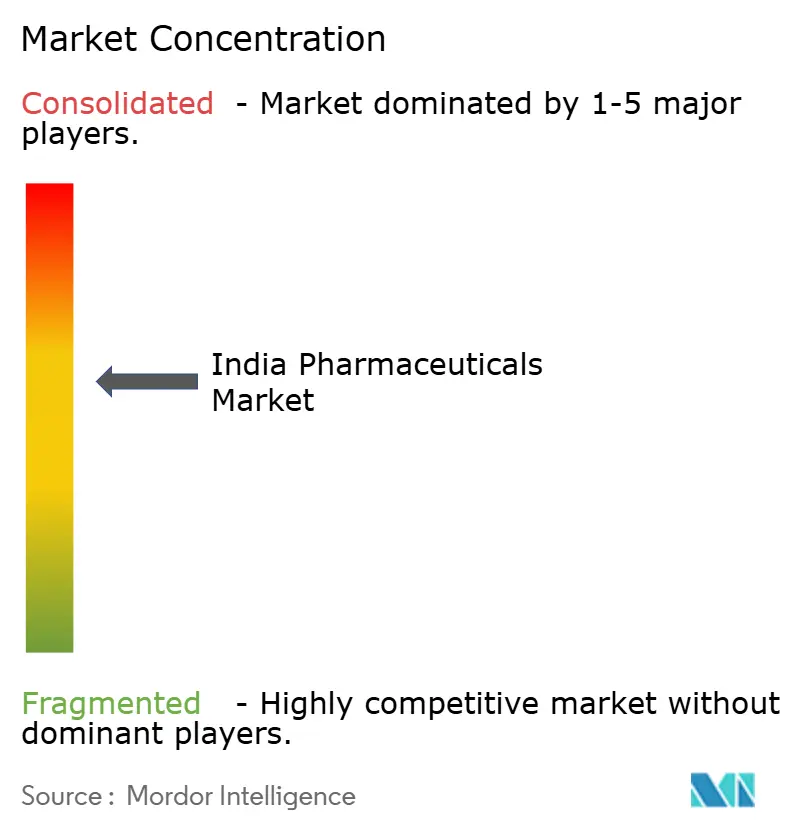
| Market Concentration | Medium |
Major Players *Disclaimer: Major Players sorted in no particular order Image © Mordor Intelligence. Reuse requires attribution under CC BY 4.0. | |
India Pharmaceuticals Market Analysis by Mordor Intelligence
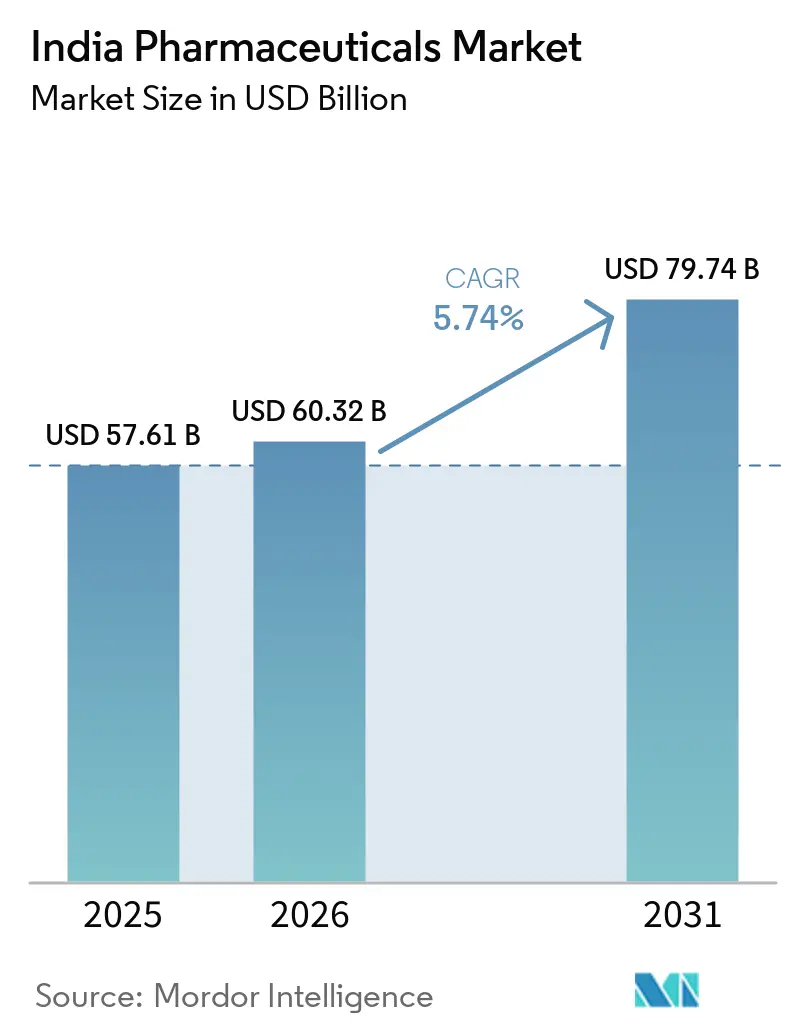
The India Pharmaceuticals Market size is projected to be USD 57.61 billion in 2025, USD 60.32 billion in 2026, and reach USD 79.74 billion by 2031, growing at a CAGR of 5.74% from 2026 to 2031.
The India pharmaceuticals market is driven by the high burden of chronic diseases, an aging population, increasing healthcare expenditure, expanding health insurance coverage, and growing access to healthcare services. Government production incentives continue to strengthen domestic manufacturing investment, sales, exports, and employment. These factors position the market to serve a large domestic treatment base while expanding manufacturing capacity and improving product availability. Patent expirations create growth opportunities for domestic manufacturers to launch lower-cost alternatives. However, speed to market and established pharmacy relationships remain critical competitive factors. The India pharmaceuticals market remains highly competitive, with domestic generic drug manufacturers, multinational subsidiaries, and biosimilar-focused companies competing across several of the same therapeutic areas.
Key Report Takeaways
- By therapeutic area, anti-infectives held 34.11% of revenue in 2025, while oncology is forecast to grow at an 8.22% CAGR through 2031.
- By drug type, prescription drugs held 61.26% of revenue in 2025, while OTC drugs are forecast to grow at a 7.24% CAGR through 2031.
- By formulation, tablets held 36.25% of revenue in 2025, while injectables are forecast to grow at a 6.98% CAGR through 2031.
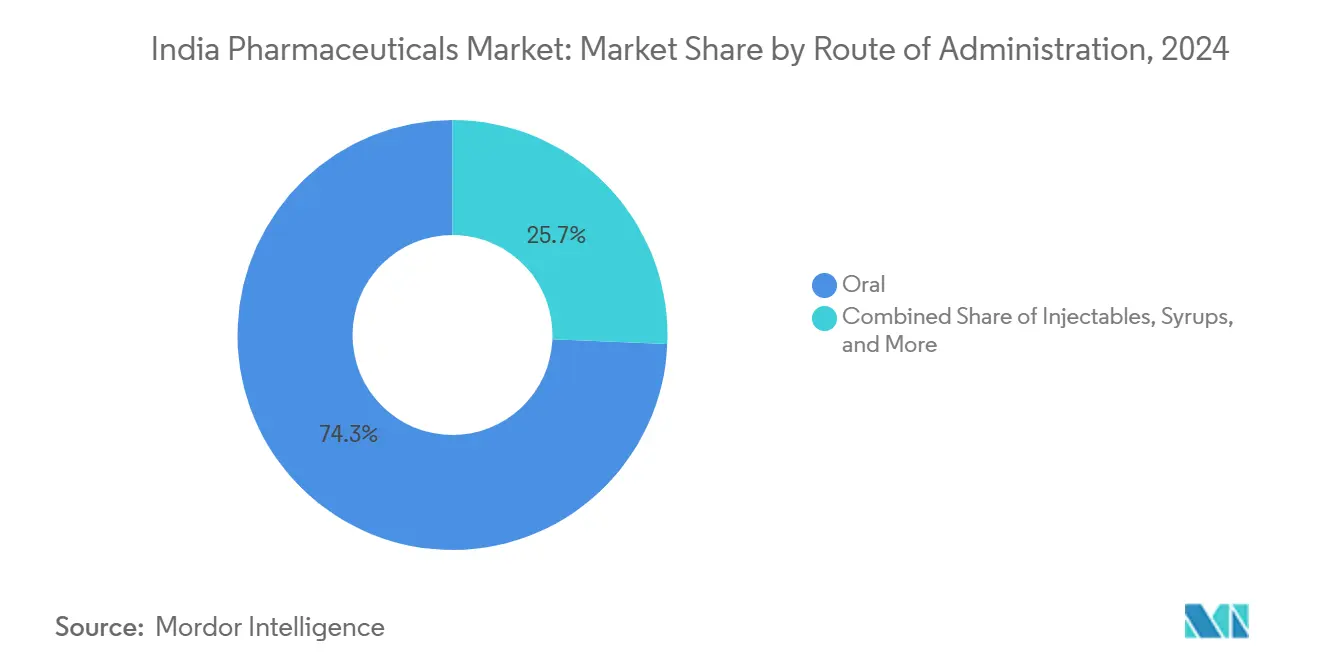
- By route of administration, oral products held 74.33% of revenue in 2025, while inhalational products are forecast to grow at a 9.13% CAGR through 2031.
- By distribution channel, retail pharmacies held 64.57% of revenue in 2025, while online pharmacies are forecast to grow at a 9.45% CAGR through 2031.
- By geography, West India held 32.24% of revenue in 2025, while South India is forecast to grow at a 7.27% CAGR through 2031.
Note: Market size and forecast figures in this report are generated using Mordor Intelligence’s proprietary estimation framework, updated with the latest available data and insights as of January 2026.
Market Trends and Insights
Drivers Impact Analysis of India Pharmaceuticals Market*
| Driver | (~) % Impact on CAGR Forecast | Geographic Relevance | Impact Timeline |
|---|---|---|---|
| Patent cliff of legacy blockbusters fuels generic penetration | +1.10% | Global, with outsized gains in domestic generics hubs (Gujarat, Telangana, Andhra Pradesh) | Medium term (2–4 years) |
| Government PLI schemes accelerating domestic API and formulation capacity | +0.80% | National, with early gains concentrated in Gujarat, Maharashtra, Andhra Pradesh, and Himachal Pradesh | Long term (≥ 4 years) |
| Rapid chronic-disease incidence (diabetes, CVD) expands long-term demand | +1.00% | National; highest intensity in South India (Tamil Nadu, Kerala) and West India (Maharashtra) | Long term (≥ 4 years) |
| Pay-for-performance tendering by large hospital chains | +0.40% | Metro and Tier 1 cities across North, West, and South India | Medium term (2–4 years) |
| AI-enabled drug-repurposing hubs in Hyderabad and Bengaluru | +0.30% | South India (Telangana, Karnataka), with spillover to Mumbai-Pune corridor | Long term (≥ 4 years) |
| Rise of phygital e-pharmacy–doctor ecosystems improving adherence | +0.50% | National, with early penetration in urban Tier 1 and Tier 2 cities | Short term (≤ 2 years) |
| Source: Mordor Intelligence | |||
Patent Cliff of Legacy Blockbusters Fuels Generic Penetration
The India pharmaceuticals market is poised to benefit as established medicines lose patent protection, creating opportunities for domestic companies to launch generic alternatives. Semaglutide is expected to lose patent protection in India in March 2026, prompting several domestic companies to introduce generic versions shortly thereafter. Zydus Lifesciences plans to launch an adjustable, reusable multi-dose pen priced at INR 2,200 per month (USD 26), according to the company. The supplied material identifies Zydus Lifesciences, Sun Pharma, Dr. Reddy’s, and Mankind Pharma as early participants in this opportunity. Companies that secure timely regulatory approvals and build reliable retail distribution networks are likely to gain an early market position before price competition intensifies. This development is expected to support the India pharmaceuticals market by expanding patient access to generic semaglutide and driving volume growth for local manufacturers.
Government PLI Schemes Accelerating Domestic API & Formulation Capacity
The Production Linked Incentive (PLI) program continues to strengthen domestic manufacturing capacity for critical pharmaceutical ingredients and formulations. According to government information, 39 bulk-drug projects covering 28 critical APIs are expected to be commissioned by June 2026. These projects are designed to build capacity for Penicillin-G, Clavulanic Acid, Rifampicin, Atorvastatin, and other essential intermediates. Aurobindo Pharma’s Penicillin-G facility in the Kakinada SEZ has a planned capacity of 15,000 MT per year, supported by an investment of INR 2,270.1 crore (USD 270 million). This capacity expansion could support the India pharmaceuticals market by improving supply reliability, ensuring quality compliance, and strengthening export-oriented production. However, the commercial viability of these investments will depend on the ability of new facilities to secure sustained demand beyond the replacement of individual imports.
Rapid Chronic–Disease Incidence (Diabetes, CVD) Expands Long-Term Demand
Chronic conditions generate sustained demand for medicines used to manage diabetes, cardiovascular diseases, and related complications. Government data indicate that non-communicable diseases account for 56.7% of deaths in India, while cardiovascular diseases account for nearly 31%. The rising prevalence of diabetes further increases the need for therapies that address multiple related conditions. Patients with diabetes and hypertension typically require long-term treatment and recurring prescription refills, creating a consistent demand base. Online platforms and retail pharmacies support access to these therapies by facilitating timely prescription renewals. This sustained need for chronic disease management provides the India pharmaceuticals market with a durable demand base across branded generics and chronic-care products.
Pay-For-Performance Tendering by Large Hospital Chains
Digital pharmacy services are improving refill convenience for patients requiring recurring treatment. Tata 1mg, PharmEasy, and Apollo 24|7 are among the operators identified in the supplied material that are developing integrated digital health and medicine delivery ecosystems. Their platforms offer prescription uploads, refill reminders, and home delivery, reducing the effort required to access chronic medications. These services are particularly relevant in urban areas, where digital health adoption and delivery infrastructure are more advanced. In addition to prescription medications, these platforms support over-the-counter (OTC) wellness and self-care purchases. As a result, online channels may expand faster than traditional dispensing channels in the India pharmaceuticals market, while retail pharmacies remain critical for immediate fulfillment.
Restraints Impact Analysis of India Pharmaceuticals Market*
| Restraint | (~) % Impact on CAGR Forecast | Geographic Relevance | Impact Timeline |
|---|---|---|---|
| Frequent Retail Price Caps Under NLEM Revisions Squeeze Margins | -0.70% | National, with greater exposure in high-volume anti-infective, cardiovascular, and anti-diabetic categories | Short term (≤ 2 years) |
| Compliance Gaps With Revised Schedule M cGMP Audits | -0.50% | National, with greater exposure for MSME clusters in Himachal Pradesh, Uttarakhand, and Uttar Pradesh | Medium term (2-4 years) |
| Delay in Patent Linkage System Hampers Innovative Drug Launches | -0.40% | National, with the strongest effect on innovator companies, specialty therapies, and patented-drug launches | Medium term (2-4 years) |
| Reduced Chinese Intermediate Supply Optionality Post-COVID Drives Cost Volatility | -0.60% | National, with higher exposure among API-dependent generic manufacturers and formulation producers | Short term (≤ 2 years) |
| Source: Mordor Intelligence | |||
Frequent Retail Price Caps under NLEM Revisions Squeeze Margins
Price regulations continue to constrain margins on scheduled medicines, particularly in high-volume therapy areas. Effective April 1, 2025, the NPPA revised ceiling prices for 906 scheduled formulations and 14 intravenous formulations[1]. Government information also highlighted a 1.7% WPI-linked adjustment and patient savings associated with the earlier NLEM 2022 revision. In addition, ceiling-price decisions may affect medicines added or revised outside the annual adjustment cycle. As a result, manufacturers with significant exposure to scheduled products may need to expand their portfolios of non-scheduled and differentiated formulations to safeguard profitability. Although these measures improve patient affordability, they continue to limit revenue realization in the India pharmaceuticals market.
Compliance Gaps with Revised Schedule M cGMP Audits
Revised Schedule M requirements elevate the quality standards that pharmaceutical manufacturing plants must meet. The Ministry of Health and Family Welfare notified the revised requirements in December 2023, establishing separate implementation timelines for large manufacturers and eligible MSMEs[2]. Compliance is particularly critical for facilities that support high-volume generic drug demand. Manufacturers requiring plant upgrades may incur additional capital expenditure and face operational challenges during the transition. Risk-based inspections further emphasize the need for robust documented quality systems and timely corrective actions to sustain operations. The Indian pharmaceuticals market could face localized supply constraints if non-compliant facilities are temporarily unable to manufacture essential products.
*Our forecasts treat driver/restraint impacts as directional, not additive. The impact forecasts reflect baseline growth, mix effects, and variable interactions.
India Pharmaceuticals Market Segment Analysis
By Therapeutic Area:
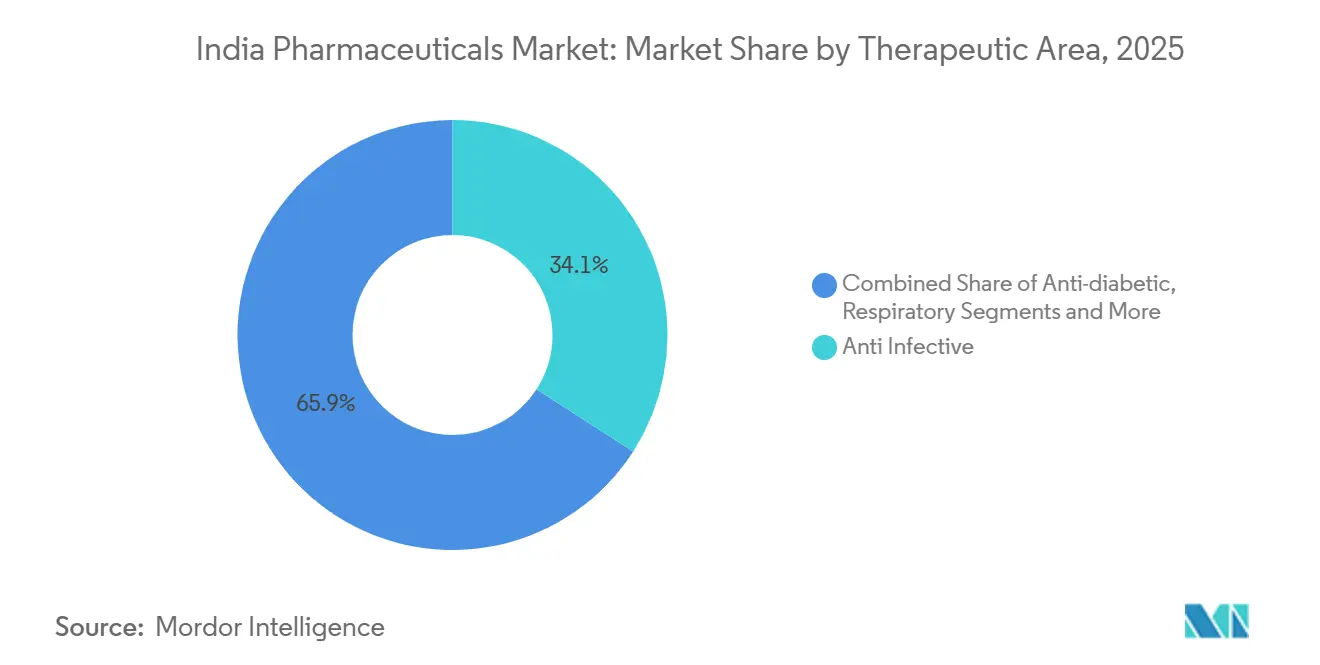
Anti-Infective Volume and Oncology GrowthAnti-infectives are projected to account for 34.11% of the India pharmaceuticals market in 2025, supported by sustained demand for commonly dispensed medicines. The continued burden of infectious diseases and the high volume of prescriptions filled through community pharmacies underpin the segment’s leading position. Cardiovascular and anti-diabetic medicines also represent key therapy areas, as chronic conditions require ongoing treatment. Gastrointestinal and pain medicines generate frequent purchases across retail and online channels. Respiratory treatments are gaining relevance as inhalation products receive increased attention, further expanding the prescription base of the India pharmaceuticals market.
Oncology is forecast to grow at a CAGR of 8.22% through 2031, making it the fastest-growing therapeutic area in the analysis. Greater biosimilar availability, specialty treatments, and the increasing adoption of precision medicine are expected to support this growth. Dr. Reddy’s is expected to launch NIVORZ, a nivolumab biosimilar approved by the DCGI for 12 cancer indications, in September 2026 [3]. Cipla is also expected to enter into a license and supply agreement for TQB2102, a HER2 bispecific antibody-drug conjugate, in August 2026. These developments underscore the growing strategic importance of biologics and antibody-drug conjugates in domestic oncology competition and may place manufacturers without biologics capabilities at a competitive disadvantage.

By Drug Type:
Prescription Scale and OTC ExpansionPrescription drugs accounted for 61.26% of drug-type revenue in 2025, supported by a broad base of generic medicines and a smaller portfolio of patented and specialty therapies. Multinational companies drive demand for selected branded therapies through targeted engagement with medical professionals and hospitals, while domestic companies leverage established prescription brands to maintain recognition among physicians and pharmacies. Chronic care treatments further support prescription dispensing, as regulated medicines remain integral to patient treatment in the India pharmaceuticals market.
OTC drugs are forecast to grow at a CAGR of 7.24% through 2031, driven by expanding opportunities across organized retail pharmacies and digital platforms. Retail pharmacies can cross-sell wellness and self-care products to existing customers, while digital platforms can offer bundles combining supplements and repeat-purchase products. The supplied material linked this trend to higher average order values across selected wellness categories. Semaglutide’s patent expiry is also expected to create a self-pay opportunity, increasing the convergence of consumer-led purchases and traditional pharmacy sales.
By Formulation:
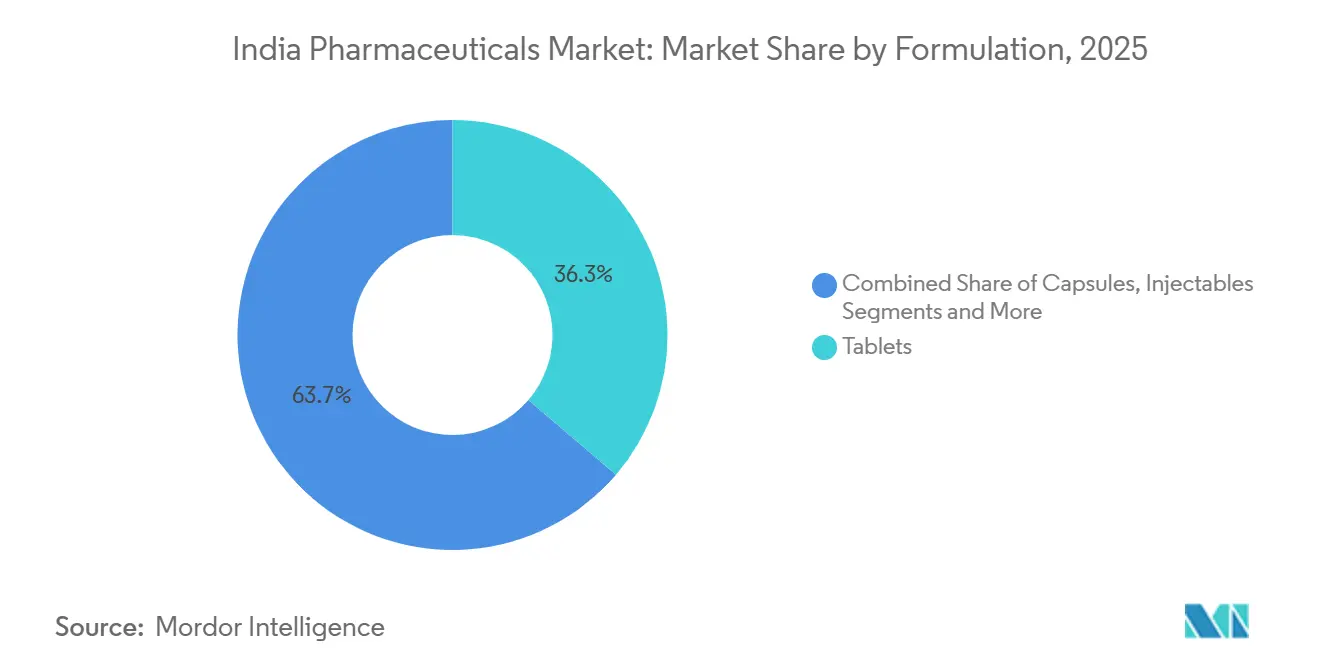
Tablet Leadership and Injectable GrowthTablets accounted for 36.25% of formulation revenue in 2025, supported by their cost efficiency, product stability, and widespread familiarity among patients and pharmacies. They remain the preferred formulation for anti-infective, cardiovascular, anti-diabetic, and pain management therapies. Capsules cater to select premium and nutraceutical product segments, while syrups and suspensions continue to play an important role in pediatric dosing. Other formulations include newer delivery formats designed to address specific patient needs; however, tablets retain a leading position in the Indian pharmaceutical market.
Injectables are projected to grow at a CAGR of 6.98% through 2031, driven by increasing demand for oncology biologics, biosimilar infusions, and hospital-administered treatments. Dr. Reddy’s Aurigene entered into a long-term manufacturing and supply agreement with a global pharmaceutical company for annual volumes of 18 million units, primarily focused on injectable products. Such agreements enable manufacturers to strengthen complex production capabilities while sharing commercial risk. Rising hospital utilization and biosimilar approvals are expected to expand injectable capacity and shift the formulation mix toward high-value therapies.
By Route of Administration:
Oral Leadership and Inhalational DemandOral products are projected to account for 74.33% of revenue in 2025, supported by the widespread use of tablets and capsules for treating common acute and chronic conditions. Familiarity among patients and alignment with established retail pharmacy dispensing practices further support their adoption. Anti-infective, anti-diabetic, and cardiovascular therapies contribute significantly to oral product volumes. Although parenteral products remain essential for inpatient care and complex specialty therapies, oral medicines continue to form the volume base of the India pharmaceuticals market.
Inhalational products are forecast to grow at a CAGR of 9.13% through 2031, driven by the increasing focus on asthma and chronic obstructive pulmonary disease (COPD) treatment. Cipla’s Rotahaler platform strengthens its established position in the domestic inhalation therapy segment. Zydus is expected to launch REVAHALE, a once-daily nebulized long-acting muscarinic antagonist (LAMA) treatment for COPD, in August 2026. Device-differentiated products can address the needs of patients who cannot use standard inhalers effectively, while clinical guidance can support the broader adoption of inhaled therapies.
By Distribution Channel:
Retail Reach and Online GrowthRetail pharmacies are projected to account for 64.57% of distribution channel revenue in 2025, supported by their proximity to clinics, hospitals, and residential neighborhoods. This accessibility enables patients to fill prescriptions and purchase OTC products during the same visit. Hospital pharmacies continue to play a critical role in inpatient care, oncology, and other specialty therapies. Retail outlets also remain a key patient access channel, particularly for consumers seeking pharmacist guidance, reinforcing their position as a primary distribution route across the India pharmaceutical market.
Online pharmacies are forecast to expand at a CAGR of 9.45% through 2031, driven by digital prescription processing and doorstep delivery services that improve medicine access for repeat users. Tata 1mg, PharmEasy, and Apollo 24|7 have established integrated platforms offering consultations, prescription management, and medicine fulfillment. In addition, quick-commerce services can facilitate convenient purchases of OTC and wellness products. Subject to regulatory clarity and secure prescription processes, these platforms can distinguish convenience-driven consumer purchases from standard prescription fulfillment.
Geographic Analysis
West India accounted for 32.24% of the India pharmaceuticals market share in 2025, supported by its established manufacturing and export ecosystem. Gujarat maintains a strong API and chemical synthesis base across locations such as Ankleshwar and Vadodara, while Maharashtra’s Mumbai-Pune corridor integrates research activities, corporate headquarters, and manufacturing capabilities. Government investment support has further strengthened pharmaceutical projects across these western states. Well-developed export logistics also connect regional manufacturing facilities with markets in Africa, Latin America, and ASEAN countries, supporting both domestic pharmaceutical supply and overseas shipments.
South India is projected to grow at a CAGR of 7.27% through 2031, driven by expanding manufacturing capacity and rising treatment demand. Telangana supports pharmaceutical research and manufacturing through the Hyderabad ecosystem, while Andhra Pradesh is expanding bulk drug production capacity and Karnataka continues to attract biosimilar investments. Higher chronic care needs in certain southern states, as identified in the supplied material, may further support medicine consumption. The region’s technical workforce and established life sciences ecosystem also enable companies to develop complex products, reinforcing its growth outlook.
North India held an estimated 26% revenue share in 2025, according to the supplied draft, supported by pharmaceutical expenditure, institutional procurement, and over-the-counter (OTC) wellness demand in Delhi-NCR. Uttarakhand and Himachal Pradesh also maintain a sizeable MSME formulation manufacturing base, although Schedule M compliance readiness remains important for these clusters. East and Northeast India represented the smallest regional contribution in the supplied material. However, Odisha and West Bengal are expanding pharmaceutical MSME capacity and strengthening logistics connectivity. Across all regions, national regulatory oversight continues to govern product approvals and compliance.
Competitive Landscape
The India pharmaceuticals market is moderately fragmented, with domestic manufacturers and multinational subsidiaries competing across therapeutic areas. Sun Pharma, Cipla, Dr. Reddy’s, Lupin, Zydus Lifesciences, and Aurobindo maintain a strong presence in domestic formulations, generics, and selected specialty categories. Abbott, GSK India, Pfizer India, Sanofi India, and Novartis India compete in branded and specialty segments. This competitive landscape sustains pricing pressure in generic drugs while creating opportunities for differentiation through product portfolios and capabilities. Biosimilars, complex injectables, and respiratory devices represent key areas where clinical expertise and manufacturing capabilities can support competitive positioning. The supplied material does not identify any single company as holding a dominant market position.
Sun Pharma’s proposed acquisition of Organon would expand its presence in women’s health and biosimilars. The supplied draft states that Organon shareholders approved the proposed merger in July 2026. It also indicates that Innovative Medicines accounted for 22% of Sun Pharma’s consolidated sales in FY2025-26. These developments highlight Sun Pharma’s strategy to diversify beyond volume-driven domestic generics and build a broader specialty and global portfolio. Competitors may respond through targeted licensing agreements, specialty product launches, and increased investments in biosimilars.
Biocon Biologics continues to expand its multi-market biosimilar portfolio through regulatory approvals. The supplied material states that the company received a positive CHMP opinion for Pebrilzo, its pertuzumab biosimilar, in September 2026. Earlier approvals for denosumab biosimilars further strengthened its capabilities in regulated markets. In parallel, Dr. Reddy’s and Cipla have advanced initiatives in immuno-oncology and antibody-drug conjugates. These developments indicate intensifying competition in biologics and specialty care. Companies that rely primarily on established oral generics may face limited growth opportunities in faster-growing specialty categories.
India Pharmaceuticals Industry Leaders
-
Sun Pharmaceutical Industries Limited
-
Cipla Pharmaceuticals
-
Dr. Reddy’s laboratories
-
Torrent Pharmaceuticals
-
Cipla Ltd.
- *Disclaimer: Major Players sorted in no particular order
India Pharmaceuticals Market Companies Covered in this Report
- Abbott Laboratories
- Alkem Laboratories
- Aurobindo Pharma
- Biocon
- Cipla
- Dr. Reddy’s Laboratories
- Glenmark Pharmaceuticals
- GSK India
- Intas Pharmaceuticals
- Johnson & Johnson Pvt. Ltd. (Janssen)
- Lupin
- Mankind Pharma
- Novartis India
- Pfizer India
- Sanofi India
- Sun Pharmaceuticals Industries
- Torrent Pharmaceuticals
- Zydus Lifesciences
Recent Industry Developments in India Pharmaceuticals Market
- September 2026: Dr. Reddy's Laboratories launched NIVORZ® (Nivolumab Biosimilar), its first biosimilar immuno-oncology product in India, approved by the DCGI across 12 cancer indications. The drug was manufactured end-to-end at Dr. Reddy's biologics facility in Bachupally, Hyderabad. It targeted the domestic immuno-oncology market, which the supplied material estimated at INR 3,900 crore, or USD 464 million, in 2025. The launch was intended to improve affordability of checkpoint-inhibitor therapy.
- September 2026: Sun Pharma and LIB Therapeutics announced an exclusive global licensing agreement, excluding the United States and China, for Lerodalcibep, a once-monthly PCSK9 inhibitor. The supplied material stated that the product received EU marketing approval on September 21, 2026. The agreement gives Sun Pharma access to the product outside the United States and China. It also supports the company’s Innovative Medicines portfolio beyond dermatology.
- September 2026: Biocon Biologics received a positive CHMP opinion from the European Medicines Agency for Pebrilzo, its pertuzumab biosimilar for HER2-positive breast cancer. The supplied material described this opinion as support for a future India filing for the molecule. The regulatory step adds to Biocon Biologics’ work in oncology biosimilars.
- August 2026: Cipla entered an exclusive license and supply agreement with Sino Biopharmaceutical's subsidiary CTTQ for TQB2102, also known as Rolditamig Deuderuxtecan. The agreement covers India, South Africa, and 5 other emerging markets. The supplied material identified HER2-low breast cancer as the initial indication. The transaction advances Cipla’s work in antibody-drug conjugates and oncology.
India Pharmaceuticals Market Report Scope and Research Methodology
Market Definition and Coverage
Our study views the Indian pharmaceuticals market as all human-use, prescription and over-the-counter medicines, whether small-molecule, biologic or vaccine, manufactured or imported for commercial sale within India in finished-dosage form. Active pharmaceutical ingredient exports, medical devices, veterinary drugs and nutraceuticals are kept outside this boundary.
Scope Exclusions: Inputs such as bulk APIs, diagnostics, and medical devices are not counted in the market value to avoid double accounting.
Segments Covered in This Report
- By Therapeutic Area
- Anti-infectives
- Cardiovascular
- Anti-diabetic
- Respiratory
- Oncology
- Gastrointestinal
- Pain / Analgesics
- Other Therapeutic Areas
- By Drug Type
- Prescription Drugs
- Patented Drugs
- Generic Drugs
- OTC Drugs
- Prescription Drugs
- By Formulation
- Tablets
- Capsules
- Injectables
- Syrups / Suspensions
- Other Formulations
- By Route of Administration
- Oral
- Inhalational
- Parental
- Other Route of Administrations
- By Distribution Channel
- Hospital Pharmacies
- Retail Pharmacies
- Online Pharmacies
- By Region
- North India
- West India
- South India
- East and Northeast India
Data Sources, Market Sizing, and Validation
Primary Research
Mordor analysts interviewed procurement heads at hospital chains, senior marketing managers at leading generic producers, e-pharmacy category leads, and regulators across four zones. Guided discussions verified channel mark-ups, therapy penetration, and expected policy trajectories, while short surveys with retail chemists gauged stocking patterns in Tier-2 and Tier-3 towns. Insights from these interactions filled data gaps and shaped the assumptions embedded in our forecast model.
Desk Research
We first mapped the demand pool through freely available tier-1 sources such as the Ministry of Chemicals & Fertilizers annual output tables, MOSPI national accounts, CDSCO approval logs, and Directorate General of Commercial Intelligence export statistics, complemented by association yearbooks from IDMA and Pharmexcil. Company filings, investor decks, reputable business press and academic journals supplied pricing ranges, therapy mix and channel insights. Subscription data sets, including D&B Hoovers for manufacturer financials and Dow Jones Factiva for transaction news, helped us cross-check volumes and spot abnormal swings. These references are illustrative, not exhaustive; many additional records were reviewed for clarification and validation purposes.
Market-Sizing & Forecasting
A top-down construct converts national drug sales, invoices and trade data, into ex-manufacturer value, which is then corroborated with selective bottom-up checks such as sampled average selling price multiplied by audited plant dispatch volumes for major firms. Key variables driving the model include chronic-therapy prescription counts, average retail mark-ups, Jan Aushadhi outlet additions, import share of high-value biologics, capacity utilization in formulation plants, and INR-USD exchange trends. Multivariate regression links these variables to annual sales, while scenario analysis adjusts for policy shocks like price-cap revisions. Data voids on smaller private players are bridged using peer margin proxies and capacity heuristics before final triangulation.
Data Validation & Update Cycle
Outputs pass a two-step analyst review that flags anomalies against historical series, IQVIA quarterly panels and corporate guidance. We refresh every twelve months and trigger interim updates for material events such as GST rate changes or large recalls. A final sense-check is run before publication to ensure clients receive the latest view.
How Mordor Intelligence's India Pharmaceuticals Market Size Compares to Other Published Estimates
Published estimates often differ because publishers choose divergent scope, price-point assumptions, and refresh rhythms. Model boundaries, whether they include veterinary drugs, bulk APIs or trade margins, can swing totals by billions.
Key gap drivers in this market are (i) inclusion of manufacturing value-added versus ex-factory sales, (ii) treatment of hospital procurement discounts, (iii) currency conversion dates, and (iv) refresh cadence that may miss recent NLEM price ceilings. Mordor's clearly defined finished-dosage scope, annual refresh and dual validation process limit these distortions.
Benchmark comparison
| Market Size | Anonymized source | Primary gap driver |
|---|---|---|
| USD 66.66 B (2025) | Mordor Intelligence | - |
| USD 39.82 B (2024) | Global Consultancy A | Excludes OTC and vaccine revenues; uses FY22 exchange rate |
| USD 53.29 B (2025) | Regional Consultancy B | Omits trade margins and hospital discounts not netted |
| USD 61.36 B (2024) | Industry Association C | Mixes bulk API exports with domestic formulations |
In short, our disciplined scope choice, variable-level cross-checks and transparent update cycle give decision-makers a balanced, reproducible baseline they can trust for strategic planning.
Key Questions Answered in the Report
What is the forecast for the India pharmaceuticals market?
The India pharmaceuticals market is forecast to reach USD 79.74 billion by 2031, growing at a 5.74% CAGR from 2026.
Which therapeutic area is growing fastest in India?
Oncology is forecast to grow at an 8.22% CAGR through 2031, supported by biosimilars and specialty treatment launches.
Which medicine distribution channel is growing fastest?
Online pharmacies are forecast to grow at a 9.45% CAGR through 2031, supported by refill services and home delivery.
What is the largest route of administration for pharmaceuticals in India?
Oral products held 74.33% of revenue in 2025, supported by widespread use in acute and chronic conditions.
Which region leads pharmaceutical revenue in India?
West India held 32.24% of revenue in 2025, supported by manufacturing clusters in Gujarat and Maharashtra.
What is the main regulatory challenge for manufacturers?
Price controls under the NLEM and compliance with revised Schedule M requirements can pressure margins and raise operational demands.