


For component suppliers and robot manufacturers: Find Robotics Integrators and Get Designed In Before the RFQ
- Integrator mappingAutomation system integrators by capability, sector and geography
- Demand by categoryWhere demand for a robot category is forming, before any tender
- Verified deploymentsInstallations by category and sector, each with a source and date
- Patent activityWhere competitors and customers are filing, by domain and jurisdiction
The Problem: The RFQ Arrives After the Design Is Fixed
By the time an RFQ arrives, the design is usually fixed. The integrator chose a gripper, a camera and a drive while the line was on the drawing board, and the quote round is largely a formality for the specified part. A supplier that waits for RFQs competes on price for designs it did not influence.
Being designed in requires reaching the integrator during design, which means knowing which lines are being specified now. Construction permits and expansion announcements are what show that.

How Suppliers and Robot Manufacturers Use Robotics Intelligence
Find the facilities entering the buying window in the sectors the product serves.
Identify the integrators positioned to serve each project, by capability and geography.
Present the component against the use cases each line needs, while the design is open.
For robot manufacturers: watch where demand for each robot category is forming, by facility type and sector, and brief channel partners early.
Selling to integrators is a different motion from selling to end users. The integrator is not the budget holder, but the specifier, and picks a component early while a line is being designed, then carries that choice into the quote. Reaching them after the design is fixed means asking them to redo work they have already completed.
The sequence that works is to find the facilities entering the buying window, identify which integrators serve that sector and region, and arrive with an application-specific case while the drawing is still open. The first two steps become a filtered search.
A top-down growth rate produces a percentage. Working bottom-up from facility data ties the forecast to named projects: count the facilities being built in the sectors that use the category, then weight them by robotics likelihood and procurement window. Verified deployment records then show which categories have already been installed in comparable facilities.
Case Study: A Gripper Manufacturer Winning Design-Ins
A gripper manufacturer wants more design wins in automotive and logistics. Robotics Intelligence helps them pull the facilities in those sectors entering the twelve to twenty-four month window, identifies the integrators serving each, and reaches those integrators with application-specific proposals while the lines are still being drawn. When the RFQs go out months later, the integrators have already evaluated the gripper against the application.
What You Get in the Product
In the product · What it does for a supplier or manufacturer
01
Facility signals with robot-type fit
Which projects are scored as likely to need the categories concerned, including arms, vision, mobile robots and material handling.
02
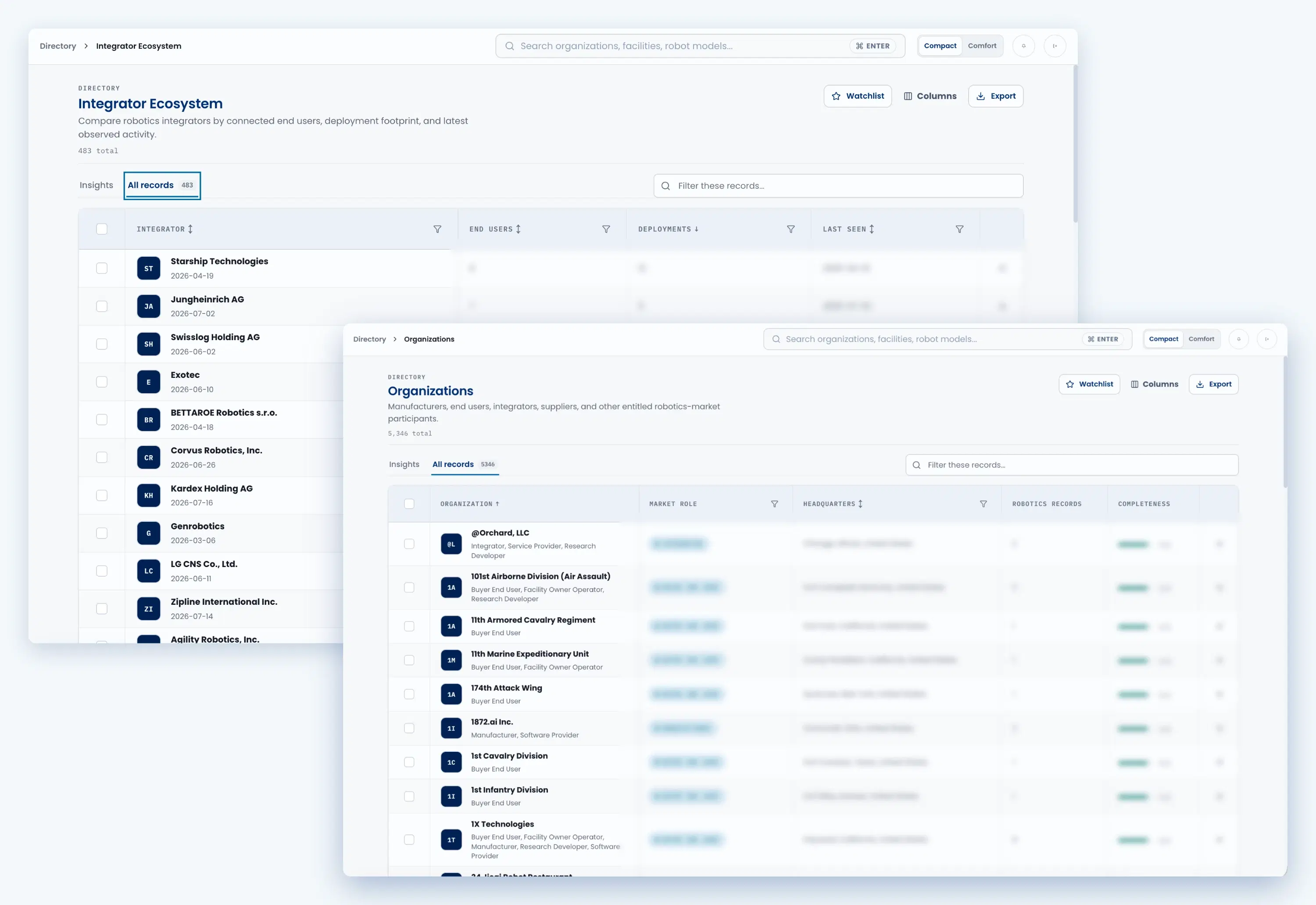
Integrator mapping
Who serves each project’s sector and region, so outreach lands on the specifier.
03
Demand by category and geography
Where demand for a robot category is forming, months before a tender names a supplier.
04
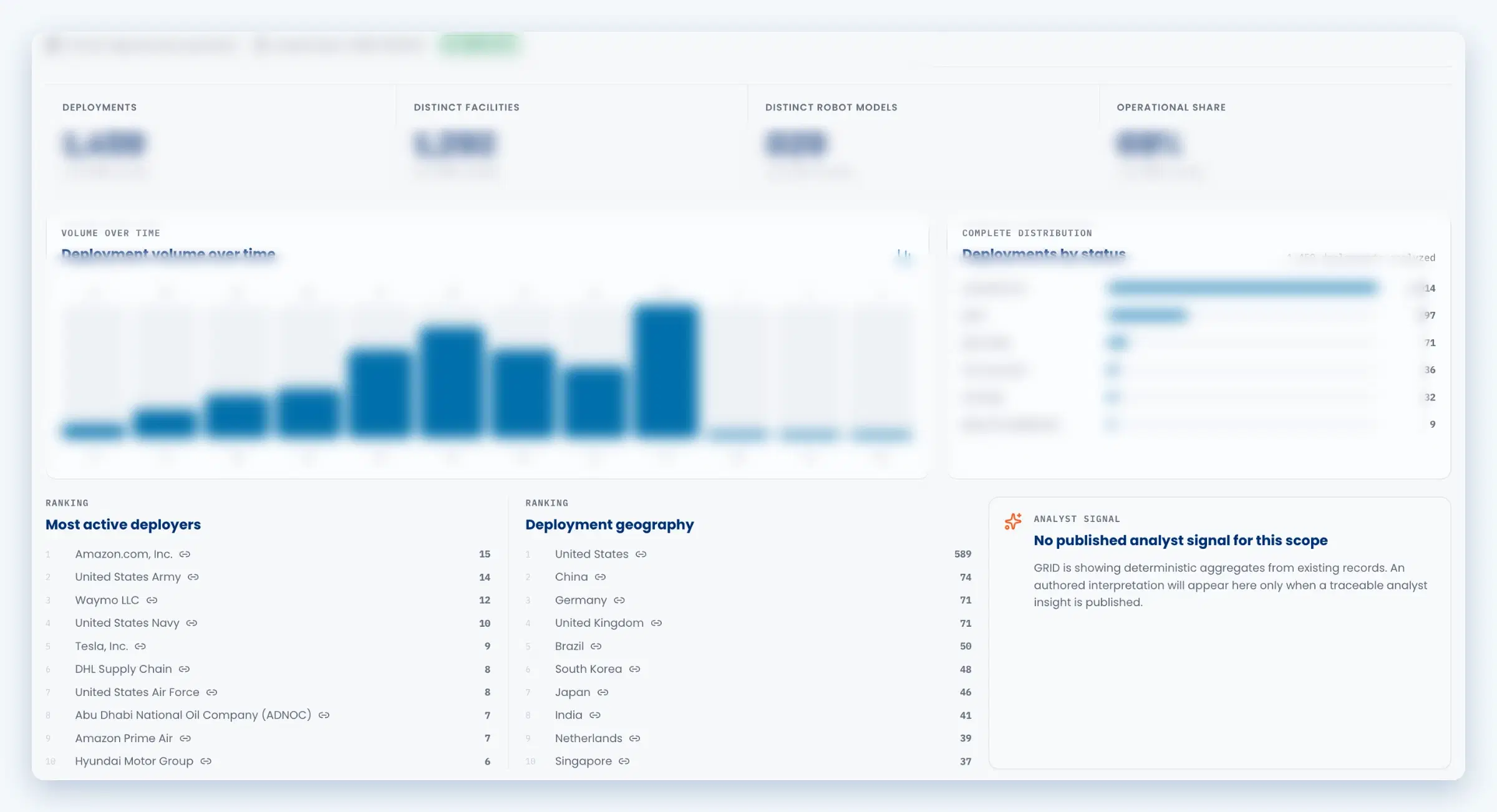
Deployments
Verified installations by category and sector, each with a source and a date.
05
Tender notices and contract awards
What is being procured in the applications a component serves, and which suppliers are winning.
06
Patents
Where competitors and customers are filing, by technology domain and jurisdiction.
07
Robot models
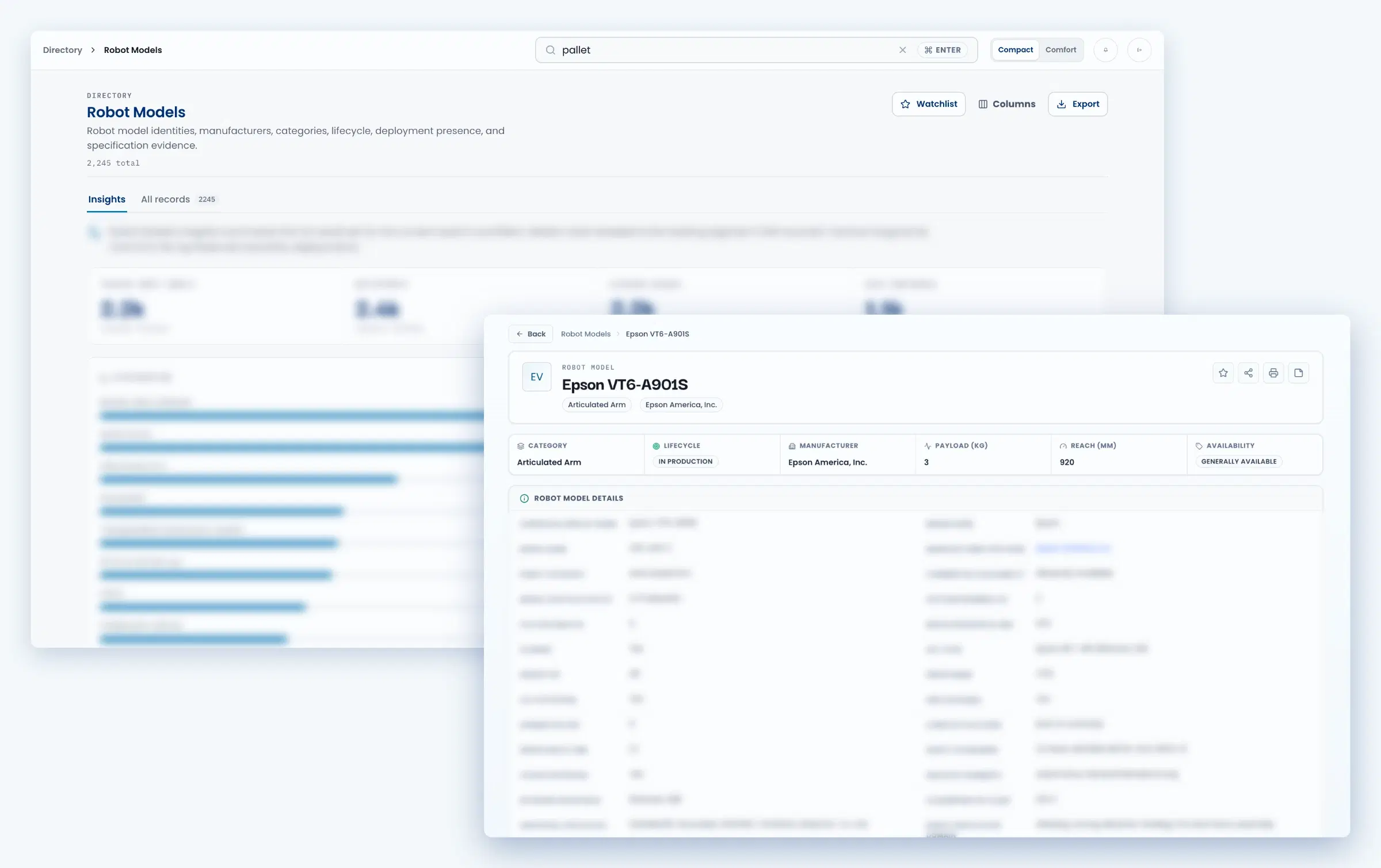
Model identities, manufacturers, categories and specification evidence, for matching capability to platform.
What the Deployment Record Adds to a Forecast
Robotics Integrator and Supplier FAQs
01
Is this a sourcing directory?
No. Directories list robotics suppliers for buyers. This works the other way, showing suppliers where demand is forming and who is specifying.02
How do I sell components to system integrators?
Reach them while a line is being designed rather than after. Find the facilities in the relevant sectors entering the buying window, identify the integrators serving them, and bring an application-specific case before the request for quote exists.03
Which companies are deploying robots at scale?
Deployment records cover verified installations linked to named operators and facilities, including several of the largest logistics and fulfilment operators. Records carry what is verifiable, with a source and a date.04
How do I forecast demand for palletising robots?
Bottom-up from facilities: count the sites being built in the sectors that use the category, weight by robotics likelihood and procurement window, then check against verified deployments of that category.05
Which suppliers get the most from it?
Companies whose product is chosen at design time, including component makers and robot manufacturers selling through integrators.06
How do I find the right robotics integrator to call?
Each facility links to the integrators serving its sector and region, with capability tags, so the candidate list is assembled already.07
Does it work for direct-to-end-user sales?
Yes. The same facility signals mark accounts heading toward a purchase, and the account can be worked without the integrator step.08
Can I track competitor activity?
Yes. Contract awards show which suppliers are winning, deployment records show where their equipment is running, and patent records show what they are filing.
See the facilities entering the window in your territory.