
Venturi Masks Market Size and Share
Market Overview
| Study Period | 2020 - 2031 |
|---|---|
| Market Size (2026) | USD 2.71 Billion |
| Market Size (2031) | USD 3.95 Billion |
| Growth Rate (2026 - 2031) | 7.86 % |
| Fastest Growing Market | Asia-Pacific |
| Largest Market | North America |
| Market Concentration | Medium |
Major Players *Disclaimer: Major Players sorted in no particular order Image © Mordor Intelligence. Reuse requires attribution under CC BY 4.0. | |
Venturi Masks Market Analysis by Mordor Intelligence
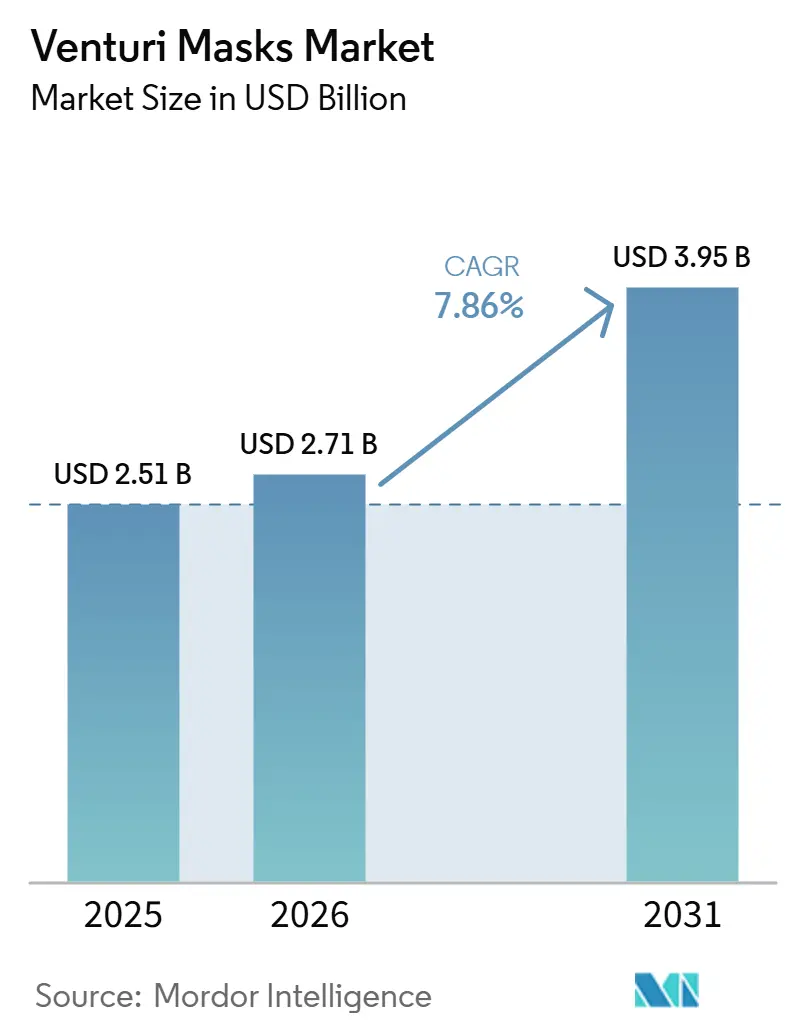
The Venturi Masks Market size was valued at USD 2.51 billion in 2025 and is estimated to grow from USD 2.71 billion in 2026 to reach USD 3.95 billion by 2031, at a CAGR of 7.86% during the forecast period (2026-2031).
Rising COPD incidence and a growing need for controlled oxygen delivery support demand, because oxygen targets must be managed carefully for many patients with chronic carbon dioxide retention. Home-based respiratory care is widening the addressable customer base, although reimbursement decisions can affect the pace of adoption. Disposable, individually packaged masks fit hospital infection-control specifications and public procurement requirements. Adjustable and non-PVC products offer suppliers a route to differentiate where hospital groups seek simpler inventories and materials that meet European device requirements. High-flow nasal cannula systems remain an important substitute in higher-acuity settings, while Venturi masks retain a lower-cost role when precise fractional inspired oxygen control is needed. The Venturi masks market therefore combines stable hospital demand with a developing homecare channel and increasing product-specification competition.
Key Report Takeaways
- By product type, Adult Venturi Masks held 65.31% of the Venturi masks market share in 2025, while Adjustable Flow Venturi Masks are expected to have the highest CAGR at 8.58% through 2031.
- By material type, Polyvinyl Chloride held 72.24% of the Venturi masks market share in 2025, while Silicone is expected to have the highest CAGR at 8.22% through 2031.
- By oxygen flow rate, Low Flow Rate masks held 48.14% of the Venturi masks market size in 2025, while High Flow Rate masks are expected to have the highest CAGR at 8.82% through 2031.
- By application, COPD accounted for 39.21% of the Venturi masks market size in 2025, while asthma is expected to have a projected CAGR at 10.85% through 2031.
- By end user, Hospitals and Clinics held 54.56% of demand in 2025, while Homecare Settings are expected to have the highest CAGR at 9.55% through 2031.
- By geography, North America held 38.61% of demand in 2025, while Asia-Pacific is expected to have the highest CAGR at 10.25% through 2031.
Note: Market size and forecast figures in this report are generated using Mordor Intelligence’s proprietary estimation framework, updated with the latest available data and insights as of January 2026.
Market Trends and Insights
Drivers Impact Analysis of Venturi Masks Market*
| Driver | (~) % Impact on CAGR Forecast | Geographic Relevance | Impact Timeline |
|---|---|---|---|
| Rising Prevalence of COPD and Other Chronic Respiratory Diseases | +2.1% | Global, with disproportionate impact in East Asia and Pacific, South Asia, and high-income North America | Long term (≥ 4 years) |
| Expansion of Home-Based Oxygen Therapy | +1.5% | North America, Europe, China, and Australia | Medium term (2-4 years) |
| Infection-Control Preference for Single-Patient and Disposable Products | +1.0% | Global, strongest in North America, the EU, and higher-income Asia-Pacific countries | Short term (≤ 2 years) |
| Hospital and Emergency-Care Respiratory Capacity Expansion | +0.9% | North America, South Asia, and core Asia-Pacific markets | Medium term (2-4 years) |
| Demand for PVC-Free and Lower-Impact Medical Consumables | +0.6% | The EU, with spillover to North America and GCC countries | Medium term (2-4 years) |
| Procurement Shift Toward Adjustable, Multi-Concentration Mask Systems | +0.5% | Global, with early adoption in the EU and hospital-network procurement hubs | Short term (≤ 2 years) |
| Source: Mordor Intelligence | |||
Rising Prevalence of COPD and Other Chronic Respiratory Diseases
COPD remains a central demand driver for the Venturi masks market because it requires controlled oxygen administration during exacerbations. The World Health Organization identified COPD as the third leading cause of death worldwide, with 3.4 million deaths reported for 2023. A 2025 CHEST study placed direct medical costs associated with COPD at USD 778.66 billion in 2025 and projected USD 862.42 billion by 2050. The same research estimated 456 million annual COPD exacerbations in 2025, creating repeated treatment events where controlled oxygen equipment may be required. Guidance for COPD care commonly targets oxygen saturation between 88% and 92%, which supports the clinical use of air-entrainment masks rather than uncalibrated oxygen delivery. Aging populations in East Asia, North America, and Europe extend this need beyond emergency treatment and into chronic respiratory care pathways.
Expansion of Home-Based Oxygen Therapy
Home-based oxygen therapy is expanding the number of care settings that may procure disposable Venturi masks. The shift reduces pressure on acute facilities when stable patients can receive monitored respiratory care outside hospitals. In the United States, H.R. 2902, the Supplemental Oxygen Access Reform Act of 2025, sought to exclude oxygen from a competitive-bidding cycle. The proposed legislation shows that reimbursement policy remains important to the availability of home oxygen supplies. The Venturi masks market can benefit when providers maintain adequate access to respiratory consumables, but lower reimbursement may limit provider capacity. Homecare Settings are forecast to grow at 9.55% CAGR through 2031, which indicates that suppliers need channel strategies suited to care agencies, distributors, and patients as well as hospitals.
Infection-Control Preference for Single-Patient and Disposable Products
Single-patient respiratory products have become more important in procurement specifications after hospitals strengthened infection-control procedures. Individually packed masks reduce handling between patients and support standardized replacement practices. UNICEF specifies adult Venturi masks as single-use items in its supply catalogue, illustrating the requirement used in public procurement programs[1]UNICEF Supply Division, “Face Mask, Venturi, Adult, Single Use,” UNICEF Supply Catalogue, supply.unicef.org. This preference favors suppliers that can reliably produce high volumes of packaged products and demonstrate product traceability. The EU Medical Device Regulation also creates stronger documentation requirements for devices placed on the European market. For the Venturi masks market, the result is sustained volume demand for disposable formats, although pricing pressure can increase when tenders reward scale.
Hospital and Emergency-Care Respiratory Capacity Expansion
Expansion of intensive care and emergency capacity creates direct procurement demand for oxygen-delivery consumables. Saskatchewan approved CAD 17 million (USD 12 million) for an expansion that increased the Royal University Hospital ICU from 19 to 26 beds in May 2026[2]Government of Saskatchewan, “Construction Begins at Royal University Hospital ICU Bed Expansion,” Government of Saskatchewan, saskatchewan.ca. Fiona Stanley Hospital expanded to 40 critical care beds in July 2026. Northwestern Memorial Hospital received approval for a project adding 42 beds, with an estimated cost of USD 95.5 million. Each expanded critical-care area requires an inventory of masks and related respiratory supplies that meet formulary specifications. This infrastructure activity supports the Venturi masks market in hospitals even where homecare demand develops more slowly.
Restraints Impact Analysis of Venturi Masks Market*
| Restraint | (~) % Impact on CAGR Forecast | Geographic Relevance | Impact Timeline |
|---|---|---|---|
| Availability of Nasal Cannulas, High-Flow Nasal Cannulas, and Non-Invasive Ventilation | -2.0% | North America, the EU, and high-income Asia-Pacific countries | Medium term (2-4 years) |
| Reimbursement Pressure on Home Oxygen Therapy Consumables | -1.0% | North America, with spillover to EU tendering markets | Medium term (2-4 years) |
| Concentration Accuracy Risk From Poor Fit, Incorrect Flow Settings, and User Training Gaps | -0.7% | Global, most pronounced in Asia-Pacific, the Middle East and Africa, and South America | Short term (≤ 2 years) |
| Dependence on Medical-Grade PVC, Elastomers, and Imported Components | -0.9% | Global, most acute in South and Southeast Asia and the Middle East and Africa | Short term (≤ 2 years) |
| Source: Mordor Intelligence | |||
Availability of Nasal Cannulas, High-Flow Nasal Cannulas, and Non-Invasive Ventilation
High-flow nasal cannula and non-invasive ventilation systems constrain demand in some higher-acuity use cases. A 2024 multicenter randomized study compared high-flow nasal cannula, non-invasive ventilation, and Venturi masks in postoperative hypoxemia. The study found no statistically significant difference in P/F ratio improvement among the three modalities[3]Rohan Agarwal et al., “Comparison of Oxygen Delivery Devices in Postoperative Patients With Hypoxemia, An Open-Labeled Randomized Controlled Study,” Indian Journal of Critical Care Medicine, ijccm.org. Hospitals may still select high-flow systems because they offer a different patient interface and fit wider respiratory-care platforms. Fisher & Paykel reported USD 1.51 billion in hospital hardware revenue for FY2026, up 18% year over year. Medium Flow Rate masks face the greatest overlap with these alternatives, making complementary respiratory portfolios important for Venturi mask manufacturers.
Reimbursement pressure can weaken the commercial case for home oxygen accessories, particularly in the United States. The Medicare Fee-for-Service supplemental improper-payment data reported an 11.3% improper payment rate for oxygen supplies and equipment in 2024. The data reported USD 81 million in projected improper payments, which increases attention to billing and documentation for oxygen supplies. Contract structures in European respiratory-consumable tenders may also favor suppliers that offer broad portfolios. Smaller suppliers can face reduced margins when buyers seek bundled agreements and low unit prices. The Venturi masks market remains exposed to these terms because homecare growth depends on provider viability as well as clinical demand.
*Our forecasts treat driver/restraint impacts as directional, not additive. The impact forecasts reflect baseline growth, mix effects, and variable interactions.
Venturi Masks Market Segment Analysis
By Product Type:
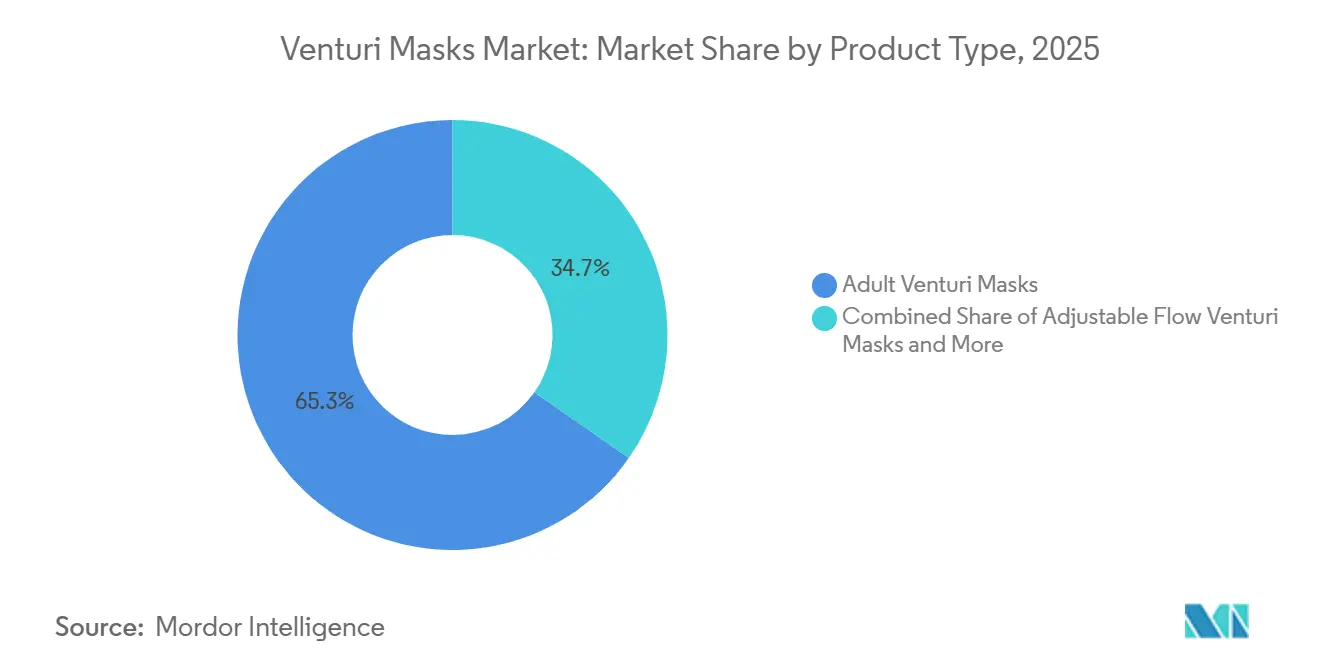
Adjustable Formats Redefining the Procurement StandardAdult Venturi Masks held 65.31% of product-type demand in 2025, reflecting the large adult patient base for COPD, pneumonia, and post-surgical hypoxemia. Adult care settings use controlled oxygen therapy across wards, emergency departments, and critical care units. Pediatric Venturi Masks serve a smaller, stable segment that is supported by specialized hospitals and public-health procurement. UNICEF maintains specifications for adult single-use Venturi mask products, and comparable requirements guide pediatric purchasing decisions. Multi-Venturi Masks and Single Venturi Masks comprised the remainder of the product base. Fixed-concentration systems remain useful where staff already know the color-coded valve format and inventories are established. The Venturi masks market retains demand for these formats because they provide a familiar method of delivering set oxygen concentrations. Hospital purchasing teams must still manage separate stock-keeping units when they select several fixed-concentration products. This need adds storage and ordering work across high-volume respiratory units. Suppliers that retain fixed-format lines can therefore protect established accounts while offering a migration path to adjustable systems.
Adjustable Flow Venturi Masks are forecast to expand at 8.58% CAGR from 2026 to 2031, the highest rate in the product category. A single adjustable kit can replace several single-diluter products, reducing the number of items that a ward needs to hold. Intersurgical markets MultiOx and Silente adjustable Venturi products that illustrate this multiple-concentration approach. Clear calibration can simplify staff training and reduce selection errors when patients need different oxygen concentrations. A 2025 study in the Chinese Journal of Nursing examined differences in Venturi-mask output flow across humidification configurations. The finding supports attention to flow verification, particularly where humidification arrangements differ at the bedside. Adjustable formats may offer procurement value when hospital networks standardize products across multiple sites. They also create opportunities for suppliers to bundle masks with tubing, connectors, and oxygen-delivery accessories. This product shift does not eliminate demand for fixed valves, but it raises the value of portfolio breadth. The Venturi masks industry is consequently placing greater emphasis on simple, calibrated systems that reduce stock complexity.



By Material Type:
Silicone Gaining Ground Against Entrenched PVC DominancePolyvinyl Chloride held 72.24% of material demand in 2025, making it the leading input in the material segment. PVC has established manufacturing supply chains and works with common respiratory tubing and connector systems. Its low input cost supports high-volume single-use products supplied through hospitals and distributors. Asian manufacturing facilities have developed large-scale production capabilities for this material format. PVC products also remain familiar to clinical purchasers that require standard disposable respiratory products. Rubber and other materials hold a smaller position because they do not match silicone on all patient-contact and durability considerations. Established tooling and supplier relationships further reinforce PVC use in existing mask designs. The material remains important because buyers continue to prioritize availability, compatibility, and unit cost. Any shift away from PVC must account for production capacity as well as regulatory requirements. This creates a gradual transition instead of a rapid replacement of conventional disposable products.
Silicone is forecast to grow at 8.22% CAGR from 2026 to 2031, making it the fastest-growing material type. The EU Medical Device Regulation requires special justification and labeling in cases involving certain CMR substances above 0.1% by weight. Phthalate plasticizers such as DEHP have therefore become a product-design consideration for manufacturers selling into Europe. ISO 10993 testing is also relevant to the assessment of materials used in patient-contact devices. Intersurgical’s EcoLite non-PVC mask body illustrates a response to the need for alternative material options within respiratory products. Scandinavian and German hospital groups can give added weight to non-DEHP specifications in procurement reviews. That preference may influence global specifications when multinational suppliers seek common product platforms. Silicone offers suppliers a route to differentiate through material choice, patient contact, and regulatory documentation. Demand for silicone-supported formats is therefore positioned to increase faster than the overall Venturi masks market. PVC will remain the material base, while silicone and non-PVC designs serve an expanding compliance-oriented requirement.
By Oxygen Flow Rate:
High-Flow Demand Signals Clinical Acuity ShiftLow Flow Rate masks held 48.14% of demand in 2025, representing the largest oxygen-flow portion of category demand. In the Venturi masks market, these products operate at 1 to 6 L/min and are used in stable COPD care, postoperative monitoring, and step-down wards. Conservative flow settings are suitable when clinicians can maintain target oxygen saturation without higher oxygen delivery. Low-flow configurations fit a broad range of routine respiratory-care encounters. They are also useful in wards where a patient does not require intensive respiratory support. Medium Flow Rate masks operate at 6 to 12 L/min and serve patients with moderate hypoxemia. This category has greater exposure to high-flow nasal cannula alternatives because clinical use can overlap. The Others category includes nonstandard configurations and specialty respiratory setups. Hospitals continue to need low-flow masks because the largest patient pool does not require ICU-level oxygen support. This broad clinical role protects the segment’s leading position despite stronger growth in high-flow products.
High Flow Rate masks are forecast to advance at 8.82% CAGR from 2026 to 2031. These masks operate at 12 to 15 L/min and serve patients requiring higher oxygen concentrations. European Respiratory Society guidance notes that a green 60% Venturi valve is used at 12 to 15 L/min and discusses increased flow for tachypneic patients. Higher respiratory rates can affect delivered oxygen concentrations, which makes appropriate setup and staff training important. Growth in acute respiratory distress, pneumonia admissions, and critical-care demand supports the need for high-flow configurations. Dräger reported 7.4% constant-currency growth in its medical division during FY2025. The company cited demand for ventilators, consumables, and anesthesia systems, indicating continuing investment in high-acuity respiratory care. High-flow Venturi products still face competitive pressure from high-flow nasal cannula systems. Their value remains strongest where precise concentration, disposable use, and established oxygen infrastructure are prioritized. The Venturi masks market will need products that clearly communicate flow requirements and support consistent clinical setup.
By Application:
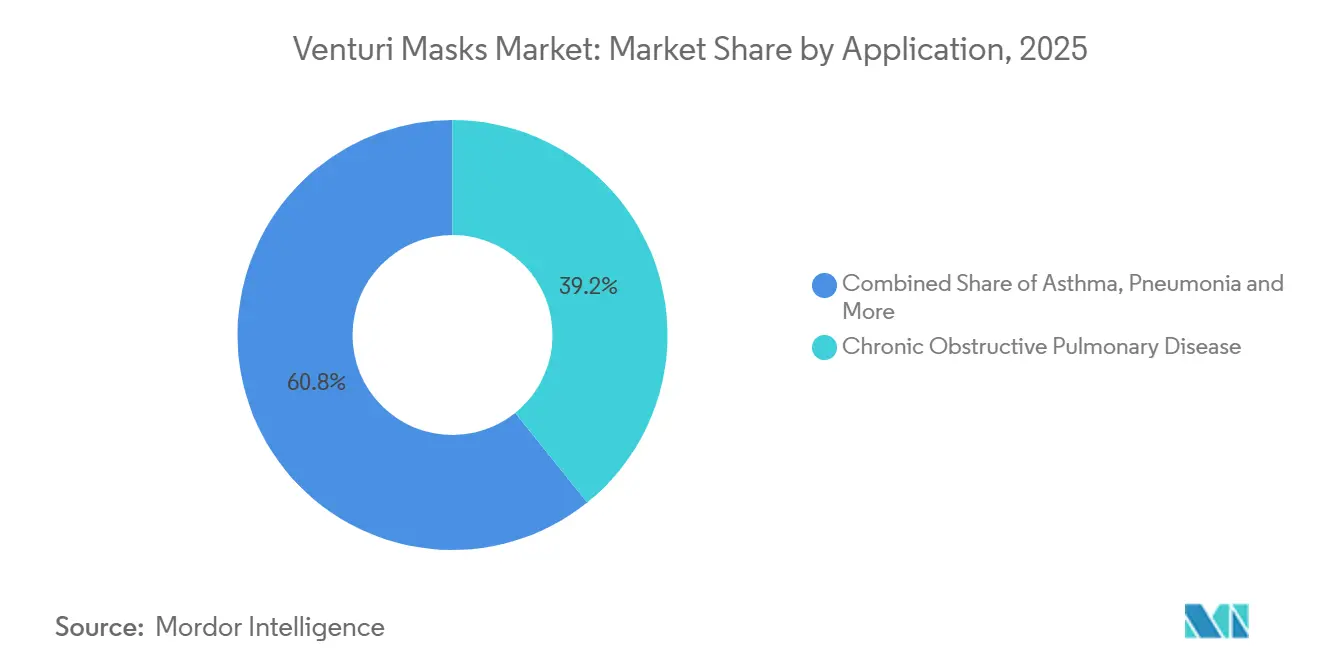
COPD Anchors Volume While Asthma Drives the Growth RateCOPD accounted for 39.21% of demand in 2025 and represented the leading application in application demand. The controlled oxygen concentration delivered by an air-entrainment mask is important for patients at risk of hypercapnic respiratory failure. Oxygen and oximetry guidance identifies 88% to 92% as the usual target saturation range for people with risk factors for hypercapnic respiratory failure. COPD exacerbations create frequent clinical encounters in emergency, inpatient, and acute-care settings. The 2025 CHEST study estimated 456 million annual COPD exacerbations, showing the large clinical burden associated with this disease. Pneumonia, respiratory distress syndrome, and aerosol therapy add to the application base. Intersurgical’s Ventumask 30 PRO incorporates a nebulizer port within its Venturi system for CPAP therapy. This design shows how a Venturi platform can address oxygen delivery and aerosol-treatment needs within one respiratory-care setup. COPD will remain the volume anchor because its oxygen-management requirements are established in clinical protocols. Suppliers should retain strong COPD-focused product documentation and training materials.
Asthma is forecast to grow at 10.85% CAGR from 2026 to 2031, the fastest rate among applications. The World Health Organization continues to identify asthma as a major chronic respiratory condition that requires effective treatment and management. Controlled oxygen administration is relevant during acute asthma episodes when patients require supplemental oxygen. The selection of an oxygen device should match the patient’s condition, oxygen target, and clinical monitoring. A Venturi mask can provide a defined oxygen concentration instead of unrestricted high-concentration oxygen delivery. This use supports demand in emergency departments and acute-care areas where clinicians must manage respiratory distress. Myocardial infarction and respiratory distress syndrome also provide stable demand for controlled oxygen products. These applications benefit from hospital capacity expansion and established respiratory-consumable formularies. The fastest growth in asthma shows that use is extending beyond the COPD patient pathway. The Venturi masks market can benefit when suppliers position masks as part of controlled oxygen-delivery practice across several acute indications.
By End User:
Homecare Ascends as Hospitals Sustain the Volume BaseHospitals and Clinics held 54.56% of end-user demand in 2025, making them the largest customer group. General wards, emergency departments, intensive care units, and recovery areas all require respiratory consumables. Hospital formulary processes favor products that have clear specifications, predictable availability, and compatible connectors. Centralized purchasing can create large order volumes for approved disposable mask designs. Hospitals also require different oxygen concentrations for patients with varying respiratory needs. This supports product portfolios that include fixed and adjustable Venturi mask formats. Ambulatory Surgery Centers form a smaller but steady channel because recovery protocols can require monitored oxygen administration. Other end users include long-term care facilities, aeromedical transport operators, and humanitarian purchasers. UNICEF’s procurement catalogue demonstrates the role of institutional buyers that use standardized single-use specifications. The Venturi masks market remains closely tied to hospital purchasing cycles because this channel has the broadest concentration of oxygen-treated patients.
Homecare Settings are projected to grow at 9.55% CAGR from 2026 to 2031. This rate reflects a wider move toward managing chronic respiratory conditions outside acute facilities when patients can be supported safely. Homecare providers need disposable products that are simple to use, available through supply networks, and appropriate for prescribed oxygen plans. Reimbursement policies can determine whether providers can maintain sufficient inventory and patient support. The SOAR Act of 2025 illustrates the policy attention given to supplemental oxygen access in the United States. Homecare demand will not develop evenly across countries because reimbursement, staffing, and clinical guidance differ. Growth can be stronger in markets building community respiratory-care services and structured oxygen pathways. Hospital providers may also extend their role through outpatient and homecare partnerships. This channel creates a different commercial requirement from acute-care purchasing because distribution and patient education matter more. The Venturi masks industry should therefore balance hospital contract coverage with product support that fits decentralized respiratory care.
Geography Analysis
North America Venturi Masks Market
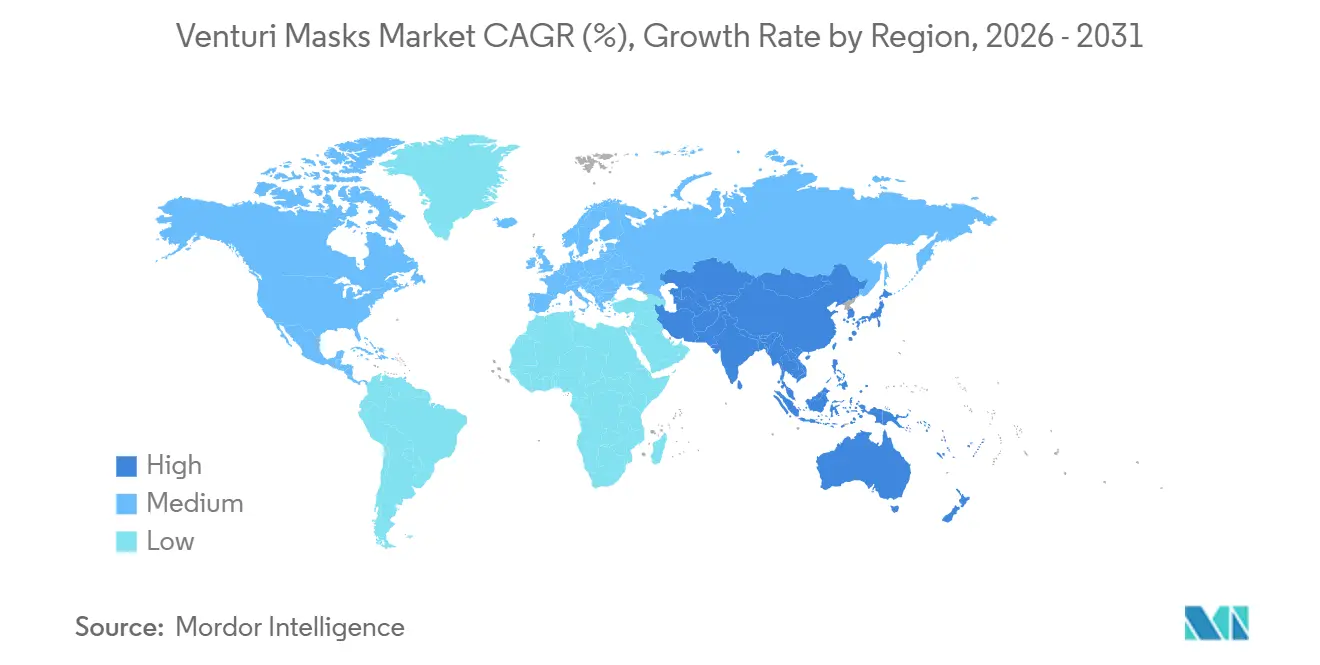
North America held 38.61% of demand in 2025, the largest regional position in the Venturi masks market. The region benefits from established hospital procurement systems and a large installed base of critical-care and emergency facilities. The United States accounted for most regional demand, while Canada and Mexico added smaller but developing requirements. Hospital expansions support recurring consumption of respiratory products after new capacity becomes operational. Northwestern Memorial Hospital’s approved USD 95.5 million project adds 42 beds in Chicago. Saskatchewan’s CAD 17 million (~USD 12 million) ICU project, expands the Royal University Hospital ICU from 19 to 26 beds. FDA device requirements and CMS reimbursement rules influence product documentation and commercial terms in the United States. These conditions support a mature market where purchasing decisions focus on quality, supply reliability, and contract value.
APAC Venturi Masks Market
Asia-Pacific is projected to grow at 10.25% CAGR from 2026 to 2031, the fastest regional rate. Hospital capacity growth, increasing domestic production, and developing homecare models contribute to the regional outlook. India’s medical-device production incentives support efforts to reduce dependency on imported respiratory consumables. Polymedicure launched 35 new products in FY2026 and maintained an R&D team of 90 people across India, Italy, and the Netherlands, according to its August 2025 investor presentation. Japan and South Korea sustain demand for premium respiratory products through aging populations and high healthcare spending. Regional hospitals are also adding capacity for emergency and critical-care services. The Venturi masks market benefits when new hospitals adopt centralized oxygen-delivery infrastructure and standardized consumable inventories. Domestic manufacturers can compete on supply responsiveness and cost, while international suppliers can focus on advanced materials and adjustable products. This mix can narrow the difference between North America’s current size and Asia-Pacific’s future growth rate.
EMEA, South America and Oceania Venturi Masks Market
Europe remained the second-largest regional market, with Germany, the United Kingdom, France, Italy, and Spain as principal demand centers. EU medical-device rules are shaping procurement toward products with clearer material documentation and traceability. The United Kingdom’s oxygen guidance continues to support controlled oxygen therapy for patients at risk of hypercapnic respiratory failure. Scandinavian and German purchasing groups have particular relevance for non-DEHP and non-PVC alternatives. South America, led by Brazil and Argentina, has a smaller base but requires growing emergency-care capacity. The Middle East and Africa also begin from a smaller demand base, with GCC health infrastructure investment supporting respiratory-consumable procurement. Fiona Stanley Hospital’s 40-bed critical-care expansion in Australia illustrates the wider relevance of capacity additions in developed health systems. These regions offer growth opportunities where suppliers can meet tender requirements, local distribution needs, and material specifications.

Competitive Landscape
The Venturi masks market is moderately fragmented, with integrated medical-device companies competing alongside Asian original-equipment manufacturers. Intersurgical, Drägerwerk, Becton Dickinson, Flexicare, Polymedicure, and GaleMed hold important commercial positions. Their competition centers on product range, clinical calibration, materials, regulatory documentation, and access to distributors. Fisher & Paykel has indirect influence because high-flow respiratory systems address some overlapping clinical indications. Larger suppliers can offer broader respiratory portfolios, which is valuable in hospital tenders that seek fewer suppliers. Smaller producers can compete through cost, local availability, and products that meet CE or ISO 13485 requirements.
Intersurgical announced in December 2025 an agreement to acquire Teleflex’s Acute Care and Interventional Urology businesses. The transaction was expected to close in H2 2026 and would add anesthesia and airway-management products to Intersurgical’s portfolio. This expansion strengthens the company’s ability to present bundled respiratory and critical-care offerings to hospital buyers. Dräger's medical division grew 7.4% in FY2025 in constant currency, supported by demand for ventilators, consumables, and anesthesia systems. These positions give large suppliers an advantage where hospital groups want integrated critical-care suppliers. The Venturi masks market remains open to smaller firms because masks are consumable products with defined specifications and price-sensitive tenders.
Product differentiation is moving toward adjustable valves, material alternatives, humidification compatibility, and clear flow calibration. Intersurgical’s non-PVC EcoLite design is an example of a response to material and compliance requirements. The 2025 nursing study on output flow also emphasizes why product design and setup can affect bedside use. ZOLL completed the acquisition of select Vyaire ventilator product lines in October 2024. This development affected the wider respiratory-equipment landscape, though it does not establish a direct Venturi-mask share position. In the Venturi masks market, suppliers can seek opportunities in non-PVC adjustable products for centralized hospital groups and pediatric products for public-health procurement. They also need to address high-flow nasal cannula substitution by offering complementary respiratory portfolios or emphasizing controlled oxygen concentration. The Venturi masks market remains consistent with several capable suppliers rather than a concentrated structure.
Venturi Masks Industry Leaders
Intersurgical Ltd.
Flexicare (Group) Limited
Medline Industries, LP
Polymedicure Limited
GaleMed Corporation
- *Disclaimer: Major Players sorted in no particular order

Venturi Masks Market Companies Covered in this Report
- Airways Surgical Pvt. Ltd.
- Beckton Dickinson
- Besmed Health Business
- Dragerwerk
- Fisher & Paykel Healthcare Corporation Limited
- Flexicare
- For Care Enterprise Co. Ltd.
- GaleMed Corporation
- HSINER Co. Ltd.
- ICU Medical
- Intersurgical Ltd.
- JG Moriya
- Medline Industries
- PFM medical AG
- Polymedicure Limited
- PVS S.p.A.
- SunMed
- Teleflex
- Terumo
- Zoll Medical

Recent Industry Developments in Venturi Masks Market
- July 2026: Fiona Stanley Hospital in Perth, Australia, expanded its ICU to 40 fully staffed critical care beds, including 30 ICU beds and 10 HDU beds, increasing demand for respiratory consumables including Venturi masks across the expanded respiratory care unit.
- December 2025: Intersurgical announced an agreement to acquire the Acute Care and Interventional Urology businesses of Teleflex, a transformative deal that adds Teleflex’s anesthesia and airway-management product portfolio to Intersurgical’s existing Venturi mask and respiratory therapy lineup.


Global Venturi Masks Market Report Scope
As per the scope of the report, Venturi masks are medical oxygen delivery devices that use the Venturi principle to provide a precise and controlled concentration of oxygen to patients. They feature a fixed or adjustable jet nozzle and color-coded adapters to deliver specific oxygen concentrations, making them suitable for patients requiring precise oxygen therapy, such as those with chronic obstructive pulmonary disease (COPD).
The Venturi masks market is segmented by product type into single Venturi masks, multi-Venturi masks, adjustable flow Venturi masks, pediatric Venturi masks, and adult Venturi masks; by material type into polyvinyl chloride, silicone, rubber, and other material types; by oxygen flow rate into low flow rate, 1-6 L/min, medium flow rate, 6-12 L/min, high flow rate, 12-15 L/min, and other oxygen flow rates; by application into chronic obstructive pulmonary disease, asthma, pneumonia, myocardial infarction, respiratory distress syndrome, aerosol therapy, and other applications; by end user into hospitals and clinics, homecare settings, ambulatory surgery centers, and other end users; and by geography into North America, Europe, Asia-Pacific, Middle East and Africa, and South America. The market report also covers the estimated market sizes and trends for 17 countries across major regions globally. For each segment, the market size and forecast are provided in terms of value (USD).
| Single Venturi Masks |
| Multi-Venturi Masks |
| Adjustable Flow Venturi Masks |
| Pediatric Venturi Masks |
| Adult Venturi Masks |
| Polyvinyl Chloride |
| Silicone |
| Rubber |
| Other Material Types |
| Low Flow Rate, 1-6 L/min |
| Medium Flow Rate, 6-12 L/min |
| High Flow Rate, 12-15 L/min |
| Others |
| Chronic Obstructive Pulmonary Disease |
| Asthma |
| Pneumonia |
| Myocardial Infarction |
| Respiratory Distress Syndrome |
| Aerosol Therapy |
| Other Applications |
| Hospitals and Clinics |
| Homecare Settings |
| Ambulatory Surgery Centers |
| Other End Users |
| North America | United States |
| Canada | |
| Mexico | |
| Europe | Germany |
| United Kingdom | |
| France | |
| Italy | |
| Spain | |
| Rest of Europe | |
| Asia-Pacific | China |
| Japan | |
| India | |
| Australia | |
| South Korea | |
| Rest of Asia-Pacific | |
| Middle East and Africa | GCC |
| South Africa | |
| Rest of Middle East and Africa | |
| South America | Brazil |
| Argentina | |
| Rest of South America |
| By Product Type | Single Venturi Masks | |
| Multi-Venturi Masks | ||
| Adjustable Flow Venturi Masks | ||
| Pediatric Venturi Masks | ||
| Adult Venturi Masks | ||
| By Material Type | Polyvinyl Chloride | |
| Silicone | ||
| Rubber | ||
| Other Material Types | ||
| By Oxygen Flow Rate | Low Flow Rate, 1-6 L/min | |
| Medium Flow Rate, 6-12 L/min | ||
| High Flow Rate, 12-15 L/min | ||
| Others | ||
| By Application | Chronic Obstructive Pulmonary Disease | |
| Asthma | ||
| Pneumonia | ||
| Myocardial Infarction | ||
| Respiratory Distress Syndrome | ||
| Aerosol Therapy | ||
| Other Applications | ||
| By End User | Hospitals and Clinics | |
| Homecare Settings | ||
| Ambulatory Surgery Centers | ||
| Other End Users | ||
| By Geography | North America | United States |
| Canada | ||
| Mexico | ||
| Europe | Germany | |
| United Kingdom | ||
| France | ||
| Italy | ||
| Spain | ||
| Rest of Europe | ||
| Asia-Pacific | China | |
| Japan | ||
| India | ||
| Australia | ||
| South Korea | ||
| Rest of Asia-Pacific | ||
| Middle East and Africa | GCC | |
| South Africa | ||
| Rest of Middle East and Africa | ||
| South America | Brazil | |
| Argentina | ||
| Rest of South America | ||


Key Questions Answered in the Report
What is the projected size of the Venturi masks market by 2031?
The category is projected to reach USD 3.95 billion by 2031, rising from USD 2.71 billion in 2026 at a 7.86% CAGR.
Which Venturi mask product type is growing fastest?
Adjustable Flow Venturi Masks are projected to grow at 8.58% CAGR through 2031 because they can reduce inventory complexity across oxygen concentrations.
Why are Venturi masks important for COPD care?
COPD accounted for 39.21% of 2025 demand, and controlled oxygen delivery supports oxygen targets for patients at risk of hypercapnic respiratory failure.
Which region is expected to grow fastest through 2031?
Asia-Pacific is forecast to grow at 10.25% CAGR through 2031, supported by hospital capacity, domestic manufacturing, and developing homecare models.
What material is replacing PVC in respiratory mask designs?
Silicone is the fastest-growing material at 8.22% CAGR through 2031, supported by demand for non-PVC and non-DEHP alternatives in regulated procurement settings.
What is the main substitute for Venturi masks in hospitals?
High-flow nasal cannula systems and non-invasive ventilation compete in some higher-acuity settings, especially within the 6 to 12 L/min flow range.
Page last updated on:





