
US Sex Cord Gonadal Stromal Tumor Market Size and Share
Market Overview
| Study Period | 2020 - 2031 |
|---|---|
| Forecast Data Period | 2026 - 2031 |
| Base Year Market Size (2025) | USD 344.21 Million |
| Market Size (2026) | USD 374.47 Million |
| Market Size (2031) | USD 570.64 Million |
| Growth Rate (2026 - 2031) | 8.79 % |
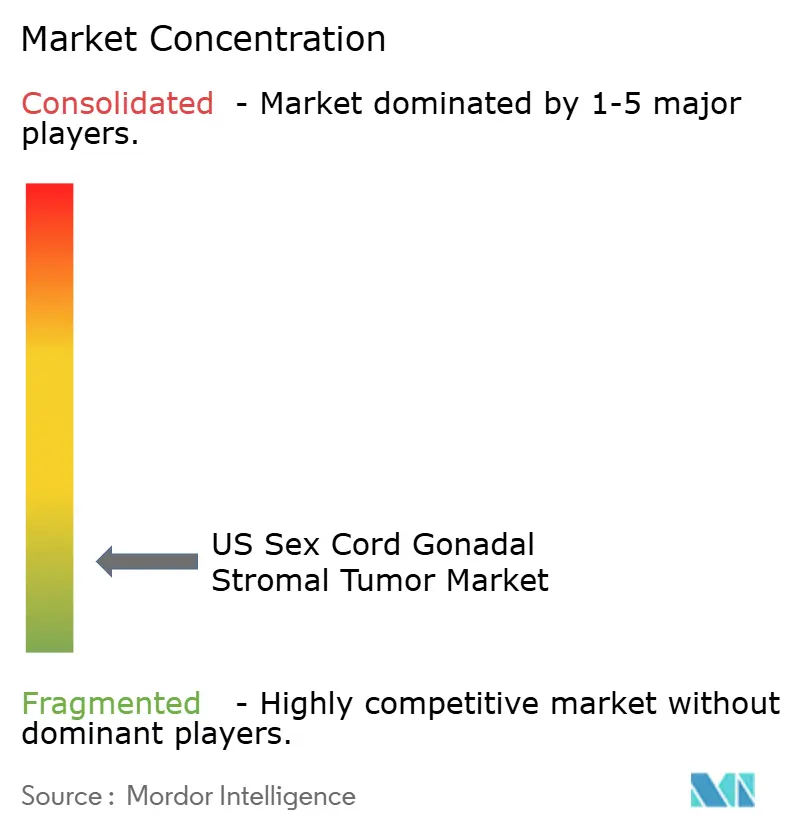
| Market Concentration | Low |
Major Players *Disclaimer: Major Players sorted in no particular order Image © Mordor Intelligence. Reuse requires attribution under CC BY 4.0. | |
US Sex Cord Gonadal Stromal Tumor Market Analysis by Mordor Intelligence
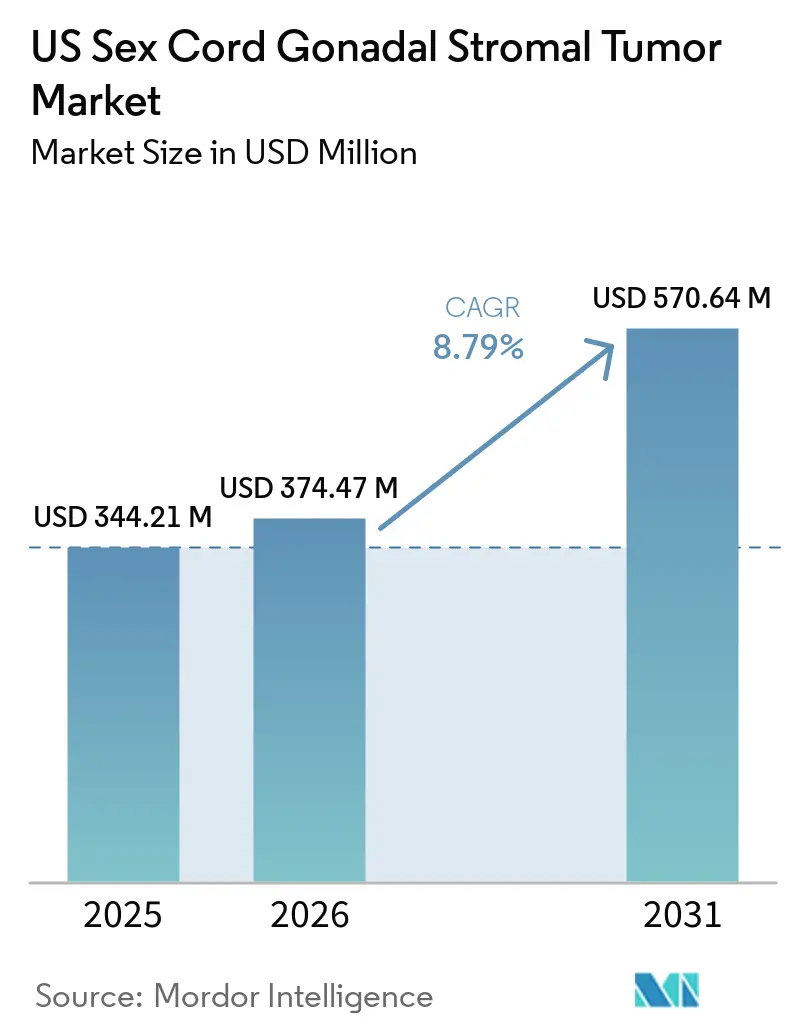
The US Sex Cord Gonadal Stromal Tumor Market size is projected to expand from USD 344.21 million in 2025 and USD 374.47 million in 2026 to USD 570.64 million by 2031, registering a CAGR of 8.79% between 2026 to 2031.
In the United States, the sex cord gonadal stromal tumor market has a small case volume but faces a significant care gap. These tumors account for 5-8% of malignant ovarian neoplasms, with 1,500-2,000 new cases annually. Ovarian granulosa cell tumors alone represent a patient pool of 10,000-15,000.[1] The absence of FDA-approved therapies for SCGST as of 2026 makes the market commercially significant, with treatment relying on surgery, chemotherapy, hormonal therapy, and off-label targeted approaches. Market growth is driven by advancements in precision oncology, increased biomarker-led diagnoses, and institutional focus on rare gynecologic oncology. Wider adoption of FOXL2 and DICER1 testing enhances diagnostic accuracy, enabling more patients to enter structured monitoring and treatment pathways. Clinical trials, extended surveillance needs, and specialist referrals at major cancer centers further strengthen the growth outlook for the United States sex cord gonadal stromal tumor market.
Key Report Takeaways
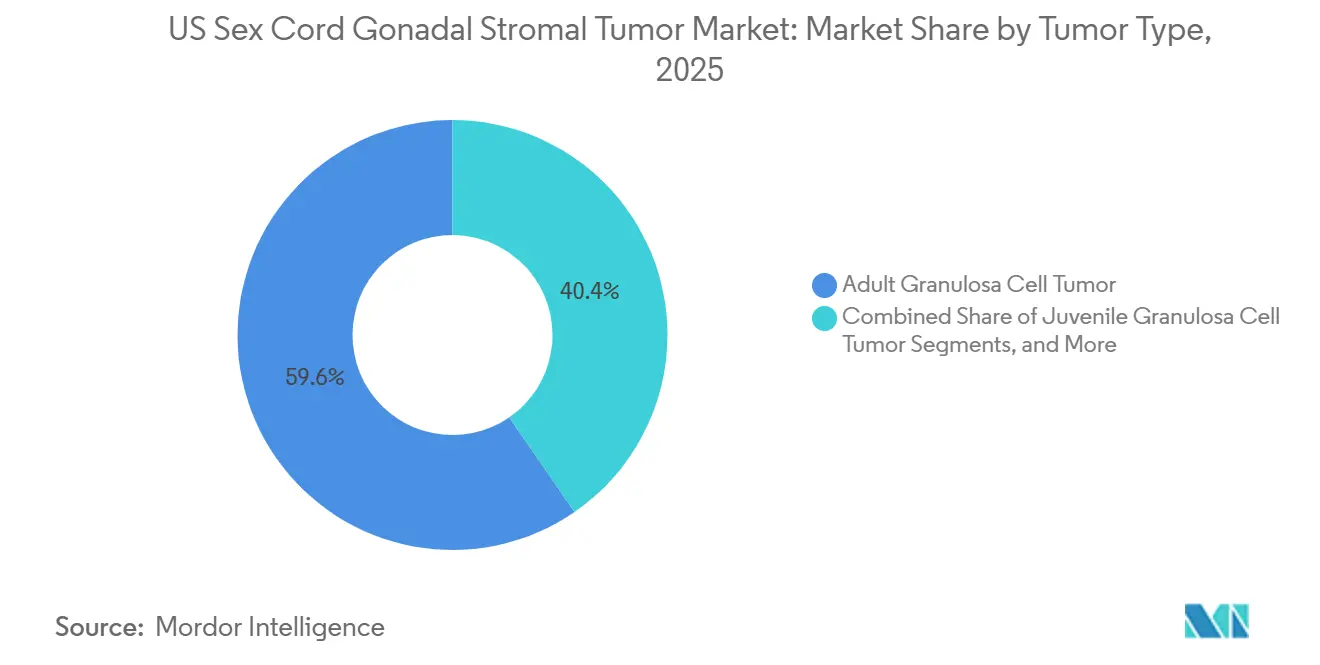
- By tumor type, adult granulosa cell tumors held 59.6% of the US sex cord gonadal stromal tumor market share in 2025, while juvenile granulosa cell tumors are projected to grow at a 9.88% CAGR through 2031.
- By product type, treatment accounted for 56.77% of the US sex cord gonadal stromal tumor market size in 2025, while diagnosis is forecasted to expand at a 9.45% CAGR during 2026-2031.
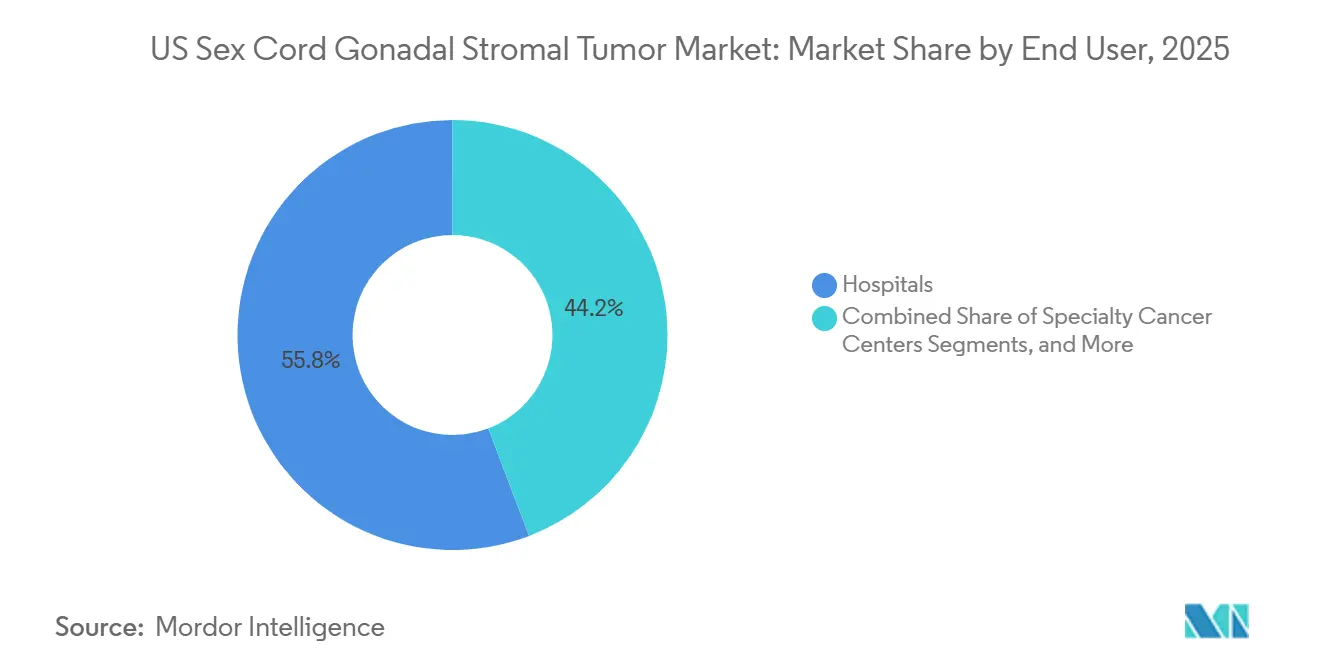
- By end user, hospitals captured 55.78% of revenue in 2025, while specialty cancer centers are expected to record the fastest growth at an 11.33% CAGR through 2031.
Note: Market size and forecast figures in this report are generated using Mordor Intelligence’s proprietary estimation framework, updated with the latest available data and insights as of January 2026.
US Sex Cord Gonadal Stromal Tumor Market Trends and Insights
Drivers Impact Analysis*
| DRIVER | (~) % IMPACT ON CAGR FORECAST | GEOGRAPHIC RELEVANCE | IMPACT TIMELINE |
|---|---|---|---|
| Rising FDA-backed treatment access for rare ovarian sex cord-stromal tumors | +1.8% | National, with early uptake concentrated in Northeast and Southeast NCI-designated cancer hubs | Short term (≤ 2 years) |
| Expanding biomarker-driven patient identification | +1.5% | National, with early adoption in academic centers in Boston, Houston, New York, and San Francisco | Medium term (2-4 years) |
| Growing clinical use of surgery plus systemic therapy | +1.2% | National, with gains concentrated in NCI-designated comprehensive cancer centers | Short term (≤ 2 years) |
| Increasing trial activity in low-grade serous and granulosa cell tumors | +1.0% | National, with trial sites concentrated at major academic institutions | Medium term (2-4 years) |
| Improved referral networks to sarcoma and gynecologic oncology centers | +0.9% | National, with material impact in underserved Mountain-West and Midwest regions | Medium term (2-4 years) |
| Wider adoption of oral targeted and hormonal regimens | +0.8% | National, with faster uptake in metro areas with established oncology practices | Long term (≥ 4 years) |
| Source: Mordor Intelligence | |||
Rising FDA-Backed Treatment Access for Rare Ovarian Sex Cord-Stromal Tumors
The FDA approved Verastem's Avmapki Fakzynja Co-Pack in May 2025, combining avutometinib and defactinib for KRAS-mutated recurrent low-grade serous ovarian cancer. This approval highlights the potential of precision oncology and sets a precedent for hormone-sensitive ovarian tumor treatments. It demonstrates that niche, molecularly defined segments can achieve regulatory approval and secure 7-year Orphan Drug exclusivity. The FDA's Real-Time Oncology Review is encouraging biomarker-driven strategies like FOXL2, DICER1, and NOTCH1 in the United States sex cord gonadal stromal tumor market, where competition remains limited.
Expanding Biomarker-Driven Patient Identification
Biomarker testing is broadening the patient base in the United States sex cord gonadal stromal tumor market. Institutions like UCSF Health and Mayo Clinic Laboratories now offer FOXL2 C402G testing through standardized workflows, enabling faster treatment planning and reliable monitoring. A 2025 study showed FOXL2-mutant circulating tumor DNA predicts post-operative disease progression in adult granulosa cell tumors. Another study highlighted that DICER1-mutant Sertoli-Leydig cell tumors have higher proliferative activity and worse prognosis, emphasizing the importance of genotyping at diagnosis. These advancements enhance diagnostic accuracy and create recurring revenue streams.
Growing Clinical Use of Surgery Plus Systemic Therapy
Treatment approaches in the United States sex cord gonadal stromal tumor market are evolving, with systemic therapy complementing surgery in advanced cases. A 2024 study confirmed paclitaxel-carboplatin and BEP as effective options, reinforcing multi-cycle systemic treatments in care. Each additional cycle increases treatment intensity and revenue.[2] Interest is growing in CDK4/6 inhibitors with endocrine therapy for recurrent adult granulosa cell tumors, with a 2025 report showing 27.3% partial response and 54.5% stable disease. Emerging regimens like palbociclib with estrogen blockade are also gaining traction.
Increasing Trial Activity in Low-Grade Serous and Granulosa Cell Tumors
Clinical trials are driving growth in the United States sex cord gonadal stromal tumor market. NRG-GY033, launched in January 2024, evaluates darolutamide, leuprolide acetate, and exemestane for recurrent adult-type ovarian granulosa cell tumors. Trial participation increases spending through specialist visits, imaging, and monitoring. SpringWorks Therapeutics' Phase 2 nirogacestat study enrolled 53 patients in under a year, with the NOTCH1-mutant subgroup achieving 100% 6-month progression-free survival. Basket-trial approaches are reducing development barriers by integrating SCGST cohorts into broader rare tumor programs.
Restraints Impact Analysis*
| RESTRAINT | (~) % IMPACT ON CAGR FORECAST | GEOGRAPHIC RELEVANCE | IMPACT TIMELINE |
|---|---|---|---|
| Very small eligible patient pool and late recurrence patterns | -1.5% | National, most acute for rare subtypes such as steroid cell tumors and fibroma/fibrothecoma | Long term (≥ 4 years) |
| High dependence on expert pathology and molecular confirmation | -1.2% | Acute in rural and semi-urban settings, with lower impact at metro academic centers | Medium term (2-4 years) |
| Limited label-specific commercial products for most SCGSTS | -1.0% | National | Short term (≤ 2 years) |
| Reimbursement friction for off-label hormonal and targeted therapy | -0.9% | National, with variation by payer type and region | Short term (≤ 2 years) |
| Source: Mordor Intelligence | |||
Very Small Eligible Patient Pool and Late Recurrence Patterns
The United States market for sex cord gonadal stromal tumors faces constraints due to a small patient base, with only 1,500-2,000 new cases annually. Adult granulosa cell tumors add complexity as recurrences often occur years after diagnosis, spreading demand over an extended timeline. A 2024 study in the Journal of Ovarian Research reported recurrence rates of 6-48%, with 50-80% of fatal cases occurring after relapse. Treatment intensity is concentrated on a small recurrent subset, limiting market growth more by disease epidemiology than treatment adoption.
High Dependence on Expert Pathology and Molecular Confirmation
Accurate diagnosis in the United States sex cord gonadal stromal tumor market depends on expert pathology and molecular testing. FOXL2 analysis requires specific tumor content and sequencing quality, posing challenges for smaller centers with limited experience. Community hospitals face misclassification risks without specialist reviews, especially outside major academic hubs where access to gynecologic oncology expertise and advanced sequencing is limited. Delayed confirmation slows treatment initiation and reduces patient referrals, though broader networks and accessible testing may gradually address this issue.
*Our forecasts treat driver/restraint impacts as directional, not additive. The impact forecasts reflect baseline growth, mix effects, and variable interactions.
Segment Analysis
By Tumor Type: Adult-Type Tumors Anchor Revenue While Juvenile and Rare Subtypes Gain Momentum
In 2025, adult granulosa cell tumors accounted for 59.6% of the United States sex cord gonadal stromal tumor market. Juvenile granulosa cell tumors are projected to grow at a 9.88% CAGR through 2031. Adult-type tumors dominate revenue due to their clinical prevalence and long-term recurrence, which drives extended surveillance and treatment. CDK4/6 inhibitor combinations are gaining traction as a later-line option for recurrent adult granulosa cell tumors, with studies showing partial response rates of 27.3% and stable disease rates of 54.5%. Juvenile granulosa cell tumors are expanding faster due to increased DICER1-focused pediatric programs, while Sertoli-Leydig cell tumors are becoming diagnostically significant with TERT and TP53 mutations indicating a less favorable prognosis. Thecomas, fibroma/fibrothecomas, and steroid cell tumors maintain stable demand, with potential for future advancements as molecular features are clarified.

By Product Type: Treatment Dominates Revenue as Molecular Diagnostics Redefine the Front End
Treatment represented 56.77% of the United States sex cord gonadal stromal tumor market in 2025, while diagnostics are expected to grow at a 9.45% CAGR from 2026 to 2031. Surgery, chemotherapy, hormonal therapy, and targeted regimens continue to define the treatment pathway, with surgery playing a critical role in staging and systemic therapy decisions. Targeted and hormonal therapies are driving growth in recurrent disease management. Diagnostics are strengthening as FOXL2 and DICER1 sequencing becomes routine, supported by validated testing from institutions like UCSF Health and Mayo Clinic Laboratories. Multi-marker profiling and advancements in antibody drug conjugate target expression are reshaping the diagnostic landscape, creating a more balanced revenue model between diagnostics and treatment.
By End User: Specialty Centers Drive Standards of Care as Hospitals Anchor Volume
Hospitals captured 55.78% of revenue in 2025, leading the United States sex cord gonadal stromal tumor market due to their role in surgeries, inpatient care, and initial diagnostics. Specialty cancer centers are projected to grow at an 11.33% CAGR through 2031, driven by their expertise in rare tumor management, molecular reviews, and clinical trial access. Institutions like Mount Sinai Health System are expanding referral capacity for complex cases. Academic and research centers are playing a larger role by advancing molecular profiling, biobanking, and translational models, while diagnostic labs benefit from increased use of FOXL2 assays and tumor marker monitoring. Ambulatory surgical centers are gaining share in fertility-preserving procedures, but hospitals and specialty centers remain central for advanced-stage care and research activities.
Geography Analysis
The United States sex cord gonadal stromal tumor (SCGST) market is the most advanced globally due to its concentration of specialist centers, molecular testing infrastructure, and rare-disease oncology funding. The country supports structured care pathways for rare gynecologic tumors through academic referral networks, biomarker testing, and investigator-led trial programs. The Northeast remains the key regional cluster, with cities like Boston and New York attracting complex referrals due to their specialist pathology, clinical trial access, and multidisciplinary treatment teams.
A clear divide exists between large metropolitan systems and regions relying on community-level care in the United States SCGST market. In non-academic hubs, delays occur when ovarian masses are reviewed without specialist pathology or molecular confirmation, slowing entry into specialty treatment channels. Hub-and-spoke care models are addressing this gap, as larger centers extend consultation and referral support to community settings. Mount Sinai’s 2024 expansion highlights this deliberate organization of rare gynecologic oncology capacity.
The South and West are becoming increasingly significant in the United States SCGST market as population growth and specialty care capacity expand beyond the Northeast. On the West Coast, UCSF stands out with its FOXL2 mutation testing and clinical genetics support, enabling faster and accurate molecular confirmations. The Southeast is also gaining relevance as referral networks strengthen around major oncology centers and trial-capable institutions. Over the forecast period, broader testing access and improved referral routing are expected to increase patient participation across the United States SCGST market.
Competitive Landscape
The United States market for sex cord gonadal stromal tumors (SCGST) remains fragmented, with no approved therapy specifically targeting SCGST and no dominant player. Current treatments include surgery, generic chemotherapy, hormonal therapy, off-label targeted treatments, molecular diagnostics, and specialist care services. This fragmentation limits rapid scaling for any developer but creates an opportunity for the first company to secure a distinct rare tumor label. Verastem is well-positioned, with its May 2025 approval of Avmapki Fakzynja Co-Pack for KRAS-mutated recurrent low-grade serous ovarian cancer setting a regulatory precedent. Its continued development efforts strengthen its profile in rare gynecologic oncology.
Major players like Merck & Co., AstraZeneca, and Pfizer influence the United States SCGST market through off-label treatments rather than dedicated programs. Pfizer sees potential in tissue factor-directed ADC strategies for adult granulosa cell tumors, contingent on further data. SpringWorks Therapeutics, with its nirogacestat program identifying a NOTCH1-mutant responder subset, is advancing selective development in ovarian granulosa cell tumors. Diagnostics providers with validated FOXL2 and ctDNA capabilities are gaining a competitive edge as precise identification and monitoring become central to care economics.
Strategic developments indicate how competition in the United States SCGST market may evolve. Verastem's approval demonstrates that small, biomarker-defined tumor populations can support regulatory and commercial success with clear clinical positioning. SpringWorks highlights the potential of biomarker-driven approaches to reshape priorities even before approval. A significant gap remains in FOXL2-targeted therapy, despite its critical role in adult granulosa cell tumors. Diagnostics players may play a pivotal role in shaping patient capture and trial enrollment. Companies combining orphan-pathway execution, molecular selection, and specialist-center engagement are likely to lead the next phase of market development.
US Sex Cord Gonadal Stromal Tumor Industry Leaders
-
F. Hoffmann-La Roche AG
-
Merck & Co., Inc.
-
Pfizer Inc.
-
Bristol-Myers Squibb Company
-
Novartis AG
- *Disclaimer: Major Players sorted in no particular order
Recent Industry Developments
- April 2026: GSK's mocertatug rezetecan (Mo-Rez) entered 5 pivotal global Phase 3 trials, starting with BEHOLD-Ovarian01 for platinum-resistant ovarian cancer, aiming to establish a first-in-class ADC option for granulosa cell tumor patients unresponsive to standard treatments.
- January 2026: SpringWorks Therapeutics' Phase 2 nirogacestat trial in relapsed/refractory ovarian granulosa cell tumors identified a genomically defined responder population and positioned the NOTCH1 mutation as a potential biomarker for future trials.
- May 2025: The FDA approved Avmapki Fakzynja Co-Pack (avutometinib + defactinib) for KRAS-mutated recurrent low-grade serous ovarian cancer, marking the first precision-targeted approval in hormone-sensitive ovarian malignancies and setting a regulatory framework for future SCGST applications.
US Sex Cord Gonadal Stromal Tumor Market Report Scope
As per the scope of the report, a sex cord-gonadal stromal tumor is a rare form of cancer or benign growth that develops from the supportive and hormone-producing tissues of the ovaries or testes. Because they arise from hormone-secreting cells, these tumors often disrupt endocrine function by releasing excess sex hormones like estrogen or androgens.
The US sex cord gonadal stromal tumor market is segmented by tumor type, product type, end-user, and geography. By tumor type, the market includes adult granulosa cell tumor, juvenile granulosa cell tumor, Sertoli-Leydig cell tumor, thecoma, fibroma and fibrothecoma, steroid cell tumor, and other sex cord gonadal stromal tumors. By product type, the market includes diagnosis (imaging, histopathology, immunohistochemistry, molecular testing, and tumor marker testing) and treatment (surgery, chemotherapy, hormonal therapy, targeted therapy, immunotherapy, and radiation therapy). By end-user, the market is segmented into hospitals, specialty cancer centers, ambulatory surgical centers, diagnostic laboratories, and academic and research institutes. The report offers the market sizes and forecasts in terms of value (USD) for the above segments.
| Adult Granulosa Cell Tumor |
| Juvenile Granulosa Cell Tumor |
| Sertoli-Leydig Cell Tumor |
| Thecoma |
| Fibroma and Fibrothecoma |
| Steroid Cell Tumor |
| Other Sex Cord Gonadal Stromal Tumors |
| Diagnosis | Imaging |
| Histopathology | |
| Immunohistochemistry | |
| Molecular Testing | |
| Tumor Marker Testing | |
| Treatment | Surgery |
| Chemotherapy | |
| Hormonal Therapy | |
| Targeted Therapy | |
| Immunotherapy | |
| Radiation Therapy |
| Hospitals |
| Specialty Cancer Centers |
| Ambulatory Surgical Centers |
| Diagnostic Laboratories |
| Academic and Research Institutes |
| By Tumor Type | Adult Granulosa Cell Tumor | |
| Juvenile Granulosa Cell Tumor | ||
| Sertoli-Leydig Cell Tumor | ||
| Thecoma | ||
| Fibroma and Fibrothecoma | ||
| Steroid Cell Tumor | ||
| Other Sex Cord Gonadal Stromal Tumors | ||
| By Product Type | Diagnosis | Imaging |
| Histopathology | ||
| Immunohistochemistry | ||
| Molecular Testing | ||
| Tumor Marker Testing | ||
| Treatment | Surgery | |
| Chemotherapy | ||
| Hormonal Therapy | ||
| Targeted Therapy | ||
| Immunotherapy | ||
| Radiation Therapy | ||
| By End User | Hospitals | |
| Specialty Cancer Centers | ||
| Ambulatory Surgical Centers | ||
| Diagnostic Laboratories | ||
| Academic and Research Institutes | ||
Key Questions Answered in the Report
What is the current size of the US sex cord gonadal stromal tumor market?
The US sex cord gonadal stromal tumor market is valued at USD 374.47 million in 2026 and is projected to reach USD 570.64 million by 2031, advancing at a CAGR of 8.79% during 2026-2031.
Which tumor type contributes the most revenue in the US sex cord gonadal stromal tumor market?
Adult granulosa cell tumors led with 59.6% share in 2025 because they remain the most clinically characterized subtype and carry a long recurrence tail that supports sustained treatment and surveillance demand.
Which product category is growing the fastest?
Diagnosis is the fastest-growing product category with a projected 9.45% CAGR from 2026 to 2031, supported by wider adoption of FOXL2 and DICER1 testing, follow-up molecular surveillance, and stronger academic pathology networks.
Why are specialty cancer centers gaining share faster than hospitals?
Specialty cancer centers are projected to grow at 11.33% CAGR because rare tumor care is becoming more concentrated in expert institutions that combine molecular review, dedicated gynecologic oncology teams, and clinical trial access.
What is the biggest unmet need in this field?
The biggest unmet need is the lack of an FDA-approved therapy specifically indicated for SCGST as of 2026, which leaves a major white space in rare gynecologic oncology treatment.
Which biomarkers matter most in clinical practice for these tumors?
FOXL2 remains central in adult granulosa cell tumors, while DICER1 is highly relevant in juvenile granulosa and Sertoli-Leydig tumors, especially where diagnosis, genetic counseling, and prognosis need better definition.