
United States Olive Oil Market Size and Share
Market Overview
| Study Period | 2021 - 2031 |
|---|---|
| Forecast Data Period | 2026 - 2031 |
| Base Year Market Size (2025) | USD 3.52 Billion |
| Market Size (2026) | USD 3.93 Billion |
| Market Size (2031) | USD 4.86 Billion |
| Growth Rate (2026 - 2031) | 4.33 % |
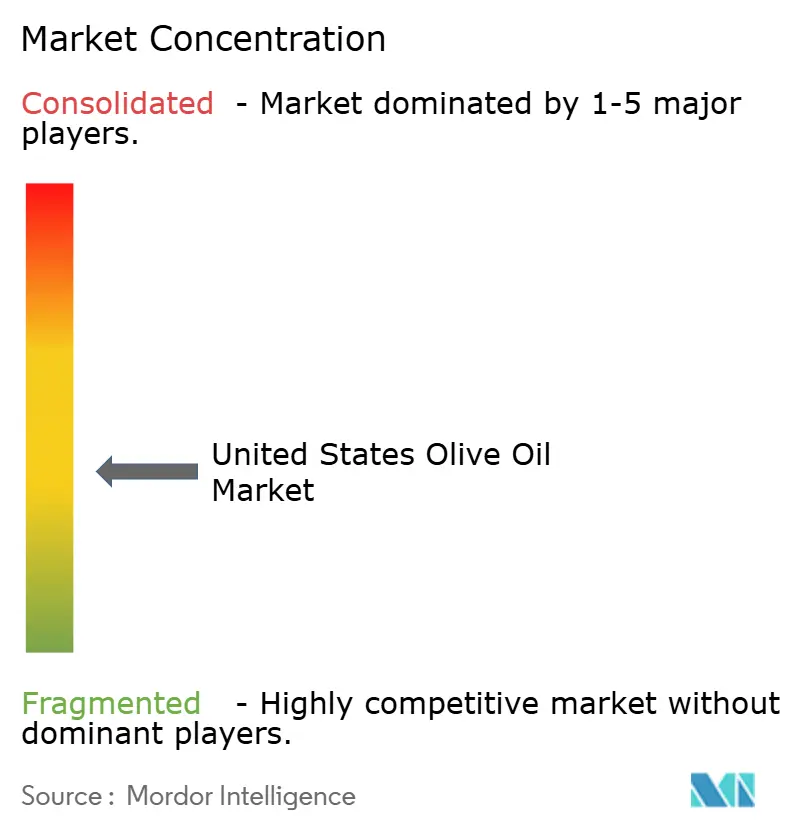
| Market Concentration | Medium |
Major Players
*Disclaimer: Major Players sorted in no particular order Image © Mordor Intelligence. Reuse requires attribution under CC BY 4.0. |
|
United States Olive Oil Market Analysis by Mordor Intelligence
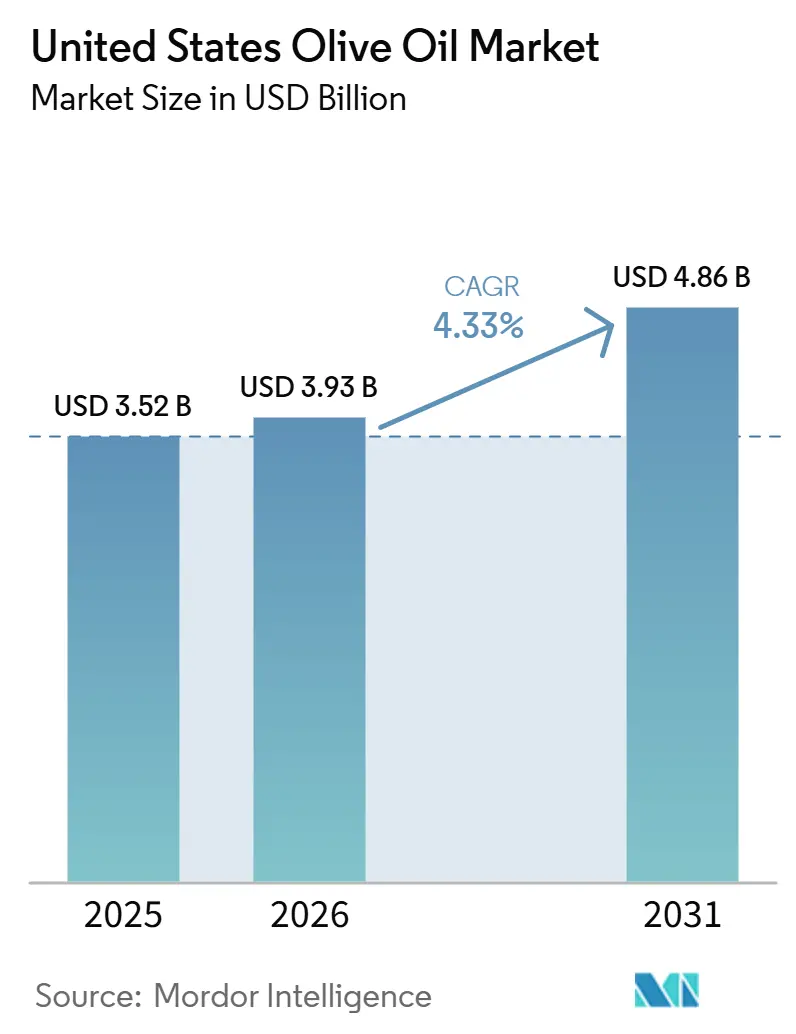
The United States olive oil market size is expected to grow from USD 3.52 billion in 2025 to USD 3.93 billion in 2026 and is forecast to reach USD 4.86 billion by 2031 at a 4.33% CAGR over 2026-2031. The United States olive oil market is driven by growing consumer preference for heart-healthy cooking oils, increasing adoption of Mediterranean dietary patterns, and rising demand for clean-label, minimally processed food products. The market remains heavily dependent on imported olive oil, making supply and pricing susceptible to harvest conditions, trade dynamics, and production levels in major exporting countries. Domestic production, led primarily by California, supports premium and locally sourced offerings while contributing to supply diversification. Product innovation, expanding foodservice applications, and increasing consumer focus on quality and authenticity continue to support market growth, although elevated retail prices and concerns over product adulteration remain key challenges.
Key Report Takeaways
- By product type, virgin olive oil held 73.56% share in 2025, while extra virgin olive oil is forecast to grow at a 5.35% CAGR from 2026 to 2031.
- By nature, conventional olive oil held 82.23% share in 2025, while organic olive oil is forecast to grow at a 6.46% CAGR from 2026 to 2031.
- By packaging, bottles held 70.57% share in 2025, while cans are forecast to grow at a 5.21% CAGR from 2026 to 2031.
- By distribution channel, retail held 70.35% share in 2025, while foodservice is forecast to grow at a 5.43% CAGR from 2026 to 2031.
Note: Market size and forecast figures in this report are generated using Mordor Intelligence’s proprietary estimation framework, updated with the latest available data and insights as of January 2026.
United States Olive Oil Market Trends and Insights
Drivers Impact Analysis*
| Driver | (~) % Impact on CAGR Forecast | Geographic Relevance | Impact Timeline |
|---|---|---|---|
| Growing preference for heart-healthy cooking oils | +1.2% | National; strongest in West and Northeast | Long term (≥ 4 years) |
| Rising adoption of Mediterranean dietary patterns | +0.9% | National; concentrated in coastal metro areas | Medium term (2–4 years) |
| Expanding consumer awareness of clean-label and natural foods | +0.6% | National; highest in West, Northeast, urban South | Long term (≥ 4 years) |
| Product innovation in flavored and infused olive oils | +0.4% | National; e-commerce-led in suburban markets | Short term (≤ 2 years) |
| Expansion of gourmet home cooking and culinary exploration | +0.3% | National; concentrated in affluent suburban and urban households | Medium term (2–4 years) |
| Foodservice and multicultural culinary expansion | +0.5% | National; early gains in Miami, New York, Los Angeles, Chicago | Medium term (2–4 years) |
| Source: Mordor Intelligence | |||
Growing preference for heart-healthy cooking oils
Growing consumer awareness of the cardiovascular benefits of unsaturated fats is driving greater adoption of olive oil as a preferred cooking oil in the United States. According to the North American Olive Oil Association (NAOOA) 2026 State of the Industry report, olive oil household penetration reached 50.9% of United States households, reflecting its increasing acceptance as a staple in health-conscious kitchens[1]Source: The North American Olive Oil Association, "NAOOA: Federal Standards, Industry Program Aim to Accelerate Olive Oil Growth as Tariffs Threaten Affordability", aboutoliveoil.org. In addition, the NAOOA reported that its "NAOOA Certified" seal now appears on 49% of branded olive oil sold in the United States, highlighting the industry's growing emphasis on product authenticity and quality as consumers increasingly seek trusted, heart-healthy cooking oils[2]Source: The North American Olive Oil Association, "NAOOA: Federal Standards, Industry Program Aim to Accelerate Olive Oil Growth as Tariffs Threaten Affordability", aboutoliveoil.org.
Rising adoption of Mediterranean dietary patterns
Growing consumer interest in balanced eating and preventive nutrition is driving the incorporation of Mediterranean-style ingredients, particularly olive oil, into everyday meals. According to the International Food Information Council (IFIC) 2025 Spotlight Survey, 56% of Americans reported that olive oil is among the oils they use most often when cooking or consuming food, ahead of vegetable oil (41%) and butter (38%)[3]Source: International Food Information Council, "Americans' Perceptions Of Seed Oils", ific.org. The survey also found that 56% of respondents identified olive oil as one of the three healthiest types of fat or oil, reinforcing its association with Mediterranean dietary habits and supporting continued demand in the United States olive oil market.
Expanding consumer awareness of clean-label and natural foods
Growing consumer preference for foods with simple ingredient lists and minimal processing is supporting demand for olive oil as a natural cooking ingredient. Consumers increasingly associate extra virgin and minimally refined olive oils with authenticity, transparency, and clean-label attributes, making them a preferred choice over highly processed edible oils. This is encouraging manufacturers to emphasize product origin, extraction methods, and quality certifications, while expanding premium and organic olive oil offerings across retail channels.
Product innovation in flavored and infused olive oils
Manufacturers are expanding their product portfolios with flavored and infused olive oils to meet evolving consumer preferences for convenience, premiumization, and culinary variety. Infusions featuring herbs, garlic, citrus, chili, and other natural ingredients are gaining popularity among home cooks and food enthusiasts seeking enhanced flavor without additional preparation. These product developments help brands differentiate their offerings, attract younger consumers, and encourage greater use of olive oil across a wider range of cooking applications and meal occasions.
Restraints Impact Analysis*
| Restraint | (~) % Impact on CAGR Forecast | Geographic Relevance | Impact Timeline |
|---|---|---|---|
| Olive oil adulteration and authenticity concerns | -0.7% | National; most acute in premium segment | Medium term (2–4 years) |
| Climate-related variability in olive production | -0.8% | Global supply chain; affects all United States importers | Long term (≥ 4 years) |
| Competition from alternative plant-based cooking oils | -0.5% | National; most acute in Midwest and value retail | Medium term (2–4 years) |
| Rising olive oil prices limiting household consumption | -0.6% | National; most sensitive in mid-income segments | Short term (≤ 2 years) |
| Source: Mordor Intelligence | |||
Olive oil adulteration and authenticity concerns
Concerns over olive oil adulteration and misleading product labeling continue to undermine consumer confidence in the market. Instances of blending olive oil with lower-cost vegetable oils, or making inaccurate claims about grade and origin, have increased scrutiny of product authenticity. As a result, consumers are placing greater emphasis on certifications, traceability, and trusted brands when making purchasing decisions. These concerns can discourage repeat purchases, particularly in the premium segment, while increasing compliance and quality assurance costs for manufacturers and importers.
Climate-related variability in olive production
Climate-related events such as prolonged droughts, heatwaves, irregular rainfall, and extreme weather conditions continue to affect olive cultivation in major producing regions. Fluctuations in harvest yields reduce the availability of olives for oil production, resulting in supply shortages and price volatility. As the United States relies heavily on imported olive oil, disruptions in global production affect product availability and procurement costs. These supply uncertainties create challenges for manufacturers, importers, and retailers in maintaining consistent pricing and inventory levels.
*Our forecasts treat driver/restraint impacts as directional, not additive. The impact forecasts reflect baseline growth, mix effects, and variable interactions.
Segment Analysis
By Product Type: Extra Virgin Olive Oil Redefines the Category's Value Ceiling
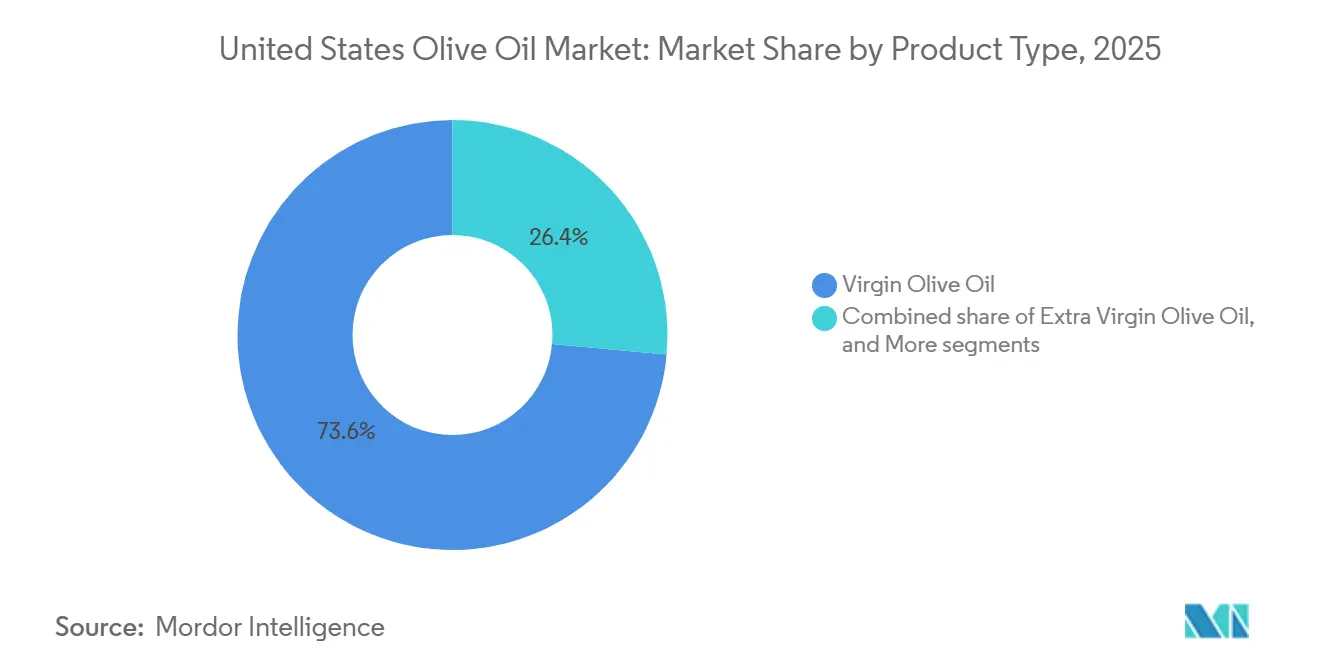
Virgin olive oil accounted for the largest share of the United States olive oil market, capturing 73.56% of revenue in 2025. Its dominant position is supported by widespread availability, balanced pricing, and broad use across both household and foodservice applications. The segment benefits from strong retail penetration and consumer familiarity, making it a preferred choice for everyday cooking and routine consumption across the country.
Extra virgin olive oil is projected to be the fastest-growing product type, registering a CAGR of 5.35% during 2026–2031. Growth is driven by increasing consumer preference for minimally processed, premium-quality edible oils, along with rising awareness of their nutritional benefits. Growing demand for clean-label products, increasing interest in premium and origin-certified olive oils, and continued product innovation in flavored and specialty offerings are further supporting the segment's growth.



By Nature: Organic Signals the Next Structural Value Shift
Conventional olive oil held the largest share of the United States olive oil market, accounting for 82.23% of revenue in 2025. Its dominant position is driven by broad availability, competitive pricing, and strong consumer acceptance across mainstream retail channels. The segment benefits from established brand presence and widespread use in everyday cooking, making it the preferred choice for most households and foodservice operators. Its versatility across a wide range of cooking applications, including sautéing, baking, frying, and salad preparation, continues to support steady demand among both residential and commercial users.
Organic olive oil is projected to be the fastest-growing segment by nature, registering a CAGR of 6.46% during 2026–2031. Growth is supported by increasing consumer preference for organic and minimally processed food products, along with rising demand for clean-label ingredients and sustainably produced edible oils. Expanding retail availability of certified organic olive oils and growing interest in premium, health-oriented products are expected to further support demand throughout the forecast period.
By Packaging: Cans Emerge as the Functional and Sustainability Crossover Format
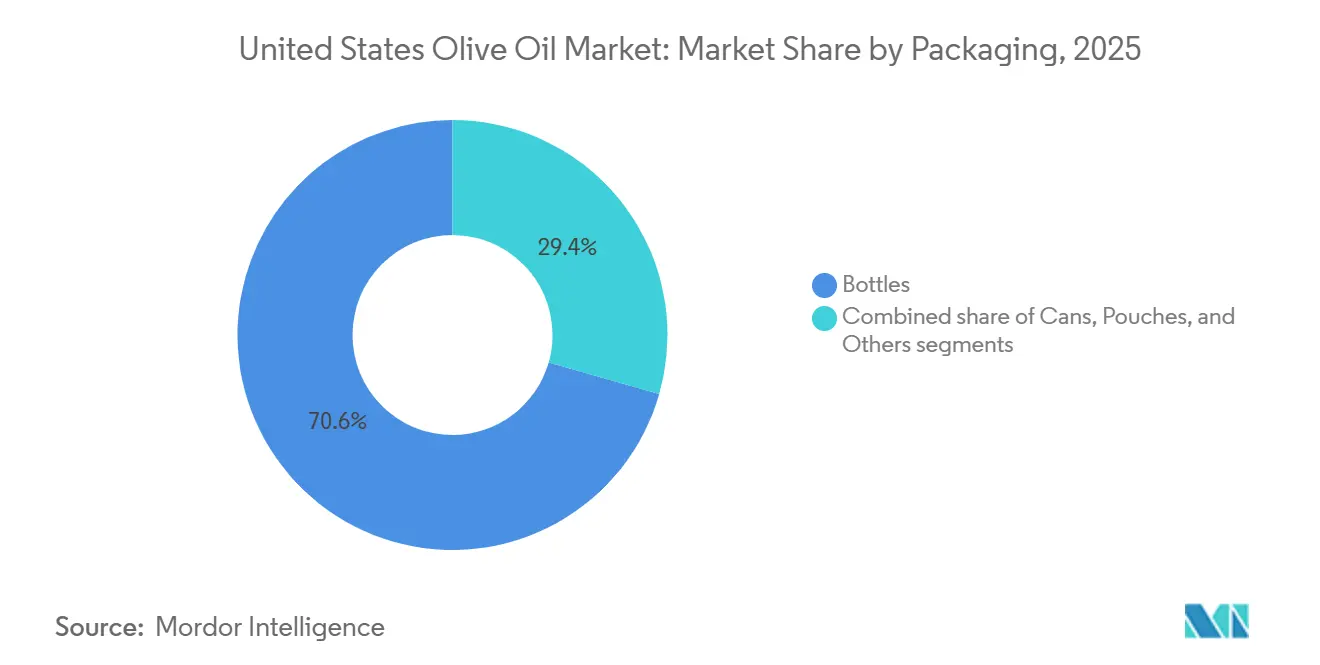
Bottles accounted for the largest share of the United States olive oil market by packaging, capturing 70.57% of revenue in 2025. Their dominance is supported by widespread retail availability, ease of handling, and strong consumer preference for glass and PET packaging across both premium and everyday olive oil products. Bottles also offer convenience for household use while enabling brands to differentiate products through packaging and labeling.
Cans are projected to be the fastest-growing packaging segment, registering a CAGR of 5.21% during 2026–2031. Growth is driven by increasing demand from foodservice operators and bulk purchasers seeking durable packaging with extended product protection. Metal cans offer superior protection against light exposure, helping preserve oil quality during storage and transportation. Rising interest in sustainable and recyclable packaging is also supporting greater adoption of cans across commercial and industrial applications.
By Distribution Channel: Retail Leads Market Share; Foodservice Records Fastest Growth
Retail accounted for the largest share of the United States olive oil market by distribution channel, capturing 70.35% of revenue in 2025. The segment's dominance is supported by the widespread presence of supermarkets, hypermarkets, convenience stores, specialty retailers, and online platforms, which provide consumers with broad access to a wide range of olive oil products. Frequent household purchases, promotional activities, and the availability of products across multiple price points continue to support the segment's leading position.
Foodservice is projected to be the fastest-growing distribution channel, registering a CAGR of 5.43% during 2026–2031. Growth is supported by the expanding use of olive oil across restaurants, cafés, hotels, and catering establishments, driven by increasing demand for premium ingredients and healthier menu offerings. The growing popularity of chef-led dining experiences, gourmet cuisine, and high-quality cooking oils in commercial kitchens is expected to further strengthen olive oil consumption through the foodservice channel over the forecast period.
Geography Analysis
The Western United States represents the largest regional market for olive oil, led by California, which is the country's primary olive oil-producing state and a major hub for premium domestic brands. Strong consumer preference for healthier cooking oils, high spending on premium food products, and the presence of established olive oil producers continue to support regional market leadership. California's domestic production capacity and processing infrastructure further strengthen the region's position in the market.
The Southern United States is expected to witness the fastest growth during the forecast period, driven by increasing consumer awareness of healthier cooking oils and expanding use of olive oil across households and foodservice establishments. Rising urbanization, changing dietary preferences, and growing demand for premium edible oils are encouraging greater adoption throughout the region. Increasing product availability across retail channels is also supporting market expansion.
The Northeast and Midwest continue to represent important markets for olive oil, supported by strong foodservice demand and growing consumer interest in premium and natural food products. The Northeast benefits from a well-established specialty food market and high consumption of international cuisines, while the Midwest is experiencing gradual adoption as health-conscious purchasing trends continue to expand. Ongoing product innovation and broader consumer awareness are expected to support steady market growth across both regions.
Competitive Landscape
The United States olive oil market is moderately fragmented, with a mix of global brands, domestic producers, and specialty olive oil companies competing across retail, foodservice, and industrial channels. Pompeian, Inc., Deoleo, S.A., California Olive Ranch, Inc., Salov S.p.A., and Colavita USA, LLC. are among the key participants, supported by strong brand recognition, extensive distribution networks, and broad product portfolios. Competition is driven by product quality, origin, pricing, brand reputation, and availability across mainstream and specialty retail channels.
Key companies are focusing on expanding premium extra virgin olive oil portfolios, strengthening domestic and international sourcing partnerships, and investing in product innovation to meet evolving consumer preferences. Manufacturers are also emphasizing clean-label positioning, traceability, sustainability certifications, and differentiated packaging formats to strengthen brand value. Strategic investments in production capacity, distribution networks, and retail partnerships continue to reinforce their competitive positions in the United States market.
Emerging and regional producers, including Corto Olive Co., McEvoy Ranch, Cobram Estate, and Queen Creek Olive Mill, are expanding their presence by offering premium, locally produced, and specialty olive oil products. These companies are capitalizing on growing consumer demand for artisanal, sustainably produced, and origin-certified olive oils while increasing their presence through direct-to-consumer channels, specialty retailers, and foodservice partnerships. Continued product innovation and differentiation are expected to intensify competition across the market.
United States Olive Oil Industry Leaders
-
Pompeian, Inc.
-
Deoleo, S.A.
-
California Olive Ranch, Inc.
-
Salov S.p.A.
-
Colavita USA, LLC
- *Disclaimer: Major Players sorted in no particular order

Recent Industry Developments
- March 2026: Cobram Estate Olives Limited completed the acquisition of California Olive Ranch, Inc., strengthening its vertically integrated operations in the United States. The acquisition includes California Olive Ranch's production assets, processing facilities, and its leading California-produced extra virgin olive oil brand, expanding Cobram Estate's presence in the United States olive oil market.
- February 2026: Brightland partnered with Sumo Citrus to launch a limited-edition Sumo Citrus Flavored Olive Oil made with 100% California extra virgin olive oil. The product expands Brightland's flavored olive oil portfolio and reflects growing innovation in premium, infused olive oils aimed at consumers seeking unique culinary experiences.
- November 2025: Dcoop announced that it had advanced the acquisition of the remaining 50% stake in Pompeian, moving toward full ownership of the leading United States olive oil brand. The transaction is expected to strengthen Dcoop's position in the United States olive oil market and expand its presence in the North American region.


United States Olive Oil Market Report Scope
The United States Olive Oil Market comprises the production, import, distribution, and sale of olive oil for household, foodservice, and industrial applications across the country. Market growth is supported by increasing consumer preference for healthier cooking oils, rising demand for premium and clean-label products, and expanding use of olive oil across retail and commercial food sectors. The market is segmented by product type into extra virgin olive oil, virgin olive oil, refined olive oil, and other product types. Based on nature, the market is categorized into conventional olive oil and organic olive oil. By packaging, the market includes bottles, cans, pouches, and others. Based on distribution channel, the market is segmented into retail, food processing, and foodservice.
| Extra Virgin Olive Oil |
| Virgin Olive Oil |
| Refined Olive Oil |
| Other Product Types |
| Conventional Olive Oil |
| Organic Olive Oil |
| Bottles |
| Cans |
| Pouches |
| Others |
| Retail | Supermarkets/Hypermarkets |
| Convenience Stores | |
| Online Retail | |
| Other Distribution Channel | |
| Food Processing | |
| Foodservice |
| By Product Type | Extra Virgin Olive Oil | |
| Virgin Olive Oil | ||
| Refined Olive Oil | ||
| Other Product Types | ||
| By Nature | Conventional Olive Oil | |
| Organic Olive Oil | ||
| By Packaging | Bottles | |
| Cans | ||
| Pouches | ||
| Others | ||
| By Distribution Channel | Retail | Supermarkets/Hypermarkets |
| Convenience Stores | ||
| Online Retail | ||
| Other Distribution Channel | ||
| Food Processing | ||
| Foodservice | ||


Key Questions Answered in the Report
What is the forecast for the United States olive oil market?
The United States olive oil market is forecast to rise from USD 3.93 billion in 2026 to USD 4.86 billion by 2031, at a 4.33% CAGR.
Which olive oil product type is growing fastest in the United States?
Extra virgin olive oil is forecast to grow at a 5.35% CAGR from 2026 to 2031, supported by demand for premium and minimally processed products.
Why is organic olive oil gaining traction?
Organic olive oil is projected to grow at a 6.46% CAGR through 2031 as consumers and retailers place more value on certification and traceable supply.
Which sales channel is expanding most quickly?
Foodservice is forecast to grow at a 5.43% CAGR through 2031, supported by restaurant menu use and hospitality demand.
Page last updated on:





