
United States Healthcare Parcel Last-mile Delivery Market Size and Share
Market Overview
| Study Period | 2020 - 2031 |
|---|---|
| Forecast Data Period | 2026 - 2031 |
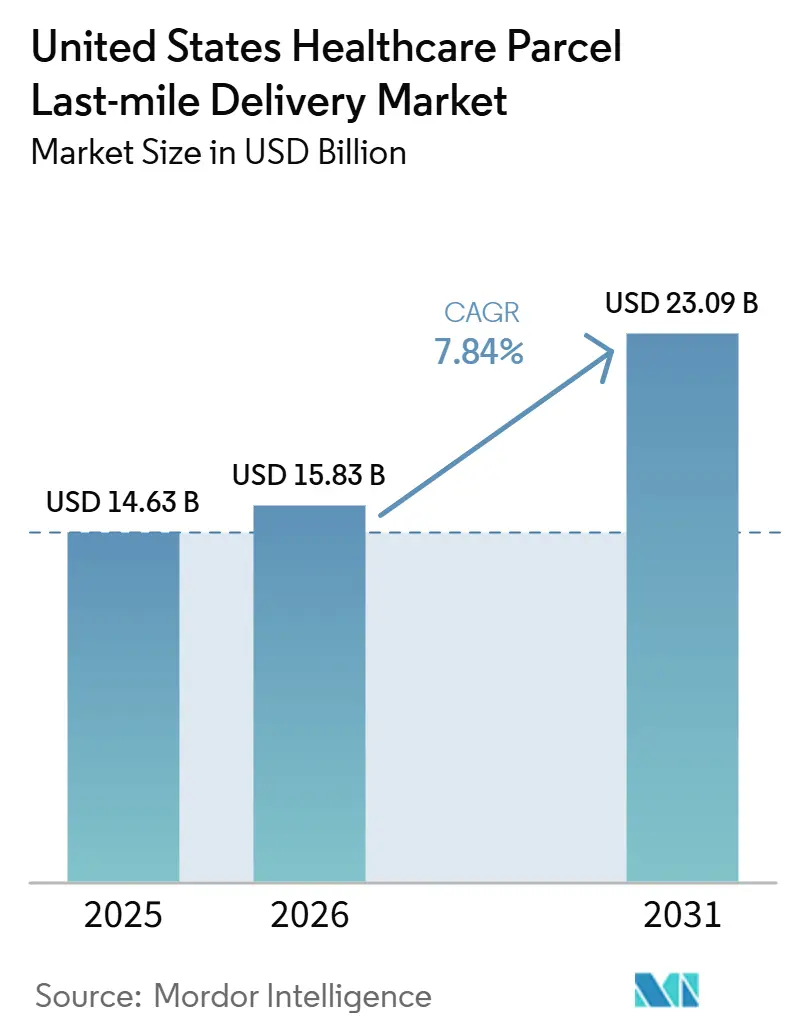
| Base Year Market Size (2025) | USD 14.63 Billion |
| Market Size (2026) | USD 15.83 Billion |
| Market Size (2031) | USD 23.09 Billion |
| Growth Rate (2026 - 2031) | 7.84 % |
| Market Concentration | Medium |
Major Players *Disclaimer: Major Players sorted in no particular order Image © Mordor Intelligence. Reuse requires attribution under CC BY 4.0. | |
United States Healthcare Parcel Last-mile Delivery Market Analysis by Mordor Intelligence
The United States healthcare parcel last-mile delivery market size was valued at USD 14.63 billion in 2025 and is estimated to grow from USD 15.83 billion in 2026 to USD 23.09 billion by 2031, at a CAGR of 7.84% during the forecast period 2026-2031.
Growth in the United States healthcare parcel last-mile delivery market is being supported by a steady shift toward specialty pharmaceuticals, more care delivered at home, and stronger patient demand for faster, more reliable prescription fulfillment. The operating model in this market differs from general parcel delivery, as shipment integrity, custody control, temperature management, and confirmation standards matter as much as transit speed. Investment is also rising across the United States healthcare parcel last-mile delivery market as large carriers and healthcare supply chain companies expand dedicated facilities, healthcare-focused brands, and pharmacy-linked delivery capabilities to capture higher-value regulated volume. Cost pressure remains a real constraint because cold-chain packaging, re-ice handling, delivery failures, and compliance systems raise unit economics, especially outside dense urban networks. Even so, the combination of aging populations, wider Hospital-at-Home adoption, and ongoing expansion in advanced therapies keeps the United States healthcare parcel last-mile delivery market on a durable growth path through 2031.
Key Report Takeaways
- By delivery type, next-day delivery accounted for 41.44% of the United States healthcare parcel last-mile delivery market share in 2025, while same-day delivery is projected to grow at a CAGR of 11.92% through 2031.
- By temperature type, non-temperature-controlled accounted for 52.86% of the United States healthcare parcel last-mile delivery market size in 2025, while temperature-controlled is expected to advance at an 8.70% CAGR through 2031.
- By product type, pharmaceuticals captured 36.18% of the United States healthcare parcel last-mile delivery market share in 2025, while cell and gene therapies are forecast to expand at a 13.60% CAGR to 2031.
- By delivery model, B2C accounted for 56.26% of the United States healthcare parcel last-mile delivery market size in 2025 and is expected to grow at a CAGR of 9.79% through 2031.
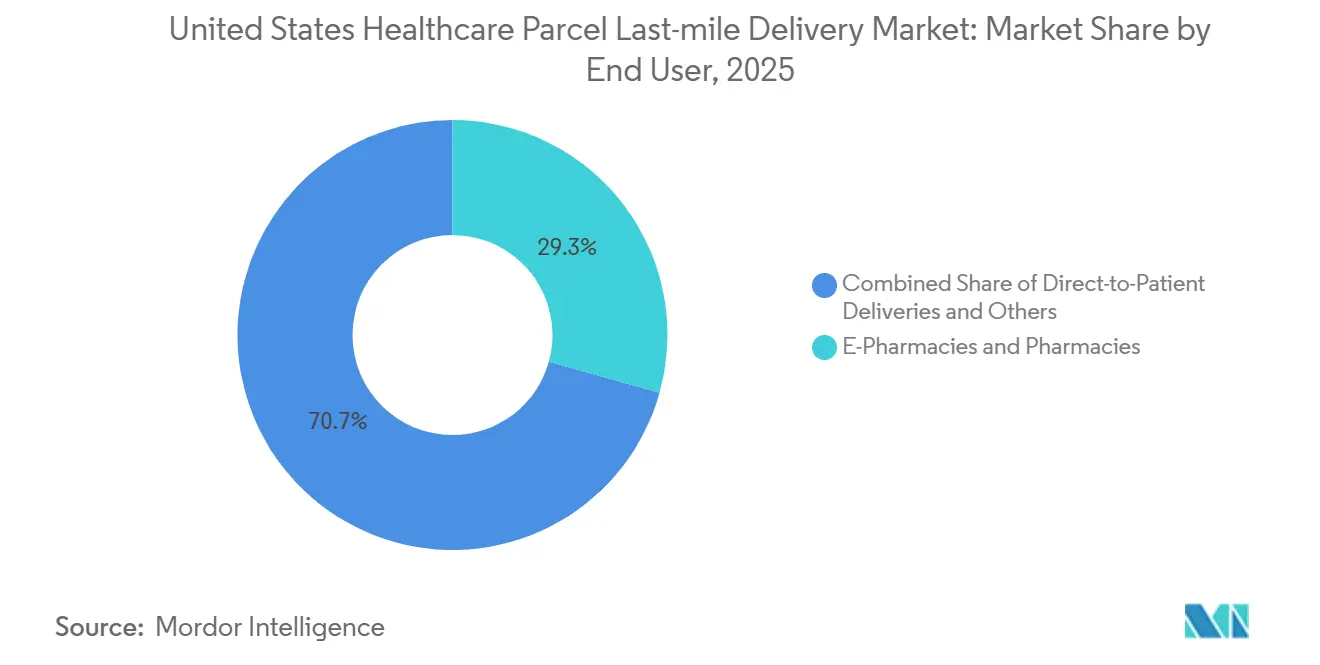
- By end user, e-pharmacies and pharmacies accounted for 29.33% of the United States healthcare parcel last-mile delivery market share in 2025, while direct-to-patient deliveries are projected to grow at a CAGR of 13.65% through 2031.
- By geography, the West led with 23.01% of the United States healthcare parcel last-mile delivery market size in 2025, while the Northeast is forecast to expand at an 11.66% CAGR through 2031.
Note: Market size and forecast figures in this report are generated using Mordor Intelligence’s proprietary estimation framework, updated with the latest available data and insights as of January 2026.
United States Healthcare Parcel Last-mile Delivery Market Trends and Insights
Drivers Impact Analysis*
| Driver | (~) % Impact on CAGR Forecast | Geographic Relevance | Impact Timeline |
|---|---|---|---|
| Expansion of Direct-to-Patient Specialty Pharmacy Fulfillment | +1.8% | National, with early concentration in the Northeast and the West | Medium term (2-4 years) |
| Rising Same-Day and Next-Day Expectations for Prescription Refills | +1.5% | Nationwide, the highest demand density is in the Northeast, the West, and the Southeast. | Short term (≤ 2 years) |
| Growth in Home-Based Care and Hospital-at-Home Programs | +1.3% | National, with faster expansion in the Midwest and Southeast | Medium term (2-4 years) |
| Temperature Integrity Requirements for Biologics and Vaccines | +1.1% | National, with cold-chain infrastructure concentrated in the Northeast and the West | Long term (≥ 4 years) |
| Integration of Delivery Orchestration Software with Pharmacy and EMR Workflows | +0.9% | National, deeper in urban and suburban corridors | Medium term (2-4 years) |
| Expansion of Rural and Underserved Area Coverage Through Hybrid Carrier Networks | +0.7% | Midwest, Southwest, Southeast | Long term (≥ 4 years) |
| Source: Mordor Intelligence | |||
Expansion of Direct-to-Patient Specialty Pharmacy Fulfillment
Direct-to-patient fulfillment is changing the shipment profile of the United States healthcare parcel last-mile delivery market, as more prescriptions now move directly to patients' homes rather than through older channel steps. That shift raises demand for parcel routing that can support the handling of protected health information, delivery confirmation, and better integration with provider and pharmacy systems. It also creates a larger need for networks that can manage patient scheduling and failed delivery recovery with fewer service breaks. Operators with stronger links to health systems and pharmacy workflows are therefore gaining an advantage by reducing friction in handoffs that matter in specialty drug delivery.
Rising Same-Day and Next-Day Expectations for Prescription Refills
Patient expectations in the United States healthcare parcel last-mile delivery market are moving closer to broader e-commerce service standards, especially for refill and urgent therapy needs. Same-day and next-day demand is strongest where treatment delays can interrupt care, including oncology support, injectables, and other therapies that must reach the patient quickly. This also increases the need for denser local dispatch capacity, as some healthcare shipments cannot tolerate multi-day delivery windows. The service challenge is greater for time-sensitive products such as radiopharmaceuticals and certain patient-specific medications because their clinical value can decline within hours.
Growth in Home-Based Care and Hospital-at-Home Programs
Growth in home-based care is expanding the addressable volume of the United States healthcare parcel last-mile delivery market, as more therapies, supplies, and monitoring devices now need to reach residential settings. The extension of the Acute Hospital Care at Home waiver removed a major policy uncertainty for health systems planning larger home-based programs. Delivery needs in this model are different from routine outpatient refills because many patients require frequent medication drops, equipment replacement, and coordinated timing with care teams. Cleveland Clinic expanded this model in March 2026, introducing Hospital Care at Home in Ohio after treating more than 4,000 patients through its Florida program[1]Source: Cleveland Clinic, “Cleveland Clinic Introduces Hospital Care at Home in Ohio,” Cleveland Clinic Newsroom, clevelandclinic.org. .
Temperature Integrity Requirements for Biologics and Vaccines
Temperature control requirements are raising the technical threshold for the United States healthcare parcel last-mile delivery market, as more therapies now require documented thermal protection all the way to the final handoff. The delivery endpoint is often the most sensitive stage because homes lack controlled receiving conditions, and exposure begins once the courier arrives. Cencora stated that specialty pharmaceuticals are expected to account for 70% of new medicines launched through 2027[2]Source: Cencora, “Cencora Announces 1 Billion Investment to Strengthen Its U.S. Distribution Network,” BioSpace, biospace.com. . By 2027, half of the products launched globally will require cold-chain storage. The same announcement described a 500% increase in refrigerated storage and a 200% increase in frozen storage at its Dothan, Alabama, facility, demonstrating how providers are building physical capacity for this shift. As a result, the United States healthcare parcel last-mile delivery market increasingly rewards carriers that can document excursions, manage specialized packaging, and support biologics and vaccines without custody gaps. This also increases the value of certified cold-chain infrastructure relative to general-purpose parcel capacity.
Restraints Impact Analysis*
| Restraint | (~) % Impact on CAGR Forecast | Geographic Relevance | Impact Timeline |
|---|---|---|---|
| Tight HIPAA, Chain-of-Custody, and Controlled-Substance Compliance Burden | -1.3% | Nationwide, the highest compliance overhead is in states with strict controlled-substance courier licensing. | Short term (≤ 2 years) |
| High Cost of Qualified Cold-Chain Packaging and Re-Ice Management | -1.1% | National, cost pressure is most acute in the Southwest and rural corridors. | Medium term (2-4 years) |
| Driver Shortages and Failed-Delivery Redelivery Costs | -0.8% | National, most severe in the Midwest and rural Southeast | Short term (≤ 2 years) |
| Fragmented State-Level Operating Requirements for Courier and Medical Transport Models | -0.7% | Nationwide, the highest friction is in multi-state healthcare network operators. | Long term (≥ 4 years) |
| Source: Mordor Intelligence | |||
Tight HIPAA, Chain-of-Custody, and Controlled-Substance Compliance Burden
Compliance remains a major restraint in the United States healthcare parcel last-mile delivery market because operators must handle patient data, documented custody, and controlled substances under stricter rules than standard parcel providers. These requirements raise operating costs through agreements, tamper controls, tracking logs, retention practices, and delivery verification. The burden also becomes harder to manage at the national scale because controlled-substance courier requirements vary by state, creating uneven operating conditions across networks. A single weak process can expose an operator to severe legal and financial consequences, which increases the barrier to entry for smaller carriers.
High Cost of Qualified Cold-Chain Packaging and Re-Ice Management
Cold-chain cost pressure is another clear brake on the United States healthcare parcel last-mile delivery market, as validated shippers, phase-change materials, and temperature monitors add recurring costs to each delivery. Those economics are especially difficult in direct-to-patient channels, where shipment density is lower, and parcel value capture is not always enough to offset packaging costs. Re-ice management adds another layer because depots need labor, space, and quality controls to refresh coolant before the last-mile leg. Smaller operators face a disadvantage because they cannot spread those costs across a broad national healthcare base as easily as larger networks can. This is why infrastructure investment is becoming a separator in the United States healthcare parcel last-mile delivery market, especially for biologics, vaccines, and advanced therapies.
*Our forecasts treat driver/restraint impacts as directional, not additive. The impact forecasts reflect baseline growth, mix effects, and variable interactions.
Segment Analysis
By Delivery Type: Same-Day Velocity Reshapes the Premium Tier
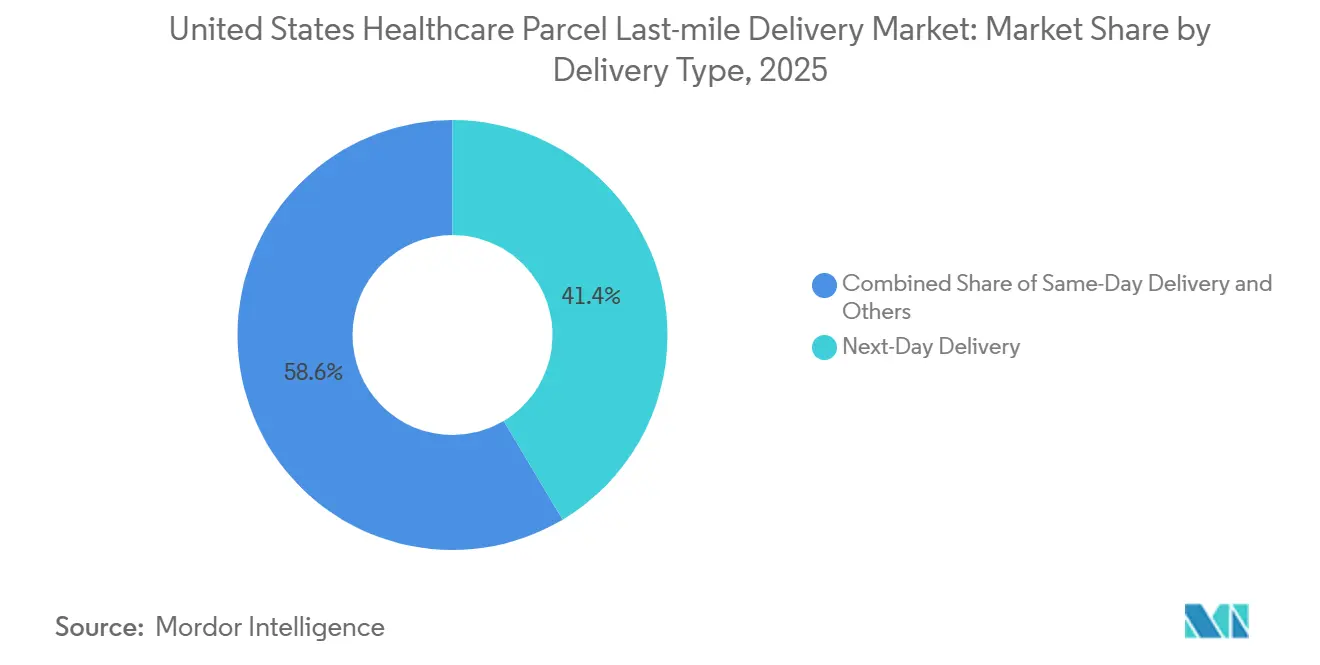
Next-day delivery accounted for 41.44% of the United States healthcare parcel last-mile delivery market share in 2025, making it the largest delivery type by value. Its leadership reflects the existing prescription fulfillment backbone that serves retail pharmacies, specialty pharmacies, and outpatient hospital dispensaries. This segment fits recurring refill programs where service reliability matters, but an urgent clinical response is not always required. It also benefits from established route density and a lower operating burden than most time-critical healthcare deliveries.
Same-day delivery is projected to expand at a 11.92% CAGR through 2031, making it the fastest-growing segment of the United States healthcare parcel last-mile delivery market. Radiopharmaceuticals are driving demand for urgent oncology support therapies and home health resupply, where timing can influence care continuity. Standard delivery still holds a role for non-urgent products such as home healthcare consumables, over-the-counter medications, and diagnostic kit replenishment. The segment is also shaped by compliance, as scheduled substances and sensitive products reduce the pool of couriers who can legally and operationally serve same-day demand. Over time, this creates a bifurcated structure where next-day remains the volume anchor, while same-day becomes the premium layer where service differentiation and pricing power concentrate.



By Temperature Type: Cold Chain Shifts from Exception to Standard
Non-temperature-controlled shipments accounted for 52.86% of the United States healthcare parcel last-mile delivery market size in 2025, giving them the largest share among temperature types. Ambient deliveries account for the current volume because they include many standard pharmaceuticals, diagnostic kits, home healthcare supplies, and routine medical devices. This makes the segment operationally important for scale and network utilization. It also reflects the large installed base of healthcare products that do not require specialized thermal controls during the final handoff.
Temperature-controlled shipments are forecast to grow at a 8.70% CAGR through 2031, suggesting the share gap is likely to narrow in the United States healthcare parcel last-mile delivery market. Cencora indicated that half of all pharmaceutical products launched globally through 2027 will require cold-chain storage, compared with 37% for the 2013-2017 cohort. The need for temperature control is also becoming more demanding, as cell and gene therapies may require cryogenic conditions beyond the conventional 2 °C to 8 °C range. That shift turns certifications and validated processes into baseline requirements rather than optional advantages. It also makes temperature control a strategic requirement for carriers seeking a larger role in the United States healthcare parcel last-mile delivery market.
By Product Type: Specialty Biologics and Advanced Therapies Drive Premium Yield
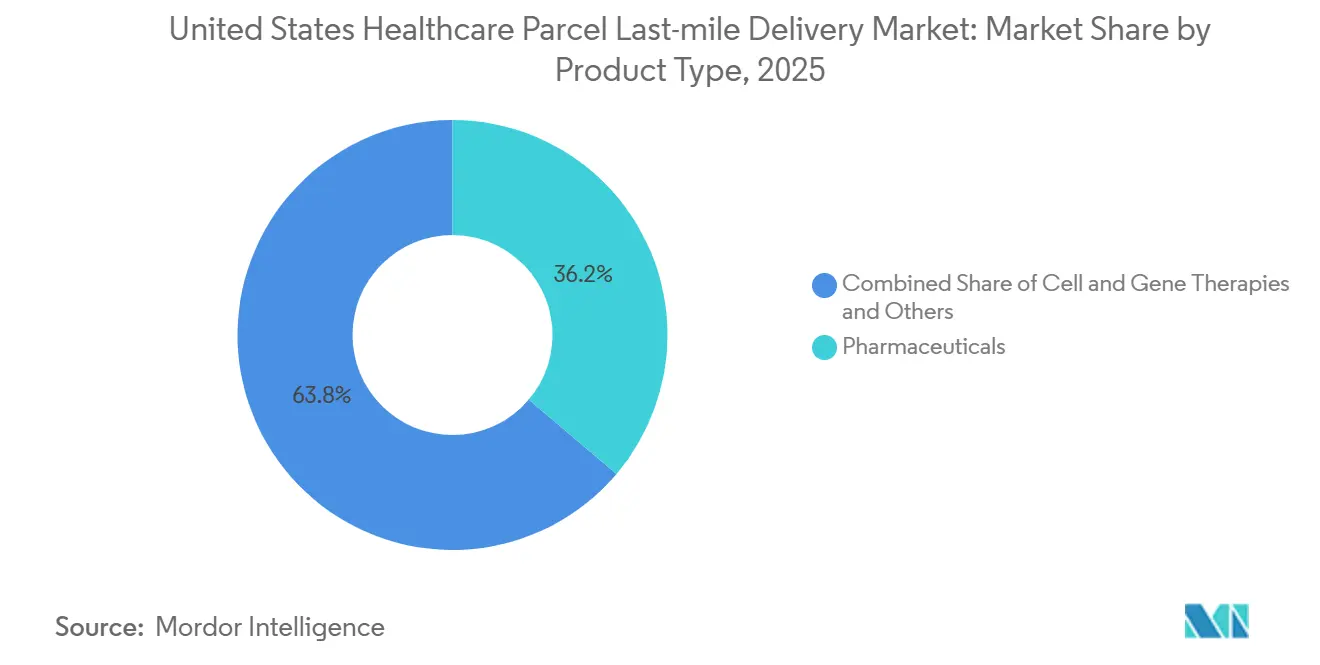
Pharmaceuticals captured 36.18% of the United States healthcare parcel last-mile delivery market share in 2025, making them the largest product type segment. This group includes prescription drugs, specialty drugs, and over-the-counter medicines moving through retail, hospital, and direct-to-patient channels. Its lead reflects broad shipment volume and the central role of prescription dispensing across healthcare settings. Medical devices and home healthcare supplies also contribute meaningfully to volume, but they do not match the breadth of pharmaceutical movement across the network.
Cell and gene therapies are projected to advance at a 13.60% CAGR through 2031, making them the fastest-growing product category in the United States healthcare parcel last-mile delivery market. Their rise is tied to the expanding pipeline of CAR T-cell therapies, gene-editing treatments, and autologous therapies that require a chain of identity and a chain of custody. Biopharmaceuticals, vaccines, and clinical trial materials form a complex middle layer where thermal control, handling precision, and delivery documentation carry high importance. Blood, plasma, diagnostic products, and veterinary medicine remain smaller segments, but they add specialized transport requirements that raise service complexity. Across this segmentation, product complexity is becoming more important than shipment volume in determining who earns premium yields.
By Delivery Model: B2C Dominance Anchored by Patient-Facing Channel Expansion
B2C accounted for 56.26% of the United States healthcare parcel last-mile delivery market size in 2025 and therefore remained the largest delivery model. This lead comes from e-pharmacy growth, direct patient shipments of therapies, and wider use of home-based care programs. It shows how dispensing and treatment support are increasingly ending at the patient's home rather than at institutional sites. The patient-facing side of the United States healthcare parcel last-mile delivery industry is now the clearest expression of that shift.
B2C is also expected to grow at a 9.79% CAGR through 2031, making it the fastest-growing delivery model in the United States healthcare parcel last-mile delivery market. That pattern shows that the largest segment is also carrying the strongest momentum through the forecast period. B2B remains structurally important for hospital transfers, clinic replenishment, and specimen movement, where institutional handoffs still dominate. The difference is that B2B is more tied to operational efficiency, while B2C is more directly exposed to patient convenience, adherence, and home-based service expectations. This keeps B2C at the center of future value creation, even as B2B remains essential to maintaining network balance.
By End User: Direct-to-Patient Velocity Challenges Legacy Channel Economics
E-pharmacies and pharmacies accounted for 29.33% of the United States healthcare parcel last-mile delivery market share in 2025, making them the largest end-user group. Their position is supported by prescription volume flowing through retail chain outlets, mail-order systems, and digital pharmacy platforms. Hospitals and clinics were the second-largest end-user segment because outpatient dispensing and internal medication resupply continue to generate substantial shipment needs. Diagnostic laboratories, home healthcare providers, and other end users also contribute to steady demand across specialized use cases.
Direct-to-patient deliveries are projected to grow at a 13.65% CAGR through 2031, which makes them the fastest-growing end-user category in the United States healthcare parcel last-mile delivery market. The key driver is manufacturers' growing interest in closer patient access, stronger adherence visibility, and better control over the final delivery experience. This directly challenges older distribution arrangements where value and patient relationships were more heavily filtered through intermediaries. At the same time, not every direct-to-patient product will require the highest-value cold-chain model, which means some ultra-sensitive therapies will remain concentrated in hospitals and specialty clinics. The result is an end-user mix where direct-to-patient growth is rapid, but institutional channels still matter for the most complex therapies.
Geography Analysis
The West accounted for 23.01% of the United States healthcare parcel last-mile delivery market size in 2025. That position reflects California’s large specialty pharmacy base, a dense life sciences presence, and broad integrated health-system coverage that extends into neighboring western states. These conditions support strong parcel density and make the region well-suited for regulated healthcare fulfillment. The West also benefits from continued facility expansion designed to support higher specialty and cold-chain throughput. Cencora announced a new 430,000 ft² West Coast distribution center in Fontana, California, expected to be fully operational by fall 2026, with nearly double the capacity of its predecessor, and added refrigerated and frozen storage.
The Northeast is forecast to grow at an 11.66% CAGR through 2031, giving it the fastest regional trajectory in the United States healthcare parcel last-mile delivery market. Population density, older urban demographics, strong specialty drug use, and a concentration of academic medical centers support this growth profile. Dense courier availability in cities such as New York, Boston, and Philadelphia also improves the economics of same-day and temperature-sensitive delivery. The Southeast has become another meaningful corridor because demographic expansion and wider use of home-based care are raising recurring delivery demand. Cleveland Clinic’s Florida Hospital-at-Home program treated more than 4,000 patients before the model expanded to Ohio in March 2026, underscoring how care delivery patterns in the region reinforce last-mile needs.
The Midwest combines mature metro distribution strength with rural coverage gaps in the United States healthcare parcel last-mile delivery market. That balance is evident in investments such as McKesson’s planned USD 179 million, 330,000 ft² regional distribution center in Moore, Oklahoma, intended to serve Oklahoma, Texas, and nearby areas with automated logistics and expanded cold-chain storage. The Southwest is a smaller contributor today, but its importance is rising as aging populations and complex chronic disease patterns spread across Sun Belt markets. Across all regions, fragmented state-level courier requirements remain a drag because multi-state expansion still brings added licensing, compliance work, and uneven operating rules.
Competitive Landscape
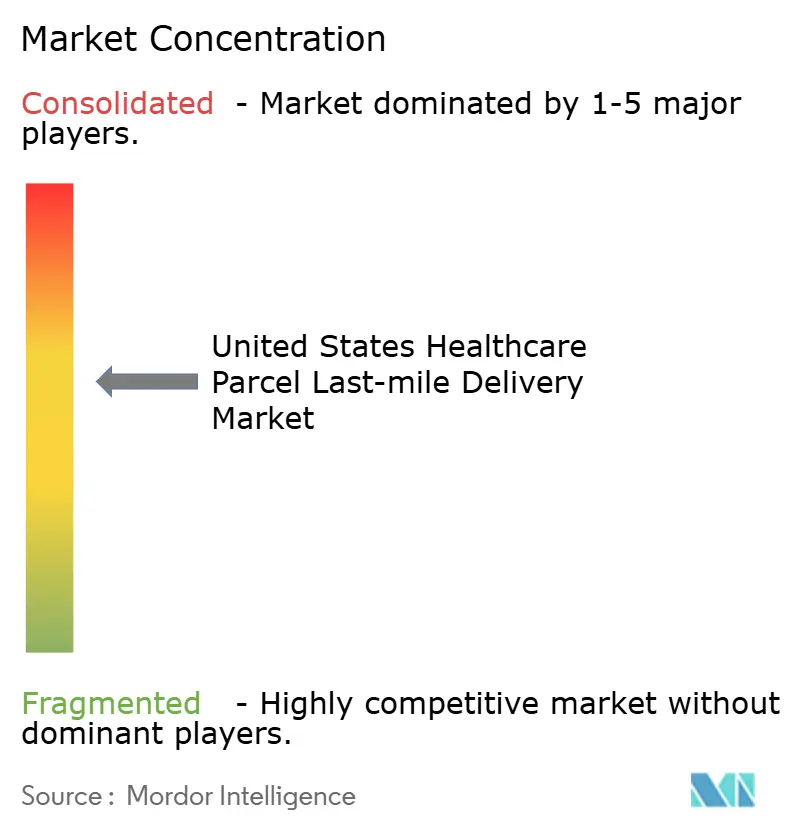
The United States healthcare parcel last-mile delivery market remains moderately fragmented, with national carriers and healthcare supply chain companies competing alongside specialist operators focused on regulated and time-sensitive delivery. FedEx, UPS, and DHL have scale advantages, but the broader field also includes Cencora, McKesson, Cardinal Health, Marken, UPS Healthcare, Precision Logistics, MedSpeed, USPack, and Airspace Technologies. Competition is not based solely on network reach because custody controls, pharmacy integration, and product-handling capabilities also influence winning positions. This keeps the United States healthcare parcel last-mile delivery market open to specialists even when larger carriers control broader transportation infrastructure. It also means leading companies are investing in healthcare-specific platforms rather than treating this segment as a simple extension of standard parcel services.
A clear strategic pattern is vertical build and network specialization across the United States healthcare parcel last-mile delivery market. In 2025, Marken, MNX Global Logistics, and Polar Speed were unified under the Marken UPS Healthcare Precision Logistics brand, creating a more integrated platform for drug supply, advanced therapies, radiopharmaceutical logistics, patient-driven services, and connected medical device management[3]Source: Marken, “Marken, MNX and Polar Speed Is Now Marken, UPS Healthcare Precision Logistics,” Marken, marken.com. . Cardinal Health announced a new 230,000 ft² flagship forward distribution center in Indianapolis in September 2025, expected to support more than 70,000 daily pharmaceutical and specialty deliveries when fully operational[4]Source: Cardinal Health, “Cardinal Health to Expand Pharmaceutical Distribution Network with New Indianapolis Facility,” Cardinal Health Newsroom, cardinalhealth.com. Cencora also announced a USD 1 billion investment through 2030 to strengthen its United States distribution network, including the opening of new centers and expanded refrigerated and frozen capacity. These moves show that capital is being deployed to focus on cold-chain readiness, regional reach, and closer control over the final handoff.
White space is still most visible in ultra-cold-chain last-mile services and in hybrid coverage for rural or underserved areas within the United States healthcare parcel last-mile delivery market. That leaves room for smaller operators to address narrow but difficult clinical delivery needs that large, standardized networks do not address as efficiently. At the same time, wholesalers are a growing competitive threat because they can extend from upstream pharmaceutical distribution into value-added last-mile services using existing customer relationships. The result is a market where large players set the pace for infrastructure, but specialist execution still matters enough to prevent excessive concentration.
United States Healthcare Parcel Last-mile Delivery Industry Leaders
FedEx
UPS
DHL Supply Chain
Cencora
McKesson Corporation
- *Disclaimer: Major Players sorted in no particular order

Recent Industry Developments
- June 2026: McKesson Corporation selected Moore, Oklahoma, as the location for a USD 179 million, 330,000 ft² regional distribution center at the North Moore Industrial Park. The highly automated facility will feature advanced material-handling systems, digital logistics technology, expanded cold-chain storage, and 100% standby power. Construction is scheduled from 2026 through 2028, with the facility expected to serve Oklahoma, Texas, and the surrounding region and create over 200 jobs.
- June 2026: UPS Healthcare deployed RFID technology across the entire US small-package network, shifting from manual scanning toward automated package sensing. The rollout improves shipment visibility and reliability for critical healthcare parcels without requiring customers to install additional systems or processes.
- January 2026: Cardinal Health announced its ContinuCare Pathway program expansion, enrolling Publix Super Markets' pharmacy network of nearly 1,400 locations, bringing total program coverage to more than 11,000 retail and grocery pharmacies nationwide. The program streamlines direct-to-home delivery for products such as continuous glucose monitors and other medical benefit-covered supplies.
- September 2025: Cardinal Health announced a new 230,000 ft² flagship forward distribution center in Indianapolis, Indiana, featuring an industry-first robotic storage and retrieval system developed with Swisslog. The facility, the second pharmaceutical distribution center announced by Cardinal Health since 2024, is expected to be fully operational by fall 2027 and will support over 70,000 daily pharmaceutical and specialty deliveries across the United States.


United States Healthcare Parcel Last-mile Delivery Market Report Scope
| Standard Delivery |
| Same-Day Delivery |
| Next-Day Delivery |
| Temperature Controlled |
| Non-Temperature Controlled |
| Pharmaceuticals | Prescription and Specialty Drugs |
| OTC Drugs | |
| Biopharmaceuticals (Biologics and Biosimilars) | |
| Vaccines | |
| Clinical Trial Materials | |
| Cell and Gene Therapies | |
| Medical Devices | |
| Veterinary Medicine | |
| Blood, Plasma and Blood Components | |
| Diagnostic and Laboratory Products | |
| Home Healthcare Supplies | |
| Others |
| B2C |
| B2B |
| Hospitals and Clinics |
| E-Pharmacies and Pharmacies |
| Diagnostic Laboratories |
| Home Healthcare Providers |
| Direct-to-Patient Deliveries |
| Others |
| Northeast |
| Southeast |
| Midwest |
| Southwest |
| West |
| By Delivery Type | Standard Delivery | |
| Same-Day Delivery | ||
| Next-Day Delivery | ||
| By Temperature Type | Temperature Controlled | |
| Non-Temperature Controlled | ||
| By Product Type | Pharmaceuticals | Prescription and Specialty Drugs |
| OTC Drugs | ||
| Biopharmaceuticals (Biologics and Biosimilars) | ||
| Vaccines | ||
| Clinical Trial Materials | ||
| Cell and Gene Therapies | ||
| Medical Devices | ||
| Veterinary Medicine | ||
| Blood, Plasma and Blood Components | ||
| Diagnostic and Laboratory Products | ||
| Home Healthcare Supplies | ||
| Others | ||
| By Delivery Model | B2C | |
| B2B | ||
| By End User | Hospitals and Clinics | |
| E-Pharmacies and Pharmacies | ||
| Diagnostic Laboratories | ||
| Home Healthcare Providers | ||
| Direct-to-Patient Deliveries | ||
| Others | ||
| By Region | Northeast | |
| Southeast | ||
| Midwest | ||
| Southwest | ||
| West | ||


Key Questions Answered in the Report
What is driving growth in the United States healthcare parcel last-mile delivery?
Growth is being supported by home-based care expansion, specialty pharmaceutical fulfillment, and stronger demand for faster prescription delivery. The sector is projected to rise from USD 15.83 billion in 2026 to USD 23.09 billion by 2031 at a 7.84% CAGR.
Which delivery speed category leads this sector today?
Next-day delivery led in 2025 with 41.44% share because it fits large prescription fulfillment volumes across retail, specialty, and outpatient channels.
Which part of the business is growing the fastest?
Same-day delivery is the fastest-growing delivery type, with a 11.92% CAGR, while direct-to-patient deliveries are the fastest-growing end-user segment, with a 13.65% CAGR through 2031.
Why is cold-chain capability becoming more important?
More biologics, vaccines, and advanced therapies require temperature-controlled delivery, and temperature-controlled shipments are forecast to grow at a 8.70% CAGR through 2031.
Which region is leading and which is expanding the fastest?
The West held the largest regional share at 23.01% in 2025, while the Northeast is expected to post the fastest growth at an 11.66% CAGR through 2031.
How are major companies responding to this opportunity?
Leading players are adding healthcare-specific brands, distribution centers, and cold-chain capacity. Recent examples include the Marken UPS Healthcare Precision Logistics brand unification, Cencora’s USD 1 billion network plan, and Cardinal Health’s new Indianapolis forward distribution center.
Page last updated on:





