
United Kingdom Turf Protection Market Size and Share
Market Overview
| Study Period | 2021 - 2031 |
|---|---|
| Forecast Data Period | 2026 - 2031 |
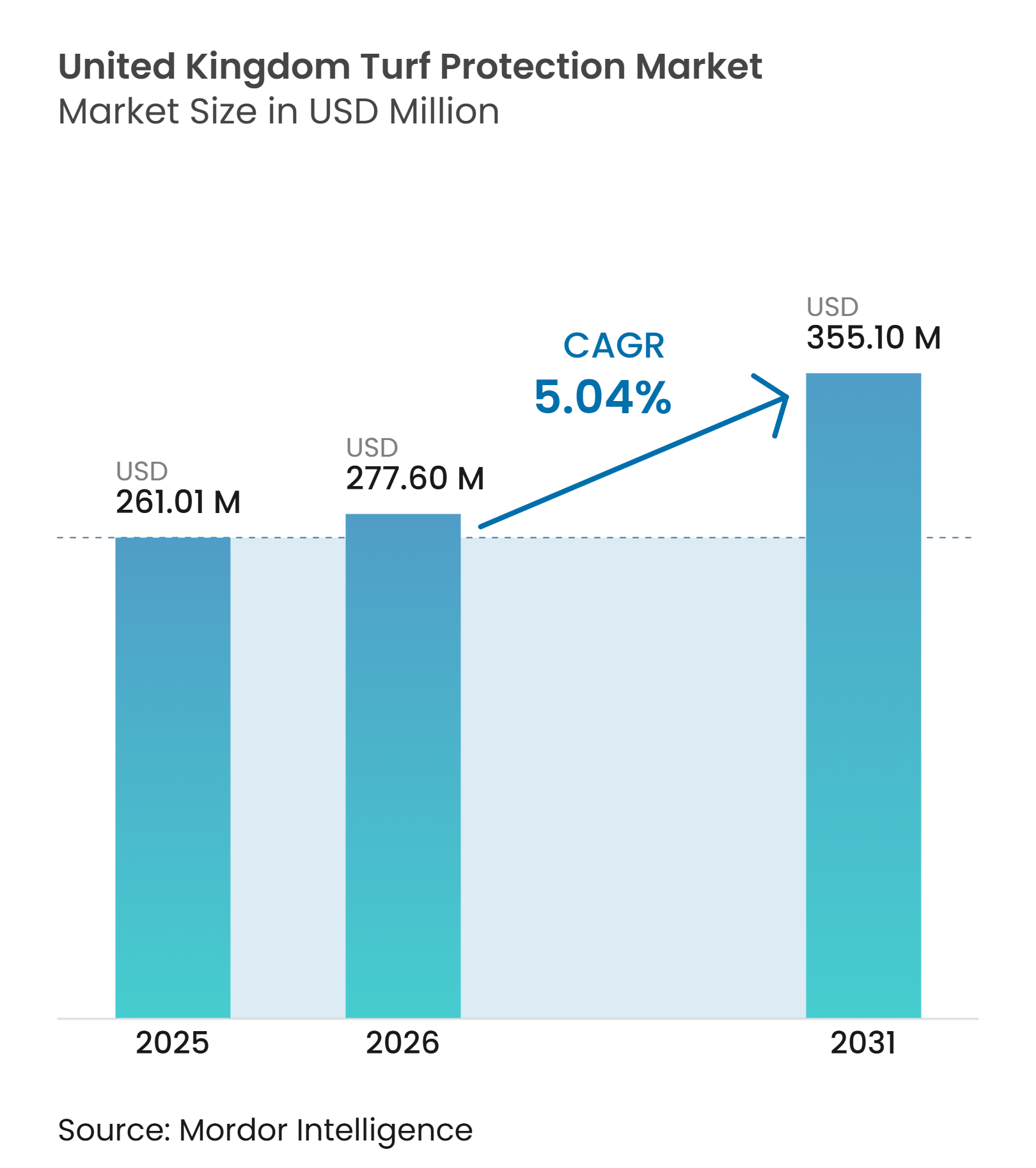
| Base Year Market Size (2025) | USD 261.01 Million |
| Market Size (2026) | USD 277.60 Million |
| Market Size (2031) | USD 355.10 Million |
| Growth Rate (2026 - 2031) | 5.04 % |
| Market Concentration | Medium |
Major Players *Disclaimer: Major Players sorted in no particular order Image © Mordor Intelligence. Reuse requires attribution under CC BY 4.0. | |
United Kingdom Turf Protection Market Analysis by Mordor Intelligence
The United Kingdom turf protection market size was valued at USD 261.01 million in 2025 and is estimated to grow from USD 277.60 million in 2026 to reach USD 355.10 million by 2031 at a CAGR of 5.04% during the forecast period (2026-2031). The market is supported by heavily managed golf, sports, landscaping, and residential turf, where disease prevention and surface quality remain ongoing priorities. The Pesticides National Action Plan 2025 requires a 10% reduction in each of 20 Pesticide Load Indicator metrics by 2030 relative to the 2018 baseline, influencing purchasing decisions among professional turf users[1]. This framework creates demand for monitoring, careful product selection, and biological inputs, while also limiting some synthetic options. The market, therefore, offers opportunities for suppliers that combine registered products, field support, and documented application programs. The narrowing list of approved active substances also raises the value of products that fit resistance-management and Integrated Pest Management programs
Key Report Takeaways
- By product type, fungicides accounted for 36.8% of the United Kingdom turf protection market share in 2025, while biostimulants and biofertilizers are forecast to grow at a CAGR of 10.9% from 2026 to 2031.
- By application, landscaping accounted for 39% of the United Kingdom turf protection market size in 2025, while sports fields are forecast to grow at a CAGR of 7.2% from 2026 to 2031.
- By end user, residential customers accounted for 41% of the market share in 2025, while municipalities and schools are forecast to grow at a CAGR of 7.0% from 2026 to 2031.
- By mode of action, chemical products accounted for 69% of the market share in 2025, while biological products are forecast to grow at a CAGR of 11.8% from 2026 to 2031.
- By formulation, liquid concentrates accounted for 55% of the market share in 2025, while wettable powders are forecast to grow at a CAGR of 8.4% from 2026 to 2031.
Note: Market size and forecast figures in this report are generated using Mordor Intelligence’s proprietary estimation framework, updated with the latest available data and insights as of January 2026.
Market Trends and Insights
Drivers Impact Analysis of United Kingdom Turf Protection Market*
| Driver | (~) % Impact on CAGR Forecast | Geographic Relevance | Impact Timeline |
|---|---|---|---|
| Rising Disease and Abiotic Stress Pressure on Intensively Managed Turf | +1.2% | United Kingdom primary, Europe high, global moderate | Short term (≤ 2 years) |
| Expansion of Premium Golf and Sports-Turf Maintenance Programs | +1% | United Kingdom primary, North America high, Europe high | Medium term (2-4 years) |
| Mainstream Adoption of Integrated Turf Management and Precision Application | +0.8% | United Kingdom primary, Europe high, Asia-Pacific moderate | Medium term (2-4 years) |
| Growth of Biological Turf Protection and Biostimulant Programs | +1.1% | United Kingdom primary, Europe high, global growing | Medium term (2-4 years) |
| Public and Player Expectations for Safe, Playable, Visually Consistent Surfaces | +0.6% | United Kingdom primary, North America high, Europe moderate | Long term (≥ 4 years) |
| UK Amenity-Sector Investment in Water-Efficient and Resilient Turf Systems | +0.5% | United Kingdom primary, with early adoption in water-stressed areas of England and Scotland | Long term (≥ 4 years) |
| Source: Mordor Intelligence | |||
Rising Disease and Abiotic Stress Pressure on Intensively Managed Turf
The United Kingdom turf protection market faces year-round fungal disease pressure due to persistent humidity and mild overnight temperatures that support pathogen activity. In autumn 2025, Microdochium patch events involved leaf-wetness periods exceeding 16 hours at affected sites, surpassing the six-hour threshold cited for pathogen establishment. Those conditions reduced the effectiveness of preventive spraying and required managers to increase reactive treatment. BIGGA stated in 2025 that legislative and climate changes were increasing disease risk while restricting the chemical tools available to course managers. Drought-weakened roots, traffic compaction, and uneven soil moisture also create conditions for fungal and insect damage. These pressures are increasing purchases of wetting agents, soil conditioners, and biostimulants, as well as protective products.
The United Kingdom turf protection market benefits when facilities move from single-product responses toward planned programs that address disease and plant stress together. Product choice is becoming more important as disease pressure can develop quickly during extended wet periods. Recurring disease pressure supports spending at facilities that maintain high performance standards and makes product reliability and technical advice more important for managers operating with restricted budgets. Suppliers offering programs for both disease prevention and stress recovery are well-positioned to address this need.
Expansion of Premium Golf and Sports-Turf Maintenance Programs
Great Britain had more than 3,001 golf courses in 2025, representing 8% of the global golf course supply[2]. This installed base supports steady demand for fungicides, herbicides, growth regulators, and biostimulants in the United Kingdom turf protection market. England recorded more than 10.2 million rounds in 2024, maintaining pressure on clubs to provide consistent playing surfaces[3]. Higher play levels increase the need for disease, weed, and wear management. Golf clubs must maintain surface conditions through changing weather and intensive use. Sports pitches face similar requirements from football, rugby, cricket, and athletics organizations.
Golf clubs are investing in irrigation and related surface management practices to maintain playing conditions. While irrigation supports playing quality, it also makes accurate application schedules and disease monitoring more relevant. The United Kingdom turf protection market can benefit when irrigation spending is followed by investment in targeted preventive programs. Managers can use monitoring data to time applications rather than relying only on curative action. This favors suppliers that provide both product access and practical agronomy support. Investment beyond golf also broadens demand among stadiums and community sports facilities, linking water management more closely with disease prevention.
Mainstream Adoption of Integrated Turf Management and Precision Application
The UK Pesticides National Action Plan 2025 places Integrated Pest Management at the center of the country’s sustainable pesticide strategy. Professional users are expected to prioritize physical and biological controls before using synthetic inputs where suitable. The plan also identifies amenity use as an area requiring better guidance, training, and implementation. The United Kingdom turf protection market is shifting from routine product purchases toward monitoring-supported treatment decisions. This changes the role of turf managers from product users to managers of documented programs and favors suppliers that can demonstrate how their products fit within an Integrated Turf Management plan.
The Official Controls Regulations (OCR) provide a risk-based inspection structure for golf clubs, schools, councils, and sports facilities. Documented treatment thresholds and recordkeeping can help facilities manage compliance exposure. Precision application can reduce unnecessary chemical use while preserving surface performance. Digital disease forecasting and environmental monitoring can serve as the starting point for broader product purchases, creating recurring relationships between suppliers and professional users. As a result, the United Kingdom turf protection market places greater value on monitoring tools that support the appropriate use of companion products.
Growth of Biological Turf Protection and Biostimulant Programs
Great Britain had 14% fewer approved active substances in 2025 than in 2016, narrowing chemical rotation options. This change is creating space in the United Kingdom turf protection market for biological protection and plant-health products. The number of approved biopesticide active substances increased from 2 in 1997 to 44 in 2020. While the available approval base remains limited, it reflects gradual regulatory capacity for biological products. Biological programs can add different modes of action to disease management plans and support users responding to Pesticide Load Indicator requirements.
Envu's Harmonix Turf Defense is the United Kingdom's first registered biocontrol fungicide for managed amenity turf, using Bacillus amyloliquefaciens QST 713. Its authorization demonstrated that a biological fungicide can obtain a United Kingdom registration for this use. For biological products to replace some synthetic treatments in the United Kingdom turf protection market, they must deliver consistent performance under cool and humid conditions. Products supported by United Kingdom -specific efficacy evidence can reduce uncertainty for golf and sports turf managers, as results from warmer growing regions may not apply directly to conditions in the United Kingdom. This makes local product validation and field support important factors in the adoption of biological products.
Restraints Impact Analysis of United Kingdom Turf Protection Market*
| Restraint | (~) % Impact on CAGR Forecast | Geographic Relevance | Impact Timeline |
|---|---|---|---|
| Withdrawal and Limited Availability of Effective Amenity Active Substances | -1.7% | United Kingdom primary, Europe high, global moderate | Short term (≤ 2 years) |
| Budget Pressure on Municipalities and Small Golf Facilities | -0.7% | United Kingdom primary, Europe moderate, global moderate | Medium term (2-4 years) |
| Professional-Use Training, Registration, Inspection, and Recordkeeping Burden | -0.9% | United Kingdom primary, across England, Scotland, Wales, and Northern Ireland | Medium term (2-4 years) |
| Resistance and Reduced Efficacy in Recurring Turf Disease and Pest Cycles | -1.2% | United Kingdom primary, Europe high, global growing | Long term (≥ 4 years) |
| Source: Mordor Intelligence | |||
Withdrawal and Limited Availability of Effective Amenity Active Substances
Products available in the European Union cannot be used in Great Britain without separate Health and Safety Executive authorization. This can deter manufacturers from seeking approvals for low-volume amenity uses. The Plant Protection Products Regulations 2011 require individual product authorizations in the United Kingdom. Registration costs and timelines can lead multinational suppliers to prioritize larger agricultural uses. This issue is particularly relevant for disease management on putting greens and sports pitches, where dependable options are required, and disease treatment windows are widening.
The Crop Chemicals Register and the National Action Plan determine authorization and withdrawal conditions. Managers and distributors may have limited time to identify and validate alternatives before a substance loses authorization. As a result, the United Kingdom turf protection market may see lower treatment frequency at facilities that ration approved chemistry. Managers may reserve products for high-risk periods to preserve program effectiveness, which can limit volume growth even if the value of individual treatments remains high. Suppliers with authorized alternatives and clear transition support are better positioned to respond to these conditions.
Budget Pressure on Municipalities and Small Golf Facilities
Local-authority green-space budgets limit spending on preventive programs and monitoring tools. Smaller golf facilities may also have limited access to in-house agronomy expertise and often depend on distributors for product recommendations and application guidance. The United Kingdom turf protection market shows a clear divide between premium facilities and those purchasing only essential treatments. Premium clubs and professional sports facilities tend to adopt broader programs, while smaller facilities focus on the minimum level of chemical application.
This difference can affect surface quality and disease management over time. Reduced preventive spending may increase the need for reactive treatment when disease conditions worsen and may make lower-priced products more attractive, even when they provide less complete support. The July 2026 Grounds Management Association advisory followed HSE findings that 97% of pesticide inspections in 2025 required corrective action. Compliance requirements can create further pressure on small grounds teams. The United Kingdom turf protection market retains premium value opportunities, but demand is uneven across customer budgets.
*Our forecasts treat driver/restraint impacts as directional, not additive. The impact forecasts reflect baseline growth, mix effects, and variable interactions.
United Kingdom Turf Protection Market Segment Analysis
By Product Type:
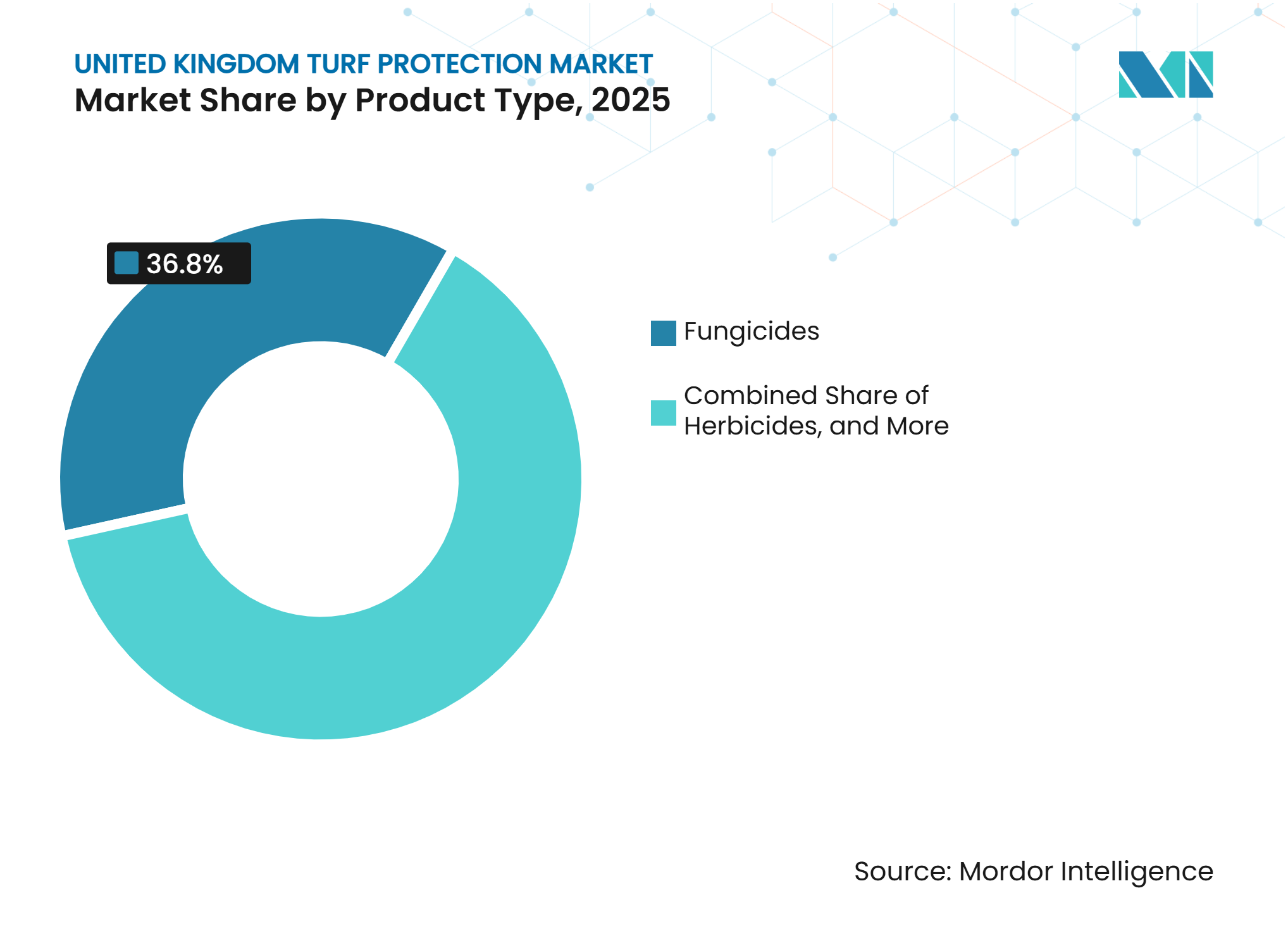
Fungicides Anchor Demand While Biostimulants and Bio-fertilizers AccelerateFungicides accounted for 36.8% of the United Kingdom turf protection market share in 2025, making them the largest product category. Their position reflects year-round exposure to dollar spot, Microdochium patch, Pythium, and brown patch in cool and humid conditions. Fewer rotation options mean that remaining approved fungicide products are used in carefully planned combination programs. This supports product value even as the number of registered options declines. BASF SE launched Maxtima at BTME 2024 with Agrovista as its primary UK distributor. The product contained mefentrifluconazole, which BASF SE described at launch as the first new azole active substance in the United Kingdom turf sector in 15 years. The GEO Foundation identifies fungicide rotation as a core part of resistance management for parkland greens. Fungicide use is therefore connected to managed agronomic practice rather than only to visible disease outbreaks.
Herbicides are the second-largest product type because managed landscapes, sports surfaces, and public green spaces require weed control. Insecticides address leatherjacket larvae and chafer grubs, particularly when dry conditions weaken turf roots. Plant growth regulators help manage labor needs and surface quality across fairways, sod farms, and commercial landscapes. Biostimulants and bio-fertilizers have the fastest product-type CAGR at 10.9% from 2026 to 2031. The United Kingdom turf protection market size for this product type is supported by Integrated Pest Management requirements and demand for root health and stress tolerance. ICL Group Ltd launched Greenmaster Liquid Advance in 2026 with its patented MTU biostimulant molecule for turf use. The launch demonstrates how established nutrition suppliers are linking conventional programs with biostimulant use. These products can complement, rather than simply replace, existing protection practices.



By Application:
Landscaping Leads Demand While Sports Fields Drive GrowthSports fields have the highest application CAGR at 7.2% for 2026-2031. Participation in football, rugby, cricket, and athletics increases the need for well-maintained natural surfaces. Facility owners face scrutiny when pitch conditions affect performance or safety. Restrictions on artificial pitches in some youth football leagues direct more attention toward natural turf upkeep. This can increase the treatment area for protection products and biostimulants. The Sports Turf Research Institute at Bingley continues to publish disease research and product evaluation information for professional users. Such evidence can help facility managers explain input spending to boards and operators. The United Kingdom turf protection market gains support when pitch standards are linked to more structured maintenance decisions.
Landscaping accounted for 39% share of the United Kingdom turf protection market in 2025 and remained the largest application. It includes contractors, councils, parks, private estates, and housing developers that require regular turf care. These users support baseline demand for herbicides, fungicides, and biostimulants. Golf courses remain an important application, as England recorded more than 10.2 million rounds in 2024. Sod farms form a smaller, specialized use area where establishment and delivery quality matter. Biostimulant-supported establishment and fungicide protection can be combined for premium sports-surface contracts. The National Action Plan identifies sports pitches, golf courses, and parks as amenity uses subject to Integrated Pest Management expectations. HSE enforcement makes documented and compliant product use relevant across these applications.
By End User:
Residential Customers Lead by Share, Municipalities and Schools Lead GrowthResidential customers accounted for 41% of the United Kingdom turf protection market share in 2025. The segment is supported by homeowners maintaining lawns and garden surfaces. Consumer and semi-professional products reach these users through garden centers, DIY stores, and online channels. Average spending per household is lower than in professional channels. However, the broad customer base provides steady demand for herbicides, lawn fertilizers, and consumer biostimulants. Commercial landscape contractors are the second-largest professional end-user group. They serve councils, corporate estates, housing developers, and hospitality venues under professional-user requirements. Sports facility owners remain high-value users because golf clubs and athletics facilities often purchase complete programs over multiple seasons.
Municipalities and schools are the fastest-growing end-user group at a 7% CAGR from 2026 to 2031. The National Action Plan is encouraging public-land managers to formalize safe and sustainable pesticide programs. England, Scotland, Wales, and Northern Ireland apply the plan through their own implementation arrangements. Official Controls regulations allow announced and unannounced inspections by HSE Pesticide Enforcement Officers. This creates a reason to purchase professionally formulated products with clear label documentation. The Grounds Management Association's July 2026 notice highlighted corrective action in 97% of 2025 inspections. Formal purchasing can rise as grounds teams respond to that compliance risk. The United Kingdom turf protection market is thus supported by the need for public facilities to document their turf-care choices.
By Mode of Action:
Biological Leads Growth, Chemical Maintains DominanceBiological products are the fastest-growing mode-of-action segment at an 11.8% CAGR for 2026-2031. Reduced synthetic active-substance availability and Integrated Pest Management requirements support this direction. Chemical products accounted for 69% of the market share in 2025. Professional managers need reliable disease control while meeting performance and Pesticide Load Indicator requirements. Integrated solutions can sequence chemical and biological treatments within a single program. This approach can give managers more flexibility during high-risk disease periods. The United Kingdom turf protection market continues to rely on chemical products even as biological use grows faster.
The approval base for biopesticide active substances rose from 2 in 1997 to 44 in 2020. That history shows a growing, but still limited, platform for biological expansion. Biological products with United Kingdom-specific registrations have a practical compliance advantage over unlicensed alternatives. Harmonix Turf Defense demonstrated how a single bio-control approval can change product discussions among professional turf users. Early registrations can gain relevance as more facilities formalize Integrated Pest Management plans. The United Kingdom turf protection market needs products that demonstrate reliable field results in local conditions. Authorization, technical support, and field evidence will remain central to adoption. Integrated programs also help managers avoid treating biological and chemical products as direct substitutes in every situation.
By Formulation:
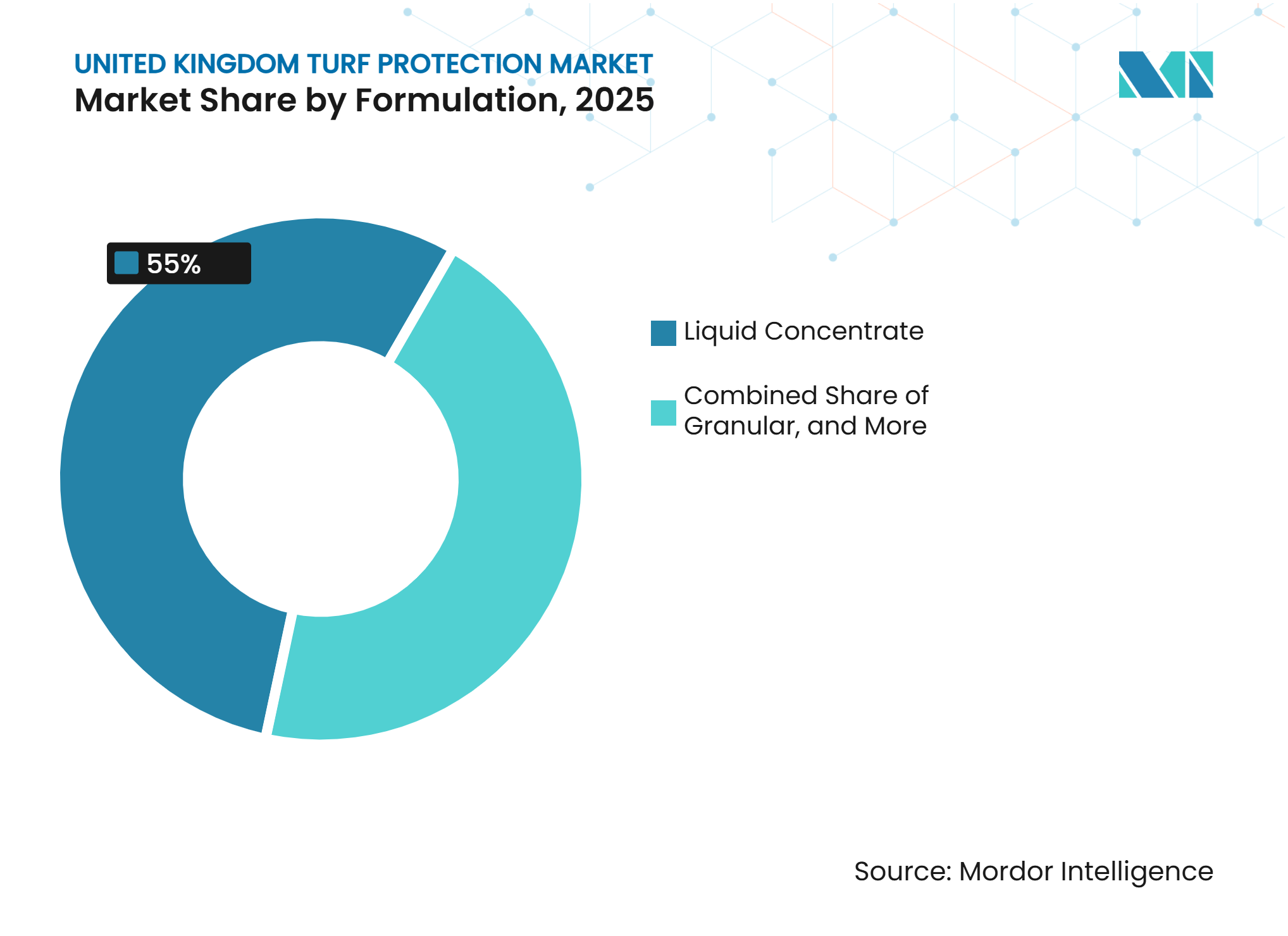
Liquid Concentrate Leads Demand While Wettable Powder Drives GrowthLiquid concentrate accounted for 55% of the United Kingdom turf protection market share in 2025. Professional turf managers favor this formulation for tank-mix flexibility and accurate dilution. It works with boom and knapsack spray systems used across golf courses, sports fields, and amenity landscapes. HSE equipment inspection standards reinforce the importance of calibrated spray equipment. This installed equipment base helps sustain liquid concentrate demand. Granular products remain useful where broadcast application is practical. They are used for controlled-release fertilizers, bio-fertilizers, and pre-emergent herbicides. Their soil incorporation and gradual nutrient release suit selected amenity applications.
Wettable powder is the fastest-growing formulation at an 8.4% CAGR from 2026 to 2031. Many microbial and biochemical active ingredients are well-suited to wettable powder formulations because of their shelf stability and field dispersibility. The United Kingdom turf protection market can benefit from distributors that train managers on correct mixing and application. That support can position biological programs as part of disease management rather than as specialist products. Wettable powder biostimulants and bio-control products are reaching established amenity distribution channels. This reduces reliance on biological-only sales networks. Wider distribution can lower adoption barriers for mainstream professional managers. Technical advice remains important because formulation handling can affect field performance.

Geography Analysis
England represents the largest demand concentration within the United Kingdom turf protection market, supported by 2,423 golf courses and 1,735 England Golf-affiliated clubs, which account for approximately 73% of the UK's total golf course count. More than 10.2 million World Handicap System scores were submitted in England in 2024, including 5.7 million competition rounds and 4.4 million general-play rounds. These figures reflect high levels of golf course utilization and recurring demand for turf protection products. Yorkshire, Lancashire, and Surrey have particularly strong golf activity, with 181, 141, and 102 affiliated clubs, respectively. Beyond golf, demand is supported by sports pitches, parks, public green spaces, and other professionally managed turf areas across the country.
Scotland has a strong turf protection demand profile relative to its population, supported by approximately 594 golf courses serving around 5.5 million people. Its cool and humid climate, combined with extended periods of leaf wetness, increases turf disease pressure and supports demand for fungicides and other disease-management products. The country's extensive links and championship golf courses also require consistent turf maintenance, supporting demand for wetting agents, biostimulants, and integrated turf management solutions.
Wales and Northern Ireland represent smaller but established segments of the United Kingdom turf protection market, supported by golf courses, sports facilities, landscaping, and public green spaces. Wales has approximately 120–181 golf courses, while Northern Ireland has around 80–113 golf courses. Relatively wet climatic conditions in both markets support recurring requirements for disease and weed management. Northern Ireland also benefits from cross-border agronomy and distribution networks with the Republic of Ireland, which influences product availability and purchasing patterns. Overall, England contributes the largest absolute demand, while Scotland, Wales, and Northern Ireland provide additional demand supported by golf activity, climatic conditions, and professional turf management.
Competitive Landscape
Market Concentration
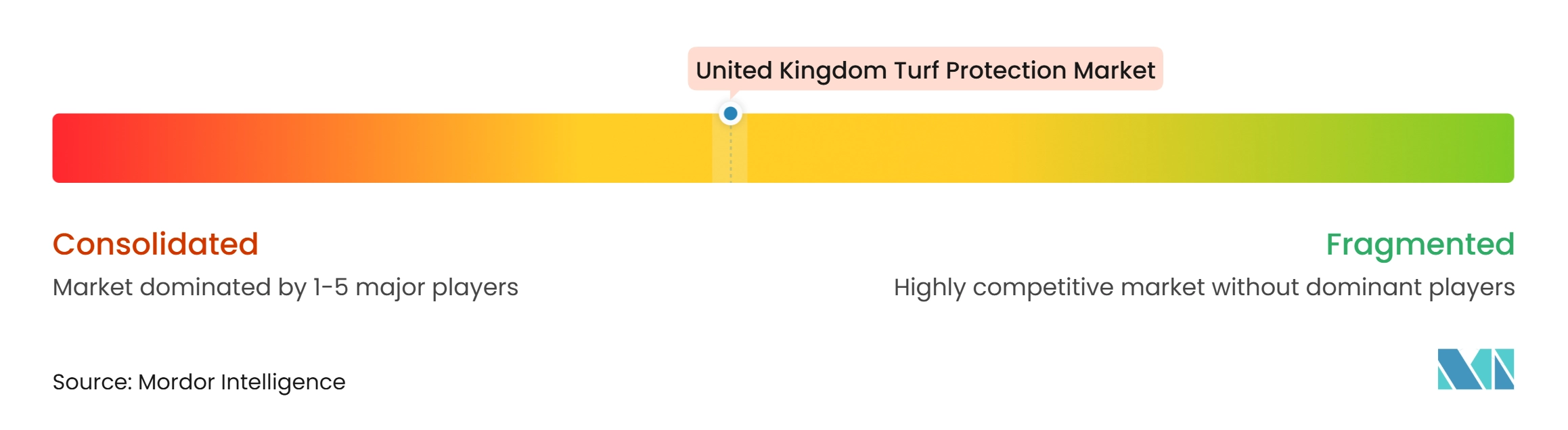
The United Kingdom turf protection market is moderately concentrated, with key players including Syngenta Group, BASF SE, ICL Group Ltd, Nufarm Limited, and Corteva Agriscience competing across professional turf management applications. Their strategies focus on biological portfolios, distribution partnerships, digital agronomy, and United Kingdom regulatory support. In 2026, ICL Group Ltd and Syngenta Group renewed and extended their multi-country turf partnership covering the United Kingdom, Ireland, and several European countries. The arrangement combines Syngenta Group’s research pipeline with ICL Group Ltd's technical and distribution network, giving professional turf users access to integrated product and service support. This also demonstrates how partnerships can expand market reach without full vertical integration.
Envu completed its acquisition of FMC Corporation’s professional turf fungicide and insecticide portfolio in July 2024. The acquisition expanded Envu’s offering for golf superintendents, sports facility managers, and commercial lawn-care operators. It showed how portfolio acquisition can increase scale without matching the research spending of larger suppliers. Specialist suppliers such as Indigrow Ltd, Terralift UK Ltd, Certis Belchim B.V., and Barclay Chemical Manufacturing Ltd compete through local formulations and agronomy-led sales. Their portfolios often include biostimulants, wetting agents, and soil-health products that address specific professional needs. Syngenta Group's PLINAZOLIN chemistry under the Atexzo brand and Envu's Harmonix Turf Defense offer differentiated product positions. Registration status can be as important as price where professional users require authorized options. The United Kingdom turf protection market favors suppliers that can maintain both product breadth and local technical relevance.
Affordable disease-forecasting tools, cool-season biological fungicides, and bundled compliance support remain important areas for competition. Sensor networks, spray decision software, and environmental monitoring can strengthen supplier relationships over time. The GEO Foundation's sustainable golf framework serves as a practical reference point for suppliers serving clubs that pursue sustainable turf management. NAP 2025, the Official Controls regulations, and risk-based inspections encourage procurement teams to seek registered products with clear documentation. Suppliers competing primarily on price are at a disadvantage when they cannot provide UK-specific authorization support. The United Kingdom turf protection market remains competitive, as major companies maintain broad portfolios while specialist suppliers address more focused needs.
United Kingdom Turf Protection Industry Leaders
-
Syngenta Group
-
BASF SE
-
ICL Group Ltd
-
Nufarm Limited
-
Corteva Agriscience
- *Disclaimer: Major Players sorted in no particular order
United Kingdom Turf Protection Market Companies Covered in this Report
- Syngenta Group
- BASF SE
- UPL Limited
- Corteva Agriscience
- ICL Group Ltd
- Nufarm Limited
- Certis Belchim B.V.
- Envu (Cinven)
- Indigrow Ltd
- Headland Amenity Limited (Origin Amenity Solutions)
- DLF Seeds A/S
- Barenbrug UK Limited
- Barclay Chemicals Manufacturing Ltd
- Agrovista UK Limited
- Terralift UK Ltd
Recent Industry Developments in United Kingdom Turf Protection Market
- March 2026: ICL Group Ltd and Syngenta Group renewed and extended their multi-country strategic turf partnership covering the United Kingdom, Ireland, Italy, Germany, Austria, and Spain. The partnership combines Syngenta Group's turf product development capabilities with ICL Group Ltd's technical and distribution network and supports the introduction of new Syngenta Group products across the covered markets, with a focus on performance, sustainability, and innovation.
- January 2026: ICL Group Ltd launched Greenmaster Liquid Advance, a professional liquid fertilizer range incorporating MTU, a patented biostimulant molecule introduced for professional turf applications. The range is designed to support nutrient uptake and turf performance during stress conditions, expanding ICL Group Ltd.'s liquid nutrition and biostimulant portfolio for professional turf management.
- May 2025: Envu launched Tarvecta fungicide, a dual-mode product combining fluoxastrobin and flutriafol for the preventive management of turfgrass diseases, including fairy ring, summer patch, brown ring patch, take-all patch, leaf spot, anthracnose, and snow mold. The launch expanded Envu's professional turf fungicide portfolio across golf courses, athletic fields, sod farms, and commercial lawns.
United Kingdom Turf Protection Market Report Scope
The turf protection market is defined as products and solutions used to prevent, control, and reduce pest, disease, and stress damage in natural turfgrass across residential, commercial, and sports surfaces, with market value measured at the point of sale in USD.
The United Kingdom Turf Protection Market is Segmented by Product Type (Fungicides, Herbicides, Insecticides, Plant Growth Regulators, and Biostimulants and Bio-fertilizers), by Application (Landscaping, Golf Courses, Sports Fields, and Sod Farms), by End User (Residential Customers, Commercial Landscape Contractors, Sports Facility Owners, and Municipalities and Schools), by Mode of Action (Chemical, Biological, and Integrated Solutions), and by Formulation (Granular, Liquid Concentrate, and Wettable Powder). The Market Forecasts are Provided in Terms of Value (USD).
Segmentation Overview
| Fungicides |
| Herbicides |
| Insecticides |
| Plant Growth Regulators |
| Biostimulants and Bio-fertilizers |
| Landscaping |
| Golf Courses |
| Sports Fields |
| Sod Farms |
| Residential Customers |
| Commercial Landscape Contractors |
| Sports Facility Owners |
| Municipalities and Schools |
| Chemical |
| Biological |
| Integrated Solutions |
| Granular |
| Liquid Concentrate |
| Wettable Powder |
| By Product Type | Fungicides |
| Herbicides | |
| Insecticides | |
| Plant Growth Regulators | |
| Biostimulants and Bio-fertilizers | |
| By Application | Landscaping |
| Golf Courses | |
| Sports Fields | |
| Sod Farms | |
| By End User | Residential Customers |
| Commercial Landscape Contractors | |
| Sports Facility Owners | |
| Municipalities and Schools | |
| By Mode of Action | Chemical |
| Biological | |
| Integrated Solutions | |
| By Formulation | Granular |
| Liquid Concentrate | |
| Wettable Powder |
Key Questions Answered in the Report
What is the forecasted value of the United Kingdom turf protection market by 2031?
The United Kingdom turf protection market is forecast to reach USD 355.10 million by 2031, growing at a 5.04% CAGR from 2026 to 2031.
Which product category has the largest share in the United Kingdom?
Fungicides accounted for product demand with 36.8% share in 2025, supported by persistent disease pressure on managed turf.
Why are biological products becoming more relevant for turf managers?
Fewer approved active substances and Integrated Pest Management requirements are increasing interest in authorized biological options.
Which end users are forecast to grow fastest through 2031?
Municipalities and schools are projected to grow at 7% CAGR as public grounds teams formalize compliant turf programs.