
Thymus Cancer Market Size and Share
Market Overview
| Study Period | 2020 - 2031 |
|---|---|
| Market Size (2026) | USD 399.46 Million |
| Market Size (2031) | USD 616.5 Million |
| Growth Rate (2026 - 2031) | 9.05 % |
| Fastest Growing Market | Asia-Pacific |
| Largest Market | North America |
| Market Concentration | Medium |
Major Players *Disclaimer: Major Players sorted in no particular order Image © Mordor Intelligence. Reuse requires attribution under CC BY 4.0. | |
Thymus Cancer Market Analysis by Mordor Intelligence
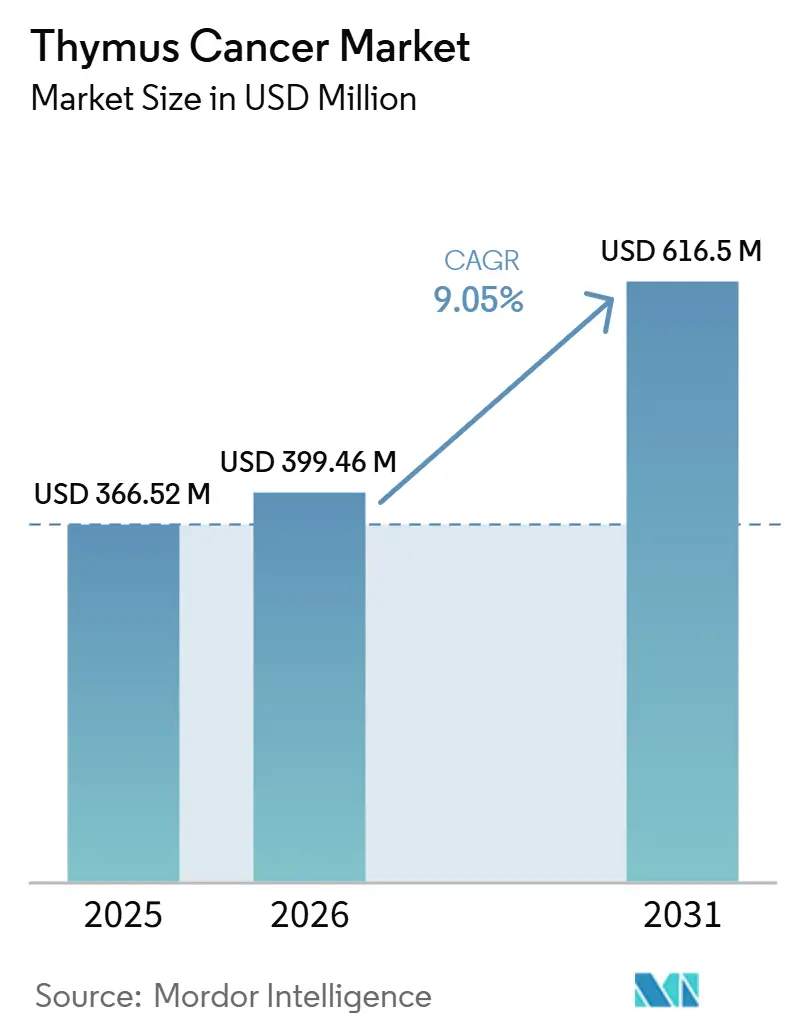
The Thymus Cancer Market size is expected to grow from USD 366.52 million in 2025 to USD 399.46 million in 2026 and is forecast to reach USD 616.5 million by 2031 at 9.05% CAGR over 2026-2031.
The Thymus cancer market is moving toward combination regimens that pair immune checkpoint inhibitors with antiangiogenic agents or cytotoxic treatments. This change broadens treatment options within the Thymus cancer market for patients who are not eligible for surgery. Better diagnostic methods and more consistent classification are bringing more patients into systemic treatment pathways. Global thymic epithelial tumor incidence has increased at an average annual percentage change of 3.13 over the past 3 decades, with the fastest rise in high-HDI countries, where better detection appears to be the main factor. The Thymus cancer market also faces a clear treatment divide because patients with autoimmune conditions may not be eligible for immune checkpoint inhibitor regimens.
Key Report Takeaways
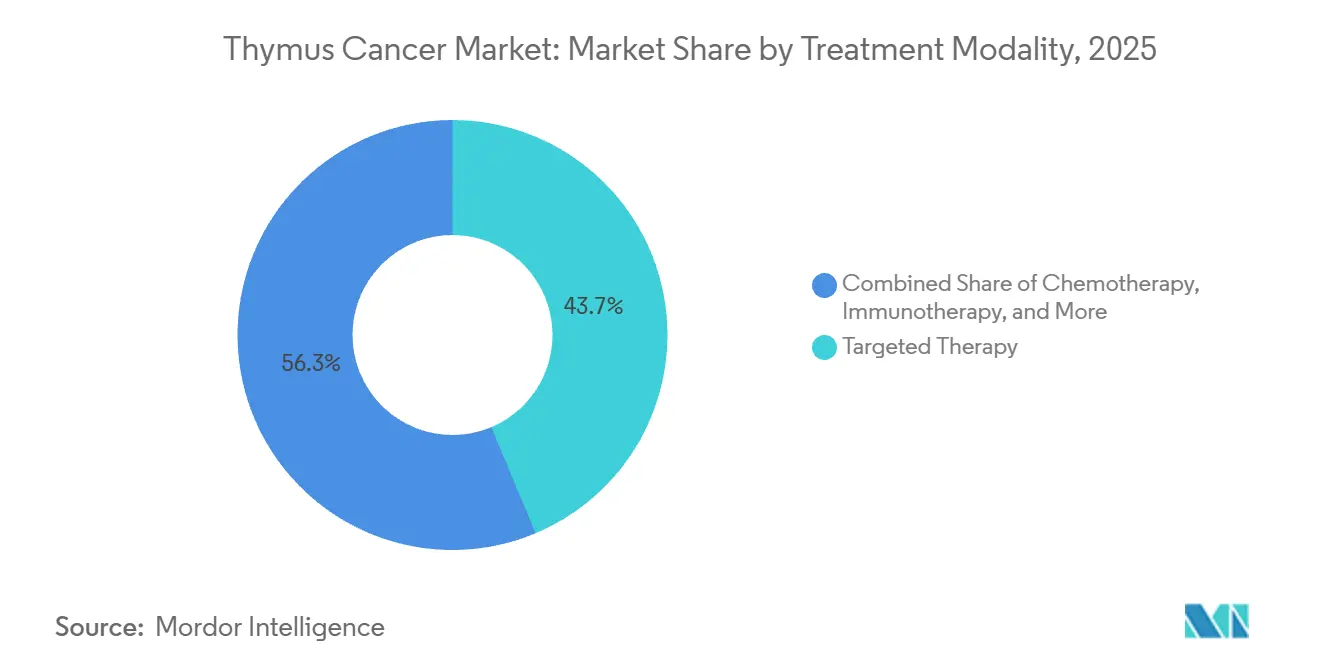
- By treatment modality, targeted therapy held 43.68% of the Thymus cancer market share in 2025, while immunotherapy is forecast to grow at a 10.81% CAGR through 2031.
- By route of administration, parenteral delivery accounted for 68.15% of the Thymus cancer market share in 2025, while oral agents are projected to expand at a 10.34% CAGR through 2031.
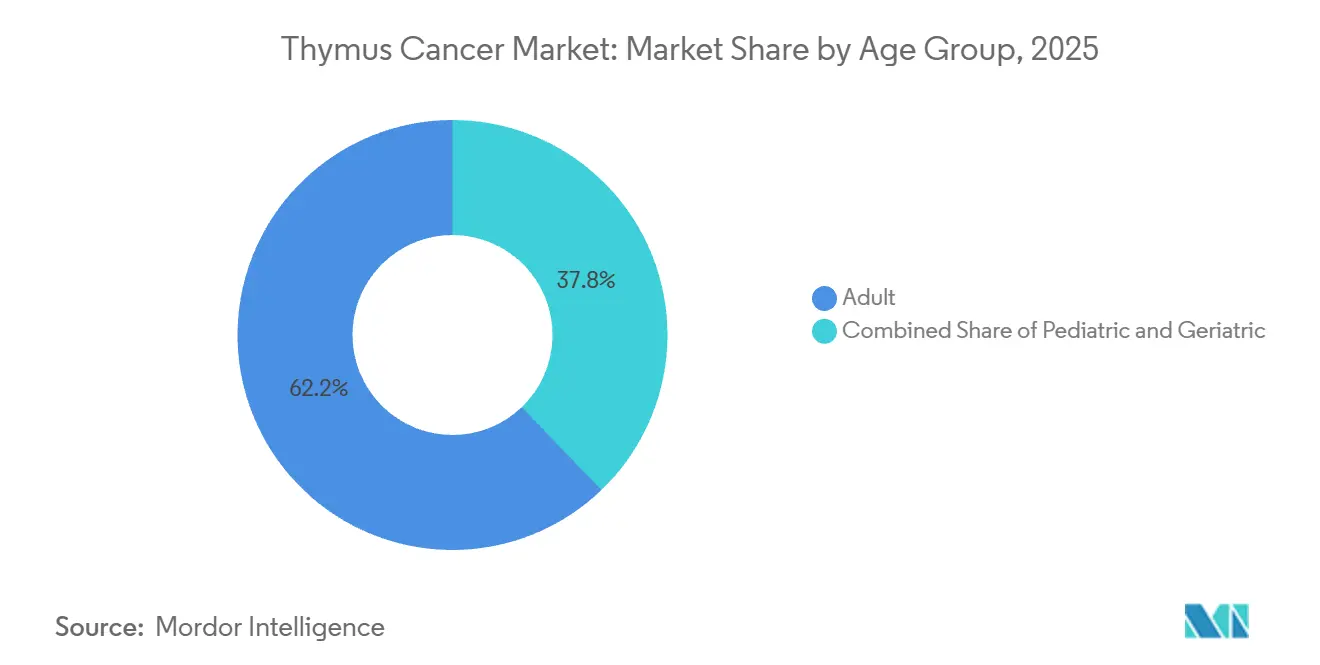
- By age group, adults held 62.18% revenue share in 2025, while the geriatric segment is forecast to advance at a 10.18% CAGR through 2031.
- By distribution channel, hospital pharmacies held 61.37% revenue share in 2025, while online pharmacies are projected to grow at a 10.54% CAGR through 2031.
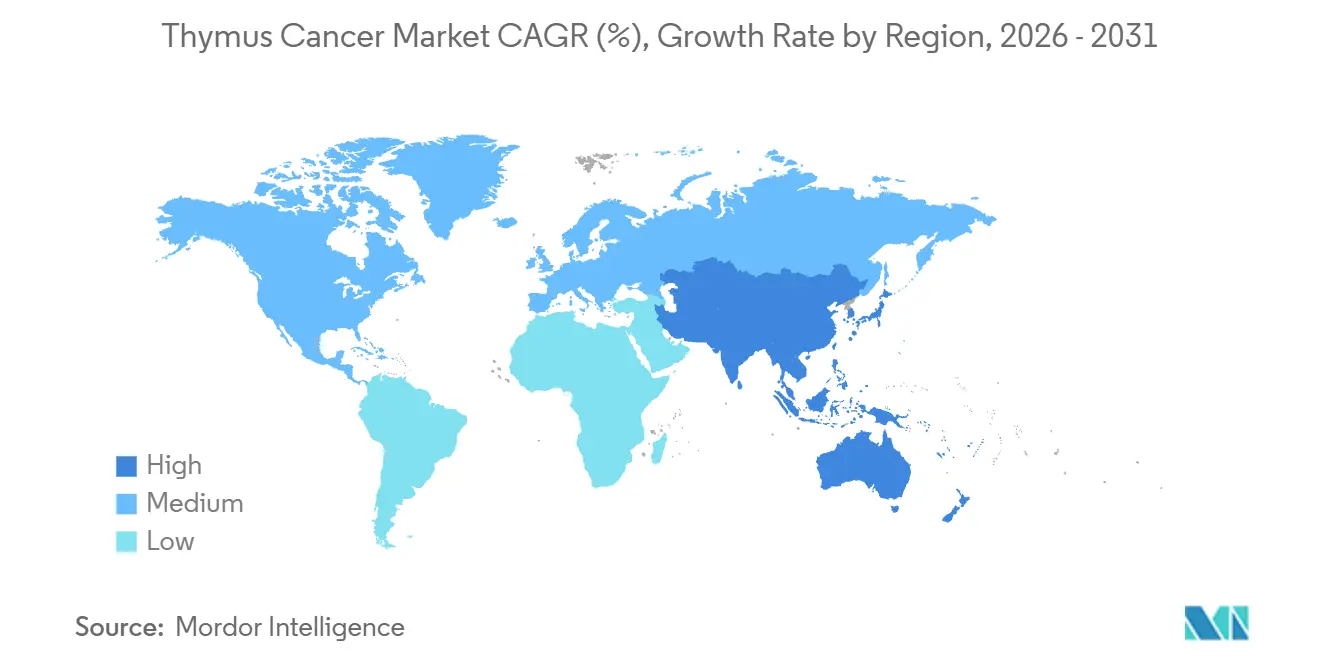
- By geography, North America held 39.18% revenue share in 2025, while Asia-Pacific is projected to expand at a 10.48% CAGR through 2031.
Note: Market size and forecast figures in this report are generated using Mordor Intelligence’s proprietary estimation framework, updated with the latest available data and insights as of January 2026.
Global Thymus Cancer Market Trends and Insights
Drivers Impact Analysis*
| Driver | (~) % Impact on CAGR Forecast | Geographic Relevance | Impact Timeline |
|---|---|---|---|
| Improved Diagnosis and Histologic Classification | +1.3% | Global, concentrated in high-HDI countries including the United States, Germany, Japan, and South Korea | Medium term (2-4 years) |
| Immunotherapy and Targeted-Therapy Advancements | +2.1% | Global, most pronounced in North America, Japan, and Western Europe | Short term (≤ 2 years) |
| Rare-Disease Research Funding and Strategic Collaborations | +1.0% | Global, with business development activity centered in the United States, European Union, and China | Medium term (2-4 years) |
| Aging Population and Referral Growth | +0.9% | Asia-Pacific, North America, and Western Europe | Long term (≥ 4 years) |
| AI-Enabled CT, Radiomics, and Thymic-Health Biomarkers | +0.8% | High-HDI markets including the United States, Japan, Germany, and Australia | Medium term (2-4 years) |
| Molecular Profiling and Registry-Enabled Trial Matching | +0.7% | United States, European Union through the EORTC network, and Japan | Long term (≥ 4 years) |
| Source: Mordor Intelligence | |||
Immunotherapy and Targeted-Therapy Advancements Reshape Treatment Standards
Japan approved atezolizumab for unresectable thymic carcinoma in December 2025, marking the first immune checkpoint inhibitor authorized for this indication in the country. The approval supports a regulatory precedent for combination regimens in other settings. In the MARBLE trial, atezolizumab with carboplatin and paclitaxel produced a 56% objective response rate and median progression-free survival of 9.6 months. The PECATI trial reported an 88% progression-free rate at 5 months for lenvatinib plus pembrolizumab in eligible pretreated patients with B3 thymoma or thymic carcinoma.[1]Remon J., Bironzo P., Girard N. et al., “Lenvatinib Plus Pembrolizumab in Pretreated Metastatic B3 Thymoma and Thymic Carcinoma (PECATI): A Single-Arm, Phase 2 Trial,” The Lancet Oncology, doi.org These results support the use of immune checkpoint inhibitor combinations where autoimmune contraindications are absent. FDA orphan drug designation and Japan’s priority review system also encourage disease-specific development by shortening review pathways and extending commercial exclusivity.
Improved Diagnosis and Histologic Classification Expand the Treatable Cohort
The 9th edition AJCC/UICC TNM system and the WHO histopathological classification have improved consistency in staging and subtype assignment for thymoma and thymic carcinoma. Accurate identification of B3 thymoma or thymic carcinoma can determine access to trials, immune checkpoint inhibitor combinations, and reimbursed targeted agents. The Society of Thoracic Surgeons expert consensus published in 2024 standardized surgical management and referral criteria. United States and German data reported annual thymoma incidence of 2.20 and 2.64 per million, respectively, and thymic carcinoma incidence of 0.48 and 0.42 per million.[2]Gerber T. S., Strobl S., Marx A., Roth W., and Porubský Š., “Epidemiology of Thymomas and Thymic Carcinomas in the United States and Germany, 1999–2019,” Frontiers in Oncology, doi.org The Thymus cancer market has a small patient base, but imaging sensitivity is improving recognition of clinically relevant disease. Compliance with classification requirements also serves as an entry point to trial enrollment and accelerated approval pathways in the Thymus cancer market.
AI-Enabled CT Radiomics Raises Diagnostic Throughput
Deep-learning models used with contrast-enhanced CT achieved an AUC of 0.900 for preoperative risk stratification of thymic epithelial tumors. Such tools can reduce differences in subtype assessment between less experienced and senior radiologists. Earlier risk classification can shorten the path from diagnosis to systemic treatment in a disease with historically nonspecific presentations. A review of 23 studies involving 4,701 patients found that CT-radiomics models could help predict myasthenia gravis risk and support pretreatment immune screening. Multidimensional models that combine imaging and clinical features reported AUC values above 0.953 in training and 0.903 in external validation. These capabilities could support wider diagnostic integration in the Thymus cancer market during the forecast period.
Aging Population and Referral Networks Deepen the Patient Pool
Thymic epithelial tumors mainly affect adults aged 50 to 79, and the highest-incidence population is becoming older. Patients aged 60 to 69 had a 39% higher mortality risk than those under 60. Patients aged 70 and above faced more than double the mortality risk of the younger group. Lower-toxicity regimens, oral maintenance approaches, and depot formulations therefore have greater relevance for patients with multiple comorbidities. Specialist cancer networks in the Thymus cancer market across emerging Asia-Pacific countries are also strengthening referrals. Higher age-standardized incidence in very-high-HDI countries reflects diagnostic access, which leaves room for referral-driven volume growth as infrastructure develops.
Restraints Impact Analysis*
| Restraint | (~) % Impact on CAGR Forecast | Geographic Relevance | Impact Timeline |
| Small Patient Pool and Clinical-Trial Enrollment Constraints | -1.2% | Global, most acute in low-HDI and middle-HDI markets | Long term (≥ 4 years) |
| High Treatment Cost and Therapy-Associated Toxicity | -0.8% | Global, most pronounced in markets without universal coverage | Medium term (2-4 years) |
| Autoimmune Toxicity Restricting Immune Checkpoint Inhibitor Use | -1.0% | Global, with the highest effect in thymoma-prevalent patient groups | Short term (≤ 2 years) |
| Histologic, Staging, and Treatment-Pathway Variability | -0.6% | Predominantly emerging markets and community oncology settings in developed markets | Medium term (2-4 years) |
| Source: Mordor Intelligence | |||
Small Patient Pool Creates Structural Evidence and Enrollment Barriers
Thymic carcinoma represented 0.01% of new United States cancer diagnoses annually, with incidence of 0.48 per million. This rarity makes phase III randomized trials difficult to fund and enroll. Thymus cancer market regulatory submissions therefore often rely on single-arm phase II evidence and response-rate benchmarks. Enrollment is concentrated in high-volume academic centers, which can limit participation and treatment access in community oncology settings. The EORTC-SPECTA Arcagen program and the Italian TYME network are intended to improve multinational registry infrastructure. Better evidence is unlikely before 2028, and payer resistance can remain where direct comparisons are unavailable.
Autoimmune Toxicity Constrains the Addressable ICI Patient Population
An estimated 32% of patients with thymic epithelial tumors have pre-existing autoimmune disorders, most commonly myasthenia gravis.[3]“Incidence, Characteristics, and Comorbidities of a Complete Unselected Danish Cohort of Patients With Thymic Epithelial Tumors,” Acta Oncologica, doi.org This limits the use of immune checkpoint inhibitor combinations in a sizable Thymus cancer market patient group. A retrospective cohort study at Guangdong Provincial People’s Hospital linked immune checkpoint inhibitor-related myocarditis with substantial cardiovascular mortality among treated thymoma patients. Pembrolizumab has a 5% to 9% myocarditis risk in thymic tumor patients, and NCCN guidance considers this risk disqualifying for thymoma use. Targeted therapies retain an important role where immunotherapy is unsuitable. Antibody-drug conjugates such as HLX43 seek to deliver antitumor activity without broad systemic immune activation.
*Our forecasts treat driver/restraint impacts as directional, not additive. The impact forecasts reflect baseline growth, mix effects, and variable interactions.
Segment Analysis
By Treatment Modality: Immunotherapy Closes the Gap on Targeted Therapies
Targeted therapy held 43.68% in 2025, supported by lenvatinib and sunitinib in platinum-refractory disease. Lenvatinib has real-world evidence in advanced thymic carcinoma, while ramucirumab gained a more visible first-line role after the 2025 NCCN update. Chemotherapy remains central, with carboplatin and paclitaxel used for thymic carcinoma and cisplatin, doxorubicin, and cyclophosphamide used for thymoma. Adding ramucirumab to carboplatin and paclitaxel produced an 88% response rate in S1701. Treatment selection depends on histology, prior platinum exposure, comorbidities, and suitability for immune therapy.
Immunotherapy is forecast to expand at a 10.81% CAGR through 2031, the fastest rate among modalities in the Thymus cancer market. Japan’s atezolizumab approval, HLX43’s 75% phase I objective response rate, and the July 2025 ivonescimab phase II study indicate active development. Hormonal and somatostatin-directed treatment remains relevant for suitable neuroendocrine variants, and supportive care gains importance as treatment becomes more complex. The April 2025 NCCN Compendium addition of axitinib widened the payer-approved thymic carcinoma treatment footprint. These options allow targeted treatment and immunotherapy to expand while serving different patient needs.



By Route of Administration: Oral Delivery Gains Structural Support from Outpatient Trends
Parenteral delivery accounted for 68.15% in 2025 because intravenous chemotherapy and monoclonal antibodies remain central to care. Infusion capacity, nursing support, and monitoring for immune-related adverse events keep many regimens in institutional settings. Platinum regimens and antibody products are largely given through parenteral routes. The antibody-drug conjugate pipeline may also increase the use of parenteral products. New subcutaneous formats could later make some products more practical outside traditional hospitals.
Oral agents are projected to grow at a 10.34% CAGR through 2031, supported by outpatient-compatible treatment in the Thymus cancer market. Japan has reimbursed oral lenvatinib since 2021, and 2025 real-world data support continued use in advanced disease. S-1 and oral etoposide feature in second-line and maintenance references and can suit some older patients. Oral treatment can reduce repeated infusion visits and hospital burden during longer treatment courses. It does not remove the need for safety monitoring, disease assessment, or adherence support.
By Age Group: Geriatric Demand Drives Protocol Differentiation
Adults held 62.18% in 2025, consistent with median diagnosis ages of 59 to 64 in the United States and Danish cohorts. They have the broadest eligibility for combination immunotherapy, intensive chemotherapy, targeted treatment, and multimodal care. Their leading position reflects the range of treatment options available across histology and stage. Referral networks remain important because specialist centers provide trials and experienced care. The Thymus cancer market must continue to connect eligible adults with these centers.
The geriatric segment is projected to grow at a 10.18% CAGR through 2031. Patients aged 70 and above had more than double the mortality risk of those under 60, while people aged 60 to 69 had a 39% higher risk.[4]“Incidence Trends and Factors Affecting Survival in Thymic Carcinoma: Insights From SEER Data,” Journal of Clinical Oncology, doi.org Comorbidities can limit intensive regimens and increase the relevance of oral maintenance, depot formulations, and reduced-intensity protocols. The pediatric segment remains very small because thymic epithelial tumors are extremely rare before age 20, although registries are supporting academic case series. This age pattern makes treatment tolerability important for development and care planning.
By Distribution Channel: Hospital Pharmacies Lead, Digital Channels Accelerate
Hospital pharmacies held 61.37% in 2025 because infusion regimens and toxicity monitoring need institutional support. They coordinate complex oncology protocols, drug handling, administration, adverse-event management, and treatment changes. Their role is closely tied to specialist oncology centers and clinical trial sites. The rarity of thymic cancer also concentrates expertise in referral settings. Hospital pharmacies should remain the primary channel for parenteral protocols.
Online pharmacies are projected to grow at a 10.54% CAGR through 2031 as oral maintenance therapies and digital prescription models expand in the Thymus cancer market. Specialty pharmacies are the second-largest channel for oral TKIs and home-delivered supportive agents, and Biologics by McKesson provides oncology specialty pharmacy services. Pharmaceutical companies use such networks for prescription coordination and delivery in rare-disease oncology. Retail pharmacies mainly provide supportive medicines and nonprescription adjuncts, leaving their role limited. Digital fulfillment complements rather than replaces hospital care for infusion-based treatment.
Geography Analysis
North America held 39.18% in 2025 and remains the most developed regional setting for thymus cancer treatment. The United States benefits from NCCN-driven reimbursement coverage, FDA orphan drug designation incentives, and active clinical trial networks. NCCN added ramucirumab to preferred first-line options in June 2025, and the S1701 carboplatin, paclitaxel, and ramucirumab regimen produced an 88% response rate. Canada and Mexico have lower treatment rates per capita because reimbursement and specialist access differ. These conditions give the Thymus cancer market a strong institutional base in North America.
Europe is the second-largest geography, with Germany, France, Italy, the United Kingdom, and Spain forming the main academic research network. The IMMUNORARE 5 platform, EORTC-ETOP NIVOTHYM, and PECATI programs generate multinational evidence and guide real-world uptake. PECATI used sites in France, Italy, and Spain to evaluate lenvatinib with pembrolizumab in pretreated disease. The European Medicines Agency orphan designation framework provides incentives similar to those in the United States. European adoption remains connected to specialist centers with rare thoracic cancer expertise.
Asia-Pacific is projected to grow at a 10.48% CAGR through 2031, making it the fastest-growing region in the Thymus cancer market. Japan has atezolizumab for unresectable thymic carcinoma and reimbursed lenvatinib since 2021, while Henlius is studying HLX43 across China, the United States, Japan, and Australia. Asian and Pacific Islander populations had the highest age-standardized incidence globally.

Competitive Landscape
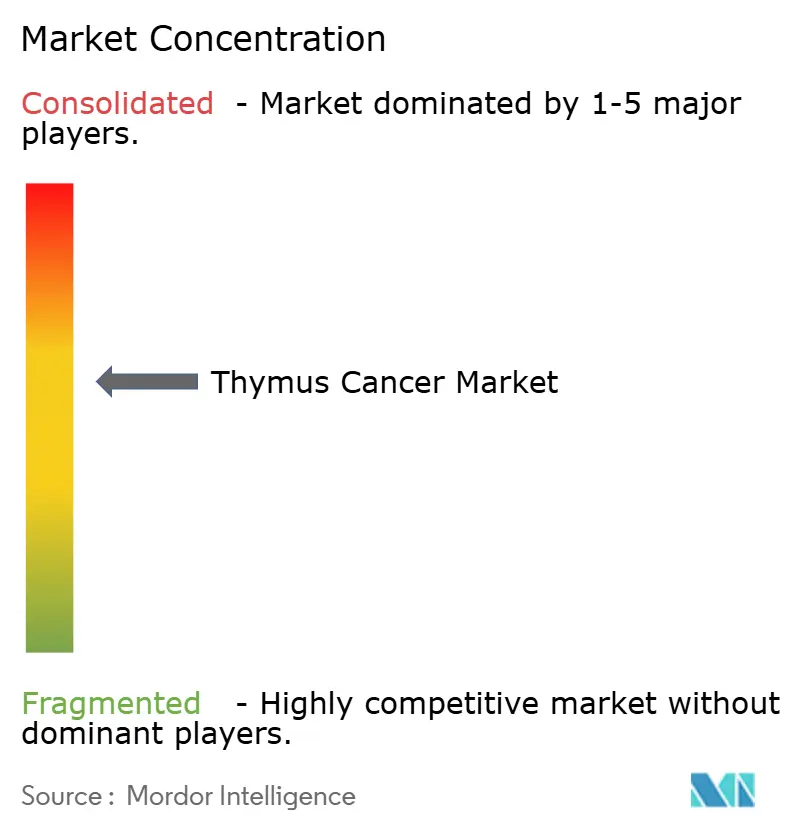
The Thymus cancer market is moderately fragmented between global pharmaceutical companies and Chinese biotechnology companies with thymus-specific programs. Bristol-Myers Squibb, Merck & Co., AstraZeneca, Roche, and Eisai participate through checkpoint inhibitor and TKI portfolios. No company dominates the indication, because label breadth, real-world evidence, and regulatory engagement determine position. Combination regimens pair checkpoint inhibitors with anti-VEGF agents or antibody-drug conjugate approaches. The Thymus cancer market favors companies able to generate evidence in small, specialized patient groups.
An estimated 32% of patients have pre-existing autoimmune conditions, yet no approved product is dedicated to this group. Jiangsu Alphamab’s KN046 and Henlius’s PD-L1 antibody-drug conjugate HLX43 address needs where immune checkpoint inhibitors are unsuitable. HLX43 reported a 75% objective response rate in phase I thymic carcinoma data and received FDA orphan drug designation in October 2025. Phosplatin Therapeutics is developing platinum-pyrophosphate chemistry to challenge CAP and carboplatin-paclitaxel backbones. Antibody-drug conjugate engineering, CT-radiomics, and registry-linked trial matching are relevant technologies because single-arm evidence often guides development.
Merck & Co. announced an agreement in March 2026 to acquire Terns Pharmaceuticals for USD 6.70 billion to diversify its oncology pipeline before Keytruda’s anticipated 2028 United States patent expiry. Chugai’s December 2025 approval of atezolizumab in Japan created a direct disease-specific regulatory milestone. Henlius is expanding HLX43 through multicenter trials across China, the United States, Japan, and Australia. The Thymus cancer market brings portfolio acquisitions, regulatory approvals, and focused trial programs into the same competitive field.
Thymus Cancer Industry Leaders
Bristol-Myers Squibb Company
F. Hoffmann-La Roche Ltd
Merck & Co., Inc.
Novartis AG
Pfizer Inc.
- *Disclaimer: Major Players sorted in no particular order

Recent Industry Developments
- March 2026: Merck & Co. announced a definitive agreement to acquire Terns Pharmaceuticals for USD 6.70 billion to expand its oncology pipeline before Keytruda’s anticipated United States patent loss in 2028. Merck has ongoing investigator-initiated pembrolizumab studies in thymic carcinoma.
- December 2025: Chugai Pharmaceutical received approval from Japan’s Ministry of Health, Labour and Welfare for Tecentriq, atezolizumab, in unresectable thymic carcinoma. The decision was based on MARBLE phase II data with a 56% objective response rate and a median progression-free survival of 9.6 months.
- October 2025: Shanghai Henlius Biotech announced FDA orphan drug designation for HLX43, a PD-L1 antibody-drug conjugate for thymic epithelial tumors. Phase I data presented at ASCO 2025 reported a 75% objective response rate in thymic carcinoma, and multicenter studies are expanding across China, the United States, Japan, and Australia.


Global Thymus Cancer Market Report Scope
The thymus cancer market encompasses the global industry focused on the treatment and management of rare malignancies that originate in the thymus gland, including thymomas, thymic carcinomas, and thymic neuroendocrine tumors. The market includes specialized oncology therapies, surgical interventions, radiation therapy, diagnostic procedures, disease monitoring, and clinical research activities aimed at improving outcomes for patients with these uncommon but often aggressive cancers. It is shaped by advances in precision medicine, multidisciplinary treatment approaches, the availability of experienced thoracic oncology specialists, and ongoing clinical studies evaluating novel therapeutic options for rare thymic malignancies.
The thymus cancer market is segmented by treatment modality, route of administration, age group, distribution channel, and geography. By treatment modality, it is further divided into chemotherapy, targeted therapy, immunotherapy, hormonal and somatostatin-directed therapy, and supportive and palliative care. By route of administration, it is segmented into oral, parenteral, and other routes of administration. By age group, the market is segmented into pediatric, adult, and geriatric. By distribution channel, the market is segmented into hospital pharmacies, specialty pharmacies, retail pharmacies, and online pharmacies. The geography segment is further divided into North America, Europe, Asia-Pacific, the Middle East and Africa, and South America. The report also covers the estimated market sizes and trends for 17 countries across major regions globally. The report offers the market size and forecasts in value (USD) for the above segments.
| Chemotherapy |
| Targeted Therapy |
| Immunotherapy |
| Hormonal and Somatostatin-Directed Therapy |
| Supportive and Palliative Care |
| Oral |
| Parenteral |
| Other Routes of Administration |
| Pediatric |
| Adult |
| Geriatric |
| Hospital Pharmacies |
| Specialty Pharmacies |
| Retail Pharmacies |
| Online Pharmacies |
| North America | United States |
| Canada | |
| Mexico | |
| Europe | Germany |
| United Kingdom | |
| France | |
| Italy | |
| Spain | |
| Rest of Europe | |
| Asia-Pacific | China |
| Japan | |
| India | |
| Australia | |
| South Korea | |
| Rest of Asia-Pacific | |
| Middle East and Africa | GCC |
| South Africa | |
| Rest of Middle East and Africa | |
| South America | Brazil |
| Argentina | |
| Rest of South America |
| By Treatment Modality | Chemotherapy | |
| Targeted Therapy | ||
| Immunotherapy | ||
| Hormonal and Somatostatin-Directed Therapy | ||
| Supportive and Palliative Care | ||
| By Route of Administration | Oral | |
| Parenteral | ||
| Other Routes of Administration | ||
| By Age Group | Pediatric | |
| Adult | ||
| Geriatric | ||
| By Distribution Channel | Hospital Pharmacies | |
| Specialty Pharmacies | ||
| Retail Pharmacies | ||
| Online Pharmacies | ||
| By Geography | North America | United States |
| Canada | ||
| Mexico | ||
| Europe | Germany | |
| United Kingdom | ||
| France | ||
| Italy | ||
| Spain | ||
| Rest of Europe | ||
| Asia-Pacific | China | |
| Japan | ||
| India | ||
| Australia | ||
| South Korea | ||
| Rest of Asia-Pacific | ||
| Middle East and Africa | GCC | |
| South Africa | ||
| Rest of Middle East and Africa | ||
| South America | Brazil | |
| Argentina | ||
| Rest of South America | ||


Key Questions Answered in the Report
What is the projected value of the Thymus cancer market by 2031?
The Thymus cancer market is forecast to reach USD 616.50 million by 2031, from USD 399.46 million in 2026, at a 9.05% CAGR.
Which treatment approach is growing fastest for thymic cancer?
Immunotherapy is projected to grow at a 10.81% CAGR through 2031, supported by combination studies and Japan’s approval of atezolizumab.
Why do targeted therapies retain an important role in thymic cancer?
Targeted therapy held 43.68% in 2025 and remains important for patients who cannot receive immune checkpoint inhibitors or have platinum-refractory disease.
Which region is expected to grow fastest for thymic cancer treatment?
Asia-Pacific is projected to grow at a 10.48% CAGR through 2031, helped by Japanese approvals and China’s expanding biotechnology pipeline.
Why are immune checkpoint inhibitors not suitable for every patient?
Pre-existing autoimmune disorders affect an estimated 32% of patients with thymic epithelial tumors and can limit immune checkpoint inhibitor use.
How are hospital pharmacies positioned in thymic cancer treatment?
Hospital pharmacies held 61.37% in 2025 because infusion regimens and toxicity monitoring require specialist institutional support.
Page last updated on:





