
Textile Dye Removal Chemicals Market Size and Share
Market Overview
| Study Period | 2022 - 2032 |
|---|---|
| Market Size (2027) | USD 1.46 Billion |
| Market Size (2032) | USD 2.22 Billion |
| Growth Rate (2027 - 2032) | 8.78 % |
| Fastest Growing Market | Asia-Pacific |
| Largest Market | Asia-Pacific |
| Market Concentration | Low |
Major Players *Disclaimer: Major Players sorted in no particular order Image © Mordor Intelligence. Reuse requires attribution under CC BY 4.0. | |
Textile Dye Removal Chemicals Market Analysis by Mordor Intelligence
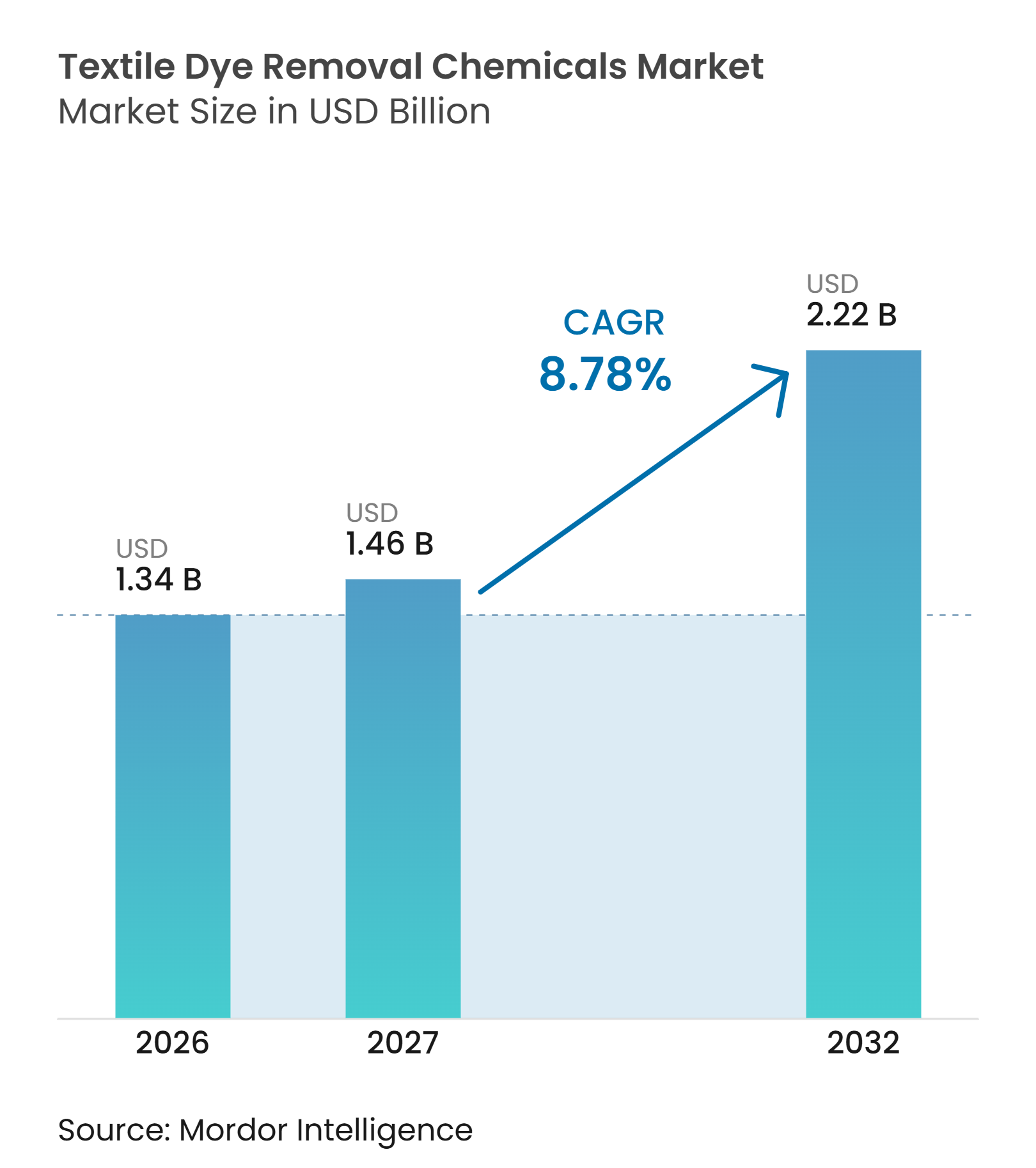
The Textile Dye Removal Chemicals market size was valued at USD 1.34 billion in 2026 and is estimated to grow from USD 1.46 billion in 2027 to USD 2.22 billion by 2032, at a CAGR of 8.78% during the forecast period (2027-2032). The Textile Dye Removal Chemicals market is driven by wastewater from wet processing, which can consume 100 to 200 tons of water per ton of fabric processed. Color compounds in this wastewater often resist conventional biological treatment, increasing the need for chemical treatment steps. Stricter discharge regulations, water scarcity, and the pretreatment requirements of zero-liquid-discharge systems influence dyehouses' selection of treatment chemicals. Growth in the Textile Dye Removal Chemicals market is more closely linked to the share of production subject to color-discharge regulations than to textile production output alone. Suppliers that can demonstrate reliable treatment performance and compatibility with existing effluent treatment systems are better positioned to meet compliance-driven purchasing requirements.
Key Report Takeaways
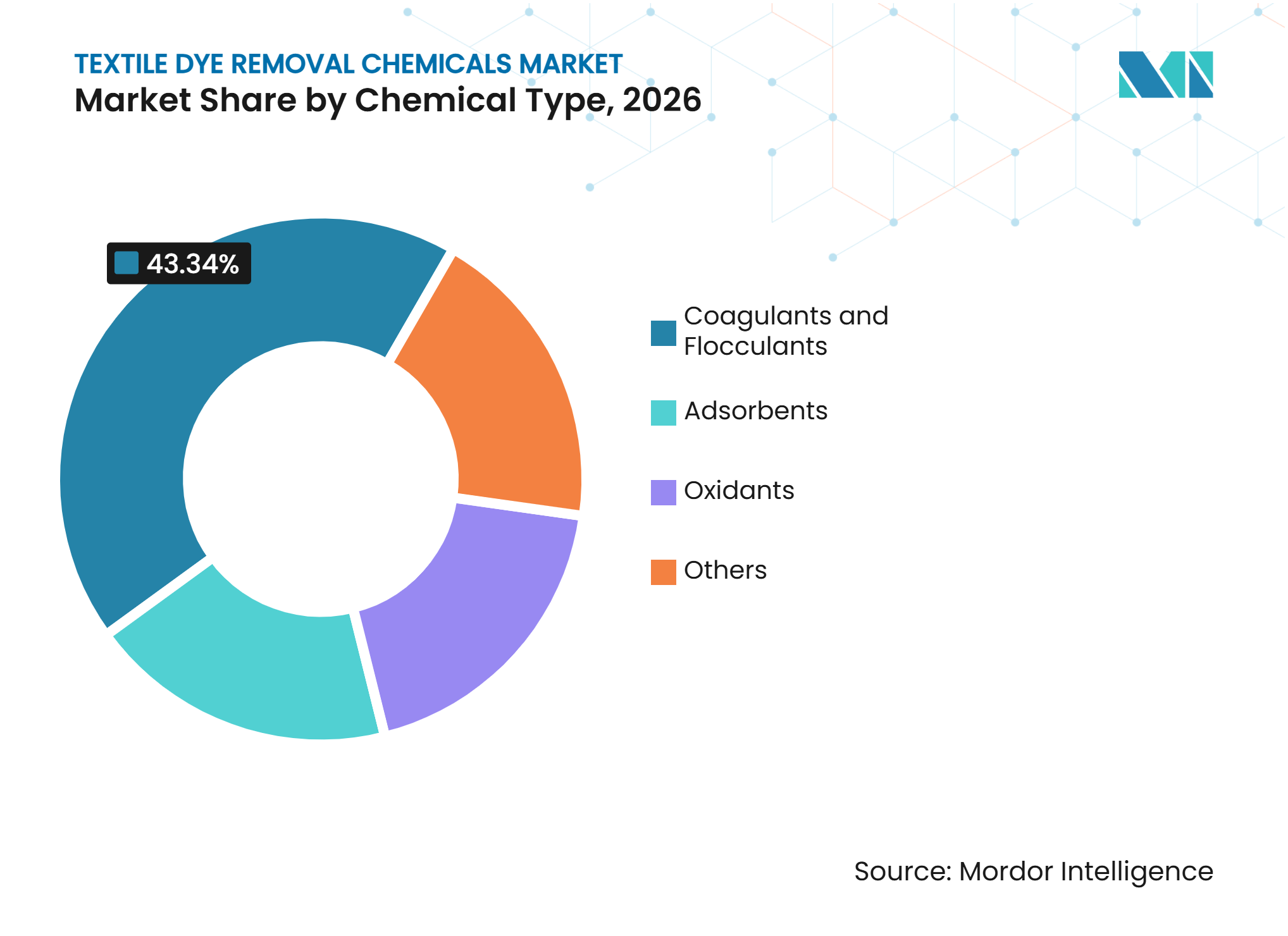
- By chemical type, Coagulants and Flocculants held 43.34% of the Textile Dye Removal Chemicals market share in 2026, while Oxidants are forecast to grow at a 9.21% CAGR through 2032.
- By application, Dyehouse Effluent accounted for 46.11% of the Textile Dye Removal Chemicals market share in 2026, while Printing Effluent is projected to expand at a 9.45% CAGR through 2032.
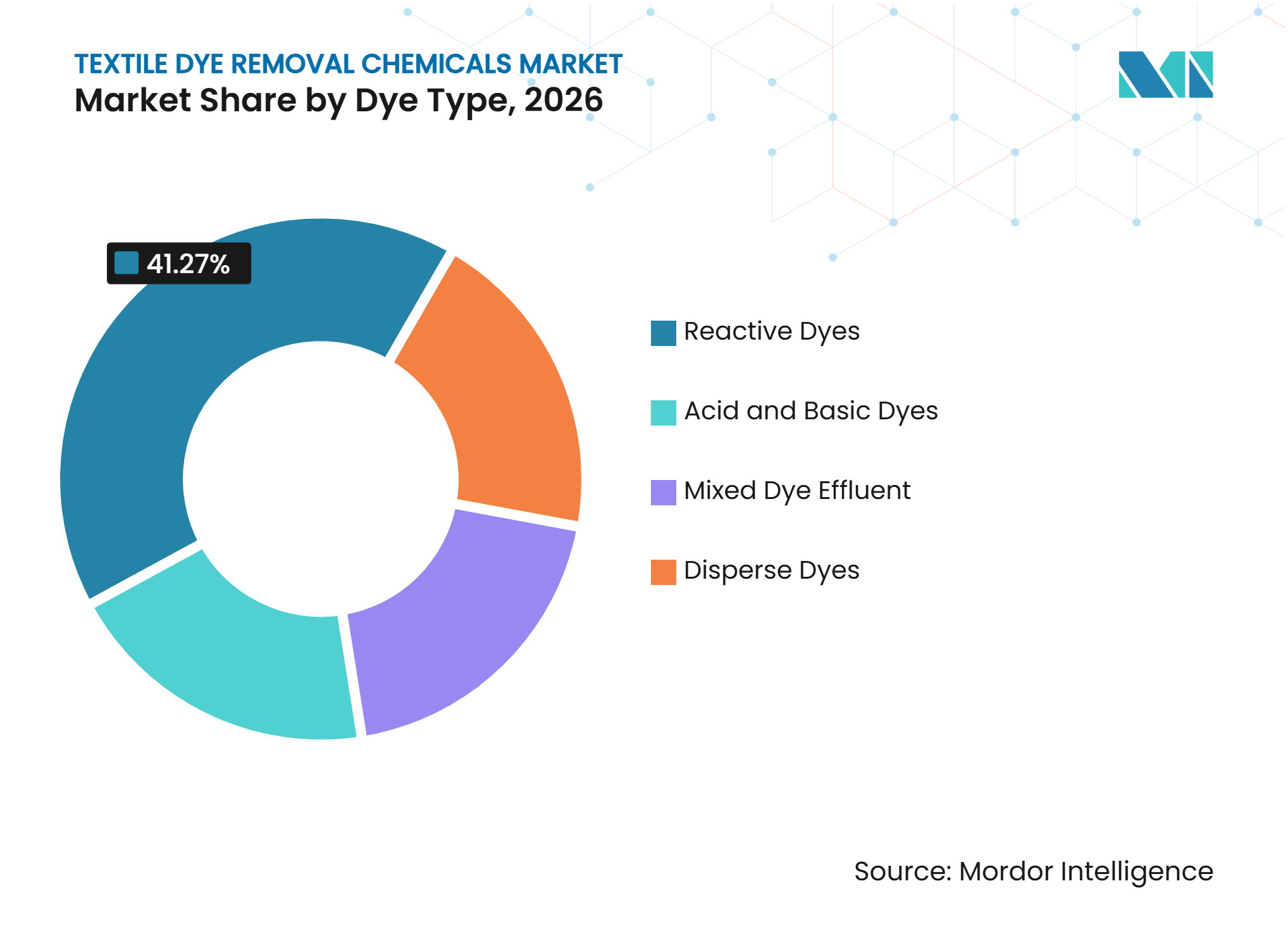
- By dye type, Reactive Dyes held 41.27% of the Textile Dye Removal Chemicals market share in 2026, while Mixed Dye Effluent is forecast to advance at a 10.12% CAGR through 2032.
- By geography, Asia-Pacific held 38.78% of the Textile Dye Removal Chemicals market share in 2026 and is forecast to grow at a 9.78% CAGR through 2032.
Note: Market numbers in this report are based on Mordor Intelligence's proprietary estimation framework, which combines nine months of actuals with Q4 projections for base year 2026.
Market Trends and Insights
Drivers Impact Analysis of Textile Dye Removal Chemicals Market*
| Drivers | (~) % Impact on CAGR Forecast | Geographic Relevance | Impact Timeline |
|---|---|---|---|
| Stricter Color and Effluent Discharge Compliance | +2.5% | Global, led by China, India, and the EU | Short term (≤ 2 years) |
| Expansion of Water Reuse and Zero Liquid Discharge (ZLD) Pretreatment | +2.1% | Asia-Pacific core, with spillover to South Asia and the Middle East and Africa | Medium term (2-4 years) |
| Growth of Export-Linked Textile Cluster Audits | +1.8% | Global supply chain, concentrated in Bangladesh, Vietnam, and Cambodia | Medium term (2-4 years) |
| Real-Time Dosing and Sludge Optimization | +1.2% | Global, with faster adoption in China and Europe | Long term (≥ 4 years) |
| Source: Mordor Intelligence | |||
Stricter Color and Effluent Discharge Compliance
China published GB 4287-2026 jointly through the Ministry of Ecology and Environment and the State Administration for Market Regulation in July 2026, and the standard took effect on September 1, 2026. The standard adds zebrafish egg acute toxicity as a mandatory integrated toxicity parameter alongside chemical oxygen demand, biochemical oxygen demand, and total nitrogen. This moves compliance beyond numerical concentration limits toward demonstrated biological safety in receiving waters. The change affects chemical selection in the Textile Dye Removal Chemicals market because dilution cannot resolve a biological toxicity result. Suppliers that can demonstrate toxicity reduction through product testing can use that evidence as a compliance credential. The market also benefits when dyehouses replace simple concentration-management practices with more dependable treatment programs.
Expansion of Water Reuse and ZLD Pretreatment
Chemical pretreatment is necessary before membrane and evaporation stages can operate effectively in a zero liquid discharge system. Coagulation, flocculation, and oxidation reduce color and suspended solids, allowing downstream equipment to treat the incoming stream. This technical sequence aligns the Textile Dye Removal Chemicals market with investment in water reuse in water-stressed manufacturing areas. Veolia reported that its long-term work at Rhodia's textile facility in Santo André, Brazil, achieved 94% water reuse through ZeeWeed membrane bioreactor technology integrated with existing treatment infrastructure. The case shows that treatment upgrades can reduce freshwater demand without a full greenfield replacement of plant infrastructure. Suppliers with verified compatibility data for membrane systems can compete for recurring chemical contracts that run through the operating life of reuse assets[1].
Growth of Export-Linked Textile Cluster Audits
Export customers increasingly assess wastewater-related chemical inputs through programs such as the Zero Discharge of Hazardous Chemicals Manufacturing Restricted Substances List (ZDHC MRSL) and bluesign requirements. This changes purchasing behavior at factories that previously focused mainly on the lowest available price for a coagulant. The Textile Dye Removal Chemicals market benefits from this change because approved inputs may become necessary to maintain supply-chain audit credentials. Yixing Bluwat Chemicals reported ZDHC MRSL v3.1 conformance for BWD-01, polyacrylamide, polyaluminium chloride (PAC), polyamine, and PolyDADMAC product lines in May 2026. Archroma also reported Cradle to Cradle Certified Material Health Gold certification under Version 4.0 for 10 product groups spanning reactive, acid, disperse, indigo, and sulfur dye chemistry. These certifications make documented chemical provenance more relevant across textile supply chains and create a non-price barrier for unverified suppliers.
Real-Time Dosing and Sludge Optimization
Inorganic coagulant overdosing can increase sludge quantities and disposal costs, while underdosing can result in permit failures. Effluent composition can vary across production batches, dye recipes, and seasonal demand, making fixed dosing less reliable. Sensor-linked systems respond to turbidity, chemical oxygen demand, and color signals as wastewater conditions change. Kurita's S.sensing CS system automates inorganic coagulant optimization in wastewater flocculation tanks and is designed to lower chemical use, sludge generation, and carbon dioxide emissions per metric ton of treated water. Ecolab's 3D TRASAR Technology for Effluent combines real-time monitoring with automated dispensing across flotation-based treatment systems. These systems can reduce chemical quantity per metric ton of fabric while improving the value of supplier relationships through service- and data-driven optimization.
Restraints Impact Analysis of Textile Dye Removal Chemicals Market*
| Restraints | (~) % Impact on CAGR Forecast | Geographic Relevance | Impact Timeline |
|---|---|---|---|
| High Sludge Disposal and Chemical-Derived Waste Costs | -0.9% | Global, most acute in China, India, and the EU | Short term (≤ 2 years) |
| Energy Intensity of Downstream Zero Liquid Discharge (ZLD) Systems | -0.7% | Asia-Pacific core and South America | Medium term (2-4 years) |
| Matrix Variability and Overdosing Risk | -0.5% | Global, concentrated at small and medium-sized facilities | Long term (≥ 4 years) |
| Source: Mordor Intelligence | |||
High Sludge Disposal and Chemical-Derived Waste Costs
Coagulation and flocculation transfer dye chromophores and metal salts into filter-cake sludge. This creates a disposal burden when landfill requirements tighten, or land near dyeing clusters is limited. In some clusters, sludge management costs can equal or exceed the cost of chemical inputs. The textile dye removal chemicals market, therefore, faces pressure from buyers who assess total treatment costs rather than the purchase price alone. A 2025 study in Chemical Engineering Science found that chestnut-shell tannin coagulants achieved 84.6% color removal in continuous flow while generating lower inorganic sludge loads than aluminum sulfate. Bio-based and low-iron formulations could reduce this constraint if they reach commercial scale without compromising removal performance[2].
Energy Intensity of Downstream ZLD Systems
Multiple-effect evaporators, mechanical vapor recompression units, and crystallizers increase the energy requirements of zero liquid discharge (ZLD) operations. Inadequate or inconsistent chemical pretreatment can accelerate membrane fouling and increase the energy required for water recovery. This means that underinvestment in pretreatment can raise total operating costs across the full treatment train. The textile dye removal chemicals market can be constrained when electricity prices or carbon-related costs weaken the financial case for ZLD at mid-tier factories. Plant operators also incur reformulation costs when adopting lower-temperature recovery systems that require pretreatment programs validated for their specific operating conditions. Matrix variability remains a related issue, as small and medium-sized dyehouses may lack the process monitoring needed to prevent overdosing or poor treatment outcomes.
*Our forecasts treat driver/restraint impacts as directional, not additive. The impact forecasts reflect baseline growth, mix effects, and variable interactions.
Textile Dye Removal Chemicals Market Segment Analysis
By Chemical Type:
Coagulants Maintain Scale While Oxidants Gain DemandCoagulants and flocculants accounted for 43.34% of the textile dye removal chemicals market share in 2026. Polyaluminum chloride (PAC), alum, iron salts, and polyacrylamide (PAM) flocculants are compatible with existing reaction tanks and sedimentation basins, avoiding the need for major equipment replacement. This installed-base advantage supports their continued use at dyehouses with conventional effluent treatment plants. Product performance varies by purity grade, basicity ratio, and molecular weight distribution, which affect floc structure and color capture across different dye chemistries. The market size for coagulants remains supported by recurring treatment requirements and the broad availability of established dosing equipment.
Oxidants are forecast to grow at a 9.21% CAGR from 2027 to 2032 as more facilities manage reactive and azo dye streams that coagulation cannot fully decolorize. Advanced oxidation processes can break down chromophores at concentrations where coagulation becomes less effective. A 2025 pilot study of iron-carbon micro-electrolysis with hydrogen peroxide reported 80%-95% color removal from composite reactive dye streams under optimized conditions, with an average chemical oxygen demand removal of 57% over 35 days. Adsorbents remain important for polishing residual dyes and micropollutants after primary treatment. Other treatment chemicals support pH adjustment, defoaming, and biocidal control in integrated systems. European facilities can also use ozonation, where renewable electricity reduces sensitivity to ozone generation costs.



By Application:
Dyehouse Effluent Leads While Printing Effluent ExpandsDyehouse effluent held 46.11% of the textile dye removal chemicals market share in 2026. Batch dyeing of cotton, polyester, and blended fabrics produces high color loads, wide pH variation, and changing chemical oxygen demand, creating repeated demand for coagulants, oxidants, and supporting chemicals. The shift toward reactive dyes increases treatment requirements because only 70% to 80% of the dye can be exhausted onto the fabric under typical conditions. The remaining 20% to 30% enters wastewater, increasing the color load per unit of fabric. This operating profile keeps dyehouse wastewater as the core application in the textile dye removal chemicals market.
Printing effluent is projected to grow at a 9.45% CAGR from 2027 to 2032. Print-shop runoff can contain concentrated pigments, paste thickeners such as polyacrylate and starch derivatives, and screen-wash solvents. These materials often require oxidation or a stronger coagulation sequence rather than standard flocculation alone. Reactive inkjet printing also generates wastewater with a different pigment density than rotary-screen printing. Buckman and Atul formed a joint venture in August 2025 to serve the Indian textile sector, combining Buckman's process chemistry capability with Atul's manufacturing and distribution position. Laundry and wash-water treatment remain distinct applications, while sizing, desizing, and finishing wastewater require separate treatment.
By Dye Type:
Reactive Dyes Lead While Mixed Streams Require Broader ProgramsReactive dyes accounted for 41.27% of the textile dye removal chemicals market share in 2026, reflecting their extensive use in processing cotton and cellulosic fabrics. Reactive dyes form covalent bonds with hydroxyl groups in cellulose, but hydrolysis creates a fraction that remains in the wastewater. Treatment programs must therefore address both dye fixed to the textile process and hydrolyzed dye in the effluent. Sulfonate groups increase the negative charge density of many reactive dye streams, supporting the use of cationic coagulants and decolorizing agents such as polyDADMAC. Disperse dyes for polyester and acid and basic dyes for nylon and wool have different pH-dependent treatment requirements.
Mixed dye effluent is forecast to grow at a 10.12% CAGR from 2027 to 2032, the highest rate among dye-type segments. Facilities that process multiple fiber types on shared lines can produce reactive, disperse, and acid dye streams in the same wastewater system. A single chemical class is often insufficient because the dyes respond differently to pH, oxidation, adsorption, and cationic coagulation. The market size for this segment is supported by demand for sequential treatment programs or bundled solutions. A 2025 review described water reuse and management approaches that rely on combined treatment strategies for complex textile wastewater. A separate 2025 ACS Omega study reported greater than 98% removal of Remazol Red by electrocoagulation with aluminum electrodes at 4.70 kWh per cubic meter.

Geography Analysis
Asia-Pacific: Scale and Regulatory Change
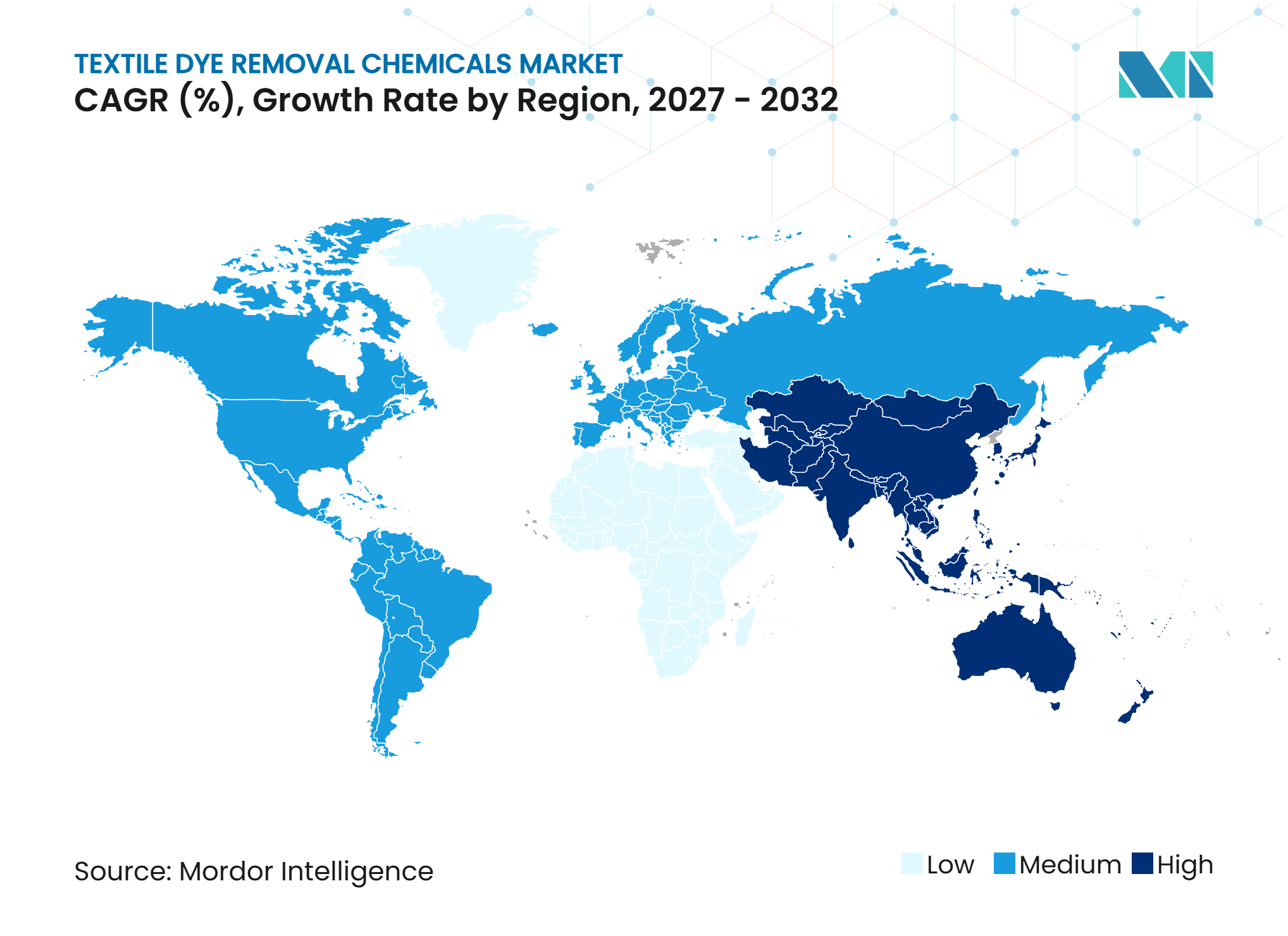
Asia-Pacific held 38.78% of the Textile Dye Removal Chemicals market share in 2026 and is forecast to expand at a 9.78% CAGR through 2032. The region combines dense textile production with rising wastewater control requirements in export-oriented manufacturing clusters. China's GB 4287-2026 took effect on September 1, 2026, extending coverage to chemical fiber weaving and technical textiles. The standard also prohibits newly established dyeing and finishing facilities from discharging to urban municipal sewage systems. These compliance requirements increase the need for on-site treatment programs and favor suppliers with consistent chemical performance. Bangladesh, Vietnam, and other export-focused manufacturing locations also face buyer audit requirements that increase the value of verified wastewater inputs. Japan and South Korea support higher-value demand for sensor-coupled systems and specialty coagulants, supported by their established water-treatment capabilities.
North America: Compliance and Advanced Treatment
North America is a mature market for advanced dye-removal chemistry in specialty textiles, technical fabrics, and industrial laundry operations. U.S. textile mills operate under categorical pretreatment standards that regulate biochemical oxygen demand and total suspended solids, while color discharge can be subject to municipal permit conditions. This regulatory structure creates a sustained base of demand for wastewater treatment chemicals. The region has a smaller textile production base than Asia-Pacific, but its facilities tend to have higher chemical spending per kilogram of textile treated. Advanced oxidation, electrocoagulation, and real-time monitoring are relevant where operators require stronger treatment control. Kemira acquired Water Engineering, Inc. in September 2025 for USD 150 million, expanding its presence in North American industrial water treatment services. Canada's smaller textile base also requires specialty coagulants and flocculants to meet applicable wastewater standards.
Europe, South America, and the Middle East and Africa: Selective Compliance-Led Demand
Europe's textile facilities operate under the Industrial Emissions Directive and textile-sector Best Available Techniques (BAT) conclusions, which cover color, Adsorbable Organic Halogens (AOX), chemical oxygen demand, and specified heavy metals. Italy, Germany, and Portugal account for a large share of European dyeing activity, creating retrofit opportunities for specialty oxidants and adsorbents. In South America, Brazil presents a notable water-reuse case through the Rhodia facility in Santo Andre, where Veolia reported 94% water reuse. The Textile Dye Removal Chemicals market share across these regions is smaller than in Asia-Pacific, but local compliance requirements can support demand for high-value treatment programs. Argentina's currency constraints can limit capital-intensive upgrades while sustaining demand for routine effluent-treatment chemicals. Saudi Arabian manufacturing development and established South African dyeing operations can support selective treatment upgrades. Suppliers with regional capabilities in industrial wastewater can address this demand through services, process design, and chemical supply rather than commodity sales alone.
Competitive Landscape
Market Concentration
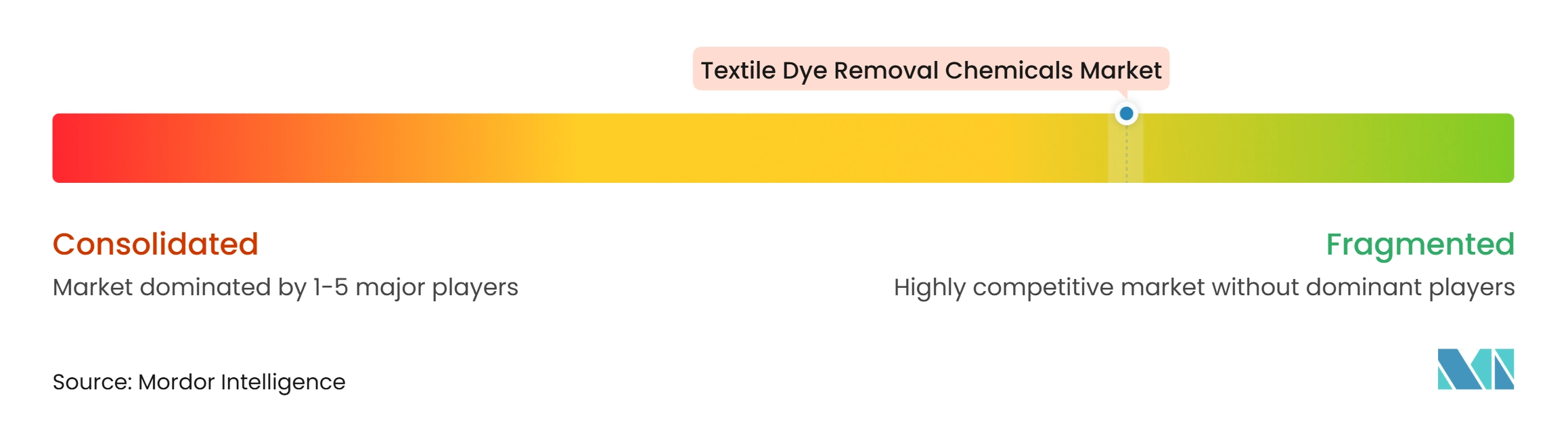
The Textile Dye Removal Chemicals market is fragmented, with global water treatment and specialty chemical groups competing alongside local producers. Regional suppliers can offer cost and logistics advantages, particularly for coagulants and flocculants. Based on available information, no single company holds pricing authority across all chemical types. SNF operates a broad production network across France, the United Kingdom, the United States, India, China, and South Korea, which supports supply resilience for polyacrylamide-based flocculants. Kemira identifies coagulants and polymers as core products within its water treatment portfolio.
Technology serves as an important means for suppliers to protect customer relationships. Ecolab's ECOLAB3D platform and Kurita's S.sensing CS use monitoring and automated dosing to support managed service models. These offerings can reduce the risks of overdosing and excess sludge while improving operational visibility for customers. Archroma partnered with Gradiant on a zero-liquid-discharge project at its Mahachai site in Thailand, reporting 90%-95% recovery of wastewater and brine for chlorine production by industrial partners. The market presents opportunities for adsorbent formulations suited to mixed-dye streams, certified treatment bundles for export-oriented small and medium-sized factories, and dosing systems compatible with zero liquid discharge operations.
Regional producers are also strengthening their market position through verified certifications rather than price competition alone. Bluwat's Zero Discharge of Hazardous Chemicals (ZDHC) Manufacturing Restricted Substances List (MRSL) v3.1 conformance covers five core water treatment product lines and supports its position in export-focused supply chains. This can narrow the gap in differentiation between regional companies and international suppliers. The market rewards companies that combine chemical performance, documentation, and local service capacity. Larger suppliers can use acquisitions and process-service offerings to expand their industrial water treatment coverage. At the same time, smaller competitors can remain relevant by meeting audit requirements and responding quickly to local treatment needs. Available information does not provide combined market shares for leading companies, so a concentration score cannot be calculated under the stated share-based method.
Textile Dye Removal Chemicals Industry Leaders
-
Ecolab Inc.
-
Kemira
-
Solenis
-
SNF Group
-
Kurita Water Industries Ltd.
- *Disclaimer: Major Players sorted in no particular order
Textile Dye Removal Chemicals Market Companies Covered in this Report
- Archroma
- Arkema
- Ashland
- BASF
- Buckman
- Ecolab Inc.
- Gradiant
- Kemira
- Kurita Water Industries Ltd.
- Nouryon
- SNF Group
- Solenis
- SUEZ
- Veolia
- Yixing Bluwat Chemicals Co., Ltd.
Recent Industry Developments in Textile Dye Removal Chemicals Market
- September 2026: China's revised textile wastewater standard GB 4287-2026 took effect, extending regulatory coverage to all textile sectors, including chemical fiber weaving and technical textiles. The standard introduced zebrafish egg acute toxicity as a mandatory integrated indicator for textile dye removal chemicals and prohibited new dyeing and finishing facilities from discharging to municipal sewage systems.
- November 2025: Solenis completed the acquisition of NCH Corporation, expanding its global presence in industrial water treatment and process chemistry, including textile dye removal chemicals. The company also completed the integration of Diversey (acquired in 2023) into a single global operating environment and invested USD 4.68 million in sustainable capital expenditure during 2025.
Global Textile Dye Removal Chemicals Market Report Scope
Textile dye removal chemicals are specialized substances used to break down, strip, or eliminate color molecules either directly from dyed fabrics during color correction or recycling, or from industrial wastewater (effluents) before discharge into the environment. These chemicals play a functional role across two primary application areas: fabric-level color correction and effluent treatment.
The textile dye removal chemicals market is segmented by chemical type, application, dye type, and geography. By chemical type, the market is segmented into coagulants and flocculants, oxidants, adsorbents, and others. By application, the market is segmented into dyehouse effluent, printing effluent, laundry and wash water, and others. By dye type, the market is segmented into reactive dyes, disperse dyes, acid and basic dyes, and mixed dye effluent. The report also covers market sizes and forecasts for textile dye removal chemicals across 15 countries in major regions. The market sizes and forecasts are provided in terms of value (USD).
Segmentation Overview
| Coagulants and Flocculants |
| Oxidants |
| Adsorbents |
| Others |
| Dyehouse Effluent |
| Printing Effluent |
| Laundry and Wash Water |
| Others |
| Reactive Dyes |
| Disperse Dyes |
| Acid and Basic Dyes |
| Mixed Dye Effluent |
| Asia-Pacific | China |
| India | |
| Japan | |
| South Korea | |
| ASEAN Countries | |
| Rest of Asia-Pacific | |
| North America | United States |
| Canada | |
| Mexico | |
| Europe | Germany |
| United Kingdom | |
| France | |
| Italy | |
| NORDIC Countries | |
| Rest of Europe | |
| South America | Brazil |
| Argentina | |
| Rest of South America | |
| Middle East and Africa | Saudi Arabia |
| South Africa | |
| Rest of Middle East and Africa |
| By Chemical Type | Coagulants and Flocculants | |
| Oxidants | ||
| Adsorbents | ||
| Others | ||
| By Application | Dyehouse Effluent | |
| Printing Effluent | ||
| Laundry and Wash Water | ||
| Others | ||
| By Dye Type | Reactive Dyes | |
| Disperse Dyes | ||
| Acid and Basic Dyes | ||
| Mixed Dye Effluent | ||
| By Geography | Asia-Pacific | China |
| India | ||
| Japan | ||
| South Korea | ||
| ASEAN Countries | ||
| Rest of Asia-Pacific | ||
| North America | United States | |
| Canada | ||
| Mexico | ||
| Europe | Germany | |
| United Kingdom | ||
| France | ||
| Italy | ||
| NORDIC Countries | ||
| Rest of Europe | ||
| South America | Brazil | |
| Argentina | ||
| Rest of South America | ||
| Middle East and Africa | Saudi Arabia | |
| South Africa | ||
| Rest of Middle East and Africa | ||
Key Questions Answered in the Report
What is current market size of Textile Dye Removal Chemicals Market?
The Textile Dye Removal Chemicals market size was valued at USD 1.34 billion in 2026 and is estimated to grow from USD 1.46 billion in 2027 to USD 2.22 billion by 2032, at a CAGR of 8.78% during the forecast period (2027-2032).
Which chemical type has the largest share in textile dye removal?
Coagulants and Flocculants lead with a 43.34% share in 2026 because they are widely used in effluent-treatment equipment.
Which application is growing fastest for textile wastewater treatment chemicals?
Printing Effluent is forecast to grow at a 9.45% CAGR through 2032, supported by pigment-rich runoff and wastewater needs from digital printing.
Which region leads in demand for textile dye removal chemicals?
Asia-Pacific holds a 38.78% share in 2026 and is expected to grow at a 9.78% CAGR through 2032.