
Testosterone Injectable Market Size and Share
Market Overview
| Study Period | 2021 - 2032 |
|---|---|
| Market Size (2027) | USD 2.38 Billion |
| Market Size (2032) | USD 2.85 Billion |
| Growth Rate (2027 - 2032) | 3.64 % |
| Fastest Growing Market | Asia-Pacific |
| Largest Market | North America |
| Market Concentration | Medium |
Major Players *Disclaimer: Major Players sorted in no particular order Image © Mordor Intelligence. Reuse requires attribution under CC BY 4.0. | |
Testosterone Injectable Market Analysis by Mordor Intelligence
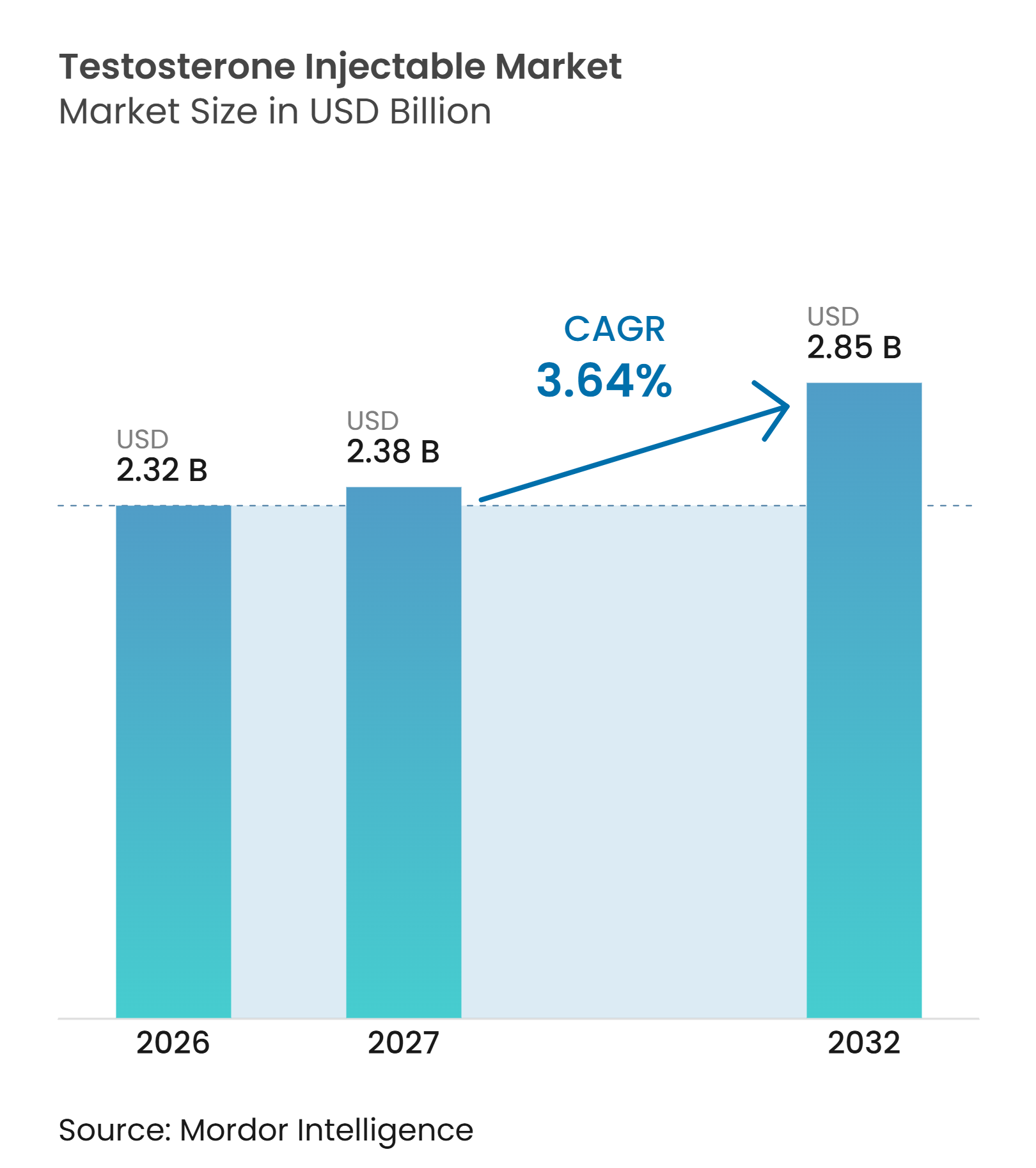
The Testosterone Injectable Market size is projected to expand from USD 2.32 billion in 2026 and USD 2.38 billion in 2027 to USD 2.85 billion by 2032, registering a CAGR of 3.64% between 2027 and 2032.
Rising diagnosis of testosterone deficiency supports treatment demand, particularly where clearer clinical guidance moves assessment into primary care. Longer life expectancy can extend treatment duration for men who remain on therapy after diagnosis or cancer treatment. Injectable products retain a cost and familiarity advantage, but supply interruptions can shift prescribing between manufacturers and formulations. Telehealth programs and home-delivery models are changing how patients receive monitoring, prescriptions, and repeat doses. Product competition increasingly centers on dosing interval, home-use convenience, and monitoring support rather than on the active ingredient alone.
Key Report Takeaways
- By product type, testosterone cypionate held 44.89% of the Testosterone injectable industry share in 2026, while testosterone undecanoate is projected to grow at a 5.06% CAGR through 2032.
- By route of administration, intramuscular administration held 55.34% of the Testosterone injectable market share in 2026, while subcutaneous administration is projected to grow at a 6.31% CAGR through 2032.
- By delivery duration, long-acting formulations held 61.34% of the Testosterone injectable market share in 2026, while short-acting formulations are projected to grow at a 5.03% CAGR through 2032.
- By application, male hypogonadism held 52.86% of the Testosterone injectable market share in 2026, while post-chemotherapy testosterone deficiency is projected to grow at a 4.13% CAGR through 2032.
- By end user, hospitals held 59.25% of the Testosterone injectable market share in 2026, while specialty and urology clinics are projected to grow at a 5.21% CAGR through 2032.
- By distribution channel, retail pharmacies held 45.67% of the Testosterone injectable market share in 2026, while online pharmacies and telehealth are projected to grow at a 5.45% CAGR through 2032.
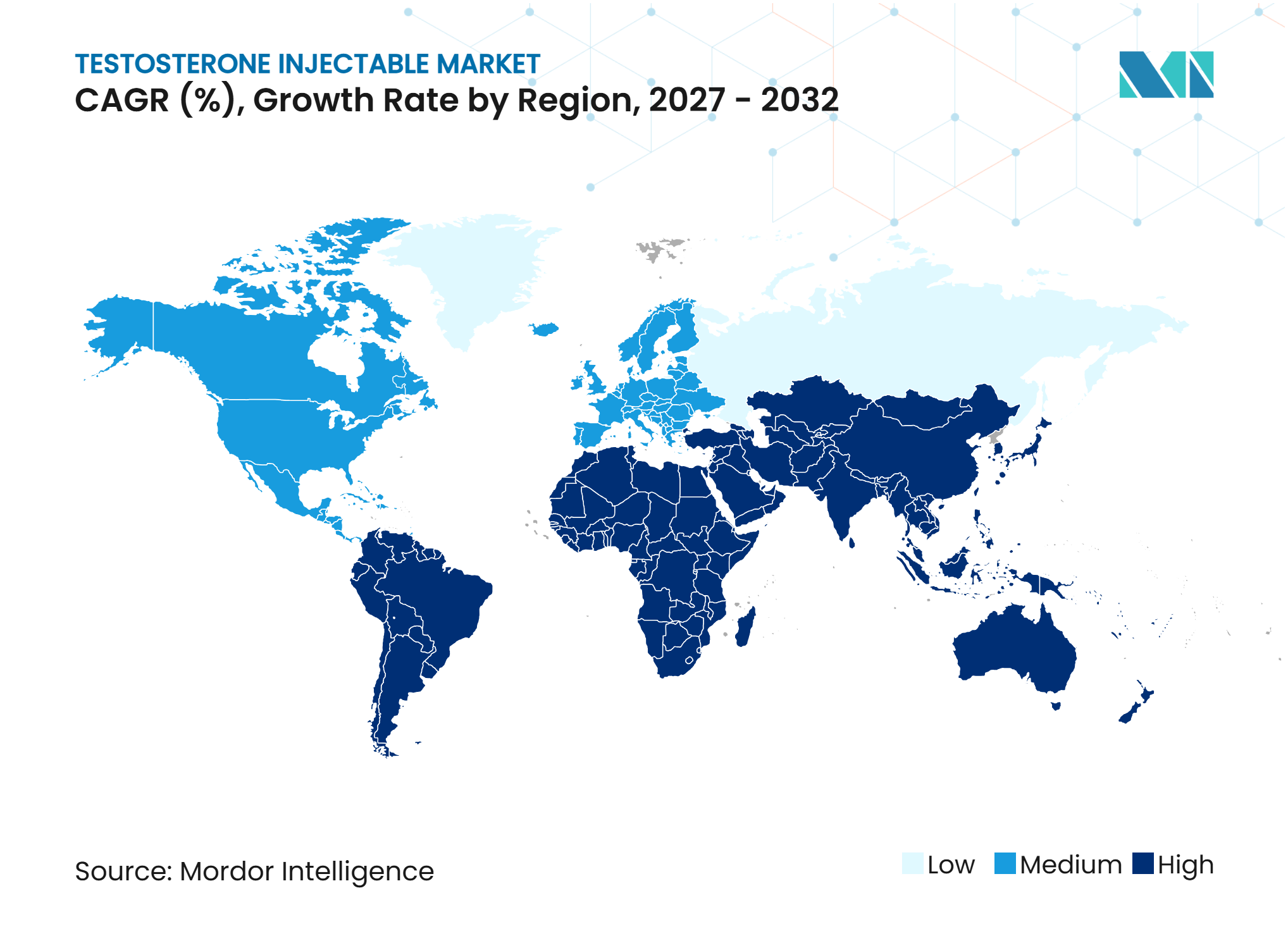
- By geography, North America held 47.60% of the Testosterone injectable market share in 2026, while Asia-Pacific is projected to grow at an 8.61% CAGR through 2032.
Note: Market numbers in this report are based on Mordor Intelligence's proprietary estimation framework, which combines nine months of actuals with Q4 projections for base year 2026.
Market Trends and Insights
Drivers Impact Analysis of Testosterone Injectable Market*
| Driver | (~) % Impact on CAGR Forecast | Geographic Relevance | Impact Timeline |
|---|---|---|---|
| Rising Diagnosis of Hypogonadism and Testosterone Deficiency | +0.8% | Global, North America and Western Europe leading | Medium term (2-4 years) |
| Aging Male Population and Longer Treatment Duration | +0.6% | Global, strongest in Japan, Germany, and Western Europe | Long term (≥ 4 years) |
| Preference for Long-Acting and Lower-Frequency Dosing | +0.5% | Global, strongest where nurse-administered injections are standard | Medium term (2-4 years) |
| Expansion of Men's Health Clinics and Telehealth Access | +0.7% | North America, with spillover to Australia, New Zealand, and GCC | Short term (≤ 2 years) |
| Growing Gender-Affirming Testosterone Use | +0.4% | North America, Northern Europe, and emerging Asia-Pacific markets | Medium term (2-4 years) |
| Prefilled and At-Home Injection Formats | +0.4% | North America, Western Europe, and Australia | Short term (≤ 2 years) |
| Source: Mordor Intelligence | |||
Rising Diagnosis of Hypogonadism and Testosterone Deficiency
The testosterone injectable market benefits from more consistent approaches to diagnosing testosterone deficiency. The American Urological Association and Endocrine Society frameworks require confirmation through 2 separate morning testosterone measurements. The AUA continues to use a threshold of 300 ng/dL. These requirements make diagnosis more repeatable across clinical settings. Family medicine physicians reported the highest preference for injectable therapy at 59.8% among prescriber specialties[1]. The framework supports structured screening in primary care, where cost-effective intramuscular esters remain familiar treatment options.
Aging Male Population and Longer Treatment Duration
The testosterone injectable market also draws support from patients who require longer periods of hormone management. A 2025 study of testicular cancer survivors found that the probability of hypogonadism rose from 12% at the first survey to 41% at the last survey. The same research found a prevalence 3 times higher than that of age-matched controls after 30 years. This pattern broadens demand beyond a simple replacement of one treated cohort with another. Physicians surveyed across developing regions selected injectable esters as the initial formulation in 46.5% of cases. Long-acting undecanoate was preferred for maintenance therapy by 31.6% of these physicians.
Growing Gender-Affirming Testosterone Use
Gender-affirming care creates a distinct source of demand for injectable testosterone products. Enanthate and undecanoate are used in masculinizing hormone therapy. A 2025 randomized study involving 58 transgender men found desired masculinizing effects after 1 year with both testosterone enanthate and undecanoate. Undecanoate required 6 injections annually, compared with 18 injections for enanthate. This use case supports interest in subcutaneous weekly dosing and patient-managed administration. It also gives the testosterone injectable market demand that is not tied to patterns in male hypogonadism.
Expansion of Men's Health Clinics and Telehealth Access
Telehealth programs are widening access to clinical review, laboratory testing, prescriptions, and delivery. In June 2026, LifeMD and Antares Pharma announced a program for XYOSTED across 37 U.S. states. The program was priced at USD 249 per month and included medication, clinical oversight, and home delivery. Hims & Hers launched testosterone treatment plans in September 2025 and stated that injectable testosterone was planned for 2026. Prefilled and at-home formats can reduce the burden of arranging repeat clinic visits. These models also connect treatment monitoring with dispensing, changing how prescription value is captured.
Restraints Impact Analysis of Testosterone Injectable Market*
| Restraint | (~) % Impact on CAGR Forecast | Geographic Relevance | Impact Timeline |
|---|---|---|---|
| Cardiovascular and Regulatory Safety Scrutiny | -0.3% | Global, most pronounced in Germany and Japan | Medium term (2-4 years) |
| Injection-Related Discomfort and Clinic-Visit Burden | -0.3% | Global, most acute without home-injection infrastructure | Short term (≤ 2 years) |
| Product-Stability and Dose-Consistency Risks | -0.2% | Global, GCC and Asia-Pacific most exposed | Medium term (2-4 years) |
| Controlled-Substance Diversion and Misuse Risk | -0.2% | North America, Western Europe, and emerging Asia-Pacific markets | Long-term (≥ 4 years) |
| Source: Mordor Intelligence | |||
Cardiovascular and Regulatory Safety Scrutiny
The FDA changed class-wide labeling for testosterone products in February 2025. The agency removed the boxed warning on adverse cardiovascular outcomes after reviewing results from the TRAVERSE trial. The FDA also added a class-wide warning on increased blood pressure. Clinicians treating patients with hypertension may therefore remain cautious when selecting and monitoring therapy. The American Heart Association noted that injectable esters can produce greater peak-to-trough variation than transdermal products. That variation may raise hematocrit concerns and can favor more closely monitored care pathways.
Injection Burden, Product Consistency, and Controlled-Substance Risk
Older patients may find a biweekly visit schedule more difficult to maintain. Injection-site pain, oil-vehicle reactions, and mood changes linked to serum fluctuations can narrow the suitable patient group. Product stability and dose consistency are also more difficult to manage where storage, patient training, and home-injection infrastructure are limited. Schedule III controls require careful prescribing and dispensing practices, which can constrain simple direct-to-patient workflows. These constraints create demand for patient education, prefilled formats, and clinical monitoring, but they also slow conversion from clinic-based treatment.
*Our forecasts treat driver/restraint impacts as directional, not additive. The impact forecasts reflect baseline growth, mix effects, and variable interactions.
Testosterone Injectable Market Segment Analysis
By Product Type:
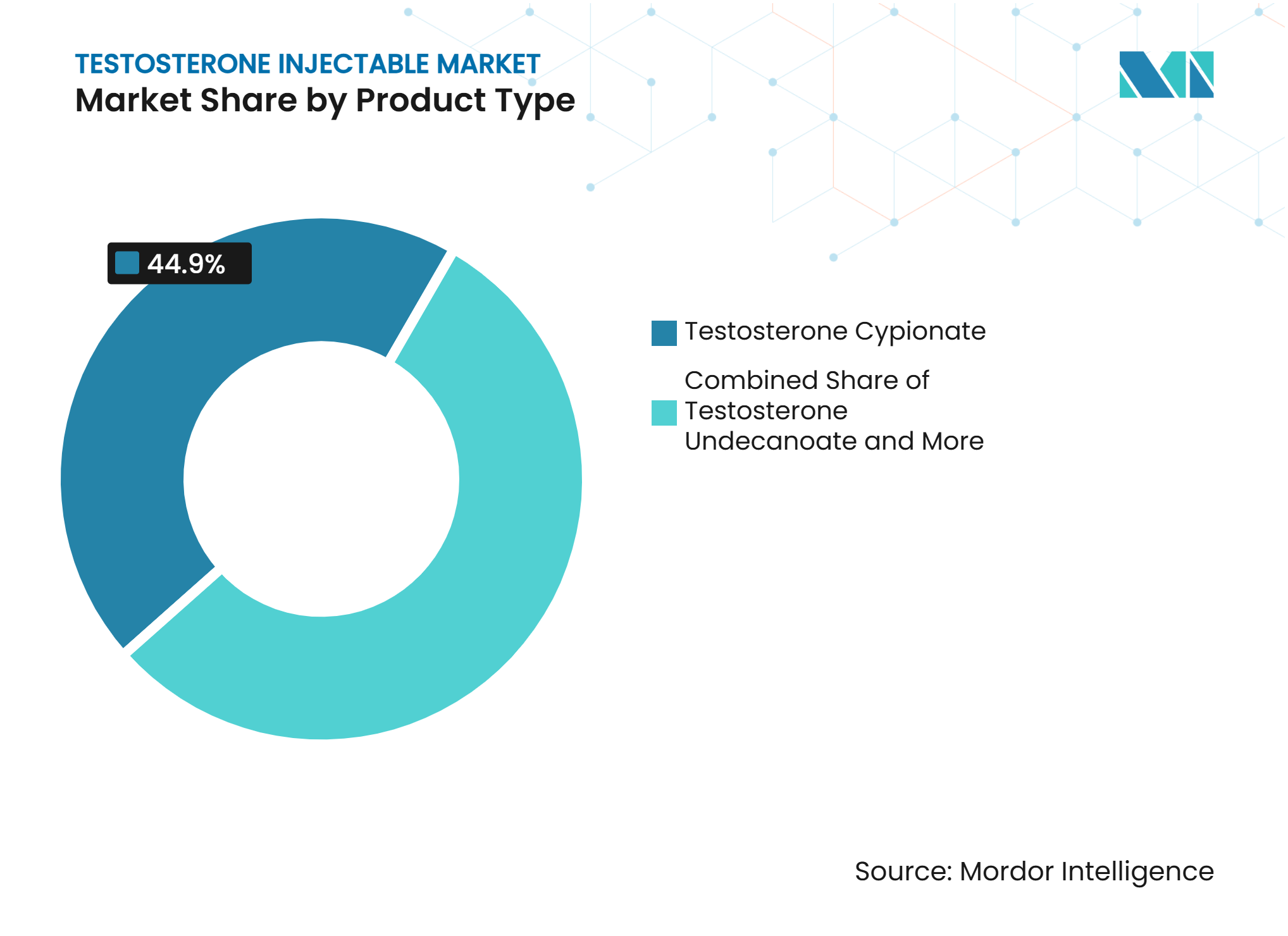
Generic Competition Shapes the Cypionate FranchiseTestosterone cypionate held 44.89% of the Testosterone injectable market share in 2026. Its position reflects established North American protocols and the wide use of intramuscular therapy. Pfizer's Depo-Testosterone and generic products from Hikma, Cipla, and Sun Pharmaceutical compete on supply reliability and price. Supply interruptions can have a direct effect on which supplier fills a prescription. The product category remains important because clinicians already understand dose adjustment, administration, and monitoring practices. Existing prescribing habits and broad generic availability therefore support the Testosterone injectable market size associated with cypionate.
Testosterone undecanoate is forecast to grow at a 5.06% CAGR through 2032. Its longer dosing interval can appeal to patients and clinicians seeking fewer injections. Sun Pharmaceutical received Italian authorization in July 2025 for Testosterone Undecanoato Sun 1000 mg/4 ml[2]. The authorization adds generic competition in a category historically associated with branded long-acting products. Testosterone enanthate also has a differentiated role through the subcutaneous XYOSTED autoinjector. Methyl testosterone remains a small injectable category and has lost clinical favor because of hepatotoxicity concerns.



By Route of Administration:
Subcutaneous Delivery Gains Clinical SupportIntramuscular administration held 55.34% of the Testosterone injectable market share in 2026. Decades of clinical use and lower cost than branded autoinjectors maintain this position. Intramuscular products are routinely used across hospital, clinic, and retail dispensing settings. This route can still require patient or caregiver support for administration. It may also produce wider peak-to-trough serum variation than other approaches. These conditions give established intramuscular products a large installed base while opening room for alternatives.
Subcutaneous administration is projected to grow at a 6.31% CAGR through 2032. Clinical evidence cited in 2025 reported steadier serum concentrations and smaller peak-to-trough changes with subcutaneous approaches. Subcutaneous protocols commonly use 25 to 27 gauge needles, while intramuscular injections generally use 22 to 23 gauge needles. Narrower needles and less demanding administration techniques can support self-use. XYOSTED gives testosterone enanthate a branded device-led position in this route. The segment's growth depends on patient training, coverage, and the ability of integrated telehealth providers to manage repeat care.
By Delivery Duration:
Dosing Frequency Defines Treatment ChoiceLong-acting formulations held 61.34% of the Testosterone injectable market share in 2026. Their appeal is based on wider dosing intervals and reduced treatment scheduling. Long-acting undecanoate can require 4 to 5 injections per year. In a 2025 physician survey, 31.6% of respondents preferred long-acting undecanoate for maintenance treatment. Long dosing intervals can support adherence for patients who do not want frequent injections. They also require attention to safety monitoring because large serum concentration changes may affect hematocrit risk.
Short-acting formulations are projected to grow at a 5.03% CAGR through 2032. Weekly testosterone enanthate administration through XYOSTED falls into this category. Telehealth providers can make frequent treatment more manageable by combining shipment, follow-up, and monitoring. A 2025 randomized study found comparable satisfaction outcomes between enanthate and undecanoate in gender-affirming care. The study compared 18 annual enanthate injections with 6 annual undecanoate injections. This result indicates that regular dosing can be acceptable when patients receive appropriate support. The Testosterone injectable industry is therefore serving both infrequent clinic-based treatment and supported home-use models.
By Application:
Hypogonadism Remains the Core Use CaseMale hypogonadism held 52.86% of the Testosterone injectable market share in 2026. Higher diagnostic consistency and broader familiarity among prescribers support this position. The FDA's advisory committee considered expanding indications for symptomatic deficiency regardless of underlying cause in December 2025. Any formal regulatory change could affect the clinical population eligible for therapy. Gender-affirming treatment forms a separate demand layer that is not directly linked to men's health services. Delayed puberty and other clinical uses remain smaller applications with established titration protocols over 18 to 24 months.
Post-chemotherapy testosterone deficiency is projected to grow at a 4.13% CAGR through 2032. Cancer survivorship increases the number of patients who may need long-term endocrine assessment. A 2025 study found hypogonadism probability in testicular cancer survivors increased from 12% to 41% across the survey period. The result was 3 times the level reported for age-matched controls after 30 years. ASCO's educational material addresses sexual health in cancer survivors and recognizes the clinical need for hormone management. Injectable products remain a primary treatment modality where clinically appropriate.
By End User:
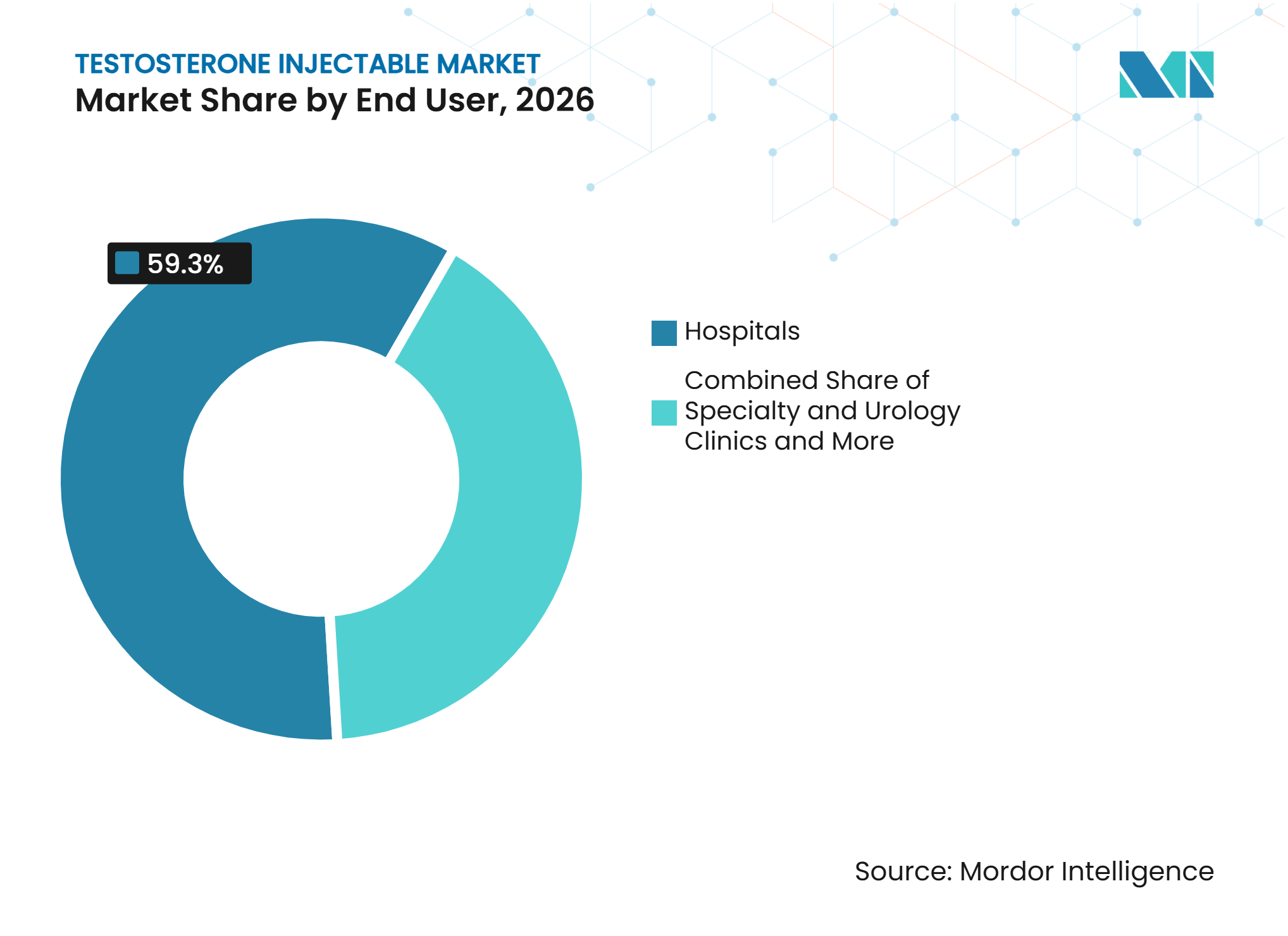
Clinics Capture More Ongoing ManagementHospitals held 59.25% of the Testosterone injectable market share in 2026. Hospital formularies continue to support intramuscular testosterone across inpatient and outpatient specialty encounters. These settings provide structured monitoring and administration for patients with complex care needs. They also remain important where reimbursement favors hospital dispensing. Hospital workflows are less focused on subscription-style follow-up than specialized outpatient models. This difference leaves part of the expanding long-term management opportunity outside hospitals.
Specialty and urology clinics are projected to grow at a 5.21% CAGR through 2032. These clinics can organize diagnosis, periodic laboratory testing, dose adjustment, and ongoing treatment in one care pathway. Their operating model is suited to quarterly follow-up and repeat clinical review. Homecare is also becoming more relevant as prefilled syringe models reduce the need for a clinic visit. SynergenX described a self-injection program that combines weekly prefilled syringes with telehealth monitoring. The Testosterone injectable market can therefore shift some routine administration from facilities to supported home care.

By Distribution Channel:
Integrated Telehealth Changes DispensingRetail pharmacies held 45.67% of the Testosterone injectable market share in 2026. They remain the main dispensing point for Depo-Testosterone and generic testosterone cypionate. Their role is strongest for established intramuscular products filled through conventional prescriptions. Retail availability can be affected by manufacturer supply disruptions. The channel also faces competition for higher-value branded prescriptions from direct-to-patient models. This makes generic volume and branded product access follow different channel patterns.
Online pharmacies and telehealth are projected to grow at a 5.45% CAGR through 2032. The LifeMD and Antares program named LifeMD's pharmacy as the preferred dispensing channel for XYOSTED. This model replicates home-delivery convenience while adding clinical oversight. PeterMD and Enhance.MD each announced nationwide telehealth expansion in June 2025. Integrated providers can retain both clinical and dispensing activity. Hospital pharmacies remain oriented toward generic intramuscular esters and may capture less of the growing subcutaneous category.
Geography Analysis
North America
North America held 47.60% of the Testosterone injectable market share in 2026. The region has the highest per-capita testosterone replacement therapy utilization in the supplied analysis. U.S. testosterone prescriptions rose from 7.3 million in 2019 to more than 11 million in 2024. Diagnostic guidance, telehealth access, and direct-to-consumer promotion support patient awareness. A 2025 chart review found that only 9.3% of U.S. patients initiating therapy had completed 2 confirmatory low morning measurements. This may lead to tighter prescribing practices under established diagnostic standards. The FDA's blood-pressure labeling requirement remains a relevant compliance factor for prescribers.
Asia-Pacific
Asia-Pacific is projected to grow at an 8.61% CAGR through 2032. Improving diagnostic infrastructure and awareness support demand in China, India, Japan, South Korea, and Australia. Regulatory access to longer-acting products is also progressing in some advanced regional markets. Australia's TGA listed REANDRON 1000 for the 2024 to 2025 consent period. This supports access to testosterone undecanoate where regulated supply pathways are needed. The regional Testosterone injectable market size is also shaped by manufacturing capacity in India. Cerata Pharma was identified as a testosterone API exporter in 2025. Local API capability can reduce import dependence for regional suppliers.
Europe, Middle East and Africa, and South America
Europe is experiencing portfolio changes in established branded injectables. ADVANZ PHARMA acquired Testoviron rights from Bayer in June 2025 for Europe and selected Latin American, Middle Eastern, African, and Asia-Pacific markets. The GCC has strong physician preference for injectable esters, supported by physician-supervised wellness and sports medicine settings. South America remains shaped by reimbursement and pricing conditions. Brazil limits reimbursed injectable testosterone to hospital pharmacy dispensing in the described system. Argentina's currency volatility creates different conditions in public and private treatment channels. These mixed conditions make the Testosterone injectable market dependent on local access rules and distribution structures.
Competitive Landscape
Market Concentration
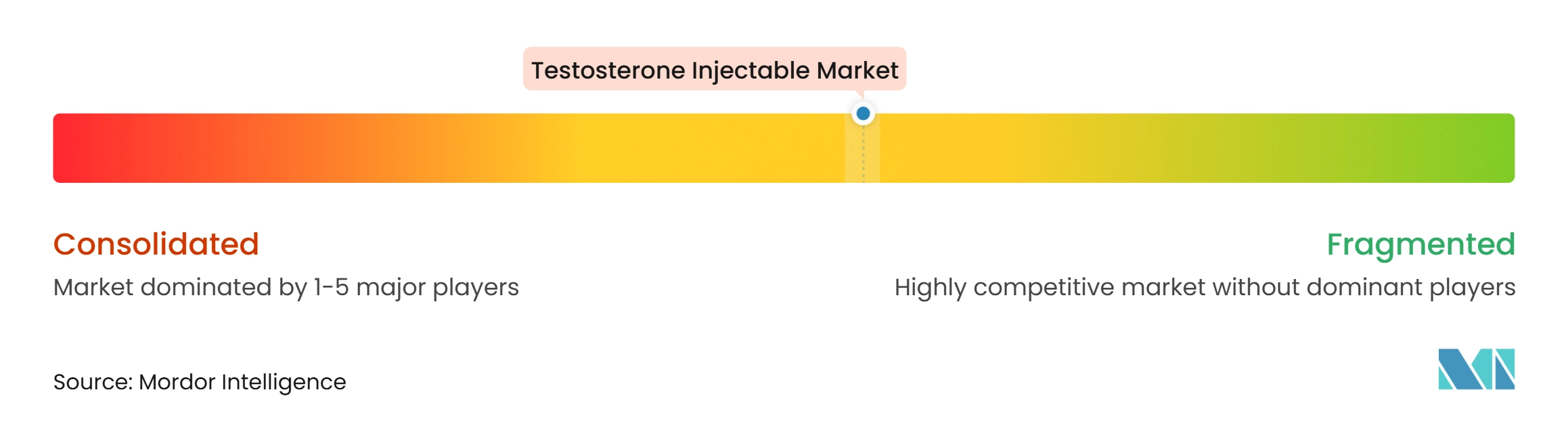
The testosterone injectable market is moderately fragmented. Hikma Pharmaceuticals, Sun Pharmaceutical, Cipla, and Pfizer account for a substantial share of global ester volumes in the supplied analysis. Antares Pharma and Endo Pharmaceuticals compete in the branded specialty segment through differentiated delivery products. Generic suppliers compete mainly on price and the ability to maintain supply. This leaves continuity of supply as a competitive issue alongside product cost. The market has distinct generic and device-led branded segments.
Antares Pharma has focused on delivery-device differentiation through XYOSTED. In October 2026, the company received U.S. Patent 12,773,386 for hematocrit modulation through needle-assisted jet injection of testosterone. The patent covers subcutaneous, intradermal, and intramuscular administration through powered autoinjector devices. LifeMD and Antares also announced their direct-to-patient XYOSTED program in June 2026. ADVANZ PHARMA expanded its specialty hospital portfolio through the Testoviron rights acquisition. These actions show that commercial strategy extends beyond conventional vial-based competition.
Opportunities remain in prefilled syringes for home-use intramuscular treatment and depot products with longer intervals. Companies with a single ester and vial concentration face greater exposure to price competition. Payer step therapy can reinforce generic use before a branded product receives coverage. Telehealth-linked dispensing can also move premium prescriptions away from traditional retail pharmacy workflows. AbbVie uses patient-support infrastructure that combines delivery with compliance documentation in the supplied analysis. Azurity Pharmaceuticals uses specialty-channel concentration and step-therapy positioning for Azmiro. The Testosterone injectable industry remains competitive because different companies are pursuing generic scale, specialty distribution, and device innovation.
Testosterone Injectable Industry Leaders
-
Bayer AG
-
Cipla Limited
-
Hikma Pharmaceuticals PLC
-
Pfizer Inc.
-
Sun Pharmaceutical Industries Ltd
- *Disclaimer: Major Players sorted in no particular order
Testosterone Injectable Market Companies Covered in this Report
- Abbvie
- Antares Pharma
- Azurity Pharmaceuticals
- Bayer
- Besins Healthcare
- Cipla
- Clarus Therapeutics, Inc.
- Eli Lilly and Company
- Endo International
- Ferring Pharmaceuticals
- Hikma Pharmaceuticals
- Kyowa Kirin
- Lupin
- Marius Pharmaceuticals
- Pfizer
- Sandoz Group AG
- Sun Pharmaceuticals Industries
- Teva Pharmaceutical Industries
- Tolmar, Inc.
- Viatris
Recent Industry Developments in Testosterone Injectable Market
- June 2026: LifeMD and Antares Pharma announced an exclusive telehealth co-marketing program for XYOSTED testosterone enanthate subcutaneous auto-injector. The program was priced at USD 249 per month, including medication, clinical consultation, and home delivery, and was set to launch in July 2026 across 37 U.S. states.
- February 2025: The FDA issued class-wide labeling changes for testosterone products, removed the boxed warning on adverse cardiovascular outcomes, retained limitation-of-use language for age-related hypogonadism, and added class-wide blood-pressure warnings.
Global Testosterone Injectable Market Report Scope
As per the report's scope, the testosterone injectable market covers prescription testosterone medicines administered by injection to restore or maintain testosterone levels in clinically appropriate patients, including treatment for male hypogonadism, gender-affirming therapy, delayed puberty, post-chemotherapy testosterone deficiency, and other clinical applications, delivered through defined product types, administration routes, dosing durations, end-user settings, and distribution channels.
The market is segmented by product type, route of administration, delivery duration, application, end user, distribution channel, and geography. By product type, the market is segmented into testosterone cypionate, testosterone enanthate, testosterone undecanoate, methyl testosterone, and other active ingredients. By route of administration, the market is segmented into intramuscular and subcutaneous. By delivery duration, the market is segmented into short-acting formulations and long-acting formulations. By application, the market is segmented into male hypogonadism, gender-affirming therapy, delayed puberty, post-chemotherapy testosterone deficiency, and other clinical applications. By end user, the market is segmented into hospitals, specialty and urology clinics, homecare, and other end users. By distribution channel, the market is segmented into retail pharmacies, hospital pharmacies, online pharmacies, and telehealth. By geography, the market is segmented into North America, Europe, Asia-Pacific, the Middle East and Africa, and South America. The market report also covers estimated market sizes and trends for 17 countries across major regions worldwide. The report offers market size and forecasts in value (USD) for the above segments.
Segmentation Overview
| Testosterone Cypionate |
| Testosterone Enanthate |
| Testosterone Undecanoate |
| Methyl Testosterone |
| Other Active Ingredients |
| Intramuscular |
| Subcutaneous |
| Short-Acting Formulations |
| Long-Acting Formulations |
| Male Hypogonadism |
| Gender-Affirming Therapy |
| Delayed Puberty |
| Post-Chemotherapy Testosterone Deficiency |
| Other Clinical Applications |
| Hospitals |
| Specialty and Urology Clinics |
| Homecare |
| Other End Users |
| Retail Pharmacies |
| Hospital Pharmacies |
| Online Pharmacies and Telehealth |
| North America | United States |
| Canada | |
| Mexico | |
| Europe | Germany |
| United Kingdom | |
| France | |
| Italy | |
| Spain | |
| Rest of Europe | |
| Asia-Pacific | China |
| Japan | |
| India | |
| Australia | |
| South Korea | |
| Rest of Asia-Pacific | |
| Middle East and Africa | GCC |
| South Africa | |
| Rest of Middle East and Africa | |
| South America | Brazil |
| Argentina | |
| Rest of South America |
| By Product Type | Testosterone Cypionate | |
| Testosterone Enanthate | ||
| Testosterone Undecanoate | ||
| Methyl Testosterone | ||
| Other Active Ingredients | ||
| By Route of Administration | Intramuscular | |
| Subcutaneous | ||
| By Delivery Duration | Short-Acting Formulations | |
| Long-Acting Formulations | ||
| By Application | Male Hypogonadism | |
| Gender-Affirming Therapy | ||
| Delayed Puberty | ||
| Post-Chemotherapy Testosterone Deficiency | ||
| Other Clinical Applications | ||
| By End User | Hospitals | |
| Specialty and Urology Clinics | ||
| Homecare | ||
| Other End Users | ||
| By Distribution Channel | Retail Pharmacies | |
| Hospital Pharmacies | ||
| Online Pharmacies and Telehealth | ||
| By Geography | North America | United States |
| Canada | ||
| Mexico | ||
| Europe | Germany | |
| United Kingdom | ||
| France | ||
| Italy | ||
| Spain | ||
| Rest of Europe | ||
| Asia-Pacific | China | |
| Japan | ||
| India | ||
| Australia | ||
| South Korea | ||
| Rest of Asia-Pacific | ||
| Middle East and Africa | GCC | |
| South Africa | ||
| Rest of Middle East and Africa | ||
| South America | Brazil | |
| Argentina | ||
| Rest of South America | ||
Key Questions Answered in the Report
What is the projected value of testosterone injectable products by 2032?
The category is forecast to reach USD 2.85 billion by 2032, rising from USD 2.38 billion in 2027 at a 3.64% CAGR.
Which injectable testosterone product type has the largest share?
Testosterone cypionate leads product types with a 44.89% share in 2026, supported by established protocols and generic supply.
Which route of administration is growing fastest?
Subcutaneous administration is projected to grow at a 6.31% CAGR through 2032, supported by home-use convenience and device-led products.
Why are long-acting testosterone injections used?
Long-acting formulations held a 61.34% share in 2026 because wider dosing intervals can reduce the number of annual injections.
How is telehealth changing testosterone treatment access?
Telehealth combines laboratory testing, clinical review, prescription management, and home delivery, supporting online pharmacy and telehealth growth of 5.45% through 2032.
Which region is expected to grow fastest for injectable testosterone?
Asia-Pacific is forecast to grow at an 8.61% CAGR through 2032 as diagnostic capacity, awareness, and regulatory access improve.