
Tea and Coffee Bags Market Size and Share
Market Overview
| Study Period | 2021 - 2031 |
|---|---|
| Market Size (2026) | USD 8.11 Billion |
| Market Size (2031) | USD 10.61 Billion |
| Growth Rate (2026 - 2031) | 5.52 % |
| Fastest Growing Market | Asia-Pacific |
| Largest Market | Europe |
| Market Concentration | Low |
Major Players *Disclaimer: Major Players sorted in no particular order Image © Mordor Intelligence. Reuse requires attribution under CC BY 4.0. | |
Tea and Coffee Bags Market Analysis by Mordor Intelligence
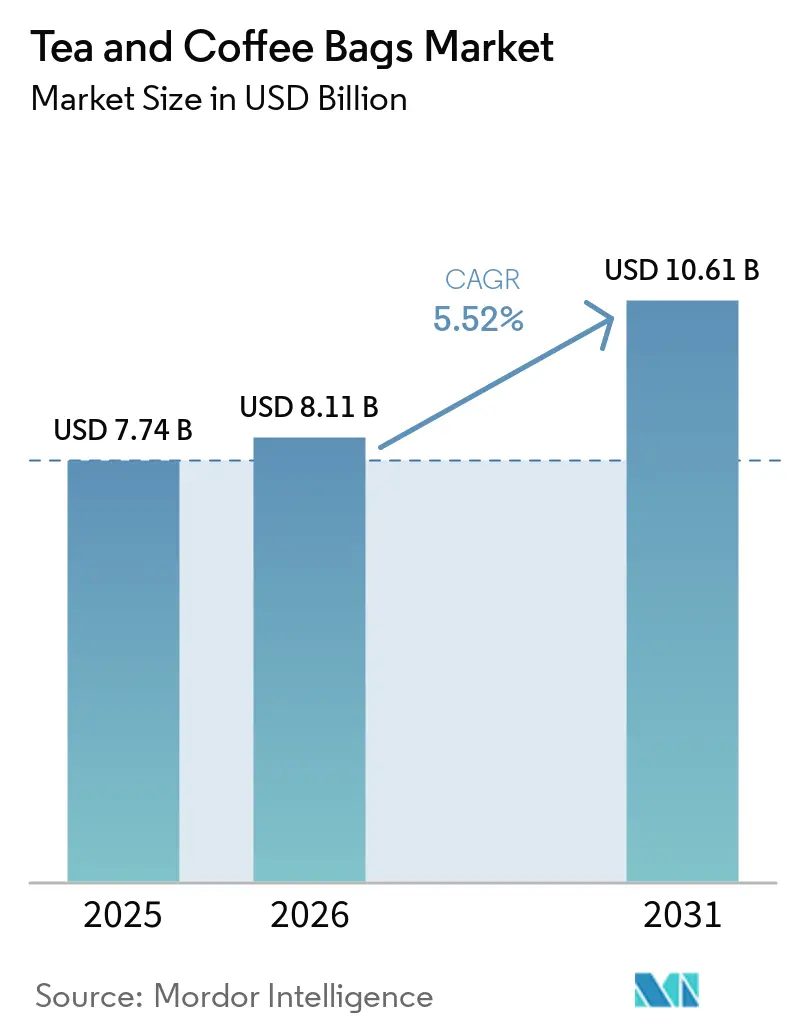
The tea and coffee bags market size is expected to grow from USD 7.74 billion in 2025 to USD 8.11 billion in 2026 and is forecast to reach USD 10.61 billion by 2031 at 5.52% CAGR over 2026-2031. Convenience, consistent preparation, and portability support demand for bagged hot beverages across retail and foodservice channels. Premium tea, specialty coffee, and flavored formats raise the value of purchases even where mass-market volumes are under pressure from higher retail prices. Workplace beverage programs add institutional demand that does not depend solely on household shopping patterns. The European Union packaging rules are bringing material choices into product planning, which favors suppliers that can meet compostability requirements. The tea and coffee bags market remains fragmented, allowing specialty and sustainability-focused brands to compete beside large international portfolios.
Key Report Takeaways
- By product type, tea bags held 68.24% of the tea and coffee bags market share in 2025, while coffee bags are forecast to grow at a 6.29% CAGR through 2031.
- By flavor, plain formats accounted for 61.76% of the tea and coffee bags market share in 2025, while flavored bags are forecast to expand at a 6.83% CAGR through 2031.
- By material type, paper accounted for 72.17% of the tea and coffee bags market size in 2025, while nylon mesh is forecast to grow at a 6.67% CAGR through 2031.
- By distribution channel, supermarkets and hypermarkets accounted for 48.81% of the tea and coffee bags market size in 2025, while online retail stores are forecast to grow at a 7.08% CAGR through 2031.
- By geography, Europe held 34.12% of the tea and coffee bags market share in 2025, while Asia-Pacific is forecast to expand at a 6.77% CAGR through 2031.
Note: Market size and forecast figures in this report are generated using Mordor Intelligence’s proprietary estimation framework, updated with the latest available data and insights as of January 2026.
Market Trends and Insights
Drivers Impact Analysis of Tea and Coffee Bags Market*
| Driver | (~) % Impact on CAGR Forecast | Geographic Relevance | Impact Timeline |
|---|---|---|---|
| Rising demand for convenient single-serve beverages | +1.5% | Global, with strongest pull in North America, the United Kingdom, and urban Asia-Pacific | Short term (≤ 2 years) |
| Growth in on-the-go consumption habits | +0.7% | Global, with strong demand in North America, Western Europe, and Asia-Pacific cities | Short term (≤ 2 years) |
| Increasing premium tea and specialty coffee consumption | +1.0% | North America and Europe, with demand spreading to China, India, and Japan | Medium term (2-4 years) |
| Growth of office and workplace beverage consumption | +0.6% | Global, with high institutional density in the United Kingdom, North America, and Australia | Medium term (2-4 years) |
| Product innovation in biodegradable and compostable bags | +0.7% | European Union, with spillover to North America and Asia-Pacific sustainability markets | Medium term (2-4 years) |
| Increasing demand for specialty and artisanal beverage formats | +0.8% | North America and Europe, with emerging demand in urban South Korea, Japan, and India | Long term (≥ 4 years) |
| Source: Mordor Intelligence | |||
Rising Demand for Convenient Single-serve Beverages
Consumers are increasingly adopting convenient, portion-controlled beverage formats that simplify preparation and reduce brewing time. In 2026, 60% of U.S. households owned a single-cup coffee machine, up from 42% in 2025, according to the National Coffee Association, highlighting growing adoption of single-serve preparation formats[1]. Single-serve tea and coffee formats fit commuting, travel, office, and short-break occasions because they offer consistent preparation and simple cleanup. The tea and coffee bags market also benefits when consumers use online replenishment and subscription services, which reduce the need to make repeated store visits. These services can support repeat purchases because they make routine household supply easier to maintain. On-the-go consumption reinforces this pattern by creating occasions where loose leaf, whole bean, and equipment-based preparation are less practical.
Increasing Premium Tea and Specialty Coffee Consumption
Specialty coffee consumption exceeded traditional coffee consumption among American adults for the first time in 2025. The National Coffee Association reported that 46% of American adults drank specialty coffee on the previous day, compared with 42% who drank traditional coffee[2]. Premium single-origin coffee bags and whole-leaf tea sachets give consumers an accessible way to seek a café-style experience at home. Tata Consumer Products reported 43% revenue growth in its India coffee business in FY2026 and identified premiumization as a major contributor, while its United Kingdom portfolio emphasized premium mix across Tetley and Teapigs. The tea and coffee bags industry is also gaining demand from hospitality and fine-dining buyers that want premium formats without a complex preparation process. Specialty and artisanal formats provide room for brands to differentiate through origin, blend quality, flavor, and presentation rather than competing only on price.
Product Innovation in Biodegradable and Compostable Bags
Material development has become more important as sustainability expectations and European Union rules affect tea and coffee bag design. The European Union Packaging and Packaging Waste Regulation took effect on August, 2026, and tea bags are treated as packaging under the regulation. The regulation requires tea and coffee bags to be compatible with industrial composting by February 2028, which directs investment toward materials that can meet EN 13432 requirements. SmartSolve launched PureNil™ 0 in January 2026 as a plastic-free, 100% bio-based film for single-serve packets, and ARC 01 Coffee was an early commercial adopter. A 2026 scientific assessment of polybutylene succinate, polylactic acid, and polypropylene tea bag materials found that the main environmental effects of PBS bags occurred during use rather than production. The tea and coffee bags market is therefore likely to see more material testing as brands outside Europe respond to retail buyers that use European standards across international supplier programs.
Growth of Office and Workplace Beverage Consumption
Office and workplace beverage service supports a separate source of demand for tea and coffee bags. A study cited by Lavazza Professional found that 25% of United Kingdom coffee consumption occurred at work or in educational settings[3]. This demand is distinct from household purchasing because employers and foodservice operators buy products for shared use. Workplace buyers can also choose premium or specialty formats as part of employee well-being and hospitality programs. These purchases support high-frequency consumption because tea and coffee are used throughout the working day. The tea and coffee bags market benefits where office supply distributors, corporate caterers, and vending operators expand access to quality hot beverages. Growth in workplace use can therefore help offset periods when household shoppers respond cautiously to higher grocery prices.
Restraints Impact Analysis of Tea and Coffee Bags Market*
| Restraint | (~) % Impact on CAGR Forecast | Geographic Relevance | Impact Timeline |
|---|---|---|---|
| Higher cost of premium tea and coffee bags | -0.9% | Global, with strong consumer sensitivity in South America, the Middle East and Africa, and price-sensitive Asia-Pacific markets | Short term (≤ 2 years) |
| Competition from loose-leaf tea and whole-bean coffee | -0.6% | Europe, including the United Kingdom, Germany, and France, and specialty-focused North American markets | Medium term (2-4 years) |
| Volatility in tea and coffee raw material prices | -0.8% | Global, with production exposure in Brazil, Vietnam, Indonesia, Kenya, and Sri Lanka | Short term (≤ 2 years) |
| Stringent packaging and sustainability regulations | -0.4% | European Union, with spillover to North America and other standards-aligned markets | Medium term (2-4 years) |
| Source: Mordor Intelligence | |||
Higher Cost of Premium Tea and Coffee Bags
Premium tea and coffee bags often use higher-cost materials such as biodegradable films, specialty papers, cotton, and compostable laminates, increasing production costs. Advanced sealing technologies and customized printing further raise manufacturing expenses. These higher input costs are typically reflected in the final price of premium bagged products. Price-sensitive consumers may therefore prefer conventional tea and coffee bags with lower packaging costs. Smaller brands can also face difficulty adopting premium formats due to limited economies of scale. Consequently, the higher cost of premium tea and coffee bags can restrict their wider adoption, particularly in mass-market segments.
Competition From Loose-leaf Tea and Whole-bean Coffee
Competition from loose-leaf tea and whole-bean coffee can restrain the growth of the tea and coffee bags market, particularly among consumers who prioritize freshness, flavor, and product quality. Loose-leaf tea allows greater control over tea quantity and brewing strength, while whole-bean coffee is often perceived as delivering superior aroma and freshness when freshly ground. Specialty cafés and premium retailers also promote these formats as part of a more authentic brewing experience. In addition, reusable brewing equipment such as infusers, French presses, and grinders provides consumers with alternatives to single-use bags. This competition is particularly relevant in premium and specialty segments, where consumers are more willing to spend time preparing beverages. Consequently, tea and coffee bags may face slower adoption among quality-focused and traditional consumers.
*Our forecasts treat driver/restraint impacts as directional, not additive. The impact forecasts reflect baseline growth, mix effects, and variable interactions.
Tea and Coffee Bags Market Segment Analysis
By Product Type:
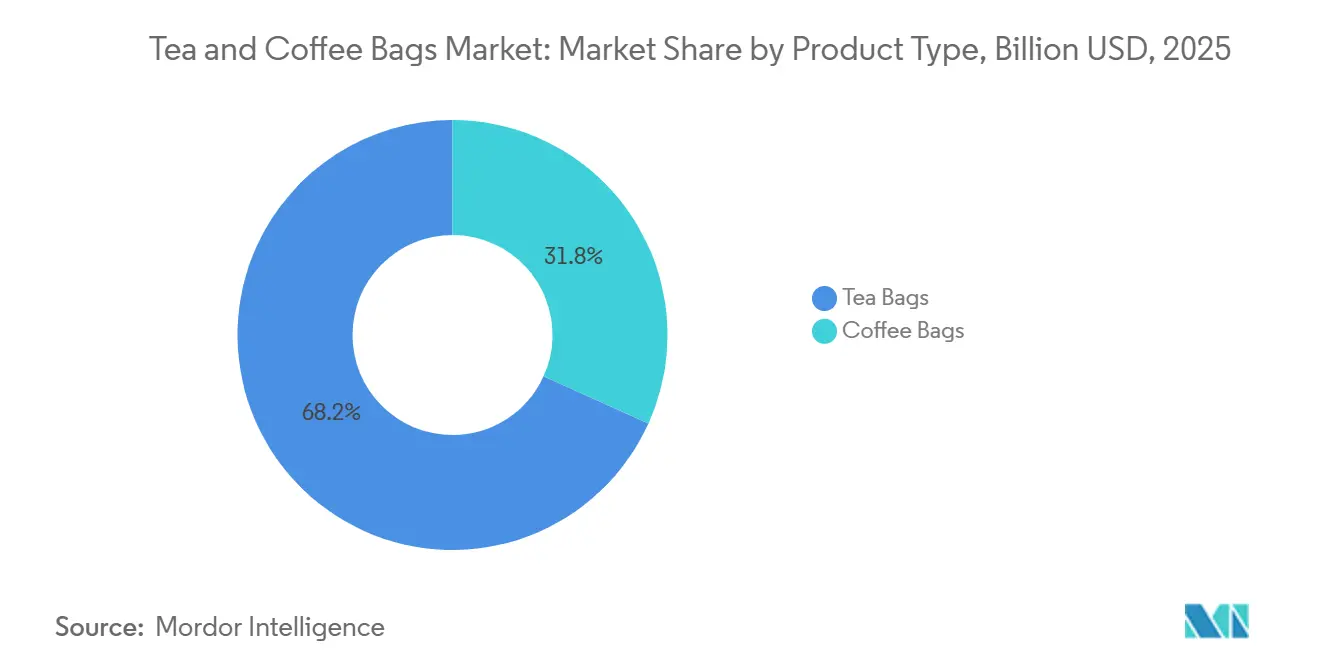
Coffee Bags Gain Ground in a Tea-Dominated MarketThe tea bags segment accounted for 68.24% of the market share in 2025, making it the largest product type category. Its dominant position is supported by the widespread consumption of tea across households, workplaces, hospitality establishments, and foodservice outlets. Tea bags remain highly preferred because they offer convenience, portion control, consistent brewing, and easy disposal compared with loose-leaf tea. Strong consumer familiarity with black tea, green tea, herbal tea, and specialty tea bag formats continues to reinforce demand across both developed and emerging markets. Retail availability through supermarkets, convenience stores, online platforms, and institutional channels has further strengthened the segment’s market leadership.
The coffee bags segment is projected to grow at a CAGR of 6.29% through 2031, making it the fastest-growing product type in the tea and coffee bags market. Growth is being driven by rising demand for specialty coffee, premium at-home brewing experiences, and convenient single-serve coffee preparation methods. Coffee bags provide a simple brewing solution that combines the portability of instant coffee with a flavor profile closer to freshly brewed ground coffee. Increasing urbanization, busy lifestyles, and higher coffee consumption among younger consumers are accelerating adoption across multiple regions.
By Flavor:
Functional and Flavored Variants Extend Beyond Plain FormatsThe plain flavor segment accounted for 61.76% of the tea and coffee bags market share in 2025, making it the largest flavor category. Its leading position is supported by strong consumer preference for traditional tea and coffee varieties that deliver familiar taste profiles and consistent quality. Plain tea and coffee bags are widely consumed across households, offices, hospitality establishments, and institutional settings due to their versatility and broad acceptance. The segment benefits from the high consumption of classic black tea, green tea, and standard coffee blends across major markets worldwide. Consumers often choose plain variants for everyday consumption because they are suitable for multiple brewing occasions and can be customized with milk, sugar, or other additives.
The flavored segment is projected to grow at a CAGR of 6.83% through 2031, making it the fastest-growing flavor category in the tea and coffee bags market. Growth is being driven by increasing consumer interest in premium, indulgent, and wellness-oriented beverage experiences. Flavored tea and coffee bags, including fruit-infused, herbal, floral, spiced, vanilla, caramel, and other specialty varieties, are attracting younger consumers and urban populations seeking greater product variety. Manufacturers are expanding their flavored portfolios with innovative combinations, seasonal editions, and functional ingredients that offer benefits such as relaxation, digestion support, or energy enhancement.
By Material Type:
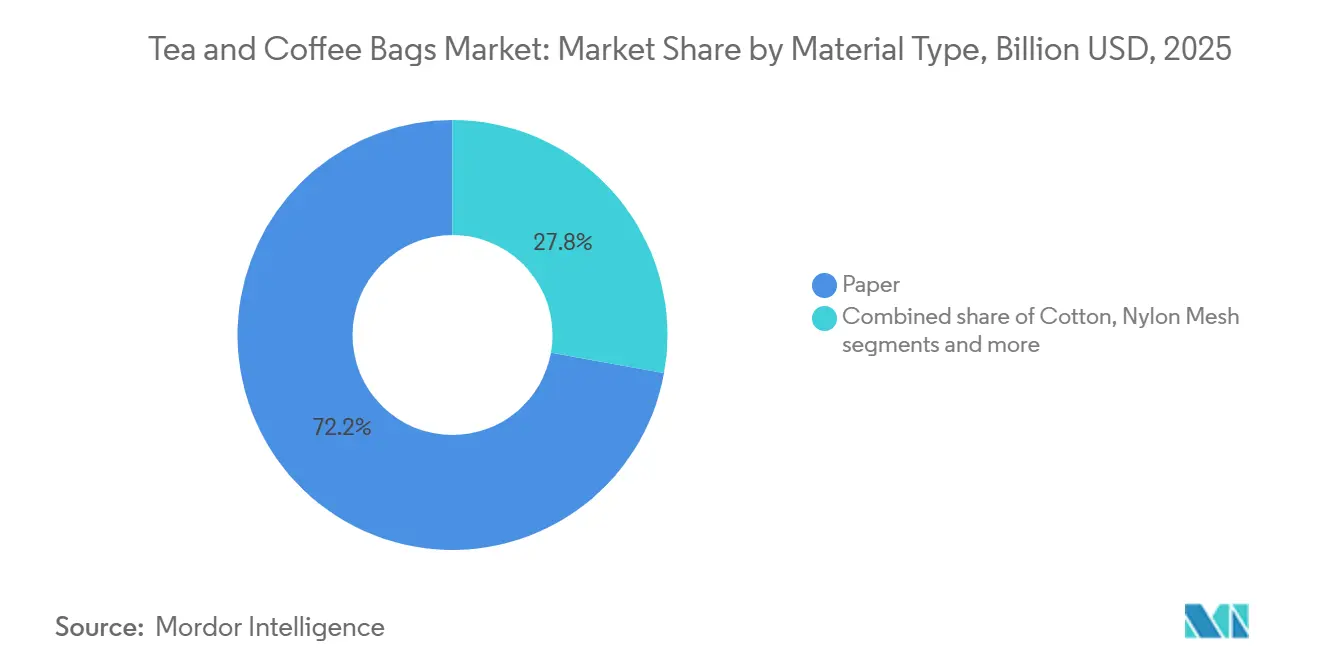
Sustainability Standards Reshape a Paper-Dominated CategoryPaper bags held 72.17% of the tea and coffee bags market share in 2025 because they are cost-efficient, widely available, and compatible with industrial composting requirements. Their supply chain maturity also supports use in high-volume products. Nylon mesh bags are the fastest-growing material segment and are projected to grow at a 6.67% CAGR from 2026 to 2031. Pyramid-style nylon formats appeal to premium buyers because they display whole leaves and can improve infusion performance. The European Union’s compostability requirement by February 2028 makes regulatory compliance a central issue for materials used in tea and coffee bags.
Nylon’s growth sits alongside increased scrutiny of its non-biodegradable nature. Producers may need to move toward bio-based options such as PLA and PBSA where regulations or retailer policies require different material outcomes. The 2026 scientific study of bio-based tea bags provides a basis for examining material impacts beyond a simple plastic versus paper comparison. Cotton and silk formats continue to serve smaller premium niches where tactile quality and origin presentation can support higher prices. Hemp, bamboo, and cellulose-fiber products are also attracting interest from brands seeking plastic-free credentials. The tea and coffee bags market will depend on machinery and material suppliers that can deliver compliant alternatives without making production costs prohibitive.

By Distribution Channel:
Digital Commerce Reconfigures Tea and Coffee Bag RetailSupermarkets and hypermarkets accounted for 48.81% of the tea and coffee bags market size in 2025, making them the leading channel for product discovery and routine replenishment. Their reach remains important for mass-market brands and shoppers that purchase household staples during grocery trips. Online retail stores are the fastest-growing channel and are forecast to expand at a 7.08% CAGR through 2031. Digital channels allow specialty brands to reach consumers without relying entirely on conventional shelf placement. They also support subscriptions, repeat-order systems, and more direct communication with customers.
Tata Consumer Products reported that its India tea e-commerce market share reached 38% in FY2026, while e-commerce channel revenue increased 30% year over year. This shows how online platforms can become material channels for established tea brands as well as smaller specialists. Convenience stores, foodservice operators, office supply distributors, and vending providers remain relevant because they serve immediate and frequent consumption occasions. These channels often compete on product availability and accessible price points rather than extensive product choice. The tea and coffee bags market can use direct purchase information from online orders to improve personalization, promotion, and repeat purchasing. Retailers and producers will need coordinated channel strategies so that online growth complements rather than weakens their existing store relationships.
Geography Analysis
Europe Tea and Coffee Bags Market
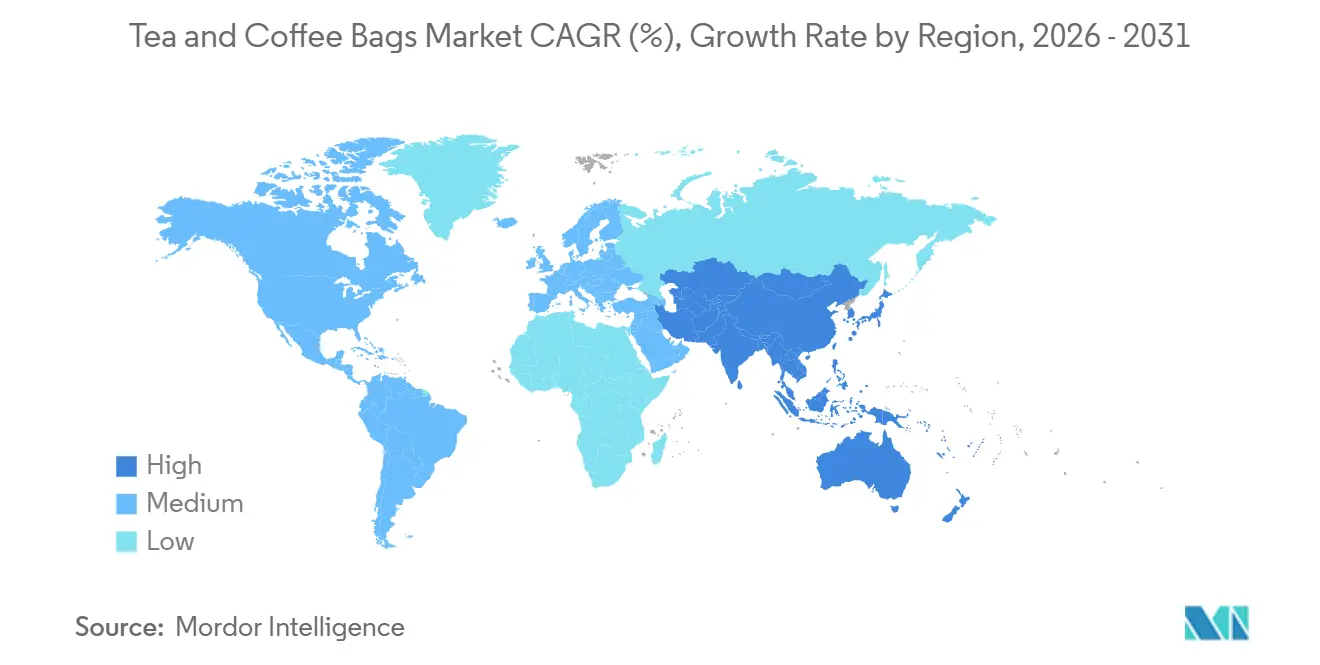
Europe accounted for 34.12% of the tea and coffee bags market share in 2025, making it the largest regional market. The region’s leadership is supported by a strong tea-drinking culture in countries such as the United Kingdom, Germany, France, and Poland, along with widespread coffee consumption across Western and Northern Europe. Consumers in Europe show a high preference for convenient single-serve beverage formats, including tea bags and premium coffee bags, which has strengthened retail demand. The presence of well-established beverage brands, extensive supermarket and specialty retail networks, and high household penetration of packaged beverages further supports market growth. Sustainability trends have also accelerated the adoption of biodegradable, compostable, and plastic-free tea and coffee bag materials across the region.
APAC Tea and Coffee Bags Market
Asia-Pacific is projected to expand at a CAGR of 6.77% through 2031, making it the fastest-growing regional market in the tea and coffee bags industry. Rapid urbanization, rising disposable incomes, and changing lifestyles are increasing demand for convenient packaged beverage products across China, India, Japan, South Korea, and Southeast Asian countries. The region is experiencing strong growth in both traditional tea consumption and modern coffee culture, particularly among younger consumers and urban professionals. Expanding retail infrastructure, e-commerce penetration, and café-inspired at-home beverage consumption are further accelerating market demand.
The Americas and MEA Tea and Coffee Bags Market
North America represents a mature market characterized by high coffee consumption, growing demand for specialty beverages, and strong adoption of premium and sustainable packaging formats. South America is witnessing steady growth supported by expanding urban populations, increasing packaged beverage consumption, and the region’s strong coffee production base. The Middle East and Africa market is developing gradually, driven by rising retail penetration, growing café culture, and increasing consumer preference for convenient beverage preparation formats.
Competitive Landscape
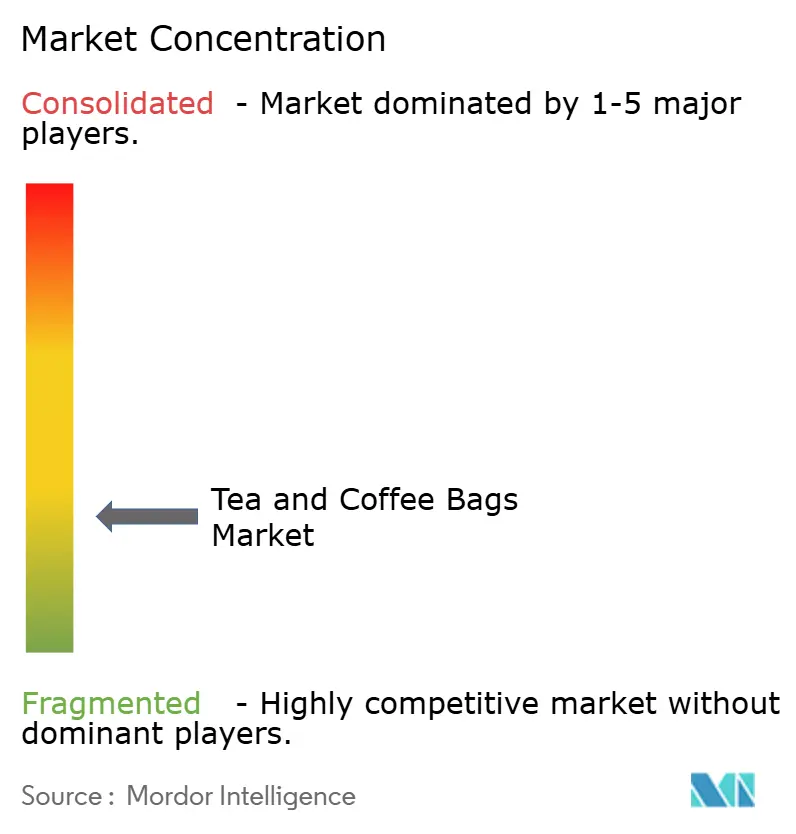
The tea and coffee bags market remains fragmented, with Tata Consumer Products, JDE Peet’s, Associated British Foods, and Lipton Teas and Infusions competing on portfolio breadth and geographic coverage. Specialist brands compete through origin, functional ingredients, premium presentation, and material choices. This structure limits the ability of any single supplier to control prices across the value chain. It also allows mid-sized brands to establish focused positions in specialty and sustainable offerings.
JDE Peet’s reported total sales of EUR 9,921 million in 2025, up 12.3% year over year, with organic sales increasing 15.3%. The company reported a 19.5% price effect and a negative 4.3% volume and mix effect, while Roast & Ground and Beans recorded double-digit growth. SmartSolve’s January 2026 launch of PureNil™ 0 highlights how packaging suppliers can influence brand product decisions through new compostable and bio-based options. Tata Consumer Products introduced 80 products globally during FY2026, including Tetley Green Tea Slim Care, Tetley Matcha variants, and Tata Coffee Grand Hazelnut flavors. These developments indicate that product innovation, material reformulation, and premium range development are advancing simultaneously.
ITO EN’s overseas tea bag growth shows how a category specialist can expand through focused origin and format positioning. Bigelow Tea and The Hain Celestial Group compete through functional and wellness-oriented products targeted at consumers willing to pay premiums for specific attributes. Wissotzky Tea and M.M. Ispahani maintain regional advantages through local market knowledge and logistics relationships. Packaging equipment that can process compostable and bio-based materials is becoming increasingly important, as it affects both compliance and production efficiency.
Tea and Coffee Bags Industry Leaders
-
Tata Consumer Products Limited
-
Nestlé S.A.
-
JDE Peet's N.V.
-
Unilever PLC
-
Lipton Teas and Infusions B.V.
- *Disclaimer: Major Players sorted in no particular order
Tea and Coffee Bags Market Companies Covered in this Report
- Tata Consumer Products Limited
- Nestlé S.A.
- JDE Peet's N.V.
- Unilever PLC
- Lipton Teas and Infusions B.V.
- Associated British Foods plc
- Teekanne GmbH & Co. KG
- The Hain Celestial Group, Inc.
- Bigelow Tea Company
- Dilmah Ceylon Tea Company PLC
- ITO EN, Ltd.
- Wissotzky Tea Ltd.
- Typhoo Tea Limited
- Bettys & Taylors Group Limited
- Whittard Trading Ltd.
- Harney & Sons Fine Teas
- The Republic of Tea, Inc.
- Numi, Inc.
- Massimo Zanetti Beverage Group S.p.A.
- M. M. Ispahani Limited
Recent Industry Developments in Tea and Coffee Bags Market
- January 2026: SmartSolve launched PureNil™ 0, the world’s first plastic-free, 100% bio-based, and flushable film designed for single-serve coffee and tea packets. ARC 01 Coffee became the first commercial adopter of the material. The film is compatible with standard form-fill-seal equipment without requiring machinery modifications, helping manufacturers adopt plastic-free packaging while minimizing production disruptions.
- July 2025: Yorkshire Tea introduced Cherry Bakewell Brew tea bags, a flavored tea inspired by the traditional British Cherry Bakewell dessert. Initially launched through Morrisons in the UK, the product expands the brand’s flavored tea portfolio and reflects growing consumer interest in distinctive, dessert-inspired tea flavors.
- July 2025: Mozza Coffee Roasters launched Single-Serve Coffee Bags, offering consumers a convenient way to prepare small-batch coffee by simply adding hot water and steeping the bag. The product was designed for travel, hotels, flights, road trips, and outdoor activities, highlighting the growing use of coffee bags as a portable alternative to conventional brewing methods.
Global Tea and Coffee Bags Market Report Scope
Tea and coffee bags are single-serve beverage preparation formats consisting of porous filter material containing measured quantities of tea leaves, herbs, ground coffee, or blended ingredients. The tea and coffee bags market report is segmented by product type into tea bags and coffee bags. Based on flavor, the market is segmented into plain and flavored. Based on material type, the market is segmented into paper, cotton, nylon mesh, silk, and others. Based on distribution channel, the market is segmented into supermarkets/hypermarkets, convenience stores, online retail stores, and other channels. By geography, the market is segmented into North America, Europe, Asia-Pacific, South America, and Middle East and Africa. For each segment, the market sizing and forecasting have been done in value terms (USD billion)
| Tea Bags |
| Coffee Bags |
| Plain |
| Flavored |
| Paper |
| Cotton |
| Nylon Mesh |
| Silk |
| Others |
| Supermarkets/Hypermarkets |
| Convenience Stores |
| Online Retail Stores |
| Other Distribution Channels |
| North America | United States |
| Canada | |
| Mexico | |
| Rest of North America | |
| Europe | Germany |
| United Kingdom | |
| Italy | |
| France | |
| Spain | |
| Rest of Europe | |
| Asia-Pacific | China |
| India | |
| Japan | |
| Australia | |
| Indonesia | |
| Rest of Asia-Pacific | |
| South America | Brazil |
| Argentina | |
| Rest of South America | |
| Middle East and Africa | South Africa |
| Saudi Arabia | |
| United Arab Emirates | |
| Rest of Middle East and Africa |
| By Product Type | Tea Bags | |
| Coffee Bags | ||
| By Flavor | Plain | |
| Flavored | ||
| By Material Type | Paper | |
| Cotton | ||
| Nylon Mesh | ||
| Silk | ||
| Others | ||
| By Distribution Channel | Supermarkets/Hypermarkets | |
| Convenience Stores | ||
| Online Retail Stores | ||
| Other Distribution Channels | ||
| By Geography | North America | United States |
| Canada | ||
| Mexico | ||
| Rest of North America | ||
| Europe | Germany | |
| United Kingdom | ||
| Italy | ||
| France | ||
| Spain | ||
| Rest of Europe | ||
| Asia-Pacific | China | |
| India | ||
| Japan | ||
| Australia | ||
| Indonesia | ||
| Rest of Asia-Pacific | ||
| South America | Brazil | |
| Argentina | ||
| Rest of South America | ||
| Middle East and Africa | South Africa | |
| Saudi Arabia | ||
| United Arab Emirates | ||
| Rest of Middle East and Africa | ||
Key Questions Answered in the Report
What is the forecast growth rate for tea and coffee bags?
The market is forecast to grow at a 5.52% CAGR from 2026 to 2031, rising from USD 8.11 billion in 2026 to USD 10.61 billion by 2031.
Which product type leads global demand?
Tea bags led with 68.24% share in 2025.
Why are online stores becoming important for tea and coffee bags?
Online retail stores are forecast to grow at a 7.08% CAGR through 2031 because they support direct purchasing, subscriptions, and repeat orders.
Which region is growing fastest for bagged tea and coffee?
Asia-Pacific is forecast to grow at a 6.77% CAGR through 2031, supported by café culture, premium consumption, and digital retail growth.