
Subcutaneous Injection Ports Market Size and Share
Market Overview
| Study Period | 2021 - 2032 |
|---|---|
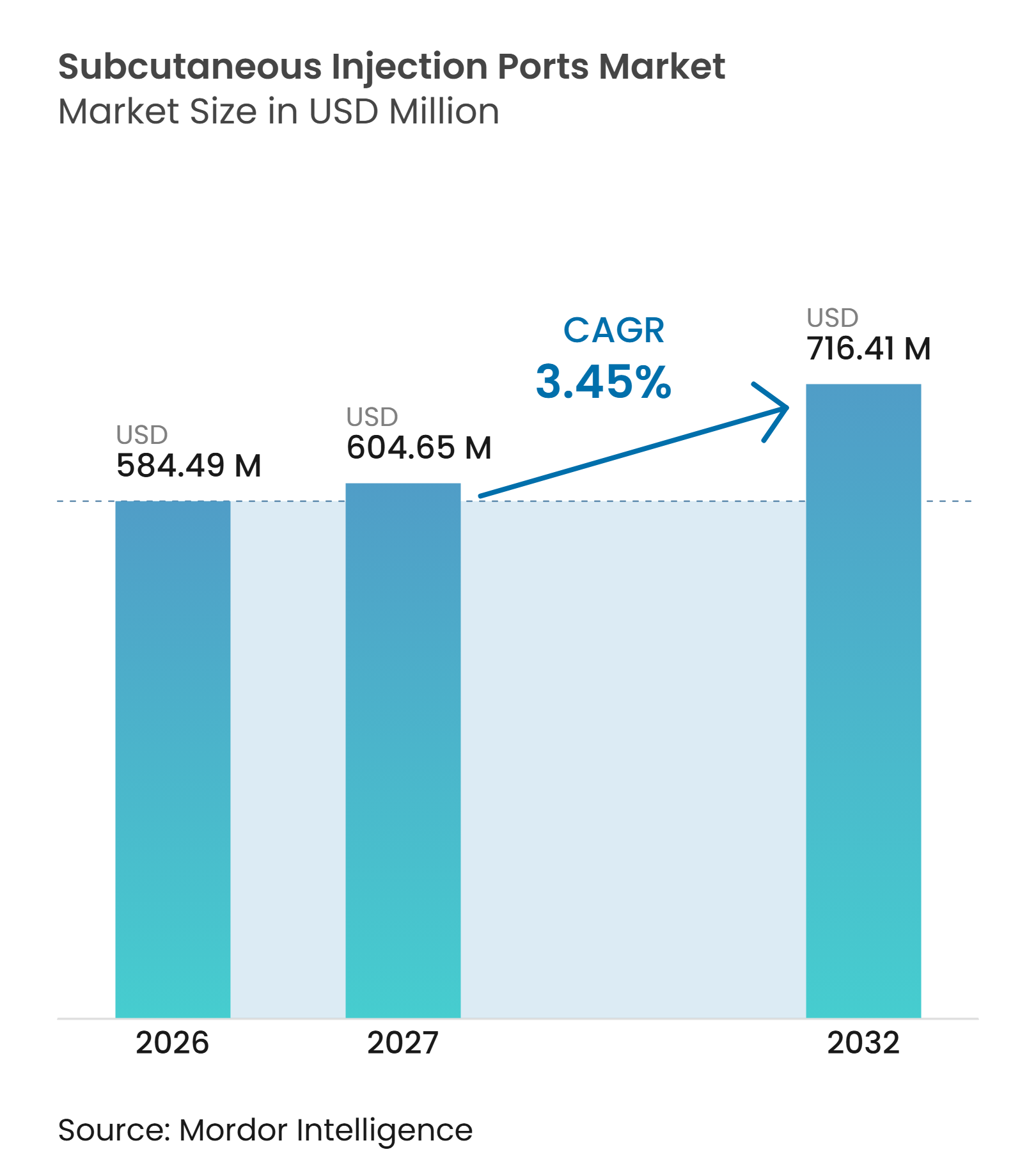
| Market Size (2027) | USD 604.65 Million |
| Market Size (2032) | USD 716.41 Million |
| Growth Rate (2027 - 2032) | 3.45 % |
| Fastest Growing Market | Asia-Pacific |
| Largest Market | North America |
| Market Concentration | Medium |
Major Players *Disclaimer: Major Players sorted in no particular order Image © Mordor Intelligence. Reuse requires attribution under CC BY 4.0. | |
Subcutaneous Injection Ports Market Analysis by Mordor Intelligence
The Subcutaneous Injection Ports Market size is expected to grow from USD 584.49 million in 2026 to USD 604.65 million in 2027 and is forecast to reach USD 716.41 million by 2032 at 3.45% CAGR over 2027-2032.
The subcutaneous injection ports market is supported by the growing demand for repeat infusion access as cancer care shifts toward longer treatment cycles and outpatient delivery. In the United States, 18.6 million people were living with a history of cancer in January 2025, and this figure is projected to exceed 22 million by 2035. Globally, cancer diagnoses reached 20.6 million in 2024, while new diagnoses are projected to increase by 60.7% between 2024 and 2050. Providers are placing ports earlier for patients requiring repeated chemotherapy, immunotherapy, and supportive infusions, while manufacturers offer power-injectable, MRI-conditional, lightweight, and compact products to improve workflow efficiency and patient comfort.
Key Report Takeaways
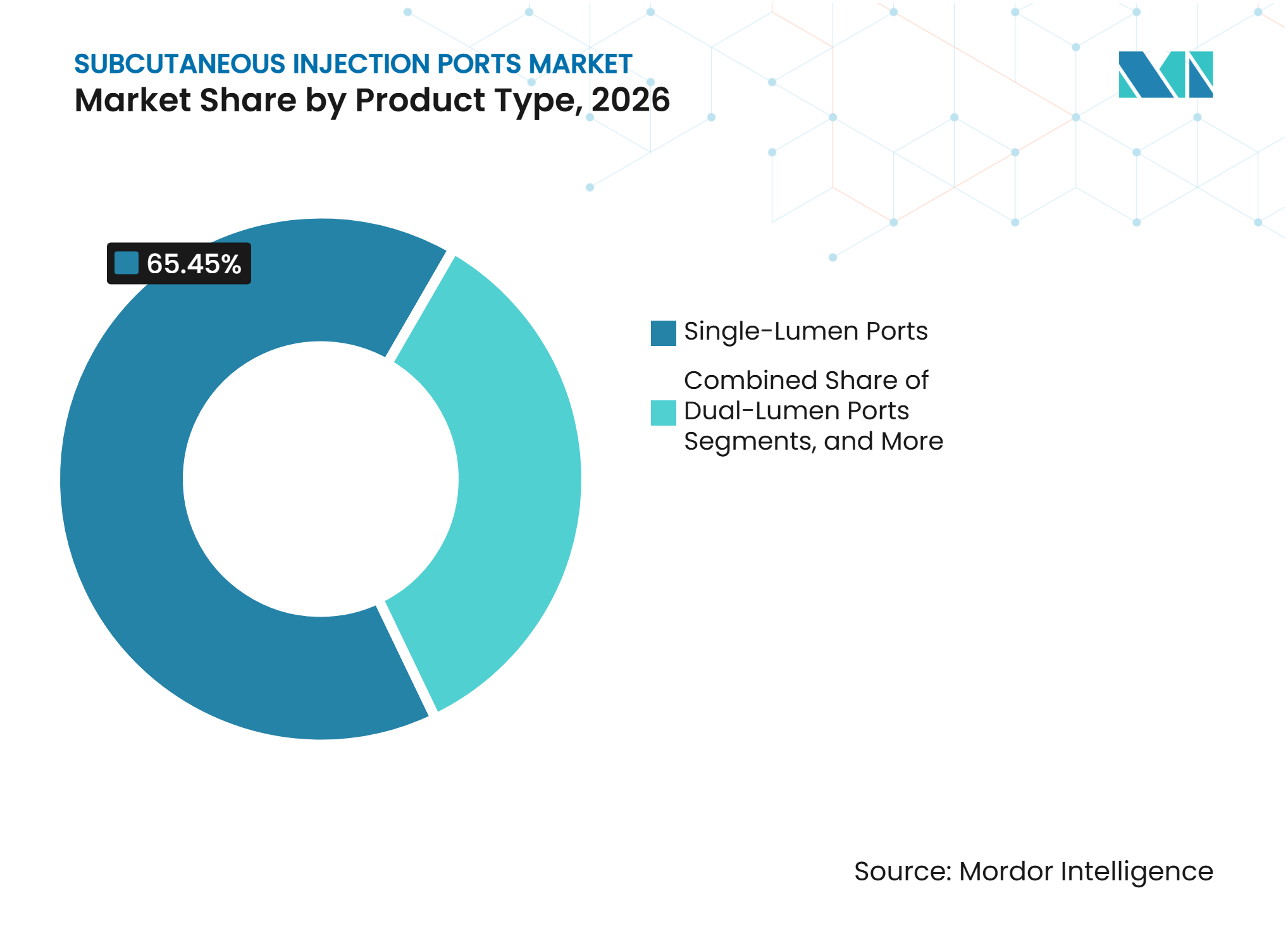
- By product type, single-lumen ports held 65.45% of the subcutaneous injection ports market share in 2026, while dual-lumen ports are forecast to grow at a 5.56% CAGR through 2032.
- By port configuration, standard ports accounted for 58.89% of the subcutaneous injection ports market size in 2026, while pediatric ports are projected to expand at a 6.78% CAGR through 2032.
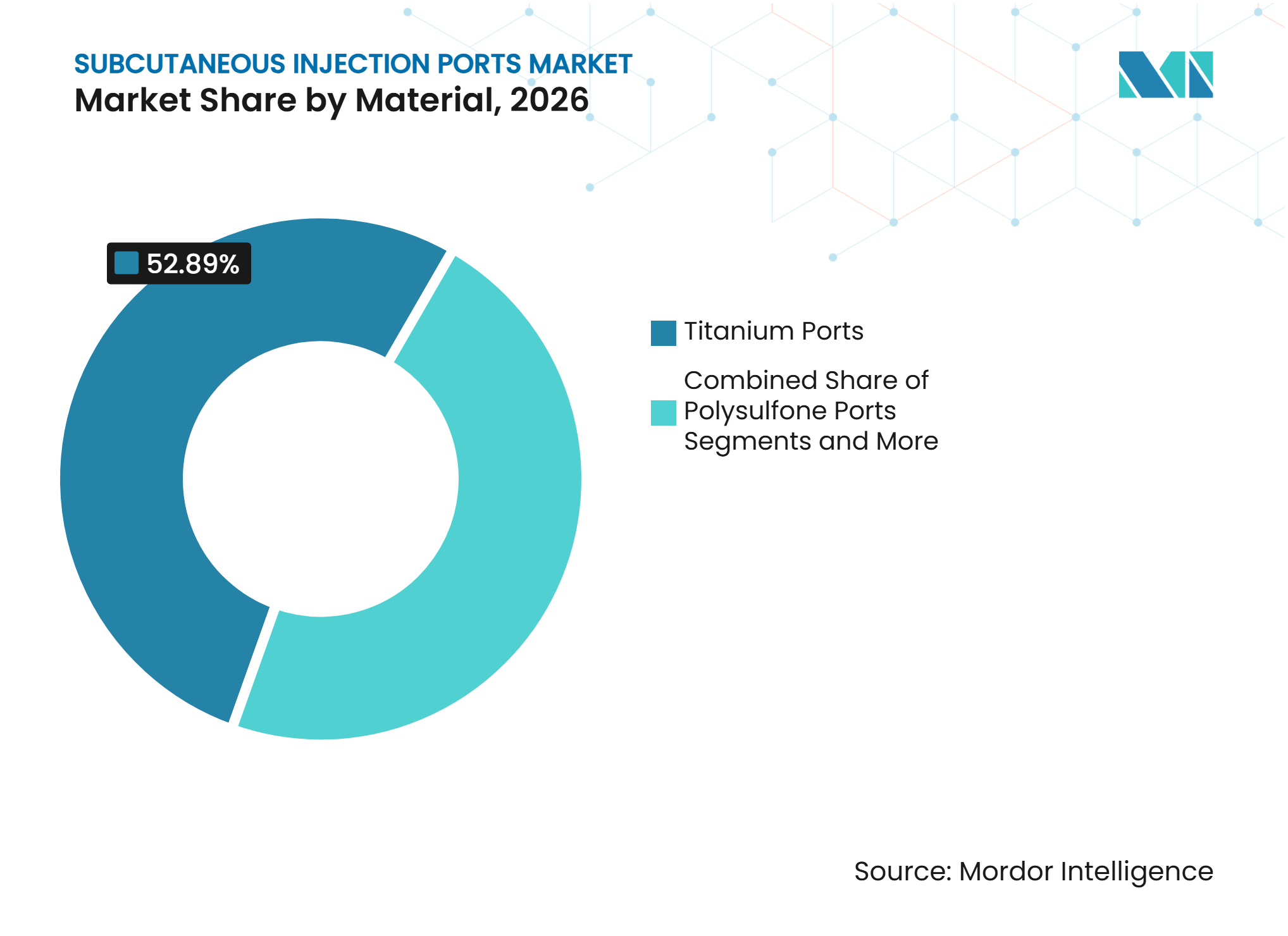
- By material, titanium ports held 52.89% market share in 2026, while hybrid titanium-plastic ports are forecast to advance at a 7.45% CAGR through 2032.
- By application, chemotherapy and oncology infusion accounted for 72.33% market share in 2026, while antibiotic and antiviral therapy is projected to grow at a 5.89% CAGR through 2032.
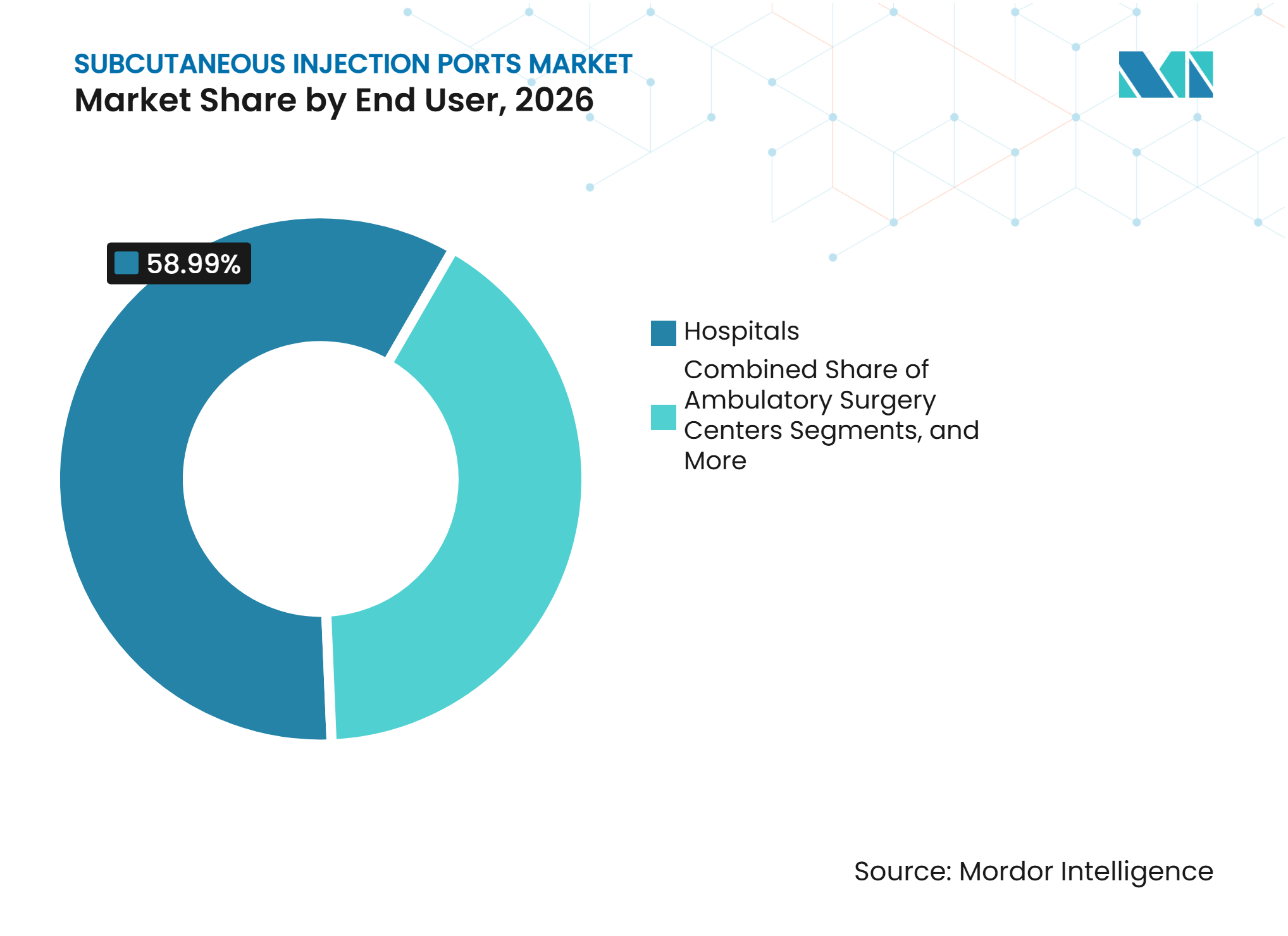
- By end user, hospitals held 58.99% market share in 2026, while specialty oncology clinics are forecast to expand at a 6.12% CAGR through 2032.
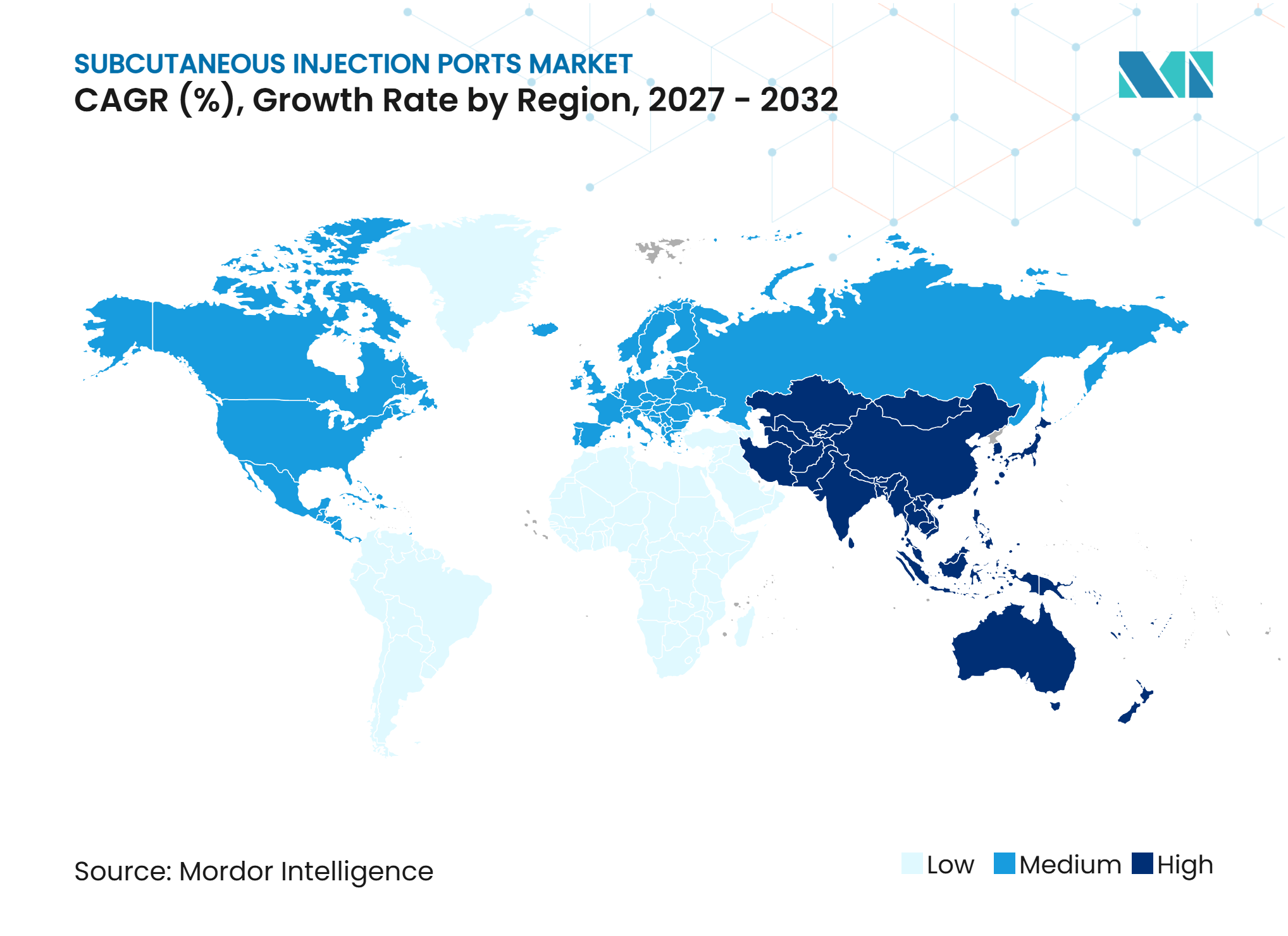
- By geography, North America held 41.03% market share in 2026, while Asia-Pacific is projected to grow at a 7.88% CAGR through 2032.
Note: Market numbers in this report are based on Mordor Intelligence's proprietary estimation framework, which combines nine months of actuals with Q4 projections for base year 2026.
Market Trends and Insights
Drivers Impact Analysis of Subcutaneous Injection Ports Market*
| Driver | (~) % Impact on CAGR Forecast | Geographic Relevance | Impact Timeline |
|---|---|---|---|
| Rising use of outpatient chemotherapy | +0.70% | Global, concentrated in North America and Europe | Short term (≤ 2 years) |
| Increasing demand for long-term vascular access | +0.65% | Global | Medium term (2-4 years) |
| Expansion of home-based parenteral nutrition | +0.50% | North America, Western Europe | Medium term (2-4 years) |
| Growth in pediatric and brachial port applications | +0.45% | Global, early gains in Asia-Pacific | Long term (≥ 4 years) |
| Increasing adoption of power-injectable ports | +0.55% | North America, Europe | Medium term (2-4 years) |
| Rising preference for MRI-compatible and metal-free ports | +0.40% | Global | Long term (≥ 4 years) |
| Source: Mordor Intelligence | |||
Rising Use of Outpatient Chemotherapy
Oncology care is shifting from inpatient wards to ambulatory and freestanding settings, expanding port placement opportunities across care locations. A 2025 Cureus series reported 5,890 consecutive port placements at an outpatient vascular access center without short-term malfunctions, supporting the safety and efficiency of outpatient placement. For chemotherapy regimens requiring more than 10 infusions, chemoports reduced total access-related costs by 32% and complication rates from 34.8% to 8.7%. On-schedule treatment adherence improved from 76.1% to 93.5%, supporting earlier access planning for patients receiving extended chemotherapy and immunotherapy regimens.[1]
Increasing Demand for Long-Term Vascular Access
Longer treatment pathways are increasing the need for reliable long-term venous access. A 2025 meta-analysis found that patients using peripherally inserted central catheters experienced more complications, higher thrombosis rates, and more unplanned removals than those using implantable port catheters. The growing cancer survivor population is also expanding the number of patients receiving maintenance therapy over several years. A 2025 European survey identified functional port catheters that had remained in place for 10 or more years among some home parenteral nutrition patients, while similar demand is emerging in autoimmune disease care and biologic infusion therapy.[2]
Expansion of Home-Based Parenteral Nutrition
Home parenteral nutrition is creating a stable use case for implantable ports as health systems seek to reduce hospital-based nutrition delivery. The National Home Infusion Association stated that home parenteral nutrition serves 32,000 Americans annually and reduces healthcare costs by 32% to 36% compared with hospital-based care. A 2025 study reported a central line-associated bloodstream infection rate of zero per 1,000 catheter days for implanted ports, compared with 1.91 for peripherally inserted central catheters.[3] The association also reported that home infusion pharmacies submitting home parenteral nutrition claims declined at an average annual rate of 15.6% over three years, which may increase demand for standardized devices with stronger complication profiles.
Growth in Pediatric and Brachial Port Applications
Pediatric oncology is supporting increased use of subcutaneous ports as childhood cancer treatment protocols become more intensive and longer in duration. A 2025 randomized study found that external jugular access for totally implantable ports in children reduced operative time from 63.6 minutes to 32.5 minutes compared with internal jugular access, without additional late complications. A 2025 systematic review reported a better adverse-event profile for totally implantable venous access devices than tunneled central venous catheters in pediatric oncology. A separate 2025 study found that ports used for blood sampling in pediatric acute lymphoblastic leukemia produced methotrexate concentrations and blood indicators equivalent to peripheral venipuncture, while brachial and peripheral configurations provide alternatives for adolescents and patients who have received thoracic radiation.
Restraints Impact Analysis of Subcutaneous Injection Ports Market*
| Restraint | (~) % Impact on CAGR Forecast | Geographic Relevance | Impact Timeline |
|---|---|---|---|
| Risk of port-related infection and thrombosis | -0.60% | Global | Short term (≤ 2 years) |
| Invasive nature of port implantation and removal | -0.55% | Global, heightened in low- and middle-income countries | Medium term (2-4 years) |
| Manufacturing and quality-control risks | -0.45% | Global | Short term (≤ 2 years) |
| Reimbursement and hospital budget constraints | -0.50% | North America, Europe | Long term (≥ 4 years) |
| Source: Mordor Intelligence | |||
Risk of Port-Related Infection and Thrombosis
Infection and thrombosis remain significant clinical barriers, particularly for immunocompromised oncology patients. Bloodstream infections may require catheter removal during active treatment, disrupting established care plans. A 2025 meta-analysis comparing implantable ports with peripherally inserted central catheters confirms that device selection directly influences complication patterns. Clinicians may apply stricter implantation criteria for patients with bacteremia, low platelet counts, or other infection-related risks, limiting port adoption despite the need for repeated infusion access. Infection prevention and monitoring therefore remain critical to the subcutaneous injection ports market.
Invasive Nature of Port Implantation and Removal
Port implantation and removal require surgical or fluoroscopy-guided procedures, creating cost and access barriers compared with simpler venous access options. These barriers are more pronounced in lower-income and rural care settings with limited availability of trained operators and interventional radiology services. However, ports can provide long-term value for treatments involving multiple cycles by reducing complication and access-related costs. A 2025 study documents extended port dwell times in home parenteral nutrition patients and highlights that catheter adherence and subcutaneous scarring can complicate removal after prolonged use, driving demand for flexible, reduced-footprint designs.
*Our forecasts treat driver/restraint impacts as directional, not additive. The impact forecasts reflect baseline growth, mix effects, and variable interactions.
Subcutaneous Injection Ports Market Segment Analysis
By Product Type:
Single-Lumen Ports Remain the Core ConfigurationSingle-lumen ports held 65.45% of global segment revenue in 2026. They support chemotherapy, antibiotic therapy, and parenteral nutrition protocols that do not require simultaneous delivery of multiple therapies. Their widespread use reflects established training practices across oncology and infusion service lines, enabling health systems to standardize procurement for routine patient needs. A 2025 outpatient placement series included 3,712 single-lumen power ports and 341 dual-lumen ports, confirming their dominant clinical use.
Dual-lumen ports are forecast to expand at a 5.56% CAGR from 2027 to 2032, the fastest rate among product types. They support complex regimens requiring concurrent delivery of chemotherapy, antiemetics, hydration fluids, or blood products. Low-profile and modified-reservoir devices serve pediatric and low-body-weight patients requiring smaller subcutaneous hardware. Product selection depends on therapy volume, concurrent administration requirements, and treatment-setting needs.



By Port Configuration:
Standard Ports Lead While Pediatric Products Grow FasterStandard ports accounted for 58.89% of the subcutaneous injection ports market size in 2026. They are widely used for adult chemotherapy, parenteral nutrition, and antibiotic therapy, particularly in chest-placement procedures. Low-profile ports support patients seeking less visible hardware or greater comfort during repeated needling, including those receiving breast cancer treatment. Brachial and peripheral ports offer alternatives for patients with unsuitable chest-wall anatomy or prior thoracic radiation.
Pediatric ports are projected to grow at a 6.78% CAGR through 2032. A 2025 external jugular study showed shorter operative time without increased late complications, supporting improved pediatric placement practices. Smaller reservoir designs and ultrasound-guided placement support pediatric and geriatric patients with limited subcutaneous tissue depth. Reservoir size, placement technique, and reduced peripheral sticks remain key considerations for repeated pediatric treatment visits.
By Material:
Titanium Holds the Lead as Hybrid Designs Gain InterestTitanium ports held a 52.89% market share in 2026 due to their biocompatibility, corrosion resistance, and imaging compatibility. These characteristics are important for oncology patients undergoing repeated CT and MRI examinations. Polysulfone ports provide a lower-cost option for providers that do not require power injection of contrast media. Polyacetal and other engineering-plastic ports primarily serve cost-sensitive procurement settings outside North America and Western Europe.
Hybrid titanium-plastic ports are forecast to grow at a 7.45% CAGR through 2032. These designs combine lightweight plastic components with titanium in critical areas, including the reservoir and needle septum. BD's PORT-A-CATH II uses polysulfone and titanium construction, is MRI-safe, and is designed to reduce implant weight. MRI-conditional performance at 1.5-Tesla and 3-Tesla settings, along with ISO 13485 quality-management requirements, continues to support demand for titanium and hybrid designs.

By Application:
Oncology Infusion Is the Main Use CaseChemotherapy and oncology infusion accounted for a 72.33% market share in 2026. The segment reflects the established clinical need for port placement among patients requiring more than 10 infusions. Ports also support immunotherapy and targeted therapy regimens administered with or alongside chemotherapy. A 2025 study found that chemoports reduced access-related costs by 32% and complications from 34.8% to 8.7%, while patient comfort scores improved from 5.2 to 8.7 out of 10.
Antibiotic and antiviral therapy is expected to grow at a 5.89% CAGR through 2032, supported by the expanding use of outpatient parenteral antibiotic therapy. Osteomyelitis, endocarditis, and resistant bacterial infections often require prolonged intravenous treatment. Parenteral nutrition is the second-largest application, and a 2025 home parenteral nutrition study reported a zero central line-associated bloodstream infection rate for implanted ports. Blood transfusion, blood sampling, and pain management create additional demand in palliative care and hemato-oncology settings.
By End User:
Hospitals Retain the Largest RoleHospitals accounted for a 58.99% market share in 2026 and remain the primary setting for port implantation and chemotherapy administration. Their purchasing scale and established manufacturer relationships support demand for broad product portfolios and standardized service arrangements. Hospitals manage complex oncology, nutrition, and infectious disease cases requiring coordinated specialist care. This environment favors suppliers offering power-injectable, MRI-conditional, valved, and multi-lumen port options.
Specialty oncology clinics are forecast to expand at a 6.12% CAGR through 2032, driven by closer integration between port placement and treatment scheduling. Ambulatory surgery centers are also undertaking more procedures where reimbursement and regulatory conditions support lower-cost outpatient care. A 2025 series of 5,890 placements without short-term malfunctions demonstrated the clinical viability of freestanding outpatient vascular access centers. Pediatric and neonatal hospitals remain specialized users requiring miniaturized products and trained placement teams.
Geography Analysis
North America
North America held 41.03% of the subcutaneous injection ports market share in 2026, supported by established oncology infrastructure and reimbursement coverage through Medicare and commercial payers. The United States had 18.6 million cancer survivors in January 2025, supporting demand for repeated infusion access. The shift toward ambulatory care also increases port placement volumes outside inpatient settings. Portal Access Inc. received FDA 510(k) clearance in June 2026 for the FLEXI-PORT family, a flexible, power-injectable implantable port available in 5Fr and 6Fr configurations for chest and arm placement. Canada maintains stable demand through publicly funded cancer care, while Mexico is expanding outpatient chemotherapy access. Provider familiarity with long-term oncology access pathways supports demand for reliable, imaging-compatible, flexible, and power-injectable devices.
Asia-Pacific
Asia-Pacific is projected to grow at a CAGR of 7.88% from 2027 to 2032, driven by rising cancer incidence, expanding oncology infrastructure, and improving reimbursement frameworks. Japan has more than 90% domestic production capacity for ports, supported by Terumo Corporation and Nipro Corporation. China is expanding oncology clinical trial activity, while India is increasing hospital oncology capacity, creating greater scope for routine port use. South Korea and Australia generate premium demand for MRI-conditional and power-injectable configurations. Southeast Asian countries remain more than 70% import-dependent for ports, presenting long-term opportunities as procurement capacity develops. Reimbursement, clinical training, domestic supply, and local imaging and infusion capabilities vary significantly across the region, requiring country-specific commercial strategies.
Europe and Emerging Regions
Europe remains a stable demand center, led by Germany, the United Kingdom, France, Italy, and Spain. A 2025 Spanish study found that medical oncologists placing central venous catheters in non-surgical outpatient settings achieved comparable safety while reducing per-device costs by EUR 994 (USD 1,077). European device-quality frameworks, including ISO 13485, influence product selection and supplier qualification. GCC countries are investing in oncology centers and incorporating implantable access into multi-cycle chemotherapy pathways. South Africa's private sector has a more developed adoption profile than many African markets, while Brazil and Argentina are expanding cancer care capacity. Across these markets, trained operator availability, facility capacity, local training, and follow-up infrastructure remain critical to subcutaneous injection ports market adoption.
Competitive Landscape
Market Concentration
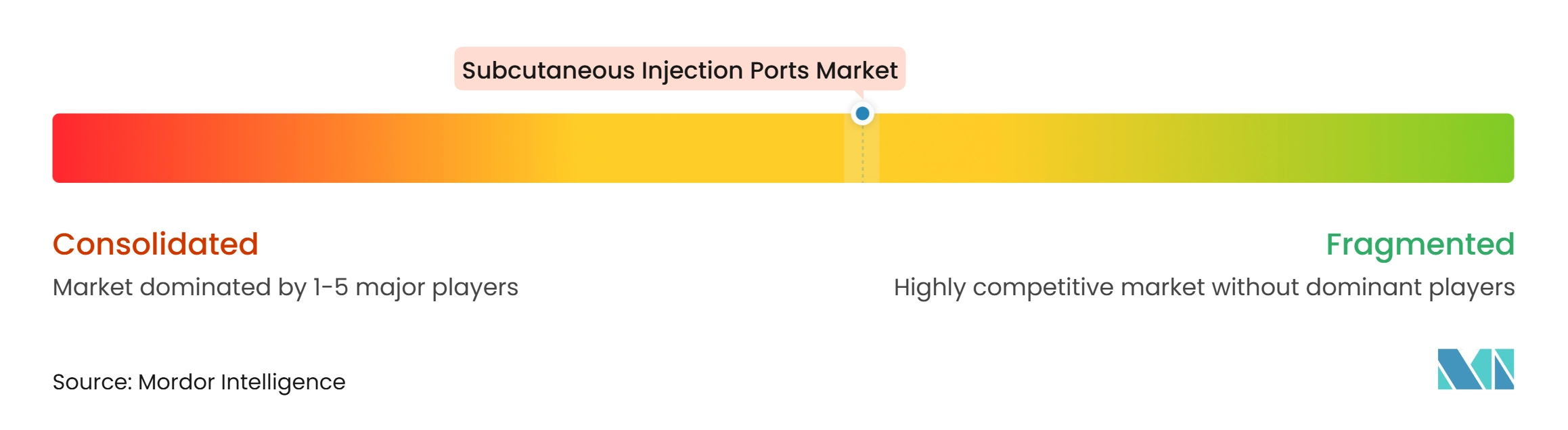
The subcutaneous injection ports market has a moderately consolidated top tier led by Becton Dickinson, ICU Medical, and AngioDynamics. B. Braun, Merit Medical, Vygon, Teleflex, Terumo, and Nipro maintain established positions in regional markets and specialized configurations. Becton Dickinson competes through its PowerPort product family, which includes power-injectable, MRI-conditional, valved, and dual-lumen configurations. Its portfolio supports varied clinical requirements, placement sites, and treatment needs within a single supplier relationship.
ICU Medical competes through the PORT-A-CATH brand and hybrid polysulfone and titanium construction, combining lighter materials with established durability and imaging compatibility. The FDA classified the recall of Smiths Medical's ProPort Plastic Venous Access Systems as Class I in March 2025 due to a manufacturing process-control issue that could cause port-housing separation. This recall highlights the importance of quality controls, documented manufacturing systems, FDA regulations, and ISO 13485 requirements in supplier selection. Vygon, Merit Medical, and Terumo target regional markets and niche applications, including pediatric ports, low-profile devices, and arm-placement configurations.
Portal Access Inc. gained FDA clearance for FLEXI-PORT in June 2026, positioning its flexible power-injectable design for chest and arm placement in adult and pediatric patients. The company also closed a USD 7 million Series A financing round in May 2025 to support its FDA submission and limited US launch. Future differentiation may focus on reduced-footprint designs, RFID-enabled identification, and septum materials designed to reduce infection risk. Product development must continue to meet FDA 510(k) requirements and ISO 13485 quality-management expectations.
Subcutaneous Injection Ports Industry Leaders
-
Becton, Dickinson and Company
-
B. Braun SE
-
Baxter International Inc.
-
ICU Medical Inc.
-
Terumo Corporation
- *Disclaimer: Major Players sorted in no particular order
Subcutaneous Injection Ports Market Companies Covered in this Report
- AngioDynamics
- B. Braun
- Baxter
- Beckton Dickinson
- Boston Scientific
- Cook Group
- Districlass Medical
- Gamamed Vascular Systems Inc.
- ICU Medical
- Medtronic
- Merit Medical Systems
- Nipro
- Norfolk Medical ProductsInc.
- Smiths Medical ASD Inc.
- Teleflex
- Terumo
- Vygon
Recent Industry Developments in Subcutaneous Injection Ports Market
- June 2026: Portal Access, Inc. received FDA 510(k) clearance for its FLEXI-PORT implantable vascular access ports, available in 5 Fr and 6 Fr configurations for chest and arm placement in adult and pediatric patients. The company supported U.S. commercialization through clinician training and healthcare-system partnerships.
- May 2025: Portal Access, Inc. closed a USD 7 million Series A financing round to support its FDA 510(k) submission and limited U.S. launch of the FLEXI-PORT SLF-TANL subcutaneous port. Physician investors, including oncologists and interventional radiologists, accounted for more than 80% of the financing round.
Global Subcutaneous Injection Ports Market Report Scope
As per the scope of the report, a subcutaneous injection port (often called an implantable port, Port-a-Cath, or subcutaneous port) is a medical device surgically placed completely under the skin to provide long-term access to a large vein or tissue.
The subcutaneous injection ports market is segmented by product type, port configuration, material, application, end user, and geography. By product type, the market includes single-lumen ports, dual-lumen ports, and other product types. By port configuration, the market is segmented into standard ports, low-profile ports, pediatric ports, brachial and peripheral ports, and other port configurations. By material, the market is categorized into titanium ports, polysulfone ports, polyacetal and other engineering plastic ports, hybrid titanium-plastic ports, and other materials. By application, the market is segmented into chemotherapy and oncology infusions, parenteral nutrition, antibiotic and antiviral therapy, blood transfusions and blood sampling, pain management, and other applications. By end user, the market is segmented into hospitals, ambulatory surgery centers, specialty oncology clinics, pediatric and neonatal hospitals, home healthcare providers, and other end users. By geography, the market is analyzed across North America, Europe, Asia-Pacific, the Middle East and Africa, and South America. The report also covers the estimated market sizes and trends for 17 countries across major regions globally. The report offers market sizes and forecasts in terms of value (USD) for the above segments.
Segmentation Overview
| Single-Lumen Ports |
| Dual-Lumen Ports |
| Other Product Type |
| Standard Ports |
| Low-Profile Ports |
| Pediatric Ports |
| Brachial and Peripheral Ports |
| Other Port Configuration |
| Titanium Ports |
| Polysulfone Ports |
| Polyacetal and Other Engineering-Plastic Ports |
| Hybrid Titanium-Plastic Ports |
| Others |
| Chemotherapy and Oncology Infusion |
| Parenteral Nutrition |
| Antibiotic and Antiviral Therapy |
| Blood Transfusion and Blood Sampling |
| Pain Management |
| Other Application |
| Hospitals |
| Ambulatory Surgery Centers |
| Specialty Oncology Clinics |
| Pediatric and Neonatal Hospitals |
| Home Healthcare Providers |
| Others |
| North America | United States |
| Canada | |
| Mexico | |
| Europe | Germany |
| United Kingdom | |
| France | |
| Italy | |
| Spain | |
| Rest of Europe | |
| Asia-Pacific | China |
| India | |
| Japan | |
| Australia | |
| South Korea | |
| Rest of Asia-Pacific | |
| Middle East and Africa | GCC |
| South Africa | |
| Rest of Middle East and Africa | |
| South America | Brazil |
| Argentina | |
| Rest of South America |
| By Product Type | Single-Lumen Ports | |
| Dual-Lumen Ports | ||
| Other Product Type | ||
| By Port Configuration | Standard Ports | |
| Low-Profile Ports | ||
| Pediatric Ports | ||
| Brachial and Peripheral Ports | ||
| Other Port Configuration | ||
| By Material | Titanium Ports | |
| Polysulfone Ports | ||
| Polyacetal and Other Engineering-Plastic Ports | ||
| Hybrid Titanium-Plastic Ports | ||
| Others | ||
| By Application | Chemotherapy and Oncology Infusion | |
| Parenteral Nutrition | ||
| Antibiotic and Antiviral Therapy | ||
| Blood Transfusion and Blood Sampling | ||
| Pain Management | ||
| Other Application | ||
| By End User | Hospitals | |
| Ambulatory Surgery Centers | ||
| Specialty Oncology Clinics | ||
| Pediatric and Neonatal Hospitals | ||
| Home Healthcare Providers | ||
| Others | ||
| By Geography | North America | United States |
| Canada | ||
| Mexico | ||
| Europe | Germany | |
| United Kingdom | ||
| France | ||
| Italy | ||
| Spain | ||
| Rest of Europe | ||
| Asia-Pacific | China | |
| India | ||
| Japan | ||
| Australia | ||
| South Korea | ||
| Rest of Asia-Pacific | ||
| Middle East and Africa | GCC | |
| South Africa | ||
| Rest of Middle East and Africa | ||
| South America | Brazil | |
| Argentina | ||
| Rest of South America | ||
Key Questions Answered in the Report
What is the forecast value of the subcutaneous injection ports market?
The subcutaneous injection ports market is projected to reach USD 716.41 million by 2032, from USD 604.65 million in 2027, at a 3.45% CAGR.
Which product type leads demand for subcutaneous injection ports?
Single-lumen ports lead with 65.45% share in 2026 because they meet the needs of most chemotherapy, antibiotic, and parenteral nutrition protocols.
Why are ports important in chemotherapy care?
For treatment courses with more than 10 infusions, a 2025 study found that chemoports lowered total access-related costs by 32% and complications from 34.8% to 8.7%.
Which region is growing fastest for subcutaneous injection ports?
Asia-Pacific is forecast to grow at a 7.88% CAGR through 2032, supported by expanding oncology capacity and higher cancer care demand.
What is the fastest-growing port material?
Hybrid titanium-plastic ports are forecast to grow at a 7.45% CAGR through 2032 because they combine lower weight with durability and imaging compatibility.
What factors limit wider port adoption?
Infection and thrombosis risks, the need for an invasive placement and removal procedure, manufacturing quality concerns, and budget constraints can limit adoption.