
Spain Pet Veterinary Diets Market Size and Share
Market Overview
| Study Period | 2021 - 2031 |
|---|---|
| Forecast Data Period | 2026 - 2031 |
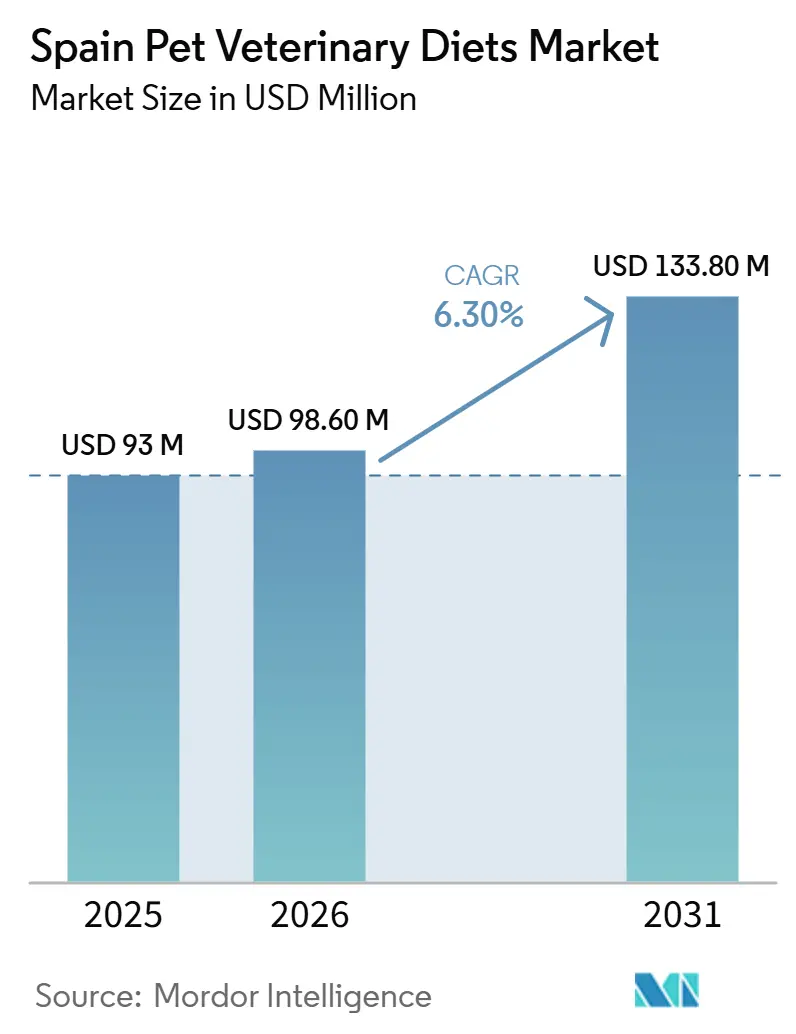
| Base Year Market Size (2025) | USD 93 Million |
| Market Size (2026) | USD 98.60 Million |
| Market Size (2031) | USD 133.80 Million |
| Growth Rate (2026 - 2031) | 6.30 % |
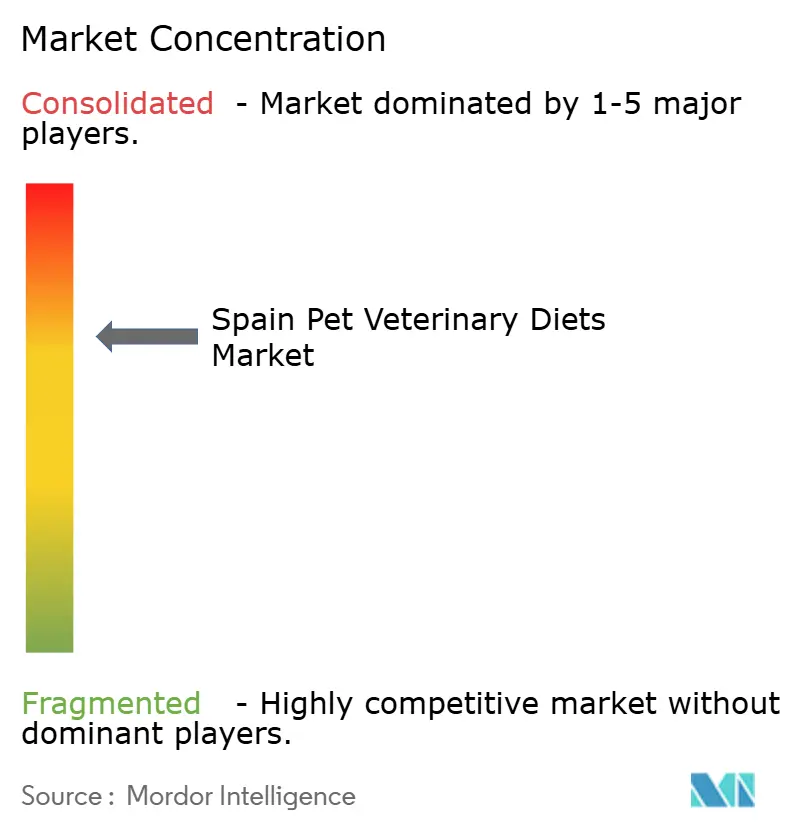
| Market Concentration | Medium |
Major Players *Disclaimer: Major Players sorted in no particular order Image © Mordor Intelligence. Reuse requires attribution under CC BY 4.0. | |
Spain Pet Veterinary Diets Market Analysis by Mordor Intelligence
The Spain pet veterinary diets market size was valued at USD 93.0 million in 2025 and estimated to grow from USD 98.6 million in 2026 to reach USD 133.8 million by 2031, at a CAGR of 6.3% during the forecast period 2026-2031. The Spain pet veterinary diets market is expanding because clinical nutrition is moving into routine veterinary care instead of remaining a niche purchase for a limited group of pet owners. Spain registered 15.17 million companion animals in 2025, with dogs accounting for 50%, cats for 37%, and other species for 13%, which gives the Spain pet veterinary diets market a broad and growing patient base for chronic nutritional management[1]Source: Ministerio de Derechos Sociales, Consumo y Agenda 2030, “Estadística Nacional de Protección Animal: Adelanto de Datos,” Government of Spain, dsca.gob.es. The Asociacion Nacional de Fabricantes de Alimentos para Animales de Compania (ANFAAC) reported that Spain’s total pet food sector generated EUR 2,178 million (USD 2,352 million) in 2025, while cat food revenue rose 12.2%, showing that owner spending is shifting toward premium and specialist products[2]Source: Asociacion Nacional de Fabricantes de Alimentos para Animales de Compania, “Las Ventas de la Industria Espanola de Alimentacion de Animales de Compania Crecieron un 6% en 2025,” ANFAAC, anfaac.org. The Spain pet veterinary diets market is also supported by European Union (EU) compliance rules under Regulation (EC) No. 767/2009 and by the Federation of European Pet Food Industry (FEDIAF) 2025 nutritional guidelines[3]Source: Federation of European Pet Food Industry, “FEDIAF Publishes 2025 Nutritional Guidelines for Cats and Dogs,” FEDIAF, europeanpetfood.org, which raise formulation and labeling standards for dietetic feeds. Competition in the Spain pet veterinary diets market is therefore centering on veterinary relationships, condition-specific innovation, and digital replenishment models that keep owners active over long treatment periods.
Key Report Takeaways
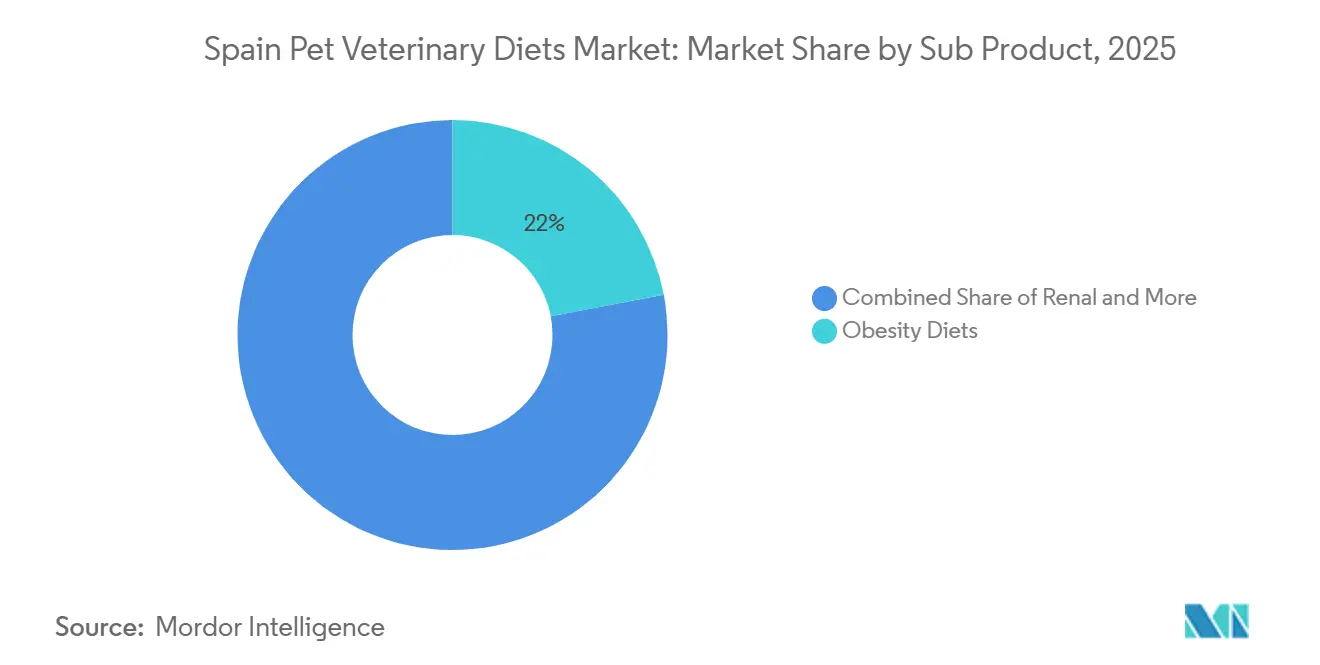
- By sub product, obesity diets held 22.0% of the Spain pet veterinary diets market share in 2025 and are projected to grow at the fastest 7.4% CAGR during 2026-2031.
- By pets, dogs led with 64.0% share in 2025, while cats are projected to expand at the fastest 6.8% CAGR during 2026-2031.
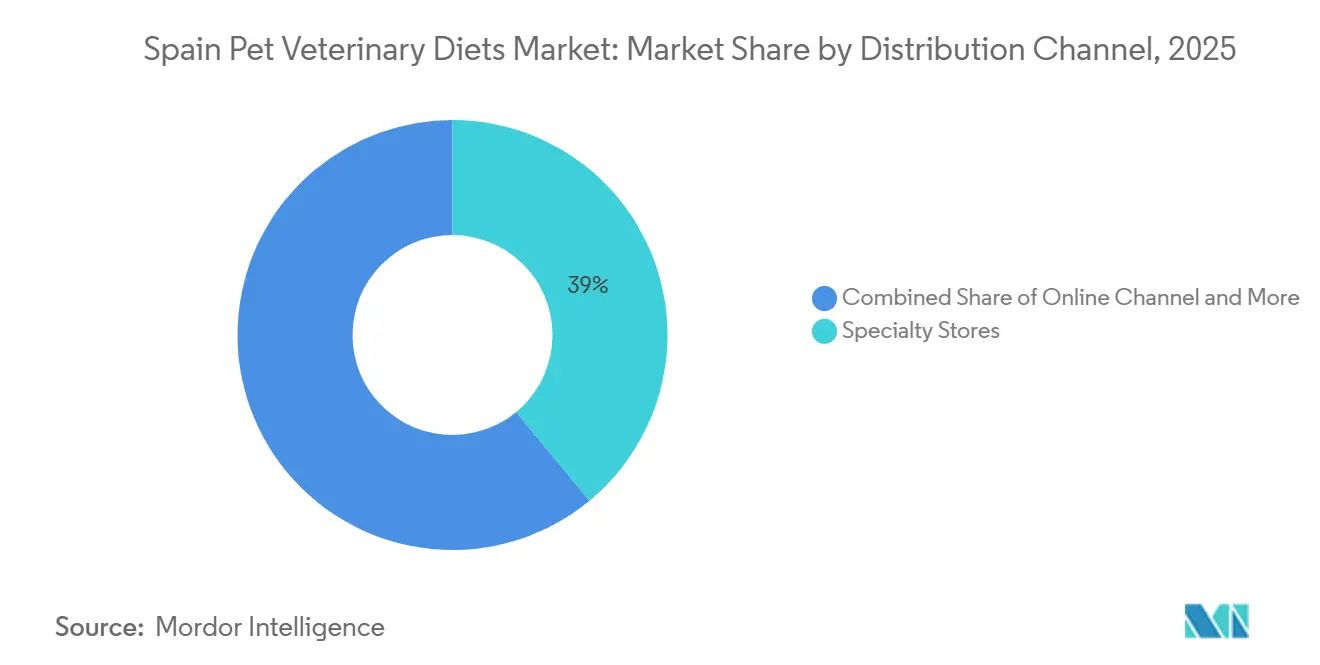
- By distribution channel, specialty stores accounted for 39.0% share of the Spain pet veterinary diets market size in 2025, while the online channel is forecast to grow at the fastest 8.1% CAGR during 2026-2031.
Note: Market size and forecast figures in this report are generated using Mordor Intelligence’s proprietary estimation framework, updated with the latest available data and insights as of January 2026.
Spain Pet Veterinary Diets Market Trends and Insights
Drivers Impact Analysis*
| Driver | (~) % Impact on CAGR Forecast | Geographic Relevance | Impact Timeline |
|---|---|---|---|
| Rising veterinary diagnosis of chronic pet conditions in Spain | +1.8% | National, with higher diagnosis rates in Andalusia, Madrid, and Catalonia | Medium term (2-4 years) |
| Veterinarian recommendation strongly shapes therapeutic diet purchases | +2.0% | National | Short term (≤ 2 years) |
| Premiumization of pet care supports willingness to pay for veterinary diets | +1.2% | Urban centers including Madrid, Barcelona, and Bilbao, with national spillover | Medium term (2-4 years) |
| Growth of online replenishment for specialty pet diets | +0.9% | National, accelerating in major urban areas | Short term (≤ 2 years) |
| Higher demand for condition-specific diets among aging pets | +1.5% | National | Long term (≥ 4 years) |
| Urban small-breed pet ownership expands the addressable diet base | +0.7% | Urban centers including Madrid, Barcelona, Valencia, and Seville | Medium term (2-4 years) |
| Source: Mordor Intelligence | |||
Rising Veterinary Diagnosis of Chronic Pet Conditions in Spain
The Spain pet veterinary diets market benefits directly from Spain’s network of 7,032 veterinary clinics, which gives the country one of the densest small animal clinical systems in southern Europe. A wider clinic base improves the detection of chronic kidney disease, diabetes, obesity, urinary disorders, and digestive disorders at earlier stages of care. A peer-reviewed study published in 2025 on cancer cases at a Spanish veterinary teaching hospital reported an annual diagnosis rate of 530 per 100,000 animals, demonstrating that clinical monitoring is producing actionable findings at scale. Once a chronic condition is identified, therapeutic nutrition usually becomes part of a repeat treatment plan rather than a one-time purchase. That pattern supports stable reorder demand across long treatment periods. As Spain’s veterinary clinic sector continues to grow above gross domestic product growth, the recommendation funnel for the Spain pet veterinary diets market becomes broader and more consistent.
Veterinarian Recommendation Strongly Shapes Therapeutic Diet Purchases
The Spain pet veterinary diets market is still defined by the veterinarian’s role as the main purchase trigger for therapeutic nutrition. Owners generally do not enter this category through impulse buying, as most products are introduced following a clinical discussion of a diagnosed condition. Brands with stronger veterinary education programs, case support, and prescription follow-up tools therefore capture more reliable product movement. Hill’s Pet Nutrition reinforced this channel in 2026 through a responsible pet ownership and animal welfare initiative with the Colegio de Veterinarios de Malaga, which strengthened its ties with practicing veterinarians. Royal Canin supports the same model through its Clinical Alliance selective distribution approach, which protects clinical positioning and limits channel dilution. This structure gives the Spain pet veterinary diets market a sticky demand profile, because a recommendation made inside the clinic often leads to repeat sales over several months.
Higher Demand for Condition-Specific Diets Among Aging Pets
AniCura Group reported in 2024 that 31% of dogs and 33% of cats in Europe were already classified as senior animals. The same source noted that preventive laboratory testing in apparently healthy senior pets revealed underlying health conditions in 25% of dogs and 33% of cats. Spain’s veterinary sector is seeing the same pattern, with senior pets representing a growing share of patient visits and generating higher annual care spending than adult animals. That age mix increases the need for renal diets, diabetes diets, joint-supportive formulas, and digestive management products. The Spain pet veterinary diets market therefore benefits from a structural demand base that is linked to long-term disease management rather than short-cycle discretionary feeding.
Urban Small-Breed Pet Ownership Expands the Addressable Diet Base
The market is being widened by urban pet ownership patterns, especially in cities where smaller dogs and indoor cats are more common. These animals often live in households with closer veterinary care, more regular preventive care, and greater exposure to premium feeding practices. Urban living also underscores the importance of weight control, digestive sensitivity management, and urinary support, as indoor lifestyles can amplify certain chronic nutritional issues. Owners in Madrid, Barcelona, Valencia, and Seville are also more likely to use specialty stores and online channels that carry therapeutic lines. That improves access to compliant dietetic products after the first clinical recommendation. Over time, this urban profile gives the Spain pet veterinary diets market a larger addressable customer base for long-duration nutritional care.
Restraints Impact Analysis*
| Restraint | (~) % Impact on CAGR Forecast | Geographic Relevance | Impact Timeline |
|---|---|---|---|
| High price premium versus standard pet food limits mass adoption | -0.80% | National, more pronounced in semi-urban and rural areas | Short term (≤ 2 years) |
| Prescription-dependent purchase path restricts impulse buying | -0.70% | National | Long term (≥ 4 years) |
| Low consumer awareness of therapeutic versus premium maintenance diets | -0.50% | National, higher in semi-urban and rural regions | Medium term (2-4 years) |
| Reliance on imported inputs exposes brands to cost volatility | -0.40% | National, most acute for brands with concentrated non-European Union supply chains | Short term (≤ 2 years) |
| Source: Mordor Intelligence | |||
High Price Premium Versus Standard Pet Food Limits Mass Adoption
The market still faces a clear price barrier when owners compare prescription diets with standard premium food sold through general retail. Therapeutic formulas carry higher costs because they depend on tighter formulation standards, condition-specific claims, and more specialized channel support. This gap is more difficult for households in semi-urban and rural areas, where lower-cost substitutes are easier to find and specialist retail presence is weaker. The result is not only slower first-time adoption, but also weaker adherence over the full treatment period. Owners may begin a renal, urinary, or digestive protocol after a clinic visit and then stop when repeat purchases become too expensive. The Spain pet veterinary diets market will therefore continue to reward brands that offer smaller packs, clinic-linked subscriptions, or better value presentation without weakening clinical positioning.
Reliance on Imported Inputs Exposes Brands to Cost Volatility
The Spain pet veterinary diets market depends on specialized ingredients, quality-controlled supply systems, and packaging formats that are not always sourced locally. That creates cost pressure when imported materials fluctuate in price or when supply chains tighten. Larger multinational groups can absorb this volatility more easily because they operate across broader production networks and often hold stronger procurement leverage. Smaller and mid-tier brands face greater risk, especially when competing in narrow clinical categories with less scale. Investment plans across European pet food production also show that manufacturers are trying to modernize capacity and improve supply resilience. Even so, the Spain pet veterinary diets market remains exposed to input volatility that can pressure pricing, margins, and final affordability for pet owners.
*Our forecasts treat driver/restraint impacts as directional, not additive. The impact forecasts reflect baseline growth, mix effects, and variable interactions.
Segment Analysis
By Sub Product: Obesity and metabolic conditions drive the highest category value
Obesity diets were the largest sub-product in the Spain pet veterinary diets market size, with 22.0% share in 2025, and they are also forecast to grow at the fastest 7.4% CAGR during 2026-2031. This combination of leadership and momentum reflects the broad clinical relevance of weight management across both dogs and cats. A 2025 peer-reviewed cross-country study covering 10 European markets found that owner-reported overweight and obesity rates in dogs ranged from 6.0% to 31.3% across countries. The same draft also cited a Spanish academic study estimating that up to 40% of dogs in some regions had body condition scores indicating overweight or obesity. That disease burden is especially important because obesity often overlaps with diabetes, mobility issues, and digestive pressure, which expands the need for specialist nutrition. Royal Canin’s March 2026 launch of Glycobalance for dogs and Glycoadvanced for cats at Iberzoo Propet 2026 showed how product design in the Spain pet veterinary diets market is shifting toward co-morbidity management rather than single-condition feeding.
Renal diets remain one of the most clinically important categories in the Spain pet veterinary diets market because chronic kidney disease rises sharply in older cats and requires sustained nutritional control. Peer-reviewed literature continues to support phosphorus-restricted renal formulas as a tool for slowing disease progression, which keeps veterinary recommendation levels high in this segment. Digestive sensitivity and urinary tract disease diets also hold strong positions because their benefits are easier for owners to observe during treatment, especially when symptoms improve quickly. Oral care diets and derma diets occupy smaller but rising niches, supported by increasing attention to dermatology and dentistry within Spain’s clinic network. Other veterinary diets, including hepatic, cardiac, and developmental formulas, serve smaller patient pools but continue to gain structure from the FEDIAF 2025 nutrient guidance. Taken together, this broad sub product mix gives the Spain pet veterinary diets market multiple growth lanes beyond its long-established renal and digestive core.



By Pets: Cats gain ground despite dogs leading overall share
Dogs held the largest share of the Spain pet veterinary diets market share at 64.0% in 2025, supported by both scale and prescribing history. Spain’s national companion animal census for 2025 showed that dogs accounted for 50% of all registered companion animals, providing dog-focused therapeutic diets with a wider patient base from the outset. Dogs also have a longer history of nutritional management for joint health, obesity, digestive disorders, and metabolic conditions within routine clinical practice. That history supports broader product ranges, more established veterinary protocols, and stronger stock availability across clinics and specialty retail. Owners are therefore more likely to encounter dog-focused therapeutic lines across several condition categories in both physical and digital channels. The dog segment remains the anchor of the Spain pet veterinary diets market because volume, clinical familiarity, and channel availability continue to reinforce each other.
Cats are projected to grow at the fastest 6.8% CAGR during 2026-2031, which makes them the most dynamic pet segment in the Spain pet veterinary diets market. The Asociacion Nacional de Fabricantes de Alimentos para Animales de Compania (ANFAAC) reported that cat food revenue in Spain rose 12.2% in 2025, outpacing broader species categories and signaling stronger willingness to spend on feline nutrition. The same source noted 17.2% volume growth for cat food in specialized and online channels, which shows how quickly premium feline products are moving through the most relevant channels for therapeutic diets. Cats are also strongly linked to renal, urinary, and weight management needs, which increases the clinical relevance of specialist nutrition across their life cycle. This gives feline therapeutic products a favorable mix of premium positioning and chronic treatment demand. Other pets, including rabbits, birds, and small mammals, remain underpenetrated in the Spain pet veterinary diets market, but they still represent a longer-range opportunity as specialized care standards widen over time.
By Distribution Channel: Specialty stores hold the largest position as online formats reshape replenishment
Specialty stores held the largest distribution channel share in the Spain pet veterinary diets market at 39.0% in 2025. This position reflects the category’s need for explanation, trust, and repeat guidance at the point of sale. Therapeutic diets are easier to sell in environments where trained advisers or clinic staff can connect a product to a diagnosed condition and a recommended feeding duration. Veterinary practice retail areas and specialist pet stores, therefore, remain central to brand visibility and owner confidence. Affinity Petcare, S.A. supported this channel logic by expanding its Vets and Clinics digital knowledge and training platform across Spain and other southern European markets in 2025. The Spain pet veterinary diets market continues to rely on specialty-led execution because clinical nutrition still requires more education than mainstream premium food.
The online channel is forecast to grow at the fastest 8.1% CAGR during 2026-2031, which is changing the channel mix of the Spain pet veterinary diets market without fully displacing clinic and specialty sales. The Asociacion Nacional de Fabricantes de Alimentos para Animales de Compania (ANFAAC) reported that specialized and online channels together grew revenue by 4.9% in 2025, and cat food in these channels recorded particularly strong momentum. The online channel is well suited to therapeutic diets because feeding durations are predictable and repeat orders can be automated without weakening clinical oversight. Authorized digital channels also help owners maintain adherence after the initial recommendation, particularly when refill reminders are linked to a clinic or brand platform. Virbac’s wider European rollout of Veterinary HPM and its growing digital availability show how manufacturers are adapting to this need for convenient reordering. Supermarkets, hypermarkets, convenience stores, and other broad retail formats still play a smaller role in the Spain pet veterinary diets market because open-shelf retail is less aligned with prescription-style nutrition.
Geography Analysis
The market is supported by a large pet population. Andalusia had the largest regional concentration, with more than 3 million registered companion animals, making it a key demand center within Spain. Madrid, Barcelona, and Valencia are also significant markets, given their higher clinic density, specialist referrals, and diagnostic access. The Spain pet veterinary diets market benefits from both scale and a wide geographic spread of pet ownership.
This alignment makes it easier for manufacturers already operating in Germany, France, and the United Kingdom to enter Spain without major reformulation. This keeps the competitive field active and gives pet owners access to a broad range of condition-specific products. However, cost sensitivity in Spain remains more pronounced than in some northern European markets, meaning pricing strategy continues to influence adoption.
The Spain pet veterinary diets market is strongest in urban centers, where clinic recommendations, specialty retail, and digital fulfillment are closely linked. Rural and semi-urban areas face longer consultation paths and fewer specialist touchpoints, which slows conversion from diagnosis to repeat purchase. Online replenishment can narrow this gap, as therapeutic diets are well-suited to subscription ordering compared to many standard food categories. Geographic performance in the Spain pet veterinary diets market therefore depends less on national awareness and more on how effectively brands connect veterinary advice with accessible, authorized product availability across both metropolitan and provincial markets.
Competitive Landscape
The Spain pet veterinary diets market is moderately concentrated, with Mars, Incorporated through Royal Canin, Nestlé S.A. through Purina Pro Plan Veterinary Diets, and Colgate-Palmolive Company through Hill’s Pet Nutrition leading the premium prescription tier. These companies hold strong positions because they combine broad formulation portfolios with clinical trials, veterinary education, and selective channel control. Their scale also supports deeper production, stronger marketing continuity, and wider coverage across renal, urinary, digestive, obesity, and dermatology lines. This makes direct substitution by mainstream pet food brands difficult, even when those brands already compete in premium categories. Affinity Petcare S.A. and Virbac S.A. remain the strongest mid-tier challengers in Spain, while Dechra Pharmaceuticals PLC, Farmina Pet Foods Holding B.V., and VAFO Group a.s. provide additional specialist competition.
Affinity Petcare, S.A.’s expansion of its Vets and Clinics platform in 2025 showed that local clinical relationships remain a serious competitive tool, not a supporting activity. These moves matter because prescribing confidence often determines whether a therapeutic diet becomes a long-term solution or a short trial purchase. As a result, the Spain pet veterinary diets market rewards brands that can stay embedded in the daily workflow of veterinary professionals.
A clear white-space opportunity in the Spain pet veterinary diets market is telehealth-linked distribution that connects diagnosis, prescription guidance, and compliant reordering in one flow. Brands that reduce friction after the first consultation should capture better adherence and higher lifetime value from chronic cases. Product development is also moving toward co-morbidity management, where obesity, diabetes, renal stress, and digestive sensitivity are addressed in more integrated ways. The Spain pet veterinary diets market is likely to favor companies that combine scientific credibility, clinic access, and convenient replenishment without weakening the trust value of veterinary recommendation.
Spain Pet Veterinary Diets Industry Leaders
Mars, Incorporated
Nestlé S.A.
Colgate-Palmolive Company
Affinity Petcare, S.A.
Virbac S.A.
- *Disclaimer: Major Players sorted in no particular order

Recent Industry Developments
- March 2026: Mars, Incorporated's Royal Canin brand presented two new veterinary diets for diabetes management at Iberzoo Propet 2026 in Spain, Glycobalance for dogs, minimizing postprandial glycemia and supporting body weight control. Both products are distributed through the Royal Canin Clinical Alliance selective veterinary channel.
- September 2025: Mars, Incorporated announced a EUR 1,000 million (USD 1,080 million) European investment plan through end of 2026, targeting production modernization and supply chain decarbonization, with its Arevalo, Avila, Spain pet food plant, already expanded at a EUR 50 million (USD 54 million) investment to triple capacity to 70,000 metric tons per year, identified as a focal production hub for wet pet food including therapeutic formats.
- May 2025: Virbac S.A. began a phased European rollout of its revamped Veterinary HPM physiological nutrition range, featuring recyclable packaging, optimized formulas across physiological and dietary product lines, and new product variants designed to better meet evolving veterinarian and pet owner expectations. Spain was included in the initial European rollout phase.


Spain Pet Veterinary Diets Market Report Scope
Pet veterinary diets (also known as therapeutic or prescription diets) are specialized, scientifically formulated pet foods designed to treat, prevent, or manage specific medical conditions.
The Spain Pet Veterinary Diets Market Report is segmented by sub product (Diabetes, Renal, Urinary Tract Disease, Digestive Sensitivity, Oral Care Diets, Derma Diets, Obesity Diets, and Others), by pets (Cats, Dogs, and Other Pets), by distribution channel (Convenience Stores, Online Channel, Specialty Stores, Supermarkets/Hypermarkets, and others). The market forecasts are provided in terms of value in USD and volume in metric tons.
| Diabetes |
| Digestive Sensitivity |
| Oral Care Diets |
| Renal |
| Urinary Tract Disease |
| Obesity Diets |
| Derma Diets |
| Other Veterinary Diets |
| Cats |
| Dogs |
| Other Pets |
| Convenience Stores |
| Online Channel |
| Specialty Stores |
| Supermarkets/Hypermarkets |
| Other Channels |
| By Sub Product | Diabetes |
| Digestive Sensitivity | |
| Oral Care Diets | |
| Renal | |
| Urinary Tract Disease | |
| Obesity Diets | |
| Derma Diets | |
| Other Veterinary Diets | |
| By Pets | Cats |
| Dogs | |
| Other Pets | |
| By Distribution Channel | Convenience Stores |
| Online Channel | |
| Specialty Stores | |
| Supermarkets/Hypermarkets | |
| Other Channels |


Key Questions Answered in the Report
What is the 2026 size of Spain pet veterinary diets demand?
The category is estimated at USD 98.6 million in 2026.
Which sub product leads revenue and growth in Spain?
Obesity diets were the largest sub product with 22.0% share in 2025 and are also projected to grow at the fastest 7.4% CAGR during 2026-2031.
Which sales channel matters most for therapeutic diets in Spain?
Specialty stores led with 39.0% share in 2025, but the online channel is the fastest-growing route with an 8.1% CAGR during 2026-2031 because repeat purchases fit subscription and refill models.
What are the main forces pushing adoption in Spain?
Wider veterinary diagnosis, strong veterinarian recommendation, aging pets, premium pet care spending, and better online replenishment are the main forces supporting demand.
Page last updated on:


 Your data is secure and never sold or shared.


