
Market Overview
| Study Period | 2020 - 2031 |
|---|---|
| Forecast Data Period | 2026 - 2031 |
| Base Year Market Size (2025) | USD 1.59 Billion |
| Market Size (2026) | USD 1.7 Billion |
| Market Size (2031) | USD 2.45 Billion |
| Growth Rate (2026 - 2031) | 7.50 % |
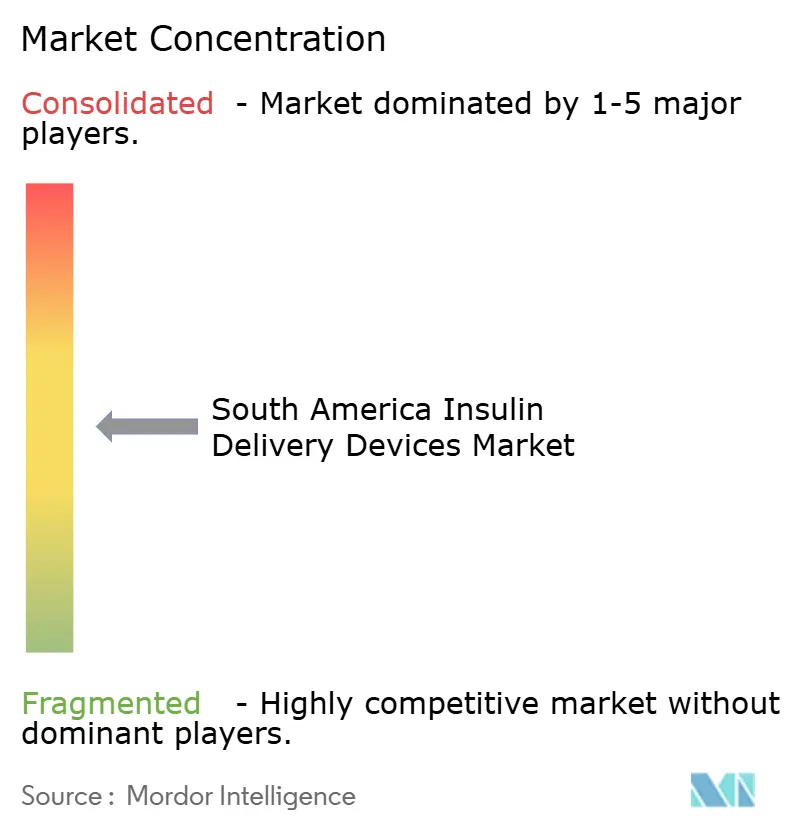
| Market Concentration | Medium |
Major Players *Disclaimer: Major Players sorted in no particular order Image © Mordor Intelligence. Reuse requires attribution under CC BY 4.0. | |
South America Insulin Delivery Devices Market Analysis by Mordor Intelligence
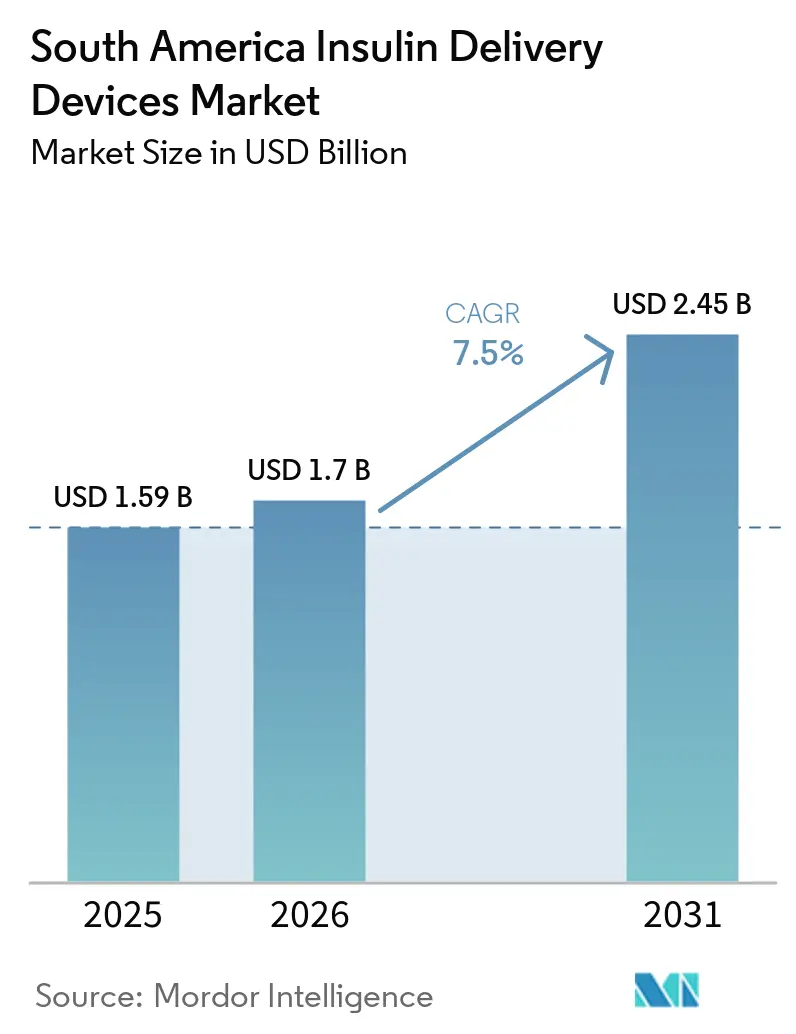
The South America Insulin Delivery Devices Market size was valued at USD 1.59 billion in 2025 and is estimated to grow from USD 1.70 billion in 2026 to reach USD 2.45 billion by 2031, at a CAGR of 7.5% during the forecast period (2026-2031).
The expanding number of people living with diabetes is sustaining demand for reliable insulin administration across the region, while public coverage programs are making pens, cartridges, and selected advanced devices available to more patients. Brazil remains central to the South American insulin delivery devices market because its public health system can influence device adoption through large procurement programs. Coverage changes in Argentina and Chile are also widening access to pumps and continuous glucose monitoring for eligible patients. Manufacturers are balancing volume opportunities in conventional devices with faster growth in connected systems, where reimbursement and clinical support are improving.
Key Report Takeaways
- By product type, insulin pens held 52.44% of the South America insulin delivery devices market in 2025, while insulin pumps are projected to grow at a 9.35% CAGR through 2031.
- By technology and connectivity, non-connected devices held 71.34% of the South America insulin delivery devices market in 2025, while connected devices are projected to grow at a 10.45% CAGR through 2031.
- By patient age group, adults aged 18 years and above held 66.24% of the South America insulin delivery devices market in 2025, while pediatrics is projected to grow at a 10.67% CAGR through 2031.
- By distribution channel, retail pharmacies held 44.37% of the South America insulin delivery devices market in 2025, while online pharmacies are projected to grow at a 12.53% CAGR through 2031.
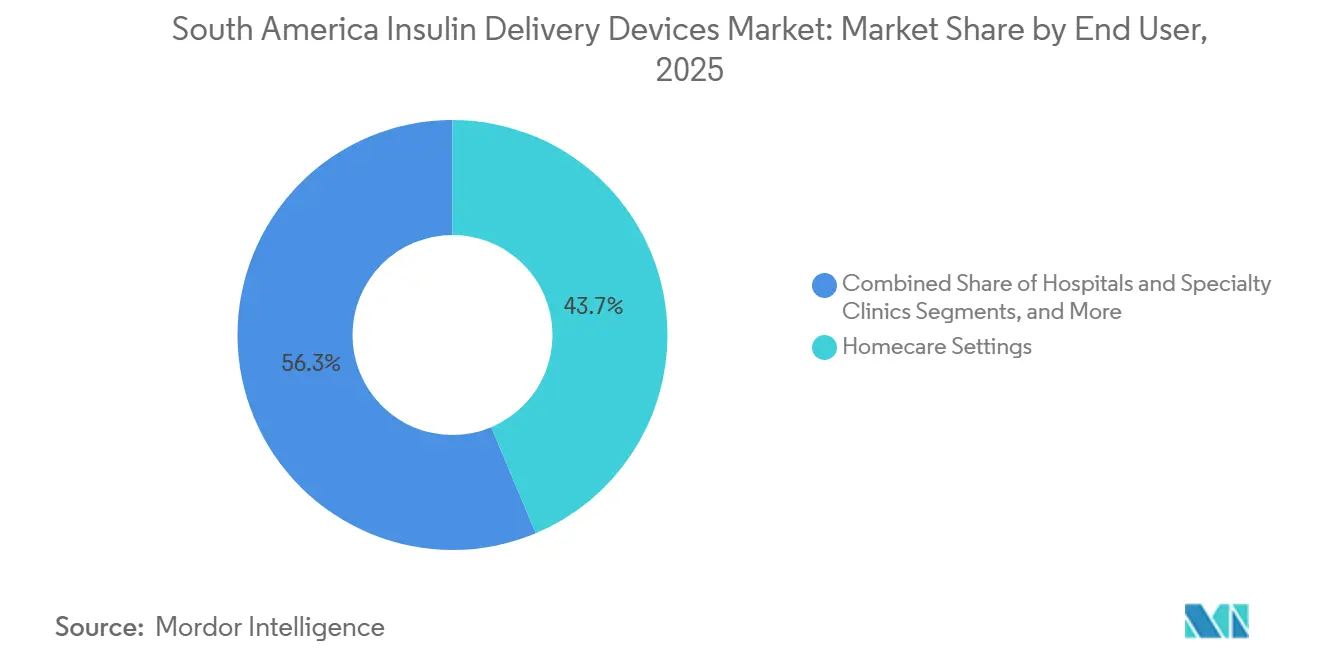
- By end user, homecare settings held 43.67% of the South America insulin delivery devices market in 2025 and are projected to grow at a 9.77% CAGR through 2031.
- By geography, Brazil led with 49.89% of regional revenue in 2025, while Argentina is projected to record an 11.56% CAGR through 2031.
Note: Market size and forecast figures in this report are generated using Mordor Intelligence’s proprietary estimation framework, updated with the latest available data and insights as of January 2026.
Market Trends and Insights
Drivers Impact Analysis of South America Insulin Delivery Devices Market*
| DRIVER | (~) % IMPACT ON CAGR FORECAST | GEOGRAPHIC RELEVANCE | IMPACT TIMELINE |
|---|---|---|---|
| Rising diabetes burden and insulin-treated population | +2.3% | Brazil, Argentina, Colombia, and Chile | Long term (≥ 4 years) |
| Expansion of public diabetes programs and pen access | +1.6% | Brazil, Argentina, and Chile | Medium term (2-4 years) |
| Shift from syringes toward pen-based administration in urban care | +1.3% | Urban areas in Brazil, Colombia, and Chile | Medium term (2-4 years) |
| Connected pens, wearable pumps, and CGM integration | +1.1% | Brazil, Argentina, Colombia, and Chile | Medium term (2-4 years) |
| Advanced-device demand from specialized type 1 diabetes centers | +1.3% | Urban areas in Brazil, Colombia, and Chile | Medium term (2-4 years) |
| Source: Mordor Intelligence | |||
Rising Diabetes Burden and Insulin-Treated Population
Diabetes prevalence is creating a broad and sustained demand base for the South America insulin delivery devices market. The International Diabetes Federation reported 35.4 million adults with diabetes in South and Central America, with the total projected to reach 52 million by 2050. The same source reported that 30.4% of adults with diabetes in the region, or 10.7 million people, remained undiagnosed.[1] Brazil had 16.6 million adults with diabetes and an age-standardized prevalence of 10.6%, providing suppliers with a large base for pens, needles, and other insulin administration products. The growing use of long-acting insulin analogs in public care supports compatible pen delivery and recurring disposable supply demand. Brazil’s device registration requirements also favor suppliers with the quality documentation and approvals required for public and private distribution.
Expansion of Public Diabetes Programs and Pen Access
Public programs are shifting demand in the South American insulin delivery devices market beyond private purchasing. Brazil began a structured transition from NPH insulin to long-acting glargine across four pilot locations in February 2026, covering more than 50,000 patients in the initial phase. A Productive Development Partnership involving Biomm, Fiocruz, and Gan & Lee supported domestic glargine supply. Brazil’s Ministry of Health distributed 52,350 reusable injection pens across 16 states in July 2026 as part of the national rollout.[2] Argentina’s coverage framework requires full coverage of insulin and related diabetes supplies through social insurance arrangements. Chile’s Ley Ricarte Soto provides pump hardware and monthly consumables for eligible people with Type 1 diabetes, reducing cost barriers for qualifying patients.
Shift From Syringes Toward Pen-Based Administration in Urban Care
Pen-based administration is expanding as patients and clinicians seek more convenient and accurate routine dosing. This trend is most visible in large urban areas, where private clinics and retail pharmacies offer broader access to branded insulin and delivery supplies. Brazil’s public distribution of reusable pens has provided many patients with their first practical experience using pen-based administration. The South American insulin delivery devices market also benefits from recurring demand for pen needles and replacement cartridges after initial device distribution. Brazil made items included in the Farmácia Popular program free of charge in February 2025, expanding access to listed diabetes medicines and supplies through pharmacies. Syringes will remain relevant in remote and lower-income settings but will likely have a more limited role where public programs supply pen-compatible insulin.
Connected Pens, Wearable Pumps, and Continuous Glucose Monitoring Integration
Connected delivery systems are gaining traction as glucose monitoring and insulin administration become increasingly integrated. Argentina’s 2025 diabetes supply update expanded coverage for new pump models, additional consumables, and intermittent glucose monitoring sensors. Chile added real-time continuous glucose monitoring to guarantee benefits for people under 18 with Type 1 diabetes and pregnant women with Type 1 diabetes in December 2025. Brazil evaluated real-time continuous glucose monitoring coverage for Type 1 diabetes through Consulta Pública 63/2026. These programs can create a clearer pathway for compatible pumps, smart pens, sensors, and software-supported follow-up. However, connected products carry a cost premium, and adoption depends on coverage decisions and clinician capacity. The South American insulin delivery devices market will likely see connectivity expand first through specialist care, pediatric programs, and patients with formal reimbursement.
Restraints Impact Analysis of South America Insulin Delivery Devices Market*
| RESTRAINT | (~) % IMPACT ON CAGR FORECAST | GEOGRAPHIC RELEVANCE | IMPACT TIMELINE |
|---|---|---|---|
| High out-of-pocket cost and uneven reimbursement | -0.8% | Argentina, Colombia, Peru, Bolivia, and secondary cities in Brazil | Medium term (2-4 years) |
| Currency volatility and import dependence | -0.6% | Argentina and Brazil, with exposure across import-dependent categories | Short term (≤ 2 years) |
| Regional inequality in specialist training and device support | -0.8% | Argentina, Colombia, Peru, Bolivia, and secondary cities in Brazil | Medium term (2-4 years) |
| Source: Mordor Intelligence | |||
High Out-of-Pocket Cost and Uneven Reimbursement
Household spending was a major constraint, where public coverage did not fully include advanced insulin delivery systems. In Chile, Ley Ricarte Soto covered pump hardware and recurring consumables for eligible individuals, subject to clinical criteria and administrative approval. A 2025 qualitative study identified cost, administrative complexity, and limited specialist availability outside metropolitan areas as key barriers to pump access. A 2024 systematic review reported a 64.6% treatment rate across South America, indicating that many diagnosed patients did not receive comprehensive treatment. The South American insulin delivery devices market served varied affordability segments, from basic syringes and standard pens to pumps and sensor-linked systems, while inconsistent enforcement and informal employment limited reimbursement access.
Currency Volatility and Import Dependence
Premium insulin pumps, smart pens, and continuous glucose monitoring-linked systems largely relied on imports, making the South American insulin delivery devices market vulnerable to currency fluctuations. In Argentina, peso depreciation increased distributor costs between procurement and sale, resulting in higher patient prices or lower margins. Brazil maintained significant insulin manufacturing capacity but relied on imported hardware for many pump and smart pen systems. Biomm and Fiocruz expanded domestic glargine production; however, these initiatives did not fully replace imported device hardware, while fixed local-currency tender prices reduced supplier interest in advanced products during rapid exchange-rate fluctuations.
*Our forecasts treat driver/restraint impacts as directional, not additive. The impact forecasts reflect baseline growth, mix effects, and variable interactions.
South America Insulin Delivery Devices Market Segment Analysis
By Product Type:
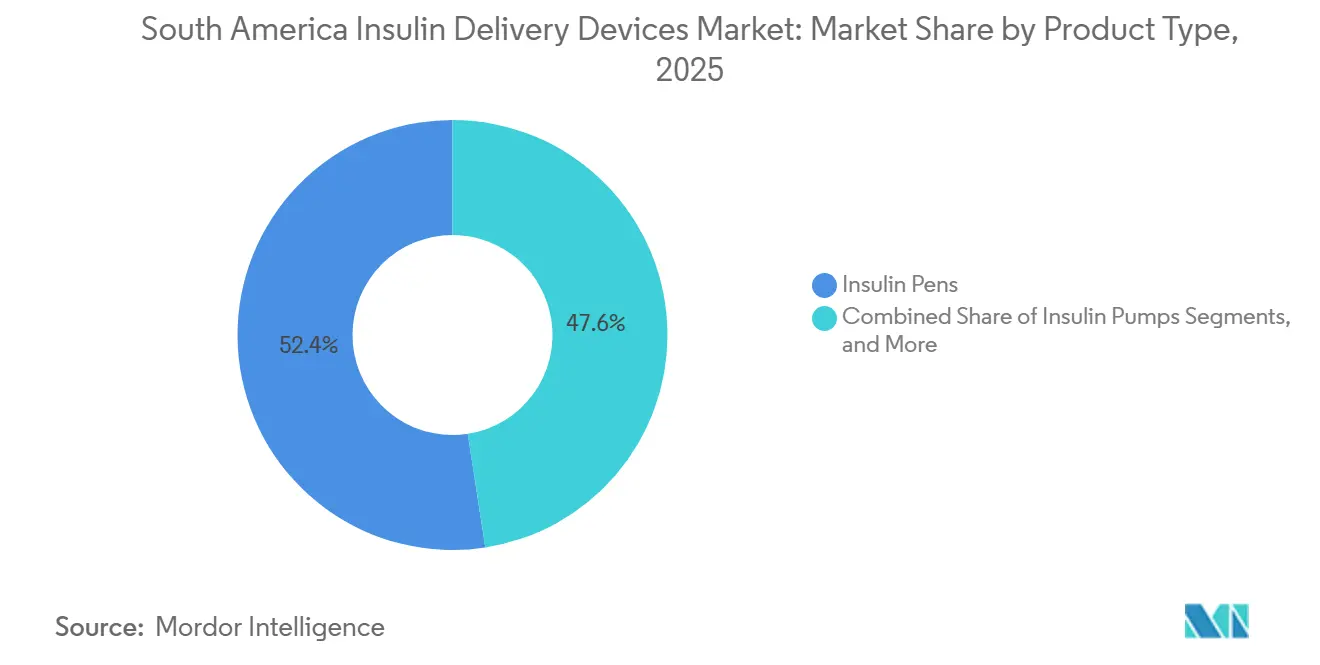
Pens Lead Current Demand and Pumps Support Faster GrowthInsulin pens held 52.44% of the South America insulin delivery devices market share in 2025, supported by their broad use in Type 2 diabetes care, public procurement, and compatibility with pen-based insulin formulations. Disposable pens continue to support public tender volumes by simplifying distribution and administration. Reusable pens are gaining traction as Brazil distributes durable hardware alongside glargine cartridges. In July 2026, Brazil’s Ministry of Health distributed 52,350 reusable pens and more than 254,000 glargine cartridges across 16 states, supporting future demand for compatible needles, cartridges, patient education, and replacement supplies.
Insulin pumps are projected to grow at a CAGR of 9.35% from 2026 to 2031, making them the fastest-growing product category. Growth begins from a smaller base, as pump therapy requires clinical support, reimbursement, and a reliable supply of consumables. Patch pumps and automated hybrid closed-loop systems support growth by combining insulin administration with automated diabetes management. A real-world study of MiniMed 780G users in Argentina, Brazil, Colombia, and Chile reported that 78.1% of users achieved time-in-range targets above 70%. Syringes remain important in rural and cost-sensitive settings, while needle-free and jet injectors remain niche due to limited reimbursement support.

By Technology / Connectivity:
Conventional Devices Lead While Connected Systems ExpandNon-connected devices held 71.34% of the South American insulin delivery devices market in 2025. Conventional pens, syringes, and pumps remain widely used because they are affordable and easier to include in standard procurement contracts. Public purchasers prioritize unit costs, while secondary cities often have limited digital health infrastructure and specialist support for data-driven insulin management. These factors sustain demand for conventional devices and recurring purchases of compatible consumables, even as advanced systems gain clinical acceptance.
Connected devices are projected to grow at a CAGR of 10.45% from 2026 to 2031. Bluetooth-enabled pens, sensor-linked pumps, and app-supported systems enable patients to record doses and share data with clinical teams. Argentina’s revised rules and Chile’s guaranteed monitoring coverage have improved access to connected care for selected patient groups. Brazil’s 2026 consultation on real-time continuous glucose monitoring could create an additional public access route for connected products. Adoption will continue to depend on reimbursement, training, and consistent access to sensors and consumables.
By Patient Age Group:
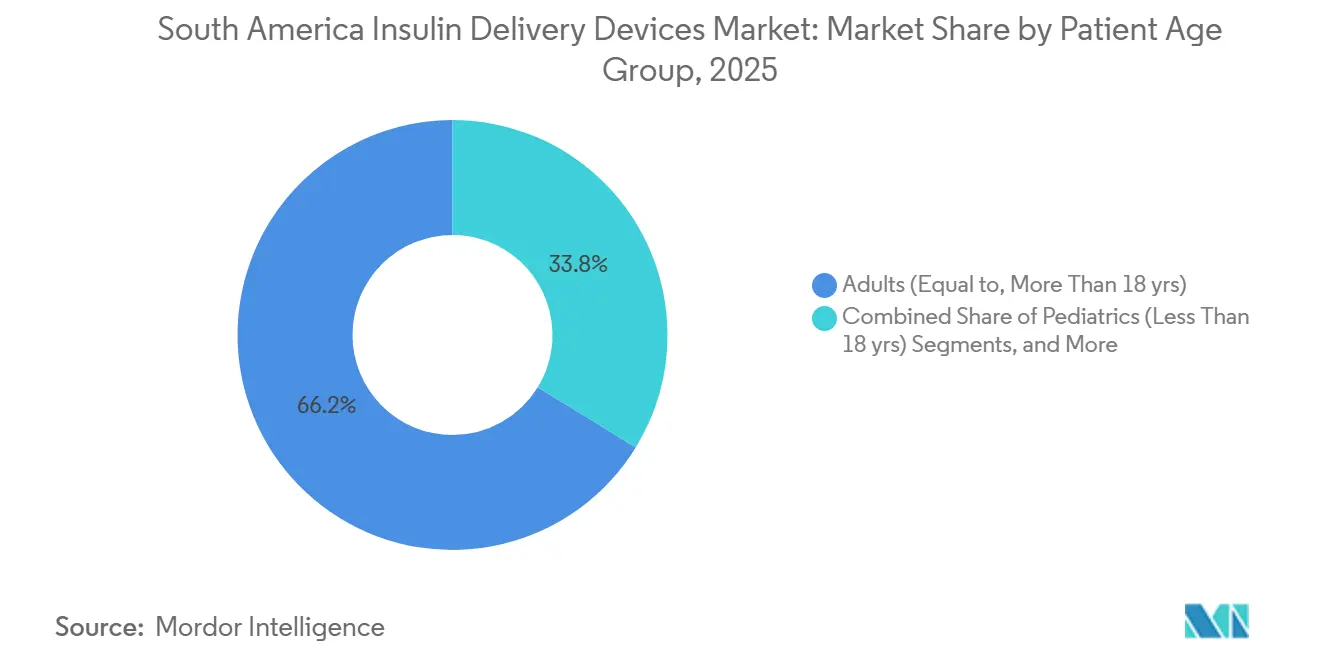
Adults Provide Scale and Pediatrics Gains Policy SupportAdults aged 18 years and above held 66.24% of the South American insulin delivery devices market in 2025. The segment is large because Type 2 diabetes is concentrated among adults and older patients, with Brazil and Argentina providing a substantial patient base requiring routine insulin administration. Urban adults with private coverage are more likely to use premium connected devices, while public programs support demand through pen distribution and insulin supplies. Brazil’s glargine rollout includes people aged 70 years and above with Type 1 or Type 2 diabetes. Simple pen designs and patient training remain important for older users managing insulin at home.
Pediatrics is projected to grow at a CAGR of 10.67% from 2026 to 2031. The segment benefits from coverage programs that prioritize Type 1 diabetes management for children and adolescents. Chile’s GES Decree guarantees continuous glucose monitoring for children under 18 with Type 1 diabetes, while Argentina’s updated coverage rules support access to pump models and supplies for eligible patients. In July 2025, Medtronic received CE Mark approval for MiniMed 780G use in children as young as 2 years. Pediatric demand requires family education, clinical monitoring, and dependable access to supplies.
By Distribution Channel:
Retail Pharmacies Lead and Online Pharmacies Gain UseRetail pharmacies held 44.37% of the South American insulin delivery devices market in 2025. Their leadership is supported by direct patient access, pharmacy chains, and public dispensing programs. Brazil’s Farmácia Popular network provides a local route to obtain listed diabetes products and related supplies, and the program made all formulary items free of charge in February 2025. Retail pharmacies also support repeat purchases of pen needles, cartridges, and basic accessories, while hospital pharmacies remain important for device setup and patient education.
Online pharmacies are projected to grow at a CAGR of 12.53% from 2026 to 2031. Digital ordering simplifies repeat purchases and supports scheduled delivery of pen needles, sensors, and other consumables for urban patients. Growth is strongest where e-prescriptions are accepted, and patients are comfortable using digital health services. Online channels are particularly relevant for connected-device users, while diabetes clinics and dedicated centers remain important for advanced-device initiation. Argentina’s PRONADIA program is expanding integrated diabetes care in provincial capitals, supporting referrals and clinical follow-up.
By End User:
Homecare Leads as Insulin Management Moves Outside HospitalsHomecare settings held 43.67% of the South America insulin delivery devices market in 2025 and are projected to grow at a CAGR of 9.77% through 2031. This position reflects the shift of daily insulin management from hospitals to households. Brazil’s public system supports primary-care delivery, with patients continuing insulin administration at home after receiving treatment through basic health units. Pens simplify home administration and reduce clinical visits, while smart pens and connected pumps enable data sharing with care teams. This combination of convenience and clinical follow-up supports homecare demand.
Hospitals and specialty clinics continue to play a material role in pump initiation, inpatient insulin management, and structured patient training. These settings are particularly important for children, patients starting pump therapy, and individuals with complex treatment needs. Private networks in São Paulo support premium-device use through Type 1 diabetes centers, while ambulatory surgical centers remain a smaller category for pump starts and follow-up calibration. Argentina’s PRONADIA program supports decentralized diabetes care, extending specialist advice beyond major cities. Chile’s public monitoring coverage also supports device use at home following clinical assessment.
Geography Analysis
Brazil Insulin Delivery Devices Market
Brazil held 49.89% of the South American insulin delivery devices market share in 2025, supported by the scale of the Unified Health System, a large diabetic population, and established insulin production. The country had 16.6 million adults with diabetes and a 10.6% age-standardized prevalence. In April 2025, Novo Nordisk announced a BRL 6.4 billion 9USD 1.24 billion) investment to expand its Montes Claros facility, which supplies 12% of global insulin consumption to more than 70 countries. Biomm produced 10 million glargine units in 2025 and is targeting 20 million units by the end of 2026. Device regulations and public procurement processes continue to influence supplier access.
Southern Cone and Andean South America Insulin Delivery Devices Market
Argentina is projected to grow at an 11.56% CAGR from 2026 to 2031, driven by its 14% adult diabetes prevalence, the highest among South America’s large economies. Resolution 2091/2025 expanded mandatory coverage for pump models, consumables, and intermittent glucose monitoring sensors. Buenos Aires and Córdoba drive private demand for advanced devices, while provincial care programs can expand access across other cities. Colombia had 3.0 million adults with diabetes and an 8.4% prevalence, while Peru had an estimated 1.6 million adults with diabetes. Both countries offer stronger opportunities for pens and needles than premium connected systems.
Chile and Wider South America Insulin Delivery Devices Market
Chile had 1.9 million adults with diabetes and a prevalence of 12.2%. Its smaller patient base is supported by reimbursement programs that facilitate access to pumps and monitoring devices for eligible patients. Chile’s GES coverage created a pathway for continuous glucose monitoring for qualifying people with Type 1 diabetes. Ecuador, Bolivia, Uruguay, Venezuela, Paraguay, and Suriname contribute primarily through basic syringes and pen needles. Peru’s healthcare infrastructure investment offers the clearest growth signal within this group.
Competitive Landscape
The South American insulin delivery devices market is moderately consolidated, with leading multinational suppliers competing alongside fragmented smaller players. Novo Nordisk, Medtronic, Insulet, and Embecta held strong positions across pens, pumps, and consumables. Competition centered on public tender pricing, product availability, clinical support, and local registration compliance. Novo Nordisk’s BRL 6.4 billion (USD 1.24 billion) expansion in Montes Claros, announced in April 2025, increased its capacity for injectable therapies in Brazil. Suppliers with established registrations retained an advantage in tenders and product launches.
Insulet announced a manufacturing investment exceeding USD 200 million in Costa Rica in January 2026. The facility strengthened regional supply chains and improved Omnipod consumable replenishment. Tandem Diabetes Care received European approval in June 2026 for expanded automated insulin delivery indications, including Type 1 diabetes during pregnancy and Type 2 diabetes. This approval supported its prescriber strategy in markets that considered European approvals during local evaluations. Medtronic’s expanded MiniMed 780G indication for children aged 2 years and above also supported pediatric pump adoption.
Biomm gained relevance as a domestic supply-chain partner through its Productive Development Partnership with Fiocruz and Gan & Lee. The partnership supported local glargine cartridges and strengthened the supply chain for compatible pen use in Brazil. Ypsomed, Owen Mumford, and SOOIL operated in reusable pen and tubeless pump niches, with stronger opportunities in private reimbursement channels in Argentina and Chile. Connected dose-data solutions remained a growth opportunity for companies partnering with healthcare providers and digital health networks.
South America Insulin Delivery Devices Industry Leaders
-
Novo Nordisk A/S
-
Sanofi S.A.
-
F. Hoffmann-La Roche Ltd
-
Eli Lilly and Company
-
Ypsomed Holding AG
- *Disclaimer: Major Players sorted in no particular order
South America Insulin Delivery Devices Market Companies Covered in this Report
- Abbott Laboratories
- B. Braun Melsungen SE
- Beckton Dickinson
- BERLIN-CHEMIE AG
- Biocon
- Biomm S.A.
- Eli Lilly and Company
- embecta Corp.
- Roche
- Insulet
- Medtronic
- Novo Nordisk
- Owen Mumford Limited
- Sanofi
- SOOIL Development Co., Ltd.
- Tandem Diabetes Care
- Terumo
- Ypsomed
Recent Industry Developments in South America Insulin Delivery Devices Market
- July 2026: Brazil’s Ministry of Health completed the initial phase of its national insulin glargine rollout, distributing 52,350 reusable pens and over 254,000 cartridges across 16 states for eligible diabetes patients.
- January 2026: Insulet Corporation announced an investment of over USD 200 million in a Costa Rica manufacturing facility to strengthen Omnipod consumables supply resilience across Latin American markets.
- December 2025: Chile’s GES Decree took effect on December 1, 2025, expanding real-time continuous glucose monitoring coverage for eligible type 1 diabetes patients.
South America Insulin Delivery Devices Market Report Scope
As per the scope of the report, Insulin delivery devices are specialized medical tools used to administer insulin into the human body, primarily for managing diabetes mellitus. These devices help individuals with diabetes, especially those with Type 1 diabetes and advanced Type 2 diabetes, maintain healthy blood glucose levels by replicating the regulatory function of a healthy pancreas.
The South America insulin delivery devices market is segmented by product type, technology/connectivity, patient age group, distribution channel, end user, and geography. By product type, the market includes insulin pens, insulin pumps, insulin syringes, needle-free injectors, jet injectors, and others. Insulin pens are further segmented into reusable pens and disposable pens. Insulin pumps are further segmented into tethered pumps, patch/wearable pumps, and automated hybrid closed-loop systems. By technology/connectivity, the market is segmented into connected (Bluetooth/NFC) and non-connected/conventional devices. By patient age group, the market is categorized into pediatric (less than 18 years), adults (18 years and above), and geriatric (65 years and above) patients. By distribution channel, the market is segmented into hospital pharmacies, retail pharmacies, online pharmacies, and diabetes clinics and centers. By end user, the market is segmented into homecare settings, hospitals and specialty clinics, ambulatory surgical centers, and others. By geography, the market is analyzed across Brazil, Argentina, Colombia, Chile, Peru, and the Rest of South America. The report offers market sizes and forecasts in terms of value (USD) for the above segments.
Segmentation Overview
By Product Type
| Insulin Pens | Reusable Pens |
| Disposable Pens | |
| Insulin Pumps | Tethered Pumps |
| Patch / Wearable Pumps | |
| Automated Hybrid Closed-Loop Systems | |
| Insulin Syringes | |
| Needle-Free Injectors | |
| Jet Injectors | |
| Others |
By Technology / Connectivity
| Connected (Bluetooth / NFC) |
| Non-Connected / Conventional |
By Patient Age Group
| Pediatrics (Less Than 18 yrs) |
| Adults (Equal to, More Than 18 yrs) |
| Geriatrics (Above 65 years+) |
By Distribution Channel
| Hospital Pharmacies |
| Retail Pharmacies |
| Online Pharmacies |
| Diabetes Clinics & Centers |
By End User
| Homecare Settings |
| Hospitals & Specialty Clinics |
| Ambulatory Surgical Centers |
| Others |
By Geography
| Brazil |
| Argentina |
| Colombia |
| Chile |
| Peru |
| Rest of South America |
| By Product Type | Insulin Pens | Reusable Pens |
| Disposable Pens | ||
| Insulin Pumps | Tethered Pumps | |
| Patch / Wearable Pumps | ||
| Automated Hybrid Closed-Loop Systems | ||
| Insulin Syringes | ||
| Needle-Free Injectors | ||
| Jet Injectors | ||
| Others | ||
| By Technology / Connectivity | Connected (Bluetooth / NFC) | |
| Non-Connected / Conventional | ||
| By Patient Age Group | Pediatrics (Less Than 18 yrs) | |
| Adults (Equal to, More Than 18 yrs) | ||
| Geriatrics (Above 65 years+) | ||
| By Distribution Channel | Hospital Pharmacies | |
| Retail Pharmacies | ||
| Online Pharmacies | ||
| Diabetes Clinics & Centers | ||
| By End User | Homecare Settings | |
| Hospitals & Specialty Clinics | ||
| Ambulatory Surgical Centers | ||
| Others | ||
| By Geography | Brazil | |
| Argentina | ||
| Colombia | ||
| Chile | ||
| Peru | ||
| Rest of South America | ||
Key Questions Answered in the Report
What is the projected value of South America insulin delivery devices in 2031?
The South America insulin delivery devices market is projected to reach USD 2.45 billion by 2031, from USD 1.70 billion in 2026, at a 7.50% CAGR.
Which product type leads insulin delivery devices in South America?
Insulin pens led product demand with a 52.44% share in 2025, supported by broad public procurement and routine Type 2 diabetes care.
Which channel is expected to grow the fastest for insulin delivery devices?
Online pharmacies are projected to grow at a 12.53% CAGR through 2031, supported by digital ordering for recurring supplies.
Why is Argentina growing faster than other South American countries?
Argentina is projected to grow at an 11.56% CAGR through 2031 because coverage rules expanded access to pumps, consumables, and glucose monitoring sensors.
What limits adoption of insulin pumps in South America?
High out-of-pocket costs, incomplete reimbursement, specialist shortages, import dependence, and currency volatility can restrict uptake of advanced systems.
How are public programs affecting insulin delivery access in Brazil?
Brazil distributed 52,350 reusable pens to 16 states in July 2026 and began a glargine transition that initially covered more than 50,000 patients.