
South Africa Blood Glucose Monitoring Market Size and Share
Market Overview
| Study Period | 2021 - 2032 |
|---|---|
| Forecast Data Period | 2027 - 2032 |
| Base Year Market Size (2026) | USD 1.23 Million |
| Market Size (2027) | USD 1.35 Million |
| Market Size (2032) | USD 2.08 Million |
| Growth Rate (2027 - 2032) | 9.12 % |
| Market Concentration | Medium |
Major Players *Disclaimer: Major Players sorted in no particular order Image © Mordor Intelligence. Reuse requires attribution under CC BY 4.0. | |
South Africa Blood Glucose Monitoring Market Analysis by Mordor Intelligence
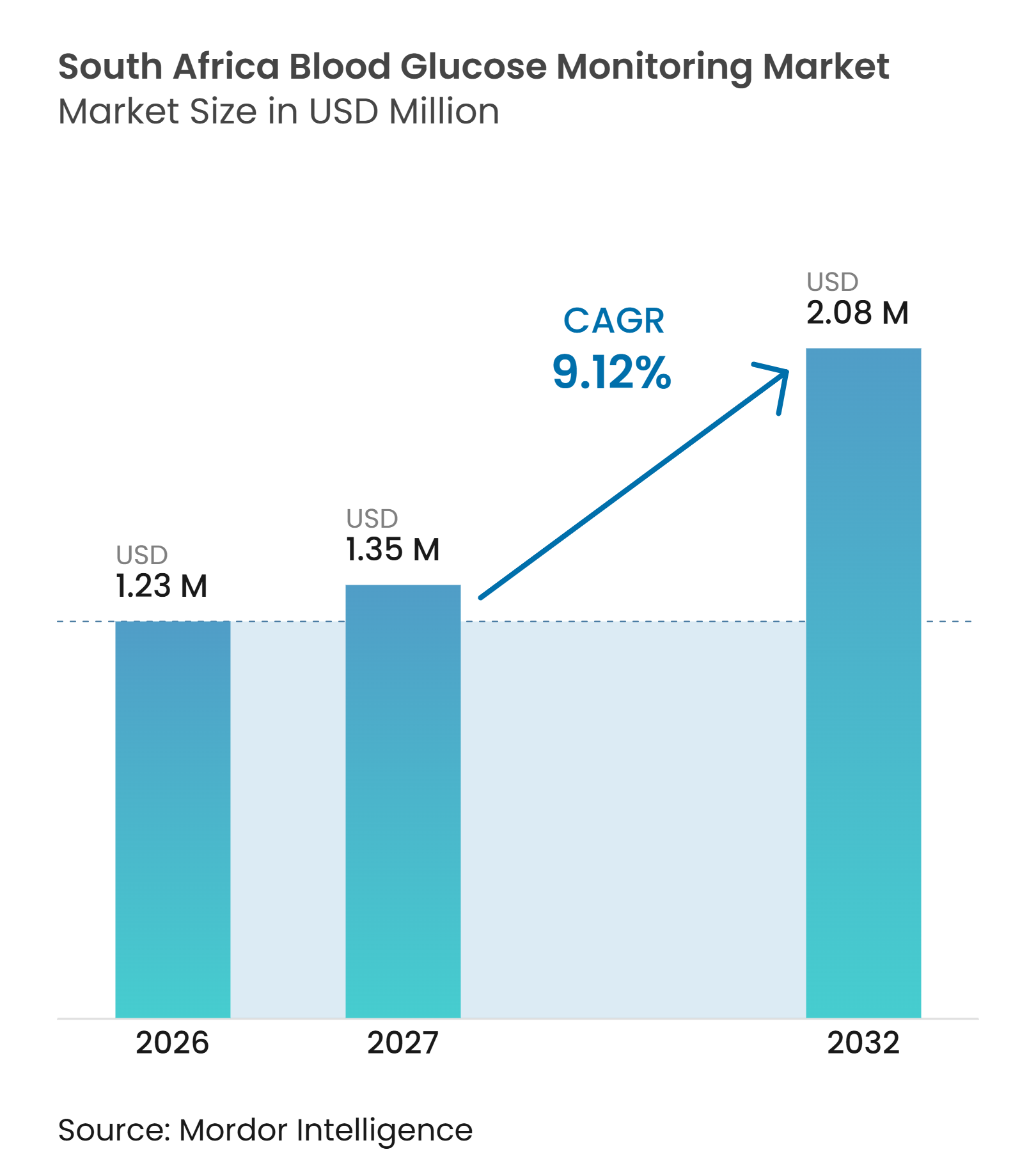
The South Africa Blood Glucose Monitoring Market size is projected to expand from USD 1.23 million in 2026 and USD 1.35 million in 2027 to USD 2.08 million by 2032, registering a CAGR of 9.12% between 2027 and 2032.
Diabetes mellitus had a considerable impact on COVID-19-affected people and society due to the high costs associated with its care, and the complications that arose from it. Diabetes mellitus imposed a greater risk of extended hospital stay and death. In addition to the direct effects on health, the absence of regular care due to the closure of outpatient clinics and social isolation with changes in diet, physical activity, and personal care favored the deterioration of disease control and hampered the detection of complications. As a result, the demand for blood glucose monitoring devices to monitor and maintain optimum blood glucose levels increased during the pandemic.
The measurement of blood glucose is necessary to keep the blood glucose levels within a specified target range. Blood glucose monitoring helps understand the effectiveness of blood glucose metabolism and guides in achieving optimal glucose control within the body. Self-blood glucose monitoring allows a patient to check their blood glucose levels as often as they need to or as recommended by their doctor. Over time the readings provide the patient and their health professionals with the information required to determine the best management strategy for diabetes.
Diabetes South Africa, Society for Endocrinology, Metabolism and Diabetes of South Africa, and Youth with Diabetes are the various organizations in South Africa working towards helping diabetes patients. The organizations are promoting the allocation of an increased budget dedicated to funding all aspects of diabetes care and providing a system for better coordination with the Council of Medical Schemes, the organization in charge of reimbursement, to limit out-of-pocket payments and prevent increased expenditure for patients. Pharmacologic therapy such as oral medicines and insulin, as well as non-pharmacologic therapies such as lifestyle changes, are modern approaches for diabetes management. These therapies are only possible through proper blood glucose monitoring and self-care.
Note: Market numbers in this report are based on Mordor Intelligence's proprietary estimation framework, which combines nine months of actuals with Q4 projections for base year 2026.
Market Trends and Insights
Rising diabetes prevalence
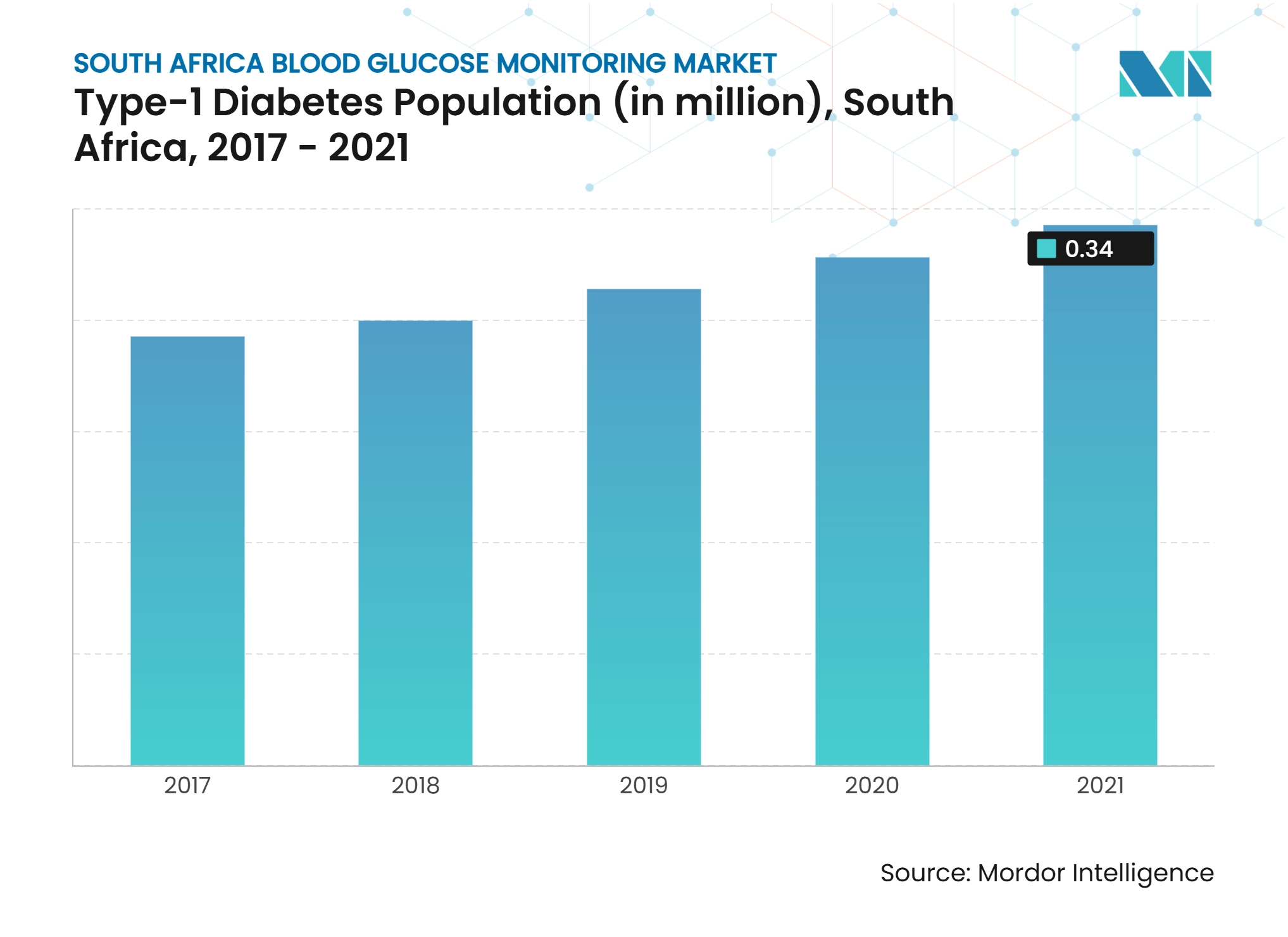
According to IDF Diabetes Atlas 2021, one in nine adults in South Africa is living with diabetes. The diabetes prevalence in South Africa has reached 11.3%, the highest in Africa. The cost of diabetes-related health expenditure has risen to 1,700 USD per person which is estimated to be around 7.2 billion USD. In South Africa, diabetes is the fastest-growing disease, and the country has a high number of diabetic patients. The prevalence of diabetes is growing among all ages in South Africa, which can be attributed to the increasingly obese population, along with an unhealthy diet and a sedentary lifestyle.
One of the most effective ways to decrease the prevalence of diabetes in South Africa is to educate citizens and encourage healthy decision-making. South Africa is currently working towards this goal. One recent preventative measure taken by the South African government is the implementation of a sugar tax. By charging more for sugary drinks and foods, the government is fighting obesity and helping citizens make more conscious decisions. South Africa launched a Diabetes Prevention Programme (DPP). The DPP aims to integrate intervention treatments for at-risk individuals.
Diabetes poses an emerging healthcare burden across the country and is one of the leading causes of premature death, morbidity, and loss of economic growth. Technological development is gaining momentum in the glucose monitoring market which is likely to boost the adoption of these products in the market.

The Continuous Glucose Monitoring Segment is Expected to Witness Highest Growth Rate Over the Forecast Period
The Continuous Glucose Monitoring Segment recorded more than USD 13 million in revenue in the current year, which is expected to further increase with a CAGR of more than 13.5% during the forecast period.
Continuous glucose monitoring is a wearable tool that makes it easier for people with diabetes to track their blood sugar levels over time and measures their glucose levels 24 hours a day while wearing the device. A small sensor is inserted into the abdomen or arm with a cannula penetrating the top layer of skin. An adhesive patch holds the sensor in place, allowing it to take glucose readings throughout the day and night. Generally, the sensor must be replaced every 7 to 14 days. A small reusable transmitter connected to the sensor allows the system to send real-time readings wirelessly to a monitor device or a smartphone app that displays blood glucose data.
A systematic approach to the organization of care is essential for diabetes including well-trained and dedicated personnel, calibrated and functioning equipment, management and referral protocols, regular and sustainable supply of medication, syringes, and consumables, a register of all patients, and annual review charts. Various protocols such as SA Diabetes Declaration Implementation Strategy, Long-term care model Implementation Plan, National Guideline: Non-Communicable Diseases: A Strategic Vision, Chronic Diseases Indicators, and Records with these updated guidelines facilitate improved quality of diabetes care.
CGMs-insulin pump combinations are used to automatically adjust insulin delivery based on a patient’s glucose levels. Medtronic has a few combination systems on the market, including the MiniMed 630G system, the 670G system, and the Paradigm Revel. The MiniMed 630G system and Paradigm Revel are both approved for use by adults and children from the age of 16 years, and the MiniMed 670G system is approved for use by adults and children aged 14 years and older with T1D. The advent of such new technologies is likely to drive segment growth during the forecast period.
Competitive Landscape
Market Concentration
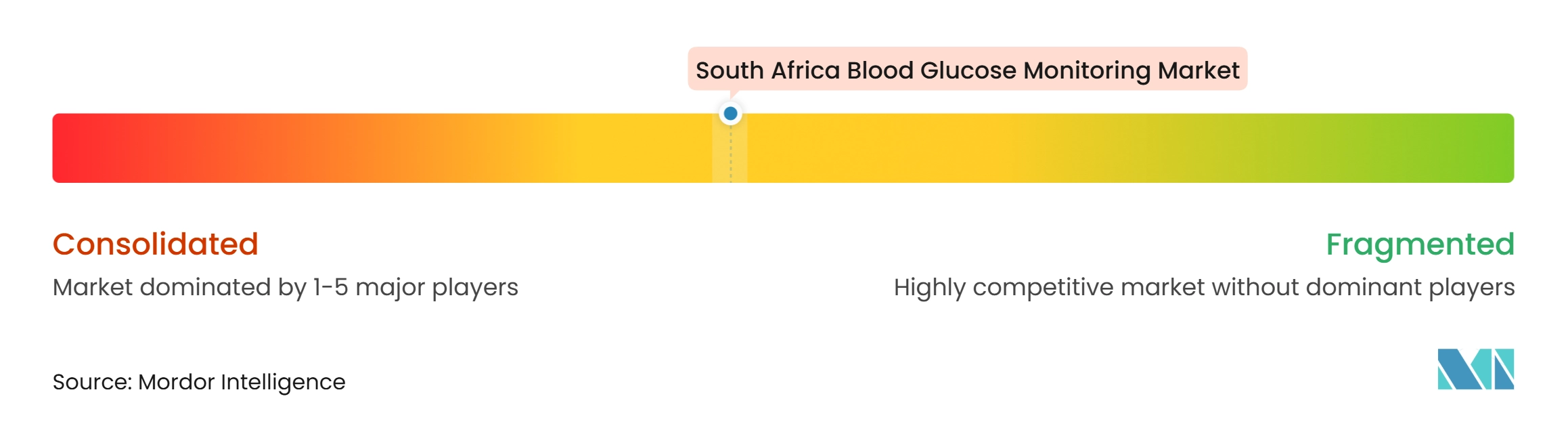
The South Africa Blood Glucose Monitoring Market is moderately fragmented, with few significant players namely Medtronic, Abbott, and other generic players.
South Africa Blood Glucose Monitoring Industry Leaders
-
Roche
-
Abbott
-
Ascensia
-
Medtronic
-
Dexcom
- *Disclaimer: Major Players sorted in no particular order
South Africa Blood Glucose Monitoring Market Companies Covered in this Report
- Abbott Laboratories
- Roche
- Lifescan
- Dexcom
- Medtronic
- Arkray
- Ascensia
- AgaMatrix
- Bionime
- Acon Laboratories
- Trivida Functional Medicine
- Senseonics
Read Analysis of South Africa Blood Glucose Monitoring Companies
Recent Industry Developments in South Africa Blood Glucose Monitoring Market
- 2022: Abbott announced new data from the Real-World Evidence of FreeStyle Libre (RELIEF) study showing the use of FreeStyle Libre, a continuous glucose monitoring system (CGM) significantly reduced the rate of hospitalizations due to acute diabetes events (ADEs) for people living with Type 2 diabetes on once-daily (basal) insulin therapy.
South Africa Blood Glucose Monitoring Market Report Scope
Blood glucose monitoring devices are used for measuring the concentration of glucose in the blood for effective diabetes management. The South Africa Blood Glucose Monitoring Market is segmented into Type (Self-monitoring Blood Glucose Devices and Continuous Glucose Monitoring Devices) and Component (Glucometer Devices, Test Strips, Lancets, Sensors, and Durables). The report offers the value (in USD million) and volume (in Units million) for the above segments.
Segmentation Overview
| Glucometer Devices |
| Test Strips |
| Lancets |
| Sensors |
| Durables (Receivers and Transmitters) |
| Self-monitoring blood glucose devices (Value and Volume, 2017 - 2027) | Glucometer Devices |
| Test Strips | |
| Lancets | |
| Continuous blood glucose monitoring devices (Value and Volume, 2017 - 2027) | Sensors |
| Durables (Receivers and Transmitters) |
Key Questions Answered in the Report
How fast is the South Africa Blood Glucose Monitoring Market projected to grow?
The South Africa Blood Glucose Monitoring Market is projected to register a CAGR of 9.12% during the forecast period (2027-2032)
Who are the key players in South Africa Blood Glucose Monitoring Market?
Roche, Abbott, Ascensia, Medtronic and Dexcom are the major companies operating in the South Africa Blood Glucose Monitoring Market.
What years does this South Africa Blood Glucose Monitoring Market cover?
The report covers the South Africa Blood Glucose Monitoring Market historical market size for years: 2021, 2022, 2023, 2024, 2025, and 2026. The report also forecasts the South Africa Blood Glucose Monitoring Market size for years: 2027, 2028, 2029, 2030, 2031, and 2031.